

Designing a Bespoke Orangery
From Initial Vision to Architectural Reality
The Art of Bespoke Design
A bespoke orangery is more than a building project—it’s a creative collaboration that transforms how you live. Unlike off-the-shelf solutions that force your vision to fit standardised dimensions, bespoke design starts with your property, your lifestyle, and your aspirations, then crafts a unique architectural response.
This guide reveals the complete journey from initial inspiration to finished structure. Understanding each stage helps you participate meaningfully in the design process, make informed decisions, and ultimately achieve an orangery that feels inevitable—as if it was always meant to be part of your home.
What Defines a Bespoke Orangery?
The term “bespoke” is often misused in construction. A truly bespoke orangery isn’t simply a standard design in a custom size—it’s a ground-up architectural creation conceived specifically for your property, requirements, and aesthetic preferences.
Bespoke vs. Made-to-Measure: The Critical Difference
Made-to-measure takes an existing design and adjusts dimensions to fit your space. The proportions, details, and overall character remain essentially unchanged.
Bespoke creates an entirely new design from scratch. Every proportion, every detail, every material choice responds to your specific context. The result exists nowhere else—it’s yours alone.
The Defining Characteristics of an Orangery
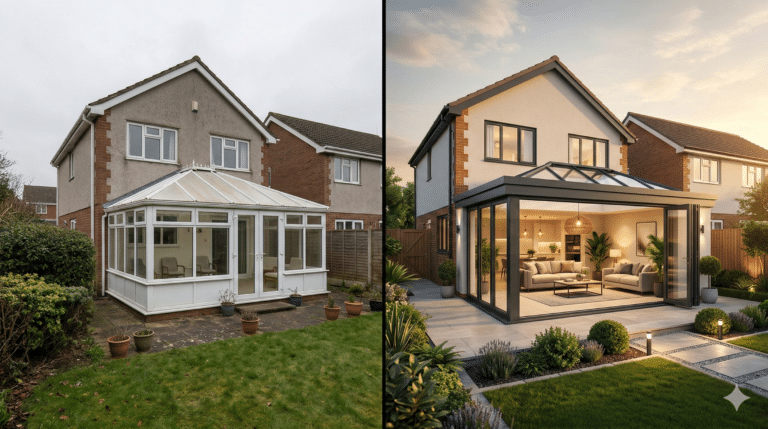
Orangeries occupy a unique position between conservatories and traditional extensions. Their architectural DNA includes:
- Solid corner pillars: Brick, stone, or rendered columns that anchor the structure and provide thermal mass
- Perimeter flat roof: An insulated roof section around the edges, creating internal pelmets for lighting and services
- Central glass lantern: A raised glazed roof section flooding the interior with natural light
- Substantial appearance: More extension-like than a conservatory, with greater visual weight
- Superior thermal performance: The solid elements provide insulation that fully glazed structures cannot match
The Design Journey: Eight Stages
Creating a bespoke orangery follows a structured yet flexible process. Each stage builds upon the last, progressively refining your vision into buildable reality.
Initial Consultation & Discovery
1-2 weeksThe journey begins with listening. A skilled designer seeks to understand not just what you want, but why you want it—the underlying aspirations that will shape every subsequent decision.
- How do you currently use your home? What frustrations exist?
- How do you envision using the new space?
- What architectural styles appeal to you?
- What materials and colours resonate?
- What’s your investment range?
- Are there constraints we should know about?
Site Survey & Analysis
1 day + analysisThe physical context shapes everything. A comprehensive survey captures not just dimensions, but the subtle factors that influence design success.
- Precise measurements of house and garden
- Orientation analysis (sun path, prevailing weather)
- Ground conditions and drainage patterns
- Existing architectural details to reference
- Neighbouring properties and sight lines
- Service locations (drainage, utilities)
Concept Design
2-4 weeksWith understanding and analysis complete, design creativity begins. Initial concepts explore different approaches—testing proportions, styles, and configurations.
- Sketch designs exploring options
- 3D visualisations showing spatial impact
- Scale drawings indicating proportions
- Material mood boards
- Initial budget estimates
- Discussion of trade-offs and possibilities
Design Development
2-4 weeksThe chosen concept is developed into a detailed design. Every element is specified, from major structural decisions to finishing details.
- Detailed floor plans and elevations
- Material specifications (frames, glazing, roofing, masonry)
- Hardware selections (doors, windows, handles)
- Interior elements (flooring, lighting, heating)
- Refined 3D visualisations
- Detailed cost proposal
Planning & Approvals
8-12 weeksSecuring necessary permissions ensures your orangery is legally compliant and protects your investment.
- Assessment of Permitted Development rights
- Planning application if required
- Listed Building Consent for heritage properties
- Building Regulations submission
- Party Wall notifications if applicable
- Liaison with local authority throughout
Technical Design & Engineering
2-3 weeksThe design is translated into precise manufacturing and construction documentation.
- Structural engineering calculations
- Foundation design
- Detailed manufacturing drawings
- Glazing schedules and specifications
- Services routing (electrical, heating)
- Final quality assurance review
Manufacturing
4-6 weeksComponents are fabricated in controlled factory conditions, ensuring precision and quality impossible to achieve on-site.
- Frame fabrication and finishing
- Glazing unit manufacture
- Roofing components prepared
- Hardware and fittings assembled
- Quality control inspections
- Delivery coordination
Construction & Completion
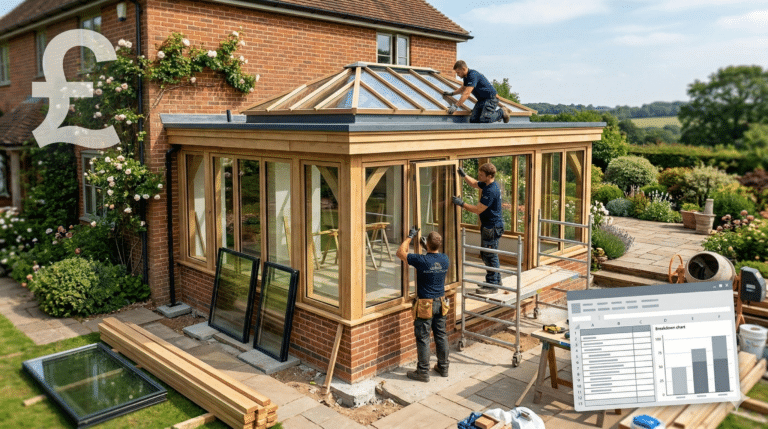
4-8 weeksThe vision becomes reality as skilled craftspeople bring together all elements on site.
- Site preparation and excavation
- Foundation construction
- Masonry work for pillars and plinths
- Frame installation
- Roofing and glazing
- Internal finishing and handover
The best bespoke designs feel inevitable—as though the orangery was always part of the original architect’s intention, simply waiting to be realised.
— Design Philosophy, Room OutsideDesign Considerations: The Elements of Excellence
Bespoke design involves hundreds of decisions, each contributing to the final result. Understanding the key considerations helps you engage meaningfully with the design process.
Proportional Harmony
The orangery should relate to your home’s existing proportions—window rhythms, floor-to-ceiling heights, and architectural language.
Light & Orientation
Understanding how sunlight moves across your site throughout the day and year shapes glazing placement and shading strategies.
Interior Flow
How will the orangery connect to existing rooms? How will furniture be arranged? Traffic patterns and sight lines matter.
Material Palette
Frames, masonry, roofing, and finishes must work together and complement your existing property’s materials.
Garden Integration
The orangery mediates between house and garden. Consider views, access to outdoor spaces, and landscape design.
Services Integration
Electrical outlets, lighting design, heating systems, and smart home integration should be planned from the start.
Material Choices: Building Character
The materials you choose fundamentally shape your orangery’s character, performance, and longevity. Each option brings distinct qualities.
Hardwood Timber
Classic warmth & character- Aesthetic: Natural warmth, traditional character, ages beautifully
- Species: Oak, sapele, accoya, or engineered options
- Finish: Painted, stained, or natural oiled
- Lifespan: 40-60+ years with maintenance
- Maintenance: Periodic refinishing (5-10 years)
- Heritage: Ideal for period properties and Conservation Areas
- Investment: Premium pricing reflects craftsmanship required
Aluminium
Contemporary precision & longevity- Aesthetic: Slim sightlines, crisp modern lines
- Profiles: 20-35mm sightlines maximise glass area
- Finish: Powder coating in RAL colours, dual-colour options
- Lifespan: 40-50+ years with minimal maintenance
- Maintenance: Occasional cleaning only
- Thermal: Modern thermal breaks achieve excellent U-values
- Versatility: Suits contemporary and traditional designs
Timber-Aluminium Hybrid
Best of both worlds- Concept: Timber interior, aluminium exterior cladding
- Interior: Warm timber aesthetic inside
- Exterior: Weather-resistant aluminium outside
- Maintenance: Minimal—aluminium protects timber
- Performance: Excellent thermal values
- Aesthetic: Traditional feel without maintenance burden
- Investment: Premium option combining benefits
Masonry Options
The structural foundation- Brick: Match existing house or complementary contrast
- Natural stone: Premium option for character properties
- Render: Smooth or textured finish, painted any colour
- Reconstructed stone: Cost-effective alternative to natural
- Cladding: Timber, composite, or modern materials
- Thermal mass: Solid elements moderate temperature swings
- Matching: Sourcing reclaimed materials for seamless integration
The Lantern Roof: Crown of the Orangery
The lantern roof is the defining architectural element of an orangery—the feature that floods the interior with light while creating visual drama. Lantern design involves careful consideration of proportion, glazing, and structural elements.
Lantern Roof Design Elements
- Pitch angle: Steeper pitches shed water better and create more internal volume; shallower pitches are more contemporary
- Glazing bars: The framework dividing glass panels—aluminium for slim profiles, timber for traditional character
- Ridge details: Decorative finials, cresting, or clean minimal lines depending on style
- Ventilation: Integrated vents in the lantern promote natural airflow and temperature regulation
- Glass specification: Solar control coatings essential for roof glass; self-cleaning coatings reduce maintenance
- Proportion: The lantern’s size relative to the perimeter roof creates visual balance
| Lantern Style | Character | Best Suited For |
|---|---|---|
| Traditional pitched | Classic Georgian/Victorian aesthetic with decorative details | Period properties, Conservation Areas |
| Contemporary minimal | Slim frames, clean lines, maximum glass | Modern homes, minimalist interiors |
| Flat roof lantern | Low profile, unobtrusive, clean geometry | Bungalows, restricted height situations |
| Structural glass | Virtually frameless, maximum transparency | Ultra-contemporary designs |
Investment: Understanding the Costs
Bespoke orangeries represent significant investment. Understanding cost factors helps set realistic expectations and make informed decisions about where to allocate budget.
| Category | Description | Typical Range |
|---|---|---|
| Modest bespoke | 3m x 3m, aluminium frame, standard glazing | £50,000-£70,000 |
| Mid-range bespoke | 4m x 4m, premium glazing, quality masonry | £70,000-£100,000 |
| Premium bespoke | Larger size, hardwood/hybrid, high-spec throughout | £100,000-£150,000 |
| Exceptional projects | Large scale, complex design, premium everything | £150,000+ |
Factors Influencing Cost
- Size: Larger orangeries cost more, but cost-per-square-metre often decreases with scale
- Frame material: Hardwood typically 20-30% more than aluminium
- Glazing specification: Premium temperature-controlled glass adds 15-25% over standard
- Masonry complexity: Natural stone significantly more than brick or render
- Site conditions: Difficult access, sloping sites, or complex foundations add cost
- Interior specification: Flooring, lighting, heating, and finishes vary widely
- Planning requirements: Listed buildings and complex applications incur additional fees
Value Perspective
A well-designed bespoke orangery typically adds 5-10% to property value—often exceeding the construction cost in desirable areas. More importantly, it transforms daily living: breakfast in morning sunlight, evening entertaining that flows between indoors and out, a year-round connection to your garden. The value extends far beyond financial return.
Working With Your Designer
The designer-client relationship is central to bespoke success. Understanding how to participate productively in this collaboration leads to better outcomes.
Getting the Most From the Design Process:

Related Articles
About This Article
This editorial draws on 50+ years of Room Outside’s experience designing and building bespoke orangeries across Kent, Surrey, Sussex, Hampshire, and London. The design process described reflects our collaborative approach refined over five decades.
Last updated: March 2026 | Author: Room Outside Design Team
Frequently Asked Questions
What is a bespoke orangery?
A bespoke orangery is a custom-designed glazed extension featuring solid corner pillars, a perimeter flat roof, and central glass lantern. Unlike off-the-shelf designs, every element is tailored specifically to your property’s architecture, your lifestyle, and your aesthetic preferences.
How long does the design and build process take?
The complete process typically takes 4-8 months: design development (4-8 weeks), planning if required (8 weeks), Building Regulations (4-6 weeks), manufacturing (4-6 weeks), and construction (4-8 weeks). Complex projects may take longer.
How much does a bespoke orangery cost?
Bespoke orangeries typically cost £50,000-£150,000+ depending on size, materials, and specification. A modest design starts around £50,000-£70,000, while large premium projects with hardwood frames and high-spec throughout reach £100,000-£150,000 or more.
What’s the difference between an orangery and conservatory?
Orangeries feature solid corner pillars, a flat perimeter roof with internal pelmet, and a central glass lantern—creating a more substantial, extension-like appearance. Conservatories have predominantly glazed walls and roofs. Orangeries typically offer better thermal performance.
Do I need planning permission for an orangery?
Many orangeries fall within Permitted Development rights if they meet size limits (3m depth attached, 4m detached, max 4m height, under 50% garden). Listed buildings always require consent. Conservation Areas have additional restrictions. Your designer will advise.
What materials are best for orangery frames?
Premium options include hardwood timber (warm character, traditional appeal), aluminium (slim sightlines, minimal maintenance), and timber-aluminium hybrid (timber interior, aluminium exterior). Each offers distinct aesthetic and performance characteristics.
Can an orangery be used year-round?
Yes—with proper specification. Temperature-controlled glazing, insulated roof sections, underfloor heating, and appropriate ventilation create comfortable conditions throughout the year. A well-designed orangery becomes a genuine extension of your living space.
How do I choose between contemporary and traditional design?
Consider your property’s architecture, personal taste, and context. Period homes often suit traditional detailing, while contemporary designs complement modern properties. Sometimes contrast works beautifully. A skilled designer helps navigate these choices.
Call us anytime – David, our digital assistant, will take a few details so the right specialist can follow up personally. 01243 538999 or request a consultation online
Ready to Begin Your Design Journey?
Every bespoke orangery starts with a conversation. Share your vision with our design team and discover how we can transform your home—creating a space that feels like it was always meant to be there.
Book Free Design ConsultationCall us anytime on 01243 538999 – David, our digital assistant, will take a few details so the right specialist can follow up personally.
Room Outside: Bespoke orangery specialists since 1973.
Serving Kent, Surrey, Sussex, Hampshire, London & surrounding areas.