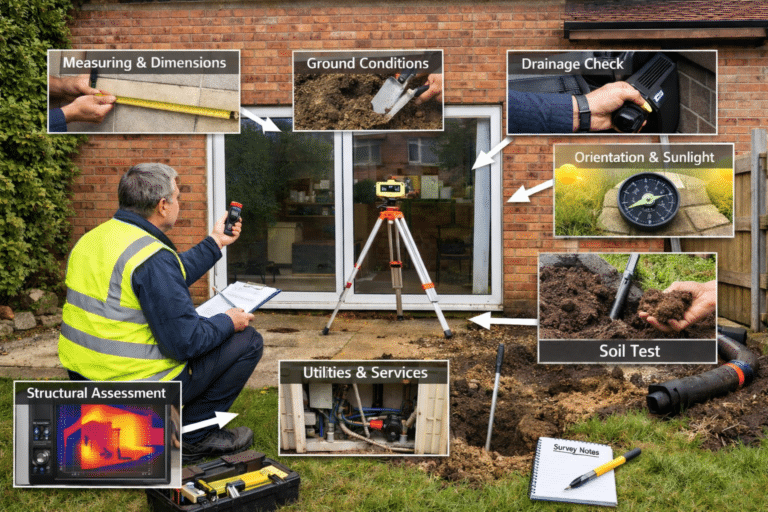


Can I Remove the Doors Between My House and Conservatory?
Complete guide to creating seamless open-plan living by removing the separation between your home and glass extension. Building Regulations, structural requirements, and thermal efficiency explained.
Quick Answer: Can You Remove Conservatory Doors?
Yes, you can legally remove the doors between your house and conservatory in the UK. However, Building Regulations approval is mandatory because conservatories are only exempt from thermal standards when physically separated from the main dwelling. Once you remove the doors, your conservatory must meet Part L energy efficiency requirements, typically requiring glazing U-values of 1.4 W/m²K or better for walls and 1.0 W/m²K or better for roofs.
Key facts: No planning permission required. Building Regulations approval required. Typical costs range from £1,500 for basic door removal to £15,000+ if glazing upgrades or structural work are needed. Timeline: 2-12 weeks depending on scope. Failure to obtain approval can cause problems when selling your property, invalidate home insurance, and potentially require reinstatement of the doors.
Key Facts: Removing Conservatory Doors (UK 2026)
- Legal requirement: Building Regulations approval is mandatory; planning permission is not required
- Relevant regulations: Part L (Conservation of Fuel and Power) and Part A (Structure) of the Building Regulations
- Thermal standards: Wall glazing must achieve U-values ≤1.4 W/m²K; roof glazing must achieve U-values ≤1.0 W/m²K
- Cost range: £1,500-£3,000 (basic removal), £3,000-£8,000 (with structural work), £5,000-£15,000+ (with glazing upgrades)
- Timeline: 2-4 weeks for simple removal; 6-12 weeks if upgrades or structural work required
- Why doors exist: Conservatories are exempt from Building Regulations only when thermally separated from the main house
- Structural consideration: Most external walls are load-bearing; widening the opening requires a steel beam (RSJ)
- Completion certificate: Required for future property sales and insurance purposes
Why Are Doors Required in the First Place?
To understand the requirements for removing doors, it helps to know why they’re typically installed. When conservatories are built, they often benefit from an exemption in the Building Regulations. This exemption allows them to be constructed without meeting the same stringent energy efficiency requirements as the main house, but only if they remain thermally separated from the living space.
The separation is achieved through external-quality doors or windows between the conservatory and the house. These act as a thermal barrier, preventing heat from the main house escaping into the less efficient conservatory space. Without this separation, the conservatory would need to meet the same insulation and heating standards as a conventional extension, which would significantly increase construction costs.
The Building Regulations Exemption
According to the Planning Portal, conservatories are exempt from Building Regulations if they meet specific criteria, including being separated from the main house by external-quality doors or windows. This exemption exists because conservatories traditionally had poor thermal performance compared to solid construction.
However, modern glass technology has changed this equation dramatically. High-performance glazing can now achieve thermal efficiency comparable to solid walls, making the separation less necessary.
The key point is this: the doors are a regulatory requirement, not a structural one. They exist to maintain energy efficiency standards for your home. If you can demonstrate that your conservatory meets adequate thermal standards without the doors, Building Control will approve their removal.
Key Terms and Definitions
Understanding the terminology used when discussing conservatory door removal helps homeowners navigate the process and communicate effectively with contractors and Building Control.
What is a U-value?
Definition: A U-value (thermal transmittance) measures how effective a material is as an insulator. It represents the rate of heat transfer through a structure, measured in watts per square metre kelvin (W/m²K). Lower U-values indicate better insulation. For context, a solid brick wall typically has a U-value of around 2.0 W/m²K, while modern triple glazing can achieve 0.8 W/m²K or better.
What are Building Regulations Part L and Part A?
Part L (Conservation of Fuel and Power) sets standards for energy efficiency in buildings, including requirements for insulation, heating systems, and glazing performance. When removing conservatory doors, Part L requires your conservatory to meet specific thermal standards.
Part A (Structure) ensures building work is structurally safe. It applies if you’re modifying load-bearing walls, such as widening the opening between your house and conservatory.
What is a load-bearing wall?
Definition: A load-bearing wall is a structural element that transfers weight from above (such as floors, roof, or other walls) down to the foundation. Most external walls in UK homes are load-bearing. Removing or modifying load-bearing walls requires proper structural support, typically a steel beam (also called an RSJ – Rolled Steel Joist).
What is Building Regulations approval?
Definition: Building Regulations approval is official confirmation from your local Building Control department that proposed work complies with national building standards. It differs from planning permission, which relates to land use and external appearance. Building Regulations focus on safety, energy efficiency, and structural integrity.
Do You Need Planning Permission or Building Regulations Approval?
This is where many homeowners get confused. Let’s clarify the difference between planning permission and Building Regulations:
Planning Permission
No, you typically do not need planning permission to remove the doors between your house and conservatory. Planning permission relates to external changes to your property and its impact on neighbours and the local area. Removing internal doors is an internal modification that doesn’t require planning consent.
Most conservatories and orangeries don’t require planning permission if they fall within Permitted Development rights. Removing the doors afterwards doesn’t change this.
Building Regulations Approval
Yes, you will need Building Regulations approval to remove the doors. This is because you’re fundamentally changing how your home manages heat and energy. The approval process involves demonstrating that your conservatory meets adequate thermal efficiency standards and that any structural modifications are safe.
Important: Don’t Skip Building Regulations
Some homeowners simply remove the doors without seeking approval. This is risky for several reasons:
- You may face enforcement action requiring the doors to be reinstated
- When selling your property, solicitors will check for Building Regulations compliance
- Your home insurance may be invalidated for non-compliant work
- Future buyers may require a significant price reduction or indemnity insurance
The approval process is straightforward and relatively inexpensive. It’s always worth doing properly.
What Building Regulations Apply When Removing Conservatory Doors?
Two main parts of the Building Regulations are relevant when removing doors between your house and conservatory:
Part L: Conservation of Fuel and Power
This is the primary regulation you need to satisfy. Part L sets standards for energy efficiency in buildings. When you remove the separating doors, your conservatory effectively becomes part of your main living space and must meet equivalent thermal standards.
The key requirements include:
- Glazing U-values: Wall and door glazing should achieve U-values of 1.4 W/m²K or better. Roof glazing should achieve 1.0 W/m²K or better.
- Overall thermal performance: The conservatory’s combined heat loss should not significantly increase your home’s overall energy consumption.
- Heating provision: Adequate heating must be available in the conservatory space, typically through extension of your existing central heating system.
Meeting these requirements is easier than ever with modern glass technology. New Generation Glass achieves U-values under 1.0 W/m²K while blocking up to 86% of solar heat, making Building Regulations compliance straightforward.
Part A: Structure
If you plan to widen the opening or remove sections of wall, Part A applies. This covers structural safety and requires that any modifications don’t compromise your home’s structural integrity.
Most external walls are load-bearing, meaning they support part of your home’s structure (typically the floor above or the roof). Removing or widening openings in load-bearing walls requires proper structural support, usually in the form of a steel beam (RSJ) or concrete lintel.
Is the External Wall Load-Bearing?
This is a critical question if you want to widen the opening rather than simply removing the existing doors. Understanding whether your wall is load-bearing affects costs, complexity, and Building Regulations requirements.
How to Identify a Load-Bearing Wall
Most external walls in UK homes are load-bearing. They typically support either floor joists from the room above or roof rafters. Signs that a wall is load-bearing include:
- The wall runs perpendicular to floor or ceiling joists
- There are walls or structural elements directly above
- The wall is thick (typically 225mm or more for solid masonry)
- Removing it would leave an unsupported span
However, you should never assume. Always have a structural engineer or experienced contractor assess your specific situation before planning any work.
What If You Want to Widen the Opening?
If you simply remove existing doors and their frame, the structural impact is minimal because the original lintel above the doorway remains in place. However, if you want to create a wider opening for a more dramatic open-plan effect, structural work is required.
Widening the opening typically involves:
- Structural calculations by a qualified engineer
- Installation of a steel beam (RSJ) or concrete lintel
- Temporary support (acrow props) during the work
- Building Regulations approval and inspection
- Making good the opening with appropriate finishes
The Benefits of Widening
While widening adds cost and complexity, the results can be transformative. A wider opening creates a true sense of one continuous space rather than two connected rooms. Many homeowners who initially planned only to remove doors end up opting for a wider opening once they see the potential. Discuss options with your contractor during the planning stage.
Will Removing the Doors Make My House Cold?
This is the most common concern homeowners have, and it’s a valid one. If your conservatory has poor thermal performance, removing the doors could indeed make your home colder and increase heating bills. However, with modern glass technology, this concern can be completely addressed.
The Problem with Older Conservatories
Traditional conservatories built 15-20+ years ago often have poor thermal performance. Single glazing or basic double glazing, polycarbonate roofs, and minimal insulation mean they lose heat rapidly in winter and overheat in summer. Opening these spaces to your main living area would create significant problems.
The Solution: High-Performance Glazing
Modern heat-control glass has transformed what’s possible. New Generation Glass used in Room Outside installations achieves remarkable thermal performance:
- U-values under 1.0 W/m²K – comparable to solid insulated walls
- 86% solar heat rejection – prevents summer overheating
- 70%+ light transmission – maintains the bright, airy feel
- 99% UV protection – protects furnishings from fading
With this technology, your conservatory can be as thermally efficient as the rest of your home, making door removal entirely practical from an energy perspective.
Additional Considerations for Thermal Efficiency
Upgrade to High-Performance Glass
If your conservatory has older glazing, consider a glass upgrade before removing doors. This investment pays for itself through reduced heating costs.
Extend Central Heating
Ensure adequate heating is available in the conservatory. Extending your existing radiator system or adding underfloor heating works well.
Consider Roof Insulation
If your conservatory has a polycarbonate or glass roof with poor U-values, upgrading to an insulated roof panel or high-performance glass roof dramatically improves thermal performance.
Address Draughts
Check seals around windows and doors. Even small gaps can cause significant heat loss when the space is open to your main living area.
Step-by-Step Process for Removing Conservatory Doors
Here’s a practical guide to the process of removing doors between your house and conservatory, from initial assessment to final completion:
Assess Current Thermal Performance
Evaluate your conservatory’s glazing, roof, and insulation. Check U-values if known, or have a professional assessment. Determine what upgrades may be needed to meet Building Regulations when doors are removed.
Check Structural Requirements
Determine if you want to simply remove existing doors or widen the opening. If widening, arrange a structural engineer’s assessment to specify required support. Get quotes for any structural work needed.
Plan Any Glazing Upgrades
If your conservatory has older glazing that won’t meet Building Regulations requirements, plan upgrades to high-performance glass. This may be the largest cost but delivers the greatest benefit.
Submit Building Regulations Application
Submit plans and calculations to your local Building Control department. Include heat loss calculations demonstrating compliance with Part L. Allow 2-4 weeks for approval.
Complete Glazing Upgrades (If Required)
Install any new glazing before removing doors. This ensures your home remains thermally efficient throughout the process and allows time for Building Control inspection of the glazing.
Complete Structural Work (If Widening)
If widening the opening, install structural support (steel beam) before removing any masonry. This work requires Building Control inspection at key stages.
Remove Doors and Finish Opening
Remove the existing doors and frame. Make good the opening with appropriate trim, matching flooring between spaces, and any necessary decoration.
Obtain Building Regulations Sign-Off
Arrange final inspection from Building Control. Once satisfied, they’ll issue a completion certificate. Keep this safe for future property sales.
How Much Does It Cost to Remove Conservatory Doors?
Costs vary significantly depending on the scope of work required. Here’s a breakdown of typical costs:
| Work Required | Typical Cost Range | Notes |
|---|---|---|
| Basic door removal only | £500-£1,500 | Existing glazing meets standards, no structural work |
| Door removal + Building Regs | £1,500-£3,000 | Including application fees and minor finishing |
| Opening widening (structural) | £3,000-£8,000 | Steel beam installation, structural engineer, making good |
| Glazing upgrade | £5,000-£15,000+ | Depends on conservatory size and glass specification |
| Complete project (all elements) | £8,000-£25,000+ | Full upgrade including glazing, structure, and finishing |
These costs represent typical ranges for the South East. Actual costs depend on your specific circumstances, conservatory size, accessibility, and chosen specifications.
Is the Investment Worth It?
For many homeowners, the answer is absolutely yes. Creating seamless open-plan living transforms how you use your space, increases natural light throughout your home, and can add significant value to your property. The investment typically delivers both immediate lifestyle benefits and long-term financial returns when you sell.
UK Statistics: Conservatories and Building Regulations
Understanding the broader context helps homeowners make informed decisions. Here are key statistics relevant to conservatory door removal in the UK:
Industry Data and Research Findings
- Number of UK conservatories: Approximately 3-4 million UK homes have conservatories, according to industry estimates
- Annual conservatory installations: Around 50,000-100,000 new conservatories are built each year in the UK
- Building Regulations compliance rate: The Federation of Master Builders reports that a significant percentage of home improvement work is completed without necessary Building Regulations approval
- Property value impact: Research from estate agents suggests well-integrated conservatories can add 5-10% to property values
- Energy efficiency improvements: Modern heat-control glass can reduce solar heat gain by up to 86% compared to standard double glazing
- U-value comparison: Standard double glazing: 2.8-3.0 W/m²K; Modern double glazing: 1.2-1.6 W/m²K; High-performance glass: 0.8-1.0 W/m²K
Why These Numbers Matter
The gap between standard and high-performance glazing is significant. A conservatory with standard double glazing (U-value 2.8 W/m²K) loses heat nearly three times faster than one with high-performance glass (U-value 1.0 W/m²K). This directly impacts both comfort and Building Regulations compliance when removing separating doors.
The thermal performance requirements of Part L mean that many older conservatories cannot have their doors removed without glazing upgrades. However, modern high-performance glass makes compliance straightforward, often exceeding minimum requirements significantly.
Alternatives to Complete Door Removal
If full door removal isn’t practical for your situation, consider these alternatives:
Bi-Fold or Sliding Doors
Replace existing doors with wide bi-fold or sliding doors that can be fully opened in good weather while providing thermal separation when closed. This offers flexibility and still meets Building Regulations without major glazing upgrades.
Internal Glazed Screens
Install floor-to-ceiling internal glazed screens that maintain the visual connection while providing thermal separation. These can include sliding or folding elements for occasional full opening.
Partial Opening
Widen the existing opening and install minimal framing rather than complete removal. This reduces structural requirements while still dramatically improving the sense of connection.
Common Misconceptions About Removing Conservatory Doors
Several myths and misunderstandings circulate about removing conservatory doors. Here are the facts to correct common misconceptions:
Myth #1: “You need planning permission to remove conservatory doors”
Fact: Planning permission is NOT required to remove the doors between your house and conservatory. This is an internal modification. However, Building Regulations approval IS required to ensure thermal efficiency compliance.
Myth #2: “You can just remove the doors without any approvals”
Fact: While physically removing doors is simple, doing so without Building Regulations approval is illegal and can cause serious problems: enforcement action, invalidated insurance, issues when selling your property, and potential requirement to reinstate the doors.
Myth #3: “Modern conservatories don’t need separating doors”
Fact: The requirement for separating doors depends on the conservatory’s thermal performance at the time of construction, not its age. Even modern conservatories may have been built with doors to benefit from the Building Regulations exemption and avoid the cost of high-performance glazing.
Myth #4: “Removing conservatory doors will always make your house cold”
Fact: With modern high-performance glazing (U-values under 1.0 W/m²K), conservatories can be as thermally efficient as the rest of your home. The key is ensuring adequate glazing performance and heating provision before removing the doors.
Myth #5: “Building Regulations approval is expensive and complicated”
Fact: Building Regulations applications typically cost £200-£500 for this type of work. The process is straightforward when you have proper documentation of glazing specifications and any structural calculations. Most applications are approved within 2-4 weeks.
Summary: Key Takeaways for Homeowners
Here are the essential points every homeowner should understand about removing conservatory doors:
The Bottom Line
- Yes, you can remove the doors – but Building Regulations approval is mandatory
- No planning permission needed – this is an internal modification only
- Thermal efficiency is key – your conservatory must meet Part L standards (U-values ≤1.4 W/m²K walls, ≤1.0 W/m²K roof)
- Structural assessment may be needed – especially if widening the opening in a load-bearing wall
- Costs range from £1,500 to £15,000+ – depending on whether glazing upgrades or structural work are required
- Timeline is 2-12 weeks – simple removal is quick; complex projects take longer
- Always get a completion certificate – essential for future property sales
- Modern glass technology makes compliance easy – high-performance glazing exceeds minimum requirements
The benefits of removing conservatory doors include creating seamless open-plan living, increasing natural light throughout your home, improving the sense of space, and potentially adding value to your property. With proper planning and professional guidance, the process is straightforward and the results transformative.
Regional Considerations: Kent, Surrey, Sussex & London
Building Regulations requirements are consistent across England, but local factors can affect your conservatory door removal project. Here’s what homeowners in our service areas should consider:
Kent Homeowners (Sevenoaks, Canterbury, Maidstone, Tunbridge Wells)
Many Kent properties, particularly in areas like Sevenoaks and Tunbridge Wells, are located in Conservation Areas or Areas of Outstanding Natural Beauty (AONB). While removing internal doors doesn’t require planning permission, any external modifications to conservatories in these areas may need consent. Our team regularly works with Kent County Council Building Control and understands local requirements.
Surrey Homeowners (Guildford, Woking, Epsom, Reigate)
Surrey properties often have larger conservatories attached to substantial homes, making thermal efficiency particularly important. Homeowners in Guildford, Woking, and surrounding areas benefit significantly from high-performance glazing upgrades before door removal. We’ve completed numerous projects across Surrey where glass upgrades transformed unusable conservatories into year-round living spaces.
Sussex Homeowners (Brighton, Chichester, Worthing, Eastbourne)
Coastal properties in East Sussex and West Sussex face unique thermal challenges. Salt air, strong winds, and intense sunlight require careful consideration when integrating conservatories. Our Chichester-based team has extensive experience with coastal installations across Brighton, Worthing, and the surrounding South Downs area.
London & Hampshire Homeowners
Greater London properties often have space constraints that make open-plan living especially valuable. Removing conservatory doors in London homes can dramatically improve the sense of space. Similarly, Hampshire homeowners in areas like Winchester, Southampton, and Portsmouth increasingly seek seamless connections to their garden rooms.
Local Building Control Contacts
We work with Building Control departments across all our service areas and can manage the approval process on your behalf. Whether you’re in Maidstone, Guildford, Brighton, or anywhere else in the South East, we’ll handle the paperwork and inspections, ensuring full compliance with local requirements.
Getting Expert Advice for Your Project
Every property is different, and the best solution depends on your specific conservatory, home layout, and objectives. At Room Outside, we’ve helped hundreds of homeowners across Kent, Surrey, Sussex, and London create seamless connections between their homes and glass extensions.
Our design and consultation process includes assessment of your existing structure, recommendations for thermal improvements, and guidance on Building Regulations compliance. Whether you’re planning a new glass room, orangery, or looking to upgrade an existing conservatory, we can help.
We also offer glass upgrade services that can transform older conservatories with high-performance New Generation Glass, making door removal practical even for properties with existing dated structures.


Areas We Cover Across the South East
Room Outside provides conservatory door removal, glass upgrades, and Building Regulations consultation across the South East of England. Our team travels from our Chichester, West Sussex base to serve homeowners throughout the region.
Counties We Serve:
Key Towns & Cities:
Not sure if we cover your area? Check our full service area map or call 01243 538999 to confirm. We offer free consultations throughout our coverage area with no obligation.
Questions about removing conservatory doors or upgrading your existing glazing? Contact us online or call our Chichester office on 01243 538999.
Sources, References, and Further Reading
Official Government Sources: UK Planning Portal (planningportal.co.uk) – Building Regulations for Conservatories; HM Government Approved Document L: Conservation of Fuel and Power (2021 edition with 2023 amendments); HM Government Approved Document A: Structure; Building Regulations 2010 (as amended).
Industry Bodies: Glass and Glazing Federation (GGF) – Thermal Performance Standards and Guidelines; Federation of Master Builders (FMB) – Building Regulations Compliance Data; British Fenestration Rating Council (BFRC) – Window Energy Ratings.
Technical Standards: BS EN 673:2011 – Glass in Building: Determination of Thermal Transmittance (U-value); BS EN ISO 10077-1 – Thermal Performance of Windows, Doors and Shutters.
Industry Experience: Room Outside – 50+ years of conservatory design and installation experience (established 1973); proprietary data from completed projects across Kent, Surrey, Sussex, Hampshire, and London.
About This Guide
This comprehensive guide was created by Room Outside, specialists in conservatories, orangeries, and glass extensions since 1973. With over 50 years of experience and hundreds of completed projects across the South East of England, we have extensive practical knowledge of Building Regulations compliance, structural modifications, and thermal efficiency requirements for conservatory integration projects.
Our team includes qualified designers, experienced installers, and dedicated project managers who work directly with Building Control departments. This guide reflects real-world experience combined with current regulatory requirements as of January 2026.
Last updated: January 2026 | Reviewed for accuracy: Building Regulations requirements verified against current Approved Documents
Frequently Asked Questions About Removing Conservatory Doors
Can I remove the doors between my house and conservatory in the UK?
Yes, you can remove the doors between your house and conservatory in the UK, but you need Building Regulations approval first. This approval confirms your conservatory meets thermal efficiency standards (typically U-values under 1.4 W/m²K for glazing). Homeowners across Kent, Surrey, Sussex, Hampshire, and London can contact Room Outside on 01243 538999 for expert guidance on the approval process.
Do I need planning permission to remove conservatory doors?
No, you do not need planning permission to remove doors between your house and conservatory. This is an internal modification that doesn’t require planning consent. However, you do need Building Regulations approval. This applies whether you’re in Sevenoaks, Guildford, Brighton, or anywhere else in England. The Building Regs process confirms thermal efficiency compliance and structural safety.
What Building Regulations apply when removing conservatory doors?
Part L (Conservation of Fuel and Power) is the main regulation, requiring adequate thermal efficiency. Part A (Structure) applies if you’re modifying load-bearing walls. Your conservatory needs glazing U-values of 1.4 W/m²K or better for walls/doors and 1.0 W/m²K or better for roof glazing. Room Outside handles Building Regs applications for clients across the South East.
How much does it cost to remove doors between house and conservatory?
Costs range from £1,500 to £15,000+ depending on work required. Basic door removal: £1,500-£3,000. Opening widening (structural): £3,000-£8,000. Glazing upgrades: £5,000-£15,000+. Complete project with all elements: £8,000-£25,000+. Prices are similar across Kent, Surrey, Sussex, and London. Contact Room Outside for a free, no-obligation quote.
Will removing conservatory doors make my house cold?
Only if your conservatory has poor thermal performance. Modern high-performance glass like New Generation Glass (U-values under 1.0 W/m²K) keeps spaces comfortable year-round. It blocks 86% of solar heat in summer while retaining warmth in winter. Adequate heating and good seals are also essential. We assess thermal performance during free consultations.
Is the wall between my house and conservatory load-bearing?
Most external walls are load-bearing, supporting floor joists or roof rafters above. If you want to widen the opening (not just remove doors), a structural engineer must assess the wall and specify support (usually a steel beam/RSJ). Building Regs approval is required for structural modifications. Room Outside provides full structural assessments as part of our service.
Can I widen the opening when removing conservatory doors?
Yes, you can often widen the opening for a more dramatic open-plan effect. This requires structural calculations, steel beam installation, and Building Regulations approval. Widening significantly enhances the sense of one continuous space. Many homeowners in Surrey, Kent, and Sussex opt for wider openings once they see the potential during our design consultations.
What U-value does my conservatory glass need to meet Building Regs?
Wall/door glazing needs U-values of 1.4 W/m²K or better. Roof glazing needs 1.0 W/m²K or better. New Generation Glass achieves U-values under 1.0 W/m²K throughout. If your existing conservatory has older glazing that doesn’t meet these standards, our glass upgrade service can help before door removal.
How long does conservatory door removal take?
Simple door removal takes 2-4 weeks including Building Regs approval. If glazing upgrades or structural work are required, allow 6-12 weeks for the complete project. Timeline depends on scope, local Building Control processing times, and material lead times. We provide detailed schedules during the planning stage.
Do I need a completion certificate for removing conservatory doors?
Yes, you should obtain a Building Regulations completion certificate once work is finished and inspected. This proves the work was done legally and to required standards. It’s essential for future property sales and may be required by mortgage lenders or insurers. We ensure all clients receive proper documentation.
Who can help with conservatory door removal in Kent, Surrey, or Sussex?
Room Outside specialises in conservatory integration projects across Kent, Surrey, Sussex, Hampshire, and London. Based in Chichester, West Sussex, we’ve served the South East since 1973. We handle everything from initial assessment through Building Regs approval to completion. Call 01243 538999 for a free consultation or visit roomoutside.com.
Can I remove conservatory doors myself (DIY)?
Physically removing doors is straightforward, but Building Regs compliance is essential. Without approval, you risk enforcement action, insurance issues, and problems when selling. Professional assessment ensures thermal efficiency, structural safety, and proper documentation. DIY removal without approval is not recommended for these reasons.
Talk to a design consultant: 01243 538999 – David our digital assistant will take a few details so the right specialist can follow up personally.
Create Seamless Open-Plan Living
Whether you’re planning a new glass extension or looking to integrate your existing conservatory, our team can help you create the seamless connection you’re looking for. Book a free consultation to discuss your project.
Call us anytime – David our digital assistant will take a few details so the right specialist can follow up personally.
Room Outside: Creating beautiful glass extensions since 1973.
Serving West Sussex, Surrey, Kent, Essex, Hampshire, Dorset, Berkshire, Greater London & East Sussex.