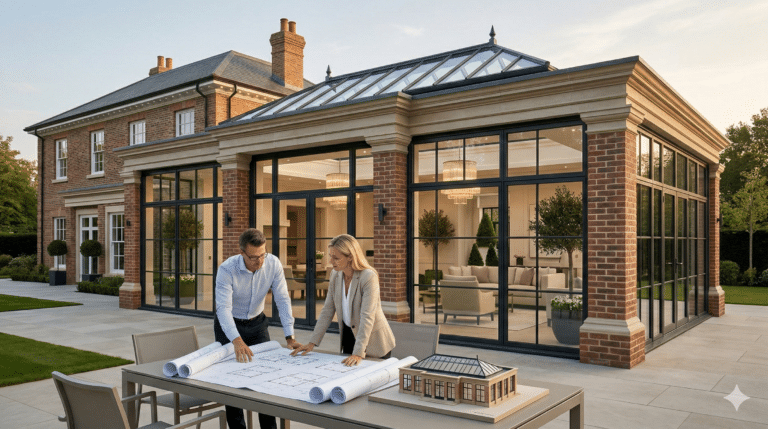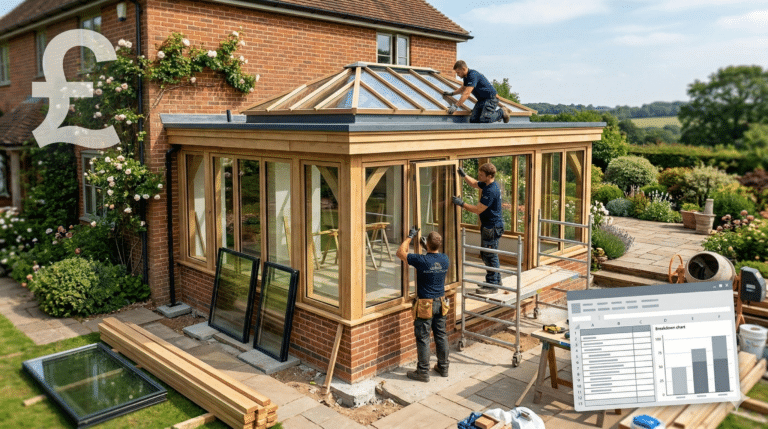

Bespoke conservatory by Room Outside featuring large windows, a glass roof, and a cozy seating area, surrounded by greenery.
roomoutsideuk
03rd March, 2026

Garden Room Planning Permission: South East Conservation Areas Guide

Conservation Areas: Protecting Our Natural Heritage | Roomoutside

Garden Room Planning Permission: South East Conservation Areas Guide

Do you need planning permission for a garden room? Everything UK homeowners need to know about Permitted Development, size limits, Building Regulations, and when you definitely need to apply.

Quick Answer: Do You Need Planning Permission?

Most garden rooms do NOT need planning permission under Permitted Development rights. Your garden room is likely exempt if it’s: single storey, max 2.5m height within 2m of a boundary, covers less than 50% of your garden (including other outbuildings), not forward of the house front, and used for purposes incidental to the house (office, gym, studio—not self-contained accommodation).

You WILL need planning permission if: your home is a listed building, you’re in a Conservation Area/AONB, your Permitted Development rights have been removed, or the garden room will be self-contained living accommodation.

Key Facts: Garden Room Planning Permission (UK 2026)

  • Maximum height near boundary: 2.5m if within 2 metres of any boundary
  • Maximum height elsewhere: 4m (dual-pitched roof) or 3m (other roof types) if more than 2m from boundary
  • Garden coverage limit: Total outbuildings must not exceed 50% of garden area
  • Building Regs threshold: Generally exempt if under 15m² (or under 30m² if more than 1m from boundary)
  • Conservation Areas: Garden buildings limited to 10m² and cannot be between house and highway
  • Lawful Development Certificate: £103 fee (as of 2026) provides legal confirmation no planning needed
  • Electrical work: Must comply with Part P Building Regulations regardless of size
  • Use restriction: Must be “incidental to the dwelling”—not self-contained accommodation
2.5m
Max height near boundary
50%
Max garden coverage
15m²
Building Regs exempt
£103
LDC application fee

What is Permitted Development?

Permitted Development (PD) is a national grant of planning permission that allows certain building works and changes of use without needing to submit a planning application. For garden rooms, Permitted Development rights mean you can build an outbuilding in your garden without applying for planning permission—provided you meet specific criteria.

These rights are set out in the Town and Country Planning (General Permitted Development) (England) Order 2015 (as amended), specifically Schedule 2, Part 1, Class E for outbuildings. Scotland, Wales, and Northern Ireland have similar but slightly different rules.

Definition: “Incidental to the Enjoyment of the Dwelling”

This legal phrase is crucial for garden rooms. It means the garden building must serve the main house—not be a separate dwelling or primary business premises. Acceptable uses include:

  • Home office (for your own work, not employing staff on site)
  • Gym or yoga studio
  • Art studio or hobby room
  • Games room or home cinema
  • Guest bedroom (without separate kitchen/bathroom forming self-contained unit)
  • Workshop or storage

NOT acceptable: Self-contained granny annexe, separate rental unit, commercial premises with employees/customers visiting regularly.

Garden Room Size Limits Under Permitted Development

Contrary to popular belief, there’s no specific floor area limit for garden rooms under Permitted Development. The restrictions focus on height and total garden coverage.

Height Restrictions

LocationRoof TypeMaximum Height
Within 2m of any boundaryAny2.5m at eaves
More than 2m from boundaryDual-pitched (apex)4m at ridge
More than 2m from boundaryOther (flat, mono-pitch)3m at highest point

The 50% Rule

Total area of ground covered by outbuildings (including your proposed garden room) must not exceed 50% of the total area of the curtilage (garden). This includes:

  • Sheds
  • Garages (if detached)
  • Greenhouses
  • Swimming pools and pool houses
  • Other outbuildings
  • Extensions to the house (for calculation purposes)

The “original” garden area is calculated based on what existed on 1st July 1948, or when the house was built if later. Previous extensions don’t count against your garden area, but they do count as built structures for the 50% calculation.

Common Mistake: Measuring Only the Garden Room

Many homeowners measure only their proposed garden room and think “that’s well under 50%.” But you must include ALL outbuildings. If you have a 100m² garden with an existing 15m² shed and 10m² greenhouse, you’ve already used 25m². Your garden room cannot exceed 25m² without breaching the 50% rule—even though 25m² seems small for a 100m² garden.

When You DO Need Planning Permission

Even if your garden room meets the size criteria, you’ll still need planning permission in certain circumstances:

Planning Permission IS Required If:

Listed building: Any external works to a listed building require Listed Building Consent AND often planning permission
Conservation Area: Additional restrictions apply—garden buildings over 10m² or positioned between house and highway need permission
AONB, National Park, or World Heritage Site: Same restrictions as Conservation Areas
Article 4 Direction: Your local authority may have removed Permitted Development rights for your area
Self-contained accommodation: Garden room with kitchen and bathroom facilities for independent living
Forward of principal elevation: Garden room in front of the house facing a highway
Exceeds height limits: Over 2.5m within 2m of boundary, or over 4m elsewhere
Exceeds 50% coverage: Total outbuildings exceed half your garden area

Building Regulations: Separate from Planning Permission

Building Regulations are entirely separate from planning permission. You might not need planning permission but still need Building Regulations approval—or vice versa. Building Regulations cover structural safety, fire safety, ventilation, drainage, and electrical safety.

When Building Regulations Apply to Garden Rooms

Garden Room SizeSleeping Accommodation?Distance from BoundaryBuilding Regs Required?
Under 15m²NoAnyNo
15-30m²NoMore than 1mNo
15-30m²NoLess than 1mYes
Over 30m²NoAnyYes
Any sizeYesAnyYes

Electrical Work Always Needs Compliance

Regardless of size, electrical installations in garden rooms must comply with Part P of the Building Regulations. This doesn’t mean you need Building Regulations approval for the whole building—but the electrical work must be:

  • Carried out by a competent person registered with NICEIC, NAPIT, or similar scheme, OR
  • Inspected and tested by Building Control, who will issue a certificate

A qualified electrician registered with a competent person scheme will self-certify the work and notify Building Control on your behalf.

Regional Considerations: South East England

The South East has particular planning considerations due to the high number of Conservation Areas, AONBs, and listed buildings. Here’s what to watch for in different areas:

Kent

  • High Weald AONB: Covers significant parts of Kent—garden buildings limited to 10m² under PD
  • Conservation Areas: Canterbury, Tunbridge Wells, Sevenoaks all have extensive Conservation Areas
  • Kent Downs AONB: Strict oversight on building design and materials

Surrey

  • Surrey Hills AONB: Covers approximately 25% of the county
  • Green Belt: Extensive Green Belt restrictions—garden rooms generally permitted but size matters
  • Conservation Areas: Guildford, Reigate, Farnham have substantial protected areas

Sussex (East and West)

  • South Downs National Park: Similar restrictions to AONB—garden buildings limited
  • High Weald AONB: Extends into Sussex
  • Coastal areas: Chichester Harbour AONB has additional considerations
  • Conservation Areas: Brighton, Lewes, Chichester have protected zones

Hampshire

  • New Forest National Park: Very strict planning controls
  • South Downs National Park: Covers eastern Hampshire
  • Conservation Areas: Winchester, Southampton, Portsmouth have protected areas

How to Check Your Local Designations

  • Visit your local council’s planning portal
  • Use the government’s MAGIC Map to check AONB/National Park boundaries
  • Search “[your council] Conservation Areas map”
  • Check your property’s title deeds for restrictive covenants
  • Contact your local planning department if uncertain

How to Get Certainty: Lawful Development Certificate

If you want legal certainty that your garden room doesn’t need planning permission, apply for a Lawful Development Certificate (LDC). This is an official document from your local planning authority confirming that the proposed development is lawful.

Benefits of an LDC

  • Legal protection: Protects you from enforcement action
  • Property sale: Valuable evidence when selling—solicitors check for this
  • Peace of mind: Official confirmation before you spend money building
  • Relatively cheap: Currently £103 for proposed development (2026)

How to Apply

  1. Download the application form from the Planning Portal or your local council
  2. Provide scaled drawings of your proposed garden room
  3. Include a site plan showing position in garden
  4. Pay the fee (£103 for proposed development)
  5. Wait 8 weeks for a decision (statutory timeframe)

Pro Tip: Apply BEFORE Building

If you apply for an LDC after building (certificate of lawfulness of existing development), the fee is higher (£206) and you have no protection if it’s refused—you may face enforcement action. Apply before building for the “proposed” certificate, which is cheaper and gives you certainty before committing.

Common Myths About Garden Room Planning Permission

Myth #1: “Garden rooms under 15m² never need permission”

Fact: The 15m² figure relates to Building Regulations exemption, NOT planning permission. Planning permission depends on height, location, garden coverage, and property designation—not floor area. A 10m² garden room could need permission if it exceeds height limits or is in a Conservation Area.

Myth #2: “It’s in my garden so I can build what I want”

Fact: Permitted Development rights have strict conditions. Exceed them, and you need planning permission. Build without it, and you risk enforcement notices requiring demolition. Your garden is still subject to planning law.

Myth #3: “If my neighbour built one, so can I”

Fact: Every property is different. Your neighbour might have a larger garden (different 50% calculation), be outside a Conservation Area, have different boundary setbacks, or have actually obtained planning permission. Never assume your situation matches theirs.

Myth #4: “Planning permission is expensive and takes forever”

Fact: A householder planning application costs £258 (2026) and has an 8-week statutory decision period. Many straightforward applications are approved without issues. It’s not as daunting as people assume—and it’s far cheaper than demolishing an illegal building.

Myth #5: “I can call it a shed to avoid planning rules”

Fact: What you call it doesn’t matter—how you use it does. A “shed” used as a home office is subject to the same rules as a “garden office.” Planning rules apply based on the structure and its use, not its name.

Step-by-Step: Checking if Your Garden Room Needs Permission

Complete This Checklist Before Building:

Step 1: Check if property is listed, in Conservation Area, AONB, or National Park
Step 2: Check for Article 4 Directions removing PD rights in your area
Step 3: Measure total garden area and all existing outbuildings
Step 4: Calculate if proposal keeps total outbuildings under 50%
Step 5: Check height complies (2.5m within 2m of boundary; 4m/3m elsewhere)
Step 6: Confirm position is NOT forward of principal elevation
Step 7: Confirm use is incidental (office, gym)—NOT self-contained living
Step 8: If ANY doubt, apply for Lawful Development Certificate (£103)

Room Outside

Garden Room Specialists | Established 1973 | 50+ Years Experience

Room Outside designs and builds quality garden rooms, conservatories, and orangeries across Kent, Surrey, Sussex, Hampshire, and London. We handle planning considerations, Building Regulations compliance, and create stunning spaces that meet all legal requirements. Call 01243 538999 for expert advice on your garden room project.

Garden Room Service Areas in South East England

Room Outside designs and builds garden rooms across the South East of England, with full knowledge of local planning requirements:

KentSurreyEast SussexWest SussexHampshireLondonBerkshireEssex

Sources, References, and Further Reading

Official Government Sources: Town and Country Planning (General Permitted Development) (England) Order 2015; Planning Portal (planningportal.co.uk) – Outbuildings guidance; Building Regulations 2010 (as amended) – Schedule 2.

Local Authority Resources: Consult your specific local planning authority for Conservation Area maps, Article 4 Directions, and local planning policies.

Industry Experience: Room Outside – 50+ years experience designing and building garden rooms across South East England with full consideration of planning requirements.

Last updated: February 2026 | Expert review: Planning requirements verified against current legislation

Frequently Asked Questions

Do you need planning permission for a garden room?

Most garden rooms don’t need planning permission under Permitted Development rights, provided they meet criteria: max 2.5m height within 2m of boundary, total outbuildings under 50% of garden, single storey, not forward of the house, and used for purposes incidental to the dwelling.

What is the maximum size for a garden room without planning permission?

There’s no specific floor area limit. The key restrictions are: 2.5m max height within 2m of boundary (4m elsewhere with dual-pitched roof), and total outbuildings must not exceed 50% of your garden area. You could build a large garden room if it meets these criteria.

Do garden rooms need Building Regulations approval?

Garden rooms under 15m² (or under 30m² if more than 1m from boundary) are generally exempt from Building Regulations, provided they don’t contain sleeping accommodation. Electrical work must still comply with Part P regardless of size.

Can I build a garden room in a Conservation Area?

Yes, but with additional restrictions. Garden buildings in Conservation Areas are limited to 10m² under Permitted Development and cannot be positioned between the house and the highway. Larger structures will need planning permission.

Can I use a garden room as a home office?

Yes, using a garden room as a home office is permitted and doesn’t usually require planning permission, as it’s “incidental to the enjoyment of the dwelling.” However, if you employ staff on site or have regular customer visits, this may change the situation.

Can I sleep in my garden room?

Occasional guest sleeping is generally fine. However, if the garden room becomes self-contained living accommodation with its own kitchen and bathroom, it’s no longer “incidental” and will require planning permission. Building Regulations also apply differently to sleeping accommodation.

What happens if I build without planning permission?

The local authority can issue an enforcement notice requiring demolition or retrospective application. When selling, lack of proper permissions will be revealed in searches and can delay or prevent sales. Always verify requirements before building.

How close to the boundary can I build a garden room?

You can build right up to the boundary, but if within 2m of any boundary, maximum height is restricted to 2.5m. For Building Regulations exemption, garden rooms between 15-30m² must be more than 1m from any boundary.

Do I need planning permission for a garden room with electricity?

No, having electricity doesn’t affect planning requirements. However, electrical work must comply with Part P of Building Regulations and should be carried out by a qualified electrician registered with a competent person scheme (NICEIC, NAPIT, etc.).

How do I check if my garden room needs planning permission?

Check all Permitted Development criteria, verify your property isn’t listed or in a designated area (Conservation Area, AONB), check for Article 4 Directions, and confirm your use is incidental. If in doubt, apply for a Lawful Development Certificate (£103) for legal certainty.

Call us anytime – David, our digital assistant, will take a few details so the right specialist can follow up personally. 01243 538999 or request a consultation online

Ready to Discuss Your Garden Room Project?

Our specialists understand local planning requirements across Kent, Surrey, Sussex, Hampshire, and London. We’ll help you design a garden room that meets all regulations and exceeds your expectations.

Book Free Consultation

Call us anytime on 01243 538999 – David, our digital assistant, will take a few details so the right specialist can follow up personally.

Room Outside: Garden room specialists since 1973.
Serving Kent, Surrey, Sussex, Hampshire, London & surrounding areas.

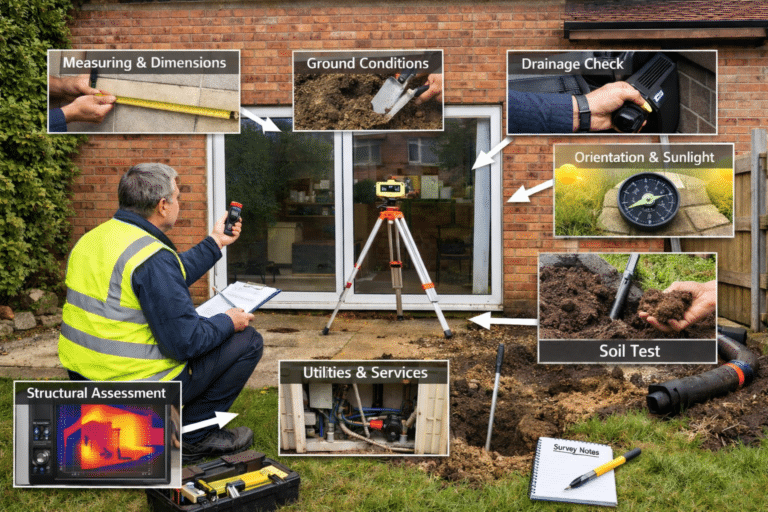
Bespoke conservatory by Room Outside featuring large windows, a glass roof, and a cozy seating area, surrounded by greenery.
roomoutsideuk
26th February, 2026

Aluminium Orangeries: The Complete 2026 Guide

Aluminium Orangeries Complete Guide 2026 | Costs, Benefits, Design | Room Outside
Definitive Guide 2026

Aluminium Orangeries: The Complete 2026 Guide

Everything you need to know about aluminium orangeries: costs, thermal performance, design options, planning permission, and how they compare to uPVC and timber. Expert advice from specialists with 50+ years experience.

22 min read
Updated May 2026
UK Specialist Guide

Quick Answer: Aluminium Orangeries

Aluminium orangeries are premium home extensions combining solid perimeter roofs with central glass lanterns, supported by slim aluminium frames. They offer exceptional strength, U-values from 1.2 W/m²K (thanks to thermal breaks), and 50+ year lifespans with minimal maintenance. Costs range from £30,000 for small designs to £120,000+ for large, complex installations. Aluminium is ideal for modern extensions and period properties alike, available in any RAL colour.

Key Facts: Aluminium Orangeries (UK 2026)

  • Cost range: £30,000-£50,000 (small 10-20m²), £50,000-£80,000 (medium 20-35m²), £80,000-£120,000+ (large 35m²+)
  • Thermal performance: U-values from 1.2 W/m²K with thermal break technology
  • Lifespan: 50+ years with minimal maintenance
  • Frame thickness: Up to 50% slimmer than uPVC, maximizing glass area
  • Maintenance: Occasional cleaning only – no painting required
  • Colours: Any RAL colour available, including anthracite grey (RAL 7016), black, cream, green
  • Planning: Often Permitted Development; check local rules for listed/conservation areas
  • Property value: Can add 5-10% to home value
£30k-£120k+
Typical cost range
1.2
U-value (W/m²K)
50+
Years lifespan
5-10%
Value added

1. What is an Aluminium Orangery?

An aluminium orangery is a home extension characterized by a solid flat roof perimeter, a central glazed lantern, and large windows or glazed panels set within robust perimeter walls—all constructed using aluminium frames. Unlike conservatories which are predominantly glass (typically 75%+ glazed roofs), orangeries maintain architectural presence through solid roof sections while the glass lantern floods the interior with natural light.

When crafted in aluminium, these structures benefit from the material’s exceptional properties: high strength-to-weight ratio allows for slim sightlines (frames up to 50% slimmer than uPVC), while thermal break technology ensures energy efficiency. Aluminium orangeries can be attached to existing properties or designed as standalone garden rooms.

Key Components of an Aluminium Orangery

  • Perimeter roof: Solid insulated panels around the edges, typically finished with plasterboard internally and roofing materials externally
  • Central lantern: Glazed roof structure that rises above the flat roof, allowing light from above
  • Aluminium frames: Slim, strong profiles supporting glazing and roof structures
  • Base walls: Often dwarf walls (600-900mm high) or full-height aluminium columns
  • Glazing: Double or triple glazed units with Low-E coatings and argon gas filling

The aluminium used in modern orangeries is typically powder-coated for durability and available in virtually any colour, from classic anthracite grey (RAL 7016) to heritage shades like cream or green, making them suitable for both contemporary and traditional properties.

2. Why Choose Aluminium for Your Orangery?

Aluminium has become the material of choice for premium orangeries, offering advantages that timber and uPVC cannot match. Here’s why homeowners across Kent, Surrey, Sussex, Hampshire, and London are specifying aluminium.

2.1 Strength with Slim Profiles

Aluminium’s high strength-to-weight ratio means frames can be significantly slimmer than uPVC (up to 50% thinner) while maintaining structural integrity. This maximizes glass area, increasing natural light and views. For example, an aluminium orangery in Surrey might feature floor-to-ceiling glazing with barely visible frames, creating a seamless connection with the garden.

2.2 Thermal Efficiency (Thermal Break Technology)

Modern aluminium orangeries incorporate thermal breaks – insulating barriers made from polyamide or similar materials placed between interior and exterior aluminium surfaces. This prevents heat transfer, achieving U-values as low as 1.2 W/m²K. Combined with double or triple glazing (Low-E coatings, argon gas), aluminium orangeries are comfortable year-round, meeting and exceeding Building Regulations Part L.

2.3 Durability and Longevity

Aluminium is naturally resistant to corrosion, rust, and UV degradation. Powder-coated finishes (applied electrostatically) provide additional protection, typically guaranteed for 20-30 years. Unlike timber, aluminium doesn’t rot, warp, or require repainting. An aluminium orangery installed today will likely last 50+ years with nothing more than occasional cleaning.

2.4 Low Maintenance

For busy homeowners in Sussex or Hampshire, low maintenance is a major selling point. Aluminium orangeries need only:

  • Occasional washing with soapy water to remove dirt
  • Annual gutter and drainage checks
  • Lubrication of hinges and locks (every 2-3 years)

No painting, staining, or preservative treatments are required.

2.5 Design Flexibility

Aluminium can be fabricated into virtually any shape, supporting bespoke designs:

  • Colours: Any RAL colour available – anthracite grey (most popular), black, cream, green, grey, white
  • Dual-colour options: Different colour inside and out (e.g., white internally, anthracite externally)
  • Door integration: Seamlessly incorporate bifold, sliding, or French doors in matching aluminium
  • Lantern styles: Pyramid, ridge, or bespoke lantern designs

2.6 Sustainability

Aluminium is 100% recyclable without loss of quality. The UK aluminium industry recycles approximately 75% of all aluminium produced. Choosing aluminium supports circular economy principles and reduces environmental impact compared to materials that end up in landfill.

🔩 Strength

High strength-to-weight ratio enables slim frames and large glass spans.

☀️ Thermal Efficiency

Thermal breaks achieve U-values from 1.2 W/m²K.

🧼 Low Maintenance

No painting – just occasional cleaning.

🎨 Colour Options

Any RAL colour, dual-colour available.

⏱️ Longevity

50+ year lifespan with proper care.

🌍 Sustainable

100% recyclable, eco-friendly choice.

3. Aluminium vs Timber vs uPVC: Comparison

Choosing between aluminium, timber, and uPVC depends on your priorities – budget, aesthetics, maintenance, and longevity. This comparison helps homeowners in Kent, Surrey, and beyond make informed decisions.

FeatureAluminiumTimberuPVC
Frame thicknessVery slim (20-30mm sightlines)Chunky (50-80mm)Bulky (60-100mm)
Thermal performance (U-value)1.2 – 1.6 W/m²K1.4 – 2.0 W/m²K1.4 – 1.8 W/m²K
Lifespan50+ years50+ years (with maintenance)20-30 years
MaintenanceMinimal – occasional cleanHigh – repaint every 5-7 yearsLow – occasional clean
Colour optionsAny RAL colour, dual-colourStains/paints, limitedLimited, often white/cream
Initial cost£££ (premium)££ (mid-range)£ (budget)
Recyclability100% recyclableBiodegradableDifficult to recycle
AestheticSleek, modern, minimalistWarm, traditionalPractical, less premium

3.1 When to Choose Aluminium

Aluminium is ideal for:

  • Contemporary homes requiring slim sightlines
  • Maximum light and garden views
  • Low-maintenance lifestyles
  • Long-term investment (50+ years)
  • Bespoke designs and custom colours

3.2 When Timber Might Be Better

Timber suits:

  • Period properties where traditional appearance is paramount
  • Listed buildings requiring authentic materials
  • Homeowners willing to maintain regularly
  • Lower initial budgets (though lifetime costs may equal aluminium)

3.3 When uPVC Might Be Considered

uPVC is appropriate for:

  • Tight budgets where initial cost is the only factor
  • Short-term ownership (under 10 years)
  • Less demanding aesthetic requirements
  • Properties where appearance is not critical

However, many homeowners find that the long-term value and aesthetics of aluminium justify the higher initial investment.

4. Aluminium Orangery Costs 2026 (UK Guide)

Understanding costs helps with budgeting and comparing quotes. Prices vary based on size, complexity, glazing specification, and site conditions. Below are typical ranges for aluminium orangeries in 2026.

Size CategoryArea (m²)Typical Cost RangeExample Use
Small10-20 m²£30,000 – £50,000Entrance hall, small dining area
Medium20-35 m²£50,000 – £80,000Kitchen-diner, family room
Large35-50 m²£80,000 – £120,000+Open-plan living, garden room
Complex/BespokeVariable£120,000 – £200,000+Multi-level, curved, heritage projects

Factors Affecting Aluminium Orangery Costs

  • Size: Larger structures require more materials and labour
  • Glazing specification: Triple glazing, solar control coatings, self-cleaning glass add cost
  • Complexity: Curved lanterns, multiple roof levels, bespoke shapes increase price
  • Foundation requirements: Ground conditions may require piling or reinforced concrete
  • Access: Difficult site access increases installation time and cost
  • Finishes: Dual-colour options, special RAL colours, timber-effect interiors
  • Doors: Bifold, sliding, or French doors – larger spans cost more
  • Heating/electrics: Underfloor heating, lighting, power points add to total
  • Location: Regional labour rates vary (London generally highest)

For a precise quotation, contact Room Outside for a site survey and design consultation.

5. Thermal Performance: How Warm Are Aluminium Orangeries?

Modern aluminium orangeries are designed to be comfortable year-round, addressing the historic reputation of glass structures being too hot in summer and too cold in winter. Key technologies include:

5.1 Thermal Break Technology

A thermal break is an insulating barrier (typically polyamide) inserted between the interior and exterior aluminium profiles. This prevents thermal bridging – the direct transfer of heat through the metal. Without thermal breaks, aluminium would conduct heat readily; with them, U-values drop dramatically.

5.2 High-Performance Glazing

Aluminium orangeries use sealed double or triple glazed units with:

  • Low-E coatings: Microscopic metallic layers that reflect heat back into the room while allowing light through
  • Argon or krypton gas fills: Inert gases between panes provide better insulation than air
  • Warm edge spacers: Insulating spacer bars reduce heat loss at pane edges

5.3 Solar Control

For south-facing orangeries, solar control glass can be specified. This incorporates coatings that reflect solar infrared radiation, blocking up to 86% of solar heat while maintaining high light transmission. This prevents overheating in summer without darkening the interior.

5.4 Typical U-Values Achieved

  • Standard double glazing: U-value 1.6 – 1.8 W/m²K
  • Low-E double glazing with argon: 1.2 – 1.4 W/m²K
  • Triple glazing with Low-E and argon: 0.8 – 1.0 W/m²K

Building Regulations Part L typically require U-values of 1.6 W/m²K or better for new extensions, so even basic specifications meet standards.

5.5 Ventilation Considerations

To maintain comfort, roof vents or automated opening windows are essential. Building Regulations require adequate ventilation – typically at least 1/20th of floor area as openable area. Modern aluminium orangeries can integrate:

  • Electric roof vents with rain sensors
  • Automated window openers linked to thermostats
  • Manual vents for simple operation

6. Aluminium Orangery Design Options

Aluminium’s versatility enables a wide range of design styles, from ultra-modern to traditional heritage. Here are key design considerations for homeowners in Kent, Surrey, Sussex, Hampshire, and London.

6.1 Lantern Roof Styles

  • Pyramid lantern: Classic four-sided glazed roof rising to a point, suits traditional and contemporary designs
  • Ridge lantern: Long, rectangular lantern running the length of the roof, ideal for modern extensions
  • Multi-pitch lantern: Complex designs with multiple glazed sections for dramatic effect
  • Flat glass roof: Minimalist option with frameless glazing for ultra-modern look

6.2 Colour Options

Aluminium can be powder-coated in virtually any RAL colour. Popular choices include:

  • Anthracite grey (RAL 7016): Most popular – sophisticated, modern, architectural
  • Black (RAL 9005): Dramatic, contemporary, bold
  • Cream (RAL 9001): Traditional, suits period properties
  • Green (RAL 6005): Heritage colour for rural settings
  • White (RAL 9016): Classic, safe choice
  • Grey (various): Light grey, silver, metallic finishes

Dual-colour option: Different colour inside and out – e.g., white internally for brightness, anthracite externally for kerb appeal.

6.3 Door Integration

  • Bifold doors: Multiple panels fold and stack, creating wide openings (up to 6-8m spans)
  • Sliding doors: Panels slide horizontally, space-saving, ideal where swing space limited
  • French doors: Traditional double doors, outward opening
  • Pivot doors: Large format doors that pivot open, dramatic entrance statements

All door types can be manufactured in matching aluminium, ensuring cohesive design.

6.4 Base Wall Options

  • Dwarf walls: 600-900mm high brick/stone walls, providing insulation and traditional appearance
  • Full-height glazing: Glass from floor to ceiling, maximising views, requires high-performance glazing
  • Aluminium columns: Structural aluminium posts supporting roof, creating open feel

7. Planning Permission for Aluminium Orangeries

Understanding planning requirements is crucial before starting your project. Most aluminium orangeries fall under Permitted Development rights, but exceptions apply.

7.1 Permitted Development Conditions

Your aluminium orangery may not need planning permission if it meets all these criteria:

  • Single storey with maximum eaves height of 3m
  • Maximum height of 4m (if within 2m of boundary, height limited to 3m)
  • Doesn’t extend beyond the rear wall by more than 3m (semi/terraced) or 4m (detached)
  • Doesn’t cover more than half the garden area
  • Materials similar to existing house (aluminium acceptable)
  • Not forward of principal elevation facing a highway
  • No verandas, balconies, or raised platforms

7.2 When Planning Permission IS Required

You WILL need planning permission if:

  • Your property is listed (plus Listed Building Consent required)
  • You’re in a Conservation Area, National Park, AONB, or World Heritage Site
  • Previous extensions have used your Permitted Development allowance
  • You exceed size/height limits
  • Your property has Article 4 Direction removing PD rights
  • Building a detached orangery in some circumstances

7.3 Listed Buildings and Conservation Areas

Aluminium can be suitable for listed buildings if designed sensitively. Conservation officers often prefer aluminium for its slim sightlines and clear distinction between old and new. However, you’ll need both Listed Building Consent and planning permission. Heritage colours (cream, green) and traditional proportions help gain approval.

Room Outside has extensive experience with listed property extensions across Sussex, Surrey, and Hampshire.

7.4 Building Regulations

All orangeries must comply with Building Regulations covering:

  • Part L (Conservation of fuel and power): Thermal performance standards
  • Part A (Structure): Structural integrity
  • Part B (Fire safety): Escape routes and fire resistance
  • Part F (Ventilation): Adequate ventilation
  • Part K (Protection from falling): Glazing safety

Reputable installers like Room Outside handle Building Regulations approval as part of the service.

8. Aluminium Orangery Installation Process

Understanding the installation timeline helps with planning. Typical projects take 12-20 weeks from deposit to completion.

Stage 1: Initial Consultation (Week 1-2)

Site survey, discuss requirements, budget, and design preferences. Assess planning needs and access constraints.

Stage 2: Design and Quotation (Weeks 3-6)

Detailed designs, 3D visuals, and itemised quotation. Finalise glazing specifications, colours, and door choices.

Stage 3: Planning and Approvals (Weeks 6-12)

Submit planning application if required. Prepare Building Regulations submission. Listed Building Consent applications may take longer.

Stage 4: Manufacture (Weeks 8-14)

Aluminium frames fabricated off-site. Quality control ensures precision.

Stage 5: Groundworks and Foundations (Weeks 10-16)

Excavate foundations, pour concrete, install drainage. Prepare site for frame delivery.

Stage 6: Installation (Weeks 14-18)

Erect aluminium frame, install glazing, fit roof lantern, doors, and windows. Make weathertight.

Stage 7: Finishing (Weeks 16-20)

Internal plastering, electrics, heating, flooring, decoration. Final snagging and handover.

9. Aluminium Orangery vs Glass Box Extension

Homeowners often compare orangeries with glass box extensions. Key differences:

  • Roof design: Orangeries have solid perimeter roof with glass lantern; glass boxes have fully glazed roof
  • Privacy: Orangeries offer more privacy due to solid roof sections; glass boxes are fully transparent
  • Thermal efficiency: Orangeries typically more thermally efficient due to solid roof insulation
  • Aesthetics: Orangeries feel more architectural; glass boxes more minimalist
  • Cost: Glass boxes often more expensive due to structural glass requirements

Both can be constructed in aluminium, offering slim frames and durability. The choice depends on desired appearance and performance priorities.

10. Common Myths About Aluminium Orangeries

Myth: “Aluminium orangeries are cold”

Fact: Modern thermally broken aluminium frames achieve U-values as low as 1.2 W/m²K – comparable to solid walls. Combined with high-performance glazing, they’re warm in winter and cool in summer.

Myth: “Aluminium is only for modern homes”

Fact: Aluminium can be powder-coated in heritage colours (cream, green, grey) and designed with traditional proportions, making it suitable for period properties and listed buildings.

Myth: “Aluminium orangeries are too expensive”

Fact: While initial costs are higher than uPVC, the 50+ year lifespan and minimal maintenance make aluminium cost-effective over time. Property value uplift often exceeds the additional investment.

Myth: “Aluminium frames look industrial”

Fact: Modern aluminium profiles are slim and elegant, with smooth powder-coated finishes. They don’t have the industrial appearance of raw aluminium.

Myth: “You can’t get curved aluminium frames”

Fact: Aluminium can be curved during manufacture, enabling bespoke arched windows, curved lanterns, and unique architectural features.

11. Aluminium Orangeries in Your Area

Room Outside serves homeowners across Southern England with aluminium orangery installations. Local considerations:

Aluminium Orangeries Kent

Kent’s mix of Wealden villages, coastal towns, and London commuter belt means diverse property types. We handle everything from modern extensions in Tunbridge Wells to heritage projects in Canterbury.

Aluminium Orangeries Surrey

Surrey’s affluent suburbs and green belt locations demand high-quality finishes. Aluminium orangeries in Guildford, Woking, and Esher often feature anthracite grey frames with bifold doors.

Aluminium Orangeries Sussex (East and West)

From Brighton’s contemporary homes to Chichester’s historic properties, aluminium suits both. We’ve installed orangeries across Sussex with heritage colours for listed buildings.

Aluminium Orangeries Hampshire

Hampshire’s New Forest, Winchester, and Southampton areas require sensitivity to conservation constraints. We navigate planning successfully.

Aluminium Orangeries London

London projects often involve tight sites, listed buildings, and conservation areas. Our experience ensures compliance and beautiful results.

Aluminium Orangeries Berkshire, Dorset, Essex

We also serve Berkshire, Dorset, and parts of Essex, bringing the same expertise and quality.

KentSurreyEast SussexWest SussexHampshireGreater LondonBerkshireDorsetEssex

Room Outside

Aluminium Orangery Specialists | Established 1973

With over 50 years of experience, Room Outside designs and installs premium aluminium orangeries across Southern England. Our team combines traditional craftsmanship with modern aluminium technology, ensuring beautiful, thermally efficient spaces. We handle everything from initial design through planning to final installation. Contact us for expert advice.

Sources and Further Reading

Official sources: UK Planning Portal (planningportal.co.uk) – Permitted Development rights; Historic England – Listed building guidance; Building Regulations 2010 (as amended) – Part L (conservation of fuel and power).

Industry bodies: Glass and Glazing Federation – Thermal performance standards; Council for Aluminium in Building – Technical guidance.

Last updated: May 2026 | Next review: November 2026

📞 01243 538999 – Call anytime. David, our digital assistant, will take a few details so the right specialist can follow up personally.

Ready to Discuss Your Aluminium Orangery?

Whether you’re planning a contemporary extension in London or a heritage orangery in Sussex, our specialists are here to help. Book a free, no-obligation design consultation.

Book Free Consultation

Serving 10 Counties Since 1973
England | West Sussex | East Sussex | Surrey | Hampshire | Kent | Essex | Greater London | Berkshire | Dorset