
Glass Extension Ideas That Transform How You Live
Kitchen, dining, and living spaces reimagined through light, glass, and connection to the outdoors.
Architecture That Dissolves Boundaries
The best glass extensions don’t just add space—they fundamentally change how a home feels. They flood rooms with natural light, blur the line between inside and out, and create the kind of dramatic architectural statements that transform everyday living into something special.
We’ve designed glass extensions across West Sussex, East Sussex, Surrey, Hampshire, Kent, Essex, Greater London, Berkshire, and Dorset for over 50 years. Here are five glass extension ideas that consistently deliver transformative results—from wraparound kitchens to striking entrance halls.
The Wraparound Glass Kitchen
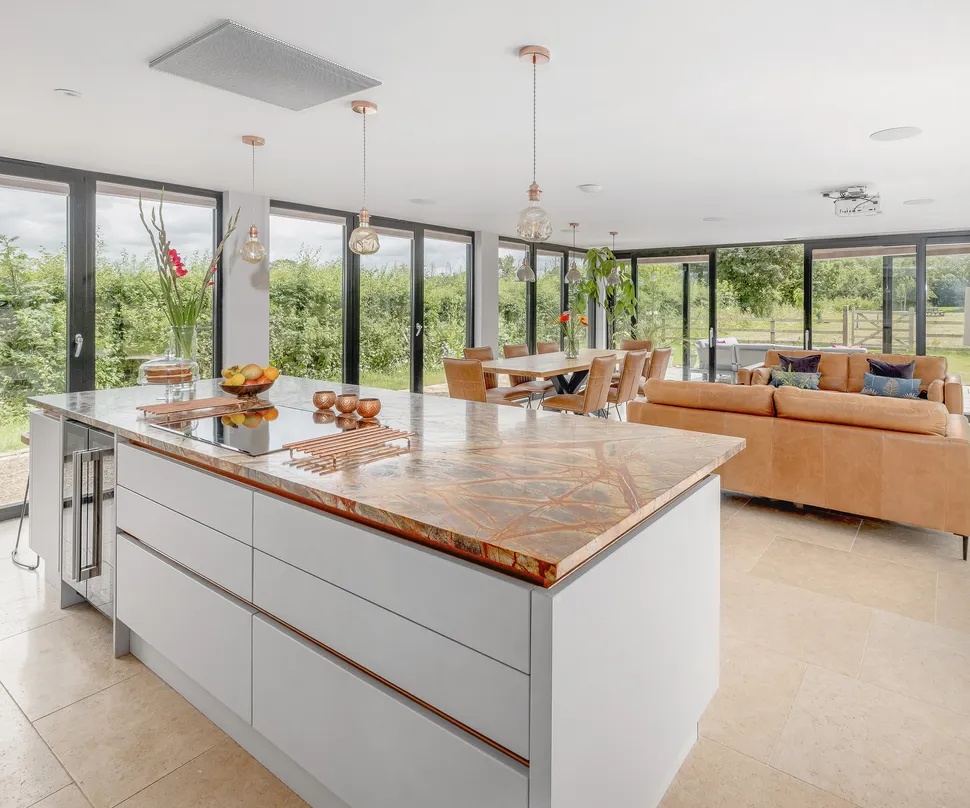
The wraparound glass kitchen extension has become the defining home improvement of the past decade—and for good reason. By extending on two or three sides with floor-to-ceiling glazing, you create a kitchen that feels like it’s floating in the garden, flooded with light from morning to evening.
The most successful designs position the cooking zone against a solid wall (for extraction and practicality), with the dining and living areas flowing into the glass-wrapped space. Large sliding or bi-fold doors on one or more sides allow the entire space to open completely in summer, transforming indoor dining into an alfresco experience without moving a muscle.
This isn’t just about aesthetics—wraparound glazing genuinely changes how families use their homes. The kitchen becomes the heart of everything, with sight lines to children playing in the garden, natural light that makes food preparation a pleasure, and a connection to the changing seasons that a windowless galley kitchen could never offer.
Multi-aspect glazingGlass on two or three sides for maximum light and garden views
Flat or minimal-pitch roofGlass or zinc roof with rooflights for overhead light
Indoor-outdoor flowBi-fold or large sliding doors for summer opening
Zoned layoutCooking against solid wall, living/dining in glazed area
Design Considerations
- Position cooking zone to manage steam and cooking odours away from seating
- Solar control glazing essential on south and west aspects
- Consider floor finish continuity between inside and terrace
- Underfloor heating works beautifully with polished concrete or stone
The Glass Dining Pavilion
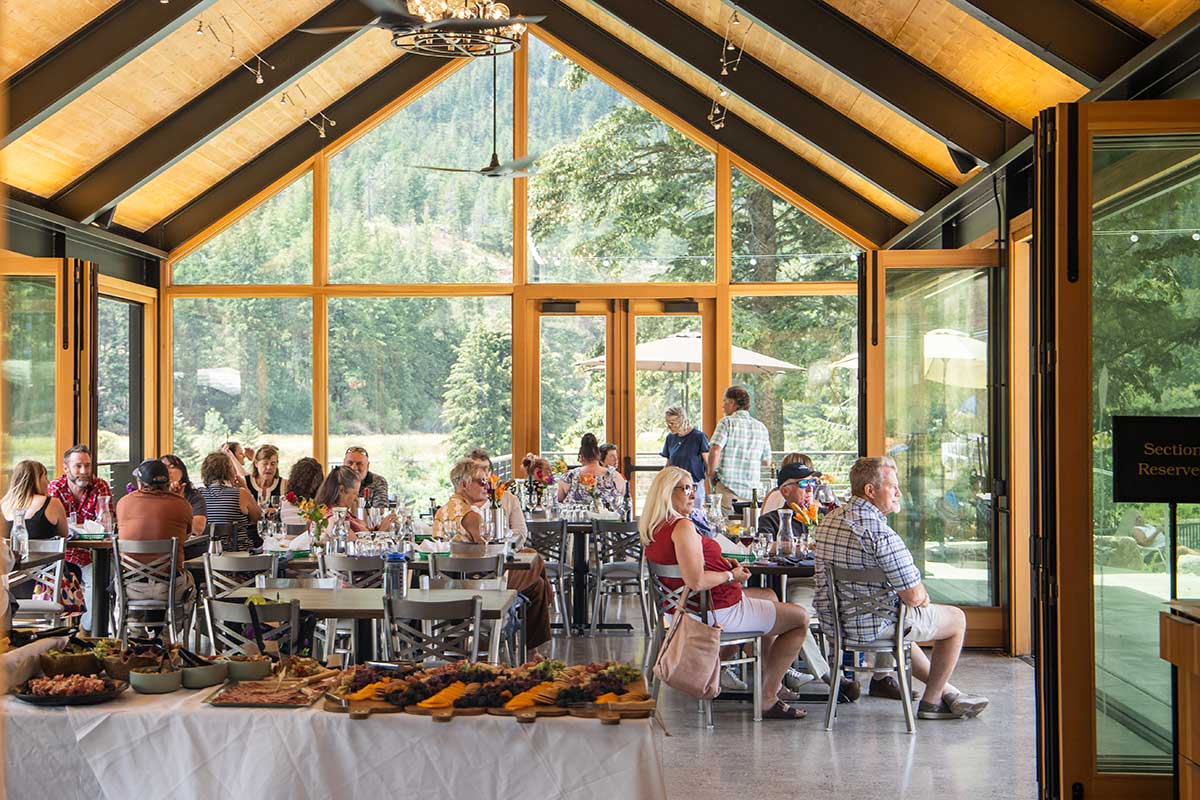
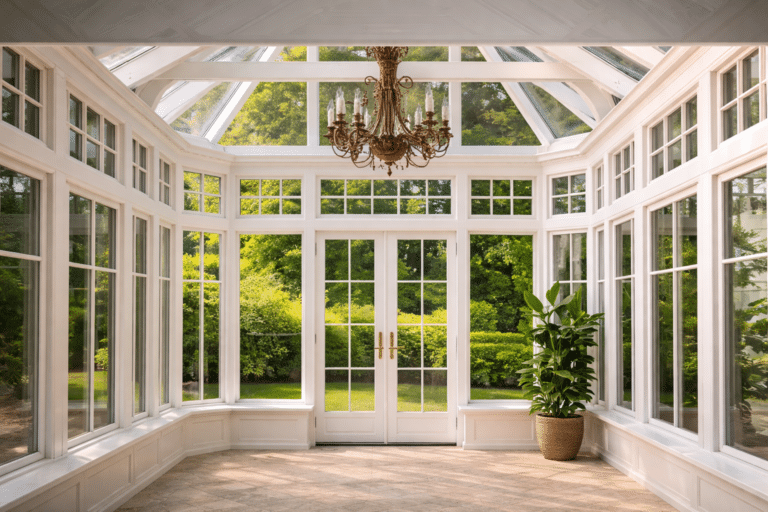
A glass dining pavilion takes the concept of the conservatory and elevates it to something altogether more dramatic. Imagine a room that feels like dining outdoors—surrounded by garden on three sides, with a glass roof that reveals the sky above—but with all the comfort and climate control of being inside.
The most successful dining pavilions are designed as distinct volumes, connected to but clearly separate from the main house. This creates architectural drama and allows the space to have its own character. Pendant lighting over the table, a statement chandelier, or carefully positioned spots can transform the space from a light-filled lunch venue to an atmospheric dinner party setting as dusk falls.
For entertaining, nothing else comes close. Guests naturally gravitate to a space this special, and the garden setting creates conversation and atmosphere that a traditional dining room simply cannot match.
Glass roof elementFull glass roof or large lantern for sky views
Dramatic lightingStatement pendants or chandelier as focal point
Distinct volumeDesigned as a separate pavilion connected to the house
Day-to-night flexibilityBlinds or dimmers for atmosphere after dark
Design Considerations
- Consider proximity to kitchen for ease of serving
- Acoustic treatment prevents echoey glass-box feeling
- Underfloor heating keeps feet warm without radiators breaking sight lines
- Garden lighting extends the view after dark rather than creating reflections
The Glass Living Room
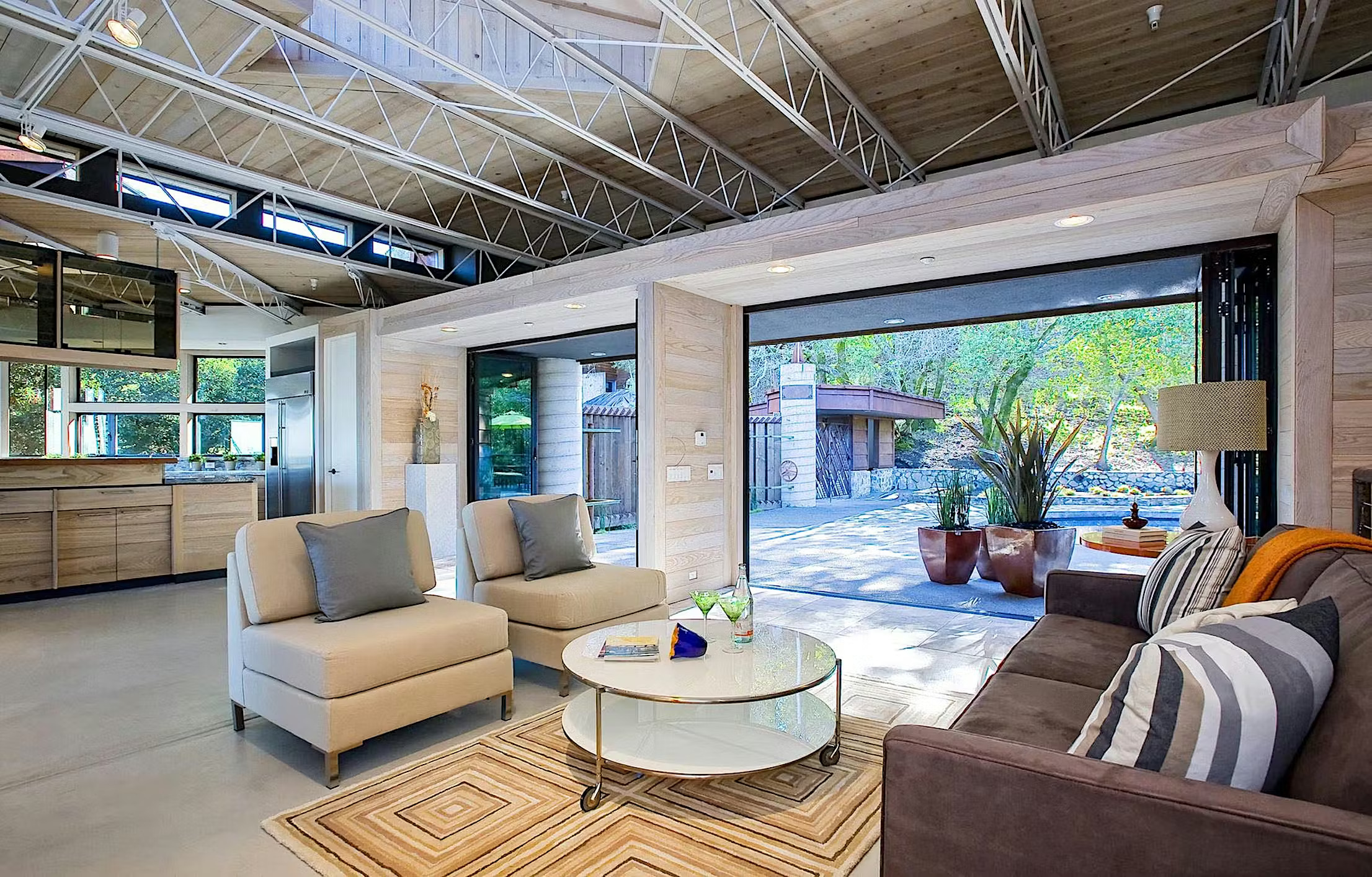
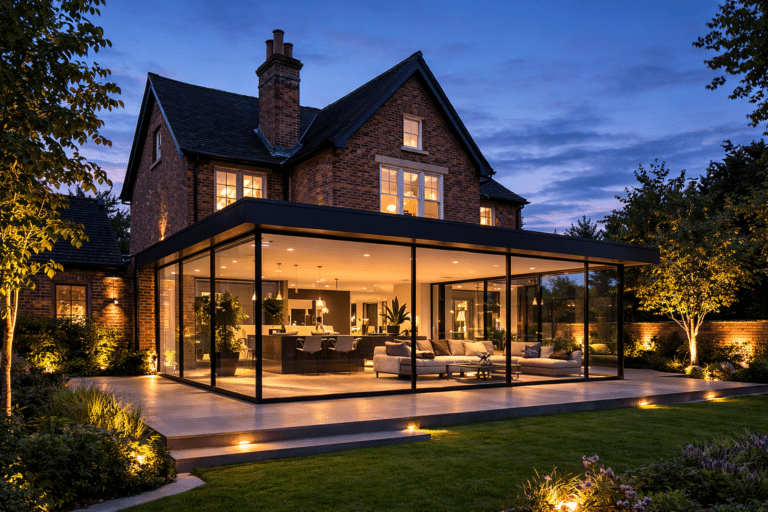
A glass living room extension redefines what it means to relax at home. Rather than watching television with your back to the garden, you’re immersed in it—the changing light, the movement of trees, the arrival of birds, the shift from season to season all become part of your daily experience.
The key to a successful glass living room is careful furniture placement and thoughtful glazing specification. You need comfortable seating that works with the views rather than against them, and glass that manages solar gain so the space doesn’t become a greenhouse in summer. With the right design, this becomes the room where everyone gravitates—bright and energising by day, cosy and intimate by night.
For families, a glass living room extension often becomes the “good” sitting room—the space for Sunday mornings, for reading, for quality time together. The original living room can then serve as a more casual TV room or playroom.
View-oriented layoutSeating arranged to embrace garden views
Solar control essentialPerformance glazing for year-round comfort
Feature fireplaceA focal point that works with rather than against the views
Cosy by nightLayered lighting and possibly electric blinds for evening warmth
The Glass Link
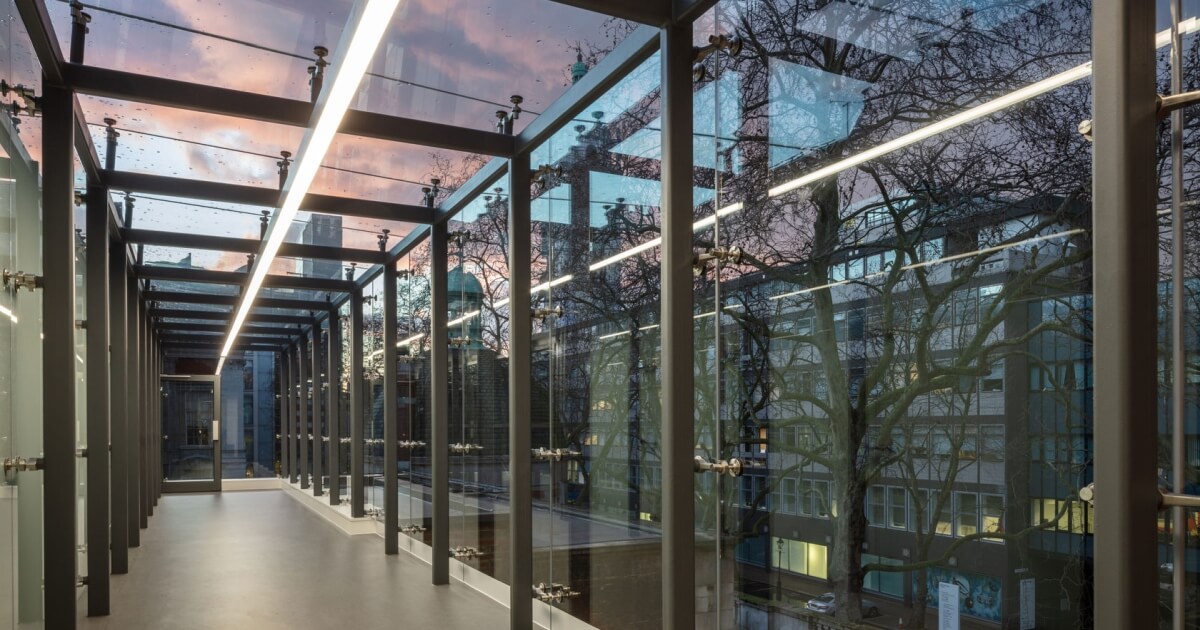
A glass link is architectural sleight of hand—it connects two separate buildings while appearing almost to disappear. Whether joining a period house to a garage conversion, linking the main property to an annexe, or creating a covered route to a garden room, the transparency of glass allows each structure to retain its distinct identity.
This approach is particularly valuable for listed buildings and properties in conservation areas, where planning authorities often look more favourably on glass connections than solid structures. The argument is compelling: a glass link is clearly contemporary, makes no attempt to replicate historic construction, and could theoretically be removed without damaging the original building.
Beyond planning benefits, glass links are simply beautiful. Walking through a corridor of glass, with garden visible on both sides and sky above, transforms the simple act of moving between rooms into something special. They work particularly well where the linked buildings have different characters—the contrast between old and new, or between the formality of a main house and the informality of a garden building.
Minimal structureSlim profiles or structural glass for maximum transparency
Weather-protected accessYear-round comfortable connection between buildings
Planning-friendlyOften well-received by conservation and listed building officers
Garden immersionPlanted borders create feeling of walking through the garden
Design Considerations
- Structural glass achieves the most transparent result but costs more
- Heating may be minimal—it’s a transition space, not a living room
- Drainage and level changes need careful detailing
- Consider how link appears from garden—it should enhance, not obstruct views
The Glass Entrance Hall
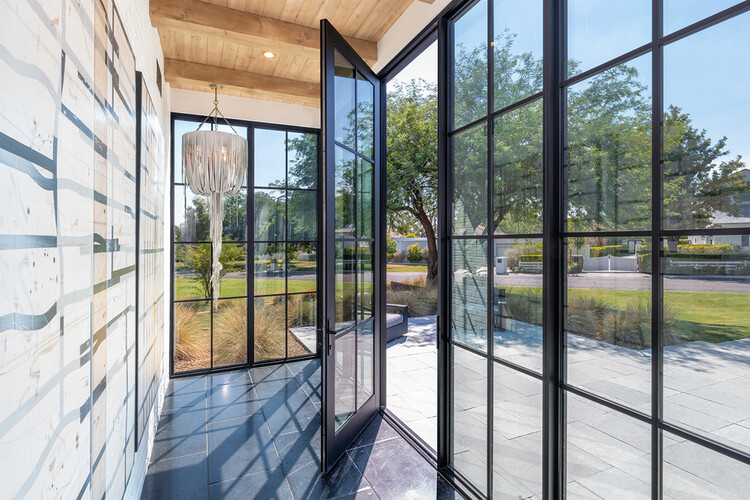
First impressions matter, and a glass entrance extension makes a statement that no ordinary porch or vestibule can match. Arriving at a home through a light-filled glass structure—with views through to the garden beyond—sets the tone for everything that follows.
Glass entrance halls work particularly well on properties where the original front door opens directly into a living room, or where there’s no proper hallway. The glass structure provides the transition space that the house lacks, creating an airlock that keeps heat in and weather out, while adding the drama of a double-height glazed volume or a striking architectural composition.
The design can be minimal and contemporary—a simple glass box that defers to the original building—or more elaborate, with feature frames, a sculptural roof form, or integrated planting. Either way, arriving home becomes an experience rather than a formality.
Architectural statementSets the tone for the entire property
Practical airlockKeeps weather and heat where they should be
Natural lightFloods the hallway and interior with daylight
Security and storageSpace for coats, shoes, and secure package delivery
Design Considerations
- Front-of-house location means planning permission often required
- Privacy glass or positioning needs thought on busy streets
- Lighting design crucial—it’s what visitors see first at night
- Consider relationship with approach path and driveway
Understanding Glass Extension Costs
The prices shown above are indicative ranges based on typical projects. Actual costs depend significantly on size, specification, site conditions, and complexity. Structural glass costs more than framed systems; difficult access or complex groundworks add to the budget; high-specification features like automated blinds or underfloor heating increase the investment.
For detailed pricing guidance, see our comprehensive glass extension cost guide. Every project we design includes accurate, itemised pricing—no surprises.
Choosing the Right Glass Extension
The best glass extension idea for your home depends on how you live now and how you want to live in the future. Here are the key questions to consider:
What Problem Are You Solving?
A cramped kitchen that isolates whoever’s cooking? A dining room that’s dark and underused? No connection between house and garden? A missing hallway that lets heat escape? Each problem points toward different solutions.
How Will It Connect to What’s There?
The most successful glass extensions feel inevitable—as if the house was always meant to have them. This means considering sight lines from existing rooms, how circulation will flow, and whether removing internal walls will enhance or compromise the original layout.
What’s Your Garden Like?
A glass extension puts your garden on display, which makes garden quality suddenly matter more. A beautiful view deserves a glass living room; a neglected garden might need attention before the extension makes sense. Consider too how the extension changes what remains—will there still be enough outdoor space?
| Extension Type | Best For | Typical Size | Investment Range |
|---|---|---|---|
| Wraparound Kitchen | Families, open-plan living | 25-50m² | £80k-£180k |
| Dining Pavilion | Entertaining, statement spaces | 20-35m² | £70k-£140k |
| Glass Living Room | Relaxation, garden connection | 25-45m² | £75k-£160k |
| Glass Link | Connecting buildings, listed properties | 8-20m² | £40k-£100k |
| Glass Entrance | First impressions, practical transition | 6-15m² | £35k-£80k |

Related Articles
About This Guide
These five glass extension concepts represent the most transformative configurations we’ve designed and built over 50+ years. Every glass extension is bespoke—these ideas serve as inspiration for your own unique design.
Last updated: March 2026 | Author: Room Outside
Frequently Asked Questions
What are the most popular glass extension ideas?
The most popular glass extension ideas include wraparound glass kitchen extensions that create open-plan living, glass dining pavilions for entertaining, glass box living rooms that bring the outdoors in, glass links connecting separate buildings, and glass entrance halls that make a statement. Each can be tailored to period or contemporary properties.
Can you add a glass extension to a period property?
Yes, glass extensions work beautifully with period properties when designed sensitively. The contrast between historic architecture and minimal glass structures can be striking. Planning departments often favour glass extensions for listed buildings because they are clearly contemporary and theoretically reversible.
How much does a glass extension cost?
Glass extension costs vary significantly. Framed glass extensions typically cost £2,000-£3,200 per square metre. Structural glass extensions range from £3,200-£4,500 per square metre. A typical glass kitchen extension of 20-30m² might cost £50,000-£100,000 depending on specification.
Do glass extensions get too hot in summer?
Modern glass extensions use solar control glazing that significantly reduces heat gain while maintaining clarity. Combined with proper ventilation, opening roof panels, and sometimes external shading, a well-designed glass extension remains comfortable year-round. The key is specifying the right glass from the outset.
What is a glass link extension?
A glass link is a fully glazed corridor or room that connects two separate buildings—typically the main house and an outbuilding, annexe, or garage conversion. Glass links provide weather-protected access while maintaining visual separation between structures. They’re particularly popular for connecting period properties to contemporary additions.
Do I need planning permission for a glass extension?
Many glass extensions fall under Permitted Development rights. However, if your property is listed, in a conservation area, or the extension exceeds Permitted Development limits, you’ll need planning approval. Glass extensions often receive favourable treatment from planners due to their lightweight, transparent nature.
What is structural glazing?
Structural glazing uses the glass itself as a load-bearing element, minimising or eliminating visible frames. Glass panels are bonded together and to minimal support structures, creating near-seamless walls and roofs. This delivers the most transparent aesthetic but requires specialist engineering and typically costs more than framed systems.
Can a glass extension be used as a kitchen?
Absolutely. Glass kitchen extensions are extremely popular. They flood cooking and dining spaces with natural light and create strong garden connection. Practical considerations include positioning cooking zones to manage steam, specifying easy-clean glass, and ensuring adequate ventilation. Many clients choose cooking against a solid wall with dining in the glazed area.
Call us anytime – David, our digital assistant, will take a few details so the right specialist can follow up personally. 01243 538999
Transform How You Live
A glass extension isn’t just extra space—it’s a fundamental change in how your home feels, how light moves through it, and how you connect with the world outside. Let’s explore what’s possible for your property.
Book Free Design ConsultationCall us anytime – David, our digital assistant, will take a few details so the right specialist can follow up personally. 01243 538999
Room Outside: Glass extension specialists since 1973.
Serving West Sussex, East Sussex, Surrey, Hampshire, Kent, Essex, Greater London, Berkshire & Dorset.