
roomoutsideuk
06th March, 2026

Designing a Bespoke Orangery

Designing a Bespoke Orangery

From Initial Vision to Architectural Reality

The Art of Bespoke Design

A bespoke orangery is more than a building project—it’s a creative collaboration that transforms how you live. Unlike off-the-shelf solutions that force your vision to fit standardised dimensions, bespoke design starts with your property, your lifestyle, and your aspirations, then crafts a unique architectural response.

This guide reveals the complete journey from initial inspiration to finished structure. Understanding each stage helps you participate meaningfully in the design process, make informed decisions, and ultimately achieve an orangery that feels inevitable—as if it was always meant to be part of your home.

4-8
Months total process
8
Key design stages
100+
Decisions refined
1
Unique creation

What Defines a Bespoke Orangery?

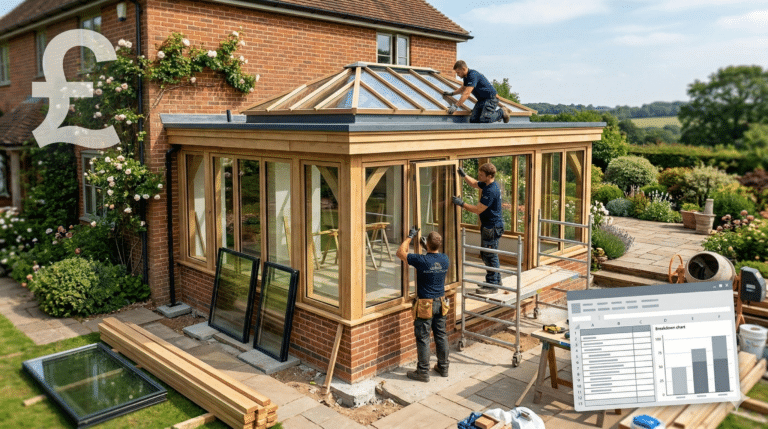
The term “bespoke” is often misused in construction. A truly bespoke orangery isn’t simply a standard design in a custom size—it’s a ground-up architectural creation conceived specifically for your property, requirements, and aesthetic preferences.

Bespoke vs. Made-to-Measure: The Critical Difference

Made-to-measure takes an existing design and adjusts dimensions to fit your space. The proportions, details, and overall character remain essentially unchanged.

Bespoke creates an entirely new design from scratch. Every proportion, every detail, every material choice responds to your specific context. The result exists nowhere else—it’s yours alone.

The Defining Characteristics of an Orangery

Orangeries occupy a unique position between conservatories and traditional extensions. Their architectural DNA includes:

  • Solid corner pillars: Brick, stone, or rendered columns that anchor the structure and provide thermal mass
  • Perimeter flat roof: An insulated roof section around the edges, creating internal pelmets for lighting and services
  • Central glass lantern: A raised glazed roof section flooding the interior with natural light
  • Substantial appearance: More extension-like than a conservatory, with greater visual weight
  • Superior thermal performance: The solid elements provide insulation that fully glazed structures cannot match

The Design Journey: Eight Stages

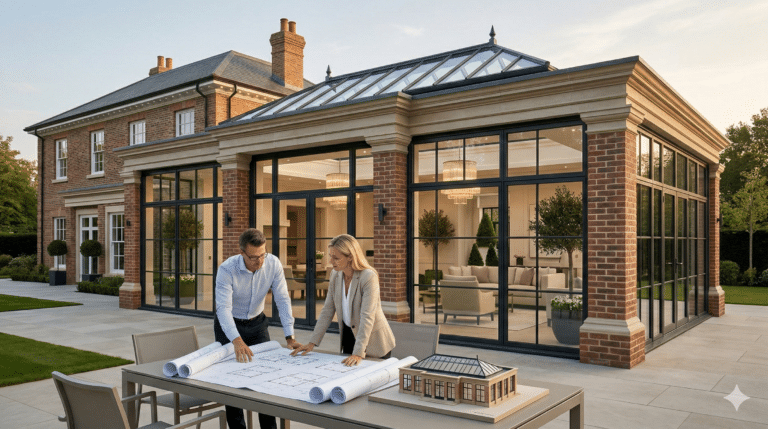
Creating a bespoke orangery follows a structured yet flexible process. Each stage builds upon the last, progressively refining your vision into buildable reality.

1

Initial Consultation & Discovery

1-2 weeks

The journey begins with listening. A skilled designer seeks to understand not just what you want, but why you want it—the underlying aspirations that will shape every subsequent decision.

  • How do you currently use your home? What frustrations exist?
  • How do you envision using the new space?
  • What architectural styles appeal to you?
  • What materials and colours resonate?
  • What’s your investment range?
  • Are there constraints we should know about?
2

Site Survey & Analysis

1 day + analysis

The physical context shapes everything. A comprehensive survey captures not just dimensions, but the subtle factors that influence design success.

  • Precise measurements of house and garden
  • Orientation analysis (sun path, prevailing weather)
  • Ground conditions and drainage patterns
  • Existing architectural details to reference
  • Neighbouring properties and sight lines
  • Service locations (drainage, utilities)
3

Concept Design

2-4 weeks

With understanding and analysis complete, design creativity begins. Initial concepts explore different approaches—testing proportions, styles, and configurations.

  • Sketch designs exploring options
  • 3D visualisations showing spatial impact
  • Scale drawings indicating proportions
  • Material mood boards
  • Initial budget estimates
  • Discussion of trade-offs and possibilities
4

Design Development

2-4 weeks

The chosen concept is developed into a detailed design. Every element is specified, from major structural decisions to finishing details.

  • Detailed floor plans and elevations
  • Material specifications (frames, glazing, roofing, masonry)
  • Hardware selections (doors, windows, handles)
  • Interior elements (flooring, lighting, heating)
  • Refined 3D visualisations
  • Detailed cost proposal
5

Planning & Approvals

8-12 weeks

Securing necessary permissions ensures your orangery is legally compliant and protects your investment.

  • Assessment of Permitted Development rights
  • Planning application if required
  • Listed Building Consent for heritage properties
  • Building Regulations submission
  • Party Wall notifications if applicable
  • Liaison with local authority throughout
6

Technical Design & Engineering

2-3 weeks

The design is translated into precise manufacturing and construction documentation.

  • Structural engineering calculations
  • Foundation design
  • Detailed manufacturing drawings
  • Glazing schedules and specifications
  • Services routing (electrical, heating)
  • Final quality assurance review
7

Manufacturing

4-6 weeks

Components are fabricated in controlled factory conditions, ensuring precision and quality impossible to achieve on-site.

  • Frame fabrication and finishing
  • Glazing unit manufacture
  • Roofing components prepared
  • Hardware and fittings assembled
  • Quality control inspections
  • Delivery coordination
8

Construction & Completion

4-8 weeks

The vision becomes reality as skilled craftspeople bring together all elements on site.

  • Site preparation and excavation
  • Foundation construction
  • Masonry work for pillars and plinths
  • Frame installation
  • Roofing and glazing
  • Internal finishing and handover

The best bespoke designs feel inevitable—as though the orangery was always part of the original architect’s intention, simply waiting to be realised.

— Design Philosophy, Room Outside

Design Considerations: The Elements of Excellence

Bespoke design involves hundreds of decisions, each contributing to the final result. Understanding the key considerations helps you engage meaningfully with the design process.

Proportional Harmony

The orangery should relate to your home’s existing proportions—window rhythms, floor-to-ceiling heights, and architectural language.

Light & Orientation

Understanding how sunlight moves across your site throughout the day and year shapes glazing placement and shading strategies.

Interior Flow

How will the orangery connect to existing rooms? How will furniture be arranged? Traffic patterns and sight lines matter.

Material Palette

Frames, masonry, roofing, and finishes must work together and complement your existing property’s materials.

Garden Integration

The orangery mediates between house and garden. Consider views, access to outdoor spaces, and landscape design.

Services Integration

Electrical outlets, lighting design, heating systems, and smart home integration should be planned from the start.

Material Choices: Building Character

The materials you choose fundamentally shape your orangery’s character, performance, and longevity. Each option brings distinct qualities.

Hardwood Timber

Classic warmth & character
  • Aesthetic: Natural warmth, traditional character, ages beautifully
  • Species: Oak, sapele, accoya, or engineered options
  • Finish: Painted, stained, or natural oiled
  • Lifespan: 40-60+ years with maintenance
  • Maintenance: Periodic refinishing (5-10 years)
  • Heritage: Ideal for period properties and Conservation Areas
  • Investment: Premium pricing reflects craftsmanship required

Aluminium

Contemporary precision & longevity
  • Aesthetic: Slim sightlines, crisp modern lines
  • Profiles: 20-35mm sightlines maximise glass area
  • Finish: Powder coating in RAL colours, dual-colour options
  • Lifespan: 40-50+ years with minimal maintenance
  • Maintenance: Occasional cleaning only
  • Thermal: Modern thermal breaks achieve excellent U-values
  • Versatility: Suits contemporary and traditional designs

Timber-Aluminium Hybrid

Best of both worlds
  • Concept: Timber interior, aluminium exterior cladding
  • Interior: Warm timber aesthetic inside
  • Exterior: Weather-resistant aluminium outside
  • Maintenance: Minimal—aluminium protects timber
  • Performance: Excellent thermal values
  • Aesthetic: Traditional feel without maintenance burden
  • Investment: Premium option combining benefits

Masonry Options

The structural foundation
  • Brick: Match existing house or complementary contrast
  • Natural stone: Premium option for character properties
  • Render: Smooth or textured finish, painted any colour
  • Reconstructed stone: Cost-effective alternative to natural
  • Cladding: Timber, composite, or modern materials
  • Thermal mass: Solid elements moderate temperature swings
  • Matching: Sourcing reclaimed materials for seamless integration

The Lantern Roof: Crown of the Orangery

The lantern roof is the defining architectural element of an orangery—the feature that floods the interior with light while creating visual drama. Lantern design involves careful consideration of proportion, glazing, and structural elements.

Lantern Roof Design Elements

  • Pitch angle: Steeper pitches shed water better and create more internal volume; shallower pitches are more contemporary
  • Glazing bars: The framework dividing glass panels—aluminium for slim profiles, timber for traditional character
  • Ridge details: Decorative finials, cresting, or clean minimal lines depending on style
  • Ventilation: Integrated vents in the lantern promote natural airflow and temperature regulation
  • Glass specification: Solar control coatings essential for roof glass; self-cleaning coatings reduce maintenance
  • Proportion: The lantern’s size relative to the perimeter roof creates visual balance
Lantern StyleCharacterBest Suited For
Traditional pitchedClassic Georgian/Victorian aesthetic with decorative detailsPeriod properties, Conservation Areas
Contemporary minimalSlim frames, clean lines, maximum glassModern homes, minimalist interiors
Flat roof lanternLow profile, unobtrusive, clean geometryBungalows, restricted height situations
Structural glassVirtually frameless, maximum transparencyUltra-contemporary designs

Investment: Understanding the Costs

Bespoke orangeries represent significant investment. Understanding cost factors helps set realistic expectations and make informed decisions about where to allocate budget.

CategoryDescriptionTypical Range
Modest bespoke3m x 3m, aluminium frame, standard glazing£50,000-£70,000
Mid-range bespoke4m x 4m, premium glazing, quality masonry£70,000-£100,000
Premium bespokeLarger size, hardwood/hybrid, high-spec throughout£100,000-£150,000
Exceptional projectsLarge scale, complex design, premium everything£150,000+

Factors Influencing Cost

  • Size: Larger orangeries cost more, but cost-per-square-metre often decreases with scale
  • Frame material: Hardwood typically 20-30% more than aluminium
  • Glazing specification: Premium temperature-controlled glass adds 15-25% over standard
  • Masonry complexity: Natural stone significantly more than brick or render
  • Site conditions: Difficult access, sloping sites, or complex foundations add cost
  • Interior specification: Flooring, lighting, heating, and finishes vary widely
  • Planning requirements: Listed buildings and complex applications incur additional fees

Value Perspective

A well-designed bespoke orangery typically adds 5-10% to property value—often exceeding the construction cost in desirable areas. More importantly, it transforms daily living: breakfast in morning sunlight, evening entertaining that flows between indoors and out, a year-round connection to your garden. The value extends far beyond financial return.

Working With Your Designer

The designer-client relationship is central to bespoke success. Understanding how to participate productively in this collaboration leads to better outcomes.

Getting the Most From the Design Process:

Gather inspiration: Collect images that resonate—not just orangeries, but interiors, materials, and atmospheres that appeal to you
Be honest about budget: A good designer works within constraints—being upfront enables realistic proposals
Explain how you live: Daily routines, entertaining patterns, and family dynamics inform functional design
Share concerns openly: Worries about neighbours, planning, or practical issues are better addressed early
Trust expertise: When recommendations differ from your initial ideas, explore the reasoning—experience often reveals considerations you hadn’t anticipated
Allow time: Bespoke design cannot be rushed. Invested time during design prevents costly changes during construction

Room Outside

Bespoke Orangery Specialists | Established 1973 | 50+ Years Experience

Room Outside creates bespoke orangeries that transform homes across the South East. Each project begins with listening, develops through creative collaboration, and culminates in architectural spaces that feel inevitable—as though they were always meant to be. Call 01243 538999 to begin your design journey.

About This Article

This editorial draws on 50+ years of Room Outside’s experience designing and building bespoke orangeries across Kent, Surrey, Sussex, Hampshire, and London. The design process described reflects our collaborative approach refined over five decades.

Last updated: March 2026 | Author: Room Outside Design Team

Frequently Asked Questions

What is a bespoke orangery?

A bespoke orangery is a custom-designed glazed extension featuring solid corner pillars, a perimeter flat roof, and central glass lantern. Unlike off-the-shelf designs, every element is tailored specifically to your property’s architecture, your lifestyle, and your aesthetic preferences.

How long does the design and build process take?

The complete process typically takes 4-8 months: design development (4-8 weeks), planning if required (8 weeks), Building Regulations (4-6 weeks), manufacturing (4-6 weeks), and construction (4-8 weeks). Complex projects may take longer.

How much does a bespoke orangery cost?

Bespoke orangeries typically cost £50,000-£150,000+ depending on size, materials, and specification. A modest design starts around £50,000-£70,000, while large premium projects with hardwood frames and high-spec throughout reach £100,000-£150,000 or more.

What’s the difference between an orangery and conservatory?

Orangeries feature solid corner pillars, a flat perimeter roof with internal pelmet, and a central glass lantern—creating a more substantial, extension-like appearance. Conservatories have predominantly glazed walls and roofs. Orangeries typically offer better thermal performance.

Do I need planning permission for an orangery?

Many orangeries fall within Permitted Development rights if they meet size limits (3m depth attached, 4m detached, max 4m height, under 50% garden). Listed buildings always require consent. Conservation Areas have additional restrictions. Your designer will advise.

What materials are best for orangery frames?

Premium options include hardwood timber (warm character, traditional appeal), aluminium (slim sightlines, minimal maintenance), and timber-aluminium hybrid (timber interior, aluminium exterior). Each offers distinct aesthetic and performance characteristics.

Can an orangery be used year-round?

Yes—with proper specification. Temperature-controlled glazing, insulated roof sections, underfloor heating, and appropriate ventilation create comfortable conditions throughout the year. A well-designed orangery becomes a genuine extension of your living space.

How do I choose between contemporary and traditional design?

Consider your property’s architecture, personal taste, and context. Period homes often suit traditional detailing, while contemporary designs complement modern properties. Sometimes contrast works beautifully. A skilled designer helps navigate these choices.

Call us anytime – David, our digital assistant, will take a few details so the right specialist can follow up personally. 01243 538999 or request a consultation online

Ready to Begin Your Design Journey?

Every bespoke orangery starts with a conversation. Share your vision with our design team and discover how we can transform your home—creating a space that feels like it was always meant to be there.

Book Free Design Consultation

Call us anytime on 01243 538999 – David, our digital assistant, will take a few details so the right specialist can follow up personally.

Room Outside: Bespoke orangery specialists since 1973.
Serving Kent, Surrey, Sussex, Hampshire, London & surrounding areas.

roomoutsideuk
26th February, 2026

Aluminium Orangeries: The Complete 2026 Guide

Definitive Guide 2026

Aluminium Orangeries: The Complete 2026 Guide

Everything you need to know about aluminium orangeries: costs, thermal performance, design options, planning permission, and how they compare to uPVC and timber. Expert advice from specialists with 50+ years experience.

22 min read
Updated May 2026
UK Specialist Guide

Quick Answer: Aluminium Orangeries

Aluminium orangeries are premium home extensions combining solid perimeter roofs with central glass lanterns, supported by slim aluminium frames. They offer exceptional strength, U-values from 1.2 W/m²K (thanks to thermal breaks), and 50+ year lifespans with minimal maintenance. Costs range from £30,000 for small designs to £120,000+ for large, complex installations. Aluminium is ideal for modern extensions and period properties alike, available in any RAL colour.

Key Facts: Aluminium Orangeries (UK 2026)

  • Cost range: £30,000-£50,000 (small 10-20m²), £50,000-£80,000 (medium 20-35m²), £80,000-£120,000+ (large 35m²+)
  • Thermal performance: U-values from 1.2 W/m²K with thermal break technology
  • Lifespan: 50+ years with minimal maintenance
  • Frame thickness: Up to 50% slimmer than uPVC, maximizing glass area
  • Maintenance: Occasional cleaning only – no painting required
  • Colours: Any RAL colour available, including anthracite grey (RAL 7016), black, cream, green
  • Planning: Often Permitted Development; check local rules for listed/conservation areas
  • Property value: Can add 5-10% to home value
£30k-£120k+
Typical cost range
1.2
U-value (W/m²K)
50+
Years lifespan
5-10%
Value added

1. What is an Aluminium Orangery?

An aluminium orangery is a home extension characterized by a solid flat roof perimeter, a central glazed lantern, and large windows or glazed panels set within robust perimeter walls—all constructed using aluminium frames. Unlike conservatories which are predominantly glass (typically 75%+ glazed roofs), orangeries maintain architectural presence through solid roof sections while the glass lantern floods the interior with natural light.

When crafted in aluminium, these structures benefit from the material’s exceptional properties: high strength-to-weight ratio allows for slim sightlines (frames up to 50% slimmer than uPVC), while thermal break technology ensures energy efficiency. Aluminium orangeries can be attached to existing properties or designed as standalone garden rooms.

Key Components of an Aluminium Orangery

  • Perimeter roof: Solid insulated panels around the edges, typically finished with plasterboard internally and roofing materials externally
  • Central lantern: Glazed roof structure that rises above the flat roof, allowing light from above
  • Aluminium frames: Slim, strong profiles supporting glazing and roof structures
  • Base walls: Often dwarf walls (600-900mm high) or full-height aluminium columns
  • Glazing: Double or triple glazed units with Low-E coatings and argon gas filling

The aluminium used in modern orangeries is typically powder-coated for durability and available in virtually any colour, from classic anthracite grey (RAL 7016) to heritage shades like cream or green, making them suitable for both contemporary and traditional properties.

2. Why Choose Aluminium for Your Orangery?

Aluminium has become the material of choice for premium orangeries, offering advantages that timber and uPVC cannot match. Here’s why homeowners across Kent, Surrey, Sussex, Hampshire, and London are specifying aluminium.

2.1 Strength with Slim Profiles

Aluminium’s high strength-to-weight ratio means frames can be significantly slimmer than uPVC (up to 50% thinner) while maintaining structural integrity. This maximizes glass area, increasing natural light and views. For example, an aluminium orangery in Surrey might feature floor-to-ceiling glazing with barely visible frames, creating a seamless connection with the garden.

2.2 Thermal Efficiency (Thermal Break Technology)

Modern aluminium orangeries incorporate thermal breaks – insulating barriers made from polyamide or similar materials placed between interior and exterior aluminium surfaces. This prevents heat transfer, achieving U-values as low as 1.2 W/m²K. Combined with double or triple glazing (Low-E coatings, argon gas), aluminium orangeries are comfortable year-round, meeting and exceeding Building Regulations Part L.

2.3 Durability and Longevity

Aluminium is naturally resistant to corrosion, rust, and UV degradation. Powder-coated finishes (applied electrostatically) provide additional protection, typically guaranteed for 20-30 years. Unlike timber, aluminium doesn’t rot, warp, or require repainting. An aluminium orangery installed today will likely last 50+ years with nothing more than occasional cleaning.

2.4 Low Maintenance

For busy homeowners in Sussex or Hampshire, low maintenance is a major selling point. Aluminium orangeries need only:

  • Occasional washing with soapy water to remove dirt
  • Annual gutter and drainage checks
  • Lubrication of hinges and locks (every 2-3 years)

No painting, staining, or preservative treatments are required.

2.5 Design Flexibility

Aluminium can be fabricated into virtually any shape, supporting bespoke designs:

  • Colours: Any RAL colour available – anthracite grey (most popular), black, cream, green, grey, white
  • Dual-colour options: Different colour inside and out (e.g., white internally, anthracite externally)
  • Door integration: Seamlessly incorporate bifold, sliding, or French doors in matching aluminium
  • Lantern styles: Pyramid, ridge, or bespoke lantern designs

2.6 Sustainability

Aluminium is 100% recyclable without loss of quality. The UK aluminium industry recycles approximately 75% of all aluminium produced. Choosing aluminium supports circular economy principles and reduces environmental impact compared to materials that end up in landfill.

🔩 Strength

High strength-to-weight ratio enables slim frames and large glass spans.

☀️ Thermal Efficiency

Thermal breaks achieve U-values from 1.2 W/m²K.

🧼 Low Maintenance

No painting – just occasional cleaning.

🎨 Colour Options

Any RAL colour, dual-colour available.

⏱️ Longevity

50+ year lifespan with proper care.

🌍 Sustainable

100% recyclable, eco-friendly choice.

3. Aluminium vs Timber vs uPVC: Comparison

Choosing between aluminium, timber, and uPVC depends on your priorities – budget, aesthetics, maintenance, and longevity. This comparison helps homeowners in Kent, Surrey, and beyond make informed decisions.

FeatureAluminiumTimberuPVC
Frame thicknessVery slim (20-30mm sightlines)Chunky (50-80mm)Bulky (60-100mm)
Thermal performance (U-value)1.2 – 1.6 W/m²K1.4 – 2.0 W/m²K1.4 – 1.8 W/m²K
Lifespan50+ years50+ years (with maintenance)20-30 years
MaintenanceMinimal – occasional cleanHigh – repaint every 5-7 yearsLow – occasional clean
Colour optionsAny RAL colour, dual-colourStains/paints, limitedLimited, often white/cream
Initial cost£££ (premium)££ (mid-range)£ (budget)
Recyclability100% recyclableBiodegradableDifficult to recycle
AestheticSleek, modern, minimalistWarm, traditionalPractical, less premium

3.1 When to Choose Aluminium

Aluminium is ideal for:

  • Contemporary homes requiring slim sightlines
  • Maximum light and garden views
  • Low-maintenance lifestyles
  • Long-term investment (50+ years)
  • Bespoke designs and custom colours

3.2 When Timber Might Be Better

Timber suits:

  • Period properties where traditional appearance is paramount
  • Listed buildings requiring authentic materials
  • Homeowners willing to maintain regularly
  • Lower initial budgets (though lifetime costs may equal aluminium)

3.3 When uPVC Might Be Considered

uPVC is appropriate for:

  • Tight budgets where initial cost is the only factor
  • Short-term ownership (under 10 years)
  • Less demanding aesthetic requirements
  • Properties where appearance is not critical

However, many homeowners find that the long-term value and aesthetics of aluminium justify the higher initial investment.

4. Aluminium Orangery Costs 2026 (UK Guide)

Understanding costs helps with budgeting and comparing quotes. Prices vary based on size, complexity, glazing specification, and site conditions. Below are typical ranges for aluminium orangeries in 2026.

Size CategoryArea (m²)Typical Cost RangeExample Use
Small10-20 m²£30,000 – £50,000Entrance hall, small dining area
Medium20-35 m²£50,000 – £80,000Kitchen-diner, family room
Large35-50 m²£80,000 – £120,000+Open-plan living, garden room
Complex/BespokeVariable£120,000 – £200,000+Multi-level, curved, heritage projects

Factors Affecting Aluminium Orangery Costs

  • Size: Larger structures require more materials and labour
  • Glazing specification: Triple glazing, solar control coatings, self-cleaning glass add cost
  • Complexity: Curved lanterns, multiple roof levels, bespoke shapes increase price
  • Foundation requirements: Ground conditions may require piling or reinforced concrete
  • Access: Difficult site access increases installation time and cost
  • Finishes: Dual-colour options, special RAL colours, timber-effect interiors
  • Doors: Bifold, sliding, or French doors – larger spans cost more
  • Heating/electrics: Underfloor heating, lighting, power points add to total
  • Location: Regional labour rates vary (London generally highest)

For a precise quotation, contact Room Outside for a site survey and design consultation.

5. Thermal Performance: How Warm Are Aluminium Orangeries?

Modern aluminium orangeries are designed to be comfortable year-round, addressing the historic reputation of glass structures being too hot in summer and too cold in winter. Key technologies include:

5.1 Thermal Break Technology

A thermal break is an insulating barrier (typically polyamide) inserted between the interior and exterior aluminium profiles. This prevents thermal bridging – the direct transfer of heat through the metal. Without thermal breaks, aluminium would conduct heat readily; with them, U-values drop dramatically.

5.2 High-Performance Glazing

Aluminium orangeries use sealed double or triple glazed units with:

  • Low-E coatings: Microscopic metallic layers that reflect heat back into the room while allowing light through
  • Argon or krypton gas fills: Inert gases between panes provide better insulation than air
  • Warm edge spacers: Insulating spacer bars reduce heat loss at pane edges

5.3 Solar Control

For south-facing orangeries, solar control glass can be specified. This incorporates coatings that reflect solar infrared radiation, blocking up to 86% of solar heat while maintaining high light transmission. This prevents overheating in summer without darkening the interior.

5.4 Typical U-Values Achieved

  • Standard double glazing: U-value 1.6 – 1.8 W/m²K
  • Low-E double glazing with argon: 1.2 – 1.4 W/m²K
  • Triple glazing with Low-E and argon: 0.8 – 1.0 W/m²K

Building Regulations Part L typically require U-values of 1.6 W/m²K or better for new extensions, so even basic specifications meet standards.

5.5 Ventilation Considerations

To maintain comfort, roof vents or automated opening windows are essential. Building Regulations require adequate ventilation – typically at least 1/20th of floor area as openable area. Modern aluminium orangeries can integrate:

  • Electric roof vents with rain sensors
  • Automated window openers linked to thermostats
  • Manual vents for simple operation

6. Aluminium Orangery Design Options

Aluminium’s versatility enables a wide range of design styles, from ultra-modern to traditional heritage. Here are key design considerations for homeowners in Kent, Surrey, Sussex, Hampshire, and London.

6.1 Lantern Roof Styles

  • Pyramid lantern: Classic four-sided glazed roof rising to a point, suits traditional and contemporary designs
  • Ridge lantern: Long, rectangular lantern running the length of the roof, ideal for modern extensions
  • Multi-pitch lantern: Complex designs with multiple glazed sections for dramatic effect
  • Flat glass roof: Minimalist option with frameless glazing for ultra-modern look

6.2 Colour Options

Aluminium can be powder-coated in virtually any RAL colour. Popular choices include:

  • Anthracite grey (RAL 7016): Most popular – sophisticated, modern, architectural
  • Black (RAL 9005): Dramatic, contemporary, bold
  • Cream (RAL 9001): Traditional, suits period properties
  • Green (RAL 6005): Heritage colour for rural settings
  • White (RAL 9016): Classic, safe choice
  • Grey (various): Light grey, silver, metallic finishes

Dual-colour option: Different colour inside and out – e.g., white internally for brightness, anthracite externally for kerb appeal.

6.3 Door Integration

  • Bifold doors: Multiple panels fold and stack, creating wide openings (up to 6-8m spans)
  • Sliding doors: Panels slide horizontally, space-saving, ideal where swing space limited
  • French doors: Traditional double doors, outward opening
  • Pivot doors: Large format doors that pivot open, dramatic entrance statements

All door types can be manufactured in matching aluminium, ensuring cohesive design.

6.4 Base Wall Options

  • Dwarf walls: 600-900mm high brick/stone walls, providing insulation and traditional appearance
  • Full-height glazing: Glass from floor to ceiling, maximising views, requires high-performance glazing
  • Aluminium columns: Structural aluminium posts supporting roof, creating open feel

7. Planning Permission for Aluminium Orangeries

Understanding planning requirements is crucial before starting your project. Most aluminium orangeries fall under Permitted Development rights, but exceptions apply.

7.1 Permitted Development Conditions

Your aluminium orangery may not need planning permission if it meets all these criteria:

  • Single storey with maximum eaves height of 3m
  • Maximum height of 4m (if within 2m of boundary, height limited to 3m)
  • Doesn’t extend beyond the rear wall by more than 3m (semi/terraced) or 4m (detached)
  • Doesn’t cover more than half the garden area
  • Materials similar to existing house (aluminium acceptable)
  • Not forward of principal elevation facing a highway
  • No verandas, balconies, or raised platforms

7.2 When Planning Permission IS Required

You WILL need planning permission if:

  • Your property is listed (plus Listed Building Consent required)
  • You’re in a Conservation Area, National Park, AONB, or World Heritage Site
  • Previous extensions have used your Permitted Development allowance
  • You exceed size/height limits
  • Your property has Article 4 Direction removing PD rights
  • Building a detached orangery in some circumstances

7.3 Listed Buildings and Conservation Areas

Aluminium can be suitable for listed buildings if designed sensitively. Conservation officers often prefer aluminium for its slim sightlines and clear distinction between old and new. However, you’ll need both Listed Building Consent and planning permission. Heritage colours (cream, green) and traditional proportions help gain approval.

Room Outside has extensive experience with listed property extensions across Sussex, Surrey, and Hampshire.

7.4 Building Regulations

All orangeries must comply with Building Regulations covering:

  • Part L (Conservation of fuel and power): Thermal performance standards
  • Part A (Structure): Structural integrity
  • Part B (Fire safety): Escape routes and fire resistance
  • Part F (Ventilation): Adequate ventilation
  • Part K (Protection from falling): Glazing safety

Reputable installers like Room Outside handle Building Regulations approval as part of the service.

8. Aluminium Orangery Installation Process

Understanding the installation timeline helps with planning. Typical projects take 12-20 weeks from deposit to completion.

Stage 1: Initial Consultation (Week 1-2)

Site survey, discuss requirements, budget, and design preferences. Assess planning needs and access constraints.

Stage 2: Design and Quotation (Weeks 3-6)

Detailed designs, 3D visuals, and itemised quotation. Finalise glazing specifications, colours, and door choices.

Stage 3: Planning and Approvals (Weeks 6-12)

Submit planning application if required. Prepare Building Regulations submission. Listed Building Consent applications may take longer.

Stage 4: Manufacture (Weeks 8-14)

Aluminium frames fabricated off-site. Quality control ensures precision.

Stage 5: Groundworks and Foundations (Weeks 10-16)

Excavate foundations, pour concrete, install drainage. Prepare site for frame delivery.

Stage 6: Installation (Weeks 14-18)

Erect aluminium frame, install glazing, fit roof lantern, doors, and windows. Make weathertight.

Stage 7: Finishing (Weeks 16-20)

Internal plastering, electrics, heating, flooring, decoration. Final snagging and handover.

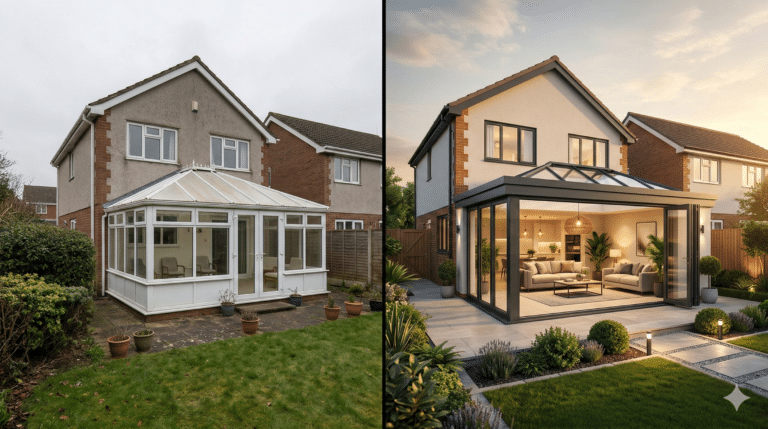
9. Aluminium Orangery vs Glass Box Extension

Homeowners often compare orangeries with glass box extensions. Key differences:

  • Roof design: Orangeries have solid perimeter roof with glass lantern; glass boxes have fully glazed roof
  • Privacy: Orangeries offer more privacy due to solid roof sections; glass boxes are fully transparent
  • Thermal efficiency: Orangeries typically more thermally efficient due to solid roof insulation
  • Aesthetics: Orangeries feel more architectural; glass boxes more minimalist
  • Cost: Glass boxes often more expensive due to structural glass requirements

Both can be constructed in aluminium, offering slim frames and durability. The choice depends on desired appearance and performance priorities.

10. Common Myths About Aluminium Orangeries

Myth: “Aluminium orangeries are cold”

Fact: Modern thermally broken aluminium frames achieve U-values as low as 1.2 W/m²K – comparable to solid walls. Combined with high-performance glazing, they’re warm in winter and cool in summer.

Myth: “Aluminium is only for modern homes”

Fact: Aluminium can be powder-coated in heritage colours (cream, green, grey) and designed with traditional proportions, making it suitable for period properties and listed buildings.

Myth: “Aluminium orangeries are too expensive”

Fact: While initial costs are higher than uPVC, the 50+ year lifespan and minimal maintenance make aluminium cost-effective over time. Property value uplift often exceeds the additional investment.

Myth: “Aluminium frames look industrial”

Fact: Modern aluminium profiles are slim and elegant, with smooth powder-coated finishes. They don’t have the industrial appearance of raw aluminium.

Myth: “You can’t get curved aluminium frames”

Fact: Aluminium can be curved during manufacture, enabling bespoke arched windows, curved lanterns, and unique architectural features.

11. Aluminium Orangeries in Your Area

Room Outside serves homeowners across Southern England with aluminium orangery installations. Local considerations:

Aluminium Orangeries Kent

Kent’s mix of Wealden villages, coastal towns, and London commuter belt means diverse property types. We handle everything from modern extensions in Tunbridge Wells to heritage projects in Canterbury.

Aluminium Orangeries Surrey

Surrey’s affluent suburbs and green belt locations demand high-quality finishes. Aluminium orangeries in Guildford, Woking, and Esher often feature anthracite grey frames with bifold doors.

Aluminium Orangeries Sussex (East and West)

From Brighton’s contemporary homes to Chichester’s historic properties, aluminium suits both. We’ve installed orangeries across Sussex with heritage colours for listed buildings.

Aluminium Orangeries Hampshire

Hampshire’s New Forest, Winchester, and Southampton areas require sensitivity to conservation constraints. We navigate planning successfully.

Aluminium Orangeries London

London projects often involve tight sites, listed buildings, and conservation areas. Our experience ensures compliance and beautiful results.

Aluminium Orangeries Berkshire, Dorset, Essex

We also serve Berkshire, Dorset, and parts of Essex, bringing the same expertise and quality.

KentSurreyEast SussexWest SussexHampshireGreater LondonBerkshireDorsetEssex

Room Outside

Aluminium Orangery Specialists | Established 1973

With over 50 years of experience, Room Outside designs and installs premium aluminium orangeries across Southern England. Our team combines traditional craftsmanship with modern aluminium technology, ensuring beautiful, thermally efficient spaces. We handle everything from initial design through planning to final installation. Contact us for expert advice.

Sources and Further Reading

Official sources: UK Planning Portal (planningportal.co.uk) – Permitted Development rights; Historic England – Listed building guidance; Building Regulations 2010 (as amended) – Part L (conservation of fuel and power).

Industry bodies: Glass and Glazing Federation – Thermal performance standards; Council for Aluminium in Building – Technical guidance.

Last updated: May 2026 | Next review: November 2026

📞 01243 538999 – Call anytime. David, our digital assistant, will take a few details so the right specialist can follow up personally.

Ready to Discuss Your Aluminium Orangery?

Whether you’re planning a contemporary extension in London or a heritage orangery in Sussex, our specialists are here to help. Book a free, no-obligation design consultation.

Book Free Consultation

Serving 10 Counties Since 1973
England | West Sussex | East Sussex | Surrey | Hampshire | Kent | Essex | Greater London | Berkshire | Dorset