
roomoutsideuk
03rd March, 2026

Garden Room Planning Permission: The Complete Guide for South East Homeowners

Garden Room Planning Permission: Complete 2026 Guide for South East UK | Room Outside

Garden Room Planning Permission: The Complete Guide for South East Homeowners

Do you need planning permission for a garden room? Everything UK homeowners need to know about Permitted Development, size limits, Building Regulations, and when you definitely need to apply.

Quick Answer: Do You Need Planning Permission?

Most garden rooms do NOT need planning permission under Permitted Development rights. Your garden room is likely exempt if it’s: single storey, max 2.5m height within 2m of a boundary, covers less than 50% of your garden (including other outbuildings), not forward of the house front, and used for purposes incidental to the house (office, gym, studio—not self-contained accommodation).

You WILL need planning permission if: your home is a listed building, you’re in a Conservation Area/AONB, your Permitted Development rights have been removed, or the garden room will be self-contained living accommodation.

Key Facts: Garden Room Planning Permission (UK 2026)

  • Maximum height near boundary: 2.5m if within 2 metres of any boundary
  • Maximum height elsewhere: 4m (dual-pitched roof) or 3m (other roof types) if more than 2m from boundary
  • Garden coverage limit: Total outbuildings must not exceed 50% of garden area
  • Building Regs threshold: Generally exempt if under 15m² (or under 30m² if more than 1m from boundary)
  • Conservation Areas: Garden buildings limited to 10m² and cannot be between house and highway
  • Lawful Development Certificate: £103 fee (as of 2026) provides legal confirmation no planning needed
  • Electrical work: Must comply with Part P Building Regulations regardless of size
  • Use restriction: Must be “incidental to the dwelling”—not self-contained accommodation
2.5m
Max height near boundary
50%
Max garden coverage
15m²
Building Regs exempt
£103
LDC application fee

What is Permitted Development?

Permitted Development (PD) is a national grant of planning permission that allows certain building works and changes of use without needing to submit a planning application. For garden rooms, Permitted Development rights mean you can build an outbuilding in your garden without applying for planning permission—provided you meet specific criteria.

These rights are set out in the Town and Country Planning (General Permitted Development) (England) Order 2015 (as amended), specifically Schedule 2, Part 1, Class E for outbuildings. Scotland, Wales, and Northern Ireland have similar but slightly different rules.

Definition: “Incidental to the Enjoyment of the Dwelling”

This legal phrase is crucial for garden rooms. It means the garden building must serve the main house—not be a separate dwelling or primary business premises. Acceptable uses include:

  • Home office (for your own work, not employing staff on site)
  • Gym or yoga studio
  • Art studio or hobby room
  • Games room or home cinema
  • Guest bedroom (without separate kitchen/bathroom forming self-contained unit)
  • Workshop or storage

NOT acceptable: Self-contained granny annexe, separate rental unit, commercial premises with employees/customers visiting regularly.

Garden Room Size Limits Under Permitted Development

Contrary to popular belief, there’s no specific floor area limit for garden rooms under Permitted Development. The restrictions focus on height and total garden coverage.

Height Restrictions

Location Roof Type Maximum Height
Within 2m of any boundary Any 2.5m at eaves
More than 2m from boundary Dual-pitched (apex) 4m at ridge
More than 2m from boundary Other (flat, mono-pitch) 3m at highest point

The 50% Rule

Total area of ground covered by outbuildings (including your proposed garden room) must not exceed 50% of the total area of the curtilage (garden). This includes:

  • Sheds
  • Garages (if detached)
  • Greenhouses
  • Swimming pools and pool houses
  • Other outbuildings
  • Extensions to the house (for calculation purposes)

The “original” garden area is calculated based on what existed on 1st July 1948, or when the house was built if later. Previous extensions don’t count against your garden area, but they do count as built structures for the 50% calculation.

Common Mistake: Measuring Only the Garden Room

Many homeowners measure only their proposed garden room and think “that’s well under 50%.” But you must include ALL outbuildings. If you have a 100m² garden with an existing 15m² shed and 10m² greenhouse, you’ve already used 25m². Your garden room cannot exceed 25m² without breaching the 50% rule—even though 25m² seems small for a 100m² garden.

When You DO Need Planning Permission

Even if your garden room meets the size criteria, you’ll still need planning permission in certain circumstances:

Planning Permission IS Required If:

Listed building: Any external works to a listed building require Listed Building Consent AND often planning permission
Conservation Area: Additional restrictions apply—garden buildings over 10m² or positioned between house and highway need permission
AONB, National Park, or World Heritage Site: Same restrictions as Conservation Areas
Article 4 Direction: Your local authority may have removed Permitted Development rights for your area
Self-contained accommodation: Garden room with kitchen and bathroom facilities for independent living
Forward of principal elevation: Garden room in front of the house facing a highway
Exceeds height limits: Over 2.5m within 2m of boundary, or over 4m elsewhere
Exceeds 50% coverage: Total outbuildings exceed half your garden area

Building Regulations: Separate from Planning Permission

Building Regulations are entirely separate from planning permission. You might not need planning permission but still need Building Regulations approval—or vice versa. Building Regulations cover structural safety, fire safety, ventilation, drainage, and electrical safety.

When Building Regulations Apply to Garden Rooms

Garden Room Size Sleeping Accommodation? Distance from Boundary Building Regs Required?
Under 15m² No Any No
15-30m² No More than 1m No
15-30m² No Less than 1m Yes
Over 30m² No Any Yes
Any size Yes Any Yes

Electrical Work Always Needs Compliance

Regardless of size, electrical installations in garden rooms must comply with Part P of the Building Regulations. This doesn’t mean you need Building Regulations approval for the whole building—but the electrical work must be:

  • Carried out by a competent person registered with NICEIC, NAPIT, or similar scheme, OR
  • Inspected and tested by Building Control, who will issue a certificate

A qualified electrician registered with a competent person scheme will self-certify the work and notify Building Control on your behalf.

Regional Considerations: South East England

The South East has particular planning considerations due to the high number of Conservation Areas, AONBs, and listed buildings. Here’s what to watch for in different areas:

Kent

  • High Weald AONB: Covers significant parts of Kent—garden buildings limited to 10m² under PD
  • Conservation Areas: Canterbury, Tunbridge Wells, Sevenoaks all have extensive Conservation Areas
  • Kent Downs AONB: Strict oversight on building design and materials

Surrey

  • Surrey Hills AONB: Covers approximately 25% of the county
  • Green Belt: Extensive Green Belt restrictions—garden rooms generally permitted but size matters
  • Conservation Areas: Guildford, Reigate, Farnham have substantial protected areas

Sussex (East and West)

  • South Downs National Park: Similar restrictions to AONB—garden buildings limited
  • High Weald AONB: Extends into Sussex
  • Coastal areas: Chichester Harbour AONB has additional considerations
  • Conservation Areas: Brighton, Lewes, Chichester have protected zones

Hampshire

  • New Forest National Park: Very strict planning controls
  • South Downs National Park: Covers eastern Hampshire
  • Conservation Areas: Winchester, Southampton, Portsmouth have protected areas

How to Check Your Local Designations

  • Visit your local council’s planning portal
  • Use the government’s MAGIC Map to check AONB/National Park boundaries
  • Search “[your council] Conservation Areas map”
  • Check your property’s title deeds for restrictive covenants
  • Contact your local planning department if uncertain

How to Get Certainty: Lawful Development Certificate

If you want legal certainty that your garden room doesn’t need planning permission, apply for a Lawful Development Certificate (LDC). This is an official document from your local planning authority confirming that the proposed development is lawful.

Benefits of an LDC

  • Legal protection: Protects you from enforcement action
  • Property sale: Valuable evidence when selling—solicitors check for this
  • Peace of mind: Official confirmation before you spend money building
  • Relatively cheap: Currently £103 for proposed development (2026)

How to Apply

  1. Download the application form from the Planning Portal or your local council
  2. Provide scaled drawings of your proposed garden room
  3. Include a site plan showing position in garden
  4. Pay the fee (£103 for proposed development)
  5. Wait 8 weeks for a decision (statutory timeframe)

Pro Tip: Apply BEFORE Building

If you apply for an LDC after building (certificate of lawfulness of existing development), the fee is higher (£206) and you have no protection if it’s refused—you may face enforcement action. Apply before building for the “proposed” certificate, which is cheaper and gives you certainty before committing.

Common Myths About Garden Room Planning Permission

Myth #1: “Garden rooms under 15m² never need permission”

Fact: The 15m² figure relates to Building Regulations exemption, NOT planning permission. Planning permission depends on height, location, garden coverage, and property designation—not floor area. A 10m² garden room could need permission if it exceeds height limits or is in a Conservation Area.

Myth #2: “It’s in my garden so I can build what I want”

Fact: Permitted Development rights have strict conditions. Exceed them, and you need planning permission. Build without it, and you risk enforcement notices requiring demolition. Your garden is still subject to planning law.

Myth #3: “If my neighbour built one, so can I”

Fact: Every property is different. Your neighbour might have a larger garden (different 50% calculation), be outside a Conservation Area, have different boundary setbacks, or have actually obtained planning permission. Never assume your situation matches theirs.

Myth #4: “Planning permission is expensive and takes forever”

Fact: A householder planning application costs £258 (2026) and has an 8-week statutory decision period. Many straightforward applications are approved without issues. It’s not as daunting as people assume—and it’s far cheaper than demolishing an illegal building.

Myth #5: “I can call it a shed to avoid planning rules”

Fact: What you call it doesn’t matter—how you use it does. A “shed” used as a home office is subject to the same rules as a “garden office.” Planning rules apply based on the structure and its use, not its name.

Step-by-Step: Checking if Your Garden Room Needs Permission

Complete This Checklist Before Building:

Step 1: Check if property is listed, in Conservation Area, AONB, or National Park
Step 2: Check for Article 4 Directions removing PD rights in your area
Step 3: Measure total garden area and all existing outbuildings
Step 4: Calculate if proposal keeps total outbuildings under 50%
Step 5: Check height complies (2.5m within 2m of boundary; 4m/3m elsewhere)
Step 6: Confirm position is NOT forward of principal elevation
Step 7: Confirm use is incidental (office, gym)—NOT self-contained living
Step 8: If ANY doubt, apply for Lawful Development Certificate (£103)

Room Outside

Garden Room Specialists | Established 1973 | 50+ Years Experience

Room Outside designs and builds quality garden rooms, conservatories, and orangeries across Kent, Surrey, Sussex, Hampshire, and London. We handle planning considerations, Building Regulations compliance, and create stunning spaces that meet all legal requirements. Call 01243 538999 for expert advice on your garden room project.

Areas We Cover

Room Outside designs and builds garden rooms across the South East of England, with full knowledge of local planning requirements:

Kent Surrey East Sussex West Sussex Hampshire London Berkshire Essex

Sources, References, and Further Reading

Official Government Sources: Town and Country Planning (General Permitted Development) (England) Order 2015; Planning Portal (planningportal.co.uk) – Outbuildings guidance; Building Regulations 2010 (as amended) – Schedule 2.

Local Authority Resources: Consult your specific local planning authority for Conservation Area maps, Article 4 Directions, and local planning policies.

Industry Experience: Room Outside – 50+ years experience designing and building garden rooms across South East England with full consideration of planning requirements.

Last updated: February 2026 | Expert review: Planning requirements verified against current legislation

Frequently Asked Questions

Do you need planning permission for a garden room?

Most garden rooms don’t need planning permission under Permitted Development rights, provided they meet criteria: max 2.5m height within 2m of boundary, total outbuildings under 50% of garden, single storey, not forward of the house, and used for purposes incidental to the dwelling.

What is the maximum size for a garden room without planning permission?

There’s no specific floor area limit. The key restrictions are: 2.5m max height within 2m of boundary (4m elsewhere with dual-pitched roof), and total outbuildings must not exceed 50% of your garden area. You could build a large garden room if it meets these criteria.

Do garden rooms need Building Regulations approval?

Garden rooms under 15m² (or under 30m² if more than 1m from boundary) are generally exempt from Building Regulations, provided they don’t contain sleeping accommodation. Electrical work must still comply with Part P regardless of size.

Can I build a garden room in a Conservation Area?

Yes, but with additional restrictions. Garden buildings in Conservation Areas are limited to 10m² under Permitted Development and cannot be positioned between the house and the highway. Larger structures will need planning permission.

Can I use a garden room as a home office?

Yes, using a garden room as a home office is permitted and doesn’t usually require planning permission, as it’s “incidental to the enjoyment of the dwelling.” However, if you employ staff on site or have regular customer visits, this may change the situation.

Can I sleep in my garden room?

Occasional guest sleeping is generally fine. However, if the garden room becomes self-contained living accommodation with its own kitchen and bathroom, it’s no longer “incidental” and will require planning permission. Building Regulations also apply differently to sleeping accommodation.

What happens if I build without planning permission?

The local authority can issue an enforcement notice requiring demolition or retrospective application. When selling, lack of proper permissions will be revealed in searches and can delay or prevent sales. Always verify requirements before building.

How close to the boundary can I build a garden room?

You can build right up to the boundary, but if within 2m of any boundary, maximum height is restricted to 2.5m. For Building Regulations exemption, garden rooms between 15-30m² must be more than 1m from any boundary.

Do I need planning permission for a garden room with electricity?

No, having electricity doesn’t affect planning requirements. However, electrical work must comply with Part P of Building Regulations and should be carried out by a qualified electrician registered with a competent person scheme (NICEIC, NAPIT, etc.).

How do I check if my garden room needs planning permission?

Check all Permitted Development criteria, verify your property isn’t listed or in a designated area (Conservation Area, AONB), check for Article 4 Directions, and confirm your use is incidental. If in doubt, apply for a Lawful Development Certificate (£103) for legal certainty.

Call us anytime – David, our digital assistant, will take a few details so the right specialist can follow up personally. 01243 538999 or request a consultation online

Ready to Discuss Your Garden Room Project?

Our specialists understand local planning requirements across Kent, Surrey, Sussex, Hampshire, and London. We’ll help you design a garden room that meets all regulations and exceeds your expectations.

Book Free Consultation

Call us anytime on 01243 538999 – David, our digital assistant, will take a few details so the right specialist can follow up personally.

Room Outside: Garden room specialists since 1973.
Serving Kent, Surrey, Sussex, Hampshire, London & surrounding areas.

roomoutsideuk
26th February, 2026

Aluminium Orangeries: The Complete 2026 Guide

Aluminium Orangeries Complete Guide 2026 | Costs, Benefits, Design | Room Outside
Definitive Guide 2026

Aluminium Orangeries: The Complete 2026 Guide

Everything you need to know about aluminium orangeries: costs, thermal performance, design options, planning permission, and how they compare to uPVC and timber. Expert advice from specialists with 50+ years experience.

22 min read
Updated May 2026
UK Specialist Guide

Quick Answer: Aluminium Orangeries

Aluminium orangeries are premium home extensions combining solid perimeter roofs with central glass lanterns, supported by slim aluminium frames. They offer exceptional strength, U-values from 1.2 W/m²K (thanks to thermal breaks), and 50+ year lifespans with minimal maintenance. Costs range from £30,000 for small designs to £120,000+ for large, complex installations. Aluminium is ideal for modern extensions and period properties alike, available in any RAL colour.

Key Facts: Aluminium Orangeries (UK 2026)

  • Cost range: £30,000-£50,000 (small 10-20m²), £50,000-£80,000 (medium 20-35m²), £80,000-£120,000+ (large 35m²+)
  • Thermal performance: U-values from 1.2 W/m²K with thermal break technology
  • Lifespan: 50+ years with minimal maintenance
  • Frame thickness: Up to 50% slimmer than uPVC, maximizing glass area
  • Maintenance: Occasional cleaning only – no painting required
  • Colours: Any RAL colour available, including anthracite grey (RAL 7016), black, cream, green
  • Planning: Often Permitted Development; check local rules for listed/conservation areas
  • Property value: Can add 5-10% to home value
£30k-£120k+
Typical cost range
1.2
U-value (W/m²K)
50+
Years lifespan
5-10%
Value added

1. What is an Aluminium Orangery?

An aluminium orangery is a home extension characterized by a solid flat roof perimeter, a central glazed lantern, and large windows or glazed panels set within robust perimeter walls—all constructed using aluminium frames. Unlike conservatories which are predominantly glass (typically 75%+ glazed roofs), orangeries maintain architectural presence through solid roof sections while the glass lantern floods the interior with natural light.

When crafted in aluminium, these structures benefit from the material’s exceptional properties: high strength-to-weight ratio allows for slim sightlines (frames up to 50% slimmer than uPVC), while thermal break technology ensures energy efficiency. Aluminium orangeries can be attached to existing properties or designed as standalone garden rooms.

Key Components of an Aluminium Orangery

  • Perimeter roof: Solid insulated panels around the edges, typically finished with plasterboard internally and roofing materials externally
  • Central lantern: Glazed roof structure that rises above the flat roof, allowing light from above
  • Aluminium frames: Slim, strong profiles supporting glazing and roof structures
  • Base walls: Often dwarf walls (600-900mm high) or full-height aluminium columns
  • Glazing: Double or triple glazed units with Low-E coatings and argon gas filling

The aluminium used in modern orangeries is typically powder-coated for durability and available in virtually any colour, from classic anthracite grey (RAL 7016) to heritage shades like cream or green, making them suitable for both contemporary and traditional properties.

2. Why Choose Aluminium for Your Orangery?

Aluminium has become the material of choice for premium orangeries, offering advantages that timber and uPVC cannot match. Here’s why homeowners across Kent, Surrey, Sussex, Hampshire, and London are specifying aluminium.

2.1 Strength with Slim Profiles

Aluminium’s high strength-to-weight ratio means frames can be significantly slimmer than uPVC (up to 50% thinner) while maintaining structural integrity. This maximizes glass area, increasing natural light and views. For example, an aluminium orangery in Surrey might feature floor-to-ceiling glazing with barely visible frames, creating a seamless connection with the garden.

2.2 Thermal Efficiency (Thermal Break Technology)

Modern aluminium orangeries incorporate thermal breaks – insulating barriers made from polyamide or similar materials placed between interior and exterior aluminium surfaces. This prevents heat transfer, achieving U-values as low as 1.2 W/m²K. Combined with double or triple glazing (Low-E coatings, argon gas), aluminium orangeries are comfortable year-round, meeting and exceeding Building Regulations Part L.

2.3 Durability and Longevity

Aluminium is naturally resistant to corrosion, rust, and UV degradation. Powder-coated finishes (applied electrostatically) provide additional protection, typically guaranteed for 20-30 years. Unlike timber, aluminium doesn’t rot, warp, or require repainting. An aluminium orangery installed today will likely last 50+ years with nothing more than occasional cleaning.

2.4 Low Maintenance

For busy homeowners in Sussex or Hampshire, low maintenance is a major selling point. Aluminium orangeries need only:

  • Occasional washing with soapy water to remove dirt
  • Annual gutter and drainage checks
  • Lubrication of hinges and locks (every 2-3 years)

No painting, staining, or preservative treatments are required.

2.5 Design Flexibility

Aluminium can be fabricated into virtually any shape, supporting bespoke designs:

  • Colours: Any RAL colour available – anthracite grey (most popular), black, cream, green, grey, white
  • Dual-colour options: Different colour inside and out (e.g., white internally, anthracite externally)
  • Door integration: Seamlessly incorporate bifold, sliding, or French doors in matching aluminium
  • Lantern styles: Pyramid, ridge, or bespoke lantern designs

2.6 Sustainability

Aluminium is 100% recyclable without loss of quality. The UK aluminium industry recycles approximately 75% of all aluminium produced. Choosing aluminium supports circular economy principles and reduces environmental impact compared to materials that end up in landfill.

🔩 Strength

High strength-to-weight ratio enables slim frames and large glass spans.

☀️ Thermal Efficiency

Thermal breaks achieve U-values from 1.2 W/m²K.

🧼 Low Maintenance

No painting – just occasional cleaning.

🎨 Colour Options

Any RAL colour, dual-colour available.

⏱️ Longevity

50+ year lifespan with proper care.

🌍 Sustainable

100% recyclable, eco-friendly choice.

3. Aluminium vs Timber vs uPVC: Comparison

Choosing between aluminium, timber, and uPVC depends on your priorities – budget, aesthetics, maintenance, and longevity. This comparison helps homeowners in Kent, Surrey, and beyond make informed decisions.

Feature Aluminium Timber uPVC
Frame thickness Very slim (20-30mm sightlines) Chunky (50-80mm) Bulky (60-100mm)
Thermal performance (U-value) 1.2 – 1.6 W/m²K 1.4 – 2.0 W/m²K 1.4 – 1.8 W/m²K
Lifespan 50+ years 50+ years (with maintenance) 20-30 years
Maintenance Minimal – occasional clean High – repaint every 5-7 years Low – occasional clean
Colour options Any RAL colour, dual-colour Stains/paints, limited Limited, often white/cream
Initial cost £££ (premium) ££ (mid-range) £ (budget)
Recyclability 100% recyclable Biodegradable Difficult to recycle
Aesthetic Sleek, modern, minimalist Warm, traditional Practical, less premium

3.1 When to Choose Aluminium

Aluminium is ideal for:

  • Contemporary homes requiring slim sightlines
  • Maximum light and garden views
  • Low-maintenance lifestyles
  • Long-term investment (50+ years)
  • Bespoke designs and custom colours

3.2 When Timber Might Be Better

Timber suits:

  • Period properties where traditional appearance is paramount
  • Listed buildings requiring authentic materials
  • Homeowners willing to maintain regularly
  • Lower initial budgets (though lifetime costs may equal aluminium)

3.3 When uPVC Might Be Considered

uPVC is appropriate for:

  • Tight budgets where initial cost is the only factor
  • Short-term ownership (under 10 years)
  • Less demanding aesthetic requirements
  • Properties where appearance is not critical

However, many homeowners find that the long-term value and aesthetics of aluminium justify the higher initial investment.

4. Aluminium Orangery Costs 2026 (UK Guide)

Understanding costs helps with budgeting and comparing quotes. Prices vary based on size, complexity, glazing specification, and site conditions. Below are typical ranges for aluminium orangeries in 2026.

Size Category Area (m²) Typical Cost Range Example Use
Small 10-20 m² £30,000 – £50,000 Entrance hall, small dining area
Medium 20-35 m² £50,000 – £80,000 Kitchen-diner, family room
Large 35-50 m² £80,000 – £120,000+ Open-plan living, garden room
Complex/Bespoke Variable £120,000 – £200,000+ Multi-level, curved, heritage projects

Factors Affecting Aluminium Orangery Costs

  • Size: Larger structures require more materials and labour
  • Glazing specification: Triple glazing, solar control coatings, self-cleaning glass add cost
  • Complexity: Curved lanterns, multiple roof levels, bespoke shapes increase price
  • Foundation requirements: Ground conditions may require piling or reinforced concrete
  • Access: Difficult site access increases installation time and cost
  • Finishes: Dual-colour options, special RAL colours, timber-effect interiors
  • Doors: Bifold, sliding, or French doors – larger spans cost more
  • Heating/electrics: Underfloor heating, lighting, power points add to total
  • Location: Regional labour rates vary (London generally highest)

For a precise quotation, contact Room Outside for a site survey and design consultation.

5. Thermal Performance: How Warm Are Aluminium Orangeries?

Modern aluminium orangeries are designed to be comfortable year-round, addressing the historic reputation of glass structures being too hot in summer and too cold in winter. Key technologies include:

5.1 Thermal Break Technology

A thermal break is an insulating barrier (typically polyamide) inserted between the interior and exterior aluminium profiles. This prevents thermal bridging – the direct transfer of heat through the metal. Without thermal breaks, aluminium would conduct heat readily; with them, U-values drop dramatically.

5.2 High-Performance Glazing

Aluminium orangeries use sealed double or triple glazed units with:

  • Low-E coatings: Microscopic metallic layers that reflect heat back into the room while allowing light through
  • Argon or krypton gas fills: Inert gases between panes provide better insulation than air
  • Warm edge spacers: Insulating spacer bars reduce heat loss at pane edges

5.3 Solar Control

For south-facing orangeries, solar control glass can be specified. This incorporates coatings that reflect solar infrared radiation, blocking up to 86% of solar heat while maintaining high light transmission. This prevents overheating in summer without darkening the interior.

5.4 Typical U-Values Achieved

  • Standard double glazing: U-value 1.6 – 1.8 W/m²K
  • Low-E double glazing with argon: 1.2 – 1.4 W/m²K
  • Triple glazing with Low-E and argon: 0.8 – 1.0 W/m²K

Building Regulations Part L typically require U-values of 1.6 W/m²K or better for new extensions, so even basic specifications meet standards.

5.5 Ventilation Considerations

To maintain comfort, roof vents or automated opening windows are essential. Building Regulations require adequate ventilation – typically at least 1/20th of floor area as openable area. Modern aluminium orangeries can integrate:

  • Electric roof vents with rain sensors
  • Automated window openers linked to thermostats
  • Manual vents for simple operation

6. Aluminium Orangery Design Options

Aluminium’s versatility enables a wide range of design styles, from ultra-modern to traditional heritage. Here are key design considerations for homeowners in Kent, Surrey, Sussex, Hampshire, and London.

6.1 Lantern Roof Styles

  • Pyramid lantern: Classic four-sided glazed roof rising to a point, suits traditional and contemporary designs
  • Ridge lantern: Long, rectangular lantern running the length of the roof, ideal for modern extensions
  • Multi-pitch lantern: Complex designs with multiple glazed sections for dramatic effect
  • Flat glass roof: Minimalist option with frameless glazing for ultra-modern look

6.2 Colour Options

Aluminium can be powder-coated in virtually any RAL colour. Popular choices include:

  • Anthracite grey (RAL 7016): Most popular – sophisticated, modern, architectural
  • Black (RAL 9005): Dramatic, contemporary, bold
  • Cream (RAL 9001): Traditional, suits period properties
  • Green (RAL 6005): Heritage colour for rural settings
  • White (RAL 9016): Classic, safe choice
  • Grey (various): Light grey, silver, metallic finishes

Dual-colour option: Different colour inside and out – e.g., white internally for brightness, anthracite externally for kerb appeal.

6.3 Door Integration

  • Bifold doors: Multiple panels fold and stack, creating wide openings (up to 6-8m spans)
  • Sliding doors: Panels slide horizontally, space-saving, ideal where swing space limited
  • French doors: Traditional double doors, outward opening
  • Pivot doors: Large format doors that pivot open, dramatic entrance statements

All door types can be manufactured in matching aluminium, ensuring cohesive design.

6.4 Base Wall Options

  • Dwarf walls: 600-900mm high brick/stone walls, providing insulation and traditional appearance
  • Full-height glazing: Glass from floor to ceiling, maximising views, requires high-performance glazing
  • Aluminium columns: Structural aluminium posts supporting roof, creating open feel

7. Planning Permission for Aluminium Orangeries

Understanding planning requirements is crucial before starting your project. Most aluminium orangeries fall under Permitted Development rights, but exceptions apply.

7.1 Permitted Development Conditions

Your aluminium orangery may not need planning permission if it meets all these criteria:

  • Single storey with maximum eaves height of 3m
  • Maximum height of 4m (if within 2m of boundary, height limited to 3m)
  • Doesn’t extend beyond the rear wall by more than 3m (semi/terraced) or 4m (detached)
  • Doesn’t cover more than half the garden area
  • Materials similar to existing house (aluminium acceptable)
  • Not forward of principal elevation facing a highway
  • No verandas, balconies, or raised platforms

7.2 When Planning Permission IS Required

You WILL need planning permission if:

  • Your property is listed (plus Listed Building Consent required)
  • You’re in a Conservation Area, National Park, AONB, or World Heritage Site
  • Previous extensions have used your Permitted Development allowance
  • You exceed size/height limits
  • Your property has Article 4 Direction removing PD rights
  • Building a detached orangery in some circumstances

7.3 Listed Buildings and Conservation Areas

Aluminium can be suitable for listed buildings if designed sensitively. Conservation officers often prefer aluminium for its slim sightlines and clear distinction between old and new. However, you’ll need both Listed Building Consent and planning permission. Heritage colours (cream, green) and traditional proportions help gain approval.

Room Outside has extensive experience with listed property extensions across Sussex, Surrey, and Hampshire.

7.4 Building Regulations

All orangeries must comply with Building Regulations covering:

  • Part L (Conservation of fuel and power): Thermal performance standards
  • Part A (Structure): Structural integrity
  • Part B (Fire safety): Escape routes and fire resistance
  • Part F (Ventilation): Adequate ventilation
  • Part K (Protection from falling): Glazing safety

Reputable installers like Room Outside handle Building Regulations approval as part of the service.

8. Aluminium Orangery Installation Process

Understanding the installation timeline helps with planning. Typical projects take 12-20 weeks from deposit to completion.

Stage 1: Initial Consultation (Week 1-2)

Site survey, discuss requirements, budget, and design preferences. Assess planning needs and access constraints.

Stage 2: Design and Quotation (Weeks 3-6)

Detailed designs, 3D visuals, and itemised quotation. Finalise glazing specifications, colours, and door choices.

Stage 3: Planning and Approvals (Weeks 6-12)

Submit planning application if required. Prepare Building Regulations submission. Listed Building Consent applications may take longer.

Stage 4: Manufacture (Weeks 8-14)

Aluminium frames fabricated off-site. Quality control ensures precision.

Stage 5: Groundworks and Foundations (Weeks 10-16)

Excavate foundations, pour concrete, install drainage. Prepare site for frame delivery.

Stage 6: Installation (Weeks 14-18)

Erect aluminium frame, install glazing, fit roof lantern, doors, and windows. Make weathertight.

Stage 7: Finishing (Weeks 16-20)

Internal plastering, electrics, heating, flooring, decoration. Final snagging and handover.

9. Aluminium Orangery vs Glass Box Extension

Homeowners often compare orangeries with glass box extensions. Key differences:

  • Roof design: Orangeries have solid perimeter roof with glass lantern; glass boxes have fully glazed roof
  • Privacy: Orangeries offer more privacy due to solid roof sections; glass boxes are fully transparent
  • Thermal efficiency: Orangeries typically more thermally efficient due to solid roof insulation
  • Aesthetics: Orangeries feel more architectural; glass boxes more minimalist
  • Cost: Glass boxes often more expensive due to structural glass requirements

Both can be constructed in aluminium, offering slim frames and durability. The choice depends on desired appearance and performance priorities.

10. Common Myths About Aluminium Orangeries

Myth: “Aluminium orangeries are cold”

Fact: Modern thermally broken aluminium frames achieve U-values as low as 1.2 W/m²K – comparable to solid walls. Combined with high-performance glazing, they’re warm in winter and cool in summer.

Myth: “Aluminium is only for modern homes”

Fact: Aluminium can be powder-coated in heritage colours (cream, green, grey) and designed with traditional proportions, making it suitable for period properties and listed buildings.

Myth: “Aluminium orangeries are too expensive”

Fact: While initial costs are higher than uPVC, the 50+ year lifespan and minimal maintenance make aluminium cost-effective over time. Property value uplift often exceeds the additional investment.

Myth: “Aluminium frames look industrial”

Fact: Modern aluminium profiles are slim and elegant, with smooth powder-coated finishes. They don’t have the industrial appearance of raw aluminium.

Myth: “You can’t get curved aluminium frames”

Fact: Aluminium can be curved during manufacture, enabling bespoke arched windows, curved lanterns, and unique architectural features.

11. Aluminium Orangeries in Your Area

Room Outside serves homeowners across Southern England with aluminium orangery installations. Local considerations:

Aluminium Orangeries Kent

Kent’s mix of Wealden villages, coastal towns, and London commuter belt means diverse property types. We handle everything from modern extensions in Tunbridge Wells to heritage projects in Canterbury.

Aluminium Orangeries Surrey

Surrey’s affluent suburbs and green belt locations demand high-quality finishes. Aluminium orangeries in Guildford, Woking, and Esher often feature anthracite grey frames with bifold doors.

Aluminium Orangeries Sussex (East and West)

From Brighton’s contemporary homes to Chichester’s historic properties, aluminium suits both. We’ve installed orangeries across Sussex with heritage colours for listed buildings.

Aluminium Orangeries Hampshire

Hampshire’s New Forest, Winchester, and Southampton areas require sensitivity to conservation constraints. We navigate planning successfully.

Aluminium Orangeries London

London projects often involve tight sites, listed buildings, and conservation areas. Our experience ensures compliance and beautiful results.

Aluminium Orangeries Berkshire, Dorset, Essex

We also serve Berkshire, Dorset, and parts of Essex, bringing the same expertise and quality.

Kent Surrey East Sussex West Sussex Hampshire Greater London Berkshire Dorset Essex

Room Outside

Aluminium Orangery Specialists | Established 1973

With over 50 years of experience, Room Outside designs and installs premium aluminium orangeries across Southern England. Our team combines traditional craftsmanship with modern aluminium technology, ensuring beautiful, thermally efficient spaces. We handle everything from initial design through planning to final installation. Contact us for expert advice.

Sources and Further Reading

Official sources: UK Planning Portal (planningportal.co.uk) – Permitted Development rights; Historic England – Listed building guidance; Building Regulations 2010 (as amended) – Part L (conservation of fuel and power).

Industry bodies: Glass and Glazing Federation – Thermal performance standards; Council for Aluminium in Building – Technical guidance.

Last updated: May 2026 | Next review: November 2026

📞 01243 538999 – Call anytime. David, our digital assistant, will take a few details so the right specialist can follow up personally.

Ready to Discuss Your Aluminium Orangery?

Whether you’re planning a contemporary extension in London or a heritage orangery in Sussex, our specialists are here to help. Book a free, no-obligation design consultation.

Book Free Consultation

Serving 10 Counties Since 1973
England | West Sussex | East Sussex | Surrey | Hampshire | Kent | Essex | Greater London | Berkshire | Dorset

roomoutsideuk
12th January, 2026

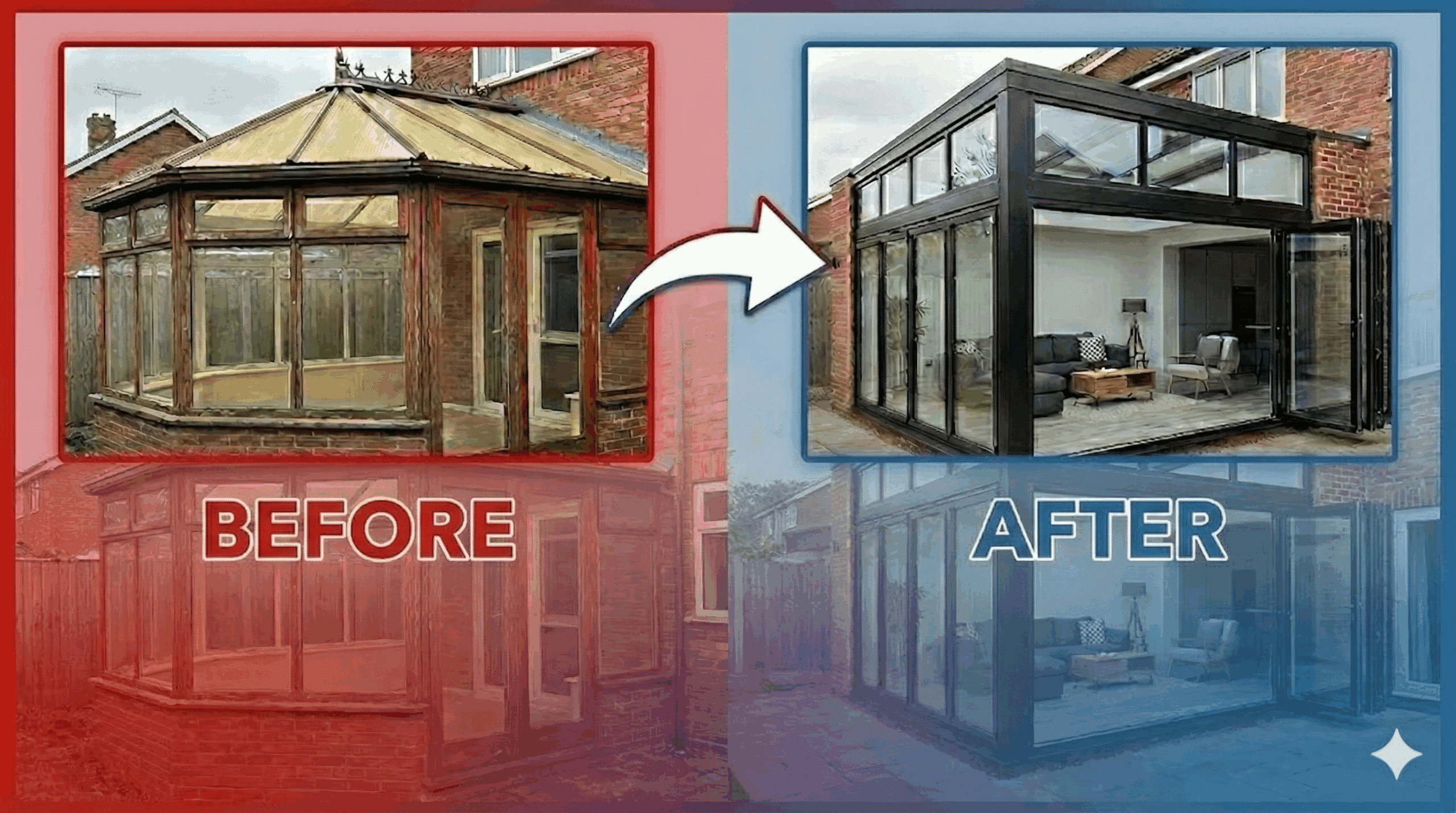
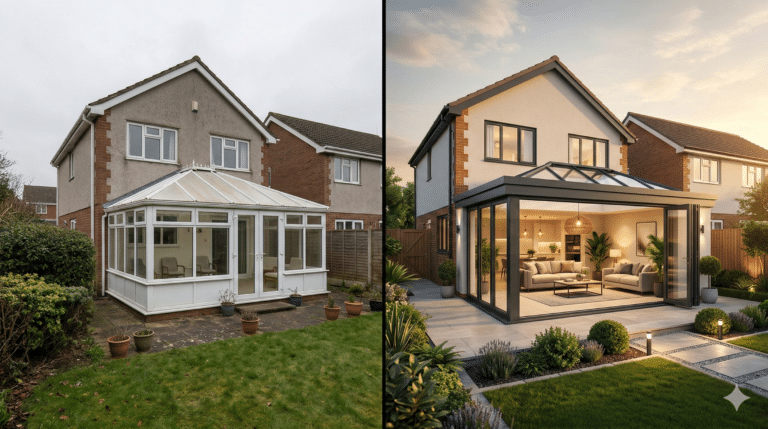
1990s Conservatory Revival: Modern Upgrades That Transform Old Structures

1990s Conservatory Revival: Modern Upgrades | Room Outside

1990s Conservatory Revival: Modern Upgrades That Transform Old Structures

A complete guide to refurbishment and replacement options for aging conservatories—backed by independent research and real data.

The Bottom Line

53% of conservatory owners cite temperature problems as their biggest complaint. Up to 80% of heat loss in a traditional conservatory occurs through the roof alone.

The good news: Modern upgrades can reduce heat loss by up to 90% and cut heating energy consumption by 32%. A polycarbonate to glass conversion costs £3,000-£8,000, while solid roofs (£5,000-£15,000) achieve U-values of 0.15-0.18 W/m²K—matching new-build extension standards.

Key stat: Typical payback period is 3-7 years through energy savings alone, with potential property value increases of 5-15%.

80%
Heat loss through old roofs
90%
Heat loss reduction possible
£200-£500
Annual energy savings
3-7 yrs
Typical payback period
According to government statistics, approximately 18% of households in England have a conservatory, with the vast majority built during the construction boom of the late 1980s and 1990s. If you own one of these structures, you’re not alone in noticing the toll that three decades have taken. A 2024 survey by Eurocell found that 53% of conservatory owners cite temperature problems as their biggest complaint—spaces that are too hot in summer and too cold in winter. The good news is that 2026 brings more options than ever for breathing new life into these aging spaces.

Understanding the Problems with 1990s Conservatories

Before exploring solutions, it helps to understand exactly why conservatories from this era have become problematic. Independent testing at Salford University’s Energy House 2.0 facility has provided detailed data on just how much energy older conservatories waste, finding that proper insulation can reduce heat loss by up to 90% and lower heating energy consumption by up to 32%.

Polycarbonate Roofing Issues

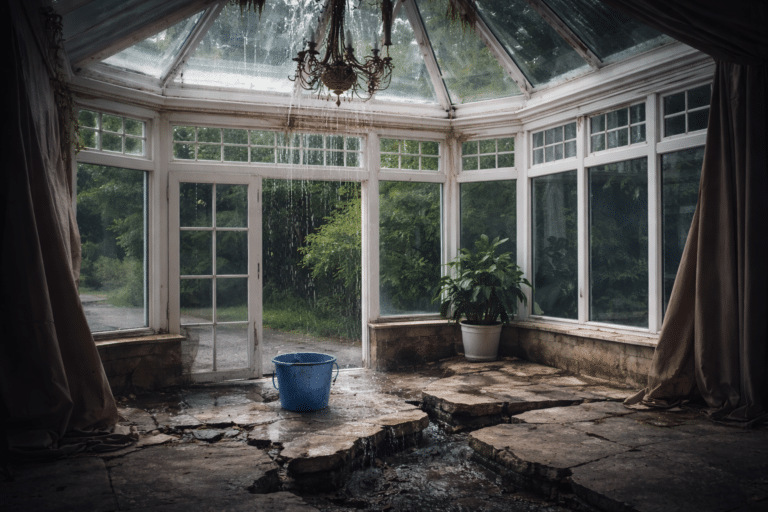
The single biggest complaint from owners of 1990s conservatories centres on polycarbonate roofing. According to research published by Ideal Home, polycarbonate roofs typically degrade within 10 to 20 years, showing clear signs of wear including leaks, cracks, and thermal failure.

The material offers a U-value of around 4.0 W/m²K or higher, compared to modern building regulations that require windows to achieve 1.4 W/m²K or lower. This means heat escapes at nearly three times the rate considered acceptable by current standards. The Eurocell Conservatory Census also found that 12% of owners specifically cite rain noise on polycarbonate roofs as a major issue, making the space unusable during wet weather.

Glazing Deficiencies

Early double-glazed units from the 1990s typically achieved U-values of 2.8 to 3.0 W/m²K—well below today’s standards. Modern double glazing with Low-E coatings achieves 1.0 to 1.1 W/m²K, while triple glazing can reach 0.6 to 0.8 W/m²K. Single-glazed panels, still found in many economy conservatories from the era, have U-values as high as 5.0 to 6.0 W/m²K, offering almost no insulation.

⚠️ The Hidden Problem: Failed Seals

Failed seals in older double-glazed units result in condensation between panes, reducing both visibility and thermal performance. If you see misting inside your glass units, the insulating gas has escaped and the unit has effectively become single-glazed in terms of thermal performance.

Structural Wear and Tear

Aluminium frames from the 1990s often lack thermal breaks, creating cold bridges that lead to condensation and heat loss. Research shows that thermally broken frames can improve overall window U-values by 0.2 to 0.3 W/m²K compared to non-broken alternatives.

uPVC frames, while more thermally efficient, can become discoloured, warped, or brittle after decades of UV exposure. Foundation and base issues also emerge over time, with some conservatories showing signs of subsidence or poor drainage.

The Scale of the Problem: UK Statistics

Understanding the scale of the issue helps put individual upgrade decisions into context. The Energy Follow-Up Survey conducted for the Department for Business, Energy and Industrial Strategy found that conservatory ownership correlates with larger homes (median floor area of 94m² compared to 77m² for homes without conservatories). The survey also revealed that households with conservatories use measurably more gas for heating.

The Numbers That Matter

A typical 12m² conservatory with poor insulation can leak 420 to 480 watts of heat per hour when outside temperatures drop just 10°C below inside temperatures. Over a 180-day heating season, this wastes over 1,500 kWh of energy. At current energy prices, that translates to hundreds of pounds in unnecessary heating costs each year.

The Polycarbonate to Glass Upgrade

One of the most popular and effective upgrades for 1990s conservatories is the polycarbonate to glass roof conversion. According to 2026 pricing data from multiple UK sources, glass roof replacements typically cost between £3,000 and £8,000 for an average-sized conservatory of around 16m². Checkatrade reports average costs of £9,450 for a 3m x 3.5m glass conservatory roof, with larger structures reaching £22,500 for 5m x 5m installations.

What Modern Glass Offers

Modern glass roof panels designed for conservatory use include multiple technologies that simply weren’t available thirty years ago:

  • Self-cleaning coatings reduce maintenance requirements
  • Solar control glass reflects unwanted heat in summer
  • Low-emissivity coatings retain warmth during winter months
  • U-values of 1.0 to 1.2 W/m²K compared to 4.0+ for polycarbonate
  • Acoustic interlayers cut rain noise substantially

Glass roofs also offer a longer lifespan than polycarbonate. While polycarbonate typically lasts 10 to 20 years, glass roofs can last 30 years or more with proper maintenance, making them a better long-term investment despite higher upfront costs.

Solid Roof Conversions: The Premium Option

For homeowners seeking the best possible thermal performance, solid roof conversions represent the premium old conservatory upgrade option. According to MyJobQuote’s 2026 pricing guide, solid conservatory roofs cost between £5,000 and £12,000 for average-sized structures, with tiled systems commanding £6,000 to £15,000 depending on specification and structural requirements.

0.15-0.18
Solid roof U-value (W/m²K)
4.0+
Old polycarbonate U-value
£200
Average annual savings
50+ yrs
Solid roof lifespan

Solid roof conversions achieve U-values of 0.15 to 0.18 W/m²K, bringing your conservatory in line with modern building regulations for new extensions. Independent research by AECOM for Guardian Building Systems found that solid roof conversions save homeowners an average of £200 per year on energy bills. The visual change is equally striking, with the finished result appearing more like a traditional extension than a conservatory.

⚠️ Structural Considerations

Solid roof conversions require careful structural assessment. The additional weight, while minimal compared to traditional roofing, may exceed what 1990s conservatory frames were designed to support. Converting from glass or polycarbonate to a solid roof typically adds £1,500 to £3,000 to the project cost for necessary structural reinforcement—a 30% to 40% premium over like-for-like replacement.

Real Energy Savings: What the Research Shows

Independent testing provides concrete data on what homeowners can expect from conservatory upgrades. Research conducted at Salford University’s Energy House 2.0 found that insulating a conservatory roof can reduce heat loss by up to 90% and lower heating energy consumption by up to 32%. This translates to annual savings of £200 to £500 depending on conservatory size, heating system, and usage patterns.

The Glass and Glazing Federation notes that a well-designed conservatory can act as a thermal buffer zone between indoor and outdoor areas. Heat that escapes through house walls into an insulated conservatory helps warm that space, and can then re-heat the main building when doors are opened. This passive solar gain effect was largely impossible with poorly insulated 1990s structures but becomes achievable with modern upgrades.

CosyPanels Research Findings

CosyPanels research indicates that modern insulated roofs reduce heat loss from 54% to just 10%—an 80% improvement that cuts heating bills proportionally. Their data suggests typical payback periods of 3 to 7 years depending on conservatory size and usage, making upgrades a financially sound decision rather than just a comfort improvement.

Impact on Property Value

The relationship between conservatories and property value is nuanced. According to the Nationwide Building Society, a high-quality conservatory can add between 5% and 15% to overall property value. Property expert Phil Spencer has stated that conservatories add an average of 7% to property value when they feel like part of the house rather than something “bolted on the back.”

❌ Poor Condition = Value Reduction

Outdated conservatory impact -£15,000
27% of owners unsure about value Risk
Unusable space perception Negative
Net impact on sale Liability

✓ Upgraded = Value Added

Quality upgrade impact +5-15%
Year-round usability Asset
Energy efficiency appeal Positive
Net impact on sale +£20,000+

However, quality matters enormously. Recent reports cited by Eurocell reveal that older conservatories with poor insulation can actually reduce home value by up to £15,000. The Eurocell Conservatory Census found that 60% of respondents believed their conservatory added value, but 27% were unsure—suggesting many owners recognise their structures may not be assets in their current condition.

2026 Cost Summary

Based on current market data from multiple UK sources, here’s what homeowners can expect to pay for different old conservatory upgrade options in 2026:

Upgrade Option Cost Range U-Value Achieved Lifespan Best For
Polycarbonate Replacement £2,000 – £5,000 1.6 – 2.4 W/m²K 10-15 years Budget option
Polycarbonate to Glass £3,000 – £8,000 1.0 – 1.2 W/m²K 30+ years Best balance
Solid/Tiled Roof £5,000 – £15,000 0.15 – 0.18 W/m²K 50+ years Maximum performance
Complete Refurbishment £8,000 – £25,000 Varies 30-50 years Multiple issues
Full Replacement £15,000 – £40,000+ 0.8 – 1.2 W/m²K 40+ years Structural problems
Polycarbonate Replacement
Cost Range £2,000 – £5,000 ✓ Cheapest
U-Value Achieved 1.6 – 2.4 W/m²K ✗ Poorest
Lifespan 10-15 years
Best For Budget option, quick fix
Polycarbonate to Glass
Cost Range £3,000 – £8,000
U-Value Achieved 1.0 – 1.2 W/m²K
Lifespan 30+ years
Best For Best balance of cost & performance ✓ Popular
Solid/Tiled Roof
Cost Range £5,000 – £15,000
U-Value Achieved 0.15 – 0.18 W/m²K ✓ Best
Lifespan 50+ years ✓ Best
Best For Maximum thermal performance
Complete Refurbishment
Cost Range £8,000 – £25,000
U-Value Achieved Varies by specification
Lifespan 30-50 years
Best For Multiple issues to address
Full Replacement
Cost Range £15,000 – £40,000+
U-Value Achieved 0.8 – 1.2 W/m²K
Lifespan 40+ years
Best For Structural problems, complete redesign

Labour costs typically account for £150 to £300 per day for a roofer, with most roof replacements requiring a two-person team for one to three days. Installation-only costs start at approximately £2,500 including the base for standard builds.

Complete 1990s Conservatory Refurbishment

When the roof alone isn’t the only issue, a complete 1990s conservatory refurbishment addresses multiple parts at once. Based on 2026 market pricing, complete refurbishment projects commonly fall between £8,000 and £25,000 for work including roof, glazing, and frame upgrades. This compares favourably to full replacement costs, which typically start around £15,000 for modest structures and can exceed £40,000 for larger, premium installations.

What Complete Refurbishment Includes

  • Roof upgrade: Polycarbonate to glass or solid roofing
  • Glazing replacement: Modern triple-glazed units (U-values of 0.6 to 0.8 W/m²K)
  • Frame repairs: Eliminate thermal bridges
  • Base insulation: Complete the thermal envelope
  • Updated doors: Thermally efficient access points
  • Modern ventilation: Maintain air quality without compromising thermal performance

When Replacement Makes More Sense

While refurbishment offers excellent value in many situations, some circumstances point clearly toward complete replacement. According to cost comparison data, a traditional brick extension costs £1,800 to £3,500 per m², compared to £1,300 to £1,500 per m² for a new conservatory. This means a conservatory remains a more affordable way to add living space, even accounting for full replacement costs.

🔧 Choose Refurbishment If:

  • Foundations are stable with no subsidence
  • Frame structure is sound (no major rot or corrosion)
  • Current footprint and design work for your needs
  • Budget is £8,000-£25,000
  • You want to preserve the existing character

✓ Choose Replacement If:

  • Foundations show signs of failure
  • Frame has major corrosion or rot
  • You want to change footprint or design
  • Multiple structural issues exist
  • Budget allows for £15,000-£40,000+

Planning Permission and Building Regulations

Understanding regulatory requirements helps avoid costly mistakes. Like-for-like repairs and maintenance—including glass-to-glass or polycarbonate-to-polycarbonate roof replacements—typically don’t require planning permission or building regulations approval.

Building Regulations for Solid Roofs

Solid roof conversions are more complex. Many approved lightweight systems fall under Permitted Development, but almost all solid and tiled roofs require Building Regulations approval, costing £200 to £800+. Properties in conservation areas, listed buildings, or those that have exhausted permitted development allowances will need specific planning consent for any external changes.

Conservatory Exemptions

Conservatories can be exempt from building regulations if they meet specific criteria:

  • Floor area less than 30m²
  • Physically separated from the main property by an external wall or door
  • Not heated by the main heating system
  • Has independent temperature control

Upgrading an existing conservatory may affect these exemptions, so check requirements before work begins.

Project Timelines

A polycarbonate to glass roof conversion can often complete within two to three days for standard-sized conservatories. According to MyJobQuote, a typical two-person team can complete most roof replacements within this timeframe, with polycarbonate installations slightly faster than glass due to lighter weight and easier handling.

Solid roof conversions typically take one to two weeks depending on complexity, particularly if structural reinforcement is required. Industry sources note that insulated roof panels can often be fitted in just a few days as they slot into existing frames, while full tiled systems requiring new structures may take a week or longer.

Full refurbishments or replacements naturally take longer, with larger projects potentially spanning several weeks including foundation work if required. Spring and autumn typically offer the best conditions for conservatory work, though experienced contractors work year-round with appropriate weather protection.

Making Your Decision

The 1990s conservatory serving your home has likely provided years of enjoyment despite its limitations. With 65% of conservatory owners using their space daily according to the Eurocell survey, these structures remain valued parts of UK homes. The question is whether to refurbish or replace.

The Financial Case

If your frame and base remain sound, refurbishment offers excellent value. The polycarbonate to glass conversion alone can reduce U-values from 4.0+ to around 1.0 W/m²K—a fourfold improvement in thermal performance. Combined with energy savings of £200 to £500 annually and potential property value increases of 5% to 7%, the financial case for upgrading is strong.

When serious structural issues exist or when your needs have grown beyond what refurbishment can address, replacement delivers a fresh start with contemporary performance. Either path leads to the same destination: a comfortable, efficient, and attractive space that extends your living area throughout the year.

📚 Sources

Department for Energy Security and Net Zero Energy Follow-Up Survey; Salford University Energy House 2.0 research; Eurocell Conservatory Census 2024; Nationwide Building Society; Checkatrade; MyJobQuote; AECOM/Guardian Building Systems research; Glass and Glazing Federation; CosyPanels industry data; Squared Money Home Improvement Index.

Frequently Asked Questions

How do I know if my 1990s conservatory can be refurbished or needs replacing?

Start by checking the frame and base. If the frame is structurally sound without major rot, warping, or corrosion, and the base shows no signs of subsidence or cracking, refurbishment is usually viable. A professional survey will confirm whether your existing structure can support upgrades like a glass or solid roof.

Is a polycarbonate to glass roof conversion worth the money?

For most homeowners, yes. The upgrade typically costs between £3,000 and £8,000, with immediate improvements in temperature control, noise reduction, and appearance. Modern glass achieves U-values of 1.0 to 1.2 W/m²K compared to 4.0+ W/m²K for polycarbonate—a fourfold improvement in thermal performance.

Do I need planning permission to upgrade my conservatory roof?

For like-for-like replacements such as swapping polycarbonate for glass panels, planning permission usually isn’t required. Solid roof conversions are more complex—almost all solid and tiled roofs require Building Regulations approval, costing £200 to £800+. Properties in conservation areas will likely need planning consent.

How much could I save on energy bills after upgrading?

Research from Salford University shows insulation can reduce heating energy consumption by up to 32%. Industry sources cite typical annual savings of £200 to £500. Heat loss reduction from 54% to 10% cuts heating bills proportionally. Typical payback periods range from 3 to 7 years.

What’s the difference between a glass roof and a solid roof conversion?

Glass roofs maintain the light, airy feel of a traditional conservatory while offering much better thermal performance (U-values around 1.0-1.2 W/m²K) and can last 30+ years. Solid roofs achieve U-values of 0.15-0.18 W/m²K—comparable to traditional extensions—but change the character to feel more like a room.

How long does a conservatory refurbishment take?

A polycarbonate to glass roof conversion typically takes 2-3 days with a two-person team. Solid roof conversions usually require 1-2 weeks. Full refurbishments including glazing, frames, and other components can take 2-4 weeks depending on the scope of work.

Will upgrading my conservatory add value to my home?

A well-executed conservatory upgrade can add 5% to 15% to property value. However, older conservatories with poor insulation can reduce home value by up to £15,000. The key is ensuring year-round usability and thermal efficiency—making upgrades essential for protecting your investment.

What U-values should I look for in conservatory glazing?

Current Building Regulations require windows to achieve maximum U-values of 1.4 W/m²K, with the Future Homes Standard requiring 1.2 W/m²K or lower. For year-round comfort, aim for 1.2 W/m²K or lower. Premium options achieve 0.8-1.0 W/m²K using triple glazing and thermally broken frames.

Ready to Revive Your 1990s Conservatory?

Whether you need a simple roof upgrade or a complete refurbishment, our team has completed hundreds of conservatory projects across Kent and the South East. Get a free, no-obligation assessment of your structure and personalised recommendations.

roomoutsideuk
17th December, 2025

Glass Extensions Surrey | What Homeowners Need to Know 2025 | Room Outside

What Surrey Homeowners Should Know Before Commissioning a Glass Extension | Room Outside

What Surrey Homeowners Should Know Before Commissioning a Glass Extension

Expert guide to Surrey’s unique planning landscape, realistic budgets, and what actually adds value to your property in 2025.

📋 The Short Answer

Before commissioning a glass extension in Surrey, you need to understand three things: (1) whether your property falls within the 73% of Surrey designated as Green Belt, which affects what you can build; (2) whether Permitted Development rights apply (most conservatories under 4m don’t need planning permission); and (3) budget expectations—with average Surrey property prices at £587,000, quality glass extensions typically cost £40,000-£120,000+ depending on specification.

So You’re Thinking About a Glass Extension in Surrey?

Let’s be honest: you’ve probably already scrolled through Pinterest boards, saved a dozen Instagram posts, and imagined morning coffee in a light-flooded kitchen-diner. The vision is clear. But somewhere between the dream and the reality, questions start multiplying.

Will I need planning permission? How much should I actually budget? Is my Edwardian terrace in Guildford even suitable? What about my 1930s semi in Woking that backs onto Green Belt?

These aren’t hypothetical concerns. After forty years of building glass extensions across Surrey—from Farnham to Reigate, Epsom to Dorking—we’ve heard them all. This guide answers the questions Surrey homeowners actually ask, with specific information relevant to properties in this county.

Because Surrey isn’t like anywhere else. It’s the second most expensive county in England (average price £587,000). It has more Green Belt than almost anywhere—73% of the county. And one quarter sits within the Surrey Hills National Landscape, with its own planning considerations.

Your glass extension project needs to account for all of this. Here’s how.

The Surrey Planning Landscape: What Makes This County Different

Before we discuss designs, materials, or budgets, let’s address the elephant in the room: can you actually build what you want?

Green Belt: 73% of Surrey Is Protected

Surrey’s Metropolitan Green Belt isn’t a single park—it’s a planning designation that covers nearly three-quarters of the county. In practical terms:

  • Woking Borough: approximately 70% Green Belt
  • Guildford Borough: 24,040 hectares of Green Belt (most in Surrey)
  • Mole Valley: extensive coverage protecting countryside character
  • Epsom and Ewell: smallest Green Belt area (1,560 hectares) but still significant

The good news: Green Belt doesn’t prevent home extensions. Permitted Development rights still apply in most cases. But councils follow a general ‘50% rule’—extensions shouldn’t increase the original house size by more than 50% in area and volume, and must have minimal visual impact on the landscape.

Surrey Hills National Landscape: A Quarter of the County

The Surrey Hills Area of Outstanding Natural Beauty (now officially a ‘National Landscape’) stretches from Farnham in the west to Oxted in the east, including the chalk slopes of the North Downs and the wooded Greensand Hills around Haslemere.

If your property falls within the Surrey Hills:

  • Permitted Development rights are more restricted for rear extensions
  • Design must conserve and enhance ‘natural and scenic beauty’
  • Local materials and styles are strongly encouraged (Bargate stone, clay tiles)
  • The Surrey Hills Board provides design guidance and may comment on applications

Conservation Areas and Listed Buildings

Every Surrey borough has Conservation Areas—from Guildford’s medieval town centre to Reigate’s Victorian suburbs. Properties within these areas face additional restrictions:

  • No Permitted Development for side extensions
  • No cladding of exterior walls
  • No rear extensions beyond one storey under PD rights
  • Design must preserve or enhance the Conservation Area’s character

Listed buildings require Listed Building Consent for almost any alteration—including internal works. This isn’t a barrier to beautiful glass extensions, but it does require specialist knowledge and early engagement with your local conservation officer.

Do You Actually Need Planning Permission?

Here’s something that surprises many Surrey homeowners: most conservatories and single-storey glass extensions can be built without planning permission under Permitted Development rights.

The Permitted Development Rules (2025)

Your glass extension qualifies as Permitted Development if it meets ALL of the following:

Requirement What This Means
Maximum projection from rear wall 4m for detached houses, 3m for semi/terraced
Maximum height 4m at highest point (3m if within 2m of boundary)
Garden coverage Cannot cover more than 50% of original garden area
Position Must be at rear of property (not front or side facing highway)
Materials Must use similar materials to existing house
Eaves and ridge Cannot be higher than the existing house

When You Definitely Need Planning Permission

  • Your property is a listed building
  • You’re in a Conservation Area and want a side extension or two-storey rear
  • Your project exceeds PD size limits
  • Previous extensions have already used your PD allowance
  • Your property is a flat or maisonette (no PD rights)
  • PD rights were removed by condition on original planning consent (common in 1970s+ builds)

Our recommendation: Even if you believe you qualify for Permitted Development, consider obtaining a Lawful Development Certificate (LDC) from your local council (£103). This provides legal certainty that’s valuable when selling your property.

Realistic Budgeting for Surrey Property Owners

Let’s talk money—because Surrey prices aren’t like anywhere else, and neither should your expectations be.

The Surrey Premium

With average property prices at £587,000 (and significantly higher in Elmbridge, Waverley, and parts of Guildford), your glass extension is protecting a substantial asset. Cutting corners on specification makes no financial sense when:

  • A quality extension adds 5-10% to property value (RICS, Savills)
  • Poor-quality builds can actually devalue your home
  • Surrey buyers are discerning—estate agents report that dated conservatories are now liabilities

What Should You Expect to Pay?

Project Type Budget Range Notes
Standard conservatory (uPVC) £15,000-£30,000 Entry point, 20-35yr lifespan
Premium conservatory (aluminium) £30,000-£50,000 40-50yr lifespan, slimmer frames
Orangery (brick/glass hybrid) £40,000-£70,000 Ideal for period properties
Contemporary glass extension £50,000-£90,000 Minimal frames, max glazing
Bespoke glass box / structural glass £80,000-£150,000+ Architectural statement pieces

Hidden Costs to Budget For

  • Structural engineer fees: £500-£1,500
  • Building Regulations application: £200-£500
  • Planning application (if required): £206 for householder applications
  • Party Wall surveyor (if applicable): £700-£1,000 per surveyor
  • Landscaping/making good: 5-10% of project cost
  • Blinds/climate control: £2,000-£8,000 depending on specification

What Surrey Property Buyers Actually Want

If you’re thinking about resale value (and in Surrey, you should be), here’s what local estate agents tell us buyers are looking for:

Year-round usability

The old polycarbonate conservatory that’s freezing in winter and sweltering in summer? That’s now seen as a negative. Buyers want spaces that work 365 days a year.

Seamless kitchen-diner flow

The extension that opens directly onto an existing kitchen—creating one large, light-filled entertaining space—commands more premium than a separate ‘added on’ room.

Quality over size

A beautifully executed 3m x 4m extension with slim aluminium frames and quality glazing will add more value than a cheap 5m x 5m box.

The Process: From First Idea to Completion

Here’s what a typical glass extension project looks like with Room Outside:

Phase Timeline Key Activities
Phase 1: Design Consultation 2-4 weeks Initial site visit, planning constraints review, preliminary designs, budget discussions
Phase 2: Planning & Permissions 4-12 weeks Permitted Development assessment, Building Regulations drawings, structural calculations
Phase 3: Construction 6-12 weeks Groundworks, structural work, frame installation, glazing, internal finishes

Frequently Asked Questions: Surrey Glass Extensions

Do I need planning permission for a conservatory in Surrey?

Most conservatories do not need planning permission under Permitted Development rights. Your project qualifies if it extends no more than 4m from the rear wall (detached houses) or 3m (semi/terraced), is under 4m high, and covers less than 50% of your garden.

How much does a glass extension cost in Surrey?

Quality glass extensions in Surrey typically cost £30,000-£90,000, with bespoke structural glass projects reaching £150,000+. Standard uPVC conservatories start around £15,000-£30,000. Factor in an additional £3,000-£5,000 for professional fees.

Can I build a glass extension if my Surrey property is in the Green Belt?

Yes. Green Belt status doesn’t prevent home extensions—Permitted Development rights still apply. With 73% of Surrey designated as Green Belt, most extensions are built successfully within these areas.

Will a glass extension add value to my Surrey home?

A well-designed glass extension typically adds 5-10% to Surrey property values (RICS, Savills). On a £587,000 average Surrey property, that’s £29,000-£58,000. However, quality matters for maintaining value.

What are the restrictions for glass extensions in Surrey Hills AONB?

Properties in the Surrey Hills National Landscape have more restricted Permitted Development rights and stricter design requirements. Extensions must conserve and enhance ‘natural and scenic beauty’ with local materials encouraged.

How do I choose between aluminium, timber, and uPVC frames?

For contemporary Surrey homes, aluminium offers the slimmest sightlines and longest lifespan (40-50 years). For period properties or Conservation Areas, timber may be required for planning approval. uPVC provides the best value but with bulkier frames.

Ready to Discuss Your Surrey Project?

Our design consultations are free, with no obligation. We’ll visit your property, discuss your vision, review any planning constraints, and provide honest guidance on what’s achievable within your budget.