


1990s Conservatory Revival: Modern Upgrades That Transform Old Structures
A complete guide to refurbishment and replacement options for aging conservatories—backed by independent research and real data.
The Bottom Line
53% of conservatory owners cite temperature problems as their biggest complaint. Up to 80% of heat loss in a traditional conservatory occurs through the roof alone.
The good news: Modern upgrades can reduce heat loss by up to 90% and cut heating energy consumption by 32%. A polycarbonate to glass conversion costs £3,000-£8,000, while solid roofs (£5,000-£15,000) achieve U-values of 0.15-0.18 W/m²K—matching new-build extension standards.
Key stat: Typical payback period is 3-7 years through energy savings alone, with potential property value increases of 5-15%.
Understanding the Problems with 1990s Conservatories
Before exploring solutions, it helps to understand exactly why conservatories from this era have become problematic. Independent testing at Salford University’s Energy House 2.0 facility has provided detailed data on just how much energy older conservatories waste, finding that proper insulation can reduce heat loss by up to 90% and lower heating energy consumption by up to 32%.
Polycarbonate Roofing Issues
The single biggest complaint from owners of 1990s conservatories centres on polycarbonate roofing. According to research published by Ideal Home, polycarbonate roofs typically degrade within 10 to 20 years, showing clear signs of wear including leaks, cracks, and thermal failure.
The material offers a U-value of around 4.0 W/m²K or higher, compared to modern building regulations that require windows to achieve 1.4 W/m²K or lower. This means heat escapes at nearly three times the rate considered acceptable by current standards. The Eurocell Conservatory Census also found that 12% of owners specifically cite rain noise on polycarbonate roofs as a major issue, making the space unusable during wet weather.
Glazing Deficiencies
Early double-glazed units from the 1990s typically achieved U-values of 2.8 to 3.0 W/m²K—well below today’s standards. Modern double glazing with Low-E coatings achieves 1.0 to 1.1 W/m²K, while triple glazing can reach 0.6 to 0.8 W/m²K. Single-glazed panels, still found in many economy conservatories from the era, have U-values as high as 5.0 to 6.0 W/m²K, offering almost no insulation.
⚠️ The Hidden Problem: Failed Seals
Failed seals in older double-glazed units result in condensation between panes, reducing both visibility and thermal performance. If you see misting inside your glass units, the insulating gas has escaped and the unit has effectively become single-glazed in terms of thermal performance.
Structural Wear and Tear
Aluminium frames from the 1990s often lack thermal breaks, creating cold bridges that lead to condensation and heat loss. Research shows that thermally broken frames can improve overall window U-values by 0.2 to 0.3 W/m²K compared to non-broken alternatives.
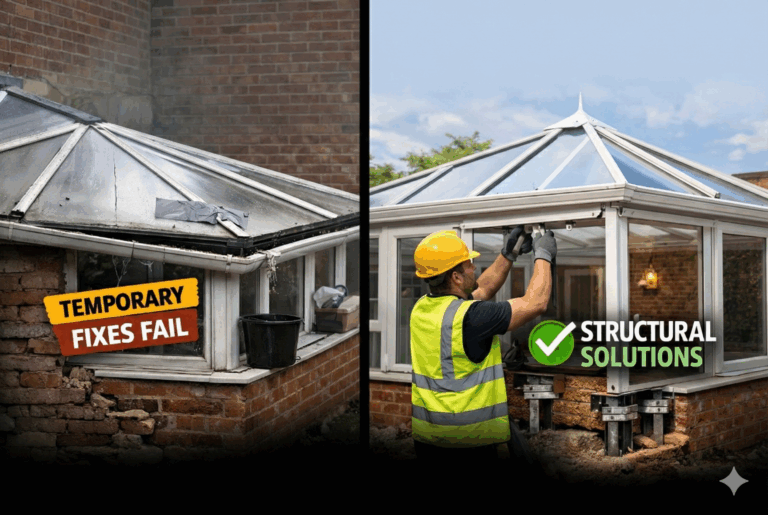
uPVC frames, while more thermally efficient, can become discoloured, warped, or brittle after decades of UV exposure. Foundation and base issues also emerge over time, with some conservatories showing signs of subsidence or poor drainage.
The Scale of the Problem: UK Statistics
Understanding the scale of the issue helps put individual upgrade decisions into context. The Energy Follow-Up Survey conducted for the Department for Business, Energy and Industrial Strategy found that conservatory ownership correlates with larger homes (median floor area of 94m² compared to 77m² for homes without conservatories). The survey also revealed that households with conservatories use measurably more gas for heating.
The Numbers That Matter
A typical 12m² conservatory with poor insulation can leak 420 to 480 watts of heat per hour when outside temperatures drop just 10°C below inside temperatures. Over a 180-day heating season, this wastes over 1,500 kWh of energy. At current energy prices, that translates to hundreds of pounds in unnecessary heating costs each year.
The Polycarbonate to Glass Upgrade
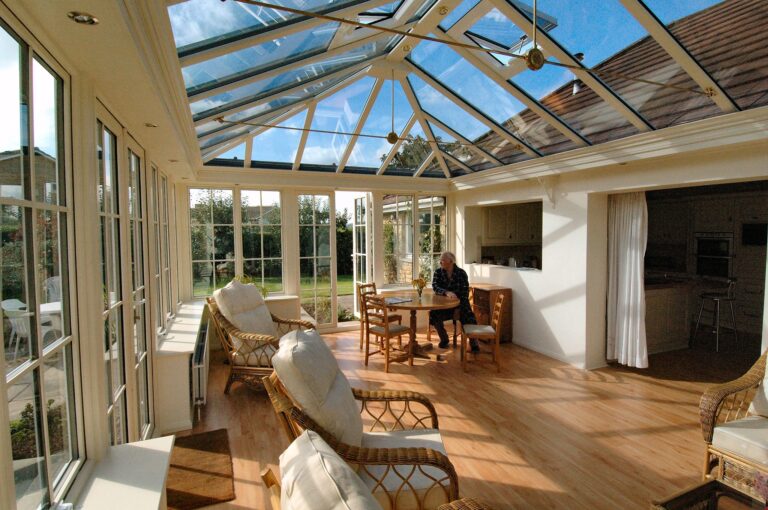
One of the most popular and effective upgrades for 1990s conservatories is the polycarbonate to glass roof conversion. According to 2026 pricing data from multiple UK sources, glass roof replacements typically cost between £3,000 and £8,000 for an average-sized conservatory of around 16m². Checkatrade reports average costs of £9,450 for a 3m x 3.5m glass conservatory roof, with larger structures reaching £22,500 for 5m x 5m installations.
What Modern Glass Offers
Modern glass roof panels designed for conservatory use include multiple technologies that simply weren’t available thirty years ago:
- Self-cleaning coatings reduce maintenance requirements
- Solar control glass reflects unwanted heat in summer
- Low-emissivity coatings retain warmth during winter months
- U-values of 1.0 to 1.2 W/m²K compared to 4.0+ for polycarbonate
- Acoustic interlayers cut rain noise substantially
Glass roofs also offer a longer lifespan than polycarbonate. While polycarbonate typically lasts 10 to 20 years, glass roofs can last 30 years or more with proper maintenance, making them a better long-term investment despite higher upfront costs.
Solid Roof Conversions: The Premium Option
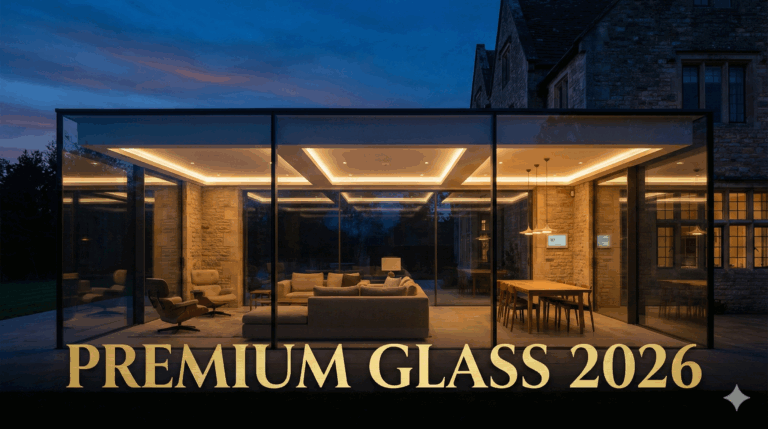
For homeowners seeking the best possible thermal performance, solid roof conversions represent the premium old conservatory upgrade option. According to MyJobQuote’s 2026 pricing guide, solid conservatory roofs cost between £5,000 and £12,000 for average-sized structures, with tiled systems commanding £6,000 to £15,000 depending on specification and structural requirements.
Solid roof conversions achieve U-values of 0.15 to 0.18 W/m²K, bringing your conservatory in line with modern building regulations for new extensions. Independent research by AECOM for Guardian Building Systems found that solid roof conversions save homeowners an average of £200 per year on energy bills. The visual change is equally striking, with the finished result appearing more like a traditional extension than a conservatory.
⚠️ Structural Considerations
Solid roof conversions require careful structural assessment. The additional weight, while minimal compared to traditional roofing, may exceed what 1990s conservatory frames were designed to support. Converting from glass or polycarbonate to a solid roof typically adds £1,500 to £3,000 to the project cost for necessary structural reinforcement—a 30% to 40% premium over like-for-like replacement.
Real Energy Savings: What the Research Shows
Independent testing provides concrete data on what homeowners can expect from conservatory upgrades. Research conducted at Salford University’s Energy House 2.0 found that insulating a conservatory roof can reduce heat loss by up to 90% and lower heating energy consumption by up to 32%. This translates to annual savings of £200 to £500 depending on conservatory size, heating system, and usage patterns.
The Glass and Glazing Federation notes that a well-designed conservatory can act as a thermal buffer zone between indoor and outdoor areas. Heat that escapes through house walls into an insulated conservatory helps warm that space, and can then re-heat the main building when doors are opened. This passive solar gain effect was largely impossible with poorly insulated 1990s structures but becomes achievable with modern upgrades.
CosyPanels Research Findings
CosyPanels research indicates that modern insulated roofs reduce heat loss from 54% to just 10%—an 80% improvement that cuts heating bills proportionally. Their data suggests typical payback periods of 3 to 7 years depending on conservatory size and usage, making upgrades a financially sound decision rather than just a comfort improvement.
Impact on Property Value
The relationship between conservatories and property value is nuanced. According to the Nationwide Building Society, a high-quality conservatory can add between 5% and 15% to overall property value. Property expert Phil Spencer has stated that conservatories add an average of 7% to property value when they feel like part of the house rather than something “bolted on the back.”
❌ Poor Condition = Value Reduction
✓ Upgraded = Value Added
However, quality matters enormously. Recent reports cited by Eurocell reveal that older conservatories with poor insulation can actually reduce home value by up to £15,000. The Eurocell Conservatory Census found that 60% of respondents believed their conservatory added value, but 27% were unsure—suggesting many owners recognise their structures may not be assets in their current condition.
2026 Cost Summary
Based on current market data from multiple UK sources, here’s what homeowners can expect to pay for different old conservatory upgrade options in 2026:
| Upgrade Option | Cost Range | U-Value Achieved | Lifespan | Best For |
|---|---|---|---|---|
| Polycarbonate Replacement | £2,000 – £5,000 | 1.6 – 2.4 W/m²K | 10-15 years | Budget option |
| Polycarbonate to Glass | £3,000 – £8,000 | 1.0 – 1.2 W/m²K | 30+ years | Best balance |
| Solid/Tiled Roof | £5,000 – £15,000 | 0.15 – 0.18 W/m²K | 50+ years | Maximum performance |
| Complete Refurbishment | £8,000 – £25,000 | Varies | 30-50 years | Multiple issues |
| Full Replacement | £15,000 – £40,000+ | 0.8 – 1.2 W/m²K | 40+ years | Structural problems |
Labour costs typically account for £150 to £300 per day for a roofer, with most roof replacements requiring a two-person team for one to three days. Installation-only costs start at approximately £2,500 including the base for standard builds.
Complete 1990s Conservatory Refurbishment
When the roof alone isn’t the only issue, a complete 1990s conservatory refurbishment addresses multiple parts at once. Based on 2026 market pricing, complete refurbishment projects commonly fall between £8,000 and £25,000 for work including roof, glazing, and frame upgrades. This compares favourably to full replacement costs, which typically start around £15,000 for modest structures and can exceed £40,000 for larger, premium installations.
What Complete Refurbishment Includes
- Roof upgrade: Polycarbonate to glass or solid roofing
- Glazing replacement: Modern triple-glazed units (U-values of 0.6 to 0.8 W/m²K)
- Frame repairs: Eliminate thermal bridges
- Base insulation: Complete the thermal envelope
- Updated doors: Thermally efficient access points
- Modern ventilation: Maintain air quality without compromising thermal performance
When Replacement Makes More Sense
While refurbishment offers excellent value in many situations, some circumstances point clearly toward complete replacement. According to cost comparison data, a traditional brick extension costs £1,800 to £3,500 per m², compared to £1,300 to £1,500 per m² for a new conservatory. This means a conservatory remains a more affordable way to add living space, even accounting for full replacement costs.
🔧 Choose Refurbishment If:
- Foundations are stable with no subsidence
- Frame structure is sound (no major rot or corrosion)
- Current footprint and design work for your needs
- Budget is £8,000-£25,000
- You want to preserve the existing character
✓ Choose Replacement If:
- Foundations show signs of failure
- Frame has major corrosion or rot
- You want to change footprint or design
- Multiple structural issues exist
- Budget allows for £15,000-£40,000+
Planning Permission and Building Regulations
Understanding regulatory requirements helps avoid costly mistakes. Like-for-like repairs and maintenance—including glass-to-glass or polycarbonate-to-polycarbonate roof replacements—typically don’t require planning permission or building regulations approval.
Building Regulations for Solid Roofs
Solid roof conversions are more complex. Many approved lightweight systems fall under Permitted Development, but almost all solid and tiled roofs require Building Regulations approval, costing £200 to £800+. Properties in conservation areas, listed buildings, or those that have exhausted permitted development allowances will need specific planning consent for any external changes.
Conservatory Exemptions
Conservatories can be exempt from building regulations if they meet specific criteria:
- Floor area less than 30m²
- Physically separated from the main property by an external wall or door
- Not heated by the main heating system
- Has independent temperature control
Upgrading an existing conservatory may affect these exemptions, so check requirements before work begins.
Project Timelines
A polycarbonate to glass roof conversion can often complete within two to three days for standard-sized conservatories. According to MyJobQuote, a typical two-person team can complete most roof replacements within this timeframe, with polycarbonate installations slightly faster than glass due to lighter weight and easier handling.
Solid roof conversions typically take one to two weeks depending on complexity, particularly if structural reinforcement is required. Industry sources note that insulated roof panels can often be fitted in just a few days as they slot into existing frames, while full tiled systems requiring new structures may take a week or longer.
Full refurbishments or replacements naturally take longer, with larger projects potentially spanning several weeks including foundation work if required. Spring and autumn typically offer the best conditions for conservatory work, though experienced contractors work year-round with appropriate weather protection.
Making Your Decision
The 1990s conservatory serving your home has likely provided years of enjoyment despite its limitations. With 65% of conservatory owners using their space daily according to the Eurocell survey, these structures remain valued parts of UK homes. The question is whether to refurbish or replace.
The Financial Case
If your frame and base remain sound, refurbishment offers excellent value. The polycarbonate to glass conversion alone can reduce U-values from 4.0+ to around 1.0 W/m²K—a fourfold improvement in thermal performance. Combined with energy savings of £200 to £500 annually and potential property value increases of 5% to 7%, the financial case for upgrading is strong.
When serious structural issues exist or when your needs have grown beyond what refurbishment can address, replacement delivers a fresh start with contemporary performance. Either path leads to the same destination: a comfortable, efficient, and attractive space that extends your living area throughout the year.
📚 Sources
Department for Energy Security and Net Zero Energy Follow-Up Survey; Salford University Energy House 2.0 research; Eurocell Conservatory Census 2024; Nationwide Building Society; Checkatrade; MyJobQuote; AECOM/Guardian Building Systems research; Glass and Glazing Federation; CosyPanels industry data; Squared Money Home Improvement Index.
Frequently Asked Questions
How do I know if my 1990s conservatory can be refurbished or needs replacing?
Start by checking the frame and base. If the frame is structurally sound without major rot, warping, or corrosion, and the base shows no signs of subsidence or cracking, refurbishment is usually viable. A professional survey will confirm whether your existing structure can support upgrades like a glass or solid roof.
Is a polycarbonate to glass roof conversion worth the money?
For most homeowners, yes. The upgrade typically costs between £3,000 and £8,000, with immediate improvements in temperature control, noise reduction, and appearance. Modern glass achieves U-values of 1.0 to 1.2 W/m²K compared to 4.0+ W/m²K for polycarbonate—a fourfold improvement in thermal performance.
Do I need planning permission to upgrade my conservatory roof?
For like-for-like replacements such as swapping polycarbonate for glass panels, planning permission usually isn’t required. Solid roof conversions are more complex—almost all solid and tiled roofs require Building Regulations approval, costing £200 to £800+. Properties in conservation areas will likely need planning consent.
How much could I save on energy bills after upgrading?
Research from Salford University shows insulation can reduce heating energy consumption by up to 32%. Industry sources cite typical annual savings of £200 to £500. Heat loss reduction from 54% to 10% cuts heating bills proportionally. Typical payback periods range from 3 to 7 years.
What’s the difference between a glass roof and a solid roof conversion?
Glass roofs maintain the light, airy feel of a traditional conservatory while offering much better thermal performance (U-values around 1.0-1.2 W/m²K) and can last 30+ years. Solid roofs achieve U-values of 0.15-0.18 W/m²K—comparable to traditional extensions—but change the character to feel more like a room.
How long does a conservatory refurbishment take?
A polycarbonate to glass roof conversion typically takes 2-3 days with a two-person team. Solid roof conversions usually require 1-2 weeks. Full refurbishments including glazing, frames, and other components can take 2-4 weeks depending on the scope of work.
Will upgrading my conservatory add value to my home?
A well-executed conservatory upgrade can add 5% to 15% to property value. However, older conservatories with poor insulation can reduce home value by up to £15,000. The key is ensuring year-round usability and thermal efficiency—making upgrades essential for protecting your investment.
What U-values should I look for in conservatory glazing?
Current Building Regulations require windows to achieve maximum U-values of 1.4 W/m²K, with the Future Homes Standard requiring 1.2 W/m²K or lower. For year-round comfort, aim for 1.2 W/m²K or lower. Premium options achieve 0.8-1.0 W/m²K using triple glazing and thermally broken frames.
Ready to Revive Your 1990s Conservatory?
Whether you need a simple roof upgrade or a complete refurbishment, our team has completed hundreds of conservatory projects across Kent and the South East. Get a free, no-obligation assessment of your structure and personalised recommendations.