
Conservatory, Orangery or Frameless Glass Box: The Ultimate Home Office?
Light‑filled, productive workspaces that blend with your home. Compare designs, furniture, glare control, power, and planning for your perfect home office extension.
💡 Quick answer: can a glass extension be a home office?
Yes. Conservatories, orangeries and frameless glass boxes provide inspiring, light‑filled home offices that boost wellbeing and focus. With modern solar‑control glass, integrated blinds, and smart cable planning, they’re comfortable year‑round. The best choice depends on your work style: conservatory = maximum daylight & garden views; orangery = solid walls for shelving & privacy; glass box = statement space for creatives. All add real value to your home.
* Source: University of Exeter, 2024
The way we work has transformed. Hybrid and home‑based work are now the norm for millions. But a makeshift desk in the corner of a bedroom rarely inspires. A dedicated, beautiful workspace—one that connects you to the garden and floods with daylight—can transform your productivity and work‑life balance.
In this guide, we examine three popular glazed extension styles as home offices: conservatory, orangery, and frameless glass box. We’ll look at furniture integration, glare control, power/IT, privacy, and planning, so you can choose the perfect space for your profession.
1. The Conservatory Home Office
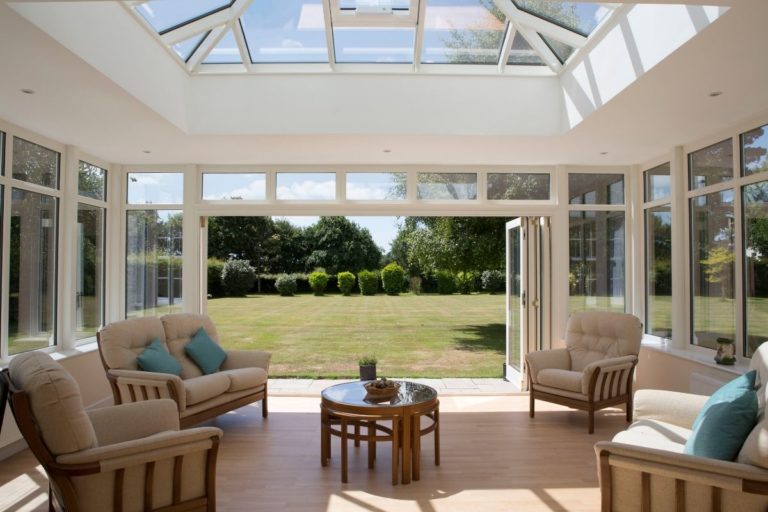
A conservatory is the classic glazed extension—maximum glass, maximum light. For a home office, this means you’re surrounded by the garden, which reduces stress and sparks creativity.
What to consider
- Furniture & storage: Conservatories often have dwarf walls or full-height glazing, so tall bookcases may only fit against the house wall. Plan low‑level storage or floating shelves.
- Glare & screens: Direct sun can cause screen glare. Opt for solar‑control glass and discreet integrated blinds (roof and vertical).
- Ventilation: Openable roof vents and French doors allow airflow—essential for warm afternoons.
- Heating: Underfloor heating works beautifully, keeping the space warm without radiators spoiling the aesthetic.
💼 Best for:
Writers, designers, gardeners, or anyone who thrives with abundant daylight and a direct connection to nature. Also great as a dual‑use space (office by day, relaxation by evening).
2. Frameless Glass Box Office — The WOW factor
A frameless glass box is the ultimate contemporary workspace. Floor‑to‑ceiling, edge‑to‑edge glass creates an almost invisible boundary—you feel like you’re working outside, yet fully sheltered. Perfect for creatives, architects, or anyone wanting a signature home office.
Design & practical must‑haves
- Furniture minimalism: With full glazing, bulky furniture detracts. Choose sleek, low‑profile pieces (cantilevered desks, transparent chairs).
- Light control: Because all surfaces are glass, glare can be intense. Specify automated external blinds or internal pleated blinds integrated into the glazing cavity.
- Power & data: No wall space means floor boxes are essential. Plan positions for desk, printer, and monitor cables early.
- Privacy: If overlooked, consider switchable smart glass (opaque at the flick of a switch) or external screening with planting.
⚠️ Glare note
Direct low‑angle sun can be intense. Solar control glass (g-value ≤0.35) and automated blinds are strongly recommended. Many glass box offices use a combination of roof overhangs and exterior louvres.
🎨 Best for:
Artists, photographers, tech entrepreneurs, or anyone wanting a stunning, minimalist workspace that impresses clients (on video calls too!).
3. Orangery Office — Structure & Separation
An orangery combines solid lower walls (often brick or rendered) with a central glazed lantern and large windows. This gives you practical wall space for shelving, filing cabinets, or pinboards, while still flooding the room with light from above.
Advantages for home working
- Privacy and enclosure: The solid walls make the space feel more like a ‘real room’—psychologically separate from the house and garden.
- Flexible furniture layout: You can place desks against walls without blocking views.
- Integrated tech: Power sockets, data points, and even wall‑mounted monitors are easy to install.
- Stand‑alone garden office version: If built separately, it becomes a true retreat—no household distractions.
An orangery can also be attached to the house with French doors, or built as a detached garden room. Both make superb, focused work environments.
📋 Best for:
Accountants, counsellors (privacy), writers needing silence, or anyone who wants a clear boundary between work and home life.
At a glance: which office style suits you?
| Feature | Conservatory | Orangery | Glass Box |
|---|---|---|---|
| Natural light | ★★★★★ (all‑glass) | ★★★★☆ (lantern + windows) | ★★★★★ (full glass) |
| Wall space for storage | ★☆☆☆☆ (limited) | ★★★★☆ (solid lower walls) | ☆☆☆☆☆ (none) |
| Glare potential | Medium (manageable) | Low | High (needs blinds) |
| Furniture style | Adaptable, low cabinets | Traditional or modern | Minimalist/designer |
| Privacy from neighbours | Low (fully glazed) | High (solid walls) | Very low (can be treated) |
| Typical cost (20m²) | £28k – £50k | £45k – £85k | £55k – £110k+ |
Designing your perfect glass office
1. Power, data & WiFi
Nothing ruins a minimalist office like trailing cables. Floor boxes (circular flush units) are ideal for desks away from walls. For wall‑mounted desks, discreet skirting trunking works. Also consider a WiFi extender or mesh node—glass can affect signal, so plan placement or run Ethernet.
2. Heating & cooling (year‑round comfort)
Underfloor heating is the most popular choice—invisible and comfortable. For cooling, many extensions can incorporate air conditioning or simply rely on solar‑control glass and automated venting. Blinds (integrated roof blinds or external shades) are essential for summer.
3. Glazing technology
Modern glass is not like your parents’ conservatory. Specify:
- Solar control coating – blocks up to 86% infrared heat
- Low‑E coatings – retain heat in winter
- Acoustic laminate – if near a road
- Self‑cleaning – reduces maintenance
Planning permission for a home office extension
Most attached home office extensions fall under Permitted Development if:
- Single storey, rear extension ≤4m (detached) or ≤3m (semi/terraced)
- Maximum height ≤4m, eaves ≤3m
- Materials similar to existing house
However, if you plan a detached garden office (e.g., an orangery in the garden), it’s classed as an outbuilding. Permitted Development allows outbuildings up to 2.5m eaves, 4m ridge, not covering more than 50% of the garden. Listed buildings, Conservation Areas, AONBs always require permission. See our full planning guide for details.
💰 Added property value
A well‑designed home office extension typically adds 5–8% to a property’s value. If it’s a high‑quality, insulated space with broadband, it’s a major selling point for future buyers.

Frequently Asked Questions
Is a conservatory too hot or cold for a home office?
Not with modern solar‑control glass and underfloor heating. You can maintain a stable 18‑24°C all year. Roof vents and blinds manage summer sun.
Can I get WiFi in a glass box extension?
Yes, but you may need a mesh system or Ethernet cable run in the floor. Glass can weaken signals; plan data points during build.
How much does a home office extension cost?
£25,000–£120,000+ depending on size and style. A medium conservatory office ~£40k, glass box ~£70k. See table above.
Do I need building regulations?
Yes, all new habitable spaces need Building Regs approval (Part L insulation, Part F ventilation, Part P electrics). Your installer usually manages this.
What flooring is best for a glass office?
Porcelain tiles, polished concrete, or luxury vinyl—they work with underfloor heating and don’t fade. Avoid carpet near full glazing (sun fade).
Can I use a garden office for client meetings?
Absolutely. An orangery or glass box makes a professional meeting space. Consider acoustic glazing if near traffic.
Call us anytime on 01243 538999 – David our digital assistant will take a few details so the right specialist can follow up personally.
Design your perfect home office
Book a free design consultation (virtual or on‑site). We’ll help you choose the ideal style, discuss solar control, furniture integration, and provide a fixed quotation.
Book free consultation →