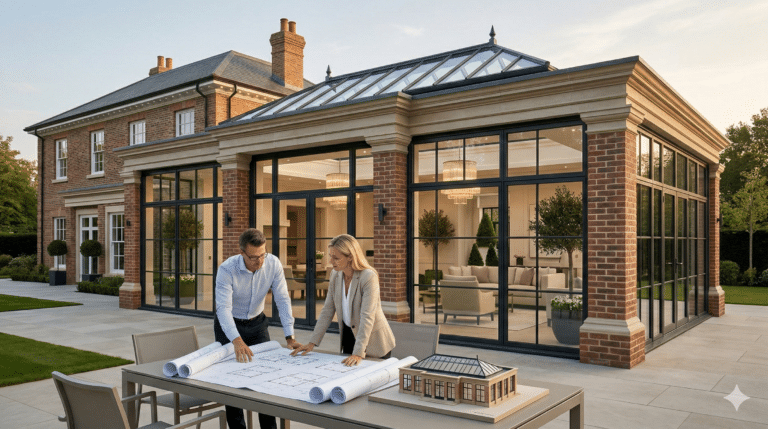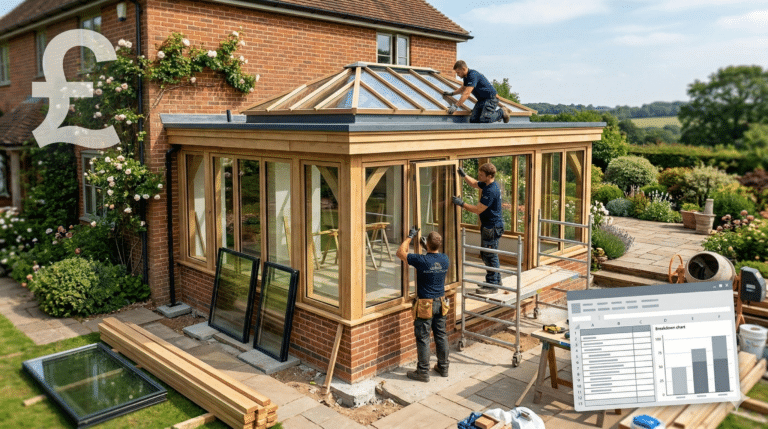



Orangery Design for Period Homes & Heritage Extensions
Expert guidance on designing orangeries that honour Georgian, Victorian and Edwardian architecture while delivering modern comfort. 93% of heritage extension applications succeed with the right approach.
Quick Answer
The 93% Success Rate: Listed Building Consent applications have higher approval rates than standard planning when designs respect heritage character through proportional alignment and material continuity.
Vacuum Glazing Revolution: VIG (6-8.3mm thick) achieves U-values of 0.4-0.7 W/m²K while fitting original window rebates—solving the heritage thermal performance dilemma.
Architectural Alignment: Georgian = symmetry & mathematics, Victorian = decorative confidence, Edwardian = light & simplicity. Your orangery should continue your home’s architectural conversation, not mimic or clash.
• 93% of Listed Building Consent applications are granted vs 88% standard planning
• Median renovation spend: £21,440 (26% year-on-year increase per 2025 Houzz & Home UK Report)
• 61% of renovating homeowners plan to stay 11+ years (“forever home” mentality)
• Quality extensions increase property value by up to 24% (Nationwide analysis)
• Vacuum glazing reduces window heat loss by 59% versus single glazing
The Moment of Truth at the Planning Committee
Picture this: You are sitting in your Grade II listed Georgian townhouse, staring at architect’s drawings for a beautiful new orangery. The design is stunning. The materials are authentic. The proportions are perfect. And somewhere in a council office, a planning officer is about to decide whether your dream extension lives or dies.
Here is the good news that most people do not know: 93% of Listed Building Consent applications are granted. That’s higher than the 88% approval rate for standard planning permissions. The system isn’t designed to say no—it’s designed to say yes to good design.
The Success Formula
The difference between the 93% who succeed and the 7% who fail? Understanding what makes their property distinctive and designing an orangery that continues that architectural conversation rather than interrupting it. Success comes from demonstrating “material continuity,” “proportional alignment,” and “subservience” to the original building—concepts we’ll explore in depth.
The 2025 Quality Shift: Beyond the “Bolt-On”
The residential property market has undergone a fundamental structural shift. According to the 2025 Houzz & Home UK Report, the median spend on renovations has surged to £21,440—a 26% year-on-year increase. This isn’t driven by cosmetic updates but by structural improvement and system upgrades.
The Forever Home Mentality
Crucially, 61% of renovating homeowners plan to remain in their properties for at least 11 years. This “forever home” mentality demands a design philosophy prioritizing longevity, thermal performance, and architectural integrity.
The Economic Case
Nationwide’s analysis confirms that extending floor area to create usable space can increase property value by up to 24%. The market clearly distinguishes between “glass boxes” and habitable rooms—an orangery designed to 2025 regulations with high-performance glazing is valued as permanent Gross Internal Area (GIA).
Architectural Definition: Orangery vs Conservatory
Misunderstanding this distinction is a primary reason for planning refusals in conservation areas.
The Historical Lineage
Orangeries originated in 17th-century estates like Kew Gardens as functional buildings for wintering citrus trees, featuring substantial masonry to retain heat. Conservatories evolved later as 19th-century “crystal palaces” for display.
| Feature | Orangery | Conservatory |
|---|---|---|
| Roof Architecture | Flat perimeter with central lantern | Fully pitched glazing |
| Structural Mass | High (masonry pillars, solid walls) | Low (glass and slim frames) |
| Thermal Performance | Meets 2025 Building Regulations | Often requires exemption |
| Primary Use | All-year living space | Seasonal sunroom |
Why Definition Matters for Planning
For period properties, adhering to traditional orangery definitions is safest for securing Listed Building Consent, as it respects historical hierarchy. Conservation officers understand the architectural language of orangeries—they read as “appropriate subordinate additions” rather than “alien insertions.”
Reading Your Home’s Architectural Language
Every period property speaks a distinct language. Your orangery must understand this grammar to contribute meaningfully to the conversation.
Georgian Properties: The Mathematics of Beauty (1714-1837)
Symmetry is sacred: A Georgian orangery must be symmetrical, echoing the main house’s balance. Proportion matters: Use “six-over-six” or “eight-over-eight” sash windows with refined glazing bars. Classical orders: Columns should follow Doric, Ionic, or Corinthian proportions. Material matching: Brickwork must match the host property’s Flemish bond.
Competitors rarely discuss this—the precise spacing between columns determined by their diameter. Georgian architects followed classical rules: 1.5 times column diameter for Doric, 2 times for Ionic. Getting this wrong signals “fake” to conservation officers who can spot proportional errors at a glance.
Victorian Properties: Confident Eclecticism (1837-1901)
Faceted forms: Hexagonal or octagonal ends and bay fronts are authentic. Decorative elements: Roof cresting, finials, and dentil moulding add character. Authentic colours: Deep greens, creams, and maroons beyond basic white. Regional nuance: Hampshire properties often need matching imperial-sized bricks.
The “one-over-one” sash became possible with improved glass technology, but decorative upper sashes with Gothic arches or tracery remained popular. Victorian orangeries reflect an era of industrial confidence and decorative exuberance.
Edwardian Properties: Light and Air (1901-1914)
Volume and light: Maximize internal height with clean lines. Simple elegance: Plain rectangular pilasters rather than fluted columns. Garden connection: “Clear lower pane, divided upper pane” glazing maximizes views. Modern compatibility: Naturally suits contemporary bi-fold doors.
Edwardian orangeries work particularly well as transitional spaces blurring indoor-outdoor boundaries—perfect for today’s desire for connected living while maintaining period character.
The Technical Revolution: Vacuum Glazing (VIG)
This addresses the most significant “keyword gap” competitors miss. Most resources stop at “double glazing.”
The Heritage Dilemma
Conservation officers often reject standard double glazing (24-28mm thick) because it requires thick glazing bars that destroy delicate historical profiles. Single glazing has a catastrophic U-value of ~5.8 W/m²K, making heritage properties expensive to heat.
The VIG Solution
Vacuum Insulated Glass represents a quantum leap—two panes separated by a 0.1-0.2mm vacuum, totaling just 6-8.3mm thick.
| Property | Single Glazing | Standard Double | Vacuum Glazing (VIG) |
|---|---|---|---|
| Thickness | 4mm | 24-28mm | 6-8.3mm |
| U-Value (W/m²K) | ~5.8 | 1.2-1.6 | 0.4-0.7 |
| Lifespan | 50+ years | 15-20 years | 25+ years |
| Sightlines | Original | Compromised | Original |
Why VIG Wins Planning
It fits original rebates, maintains joinery profiles, and solves the “double reflection” issue of standard double glazing. It’s the key to unlocking permission for thermal upgrades in listed buildings. When presenting to conservation officers, showing VIG samples alongside thermal performance data dramatically increases approval chances.
Planning tip: Include VIG specification and samples in your Heritage Statement. Demonstrate how it achieves “public benefit” (improved thermal performance) while preserving “heritage significance” (original sightlines).
Material Science: Timber and Joinery
The 1980s saw softwood conservatories rotting within 15 years. 2025 demands advanced timber technologies.
Super-Woods
Accoya: Modified radiata pine with 50-year above-ground guarantee. Dimensionally stable (won’t swell or stick in humid conditions) and rot-proof—ideal for heritage applications where maintenance access is difficult.
Engineered Hardwoods: Sapele or Idigbo, laminated for strength across long lantern spans. The lamination process eliminates warping and ensures consistent performance across large structures.
Paint Systems
Modern factory-applied microporous paints (three-coat systems) last 8-10 years by allowing timber to breathe, preventing moisture trapping and blistering. Traditional oil-based paints trap moisture, causing premature failure in UK climates.
Sustainability
Leading suppliers use FSC or PEFC-certified timber from responsibly managed forests. Accoya’s modification process uses non-toxic acetylation, making it 100% recyclable at end of life.
The Roof Lantern: Engineering Light
The lantern is an engineering marvel balancing structure, thermal dynamics, and aesthetics.
Structural Composition
- Internal rafters: Timber for warmth and traditional appearance
- Core structure: Aluminium or steel for spanning capability
- External capping: Powder-coated aluminium for maintenance-free protection
- Glazing bars: Slim profiles (35-45mm) maintaining period aesthetics
Solar Control & Ventilation
- Solar Control Glass: Low g-value glass reflecting 80% of solar heat
- Automatic Vents: Thermostatic opening at set temperatures (e.g., 22°C)
- Rain Sensors: Automatic closure during precipitation
- Integrated Blinds: Traditional-style between-pane solutions
Aesthetics Matter
For period properties, the “bold colonnade effect” is crucial. The lantern must look properly supported with correctly detailed kerb intersections for watertightness. Avoid budget options with thick frames—slim profiles and traditional glazing bars are worth the investment for heritage authenticity.
Seven Universal Design Principles
These seven principles form the foundation of successful orangery design for period properties. Each principle addresses a critical aspect of harmonizing modern additions with historical architecture.
What Works in Hampshire: Regional Insights
Hampshire’s diverse heritage demands flexible thinking. What suits a Georgian rectory in Alresford won’t work for a Victorian terrace in Southampton.
Key Local Considerations
Winchester City Council: Emphasizes “local distinctiveness” and “subservient” extensions set back from main building lines. Success often depends on demonstrating how the design continues local vernacular rather than imposing generic solutions.
East Hampshire: Extensions outside settlement boundaries shouldn’t exceed 50% of original floor area. For listed buildings in rural settings, maintaining the property’s “isolated character” is often more important than strict architectural mimicry.
Material sourcing: Victorian properties often need matching imperial-sized bricks (215 × 102.5 × 65mm vs modern metric 215 × 102.5 × 65mm). Specialist suppliers like York Handmade or Butterley Brick provide authentic matches for Hampshire’s distinctive local brickwork.
Navigating Heritage Regulations
For complex cases involving glass extensions for listed buildings, early pre-application advice is invaluable. Hampshire’s conservation officers are generally supportive of well-considered designs that demonstrate understanding of local character. The county contains over 1,630 statutory listed buildings in East Hampshire alone, with each requiring individual assessment.
The Five Most Common Mistakes (And Solutions)
Common Mistakes
- Ignoring window proportions
- Choosing cheap roof lanterns with thick frames
- Neglecting interior sightlines from seating positions
- Underestimating thermal requirements for year-round use
- Treating heritage regulations as obstacles rather than design guides
Professional Solutions
- Photograph existing windows and use those proportions as your starting point
- Specify slimmer profiles even if reducing overall size slightly
- Plan what you’ll see from seating positions, framing the best views
- Specify VIG delivering performance without compromising appearance
- Engage early through pre-application advice with Conservation Officers
Pro tip: Create a “design principles” document before sketching begins. List 5-7 key characteristics of your home’s architecture that must be respected. Share this with your designer to ensure everyone starts from the same understanding of what makes your property distinctive.
Step-by-Step Implementation Guide
Phase 1: Feasibility (Weeks 1-4)
Professional survey assessing drainage, tree roots (especially important near mature oaks in Hampshire), ground conditions, and relationship to existing services. Historical analysis identifying period features to replicate or reference.
Realistic costing including 10-15% contingency for heritage surprises. Explore green mortgage options—some lenders offer better rates for energy-efficient improvements to listed buildings when using technologies like VIG.
Phase 2: Planning (Weeks 5-16)
Formal pre-application advice with Conservation Officer (typically £300-£500). Present initial concepts with photomontages showing the extension in context. This stage often determines whether you’ll need full Listed Building Consent or just planning permission.
Submit Heritage Statement, detailed drawings, material samples (especially VIG), and design rationale. Allow 8-13 weeks for determination. Success rates improve dramatically when applications demonstrate understanding of local character.
Phase 3: Technical Design (Weeks 17-20)
Precise measurements post-approval (heritage buildings often aren’t perfectly square). Off-site manufacturing begins—note VIG lead times: 12+ weeks for custom sizes and specifications.
Phase 4: Construction (Weeks 21-30)
Groundworks and matching masonry (allow extra time for brick matching). Timber frame and lantern installation by specialist heritage carpenters. First fix (underfloor heating, lighting) and second fix (joinery, finishes). Total timeline: 30-40 weeks for heritage projects.
Financial Realities: 2025 Investment
As a premium, bespoke investment, heritage orangeries represent significant financial commitment with corresponding value creation.
| Cost Category | Standard Specification | Heritage Specification |
|---|---|---|
| Per m² Cost Range | £2,500–£3,500 | £3,500–£5,000+ |
| Medium Project (25m²) | £62,500–£87,500 | £87,500–£125,000+ |
| Planning & Design | 5-8% of build cost | 8-12% of build cost |
| Contingency | 10% recommended | 15% recommended |
ROI Considerations
Property Value: Adding 10% floor area adds ~5% property value. Kitchen-diner-living spaces deliver highest returns (up to 24% according to Nationwide). The market premium for “authentic heritage improvement” versus “generic extension” can be significant.
Operational Savings: VIG reduces window heat loss by nearly 59% versus single glazing. Combined with underfloor heating and proper insulation, heritage properties can achieve modern comfort levels without compromising character.
Budgeting Transparency
For detailed budgeting breakdowns, see our comprehensive orangery cost guide. Remember: With heritage projects, the cheapest quote often becomes the most expensive outcome. Quality craftsmanship and appropriate materials protect your investment across decades.
Finding the Right Heritage Partner
Period property extensions demand designers who understand heritage architecture intuitively, not just technically. At Room Outside, we’ve specialised in Hampshire period properties for decades, with services including:
Bespoke Design
- Tailoring structures to specific architectural eras
- Material selection matching local vernacular
- Proportional analysis ensuring visual harmony
- 3D visualizations showing context integration
Planning Management
- Handling complex LBC applications
- Heritage Statements demonstrating significance
- Pre-application advice coordination
- Local authority negotiation expertise
Why Specialists Matter
Standard conservatory companies often lack heritage understanding. Specialists bring architectural literacy (reading your home’s era), planning acumen (knowing local preferences), technical expertise (access to VIG, Accoya), and craftsmanship (traditional joinery skills). This holistic approach ensures your orangery enhances your home’s story, securing both planning permission and lasting value.
Check Our Coverage
If your property is listed or in a conservation area, explore our specialised heritage services and check if you’re in our covered areas. We work across Hampshire and the South East, with particular expertise in Winchester, East Hampshire, Basingstoke, and surrounding conservation areas.
FAQ: Orangery Design for Period Properties
What exactly is a period property orangery?
A period property orangery is a bespoke glazed extension specifically designed to complement Georgian, Victorian, or Edwardian architecture through proportional alignment, material matching, and appropriate detailing. Unlike a conservatory—which features a fully glazed roof and lightweight structure—an orangery has a solid perimeter roof (covering 50-75% of total area) with a central glazed lantern, substantial masonry or timber pillars, and is engineered to Building Regulations as a year-round habitable space. This architectural distinction is crucial for planning permission in conservation areas.
Can I really install an orangery on my Grade II listed building?
Absolutely. The key is technical innovation paired with historical understanding. Vacuum Insulated Glass (VIG) is the game-changer here. At just 6-8.3mm thick, it achieves a U-value of 0.4-0.7 W/m²K (better than triple glazing) while fitting into original window rebates and maintaining delicate historical glazing bars. When combined with a design that demonstrates “subservience” and material continuity, success rates are high. In 2022/23, 93% of Listed Building Consent applications for alterations were approved, often thanks to such solutions.
How do I choose the right design style?
Your home’s architectural DNA should guide the design: Georgian (1714-1837): Prioritise strict symmetry and classical proportions. Victorian (1837-1901): Allows for decorative exuberance. Edwardian (1901-1914): Embrace light, air, and simplicity. The goal is to continue the architectural conversation, not to mimic or clash. Professional designers analyze your property’s distinctive features to create designs that feel “meant to be” rather than “added on.”
What are the best materials for authenticity?
Modern timber technology has revolutionised heritage joinery. For structural elements, specify Accoya (50-year guarantee, dimensionally stable, rot-proof) or engineered hardwood like laminated Sapele. Avoid cheap softwoods. For finishes, use factory-applied microporous paint systems that allow the timber to breathe, preventing peeling and ensuring an 8-10 year lifespan before recoating.
How do you prevent overheating?
A combination of technology and design manages solar gain effectively: Glass Specification: Use solar control glass with a low g-value (e.g., 0.3) to reflect up to 80% of solar heat while admitting light. Automatic Ventilation: Integrate thermostatic roof vents that open automatically at a set temperature. Inherent Design: The solid perimeter roof of an orangery inherently reduces overhead summer sun by 50-75%. Supplement with traditional-style external blinds or internal pelmets.
What does the planning process involve?
The process is collaborative, not adversarial. It typically involves: Pre-application Advice with Conservation Officers, Heritage Statement demonstrating how your design respects the property’s significance, and Detailed Submission including CAD drawings and material samples. Specialist providers like Room Outside manage this process routinely in Hampshire, understanding local nuances like Winchester’s focus on “local distinctiveness.”
Ready to Enhance Your Heritage Property?
Work with heritage specialists who understand not just design principles but the practical realities of planning, material selection, and craftsmanship for period properties across Hampshire and the South East.