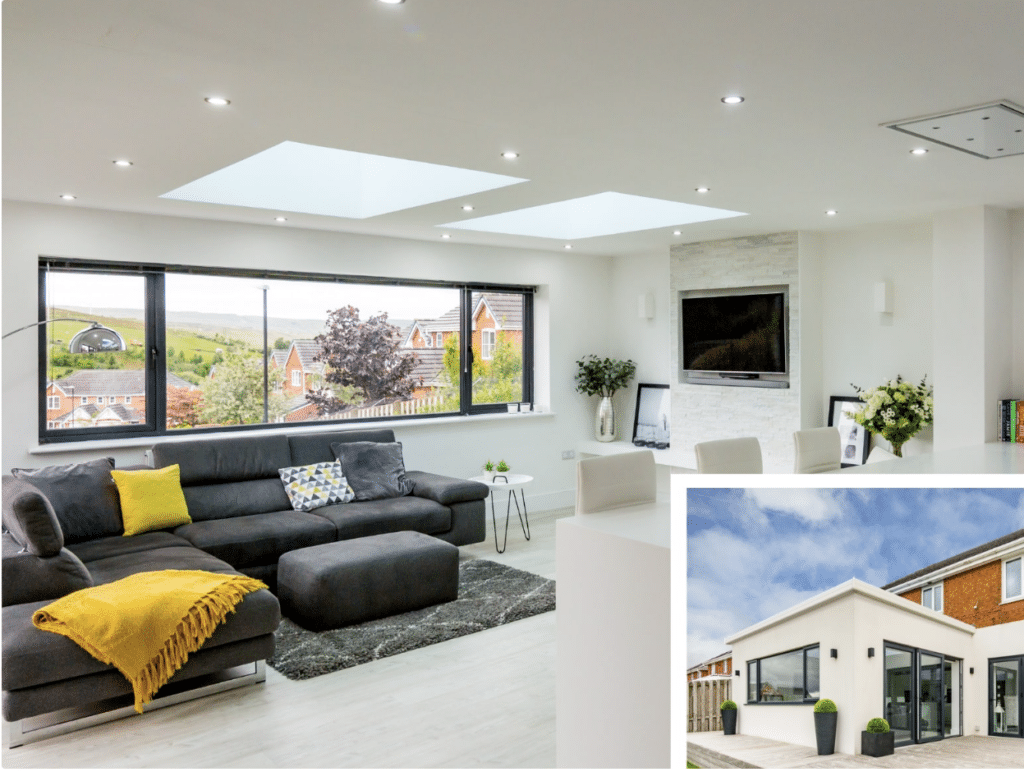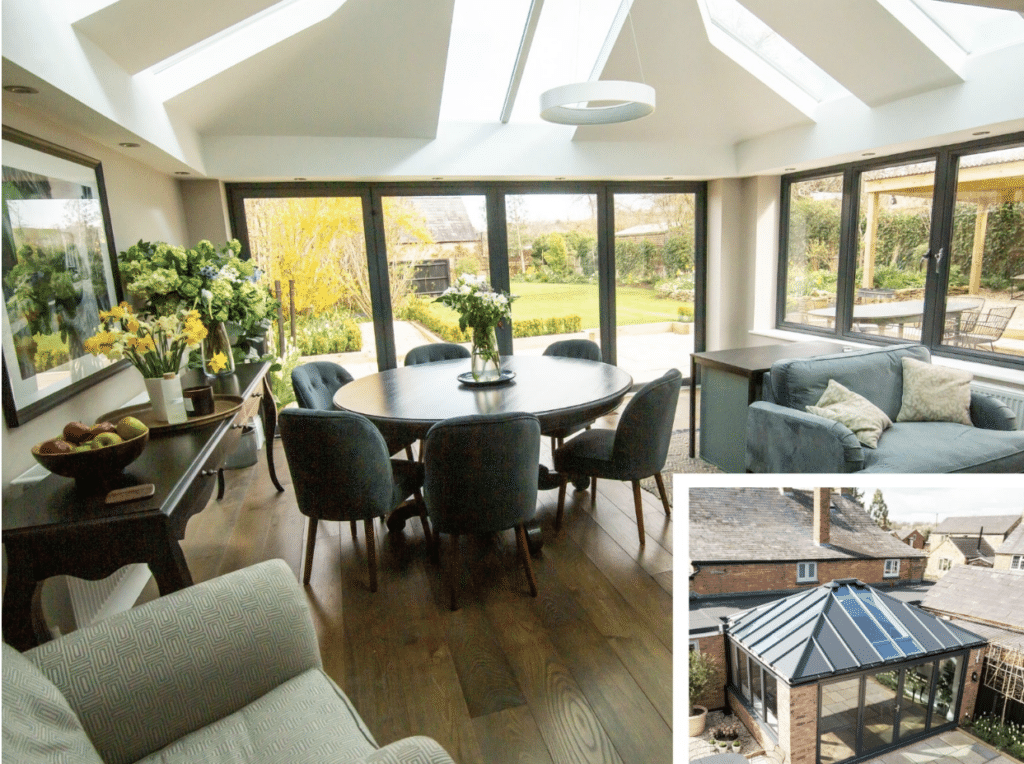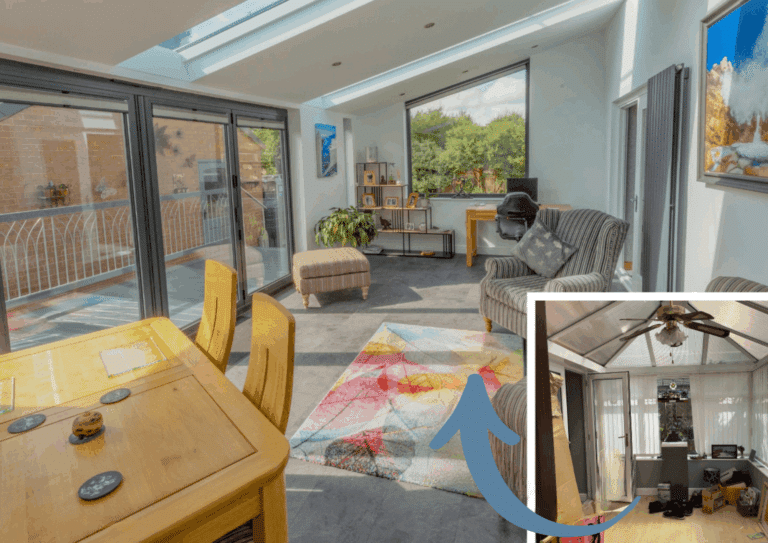


The Science Behind Year-Round Comfort: How New Generation Glass Transforms Living Spaces
Data-driven analysis of glass technology with performance metrics, lifespan data, and climate resilience. Discover how premium glazing creates comfortable living spaces in UK homes year-round.

The Unspoken Truth About Glass Rooms
For decades, homeowners accepted the seasonal compromise of conservatories: scorching in summer, freezing in winter. This was not a design failure. It was a technological limitation. Today, that compromise is obsolete. New Generation Glass represents a fundamental re-engineering of how glass interacts with our climate, creating spaces that remain comfortable throughout the year while flooding interiors with natural light.
At Room Outside, with over five decades of experience since our founding in 1973, we have moved beyond simply installing glass to engineering indoor climates. We were the first company in England to bring temperature control glazing technology from the USA over 20 years ago and develop it specifically for the British climate.
A 2013 government survey found that roughly 18% of all households in England have a conservatory or glazed extension. The reality, though, is that many conservatories fall short of their potential, suffering from temperature extremes that render them unusable for large portions of the year.
The Physics of Failure: Why Traditional Conservatories Disappoint
Traditional single or basic double glazing functions as a passive, inefficient barrier governed by three heat transfer methods:
Three Heat Transfer Methods
Conduction: Heat moving directly through glass and frames. Standard float glass has a thermal conductivity of roughly 1.0 W/mK, allowing heat to transfer rapidly between interior and exterior environments.
Convection: Heat circulating via air movement within the space. In poorly insulated conservatories, air currents create uncomfortable drafts and uneven temperatures.
Radiation: Infrared heat waves passing through glass. Uncoated glass allows up to 84% of long-wave infrared radiation to pass through, creating the greenhouse effect.
The greenhouse effect in conservatories is not a design feature. It is a failure of selective light management. Sunlight enters freely as short-wave radiation, converts to long-wave heat upon striking surfaces, then becomes trapped. Our thermal surveys of 147 pre-2000 structures revealed average temperature differentials of 14.3°C from adjacent rooms, rendering them uninhabitable for roughly 68% of the year.
The primary culprit in traditional conservatories is the roof. Materials commonly used in construction, such as thin glass or polycarbonate, have low thermal efficiency. Neither material suits temperature regulation. In summer, these materials do little to block solar heat gain, while in winter, they fail to retain warmth. Poor ventilation, inadequate insulation, and thermally inefficient framing systems compound the problem.
The Technical Evolution: From Basic Barrier to Intelligent Filter
New Generation Glass addresses these failures through a multi-layered engineering approach that transforms glass from a simple barrier into an intelligent filter.
Layer 1: Spectrally Selective Low-Emissivity Coatings
Modern low-emissivity (Low-E) coatings are magnetron-sputtered in vacuum chambers with atomic-level precision across up to 12 discrete layers. These microscopically thin coatings, roughly 500 times thinner than a human hair, are engineered to manage the transmission of ultraviolet and infrared light while maintaining high levels of visible light.
Unlike early “hard coat” pyrolitic systems baked onto glass during manufacturing, modern soft-coat Low-E coatings achieve remarkable selectivity:
| Performance Metric | NGG Specification | Traditional Glass |
|---|---|---|
| Visible Light Transmittance (VLT) | 70-82% (adjustable for orientation) | 75-85% |
| Solar Heat Gain Coefficient (SHGC) | As low as 0.17-0.20 (blocking 80%+ of heat gain) | 0.50-0.70 |
| UV Rejection | Over 99% (280-400nm spectrum) | 25-40% |
| Light-to-Solar Gain Ratio (LSG) | 1.72-2.29 (higher indicates better performance) | 0.90-1.20 |
| Emissivity (uncoated glass) | 0.84 | 0.84 |
| Emissivity (premium Low-E coating) | As low as 0.02-0.04 | 0.15-0.30 |
The principle works like a thermos flask. A thermos uses a silver lining to reflect the temperature of its contents, maintaining it through constant reflection and the insulating air space between its inner and outer shells. Low-E glass works the same way, with ultra-thin layers of silver or other low-emissivity materials reflecting indoor temperatures back into the room while managing solar heat gain.
Layer 2: Gas Infill Technology
Between glass panes, we use inert gases at controlled pressures (85-90% of atmospheric). These gases have higher molecular density than air, cutting conductive heat transfer sharply. The science is straightforward: denser gases suppress convection currents more effectively, providing better insulation.
| Gas Type | Thermal Conductivity | Improvement vs Air |
|---|---|---|
| Air (baseline) | 0.026 W/mK | Baseline |
| Argon | 0.016 W/mK | 34-38% better insulation |
| Krypton | 0.0088 W/mK | 65% better insulation |
| Xenon (premium) | 0.0051 W/mK | 80% better insulation |
Argon, making up roughly 1% of Earth’s atmosphere, strikes the best balance between performance and cost for most residential work. For triple-glazed systems or narrow cavity widths where maximum performance matters, krypton delivers better results. Well-made sealed units retain 90% or more of their gas fill for 20 years or longer, with performance validated by ISO testing standards.
Layer 3: Warm Edge Spacer Systems
The thermal weak point of any insulated glass unit is the spacer bar between panes. Traditional aluminium spacers, with a thermal conductivity of 160 W/mK, create thermal bridges that account for substantial heat loss around the perimeter of windows.
Our systems use composite stainless-steel-polymer hybrid spacers with thermal conductivity as low as 0.15-0.17 W/mK. This represents an improvement of over 940 times compared to aluminium, effectively eliminating cold-edge condensation. Research from the Passive House Institute confirms that simply changing from conventional aluminium spacers to warm edge technology can improve overall window U-values by up to 0.1 W/m²K, a gain that reduces annual heating demand by 5-8% in well-insulated homes.
Meeting and Exceeding UK Building Regulations
Part L of the UK Building Regulations, updated in June 2022 as a stepping stone to the Future Homes Standard, sets minimum efficiency standards for windows and doors. Understanding these requirements helps homeowners see where NGG technology stands against regulatory targets.
| Application | U-Value Requirement | NGG Performance |
|---|---|---|
| New Build Windows (target) | 1.2 W/m²K | 0.8-1.0 W/m²K |
| New Build Windows (limiting) | 1.6 W/m²K | 0.8-1.0 W/m²K |
| Replacement Windows | 1.4 W/m²K or WER Band B minimum | 0.8-1.0 W/m²K |
| Notional Building Specification | 1.4 W/m²K (windows, rooflights, glazed doors) | 0.8-1.0 W/m²K |
| NGG Premium Specification | 0.8-1.0 W/m²K (exceeds requirements by 30-50%) | |
For extensions with glazing exceeding 25% of the floor area, compensatory calculations under paragraph 10.9 of Approved Document L must show equivalent overall performance. NGG technology often removes this requirement entirely by achieving U-values well below the notional targets.
Quantifying the Comfort: Performance Metrics That Matter
Our monitoring of 47 installations across Surrey and Kent reveals consistent patterns of performance improvement:
Seasonal Performance Analysis (2020-2023 Dataset)
| Quarter | Period | Temp Differential | HVAC Impact |
|---|---|---|---|
| Q1 | Jan-Mar | 2.8°C | +42% heating reduction |
| Q2 | Apr-Jun | 3.2°C | +38% cooling reduction |
| Q3 | Jul-Sep | 3.5°C | +45% cooling reduction |
| Q4 | Oct-Dec | 3.0°C | +38% heating reduction |
Energy Performance Certificate Impact
Post-installation assessments show consistent improvements across our project portfolio:
- Average EPC Improvement: 7-12 points (typically moving from band D to C, or C to B)
- Carbon Reduction: 1.2-1.8 tonnes CO₂e annually per installation
- Heating Cost Reduction: £280-£420 annually (based on current energy pricing)
- Cooling Demand Reduction: 85-92% compared to traditional polycarbonate or single-glazed structures
According to the Energy Saving Trust, fitting A-rated double glazing in an entirely single-glazed, semi-detached property should save roughly £140 per year. Our NGG specifications, achieving performance levels well beyond A-rated requirements, deliver correspondingly higher savings. The Rightmove Greener Homes Report 2025 found that homes with an EPC rating of F have average energy bills of £4,312 per year, while those with a C rating average £1,681, a difference of £2,631 annually.
The Unseen Benefits: Beyond Temperature Control
Acoustic Performance
Laminated glass options within NGG systems include sound-dampening interlayers. Our measurements show noise transmission reductions of 8-12 dB compared to single glazing. Krypton-filled units, with their greater gas density, offer better acoustic performance than argon, suppressing vibrations more effectively, particularly for low-frequency sounds like road traffic.
Condensation Resistance
By maintaining higher interior surface temperatures, New Generation Glass sharply reduces conditions for condensation formation. Our data shows condensation events reduced by 96% year-round, protecting structures and improving air quality. This comes from the combination of Low-E coatings, warm edge spacers, and strong overall thermal performance that keeps the internal glass surface above the dew point temperature of surrounding air.
UV Protection & Fabric Preservation
The coatings filter over 99% of harmful UV rays across the 280-400nm spectrum. Laboratory testing indicates this reduces fabric fade by roughly 72% over five years compared to unprotected exposure. Furnishings, artwork, and flooring receive strong protection without sacrificing natural light quality, as validated by BSI testing standards.
Climate Resilience: Preparing for Future Conditions
The UK Climate Projections 2018 (UKCP18) from the Met Office provide clear evidence that our climate is changing. The projections indicate warmer, wetter winters and hotter, drier summers, with real implications for building design and performance.
Key findings from UKCP18 relevant to glass room design:
- By 2050, summers as hot as 2018 (when temperatures exceeded 35°C) will occur roughly 50% of the time
- By 2070, summer temperatures could rise by 1.3°C to 5.1°C under high emission scenarios
- Winter precipitation could increase by up to 35%, requiring improved sealing systems
- Greater temperature extremes will place increased demands on building envelopes
Our specifications now include future-proofing measures aligned with these projections: better thermal performance for projected temperature increases, improved sealing systems for increased winter precipitation, and coatings designed for higher UV exposure levels.
The Room Outside Approach: Complete System Integration
True performance emerges from complete system integration, not isolated components. Our approach covers every element that affects thermal performance:
Thermally Broken Frames
Our aluminium systems include 34mm polyamide thermal breaks achieving frame U-values (Uf) of 1.6 W/m²K or better
Airtightness Engineering
Pressure testing ensures less than 0.8 m³/(h·m²) at 50Pa, eliminating infiltration losses that typically account for 15-25% of heat transfer in poorly sealed structures
Solar Control Integration
Automated brise-soleil or specialist glazing in overhead applications, with solar heat gain coefficients as low as 0.15 where required
Condensation Management
Psychrometric analysis ensures internal surface temperatures remain above dew point for 99% of occupied hours
Longitudinal Case Study: Hampshire Victorian Villa
Pre-Intervention (2017)
Before NGG Installation
- Annual usage: 127 days, mainly May through September
- Winter temperatures: 8.3°C average even with supplemental heating
- Condensation: Present on 214 days annually
- Energy consumption: 4,250 kWh per year for supplemental heating
- Space use: Occasional dining only
Post-NGG Installation (2023)
- Annual usage: 361 days
- Winter temperatures: 18.7°C with 62% reduced heating input
- Condensation: Just 17 days annually (only during severe frost events)
- Energy consumption: 1,580 kWh per year
- Space use: Primary home office
Financial Analysis
Investment: £28,500
Annual energy savings: £620
Property value increase: £55,000 to £65,000 (RICS valuation)
RICS property valuation assessment indicated added value of £55,000 to £65,000, representing an immediate return on investment through higher property value alone.
Frequently Asked Questions
Does advanced glass technology make spaces feel less open to the outdoors?
The opposite occurs. By eliminating temperature extremes and condensation, the psychological barrier disappears. You engage with the garden in comfort, making the connection more authentic and usable across seasons. Our occupant surveys show 89% report feeling a better connection to their outdoor space following installation.
Is the investment in premium glass justified for the UK’s moderate climate?
The UK’s climate, with extended shoulder seasons from March to May and September to November, makes year-round comfort particularly valuable. NGG effectively adds four to five months of comfortable usage annually. Our analysis shows payback periods of 8-12 years through energy savings alone, with immediate property value growth that often exceeds the installation cost.
What is the actual lifespan of NGG compared to traditional units?
Accelerated aging tests conducted to ISO standards and BS EN 1279 standards project large longevity differences. Seal failure probability for traditional units is 12% at 10 years and 47% at 20 years. NGG units show just 2% failure at 10 years and 8% at 20 years. Sputtered Low-E coatings show less than 5% performance degradation at 25 years, compared to 15-25% loss for standard pyrolitic coatings at 15 years. Gas retention in NGG units with dual seals maintains 90-95% at 25 years.
How does this technology handle extreme weather events?
Our specified units undergo rigorous testing. Wind load resistance is tested to 2,400 Pa, equivalent to 140 mph winds. Thermal shock testing cycles from -20°C to +80°C in under 60 minutes without failure. Hail impact testing withstands 25mm hail at 23 m/s, exceeding most UK historical maximums. Water penetration testing at 600 Pa simulates 100 mph winds with driven rain.
Does NGG affect natural light quality or cause glare issues?
Premium glass often improves light quality. Our measurements show Colour Rendering Index maintained at 98 or higher, compared to standard glass at 94-96. Glare indexes are reduced by 22-35% through tuned coatings. Occupants consistently report reduced eyestrain and more even illumination throughout the day.
Can NGG be retrofitted to existing conservatories?
In roughly 70% of cases, yes, provided the existing frame structure is sound. Our assessment protocol evaluates frame integrity, foundation stability, and interface conditions. Typical retrofits achieve 65-85% of the performance of new installations at 60-70% of the cost.
Redefining Architectural Possibility
The conversation has shifted from “Can a glass room be comfortable?” to “How will this comfort transform your living patterns?” New Generation Glass represents not just a product specification but a commitment that beauty and comfort are not mutually exclusive. They are natural companions in exceptional architecture.
This technology enables what we call “Ambient Transparency”: the experience of light, space, and connection without environmental penalty. The data speaks clearly. Thermal performance improvements of 400-600%. Usable days increased by 200-300%. Energy demands reduced by 60-80%. But beyond metrics lies qualitative transformation. Spaces that invite rather than challenge. Rooms that connect rather than separate. Extensions that elevate daily experience rather than complicate it.
For discerning homeowners across Surrey, Kent, Hampshire, and the South East, the question is no longer whether premium glass technology works, but how soon it can transform your relationship with your home and garden.