
roomoutsideuk
03rd February, 2026

Can I Remove the Doors Between My House and Conservatory?

Can I Remove the Doors Between My House and Conservatory? (2026 UK Guide) | Room Outside

Can I Remove the Doors Between My House and Conservatory?

Complete guide to creating seamless open-plan living by removing the separation between your home and glass extension. Building Regulations, structural requirements, and thermal efficiency explained.

Quick Answer: Can You Remove Conservatory Doors?

Yes, you can legally remove the doors between your house and conservatory in the UK. However, Building Regulations approval is mandatory because conservatories are only exempt from thermal standards when physically separated from the main dwelling. Once you remove the doors, your conservatory must meet Part L energy efficiency requirements, typically requiring glazing U-values of 1.4 W/m²K or better for walls and 1.0 W/m²K or better for roofs.

Key facts: No planning permission required. Building Regulations approval required. Typical costs range from £1,500 for basic door removal to £15,000+ if glazing upgrades or structural work are needed. Timeline: 2-12 weeks depending on scope. Failure to obtain approval can cause problems when selling your property, invalidate home insurance, and potentially require reinstatement of the doors.

Key Facts: Removing Conservatory Doors (UK 2026)

  • Legal requirement: Building Regulations approval is mandatory; planning permission is not required
  • Relevant regulations: Part L (Conservation of Fuel and Power) and Part A (Structure) of the Building Regulations
  • Thermal standards: Wall glazing must achieve U-values ≤1.4 W/m²K; roof glazing must achieve U-values ≤1.0 W/m²K
  • Cost range: £1,500-£3,000 (basic removal), £3,000-£8,000 (with structural work), £5,000-£15,000+ (with glazing upgrades)
  • Timeline: 2-4 weeks for simple removal; 6-12 weeks if upgrades or structural work required
  • Why doors exist: Conservatories are exempt from Building Regulations only when thermally separated from the main house
  • Structural consideration: Most external walls are load-bearing; widening the opening requires a steel beam (RSJ)
  • Completion certificate: Required for future property sales and insurance purposes
Yes
You can remove the doors
<1.0
Target U-value (W/m²K)
86%
Heat blocked by NGG
£1.5-15k
Typical cost range
One of the most common questions when adding a conservatory or orangery extension is whether you can remove the doors between your house and the new space. Doing so creates a seamless, open-plan feel that transforms how you use both areas, particularly when extending a kitchen or dining room. The good news is that in most cases, yes, you can remove the doors. However, there are important regulations, structural considerations, and thermal efficiency requirements you need to understand first. This comprehensive guide covers everything you need to know about creating that seamless indoor-outdoor connection.

Why Are Doors Required in the First Place?

To understand the requirements for removing doors, it helps to know why they’re typically installed. When conservatories are built, they often benefit from an exemption in the Building Regulations. This exemption allows them to be constructed without meeting the same stringent energy efficiency requirements as the main house, but only if they remain thermally separated from the living space.

The separation is achieved through external-quality doors or windows between the conservatory and the house. These act as a thermal barrier, preventing heat from the main house escaping into the less efficient conservatory space. Without this separation, the conservatory would need to meet the same insulation and heating standards as a conventional extension, which would significantly increase construction costs.

The Building Regulations Exemption

According to the Planning Portal, conservatories are exempt from Building Regulations if they meet specific criteria, including being separated from the main house by external-quality doors or windows. This exemption exists because conservatories traditionally had poor thermal performance compared to solid construction.

However, modern glass technology has changed this equation dramatically. High-performance glazing can now achieve thermal efficiency comparable to solid walls, making the separation less necessary.

The key point is this: the doors are a regulatory requirement, not a structural one. They exist to maintain energy efficiency standards for your home. If you can demonstrate that your conservatory meets adequate thermal standards without the doors, Building Control will approve their removal.

Key Terms and Definitions

Understanding the terminology used when discussing conservatory door removal helps homeowners navigate the process and communicate effectively with contractors and Building Control.

What is a U-value?

Definition: A U-value (thermal transmittance) measures how effective a material is as an insulator. It represents the rate of heat transfer through a structure, measured in watts per square metre kelvin (W/m²K). Lower U-values indicate better insulation. For context, a solid brick wall typically has a U-value of around 2.0 W/m²K, while modern triple glazing can achieve 0.8 W/m²K or better.

What are Building Regulations Part L and Part A?

Part L (Conservation of Fuel and Power) sets standards for energy efficiency in buildings, including requirements for insulation, heating systems, and glazing performance. When removing conservatory doors, Part L requires your conservatory to meet specific thermal standards.

Part A (Structure) ensures building work is structurally safe. It applies if you’re modifying load-bearing walls, such as widening the opening between your house and conservatory.

What is a load-bearing wall?

Definition: A load-bearing wall is a structural element that transfers weight from above (such as floors, roof, or other walls) down to the foundation. Most external walls in UK homes are load-bearing. Removing or modifying load-bearing walls requires proper structural support, typically a steel beam (also called an RSJ – Rolled Steel Joist).

What is Building Regulations approval?

Definition: Building Regulations approval is official confirmation from your local Building Control department that proposed work complies with national building standards. It differs from planning permission, which relates to land use and external appearance. Building Regulations focus on safety, energy efficiency, and structural integrity.

Do You Need Planning Permission or Building Regulations Approval?

This is where many homeowners get confused. Let’s clarify the difference between planning permission and Building Regulations:

Planning Permission

No, you typically do not need planning permission to remove the doors between your house and conservatory. Planning permission relates to external changes to your property and its impact on neighbours and the local area. Removing internal doors is an internal modification that doesn’t require planning consent.

Most conservatories and orangeries don’t require planning permission if they fall within Permitted Development rights. Removing the doors afterwards doesn’t change this.

Building Regulations Approval

Yes, you will need Building Regulations approval to remove the doors. This is because you’re fundamentally changing how your home manages heat and energy. The approval process involves demonstrating that your conservatory meets adequate thermal efficiency standards and that any structural modifications are safe.

Important: Don’t Skip Building Regulations

Some homeowners simply remove the doors without seeking approval. This is risky for several reasons:

  • You may face enforcement action requiring the doors to be reinstated
  • When selling your property, solicitors will check for Building Regulations compliance
  • Your home insurance may be invalidated for non-compliant work
  • Future buyers may require a significant price reduction or indemnity insurance

The approval process is straightforward and relatively inexpensive. It’s always worth doing properly.

What Building Regulations Apply When Removing Conservatory Doors?

Two main parts of the Building Regulations are relevant when removing doors between your house and conservatory:

Part L: Conservation of Fuel and Power

This is the primary regulation you need to satisfy. Part L sets standards for energy efficiency in buildings. When you remove the separating doors, your conservatory effectively becomes part of your main living space and must meet equivalent thermal standards.

The key requirements include:

  • Glazing U-values: Wall and door glazing should achieve U-values of 1.4 W/m²K or better. Roof glazing should achieve 1.0 W/m²K or better.
  • Overall thermal performance: The conservatory’s combined heat loss should not significantly increase your home’s overall energy consumption.
  • Heating provision: Adequate heating must be available in the conservatory space, typically through extension of your existing central heating system.

Meeting these requirements is easier than ever with modern glass technology. New Generation Glass achieves U-values under 1.0 W/m²K while blocking up to 86% of solar heat, making Building Regulations compliance straightforward.

Part A: Structure

If you plan to widen the opening or remove sections of wall, Part A applies. This covers structural safety and requires that any modifications don’t compromise your home’s structural integrity.

Most external walls are load-bearing, meaning they support part of your home’s structure (typically the floor above or the roof). Removing or widening openings in load-bearing walls requires proper structural support, usually in the form of a steel beam (RSJ) or concrete lintel.

Is the External Wall Load-Bearing?

This is a critical question if you want to widen the opening rather than simply removing the existing doors. Understanding whether your wall is load-bearing affects costs, complexity, and Building Regulations requirements.

How to Identify a Load-Bearing Wall

Most external walls in UK homes are load-bearing. They typically support either floor joists from the room above or roof rafters. Signs that a wall is load-bearing include:

  • The wall runs perpendicular to floor or ceiling joists
  • There are walls or structural elements directly above
  • The wall is thick (typically 225mm or more for solid masonry)
  • Removing it would leave an unsupported span

However, you should never assume. Always have a structural engineer or experienced contractor assess your specific situation before planning any work.

What If You Want to Widen the Opening?

If you simply remove existing doors and their frame, the structural impact is minimal because the original lintel above the doorway remains in place. However, if you want to create a wider opening for a more dramatic open-plan effect, structural work is required.

Widening the opening typically involves:

  • Structural calculations by a qualified engineer
  • Installation of a steel beam (RSJ) or concrete lintel
  • Temporary support (acrow props) during the work
  • Building Regulations approval and inspection
  • Making good the opening with appropriate finishes

The Benefits of Widening

While widening adds cost and complexity, the results can be transformative. A wider opening creates a true sense of one continuous space rather than two connected rooms. Many homeowners who initially planned only to remove doors end up opting for a wider opening once they see the potential. Discuss options with your contractor during the planning stage.

Will Removing the Doors Make My House Cold?

This is the most common concern homeowners have, and it’s a valid one. If your conservatory has poor thermal performance, removing the doors could indeed make your home colder and increase heating bills. However, with modern glass technology, this concern can be completely addressed.

The Problem with Older Conservatories

Traditional conservatories built 15-20+ years ago often have poor thermal performance. Single glazing or basic double glazing, polycarbonate roofs, and minimal insulation mean they lose heat rapidly in winter and overheat in summer. Opening these spaces to your main living area would create significant problems.

The Solution: High-Performance Glazing

Modern heat-control glass has transformed what’s possible. New Generation Glass used in Room Outside installations achieves remarkable thermal performance:

  • U-values under 1.0 W/m²K – comparable to solid insulated walls
  • 86% solar heat rejection – prevents summer overheating
  • 70%+ light transmission – maintains the bright, airy feel
  • 99% UV protection – protects furnishings from fading

With this technology, your conservatory can be as thermally efficient as the rest of your home, making door removal entirely practical from an energy perspective.

Additional Considerations for Thermal Efficiency

Upgrade to High-Performance Glass

If your conservatory has older glazing, consider a glass upgrade before removing doors. This investment pays for itself through reduced heating costs.

Extend Central Heating

Ensure adequate heating is available in the conservatory. Extending your existing radiator system or adding underfloor heating works well.

Consider Roof Insulation

If your conservatory has a polycarbonate or glass roof with poor U-values, upgrading to an insulated roof panel or high-performance glass roof dramatically improves thermal performance.

Address Draughts

Check seals around windows and doors. Even small gaps can cause significant heat loss when the space is open to your main living area.

Step-by-Step Process for Removing Conservatory Doors

Here’s a practical guide to the process of removing doors between your house and conservatory, from initial assessment to final completion:

1

Assess Current Thermal Performance

Evaluate your conservatory’s glazing, roof, and insulation. Check U-values if known, or have a professional assessment. Determine what upgrades may be needed to meet Building Regulations when doors are removed.

2

Check Structural Requirements

Determine if you want to simply remove existing doors or widen the opening. If widening, arrange a structural engineer’s assessment to specify required support. Get quotes for any structural work needed.

3

Plan Any Glazing Upgrades

If your conservatory has older glazing that won’t meet Building Regulations requirements, plan upgrades to high-performance glass. This may be the largest cost but delivers the greatest benefit.

4

Submit Building Regulations Application

Submit plans and calculations to your local Building Control department. Include heat loss calculations demonstrating compliance with Part L. Allow 2-4 weeks for approval.

5

Complete Glazing Upgrades (If Required)

Install any new glazing before removing doors. This ensures your home remains thermally efficient throughout the process and allows time for Building Control inspection of the glazing.

6

Complete Structural Work (If Widening)

If widening the opening, install structural support (steel beam) before removing any masonry. This work requires Building Control inspection at key stages.

7

Remove Doors and Finish Opening

Remove the existing doors and frame. Make good the opening with appropriate trim, matching flooring between spaces, and any necessary decoration.

8

Obtain Building Regulations Sign-Off

Arrange final inspection from Building Control. Once satisfied, they’ll issue a completion certificate. Keep this safe for future property sales.

How Much Does It Cost to Remove Conservatory Doors?

Costs vary significantly depending on the scope of work required. Here’s a breakdown of typical costs:

Work Required Typical Cost Range Notes
Basic door removal only £500-£1,500 Existing glazing meets standards, no structural work
Door removal + Building Regs £1,500-£3,000 Including application fees and minor finishing
Opening widening (structural) £3,000-£8,000 Steel beam installation, structural engineer, making good
Glazing upgrade £5,000-£15,000+ Depends on conservatory size and glass specification
Complete project (all elements) £8,000-£25,000+ Full upgrade including glazing, structure, and finishing

These costs represent typical ranges for the South East. Actual costs depend on your specific circumstances, conservatory size, accessibility, and chosen specifications.

Is the Investment Worth It?

For many homeowners, the answer is absolutely yes. Creating seamless open-plan living transforms how you use your space, increases natural light throughout your home, and can add significant value to your property. The investment typically delivers both immediate lifestyle benefits and long-term financial returns when you sell.

UK Statistics: Conservatories and Building Regulations

Understanding the broader context helps homeowners make informed decisions. Here are key statistics relevant to conservatory door removal in the UK:

Industry Data and Research Findings

  • Number of UK conservatories: Approximately 3-4 million UK homes have conservatories, according to industry estimates
  • Annual conservatory installations: Around 50,000-100,000 new conservatories are built each year in the UK
  • Building Regulations compliance rate: The Federation of Master Builders reports that a significant percentage of home improvement work is completed without necessary Building Regulations approval
  • Property value impact: Research from estate agents suggests well-integrated conservatories can add 5-10% to property values
  • Energy efficiency improvements: Modern heat-control glass can reduce solar heat gain by up to 86% compared to standard double glazing
  • U-value comparison: Standard double glazing: 2.8-3.0 W/m²K; Modern double glazing: 1.2-1.6 W/m²K; High-performance glass: 0.8-1.0 W/m²K

Why These Numbers Matter

The gap between standard and high-performance glazing is significant. A conservatory with standard double glazing (U-value 2.8 W/m²K) loses heat nearly three times faster than one with high-performance glass (U-value 1.0 W/m²K). This directly impacts both comfort and Building Regulations compliance when removing separating doors.

The thermal performance requirements of Part L mean that many older conservatories cannot have their doors removed without glazing upgrades. However, modern high-performance glass makes compliance straightforward, often exceeding minimum requirements significantly.

Alternatives to Complete Door Removal

If full door removal isn’t practical for your situation, consider these alternatives:

Bi-Fold or Sliding Doors

Replace existing doors with wide bi-fold or sliding doors that can be fully opened in good weather while providing thermal separation when closed. This offers flexibility and still meets Building Regulations without major glazing upgrades.

Internal Glazed Screens

Install floor-to-ceiling internal glazed screens that maintain the visual connection while providing thermal separation. These can include sliding or folding elements for occasional full opening.

Partial Opening

Widen the existing opening and install minimal framing rather than complete removal. This reduces structural requirements while still dramatically improving the sense of connection.

Common Misconceptions About Removing Conservatory Doors

Several myths and misunderstandings circulate about removing conservatory doors. Here are the facts to correct common misconceptions:

Myth #1: “You need planning permission to remove conservatory doors”

Fact: Planning permission is NOT required to remove the doors between your house and conservatory. This is an internal modification. However, Building Regulations approval IS required to ensure thermal efficiency compliance.

Myth #2: “You can just remove the doors without any approvals”

Fact: While physically removing doors is simple, doing so without Building Regulations approval is illegal and can cause serious problems: enforcement action, invalidated insurance, issues when selling your property, and potential requirement to reinstate the doors.

Myth #3: “Modern conservatories don’t need separating doors”

Fact: The requirement for separating doors depends on the conservatory’s thermal performance at the time of construction, not its age. Even modern conservatories may have been built with doors to benefit from the Building Regulations exemption and avoid the cost of high-performance glazing.

Myth #4: “Removing conservatory doors will always make your house cold”

Fact: With modern high-performance glazing (U-values under 1.0 W/m²K), conservatories can be as thermally efficient as the rest of your home. The key is ensuring adequate glazing performance and heating provision before removing the doors.

Myth #5: “Building Regulations approval is expensive and complicated”

Fact: Building Regulations applications typically cost £200-£500 for this type of work. The process is straightforward when you have proper documentation of glazing specifications and any structural calculations. Most applications are approved within 2-4 weeks.

Summary: Key Takeaways for Homeowners

Here are the essential points every homeowner should understand about removing conservatory doors:

The Bottom Line

  • Yes, you can remove the doors – but Building Regulations approval is mandatory
  • No planning permission needed – this is an internal modification only
  • Thermal efficiency is key – your conservatory must meet Part L standards (U-values ≤1.4 W/m²K walls, ≤1.0 W/m²K roof)
  • Structural assessment may be needed – especially if widening the opening in a load-bearing wall
  • Costs range from £1,500 to £15,000+ – depending on whether glazing upgrades or structural work are required
  • Timeline is 2-12 weeks – simple removal is quick; complex projects take longer
  • Always get a completion certificate – essential for future property sales
  • Modern glass technology makes compliance easy – high-performance glazing exceeds minimum requirements

The benefits of removing conservatory doors include creating seamless open-plan living, increasing natural light throughout your home, improving the sense of space, and potentially adding value to your property. With proper planning and professional guidance, the process is straightforward and the results transformative.

Regional Considerations: Kent, Surrey, Sussex & London

Building Regulations requirements are consistent across England, but local factors can affect your conservatory door removal project. Here’s what homeowners in our service areas should consider:

Kent Homeowners (Sevenoaks, Canterbury, Maidstone, Tunbridge Wells)

Many Kent properties, particularly in areas like Sevenoaks and Tunbridge Wells, are located in Conservation Areas or Areas of Outstanding Natural Beauty (AONB). While removing internal doors doesn’t require planning permission, any external modifications to conservatories in these areas may need consent. Our team regularly works with Kent County Council Building Control and understands local requirements.

Surrey Homeowners (Guildford, Woking, Epsom, Reigate)

Surrey properties often have larger conservatories attached to substantial homes, making thermal efficiency particularly important. Homeowners in Guildford, Woking, and surrounding areas benefit significantly from high-performance glazing upgrades before door removal. We’ve completed numerous projects across Surrey where glass upgrades transformed unusable conservatories into year-round living spaces.

Sussex Homeowners (Brighton, Chichester, Worthing, Eastbourne)

Coastal properties in East Sussex and West Sussex face unique thermal challenges. Salt air, strong winds, and intense sunlight require careful consideration when integrating conservatories. Our Chichester-based team has extensive experience with coastal installations across Brighton, Worthing, and the surrounding South Downs area.

London & Hampshire Homeowners

Greater London properties often have space constraints that make open-plan living especially valuable. Removing conservatory doors in London homes can dramatically improve the sense of space. Similarly, Hampshire homeowners in areas like Winchester, Southampton, and Portsmouth increasingly seek seamless connections to their garden rooms.

Local Building Control Contacts

We work with Building Control departments across all our service areas and can manage the approval process on your behalf. Whether you’re in Maidstone, Guildford, Brighton, or anywhere else in the South East, we’ll handle the paperwork and inspections, ensuring full compliance with local requirements.

Getting Expert Advice for Your Project

Every property is different, and the best solution depends on your specific conservatory, home layout, and objectives. At Room Outside, we’ve helped hundreds of homeowners across Kent, Surrey, Sussex, and London create seamless connections between their homes and glass extensions.

Our design and consultation process includes assessment of your existing structure, recommendations for thermal improvements, and guidance on Building Regulations compliance. Whether you’re planning a new glass room, orangery, or looking to upgrade an existing conservatory, we can help.

We also offer glass upgrade services that can transform older conservatories with high-performance New Generation Glass, making door removal practical even for properties with existing dated structures.

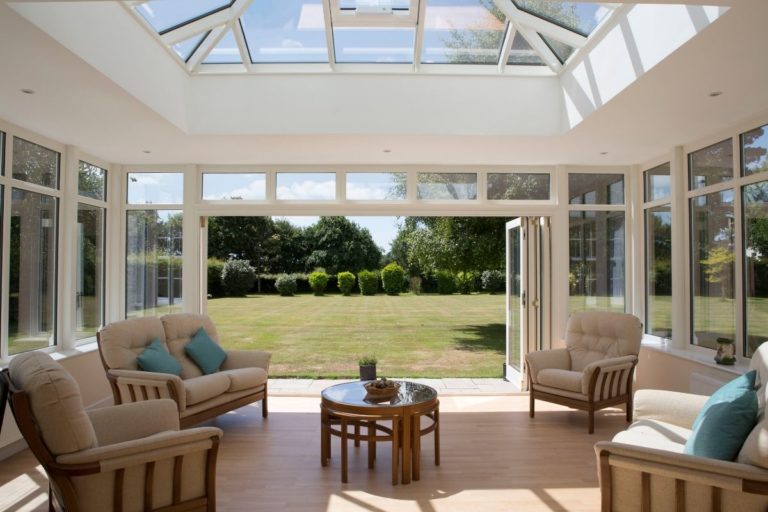
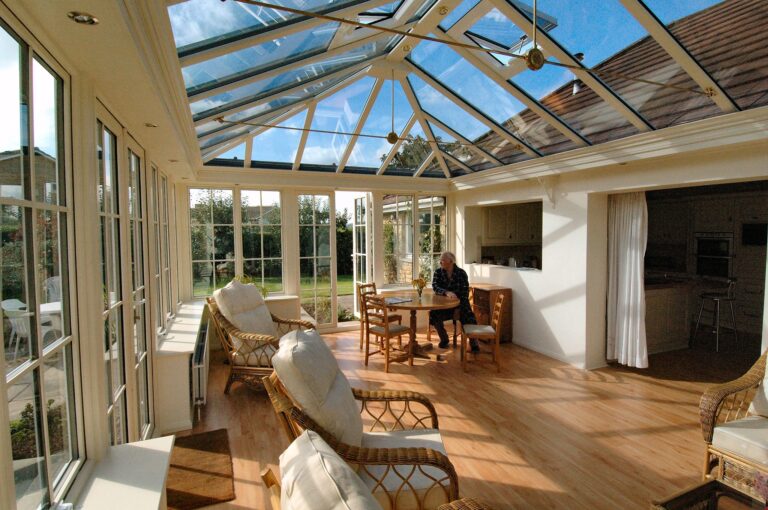
Modern open-plan living space with seamless connection to glass extension
Creating seamless open-plan living by removing the separation between your home and glass extension transforms how you use your space

Room Outside

Conservatory & Glass Extension Specialists | Established 1973 | 50+ Years Experience

Room Outside is a family-owned business specialising in the design, manufacture, and installation of conservatories, orangeries, and glass rooms across Kent, Surrey, Sussex, Hampshire, and London. Our expertise includes Building Regulations compliance, structural modifications, and high-performance glazing solutions. We have completed hundreds of conservatory integration projects, giving us practical knowledge of what works and what Building Control requires. Contact us on 01243 538999 for expert advice.

Areas We Cover Across the South East

Room Outside provides conservatory door removal, glass upgrades, and Building Regulations consultation across the South East of England. Our team travels from our Chichester, West Sussex base to serve homeowners throughout the region.

Counties We Serve:

Kent Surrey East Sussex West Sussex Hampshire Greater London Berkshire Essex Dorset

Key Towns & Cities:

Sevenoaks Guildford Chichester Brighton Tunbridge Wells Canterbury Maidstone Worthing Eastbourne Winchester Southampton Woking Epsom Reigate

Not sure if we cover your area? Check our full service area map or call 01243 538999 to confirm. We offer free consultations throughout our coverage area with no obligation.

Questions about removing conservatory doors or upgrading your existing glazing? Contact us online or call our Chichester office on 01243 538999.

Sources, References, and Further Reading

Official Government Sources: UK Planning Portal (planningportal.co.uk) – Building Regulations for Conservatories; HM Government Approved Document L: Conservation of Fuel and Power (2021 edition with 2023 amendments); HM Government Approved Document A: Structure; Building Regulations 2010 (as amended).

Industry Bodies: Glass and Glazing Federation (GGF) – Thermal Performance Standards and Guidelines; Federation of Master Builders (FMB) – Building Regulations Compliance Data; British Fenestration Rating Council (BFRC) – Window Energy Ratings.

Technical Standards: BS EN 673:2011 – Glass in Building: Determination of Thermal Transmittance (U-value); BS EN ISO 10077-1 – Thermal Performance of Windows, Doors and Shutters.

Industry Experience: Room Outside – 50+ years of conservatory design and installation experience (established 1973); proprietary data from completed projects across Kent, Surrey, Sussex, Hampshire, and London.

About This Guide

This comprehensive guide was created by Room Outside, specialists in conservatories, orangeries, and glass extensions since 1973. With over 50 years of experience and hundreds of completed projects across the South East of England, we have extensive practical knowledge of Building Regulations compliance, structural modifications, and thermal efficiency requirements for conservatory integration projects.

Our team includes qualified designers, experienced installers, and dedicated project managers who work directly with Building Control departments. This guide reflects real-world experience combined with current regulatory requirements as of January 2026.

Last updated: January 2026 | Reviewed for accuracy: Building Regulations requirements verified against current Approved Documents

Frequently Asked Questions About Removing Conservatory Doors

Can I remove the doors between my house and conservatory in the UK?

Yes, you can remove the doors between your house and conservatory in the UK, but you need Building Regulations approval first. This approval confirms your conservatory meets thermal efficiency standards (typically U-values under 1.4 W/m²K for glazing). Homeowners across Kent, Surrey, Sussex, Hampshire, and London can contact Room Outside on 01243 538999 for expert guidance on the approval process.

Do I need planning permission to remove conservatory doors?

No, you do not need planning permission to remove doors between your house and conservatory. This is an internal modification that doesn’t require planning consent. However, you do need Building Regulations approval. This applies whether you’re in Sevenoaks, Guildford, Brighton, or anywhere else in England. The Building Regs process confirms thermal efficiency compliance and structural safety.

What Building Regulations apply when removing conservatory doors?

Part L (Conservation of Fuel and Power) is the main regulation, requiring adequate thermal efficiency. Part A (Structure) applies if you’re modifying load-bearing walls. Your conservatory needs glazing U-values of 1.4 W/m²K or better for walls/doors and 1.0 W/m²K or better for roof glazing. Room Outside handles Building Regs applications for clients across the South East.

How much does it cost to remove doors between house and conservatory?

Costs range from £1,500 to £15,000+ depending on work required. Basic door removal: £1,500-£3,000. Opening widening (structural): £3,000-£8,000. Glazing upgrades: £5,000-£15,000+. Complete project with all elements: £8,000-£25,000+. Prices are similar across Kent, Surrey, Sussex, and London. Contact Room Outside for a free, no-obligation quote.

Will removing conservatory doors make my house cold?

Only if your conservatory has poor thermal performance. Modern high-performance glass like New Generation Glass (U-values under 1.0 W/m²K) keeps spaces comfortable year-round. It blocks 86% of solar heat in summer while retaining warmth in winter. Adequate heating and good seals are also essential. We assess thermal performance during free consultations.

Is the wall between my house and conservatory load-bearing?

Most external walls are load-bearing, supporting floor joists or roof rafters above. If you want to widen the opening (not just remove doors), a structural engineer must assess the wall and specify support (usually a steel beam/RSJ). Building Regs approval is required for structural modifications. Room Outside provides full structural assessments as part of our service.

Can I widen the opening when removing conservatory doors?

Yes, you can often widen the opening for a more dramatic open-plan effect. This requires structural calculations, steel beam installation, and Building Regulations approval. Widening significantly enhances the sense of one continuous space. Many homeowners in Surrey, Kent, and Sussex opt for wider openings once they see the potential during our design consultations.

What U-value does my conservatory glass need to meet Building Regs?

Wall/door glazing needs U-values of 1.4 W/m²K or better. Roof glazing needs 1.0 W/m²K or better. New Generation Glass achieves U-values under 1.0 W/m²K throughout. If your existing conservatory has older glazing that doesn’t meet these standards, our glass upgrade service can help before door removal.

How long does conservatory door removal take?

Simple door removal takes 2-4 weeks including Building Regs approval. If glazing upgrades or structural work are required, allow 6-12 weeks for the complete project. Timeline depends on scope, local Building Control processing times, and material lead times. We provide detailed schedules during the planning stage.

Do I need a completion certificate for removing conservatory doors?

Yes, you should obtain a Building Regulations completion certificate once work is finished and inspected. This proves the work was done legally and to required standards. It’s essential for future property sales and may be required by mortgage lenders or insurers. We ensure all clients receive proper documentation.

Who can help with conservatory door removal in Kent, Surrey, or Sussex?

Room Outside specialises in conservatory integration projects across Kent, Surrey, Sussex, Hampshire, and London. Based in Chichester, West Sussex, we’ve served the South East since 1973. We handle everything from initial assessment through Building Regs approval to completion. Call 01243 538999 for a free consultation or visit roomoutside.com.

Can I remove conservatory doors myself (DIY)?

Physically removing doors is straightforward, but Building Regs compliance is essential. Without approval, you risk enforcement action, insurance issues, and problems when selling. Professional assessment ensures thermal efficiency, structural safety, and proper documentation. DIY removal without approval is not recommended for these reasons.

Talk to a design consultant: 01243 538999 – David our digital assistant will take a few details so the right specialist can follow up personally.

Create Seamless Open-Plan Living

Whether you’re planning a new glass extension or looking to integrate your existing conservatory, our team can help you create the seamless connection you’re looking for. Book a free consultation to discuss your project.

Call us anytime – David our digital assistant will take a few details so the right specialist can follow up personally.
Room Outside: Creating beautiful glass extensions since 1973.
Serving West Sussex, Surrey, Kent, Essex, Hampshire, Dorset, Berkshire, Greater London & East Sussex.

roomoutsideuk
15th December, 2025

Bespoke Conservatory Design: Creating Spaces That Transform How You Live

Bespoke Conservatory Design: Spaces You’ll Actually Use Daily | Room Outside

Bespoke Conservatory Design: Creating Spaces That Transform How You Live

Learn what genuine bespoke design means, why New Generation Glass creates conservatories you’ll love year-round, and how to find true specialists who protect your investment.

Quick Answer

True bespoke conservatory design means creating an architectural masterpiece engineered specifically for your property using premium materials like hardwood or aluminium, advanced temperature-control glazing such as New Generation Glass, and individual design that respects your home’s character. The difference between bespoke design and standard conservatories isn’t just quality; it’s the difference between a space you’ll treasure for generations and one you’ll tolerate for a decade.

For over 50 years, Room Outside, based in West Sussex, has been designing and building luxury bespoke conservatories, orangeries and glass extensions across the South East of England, including Surrey, Hampshire, Sussex, Kent and Greater London. That experience means we know exactly what works for UK homes and UK weather.

Stand in any beautifully designed conservatory on a crisp January morning, sunlight streaming through perfectly engineered glass, warmth enveloping you despite the frost outside. This isn’t luck. It’s not even expensive heating. It’s what happens when genuine architectural expertise meets advanced glazing technology.

Yet most UK homeowners will never experience this. They’ll settle for spaces that feel like greenhouses in July and ice boxes in December, wondering why their £20,000 investment only gets used six months of the year.

The difference? Understanding what “bespoke” actually means, and why it matters far more than most conservatory companies will ever admit.

Why Most “Bespoke” Conservatories Aren’t Actually Bespoke At All

Walk into most conservatory showrooms and you’ll hear the word “bespoke” within the first five minutes. They’ll show you Victorian styles, Edwardian options, perhaps a contemporary lean-to. You’ll pick your size from a measuring tape, your colour from a chart, maybe some decorative glazing bars from a catalogue.

They’ll call this “bespoke.”

It isn’t.

What’s really happening: You’re selecting from pre-engineered modular systems, choosing options like ordering from a menu. Made-to-measure? Yes. Custom colours and features? Certainly. But individually designed for your specific property’s architecture, orientation, and your lifestyle? Not remotely.

The Suit Analogy

Think of it like buying a suit. Most high street shops offer “made-to-measure” services. They’ll adjust standard patterns for your measurements, perhaps offer fabric choices. That’s what most conservatory companies provide.

True bespoke is what happens when a master tailor studies your build, your posture, how you move, what you’ll wear it for, and creates something that exists nowhere else in the world. Every seam, every dart, every detail considered specifically for you.

That’s the difference we’re talking about with conservatory design.

The Three Critical Elements That Define Genuine Bespoke Design

1. Individual Architectural Design (Not Style Selection)

Room Outside brings over 50 years of expertise to the art of designing and building bespoke glass extensions, creating structures that blend timeless elegance with innovative functionality.

Real bespoke design begins with architectural analysis. The designer studies your property like an art historian examining a painting. What period is it? What are the proportions telling us? How do the roof lines interact? What’s the rhythm of the windows? What materials create the character?

Then they look at you. How do you live? When do you use spaces? Do you entertain? Work from home? Have small children or grandchildren visiting? Love gardening? Read for hours? Cook elaborate meals?

Only then does design begin. Not selecting from templates, but creating something unique that:

  • Respects your property’s architectural DNA
  • Enhances rather than compromises its character
  • Works specifically for your lifestyle patterns
  • Responds to your site’s unique orientation and microclimate
  • Creates proportions and rhythms that feel inevitable, as if it was always meant to be there

The tell-tale sign you’re not getting bespoke design: The conversation focuses on style selection (“Victorian or Edwardian?”) rather than architectural analysis of your specific property.

2. Advanced Glazing Technology (Not Just “Energy-Efficient” Glass)

Here’s where most conservatory companies lose the plot entirely. They’ll talk about “energy-efficient glass” or “solar control glazing” as if it’s all basically the same thing with minor variations.

It categorically isn’t.

Standard double glazing insulates. That’s useful, but it doesn’t solve the fundamental problem: glass conducts temperature. Traditional conservatories experience wild temperature swings because the glass transmits solar heat in summer and radiates heat out in winter.

Room Outside pioneered the introduction of New Generation Glass from the USA over 20 years ago, further developing it to suit the British climate, enabling structures that provide unmatched comfort and usability all year round.

Advanced temperature-control glazing like New Generation Glass does something entirely different. It actively manages solar radiation, selectively filtering wavelengths that create heat whilst maintaining visible light transmission. It’s not just thicker or better insulated; it’s fundamentally different technology.

What This Means in Practice

Summer afternoon, blazing sunshine: your neighbour’s conservatory reads 38°C and is unusable. Yours? A comfortable 23°C. No air conditioning. No giant fans. Just intelligent glazing working exactly as engineered.

January evening, frost forming outside: you’re sitting in your conservatory reading without a jumper because the combination of advanced glazing and modest heating creates comfortable, stable temperatures that traditional conservatories simply cannot achieve regardless of how much you spend heating them.

15-25°C
Temperature variation with standard conservatory
5-8°C
Temperature variation with advanced glazing
20+ yrs
UK development of New Generation Glass

That’s not marginal improvement. That’s the difference between a space you occasionally tolerate and one you genuinely live in daily.

The tell-tale sign you’re not getting advanced glazing: They talk about glass thickness and insulation but can’t explain how solar heat gain is actively managed or provide specific performance data for your orientation.

3. Premium Structural Materials (Not Mass-Produced Extrusions)

uPVC transformed the conservatory market in the 1980s and 90s. Made glass extensions accessible to many more homeowners. That’s genuinely positive.

But here’s what nobody mentions: uPVC has fundamental limitations that no amount of “premium” ranges can overcome.

Material Expected Lifespan Key Characteristics
uPVC frameworks 15-25 years Visible degradation (yellowing, brittleness, seal failures)
Quality hardwood timber 50+ years Can be refinished indefinitely, natural insulation properties
High-specification aluminium 50+ years Premium powder coating lasts 25+ years, ultra-fine sightlines

Architectural Possibilities

  • uPVC: Limited profile options, cannot achieve fine architectural details, restricted colour durability
  • Hardwood: Unlimited design possibilities, individual milling for precise architectural profiles, natural insulation properties
  • Premium aluminium: Custom extrusions, ultra-fine sightlines (as low as 20mm), exceptional strength for larger glass spans

Visual Character

  • uPVC: Always looks like uPVC, regardless of colour or woodgrain effects
  • Hardwood: Warmth, depth, grain character that improves with age
  • Premium aluminium: Clean, precise, contemporary aesthetic impossible with other materials

For properties where architectural integrity matters, material selection isn’t about budget. It’s about whether the conservatory enhances or compromises your property’s character for the next half-century.

The tell-tale sign you’re not getting premium materials: The conversation focuses primarily on uPVC with hardwood positioned as an expensive upgrade rather than the appropriate choice for your property’s architectural quality.

What’s the Difference Between an Orangery, a Conservatory and a Glass Extension?

Quick Answer

An orangery is a more solid, room-like structure with brick or stone pillars and a solid roof with a central lantern. A conservatory is usually more than 75% glass in the roof and walls, with a lighter, more transparent feel. A glass extension is a fully integrated building extension that moves the home’s thermal envelope, meeting much higher insulation standards than a traditional conservatory.

What Makes an Orangery Different (And Why It Matters)

Orangeries have a solid roof with less than 75% glazing and feature substantial masonry construction with brick or stone pillars, creating more solid structure than conservatories which typically have over 75% roof glazing.

Think of orangeries as proper rooms with exceptional natural light rather than glass structures with some solid elements.

The solid roof perimeter creates an internal plastered pelmet running around the room’s edge. This provides:

  • Space for downlighting creating proper room ambiance (impossible with all-glass roofs)
  • Visual weight and enclosure making it feel like a room, not a greenhouse
  • Superior thermal performance through insulation mass
  • Architectural presence that brick or stone pillars reinforce

Walk into a well-designed orangery and you don’t think “conservatory.” You think “beautiful room with extraordinary light.”

When Orangeries Make Sense

  • You want proper room character, not indoor-outdoor transitional space
  • Year-round thermal comfort is non-negotiable
  • Your property’s architecture has sufficient presence
  • Extending kitchen or dining space where room character matters
  • Privacy from neighbours or overlooking is important

When Conservatories Work Better

  • Maximum connection to garden is priority
  • You love the light, transparent character of glass structures
  • Your property’s style suits lighter architectural language
  • You want that magical indoor-outdoor blurred boundary
  • Budget favours predominantly-glazed structures

Neither is inherently “better.” They’re different architectural responses to different requirements and properties.

Glass Extensions: The Contemporary Alternative That Changes Everything

A glass extension is a true building extension that’s fully open to the existing house. It moves the external thermal envelope, so it has to meet much higher insulation standards than a thermally separated glass conservatory with doors between the house and the structure.

The critical distinction: Building Regulations classify conservatories as thermally-separated structures (doors between conservatory and house). Glass extensions are fully-integrated, meaning they must meet full extension thermal performance standards.

What This Enables

Glass extensions can incorporate advanced technologies that conservatories often don’t:

  • Triple glazing as standard (U-values as low as 0.5 W/m²K)
  • Heated glass technology
  • Full integration with home heating systems
  • Contemporary architectural language

The Structural Glass Revolution

Contemporary frameless glass extensions use structural glass technology completely different from traditional conservatories. Laminated glass beams and fins create self-supporting structures with minimal visible framework. We’re talking 20-40mm ultra-fine profiles versus 100-150mm traditional conservatory frames.

Visual impact? Completely different. Where traditional conservatories have substantial framework creating that recognisable “conservatory” aesthetic, structural glass extensions achieve near-frameless transparency.

Why Premium Bespoke Orangeries Outperform Kit-Built Systems

The orangery market has exploded over the past decade. Unfortunately, so has confusion about what constitutes quality orangery design.

Most “orangery systems” offered by conservatory companies are pre-engineered modular kits with standard column spacing, predetermined lantern sizes, and generic architectural detailing. You’re selecting configurations, not commissioning design.

What Genuine Bespoke Orangery Design Delivers Differently

Architectural Integration

The designer studies your property’s existing architecture. If it’s Victorian, what are the typical Victorian orangery proportions? What column spacing and heights create appropriate rhythm? What cornice profiles and architectural details complement your existing mouldings?

If contemporary, how do we create an orangery interpretation that feels current rather than pastiche? What materials bridge traditional orangery form with modern architectural language?

This level of analysis simply doesn’t happen with kit systems.

Structural Sophistication

The insulated roof structure, column dimensions, load distribution, and foundation engineering are all designed specifically for your project’s requirements and soil conditions.

Kit systems use standardised engineering applied broadly. Usually adequate, but not optimised for your specific context.

Material Quality

True bespoke specialists offer luxury hardwood timber, aluminium, and masonry materials selected and specified specifically for each project, not predetermined system components.

The brickwork matches your property’s existing brick. The timber species, profiles, and finishes are selected for your architectural context. The lantern design is proportioned specifically for your orangery’s dimensions.

The Investment Perspective

Yes, genuinely bespoke orangery design requires substantially more investment than kit systems. But we’re talking about structures designed to enhance your property for 50+ years, not 20.

The question isn’t cost; it’s value over the genuine lifespan.

How Frameless Glass Extensions Differ From Everything Else

If you’ve only seen traditional conservatories, encountering a frameless glass extension is revelatory.

The fundamental difference: Instead of glass panels held in metal frames, structural glass units support themselves using laminated glass beams, glass fins, and structural silicone bonding. The glass is the structure.

This enables architectural possibilities impossible with conventional framing:

  • Corner glazing without vertical posts (uninterrupted 90-degree glass corners)
  • Cantilever sections
  • Asymmetric geometries
  • Continuous glass runs uninterrupted by visible framework

Walk into a frameless glass extension and the sensation is completely different from traditional conservatories. The transparency is extraordinary. Sightlines remain unbroken. Connection to landscape becomes immersive rather than merely visual.

When Frameless Glass Extensions Excel

  • Contemporary architectural aesthetic speaks to you
  • Maximum transparency is priority
  • Your property or project suits cutting-edge design
  • Garden or landscape has exceptional visual appeal
  • You want something architecturally distinctive

When Traditional Framing Works Better

  • Period property where contemporary materials feel inappropriate
  • Budget favours conventional construction
  • You prefer warmer visual character of timber frameworks
  • Traditional architectural language suits your property better

Neither approach is superior. They’re different architectural responses to different contexts and preferences.

The New Generation Glass Difference: Why 20 Years of UK Development Matters

Room Outside was the first company in England to introduce New Generation Glass from the USA over 20 years ago and further developed it to suit the British climate.

Let’s talk about what that actually means and why it matters for anyone considering a serious conservatory investment.

Standard “energy-efficient” glazing insulates. Multiple glass layers with gas-filled cavities reduce heat transfer. That’s useful, particularly for windows in solid walls.

But conservatories are predominantly glass. Insulation alone doesn’t solve the fundamental challenge: managing solar heat gain whilst maintaining transparency and insulation performance.

What Temperature-Control Glazing Does Differently

Sophisticated coatings applied to glass surfaces selectively filter solar radiation. Infrared wavelengths that create heat are reflected or absorbed, whilst visible light passes through relatively unimpeded.

The result: A conservatory roof can receive full summer sun without the interior becoming unbearably hot, because the heat component of sunlight is being filtered before it enters the space.

Why UK Climate Development Matters

USA and UK have fundamentally different climate challenges:

  • USA (particularly southern states): Extreme summer heat, solar gain management paramount
  • UK: Moderate summers but significant heating season, balance between solar control and heat retention crucial

Room Outside’s development of New Generation Glass for British climate means optimising this balance specifically for UK conditions:

  • Summer: Sufficient solar control to prevent overheating
  • Winter: Optimal light transmission and insulation to minimise heating requirements
  • Spring/Autumn: Passive solar heat gain that’s welcome, but controlled so the room doesn’t overheat

This climate-specific optimisation is why 20+ years of UK development matters. It’s not just licensing American technology; it’s adapting and refining it for genuinely different climate requirements.

How You Experience This

Your conservatory becomes a space you instinctively use year-round without thinking about temperature. No longer “should I turn the heating up?” or “it’s too hot in here.” Just comfortable space that works throughout the seasons.

That unconscious usability is the point. The best design becomes invisible; you simply live in beautiful, comfortable space without constantly managing its shortcomings.

What Truly Sets Bespoke Specialists Apart From Standard Conservatory Companies

After 50+ years in this industry, certain patterns become crystal clear about what distinguishes genuine specialists from companies offering standard products with “bespoke options.”

Operational Longevity Proves Sustained Excellence

Room Outside has spanned over 5 decades in business, offering expert experience designing and building bespoke glass extensions throughout the South East of England and further afield.

Half a century is a long time in any industry. Companies don’t achieve that longevity through marketing. They achieve it through:

  • Consistently delivering quality that generates referrals
  • Adapting to changing technologies whilst maintaining craft excellence
  • Building reputations that architects and construction professionals trust
  • Creating structures that still delight homeowners decades later

Why This Matters for You

When you invest in genuine bespoke design, you’re not just buying a structure. You’re starting a relationship with a company you’ll potentially work with again (repairs, maintenance, future projects) over decades.

Established specialists will still be there in 15 years when you want that roof panel replaced. They’ll still have craftspeople who understand their structures. Their reputation still depends on your satisfaction.

New entrants? Who knows.

Technology Leadership Versus Technology Following

Being the first company in England to introduce New Generation Glass over 20 years ago demonstrates genuine innovation leadership rather than following market trends.

Most conservatory companies adopt technologies once they’re mainstream and proven. Nothing wrong with that for standard products, but it reveals their market position.

True specialists invest in emerging technologies years before mainstream adoption. They develop relationships with innovative manufacturers globally. They’re willing to be pioneers because they’re genuinely focused on technical excellence, not just selling products.

Professional Specification Recognition

Award-winning Room Outside products have been specified for some of the most iconic buildings in the UK, earning an enviable reputation among the UK’s leading architectural practices and construction companies.

Architects and construction professionals don’t specify conservatory suppliers based on consumer advertising. They specify based on:

  • Technical competence and reliability
  • Quality consistency
  • Ability to deliver complex projects successfully
  • Responsiveness to design requirements
  • Problem-solving capability when challenges arise

Professional specification is the strongest indicator of genuine technical credibility.

Listed Building and Conservation Expertise

Specialists demonstrate capability across luxury hardwood timber, aluminium, and frameless glass extensions for grade one and grade two listed buildings and properties in National Parks and areas of outstanding natural beauty.

Securing Listed Building consent or planning approval in conservation areas requires:

  • Deep understanding of architectural heritage
  • Ability to design additions that conservation officers accept
  • Experience presenting design rationale effectively
  • Respect for historical architecture without pastiche

This expertise proves a level of architectural sophistication that standard conservatory companies rarely possess.

Even if your property isn’t listed: Companies with listed building expertise bring that same architectural sensitivity to all projects. They understand proportion, detail, materials, and integration in ways that benefit any property where quality matters.

Finding True Bespoke Conservatory Specialists: What to Look For

Most conservatory shopping focuses on wrong indicators. People compare prices across similar-seeming quotes, not realising they’re comparing fundamentally different quality levels.

The Design Consultation Reveals Everything

Quality designers work closely with clients from start to finish, exploring ideas and taking inspiration from the architecture of your home and your lifestyle.

In your first meeting, are they:

  • Studying your property’s architecture in detail?
  • Walking around examining roof lines, proportions, materials, existing architectural features?
  • Asking extensive questions about how you live, what matters to you, your long-term plans?

Or are they quickly measuring up and pulling out standard design catalogues?

The quality of that initial consultation tells you everything about whether you’re talking to a designer or a salesperson.

Portfolio Quality Over Portfolio Size

Don’t just count completed projects. Look at them critically:

  • Do the conservatories look architecturally integrated with their properties? Each should feel like it belongs, not like it was added. If everything looks similar regardless of property type, that’s a red flag.
  • Is there genuine design variety? You should see different architectural responses to different contexts. Similar-looking projects across different properties reveal predetermined solutions, not bespoke design.
  • Are there challenging projects? Listed buildings? Awkward sites? Unique architectural contexts? Complex requirements? These reveal problem-solving capability.

Technology Specificity Versus Generic Claims

“We use energy-efficient glass” means nothing. Every conservatory company says that.

What reveals genuine technology expertise:

  • Can they explain specific glazing specifications for your project?
  • Discuss U-values, solar heat gain coefficients, light transmission ratios?
  • Explain why they’d recommend particular glazing for your orientation and microclimate?
  • Articulate advanced systems like New Generation Glass and explain specifically how temperature-control glazing differs from standard insulation?

Generic descriptions like “keeps you cooler in summer and warmer in winter” are sales-speak. Technical specificity reveals genuine understanding.

Material Options Indicate Company Focus

If the conversation defaults to uPVC with hardwood positioned as expensive premium upgrade, that tells you where their focus lies.

Quality specialists discuss materials as architectural choices appropriate for different contexts, not budget tiers.

For many properties, hardwood is simply the right material regardless of cost. For contemporary projects, premium aluminium might be optimal. The conversation should be about what’s appropriate for your property and project, not what’s cheapest or most profitable.

Project Management Approach

True specialists take responsibility for planning and installation, providing complete peace of mind with comprehensive project management.

Who’s managing:

  • Planning applications if needed?
  • Building Regulations approval?
  • Foundation contractor coordination?
  • Construction timeline?
  • Problem resolution?
  • Final commissioning?

With quality specialists: They manage everything. Single point of accountability.

With component suppliers: You coordinate multiple contractors yourself.

The difference matters enormously for stress levels and ultimate quality.

The Questions That Reveal Everything

Want to know instantly whether you’re talking to genuine specialists? Ask these questions and pay attention to how they answer.

Ask These Before Committing

1. “How do you approach designing for properties like mine?”

Quality answer: Discusses architectural analysis, understanding your specific property’s character, how they develop individual design responses.

Red flag answer: Talks about selecting from their range of styles.

2. “What proportion of your projects are genuinely bespoke versus standard designs adapted by size?”

Quality answer: Honest about their focus. True specialists will say 80-100% genuinely individual design.

Red flag answer: Vague about the distinction or defensive about the question.

3. “What glazing would you specify for my project and why?”

Quality answer: Discusses specific technologies, your orientation, microclimate factors, performance expectations with technical specificity. Should mention advanced options like New Generation Glass.

Red flag answer: Generic “energy-efficient glass” without technical details.

4. “How long have you been designing and building bespoke conservatories specifically?”

Quality answer: 25+ years ideally, with consistent focus on quality glass extensions.

Red flag answer: Recent entrant or conservatories as recent addition to general building/windows business.

5. “Can you show me projects on listed buildings or in conservation areas?”

Quality answer: Multiple examples, discusses navigation of consent process, understands heritage considerations.

Red flag answer: Limited or no listed building experience.

6. “Who would design my conservatory and how does that process work?”

Quality answer: Named designer with architectural background, describes collaborative design development process.

Red flag answer: Vague about designer identity or process jumps from initial meeting to quotation without design development.

7. “Can you provide customer references for similar projects?”

Quality answer: Readily provides multiple contacts with similar property types and project scales.

Red flag answer: Reluctant to provide references or only offers vastly different project types.

Their comfort answering these questions tells you whether they’re confident in their expertise or hoping you won’t dig too deep.

Modern Design Ideas That Show What’s Possible in 2025

Let’s get specific about what exceptional bespoke design can achieve for different property types and lifestyle requirements.

Contemporary Side-Return Extensions for Urban Living

Victorian and Edwardian terraced houses throughout UK cities have narrow side-return spaces that traditionally house bins and bikes. Barely functional, often eyesores.

Clever glass extension design transforms these spaces into light-filled kitchen or living extensions that revolutionise how you use your ground floor.

Design approach: Full-height glazing on side elevation and rear, maximising light in inherently narrow, shaded positions. Flat glass roof carefully detailed to meet party wall and boundary constraints. Integration with large-span sliding doors opening to garden.

The challenge: Achieving comfortable thermal performance in highly-glazed urban positions where neighbouring properties limit ventilation.

Solution: Advanced solar control glazing preventing overheating, sophisticated artificial lighting design for evening use, careful ventilation strategy using automated rooflights.

Result: Previously wasted space becomes your favourite room. Natural light floods into previously dark side-return corridors. Kitchen expands into bright, usable space. Property value increases dramatically.

Structural Glass Boxes for Contemporary Properties

If your property’s architecture is contemporary or you’re adding contemporary extension to traditional home, frameless structural glass offers architectural possibilities unachievable with traditional conservatories.

Design concept: Glass beams and fins creating self-supporting structure with minimal visible framework. Corner glazing without vertical posts creates uninterrupted 90-degree glass corners. Ultra-fine profiles (20-30mm) appearing almost invisible.

Walk inside and the effect is extraordinary. Traditional conservatories, even nice ones, have framework interrupting sightlines. Structural glass extensions achieve near-transparency. It feels like inhabiting outdoor space whilst being comfortably protected.

Contemporary Orangeries with Clean Architectural Lines

Traditional Victorian or Georgian orangery styling feels wrong on many properties. But the orangery form itself—solid perimeter roof with central glazed lantern, brick or stone elements—remains architecturally excellent.

Modern interpretation: Clean-lined brick or rendered pillars without decorative mouldings. Flat super-insulated roof with contemporary aluminium lantern featuring minimal profiles. Floor-to-ceiling glazing between solid elements. Internal plastered pelmet providing downlighting locations.

Result: Orangery thermal comfort and room character without pastiche period styling. Works beautifully on contemporary properties or as clearly-contemporary addition to traditional homes. The visual language says “this is now” whilst respecting orangery architectural principles developed over centuries.

Garden Room Conservatories with Horizontal Emphasis

Traditional pitched-roof conservatory forms don’t suit every property or preference. Low-pitch or flat glass roofs create dramatically different aesthetic.

Design approach: Wide, low proportions emphasising horizontal lines rather than vertical pitch. Glass roof at 5-15 degrees or completely flat with concealed edge detailing. Large-span doors (4-6 metres) opening entire wall to garden.

Critical requirement: Excellent solar control glazing preventing overheating in low-pitch configurations. Standard glass in shallow-pitch roofs creates furnace conditions in summer.

Result: Contemporary garden room aesthetic distinct from traditional conservatory forms. Particularly appropriate for bungalows or single-storey extensions where restricted height requires low-pitch solutions.

Timber-Framed Extensions with Exposed Structure

For properties where natural materials and craft aesthetic matter, exposed hardwood timber structural framework creates warmth impossible with aluminium or uPVC.

Design concept: Substantial timber posts and beams (150-200mm sections) creating visible architectural structure. Timber rafters expressed internally rather than hidden. Large glass panels between timber framework. Natural timber finishes or contemporary painted colours.

Result: Architectural character and material warmth distinct from both ultra-minimal glass boxes and traditional conservatories. Particularly appropriate for rural properties, period homes where quality materials matter, or anyone who simply loves natural materials and visible craftsmanship.

Environmentally, sustainably-sourced hardwood offers excellent credentials whilst creating beautiful spaces improving with age.

Why Year-Round Comfort Matters More Than You Might Think

Here’s something most people don’t consider until it’s too late: conservatory usability determines whether your investment genuinely enhances your lifestyle or becomes expensive disappointment.

Standard Conservatory Reality

  • Summer: Too hot June through August unless you install expensive cooling or live with closed blinds defeating the purpose
  • Winter: Too cold November through February despite significant heating costs
  • Spring/Autumn: Generally pleasant but temperature still requires management

Practical result: You use it comfortably about 6-7 months per year. The other 5-6 months it’s either uncomfortably hot or prohibitively expensive to heat adequately.

The Hidden Cost

£20,000 investment divided by 50% usability = £40,000 per genuinely usable space.

Advanced Glazing Reality

Structures with New Generation Glass or equivalent temperature-control glazing provide unmatched comfort and usability all year round.

  • Summer: Comfortable even during heatwaves because solar heat gain is actively managed, not just insulated against
  • Winter: Comfortable with reasonable heating because excellent insulation and passive solar heat gain (when welcome) reduce heating requirements dramatically

Practical result: Genuine daily use throughout the year. Not a seasonal space requiring temperature management but true living space you instinctively use like any other room.

The Lifestyle Impact

When conservatory becomes genuinely usable year-round, it transforms how you inhabit your property. Morning coffee space regardless of season. Home office that actually works in August and January. Dining area you can rely on. Reading room you gravitate toward naturally.

This isn’t marginal benefit. It’s the difference between spending £50,000 on a space you love and use daily versus spending £25,000 on a space you tolerate seasonally.

The Multi-Generational Durability Question Nobody Asks

Here’s the conversation almost never happening in conservatory showrooms: how long will this actually last?

Sales focus on guarantees (10 years, 15 years) creating impression these timeframes matter. They don’t, really.

What Actually Matters

Will your conservatory still be beautiful and functional in 30 years? 50 years?

Standard Conservatory Over 50 Years

  • Initial installation cost
  • Plus complete replacement at 20-25 years
  • Plus ongoing maintenance
  • = Two complete conservatories worth of investment

Bespoke Conservatory Over 50 Years

  • Single installation investment
  • Regular professional maintenance
  • = One conservatory worth of investment
  • Plus vastly superior experience throughout

Over realistic property ownership periods, genuine quality costs similar to repeatedly replacing cheaper options whilst providing vastly superior experience throughout.

The Sustainability Question

Replacing entire structures after 20-25 years generates massive material waste and carbon impact. Structures designed for 50+ year lifespans align with genuine sustainability principles.

Begin Your Bespoke Conservatory Journey

Your conservatory will either enhance your property architecturally and provide genuinely year-round comfortable space for generations, or it’ll be a structure you tolerate for a decade before facing expensive problems.

The designer you select determines which outcome you achieve.

What to Prioritise

  • Established expertise over marketing: Companies with 50+ years designing and building bespoke glass extensions have proven capability through sustained excellence, not advertising claims
  • Advanced glazing technology over standard glass: Temperature-control glazing like New Generation Glass fundamentally differs from standard double glazing, enabling genuine year-round comfort versus seasonal use
  • Individual architectural design over style selection: Bespoke means designed specifically for your property and lifestyle, not choosing from predetermined templates
  • Premium materials over mass-produced: Hardwood timber or high-specification aluminium provide multi-generational durability impossible with standard materials
  • Comprehensive service over component supply: Professional project management from design through completion versus coordinating multiple contractors yourself

The Investment Difference

The investment difference between standard conservatories and genuinely bespoke design reflects fundamental quality distinctions: architectural design versus product selection, advanced technology versus standard glazing, 50+ year lifespan versus 20-25 year expectancy.

For properties where architectural quality matters and spaces you’ll genuinely treasure for decades, bespoke design represents appropriate investment. The question isn’t cost but value over the genuine lifespan and whether anything less will truly satisfy.

Begin by identifying specialists demonstrating proven capability through operational longevity, technology innovation, professional recognition, and comprehensive service delivery. Your conservatory journey starts with the right designer. Choose wisely.

FAQ: Bespoke Conservatories, Orangeries and Glass Extensions

What is a truly bespoke conservatory?

A truly bespoke conservatory is individually designed for your specific property and lifestyle, not chosen from a standard range. It combines architectural design, advanced temperature-control New Generation Glass, and premium materials such as hardwood or aluminium to create a room you can use comfortably all year.

How long should a high-quality bespoke conservatory last?

With premium materials such as hardwood or high-specification aluminium, and correct maintenance, a bespoke conservatory or orangery can be designed for a 50-year plus lifespan. Standard uPVC systems typically need major replacement after 20–25 years.

Why is New Generation Glass better than standard “energy-efficient” glass?

Standard double glazing mainly insulates. New Generation Glass uses advanced coatings to actively manage solar heat gain – keeping spaces cooler in summer and warmer in winter, so your conservatory feels like a proper room instead of a space you can only tolerate in certain seasons.

Do bespoke conservatories meet UK Building Regulations?

Conservatories are normally classed as thermally separated structures with doors between the house and the conservatory. Fully open glass extensions, however, must comply with full extension standards. A genuine specialist will design and specify the right solution and handle Building Regulations on your behalf.

What’s the difference between an orangery, a conservatory and a glass extension?

An orangery is a more solid, room-like structure with brick or stone pillars and a solid roof with a central lantern. A conservatory is usually more than 75% glass in the roof and walls, with a lighter, more transparent feel. A glass extension is a fully integrated building extension that moves the home’s thermal envelope, meeting much higher insulation standards than a traditional conservatory.

Where does Room Outside work?

Room Outside designs and builds luxury bespoke conservatories, orangeries and glass extensions from its base in West Sussex, covering the South East of England, including Surrey, Hampshire, Sussex, Kent, Essex, Dorset, Berkshire and Greater London.

Ready to Create Your Bespoke Conservatory?

Work with established conservatory specialists with over 50 years of experience designing and building luxury bespoke conservatories, orangeries and glass extensions across the South East of England.

roomoutsideuk
09th December, 2025

Bespoke Conservatory Design: Creating Spaces That Transform How You Live

Bespoke Conservatory Design: Spaces You’ll Actually Use Daily | Room Outside

Bespoke Conservatory Design: Creating Spaces That Transform How You Live

Learn what genuine bespoke design means, why New Generation Glass creates conservatories you’ll love year-round, and how to find true specialists who protect your investment.

Quick Answer

True bespoke conservatory design means creating an architectural masterpiece engineered specifically for your property using premium materials like hardwood or aluminium, advanced temperature-control glazing such as New Generation Glass, and individual design that respects your home’s character. The difference between bespoke design and standard conservatories isn’t just quality; it’s the difference between a space you’ll treasure for generations and one you’ll tolerate for a decade.

For over 50 years, Room Outside, based in West Sussex, has been designing and building luxury bespoke conservatories, orangeries and glass extensions across the South East of England, including Surrey, Hampshire, Sussex, Kent and Greater London. That experience means we know exactly what works for UK homes and UK weather.

Stand in any beautifully designed conservatory on a crisp January morning, sunlight streaming through perfectly engineered glass, warmth enveloping you despite the frost outside. This isn’t luck. It’s not even expensive heating. It’s what happens when genuine architectural expertise meets advanced glazing technology.

Yet most UK homeowners will never experience this. They’ll settle for spaces that feel like greenhouses in July and ice boxes in December, wondering why their £20,000 investment only gets used six months of the year.

The difference? Understanding what “bespoke” actually means, and why it matters far more than most conservatory companies will ever admit.

Why Most “Bespoke” Conservatories Aren’t Actually Bespoke At All

Walk into most conservatory showrooms and you’ll hear the word “bespoke” within the first five minutes. They’ll show you Victorian styles, Edwardian options, perhaps a contemporary lean-to. You’ll pick your size from a measuring tape, your colour from a chart, maybe some decorative glazing bars from a catalogue.

They’ll call this “bespoke.”

It isn’t.

What’s really happening: You’re selecting from pre-engineered modular systems, choosing options like ordering from a menu. Made-to-measure? Yes. Custom colours and features? Certainly. But individually designed for your specific property’s architecture, orientation, and your lifestyle? Not remotely.

The Suit Analogy

Think of it like buying a suit. Most high street shops offer “made-to-measure” services. They’ll adjust standard patterns for your measurements, perhaps offer fabric choices. That’s what most conservatory companies provide.

True bespoke is what happens when a master tailor studies your build, your posture, how you move, what you’ll wear it for, and creates something that exists nowhere else in the world. Every seam, every dart, every detail considered specifically for you.

That’s the difference we’re talking about with conservatory design.

The Three Critical Elements That Define Genuine Bespoke Design

1. Individual Architectural Design (Not Style Selection)

Room Outside brings over 50 years of expertise to the art of designing and building bespoke glass extensions, creating structures that blend timeless elegance with innovative functionality.

Real bespoke design begins with architectural analysis. The designer studies your property like an art historian examining a painting. What period is it? What are the proportions telling us? How do the roof lines interact? What’s the rhythm of the windows? What materials create the character?

Then they look at you. How do you live? When do you use spaces? Do you entertain? Work from home? Have small children or grandchildren visiting? Love gardening? Read for hours? Cook elaborate meals?

Only then does design begin. Not selecting from templates, but creating something unique that:

  • Respects your property’s architectural DNA
  • Enhances rather than compromises its character
  • Works specifically for your lifestyle patterns
  • Responds to your site’s unique orientation and microclimate
  • Creates proportions and rhythms that feel inevitable, as if it was always meant to be there

The tell-tale sign you’re not getting bespoke design: The conversation focuses on style selection (“Victorian or Edwardian?”) rather than architectural analysis of your specific property.

2. Advanced Glazing Technology (Not Just “Energy-Efficient” Glass)

Here’s where most conservatory companies lose the plot entirely. They’ll talk about “energy-efficient glass” or “solar control glazing” as if it’s all basically the same thing with minor variations.

It categorically isn’t.

Standard double glazing insulates. That’s useful, but it doesn’t solve the fundamental problem: glass conducts temperature. Traditional conservatories experience wild temperature swings because the glass transmits solar heat in summer and radiates heat out in winter.

Room Outside pioneered the introduction of New Generation Glass from the USA over 20 years ago, further developing it to suit the British climate, enabling structures that provide unmatched comfort and usability all year round.

Advanced temperature-control glazing like New Generation Glass does something entirely different. It actively manages solar radiation, selectively filtering wavelengths that create heat whilst maintaining visible light transmission. It’s not just thicker or better insulated; it’s fundamentally different technology.

What This Means in Practice

Summer afternoon, blazing sunshine: your neighbour’s conservatory reads 38°C and is unusable. Yours? A comfortable 23°C. No air conditioning. No giant fans. Just intelligent glazing working exactly as engineered.

January evening, frost forming outside: you’re sitting in your conservatory reading without a jumper because the combination of advanced glazing and modest heating creates comfortable, stable temperatures that traditional conservatories simply cannot achieve regardless of how much you spend heating them.

15-25°C
Temperature variation with standard conservatory
5-8°C
Temperature variation with advanced glazing
20+ yrs
UK development of New Generation Glass

That’s not marginal improvement. That’s the difference between a space you occasionally tolerate and one you genuinely live in daily.

The tell-tale sign you’re not getting advanced glazing: They talk about glass thickness and insulation but can’t explain how solar heat gain is actively managed or provide specific performance data for your orientation.

3. Premium Structural Materials (Not Mass-Produced Extrusions)

uPVC transformed the conservatory market in the 1980s and 90s. Made glass extensions accessible to many more homeowners. That’s genuinely positive.

But here’s what nobody mentions: uPVC has fundamental limitations that no amount of “premium” ranges can overcome.

Material Expected Lifespan Key Characteristics
uPVC frameworks 15-25 years Visible degradation (yellowing, brittleness, seal failures)
Quality hardwood timber 50+ years Can be refinished indefinitely, natural insulation properties
High-specification aluminium 50+ years Premium powder coating lasts 25+ years, ultra-fine sightlines

Architectural Possibilities

  • uPVC: Limited profile options, cannot achieve fine architectural details, restricted colour durability
  • Hardwood: Unlimited design possibilities, individual milling for precise architectural profiles, natural insulation properties
  • Premium aluminium: Custom extrusions, ultra-fine sightlines (as low as 20mm), exceptional strength for larger glass spans

Visual Character

  • uPVC: Always looks like uPVC, regardless of colour or woodgrain effects
  • Hardwood: Warmth, depth, grain character that improves with age
  • Premium aluminium: Clean, precise, contemporary aesthetic impossible with other materials

For properties where architectural integrity matters, material selection isn’t about budget. It’s about whether the conservatory enhances or compromises your property’s character for the next half-century.

The tell-tale sign you’re not getting premium materials: The conversation focuses primarily on uPVC with hardwood positioned as an expensive upgrade rather than the appropriate choice for your property’s architectural quality.

What’s the Difference Between an Orangery, a Conservatory and a Glass Extension?

Quick Answer

An orangery is a more solid, room-like structure with brick or stone pillars and a solid roof with a central lantern. A conservatory is usually more than 75% glass in the roof and walls, with a lighter, more transparent feel. A glass extension is a fully integrated building extension that moves the home’s thermal envelope, meeting much higher insulation standards than a traditional conservatory.

What Makes an Orangery Different (And Why It Matters)

Orangeries have a solid roof with less than 75% glazing and feature substantial masonry construction with brick or stone pillars, creating more solid structure than conservatories which typically have over 75% roof glazing.

Think of orangeries as proper rooms with exceptional natural light rather than glass structures with some solid elements.

The solid roof perimeter creates an internal plastered pelmet running around the room’s edge. This provides:

  • Space for downlighting creating proper room ambiance (impossible with all-glass roofs)
  • Visual weight and enclosure making it feel like a room, not a greenhouse
  • Superior thermal performance through insulation mass
  • Architectural presence that brick or stone pillars reinforce

Walk into a well-designed orangery and you don’t think “conservatory.” You think “beautiful room with extraordinary light.”

When Orangeries Make Sense

  • You want proper room character, not indoor-outdoor transitional space
  • Year-round thermal comfort is non-negotiable
  • Your property’s architecture has sufficient presence
  • Extending kitchen or dining space where room character matters
  • Privacy from neighbours or overlooking is important

When Conservatories Work Better

  • Maximum connection to garden is priority
  • You love the light, transparent character of glass structures
  • Your property’s style suits lighter architectural language
  • You want that magical indoor-outdoor blurred boundary
  • Budget favours predominantly-glazed structures

Neither is inherently “better.” They’re different architectural responses to different requirements and properties.

Glass Extensions: The Contemporary Alternative That Changes Everything

A glass extension is a true building extension that’s fully open to the existing house. It moves the external thermal envelope, so it has to meet much higher insulation standards than a thermally separated glass conservatory with doors between the house and the structure.

The critical distinction: Building Regulations classify conservatories as thermally-separated structures (doors between conservatory and house). Glass extensions are fully-integrated, meaning they must meet full extension thermal performance standards.

What This Enables

Glass extensions can incorporate advanced technologies that conservatories often don’t:

  • Triple glazing as standard (U-values as low as 0.5 W/m²K)
  • Heated glass technology
  • Full integration with home heating systems
  • Contemporary architectural language

The Structural Glass Revolution

Contemporary frameless glass extensions use structural glass technology completely different from traditional conservatories. Laminated glass beams and fins create self-supporting structures with minimal visible framework. We’re talking 20-40mm ultra-fine profiles versus 100-150mm traditional conservatory frames.

Visual impact? Completely different. Where traditional conservatories have substantial framework creating that recognisable “conservatory” aesthetic, structural glass extensions achieve near-frameless transparency.

Why Premium Bespoke Orangeries Outperform Kit-Built Systems

The orangery market has exploded over the past decade. Unfortunately, so has confusion about what constitutes quality orangery design.

Most “orangery systems” offered by conservatory companies are pre-engineered modular kits with standard column spacing, predetermined lantern sizes, and generic architectural detailing. You’re selecting configurations, not commissioning design.

What Genuine Bespoke Orangery Design Delivers Differently

Architectural Integration

The designer studies your property’s existing architecture. If it’s Victorian, what are the typical Victorian orangery proportions? What column spacing and heights create appropriate rhythm? What cornice profiles and architectural details complement your existing mouldings?

If contemporary, how do we create an orangery interpretation that feels current rather than pastiche? What materials bridge traditional orangery form with modern architectural language?

This level of analysis simply doesn’t happen with kit systems.

Structural Sophistication

The insulated roof structure, column dimensions, load distribution, and foundation engineering are all designed specifically for your project’s requirements and soil conditions.

Kit systems use standardised engineering applied broadly. Usually adequate, but not optimised for your specific context.

Material Quality

True bespoke specialists offer luxury hardwood timber, aluminium, and masonry materials selected and specified specifically for each project, not predetermined system components.

The brickwork matches your property’s existing brick. The timber species, profiles, and finishes are selected for your architectural context. The lantern design is proportioned specifically for your orangery’s dimensions.

The Investment Perspective

Yes, genuinely bespoke orangery design requires substantially more investment than kit systems. But we’re talking about structures designed to enhance your property for 50+ years, not 20.

The question isn’t cost; it’s value over the genuine lifespan.

How Frameless Glass Extensions Differ From Everything Else

If you’ve only seen traditional conservatories, encountering a frameless glass extension is revelatory.

The fundamental difference: Instead of glass panels held in metal frames, structural glass units support themselves using laminated glass beams, glass fins, and structural silicone bonding. The glass is the structure.

This enables architectural possibilities impossible with conventional framing:

  • Corner glazing without vertical posts (uninterrupted 90-degree glass corners)
  • Cantilever sections
  • Asymmetric geometries
  • Continuous glass runs uninterrupted by visible framework

Walk into a frameless glass extension and the sensation is completely different from traditional conservatories. The transparency is extraordinary. Sightlines remain unbroken. Connection to landscape becomes immersive rather than merely visual.

When Frameless Glass Extensions Excel

  • Contemporary architectural aesthetic speaks to you
  • Maximum transparency is priority
  • Your property or project suits cutting-edge design
  • Garden or landscape has exceptional visual appeal
  • You want something architecturally distinctive

When Traditional Framing Works Better

  • Period property where contemporary materials feel inappropriate
  • Budget favours conventional construction
  • You prefer warmer visual character of timber frameworks
  • Traditional architectural language suits your property better

Neither approach is superior. They’re different architectural responses to different contexts and preferences.

The New Generation Glass Difference: Why 20 Years of UK Development Matters

Room Outside was the first company in England to introduce New Generation Glass from the USA over 20 years ago and further developed it to suit the British climate.

Let’s talk about what that actually means and why it matters for anyone considering a serious conservatory investment.

Standard “energy-efficient” glazing insulates. Multiple glass layers with gas-filled cavities reduce heat transfer. That’s useful, particularly for windows in solid walls.

But conservatories are predominantly glass. Insulation alone doesn’t solve the fundamental challenge: managing solar heat gain whilst maintaining transparency and insulation performance.

What Temperature-Control Glazing Does Differently

Sophisticated coatings applied to glass surfaces selectively filter solar radiation. Infrared wavelengths that create heat are reflected or absorbed, whilst visible light passes through relatively unimpeded.

The result: A conservatory roof can receive full summer sun without the interior becoming unbearably hot, because the heat component of sunlight is being filtered before it enters the space.

Why UK Climate Development Matters

USA and UK have fundamentally different climate challenges:

  • USA (particularly southern states): Extreme summer heat, solar gain management paramount
  • UK: Moderate summers but significant heating season, balance between solar control and heat retention crucial

Room Outside’s development of New Generation Glass for British climate means optimising this balance specifically for UK conditions:

  • Summer: Sufficient solar control to prevent overheating
  • Winter: Optimal light transmission and insulation to minimise heating requirements
  • Spring/Autumn: Passive solar heat gain that’s welcome, but controlled so the room doesn’t overheat

This climate-specific optimisation is why 20+ years of UK development matters. It’s not just licensing American technology; it’s adapting and refining it for genuinely different climate requirements.

How You Experience This

Your conservatory becomes a space you instinctively use year-round without thinking about temperature. No longer “should I turn the heating up?” or “it’s too hot in here.” Just comfortable space that works throughout the seasons.

That unconscious usability is the point. The best design becomes invisible; you simply live in beautiful, comfortable space without constantly managing its shortcomings.

What Truly Sets Bespoke Specialists Apart From Standard Conservatory Companies

After 50+ years in this industry, certain patterns become crystal clear about what distinguishes genuine specialists from companies offering standard products with “bespoke options.”

Operational Longevity Proves Sustained Excellence

Room Outside has spanned over 5 decades in business, offering expert experience designing and building bespoke glass extensions throughout the South East of England and further afield.

Half a century is a long time in any industry. Companies don’t achieve that longevity through marketing. They achieve it through:

  • Consistently delivering quality that generates referrals
  • Adapting to changing technologies whilst maintaining craft excellence
  • Building reputations that architects and construction professionals trust
  • Creating structures that still delight homeowners decades later

Why This Matters for You

When you invest in genuine bespoke design, you’re not just buying a structure. You’re starting a relationship with a company you’ll potentially work with again (repairs, maintenance, future projects) over decades.

Established specialists will still be there in 15 years when you want that roof panel replaced. They’ll still have craftspeople who understand their structures. Their reputation still depends on your satisfaction.

New entrants? Who knows.

Technology Leadership Versus Technology Following

Being the first company in England to introduce New Generation Glass over 20 years ago demonstrates genuine innovation leadership rather than following market trends.

Most conservatory companies adopt technologies once they’re mainstream and proven. Nothing wrong with that for standard products, but it reveals their market position.

True specialists invest in emerging technologies years before mainstream adoption. They develop relationships with innovative manufacturers globally. They’re willing to be pioneers because they’re genuinely focused on technical excellence, not just selling products.

Professional Specification Recognition

Award-winning Room Outside products have been specified for some of the most iconic buildings in the UK, earning an enviable reputation among the UK’s leading architectural practices and construction companies.

Architects and construction professionals don’t specify conservatory suppliers based on consumer advertising. They specify based on:

  • Technical competence and reliability
  • Quality consistency
  • Ability to deliver complex projects successfully
  • Responsiveness to design requirements
  • Problem-solving capability when challenges arise

Professional specification is the strongest indicator of genuine technical credibility.

Listed Building and Conservation Expertise

Specialists demonstrate capability across luxury hardwood timber, aluminium, and frameless glass extensions for grade one and grade two listed buildings and properties in National Parks and areas of outstanding natural beauty.

Securing Listed Building consent or planning approval in conservation areas requires:

  • Deep understanding of architectural heritage
  • Ability to design additions that conservation officers accept
  • Experience presenting design rationale effectively
  • Respect for historical architecture without pastiche

This expertise proves a level of architectural sophistication that standard conservatory companies rarely possess.

Even if your property isn’t listed: Companies with listed building expertise bring that same architectural sensitivity to all projects. They understand proportion, detail, materials, and integration in ways that benefit any property where quality matters.

Finding True Bespoke Conservatory Specialists: What to Look For

Most conservatory shopping focuses on wrong indicators. People compare prices across similar-seeming quotes, not realising they’re comparing fundamentally different quality levels.

The Design Consultation Reveals Everything

Quality designers work closely with clients from start to finish, exploring ideas and taking inspiration from the architecture of your home and your lifestyle.

In your first meeting, are they:

  • Studying your property’s architecture in detail?
  • Walking around examining roof lines, proportions, materials, existing architectural features?
  • Asking extensive questions about how you live, what matters to you, your long-term plans?

Or are they quickly measuring up and pulling out standard design catalogues?

The quality of that initial consultation tells you everything about whether you’re talking to a designer or a salesperson.

Portfolio Quality Over Portfolio Size

Don’t just count completed projects. Look at them critically:

  • Do the conservatories look architecturally integrated with their properties? Each should feel like it belongs, not like it was added. If everything looks similar regardless of property type, that’s a red flag.
  • Is there genuine design variety? You should see different architectural responses to different contexts. Similar-looking projects across different properties reveal predetermined solutions, not bespoke design.
  • Are there challenging projects? Listed buildings? Awkward sites? Unique architectural contexts? Complex requirements? These reveal problem-solving capability.

Technology Specificity Versus Generic Claims

“We use energy-efficient glass” means nothing. Every conservatory company says that.

What reveals genuine technology expertise:

  • Can they explain specific glazing specifications for your project?
  • Discuss U-values, solar heat gain coefficients, light transmission ratios?
  • Explain why they’d recommend particular glazing for your orientation and microclimate?
  • Articulate advanced systems like New Generation Glass and explain specifically how temperature-control glazing differs from standard insulation?

Generic descriptions like “keeps you cooler in summer and warmer in winter” are sales-speak. Technical specificity reveals genuine understanding.

Material Options Indicate Company Focus

If the conversation defaults to uPVC with hardwood positioned as expensive premium upgrade, that tells you where their focus lies.

Quality specialists discuss materials as architectural choices appropriate for different contexts, not budget tiers.

For many properties, hardwood is simply the right material regardless of cost. For contemporary projects, premium aluminium might be optimal. The conversation should be about what’s appropriate for your property and project, not what’s cheapest or most profitable.

Project Management Approach

True specialists take responsibility for planning and installation, providing complete peace of mind with comprehensive project management.

Who’s managing:

  • Planning applications if needed?
  • Building Regulations approval?
  • Foundation contractor coordination?
  • Construction timeline?
  • Problem resolution?
  • Final commissioning?

With quality specialists: They manage everything. Single point of accountability.

With component suppliers: You coordinate multiple contractors yourself.

The difference matters enormously for stress levels and ultimate quality.

The Questions That Reveal Everything

Want to know instantly whether you’re talking to genuine specialists? Ask these questions and pay attention to how they answer.

Ask These Before Committing

1. “How do you approach designing for properties like mine?”

Quality answer: Discusses architectural analysis, understanding your specific property’s character, how they develop individual design responses.

Red flag answer: Talks about selecting from their range of styles.

2. “What proportion of your projects are genuinely bespoke versus standard designs adapted by size?”

Quality answer: Honest about their focus. True specialists will say 80-100% genuinely individual design.

Red flag answer: Vague about the distinction or defensive about the question.

3. “What glazing would you specify for my project and why?”

Quality answer: Discusses specific technologies, your orientation, microclimate factors, performance expectations with technical specificity. Should mention advanced options like New Generation Glass.

Red flag answer: Generic “energy-efficient glass” without technical details.

4. “How long have you been designing and building bespoke conservatories specifically?”

Quality answer: 25+ years ideally, with consistent focus on quality glass extensions.

Red flag answer: Recent entrant or conservatories as recent addition to general building/windows business.

5. “Can you show me projects on listed buildings or in conservation areas?”

Quality answer: Multiple examples, discusses navigation of consent process, understands heritage considerations.

Red flag answer: Limited or no listed building experience.

6. “Who would design my conservatory and how does that process work?”

Quality answer: Named designer with architectural background, describes collaborative design development process.

Red flag answer: Vague about designer identity or process jumps from initial meeting to quotation without design development.

7. “Can you provide customer references for similar projects?”

Quality answer: Readily provides multiple contacts with similar property types and project scales.

Red flag answer: Reluctant to provide references or only offers vastly different project types.

Their comfort answering these questions tells you whether they’re confident in their expertise or hoping you won’t dig too deep.

Modern Design Ideas That Show What’s Possible in 2025

Let’s get specific about what exceptional bespoke design can achieve for different property types and lifestyle requirements.

Contemporary Side-Return Extensions for Urban Living

Victorian and Edwardian terraced houses throughout UK cities have narrow side-return spaces that traditionally house bins and bikes. Barely functional, often eyesores.

Clever glass extension design transforms these spaces into light-filled kitchen or living extensions that revolutionise how you use your ground floor.

Design approach: Full-height glazing on side elevation and rear, maximising light in inherently narrow, shaded positions. Flat glass roof carefully detailed to meet party wall and boundary constraints. Integration with large-span sliding doors opening to garden.

The challenge: Achieving comfortable thermal performance in highly-glazed urban positions where neighbouring properties limit ventilation.

Solution: Advanced solar control glazing preventing overheating, sophisticated artificial lighting design for evening use, careful ventilation strategy using automated rooflights.

Result: Previously wasted space becomes your favourite room. Natural light floods into previously dark side-return corridors. Kitchen expands into bright, usable space. Property value increases dramatically.

Structural Glass Boxes for Contemporary Properties

If your property’s architecture is contemporary or you’re adding contemporary extension to traditional home, frameless structural glass offers architectural possibilities unachievable with traditional conservatories.

Design concept: Glass beams and fins creating self-supporting structure with minimal visible framework. Corner glazing without vertical posts creates uninterrupted 90-degree glass corners. Ultra-fine profiles (20-30mm) appearing almost invisible.

Walk inside and the effect is extraordinary. Traditional conservatories, even nice ones, have framework interrupting sightlines. Structural glass extensions achieve near-transparency. It feels like inhabiting outdoor space whilst being comfortably protected.

Contemporary Orangeries with Clean Architectural Lines

Traditional Victorian or Georgian orangery styling feels wrong on many properties. But the orangery form itself—solid perimeter roof with central glazed lantern, brick or stone elements—remains architecturally excellent.

Modern interpretation: Clean-lined brick or rendered pillars without decorative mouldings. Flat super-insulated roof with contemporary aluminium lantern featuring minimal profiles. Floor-to-ceiling glazing between solid elements. Internal plastered pelmet providing downlighting locations.

Result: Orangery thermal comfort and room character without pastiche period styling. Works beautifully on contemporary properties or as clearly-contemporary addition to traditional homes. The visual language says “this is now” whilst respecting orangery architectural principles developed over centuries.

Garden Room Conservatories with Horizontal Emphasis

Traditional pitched-roof conservatory forms don’t suit every property or preference. Low-pitch or flat glass roofs create dramatically different aesthetic.

Design approach: Wide, low proportions emphasising horizontal lines rather than vertical pitch. Glass roof at 5-15 degrees or completely flat with concealed edge detailing. Large-span doors (4-6 metres) opening entire wall to garden.

Critical requirement: Excellent solar control glazing preventing overheating in low-pitch configurations. Standard glass in shallow-pitch roofs creates furnace conditions in summer.

Result: Contemporary garden room aesthetic distinct from traditional conservatory forms. Particularly appropriate for bungalows or single-storey extensions where restricted height requires low-pitch solutions.

Timber-Framed Extensions with Exposed Structure

For properties where natural materials and craft aesthetic matter, exposed hardwood timber structural framework creates warmth impossible with aluminium or uPVC.

Design concept: Substantial timber posts and beams (150-200mm sections) creating visible architectural structure. Timber rafters expressed internally rather than hidden. Large glass panels between timber framework. Natural timber finishes or contemporary painted colours.

Result: Architectural character and material warmth distinct from both ultra-minimal glass boxes and traditional conservatories. Particularly appropriate for rural properties, period homes where quality materials matter, or anyone who simply loves natural materials and visible craftsmanship.

Environmentally, sustainably-sourced hardwood offers excellent credentials whilst creating beautiful spaces improving with age.

Why Year-Round Comfort Matters More Than You Might Think

Here’s something most people don’t consider until it’s too late: conservatory usability determines whether your investment genuinely enhances your lifestyle or becomes expensive disappointment.

Standard Conservatory Reality

  • Summer: Too hot June through August unless you install expensive cooling or live with closed blinds defeating the purpose
  • Winter: Too cold November through February despite significant heating costs
  • Spring/Autumn: Generally pleasant but temperature still requires management

Practical result: You use it comfortably about 6-7 months per year. The other 5-6 months it’s either uncomfortably hot or prohibitively expensive to heat adequately.

The Hidden Cost

£20,000 investment divided by 50% usability = £40,000 per genuinely usable space.

Advanced Glazing Reality

Structures with New Generation Glass or equivalent temperature-control glazing provide unmatched comfort and usability all year round.

  • Summer: Comfortable even during heatwaves because solar heat gain is actively managed, not just insulated against
  • Winter: Comfortable with reasonable heating because excellent insulation and passive solar heat gain (when welcome) reduce heating requirements dramatically

Practical result: Genuine daily use throughout the year. Not a seasonal space requiring temperature management but true living space you instinctively use like any other room.

The Lifestyle Impact

When conservatory becomes genuinely usable year-round, it transforms how you inhabit your property. Morning coffee space regardless of season. Home office that actually works in August and January. Dining area you can rely on. Reading room you gravitate toward naturally.

This isn’t marginal benefit. It’s the difference between spending £50,000 on a space you love and use daily versus spending £25,000 on a space you tolerate seasonally.

The Multi-Generational Durability Question Nobody Asks

Here’s the conversation almost never happening in conservatory showrooms: how long will this actually last?

Sales focus on guarantees (10 years, 15 years) creating impression these timeframes matter. They don’t, really.

What Actually Matters

Will your conservatory still be beautiful and functional in 30 years? 50 years?

Standard Conservatory Over 50 Years

  • Initial installation cost
  • Plus complete replacement at 20-25 years
  • Plus ongoing maintenance
  • = Two complete conservatories worth of investment

Bespoke Conservatory Over 50 Years

  • Single installation investment
  • Regular professional maintenance
  • = One conservatory worth of investment
  • Plus vastly superior experience throughout

Over realistic property ownership periods, genuine quality costs similar to repeatedly replacing cheaper options whilst providing vastly superior experience throughout.

The Sustainability Question

Replacing entire structures after 20-25 years generates massive material waste and carbon impact. Structures designed for 50+ year lifespans align with genuine sustainability principles.

Begin Your Bespoke Conservatory Journey

Your conservatory will either enhance your property architecturally and provide genuinely year-round comfortable space for generations, or it’ll be a structure you tolerate for a decade before facing expensive problems.

The designer you select determines which outcome you achieve.

What to Prioritise

  • Established expertise over marketing: Companies with 50+ years designing and building bespoke glass extensions have proven capability through sustained excellence, not advertising claims
  • Advanced glazing technology over standard glass: Temperature-control glazing like New Generation Glass fundamentally differs from standard double glazing, enabling genuine year-round comfort versus seasonal use
  • Individual architectural design over style selection: Bespoke means designed specifically for your property and lifestyle, not choosing from predetermined templates
  • Premium materials over mass-produced: Hardwood timber or high-specification aluminium provide multi-generational durability impossible with standard materials
  • Comprehensive service over component supply: Professional project management from design through completion versus coordinating multiple contractors yourself

The Investment Difference

The investment difference between standard conservatories and genuinely bespoke design reflects fundamental quality distinctions: architectural design versus product selection, advanced technology versus standard glazing, 50+ year lifespan versus 20-25 year expectancy.

For properties where architectural quality matters and spaces you’ll genuinely treasure for decades, bespoke design represents appropriate investment. The question isn’t cost but value over the genuine lifespan and whether anything less will truly satisfy.

Begin by identifying specialists demonstrating proven capability through operational longevity, technology innovation, professional recognition, and comprehensive service delivery. Your conservatory journey starts with the right designer. Choose wisely.

FAQ: Bespoke Conservatories, Orangeries and Glass Extensions

What is a truly bespoke conservatory?

A truly bespoke conservatory is individually designed for your specific property and lifestyle, not chosen from a standard range. It combines architectural design, advanced temperature-control New Generation Glass, and premium materials such as hardwood or aluminium to create a room you can use comfortably all year.

How long should a high-quality bespoke conservatory last?

With premium materials such as hardwood or high-specification aluminium, and correct maintenance, a bespoke conservatory or orangery can be designed for a 50-year plus lifespan. Standard uPVC systems typically need major replacement after 20–25 years.

Why is New Generation Glass better than standard “energy-efficient” glass?

Standard double glazing mainly insulates. New Generation Glass uses advanced coatings to actively manage solar heat gain – keeping spaces cooler in summer and warmer in winter, so your conservatory feels like a proper room instead of a space you can only tolerate in certain seasons.

Do bespoke conservatories meet UK Building Regulations?

Conservatories are normally classed as thermally separated structures with doors between the house and the conservatory. Fully open glass extensions, however, must comply with full extension standards. A genuine specialist will design and specify the right solution and handle Building Regulations on your behalf.

What’s the difference between an orangery, a conservatory and a glass extension?

An orangery is a more solid, room-like structure with brick or stone pillars and a solid roof with a central lantern. A conservatory is usually more than 75% glass in the roof and walls, with a lighter, more transparent feel. A glass extension is a fully integrated building extension that moves the home’s thermal envelope, meeting much higher insulation standards than a traditional conservatory.

Where does Room Outside work?

Room Outside designs and builds luxury bespoke conservatories, orangeries and glass extensions from its base in West Sussex, covering the South East of England, including Surrey, Hampshire, Sussex, Kent, Essex, Dorset, Berkshire and Greater London.

Ready to Create Your Bespoke Conservatory?

Work with established conservatory specialists with over 50 years of experience designing and building luxury bespoke conservatories, orangeries and glass extensions across the South East of England.