

Why Condensation Appears in Glass Rooms
And the engineering solutions that eliminate it permanently.
The Quick Science
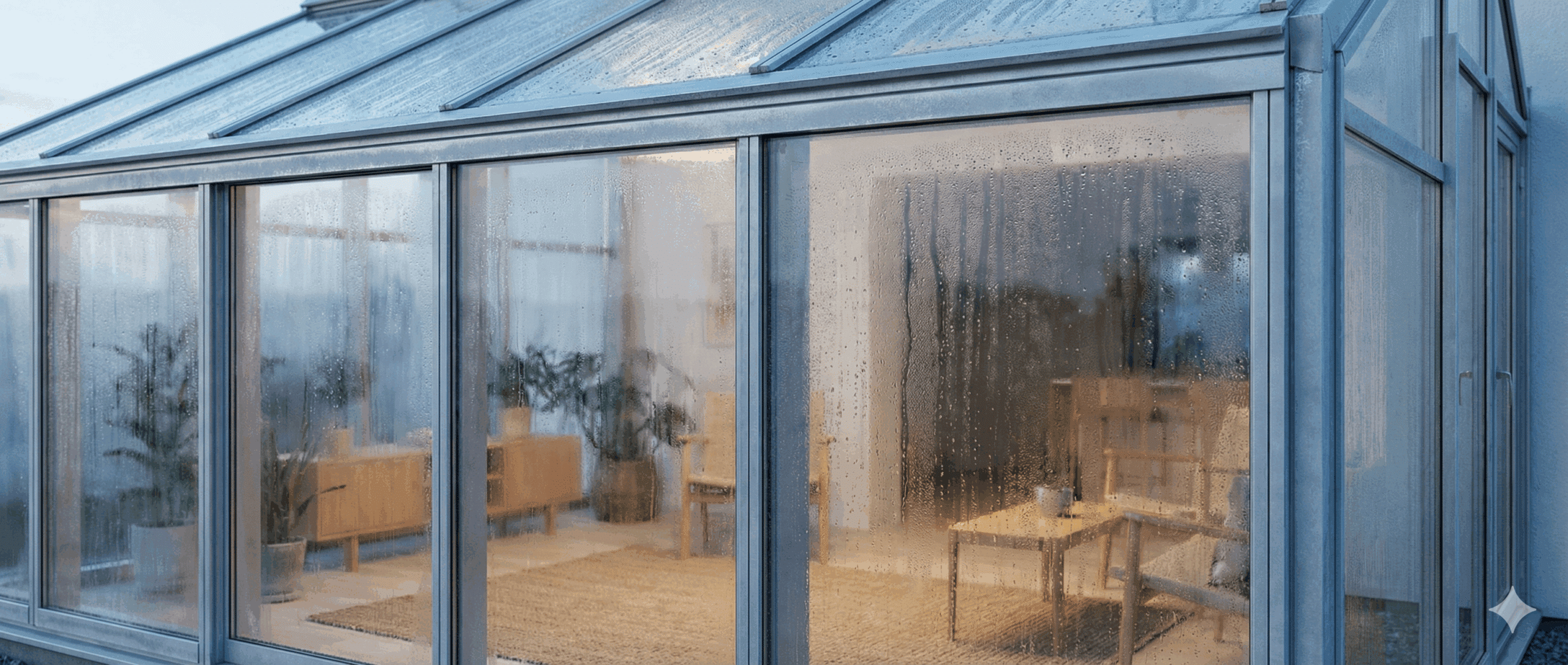
Condensation is not water leaking through windows. It’s water that was already in your room’s air, changing from invisible vapour to visible liquid when it touches a cold surface.
The dew point is the temperature at which condensation begins. At 21°C and 60% humidity, the dew point is approximately 13°C. Any surface below 13°C will collect moisture.
The solution: Keep glass surfaces above the dew point (better glazing), reduce moisture levels (ventilation), or both. Modern high-performance glazing keeps surfaces 5-10°C warmer than old double glazing.
The Science: Why Water Appears on Glass
Condensation is water that was already in the air inside your room, changing from invisible vapour to visible liquid when it touches a cold surface. The physics are straightforward once you understand three concepts: relative humidity, dew point, and surface temperature.
Relative Humidity and Water Vapour
Air holds water vapour. Warm air holds more than cold air. Relative humidity measures how much water vapour the air currently contains compared to the maximum it could hold at that temperature.
Here is the critical point: when air temperature drops, its capacity to hold moisture drops too. If you have air at 21°C with 60% relative humidity and cool it down, the relative humidity rises even though you haven’t added any moisture. Cool it enough and the relative humidity reaches 100%. Cool it further and the excess moisture has to go somewhere. It condenses.
Dew Point: The Critical Temperature
The dew point is the temperature at which air becomes saturated and condensation begins. It depends on both the air temperature and how much moisture the air contains. Higher moisture content means a higher dew point.
Why Glass Is the Problem Surface
Glass is typically the coldest surface in any room. In a conservatory with large glazed areas, you have many square metres of potential condensation surface. A single pane of glass with 0°C outside and 21°C inside will have an internal surface temperature of only about 5°C—well below the dew point of any normally occupied room.
Dew Point at Common Indoor Conditions
| Room Temperature | Relative Humidity | Dew Point |
|---|---|---|
| 21°C | 50% | 10°C |
| 21°C | 60% | 13°C ⚠️ |
| 21°C | 70% | 15°C ⚠️ |
| 18°C | 60% | 10°C |
Any glass surface below the dew point temperature will collect condensation. In a conservatory with poor glazing, surface temperatures of 5-8°C are common in winter, guaranteeing condensation at any normal humidity level.
The Real Culprits: What Causes Condensation
Condensation forms when moisture meets cold surfaces. Solving it requires addressing one or both factors. Most older glass rooms fail on both counts: they allow surfaces to get too cold and they trap moisture inside.
Cold Surfaces: The Glazing Problem
Single Glazing
Offers almost no insulation. Internal glass surface drops to around 5°C in winter—below the dew point of any normally humid room. Single glazed conservatories will always suffer severe condensation in cold weather.
Aluminium Spacers
Double glazing from the 1980s/90s used aluminium spacer bars. Aluminium conducts heat rapidly, creating a thermal bridge. Glass edge temperatures drop 15-20°C below centre pane—causing characteristic edge condensation.
Polycarbonate Roofing
Lightweight and inexpensive but degrades over time. Older polycarbonate has internal condensation trapped within its cellular structure, reducing insulating properties. The underside becomes cold enough to collect moisture.
Temperature Swings
Glass rooms experience extreme temperature swings. Solar gain pushes temperatures to 25°C+ during the day; poor insulation allows rapid heat loss at night. Warm air absorbs moisture by day, releases it as temperatures plummet overnight.
Trapped Moisture: The Ventilation Problem
A conservatory designed to be airtight has no natural ventilation. Every activity that adds moisture raises humidity with nowhere for it to escape.
- Breathing: A single person exhales approximately 200ml of water vapour per hour
- Drying laundry: A typical wash load releases 2-3 litres of water as it dries
- Plants: Houseplants transpire significant moisture, especially in warm, sunny conditions
- Cooking and hot drinks: Kettles, cooking pots, and hot beverages all release steam
- Open doors to the house: Moisture migrates from kitchens and bathrooms into the conservatory
Why Condensation Cannot Be Ignored
Condensation is not merely an inconvenience. Persistent moisture causes real damage to your structure and can affect your health.
⚠️ The Real Costs of Condensation
Structural Damage: Water pooling on frames promotes rot in timber and corrosion in metal. Seals around glazing units deteriorate faster when constantly wet. Gaskets can fail, allowing moisture between panes and causing the characteristic cloudy appearance of failed double glazing.
Mould Growth: Mould thrives in damp conditions. Beyond unsightly black marks, mould releases spores that can trigger respiratory problems, allergic reactions, and asthma symptoms. Vulnerable individuals are particularly at risk.
Unusable Space: A conservatory too damp to use for half the year delivers poor value. Furniture deteriorates, books become mildewed, and the room feels cold and unwelcoming.
Engineering Solutions That Actually Work
Eliminating condensation requires raising surface temperatures above the dew point, reducing moisture levels, or both. Effective solutions address the physics directly rather than masking symptoms.
Glazing Upgrades: Warmer Surfaces
High-Performance Double & Triple Glazing
Modern sealed units use Low-E coatings and argon gas fill to dramatically reduce heat transfer. Where old double glazing achieves 2.8 W/m²K, current high-performance units reach 1.0-1.2 W/m²K. Triple glazing can achieve 0.6-0.8 W/m²K. Internal glass surfaces stay at 16°C or higher—above the dew point in most circumstances.
Warm Edge Spacer Technology
Warm edge spacers replace aluminium bars with materials that conduct far less heat—stainless steel (one-tenth the conductivity), polymer composites, or hybrids. This raises glass edge temperatures by 5-12°C compared to aluminium spacers, eliminating characteristic edge condensation. Products like Swisspacer and SuperSpacer can improve overall U-values by 5-15%.
Thermally Broken Frames
Aluminium frames without thermal breaks conduct heat rapidly and become condensation sites themselves. Modern aluminium systems incorporate polyamide thermal breaks that interrupt the heat path, keeping frame surfaces warmer. Timber and composite frames naturally provide better insulation.
Ventilation: Controlling Moisture
Trickle Ventilation
Small, adjustable openings built into window frames or roof systems allow continuous air exchange even when windows are closed. Prevents moisture accumulation without significant heat loss. Modern conservatory roofing systems incorporate patented trickle ventilation as standard.
Roof Vents
Since warm, moist air rises, roof vents are particularly effective. A single roof vent provides equivalent ventilation to approximately four window openings. Options range from manual pole-operated vents to electric versions with thermostats and rain sensors that open/close automatically.
Mechanical Ventilation
For persistent humidity issues, mechanical ventilation provides controlled air exchange. Heat recovery ventilation systems extract stale air while recovering its warmth to pre-heat incoming fresh air. Particularly valuable when the glass room connects to moisture-producing areas like kitchens.
Heating: Raising Surface Temperatures
Maintaining warmth keeps surfaces above the dew point. The challenge is doing so efficiently given the thermal characteristics of glazed structures.
- Underfloor heating: Provides even, gentle warmth that rises through the space. Minimises air movement that can carry moisture to cold surfaces. Warms the lowest part of the room first.
- Perimeter heating: Low-level heating at the base of windows creates a rising curtain of warm air that helps keep glass surfaces above the dew point.
- Dehumidifiers: Extract moisture from the air, lowering the dew point. Desiccant dehumidifiers outperform compressor models below 10°C. Running costs: 3-5p per hour.
What Does Not Work
Some commonly suggested remedies address symptoms without tackling causes. Understanding their limitations helps you invest in solutions that actually resolve the problem.
Opening Windows in Winter
Reduces humidity but lets all your heat escape, making the room uncomfortable and expensive to use. Background trickle ventilation achieves the same air exchange without massive heat loss.
Heating Alone
With poor glazing, heating creates bigger temperature differences between warm air and cold glass. You may reduce centre-of-glass condensation while worsening edge condensation. Energy bills will be substantial.
Moisture Absorbers
Small moisture absorbing products (silica gel, salt-based absorbers) capture minor amounts. Completely inadequate for the volumes involved—a conservatory may contain 100 cubic metres of air needing litres of water removed.
Blinds As Prevention
Blinds don’t prevent condensation. Closing blinds against cold glass can actually create a pocket of stagnant air where condensation may increase. Thermal blinds help regulate temperature but are not a solution on their own.
Refurbishment: Transforming Problem Conservatories
For conservatories suffering chronic condensation, targeted refurbishment can transform performance. Our conservatory refurbishment service addresses the specific weaknesses causing moisture problems.
Glazing Replacement
Replacing failed or underperforming sealed units with modern high-performance glazing is often the most impactful single intervention. Where existing frames are sound, new glass units with warm edge spacers, Low-E coatings, and argon fill can be installed without replacing the entire structure. The improvement is immediate and dramatic.
Roof Upgrades
Polycarbonate roofs that have degraded can be replaced with modern glass or solid options. Lightweight insulated roof panels combine thermal performance with natural light through integrated glazed sections. These replacement systems typically include integral trickle ventilation.
Ventilation Retrofitting
Adding ventilation to existing structures is usually straightforward. Trickle vents can be fitted to most window and door frames. Roof vents can be integrated into glazed or solid roof sections. The cost is modest relative to the improvement.
Complete Replacement
Where multiple elements have failed or the original structure was fundamentally compromised, complete replacement may prove more cost-effective than piecemeal repairs. Modern glass rooms engineered as integrated systems deliver performance that older structures simply cannot match, regardless of modifications.
Taking Control of Your Glass Room Environment
Condensation is not a mystery once you understand the physics. Warm, moist air meeting cold surfaces releases its moisture as liquid water. The solution is straightforward in principle: keep surfaces warm enough and manage moisture levels to stay above the dew point.
For older conservatories built before modern glazing standards, this often requires intervention. Upgrading to high-performance glass with warm edge spacers transforms surface temperatures. Adding proper ventilation prevents moisture accumulation. Appropriate heating maintains comfort without excessive energy consumption.
Across Kent and the surrounding areas we serve, we have helped hundreds of homeowners transform problem conservatories into comfortable, year-round living spaces. Whether through targeted glazing upgrades, comprehensive refurbishment, or complete replacement with modern engineered structures, the solutions exist to eliminate condensation permanently.
The Bottom Line
The choice is not between accepting condensation or abandoning your glass room. With proper engineering, you can enjoy clear glass, dry surfaces, and comfortable conditions throughout the year.
Further Reading
For technical information on condensation and glazing performance, see the Glass and Glazing Federation guidance and the National Physical Laboratory for dew point resources.
Frequently Asked Questions
Why does condensation appear on the inside of my windows?
Interior condensation forms when warm, moist indoor air contacts glass that has cooled below the dew point. It indicates that your glazing surface temperature is too low, your indoor humidity is too high, or both. The solution involves improving glazing performance, increasing ventilation, or both.
Is condensation between double glazing panes different?
Yes. Condensation between the panes indicates seal failure. The sealed unit has lost its integrity, allowing moist air to enter the cavity. No amount of ventilation or heating will fix this. The affected sealed units must be replaced.
Why is condensation worse at the edges of my windows?
Edge condensation typically indicates aluminium spacer bars in your sealed units. Aluminium conducts heat rapidly, creating a thermal bridge that cools the glass edge far below the centre-of-pane temperature. Warm edge spacer technology eliminates this problem.
Will a dehumidifier solve my condensation problem?
A dehumidifier can help manage symptoms by reducing indoor humidity. However, it doesn’t address underlying issues with glazing performance or ventilation. For older conservatories with poor thermal performance, dehumidification works best alongside glazing upgrades.
What humidity level should I aim for?
Indoor relative humidity between 40% and 60% is generally comfortable and healthy. Below 40% can cause dry skin and irritated airways. Above 60% increases condensation risk and supports mould growth. A simple hygrometer (£10-£20) lets you monitor conditions.
Can I retrofit warm edge spacers to existing windows?
Not directly. The spacer bar is integral to the sealed unit. However, you can replace existing sealed units with new ones incorporating warm edge technology, often without replacing the entire frame. This targeted upgrade addresses edge condensation specifically.
How much difference does modern glazing make?
Substantial. Where old double glazing achieves 2.8 W/m²K, modern high-performance units reach 1.0-1.2 W/m²K. The internal glass surface stays 5-10°C warmer, often enough to eliminate condensation entirely under normal conditions.
Should I keep my conservatory heated overnight?
Maintaining some warmth overnight helps prevent the temperature drop that triggers condensation. However, with poor glazing this becomes expensive. Improving thermal performance first, then providing modest background heating, is more cost-effective.
Is condensation in a new conservatory normal?
Some condensation during the first winter is common as construction moisture dries out. This should diminish as the structure settles. Persistent condensation in a new build suggests design or specification issues—modern conservatories with high-performance glazing should not suffer significant condensation.
What about exterior condensation on windows?
Condensation on the outside of glass is actually a sign of good thermal performance. It occurs when highly insulating glazing keeps the outer pane cold enough to fall below the outdoor dew point on humid mornings. It evaporates as the day warms and causes no problems.
How do I know if my conservatory needs refurbishment?
Signs include persistent condensation even with ventilation, visible seal failure between panes, draughts around frames, difficulty maintaining comfortable temperatures, and visible deterioration. If your conservatory is over 15-20 years old with these issues, refurbishment is typically more economical than ongoing management.
Will plants make condensation worse?
Yes. Plants transpire water continuously, releasing moisture through their leaves. A conservatory full of houseplants will have measurably higher humidity. If condensation is a problem, reduce the plant population or ensure adequate ventilation to compensate.
Can I dry laundry in my conservatory?
A typical wash load releases 2-3 litres of water as it dries. In a poorly ventilated conservatory, this dramatically increases humidity and guarantees condensation. If you must dry laundry indoors, do so with windows open or a dehumidifier running.
What is the best long-term solution?
The most effective long-term approach combines high-performance glazing (raising surface temperatures above the dew point) with adequate ventilation (preventing moisture accumulation). Modern glass rooms engineered as integrated systems achieve both, delivering condensation-free performance.
Ready to Eliminate Condensation Permanently?
Our specialists transform problem conservatories across Kent, Surrey, Sussex, Hampshire and the South East.