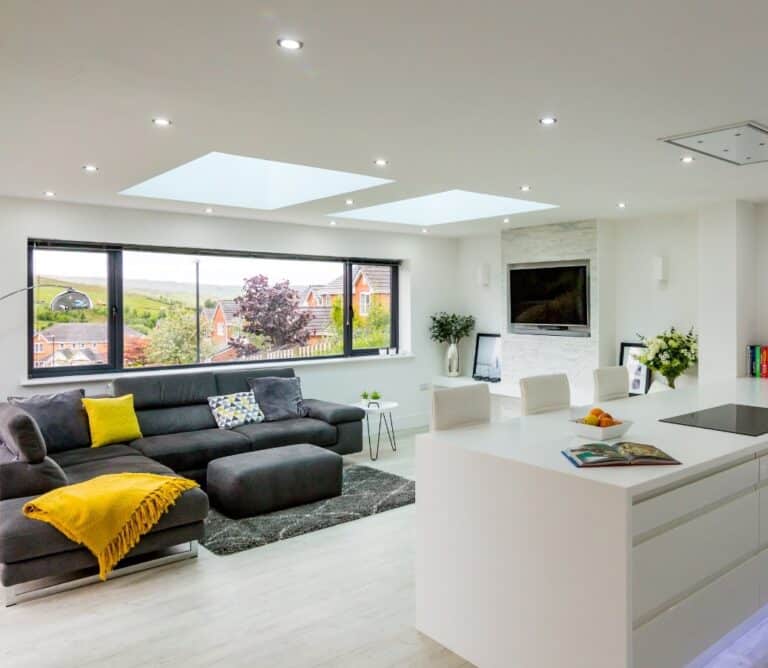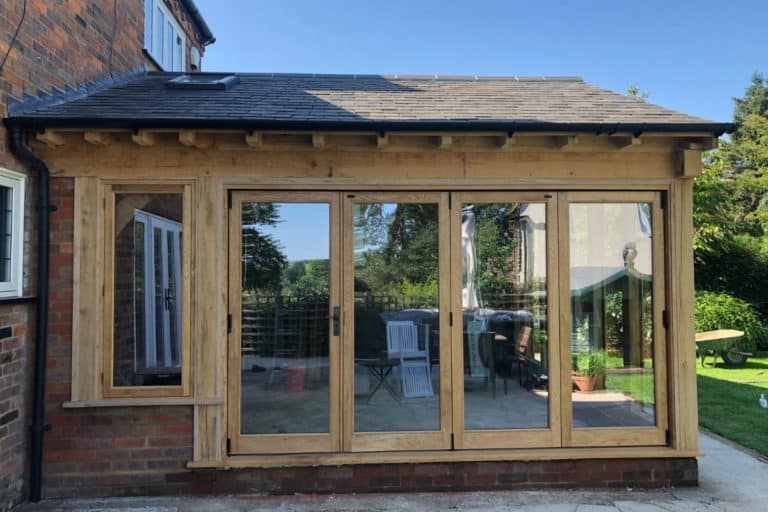


Garden Annexes: Planning, Council Tax & Independent Living
Everything you need to know about self-contained annexes in the UK.
Key Points at a Glance
Planning permission: Almost always required for self-contained annexes. Permitted development (Class E) covers incidental use only, not residential accommodation.
Council tax: Self-contained annexes typically get their own band, but exemptions exist. Dependent relatives (65+, disabled) qualify for full exemption. Other relatives may get 50% discount.
Building regulations: Required for any structure with sleeping accommodation, cooking facilities or plumbing.
Costs: Typically £48,000 to £140,000+ for a 40m² annexe depending on construction type.
What Exactly Is a Garden Annexe?
A garden annexe is a self-contained living space built within the grounds of an existing property. Unlike a garden room or home office, an annexe includes sleeping accommodation, a bathroom and typically cooking facilities. The defining characteristic is that occupants can live day to day without needing to enter the main house.
Crucially, in planning terms, an annexe remains part of the same planning unit as the main dwelling. It shares the same address, cannot be sold separately, and is intended for occupation by people with a genuine connection to the main household.
Types of Garden Annexe
Detached Annexes
Purpose-built structures in the garden, offering maximum privacy and independence.
Attached Annexes
Extensions to the main property with separate entrance, sharing one or more walls.
Converted Outbuildings
Garages, barns or existing structures transformed into living accommodation.
Modular/Prefabricated
Factory-built annexes delivered and assembled on site. Faster construction times.
Do I Need Planning Permission?
The short answer is: almost certainly yes, if you want to build a new self-contained annexe.
Many people mistakenly believe that permitted development rights (Class E) allow them to build an annexe without planning permission. This is a misunderstanding. Class E allows buildings for purposes incidental to the enjoyment of the house—workshops, gyms, studios. It does not cover separate self-contained living accommodation.
⚠️ The Incidental vs Ancillary Distinction
Incidental use: Something you wouldn’t typically have inside your home—workshop, gym, studio. Covered by permitted development.
Ancillary use: Residential accommodation that supports the main dwelling—bedroom, bathroom, living space. Requires planning permission.
When Planning Permission Is Required
- Any new building intended for use as living accommodation
- Converting an existing outbuilding to residential use
- Any structure with sleeping, cooking and bathroom facilities together
- Buildings for occupation by family members or tenants
- Any outbuilding in listed building curtilage or conservation area
The Planning Application Process
Prepare Detailed Plans
Show proposed annexe, site layout and relationship to main dwelling.
Submit Supporting Statement
Explain who will occupy and how use will remain ancillary.
Submit Application
Householder application fee approximately £258.
Consultation Period
Neighbours notified, given 21 days to comment.
Decision
Typically within 8 weeks for straightforward applications.
Building Regulations
Planning permission and building regulations are separate requirements. Any annexe with sleeping accommodation, cooking facilities or plumbing almost certainly requires building regulations approval.
| Regulation | Requirements for Annexes |
|---|---|
| Part L (Energy) | Wall U-values 0.18 W/m²K, roof 0.15 W/m²K, floor 0.18 W/m²K |
| Part B (Fire) | Means of escape, fire detection. Sleeping rooms require direct escape route |
| Part M (Access) | Level or ramped access, door widths minimum 775mm clear opening |
| Part P (Electrical) | Part P certified electrician, consumer unit, RCD protection |
| Part H (Drainage) | Connection to main sewer or approved private treatment system |
| Part G (Water) | Hot and cold water supply, water efficiency, pipes at 750mm depth |
Council Tax: What You Need to Know
Council tax on annexes causes more confusion than any other aspect. The rules depend on whether your annexe is self-contained, who lives there, and their relationship to the main household.
Exemptions and Discounts
| Situation | Council Tax Liability |
|---|---|
| Dependent relative (65+, disabled) | Full exemption (Class W) |
| Any relative with planning restriction | 50% discount available |
| Unoccupied and ancillary | Full exemption |
| Non-relative occupant or rental | Full council tax at appropriate band |
| Holiday let (140+ days availability) | Business rates instead (may be lower) |
Dependent Relative Exemption (Class W)
Your annexe may be completely exempt if occupied by a dependent relative who is:
- Aged 65 or over
- Substantially or permanently disabled
- Severely mentally impaired
They must be a relative of the person liable for council tax on the main dwelling.
How Much Does a Garden Annexe Cost?
Annexe costs vary enormously depending on size, specification and construction method.
| Construction Type | Cost per m² | 40m² Annexe Total |
|---|---|---|
| Basic timber frame | £1,400 to £1,800 | £56,000 to £72,000 |
| Mid-range timber frame | £1,800 to £2,400 | £72,000 to £96,000 |
| Oak frame (total build) | £2,500 to £3,500 | £100,000 to £140,000 |
| Brick-built traditional | £2,200 to £3,000 | £88,000 to £120,000 |
| Modular/prefabricated | £1,200 to £2,000 | £48,000 to £80,000 |
| Garage conversion | £800 to £1,400 | £12,000 to £25,000 |
Costs based on 2026 UK averages. Excludes planning fees, landscaping and contingency.
Does an Annexe Add Value?
Research suggests a well-designed annexe can add 20 to 30 percent to property value. With average detached prices exceeding £440,000, that’s potentially £88,000 to £132,000 in added value.
Designing for Independent Living
If your annexe will house elderly relatives, designing for accessibility from the outset is essential. Working with experienced designers across Surrey and surrounding areas, we recommend:
Access and Circulation
- Level or gently ramped approach (maximum gradient 1:12)
- Wide entrance door (minimum 850mm clear opening)
- Internal door widths minimum 775mm
- Low or flush thresholds throughout
Bathroom Design
- Walk-in or level-access shower
- Grab rails at WC and shower
- Non-slip flooring throughout
- Lever taps rather than twist handles
For bespoke annexe designs, explore our glass extension design services.
For authoritative guidance, consult the Planning Portal and GOV.UK Building Regulations.
Frequently Asked Questions
Can I rent out my garden annexe?
Most planning permissions prohibit letting annexes separately. You’d need change of use permission with full council tax liability.
What happens when my relative no longer needs it?
The annexe remains part of your property. You can leave it unoccupied (claim exemption), use for other family, or apply to vary conditions.
Do I need a separate address?
No. The annexe shares the same postal address and cannot be sold separately from the main property.
How long does planning take?
Standard applications: 8 weeks. Total from concept to approval typically 3-5 months including drawing preparation.
What size annexe can I build?
No fixed maximum, but should be subservient to main dwelling. Many councils expect under 50% of existing house footprint.
Is VAT charged on construction?
Yes, standard 20% VAT applies. Unlike new builds, annexes are additions to existing property, not zero-rated.
What about insurance?
Buildings insurance should cover the annexe but you must notify your insurer. Contents may need separate consideration.
Will it affect my mortgage?
Some lenders are cautious about annexes. Properties remain sellable but buyers may have fewer lender options.
Ready to Discuss Your Annexe Project?
We design premium garden buildings across Surrey, Sussex, Hampshire and the South East.