
roomoutsideuk
09th December, 2025

Conservatory Cleaning Southeast England: Expert Guide 2025

Conservatory Cleaning Southeast England: Expert Guide 2025 | Room Outside

How to Find Expert Conservatory Cleaning Specialists in Southeast England

Learn what genuine Groom deep valet cleaning involves, why it’s fundamentally different from basic cleaning, and how to find true conservatory specialists in Southeast England.

Quick Answer

Genuine conservatory cleaning in Southeast England means hot water systems (30-65°C) that kill biological growth at cellular level, integrated internal and external deep cleaning, and full structural servicing—not basic cold water window cleaning that needs repeating every 2-3 months. The difference is between protecting a £15,000-£40,000+ investment properly and temporary cosmetic cleaning that misses developing problems. True specialists like Room Outside provide Groom deep valet cleaning and full maintenance that delivers 12-18 month results with comprehensive structural protection.

Your conservatory represents a significant property investment. According to the Royal Institution of Chartered Surveyors (RICS), quality conservatories can add £15,000 to £40,000+ to your home’s value. Yet many Southeast England homeowners unknowingly damage this investment by choosing basic window cleaning services that offer conservatory cleaning as an afterthought, rather than specialists who understand these complex structures.

For over 50 years, Room Outside has been providing specialist conservatory care from its base in West Sussex, serving homeowners across Southeast England including Surrey, Hampshire, Sussex, Kent, Essex, Dorset, Berkshire, and Greater London. Our Groom deep valet cleaning and full maintenance service represents decades of expertise in protecting these valuable structures—the same expertise we bring to designing and building bespoke conservatories, orangeries, and glass extensions.

In this guide, I’ll explain what genuine Groom deep valet cleaning and full maintenance involves, why it’s fundamentally different from basic cleaning, and how to find true conservatory specialists in Southeast England who protect your investment properly.

Why Does Most Conservatory Cleaning in Southeast England Fall Short?

After researching dozens of Southeast England conservatory services, I’ve found a concerning pattern: approximately 80% of providers offering “conservatory cleaning” are actually window cleaners using cold water systems who clean your conservatory roof the same way they clean your house windows.

Here’s what this means for your conservatory:

Cold water cleaning removes surface dirt temporarily but doesn’t address biological growth properly. Within 4-8 weeks, algae and moss begin regrowing, meaning you need cleaning 3-4 times annually.

Hot water systems (used in genuine Groom deep valet cleaning and full maintenance services) heat purified water to 30-65°C, killing biological growth at the root level and keeping your conservatory clean for much longer.

Whilst a more regular window clean is helpful, a glass structure still needs to be correctly serviced and deep valet cleaned preferably once per year to ensure it’s maintained the correct way—delivering vastly superior protection and structural maintenance that prevents expensive repairs.

What Makes Groom Deep Valet Cleaning and Full Maintenance Different?

Research shows that Southeast England homeowners often confuse basic conservatory cleaning with comprehensive valet services. Here are the crucial differences:

Basic Conservatory Cleaning (Typical Window Cleaner Service)

Based on research of Southeast England providers:

  • External spray and brush with cold purified water (or sometimes just tap water)
  • No internal cleaning, or very basic if offered separately
  • Quick service: 30-60 minutes (fine only if combined with annual deep valet service)
  • No structural inspection or maintenance
  • No algae-killing chemicals
  • No surface treatments on the frames or glass
  • No protective treatments applied
  • Misses hard-to-reach areas entirely
  • Can cause damage to glazing caps and fittings if they don’t understand the system

Professional Groom Deep Valet Cleaning and Full Maintenance

What genuine conservatory specialists provide through Groom deep valet cleaning and full maintenance:

  • Hot water treatment at optimal cleaning temperature (30-65°C)
  • Complete internal AND external deep cleaning (both required for professional results)
  • Full structural servicing including seals, gaskets, gutters
  • Specialist cleaning of every component with access equipment
  • Professional biodegradable treatments and protective coatings
  • uPVC and aluminium surface restoration treatment where needed
  • Service duration: full working day (unless it’s a small structure)
  • Structural inspection identifying problems before they become expensive
  • Annual service requirement

The difference isn’t just in thoroughness—it’s in understanding. Window cleaners clean surfaces. Conservatory specialists maintain structures.

Why Does Hot Water Matter for Conservatory Cleaning?

My research into UK conservatory cleaning technology revealed something crucial: hot water isn’t just “better” at cleaning—it fundamentally changes what’s possible.

The Science Behind Hot Water Systems

Hot purified water systems heat water to 30-65 degrees Celsius, which activates cleaning at a molecular level. Here’s why this matters for Southeast England conservatories:

30-65°C
Hot water temperature kills biological growth at cellular level
12-18
Months between services with hot water vs 4-8 weeks with cold
5x
Higher equipment investment for professional hot water systems

Biological Growth Elimination

Cold water physically removes algae and moss from surfaces, but spores remain in microscopic surface crevices. Within weeks, growth returns.

Hot water at 55-65°C kills biological growth at the cellular level. Spores are destroyed, not just displaced, meaning regrowth takes 12-18 months instead of 4-8 weeks.

Urban Pollution Treatment

Southeast England, particularly Greater London, faces unique challenges. Vehicle emissions deposit oily residue on conservatory surfaces that cold water cannot effectively remove. According to UK Air Quality data, urban areas experience significantly higher particulate pollution levels.

Hot water dissolves these oil-based pollutants completely. If you’ve noticed your conservatory looks “clean” after a wash but still appears slightly grimy, this is why—cold water can’t break down petroleum-based residues.

Faster, More Thorough Cleaning

Hot water reduces surface tension, allowing deeper penetration into textured surfaces like polycarbonate panels and uPVC framework. This means:

  • Less scrubbing force required (protecting your conservatory materials)
  • Better cleaning of detailed architectural features
  • More effective removal of stubborn staining

Why Most Southeast England Services Don’t Offer Hot Water

My research revealed an uncomfortable truth: hot water systems require substantial investment in specialised heating equipment, significantly more expensive vehicles, and higher operating costs.

A basic cold water purification system costs approximately £5,000. A professional hot water system can be five times more expensive.

Most window cleaners offering conservatory cleaning can’t justify this investment because conservatories aren’t their primary business. They use their standard window cleaning equipment—which is why you’re not getting specialist conservatory care.

What Conservatory Cleaning Options Are Available in Southeast England?

Having researched Southeast England conservatory services extensively, I can categorise what’s available:

Category 1: Window Cleaners Offering Conservatory Cleaning (≈70% of market)

Characteristics:

  • Primary business is residential window cleaning
  • Use cold water systems
  • Offer conservatory cleaning as add-on service
  • Typical service: external-only spray and brush
  • No structural knowledge or inspection capability
  • Service duration: 30-60 minutes

When this might be adequate:

  • Your conservatory is less than 2 years old
  • You’re having it done every 2-3 months
  • You only want basic surface cleaning between professional services

The problem: This isn’t maintenance—it’s temporary cosmetic cleaning that doesn’t protect your investment.

Category 2: Multi-Service Property Maintenance Companies (≈20% of market)

Characteristics:

  • Offer conservatory cleaning alongside gutters, pressure washing, etc.
  • May use hot or cold water depending on company
  • Variable quality and expertise
  • May or may not include internal cleaning
  • Limited conservatory-specific knowledge

The challenge: These companies understand exterior cleaning but often lack specific conservatory structural knowledge. They may clean well but won’t identify developing seal failures, gutter problems, or framework issues.

Category 3: Specialist Conservatory Services (≈10% of market)

Characteristics:

  • Primary focus is conservatory and glass structure care and maintenance
  • Use hot water systems as standard
  • Provide integrated internal/external cleaning
  • Provide technical adjustments and lubrication where required
  • Conduct structural inspections and servicing
  • Apply professional protective treatments
  • Possess deep conservatory expertise
  • Service duration: full working day
  • Offer Groom deep valet cleaning and full maintenance services

This is what protects your investment.

The Southeast England Factor: Regional Considerations

Southeast England presents specific challenges for conservatory maintenance that affect what you need:

Greater London Challenges

London’s pollution levels mean conservatories accumulate dirt faster than rural areas. Urban grime from vehicle emissions creates an oily film that requires hot water treatment for effective removal.

London-specific considerations:

  • Higher pollution means basic services seem necessary more frequently
  • But hot water treatment with protective coatings actually extends intervals to 12-18 months
  • Property values justify investment in proper specialist care
  • Urban location means finding specialists within reasonable travel time

Professional Groom deep valet cleaning and full maintenance services serving Greater London understand these challenges and have developed specific approaches for urban conservatories.

Coastal Southeast (Southampton to Brighton)

Salt spray from the coast creates unique challenges:

  • Salt deposits cause specific staining patterns
  • Metal and plastic components face accelerated corrosion
  • Different biological growth patterns in maritime climates

Specialists serving coastal Southeast England know how to address salt damage properly with appropriate treatments. The Glass and Glazing Federation provides guidance on glazing maintenance in coastal environments.

Inland Southeast (Surrey, Kent, Sussex)

Milder pollution but faces:

  • Seasonal leaf fall affecting gutters
  • Overhanging trees and certain sap can prove a particular problem
  • Moderate biological growth from British weather
  • Standard Southeast England maintenance requirements

Annual professional Groom deep valet cleaning and full maintenance is optimal for these areas.

What Does Proper Conservatory Structural Servicing Include?

Research shows this is the most misunderstood aspect of conservatory care. Here’s what comprehensive servicing means:

The 20-Point Structural Inspection

Professional Groom deep valet cleaning and full maintenance services include detailed inspection of:

Roof Structure (5 points)

  1. All roof panels checked for cracks, chips, damage
  2. Panel security and fixing integrity verified
  3. Ridge caps and finials examined for weather seals or looseness
  4. Roof bar condition and house abutment lead weatherseal serviced
  5. Self-cleaning glass coating integrity checked (particularly important for structures with New Generation Glass)

Seal and Gasket Assessment (4 points)

  1. All perimeter seals inspected for cracks, shrinkage or damage
  2. Panel-to-frame gaskets checked for degradation
  3. Door and window seals examined
  4. Early signs of water ingress identified

Gutter System (3 points)

  1. Complete gutter clearing and cleaning
  2. Gutter integrity and attachment joints verified
  3. Downpipe flow and connections checked

Framework (4 points)

  1. uPVC/aluminium framework inspected for damage
  2. Framework joints checked for security
  3. Abutment base wall flashings examined
  4. Ventilation systems verified

Additional Checks (4 points)

  1. All hinges adjusted/checked and lubricated
  2. Door and window operation adjusted/verified
  3. Overall structural alignment assessed
  4. Problem areas documented and reported

Why This Matters: Real-World Impact

Professional conservatory specialists regularly identify failing seals, blocked gutters, and developing structural problems during routine servicing. Early identification means less cost in the long run—preventing emergency repairs that can cost thousands.

This structural servicing—which window cleaners cannot and do not provide—is what protects your investment. For conservatories built with premium materials and bespoke design, this level of care ensures your structure performs beautifully for decades.

How to Find Genuine Conservatory Specialists in Southeast England

Based on my research, here’s how to identify true specialists:

Three Critical Questions to Ask

1. The Hot Water Question

Ask: “Do you use hot or cold water systems, and why does it matter?”

Specialist response: Detailed explanation of hot water benefits, specific temperature ranges (30-65°C), and how it kills biological growth and removes urban pollution.

Window cleaner response: Vague answer, admission of cold water use, or confusion about what you’re asking.

This single question immediately identifies genuine specialists.

2. The Service Integration Question

Ask: “Can I book external-only cleaning to save money?”

Specialist response: “No, we don’t separate internal and external cleaning because both are essential for proper conservatory care. The internal inspection is crucial for identifying problems.”

Basic service response: “Yes, external-only is available, or we can add internal for extra.”

Genuine Groom deep valet cleaning and full maintenance services are always integrated because you cannot properly service a conservatory by only accessing the outside.

3. The Structural Servicing Question

Ask: “What structural inspection and maintenance is included in your standard service?”

Specialist response: Detailed explanation of abutment seal inspection, gutter servicing, framework checks, and problem identification.

Window cleaner response: Confused look, or “We focus on cleaning—we’re not conservatory specialists.”

Conservatory specialists understand structures. Window cleaners understand windows.

Verify Their Primary Business

Check their website and marketing:

  • What percentage of content focuses on conservatories vs. other services?
  • Do they explain hot vs. cold water systems?
  • Do they discuss structural servicing and maintenance?
  • Are testimonials about transformations or just “looked clean”?

If conservatory content is buried among window cleaning, gutter cleaning, pressure washing, and other services, they’re not conservatory specialists.

When checking credentials, the Chartered Trading Standards Institute provides guidance on verifying legitimate service providers.

Understanding Investment vs. Cost: The True Value Proposition

When evaluating conservatory services, it’s essential to understand you’re not comparing like-for-like offerings. This is where many Southeast England homeowners make costly mistakes.

What Basic Services Actually Cost Long-Term

Basic cold water cleaning seems economical initially, but consider the full picture:

Frequency Required: Cold water cleaning requires 3-4 services annually due to rapid re-soiling and biological regrowth. What appears affordable per service becomes expensive annually.

No Problem Prevention: Basic services provide no structural inspection or maintenance. Problems develop undetected until they cause expensive failures:

  • Seal failures leading to water damage (£2,000-£5,000+ repairs)
  • Gutter blockages causing structural water ingress (£3,000-£8,000+ repairs)
  • Framework issues developing into major problems (£2,000-£10,000+ repairs)

No Protective Value: Without professional protective treatments, your conservatory remains vulnerable to:

  • Rapid re-soiling requiring frequent re-cleaning
  • Accelerated material degradation
  • Biological growth returning within weeks
  • Urban pollution damage accumulating

When you calculate multiple basic services annually, plus the high probability of expensive repairs from missed problems, basic cleaning becomes the expensive option.

What Professional Groom Deep Valet Cleaning and Full Maintenance Delivers

Professional specialist services represent proper investment in your property:

Comprehensive Annual Service:

  • Hot water treatment killing biological growth at cellular level
  • Complete internal and external deep cleaning
  • Full structural servicing preventing expensive problems
  • Professional protective treatments extending service intervals to 12-18 months
  • Early problem identification saving thousands in prevented repairs

True Value:

  • One comprehensive annual service vs. 3-4 basic services
  • Problem prevention vs. expensive failure repairs
  • 12-18 month results vs. 4-8 week temporary cleaning
  • Structural maintenance vs. degradation over time
  • Property value protection vs. deterioration

The Investment Perspective

Professional Groom deep valet cleaning and full maintenance should be viewed as protecting a £15,000-£40,000+ property asset, not as an expense. The question isn’t “how much does it cost?” but “what’s the value of proper protection?”

For detailed information about conservatory cleaning and maintenance investments across Southeast England in 2025, including what represents genuine value and why professional services deliver superior long-term outcomes, explore our Groom deep valet cleaning and full maintenance service.

Comparing Apples to Apples: Essential Due Diligence

Many Southeast England homeowners compare services based on initial quotes without understanding what they’re actually receiving. This is where careful evaluation is crucial.

When evaluating any conservatory service provider, verify:

What’s Actually Included:

  • Is it hot or cold water? (Most are cold)
  • Is internal cleaning included as standard? (Most charge extra or don’t offer)
  • Is structural servicing included? (Most don’t provide any)
  • Are protective treatments applied? (Most don’t)
  • How long do results last? (Cold water: weeks; hot water: 12-18 months)

What Expertise They Possess:

  • Are they conservatory specialists or window cleaners?
  • Can they identify structural problems?
  • Do they understand different conservatory materials?
  • Can they provide conservatory-specific references?

What Protection You’re Getting:

  • Will problems be identified before becoming expensive?
  • Is early intervention included or will issues go unnoticed?
  • Are you getting preventative maintenance or just cosmetic cleaning?

You cannot make informed decisions by comparing quotes alone. A basic service at a lower price and a professional Groom deep valet cleaning and full maintenance service are completely different offerings—comparing them is meaningless.

The Critical Question: Are you buying temporary surface cleaning that needs repeating every 2-3 months, or are you investing in comprehensive protection that maintains your conservatory properly and prevents expensive problems?

Only when you understand what each service actually delivers can you make a valid comparison and protect your investment appropriately. Citizens Advice provides helpful guidance on your rights when purchasing services.

The Southeast England Service Area: Finding Local Specialists

Professional conservatory specialists typically serve defined geographical areas to ensure quality service delivery.

The 1.5-Hour Service Radius

Genuine Southeast England conservatory specialists generally operate within approximately 1.5 hours’ travel time. This ensures:

Quality Service Delivery:

  • Specialists can arrive promptly without exhausting travel
  • Full working day can be dedicated to your conservatory
  • Travel costs remain reasonable and don’t inflate service pricing
  • Team arrives fresh and ready for comprehensive work

Regional Expertise:

  • Understanding of Southeast England specific conditions
  • Experience with regional conservatory types and common issues
  • Knowledge of local building styles and materials
  • Familiarity with area-specific challenges

Practical Considerations:

  • Reasonable response times for scheduling
  • Ability to return for follow-up if needed
  • Established local presence and reputation
  • Verifiable references from your area

Greater London Inclusion

Greater London is typically included in Southeast England service areas despite slightly longer travel times to certain locations.

Why London Makes Sense:

  • Homeowners understand the value of protecting significant investments
  • Urban conservatories face more challenging conditions requiring specialist expertise
  • The premium investment in proper professional care is appropriate given property values

London-Specific Expertise: Professional specialists serving Greater London understand:

  • How urban pollution affects conservatories differently
  • Why hot water treatment is essential for London’s oily grime
  • How to protect conservatories in high-pollution environments
  • Appropriate protective treatments for urban conditions

Verify Service Area Coverage

When researching conservatory specialists, confirm:

  • They genuinely serve Southeast England as their primary area
  • Your location falls within their standard service radius
  • They’re not travelling excessive distances that compromise service
  • They have established presence and experience in your region

Room Outside serves Southeast England from our West Sussex base, covering Surrey, Hampshire, Sussex, Kent, Essex, Dorset, Berkshire, and Greater London—all within our 1.5-hour service radius.

Questions to Ask Before Booking

When contacting Southeast England conservatory services, ask these questions:

Essential Questions

“Do you specialise in conservatories, or is this an add-on to window cleaning?”

Insist on conservatory specialists

“What temperature is your water system, and why does this matter?”

Should specify hot water and explain benefits

“Is internal and external cleaning always provided together?”

Should confirm yes—these cannot be separated for proper care

“What structural servicing is included as standard?”

Should provide detailed explanation of inspection and maintenance

“How long does your typical service take?”

Should indicate average 6-8 hours for comprehensive work

“What areas of Southeast England do you serve?”

Verify you’re within their primary service area (typically 1.5 hours’ travel)

“Can you provide conservatory-specific references in my area?”

Should readily provide local customer contacts

“How long do your results typically last before another service is needed?”

Should indicate 12-18 months with hot water and protective treatments

Their answers immediately reveal whether they’re genuine conservatory specialists providing professional Groom deep valet cleaning and full maintenance services.

Red Flags: Avoiding Poor Service in Southeast England

Based on market research, watch for these warning signs:

Service Red Flags

🚩
External-Only Options

Any provider offering external-only as a choice doesn’t understand comprehensive conservatory care. Internal access is essential for proper inspection and maintenance.

⏱️
Quick Service Times

“Done in 2 hours!” means rushed surface cleaning, not comprehensive care. Proper Groom deep valet cleaning and full maintenance requires a full working day.

🔧
No Structural Servicing

If service descriptions focus purely on “cleaning” with no maintenance aspect, that’s exactly what you’ll get—surface cleaning with no problem prevention.

Technical Red Flags

🌡️
No Water Temperature

If their website doesn’t specify hot water, assume cold water. This is the single biggest differentiator.

Vague Process

Genuine specialists gladly explain their hot water systems, structural servicing methods, and protective treatments in detail. Vague responses indicate limited expertise.

🪟
Window Cleaner Content

If their website is primarily about window cleaning with conservatories mentioned as an add-on, they’re window cleaners offering conservatory services.

Business Red Flags

📍
Operating Far Outside

A company based in the Midlands or North making occasional Southeast trips can’t provide quality local specialist service.

🏢
Window Cleaning Focus

If they’re window cleaners offering conservatory cleaning, you’ll get window cleaning approaches applied to your conservatory.

📞
No References

Genuine specialists readily provide references from customers whose conservatories they’ve maintained. Hesitation suggests limited experience.

Maintaining Your Investment Between Services

With annual professional Groom deep valet cleaning and full maintenance, you can help maintain results with light care:

Appropriate Light Maintenance

  • Light internal surface cleaning of easily accessible areas
  • Wiping internal sills and easily reached glass
  • Ensuring proper ventilation
  • Promptly addressing any issues identified during professional servicing

What Never to Attempt

  • Any external cleaning or roof work
  • Any work at height
  • Using pressure washers
  • Attempting to clean gutters from height
  • Any structural servicing or repairs

The protective treatments and hot water cleaning from your annual professional service keep your conservatory in excellent condition for 12-18 months. Light internal maintenance helps, but never attempt to replace professional servicing with DIY efforts.

For comprehensive advice on protecting your conservatory investment and keeping it looking like new year-round, Contact Room Outside to discuss our Groom deep valet cleaning and full maintenance service.

Making Your Choice: Protecting Your Investment

Your conservatory represents significant property investment requiring specialist care:

NOT Window Cleaning

  • Cold water spray and brush
  • Surface-only cleaning
  • No structural knowledge
  • Quick in-and-out service
  • Needs repeating every 2-3 months
  • No problem prevention

BUT Specialist Conservatory Care

  • Hot water treatment
  • Complete internal/external deep cleaning
  • Comprehensive structural servicing
  • Full-day professional service
  • Annual service requirement
  • Problem prevention and early identification
  • 12-18 month results

The difference isn’t just thoroughness—it’s expertise, equipment, approach, and comprehensive protection.

Finding Specialists Serving Southeast England

Look for providers who:

  • Serve Southeast England as their primary area (within 1.5 hours’ travel)
  • Use hot water systems as standard (not cold water)
  • Provide integrated internal/external services (never separated)
  • Offer complete structural servicing as standard
  • Have conservatory-focused business model
  • Can demonstrate specialist expertise
  • Provide professional guarantees and insurance
  • Can provide local conservatory-specific references

The Professional Conservatory Valet Service Approach

Genuine specialist services providing Groom deep valet cleaning and full maintenance deliver:

  • Hot water treatment killing biological growth
  • Complete structural protection through servicing
  • Professional expertise preventing expensive problems
  • Long-term value through proper maintenance
  • Peace of mind with guarantees and insurance
  • 12-18 month results vs. weeks with basic cleaning

Taking Action

Don’t settle for window cleaners offering conservatory cleaning. Your property investment deserves specialist care from professionals who understand these complex structures.

Work with established conservatory specialists genuinely serving Southeast England who:

  • Use hot water systems (not cold water)
  • Provide integrated internal/external cleaning with full structural servicing (never separated)
  • Possess genuine conservatory expertise (not window cleaning with add-ons)
  • Protect your investment through comprehensive professional care

Final Thought

Professional Groom deep valet cleaning and full maintenance services represent proper investment in protecting a valuable property asset—delivering comprehensive care, preventing expensive problems through early identification, and maintaining your conservatory in optimal condition through expert specialist attention.

The question isn’t “what does it cost?” but “what’s the value of protecting my £15,000-£40,000+ conservatory investment properly?”

Contact Room Outside today to discuss your conservatory’s needs or start your search for qualified conservatory specialists in Southeast England who provide the professional Groom deep valet cleaning and full maintenance services your valuable conservatory requires and deserves.

FAQ: Conservatory Cleaning in Southeast England

What’s the difference between conservatory cleaning and Groom deep valet cleaning?

Basic conservatory cleaning uses cold water to remove surface dirt temporarily. Groom deep valet cleaning and full maintenance uses hot water (30-65°C) to kill biological growth at cellular level, includes complete internal and external cleaning, full structural servicing, and professional protective treatments—delivering 12-18 month results versus 4-8 weeks with basic cleaning.

Why does hot water matter for conservatory cleaning?

Hot water at 55-65°C kills algae and moss spores at cellular level rather than just displacing them. It also dissolves oily urban pollution that cold water cannot remove. This means your conservatory stays cleaner for 12-18 months instead of 4-8 weeks, providing genuine value rather than temporary cosmetic improvement.

How often should I have my conservatory professionally serviced?

With professional Groom deep valet cleaning and full maintenance using hot water and protective treatments, annual servicing is optimal. Basic cold water cleaning requires 3-4 services annually due to rapid re-soiling and biological regrowth.

What structural servicing is included in professional conservatory maintenance?

Comprehensive servicing includes roof panel inspection, seal and gasket assessment, complete gutter clearing and verification, framework inspection, hinge lubrication and adjustment, and a full 20-point structural check identifying problems before they become expensive repairs.

Do conservatory cleaning services need to comply with UK Building Regulations?

Conservatories are normally classified as thermally separated structures under UK Building Regulations. The Planning Portal provides detailed guidance on conservatory regulations. Professional cleaning and maintenance services should understand your conservatory’s construction and ensure all seals and structural elements are properly maintained to preserve this thermal separation and prevent issues.

What areas does Room Outside’s Groom service cover?

Room Outside provides Groom deep valet cleaning and full maintenance services across Southeast England from our West Sussex base, covering Surrey, Hampshire, Sussex, Kent, Essex, Dorset, Berkshire, and Greater London—typically within 1.5 hours’ travel time.

How can I tell if a conservatory cleaning company is a genuine specialist?

Ask three key questions: Do they use hot or cold water systems? Is internal and external cleaning always provided together? What structural servicing is included? Genuine specialists will explain hot water benefits (30-65°C), confirm integrated services, and detail comprehensive structural inspection. Window cleaners offering conservatory cleaning typically cannot answer these questions satisfactorily.

Why is annual professional servicing better than frequent basic cleaning?

Annual Groom deep valet cleaning and full maintenance with hot water delivers superior long-term results: biological growth killed at cellular level (not just displaced), structural problems identified before becoming expensive, protective treatments extending cleanliness, and genuine property value protection. Multiple basic cleans cannot achieve these outcomes regardless of frequency.

Ready to Protect Your Conservatory Investment?

Work with established conservatory specialists genuinely serving Southeast England who use hot water systems, provide integrated internal/external cleaning with full structural servicing, and possess genuine conservatory expertise.
roomoutsideuk
09th December, 2025

Bespoke Conservatory Design: Creating Spaces That Transform How You Live

Bespoke Conservatory Design: Spaces You’ll Actually Use Daily | Room Outside

Bespoke Conservatory Design: Creating Spaces That Transform How You Live

Learn what genuine bespoke design means, why New Generation Glass creates conservatories you’ll love year-round, and how to find true specialists who protect your investment.

Quick Answer

True bespoke conservatory design means creating an architectural masterpiece engineered specifically for your property using premium materials like hardwood or aluminium, advanced temperature-control glazing such as New Generation Glass, and individual design that respects your home’s character. The difference between bespoke design and standard conservatories isn’t just quality; it’s the difference between a space you’ll treasure for generations and one you’ll tolerate for a decade.

For over 50 years, Room Outside, based in West Sussex, has been designing and building luxury bespoke conservatories, orangeries and glass extensions across the South East of England, including Surrey, Hampshire, Sussex, Kent and Greater London. That experience means we know exactly what works for UK homes and UK weather.

Stand in any beautifully designed conservatory on a crisp January morning, sunlight streaming through perfectly engineered glass, warmth enveloping you despite the frost outside. This isn’t luck. It’s not even expensive heating. It’s what happens when genuine architectural expertise meets advanced glazing technology.

Yet most UK homeowners will never experience this. They’ll settle for spaces that feel like greenhouses in July and ice boxes in December, wondering why their £20,000 investment only gets used six months of the year.

The difference? Understanding what “bespoke” actually means, and why it matters far more than most conservatory companies will ever admit.

Why Most “Bespoke” Conservatories Aren’t Actually Bespoke At All

Walk into most conservatory showrooms and you’ll hear the word “bespoke” within the first five minutes. They’ll show you Victorian styles, Edwardian options, perhaps a contemporary lean-to. You’ll pick your size from a measuring tape, your colour from a chart, maybe some decorative glazing bars from a catalogue.

They’ll call this “bespoke.”

It isn’t.

What’s really happening: You’re selecting from pre-engineered modular systems, choosing options like ordering from a menu. Made-to-measure? Yes. Custom colours and features? Certainly. But individually designed for your specific property’s architecture, orientation, and your lifestyle? Not remotely.

The Suit Analogy

Think of it like buying a suit. Most high street shops offer “made-to-measure” services. They’ll adjust standard patterns for your measurements, perhaps offer fabric choices. That’s what most conservatory companies provide.

True bespoke is what happens when a master tailor studies your build, your posture, how you move, what you’ll wear it for, and creates something that exists nowhere else in the world. Every seam, every dart, every detail considered specifically for you.

That’s the difference we’re talking about with conservatory design.

The Three Critical Elements That Define Genuine Bespoke Design

1. Individual Architectural Design (Not Style Selection)

Room Outside brings over 50 years of expertise to the art of designing and building bespoke glass extensions, creating structures that blend timeless elegance with innovative functionality.

Real bespoke design begins with architectural analysis. The designer studies your property like an art historian examining a painting. What period is it? What are the proportions telling us? How do the roof lines interact? What’s the rhythm of the windows? What materials create the character?

Then they look at you. How do you live? When do you use spaces? Do you entertain? Work from home? Have small children or grandchildren visiting? Love gardening? Read for hours? Cook elaborate meals?

Only then does design begin. Not selecting from templates, but creating something unique that:

  • Respects your property’s architectural DNA
  • Enhances rather than compromises its character
  • Works specifically for your lifestyle patterns
  • Responds to your site’s unique orientation and microclimate
  • Creates proportions and rhythms that feel inevitable, as if it was always meant to be there

The tell-tale sign you’re not getting bespoke design: The conversation focuses on style selection (“Victorian or Edwardian?”) rather than architectural analysis of your specific property.

2. Advanced Glazing Technology (Not Just “Energy-Efficient” Glass)

Here’s where most conservatory companies lose the plot entirely. They’ll talk about “energy-efficient glass” or “solar control glazing” as if it’s all basically the same thing with minor variations.

It categorically isn’t.

Standard double glazing insulates. That’s useful, but it doesn’t solve the fundamental problem: glass conducts temperature. Traditional conservatories experience wild temperature swings because the glass transmits solar heat in summer and radiates heat out in winter.

Room Outside pioneered the introduction of New Generation Glass from the USA over 20 years ago, further developing it to suit the British climate, enabling structures that provide unmatched comfort and usability all year round.

Advanced temperature-control glazing like New Generation Glass does something entirely different. It actively manages solar radiation, selectively filtering wavelengths that create heat whilst maintaining visible light transmission. It’s not just thicker or better insulated; it’s fundamentally different technology.

What This Means in Practice

Summer afternoon, blazing sunshine: your neighbour’s conservatory reads 38°C and is unusable. Yours? A comfortable 23°C. No air conditioning. No giant fans. Just intelligent glazing working exactly as engineered.

January evening, frost forming outside: you’re sitting in your conservatory reading without a jumper because the combination of advanced glazing and modest heating creates comfortable, stable temperatures that traditional conservatories simply cannot achieve regardless of how much you spend heating them.

15-25°C
Temperature variation with standard conservatory
5-8°C
Temperature variation with advanced glazing
20+ yrs
UK development of New Generation Glass

That’s not marginal improvement. That’s the difference between a space you occasionally tolerate and one you genuinely live in daily.

The tell-tale sign you’re not getting advanced glazing: They talk about glass thickness and insulation but can’t explain how solar heat gain is actively managed or provide specific performance data for your orientation.

3. Premium Structural Materials (Not Mass-Produced Extrusions)

uPVC transformed the conservatory market in the 1980s and 90s. Made glass extensions accessible to many more homeowners. That’s genuinely positive.

But here’s what nobody mentions: uPVC has fundamental limitations that no amount of “premium” ranges can overcome.

Material Expected Lifespan Key Characteristics
uPVC frameworks 15-25 years Visible degradation (yellowing, brittleness, seal failures)
Quality hardwood timber 50+ years Can be refinished indefinitely, natural insulation properties
High-specification aluminium 50+ years Premium powder coating lasts 25+ years, ultra-fine sightlines

Architectural Possibilities

  • uPVC: Limited profile options, cannot achieve fine architectural details, restricted colour durability
  • Hardwood: Unlimited design possibilities, individual milling for precise architectural profiles, natural insulation properties
  • Premium aluminium: Custom extrusions, ultra-fine sightlines (as low as 20mm), exceptional strength for larger glass spans

Visual Character

  • uPVC: Always looks like uPVC, regardless of colour or woodgrain effects
  • Hardwood: Warmth, depth, grain character that improves with age
  • Premium aluminium: Clean, precise, contemporary aesthetic impossible with other materials

For properties where architectural integrity matters, material selection isn’t about budget. It’s about whether the conservatory enhances or compromises your property’s character for the next half-century.

The tell-tale sign you’re not getting premium materials: The conversation focuses primarily on uPVC with hardwood positioned as an expensive upgrade rather than the appropriate choice for your property’s architectural quality.

What’s the Difference Between an Orangery, a Conservatory and a Glass Extension?

Quick Answer

An orangery is a more solid, room-like structure with brick or stone pillars and a solid roof with a central lantern. A conservatory is usually more than 75% glass in the roof and walls, with a lighter, more transparent feel. A glass extension is a fully integrated building extension that moves the home’s thermal envelope, meeting much higher insulation standards than a traditional conservatory.

What Makes an Orangery Different (And Why It Matters)

Orangeries have a solid roof with less than 75% glazing and feature substantial masonry construction with brick or stone pillars, creating more solid structure than conservatories which typically have over 75% roof glazing.

Think of orangeries as proper rooms with exceptional natural light rather than glass structures with some solid elements.

The solid roof perimeter creates an internal plastered pelmet running around the room’s edge. This provides:

  • Space for downlighting creating proper room ambiance (impossible with all-glass roofs)
  • Visual weight and enclosure making it feel like a room, not a greenhouse
  • Superior thermal performance through insulation mass
  • Architectural presence that brick or stone pillars reinforce

Walk into a well-designed orangery and you don’t think “conservatory.” You think “beautiful room with extraordinary light.”

When Orangeries Make Sense

  • You want proper room character, not indoor-outdoor transitional space
  • Year-round thermal comfort is non-negotiable
  • Your property’s architecture has sufficient presence
  • Extending kitchen or dining space where room character matters
  • Privacy from neighbours or overlooking is important

When Conservatories Work Better

  • Maximum connection to garden is priority
  • You love the light, transparent character of glass structures
  • Your property’s style suits lighter architectural language
  • You want that magical indoor-outdoor blurred boundary
  • Budget favours predominantly-glazed structures

Neither is inherently “better.” They’re different architectural responses to different requirements and properties.

Glass Extensions: The Contemporary Alternative That Changes Everything

A glass extension is a true building extension that’s fully open to the existing house. It moves the external thermal envelope, so it has to meet much higher insulation standards than a thermally separated glass conservatory with doors between the house and the structure.

The critical distinction: Building Regulations classify conservatories as thermally-separated structures (doors between conservatory and house). Glass extensions are fully-integrated, meaning they must meet full extension thermal performance standards.

What This Enables

Glass extensions can incorporate advanced technologies that conservatories often don’t:

  • Triple glazing as standard (U-values as low as 0.5 W/m²K)
  • Heated glass technology
  • Full integration with home heating systems
  • Contemporary architectural language

The Structural Glass Revolution

Contemporary frameless glass extensions use structural glass technology completely different from traditional conservatories. Laminated glass beams and fins create self-supporting structures with minimal visible framework. We’re talking 20-40mm ultra-fine profiles versus 100-150mm traditional conservatory frames.

Visual impact? Completely different. Where traditional conservatories have substantial framework creating that recognisable “conservatory” aesthetic, structural glass extensions achieve near-frameless transparency.

Why Premium Bespoke Orangeries Outperform Kit-Built Systems

The orangery market has exploded over the past decade. Unfortunately, so has confusion about what constitutes quality orangery design.

Most “orangery systems” offered by conservatory companies are pre-engineered modular kits with standard column spacing, predetermined lantern sizes, and generic architectural detailing. You’re selecting configurations, not commissioning design.

What Genuine Bespoke Orangery Design Delivers Differently

Architectural Integration

The designer studies your property’s existing architecture. If it’s Victorian, what are the typical Victorian orangery proportions? What column spacing and heights create appropriate rhythm? What cornice profiles and architectural details complement your existing mouldings?

If contemporary, how do we create an orangery interpretation that feels current rather than pastiche? What materials bridge traditional orangery form with modern architectural language?

This level of analysis simply doesn’t happen with kit systems.

Structural Sophistication

The insulated roof structure, column dimensions, load distribution, and foundation engineering are all designed specifically for your project’s requirements and soil conditions.

Kit systems use standardised engineering applied broadly. Usually adequate, but not optimised for your specific context.

Material Quality

True bespoke specialists offer luxury hardwood timber, aluminium, and masonry materials selected and specified specifically for each project, not predetermined system components.

The brickwork matches your property’s existing brick. The timber species, profiles, and finishes are selected for your architectural context. The lantern design is proportioned specifically for your orangery’s dimensions.

The Investment Perspective

Yes, genuinely bespoke orangery design requires substantially more investment than kit systems. But we’re talking about structures designed to enhance your property for 50+ years, not 20.

The question isn’t cost; it’s value over the genuine lifespan.

How Frameless Glass Extensions Differ From Everything Else

If you’ve only seen traditional conservatories, encountering a frameless glass extension is revelatory.

The fundamental difference: Instead of glass panels held in metal frames, structural glass units support themselves using laminated glass beams, glass fins, and structural silicone bonding. The glass is the structure.

This enables architectural possibilities impossible with conventional framing:

  • Corner glazing without vertical posts (uninterrupted 90-degree glass corners)
  • Cantilever sections
  • Asymmetric geometries
  • Continuous glass runs uninterrupted by visible framework

Walk into a frameless glass extension and the sensation is completely different from traditional conservatories. The transparency is extraordinary. Sightlines remain unbroken. Connection to landscape becomes immersive rather than merely visual.

When Frameless Glass Extensions Excel

  • Contemporary architectural aesthetic speaks to you
  • Maximum transparency is priority
  • Your property or project suits cutting-edge design
  • Garden or landscape has exceptional visual appeal
  • You want something architecturally distinctive

When Traditional Framing Works Better

  • Period property where contemporary materials feel inappropriate
  • Budget favours conventional construction
  • You prefer warmer visual character of timber frameworks
  • Traditional architectural language suits your property better

Neither approach is superior. They’re different architectural responses to different contexts and preferences.

The New Generation Glass Difference: Why 20 Years of UK Development Matters

Room Outside was the first company in England to introduce New Generation Glass from the USA over 20 years ago and further developed it to suit the British climate.

Let’s talk about what that actually means and why it matters for anyone considering a serious conservatory investment.

Standard “energy-efficient” glazing insulates. Multiple glass layers with gas-filled cavities reduce heat transfer. That’s useful, particularly for windows in solid walls.

But conservatories are predominantly glass. Insulation alone doesn’t solve the fundamental challenge: managing solar heat gain whilst maintaining transparency and insulation performance.

What Temperature-Control Glazing Does Differently

Sophisticated coatings applied to glass surfaces selectively filter solar radiation. Infrared wavelengths that create heat are reflected or absorbed, whilst visible light passes through relatively unimpeded.

The result: A conservatory roof can receive full summer sun without the interior becoming unbearably hot, because the heat component of sunlight is being filtered before it enters the space.

Why UK Climate Development Matters

USA and UK have fundamentally different climate challenges:

  • USA (particularly southern states): Extreme summer heat, solar gain management paramount
  • UK: Moderate summers but significant heating season, balance between solar control and heat retention crucial

Room Outside’s development of New Generation Glass for British climate means optimising this balance specifically for UK conditions:

  • Summer: Sufficient solar control to prevent overheating
  • Winter: Optimal light transmission and insulation to minimise heating requirements
  • Spring/Autumn: Passive solar heat gain that’s welcome, but controlled so the room doesn’t overheat

This climate-specific optimisation is why 20+ years of UK development matters. It’s not just licensing American technology; it’s adapting and refining it for genuinely different climate requirements.

How You Experience This

Your conservatory becomes a space you instinctively use year-round without thinking about temperature. No longer “should I turn the heating up?” or “it’s too hot in here.” Just comfortable space that works throughout the seasons.

That unconscious usability is the point. The best design becomes invisible; you simply live in beautiful, comfortable space without constantly managing its shortcomings.

What Truly Sets Bespoke Specialists Apart From Standard Conservatory Companies

After 50+ years in this industry, certain patterns become crystal clear about what distinguishes genuine specialists from companies offering standard products with “bespoke options.”

Operational Longevity Proves Sustained Excellence

Room Outside has spanned over 5 decades in business, offering expert experience designing and building bespoke glass extensions throughout the South East of England and further afield.

Half a century is a long time in any industry. Companies don’t achieve that longevity through marketing. They achieve it through:

  • Consistently delivering quality that generates referrals
  • Adapting to changing technologies whilst maintaining craft excellence
  • Building reputations that architects and construction professionals trust
  • Creating structures that still delight homeowners decades later

Why This Matters for You

When you invest in genuine bespoke design, you’re not just buying a structure. You’re starting a relationship with a company you’ll potentially work with again (repairs, maintenance, future projects) over decades.

Established specialists will still be there in 15 years when you want that roof panel replaced. They’ll still have craftspeople who understand their structures. Their reputation still depends on your satisfaction.

New entrants? Who knows.

Technology Leadership Versus Technology Following

Being the first company in England to introduce New Generation Glass over 20 years ago demonstrates genuine innovation leadership rather than following market trends.

Most conservatory companies adopt technologies once they’re mainstream and proven. Nothing wrong with that for standard products, but it reveals their market position.

True specialists invest in emerging technologies years before mainstream adoption. They develop relationships with innovative manufacturers globally. They’re willing to be pioneers because they’re genuinely focused on technical excellence, not just selling products.

Professional Specification Recognition

Award-winning Room Outside products have been specified for some of the most iconic buildings in the UK, earning an enviable reputation among the UK’s leading architectural practices and construction companies.

Architects and construction professionals don’t specify conservatory suppliers based on consumer advertising. They specify based on:

  • Technical competence and reliability
  • Quality consistency
  • Ability to deliver complex projects successfully
  • Responsiveness to design requirements
  • Problem-solving capability when challenges arise

Professional specification is the strongest indicator of genuine technical credibility.

Listed Building and Conservation Expertise

Specialists demonstrate capability across luxury hardwood timber, aluminium, and frameless glass extensions for grade one and grade two listed buildings and properties in National Parks and areas of outstanding natural beauty.

Securing Listed Building consent or planning approval in conservation areas requires:

  • Deep understanding of architectural heritage
  • Ability to design additions that conservation officers accept
  • Experience presenting design rationale effectively
  • Respect for historical architecture without pastiche

This expertise proves a level of architectural sophistication that standard conservatory companies rarely possess.

Even if your property isn’t listed: Companies with listed building expertise bring that same architectural sensitivity to all projects. They understand proportion, detail, materials, and integration in ways that benefit any property where quality matters.

Finding True Bespoke Conservatory Specialists: What to Look For

Most conservatory shopping focuses on wrong indicators. People compare prices across similar-seeming quotes, not realising they’re comparing fundamentally different quality levels.

The Design Consultation Reveals Everything

Quality designers work closely with clients from start to finish, exploring ideas and taking inspiration from the architecture of your home and your lifestyle.

In your first meeting, are they:

  • Studying your property’s architecture in detail?
  • Walking around examining roof lines, proportions, materials, existing architectural features?
  • Asking extensive questions about how you live, what matters to you, your long-term plans?

Or are they quickly measuring up and pulling out standard design catalogues?

The quality of that initial consultation tells you everything about whether you’re talking to a designer or a salesperson.

Portfolio Quality Over Portfolio Size

Don’t just count completed projects. Look at them critically:

  • Do the conservatories look architecturally integrated with their properties? Each should feel like it belongs, not like it was added. If everything looks similar regardless of property type, that’s a red flag.
  • Is there genuine design variety? You should see different architectural responses to different contexts. Similar-looking projects across different properties reveal predetermined solutions, not bespoke design.
  • Are there challenging projects? Listed buildings? Awkward sites? Unique architectural contexts? Complex requirements? These reveal problem-solving capability.

Technology Specificity Versus Generic Claims

“We use energy-efficient glass” means nothing. Every conservatory company says that.

What reveals genuine technology expertise:

  • Can they explain specific glazing specifications for your project?
  • Discuss U-values, solar heat gain coefficients, light transmission ratios?
  • Explain why they’d recommend particular glazing for your orientation and microclimate?
  • Articulate advanced systems like New Generation Glass and explain specifically how temperature-control glazing differs from standard insulation?

Generic descriptions like “keeps you cooler in summer and warmer in winter” are sales-speak. Technical specificity reveals genuine understanding.

Material Options Indicate Company Focus

If the conversation defaults to uPVC with hardwood positioned as expensive premium upgrade, that tells you where their focus lies.

Quality specialists discuss materials as architectural choices appropriate for different contexts, not budget tiers.

For many properties, hardwood is simply the right material regardless of cost. For contemporary projects, premium aluminium might be optimal. The conversation should be about what’s appropriate for your property and project, not what’s cheapest or most profitable.

Project Management Approach

True specialists take responsibility for planning and installation, providing complete peace of mind with comprehensive project management.

Who’s managing:

  • Planning applications if needed?
  • Building Regulations approval?
  • Foundation contractor coordination?
  • Construction timeline?
  • Problem resolution?
  • Final commissioning?

With quality specialists: They manage everything. Single point of accountability.

With component suppliers: You coordinate multiple contractors yourself.

The difference matters enormously for stress levels and ultimate quality.

The Questions That Reveal Everything

Want to know instantly whether you’re talking to genuine specialists? Ask these questions and pay attention to how they answer.

Ask These Before Committing

1. “How do you approach designing for properties like mine?”

Quality answer: Discusses architectural analysis, understanding your specific property’s character, how they develop individual design responses.

Red flag answer: Talks about selecting from their range of styles.

2. “What proportion of your projects are genuinely bespoke versus standard designs adapted by size?”

Quality answer: Honest about their focus. True specialists will say 80-100% genuinely individual design.

Red flag answer: Vague about the distinction or defensive about the question.

3. “What glazing would you specify for my project and why?”

Quality answer: Discusses specific technologies, your orientation, microclimate factors, performance expectations with technical specificity. Should mention advanced options like New Generation Glass.

Red flag answer: Generic “energy-efficient glass” without technical details.

4. “How long have you been designing and building bespoke conservatories specifically?”

Quality answer: 25+ years ideally, with consistent focus on quality glass extensions.

Red flag answer: Recent entrant or conservatories as recent addition to general building/windows business.

5. “Can you show me projects on listed buildings or in conservation areas?”

Quality answer: Multiple examples, discusses navigation of consent process, understands heritage considerations.

Red flag answer: Limited or no listed building experience.

6. “Who would design my conservatory and how does that process work?”

Quality answer: Named designer with architectural background, describes collaborative design development process.

Red flag answer: Vague about designer identity or process jumps from initial meeting to quotation without design development.

7. “Can you provide customer references for similar projects?”

Quality answer: Readily provides multiple contacts with similar property types and project scales.

Red flag answer: Reluctant to provide references or only offers vastly different project types.

Their comfort answering these questions tells you whether they’re confident in their expertise or hoping you won’t dig too deep.

Modern Design Ideas That Show What’s Possible in 2025

Let’s get specific about what exceptional bespoke design can achieve for different property types and lifestyle requirements.

Contemporary Side-Return Extensions for Urban Living

Victorian and Edwardian terraced houses throughout UK cities have narrow side-return spaces that traditionally house bins and bikes. Barely functional, often eyesores.

Clever glass extension design transforms these spaces into light-filled kitchen or living extensions that revolutionise how you use your ground floor.

Design approach: Full-height glazing on side elevation and rear, maximising light in inherently narrow, shaded positions. Flat glass roof carefully detailed to meet party wall and boundary constraints. Integration with large-span sliding doors opening to garden.

The challenge: Achieving comfortable thermal performance in highly-glazed urban positions where neighbouring properties limit ventilation.

Solution: Advanced solar control glazing preventing overheating, sophisticated artificial lighting design for evening use, careful ventilation strategy using automated rooflights.

Result: Previously wasted space becomes your favourite room. Natural light floods into previously dark side-return corridors. Kitchen expands into bright, usable space. Property value increases dramatically.

Structural Glass Boxes for Contemporary Properties

If your property’s architecture is contemporary or you’re adding contemporary extension to traditional home, frameless structural glass offers architectural possibilities unachievable with traditional conservatories.

Design concept: Glass beams and fins creating self-supporting structure with minimal visible framework. Corner glazing without vertical posts creates uninterrupted 90-degree glass corners. Ultra-fine profiles (20-30mm) appearing almost invisible.

Walk inside and the effect is extraordinary. Traditional conservatories, even nice ones, have framework interrupting sightlines. Structural glass extensions achieve near-transparency. It feels like inhabiting outdoor space whilst being comfortably protected.

Contemporary Orangeries with Clean Architectural Lines

Traditional Victorian or Georgian orangery styling feels wrong on many properties. But the orangery form itself—solid perimeter roof with central glazed lantern, brick or stone elements—remains architecturally excellent.

Modern interpretation: Clean-lined brick or rendered pillars without decorative mouldings. Flat super-insulated roof with contemporary aluminium lantern featuring minimal profiles. Floor-to-ceiling glazing between solid elements. Internal plastered pelmet providing downlighting locations.

Result: Orangery thermal comfort and room character without pastiche period styling. Works beautifully on contemporary properties or as clearly-contemporary addition to traditional homes. The visual language says “this is now” whilst respecting orangery architectural principles developed over centuries.

Garden Room Conservatories with Horizontal Emphasis

Traditional pitched-roof conservatory forms don’t suit every property or preference. Low-pitch or flat glass roofs create dramatically different aesthetic.

Design approach: Wide, low proportions emphasising horizontal lines rather than vertical pitch. Glass roof at 5-15 degrees or completely flat with concealed edge detailing. Large-span doors (4-6 metres) opening entire wall to garden.

Critical requirement: Excellent solar control glazing preventing overheating in low-pitch configurations. Standard glass in shallow-pitch roofs creates furnace conditions in summer.

Result: Contemporary garden room aesthetic distinct from traditional conservatory forms. Particularly appropriate for bungalows or single-storey extensions where restricted height requires low-pitch solutions.

Timber-Framed Extensions with Exposed Structure

For properties where natural materials and craft aesthetic matter, exposed hardwood timber structural framework creates warmth impossible with aluminium or uPVC.

Design concept: Substantial timber posts and beams (150-200mm sections) creating visible architectural structure. Timber rafters expressed internally rather than hidden. Large glass panels between timber framework. Natural timber finishes or contemporary painted colours.

Result: Architectural character and material warmth distinct from both ultra-minimal glass boxes and traditional conservatories. Particularly appropriate for rural properties, period homes where quality materials matter, or anyone who simply loves natural materials and visible craftsmanship.

Environmentally, sustainably-sourced hardwood offers excellent credentials whilst creating beautiful spaces improving with age.

Why Year-Round Comfort Matters More Than You Might Think

Here’s something most people don’t consider until it’s too late: conservatory usability determines whether your investment genuinely enhances your lifestyle or becomes expensive disappointment.

Standard Conservatory Reality

  • Summer: Too hot June through August unless you install expensive cooling or live with closed blinds defeating the purpose
  • Winter: Too cold November through February despite significant heating costs
  • Spring/Autumn: Generally pleasant but temperature still requires management

Practical result: You use it comfortably about 6-7 months per year. The other 5-6 months it’s either uncomfortably hot or prohibitively expensive to heat adequately.

The Hidden Cost

£20,000 investment divided by 50% usability = £40,000 per genuinely usable space.

Advanced Glazing Reality

Structures with New Generation Glass or equivalent temperature-control glazing provide unmatched comfort and usability all year round.

  • Summer: Comfortable even during heatwaves because solar heat gain is actively managed, not just insulated against
  • Winter: Comfortable with reasonable heating because excellent insulation and passive solar heat gain (when welcome) reduce heating requirements dramatically

Practical result: Genuine daily use throughout the year. Not a seasonal space requiring temperature management but true living space you instinctively use like any other room.

The Lifestyle Impact

When conservatory becomes genuinely usable year-round, it transforms how you inhabit your property. Morning coffee space regardless of season. Home office that actually works in August and January. Dining area you can rely on. Reading room you gravitate toward naturally.

This isn’t marginal benefit. It’s the difference between spending £50,000 on a space you love and use daily versus spending £25,000 on a space you tolerate seasonally.

The Multi-Generational Durability Question Nobody Asks

Here’s the conversation almost never happening in conservatory showrooms: how long will this actually last?

Sales focus on guarantees (10 years, 15 years) creating impression these timeframes matter. They don’t, really.

What Actually Matters

Will your conservatory still be beautiful and functional in 30 years? 50 years?

Standard Conservatory Over 50 Years

  • Initial installation cost
  • Plus complete replacement at 20-25 years
  • Plus ongoing maintenance
  • = Two complete conservatories worth of investment

Bespoke Conservatory Over 50 Years

  • Single installation investment
  • Regular professional maintenance
  • = One conservatory worth of investment
  • Plus vastly superior experience throughout

Over realistic property ownership periods, genuine quality costs similar to repeatedly replacing cheaper options whilst providing vastly superior experience throughout.

The Sustainability Question

Replacing entire structures after 20-25 years generates massive material waste and carbon impact. Structures designed for 50+ year lifespans align with genuine sustainability principles.

Begin Your Bespoke Conservatory Journey

Your conservatory will either enhance your property architecturally and provide genuinely year-round comfortable space for generations, or it’ll be a structure you tolerate for a decade before facing expensive problems.

The designer you select determines which outcome you achieve.

What to Prioritise

  • Established expertise over marketing: Companies with 50+ years designing and building bespoke glass extensions have proven capability through sustained excellence, not advertising claims
  • Advanced glazing technology over standard glass: Temperature-control glazing like New Generation Glass fundamentally differs from standard double glazing, enabling genuine year-round comfort versus seasonal use
  • Individual architectural design over style selection: Bespoke means designed specifically for your property and lifestyle, not choosing from predetermined templates
  • Premium materials over mass-produced: Hardwood timber or high-specification aluminium provide multi-generational durability impossible with standard materials
  • Comprehensive service over component supply: Professional project management from design through completion versus coordinating multiple contractors yourself

The Investment Difference

The investment difference between standard conservatories and genuinely bespoke design reflects fundamental quality distinctions: architectural design versus product selection, advanced technology versus standard glazing, 50+ year lifespan versus 20-25 year expectancy.

For properties where architectural quality matters and spaces you’ll genuinely treasure for decades, bespoke design represents appropriate investment. The question isn’t cost but value over the genuine lifespan and whether anything less will truly satisfy.

Begin by identifying specialists demonstrating proven capability through operational longevity, technology innovation, professional recognition, and comprehensive service delivery. Your conservatory journey starts with the right designer. Choose wisely.

FAQ: Bespoke Conservatories, Orangeries and Glass Extensions

What is a truly bespoke conservatory?

A truly bespoke conservatory is individually designed for your specific property and lifestyle, not chosen from a standard range. It combines architectural design, advanced temperature-control New Generation Glass, and premium materials such as hardwood or aluminium to create a room you can use comfortably all year.

How long should a high-quality bespoke conservatory last?

With premium materials such as hardwood or high-specification aluminium, and correct maintenance, a bespoke conservatory or orangery can be designed for a 50-year plus lifespan. Standard uPVC systems typically need major replacement after 20–25 years.

Why is New Generation Glass better than standard “energy-efficient” glass?

Standard double glazing mainly insulates. New Generation Glass uses advanced coatings to actively manage solar heat gain – keeping spaces cooler in summer and warmer in winter, so your conservatory feels like a proper room instead of a space you can only tolerate in certain seasons.

Do bespoke conservatories meet UK Building Regulations?

Conservatories are normally classed as thermally separated structures with doors between the house and the conservatory. Fully open glass extensions, however, must comply with full extension standards. A genuine specialist will design and specify the right solution and handle Building Regulations on your behalf.

What’s the difference between an orangery, a conservatory and a glass extension?

An orangery is a more solid, room-like structure with brick or stone pillars and a solid roof with a central lantern. A conservatory is usually more than 75% glass in the roof and walls, with a lighter, more transparent feel. A glass extension is a fully integrated building extension that moves the home’s thermal envelope, meeting much higher insulation standards than a traditional conservatory.

Where does Room Outside work?

Room Outside designs and builds luxury bespoke conservatories, orangeries and glass extensions from its base in West Sussex, covering the South East of England, including Surrey, Hampshire, Sussex, Kent, Essex, Dorset, Berkshire and Greater London.

Ready to Create Your Bespoke Conservatory?

Work with established conservatory specialists with over 50 years of experience designing and building luxury bespoke conservatories, orangeries and glass extensions across the South East of England.

roomoutsideuk
02nd December, 2025

How to Find Expert Conservatory Cleaning Specialists in Southeast England 

Conservatory Cleaning Southeast England: Expert Guide 2025 | Room Outside

How to Find Expert Conservatory Cleaning Specialists in Southeast England

Learn what genuine Groom deep valet cleaning involves, why it’s fundamentally different from basic cleaning, and how to find true conservatory specialists in Southeast England who protect your investment properly.

Your conservatory represents a significant property investment, often adding £15,000 to £40,000+ to your home’s value. Yet many Southeast England homeowners unknowingly damage this investment by choosing basic window cleaning services that offer conservatory cleaning as an afterthought, rather than specialists who understand these complex structures.

Why Most Conservatory Cleaning in Southeast England Falls Short

After researching dozens of Southeast England conservatory services, I’ve found a concerning pattern: approximately 80% of providers offering “conservatory cleaning” are actually window cleaners using cold water systems who clean your conservatory roof the same way they clean your house windows.

Here’s what this means for your conservatory:

Cold water cleaning removes surface dirt temporarily but doesn’t address biological growth properly. Within 4-8 weeks, algae and moss begin regrowing, meaning you need cleaning 3-4 times annually.

Hot water systems (used in genuine Groom deep valet cleaning and full maintenance services) heat purified water to 30-65°C, killing biological growth at the root level and keeping your conservatory clean for much longer.

Whilst a more regular window clean is helpful, a glass structure still needs to be correctly serviced and deep valet cleaned preferably once per year to ensure it’s maintained the correct way whilst delivering vastly superior protection and structural maintenance that prevents expensive repairs.

What Makes Groom Deep Valet Cleaning and Full Maintenance Different

Research shows that Southeast England homeowners often confuse basic conservatory cleaning with comprehensive valet services. Let me clarify the crucial differences:

Basic Conservatory Cleaning (Typical Window Cleaner Service)

Based on my research of Southeast England providers:

  • External spray and brush with cold purified water (or sometimes just tap water)
  • No internal cleaning, or very basic if offered separately
  • Quick service: 30-60mins which is fine if in conjunction with annual deep valet service
  • No structural inspection or maintenance
  • No algae killing chemicals
  • No surface treatments on the frames or glass
  • No protective treatments applied
  • Misses hard-to-reach areas entirely
  • Can often cause damage to the glazing caps and fittings if they do not understand the system

The problem: This isn’t maintenance—it’s temporary cosmetic cleaning that doesn’t protect your investment.

Professional Groom Deep Valet Cleaning and Full Maintenance

What genuine conservatory specialists provide:

  • Hot ionic water treatment at optimal cleaning temperature (30-65°C)
  • Complete internal AND external deep cleaning (Both are required for a professional result)
  • Full structural servicing including seals, gaskets, gutters
  • Specialist cleaning of every component with access equipment
  • Professional biodegradable treatments and protective coatings
  • uPVC & aluminium surface restoration treatment where needed
  • Service duration: Full working day (Unless it’s a small structure)
  • Structural inspection identifying problems before they become expensive
  • Annual service requirement

The difference isn’t just in thoroughness—it’s in understanding. Window cleaners clean surfaces. Conservatory specialists maintain structures.

The Hot Water Advantage: Why Temperature Matters

My research into UK conservatory cleaning technology revealed something crucial: hot water isn’t just “better” at cleaning—it fundamentally changes what’s possible.

The Science Behind Hot Ionic Water Systems

Hot purified water systems heat water to 30-65 degrees Celsius, which activates cleaning at a molecular level. Here’s why this matters for Southeast England conservatories:

30-65°C
Hot water temperature kills biological growth at cellular level
12-18
Months between services with hot water vs 4-8 weeks with cold
5x
Higher equipment investment for professional hot water systems

Biological Growth Elimination

Cold water physically removes algae and moss from surfaces, but spores remain in microscopic surface crevices. Within weeks, growth returns.

Hot water at 55-65°C kills biological growth at the cellular level. Spores are destroyed, not just displaced, meaning regrowth takes 12-18 months instead of 4-8 weeks.

London Pollution Treatment

Southeast England, particularly Greater London, faces unique challenges. Vehicle emissions deposit oily residue on conservatory surfaces that cold water cannot effectively remove.

Hot water dissolves these oil-based pollutants completely. If you’ve noticed your conservatory looks “clean” after a wash but still appears slightly grimy, this is why—cold water can’t break down petroleum-based residues.

Faster, More Thorough Cleaning

Hot water reduces surface tension, allowing deeper penetration into textured surfaces like polycarbonate panels and uPVC framework. This means:

  • Less scrubbing force required (protecting your conservatory materials)
  • Better cleaning of detailed architectural features
  • More effective removal of stubborn staining

Why Most Southeast England Services Don’t Offer Hot Water

My research revealed an uncomfortable truth: hot water systems require substantial investment in specialized heating equipment, significantly more expensive vehicles, and higher operating costs.

The Investment Gap

A basic cold water purification system can cost circa £5,000. A professional hot water system can be five times more expensive.

Most window cleaners offering conservatory cleaning can’t justify this investment because conservatories aren’t their primary business. They use their standard window cleaning equipment—which is why you’re not getting specialist conservatory care.

Understanding the Southeast England Market: What You’re Actually Buying

Having researched Southeast England conservatory services extensively, I can categorize what’s available:

Category 1: Window Cleaners Offering Conservatory Cleaning (≈70% of market)

Characteristics:

  • Primary business is residential window cleaning
  • Use cold water systems
  • Offer conservatory cleaning as add-on service
  • Typical service: external-only spray and brush
  • No structural knowledge or inspection capability
  • Service duration: 30-60 minutes

When this might be adequate:

  • Your conservatory is less than 2 years old
  • You’re having it done every 2-3 months
  • You only want basic surface cleaning between professional services

The problem: This isn’t maintenance—it’s temporary cosmetic cleaning that doesn’t protect your investment.

Category 2: Multi-Service Property Maintenance Companies (≈20% of market)

Characteristics:

  • Offer conservatory cleaning alongside gutters, pressure washing, etc.
  • May use hot or cold water depending on company
  • Variable quality and expertise
  • May or may not include internal cleaning
  • Limited conservatory-specific knowledge

The challenge: These companies understand exterior cleaning but often lack specific conservatory structural knowledge. They may clean well but won’t identify developing seal failures, gutter problems, or framework issues.

Category 3: Specialist Conservatory Services (≈10% of market)

Characteristics:

  • Primary focus is conservatory glass structure care and maintenance
  • Use hot ionic water systems as standard
  • Provide integrated internal/external cleaning
  • Provide technical adjustments and lubrication where required
  • Conduct structural inspections and servicing
  • Apply professional protective treatments
  • Possess deep conservatory expertise
  • Service duration: Full working day
  • Offer Groom deep valet cleaning and full maintenance services

This is what protects your investment.

The Southeast England Factor: Regional Considerations

Southeast England presents specific challenges for conservatory maintenance that affect what you need:

Greater London Challenges

London’s pollution levels mean conservatories accumulate dirt faster than rural areas. Urban grime from vehicle emissions creates an oily film that requires hot water treatment for effective removal.

London-specific considerations:

  • Higher pollution means basic services seem necessary more frequently
  • But hot water treatment with protective coatings actually extends intervals to 12-18 months
  • Property values justify investment in proper specialist care
  • Urban location means finding specialists within reasonable travel time

Professional Groom deep valet cleaning and full maintenance services serving Greater London understand these challenges and have developed specific approaches for urban conservatories.

Coastal Southeast (Southampton – Brighton)

Salt spray from the coast creates unique challenges:

  • Salt deposits cause specific staining patterns
  • Metal and plastic components face accelerated corrosion
  • Different biological growth patterns in maritime climates

Specialists serving coastal Southeast England know how to address salt damage properly with appropriate treatments.

Inland Southeast (Surrey, Kent, Sussex)

Milder pollution but faces:

  • Seasonal leaf fall affecting gutters
  • Overhanging trees and certain sap can prove a particular problem
  • Moderate biological growth from British weather
  • Standard Southeast England maintenance requirements

Annual professional Groom deep valet cleaning and full maintenance is optimal for these areas.

What Proper Structural Servicing Actually Involves

Research shows this is the most misunderstood aspect of conservatory care. Let me explain what comprehensive servicing means:

The 20-Point Structural Inspection

Professional Groom deep valet cleaning and full maintenance services include detailed inspection of:

Roof Structure (5 points)

  1. All roof panels checked for cracks, chips, damage
  2. Panel security and fixing integrity verified
  3. Ridge caps and finials examined for weather seals or looseness
  4. Roof bar condition and house abutment lead weatherseal serviced
  5. Self-cleaning glass coating integrity checked

Seal and Gasket Assessment (4 points)

  1. All perimeter seals inspected for cracks, shrinkage or damage
  2. Panel-to-frame gaskets checked for degradation
  3. Door and window seals examined
  4. Early signs of water ingress identified

Gutter System (3 points)

  1. Complete gutter clearing and cleaning
  2. Gutter integrity and attachment joints verified
  3. Downpipe flow and connections checked

Framework (4 points)

  1. uPVC/aluminium framework inspected for damage
  2. Framework joints checked for security
  3. Abutment base wall flashings examined
  4. Ventilation systems verified

Additional Checks (4 points)

  1. All hinges adjusted/checked and lubricated
  2. Door and window operation adjusted/verified
  3. Overall structural alignment assessed
  4. Problem areas documented and reported

Why This Matters: Real-World Impact

Professional conservatory specialists regularly identify failing seals, blocked gutters, and developing structural problems during routine servicing. Early identification means less cost in the long run due to emergency repairs.

This structural servicing—which window cleaners cannot and do not provide—is what protects your investment.

How to Find Genuine Conservatory Specialists in Southeast England

Based on my research, here’s how to identify true specialists:

Three Critical Questions to Ask

1. “Do you use hot or cold ionic water systems, and why does it matter?”

Specialist response: Detailed explanation of hot water benefits, specific temperature ranges (30-65°C), and how it kills biological growth and removes urban pollution.

Window cleaner response: Vague answer, admission of cold water use, or confusion about what you’re asking.

This single question immediately identifies genuine specialists.

2. “Can I book external-only cleaning to save money?”

Specialist response: “No, we don’t separate internal and external cleaning because both are essential for proper conservatory care. The internal inspection is crucial for identifying problems.”

Basic service response: “Yes, external-only is available, or we can add internal for extra.”

Genuine Groom deep valet cleaning and full maintenance services are always integrated because you cannot properly service a conservatory by only accessing the outside.

3. “What structural inspection and maintenance is included in your standard service?”

Specialist response: Detailed explanation of abutment seal inspection, gutter servicing, framework checks, and problem identification.

Window cleaner response: Confused look, or “We focus on cleaning—we’re not conservatory specialists.”

Conservatory specialists understand structures. Window cleaners understand windows.

Verify Their Primary Business

Check their website and marketing:

  • What percentage of content focuses on conservatories vs. other services?
  • Do they explain hot vs. cold water systems?
  • Do they discuss structural servicing and maintenance?
  • Are testimonials about transformations or just “looked clean”?

If conservatory content is buried among window cleaning, gutter cleaning, pressure washing, and other services, they’re not conservatory specialists.

Understanding Investment vs. Cost: The True Value Proposition

When evaluating conservatory services, it’s essential to understand you’re not comparing like-for-like offerings. This is where many Southeast England homeowners make costly mistakes.

What Basic Services Actually Cost Long-Term

Basic cold water cleaning seems economical initially, but consider the full picture:

Frequency Required: Cold water cleaning requires 3-4 services annually due to rapid re-soiling and biological regrowth. What appears affordable per service becomes expensive annually.

No Problem Prevention: Basic services provide no structural inspection or maintenance. Problems develop undetected until they cause expensive failures:

  • Seal failures leading to water damage (£2,000-£5,000+ repairs)
  • Gutter blockages causing structural water ingress (£3,000-£8,000+ repairs)
  • Framework issues developing into major problems (£2,000-£10,000+ repairs)

No Protective Value: Without professional protective treatments, your conservatory remains vulnerable to:

  • Rapid re-soiling requiring frequent re-cleaning
  • Accelerated material degradation
  • Biological growth returning within weeks
  • Urban pollution damage accumulating

When you calculate multiple basic services annually, plus the high probability of expensive repairs from missed problems, basic cleaning becomes the expensive option.

What Professional Groom Deep Valet Cleaning and Full Maintenance Delivers

Professional specialist services represent proper investment in your property:

Comprehensive Annual Service:

  • Hot ionic water treatment killing biological growth at cellular level
  • Complete internal and external deep cleaning
  • Full structural servicing preventing expensive problems
  • Professional protective treatments extending service intervals to 12-18 months
  • Early problem identification saving thousands in prevented repairs

True Value:

  • One comprehensive annual service vs. 3-4 basic services
  • Problem prevention vs. expensive failure repairs
  • 12-18 month results vs. 4-8 week temporary cleaning
  • Structural maintenance vs. degradation over time
  • Property value protection vs. deterioration

The Investment Perspective

Professional Groom deep valet cleaning and full maintenance should be viewed as protecting a £15,000-£40,000+ property asset, not as an expense. The question isn’t “how much does it cost?” but “what’s the value of proper protection?”

For detailed information about conservatory cleaning and maintenance investments across Southeast England in 2025, including what represents genuine value and why professional services deliver superior long-term outcomes, our comprehensive guide provides essential context.

Comparing Apples to Apples: Essential Due Diligence

Many Southeast England homeowners compare services based on initial quotes without understanding what they’re actually receiving. This is where careful evaluation is crucial.

When evaluating any conservatory service provider, verify:

What’s Actually Included:

  • Is it hot or cold water? (Most are cold)
  • Is internal cleaning included as standard? (Most charge extra or don’t offer)
  • Is structural servicing included? (Most don’t provide any)
  • Are protective treatments applied? (Most don’t)
  • How long do results last? (Cold water: weeks; hot water: 12-18 months)

What Expertise They Possess:

  • Are they conservatory specialists or window cleaners?
  • Can they identify structural problems?
  • Do they understand different conservatory materials?
  • Can they provide conservatory-specific references?

What Protection You’re Getting:

  • Will problems be identified before becoming expensive?
  • Is early intervention included or will issues go unnoticed?
  • Are you getting preventative maintenance or just cosmetic cleaning?

The Critical Question

You cannot make informed decisions by comparing quotes alone. A basic service at a lower price and a professional Groom deep valet cleaning and full maintenance service are completely different offerings—comparing them is meaningless.

Are you buying temporary surface cleaning that needs repeating every 2-3 months, or are you investing in comprehensive protection that maintains your conservatory properly and prevents expensive problems?

Only when you understand what each service actually delivers can you make a valid comparison and protect your investment appropriately.

The Southeast England Service Area: Finding Local Specialists

Professional conservatory specialists typically serve defined geographical areas to ensure quality service delivery.

The 1.5-Hour Service Radius

Genuine Southeast England conservatory specialists generally operate within approximately 1.5 hours’ travel time. This ensures:

Quality Service Delivery:

  • Specialists can arrive promptly without exhausting travel
  • Full working day can be dedicated to your conservatory
  • Travel costs remain reasonable and don’t inflate service pricing
  • Team arrives fresh and ready for comprehensive work

Regional Expertise:

  • Understanding of Southeast England specific conditions
  • Experience with regional conservatory types and common issues
  • Knowledge of local building styles and materials
  • Familiarity with area-specific challenges

Practical Considerations:

  • Reasonable response times for scheduling
  • Ability to return for follow-up if needed
  • Established local presence and reputation
  • Verifiable references from your area

Greater London Inclusion

Greater London is typically included in Southeast England service areas despite slightly longer travel times to certain locations.

Why London Makes Sense:

  • Homeowners understand the value of protecting significant investments
  • Urban conservatories face more challenging conditions requiring specialist expertise
  • The premium investment in proper professional care is appropriate given property values

London-Specific Expertise: Professional specialists serving Greater London understand:

  • How urban pollution affects conservatories differently
  • Why hot water treatment is essential for London’s oily grime
  • How to protect conservatories in high-pollution environments
  • Appropriate protective treatments for urban conditions

Verify Service Area Coverage

When researching conservatory specialists, confirm:

  • They genuinely serve Southeast England as their primary area
  • Your location falls within their standard service radius
  • They’re not travelling excessive distances that compromise service
  • They have established presence and experience in your region

Questions to Ask Before Booking

When contacting Southeast England conservatory services, ask:

Essential Questions

“Do you specialize in conservatories, or is this an add-on to window cleaning?”

Insist on conservatory specialists

“What temperature is your water system, and why does this matter?”

Should specify hot water and explain benefits

“Is internal and external cleaning always provided together?”

Should confirm yes—these cannot be separated for proper care

“What structural servicing is included as standard?”

Should provide detailed explanation of inspection and maintenance

“How long does your typical service take?”

Should indicate a full working day for comprehensive work

“What areas of Southeast England do you serve?”

Verify you’re within their primary service area (typically 1.5 hours’ travel)

“Can you provide conservatory-specific references in my area?”

Should readily provide local customer contacts

“How long do your results typically last before another service is needed?”

Should indicate 12-18 months with hot water and protective treatments

Their answers immediately reveal whether they’re genuine conservatory specialists providing professional Groom deep valet cleaning and full maintenance services.

Red Flags: Avoiding Poor Service in Southeast England

Based on market research, watch for:

Service Red Flags

🚩
External-Only Options

Any provider offering external-only as a choice doesn’t understand comprehensive conservatory care. Internal access is essential for proper inspection and maintenance.

⏱️
Quick Service Times

“Done in 2 hours!” means rushed surface cleaning, not comprehensive care. Proper Groom deep valet cleaning and full maintenance requires a full working day.

🔧
No Structural Servicing

If service descriptions focus purely on “cleaning” with no maintenance aspect, that’s exactly what you’ll get—surface cleaning with no problem prevention.

Technical Red Flags

🌡️
No Water Temperature

If their website doesn’t specify hot water, assume cold water. This is the single biggest differentiator.

Vague Process

Genuine specialists gladly explain their hot water systems, structural servicing methods, and protective treatments in detail. Vague responses indicate limited expertise.

🪟
Window Cleaner Content

If their website is primarily about window cleaning with conservatories mentioned as an add-on, they’re window cleaners offering conservatory services.

Business Red Flags

📍
Operating Far Outside

A company based in the Midlands or North making occasional Southeast trips can’t provide quality local specialist service.

🏢
Window Cleaning Focus

If they’re window cleaners offering conservatory cleaning, you’ll get window cleaning approaches applied to your conservatory.

📞
No References

Genuine specialists readily provide references from customers whose conservatories they’ve maintained. Hesitation suggests limited experience.

Maintaining Your Investment Between Services

With annual professional Groom deep valet cleaning and full maintenance, you can help maintain results with light care:

Appropriate Light Maintenance

  • Light internal surface cleaning of easily accessible areas
  • Wiping internal sills and easily reached glass
  • Ensuring proper ventilation
  • Promptly addressing any issues identified during professional servicing

What Never to Attempt

  • Any external cleaning or roof work
  • Any work at height
  • Using pressure washers
  • Attempting to clean gutters from height
  • Any structural servicing or repairs

The protective treatments and hot water cleaning from your annual professional service keep your conservatory in excellent condition for 12-18 months. Light internal maintenance helps, but never attempt to replace professional servicing with DIY efforts.

For comprehensive advice on protecting your conservatory investment and keeping it looking like new year-round, our detailed maintenance guide offers seasonal strategies that complement professional servicing.

Making Your Choice: Protecting Your Investment

Your conservatory represents significant property investment requiring specialist care:

NOT Window Cleaning

  • Cold water spray and brush
  • Surface-only cleaning
  • No structural knowledge
  • Quick in-and-out service
  • Needs repeating every 2-3 months
  • No problem prevention

BUT Specialist Conservatory Care

  • Hot ionic water treatment
  • Complete internal/external deep cleaning
  • Comprehensive structural servicing
  • Full-day professional service
  • Annual service requirement
  • Problem prevention and early identification
  • 12-18 month results

The difference isn’t just thoroughness—it’s expertise, equipment, approach, and comprehensive protection.

Finding Specialists Serving Southeast England

Look for providers who:

  • Serve Southeast England as their primary area (within 1.5 hours’ travel)
  • Use hot ionic water systems as standard (not cold water)
  • Provide integrated internal/external services (never separated)
  • Offer complete structural servicing as standard
  • Have conservatory-focused business model
  • Can demonstrate specialist expertise
  • Provide professional guarantees and insurance
  • Can provide local conservatory-specific references

The Professional Conservatory Valet Service Approach

Genuine specialist services providing Groom deep valet cleaning and full maintenance deliver:

  • Hot water treatment killing biological growth
  • Complete structural protection through servicing
  • Professional expertise preventing expensive problems
  • Long-term value through proper maintenance
  • Peace of mind with guarantees and insurance
  • 12-18 month results vs. weeks with basic cleaning

Taking Action

Don’t settle for window cleaners offering conservatory cleaning. Your property investment deserves specialist care from professionals who understand these complex structures.

Work with established conservatory specialists genuinely serving Southeast England who:

  • Use hot ionic water systems (not cold water)
  • Provide integrated internal/external cleaning with full structural servicing (never separated)
  • Possess genuine conservatory expertise (not window cleaning with add-ons)
  • Protect your investment through comprehensive professional care

Final Thought

Professional Groom deep valet cleaning and full maintenance services represent proper investment in protecting a valuable property asset—delivering comprehensive care, preventing expensive problems through early identification, and maintaining your conservatory in optimal condition through expert specialist attention.

The question isn’t “what does it cost?” but “what’s the value of protecting my £15,000-£40,000+ conservatory investment properly?”

Start your search today for qualified conservatory specialists in Southeast England who provide the professional Groom deep valet cleaning and full maintenance services your valuable conservatory requires and deserves.

Ready to Protect Your Conservatory Investment?

Work with established conservatory specialists genuinely serving Southeast England who use hot ionic water systems, provide integrated internal/external cleaning with full structural servicing, and possess genuine conservatory expertise.
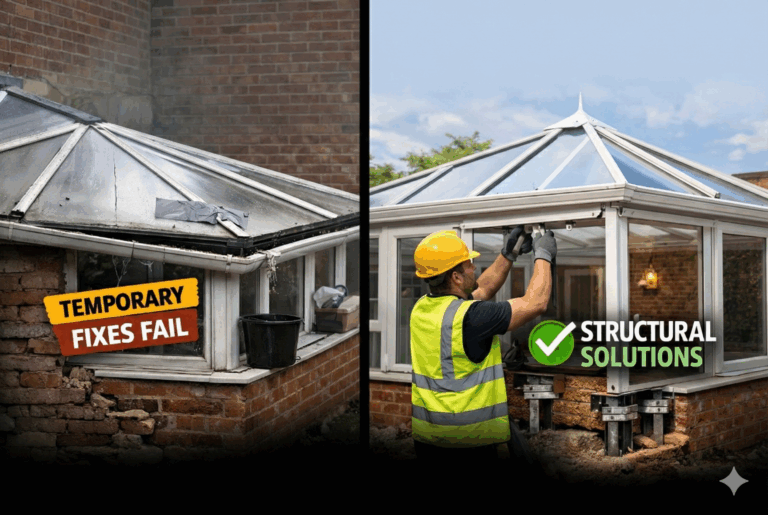
roomoutsideuk
10th September, 2025

Living in Light – The Long-Term Benefits of Glass Extensions

Introduction

Light changes everything. It transforms the way a home feels, with the long term benefits being that it uplifts our mood, and creates a sense of space and calm. That’s why so many homeowners are drawn to the idea of a glass extension. Unlike a brick addition, a glass extension doesn’t just give you more square footage — it changes the way you live.

At Room Outside®, we’ve been designing and building luxury glass structures for over 50 years. In this article, we’ll explore the long-term benefits of glass extensions, and show you how our innovative modular glass extensions take those advantages even further.


The Lifestyle Benefits of Living with Light

  • Wellbeing and mood – Natural daylight has been proven to support mental health, improve sleep, and boost productivity. A glass extension ensures your home is always bathed in light.
  • Connection with nature – Floor-to-ceiling glass blurs the line between indoors and outdoors, bringing your garden into your living space all year round.
  • Luxury feel – Glass extensions create aspirational spaces that feel modern, elegant, and timeless.
  • Flexible use – From a family kitchen to a quiet reading room or entertaining space, the versatility of a glass extension lasts for decades.

The Practical Advantages

Beyond lifestyle, there are solid long-term reasons why glass extensions are such a wise investment:

  • Adds value to your home – A luxury glass extension can increase property appeal and resale value.
  • Durability – With modern technology such as New Generation Glass (NGG) and thermally broken frames, a high-quality glass extension is built to last.
  • Energy efficiency – NGG helps regulate temperature, keeping your space warm in winter and cool in summer.
  • Low maintenance – High-performance glass and frames make upkeep simple, especially when paired with our Groom Outside service.

Why Modular Glass Extensions Are the Future

While traditional glass extensions already bring huge advantages, our modular glass extensions are designed with the future in mind.

Key Long-Term Benefits:

  • Installed in a matter of days – precision-engineered off-site, then assembled quickly with minimal disruption.
  • No building mess – modular systems arrive factory-made, avoiding piles of sand, cement, and waste.
  • Energy efficiency – insulated panels and NGG glazing create one of the most thermally efficient extension options on the market.
  • Design flexibility – whether you want the look of brick, smooth render, or pure floor-to-ceiling glass, the system adapts to your vision.
  • Reuse of existing base – often possible when upgrading an older conservatory, saving time and cost.
  • Built to last – modular construction provides consistent quality and durability for decades of use.

Bright and contemporary modular glass extension with vaulted ceiling, large rooflights, and full-height sliding doors opening to a private garden.

The Verdict

Living in light isn’t just about today. It’s about creating a home that will continue to inspire, uplift, and add value for years to come. A glass extension offers those long-term benefits naturally — and with the addition of modular technology, you can now enjoy light-filled living without compromise.

Next Steps

At Room Outside®, we’ve been shaping extraordinary glass spaces for over half a century. If you’re ready to discover the long-term benefits of living in light, our expert Design Consultants are here to guide you.

Contact us today for a free, no-obligation quote and explore how a bespoke glass or modular extension could transform your home.
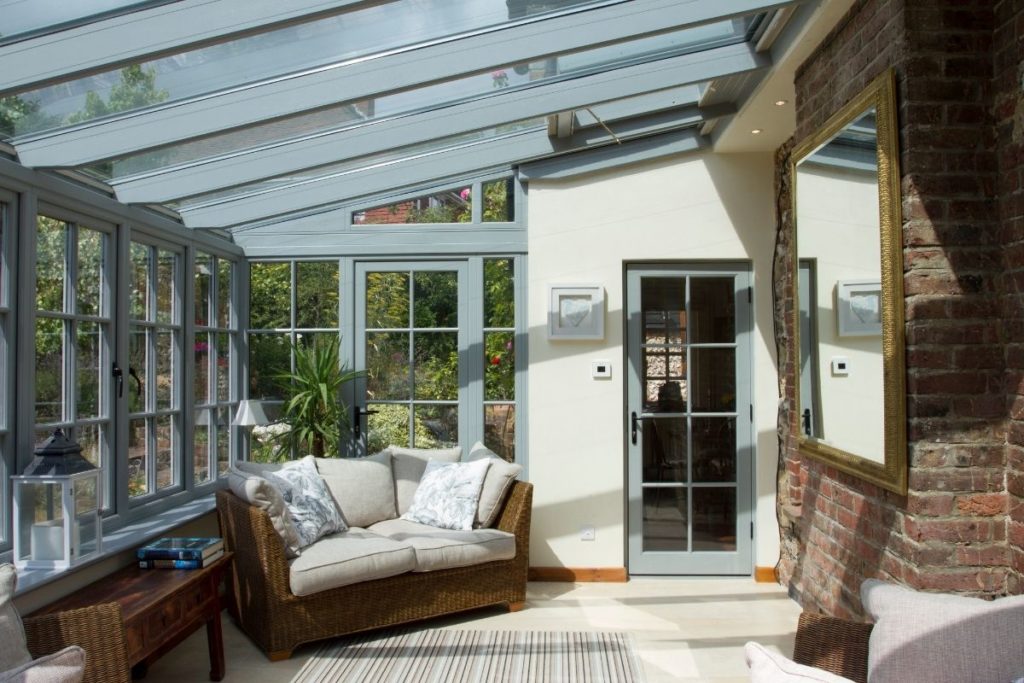
roomoutsideuk
07th May, 2025

Timber vs uPVC: Which is Best for Your Glass Extension?

When planning a premium glass extension, one of the most common questions we hear is: “Should I choose timber or uPVC for the frame?” In this article, we’ll explore the key differences between timber vs uPVC, so you can decide which material best suits your home, lifestyle, and long-term investment.
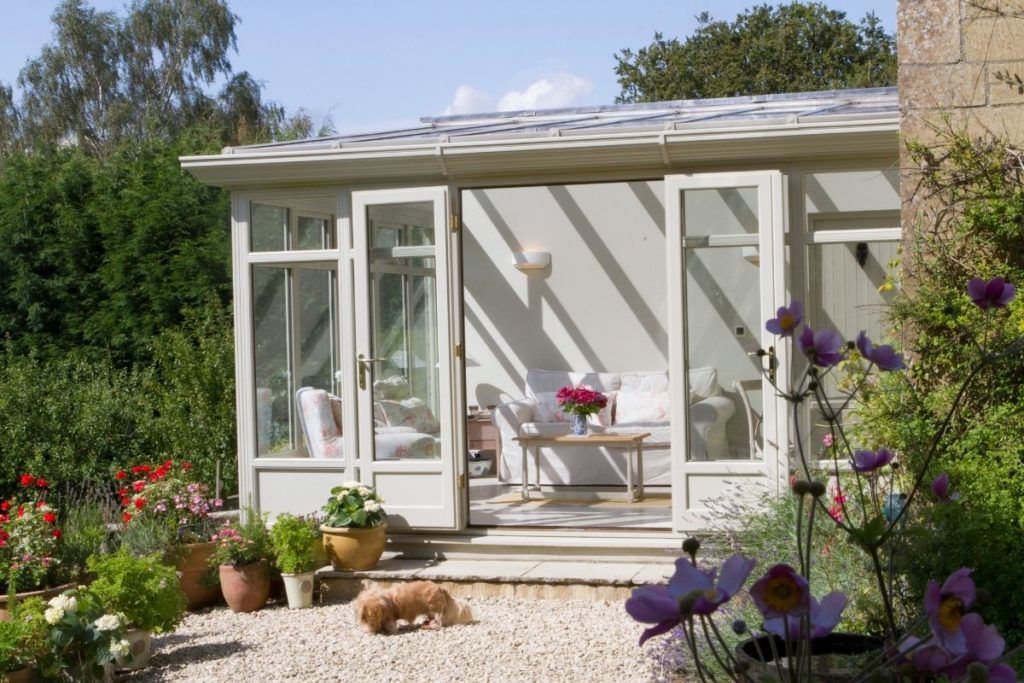
Both options have their strengths, and the right choice often depends on your priorities in terms of style, performance, and maintenance.


The Beauty and Character of Timber

Timber has long been the go-to material for traditional and heritage-style homes. Its natural look adds warmth, charm, and timeless character to any property.

Benefits of Timber Frames:

  • Aesthetics: Nothing matches the organic beauty of real wood.
  • Customisation: Timber can be painted or stained in a wide range of colours.
  • Longevity: When properly maintained, timber can last for decades.
  • Eco-Friendly: Sustainably sourced timber is a renewable material with a low carbon footprint.

However, timber does require ongoing maintenance to keep it in top condition. Regular repainting and protection from moisture are essential to avoid warping or decay.


The Smart Efficiency of uPVC

uPVC (unplasticised polyvinyl chloride) is a popular alternative, especially for homeowners looking for a low-maintenance, thermally efficient solution. But not all uPVC is made equal.

At Room Outside, we only use top-grade uPVC systems engineered for long-term durability, superior insulation, and a flawless finish.

Benefits of High-Quality uPVC Frames:

  • Low Maintenance: No painting or staining required.
  • Durability: Premium uPVC resists fading, warping, and discolouration (unlike cheap alternatives which may yellow and crack).
  • Energy Efficient: Excellent thermal performance helps lower energy bills.
  • Cost-Effective: Generally more affordable than hardwood timber.
  • Contemporary Styling: Clean lines and modern finishes suit a wide range of architectural styles.

What About Cheaper uPVC?

While budget-friendly uPVC might seem appealing, it often fails to perform over time. Lower-grade materials tend to yellow, become brittle, and can significantly reduce the lifespan and appearance of your glass structure.

By contrast, the premium uPVC we use is designed to maintain its integrity and visual appeal for decades with minimal upkeep.


So, Which Should You Choose?

If your priority is a classic, traditional look and you don’t mind some occasional maintenance, timber is a beautiful, heritage-rich option. For those who prefer modern styling, easy upkeep, and excellent insulation, high-quality uPVC is a smart, reliable choice.

Either way, Room Outside offers expertly crafted options tailored to your preferences and built to last.


Ready to explore your perfect glass extension?

Download our brochure today and start planning your dream space with Room Outside.

Download our brochure today and start planning your dream space with Room Outside.

https://www.roomoutside.com/room-outside-request-a-brochure/
roomoutsideuk
01st May, 2025

Want a Fast Home Extension Without the Disruption?

If you’ve ever wanted to add space to your home but dreaded the chaos of a major building project, a fast home extension without disruption could be the perfect solution. For some, the thought of weeks of builders, mess, and noise is enough to put them off altogether.

But what if there was a better way?

Build Without the Headaches

Traditional home extensions take time. Builders dig foundations, lay bricks, and work around unpredictable weather. It’s slow, messy, and often stressful.

That’s why we’re offering something different.

This innovative new system uses precision-engineered parts built off-site. These are delivered and assembled quickly at your home. As a result, installation takes days instead of months — a fast home extension without disruption and minimal interruption to your daily life.

Designed to Suit Your Home

Whether you want a bright kitchen, a stylish dining room, or a garden retreat, this system gives you flexibility. It works with most house types and even fits on existing bases in many cases.

You get all the benefits of a traditional extension, without the long wait.

Comfortable All Year Round

One big concern with glazed structures is keeping them warm in winter and cool in summer. This system solves that.

Thanks to high-performance insulation in the walls, floor, and roof, your space stays comfortable all year. You can also choose New Generation Glass to reduce glare, control solar gain, and improve energy efficiency.

Built to Last, Easy to Maintain

Durability matters. These materials are long-lasting and require very little upkeep. So you’ll spend less time on maintenance and more time enjoying your home.


Ready to Extend Without the Stress?

You don’t need to live on a building site to get more space. With this fast, clean, and energy-efficient system, you can have your dream extension — without the drama.

  • Fast build
  • Stylish and practical

Get in touch to book your free design consultation.

https://www.roomoutside.com/get-a-quote/
roomoutsideuk
09th August, 2024

Orangery and Conservatory Extensions Inspiration: Let’s Look at the Colour Grey!

Grey orangery and conservatory extensions have become an increasingly popular choice. Conservatories and orangeries can be built in a multitude of colour options, whether that is a timber frame painted in your chosen shade of grey, powder-coated grey aluminium frames or a grey uPVC. And just because you are choosing to go grey on the outside, you can lighten things up inside with contrasting internal frames. This versatile shade complements both contemporary and traditional homes, offering a sleek, modern look while blending seamlessly with various architectural styles.

In this guide, we’ll explore why grey is a fantastic option, for your extension and how it can be incorporated into your design, and what shades work best for different aesthetics.

Why Choose Grey for Your Orangery or Conservatory Extension?

  1. Timeless Appeal: Grey is a sophisticated and neutral colour that won’t go out of style.
  2. Versatility: It pairs well with a wide range of materials, including wood, brick, and glass.
  3. Contemporary Elegance: A grey extension instantly modernises your home.
  4. Complements Other Colours: Works beautifully with natural tones, pastels, and bold shades alike.
  5. Low Maintenance: Lighter greys can disguise dust and dirt, making upkeep easier.

Shades of Grey – Which One is Right for You?

  • Light Grey: Soft and subtle, ideal for a fresh and airy feel.
  • Mid Grey: A balanced choice that works well in both traditional and modern designs.
  • Charcoal or Dark Grey: Creates a striking contrast and adds depth to your extension.

The shade you choose will depend on the style of your home, the level of contrast you desire, and how much natural light the space receives.

Incorporating Grey into Your Extension Design

1. Frames and Structure

Grey can be used for window and door frames, as well as structural beams, creating a stylish and cohesive appearance.

2. Roof Options

Opt for a grey-framed roof lantern to enhance the overall design.

3. Interior Styling

Grey can extend to the interior, from flooring and furnishings to feature walls and accessories.

4. Flooring and Tiles

Consider grey-toned tiles, wooden flooring, or polished concrete for a chic finish.

5. Complementary Colours

Grey pairs beautifully with white for a crisp, clean look, or with deep blues and greens for added sophistication.

Get Some Inspiration for Your Grey Framed Orangery or Conservatory Extension

Here are some great examples of grey-framed timber, aluminium or uPVC orangeries and conservatories to give you inspiration.

Dark Grey Conservatory Extension with Contrasting White Internal Frames

Charcoal grey uPVC conservatory extension
Grey uPVC Conservatory Extension on a modern new build home
Dark grey uPVC framed conservatory with contrasting white internal frames
Dark grey framed uPVC conservatory extension
Contrasting white uPVC internal frames on a grey framed conservatory

Aluminium Framed Charcoal Grey Orangery Extension on a Stone Cottage

Charcoal grey aluminium framed orangery extension
Inside a modern aluminium orangery with slate grey finish and finials and a stylish lantern roof
Slate grey aluminium framed orangery with lantern roof
Aluminium slate grey orangery extension with bi-fold doors open wide out onto the small patio

Grey-Painted Timber Framed Conservatory on a Country Home

Inside of white timber framed lean-to conservatory
Grey timber framed lean-to conservatory with double doors out to the patio

Grey Aluminium Framed Lean-To Conservatory Kitchen Extension

Grey aluminium framed lean-to conservatory kitchen extension with bi-fold doors

Light Grey Timber Framed Lean-To Conservatory on a Stone Cottage

Light grey aluminium lean-to conservatory with stone dwarf walls to match the property

Aluminium Grey Framed Gable-Ended Conservatory

Aluminium grey framed gable ended conservatory

Modern Grey Aluminium Lean-To Lounge Conservatory Extension

Modern grey aluminium lean-to conservatory extension used as a lounge

Large Lean-To Dining Conservatory with Grey Aluminium Frames

Large lean-to conservatory dinning space with modern deep grey aluminium frames and bi-fold doors

Let’s Bring Your Vision to Life

If you’re considering a grey orangery or conservatory, our expert designers are here to help. We’ll work with you to create a bespoke design that complements your home and meets your needs.

Looking for even more design inspiration for your glass extension? Then check out our full customer project gallery.

Speak to One of Our Design Experts Today!

Get a Quote
roomoutsideuk
16th April, 2024

Modern & Traditional Conservatory Inspiration

A conservatory is one of the best ways to extend your home. It creates a light-filled, stylish, and practical space that you can enjoy all year round. Whether you prefer a traditional or modern design, a conservatory helps you connect with your garden while adding valuable living space.

Why Choose a Conservatory?

  • More natural light – A glazed roof and large glass walls make the space feel bright and airy.
  • Quick installation – Minimal construction work is needed beyond the foundations, making it one of the easiest ways to extend your home.
  • Perfect for any property – Whether you own a period or contemporary home, conservatories can be designed to match your style.
  • Fully customisable – Choose from different frame materials, colours, and decorative details to create a unique space that complements your home

Find Inspiration for Your Conservatory Extension

Thinking about adding a conservatory? Explore our stunning customer projects to see how others have transformed their homes.

Large Open Plan Gable-Ended Conservatory Extension with Additional Utility Room.

Full glass conservatory roof over a lounge dinner glass extension
Glass extension with the doors removed between the house and conservatory

Traditional Lean-To Grey Painted Timber Conservatory on a Country Home

Grey timber framed lean-to conservatory with double doors out to the patio
Inside a grey timber framed lean-to conservatory with roof light windows
Inside of white timber framed lean-to conservatory

Quaint Country Chic Cream Timber Lean-To Conservatory on a Cottage

White timber framed lean-to conservatory

Modern Grey uPVC Conservatory with Contrasting White Internal Frames and Bi-Fold Doors

Grey Framed uPVC Conservatory on a large modern new build property
Grey uPVC Framed Conservatory Extension

Round Timber Conservatory Extension with Panoramic Views of The Garden and Harbour

Large round white timber framed conservatory in beautiful gardens with a view of the lake

Large Modern Timber-Framed Conservatory Lounge and Dining Room

Luxurious cream timber framed conservatory with large windows and high glass roof
Luxurious cream timber framed conservatory with dwarf walls and double doors to the garden

See More & Get Expert Advice

Looking for even more design inspiration? Take a look at our full customer project gallery for ideas.

Our team of specialists are happy to help with design advice, answer any questions, and provide a no-obligation quote tailored to your needs.

Get in touch today and start planning your dream conservatory!

Start Designing Your Dream Glass Extension Today

Contact Us
roomoutsideuk
24th November, 2023

Extending Your Home: Conservatory vs Garden Room

If you are thinking about extending your home, you may be comparing different options.

There are many choices, from a traditional extension to a fully glass design.

Two popular options are the conservatory and the garden room. But what is the difference between them?

Definitions

What is the Definition of a Conservatory and a Garden Room?


Conservatory
A room with a glass roof and walls. It is attached to your home and is often used as a sun lounge.

Garden Room
A room in your garden with a door or window. It usually has a solid or tiled roof and can be a separate building.

Conservatory Design

timber framed conservatory

A conservatory is mostly made of glass. Its full glass roof lets in plenty of natural light. This design dates back to when conservatories were used to grow plants. The modern glass technology available now makes the room temperature comfortable, keeping the heat in winter and reducing the heat during the summer. 
Not all glass is equal, so it is important to choose high-quality glass within your budget. Conservatories can be built with full-height glass or a mix of glass and walls. They come in many styles, such as lean-to or gabled roofs, and use materials like uPVC, timber, oak, or aluminium.

A conservatory is always attached to your home. Many people choose to remove part of the wall to create an open-plan space. However, this may require building regulations approval and extra work on insulation and heating.

Conservatory Benefits:

  • Extends your home’s floor plan
  • Easy access from the main house
  • Bright and airy space
  • Minimal construction required
  • Can add value to your home
  • Ideal for dining or relaxing
  • Open-plan design possible
  • Bi-fold or French doors open to the garden
  • Provides a good view of the garden

Garden Room Design

Oak sunroom extension

A garden room can be attached to your home or built as a separate structure. It has a tiled or flat roof instead of a full glass roof. Some designs add skylights or a glass gable to let in extra light.
A tiled roof offers better insulation and can lower the cost per square metre. Garden rooms offer more privacy and are ideal for guest accommodation, a home office, or a studio. There are various options for frame and wall materials, such as oak or timber, to match your home’s style.

Garden Room Benefits:

  • Can serve as an extension or a standalone structure
  • Less construction than a traditional extension
  • Can mimic the look of a traditional extension
  • Adds value to your home
  • Better insulation from a solid roof
  • Lower investment due to less glass
  • More privacy
  • Ideal for a guest room, studio, or office
  • French or bi-fold doors open fully to the garden

Let Us Help You Decide

Still not sure which option to choose? Our specialists are here to help. We can discuss your requirements, answer your questions, and provide a no-obligation quote. We can also share design examples for inspiration

Talk to a Specialist About Your Project

Get a Quote