
roomoutsideuk
01st September, 2024

Breaking Down the Jargon: Key Orangery & Conservatory Design Terms

If you’re considering adding a conservatory or orangery to your home, you might find some of the design terms and construction terminology unfamiliar. You may have a vision of how you want your glass room to look but struggle to name the features. Or perhaps you’re unsure what to include but know how you want to use the space.

To help, we’ve put together this guide to common conservatory design terms so you can better understand your options.

Key Orangery & Conservatory Design Terms

Glass Structure Types:

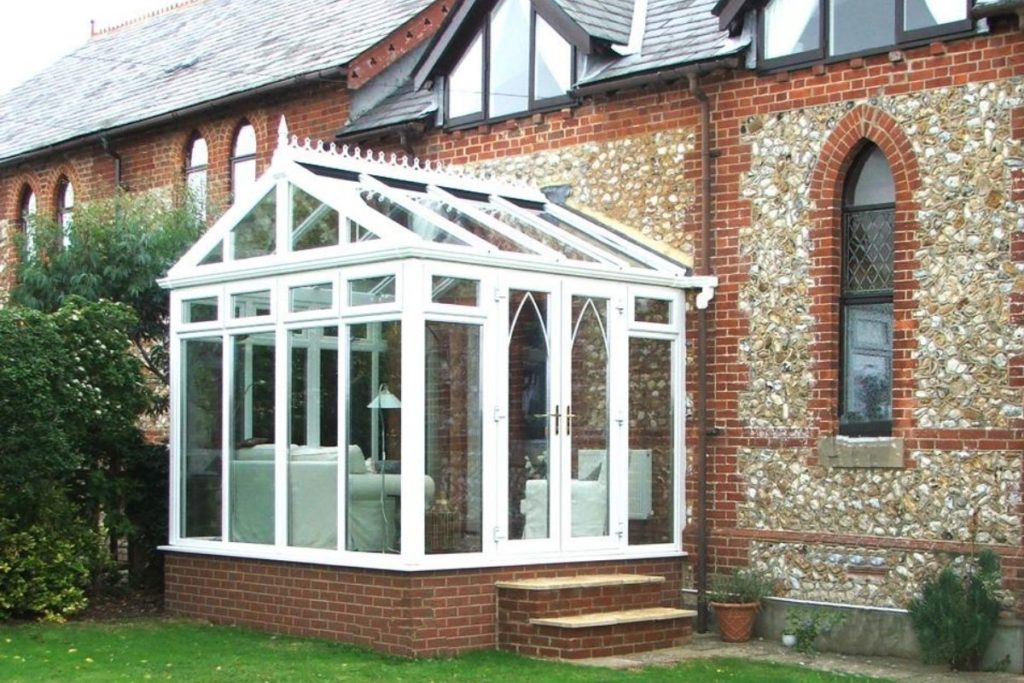
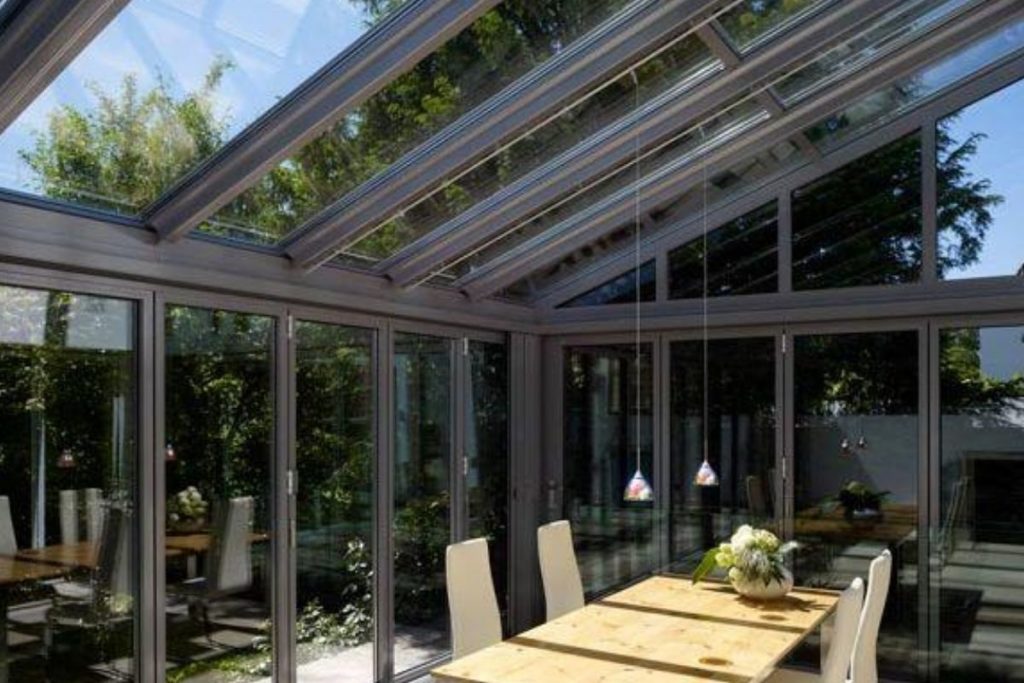
  • Conservatory: A structure with at least 75% of its roof made of glass, though most have a fully glazed roof.
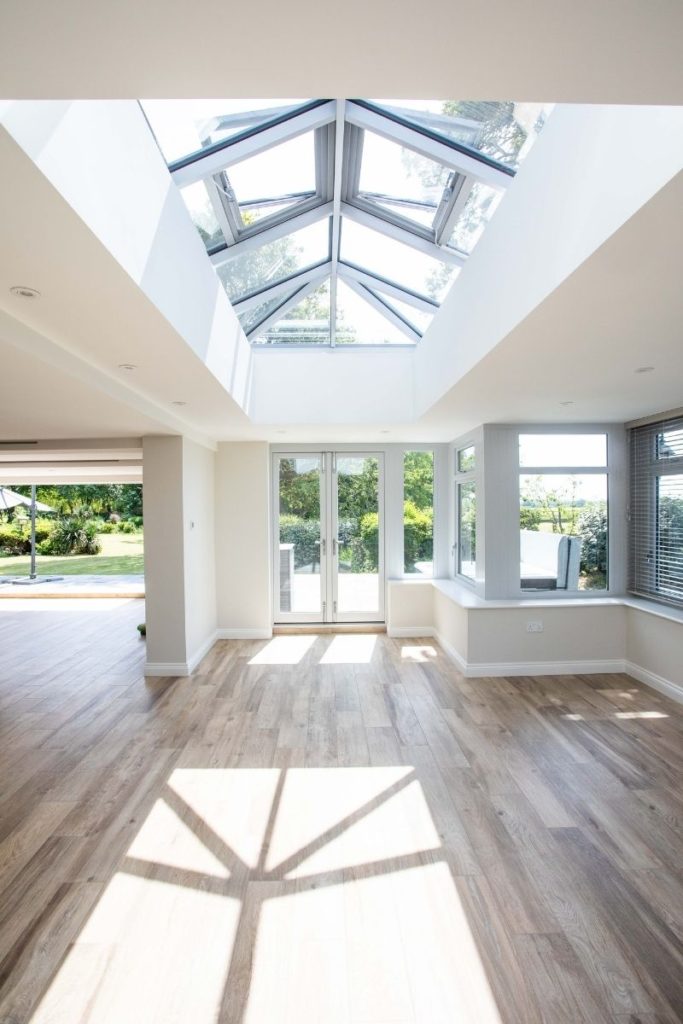
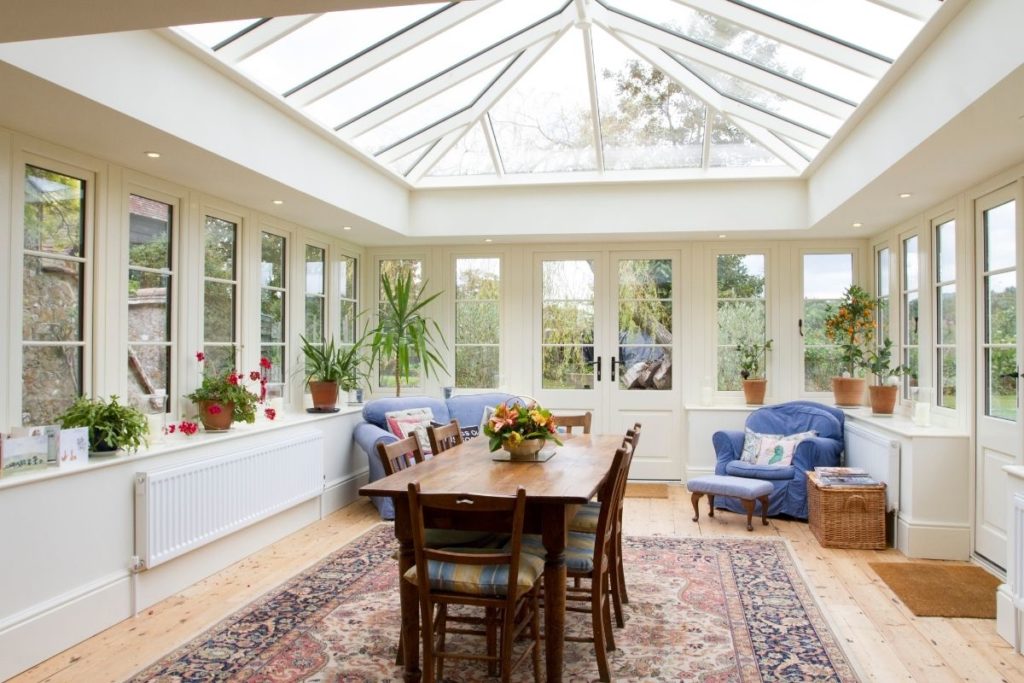
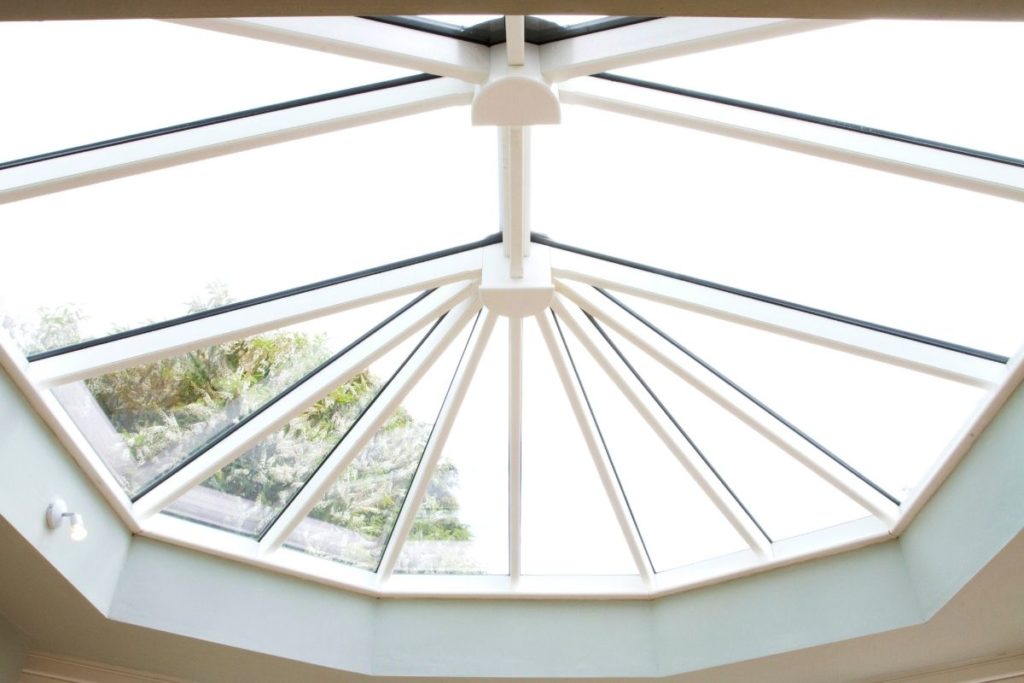
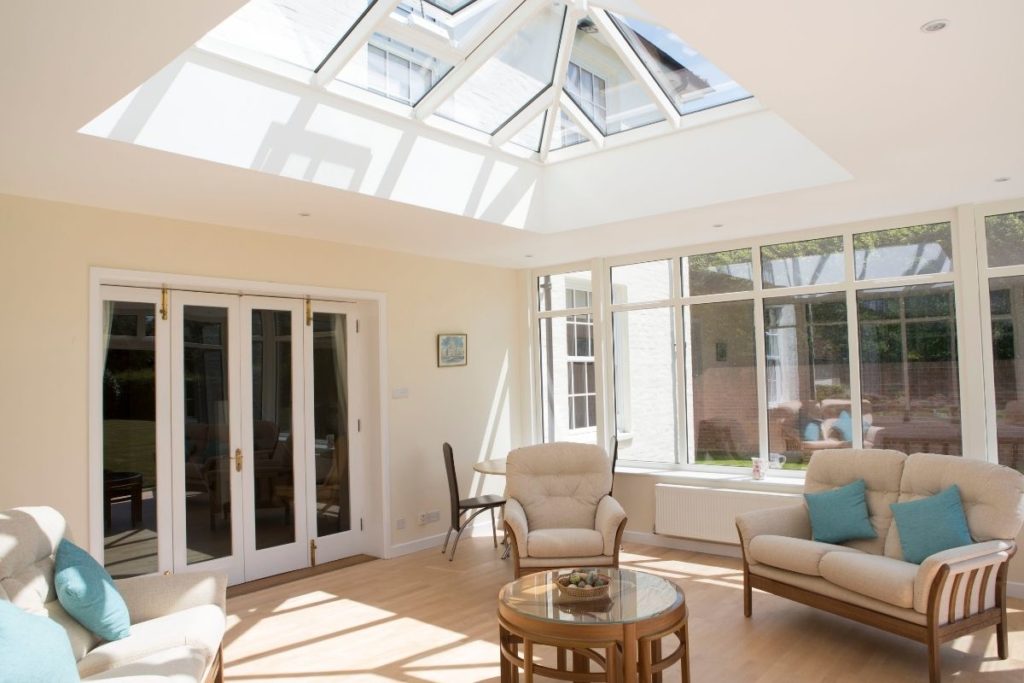
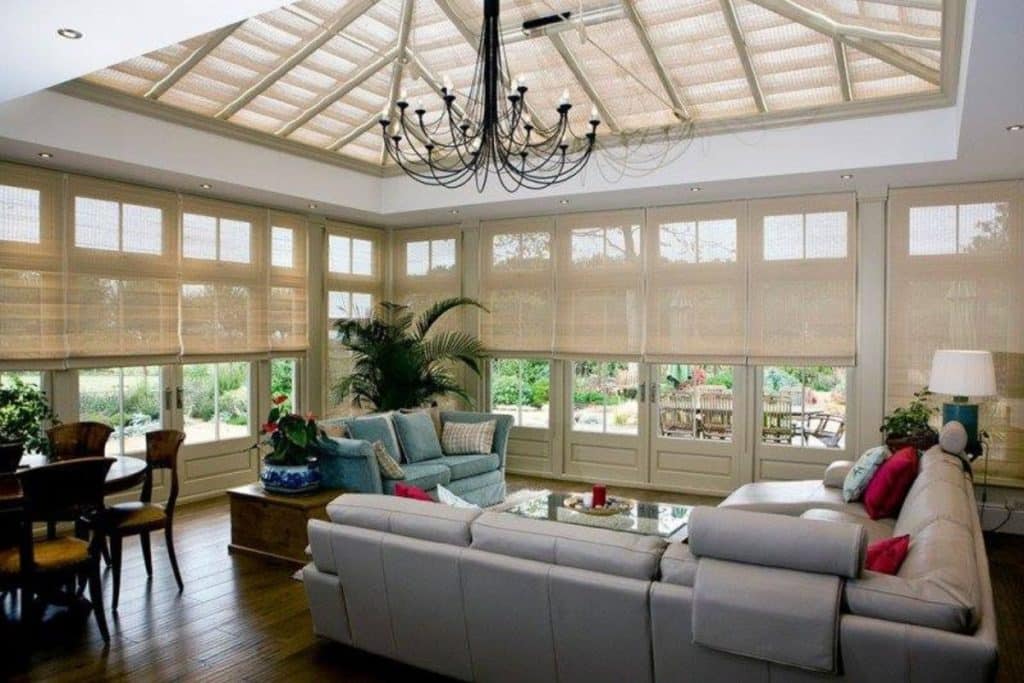
  • Orangery: Features a solid flat roof with a central glass lantern to allow natural light in.
Conservatory
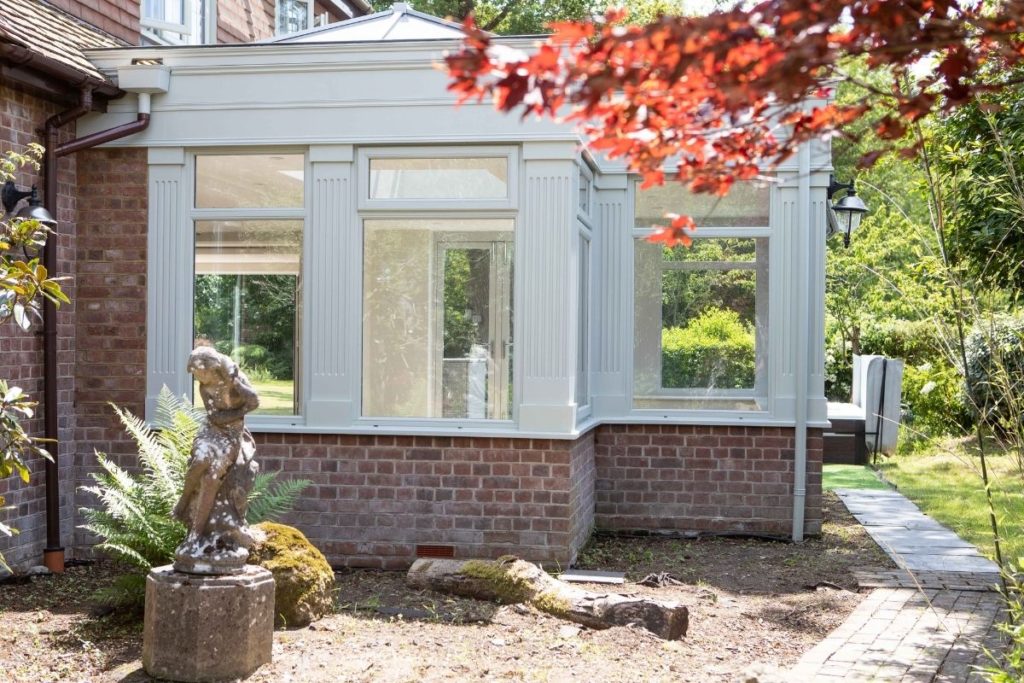
Luxurious white timber orangery extension on a larger Georgian country property
Orangery
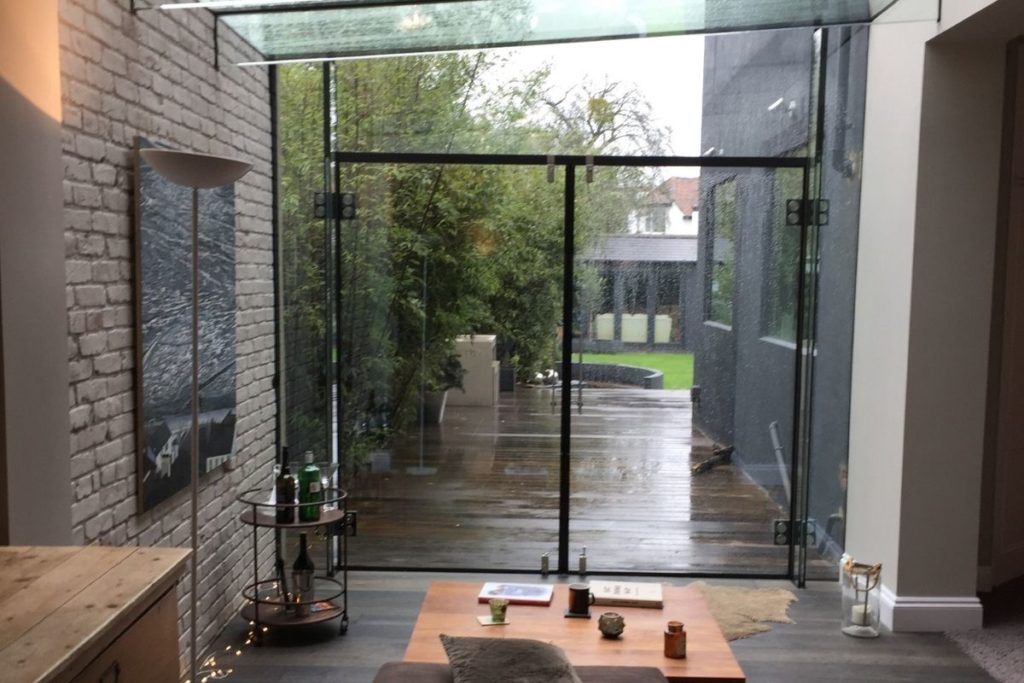
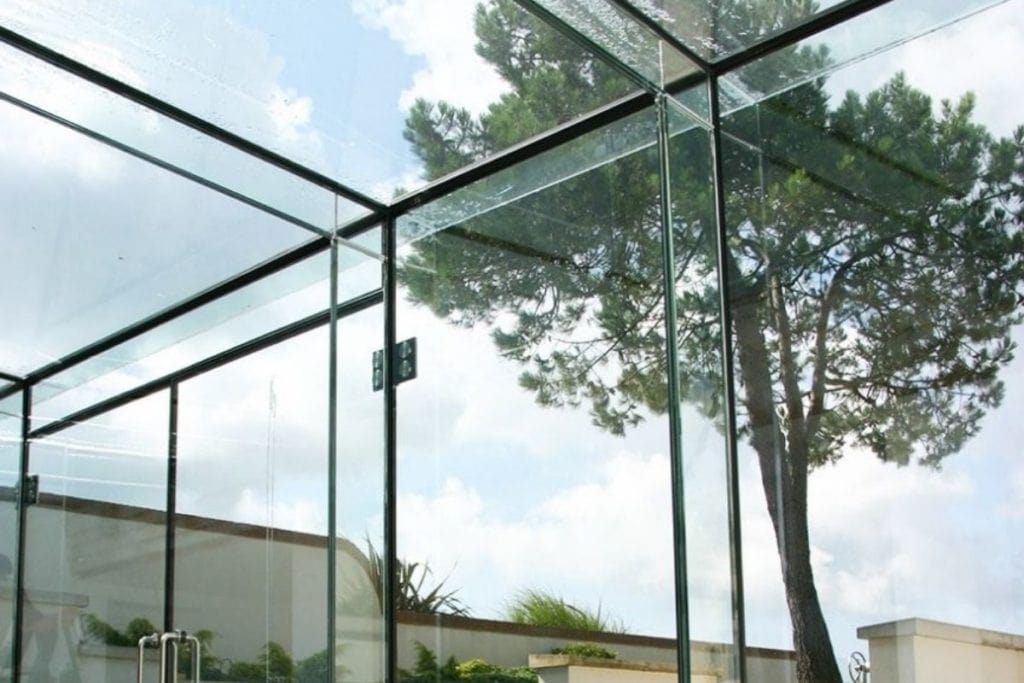
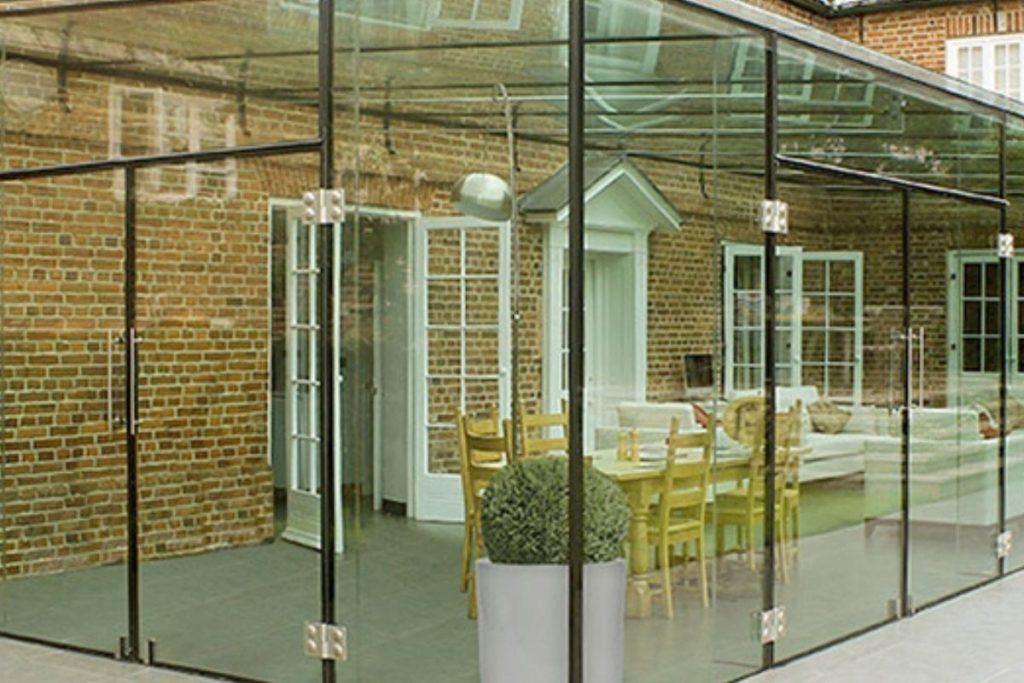
  • Glass Box: A frameless full or partial glass structure made from structural glass.
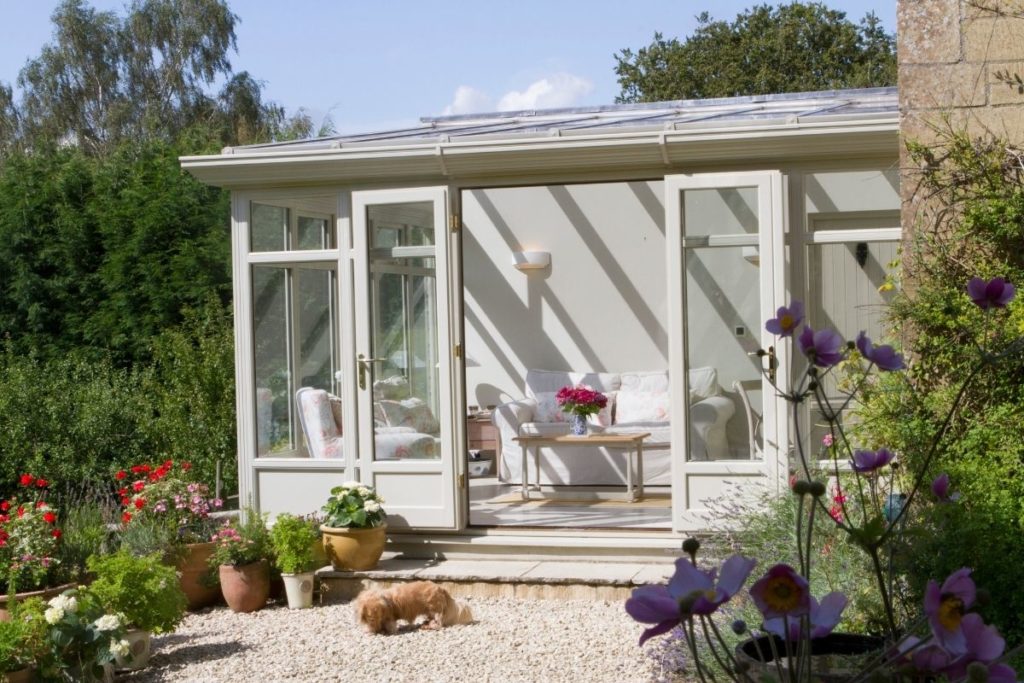
  • Garden Room: A solid-roofed room with doors or windows opening onto the garden.
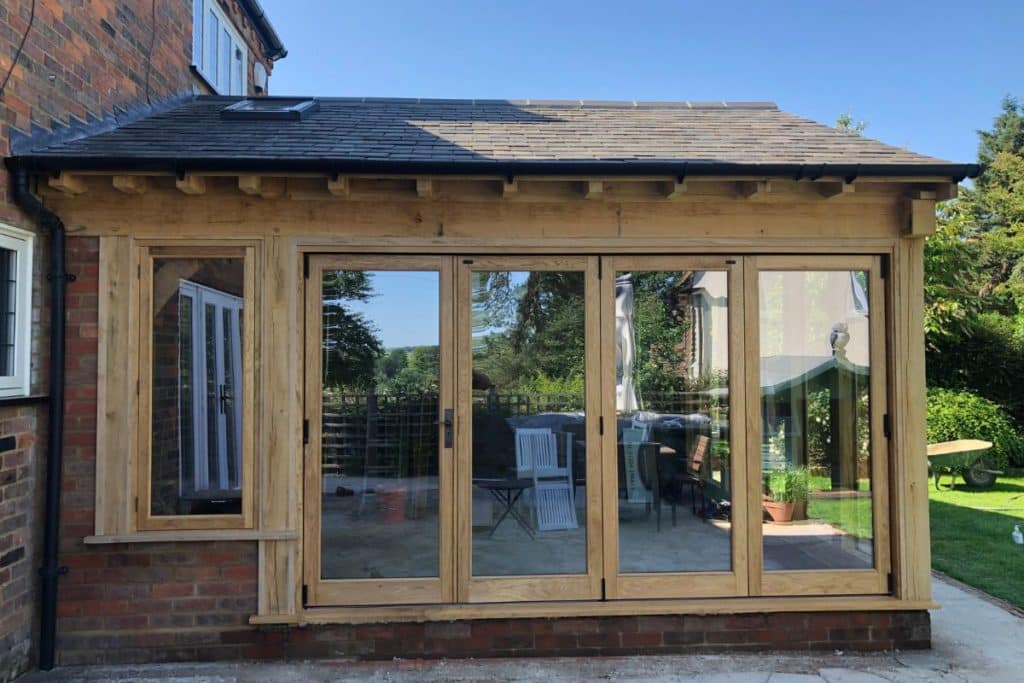
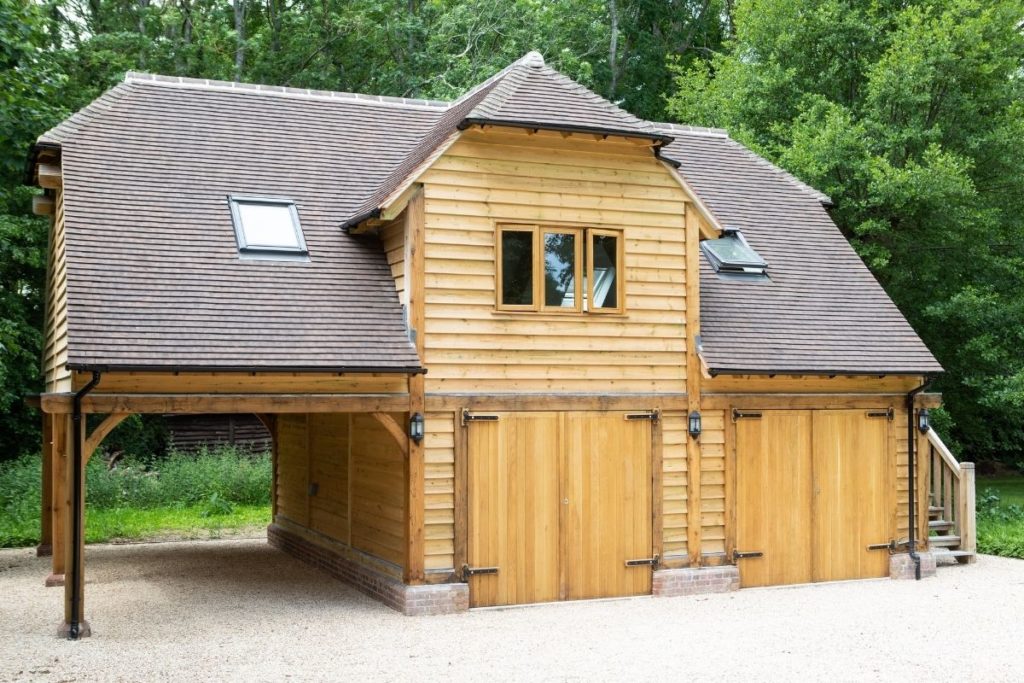
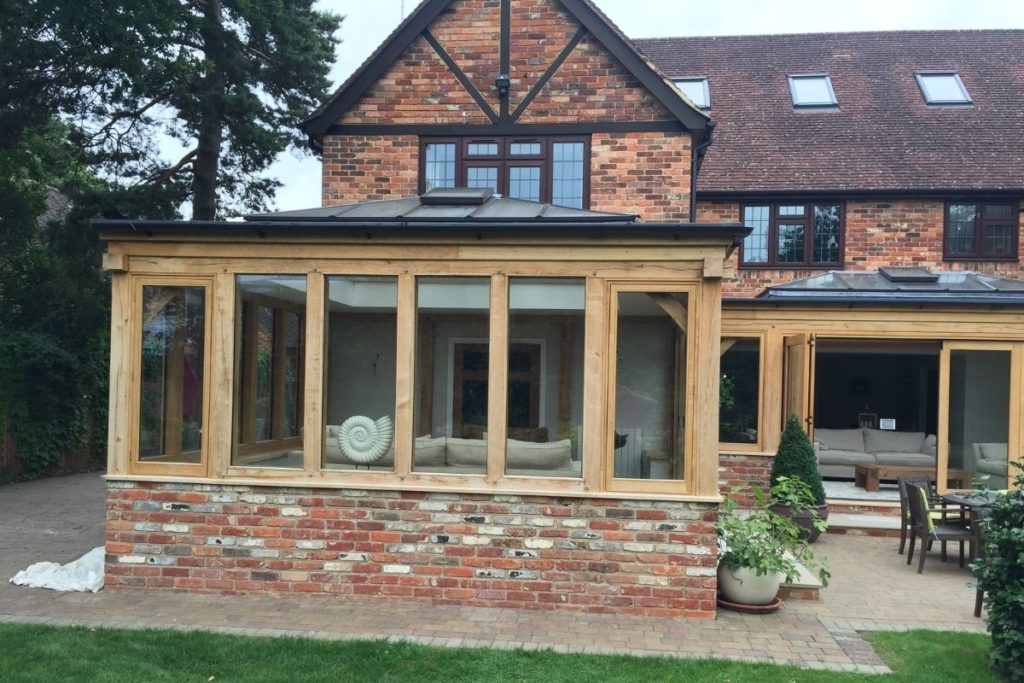
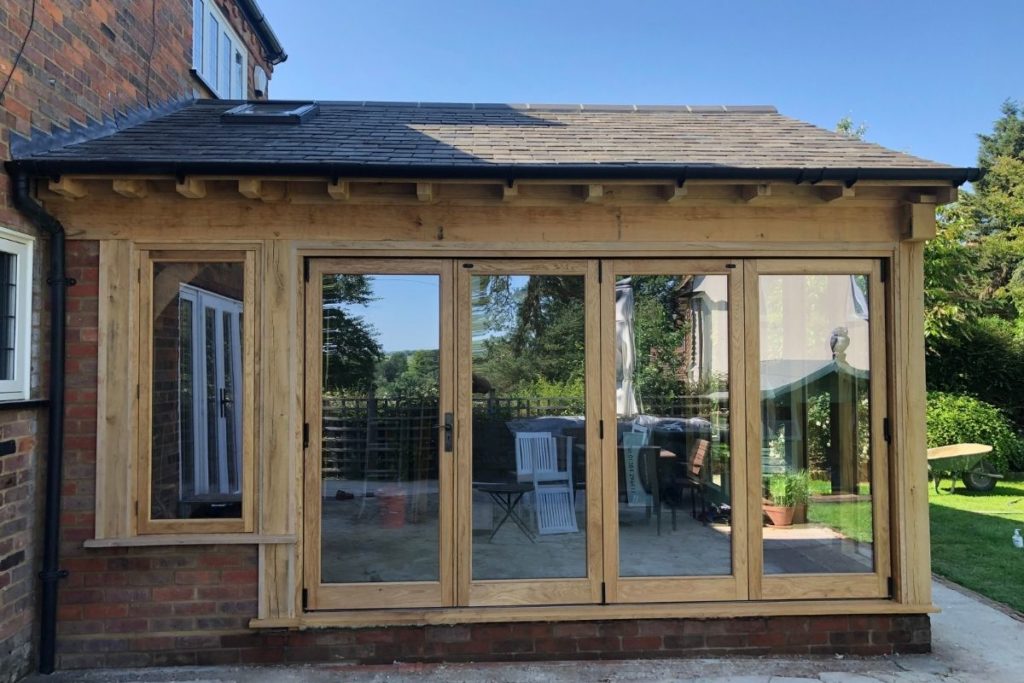
  • Oak Building: A garden structure, garage, workshop, or home office built from oak.
Glass Box
Garden Room
Beautifully Crafted Oak Framed Barn Garage
Oak Building

Orangery & Conservatory Styles

Lean-to: A conservatory with a single-pitch roof sloping down from your home’s external wall.
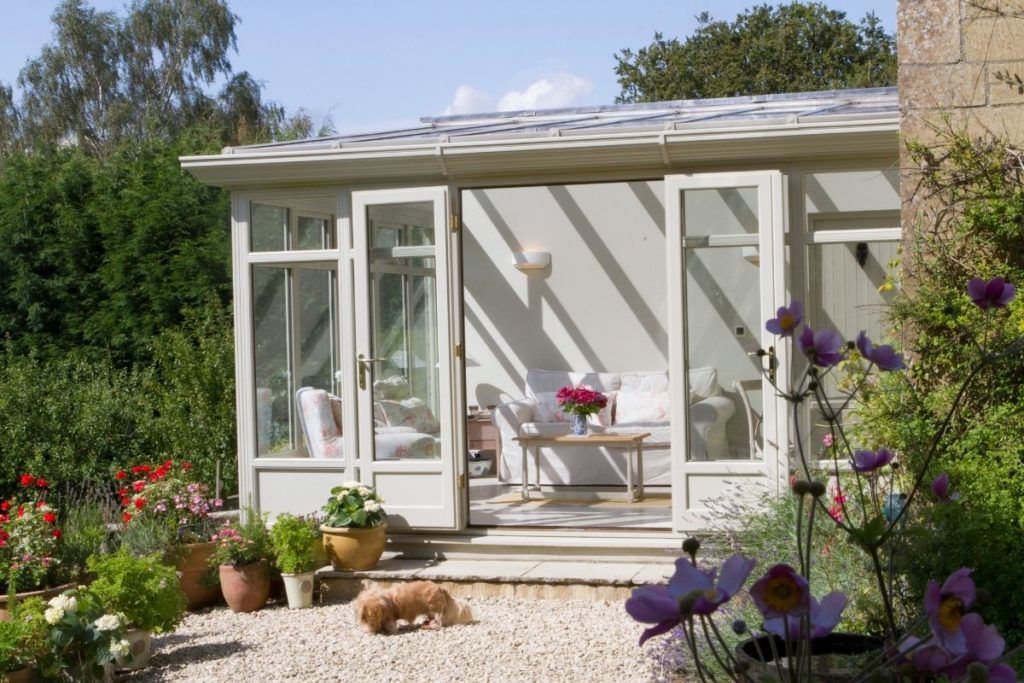
Lean-to Conservatory
  • Gable Ended: A conservatory with a pitched roof and a triangular glass gable end.
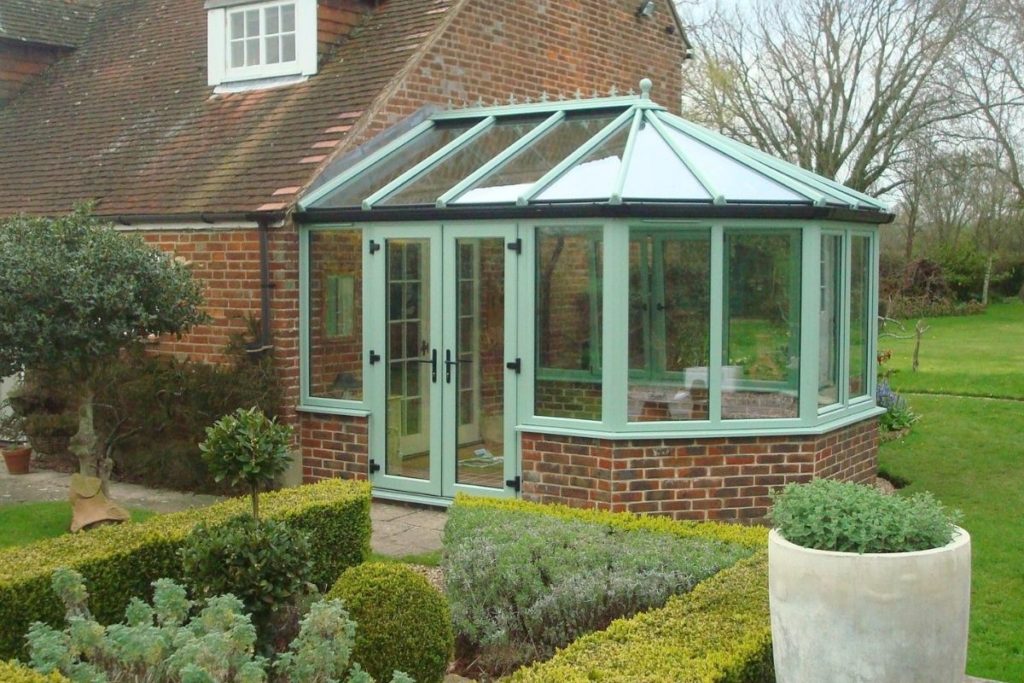
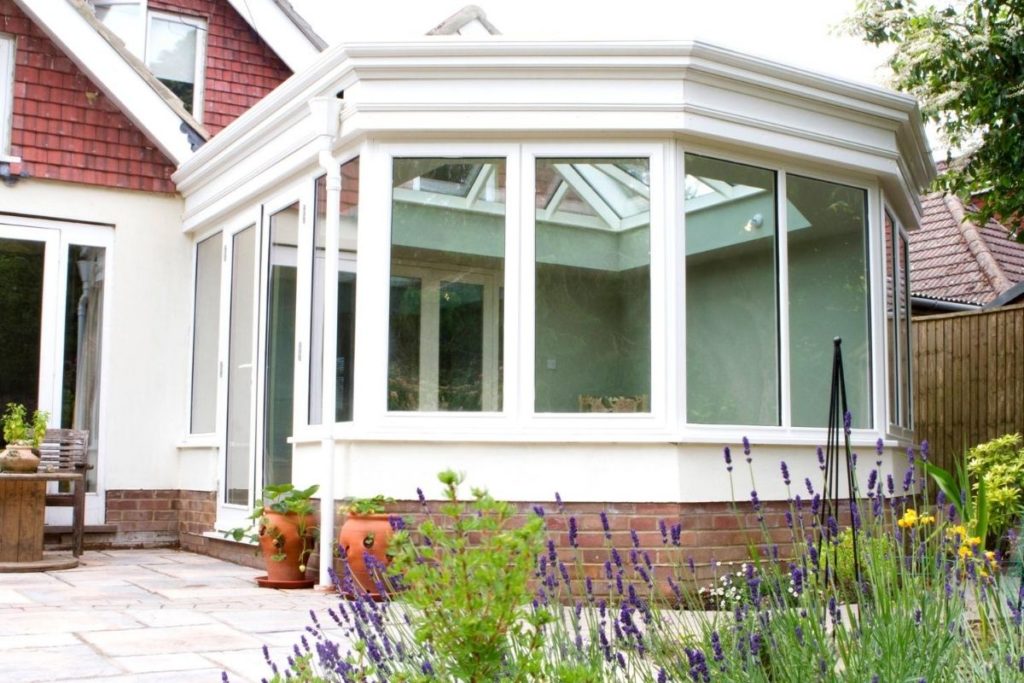
  • Victorian: A traditional conservatory with a multi-faceted bay front, apex roof, and decorative ridge.
  • Edwardian (or Georgian): A rectangular conservatory similar to Victorian styles but with a flat front.
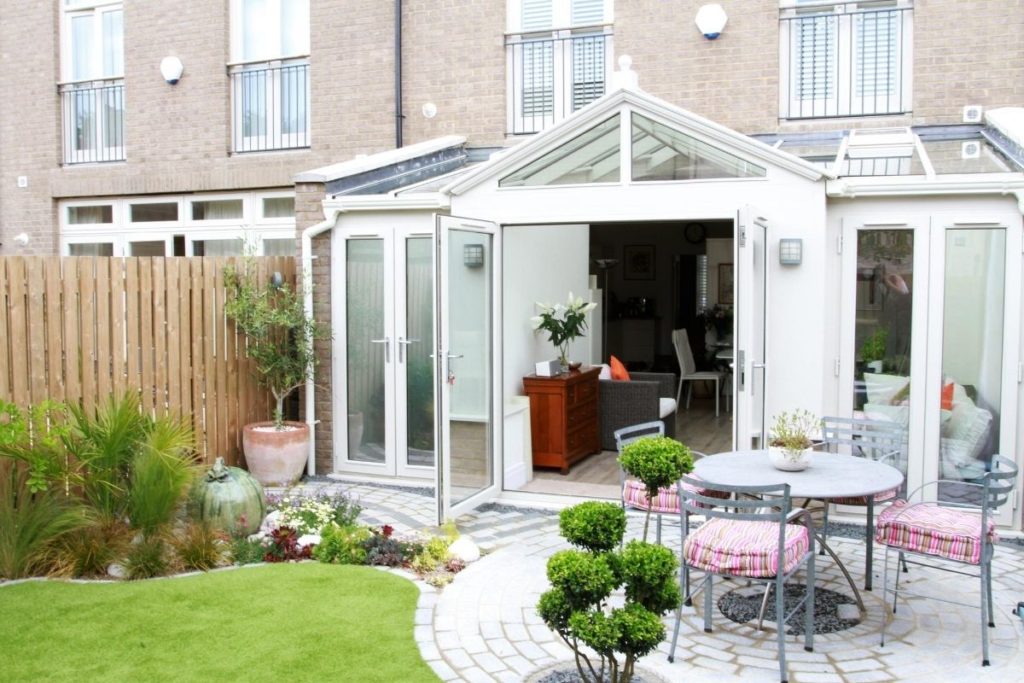
External white timber framed conservatory living space extension
Gable Ended
Small sage green timber conservatory with dwarf walls
Victorian
Edwardian

Lantern: A lantern structure is a conservatory but similar to an orangery it has a lantern roof surrounded by a pitched glass roof creating a two-tiered glass roof.
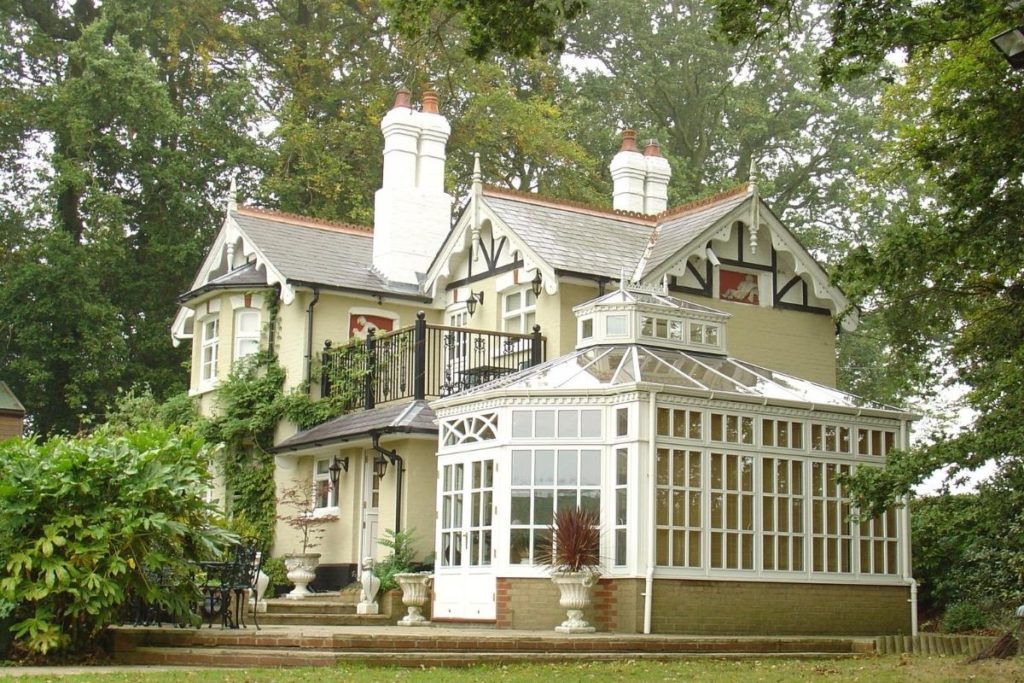
Traditional Edwardian style timber framed conservatory to match the property aesthetic
Lantern Conservatory
  • P-Shape: A combination of a rectangular lean-to and a Victorian-style extension, forming a ‘P’ shape.
  • T-Shape: A conservatory that spans the full width of a property with a central extension, often with a gable or hexagonal front.
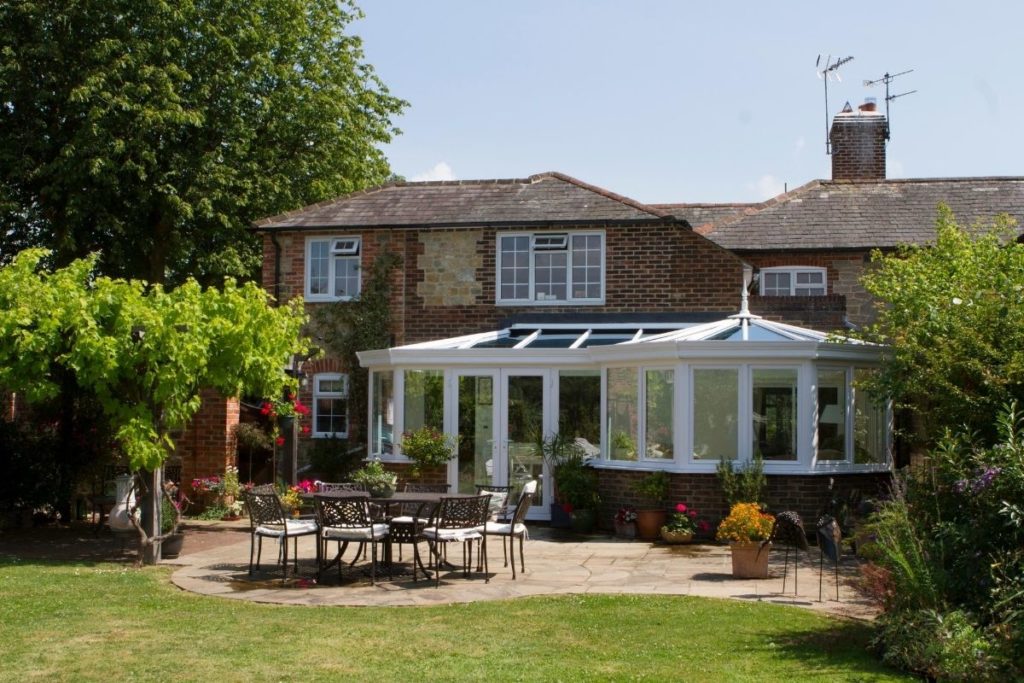
Large bespoke white uPVC orangery with brick dwarf walls
P-Shaped Orangery
T-Shaped Orangery
  • Rectangle: A simple rectangular layout that suits both contemporary and traditional designs.
  • L-Shaped: Two rectangular sections forming an ‘L’ shape, with one section extending into the garden.
  • Hexagonal: A traditional design with a six-sided footprint and a matching glass or lantern roof.
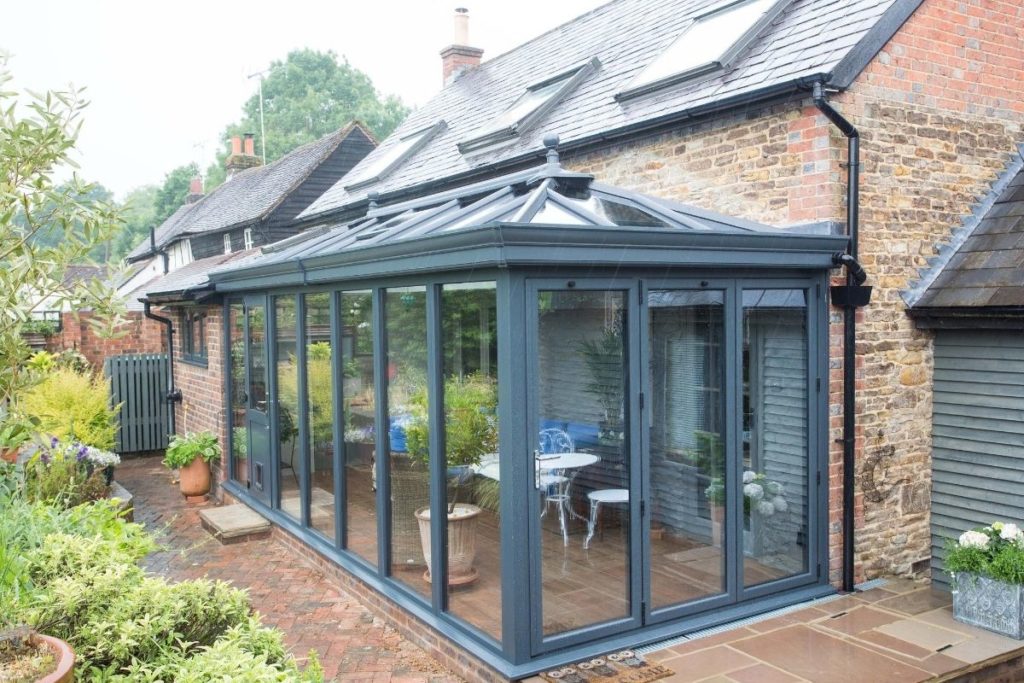
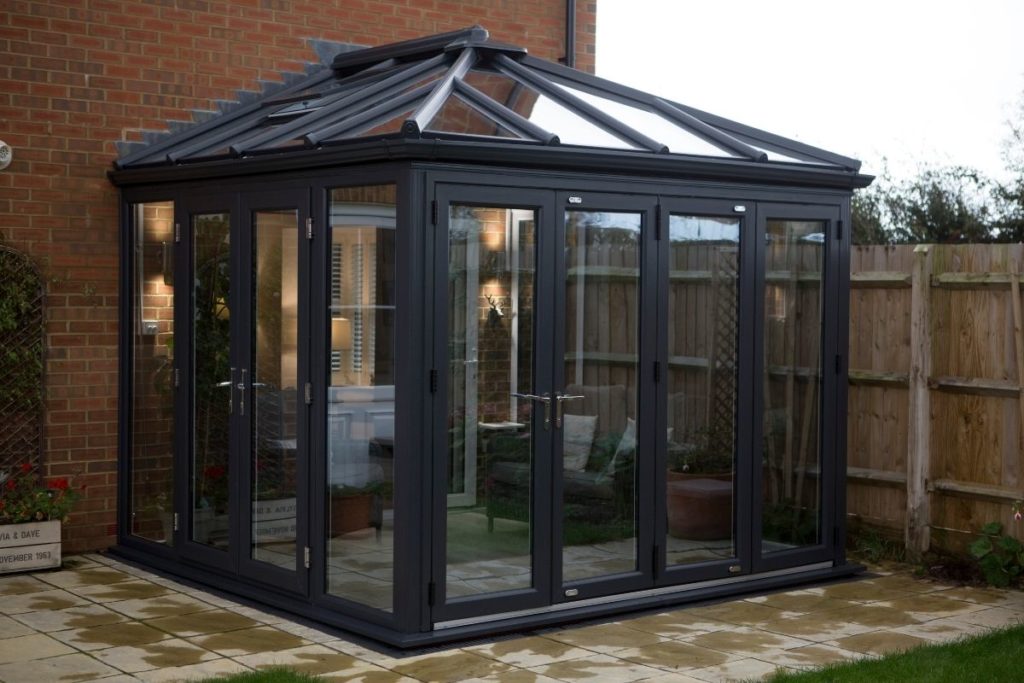
Modern bespoke slate grey aluminium conservatory with bi-fold doors
Rectangle Orangery
Modern oak orangery extension
L- Shaped Orangery
Elegant white timber framed hexagonal orangery with dwarf brick walls
Hexagonal Orangery

Conservatory Construction Terms:

  • Footprint: The floor space of a conservatory.
  • Base: The concrete foundation supporting the structure.
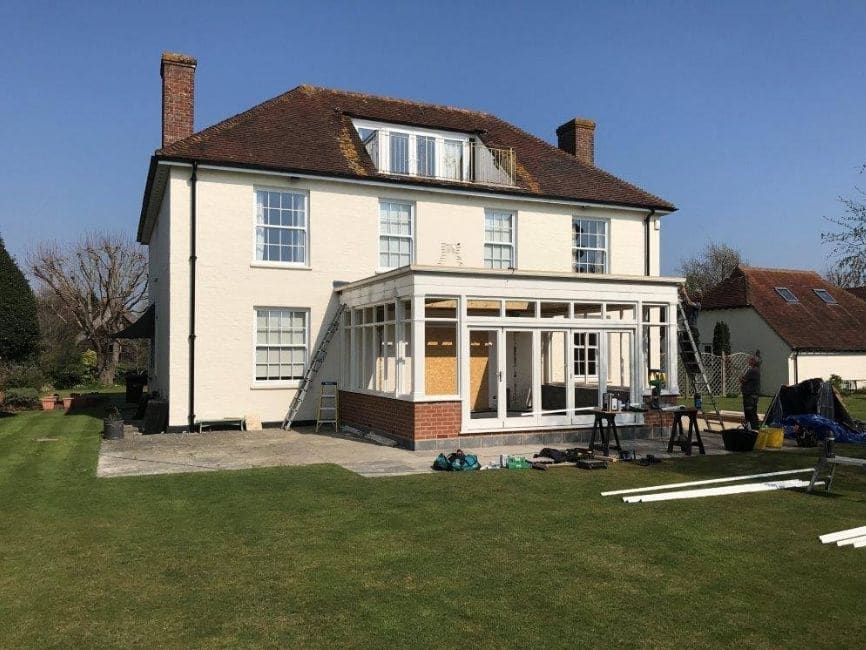
  • Abutment: Where a conservatory side meets an existing wall.
  • Abutment or Parapet Wall: A high wall that a conservatory joins.
  • Host (House) Wall: The existing property wall a conservatory connects to.
  • Lintel or RSJ: A support beam installed when opening the house wall for an open-plan design.
  • Cavity Wall: A double-layered masonry wall with insulation for energy efficiency.
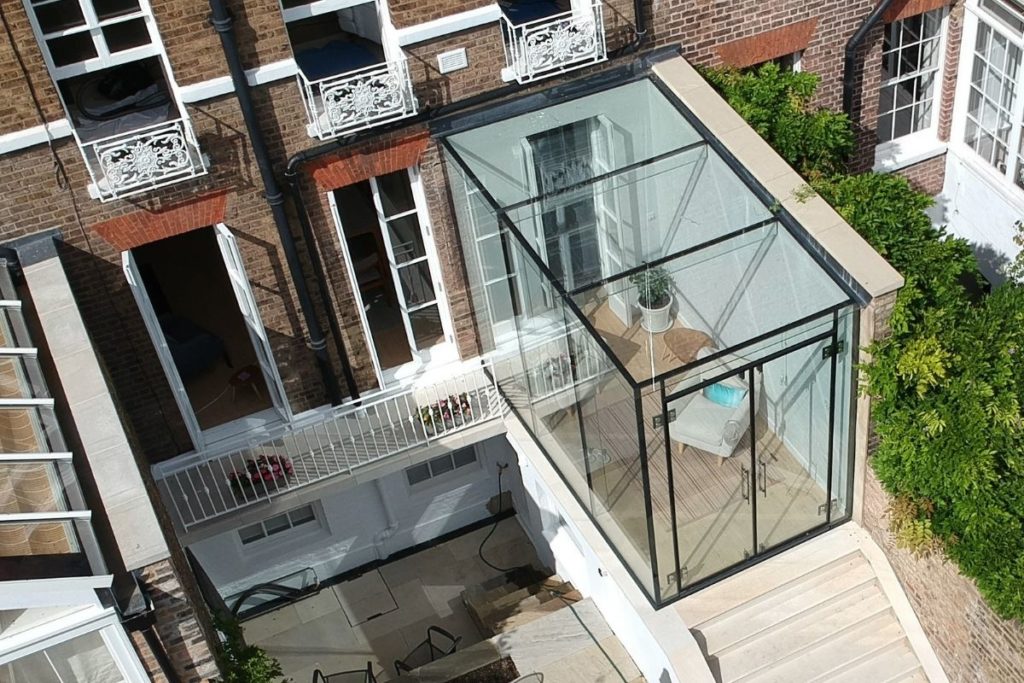
all glass box extension
Glass Box Extension with a Parapet Wall
Abutment Wall incorporated into a glass box extension
  • Dwarf Wall: A low wall beneath conservatory windows.
  • Full Height Frames: Floor-to-ceiling glass panels with no dwarf wall.
  • Facet: The front-facing frame sections of a conservatory.
  • Box Gutter: A rainwater collection gutter where the conservatory roof meets the house wall.
  • Flashing: A weatherproof seal between the conservatory roof and house wall.
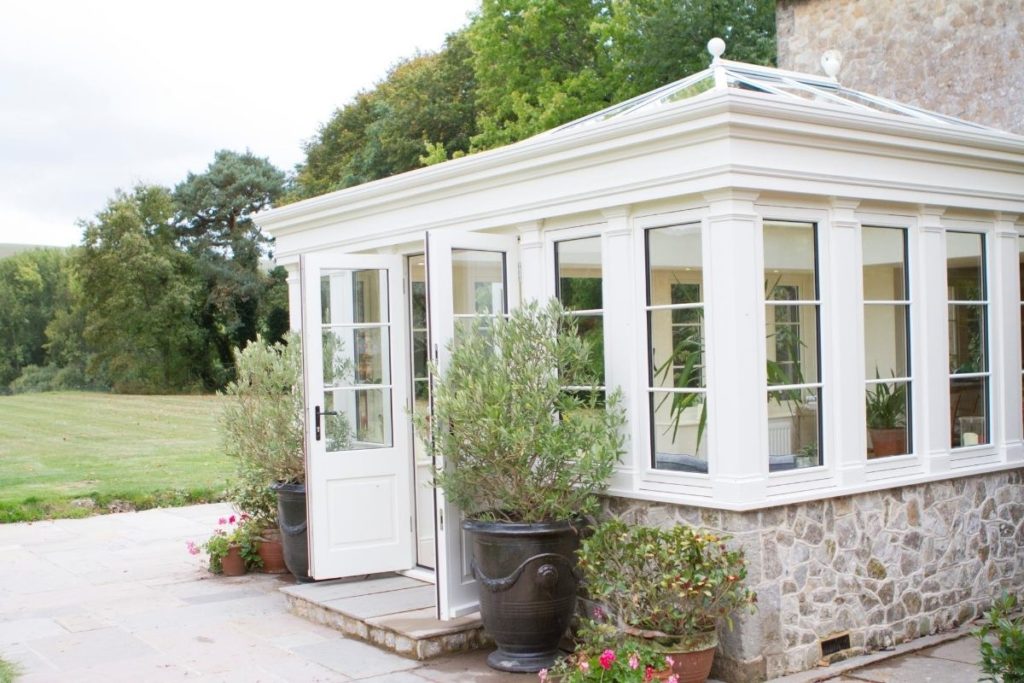
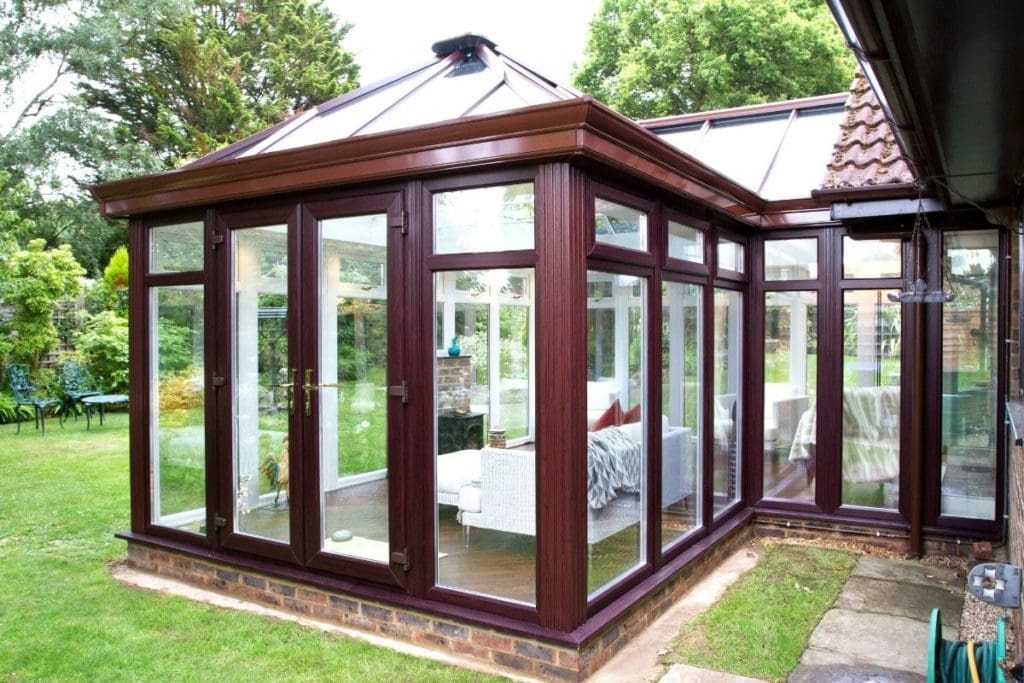
White timber orangery extension with stone dwarf walls to match the aesthetic of the lister property
Orangery with stone dwarf walls
Conservatory with full height frames and glass
  • Flashing: A weatherproof seal between the conservatory roof and house wall.
  • Tie Bar: A structural reinforcement bar running across a conservatory roof, often decorative.
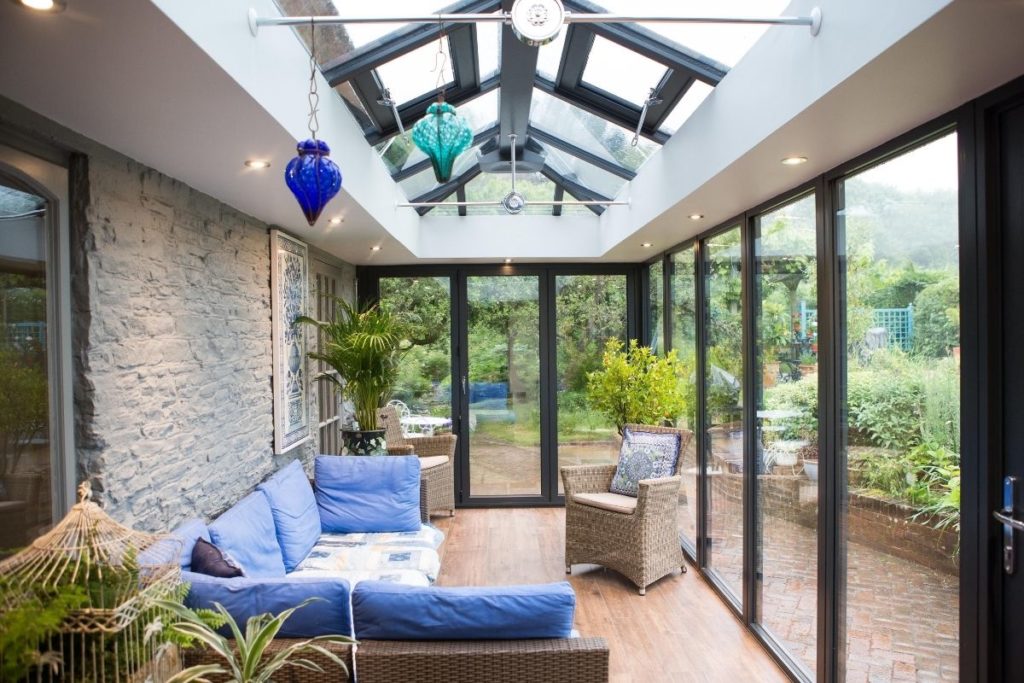
Orangery with a lantern roof and tie bars

Orangery & Conservatory Roof Terms

  • Lantern Roof: A flat roof with a central pitched-glass section for added light and design appeal.
  • Apex: The highest point of the roof.
Lantern Roof
  • Gable Style Roof: A roof with a ridge running the full length and a triangular front section.
  • Multi-Pitch Roof: A roof with multiple slope angles.
  • Mono Pitch Roof: A lean-to roof that slopes down from the house wall.
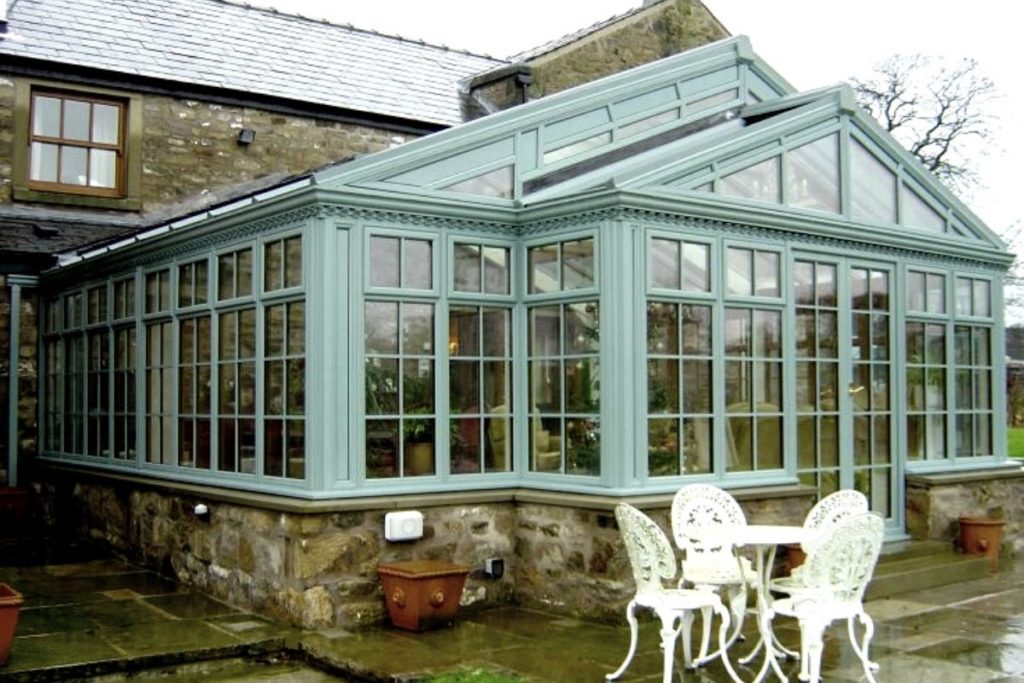
Large gable ended sage green aluminium framed conservatory
A gable-ended conservatory roof

Orangery & Conservatory Glass

  • Low Emissivity Glass (Low-E Glass): Glass with a special coating to enhance thermal performance.
  • U-Value: A measurement of thermal efficiency—the lower the U-value, the better the insulation.
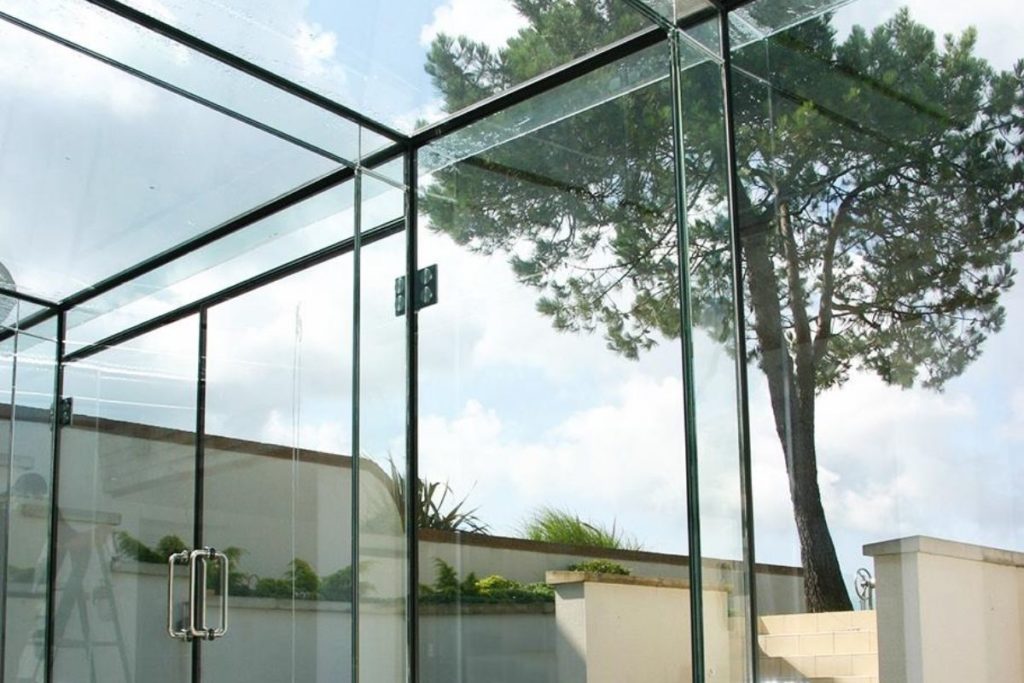
Stunning glass box extension with a flat glass roof

Glass Extension Windows & Doors

  • Double Glazed Unit (DGU): Two panes of glass separated by a spacer bar, often filled with argon gas for insulation.
  • Patio Doors: Sliding glass doors leading to the garden or patio.
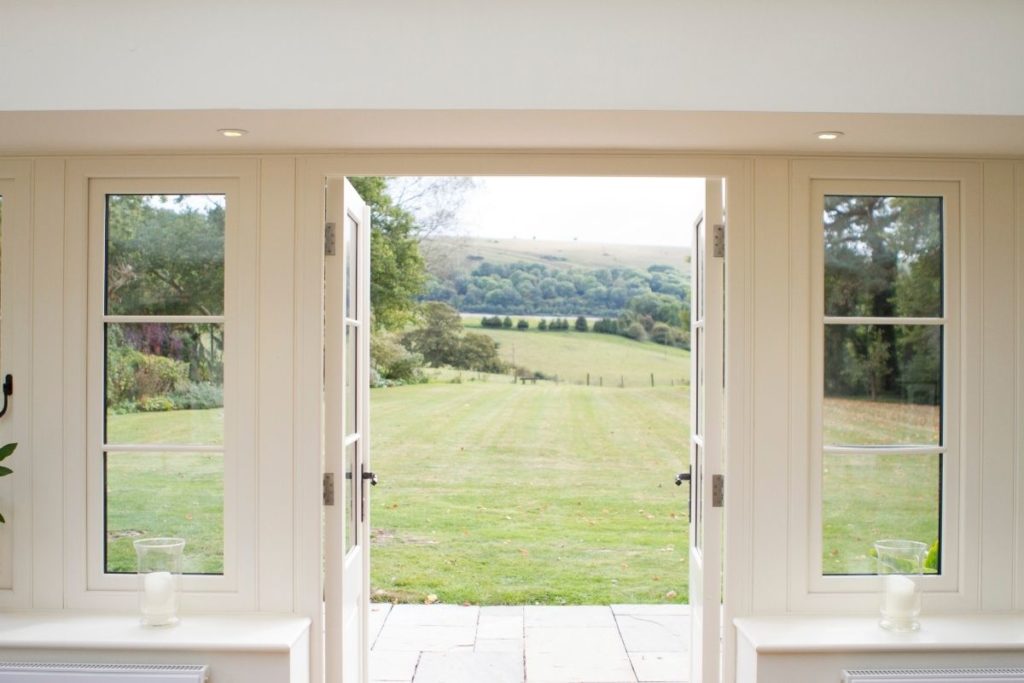
  • French Doors: Double doors that open outward to the garden.
  • Bi-Fold Doors: Folding doors that slide open in sections and stack neatly to one side.
  • Roof Vent or Light: An opening window in a glass or solid roof for ventilation.
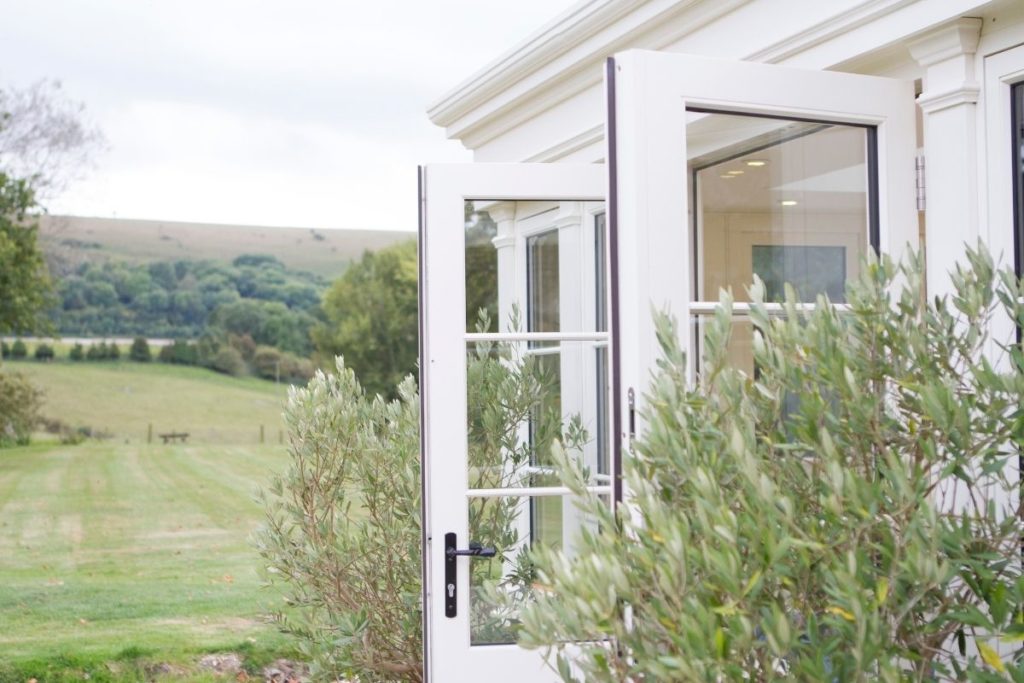
French doors

Orangery & Conservatory Finishings

  • Cresting: Decorative detailing along the roof ridge.
  • Finial Point: The tip of the central ridge at the front of the structure.
  • Finials: The decorative pointed feature placed at the finial point.
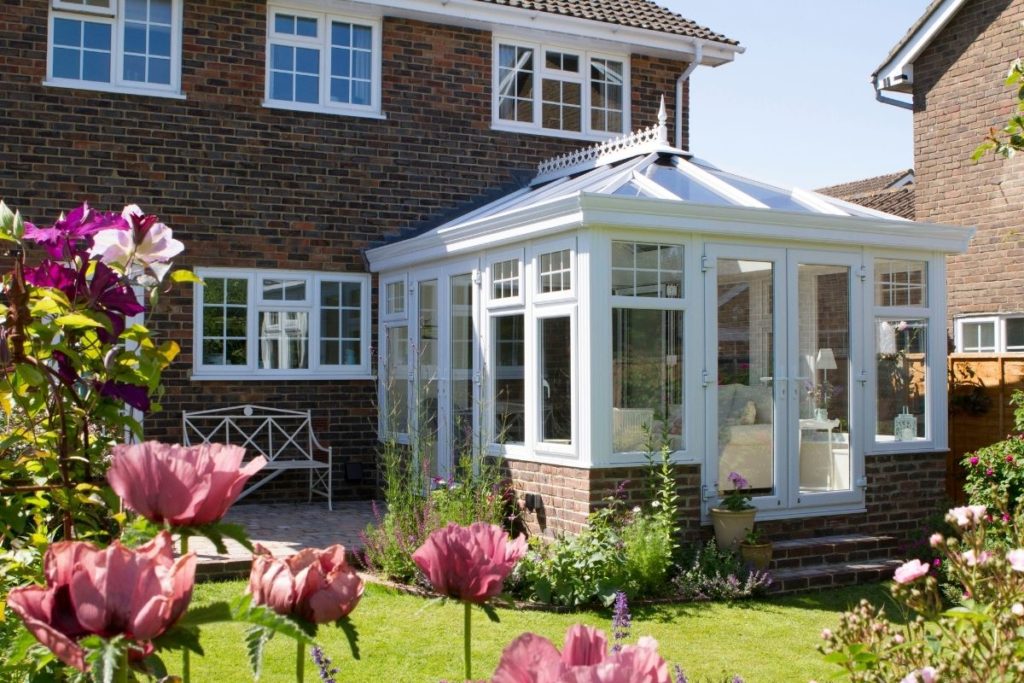
Orangery with cresting, finials and a finial point at the front of the roof
Small white uPVC conservatory with a gable roof
Conservatory with cresting and a finial point

Let’s Bring Your Vision to Life

Our expert designers are on hand to help you create your dream conservatory or orangery. Whether you need advice on design elements, material choices, or costs, we’ll guide you every step of the way. Contact us today for a no-obligation quote and let’s turn your ideas into reality! have expert designers on hand to talk to you about your design ideas who will happily help you with creating your bespoke dream design. Let them demystify and break down the design elements required to create the perfect glass room for you. They will also be able to provide you with an idea of costs and a formal no-obligation quote as required.
Speak to One of Our Design Experts Today!

Contact Us
roomoutsideuk
01st July, 2024

Can You Extend Your Kitchen with an Orangery? Here’s What to Know

Expanding your kitchen is one of the best ways to enhance your home’s functionality, increase property value, and create a stylish, open-plan space. But should you opt for an orangery?

An orangery is a fantastic option for a kitchen extensions combining the benefits of a conservatory and a traditional extension. It provides ample natural light, a solid structure, and a seamless connection between your home and garden.

In this guide, we’ll explore whether an orangery is the right choice for your kitchen extension and what factors to consider.

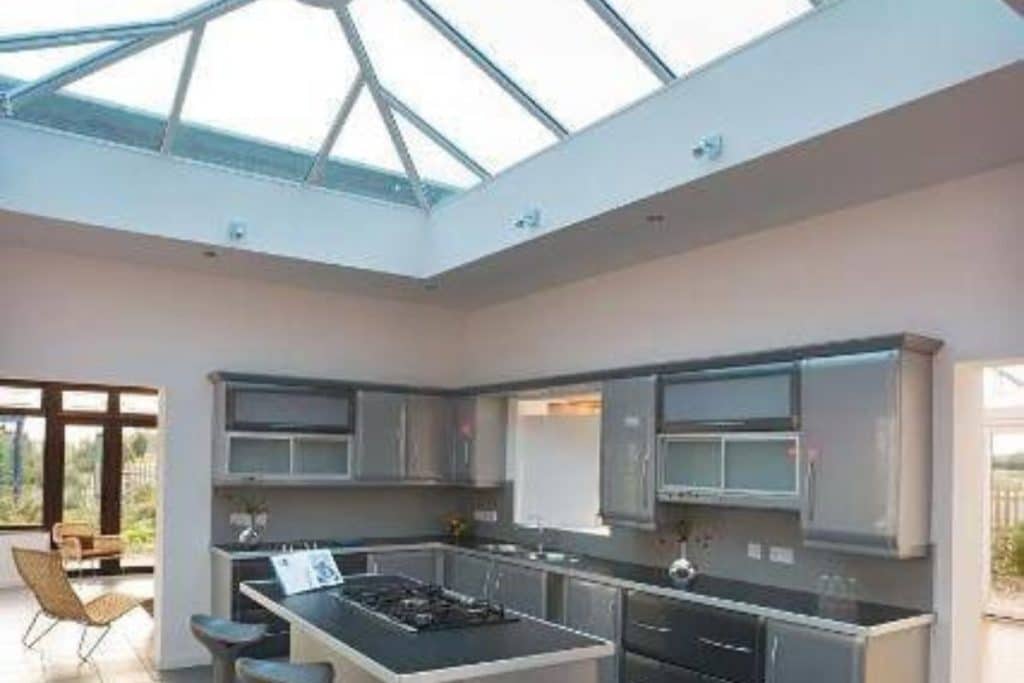
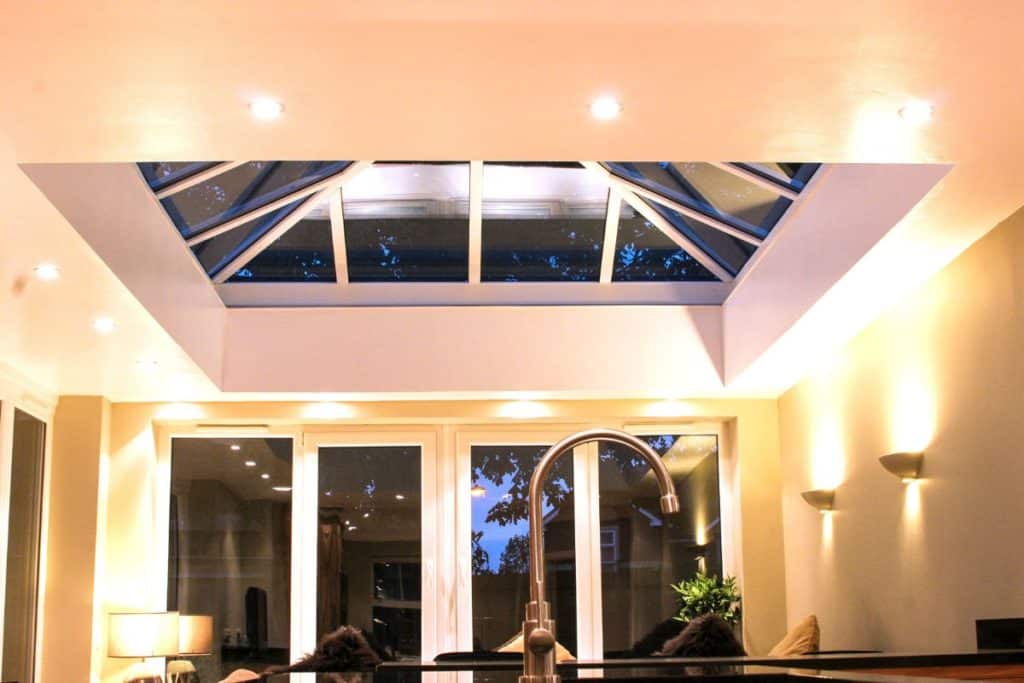
Kitchen orangery extension with a large lantern roof

Why Choose an Orangery for Your Kitchen Extension?

  1. More Natural Light – Orangeries feature large windows and a roof lantern, flooding your kitchen with daylight.
  2. Increased Living Space – Expanding your kitchen with an orangery creates a spacious and open-plan area for dining and entertaining.
  3. Versatile Design – Whether you prefer a contemporary or classic look, an orangery can be tailored to match your home’s style.
  4. Seamless Indoor-Outdoor Connection – Large glass doors open up to the garden, making the space feel even bigger.
  5. Energy Efficiency – With advanced glazing and insulation, orangeries provide warmth in winter and keep cool in summer.

Key Considerations Before Adding an Orangery to Your Kitchen

1. Planning Permission & Building Regulations

Most orangery extensions fall under permitted development rights, but if your home is listed or in a conservation area, you may need planning permission. It’s best to check with your local council before starting work.

2. Structural Considerations

A kitchen orangery needs proper foundations, drainage, and structural reinforcement. Consulting an expert ensures a safe and durable extension.

3. Heating & Ventilation

Since your kitchen generates heat and moisture, proper ventilation is crucial. Options include underfloor heating, radiators, or air conditioning to maintain a comfortable temperature.

4. Lighting & Electrical Layout

Maximise your orangery’s potential by incorporating a well-thought-out lighting plan. Pendant lights, LED strips, and spotlights can enhance the ambiance, especially in the evening.

5. Choosing the Right Doors & Windows

Bi-fold, sliding, or French doors can transform your orangery, improving accessibility and views of the garden. Opt for energy-efficient glazing to maintain insulation.

Design Ideas for a Kitchen Orangery

  • Modern Minimalist: Sleek lines, neutral colours, and a seamless blend with the existing kitchen.
  • Classic & Elegant: Timber frames, traditional lantern roofs, and warm lighting.
  • Industrial Chic: Exposed brick walls, metal-framed windows, and statement lighting.
  • Country Style: Soft tones, wooden beams, and a cosy dining area.

Is an Orangery Kitchen Extension Right for You?

If you’re looking for a stylish and practical way to expand your kitchen, an orangery could be the perfect solution. With expert planning and design, you can create a stunning, light-filled space that enhances both your home’s aesthetic and functionality.

Speak to one of our design experts today to explore your kitchen orangery options!

Get a Quote
Room Outside
12th May, 2024

What is the Difference Between an Orangery and a Conservatory?

When planning a home extension, many homeowners choose between an orangery and a conservatory. Both add space and natural light, but they differ in design, structure, and function. The main difference is the roof. An orangery has a flat solid roof with a central glass lantern. A conservatory has at least 75% of its structure covered with a glass roof, though often the entire roof is glass.

This guide explores these distinctions to help you decide which suits your needs.

GLASS EXTENSION OPTIONS

What is the Difference Between an Orangery and a Conservatory?


The main difference between an orangey and a conservatory is the roof. An orangery traditionally has a flat solid roof with a glass lantern in the centre. A conservatory has at least 75% of the structure covered with a glass roof, but more usually the entire roof is made of glass.

Large orangery with a full coverage lantern roof.

What is an orangery?

An orangery is a stylish extension that blends solid structures with large windows and a glass roof lantern. Originally built to protect exotic plants, modern orangeries create bright, airy spaces that integrate well with your home. They can be attached to your house or stand alone in your garden as a home office, summer house, or guest accommodation.

Key Features of an Orangery:

  • Solid roof with a glass lantern for insulation and natural light.
  • Brick or solid pillars for a sturdy, permanent feel.
  • Large windows and doors, often with bi-fold or French doors opening to the garden.
  • Better insulation for year-round comfort.
  • Seamless design that blends with your home’s architecture.
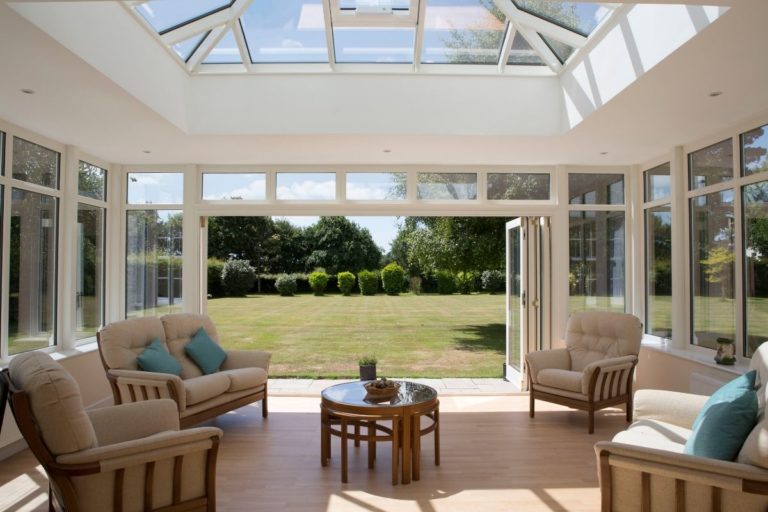
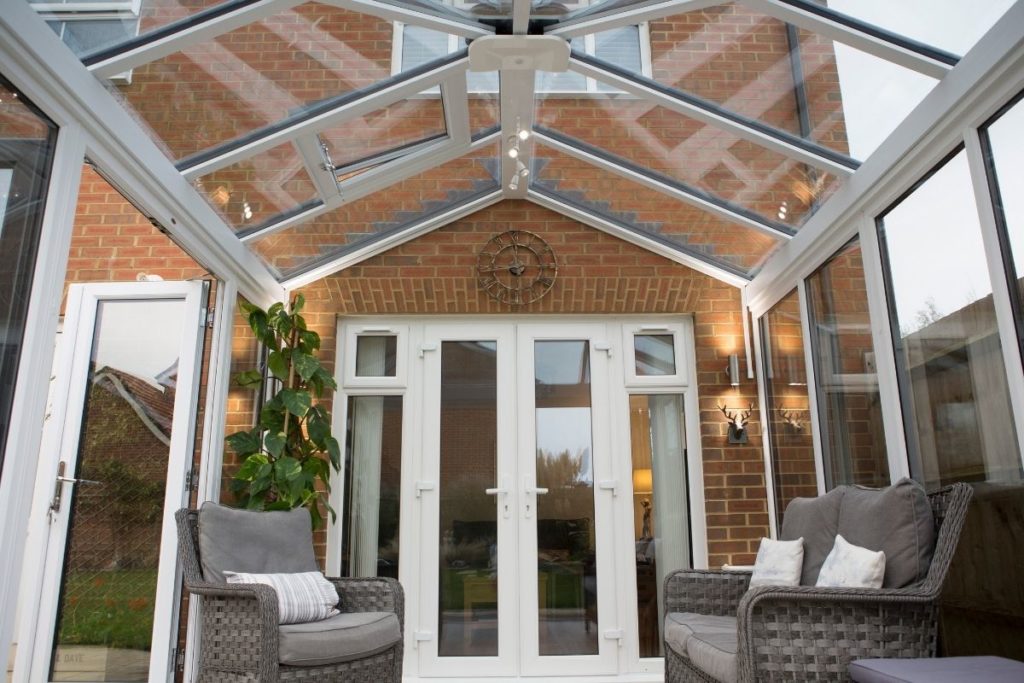
Inside a modern uPVC conservatory with a full glass roof.

What is a conservatory?

A conservatory is a predominantly glass structure that maximises natural light and offers panoramic garden views. Traditionally, conservatories have been used as sunrooms or garden rooms, providing a bright and open space.

Key Features of a Conservatory:

  • Fully glazed roof and walls, allowing in maximum sunlight.
  • Lightweight framework, typically made from uPVC, aluminium, or timber.
  • Dwarf walls (optional) to add stability while maintaining a spacious feel.
  • Varied roof styles, including Victorian, Edwardian, and lean-to designs.
  • Ideal for summer use, though modern glazing improves year-round comfort.

Planning Permission & Building Regulations

In most cases, conservatories and orangeries fall within permitted development rights, meaning you won’t need planning permission as long as they meet certain conditions. However, if your property is in a conservation area, is a listed building, or if the structure exceeds size limits, you may need to apply for planning permission.

Building regulations apply if you plan to remove an external wall between your home and the extension, use complex structural elements, or want to ensure high energy efficiency. Our experts can advise and help you with all of this!

Orangery vs Conservatory: Key Differences

FeatureOrangeryConservatory
Roof StyleSolid roof with glass lanternFully glazed roof
Wall StructureBrick pillars & large windowsMostly glass walls with optional dwarf walls
InsulationHigher insulation, ideal for all-year useGood insulation, but may need heating in winter
Design FeelBlends with home architectureLight, airy, and garden-focused
CostGenerally more expensiveMore budget-friendly
Build LengthLonger due to structural complexityShorter, quicker to install

Which One Should You Choose?

Your choice depends on how you plan to use the space and your home’s style. If you’re looking for a solid, well-insulated extension that feels like a natural part of your home, an orangery is a great option. If you prefer a light-filled garden room with a full glass structure, a conservatory might be the better choice.

No matter your preference, our expert team can help you design the perfect orangery or conservatory to suit your home and lifestyle.

Speak to One of Our Design Experts Today to Explore Your Options!

Contact us
roomoutsideuk
03rd March, 2024

12 Top Questions Answered About Building a Conservatory or Orangery

If you’re thinking about extending your home by building a conservatory or orangery, you’re probably in the research phase. You may have questions about designing and building your dream glass extension.

As specialists with over five decades of experience, we’ve helped hundreds of homeowners create stunning and practical glass spaces. To make things easier, we’ve put together this quick-fire guide to the 12 most frequently asked questions about conservatories and orangeries.

1. How much does a conservatory or glass extension cost?

This  depends on size, materials and finish.

  • Off-the-shelf options start at £5,000, but they often lack customisation and quality.
  • A bespoke uPVC conservatory starts from £20,000, including materials and installation.
  • Orangeries typically start at £35,000, though smaller ones may cost less.
  • Frameless glass structures are premium, starting at £30,000 for small designs, with most ranging between £40,000 – £80,000.

When comparing prices, always check what’s included—some low-cost options exclude groundwork and installation.

2. What is the difference between an orangery and a conservatory?

The key difference is the roof:

  • A conservatory has at least 75% of its roof made of glass.
  • An orangery has a solid flat roof with a glass lantern in the centre.

Other glass extension terms include:

  • Garden room – Often used to describe a conservatory, but traditionally has a solid tiled roof.
  • Sunroom – A general term for a bright, relaxing space.

Garden room – Often used to describe a conservatory, but traditionally has a solid tiled roof.

Sunroom – A general term for a bright, relaxing space.

3. What frame materials can I choose from?

Your choice of frame affects appearance, durability, and maintenance. Options include:

  • uPVC – Affordable, low maintenance, and sleek.
  • Hardwood timber– Traditional and sustainable, requiring occasional painting or staining.
  • Aluminium -Modern, lightweight, and strong.
  • Frameless glass – Contemporary and ultra-modern.
  • Oak– premium timber with a luxurious feel.

Each material has different colour and finish options, allowing you to create a look that suits your home.

4. Will a glass room be too hot or too cold?

Not if you choose the right glass and insulation.

5. Do I need planning permission to build a conservatory?

Usually, no, as long as it meets Permitted Development Rights:

  • It must be less than 6 metres (semi-detached) or 8 metres (detached) from the house.
  • It should not extend beyond the front of your property.
  • Listed buildings or homes in conservation areas require planning permission.

For more details, check Planning Portal UK or read our “Do I Need Planning Permission?” guide.

6. How large can my conservatory be under permitted development?

  • Terraced/Semi-detached homes – Up to 6 metres.
  • Detached homes – Up to 8 metres.

If your home has previous extensions, this may reduce the size allowance.

7. Do I need sign-off from building regulations?

Not always. No approval is needed if your conservatory:

  • Is under 30m².
  • Has external-grade doors/windows separating it from the main house.
  • Uses separate heating from the main home.
  • Has at least 50% glazed walls and a glass or translucent roof.

If you plan to remove doors or create an open-plan space, building regulations approval is required.

8. Can I add a glass extension on a listed property?

Yes, but planning permission is required.

  • Listed building consent is essential for Grade I and II properties.
  • Hardwood timber is often preferred over uPVC for aesthetic reasons.
  • Frameless glass box extensions are increasingly popular, as they blend modern design with historical character.

9. Can I open up my home to my conservatory?

Yes! However, structural support and building regulations approval are required.

10. Do I need foundations for a conservatory?

Yes. Strong foundations prevent subsidence, ensure durability, and improve insulation. A conservatory cannot be built on open ground or a temporary base.

11. How long will the build take?

Conservatories and orangeries are quicker to build than traditional extensions.

  • Most projects take 6 to 12 weeks from groundworks to completion.
  • Frameless glass structures may take longer due to custom fabrication.

With less disruption than a brick-built extension, a glass room is a great way to expand your home quickly and efficiently.

12. Do conservatories require a lot of maintenance?

Regular maintenance ensures your conservatory lasts for decades.

  • uPVC & aluminium – Low maintenance, requiring occasional cleaning.
  • Timber – Needs repainting/staining every 2-4 years.
  • Glass – Should be cleaned every 3-6 months.

For best results, consider professional conservatory cleaning to maintain clarity, seals, and moving parts.

Still have questions?

We hope this guide has answered your most common conservatory questions. If you need more details or personalised advice, our team is happy to help.

💬 Get in touch today for expert guidance and a no-obligation quote!

Get Your Questions Answered

Contact Us
roomoutsideuk
28th January, 2024

8 Ways to Keep Your Conservatory Warm in Winter

With rising energy prices and living costs, you may worry about heating your glass extension.
Whether you’re buying a new conservatory or already own one, keeping it cosy and warm in winter without high bills is a common concern.

Energy efficiency in your conservatory depends on two factors:

  • The external structure and insulation
  • The internal heating system and window treatments

Below are 8 ways to boost your conservatory’s energy efficiency:

1. Energy Efficient Glazing

Premium New Generation structural glass that will keep your conservatory warm in winter.

  • The glass is the most important part of your conservatory.
  • You must have at least double-glazed glass that traps argon gas between two panes.
  • Spend more on high-quality temperature controlled glass to reduce heat loss.
  • Choose glass with the lowest U-value for the best performance

2. Roof Insulation

Large orangery lantern roof with temperature control glass to to keep the glass room warmer for longer
  • Heat rises, so the roof is the biggest source of heat loss.
  • Use roof glass with advanced temperature control, anti-glare, and UV-blocking features.
  • If you already have a conservatory, consider upgrading your roof glass.
  • Alternatively, you can opt for a fully insulated tiled roof with skylights to improve both light and insulation

3. Frame material

Large lean-to conservatory dinning space with modern deep grey aluminium frames and bi-fold doors
  • Your frame choice affects heat retention.
  • Popular options include timber, uPVC, aluminium, and oak.
  • Aluminium frames often have a ‘thermal break’ to reduce heat loss.
  • uPVC frames paired with double-glazed glass are very energy efficient.
  • Choose a frame that suits your style, energy needs, and maintenance preferences.

4. Conservatory Base and Walls

Fully insulated orangery base and walls being built to keep the warmth in.
  • Ensure all walls (full height or dwarf) meet building standards.
  • Include cavity wall insulation.
  • The concrete base should have a continuous damp-proof membrane to stop moisture.

5. Internal Doors

An orangery extension installed with concertina doors separating the glass room from the main home, keeping the heat in.
  • For glass extensions that open into your home, insulation is key.
  • A bi-fold door offers an open-plan feel but lets you close off the extension to keep warmth inside.
  • Keeping doors closed helps trap heat and saves energy.

6. Window and Door Seal Maintenance

  • Regularly check seals, locks, hinges, and hardware.
  • Look out for gaps or damage that can allow drafts or water leaks.
  • Maintenance before winter helps keep your conservatory energy efficient

7. Heating Installation

  • Building regulations require a separate heating system for your conservatory or orangery.Options include:
  • Radiators with thermostat control (requires approval and good insulation)
  • Electric radiators (cheaper to install but may cost more to run)
  • Underfloor heating (more expensive upfront but very efficient in the long run)
  • Research which system best suits your design, needs, and budget

8. Blinds or Window Treatments

Conservatory and orangery blinds installed will help to reduce heat loss from your space. keeping your conservatory warm in winter,
  • Adding blinds or other window treatments creates an extra barrier to retain heat.
  • Choose a style that matches your interior design and budget.
  • Open them during the day to let sunlight in, and close them in the evening to trap warmth.
  • This simple upgrade also reduces glare and adds a cosy feel at night.

Design or Upgrade for Energy-Efficiency

Your conservatory should be enjoyed all year round. With the right glass, insulation, heating, and window treatments, you can keep your space cosy no matter the weather. Invest in quality materials during design or upgrade an existing structure to boost energy efficiency and comfort for years to come.

If you need more advice, our specialists are ready to discuss your requirements and offer options and pricing.

Plan Your Energy Efficient Conservatory

Get a Quote
roomoutsideuk
24th November, 2023

Extending Your Home: Conservatory vs Garden Room

If you are thinking about extending your home, you may be comparing different options.

There are many choices, from a traditional extension to a fully glass design.

Two popular options are the conservatory and the garden room. But what is the difference between them?

Definitions

What is the Definition of a Conservatory and a Garden Room?


Conservatory
A room with a glass roof and walls. It is attached to your home and is often used as a sun lounge.

Garden Room
A room in your garden with a door or window. It usually has a solid or tiled roof and can be a separate building.

Conservatory Design

timber framed conservatory

A conservatory is mostly made of glass. Its full glass roof lets in plenty of natural light. This design dates back to when conservatories were used to grow plants. The modern glass technology available now makes the room temperature comfortable, keeping the heat in winter and reducing the heat during the summer. 
Not all glass is equal, so it is important to choose high-quality glass within your budget. Conservatories can be built with full-height glass or a mix of glass and walls. They come in many styles, such as lean-to or gabled roofs, and use materials like uPVC, timber, oak, or aluminium.

A conservatory is always attached to your home. Many people choose to remove part of the wall to create an open-plan space. However, this may require building regulations approval and extra work on insulation and heating.

Conservatory Benefits:

  • Extends your home’s floor plan
  • Easy access from the main house
  • Bright and airy space
  • Minimal construction required
  • Can add value to your home
  • Ideal for dining or relaxing
  • Open-plan design possible
  • Bi-fold or French doors open to the garden
  • Provides a good view of the garden

Garden Room Design

Oak sunroom extension

A garden room can be attached to your home or built as a separate structure. It has a tiled or flat roof instead of a full glass roof. Some designs add skylights or a glass gable to let in extra light.
A tiled roof offers better insulation and can lower the cost per square metre. Garden rooms offer more privacy and are ideal for guest accommodation, a home office, or a studio. There are various options for frame and wall materials, such as oak or timber, to match your home’s style.

Garden Room Benefits:

  • Can serve as an extension or a standalone structure
  • Less construction than a traditional extension
  • Can mimic the look of a traditional extension
  • Adds value to your home
  • Better insulation from a solid roof
  • Lower investment due to less glass
  • More privacy
  • Ideal for a guest room, studio, or office
  • French or bi-fold doors open fully to the garden

Let Us Help You Decide

Still not sure which option to choose? Our specialists are here to help. We can discuss your requirements, answer your questions, and provide a no-obligation quote. We can also share design examples for inspiration

Talk to a Specialist About Your Project

Get a Quote
roomoutsideuk
28th September, 2023

Does a Glass Roof Make Your Conservatory Too Hot?

Does a Glass Roof Make Your Conservatory Too Hot? | Room Outside

Does a Glass Roof Make Your Conservatory Too Hot?

Stop your beautiful glass room from becoming an unusable summer greenhouse. Discover the technology that keeps your conservatory comfortable all year round.

Quick Answer: Does a Glass Roof Have to Overheat?

No. A full glass roof doesn’t have to make your conservatory unbearably hot. The issue isn’t glass itself, but the type of glass used. Standard conservatory glass acts like a greenhouse, trapping heat. New Generation Glass uses advanced technology to reflect 86% of solar heat while maintaining crystal-clear views. You don’t need to compromise with polycarbonate or solid roofs that ruin the glass room experience.

86%
Solar heat reflected
<1.0
U-value (W/m²K)
40°C→26°C
Typical temp reduction
99%
UV protection
Each summer, thousands of UK homeowners face the same frustration: their beautiful glass conservatory transforms into an unusable greenhouse, hitting temperatures of 40°C+ while the rest of the house remains comfortable. You invested in a bright, airy space to connect with your garden—not to avoid it for 4-5 months each year. The truth is, the right glass technology keeps your space comfortable all year round, and you don’t have to compromise on design to get it.

The Real Problem: Why Your Conservatory Overheats

Conservatories overheat due to uncontrolled solar gain—a process where sunlight passes through ordinary glass and converts to heat that gets trapped inside. This isn’t just about air temperature; it’s about thermal radiation that heats up surfaces, furniture, and creates an environment that’s physically uncomfortable to be in.

🔥

With Ordinary Glass

40°C

On a typical British summer day (28°C outside), ordinary glass allows infrared radiation to flood in, turning your conservatory into:

  • An unusable space for 4-5 months each year
  • A furnace that damages furniture and fabrics
  • An energy drain if you try to cool it with AC
  • A wasted investment in your home
❄️

With New Generation Glass

24°C

The same summer day becomes perfectly comfortable with technology that:

  • Reflects 86% of solar heat before it enters
  • Maintains bright, clear views without tinting
  • Creates a usable space year-round
  • Protects furnishings from UV damage

📊 The Physics of the Problem

Solar radiation consists of three components: visible light (what we see), ultraviolet (causes fading), and infrared (carries heat). Standard glass blocks most UV but transmits most visible light AND infrared. The infrared radiation gets absorbed by interior surfaces, which then re-radiate heat at longer wavelengths that cannot escape back through the glass—this is the greenhouse effect in action.

The Flawed Compromises You Should Avoid

For years, conservatory companies have offered solutions that “solve” the overheating problem by compromising on the very thing you wanted: a beautiful glass room.

🔲

Polycarbonate Roofing

Plastic sheets with air gaps

  • Severely distorts light and view
  • Creates dim, industrial appearance
  • Reduces some heat
  • Better for carports, not premium conservatories
🧱

Tiled/Solid Roof

Traditional roofing materials

  • Destroys connection to outdoors
  • Loses the airy, light-filled feel
  • Cuts heat build-up
  • Turns conservatory into standard extension
🎨

Tinted/Reflective Glass

Applied films or body-tinted glass

  • Noticeable colour cast (bronze/blue)
  • Reduces visible light transmission
  • Some heat reduction
  • Alters interior/exterior appearance
🌟

New Generation Glass

Advanced solar control technology

  • Crystal clear, no tint or distortion
  • Reflects 86% of solar heat
  • Maintains bright, natural light
  • True glass conservatory experience

The fundamental issue with all compromise solutions is they treat the symptom by removing or altering the cause—the glass itself. At Room Outside, we believe the better approach is to enhance the glass’s performance, allowing you to enjoy the full aesthetic benefit without thermal penalty.

How New Generation Glass Actually Works

Unlike standard double glazing that simply slows heat transfer, New Generation Glass uses spectrally selective coatings—microscopic layers that act like a ‘smart filter’. They allow visible light to pass through (keeping your room bright) while reflecting 86% of infrared heat before it even enters your space.

The Technology Behind the Comfort

🔬

Solar Control Coating

A microscopically thin metallic layer applied via magnetron sputtering technology that reflects infrared heat while transmitting visible light.

🛡️

Low-E Coating

Facing the interior, this coating reflects long-wave radiant heat back into the room during winter while allowing beneficial solar gain.

💨

Argon Gas Fill

Inert, dense argon gas between panes (34% better insulation than air) significantly slows heat transfer in both directions.

🔗

Warm-Edge Spacers

Thermally broken composite materials eliminate cold bridges at glass edges, reducing condensation and improving overall U-value.

🇬🇧 Engineered for British Weather

New Generation Glass wasn’t developed in a laboratory vacuum. It was engineered through real-world testing across hundreds of installations in the South East. We’ve specifically addressed the unique challenges of British weather:

  • Variable Season Performance: Works efficiently whether it’s 30°C in July or -2°C in January
  • Humidity Control: Warm-edge technology reduces condensation that plagues many conservatories
  • Low-Light Efficiency: Maintains thermal performance even on cloudy days
  • Durability: Withstands British weather extremes without degradation

Real Results: The Henderson Family, Surrey

From Unusable to Year-Round Living Space

The Henderson family’s south-facing conservatory had become a “no-go zone” from May to September, with temperatures regularly hitting 42°C on summer afternoons. They were considering replacing it entirely with a solid extension until they discovered New Generation Glass.

After upgrading their roof glass, the transformation was immediate. On the same August afternoon that previously reached 42°C, their conservatory now stabilises at a comfortable 26°C. The space has become their favourite room for morning coffee, afternoon reading, and evening relaxation—truly usable year-round.

42°C → 26°C
Peak temperature reduction
35%
Reduction in cooling costs
365
Days of use per year

The Room Outside Advantage: Why We’re Different

🌟 Pioneers in Glass Technology

We were the first in the UK to introduce the revolutionary Wonderglass™ from Four Seasons Sunrooms in 1999. This wasn’t merely a product launch; it was a paradigm shift that proved a glass roof could be thermally competent without compromising on aesthetics.

Since then, our New Generation Glass has evolved through two decades of refinement, specifically for the unique challenges of the British climate. It represents the culmination of 50+ years of experience creating beautiful, comfortable glass extensions across Kent, Surrey, Sussex, and beyond.

What New Generation Glass Offers You

☀️

Unmatched Solar Control

Reflects up to 86% of the sun’s rays, reducing heat build-up to keep spaces 10-15°C cooler than with standard glass.

❄️

Outstanding Thermal Performance

Exceptionally low U-value (under 1.0 W/m²K) helps retain warmth in winter, reducing heating costs.

🔬

Advanced Insulation

Warm edge technology and argon gas filling boost overall efficiency beyond standard double glazing.

🛡️

Superior UV Protection

Blocks virtually all harmful UV rays, protecting your furniture, artwork, and fabrics from fading.

👁️

Crystal Clear Views

No tint or colour distortion—just bright, natural light and perfect visibility of your garden.

💰

Return on Investment

Transforms your conservatory from seasonal to year-round use, adding real value to your home.

Your Potential Savings & Benefits

£400-£800
Annual energy savings (reduced AC & heating)
5-6
Extra months of usable space per year
10-15%
Potential increase in property value

Stop Compromising on Your Dream Conservatory

Book your no-obligation thermal assessment today and discover how New Generation Glass can transform your space from a summer greenhouse to a year-round living area.

See the Proof

Watch our radiometer heat demonstration that visually shows the dramatic difference.

Get Precise Analysis

Receive a tailored temperature assessment for your specific conservatory.

Limited Availability

Summer assessment slots are filling fast—book before the next heatwave.

Room Outside Glass Technology Team

Specialists in High-Performance Glass for UK Homes Since 1973

With over 50 years of experience in glass extensions across the South East, our technical team has tested virtually every glass technology available. We developed this comprehensive guide because we believe homeowners deserve clear, factual information about how to solve conservatory overheating—not just technical specifications. New Generation Glass represents our commitment to creating truly comfortable, energy-efficient living spaces that work with the British climate.

Sources & Technical References

Glass and Glazing Federation: Technical Standards for Thermal Performance; Building Research Establishment: UK Climate Data for Building Design; Chartered Institute of Building Services Engineers: Guide to Solar Gain Management; Room Outside Laboratory: Comparative Thermal Testing Data 2015-2024; Four Seasons Sunrooms: Wonderglass™ Technical Specifications 1999; Room Outside Customer Satisfaction Surveys 2020-2024.

Frequently Asked Questions

Does New Generation Glass look different or tinted?

Not at all. The advanced solar control and low-emissivity coatings are almost completely invisible to the naked eye. Your views remain stunningly clear, bright, and neutral, without the green or blue tinge of older coated glasses.

Can my existing overheated conservatory be upgraded?

Yes. We regularly retrofit older conservatories with New Generation Glass. The transformation is often described by clients as ‘like gaining a completely new room.’ We conduct a full survey first to ensure compatibility with your existing framework.

How does it work in winter to keep heat in?

The low-emissivity (Low-E) coatings reflect interior heat back into the room while still allowing visible light to pass through. Combined with argon gas filling and warm-edge spacers, this creates a thermal barrier that significantly reduces heat loss with a U-value of less than 1.0 W/m²K.

Is this just expensive double glazing?

No, it’s fundamentally different technology. While standard double glazing simply slows heat transfer, New Generation Glass uses spectrally selective coatings that act like a ‘smart filter,’ allowing visible light through while reflecting 86% of infrared heat before it enters your space.

What about condensation issues in winter?

New Generation Glass significantly reduces condensation through its warm-edge spacer technology and overall improved thermal performance. By keeping the interior glass surface warmer, there’s less temperature difference between the glass and room air, which minimises condensation formation.

How long do the coatings and performance last?

The coatings are permanently bonded to the glass at a molecular level during manufacturing and located inside the sealed glass unit where they’re protected from weather, cleaning, and physical contact. They will last the lifetime of the glass unit itself—typically 20+ years—without degradation of performance.

Does it work for all conservatory orientations?

Yes, but the benefits are most pronounced for south and west-facing conservatories that receive the most direct sunlight. East-facing rooms benefit from morning sun control, while north-facing rooms still gain from the superior insulation properties in winter.

Is there a visible demonstration of the heat control properties?

Absolutely. We have a “tunnel of heat” demonstration using radiometers that visually shows the dramatic difference in heat transmission between standard glass and New Generation Glass. You can see this demonstration in our showroom or during a consultation.

Questions about preventing conservatory overheating? Call our technical team on 01243 538999 or send us a message

Experience the Difference for Yourself

Don’t compromise on your dream of a beautiful, comfortable glass conservatory. See how New Generation Glass can transform your space into a year-round living area you’ll actually use and enjoy. Book a consultation to experience our thermal demonstration and receive expert advice tailored to your specific conservatory.

Room Outside: Creating comfortable, beautiful glass extensions since 1973.
Serving Kent, Surrey, Sussex, Hampshire, London and across the South East.

roomoutsideuk
23rd June, 2023

How the New Government Overheating Policy Affects Your Conservatory Design

With rising global temperatures and a growing focus on climate change, the UK government has updated its conservatory overheating policy under Document Part O: Overheating. This new regulation aims to prevent homes, including conservatories, from becoming uncomfortably hot in summer. If you’re planning a conservatory design, orangery, or glass room extension, it’s essential to understand how these changes impact your project.

What is the Conservatory Overheating Policy?

From June 2022, all new-build properties must comply with strict conservatory overheating policies. The policy limits glazing ratios to ensure homes do not become uninhabitable due to excessive summer heat. Developers must either adhere to specific window size limits based on floor space or pass one of two detailed modelling tests. These tests consider factors such as:

  • Room size and floor area relative to window size
  • Window orientation and exposure to sunlight
  • Ventilation and shading options
  • Local climate conditions

This means that glass extensions, particularly those integrated into new-build homes, will need to meet these stricter compliance standards.

How Does The Conservatory Overheating Policy Impact Your Glass Extension?

If you’re planning a glass extension on a new-build property, you may need to reduce the amount of glazing in your design to comply with the new overheating policy. However, for those who dream of a stunning, floor-to-ceiling glass space, there is a solution—our high performance glass – New Generation Glass.

New Generation Glass (NGG) – The Key to Compliance

At Room Outside, we offer an advanced glazing solution that allows you to enjoy your new space whatever the weather while meeting overheating regulations. Our exclusive New Generation Glass (NGG) is engineered to regulate temperature, reduce glare, and protect against harmful UV rays.

Benefits of New Generation Glass

  • Reduces Summer Heat: Blocks up to 86% of solar radiation, preventing excessive heat buildup.
  • Improves Insulation: Retains warmth in winter with a U-Value below 1.0 for enhanced energy efficiency.
  • Minimises Glare & UV Exposure: Protects furnishings and interiors from fading while improving comfort.
  • Enhances Energy Efficiency: Features Low-E coating and Argon gas-filled double glazing for superior thermal performance.
  • Easy Maintenance: Special polymeric resin treatment repels dirt and staining for easier cleaning.

Designing Your Dream Glass Extension Within Regulations

By incorporating NGG into your conservatory, orangery, or frameless glass extension, you can achieve compliance with overheating regulations while maximising natural light and open-plan living. Our expert designers can help tailor a solution that meets both your aesthetic preferences and the new policy requirements.

Future-Proofing Against Expanding Regulations

While Document Part O currently applies to new-build properties, there is growing speculation that future updates may extend these restrictions to all properties. Investing in high-performance glass now ensures your extension remains compliant for years to come.

Find Out More

To learn how New Generation Glass can help you achieve your dream conservatory while complying with overheating regulations, visit Room Outside. Watch our Tunnel of Heat demonstration video to see NGG’s performance in action.

roomoutsideuk
20th December, 2022

Permitted Development Rights: Everything You Need to Know About Adding a Conservatory

Do You Need Planning Permission for a Conservatory?

One of the most common questions we get is about permitted Development (PD) Rights for conservatories and other glass extensions. Many homeowners want to avoid the hassle and cost of applying for planning permission.

Fortunately, in many cases, you won’t need planning permission if your conservatory meets PD criteria. However, this depends on several factors, including size, location, and previous extensions.

Permitted Development Rights

How Big Can a Conservatory be Without Getting Planning Permission?


Permitted Development allows you to build a conservatory up to a certain size without needing planning approval.

  • 6 metres from the original rear wall for semi-detached and terraced homes.
  • 8 metres from the original rear wall for detached houses.

However, the total extension allowance applies to the entire property, not just the conservatory. If your home has already been extended, your permitted size may be reduced.

What is Permitted Development?

Permitted Development allows homeowners to make improvements to their property without applying for planning permission. However, the work must meet specific government guidelines.

In recent years, these rules have become more flexible, making it easier to add glass extensions. For example, the government introduced:

  • A fast-track option for two-storey extensions.
  • Looser restrictions on converting commercial buildings into residential properties.

Because these rules change over time, it is always a good idea to check with your local planning authority before starting a project.

What Home Improvements Are Allowed Under Permitted Development?

If your project meets PD criteria, you may be able to:

  • Build a small single-storey rear or side extension.
  • Construct a double-storey rear or side extension.
  • Add a porch to the front of the house.
  • Remove internal walls to create an open-plan layout.
  • Convert a garage, basement, or loft into a usable space.
  • Install a balcony, roof lights, or dormer windows.

However, some properties have restrictions, including:

  • Listed buildings or homes in Areas of Outstanding Natural Beauty (AONB) – Additional approvals are required.
  • Flats and maisonettes – PD rights do not apply, as modifications could impact neighbouring properties.

Even if your conservatory falls under PD, all work must still comply with Building Regulations to ensure structural safety and energy efficiency.

Using Permitted Development Rights for Conservatories

While PD makes conservatory extensions easier, there are key things to keep in mind:

  • PD applies only to the original building. If your home was extended before, the previous work reduces your allowance.
  • Larger conservatories may require planning permission. Planning officers will assess how much larger or higher the structure is before granting approval.
  • Always confirm with your local authority. Mistakes can be costly if your project doesn’t meet regulations.

Where to Find More Information

If you’re planning a conservatory under Permitted Development, here’s what to do next:

  • Check the Planning Portal – This UK government website explains PD rules in detail.
  • Consult your local authority – They can confirm if your conservatory meets PD criteria.
  • Get expert advice – Our team has over 50 years of experience in glass extensions and can guide you through the PD process.

Why This Matters: If your conservatory does not qualify under PD, you may have to apply for retrospective planning permission. If refused, enforcement action could require you to remove the structure, leading to unnecessary expenses.

Need Expert Advice on Permitted Development Rights for Conservatories?

Our specialist team can:

  • Answer your questions about PD rules and glass extensions.
  • Assess your project and advise if planning permission is needed.
  • Help you navigate regulations to avoid costly mistakes.
  • Contact us today for a no-obligation consultation!

Discuss your project, PD rights and get a no-obligation quote

Get a Quote