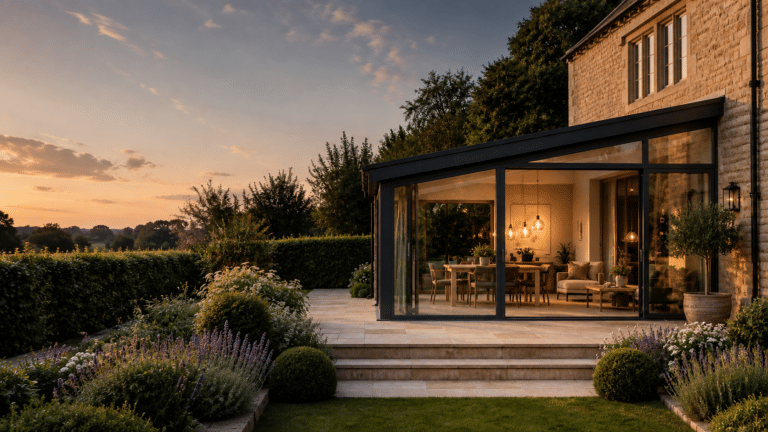


Conservatories & Orangeries in Chichester
A complete 2026 guide to bespoke orangeries in Chichester, from local planning and conservation settings to materials, costs, design styles and the Room Outside process.
An orangery in Chichester is a brick-and-glass extension — more solid than a conservatory, more light-filled than a standard build — typically used as a kitchen-diner, garden room or living space.
Costs start from around £35,000 and rise with size and specification. Many orangeries fall under permitted development, but homes in Chichester’s conservation areas, the South Downs National Park, or Chichester Harbour AONB usually need planning permission.
Room Outside has designed and built orangeries from its Chichester base since 1973, with a 10-year guarantee on every installation.
Conservatories in Chichester
We’ve been designing and building conservatories from our Drayton showroom, just outside Chichester, since 1973. Recent local projects in our public customer archive include a conservatory room in Chichester (archive: 2024) and an orangery extension in Emsworth (archive: 2024) — both within 15 minutes of our workshop. Whether it’s a hardwood conservatory for a period property near the Cathedral quarter or a slim-framed glass extension for a harbour-village home in Bosham or Itchenor, every project is designed around the house it joins. Conservatories start from £25,000, orangeries from £35,000, and every build carries our 10-year guarantee. Call 01243 538999 or book a free design consultation — we’ll visit your home, or you’re welcome at the showroom.


What exactly is an orangery?
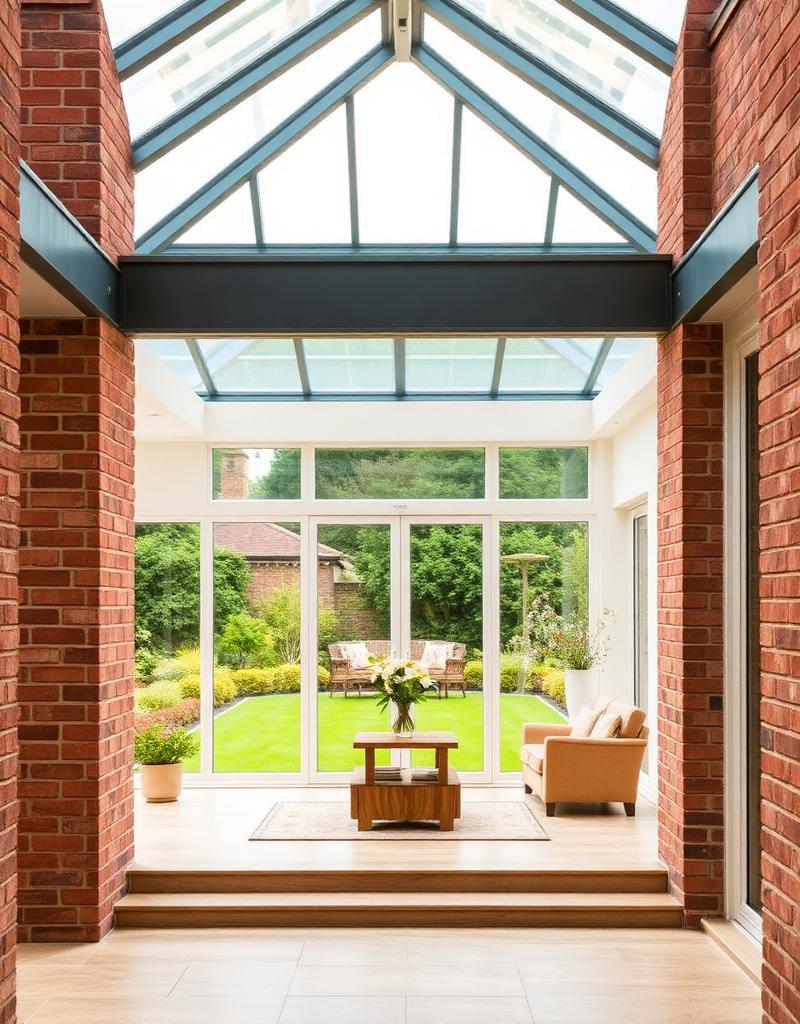
An orangery is a glazed extension built around a framework of solid brick or stone piers, topped with a flat perimeter roof and a central glass lantern. That structure is the whole point. Where a conservatory is mostly glass from a low dwarf wall upward, an orangery keeps real, load-bearing masonry at its corners — and that single difference changes everything about how the room feels and functions.
The solid piers give you somewhere to put things: kitchen units, a run of radiators, bookshelves, artwork, a media wall. The masonry retains heat in winter and keeps the room cooler in summer, while the central lantern floods the heart of the space with daylight. The result reads as permanent architecture — a genuine room of the house, not a seasonal add-on bolted to the back.
Historically, orangeries began in the 17th century as elegant glasshouses for protecting citrus trees through winter. Over time they evolved from functional buildings into refined architectural features, and today — with modern temperature-controlled glazing — they are one of the most desirable ways to extend a home, comfortable and usable in every month of the year.
In one line
A conservatory is a glass room added to a house; an orangery is a room of the house that happens to be full of light.
Orangery vs conservatory vs glass box
The three options Chichester homeowners weigh up most often each suit a different brief.
| Feature | Conservatory | Orangery | Frameless glass box |
|---|---|---|---|
| Structure | Mostly glass, dwarf wall | Brick piers, glass and lantern | Structural glass, minimal frame |
| Look | Light, traditional or modern | Solid, architectural, permanent | Contemporary, near-invisible |
| Insulation / year-round comfort | Good with modern glazing | Excellent, with masonry mass | Good with thermal glazing |
| Wall space for units/radiators | Limited | Generous | Minimal |
| Best suited to | Period and family homes on a budget | Period, heritage and high-value homes | Modern homes and bold contrasts |
| Typical Chichester use | Garden room, dining | Kitchen-diner, living room | Architectural link, view room |
For Chichester specifically, the orangery often wins because it strikes the balance the city’s housing stock rewards: more solidity and warmth than a conservatory, more sympathy with period brick than a frameless glass box, and enough wall space to work as a real kitchen or living room rather than just a sunny add-on.
That said, every home is different. A contemporary house near the harbour might be perfect for frameless glass, while a tighter budget might point to a high-specification conservatory. We design around the property, not a product line.
Why Chichester homes suit orangeries
Chichester’s housing is unusually varied for a city its size, and that variety is exactly what plays to an orangery’s strengths.
The historic core
Around the cathedral and the Pallants, homes are period, often listed, and almost always within a conservation area. Brick piers, classical proportions and a lantern roof can echo the existing architecture in a way no all-glass structure can.
The harbour villages
Bosham, Itchenor, Birdham and the Witterings face salt air, wind and bright low sun. Orangeries suit them when specified with marine-grade aluminium where appropriate, solar-control glass and respectful roof forms.
The Downland edge
To the north, flint and brick villages sit in protected countryside. An orangery with knapped-flint detailing or sympathetic brickwork can belong in this setting in a way a modern box rarely does.
Victorian terraces, brick village homes, 1930s semis and substantial detached houses make up much of the rest — all candidates for an orangery that adds light, space and value.
Across all of these, three local factors recur: heritage character that rewards masonry over glass; light and aspect, often toward a garden, the harbour or the Downs; and the mild-but-breezy South Coast climate, which makes an insulated orangery roof and temperature-controlled glazing genuinely worthwhile.
What can you use a Chichester orangery for?
Because an orangery is a properly insulated, year-round room, homeowners use it as real living space rather than an occasional sunroom. The most popular uses we see across Chichester are:
- Kitchen-diner. By far the most common. Removing all or part of the rear wall and extending into an orangery creates an open-plan kitchen and dining space, with the lantern throwing light over an island or dining table.
- Living and entertaining room. A calm, garden-facing space for relaxing and hosting, often with bi-fold or French doors opening to the patio.
- Home office. The solid walls and quiet separation make an orangery a serious workspace — a real consideration for the many Chichester residents who work from home or split time with London.
- Garden room or standalone studio. Thanks to its solid structure, an orangery also works as a standalone garden building — a studio, gym or guest space.

How much does an orangery cost in Chichester?
An orangery is bespoke, so there is no single sticker price — but we believe in honest, itemised pricing rather than a misleading “from” figure that doubles in reality. Every Room Outside quote includes design, building control, premium materials, professional installation and a 10-year warranty, fully itemised with no hidden extras.
Bespoke orangery prices start from around £35,000, rising with size and specification. For current, detailed figures, see our Orangery Price Guide 2026 and the wider Glass Extensions Price Guide 2026.
| Cost driver | Impact | Why it matters |
|---|---|---|
| Footprint (size) | High | More structure, glazing, roofing and groundwork |
| Glazing specification | High | New Generation Glass / self-cleaning glass vs standard |
| Roof lantern size & style | Medium-High | Larger or steel-framed lanterns add cost |
| Doors | Medium | Premium aluminium bi-fold or slim-frame systems vs standard French doors |
| Groundwork & site levels | Medium | Sloping or harbour-side plots need more foundation work |
| Internal fit-out | Medium | Kitchen, underfloor heating, lighting, plastering |
| Heritage detailing | Low-Medium | Matched brick, lead detail, conservation glazing bars |
Is it worth it? As a genuine, year-round room rather than a seasonal add-on, an orangery adds both floor area and value. Industry data from RICS and Savills suggests a well-designed extension typically adds 5-10% to a property’s value — and in a desirable market like Chichester’s, buyers increasingly view a quality, all-season room as a major plus and a dated, cold conservatory as a liability.
Managing your budget. There are sensible ways to control cost without cutting quality: keeping the footprint efficient, choosing a standard rather than oversized lantern, phasing internal fit-out, and being realistic about groundwork early.
Materials and glazing
The right specification decides how your orangery looks, performs and lasts.
The way an orangery looks, performs and lasts comes down to two choices: the frame material and the glass.
Frame materials. We build in hardwood timber, aluminium, uPVC and structural glass, and the right one depends on your home. Hardwood timber suits period and listed properties, with the option to stain or paint in any finish. Aluminium gives slim, strong, low-maintenance frames in a wide colour range, ideal for a contemporary look. uPVC offers durability and value, often matched to existing window frames.
Glazing — and why it matters most. Your orangery should be comfortable in July and December alike, which is why glazing is the specification that earns its keep. Our New Generation Glass — temperature-controlled glazing originating in America and available in the UK exclusively through Room Outside — reduces glare, blocks almost all UVA and UVB rays, and regulates temperature so the room stays warm in winter and cool in summer.
The central lantern roof is the orangery’s signature: it creates drama and a focal point while flooding the space with natural light, often as a spotlight over a kitchen island or dining table.
Chichester coastal specification
For harbour and coastal homes, we specify with the environment in mind: marine-grade aluminium finishes and glass suited to salt air and exposure where the location calls for it.
Do you need planning permission?
Often no — but Chichester has more exceptions than almost anywhere we work, so this is the section worth reading closely. Planning is handled by Chichester District Council, with two other authorities involved depending on where your home sits.
Room Outside does not provide formal planning advice, but our local experience helps you ask the right questions early, and we support and document applications, including engagement with conservation officers.
When an orangery is usually permitted development. Many single-storey rear orangeries can be built without a planning application under permitted development rights, provided the design meets the limits: broadly, extending no more than 4m from the rear wall of a detached house, 3m for a semi or terrace, staying under height limits, and covering less than 50% of the garden. Building regulations still apply — chiefly Part L for thermal performance and Part K for safety glazing — and even where you qualify, a Lawful Development Certificate from the council is worth obtaining as proof.
When you will usually need full planning permission. Chichester’s designations frequently override permitted development. You will typically need permission if your home is:
- In a conservation area — much of the historic city centre and several villages.
- Listed — in which case listed building consent is also required, and the design must defer to the original property.
- Within the South Downs National Park — covering the district’s northern parts, where the National Park Authority assesses landscape impact, materials and roof form.
- Within or beside Chichester Harbour AONB / National Landscape — the coastal fringe, where the Conservancy’s considerations affect specification, sightlines and finishes.
- Subject to an Article 4 direction removing permitted-development rights.
The practical path. Check your property’s designations on the Chichester District Council planning portal, the South Downs National Park Authority, and the Chichester Harbour Conservancy before you commit, and confirm specifics with the council or a planning consultant.
The encouraging news: heritage-sympathetic orangeries are regularly approved in exactly these sensitive settings, precisely because masonry and classical proportions sit comfortably where a glass box would not.
Design styles for Chichester homes
Every Room Outside orangery is designed around your home’s existing brick, roofline and aspect — never pulled from a catalogue. In practice, four directions cover most Chichester projects:
| Style | Best for | Signature features |
|---|---|---|
| Traditional brick-piered | Georgian and Victorian homes, conservation areas | Matched brick, moulded cornice, classic timber-framed lantern |
| Contemporary orangery | Modern and renovated homes | Slim aluminium frames, larger glass spans, flat roof |
| Flint-detailed | Rural Downland and village properties | Knapped-flint piers echoing local vernacular |
| Gable-ended / statement | Larger homes wanting a focal point | Bold roof form, generous lantern, wide bi-folds |
The art is in the detail: matching the brick to the original house, getting the lantern proportions right, choosing glazing bars and finishes that feel of the building rather than added to it. That sympathetic detailing is what keeps an orangery sitting comfortably within Chichester’s protected streetscapes — and what gets sensitive projects through planning.
The design-and-build process
A Room Outside orangery follows a clear, considered process designed to remove uncertainty:
- Free design consultation. We visit your home, understand how you want to use the space, and discuss the local context: aspect, garden orientation, heritage character and planning setting.
- Design & 3D visualisation. Our designers develop the concept and produce 3D renderings so you can see exactly how the orangery will look from multiple angles before committing.
- Itemised, transparent quote. Within around five days you receive a complete specification and fully itemised price: design, building control, materials, installation and warranty included, with no hidden extras.
- Planning & building control. We support the application where needed, handle building control compliance, and engage with conservation officers for sensitive sites.
- Manufacture. Frames, glazing and the lantern are made to order to your specification.
- Build & glaze. Groundwork, structure, roof, glazing and fit-out, managed by our team.
- Handover & guarantee. Your finished orangery is backed by an insurance-backed 10-year guarantee.
How long does it take?
A typical project runs around 4-6 months from first consultation to completion, including design, planning and installation. Planning in conservation areas, the National Park or on listed buildings can extend the front end, so the rule of thumb is simple: to enjoy your orangery by summer, start the conversation over winter.
Why choose Room Outside?
Chichester is not a territory we cover from a distance — it is where we are based, and have been since 1973. Over 53 years we have completed thousands of glass extensions across West Sussex and the South East, and our home county is where that experience runs deepest.
- Local, on your doorstep. Our Chichester team brings practical knowledge of West Sussex homes, coastlines and planning settings — from harbour exposure to South Downs sympathies.
- Genuinely bespoke. Every orangery is individually designed around your property and how you will live in it, in your choice of timber, aluminium, uPVC or frameless glass.
- New Generation Glass. Our temperature-controlled glazing, available in the UK exclusively through Room Outside, is what makes an orangery comfortable in every season.
- Transparent pricing. Honest, itemised quotes with everything included — no “starting from” figures that double on closer inspection.
- Backed for the long term. A 10-year insurance-backed guarantee, and a 5/5 Google review rating over the last two years.
We have also designed orangeries for listed buildings and homes in areas of outstanding natural beauty across the district, blending sympathetically with the original architecture — the kind of work that rewards five decades of local experience.
Caring for your orangery
A quality orangery asks little of you, but a little care keeps it pristine. Glass and frames benefit from periodic cleaning; harbour-side homes should rinse off salt residue after onshore storms; and self-cleaning glass reduces maintenance on hard-to-reach roof glazing.
Our Groom Outside service offers professional deep valet cleaning and maintenance for orangeries and glass extensions, keeping frames, seals and gutters in top condition for years to come. Should an older glass roof ever need it, our New Generation Glass upgrade can modernise thermal performance without a full rebuild.
Frequently asked questions
Straight answers for Chichester homeowners comparing orangery options.
Is an orangery warmer than a conservatory?
Yes. The solid brick piers and insulated perimeter roof of an orangery retain heat far better than an all-glass conservatory, and our temperature-controlled New Generation Glass keeps it comfortable in summer and winter alike.
How much does an orangery cost in Chichester?
Bespoke orangeries start from around £35,000 and rise with size, glazing, lantern and fit-out. Every quote is itemised and includes design, building control, materials, installation and a 10-year guarantee.
Do I need planning permission for an orangery in Chichester?
Often not — many rear orangeries are permitted development. But homes in conservation areas, the South Downs National Park, Chichester Harbour AONB, or listed buildings usually require planning permission. Always check your designations first.
Can I add an orangery to a listed building in Chichester?
Often yes, with listed building consent alongside planning permission and a design sympathetic to the original property. We have completed many orangeries on listed and period homes across the district.
Do orangeries add value to a Chichester home?
Generally yes. As a genuine year-round room it adds both floor area and light, and a well-designed extension typically adds 5-10% to property value according to RICS and Savills.
What is the difference between an orangery and a conservatory?
An orangery has solid brick piers and a central lantern, giving more insulation, wall space and a permanent feel; a conservatory is mostly glass, lighter and usually more affordable. An orangery generally costs more but delivers a more solid, year-round room.
How long does it take to build an orangery?
Typically around 4-6 months from consultation to completion, including design, planning and installation. Sensitive planning settings can add time at the front.
Which is best for my orangery: timber, aluminium or uPVC?
Timber suits period and listed homes, aluminium gives slim contemporary frames, and uPVC offers value and low maintenance. We will recommend the right one for your property at the design stage.
Will an orangery be too hot in summer or cold in winter?
Not with New Generation Glass, which regulates temperature, reduces glare and blocks UV, keeping the room comfortable across the seasons.
Who builds orangeries in Chichester?
Room Outside, a West Sussex specialist established in 1973 and based just outside Chichester, designs and installs bespoke orangeries across the city and the surrounding district.
Ready to talk about your orangery?
Chichester is our home patch, and we would love to help you design an orangery that suits your home, your lifestyle and its setting. Book a free, no-obligation design consultation, browse the Orangery Price Guide 2026, or explore the full orangery range.
Room Outside: bespoke orangeries, conservatories and glass extensions across West Sussex since 1973. Drayton House, Drayton, Chichester, West Sussex, PO20 2EW.