
What Is a Glass Veranda? A Plain-English Guide
A glass veranda is a sheltered outdoor room with a glass roof and sliding glass walls. Learn what it is, the types available, who it suits and how to get one.
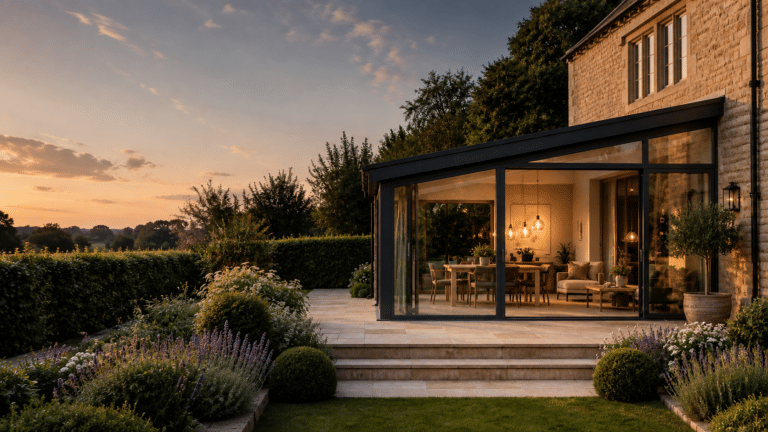
A glass veranda is a sheltered outdoor living room built from a slim aluminium frame, a glass roof and, usually, sliding glass walls. It sits against your home or stands in the garden, letting you enjoy your patio in comfort across spring, summer and autumn — open to the garden in warm weather, and closed against wind and rain when you need it. It’s a single-glazed outdoor space designed for seasonal use, rather than a heated, insulated room you’d use every day in winter.
A modern glass veranda is also one of the most cost-effective ways to add usable outdoor living space. Because it’s a single-glazed, seasonal structure rather than a heated, insulated room, it can often be created with far less cost, disruption and building work than a traditional extension — no major foundations and no lengthy build. Be clear, though: a glass veranda is a sheltered outdoor living space for spring, summer and autumn, and it serves a different purpose than a fully insulated extension. If you need a warm room to use every day in winter, an insulated extension is the better choice; if you want elegant seasonal shelter and a closer connection to the garden, a glass veranda is ideal.
At Room Outside, we’ve designed and installed glazed structures for over 50 years, and our glass veranda is the All-Glass Room. This plain-English guide explains exactly what a glass veranda is, what it’s made of, the types available, what it isn’t, the common mistakes to avoid, and how to tell whether it’s right for you. If you already know it’s the kind of space you want, you can jump straight to the All-Glass Room glass veranda page or download the brochure.
Quick answer: what is a glass veranda?
In the simplest terms, a glass veranda is a roofed outdoor structure, glazed with a glass roof and often glass walls, that creates a bright, sheltered room on your patio or in your garden. The roof keeps the rain off and lets the light in; the sliding glass walls let you open the space up on a fine day or close it down when the weather turns. Because it’s single-glazed and not insulated, it’s built for seasonal comfort and shelter — extending the time you can spend outdoors — rather than for year-round, heated living.
That one idea — sheltered, seasonal, outdoor — is the thread that runs through everything else in this guide.
What a glass veranda is made of
A quality glass veranda is built from a handful of well-chosen materials, each doing a specific job.
The frame. Most modern glass verandas use a powder-coated aluminium frame. Aluminium is strong, light and rust-resistant, which lets the frame stay slim while still spanning wide openings with minimal posts. That matters for a glass veranda, because the whole appeal is light and an open view — you don’t want bulky framing in the way. Aluminium is also low-maintenance and holds its finish well, typically offered in neutral colours such as white, grey or black.
The roof. The roof is the defining feature. A good glass veranda uses reinforced laminated safety glass, which is designed to stay intact if it’s ever damaged, and which floods the space with daylight in a way a solid or polycarbonate roof can’t match. The roof is pitched and fitted with integral guttering so rainwater is channelled away neatly.
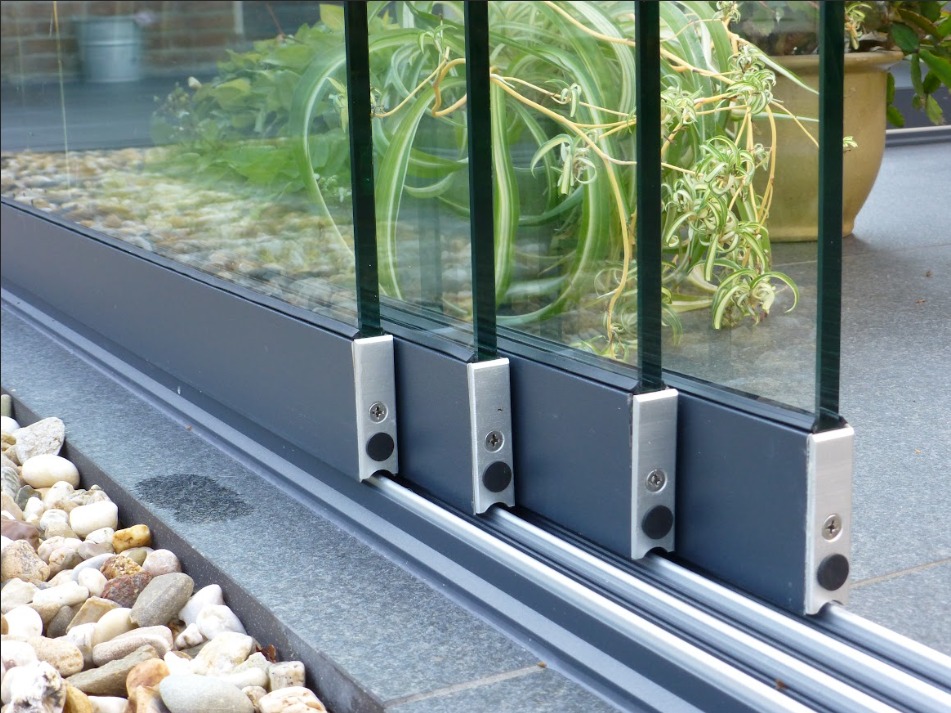
The walls. This is where verandas vary most. Many glass verandas use frameless-look sliding glass panels that run along a track, so you can open one side fully, partially enclose the space, or close it completely. Single glazing is standard for this type of structure, because the goal is shelter and light rather than the thermal performance of an insulated room.
The finishing details. The better verandas include thoughtful extras as standard — for example, integrated LED lighting set neatly into the structure, so the room works into the evening as well as during the day.
If you’d like to see exactly how a premium one is specified — frame finishes, glazing, lighting and layout options — the All-Glass Room product page sets it all out, and the brochure lets you compare choices at your own pace.

How a glass veranda works
The clever part of a glass veranda is its flexibility, and it’s worth picturing how you’d actually use it day to day.
On a warm, still day, you slide the glass walls back and the space becomes an open, shaded extension of the patio — you’re effectively outside, with a roof overhead keeping the sun manageable and the light beautiful. When a breeze picks up, or a shower rolls in, you slide the walls closed and the same space becomes a sheltered room with the garden still in full view through the glass. In the evening, the integrated lighting takes over, and the veranda becomes a calm, lit space for dinner or a drink.
Across the milder months, you simply tune the level of enclosure to the day. That adaptability is the whole point: a glass veranda doesn’t lock you into being fully indoors or fully exposed. It gives you a comfortable middle ground that the British weather usually denies you.
What it doesn’t do is behave like a heated indoor room in the depths of winter. Single glazing provides shelter, not insulation, so on a cold January day a glass veranda will keep the rain and wind off but won’t feel warm without added heating. Understanding that distinction up front is the key to being happy with one.

The different types of veranda
"Veranda" is a broad word, so it helps to know the main variations you’ll come across.
Open-sided verandas. The simplest form is essentially a roof on posts — a glazed or solid canopy over a patio, open on the sides. It provides overhead shelter and shade but little protection from wind or driving rain. It’s the most affordable option and suits people who mainly want cover from sun and showers.
Verandas with fixed glass sides. A step up adds fixed glass panels to one or more sides, giving more shelter and a stronger sense of an enclosed room, while keeping the view clear. These offer good protection but less flexibility than a sliding system.
Enclosable glass verandas with sliding walls. The most versatile — and what most people now mean by a "glass veranda" — uses sliding glass wall panels that open and close. This gives you the full range, from fully open to fully sheltered, and is the type best suited to making the most of changeable weather. It’s the approach Room Outside takes with the All-Glass Room.
Wall-mounted versus freestanding. A veranda can be attached to the house, which creates a natural flow from indoors to out, or it can stand alone as a freestanding structure elsewhere in the garden — a destination in its own right. The right choice depends on your layout and how you want to use the space.
Material options. While aluminium dominates the modern market, verandas can also be built in timber or uPVC. Timber offers a traditional look but needs ongoing maintenance; uPVC can be cheaper but tends to use bulkier frames and shorter spans, which suits a light, contemporary glass veranda less well. For most homeowners wanting a sleek, low-maintenance glass veranda, aluminium is the natural choice.
Not sure which type suits your home? That’s exactly what a tailored quote is for — our team will help you weigh up the options around your patio, garden and budget.
What a glass veranda is not
This is where a lot of the confusion comes from, so it’s worth being precise. A glass veranda is single-glazed and built for seasonal shelter. It is not the same as several products it’s often confused with:
- It is not a conservatory. A conservatory is a fully glazed, insulated, year-round room that forms part of the house, with double or triple glazing and heating.
- It is not an orangery. An orangery is a more substantial, insulated extension with brick or rendered piers and a glazed lantern roof, again for everyday year-round use.
- It is not a glass box extension. A frameless glass box extension is a structural-glass, insulated, architectural extension built into the home.
- It is not an insulated garden room or home office, which are designed for warm, year-round use.
The simplest way to hold the difference in mind: a conservatory, orangery, glass box and insulated garden room are all rooms of the house — heated and used all year. A glass veranda is a sheltered part of the garden — single-glazed and used across the milder seasons. Both are excellent; they just answer different needs. If you’d like a hand deciding which is right for you, our team is happy to talk it through.
Glass veranda, aluminium veranda, glass room: the same thing?
Part of what makes this topic confusing is that the market uses several names for broadly the same product. Here’s the plain-English version.
- Glass veranda emphasises the glazing — the glass roof and glass walls.
- Aluminium veranda emphasises the frame material; in practice, most glass verandas are aluminium verandas.
- Glass room and outdoor glass room are more general terms for the same kind of sheltered, glazed outdoor space.
- Veranda with glass sides or enclosed veranda describe the sliding or fixed glass walls specifically.
- Glass patio enclosure or garden veranda are simply other ways of describing where it sits and what it does.
In most cases, these terms point at the same idea: a glazed, sheltered outdoor room. The one distinction that genuinely matters isn’t in any of these names — it’s whether the structure is single-glazed and seasonal (a veranda) or insulated and year-round (a conservatory, orangery or glass box). Keep your eye on that, and the terminology stops being a maze.
Why glass verandas are a smart addition for UK homes
The veranda is an old idea — traditionally a roofed, open-sided gallery offering shade and shelter. The modern glass veranda brings it up to date with slim aluminium and large panes of glass, turning a simple covered area into a bright, enclosable outdoor room.
In the UK especially, glass verandas have grown in popularity for good, practical reasons. Our weather is famously changeable, and a structure that lets you enjoy the garden whatever the sky is doing has obvious appeal. There’s also been a strong shift towards indoor-outdoor living — people want their homes to flow into their gardens. And as the cost and disruption of full extensions have risen, a glass veranda has become an attractive middle path: a way to add a genuinely useful, light-filled room without a major building project. It’s a seasonal outdoor living space rather than a heated, year-round extension — but for many homeowners, that is exactly what they’re looking for.
For many homeowners, the appeal comes down to value in the truest sense — more comfortable time enjoying the home and garden you already have, across far more of the year, for a more accessible outlay than an insulated extension.
What you can use a glass veranda for
Because it’s flexible, a glass veranda gets used in lots of ways:
- A relaxed garden lounge — comfortable seating under a glass roof, open or sheltered as the day dictates.
- An outdoor dining room — a sheltered spot for lunches and evening meals, with lighting for after dark.
- A morning coffee or reading room — a bright, calm corner that catches the light.
- An entertaining space — somewhere to host with the garden as the backdrop, whatever the forecast.
- A spa or hot-tub enclosure — shelter and a degree of privacy while keeping the open feel.
- A freestanding garden retreat — a destination at the end of the garden.
The common thread is sheltered, comfortable time spent closer to the garden. To picture how it could work for your space, the All-Glass Room brochure is full of layouts and ideas.

Is a glass veranda right for the UK climate?
A glass veranda is genuinely well suited to extending the usable garden season in the UK. The glass roof gives full shelter from rain, and closing the sliding walls protects you from wind and showers, so you gain comfortable time outdoors across spring, summer and autumn — including plenty of days that would otherwise be too breezy or unsettled to sit out.
The honest caveat is winter. Because a glass veranda is single-glazed and not insulated, it won’t feel as warm as a heated indoor room in the coldest months. It will still keep the rain and wind off, and many people add portable or infrared heaters, blinds and soft furnishings to stretch comfortable use into cooler evenings. But it’s best understood as a three-season room that shelters you, rather than a heated space for everyday winter use. Keep that expectation in mind, and a glass veranda copes with the British climate very well.
How much does a glass veranda cost — and do I need permission?
A glass veranda is a more accessible route to the glass look than a full insulated extension, though it’s a seasonal space, not a year-round one. The price depends on its size, enclosure, glazing, frame, and groundwork your patio needs, so it’s quoted individually. For broader context on glazed-structure pricing, the glass extensions price guide is a useful reference — and the quickest way to get an accurate figure for your home is to request a tailored quote.
On planning, many glass verandas fall within permitted development, but this isn’t guaranteed. It depends on your property’s size, height and position, and listed buildings, conservation areas and similar designations can change the rules. The government’s Planning Portal is the place to check, and Room Outside will help you understand the likely position for your property before you commit.
Common mistakes when buying a glass veranda
A glass veranda is a long-term addition to your home, so it pays to choose well. These are the mistakes we see most often — and how to avoid them.
Choosing price over specification. The cheapest verandas are usually self-assembly kits with thinner materials and no installation. They can look similar in a photo, but the specification — the glass, the frame, the fixings, the finish — is what determines how the veranda performs and how long it lasts. Compare like for like, not just headline prices. The All-Glass Room specification is a useful benchmark for what a premium build includes.
Poor-quality roof glass. The roof works hardest of all. Look for reinforced laminated safety glass, which is designed to stay intact if damaged and gives the clearest, brightest result. Cheaper polycarbonate or thin glazing can discolour, mark and feel far less premium over time.
Overlooking drainage and guttering design. Rainwater has to go somewhere. A veranda with well-designed integral guttering and proper drainage will cope cleanly with British weather; a poorly designed one can drip, pool or overflow. It’s an easy detail to ignore at quote stage and an annoying one to live with afterwards.
Accepting bulky framing. The whole point of a glass veranda is light and an open view. Heavy, chunky frames block sightlines and make the space feel smaller and more dated. Slim, strong aluminium keeps the structure elegant and the garden in view — worth checking carefully when you compare options.
Assuming all verandas are suitable for year-round use. Perhaps the most common mistake. A single-glazed glass veranda is a seasonal, sheltered room — not an insulated, year-round space. If you genuinely need everyday winter warmth, you’ll be better served by an insulated conservatory, orangery or glass box extension. Match the product to how you’ll really use it, and you’ll be delighted with the result.
Ready to plan your glass veranda?
If a glass veranda sounds like the space you’re after, the difference between a good result and a disappointing one comes down to design, specification and installation. A surveyed, professionally installed veranda — shaped around your home and garden, with quality glass and slim aluminium — looks better, lasts longer and is far more enjoyable to live with than a generic flat-pack kit.
Room Outside designs and installs each All-Glass Room around your space, backed by more than 50 years’ experience and Room Outside aftercare. Take the next step today:
- Request your free brochure: download the All-Glass Room brochure to explore designs, finishes and layouts at your own pace.
- Get a tailored quote: request a quote and we’ll prepare a price built around your home.
- Explore the product: see the full specification on the All-Glass Room glass veranda page, or get in touch with any questions.
The sooner you request your brochure or quote, the sooner you could be enjoying your garden for more of the year.
FAQ
What is a glass veranda in simple terms?
A roofed outdoor structure with a glass roof and usually sliding glass walls, creating a sheltered, light-filled room on your patio or in your garden for spring, summer and autumn use.
What is a glass veranda made of?
Typically a powder-coated aluminium frame, a reinforced laminated safety-glass roof, and single-glazed sliding glass wall panels, often with integrated lighting and integral guttering.
Is a glass veranda waterproof?
Yes. The glass roof gives full shelter from rain, and closing the sliding walls protects the space from wind and driving rain.
Is a glass veranda cheaper than an extension?
Usually yes, as it’s a lighter, single-glazed structure that involves less cost and disruption. However, it’s important to remember that it’s a seasonal outdoor space, not a year-round room — for everyday winter use, an insulated extension is usually the better choice.
What’s the difference between a veranda and a glass veranda?
A traditional veranda is essentially a roofed, often open-sided shelter. A glass veranda adds a glass roof and glass walls, creating a brighter, more enclosable outdoor room.
Is a glass veranda the same as an aluminium veranda?
Usually, yes — most glass verandas are built on an aluminium frame, so the terms often describe the same product, with "glass" highlighting the glazing and "aluminium" the frame.
What are the main types of glass veranda?
Open-sided (roof only), verandas with fixed glass sides, and fully enclosable verandas with sliding glass walls. Each can be wall-mounted to the house or freestanding in the garden.
Is a glass veranda the same as a conservatory?
No. A conservatory is a fully glazed, insulated, year-round room that forms part of the house. A glass veranda is single-glazed and designed for seasonal, sheltered outdoor living.
What should I avoid when buying a glass veranda?
Choosing on price alone, poor-quality roof glass, weak drainage and guttering, bulky framing, and assuming a single-glazed veranda will work as a year-round room. Compare specifications, not just prices.
How do I get a glass veranda for my home?
Explore the All-Glass Room product page, download the brochure to compare options, then request a tailored quote and our team will design one around your home.