
roomoutsideuk
23rd February, 2026

Barn Conversion and Contemporary Frameless Glass Extension

Barn Conversion with Contemporary Frameless Glass Extension | Case Study | Room Outside

Barn Conversion with Contemporary Frameless Glass Extension

How we transformed a stunning limestone barn into a modern family home using frameless structural glass throughout—from a dramatic entrance hall to a fully glazed glass box extension.

Project Overview

Property Type Limestone Barn Conversion
Glass Type Frameless Structural Glass
Key Features Glass Entrance Hall, Glass Box Extension
Specialist Room Outside (50+ years experience)

Project Highlight

This stunning limestone barn conversion showcases the perfect blend of traditional charm and modern design. The homeowners undertook a comprehensive renovation, transforming the property into a beautiful family home. Room Outside installed contemporary frameless glass throughout, including maximising the full-height barn doors and archways, a dramatic frameless glass entrance hall, and a striking frameless glass box extension.

Key achievement: Creating a seamless visual connection between the historic limestone barn and contemporary glass additions, while ensuring year-round comfort through advanced temperature-control glazing technology.

Key Facts: Frameless Glass on Barn Conversions

  • Glass type: Frameless structural glass eliminates traditional frames, creating clean, uninterrupted views
  • Temperature control: Advanced glazing blocks up to 86% of solar heat while retaining warmth in winter
  • Planning: Glass extensions are often favoured on heritage buildings as they create clear visual distinction between old and new
  • Structural integrity: Modern structural glass can support roof loads and span large openings without visible frames
  • Cost range: Frameless glass extensions typically cost £2,000-£3,500 per square metre
  • Heritage compatibility: Glass doesn’t compete with historic fabric; it complements and reveals the original structure
  • Year-round use: With proper glazing specification, frameless glass spaces are comfortable in all seasons
100%
Frameless glazing
Heritage
Limestone preserved
86%
Solar heat blocked
365
Days comfortable

The Vision: Merging Heritage with Modern Innovation

When the homeowners acquired this characterful limestone barn, they had a clear vision: transform it into a stunning family home that celebrated the building’s agricultural heritage while incorporating contemporary design elements. The original barn featured beautiful limestone walls, impressive full-height doorways, and dramatic archways—all of which they wanted to preserve and showcase.

The challenge was significant: how do you extend and modernise a historic barn without compromising its character? The answer lay in frameless structural glass. Unlike traditional conservatories or orangeries with visible frames, frameless glass creates a transparent envelope that reveals rather than conceals the original building.

Why Frameless Glass Was the Perfect Choice

The homeowners chose frameless glass for several compelling reasons:

  • Visual transparency: Glass doesn’t compete with the limestone; it acts as a clear boundary between inside and outside
  • Heritage sensitivity: Conservation officers often prefer glass additions because they’re clearly contemporary and don’t imitate historic styles
  • Light maximisation: Full-height glazing floods interior spaces with natural light while framing garden views
  • Seamless connections: Frameless glass creates uninterrupted sightlines between the barn’s interior and the landscaped gardens
  • Year-round comfort: Modern temperature-controlled glass ensures comfort regardless of weather

Definition: What is Frameless Structural Glass?

Frameless structural glass uses toughened or laminated glass panels as load-bearing structural elements, eliminating the need for traditional aluminium, timber, or uPVC frames. The glass itself provides structural support, with panels joined using specialist structural silicone or minimal stainless steel fixings.

This technology enables large glass spans, clean glass-to-glass corners, and dramatic floor-to-ceiling installations that would be impossible with framed systems. The result is maximum transparency with minimal visual obstruction.
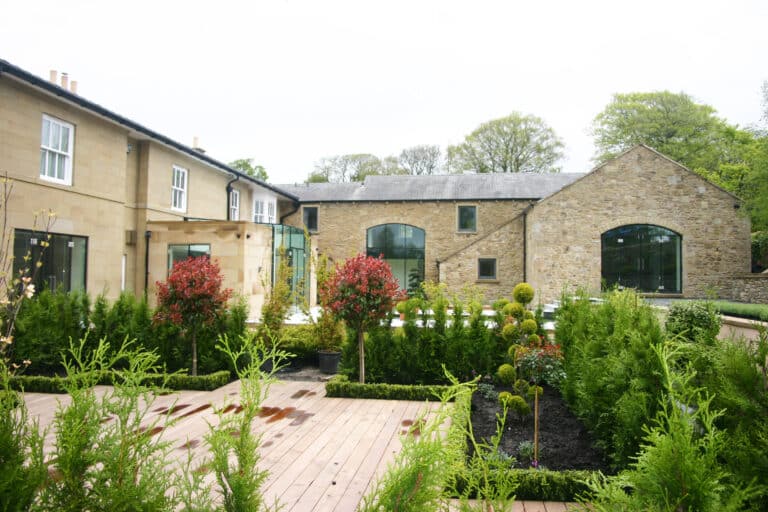
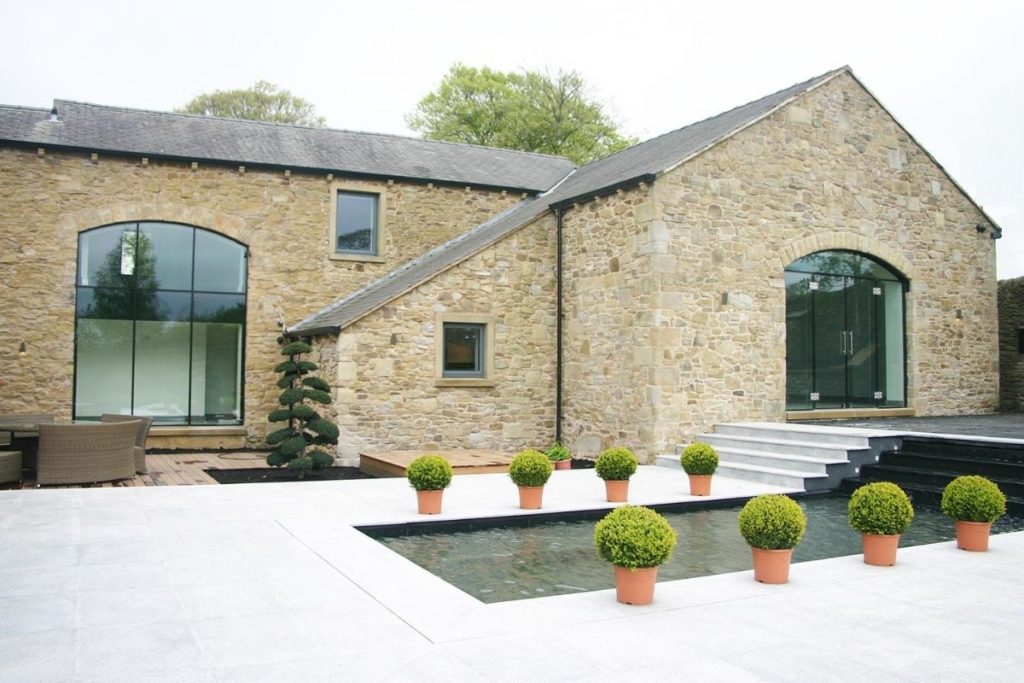
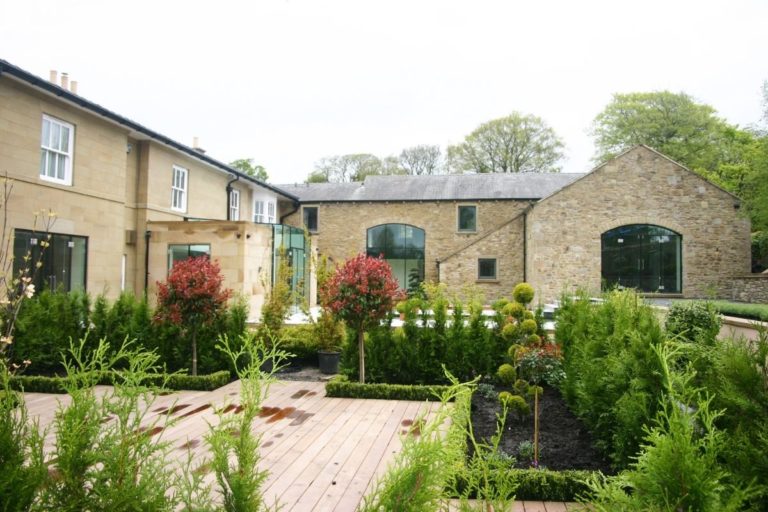
Limestone barn conversion with arched frameless glass doors, reflecting pool and landscaped courtyard
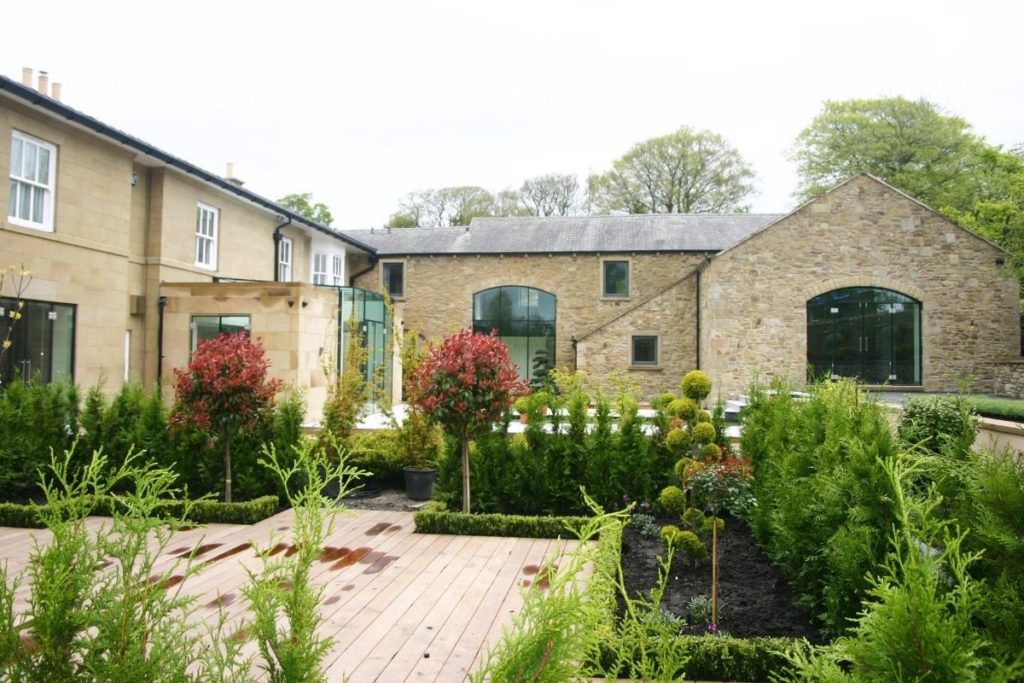
The completed barn conversion featuring dramatic arched frameless glass doors that fill the original barn openings, with a sleek reflecting pool and contemporary landscaping

Seamlessly Blending Old and New

The homeowners wanted to merge the original barn’s historic character with a sleek, modern aesthetic. By using frameless structural glass, we created a perfect balance between heritage and innovation. The glass windows and doors provide uninterrupted views of the landscaped courtyard and gardens while allowing natural light to flood the interiors.

A key feature of this project is the frameless glass entrance hall, designed with a slanted lean-to roof, frameless frontage, and sleek glass doors. This glass structure forms a grand, light-filled welcome for both family and guests.

Design Features

The entrance hall incorporates several sophisticated design elements:

  • Slanted lean-to roof: The glass roof slopes elegantly away from the main barn wall, shedding rainwater while creating a sense of height and openness
  • Frameless frontage: Full-height glass panels with minimal fixings create an almost invisible barrier between inside and outside
  • Sleek glass doors: Frameless pivot doors provide the main entrance, maintaining the clean aesthetic while offering excellent thermal performance
  • Visual connection: The glass structure allows views of the original barn doorway and archway from outside, showcasing the historic architecture

Why Glass Entrance Halls Work on Barn Conversions

Glass entrance structures are increasingly popular on barn conversions and period properties. They offer:

  • Weather protection without blocking light or views
  • Thermal buffer zone reducing heat loss from the main building
  • Dramatic first impression that sets the tone for the interior
  • Heritage sensitivity by not replicating or competing with historic styles
  • Planning advantage as glass is often preferred to solid extensions on historic buildings
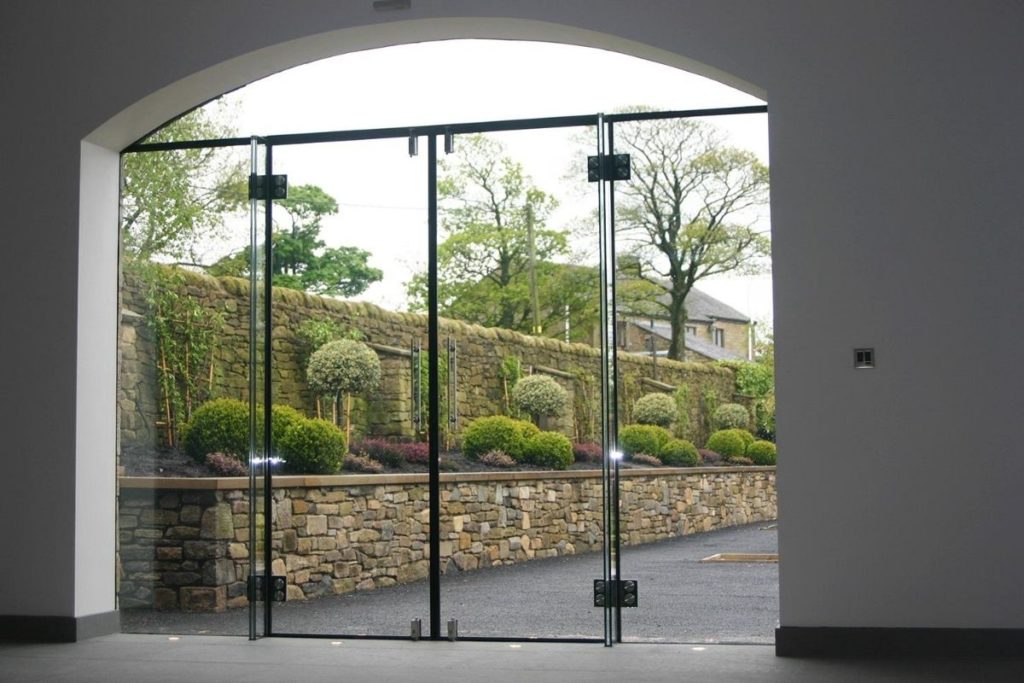
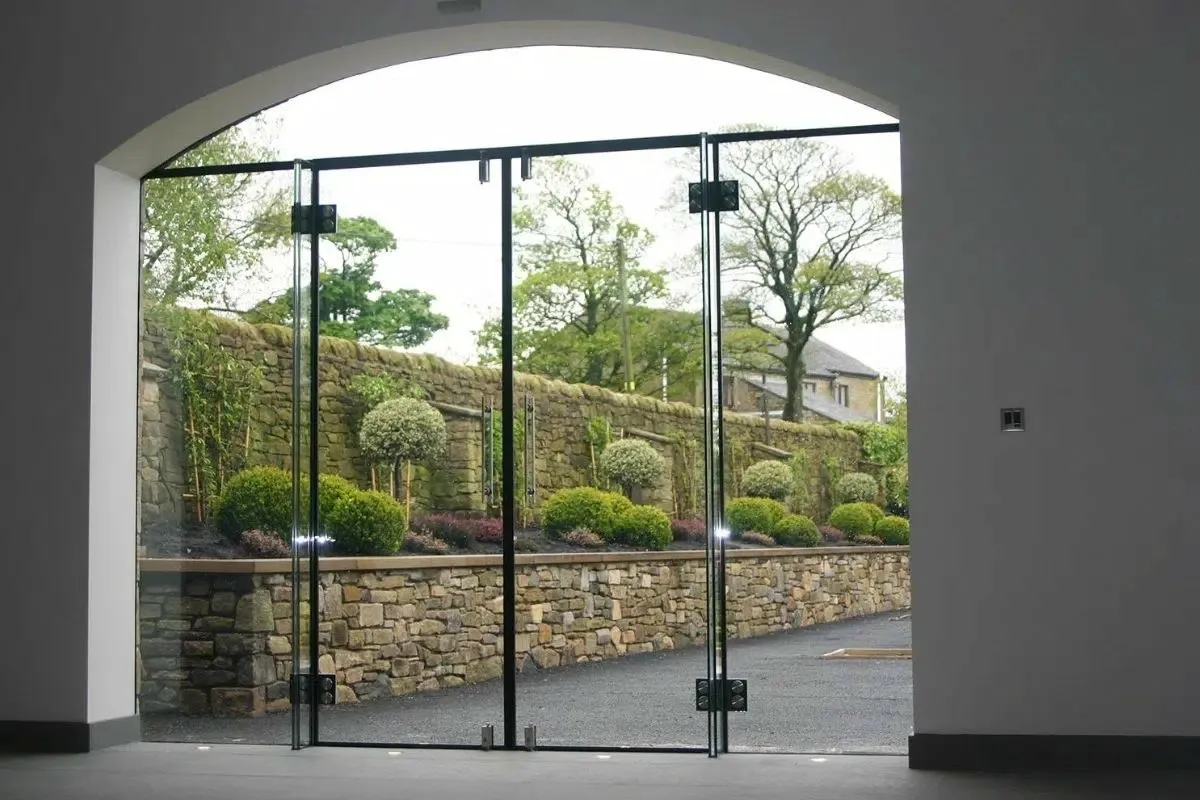
Interior view through arched frameless glass doors to landscaped garden
View from inside the barn through the stunning arched frameless glass doors, showcasing the seamless connection between interior and the beautifully landscaped gardens

A Contemporary Glass Extension

To further maximise space and light, we designed and built a fully glazed contemporary frameless glass room. This frameless glass box extension connects seamlessly with the home’s open-plan living area, creating an airy, bright space for relaxation and entertaining.

The structural glass used in this project ensures strength and durability, eliminating the need for traditional frames found in conservatories or orangeries. Advanced glazing technology also helps with temperature control, keeping warmth in during winter and reducing glare and heat in summer. This means homeowners can enjoy the space comfortably all year round, no matter the British weather.

Maximum Natural Light

Floor-to-ceiling glass floods the interior with daylight, reducing the need for artificial lighting.

Temperature Control

Advanced glazing blocks 86% of solar heat in summer while retaining warmth in winter.

Year-Round Use

Comfortable every day of the year, regardless of British weather conditions.

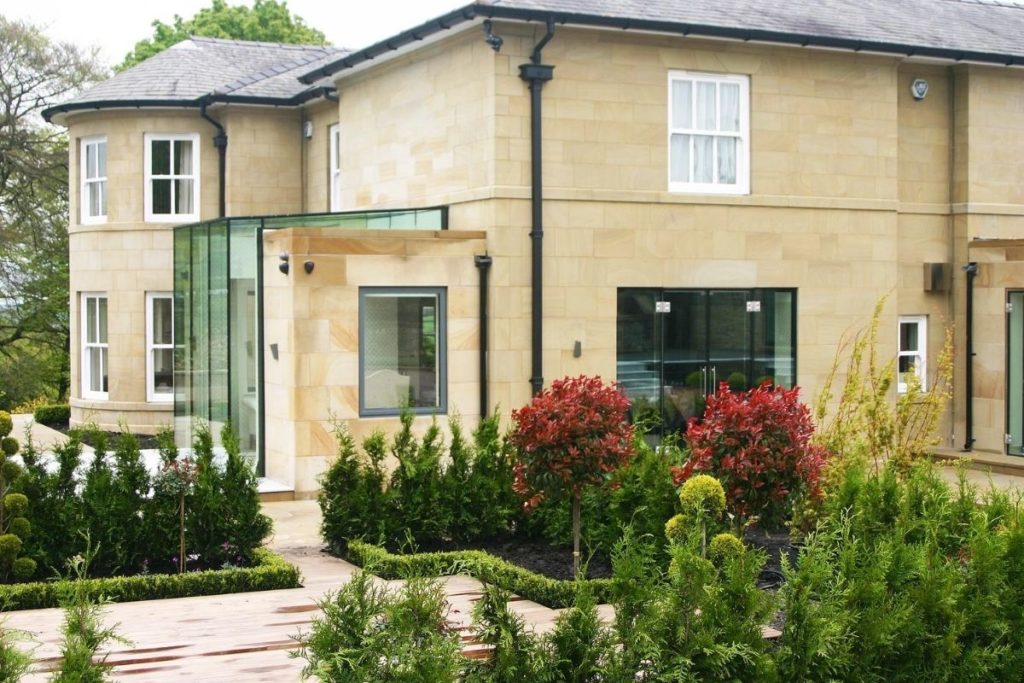
Frameless glass extension detail on limestone building
The frameless glass link creates a stunning architectural connection, showcasing how contemporary glass complements traditional limestone construction

Advanced Temperature Control Technology

Glass extensions were once notorious for being too hot in summer and too cold in winter. This project demonstrates how modern glazing technology has completely transformed what’s possible. The homeowners can enjoy their glass spaces comfortably all year round, no matter the British weather.

How Temperature-Control Glass Works

The temperature-controlled glass used in this project incorporates several technologies:

  • Solar control coating: Microscopic metallic particles in the glass reflect solar infrared radiation, blocking up to 86% of solar heat while allowing visible light through
  • Low-E coating: A low-emissivity coating on the inner surface reflects heat back into the room during winter, reducing heat loss
  • Argon-filled cavity: The gap between glass panes is filled with argon gas, which insulates better than air
  • Low U-values: The combination achieves U-values under 1.0 W/m²K—comparable to solid insulated walls

The Numbers: Glass Performance Specifications

  • Solar heat rejection: Up to 86% of solar infrared blocked
  • Light transmission: 70%+ visible light passes through
  • U-value: Under 1.0 W/m²K (excellent thermal insulation)
  • UV protection: 99% of harmful UV rays blocked
  • Glare reduction: Anti-glare properties reduce harsh sunlight

These specifications ensure the glass spaces are comfortable year-round while protecting furnishings from UV damage and reducing energy costs.

Common Misconceptions About Glass Extensions

Myth #1: “Glass extensions are always too hot or too cold”

Fact: This was true of older conservatories with basic glazing. Modern high-performance glass blocks up to 86% of solar heat while providing excellent insulation (U-values under 1.0 W/m²K). With proper specification, glass extensions are comfortable year-round.

Myth #2: “Frameless glass isn’t strong enough for structural use”

Fact: Structural glass is specifically engineered for load-bearing applications. Toughened and laminated glass can support roof loads, span large openings, and withstand significant wind loads. It’s used in skyscrapers, bridges, and high-stress architectural applications worldwide.

Myth #3: “Planning permission is impossible on heritage buildings”

Fact: Glass extensions are often the preferred option for extending heritage buildings. Conservation officers frequently favour glass because it’s clearly contemporary, doesn’t imitate historic styles, and reveals rather than conceals original fabric.

Myth #4: “Glass extensions look out of place on traditional buildings”

Fact: When designed well, glass creates a harmonious contrast with traditional materials. The transparency of glass allows the original building to remain the visual focus. Many award-winning extensions on heritage buildings use glass precisely because it works so well with traditional architecture.

Room Outside

Frameless Glass Specialists | Established 1973 | 50+ Years Experience

Room Outside specialises in frameless glass extensions, conservatories, and orangeries. Our expertise includes heritage buildings, barn conversions, and listed properties. We combine traditional craftsmanship with cutting-edge glass technology to create stunning, comfortable living spaces. Contact us on 01243 538999 for expert advice.

About This Case Study

This case study documents a completed Room Outside project featuring frameless structural glass on a limestone barn conversion. Technical specifications, glass performance data, and design approaches reflect current best practice in heritage building glazing.

Project completed: 2025 | Location: South East England | Specialist: Room Outside (established 1973)

Frequently Asked Questions

Can you add a glass extension to a barn conversion?

Yes, glass extensions are an excellent choice for barn conversions. Frameless structural glass allows you to extend living space while preserving the original barn’s character. Glass creates clear visual distinction between old and new, which conservation officers often prefer.

What is frameless structural glass?

Frameless structural glass uses toughened or laminated glass panels as load-bearing elements, eliminating traditional frames. Panels are joined with specialist silicone or minimal fixings, creating clean, uninterrupted views. The glass itself provides structural support.

How much does a frameless glass extension cost?

Frameless glass extensions typically cost £2,000-£3,500 per square metre. A small glass entrance (10-15m²) costs £25,000-£45,000. A medium glass room (15-25m²) costs £40,000-£70,000. Large glass box extensions (25-40m²) cost £60,000-£120,000+.

Do frameless glass extensions get too hot in summer?

Not with modern glass technology. High-performance glazing blocks up to 86% of solar heat while maintaining high light transmission. Combined with proper ventilation, frameless glass extensions remain comfortable year-round.

Do I need planning permission for a glass extension on a barn?

Usually yes, as most barn conversions have conditions attached to the original conversion permission. If the barn is listed, you’ll also need Listed Building Consent. However, glass extensions are often favoured because they create clear separation between historic fabric and new additions.

What is a glass box extension?

A glass box extension is a contemporary structure with floor-to-ceiling frameless glass walls and often a glass roof. It creates seamless indoor-outdoor connection while maximising natural light. The glass provides structural support, eliminating bulky frames.

How is frameless glass attached to stone walls?

Methods include structural silicone bonding, stainless steel fin supports, minimal point fixings, and concealed aluminium base channels. The method depends on structural requirements and stone condition. A structural engineer specifies appropriate fixings.

Can frameless glass be used for entrance halls?

Yes, frameless glass entrance halls are increasingly popular for barn conversions and period properties. They create dramatic, light-filled welcome spaces while preserving views of the original building. They’re designed to be thermally efficient with proper seals and high-performance glazing.

Call us anytime – David, our digital assistant, will take a few details so the right specialist can follow up personally. 01243 538999 or request a consultation online

Discuss Your Barn Conversion or Heritage Project

Whether you’re planning a barn conversion, extending a listed building, or adding contemporary glass to a period property, our specialists can help you achieve stunning results. Book a free design consultation with no obligation.

Book Free Consultation

Call us anytime on 01243 538999 – David, our digital assistant, will take a few details so the right specialist can follow up personally.

Room Outside: Frameless glass specialists since 1973.
Serving Kent, Surrey, Sussex, Hampshire, London & surrounding areas.
roomoutsideuk
19th January, 2026

The Room Outside Process: From Initial Design to Final Handover

The Room Outside Process: From Initial Design to Final Handover
The Room Outside Process: Design to Handover Step-by-Step | Room Outside

The Room Outside Process: From Initial Design to Final Handover

Your complete step-by-step guide to building a bespoke conservatory, orangery, or glass room. Discover exactly what happens at each stage of your project.

How Long Does It Take?

The complete process from initial enquiry to final handover typically takes 12 to 20 weeks for standard projects and 20 to 32 weeks for premium bespoke installations. This includes design consultation (2-4 weeks), planning assessment (1-8 weeks if required), manufacturing (4-8 weeks), and installation (2-6 weeks). Room Outside manages every stage, providing a dedicated project manager and regular updates throughout your journey.

12-20
Weeks for standard projects
8
Clear project stages
100%
Transparent pricing
10yr
Structural warranty
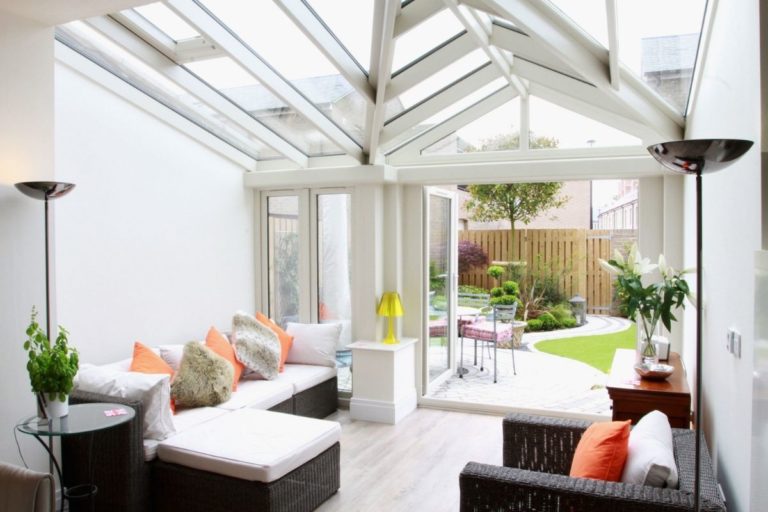
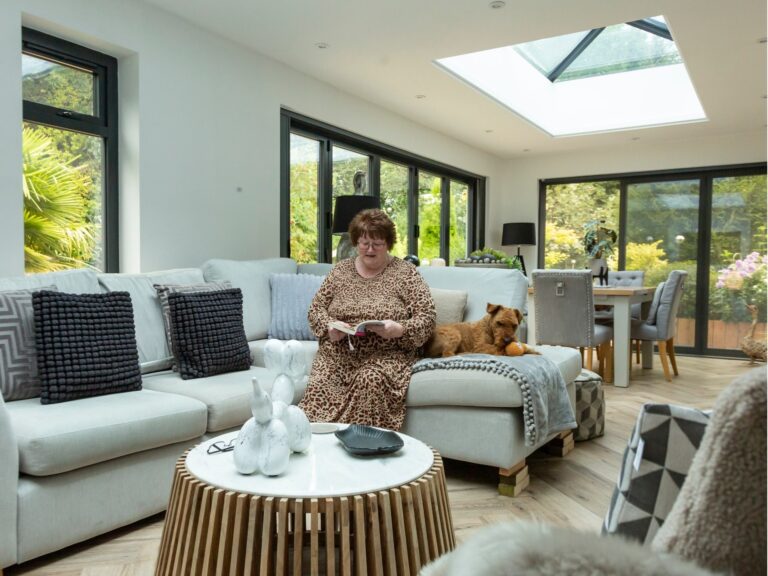
Beautiful modern conservatory with large glass panels and comfortable seating area
Every Room Outside project follows our proven 8-stage process, ensuring quality results and complete peace of mind
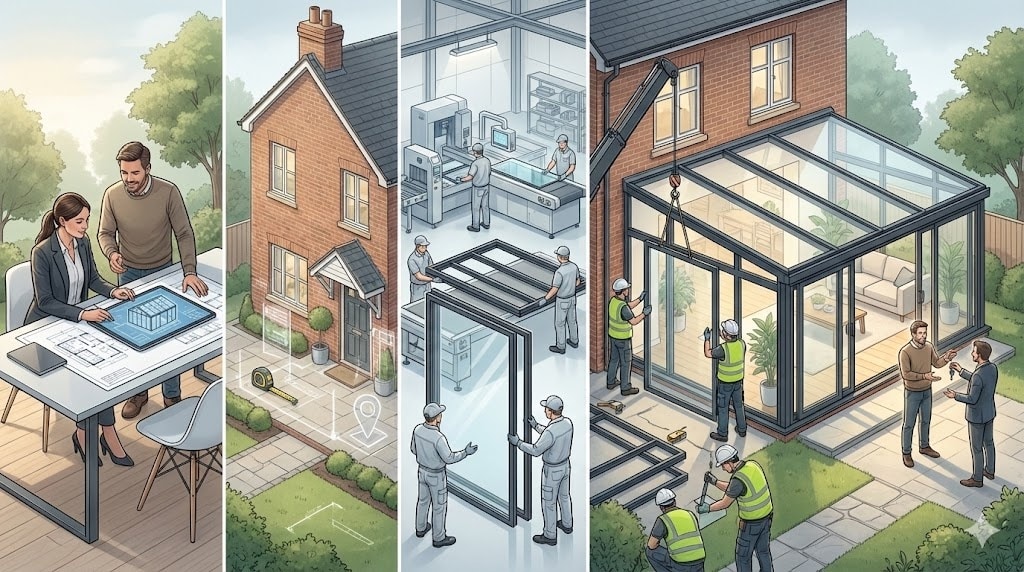
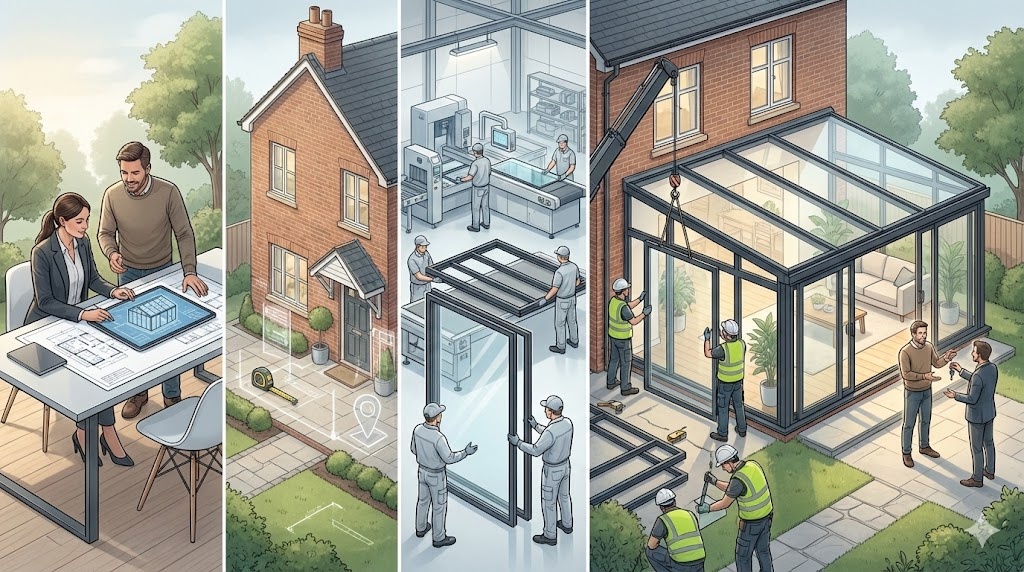
Building a conservatory, orangery, or glass room represents one of the most significant investments you can make in your home. Unlike buying furniture or redecorating, this is a construction project that requires careful planning, expert design, and skilled installation. At Room Outside, we have refined our process over hundreds of successful projects across Kent, Surrey, Sussex, and London. This guide walks you through every step, from your first enquiry to the moment we hand over the keys to your new living space.

Why Process Matters

A conservatory or glass room is not a product you simply order and receive. It is a bespoke construction project that must integrate seamlessly with your existing property, meet all relevant Building Regulations, perform thermally in all weather conditions, and add genuine value to your home.

The difference between a successful project and a problematic one often comes down to process. Companies that skip steps, rush decisions, or fail to communicate create the horror stories you read about online. Our structured approach eliminates these risks whilst keeping your project on track and on budget.

No Surprises

Detailed quotation covering every element with no hidden costs

Quality Results

Skilled craftsmen and premium materials on every project

Peace of Mind

Dedicated project manager throughout your entire journey

Timeline Clarity

Realistic schedules with milestone updates

Budget Control

Fixed pricing with no hidden extras or escalations

Full Compliance

Building Regulations certification included

Our 8-Stage Building Process

Every Room Outside project follows this proven process, refined over years of experience and hundreds of successful installations across the South East.

1

Initial Enquiry and Response

Same day to 48 hours

Your journey begins when you contact us. Whether you call on 01243 538999, complete our online form, or email us directly, we respond promptly.

  • Gather basic information about your project
  • Confirm we cover your location (Kent, Surrey, Sussex, Hampshire, London)
  • Discuss your vision, requirements, and budget expectations
  • Arrange a convenient date for your home design consultation
Professional customer service representative taking notes during phone consultation
2

Home Design Consultation

1.5 to 2.5 hours at your property

This is where your project truly begins. One of our experienced designers visits your home to understand your property, requirements, and vision.

  • Examine the proposed location and check existing foundations
  • Note potential obstacles (manholes, trees, boundaries)
  • Discuss how you will use the space and explore style preferences
  • Provide expert guidance on what is achievable
  • Explain planning permission and Building Regulations implications

This consultation is completely free and carries no obligation.

Designer meeting with homeowners reviewing architectural plans at kitchen table
3

Design Development and Quotation

5 to 10 working days

Following your home visit, our design team develops detailed proposals tailored to your requirements and budget.

  • Detailed floor plans and elevation drawings
  • 3D visualisations helping you see the finished result
  • Material specifications and colour options
  • Itemised quotation with no hidden costs
  • Estimated project timeline
Architect working on 3D computer renderings of home extension design
4

Design Refinement and Agreement

Variable depending on complexity

Most clients want to discuss their proposal, ask questions, and often make adjustments. This stage ensures you are completely happy before we proceed.

  • Walk through every element of the design
  • Modify dimensions, materials, or finishes as required
  • Add or remove features to meet your budget
  • Confirm final design and sign contract
  • Pay deposit to secure your build slot

We will not proceed until you are completely satisfied.

5

Planning and Building Regulations

1 to 8 weeks depending on requirements

Before construction can begin, we ensure your project complies with all relevant regulations.

  • Assess whether planning permission is required
  • Prepare and submit applications on your behalf
  • Liaise with planning authority throughout
  • Handle Building Regulations submissions
  • Coordinate all required inspections

Planning Permission Facts

Many conservatories fall within Permitted Development rights and do not require planning permission. Properties in conservation areas or listed buildings usually require consent. We assess this during your consultation and handle all paperwork on your behalf.

6

Pre-Construction Preparation

1 to 2 weeks

With approvals in place, we prepare everything needed for a smooth construction phase.

  • Final specifications sent to manufacturing
  • Materials ordered to match your timeline
  • Site preparation and access routes planned
  • Installation team assigned and briefed
  • Confirmation of start date and daily schedule
Aluminium window frames and glass panels ready for conservatory installation
7

Construction and Installation

2 to 6 weeks depending on project

This is when your new space takes shape. Our skilled installation teams transform your design into reality.

  • Week 1: Foundations and base construction
  • Week 2-3: Frame assembly and structure
  • Week 3-4: Glazing, roofing, and weatherproofing
  • Week 4-5: Internal finishes and electrical work
  • Week 5-6: Final completion and snagging

Our teams arrive at agreed times, keep you informed daily, and tidy the site at the end of each day.

Construction workers installing framework for glass extension
8

Quality Inspection and Handover

1 to 2 days

Before we consider any project complete, it must pass our rigorous quality inspection.

  • Frame alignment and secure fixing checks
  • Glazing installation and seal inspection
  • All systems tested and commissioned
  • Walk-through demonstration of all features
  • Handover of documentation and warranties

We do not consider a project complete until you are completely satisfied.

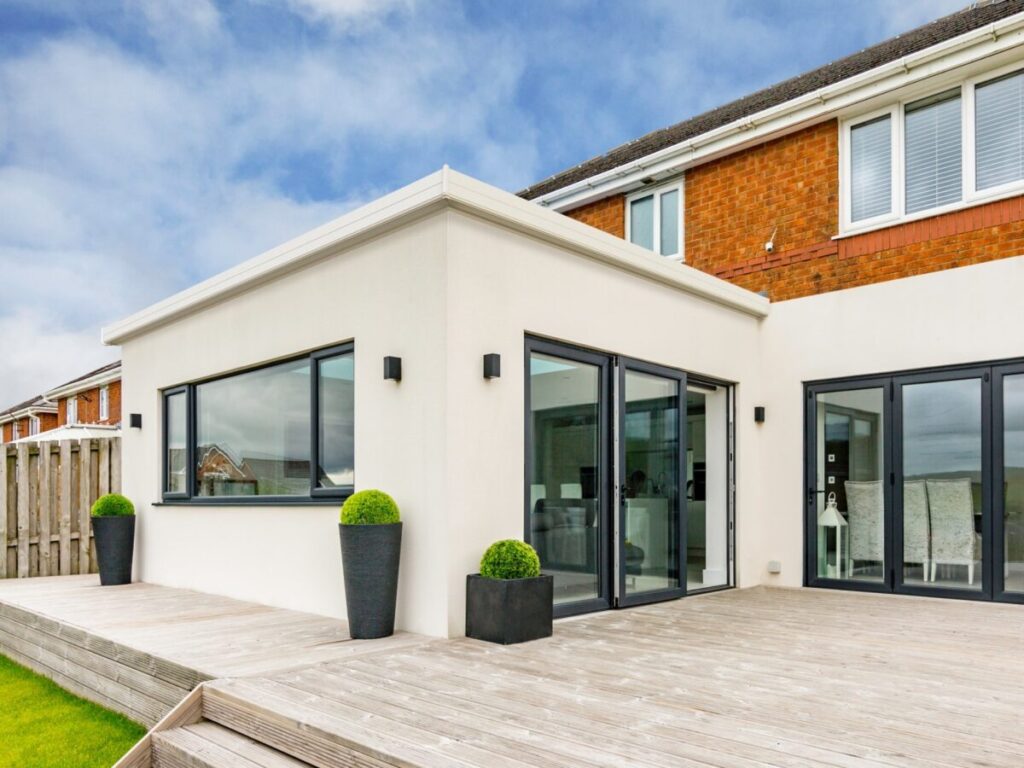
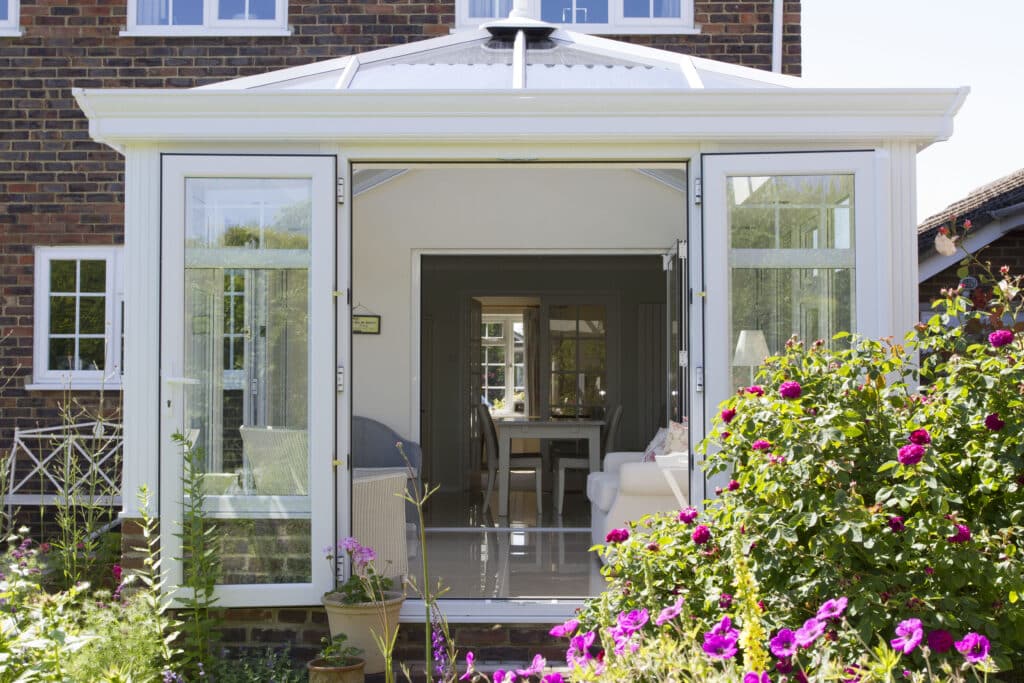
Completed luxury conservatory with bi-fold doors opening to garden
Modern conservatory with bi-fold doors opening to patio
Modern Conservatory
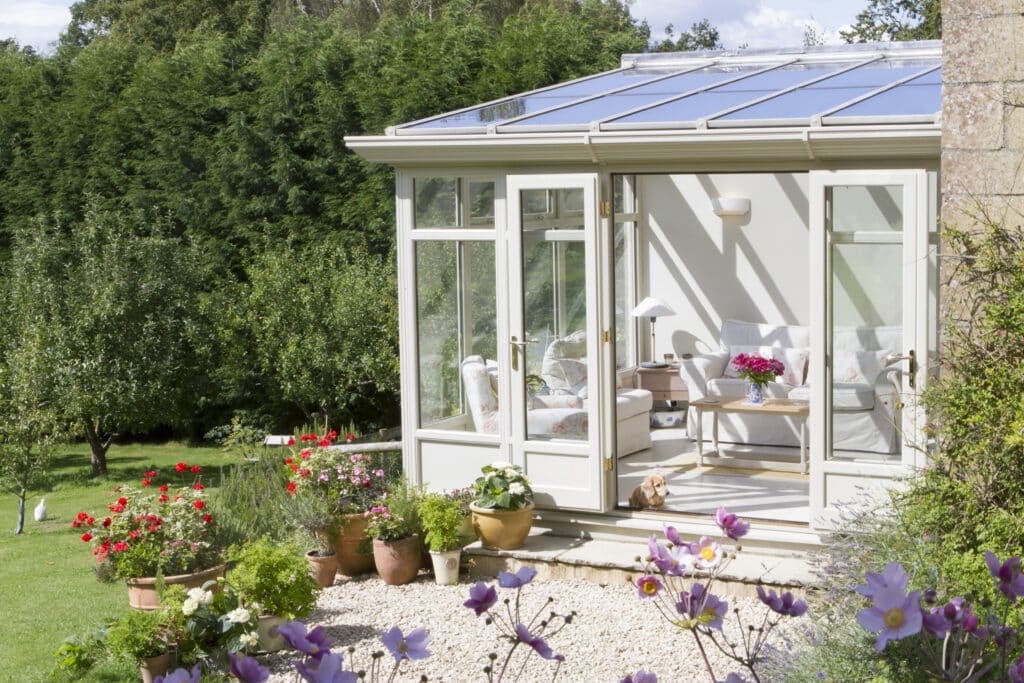
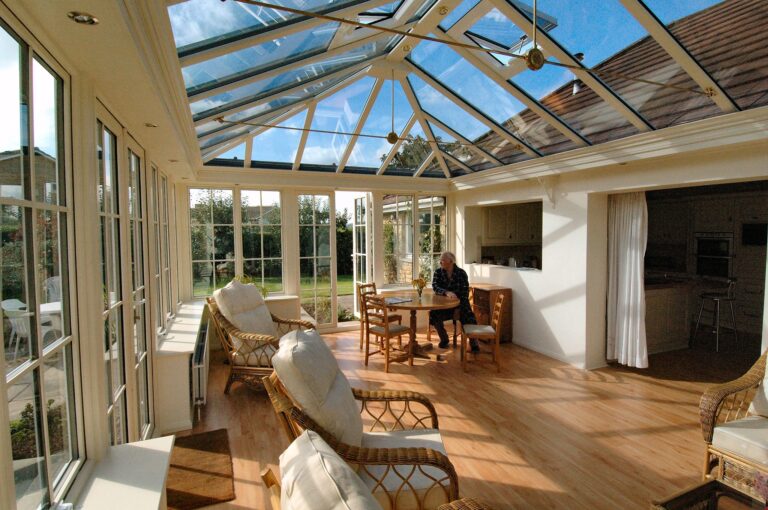
Elegant orangery extension with lantern roof
Traditional Orangery
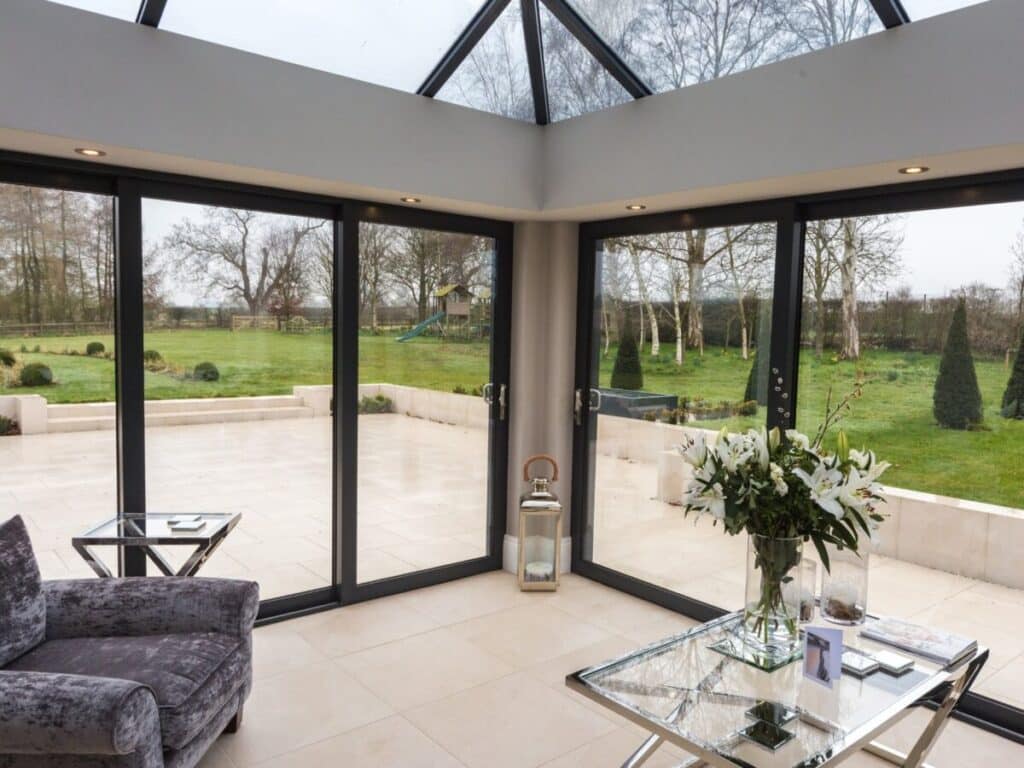
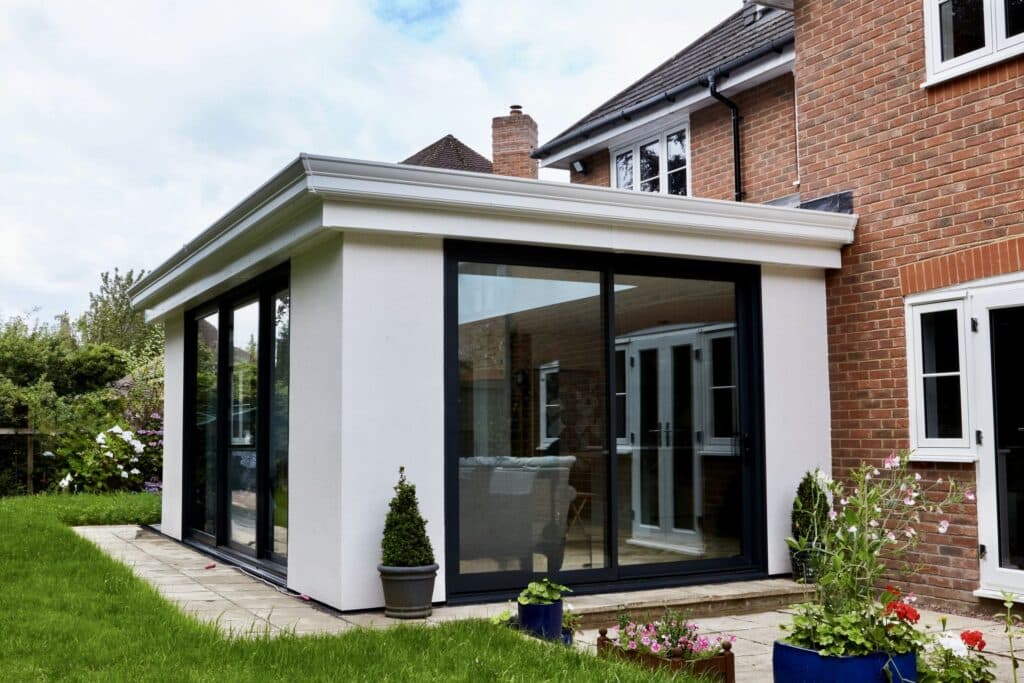
Contemporary glass room with floor to ceiling windows
Contemporary Glass Room
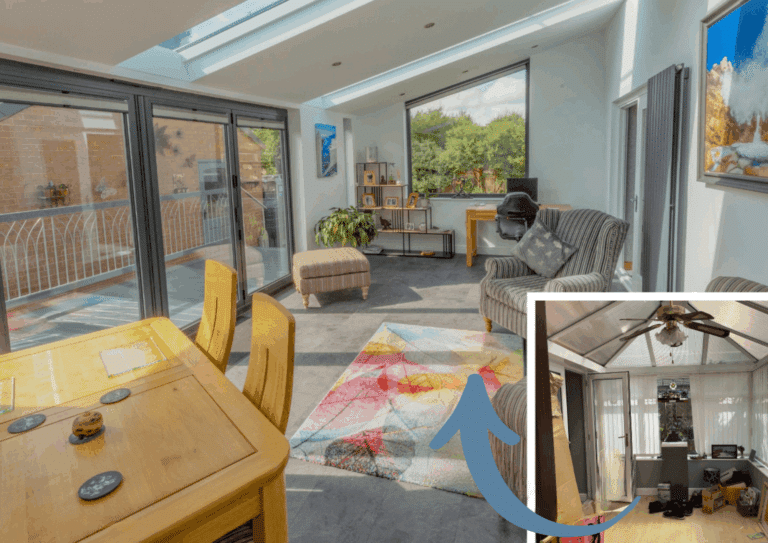
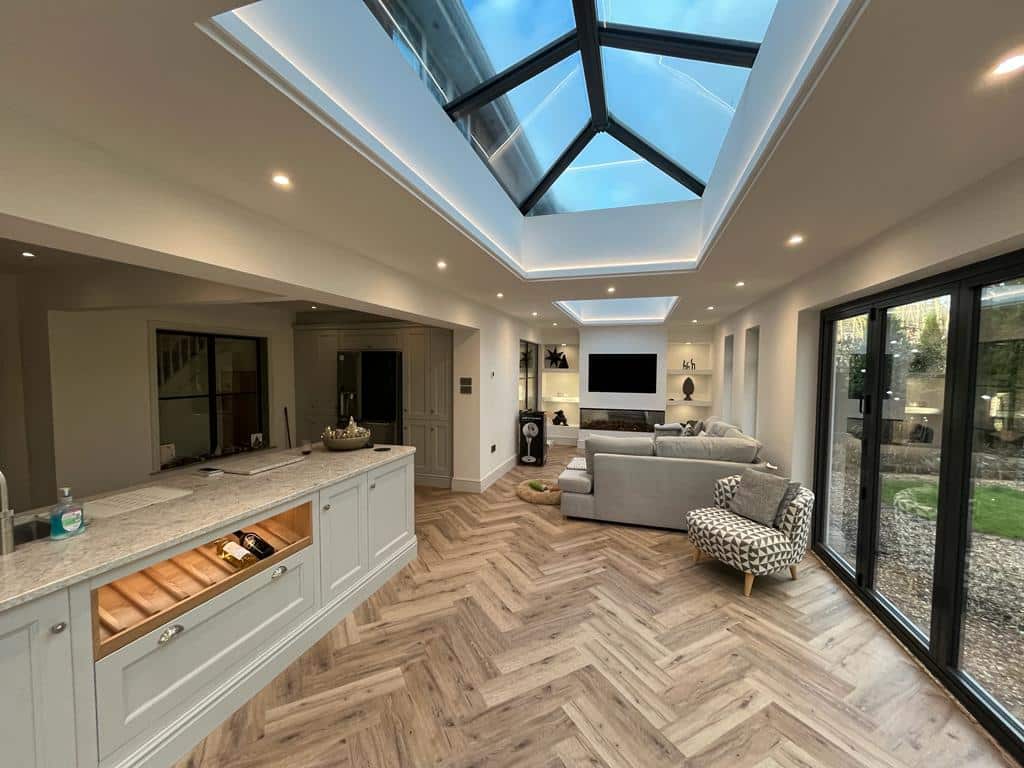
Kitchen extension with glass roof and skylights
Kitchen Extension

Project Timelines: What to Expect

Every project is unique, but here are typical timelines for different project types:

Project Type Design Phase Approvals Manufacturing Installation Total
Standard Conservatory 2 weeks 1-2 weeks 4-6 weeks 2-3 weeks 10-15 weeks
Orangery 2-3 weeks 2-4 weeks 5-7 weeks 3-5 weeks 14-22 weeks
Premium Glass Room 3-4 weeks 4-8 weeks 6-8 weeks 4-6 weeks 19-30 weeks
Standard Conservatory
Design Phase 2 weeks
Approvals 1-2 weeks
Manufacturing 4-6 weeks
Installation 2-3 weeks
Total Timeline 10-15 weeks
Orangery
Design Phase 2-3 weeks
Approvals 2-4 weeks
Manufacturing 5-7 weeks
Installation 3-5 weeks
Total Timeline 14-22 weeks
Premium Glass Room
Design Phase 3-4 weeks
Approvals 4-8 weeks
Manufacturing 6-8 weeks
Installation 4-6 weeks
Total Timeline 19-30 weeks

Factors That Can Affect Your Timeline

May extend timeline: Planning permission requirements, complex structural work, listed building consent, conservation area restrictions, adverse weather, bespoke material requirements.

May shorten timeline: Permitted Development eligibility, standard specifications, good site access, favourable weather, quick decision-making.

After Handover: Ongoing Support

Our relationship does not end at handover. We provide ongoing support to ensure your new space continues to perform beautifully.

10-Year Structural Warranty

Complete protection on frames and sealed glass units

2-Year Moving Parts Warranty

Coverage for doors, windows, and mechanisms

Dedicated Aftercare

Priority response for any issues or questions

Our Commitment to You

We stand behind our work. If something is not right, we will make it right. Our aftercare team is available for annual service packages, spare parts, adjustments, and advice on cleaning and care. Your investment is protected for years to come.

What Our Clients Say

“From start to finish, the Room Outside team were professional, communicative, and delivered exactly what they promised. Our new orangery has transformed how we use our home.”

JT
James and Sarah T.
Sevenoaks, Kent
★★★★★

“We were nervous about such a big project, but the process was so well managed that we never felt stressed. The quality is outstanding and the team were a pleasure to have around.”

MR
Michael R.
Guildford, Surrey
★★★★★

Areas We Cover

Room Outside provides bespoke conservatories, orangeries, and glass rooms across the South East of England. Our experienced teams work throughout:

Kent Surrey Sussex Hampshire London Sevenoaks Guildford Chichester Brighton Tunbridge Wells Canterbury Maidstone

Not sure if we cover your area? Check our full coverage map or call us on 01243 538999 to confirm.

Frequently Asked Questions

How long does it take to build a conservatory?

A standard conservatory typically takes 12 to 16 weeks from initial consultation to completion. This includes 2 weeks for design, 1-2 weeks for approvals, 4-6 weeks for manufacturing, and 2-3 weeks for installation.

How long does the installation phase take?

Installation typically takes 2 to 3 weeks for a standard conservatory, 3 to 5 weeks for an orangery, and 4 to 6 weeks for a premium glass room. Weather and site access can affect these timelines.

Do I need planning permission for a conservatory?

Many conservatories fall within Permitted Development rights. This depends on size, position, and previous extensions. Properties in conservation areas or listed buildings usually require planning consent.

What are Building Regulations?

Building Regulations ensure construction meets safety standards. Most conservatories under 30 square metres with independent heating are exempt. Larger structures require Building Regulations approval.

How much does a conservatory cost?

Standard conservatories start from around £15,000, orangeries from £25,000, and premium glass rooms from £40,000. We provide detailed quotations with no hidden costs after your consultation.

What deposit do you require?

We require a deposit of typically 10% to 25% to secure your build slot and begin ordering materials. Full payment terms are clearly stated in your contract.

What warranty do you provide?

We provide a 10-year warranty on frames and sealed glass units, plus a 2-year warranty on moving parts. All components carry manufacturer warranties.

Do you work in my area?

We cover Kent, Surrey, Sussex, Hampshire, and parts of London. Call us on 01243 538999 or check our website to confirm we service your location.

Can I see examples of your work?

Visit our online gallery or ask about visiting completed projects near you. We are proud of our work and happy to show our portfolio of conservatories, orangeries, and glass rooms.

What makes Room Outside different?

Our structured 8-stage process, transparent pricing, skilled craftsmen, and genuine commitment to customer satisfaction. We do what we promise, when we promise, to the standard we promise.

How do I get started?

Contact us to arrange your free home design consultation. Call 01243 538999, complete our online form, or email us. We respond within 48 hours to arrange a convenient appointment.

Can I make changes after design is agreed?

Minor adjustments can usually be accommodated. Significant changes may affect timeline and cost. We recommend finalising your design thoroughly before manufacturing begins.

Questions about our process? Call our team on 01243 538999

Ready to Start Your Journey?

Every successful project begins with a conversation. Whether you have a clear vision or just an idea, our team is ready to help you explore your options across Kent, Surrey, Sussex, and London.

roomoutsideuk
17th December, 2025

Glass Extensions Surrey | What Homeowners Need to Know 2025 | Room Outside

What Surrey Homeowners Should Know Before Commissioning a Glass Extension | Room Outside

What Surrey Homeowners Should Know Before Commissioning a Glass Extension

Expert guide to Surrey’s unique planning landscape, realistic budgets, and what actually adds value to your property in 2025.

📋 The Short Answer

Before commissioning a glass extension in Surrey, you need to understand three things: (1) whether your property falls within the 73% of Surrey designated as Green Belt, which affects what you can build; (2) whether Permitted Development rights apply (most conservatories under 4m don’t need planning permission); and (3) budget expectations—with average Surrey property prices at £587,000, quality glass extensions typically cost £40,000-£120,000+ depending on specification.

So You’re Thinking About a Glass Extension in Surrey?

Let’s be honest: you’ve probably already scrolled through Pinterest boards, saved a dozen Instagram posts, and imagined morning coffee in a light-flooded kitchen-diner. The vision is clear. But somewhere between the dream and the reality, questions start multiplying.

Will I need planning permission? How much should I actually budget? Is my Edwardian terrace in Guildford even suitable? What about my 1930s semi in Woking that backs onto Green Belt?

These aren’t hypothetical concerns. After forty years of building glass extensions across Surrey—from Farnham to Reigate, Epsom to Dorking—we’ve heard them all. This guide answers the questions Surrey homeowners actually ask, with specific information relevant to properties in this county.

Because Surrey isn’t like anywhere else. It’s the second most expensive county in England (average price £587,000). It has more Green Belt than almost anywhere—73% of the county. And one quarter sits within the Surrey Hills National Landscape, with its own planning considerations.

Your glass extension project needs to account for all of this. Here’s how.

The Surrey Planning Landscape: What Makes This County Different

Before we discuss designs, materials, or budgets, let’s address the elephant in the room: can you actually build what you want?

Green Belt: 73% of Surrey Is Protected

Surrey’s Metropolitan Green Belt isn’t a single park—it’s a planning designation that covers nearly three-quarters of the county. In practical terms:

  • Woking Borough: approximately 70% Green Belt
  • Guildford Borough: 24,040 hectares of Green Belt (most in Surrey)
  • Mole Valley: extensive coverage protecting countryside character
  • Epsom and Ewell: smallest Green Belt area (1,560 hectares) but still significant

The good news: Green Belt doesn’t prevent home extensions. Permitted Development rights still apply in most cases. But councils follow a general ‘50% rule’—extensions shouldn’t increase the original house size by more than 50% in area and volume, and must have minimal visual impact on the landscape.

Surrey Hills National Landscape: A Quarter of the County

The Surrey Hills Area of Outstanding Natural Beauty (now officially a ‘National Landscape’) stretches from Farnham in the west to Oxted in the east, including the chalk slopes of the North Downs and the wooded Greensand Hills around Haslemere.

If your property falls within the Surrey Hills:

  • Permitted Development rights are more restricted for rear extensions
  • Design must conserve and enhance ‘natural and scenic beauty’
  • Local materials and styles are strongly encouraged (Bargate stone, clay tiles)
  • The Surrey Hills Board provides design guidance and may comment on applications

Conservation Areas and Listed Buildings

Every Surrey borough has Conservation Areas—from Guildford’s medieval town centre to Reigate’s Victorian suburbs. Properties within these areas face additional restrictions:

  • No Permitted Development for side extensions
  • No cladding of exterior walls
  • No rear extensions beyond one storey under PD rights
  • Design must preserve or enhance the Conservation Area’s character

Listed buildings require Listed Building Consent for almost any alteration—including internal works. This isn’t a barrier to beautiful glass extensions, but it does require specialist knowledge and early engagement with your local conservation officer.

Do You Actually Need Planning Permission?

Here’s something that surprises many Surrey homeowners: most conservatories and single-storey glass extensions can be built without planning permission under Permitted Development rights.

The Permitted Development Rules (2025)

Your glass extension qualifies as Permitted Development if it meets ALL of the following:

Requirement What This Means
Maximum projection from rear wall 4m for detached houses, 3m for semi/terraced
Maximum height 4m at highest point (3m if within 2m of boundary)
Garden coverage Cannot cover more than 50% of original garden area
Position Must be at rear of property (not front or side facing highway)
Materials Must use similar materials to existing house
Eaves and ridge Cannot be higher than the existing house

When You Definitely Need Planning Permission

  • Your property is a listed building
  • You’re in a Conservation Area and want a side extension or two-storey rear
  • Your project exceeds PD size limits
  • Previous extensions have already used your PD allowance
  • Your property is a flat or maisonette (no PD rights)
  • PD rights were removed by condition on original planning consent (common in 1970s+ builds)

Our recommendation: Even if you believe you qualify for Permitted Development, consider obtaining a Lawful Development Certificate (LDC) from your local council (£103). This provides legal certainty that’s valuable when selling your property.

Realistic Budgeting for Surrey Property Owners

Let’s talk money—because Surrey prices aren’t like anywhere else, and neither should your expectations be.

The Surrey Premium

With average property prices at £587,000 (and significantly higher in Elmbridge, Waverley, and parts of Guildford), your glass extension is protecting a substantial asset. Cutting corners on specification makes no financial sense when:

  • A quality extension adds 5-10% to property value (RICS, Savills)
  • Poor-quality builds can actually devalue your home
  • Surrey buyers are discerning—estate agents report that dated conservatories are now liabilities

What Should You Expect to Pay?

Project Type Budget Range Notes
Standard conservatory (uPVC) £15,000-£30,000 Entry point, 20-35yr lifespan
Premium conservatory (aluminium) £30,000-£50,000 40-50yr lifespan, slimmer frames
Orangery (brick/glass hybrid) £40,000-£70,000 Ideal for period properties
Contemporary glass extension £50,000-£90,000 Minimal frames, max glazing
Bespoke glass box / structural glass £80,000-£150,000+ Architectural statement pieces

Hidden Costs to Budget For

  • Structural engineer fees: £500-£1,500
  • Building Regulations application: £200-£500
  • Planning application (if required): £206 for householder applications
  • Party Wall surveyor (if applicable): £700-£1,000 per surveyor
  • Landscaping/making good: 5-10% of project cost
  • Blinds/climate control: £2,000-£8,000 depending on specification

What Surrey Property Buyers Actually Want

If you’re thinking about resale value (and in Surrey, you should be), here’s what local estate agents tell us buyers are looking for:

Year-round usability

The old polycarbonate conservatory that’s freezing in winter and sweltering in summer? That’s now seen as a negative. Buyers want spaces that work 365 days a year.

Seamless kitchen-diner flow

The extension that opens directly onto an existing kitchen—creating one large, light-filled entertaining space—commands more premium than a separate ‘added on’ room.

Quality over size

A beautifully executed 3m x 4m extension with slim aluminium frames and quality glazing will add more value than a cheap 5m x 5m box.

The Process: From First Idea to Completion

Here’s what a typical glass extension project looks like with Room Outside:

Phase Timeline Key Activities
Phase 1: Design Consultation 2-4 weeks Initial site visit, planning constraints review, preliminary designs, budget discussions
Phase 2: Planning & Permissions 4-12 weeks Permitted Development assessment, Building Regulations drawings, structural calculations
Phase 3: Construction 6-12 weeks Groundworks, structural work, frame installation, glazing, internal finishes

Frequently Asked Questions: Surrey Glass Extensions

Do I need planning permission for a conservatory in Surrey?

Most conservatories do not need planning permission under Permitted Development rights. Your project qualifies if it extends no more than 4m from the rear wall (detached houses) or 3m (semi/terraced), is under 4m high, and covers less than 50% of your garden.

How much does a glass extension cost in Surrey?

Quality glass extensions in Surrey typically cost £30,000-£90,000, with bespoke structural glass projects reaching £150,000+. Standard uPVC conservatories start around £15,000-£30,000. Factor in an additional £3,000-£5,000 for professional fees.

Can I build a glass extension if my Surrey property is in the Green Belt?

Yes. Green Belt status doesn’t prevent home extensions—Permitted Development rights still apply. With 73% of Surrey designated as Green Belt, most extensions are built successfully within these areas.
Will a glass extension add value to my Surrey home?

A well-designed glass extension typically adds 5-10% to Surrey property values (RICS, Savills). On a £587,000 average Surrey property, that’s £29,000-£58,000. However, quality matters for maintaining value.

What are the restrictions for glass extensions in Surrey Hills AONB?

Properties in the Surrey Hills National Landscape have more restricted Permitted Development rights and stricter design requirements. Extensions must conserve and enhance ‘natural and scenic beauty’ with local materials encouraged.

How do I choose between aluminium, timber, and uPVC frames?

For contemporary Surrey homes, aluminium offers the slimmest sightlines and longest lifespan (40-50 years). For period properties or Conservation Areas, timber may be required for planning approval. uPVC provides the best value but with bulkier frames.

Ready to Discuss Your Surrey Project?

Our design consultations are free, with no obligation. We’ll visit your property, discuss your vision, review any planning constraints, and provide honest guidance on what’s achievable within your budget.

roomoutsideuk
01st September, 2025

Glass Extension vs Brick Extension: Which is Right for You?

Introduction

When planning a home extension, one of the biggest decisions you’ll face is whether to choose a glass extension or a brick extension. Both options can add valuable space and transform the way you live in your home, but they deliver very different results. At Room Outside®, we’ve been designing and building luxury glass structures for over 50 years, and we’ve seen first-hand how the choice between glass and brick can shape not just a property, but a lifestyle.

In this article, we’ll guide you through the benefits, challenges, and key differences between glass and brick extensions, so you can make an informed decision. And we’ll also introduce our modular glass extensions — a modern alternative that blends the best of both worlds.


Why Homeowners Choose Brick Extensions

Brick extensions have long been a popular option because they feel like a seamless continuation of the house. Key reasons include:

  • Blending in with existing architecture – especially with traditional homes.
  • Extra wall space – ideal for kitchen units or large furniture.
  • Perception of permanence – brick can feel more “solid” to some homeowners.

However, brick extensions aren’t without their drawbacks:

  • Dark and enclosed – they often lack the natural light people crave.
  • Longer build time – weeks or even months of disruption.
  • Mess and upheaval – brickwork, scaffolding, and building waste.
  • Less connection to the outdoors – they don’t offer the same seamless flow between home and garden.

Why Homeowners Choose Glass Extensions

A glass extension delivers an entirely different experience. The main advantages are:

  • Flooded with natural light – transforming the feel of your home.
  • Connection to your garden – blurred boundaries between indoors and outdoors.
  • Luxury lifestyle – open, modern, and aspirational living.
  • Quicker build times – less disruptive than brick.

Common concerns about glass include:

  • “Will it get too hot in summer?”
  • “Will it feel too cold in winter?”

This is where technology makes all the difference. Our exclusive New Generation Glass (NGG), developed from advanced US technology and manufactured in the UK exclusively for Room Outside®, regulates temperature. It keeps your glass extension cool in summer, warm in winter, and comfortable all year round.


Glass Extension vs Brick Extension: Key Differences

Light & Ambience

  • Glass: Bright, airy, seamless garden connection.
  • Brick: Darker, more traditional room feel.

Construction Time

  • Glass: Quicker, cleaner, less disruption.
  • Brick: Longer, messy, labour-heavy.

Flexibility

  • Glass: Best for entertaining, relaxing, and maximising views.
  • Brick: Best if you need large walls for storage or kitchens.

Year-Round Comfort

  • Glass: With NGG, comfortable in all seasons.
  • Brick: Naturally insulated, but without the wow factor of glass.

The Perfect Solution: Modular Glass Extensions

At Room Outside®, we also offer a cutting-edge option: modular glass extensions. These deliver the luxury of glass with the flexibility of brick styling, giving you the best of both worlds.

Key benefits include:

  • Rapid installation – bespoke, cut-to-measure in the factory, and installed on-site in just days, not weeks.
  • Energy efficiency – advanced insulation make it sustainable and comfortable.
  • Design flexibility – want more wall space for kitchen units or furniture? Modular systems can include rendered walls that replicate the look of brick, without the mess.
  • Minimal disruption – precision-engineered sections mean less noise, waste, and upheaval.
  • Reuse of existing base – in many cases, we can build on the footprint of your existing conservatory, saving even more time and cost.
  • Bespoke design – every extension is designed around your lifestyle, your home, and your aesthetic preferences.

The Verdict

If you’re torn between a glass extension vs brick extension, the decision comes down to lifestyle. A brick extension may offer traditional solidity, but a glass extension delivers something more: light, luxury, and connection with the outdoors. And with our New Generation Glass and modular extension system, you no longer have to compromise on comfort, speed, or design.


Next Steps

At Room Outside®, we’ve been creating extraordinary glass structures for more than five decades. If you’d like to explore what’s possible for your home, our expert Design Consultants are here to help.

Contact us today for a free, no-obligation quote and start planning your dream extension.

roomoutsideuk
07th May, 2025

Timber vs uPVC: Which is Best for Your Glass Extension?

When planning a premium glass extension, one of the most common questions we hear is: “Should I choose timber or uPVC for the frame?” In this article, we’ll explore the key differences between timber vs uPVC, so you can decide which material best suits your home, lifestyle, and long-term investment.

Both options have their strengths, and the right choice often depends on your priorities in terms of style, performance, and maintenance.


The Beauty and Character of Timber

Timber has long been the go-to material for traditional and heritage-style homes. Its natural look adds warmth, charm, and timeless character to any property.

Benefits of Timber Frames:

  • Aesthetics: Nothing matches the organic beauty of real wood.
  • Customisation: Timber can be painted or stained in a wide range of colours.
  • Longevity: When properly maintained, timber can last for decades.
  • Eco-Friendly: Sustainably sourced timber is a renewable material with a low carbon footprint.

However, timber does require ongoing maintenance to keep it in top condition. Regular repainting and protection from moisture are essential to avoid warping or decay.


The Smart Efficiency of uPVC

uPVC (unplasticised polyvinyl chloride) is a popular alternative, especially for homeowners looking for a low-maintenance, thermally efficient solution. But not all uPVC is made equal.

At Room Outside, we only use top-grade uPVC systems engineered for long-term durability, superior insulation, and a flawless finish.

Benefits of High-Quality uPVC Frames:

  • Low Maintenance: No painting or staining required.
  • Durability: Premium uPVC resists fading, warping, and discolouration (unlike cheap alternatives which may yellow and crack).
  • Energy Efficient: Excellent thermal performance helps lower energy bills.
  • Cost-Effective: Generally more affordable than hardwood timber.
  • Contemporary Styling: Clean lines and modern finishes suit a wide range of architectural styles.

What About Cheaper uPVC?

While budget-friendly uPVC might seem appealing, it often fails to perform over time. Lower-grade materials tend to yellow, become brittle, and can significantly reduce the lifespan and appearance of your glass structure.

By contrast, the premium uPVC we use is designed to maintain its integrity and visual appeal for decades with minimal upkeep.


So, Which Should You Choose?

If your priority is a classic, traditional look and you don’t mind some occasional maintenance, timber is a beautiful, heritage-rich option. For those who prefer modern styling, easy upkeep, and excellent insulation, high-quality uPVC is a smart, reliable choice.

Either way, Room Outside offers expertly crafted options tailored to your preferences and built to last.


Ready to explore your perfect glass extension?

Download our brochure today and start planning your dream space with Room Outside.

Download our brochure today and start planning your dream space with Room Outside.

https://www.roomoutside.com/room-outside-request-a-brochure/
roomoutsideuk
01st May, 2025

Want a Fast Home Extension Without the Disruption?

If you’ve ever wanted to add space to your home but dreaded the chaos of a major building project, a fast home extension without disruption could be the perfect solution. For some, the thought of weeks of builders, mess, and noise is enough to put them off altogether.

But what if there was a better way?

Build Without the Headaches

Traditional home extensions take time. Builders dig foundations, lay bricks, and work around unpredictable weather. It’s slow, messy, and often stressful.

That’s why we’re offering something different.

This innovative new system uses precision-engineered parts built off-site. These are delivered and assembled quickly at your home. As a result, installation takes days instead of months — a fast home extension without disruption and minimal interruption to your daily life.

Designed to Suit Your Home

Whether you want a bright kitchen, a stylish dining room, or a garden retreat, this system gives you flexibility. It works with most house types and even fits on existing bases in many cases.

You get all the benefits of a traditional extension, without the long wait.

Comfortable All Year Round

One big concern with glazed structures is keeping them warm in winter and cool in summer. This system solves that.

Thanks to high-performance insulation in the walls, floor, and roof, your space stays comfortable all year. You can also choose New Generation Glass to reduce glare, control solar gain, and improve energy efficiency.

Built to Last, Easy to Maintain

Durability matters. These materials are long-lasting and require very little upkeep. So you’ll spend less time on maintenance and more time enjoying your home.


Ready to Extend Without the Stress?

You don’t need to live on a building site to get more space. With this fast, clean, and energy-efficient system, you can have your dream extension — without the drama.

  • Fast build
  • Stylish and practical

Get in touch to book your free design consultation.

https://www.roomoutside.com/get-a-quote/
roomoutsideuk
23rd November, 2022

Contemporary Frameless Glass Extension on a Barn Conversion

This stunning limestone barn conversion showcases the perfect blend of traditional charm and modern design. Our customers undertook a large renovation, transforming the property into a beautiful family home. To enhance the space, Room Outside installed contemporary frameless glass throughout, making the most of the full-height barn doors, archways, and a striking frameless glass extension.

Frameless glass windows and doors create a stunning aesthetic in this stone country property
Beautiful oversized frameless glass double doors enclose this large archway opening

Seamlessly Blending Old and New

The homeowners wanted to merge the original barn’s historic character with a sleek, modern aesthetic. By using frameless structural glass, we created a balance between heritage and innovation. The glass windows and doors provide uninterrupted views of the landscaped courtyard and gardens while allowing natural light to flood the interiors.

A key feature of this project is the frameless glass entrance hall, designed with a slanted lean-to roof, frameless frontage, and sleek glass doors. This glass structure forms a grand, light-filled welcome for both family and guests.

Frameless glass doors and windows are used to enclose large barn door archways, combined with a glass box extension to create a real wow factor

A Contemporary Glass Extension

To further maximise space and light, we designed and built a fully glazed contemporary frameless glass room. This frameless glass box extension connects seamlessly with the home’s open-plan living area, creating an airy, bright space for relaxation and entertaining.

The structural glass used in this project ensures strength and durability, eliminating the need for traditional frames found in conservatories or orangeries. Advanced glazing technology also helps with temperature control, keeping warmth in during winter and reducing glare and heat in summer. This means homeowners can enjoy the space comfortably all year round, no matter the British weather.

A small glass box extension and frameless glass windows create a modern and stunning aesthetic

Looking to Add Frameless Glass or an Extension to Your Home?

Get a Quote