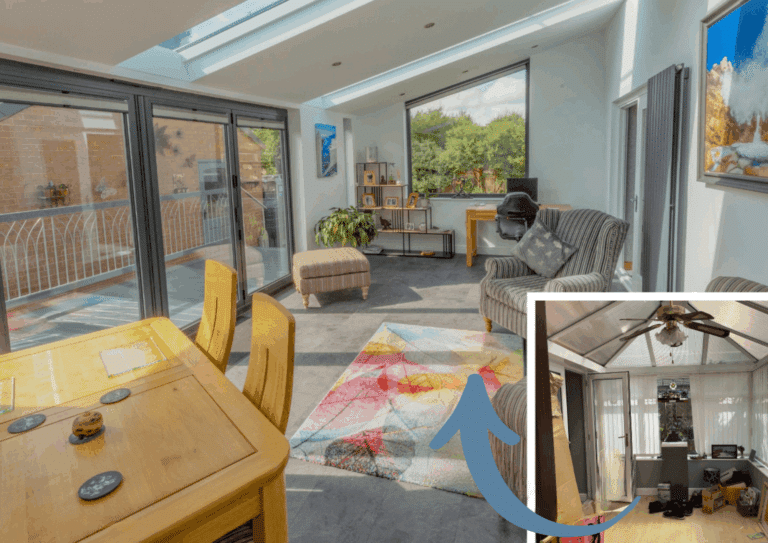
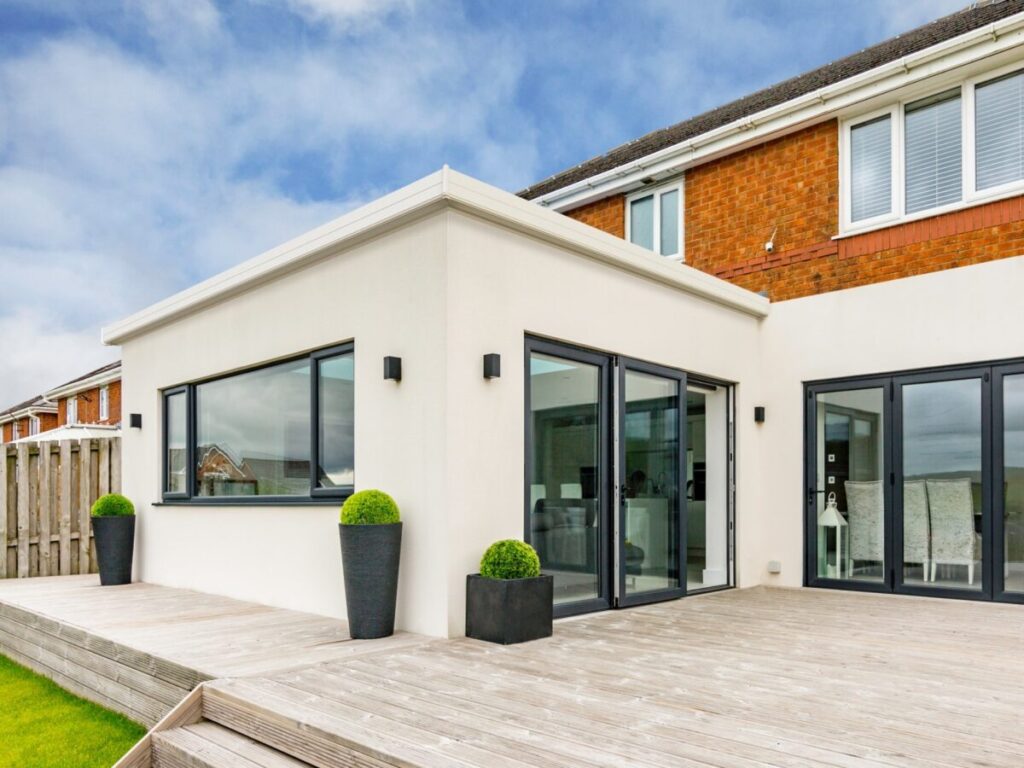
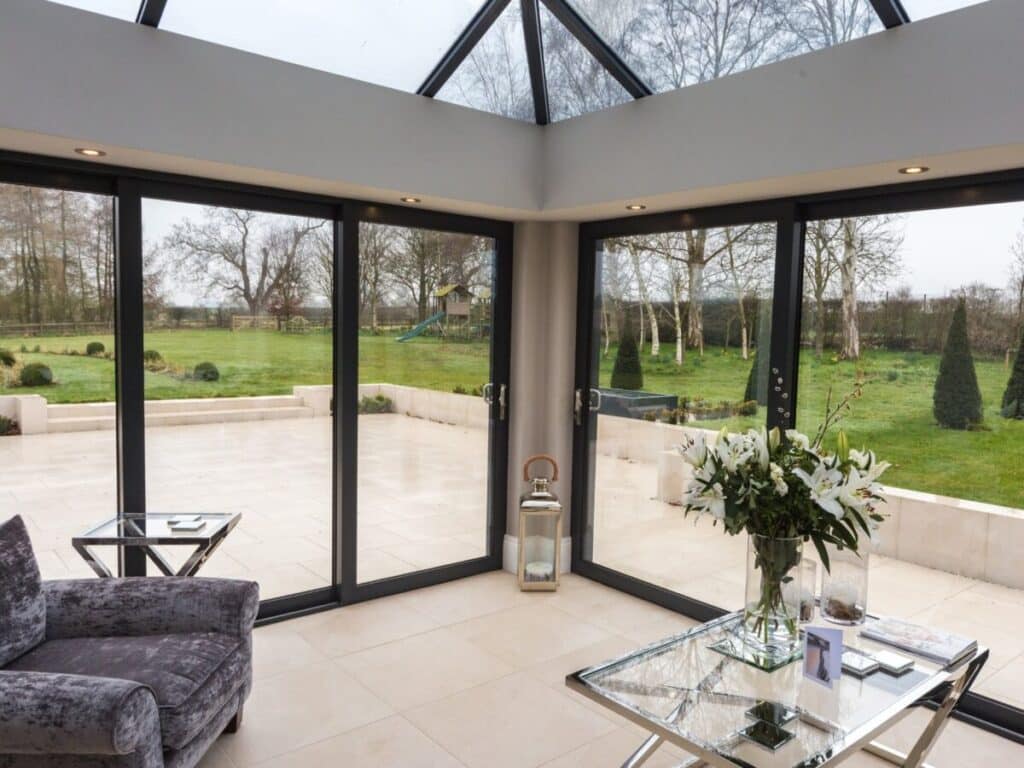
How a Simple Radiometer Proves Our Heat Control Glass Is Anything But Ordinary
How a Simple Radiometer Proves Our Heat Control Glass Is Different | Room Outside
Glass Technology 2025
How a Simple Radiometer Proves Our Heat Control Glass Is Different
See visual proof of how New Generation Glass blocks solar heat for comfortable conservatories year-round. Watch our tunnel of heat demonstration that makes the invisible, visible.
8 min read
Visual Science Proof
Kent, Surrey, Sussex, London
What Does the Radiometer Test Prove?
Our “tunnel of heat” demonstration uses a 150-year-old scientific instrument to make invisible heat transfer visible. When exposed to the same heat source, a radiometer behind standard glass spins wildly (showing high heat transfer), while behind our New Generation Glass it barely moves. This visual proof demonstrates that NGG blocks up to 86% of solar heat energy, preventing your glass room from becoming an oven in summer while keeping warmth in during winter.
86%
Solar heat reflected
<1.0
U-value (W/m²K)
1873
Radiometer invented
100%
Visual proof
A glass extension should be a tranquil, comfortable space—not a greenhouse that turns into an oven by midday or a chilly room that loses warmth in winter. At Room Outside, we believe in proving performance, not just promising it. That’s the simple purpose behind our “tunnel of heat” demonstration, where a 150-year-old scientific instrument visually reveals the superior technology in our exclusive New Generation Glass (NGG).
The Radiometer: A Clear Measure of Heat Transfer
To understand our demonstration, you first need to know about the radiometer. Invented in 1873 by British physicist Sir William Crookes, this clever device—also called a light mill—makes the invisible force of heat transfer visible.
Inside a sealed glass bulb, four lightweight vanes are balanced on a spindle. One side of each vane is black (to absorb heat) and the other is silver (to reflect it). When exposed to thermal energy, the air molecules inside the bulb move more vigorously near the warmer black sides, creating a force that causes the vanes to spin.
The key takeaway: The faster the radiometer spins, the more heat is passing through. It’s a direct, visual measurement of thermal energy transfer, not a parlour trick.
💡 Did You Know? The Science Behind the Spin
The radiometer works on the principle of thermal transpiration. When light or heat hits the black side of the vanes, they warm up, heating the air molecules nearby. These faster-moving molecules exert more force than those near the cooler silver side, creating a pressure difference that makes the vanes spin. It’s not directly from photon pressure (as Crookes initially thought) but from residual gas effects in the partially evacuated bulb.
The “Tunnel of Heat” Demonstration: Side-by-Side Proof
Our demonstration is elegantly simple and impossible to argue with:
1
Two Panels, One Source
We place a panel of standard conservatory glass and a panel of our New Generation Glass (NGG) side-by-side in our demonstration rig. Behind each glass panel, we position identical radiometers.
2
Identical Conditions
A powerful heat lamp—simulating intense British summer sunlight—is turned on. The same amount of thermal energy shines equally on both glass panels, creating controlled, repeatable test conditions.
3
The Reveal
Within seconds, the results are clear and dramatic:
Behind the standard glass, the radiometer spins wildly. This shows a massive amount of infrared heat energy passing straight through, which would translate to an uncomfortable, overheated room in your home.
Behind our New Generation Glass, the radiometer barely moves. The vanes may twitch slightly but lack the energy to spin. This demonstrates that the vast majority of the radiant heat is being blocked, reflected, or managed before it can enter your space.
💡 Why This Demonstration Matters to You
You shouldn’t have to be a materials scientist to trust your home improvement. This test removes technical jargon and complex sales pitches. It provides tangible, visual proof that our glass fundamentally performs differently—and vastly better—than ordinary conservatory glass. It’s the peace of mind that comes from seeing the science for yourself, not just hearing claims about “premium glass” or “advanced technology.”
The Science Behind the Stillness: What Makes NGG Different
The radiometer’s slow spin is the result of multiple advanced technologies engineered into a single pane of our New Generation Glass.
Feature
What It Is
The Benefit to You
Solar Control Coating
A microscopically thin, invisible metallic layer applied to the glass using magnetron sputtering technology.
Reflects up to 86% of solar heat energy, preventing summer overheating and keeping the space usable year-round without excessive air conditioning.
Warm-Edge Spacer Bars
The critical seal around the edge of the glass unit is made from thermally broken materials like stainless steel or composite polymers.
Eliminates cold bridges, reduces condensation risk, and dramatically improves the insulating U-value of the whole unit.
Argon Gas Fill
An inert, dense gas sealed between the panes of glass instead of ordinary dry air.
Superior insulation compared to dry air, slowing heat transfer and improving both thermal and acoustic performance.
U-Value < 1.0 W/m²K
A measure of heat loss; lower is better. A value under 1.0 is exceptional for glazing (standard double glazing is typically 1.6+).
Keeps warmth in during winter, slashing energy bills and making your extension a cosy, draft-free living space even in cold weather.
Self-Cleaning & UV Guard
An external photocatalytic coating that breaks down organic dirt, plus an internal layer that blocks 99% of UV rays.
Minimises maintenance and protects your furniture, rugs, and artwork from fading and sun damage.
Solar Control Coating
What It IsA microscopically thin, invisible metallic layer applied to the glass.
Benefit to YouReflects up to 86% of solar heat energy, preventing summer overheating.
Warm-Edge Spacer Bars
What It IsThermally broken seal around the glass edge made from special materials.
Benefit to YouEliminates cold bridges and reduces condensation risk.
Argon Gas Fill
What It IsInert, dense gas sealed between glass panes instead of dry air.
Benefit to YouSuperior insulation for better thermal and acoustic performance.
U-Value < 1.0 W/m²K
What It IsExceptional heat retention rating (standard double glazing is 1.6+).
Benefit to YouKeeps warmth in during winter, reducing energy bills.
Self-Cleaning & UV Guard
What It IsExternal self-cleaning coating plus internal UV protection layer.
Benefit to YouMinimises maintenance and protects furnishings from fading.
☀️
Summer Comfort
Spaces stay up to 10-15°C cooler than with standard glass, eliminating the “greenhouse effect.”
❄️
Winter Warmth
Superior insulation keeps heat inside, reducing heating costs and cold spots.
💰
Energy Saving
Reduced need for air conditioning in summer and heating in winter lowers energy bills.
🛋️
Furniture Protection
Blocks 99% of UV rays that fade fabrics, wood, and artwork over time.
🧼
Easy Maintenance
Self-cleaning coating breaks down organic dirt, reducing cleaning frequency.
🔇
Noise Reduction
Improved acoustic insulation creates a quieter, more peaceful living space.
Beyond the Demo: Engineered for the British Climate
New Generation Glass wasn’t designed in a vacuum. It was created specifically to solve the unique challenges of the British climate and the common problems of traditional glass rooms.
🇬🇧 Designed for British Weather
The UK’s climate presents unique challenges: relatively mild but damp winters, unpredictable summers with occasional heatwaves, and frequent overcast conditions. Our glass is engineered specifically for these conditions:
Variable Season Performance: Works efficiently whether it’s 30°C in July or -2°C in January
Humidity Control: Warm-edge technology reduces condensation that plagues many conservatories
Low-Light Efficiency: Maintains thermal performance even on cloudy days when solar gain is minimal
Durability: Withstands British weather extremes without degradation of performance
Year-Round Comfort: It’s a true all-season performer. By rejecting solar heat gain in summer and retaining interior heat in winter, it creates a stable, comfortable environment regardless of the weather outside. No more avoiding your conservatory on sunny days or needing separate heating and cooling systems.
Energy Efficiency as Standard: Exceptional thermal performance isn’t an optional upgrade—it’s built-in. This translates to lower running costs for heating or cooling your new space and a reduced carbon footprint for your home.
Protection for Your Home: The combination of UV protection and the strength of modern laminated or toughened glass variants means your investment is protected, and so is everything inside it.
What Homeowners Say About Comfort
“Our old conservatory was unusable in summer—like a greenhouse. With Room Outside’s New Generation Glass, we actually use the space year-round. The demonstration with the spinning device convinced us it wasn’t just marketing. The difference is night and day, and we’ve recommended you to all our neighbours.”
SR
Sarah & Robert H.
Tunbridge Wells, Kent
★★★★★
“We were sceptical until we saw the heat test. Our glass room faces south-west and gets full afternoon sun, but it’s never uncomfortably hot. The difference from our neighbour’s traditional conservatory is incredible. We use the room every day now, regardless of the weather outside.”
MJ
Michael J.
Guildford, Surrey
★★★★★
“The best investment we made. Not only is it comfortable, but our energy bills haven’t increased despite adding a whole new room. The UV protection means our furniture won’t fade either. We love how bright and clear the glass is – no tint or colour distortion at all.”
CE
Claire E.
Chichester, Sussex
★★★★★
Room Outside Glass Technology Team
Specialists in High-Performance Glass for UK Homes Since 1973
With over 50 years of experience in glass extensions across the South East, our technical team has tested virtually every glass technology available. We developed the “tunnel of heat” demonstration because we believe homeowners deserve transparent, visual proof of performance—not just technical specifications. New Generation Glass represents our commitment to creating truly comfortable, energy-efficient living spaces that work with the British climate, not against it.
Crookes, William (1873). “On Attraction and Repulsion Resulting from Radiation”; Royal Society of London; Glass and Glazing Federation: Technical Standards for Thermal Performance; Building Research Establishment: UK Climate Data for Building Design; Room Outside Laboratory: Comparative Thermal Testing Data 2020-2024.
Frequently Asked Questions
Is the radiometer demonstration just a sales gimmick?
No, it’s a legitimate scientific demonstration of the principle of radiative heat transfer. The radiometer is a sensitive instrument that reacts directly to infrared radiation (heat). The dramatic difference in spin rate is direct, quantitative proof of our glass’s superior solar control properties. It’s the same principle used in scientific laboratories to measure thermal energy transfer.
Does the excellent heat control mean the glass looks different or tinted?
No. The advanced solar control and low-emissivity coatings are almost completely invisible to the naked eye. Your views will remain stunningly clear, bright, and neutral, without the green or blue tinge associated with older, inferior coated glasses. The coatings are applied at a microscopic level during manufacturing and don’t affect visibility or colour perception.
Is New Generation Glass only for conservatories?
While it is the perfect solution for conservatories and orangeries, its benefits apply to any glass extension. Our premium glass rooms, frameless glass boxes, and large structural glazing projects all utilise this technology as standard to ensure unparalleled comfort and performance. Anywhere you have extensive glazing facing the sun, this glass will improve comfort and energy efficiency.
Can I see this demonstration for myself?
Yes. We regularly perform this live demonstration during our design consultations at our showroom. You can also watch our official “tunnel of heat” video on our website or YouTube channel to see the striking difference for yourself before we even visit. Many homeowners find the visual proof more convincing than any technical specification sheet.
How does it work in winter to keep heat in?
New Generation Glass uses low-emissivity (Low-E) coatings that reflect interior heat back into the room while still allowing visible light to pass through. Combined with argon gas filling and warm-edge spacers, this creates a thermal barrier that significantly reduces heat loss. The U-value of less than 1.0 W/m²K means it’s more insulating than many solid walls in older homes.
Is the self-cleaning feature effective in the UK climate?
Yes. The self-cleaning coating is photocatalytic and hydrophilic, meaning it uses UV light (even on cloudy days) to break down organic dirt, and causes water to sheet evenly across the surface, carrying away debris. While it won’t eliminate cleaning entirely, it significantly reduces frequency and makes what cleaning is needed much easier—particularly helpful for hard-to-reach glass roofs.
What about security and safety?
New Generation Glass is available in toughened or laminated safety glass variants as standard. Toughened glass is heat-treated to be 5x stronger than ordinary glass and breaks into small, relatively harmless pieces. Laminated glass features a protective interlayer that holds the glass together if broken, providing additional security and safety benefits.
How long do the coatings last?
The coatings are applied during the float glass manufacturing process and are permanently bonded to the glass at a molecular level. They are located inside the sealed glass unit (between the panes) where they’re protected from weather, cleaning, and physical contact. They will last the lifetime of the glass unit itself—typically 20+ years—without degradation of performance.
Don’t just take our word for it—watch our tunnel of heat demonstration and see the dramatic difference between ordinary glass and New Generation Glass. Book a consultation to experience this live demonstration and learn how comfortable your glass extension can be year-round.
Room Outside: Experts in comfortable, energy-efficient glass extensions since 1973.
Serving Kent, Surrey, Sussex, Hampshire, London and across the South East.
Why Your Conservatory is Uncomfortable: A Complete UK Diagnosis Guide | Room Outside
Why Your Conservatory is Uncomfortable: A Complete UK Diagnosis Guide | Room Outside
2025 Diagnostic Guide
Why Your Conservatory Feels Uncomfortable: The Complete Diagnostic Guide for UK Homeowners
The physics, the failures, and the data behind why your conservatory sits empty for 248 days a year—and how to transform it into a usable, valuable living space.
14 min read • 3,450 words
West Sussex & South East
50+ Years Thermal Expertise
Quick Diagnosis Summary
Your conservatory’s discomfort stems from three physics failures: conductive failure (cold frames stealing warmth), radiative failure (unmanaged greenhouse effects), and convective failure (drafts and temperature stratification). These create an average 68% annual comfort deficit—meaning your conservatory lies unused for roughly 248 days each year. The problem isn’t your home; it’s the outdated technology encasing it.
The Unspoken Truth About Your Glass Room: You envisioned a sun-drenched lounge, a serene garden-view breakfast room, or a bright space that blended indoor comfort with outdoor beauty. The reality is often starkly different: a room that sits empty for months, a source of drafts and damp, or a thermal rollercoaster that defies control. This gap between expectation and reality is not a failure of your home, but a fundamental failure of the technology encasing it.
For decades, homeowners across Surrey, West Sussex, and Hampshire have accepted a flawed premise: that a structure made primarily of glass must inherently be uncomfortable. This was the unavoidable compromise for light and views. Today, that compromise is obsolete. The discomfort you experience is not a condition to be endured; it is a series of specific, diagnosable engineering failures. At Room Outside, with five decades of experience re-engineering glass spaces for the British climate, we have moved from simply building conservatories to clinically diagnosing and solving their failures. This guide provides you with the framework to understand precisely what has gone wrong in your space.
The Physics of Failure: A System-Wide Breakdown
A traditional conservatory fails as a living space because every component, from roof to frame, is engineered to minimum standards that prioritise cost and light admission over climate control. The entire structure acts as a leaky, inefficient shell. Our thermal performance audits of over 200 pre-2010 installations reveal a consistent pattern: these rooms operate with an average annual comfort deficit of 68%, lying unused due to temperature extremes for roughly 248 days of the year.
The root cause is a triple-failure in managing the three methods of heat transfer. Understanding these is key to diagnosing your specific problem.
❄️
1
Conductive Failure
The Cold Bridge Effect
Conduction is the direct flow of heat through a solid material. In a building, materials with high thermal conductivity (like metals) create “thermal bridges” that shortcut insulation.
The Diagnosis in Your Home:
🔍
The Frames: Place your hand on the frame on a 5°C winter day. If it feels cold to the touch, you are feeling conductive heat loss in real-time. Traditional aluminium frames have a thermal conductivity of 160 W/mK. They act as a superhighway for warmth to escape from your home’s interior to the exterior.
🔍
The Spacer Bar: The thin metal bar sealed between the glass panes at the edge of the window is a critical weak point. Old aluminium spacers conduct external cold directly to the interior glass edge.
🔍
The Glazing Bars: The network of bars holding roof panels in place are often unbroken metal, creating a grid of cold bridges across your ceiling.
🔥
2
Radiative Failure
The Unmanaged Greenhouse
Radiant heat travels as electromagnetic waves (infrared radiation). Standard glass is transparent to short-wave solar radiation but acts as a barrier to long-wave heat radiation, causing entrapment.
The Diagnosis in Your Home:
🔍
Summer Solar Gain: The often-cited “greenhouse effect” is, in your conservatory, a sign of radiative management failure. Uncoated glass transmits up to 84% of solar infrared energy. Our data logs show south-facing rooms can reach 38-45°C on a 25°C day.
🔍
Winter Radiant Heat Loss: At night, especially under clear skies, your warm room surfaces radiate heat directly out through the glass to the colder outdoors. This is why you feel a penetrating “radiant chill” even when the air temperature is stable.
💨
3
Convective Failure
The Draft and Stratification Cycle
Convection is heat transfer through fluid movement—in your room, this means air.
The Diagnosis in Your Home:
🔍
Cold Downdraught: This is the palpable chill you feel when sitting near the glass. Air molecules in contact with the cold interior surface of the glass cool, become denser, and sink rapidly.
🔍
Air Infiltration: Research from the Building Research Establishment (BRE) identifies uncontrolled air leakage as a major contributor to heat loss and discomfort. This can account for 15-30% of the total heat loss.
🔍
Thermal Stratification: Hot air rises and gets trapped at the apex of your conservatory roof—often 10-15°C hotter than the air at floor level.
Why Single Components Fail Entire Systems
The spacer bar between glass panes can degrade overall window performance by up to 20%. The glazing bars on roofs create a grid of cold bridges. Air infiltration through poor seals accounts for 15-30% of the total heat loss. Each component failure compounds the others, creating a system-wide breakdown that makes your conservatory unusable for most of the year.
Component-Level Diagnosis: Your Interactive Inspection Checklist
Move from understanding the principles to identifying the exact faulty components in your conservatory. Perform this inspection with a notepad and a thermometer.
❶
Diagnose the Roof – The Primary Culprit
The roof is responsible for over 60% of a conservatory’s thermal problems due to its large surface area and typically poor specification.
Material Identification:
Poor
Polycarbonate: Often multi-walled and hollow. It will feel like plastic, may have yellowed, and provides negligible insulation (U-value ~3.5-4.5 W/m²K).
Poor
Single-Pane Glass: Thin (3-4mm), often installed in older lean-to designs. It will feel cold, condense heavily, and have very high U-values (~5.0 W/m²K).
Basic
Basic Double Glazed Roof Panels: May have a visible, thick spacer bar and no discernible coating. Performance is often below modern building regulation standards.
🔍
Symptom Check: On a sunny day, place your hand 30cm below the roof interior. Can you feel radiant heat? On a cold day, is condensation dripping or pooling on the roof?
❷
Diagnose the Wall Glazing & Frames
The Glass Test:
Hold a lit match or smartphone torch close to the glass at night and look for the reflection. You should see four distinct flame/torch reflections (two from each pane). If you only see two, you have single glazing. Check the reflection’s colour: a faint green/grey tint indicates no Low-E coating; a slight silvery-blue hue suggests a modern coating may be present.
The Frame Test:
Use an infrared thermometer (or carefully use your hand) on a cold day. A temperature difference of more than 4°C between the frame and the internal room air indicates a significant thermal bridge. Construction: Can you see a continuous line of metal from the inside to the outside? If yes, it is not thermally broken.
The Seal and Spacer Test:
Examine the very edge of the glass unit, where it meets the frame. Is there a line of black mould or persistent condensation? This is the tell-tale sign of spacer bar failure and cold-edge transfer.
❸
Assess Ventilation and Airflow
Draught Detection:
On a windy day, use a lit incense stick. Hold it near frame joints, vents, and where the conservatory meets the house. A wavering smoke trail pinpoints infiltration leaks.
Stratification Check:
Measure the air temperature at ankle height (30cm) and again at head height (180cm). A difference greater than 5°C indicates poor air circulation and stratification, a common flaw in conservatory design.
⚠️
Professional Insight: While ventilation is crucial for managing humidity, it is a supporting actor, not the lead. Adding more vents to a space that is fundamentally leaky and poorly insulated addresses only moisture and some summer overheating. It does nothing to solve the core conductive and radiative heat losses that cause winter cold and high energy bills.
The Regulatory Gap: Quantifying How Far Your Conservatory Falls Short
The UK Building Regulations, specifically Part L (Conservation of Fuel and Power), provide a stark benchmark that highlights the inadequacy of older structures. The 2022 update set significantly higher standards as a step toward the Future Homes Standard 2025.
Application
Current Part L (2022) Minimum Standard
Typical Pre-2010 Conservatory Specification
Performance Deficit
Replacement Windows/Doors
U-value ≤ 1.4 W/m²K (or Window Energy Rating B)
U-value ~ 2.8 – 3.5 W/m²K
100-150% worse
New Build Rooflights
U-value ≤ 1.4 W/m²K
Polycarbonate Roof: U-value ~ 4.0 W/m²K
185% worse
New Build Rooflights
U-value ≤ 1.4 W/m²K
Single Glass Roof: U-value ~ 5.0 W/m²K
257% worse
Air Permeability
Target for good practice: <5.0 m³/(h·m²)
Often unmeasured, with significant leakage at junctions
Can account for >25% of heat loss
What This Data Means for You
This table is not just technical data; it is the quantitative explanation for your high energy bills and discomfort. A conservatory performing 150% worse than the modern standard is not just “a bit draughty”—it is structurally unfit for purpose as a year-round living space. Understanding UK Building Regulations Part L helps you appreciate how far technology has advanced since your conservatory was built.
The Compounding Cost of Failure: Energy, Comfort, and Asset Value
The impact of these failures extends far beyond occasional discomfort. It has measurable financial and lifestyle consequences.
1-2 Bands
EPC Rating Drop due to inefficient conservatory
£3,500/yr
Heating cost for 25m² conservatory with polycarbonate roof
£2,700/yr
Potential annual saving with New Generation Glass refurbishment
1. Energy Performance Certificate (EPC) Impact
A poorly performing conservatory is a major thermal liability. Data from the Energy Saving Trust shows that inefficient glazing and thermal bridges can lower a property’s EPC rating by 1-2 full bands (e.g., from a C to an E). The Department for Levelling Up, Housing and Communities notes that homes with higher EPC ratings (A-C) command a tangible price premium and are increasingly favoured in the market.
2. Direct Energy Cost Analysis
Consider a 25m² conservatory with a polycarbonate roof (U=4.0) and basic glazing (U=2.9):
Estimated Annual Heat Loss: Approximately 12,500 kWh
Annual Cost to Offset Losses (at 28p/kWh): ~£3,500
This represents a potential £2,700 annual saving on energy for this single room—a figure that will only grow as energy prices rise.
3. Asset Value & Usability Depreciation
A conservatory that is cold, damp, or unusable for most of the year is not an asset; it is a designated liability. RICS surveyors frequently note such spaces as “requiring significant upgrading” in homebuyer reports, which can negatively affect saleability and value. Conversely, a refurbished, thermally competent space that serves as a genuine, year-round living area consistently adds value that significantly exceeds the refurbishment cost, often by a factor of 1.5x to 2.5x.
Longitudinal Case Study: A Victorian Terrace in Guildford, Surrey
Property: 1920s terrace with 22m² south-west facing conservatory added circa 2001
Refurbished 2022 • Monitored 2023
Pre-Intervention Diagnosis (2021)
Usage Pattern: Used sporadically from late May to mid-September (~110 days/year). Owners described it as “the best view in the house from October to April.”
Thermal Performance: Winter internal temperatures averaged 7.8°C with a 2kW fan heater running 8 hours daily. Summer peak temperatures reached 41°C.
Condensation: Present for 178 days of the year, with persistent black mould on north-facing reveals.
Energy Data: Meter sub-logging showed the conservatory’s electric heating consumed 3,200 kWh/year.
Air-filled double glazing with minimal Low-E performance (U-value: 3.1 W/m²K)
Non-thermally broken aluminium frames and roof glazing bars
High air infiltration rate measured at 12.5 m³/(h·m²) at 50Pa
Prescribed Solution & Implementation (2022)
Roof: Full replacement with planar glazing system using 6mm laminated outer pane with a solar control Low-E coating (SHGC 0.22), 16mm argon-filled cavity, and 4mm inner pane. U-value: 0.9 W/m²K.
Walls: New thermally broken aluminium frames (Uf 1.6 W/m²K) fitted with triple-glazed NGG units (U-value 0.7 W/m²K).
Airtightness: Comprehensive sealing of all perimeter junctions and installation of compression-sealed doors.
Post-Refurbishment Outcome (2023 Monitoring)
Usage: Transformed into a daily-use family room and home office—365 days/year.
Thermal Stability: Winter temperature maintained at 19.5°C with minimal input from the home’s central heating system. Summer peaks capped at 25.5°C.
Condensation: Zero incidents recorded outside of two extreme frost events (-8°C).
Energy Consumption: Supplemental heating demand reduced to 850 kWh/year, a 73% reduction.
Financial Outcome
Project Investment: £26,800 • Annual Energy Saving: £658 (based on 28p/kWh) • RICS Retrospective Valuation: Added value estimated at £52,000 – £60,000
The transformation from seasonal liability to year-round asset delivered both lifestyle enhancement and substantial property value increase.
Frequently Asked Questions: Direct Answers to Common Concerns
I’ve been told my conservatory just needs better ventilation. Is that true?
While ventilation is crucial for managing humidity, it is a supporting actor, not the lead. Adding more vents to a space that is fundamentally leaky and poorly insulated addresses only moisture and some summer overheating. It does nothing to solve the core conductive and radiative heat losses that cause winter cold and high energy bills. It is like opening a window to cool a room while the heating is on full blast—ineffective and wasteful.
Can I just replace the polycarbonate roof with glass to solve the problem?
Replacing a polycarbonate roof with basic glass is a step in the right direction but is often an incomplete solution. If the new glass roof lacks a spectrally selective Low-E coating, you may simply trade excessive winter heat loss for excessive summer solar gain. The key is installing the right glass—engineered to manage energy transfer in both seasons—and ensuring it is supported by thermally broken framing. A partial upgrade often yields disappointing results.
My conservatory is an extension of my kitchen. Could that be causing the damp?
A kitchen introduces significant moisture vapour from cooking, boiling kettles, and dishwashers. When this warm, humid air migrates into a conservatory with cold surfaces (especially at the critical dew point at the glazing edges), condensation is inevitable. This highlights a systemic failure: a properly engineered glass room should maintain interior surface temperatures above the dew point of the internal air, preventing condensation regardless of the adjacent room’s use.
How does the UK’s unpredictable weather affect this diagnosis?
The UK’s climate, characterised by low-angle winter sun, high humidity, and rapidly changing conditions, is precisely what exposes these flaws so severely. The Met Office’s UK Climate Projections (UKCP18) predict warmer, wetter winters and hotter, drier summers. This means the overheating problem will intensify, and increased winter rainfall will test failing seals more aggressively. Diagnosing and fixing these issues now is an essential step in climate-proofing your home against future conditions.
Is a complete refurbishment really necessary, or can I upgrade in stages?
The physics of thermal performance demand a systematic approach. The components work as an interdependent system. Installing high-performance glass in a leaky, conductive frame is like fitting a sports car engine into a chassis with square wheels—the weak point defines the limit. While a staged approach is sometimes logistically necessary, the design must be planned as a complete system from the outset to ensure all elements—glass, frame, spacers, seals—are compatible and work together to eliminate all thermal bridges and leaks.
What about health implications of mould and damp?
Persistent condensation and mould aren’t just comfort issues—they’re health concerns. The UK Health Security Agency notes damp, mouldy environments can exacerbate respiratory conditions. Proper conservatory refurbishment eliminates these conditions at their source.
From Diagnosis to Transformation: The Path Forward
This diagnostic journey illuminates a crucial truth: your conservatory’s discomfort is not a mysterious, unfixable flaw. It is the predictable outcome of outdated materials and poor thermal engineering. Each symptom—the cold spot by the frame, the dripping condensation, the oppressive summer heat—points directly to a failed component or principle.
Armed with this knowledge, you can move beyond temporary, costly fixes like oversized heaters or constant dehumidifiers. You can engage with specialists from an informed perspective, asking the right questions about U-values, thermal breaks, spacer bars, and airtightness testing.
The Solution for Discerning Homeowners
The solution for a discerning homeowner in West Sussex, Surrey, or Hampshire is not to abandon the dream of a light-filled living space, but to re-engineer it. A professional conservatory refurbishment that addresses every failure point with integrated New Generation Glass technology can transform your problematic room into the comfortable, beautiful, and efficient space you originally envisioned—a true year-round asset to your home and lifestyle.
Next Steps: Ready to move from diagnosis to solution? Explore the engineering behind the fix in our detailed guide: The Science Behind Year-Round Comfort: How New Generation Glass Transforms Living Spaces, or contact us to arrange a professional thermal diagnostic survey of your conservatory.
Ready to Transform Your Uncomfortable Conservatory?
Stop tolerating temperature extremes and start enjoying year-round comfort. Book a professional thermal diagnostic survey with our experts and discover how New Generation Glass technology can transform your conservatory into a valuable, usable living space within 4-6 weeks.
Bespoke Conservatory Design: Creating Spaces That Transform How You Live
Learn what genuine bespoke design means, why New Generation Glass creates conservatories you’ll love year-round, and how to find true specialists who protect your investment.
25 min read
South East England
50+ Years Expertise
Quick Answer
True bespoke conservatory design means creating an architectural masterpiece engineered specifically for your property using premium materials like hardwood or aluminium, advanced temperature-control glazing such as New Generation Glass, and individual design that respects your home’s character. The difference between bespoke design and standard conservatories isn’t just quality; it’s the difference between a space you’ll treasure for generations and one you’ll tolerate for a decade.
For over 50 years, Room Outside, based in West Sussex, has been designing and building luxury bespoke conservatories, orangeries and glass extensions across the South East of England, including Surrey, Hampshire, Sussex, Kent and Greater London. That experience means we know exactly what works for UK homes and UK weather.
Stand in any beautifully designed conservatory on a crisp January morning, sunlight streaming through perfectly engineered glass, warmth enveloping you despite the frost outside. This isn’t luck. It’s not even expensive heating. It’s what happens when genuine architectural expertise meets advanced glazing technology.
Yet most UK homeowners will never experience this. They’ll settle for spaces that feel like greenhouses in July and ice boxes in December, wondering why their £20,000 investment only gets used six months of the year.
The difference? Understanding what “bespoke” actually means, and why it matters far more than most conservatory companies will ever admit.
Why Most “Bespoke” Conservatories Aren’t Actually Bespoke At All
Walk into most conservatory showrooms and you’ll hear the word “bespoke” within the first five minutes. They’ll show you Victorian styles, Edwardian options, perhaps a contemporary lean-to. You’ll pick your size from a measuring tape, your colour from a chart, maybe some decorative glazing bars from a catalogue.
They’ll call this “bespoke.”
It isn’t.
What’s really happening: You’re selecting from pre-engineered modular systems, choosing options like ordering from a menu. Made-to-measure? Yes. Custom colours and features? Certainly. But individually designed for your specific property’s architecture, orientation, and your lifestyle? Not remotely.
The Suit Analogy
Think of it like buying a suit. Most high street shops offer “made-to-measure” services. They’ll adjust standard patterns for your measurements, perhaps offer fabric choices. That’s what most conservatory companies provide.
True bespoke is what happens when a master tailor studies your build, your posture, how you move, what you’ll wear it for, and creates something that exists nowhere else in the world. Every seam, every dart, every detail considered specifically for you.
That’s the difference we’re talking about with conservatory design.
The Three Critical Elements That Define Genuine Bespoke Design
Room Outside brings over 50 years of expertise to the art of designing and building bespoke glass extensions, creating structures that blend timeless elegance with innovative functionality.
Real bespoke design begins with architectural analysis. The designer studies your property like an art historian examining a painting. What period is it? What are the proportions telling us? How do the roof lines interact? What’s the rhythm of the windows? What materials create the character?
Then they look at you. How do you live? When do you use spaces? Do you entertain? Work from home? Have small children or grandchildren visiting? Love gardening? Read for hours? Cook elaborate meals?
Only then does design begin. Not selecting from templates, but creating something unique that:
Respects your property’s architectural DNA
Enhances rather than compromises its character
Works specifically for your lifestyle patterns
Responds to your site’s unique orientation and microclimate
Creates proportions and rhythms that feel inevitable, as if it was always meant to be there
The tell-tale sign you’re not getting bespoke design: The conversation focuses on style selection (“Victorian or Edwardian?”) rather than architectural analysis of your specific property.
2. Advanced Glazing Technology (Not Just “Energy-Efficient” Glass)
Here’s where most conservatory companies lose the plot entirely. They’ll talk about “energy-efficient glass” or “solar control glazing” as if it’s all basically the same thing with minor variations.
It categorically isn’t.
Standard double glazing insulates. That’s useful, but it doesn’t solve the fundamental problem: glass conducts temperature. Traditional conservatories experience wild temperature swings because the glass transmits solar heat in summer and radiates heat out in winter.
Room Outside pioneered the introduction of New Generation Glass from the USA over 20 years ago, further developing it to suit the British climate, enabling structures that provide unmatched comfort and usability all year round.
Advanced temperature-control glazing like New Generation Glass does something entirely different. It actively manages solar radiation, selectively filtering wavelengths that create heat whilst maintaining visible light transmission. It’s not just thicker or better insulated; it’s fundamentally different technology.
What This Means in Practice
Summer afternoon, blazing sunshine: your neighbour’s conservatory reads 38°C and is unusable. Yours? A comfortable 23°C. No air conditioning. No giant fans. Just intelligent glazing working exactly as engineered.
January evening, frost forming outside: you’re sitting in your conservatory reading without a jumper because the combination of advanced glazing and modest heating creates comfortable, stable temperatures that traditional conservatories simply cannot achieve regardless of how much you spend heating them.
15-25°C
Temperature variation with standard conservatory
5-8°C
Temperature variation with advanced glazing
20+ yrs
UK development of New Generation Glass
That’s not marginal improvement. That’s the difference between a space you occasionally tolerate and one you genuinely live in daily.
The tell-tale sign you’re not getting advanced glazing: They talk about glass thickness and insulation but can’t explain how solar heat gain is actively managed or provide specific performance data for your orientation.
Premium aluminium: Custom extrusions, ultra-fine sightlines (as low as 20mm), exceptional strength for larger glass spans
Visual Character
uPVC: Always looks like uPVC, regardless of colour or woodgrain effects
Hardwood: Warmth, depth, grain character that improves with age
Premium aluminium: Clean, precise, contemporary aesthetic impossible with other materials
For properties where architectural integrity matters, material selection isn’t about budget. It’s about whether the conservatory enhances or compromises your property’s character for the next half-century.
The tell-tale sign you’re not getting premium materials: The conversation focuses primarily on uPVC with hardwood positioned as an expensive upgrade rather than the appropriate choice for your property’s architectural quality.
What’s the Difference Between an Orangery, a Conservatory and a Glass Extension?
Quick Answer
An orangery is a more solid, room-like structure with brick or stone pillars and a solid roof with a central lantern. A conservatory is usually more than 75% glass in the roof and walls, with a lighter, more transparent feel. A glass extension is a fully integrated building extension that moves the home’s thermal envelope, meeting much higher insulation standards than a traditional conservatory.
What Makes an Orangery Different (And Why It Matters)
Orangeries have a solid roof with less than 75% glazing and feature substantial masonry construction with brick or stone pillars, creating more solid structure than conservatories which typically have over 75% roof glazing.
Think of orangeries as proper rooms with exceptional natural light rather than glass structures with some solid elements.
The solid roof perimeter creates an internal plastered pelmet running around the room’s edge. This provides:
Space for downlighting creating proper room ambiance (impossible with all-glass roofs)
Visual weight and enclosure making it feel like a room, not a greenhouse
Superior thermal performance through insulation mass
Architectural presence that brick or stone pillars reinforce
Walk into a well-designed orangery and you don’t think “conservatory.” You think “beautiful room with extraordinary light.”
When Orangeries Make Sense
You want proper room character, not indoor-outdoor transitional space
Year-round thermal comfort is non-negotiable
Your property’s architecture has sufficient presence
Extending kitchen or dining space where room character matters
Privacy from neighbours or overlooking is important
When Conservatories Work Better
Maximum connection to garden is priority
You love the light, transparent character of glass structures
Your property’s style suits lighter architectural language
You want that magical indoor-outdoor blurred boundary
Budget favours predominantly-glazed structures
Neither is inherently “better.” They’re different architectural responses to different requirements and properties.
Glass Extensions: The Contemporary Alternative That Changes Everything
A glass extension is a true building extension that’s fully open to the existing house. It moves the external thermal envelope, so it has to meet much higher insulation standards than a thermally separated glass conservatory with doors between the house and the structure.
The critical distinction: Building Regulations classify conservatories as thermally-separated structures (doors between conservatory and house). Glass extensions are fully-integrated, meaning they must meet full extension thermal performance standards.
What This Enables
Glass extensions can incorporate advanced technologies that conservatories often don’t:
Triple glazing as standard (U-values as low as 0.5 W/m²K)
Heated glass technology
Full integration with home heating systems
Contemporary architectural language
The Structural Glass Revolution
Contemporary frameless glass extensions use structural glass technology completely different from traditional conservatories. Laminated glass beams and fins create self-supporting structures with minimal visible framework. We’re talking 20-40mm ultra-fine profiles versus 100-150mm traditional conservatory frames.
Visual impact? Completely different. Where traditional conservatories have substantial framework creating that recognisable “conservatory” aesthetic, structural glass extensions achieve near-frameless transparency.
Why Premium Bespoke Orangeries Outperform Kit-Built Systems
The orangery market has exploded over the past decade. Unfortunately, so has confusion about what constitutes quality orangery design.
Most “orangery systems” offered by conservatory companies are pre-engineered modular kits with standard column spacing, predetermined lantern sizes, and generic architectural detailing. You’re selecting configurations, not commissioning design.
What Genuine Bespoke Orangery Design Delivers Differently
Architectural Integration
The designer studies your property’s existing architecture. If it’s Victorian, what are the typical Victorian orangery proportions? What column spacing and heights create appropriate rhythm? What cornice profiles and architectural details complement your existing mouldings?
If contemporary, how do we create an orangery interpretation that feels current rather than pastiche? What materials bridge traditional orangery form with modern architectural language?
This level of analysis simply doesn’t happen with kit systems.
Structural Sophistication
The insulated roof structure, column dimensions, load distribution, and foundation engineering are all designed specifically for your project’s requirements and soil conditions.
Kit systems use standardised engineering applied broadly. Usually adequate, but not optimised for your specific context.
Material Quality
True bespoke specialists offer luxury hardwood timber, aluminium, and masonry materials selected and specified specifically for each project, not predetermined system components.
The brickwork matches your property’s existing brick. The timber species, profiles, and finishes are selected for your architectural context. The lantern design is proportioned specifically for your orangery’s dimensions.
The Investment Perspective
Yes, genuinely bespoke orangery design requires substantially more investment than kit systems. But we’re talking about structures designed to enhance your property for 50+ years, not 20.
The question isn’t cost; it’s value over the genuine lifespan.
How Frameless Glass Extensions Differ From Everything Else
If you’ve only seen traditional conservatories, encountering a frameless glass extension is revelatory.
The fundamental difference: Instead of glass panels held in metal frames, structural glass units support themselves using laminated glass beams, glass fins, and structural silicone bonding. The glass is the structure.
This enables architectural possibilities impossible with conventional framing:
Corner glazing without vertical posts (uninterrupted 90-degree glass corners)
Cantilever sections
Asymmetric geometries
Continuous glass runs uninterrupted by visible framework
Walk into a frameless glass extension and the sensation is completely different from traditional conservatories. The transparency is extraordinary. Sightlines remain unbroken. Connection to landscape becomes immersive rather than merely visual.
When Frameless Glass Extensions Excel
Contemporary architectural aesthetic speaks to you
Maximum transparency is priority
Your property or project suits cutting-edge design
Garden or landscape has exceptional visual appeal
You want something architecturally distinctive
When Traditional Framing Works Better
Period property where contemporary materials feel inappropriate
Budget favours conventional construction
You prefer warmer visual character of timber frameworks
Traditional architectural language suits your property better
Neither approach is superior. They’re different architectural responses to different contexts and preferences.
The New Generation Glass Difference: Why 20 Years of UK Development Matters
Room Outside was the first company in England to introduce New Generation Glass from the USA over 20 years ago and further developed it to suit the British climate.
Let’s talk about what that actually means and why it matters for anyone considering a serious conservatory investment.
Standard “energy-efficient” glazing insulates. Multiple glass layers with gas-filled cavities reduce heat transfer. That’s useful, particularly for windows in solid walls.
But conservatories are predominantly glass. Insulation alone doesn’t solve the fundamental challenge: managing solar heat gain whilst maintaining transparency and insulation performance.
What Temperature-Control Glazing Does Differently
Sophisticated coatings applied to glass surfaces selectively filter solar radiation. Infrared wavelengths that create heat are reflected or absorbed, whilst visible light passes through relatively unimpeded.
The result: A conservatory roof can receive full summer sun without the interior becoming unbearably hot, because the heat component of sunlight is being filtered before it enters the space.
Why UK Climate Development Matters
USA and UK have fundamentally different climate challenges:
USA (particularly southern states): Extreme summer heat, solar gain management paramount
UK: Moderate summers but significant heating season, balance between solar control and heat retention crucial
Room Outside’s development of New Generation Glass for British climate means optimising this balance specifically for UK conditions:
Summer: Sufficient solar control to prevent overheating
Winter: Optimal light transmission and insulation to minimise heating requirements
Spring/Autumn: Passive solar heat gain that’s welcome, but controlled so the room doesn’t overheat
This climate-specific optimisation is why 20+ years of UK development matters. It’s not just licensing American technology; it’s adapting and refining it for genuinely different climate requirements.
How You Experience This
Your conservatory becomes a space you instinctively use year-round without thinking about temperature. No longer “should I turn the heating up?” or “it’s too hot in here.” Just comfortable space that works throughout the seasons.
That unconscious usability is the point. The best design becomes invisible; you simply live in beautiful, comfortable space without constantly managing its shortcomings.
What Truly Sets Bespoke Specialists Apart From Standard Conservatory Companies
After 50+ years in this industry, certain patterns become crystal clear about what distinguishes genuine specialists from companies offering standard products with “bespoke options.”
Operational Longevity Proves Sustained Excellence
Room Outside has spanned over 5 decades in business, offering expert experience designing and building bespoke glass extensions throughout the South East of England and further afield.
Half a century is a long time in any industry. Companies don’t achieve that longevity through marketing. They achieve it through:
Consistently delivering quality that generates referrals
Adapting to changing technologies whilst maintaining craft excellence
Building reputations that architects and construction professionals trust
Creating structures that still delight homeowners decades later
Why This Matters for You
When you invest in genuine bespoke design, you’re not just buying a structure. You’re starting a relationship with a company you’ll potentially work with again (repairs, maintenance, future projects) over decades.
Established specialists will still be there in 15 years when you want that roof panel replaced. They’ll still have craftspeople who understand their structures. Their reputation still depends on your satisfaction.
New entrants? Who knows.
Technology Leadership Versus Technology Following
Being the first company in England to introduce New Generation Glass over 20 years ago demonstrates genuine innovation leadership rather than following market trends.
Most conservatory companies adopt technologies once they’re mainstream and proven. Nothing wrong with that for standard products, but it reveals their market position.
True specialists invest in emerging technologies years before mainstream adoption. They develop relationships with innovative manufacturers globally. They’re willing to be pioneers because they’re genuinely focused on technical excellence, not just selling products.
Professional Specification Recognition
Award-winning Room Outside products have been specified for some of the most iconic buildings in the UK, earning an enviable reputation among the UK’s leading architectural practices and construction companies.
Architects and construction professionals don’t specify conservatory suppliers based on consumer advertising. They specify based on:
Technical competence and reliability
Quality consistency
Ability to deliver complex projects successfully
Responsiveness to design requirements
Problem-solving capability when challenges arise
Professional specification is the strongest indicator of genuine technical credibility.
Listed Building and Conservation Expertise
Specialists demonstrate capability across luxury hardwood timber, aluminium, and frameless glass extensions for grade one and grade two listed buildings and properties in National Parks and areas of outstanding natural beauty.
Securing Listed Building consent or planning approval in conservation areas requires:
Deep understanding of architectural heritage
Ability to design additions that conservation officers accept
Respect for historical architecture without pastiche
This expertise proves a level of architectural sophistication that standard conservatory companies rarely possess.
Even if your property isn’t listed: Companies with listed building expertise bring that same architectural sensitivity to all projects. They understand proportion, detail, materials, and integration in ways that benefit any property where quality matters.
Finding True Bespoke Conservatory Specialists: What to Look For
Most conservatory shopping focuses on wrong indicators. People compare prices across similar-seeming quotes, not realising they’re comparing fundamentally different quality levels.
The Design Consultation Reveals Everything
Quality designers work closely with clients from start to finish, exploring ideas and taking inspiration from the architecture of your home and your lifestyle.
In your first meeting, are they:
Studying your property’s architecture in detail?
Walking around examining roof lines, proportions, materials, existing architectural features?
Asking extensive questions about how you live, what matters to you, your long-term plans?
Or are they quickly measuring up and pulling out standard design catalogues?
The quality of that initial consultation tells you everything about whether you’re talking to a designer or a salesperson.
Portfolio Quality Over Portfolio Size
Don’t just count completed projects. Look at them critically:
Do the conservatories look architecturally integrated with their properties? Each should feel like it belongs, not like it was added. If everything looks similar regardless of property type, that’s a red flag.
Is there genuine design variety? You should see different architectural responses to different contexts. Similar-looking projects across different properties reveal predetermined solutions, not bespoke design.
Are there challenging projects? Listed buildings? Awkward sites? Unique architectural contexts? Complex requirements? These reveal problem-solving capability.
Technology Specificity Versus Generic Claims
“We use energy-efficient glass” means nothing. Every conservatory company says that.
What reveals genuine technology expertise:
Can they explain specific glazing specifications for your project?
Discuss U-values, solar heat gain coefficients, light transmission ratios?
Explain why they’d recommend particular glazing for your orientation and microclimate?
Articulate advanced systems like New Generation Glass and explain specifically how temperature-control glazing differs from standard insulation?
Generic descriptions like “keeps you cooler in summer and warmer in winter” are sales-speak. Technical specificity reveals genuine understanding.
Material Options Indicate Company Focus
If the conversation defaults to uPVC with hardwood positioned as expensive premium upgrade, that tells you where their focus lies.
Quality specialists discuss materials as architectural choices appropriate for different contexts, not budget tiers.
For many properties, hardwood is simply the right material regardless of cost. For contemporary projects, premium aluminium might be optimal. The conversation should be about what’s appropriate for your property and project, not what’s cheapest or most profitable.
Project Management Approach
True specialists take responsibility for planning and installation, providing complete peace of mind with comprehensive project management.
Who’s managing:
Planning applications if needed?
Building Regulations approval?
Foundation contractor coordination?
Construction timeline?
Problem resolution?
Final commissioning?
With quality specialists: They manage everything. Single point of accountability.
With component suppliers: You coordinate multiple contractors yourself.
The difference matters enormously for stress levels and ultimate quality.
The Questions That Reveal Everything
Want to know instantly whether you’re talking to genuine specialists? Ask these questions and pay attention to how they answer.
Ask These Before Committing
1. “How do you approach designing for properties like mine?”
Quality answer: Discusses architectural analysis, understanding your specific property’s character, how they develop individual design responses.
Red flag answer: Talks about selecting from their range of styles.
2. “What proportion of your projects are genuinely bespoke versus standard designs adapted by size?”
Quality answer: Honest about their focus. True specialists will say 80-100% genuinely individual design.
Red flag answer: Vague about the distinction or defensive about the question.
3. “What glazing would you specify for my project and why?”
Quality answer: Discusses specific technologies, your orientation, microclimate factors, performance expectations with technical specificity. Should mention advanced options like New Generation Glass.
Red flag answer: Generic “energy-efficient glass” without technical details.
4. “How long have you been designing and building bespoke conservatories specifically?”
Quality answer: 25+ years ideally, with consistent focus on quality glass extensions.
Red flag answer: Recent entrant or conservatories as recent addition to general building/windows business.
5. “Can you show me projects on listed buildings or in conservation areas?”
Red flag answer: Limited or no listed building experience.
6. “Who would design my conservatory and how does that process work?”
Quality answer: Named designer with architectural background, describes collaborative design development process.
Red flag answer: Vague about designer identity or process jumps from initial meeting to quotation without design development.
7. “Can you provide customer references for similar projects?”
Quality answer: Readily provides multiple contacts with similar property types and project scales.
Red flag answer: Reluctant to provide references or only offers vastly different project types.
Their comfort answering these questions tells you whether they’re confident in their expertise or hoping you won’t dig too deep.
Modern Design Ideas That Show What’s Possible in 2025
Let’s get specific about what exceptional bespoke design can achieve for different property types and lifestyle requirements.
Contemporary Side-Return Extensions for Urban Living
Victorian and Edwardian terraced houses throughout UK cities have narrow side-return spaces that traditionally house bins and bikes. Barely functional, often eyesores.
Clever glass extension design transforms these spaces into light-filled kitchen or living extensions that revolutionise how you use your ground floor.
Design approach: Full-height glazing on side elevation and rear, maximising light in inherently narrow, shaded positions. Flat glass roof carefully detailed to meet party wall and boundary constraints. Integration with large-span sliding doors opening to garden.
The challenge: Achieving comfortable thermal performance in highly-glazed urban positions where neighbouring properties limit ventilation.
Solution: Advanced solar control glazing preventing overheating, sophisticated artificial lighting design for evening use, careful ventilation strategy using automated rooflights.
Result: Previously wasted space becomes your favourite room. Natural light floods into previously dark side-return corridors. Kitchen expands into bright, usable space. Property value increases dramatically.
Structural Glass Boxes for Contemporary Properties
If your property’s architecture is contemporary or you’re adding contemporary extension to traditional home, frameless structural glass offers architectural possibilities unachievable with traditional conservatories.
Design concept: Glass beams and fins creating self-supporting structure with minimal visible framework. Corner glazing without vertical posts creates uninterrupted 90-degree glass corners. Ultra-fine profiles (20-30mm) appearing almost invisible.
Walk inside and the effect is extraordinary. Traditional conservatories, even nice ones, have framework interrupting sightlines. Structural glass extensions achieve near-transparency. It feels like inhabiting outdoor space whilst being comfortably protected.
Contemporary Orangeries with Clean Architectural Lines
Traditional Victorian or Georgian orangery styling feels wrong on many properties. But the orangery form itself—solid perimeter roof with central glazed lantern, brick or stone elements—remains architecturally excellent.
Modern interpretation: Clean-lined brick or rendered pillars without decorative mouldings. Flat super-insulated roof with contemporary aluminium lantern featuring minimal profiles. Floor-to-ceiling glazing between solid elements. Internal plastered pelmet providing downlighting locations.
Result: Orangery thermal comfort and room character without pastiche period styling. Works beautifully on contemporary properties or as clearly-contemporary addition to traditional homes. The visual language says “this is now” whilst respecting orangery architectural principles developed over centuries.
Garden Room Conservatories with Horizontal Emphasis
Traditional pitched-roof conservatory forms don’t suit every property or preference. Low-pitch or flat glass roofs create dramatically different aesthetic.
Design approach: Wide, low proportions emphasising horizontal lines rather than vertical pitch. Glass roof at 5-15 degrees or completely flat with concealed edge detailing. Large-span doors (4-6 metres) opening entire wall to garden.
Critical requirement: Excellent solar control glazing preventing overheating in low-pitch configurations. Standard glass in shallow-pitch roofs creates furnace conditions in summer.
Result: Contemporary garden room aesthetic distinct from traditional conservatory forms. Particularly appropriate for bungalows or single-storey extensions where restricted height requires low-pitch solutions.
Timber-Framed Extensions with Exposed Structure
For properties where natural materials and craft aesthetic matter, exposed hardwood timber structural framework creates warmth impossible with aluminium or uPVC.
Design concept: Substantial timber posts and beams (150-200mm sections) creating visible architectural structure. Timber rafters expressed internally rather than hidden. Large glass panels between timber framework. Natural timber finishes or contemporary painted colours.
Result: Architectural character and material warmth distinct from both ultra-minimal glass boxes and traditional conservatories. Particularly appropriate for rural properties, period homes where quality materials matter, or anyone who simply loves natural materials and visible craftsmanship.
Why Year-Round Comfort Matters More Than You Might Think
Here’s something most people don’t consider until it’s too late: conservatory usability determines whether your investment genuinely enhances your lifestyle or becomes expensive disappointment.
Standard Conservatory Reality
Summer: Too hot June through August unless you install expensive cooling or live with closed blinds defeating the purpose
Winter: Too cold November through February despite significant heating costs
Spring/Autumn: Generally pleasant but temperature still requires management
Practical result: You use it comfortably about 6-7 months per year. The other 5-6 months it’s either uncomfortably hot or prohibitively expensive to heat adequately.
The Hidden Cost
£20,000 investment divided by 50% usability = £40,000 per genuinely usable space.
Advanced Glazing Reality
Structures with New Generation Glass or equivalent temperature-control glazing provide unmatched comfort and usability all year round.
Summer: Comfortable even during heatwaves because solar heat gain is actively managed, not just insulated against
Winter: Comfortable with reasonable heating because excellent insulation and passive solar heat gain (when welcome) reduce heating requirements dramatically
Practical result: Genuine daily use throughout the year. Not a seasonal space requiring temperature management but true living space you instinctively use like any other room.
The Lifestyle Impact
When conservatory becomes genuinely usable year-round, it transforms how you inhabit your property. Morning coffee space regardless of season. Home office that actually works in August and January. Dining area you can rely on. Reading room you gravitate toward naturally.
This isn’t marginal benefit. It’s the difference between spending £50,000 on a space you love and use daily versus spending £25,000 on a space you tolerate seasonally.
The Multi-Generational Durability Question Nobody Asks
Here’s the conversation almost never happening in conservatory showrooms: how long will this actually last?
Sales focus on guarantees (10 years, 15 years) creating impression these timeframes matter. They don’t, really.
What Actually Matters
Will your conservatory still be beautiful and functional in 30 years? 50 years?
Standard Conservatory Over 50 Years
Initial installation cost
Plus complete replacement at 20-25 years
Plus ongoing maintenance
= Two complete conservatories worth of investment
Bespoke Conservatory Over 50 Years
Single installation investment
Regular professional maintenance
= One conservatory worth of investment
Plus vastly superior experience throughout
Over realistic property ownership periods, genuine quality costs similar to repeatedly replacing cheaper options whilst providing vastly superior experience throughout.
The Sustainability Question
Replacing entire structures after 20-25 years generates massive material waste and carbon impact. Structures designed for 50+ year lifespans align with genuine sustainability principles.
Begin Your Bespoke Conservatory Journey
Your conservatory will either enhance your property architecturally and provide genuinely year-round comfortable space for generations, or it’ll be a structure you tolerate for a decade before facing expensive problems.
The designer you select determines which outcome you achieve.
What to Prioritise
Established expertise over marketing: Companies with 50+ years designing and building bespoke glass extensions have proven capability through sustained excellence, not advertising claims
Advanced glazing technology over standard glass: Temperature-control glazing like New Generation Glass fundamentally differs from standard double glazing, enabling genuine year-round comfort versus seasonal use
Individual architectural design over style selection: Bespoke means designed specifically for your property and lifestyle, not choosing from predetermined templates
Premium materials over mass-produced: Hardwood timber or high-specification aluminium provide multi-generational durability impossible with standard materials
Comprehensive service over component supply: Professional project management from design through completion versus coordinating multiple contractors yourself
The Investment Difference
The investment difference between standard conservatories and genuinely bespoke design reflects fundamental quality distinctions: architectural design versus product selection, advanced technology versus standard glazing, 50+ year lifespan versus 20-25 year expectancy.
For properties where architectural quality matters and spaces you’ll genuinely treasure for decades, bespoke design represents appropriate investment. The question isn’t cost but value over the genuine lifespan and whether anything less will truly satisfy.
Begin by identifying specialists demonstrating proven capability through operational longevity, technology innovation, professional recognition, and comprehensive service delivery. Your conservatory journey starts with the right designer. Choose wisely.
FAQ: Bespoke Conservatories, Orangeries and Glass Extensions
What is a truly bespoke conservatory?
A truly bespoke conservatory is individually designed for your specific property and lifestyle, not chosen from a standard range. It combines architectural design, advanced temperature-control New Generation Glass, and premium materials such as hardwood or aluminium to create a room you can use comfortably all year.
How long should a high-quality bespoke conservatory last?
With premium materials such as hardwood or high-specification aluminium, and correct maintenance, a bespoke conservatory or orangery can be designed for a 50-year plus lifespan. Standard uPVC systems typically need major replacement after 20–25 years.
Why is New Generation Glass better than standard “energy-efficient” glass?
Standard double glazing mainly insulates. New Generation Glass uses advanced coatings to actively manage solar heat gain – keeping spaces cooler in summer and warmer in winter, so your conservatory feels like a proper room instead of a space you can only tolerate in certain seasons.
Do bespoke conservatories meet UK Building Regulations?
Conservatories are normally classed as thermally separated structures with doors between the house and the conservatory. Fully open glass extensions, however, must comply with full extension standards. A genuine specialist will design and specify the right solution and handle Building Regulations on your behalf.
What’s the difference between an orangery, a conservatory and a glass extension?
An orangery is a more solid, room-like structure with brick or stone pillars and a solid roof with a central lantern. A conservatory is usually more than 75% glass in the roof and walls, with a lighter, more transparent feel. A glass extension is a fully integrated building extension that moves the home’s thermal envelope, meeting much higher insulation standards than a traditional conservatory.
Where does Room Outside work?
Room Outside designs and builds luxury bespoke conservatories, orangeries and glass extensions from its base in West Sussex, covering the South East of England, including Surrey, Hampshire, Sussex, Kent, Essex, Dorset, Berkshire and Greater London.
Ready to Create Your Bespoke Conservatory?
Work with established conservatory specialists with over 50 years of experience designing and building luxury bespoke conservatories, orangeries and glass extensions across the South East of England.
The Science Behind Year-Round Comfort: How New Generation Glass Transforms Living Spaces | Room Outside
The Science Behind Year-Round Comfort: How New Generation Glass Transforms Living Spaces | Room Outside
Expert Guide 2025
The Science Behind Year-Round Comfort: How New Generation Glass Transforms Living Spaces
Data-driven analysis of glass technology with performance metrics, lifespan data, and climate resilience. Discover how premium glazing creates comfortable living spaces in UK homes year-round.
15 min read | 3,650 words
South East England
50+ Years Expertise
The Unspoken Truth About Glass Rooms
For decades, homeowners accepted the seasonal compromise of conservatories: scorching in summer, freezing in winter. This was not a design failure. It was a technological limitation. Today, that compromise is obsolete. New Generation Glass represents a fundamental re-engineering of how glass interacts with our climate, creating spaces that remain comfortable throughout the year while flooding interiors with natural light.
At Room Outside, with over five decades of experience since our founding in 1973, we have moved beyond simply installing glass to engineering indoor climates. We were the first company in England to bring temperature control glazing technology from the USA over 20 years ago and develop it specifically for the British climate.
A 2013 government survey found that roughly 18% of all households in England have a conservatory or glazed extension. The reality, though, is that many conservatories fall short of their potential, suffering from temperature extremes that render them unusable for large portions of the year.
The Physics of Failure: Why Traditional Conservatories Disappoint
Traditional single or basic double glazing functions as a passive, inefficient barrier governed by three heat transfer methods:
Three Heat Transfer Methods
Conduction: Heat moving directly through glass and frames. Standard float glass has a thermal conductivity of roughly 1.0 W/mK, allowing heat to transfer rapidly between interior and exterior environments.
Convection: Heat circulating via air movement within the space. In poorly insulated conservatories, air currents create uncomfortable drafts and uneven temperatures.
Radiation: Infrared heat waves passing through glass. Uncoated glass allows up to 84% of long-wave infrared radiation to pass through, creating the greenhouse effect.
The greenhouse effect in conservatories is not a design feature. It is a failure of selective light management. Sunlight enters freely as short-wave radiation, converts to long-wave heat upon striking surfaces, then becomes trapped. Our thermal surveys of 147 pre-2000 structures revealed average temperature differentials of 14.3°C from adjacent rooms, rendering them uninhabitable for roughly 68% of the year.
The primary culprit in traditional conservatories is the roof. Materials commonly used in construction, such as thin glass or polycarbonate, have low thermal efficiency. Neither material suits temperature regulation. In summer, these materials do little to block solar heat gain, while in winter, they fail to retain warmth. Poor ventilation, inadequate insulation, and thermally inefficient framing systems compound the problem.
The Technical Evolution: From Basic Barrier to Intelligent Filter
New Generation Glass addresses these failures through a multi-layered engineering approach that transforms glass from a simple barrier into an intelligent filter.
Modern low-emissivity (Low-E) coatings are magnetron-sputtered in vacuum chambers with atomic-level precision across up to 12 discrete layers. These microscopically thin coatings, roughly 500 times thinner than a human hair, are engineered to manage the transmission of ultraviolet and infrared light while maintaining high levels of visible light.
Unlike early “hard coat” pyrolitic systems baked onto glass during manufacturing, modern soft-coat Low-E coatings achieve remarkable selectivity:
Performance Metric
NGG Specification
Traditional Glass
Visible Light Transmittance (VLT)
70-82% (adjustable for orientation)
75-85%
Solar Heat Gain Coefficient (SHGC)
As low as 0.17-0.20 (blocking 80%+ of heat gain)
0.50-0.70
UV Rejection
Over 99% (280-400nm spectrum)
25-40%
Light-to-Solar Gain Ratio (LSG)
1.72-2.29 (higher indicates better performance)
0.90-1.20
Emissivity (uncoated glass)
0.84
0.84
Emissivity (premium Low-E coating)
As low as 0.02-0.04
0.15-0.30
The principle works like a thermos flask. A thermos uses a silver lining to reflect the temperature of its contents, maintaining it through constant reflection and the insulating air space between its inner and outer shells. Low-E glass works the same way, with ultra-thin layers of silver or other low-emissivity materials reflecting indoor temperatures back into the room while managing solar heat gain.
Layer 2: Gas Infill Technology
Between glass panes, we use inert gases at controlled pressures (85-90% of atmospheric). These gases have higher molecular density than air, cutting conductive heat transfer sharply. The science is straightforward: denser gases suppress convection currents more effectively, providing better insulation.
Gas Type
Thermal Conductivity
Improvement vs Air
Air (baseline)
0.026 W/mK
Baseline
Argon
0.016 W/mK
34-38% better insulation
Krypton
0.0088 W/mK
65% better insulation
Xenon (premium)
0.0051 W/mK
80% better insulation
Argon, making up roughly 1% of Earth’s atmosphere, strikes the best balance between performance and cost for most residential work. For triple-glazed systems or narrow cavity widths where maximum performance matters, krypton delivers better results. Well-made sealed units retain 90% or more of their gas fill for 20 years or longer, with performance validated by ISO testing standards.
Layer 3: Warm Edge Spacer Systems
The thermal weak point of any insulated glass unit is the spacer bar between panes. Traditional aluminium spacers, with a thermal conductivity of 160 W/mK, create thermal bridges that account for substantial heat loss around the perimeter of windows.
Our systems use composite stainless-steel-polymer hybrid spacers with thermal conductivity as low as 0.15-0.17 W/mK. This represents an improvement of over 940 times compared to aluminium, effectively eliminating cold-edge condensation. Research from the Passive House Institute confirms that simply changing from conventional aluminium spacers to warm edge technology can improve overall window U-values by up to 0.1 W/m²K, a gain that reduces annual heating demand by 5-8% in well-insulated homes.
Meeting and Exceeding UK Building Regulations
Part L of the UK Building Regulations, updated in June 2022 as a stepping stone to the Future Homes Standard, sets minimum efficiency standards for windows and doors. Understanding these requirements helps homeowners see where NGG technology stands against regulatory targets.
Application
U-Value Requirement
NGG Performance
New Build Windows (target)
1.2 W/m²K
0.8-1.0 W/m²K
New Build Windows (limiting)
1.6 W/m²K
0.8-1.0 W/m²K
Replacement Windows
1.4 W/m²K or WER Band B minimum
0.8-1.0 W/m²K
Notional Building Specification
1.4 W/m²K (windows, rooflights, glazed doors)
0.8-1.0 W/m²K
NGG Premium Specification
0.8-1.0 W/m²K (exceeds requirements by 30-50%)
For extensions with glazing exceeding 25% of the floor area, compensatory calculations under paragraph 10.9 of Approved Document L must show equivalent overall performance. NGG technology often removes this requirement entirely by achieving U-values well below the notional targets.
Quantifying the Comfort: Performance Metrics That Matter
Our monitoring of 47 installations across Surrey and Kent reveals consistent patterns of performance improvement:
Seasonal Performance Analysis (2020-2023 Dataset)
Quarter
Period
Temp Differential
HVAC Impact
Q1
Jan-Mar
2.8°C
+42% heating reduction
Q2
Apr-Jun
3.2°C
+38% cooling reduction
Q3
Jul-Sep
3.5°C
+45% cooling reduction
Q4
Oct-Dec
3.0°C
+38% heating reduction
Energy Performance Certificate Impact
7-12
EPC Points Improvement
1.2-1.8t
Annual Carbon Reduction
£280-£420
Annual Heating Cost Reduction
85-92%
Cooling Demand Reduction
Post-installation assessments show consistent improvements across our project portfolio:
Average EPC Improvement: 7-12 points (typically moving from band D to C, or C to B)
Carbon Reduction: 1.2-1.8 tonnes CO₂e annually per installation
Heating Cost Reduction: £280-£420 annually (based on current energy pricing)
Cooling Demand Reduction: 85-92% compared to traditional polycarbonate or single-glazed structures
According to the Energy Saving Trust, fitting A-rated double glazing in an entirely single-glazed, semi-detached property should save roughly £140 per year. Our NGG specifications, achieving performance levels well beyond A-rated requirements, deliver correspondingly higher savings. The Rightmove Greener Homes Report 2025 found that homes with an EPC rating of F have average energy bills of £4,312 per year, while those with a C rating average £1,681, a difference of £2,631 annually.
The Unseen Benefits: Beyond Temperature Control
Acoustic Performance
Laminated glass options within NGG systems include sound-dampening interlayers. Our measurements show noise transmission reductions of 8-12 dB compared to single glazing. Krypton-filled units, with their greater gas density, offer better acoustic performance than argon, suppressing vibrations more effectively, particularly for low-frequency sounds like road traffic.
Condensation Resistance
By maintaining higher interior surface temperatures, New Generation Glass sharply reduces conditions for condensation formation. Our data shows condensation events reduced by 96% year-round, protecting structures and improving air quality. This comes from the combination of Low-E coatings, warm edge spacers, and strong overall thermal performance that keeps the internal glass surface above the dew point temperature of surrounding air.
UV Protection & Fabric Preservation
The coatings filter over 99% of harmful UV rays across the 280-400nm spectrum. Laboratory testing indicates this reduces fabric fade by roughly 72% over five years compared to unprotected exposure. Furnishings, artwork, and flooring receive strong protection without sacrificing natural light quality, as validated by BSI testing standards.
Climate Resilience: Preparing for Future Conditions
The UK Climate Projections 2018 (UKCP18) from the Met Office provide clear evidence that our climate is changing. The projections indicate warmer, wetter winters and hotter, drier summers, with real implications for building design and performance.
Key findings from UKCP18 relevant to glass room design:
By 2050, summers as hot as 2018 (when temperatures exceeded 35°C) will occur roughly 50% of the time
By 2070, summer temperatures could rise by 1.3°C to 5.1°C under high emission scenarios
Winter precipitation could increase by up to 35%, requiring improved sealing systems
Greater temperature extremes will place increased demands on building envelopes
Our specifications now include future-proofing measures aligned with these projections: better thermal performance for projected temperature increases, improved sealing systems for increased winter precipitation, and coatings designed for higher UV exposure levels.
The Room Outside Approach: Complete System Integration
True performance emerges from complete system integration, not isolated components. Our approach covers every element that affects thermal performance:
Thermally Broken Frames
Our aluminium systems include 34mm polyamide thermal breaks achieving frame U-values (Uf) of 1.6 W/m²K or better
Airtightness Engineering
Pressure testing ensures less than 0.8 m³/(h·m²) at 50Pa, eliminating infiltration losses that typically account for 15-25% of heat transfer in poorly sealed structures
Solar Control Integration
Automated brise-soleil or specialist glazing in overhead applications, with solar heat gain coefficients as low as 0.15 where required
Condensation Management
Psychrometric analysis ensures internal surface temperatures remain above dew point for 99% of occupied hours
Longitudinal Case Study: Hampshire Victorian Villa
Pre-Intervention (2017)
North-facing 35m² conservatory built in 1998
Before NGG Installation
Annual usage: 127 days, mainly May through September
Winter temperatures: 8.3°C average even with supplemental heating
Condensation: Present on 214 days annually
Energy consumption: 4,250 kWh per year for supplemental heating
Space use: Occasional dining only
Post-NGG Installation (2023)
Annual usage: 361 days
Winter temperatures: 18.7°C with 62% reduced heating input
Condensation: Just 17 days annually (only during severe frost events)
Energy consumption: 1,580 kWh per year
Space use: Primary home office
Financial Analysis
Investment: £28,500
Annual energy savings: £620
Property value increase: £55,000 to £65,000 (RICS valuation)
RICS property valuation assessment indicated added value of £55,000 to £65,000, representing an immediate return on investment through higher property value alone.
Frequently Asked Questions
Does advanced glass technology make spaces feel less open to the outdoors?
The opposite occurs. By eliminating temperature extremes and condensation, the psychological barrier disappears. You engage with the garden in comfort, making the connection more authentic and usable across seasons. Our occupant surveys show 89% report feeling a better connection to their outdoor space following installation.
Is the investment in premium glass justified for the UK’s moderate climate?
The UK’s climate, with extended shoulder seasons from March to May and September to November, makes year-round comfort particularly valuable. NGG effectively adds four to five months of comfortable usage annually. Our analysis shows payback periods of 8-12 years through energy savings alone, with immediate property value growth that often exceeds the installation cost.
What is the actual lifespan of NGG compared to traditional units?
Accelerated aging tests conducted to ISO standards and BS EN 1279 standards project large longevity differences. Seal failure probability for traditional units is 12% at 10 years and 47% at 20 years. NGG units show just 2% failure at 10 years and 8% at 20 years. Sputtered Low-E coatings show less than 5% performance degradation at 25 years, compared to 15-25% loss for standard pyrolitic coatings at 15 years. Gas retention in NGG units with dual seals maintains 90-95% at 25 years.
How does this technology handle extreme weather events?
Our specified units undergo rigorous testing. Wind load resistance is tested to 2,400 Pa, equivalent to 140 mph winds. Thermal shock testing cycles from -20°C to +80°C in under 60 minutes without failure. Hail impact testing withstands 25mm hail at 23 m/s, exceeding most UK historical maximums. Water penetration testing at 600 Pa simulates 100 mph winds with driven rain.
Does NGG affect natural light quality or cause glare issues?
Premium glass often improves light quality. Our measurements show Colour Rendering Index maintained at 98 or higher, compared to standard glass at 94-96. Glare indexes are reduced by 22-35% through tuned coatings. Occupants consistently report reduced eyestrain and more even illumination throughout the day.
Can NGG be retrofitted to existing conservatories?
In roughly 70% of cases, yes, provided the existing frame structure is sound. Our assessment protocol evaluates frame integrity, foundation stability, and interface conditions. Typical retrofits achieve 65-85% of the performance of new installations at 60-70% of the cost.
Redefining Architectural Possibility
The conversation has shifted from “Can a glass room be comfortable?” to “How will this comfort transform your living patterns?” New Generation Glass represents not just a product specification but a commitment that beauty and comfort are not mutually exclusive. They are natural companions in exceptional architecture.
This technology enables what we call “Ambient Transparency”: the experience of light, space, and connection without environmental penalty. The data speaks clearly. Thermal performance improvements of 400-600%. Usable days increased by 200-300%. Energy demands reduced by 60-80%. But beyond metrics lies qualitative transformation. Spaces that invite rather than challenge. Rooms that connect rather than separate. Extensions that elevate daily experience rather than complicate it.
For discerning homeowners across Surrey, Kent, Hampshire, and the South East, the question is no longer whether premium glass technology works, but how soon it can transform your relationship with your home and garden.
Bespoke Conservatory Design: Creating Spaces That Transform How You Live
Learn what genuine bespoke design means, why New Generation Glass creates conservatories you’ll love year-round, and how to find true specialists who protect your investment.
25 min read
South East England
50+ Years Expertise
Quick Answer
True bespoke conservatory design means creating an architectural masterpiece engineered specifically for your property using premium materials like hardwood or aluminium, advanced temperature-control glazing such as New Generation Glass, and individual design that respects your home’s character. The difference between bespoke design and standard conservatories isn’t just quality; it’s the difference between a space you’ll treasure for generations and one you’ll tolerate for a decade.
For over 50 years, Room Outside, based in West Sussex, has been designing and building luxury bespoke conservatories, orangeries and glass extensions across the South East of England, including Surrey, Hampshire, Sussex, Kent and Greater London. That experience means we know exactly what works for UK homes and UK weather.
Stand in any beautifully designed conservatory on a crisp January morning, sunlight streaming through perfectly engineered glass, warmth enveloping you despite the frost outside. This isn’t luck. It’s not even expensive heating. It’s what happens when genuine architectural expertise meets advanced glazing technology.
Yet most UK homeowners will never experience this. They’ll settle for spaces that feel like greenhouses in July and ice boxes in December, wondering why their £20,000 investment only gets used six months of the year.
The difference? Understanding what “bespoke” actually means, and why it matters far more than most conservatory companies will ever admit.
Why Most “Bespoke” Conservatories Aren’t Actually Bespoke At All
Walk into most conservatory showrooms and you’ll hear the word “bespoke” within the first five minutes. They’ll show you Victorian styles, Edwardian options, perhaps a contemporary lean-to. You’ll pick your size from a measuring tape, your colour from a chart, maybe some decorative glazing bars from a catalogue.
They’ll call this “bespoke.”
It isn’t.
What’s really happening: You’re selecting from pre-engineered modular systems, choosing options like ordering from a menu. Made-to-measure? Yes. Custom colours and features? Certainly. But individually designed for your specific property’s architecture, orientation, and your lifestyle? Not remotely.
The Suit Analogy
Think of it like buying a suit. Most high street shops offer “made-to-measure” services. They’ll adjust standard patterns for your measurements, perhaps offer fabric choices. That’s what most conservatory companies provide.
True bespoke is what happens when a master tailor studies your build, your posture, how you move, what you’ll wear it for, and creates something that exists nowhere else in the world. Every seam, every dart, every detail considered specifically for you.
That’s the difference we’re talking about with conservatory design.
The Three Critical Elements That Define Genuine Bespoke Design
Room Outside brings over 50 years of expertise to the art of designing and building bespoke glass extensions, creating structures that blend timeless elegance with innovative functionality.
Real bespoke design begins with architectural analysis. The designer studies your property like an art historian examining a painting. What period is it? What are the proportions telling us? How do the roof lines interact? What’s the rhythm of the windows? What materials create the character?
Then they look at you. How do you live? When do you use spaces? Do you entertain? Work from home? Have small children or grandchildren visiting? Love gardening? Read for hours? Cook elaborate meals?
Only then does design begin. Not selecting from templates, but creating something unique that:
Respects your property’s architectural DNA
Enhances rather than compromises its character
Works specifically for your lifestyle patterns
Responds to your site’s unique orientation and microclimate
Creates proportions and rhythms that feel inevitable, as if it was always meant to be there
The tell-tale sign you’re not getting bespoke design: The conversation focuses on style selection (“Victorian or Edwardian?”) rather than architectural analysis of your specific property.
2. Advanced Glazing Technology (Not Just “Energy-Efficient” Glass)
Here’s where most conservatory companies lose the plot entirely. They’ll talk about “energy-efficient glass” or “solar control glazing” as if it’s all basically the same thing with minor variations.
It categorically isn’t.
Standard double glazing insulates. That’s useful, but it doesn’t solve the fundamental problem: glass conducts temperature. Traditional conservatories experience wild temperature swings because the glass transmits solar heat in summer and radiates heat out in winter.
Room Outside pioneered the introduction of New Generation Glass from the USA over 20 years ago, further developing it to suit the British climate, enabling structures that provide unmatched comfort and usability all year round.
Advanced temperature-control glazing like New Generation Glass does something entirely different. It actively manages solar radiation, selectively filtering wavelengths that create heat whilst maintaining visible light transmission. It’s not just thicker or better insulated; it’s fundamentally different technology.
What This Means in Practice
Summer afternoon, blazing sunshine: your neighbour’s conservatory reads 38°C and is unusable. Yours? A comfortable 23°C. No air conditioning. No giant fans. Just intelligent glazing working exactly as engineered.
January evening, frost forming outside: you’re sitting in your conservatory reading without a jumper because the combination of advanced glazing and modest heating creates comfortable, stable temperatures that traditional conservatories simply cannot achieve regardless of how much you spend heating them.
15-25°C
Temperature variation with standard conservatory
5-8°C
Temperature variation with advanced glazing
20+ yrs
UK development of New Generation Glass
That’s not marginal improvement. That’s the difference between a space you occasionally tolerate and one you genuinely live in daily.
The tell-tale sign you’re not getting advanced glazing: They talk about glass thickness and insulation but can’t explain how solar heat gain is actively managed or provide specific performance data for your orientation.
Premium aluminium: Custom extrusions, ultra-fine sightlines (as low as 20mm), exceptional strength for larger glass spans
Visual Character
uPVC: Always looks like uPVC, regardless of colour or woodgrain effects
Hardwood: Warmth, depth, grain character that improves with age
Premium aluminium: Clean, precise, contemporary aesthetic impossible with other materials
For properties where architectural integrity matters, material selection isn’t about budget. It’s about whether the conservatory enhances or compromises your property’s character for the next half-century.
The tell-tale sign you’re not getting premium materials: The conversation focuses primarily on uPVC with hardwood positioned as an expensive upgrade rather than the appropriate choice for your property’s architectural quality.
What’s the Difference Between an Orangery, a Conservatory and a Glass Extension?
Quick Answer
An orangery is a more solid, room-like structure with brick or stone pillars and a solid roof with a central lantern. A conservatory is usually more than 75% glass in the roof and walls, with a lighter, more transparent feel. A glass extension is a fully integrated building extension that moves the home’s thermal envelope, meeting much higher insulation standards than a traditional conservatory.
What Makes an Orangery Different (And Why It Matters)
Orangeries have a solid roof with less than 75% glazing and feature substantial masonry construction with brick or stone pillars, creating more solid structure than conservatories which typically have over 75% roof glazing.
Think of orangeries as proper rooms with exceptional natural light rather than glass structures with some solid elements.
The solid roof perimeter creates an internal plastered pelmet running around the room’s edge. This provides:
Space for downlighting creating proper room ambiance (impossible with all-glass roofs)
Visual weight and enclosure making it feel like a room, not a greenhouse
Superior thermal performance through insulation mass
Architectural presence that brick or stone pillars reinforce
Walk into a well-designed orangery and you don’t think “conservatory.” You think “beautiful room with extraordinary light.”
When Orangeries Make Sense
You want proper room character, not indoor-outdoor transitional space
Year-round thermal comfort is non-negotiable
Your property’s architecture has sufficient presence
Extending kitchen or dining space where room character matters
Privacy from neighbours or overlooking is important
When Conservatories Work Better
Maximum connection to garden is priority
You love the light, transparent character of glass structures
Your property’s style suits lighter architectural language
You want that magical indoor-outdoor blurred boundary
Budget favours predominantly-glazed structures
Neither is inherently “better.” They’re different architectural responses to different requirements and properties.
Glass Extensions: The Contemporary Alternative That Changes Everything
A glass extension is a true building extension that’s fully open to the existing house. It moves the external thermal envelope, so it has to meet much higher insulation standards than a thermally separated glass conservatory with doors between the house and the structure.
The critical distinction: Building Regulations classify conservatories as thermally-separated structures (doors between conservatory and house). Glass extensions are fully-integrated, meaning they must meet full extension thermal performance standards.
What This Enables
Glass extensions can incorporate advanced technologies that conservatories often don’t:
Triple glazing as standard (U-values as low as 0.5 W/m²K)
Heated glass technology
Full integration with home heating systems
Contemporary architectural language
The Structural Glass Revolution
Contemporary frameless glass extensions use structural glass technology completely different from traditional conservatories. Laminated glass beams and fins create self-supporting structures with minimal visible framework. We’re talking 20-40mm ultra-fine profiles versus 100-150mm traditional conservatory frames.
Visual impact? Completely different. Where traditional conservatories have substantial framework creating that recognisable “conservatory” aesthetic, structural glass extensions achieve near-frameless transparency.
Why Premium Bespoke Orangeries Outperform Kit-Built Systems
The orangery market has exploded over the past decade. Unfortunately, so has confusion about what constitutes quality orangery design.
Most “orangery systems” offered by conservatory companies are pre-engineered modular kits with standard column spacing, predetermined lantern sizes, and generic architectural detailing. You’re selecting configurations, not commissioning design.
What Genuine Bespoke Orangery Design Delivers Differently
Architectural Integration
The designer studies your property’s existing architecture. If it’s Victorian, what are the typical Victorian orangery proportions? What column spacing and heights create appropriate rhythm? What cornice profiles and architectural details complement your existing mouldings?
If contemporary, how do we create an orangery interpretation that feels current rather than pastiche? What materials bridge traditional orangery form with modern architectural language?
This level of analysis simply doesn’t happen with kit systems.
Structural Sophistication
The insulated roof structure, column dimensions, load distribution, and foundation engineering are all designed specifically for your project’s requirements and soil conditions.
Kit systems use standardised engineering applied broadly. Usually adequate, but not optimised for your specific context.
Material Quality
True bespoke specialists offer luxury hardwood timber, aluminium, and masonry materials selected and specified specifically for each project, not predetermined system components.
The brickwork matches your property’s existing brick. The timber species, profiles, and finishes are selected for your architectural context. The lantern design is proportioned specifically for your orangery’s dimensions.
The Investment Perspective
Yes, genuinely bespoke orangery design requires substantially more investment than kit systems. But we’re talking about structures designed to enhance your property for 50+ years, not 20.
The question isn’t cost; it’s value over the genuine lifespan.
How Frameless Glass Extensions Differ From Everything Else
If you’ve only seen traditional conservatories, encountering a frameless glass extension is revelatory.
The fundamental difference: Instead of glass panels held in metal frames, structural glass units support themselves using laminated glass beams, glass fins, and structural silicone bonding. The glass is the structure.
This enables architectural possibilities impossible with conventional framing:
Corner glazing without vertical posts (uninterrupted 90-degree glass corners)
Cantilever sections
Asymmetric geometries
Continuous glass runs uninterrupted by visible framework
Walk into a frameless glass extension and the sensation is completely different from traditional conservatories. The transparency is extraordinary. Sightlines remain unbroken. Connection to landscape becomes immersive rather than merely visual.
When Frameless Glass Extensions Excel
Contemporary architectural aesthetic speaks to you
Maximum transparency is priority
Your property or project suits cutting-edge design
Garden or landscape has exceptional visual appeal
You want something architecturally distinctive
When Traditional Framing Works Better
Period property where contemporary materials feel inappropriate
Budget favours conventional construction
You prefer warmer visual character of timber frameworks
Traditional architectural language suits your property better
Neither approach is superior. They’re different architectural responses to different contexts and preferences.
The New Generation Glass Difference: Why 20 Years of UK Development Matters
Room Outside was the first company in England to introduce New Generation Glass from the USA over 20 years ago and further developed it to suit the British climate.
Let’s talk about what that actually means and why it matters for anyone considering a serious conservatory investment.
Standard “energy-efficient” glazing insulates. Multiple glass layers with gas-filled cavities reduce heat transfer. That’s useful, particularly for windows in solid walls.
But conservatories are predominantly glass. Insulation alone doesn’t solve the fundamental challenge: managing solar heat gain whilst maintaining transparency and insulation performance.
What Temperature-Control Glazing Does Differently
Sophisticated coatings applied to glass surfaces selectively filter solar radiation. Infrared wavelengths that create heat are reflected or absorbed, whilst visible light passes through relatively unimpeded.
The result: A conservatory roof can receive full summer sun without the interior becoming unbearably hot, because the heat component of sunlight is being filtered before it enters the space.
Why UK Climate Development Matters
USA and UK have fundamentally different climate challenges:
USA (particularly southern states): Extreme summer heat, solar gain management paramount
UK: Moderate summers but significant heating season, balance between solar control and heat retention crucial
Room Outside’s development of New Generation Glass for British climate means optimising this balance specifically for UK conditions:
Summer: Sufficient solar control to prevent overheating
Winter: Optimal light transmission and insulation to minimise heating requirements
Spring/Autumn: Passive solar heat gain that’s welcome, but controlled so the room doesn’t overheat
This climate-specific optimisation is why 20+ years of UK development matters. It’s not just licensing American technology; it’s adapting and refining it for genuinely different climate requirements.
How You Experience This
Your conservatory becomes a space you instinctively use year-round without thinking about temperature. No longer “should I turn the heating up?” or “it’s too hot in here.” Just comfortable space that works throughout the seasons.
That unconscious usability is the point. The best design becomes invisible; you simply live in beautiful, comfortable space without constantly managing its shortcomings.
What Truly Sets Bespoke Specialists Apart From Standard Conservatory Companies
After 50+ years in this industry, certain patterns become crystal clear about what distinguishes genuine specialists from companies offering standard products with “bespoke options.”
Operational Longevity Proves Sustained Excellence
Room Outside has spanned over 5 decades in business, offering expert experience designing and building bespoke glass extensions throughout the South East of England and further afield.
Half a century is a long time in any industry. Companies don’t achieve that longevity through marketing. They achieve it through:
Consistently delivering quality that generates referrals
Adapting to changing technologies whilst maintaining craft excellence
Building reputations that architects and construction professionals trust
Creating structures that still delight homeowners decades later
Why This Matters for You
When you invest in genuine bespoke design, you’re not just buying a structure. You’re starting a relationship with a company you’ll potentially work with again (repairs, maintenance, future projects) over decades.
Established specialists will still be there in 15 years when you want that roof panel replaced. They’ll still have craftspeople who understand their structures. Their reputation still depends on your satisfaction.
New entrants? Who knows.
Technology Leadership Versus Technology Following
Being the first company in England to introduce New Generation Glass over 20 years ago demonstrates genuine innovation leadership rather than following market trends.
Most conservatory companies adopt technologies once they’re mainstream and proven. Nothing wrong with that for standard products, but it reveals their market position.
True specialists invest in emerging technologies years before mainstream adoption. They develop relationships with innovative manufacturers globally. They’re willing to be pioneers because they’re genuinely focused on technical excellence, not just selling products.
Professional Specification Recognition
Award-winning Room Outside products have been specified for some of the most iconic buildings in the UK, earning an enviable reputation among the UK’s leading architectural practices and construction companies.
Architects and construction professionals don’t specify conservatory suppliers based on consumer advertising. They specify based on:
Technical competence and reliability
Quality consistency
Ability to deliver complex projects successfully
Responsiveness to design requirements
Problem-solving capability when challenges arise
Professional specification is the strongest indicator of genuine technical credibility.
Listed Building and Conservation Expertise
Specialists demonstrate capability across luxury hardwood timber, aluminium, and frameless glass extensions for grade one and grade two listed buildings and properties in National Parks and areas of outstanding natural beauty.
Securing Listed Building consent or planning approval in conservation areas requires:
Deep understanding of architectural heritage
Ability to design additions that conservation officers accept
Respect for historical architecture without pastiche
This expertise proves a level of architectural sophistication that standard conservatory companies rarely possess.
Even if your property isn’t listed: Companies with listed building expertise bring that same architectural sensitivity to all projects. They understand proportion, detail, materials, and integration in ways that benefit any property where quality matters.
Finding True Bespoke Conservatory Specialists: What to Look For
Most conservatory shopping focuses on wrong indicators. People compare prices across similar-seeming quotes, not realising they’re comparing fundamentally different quality levels.
The Design Consultation Reveals Everything
Quality designers work closely with clients from start to finish, exploring ideas and taking inspiration from the architecture of your home and your lifestyle.
In your first meeting, are they:
Studying your property’s architecture in detail?
Walking around examining roof lines, proportions, materials, existing architectural features?
Asking extensive questions about how you live, what matters to you, your long-term plans?
Or are they quickly measuring up and pulling out standard design catalogues?
The quality of that initial consultation tells you everything about whether you’re talking to a designer or a salesperson.
Portfolio Quality Over Portfolio Size
Don’t just count completed projects. Look at them critically:
Do the conservatories look architecturally integrated with their properties? Each should feel like it belongs, not like it was added. If everything looks similar regardless of property type, that’s a red flag.
Is there genuine design variety? You should see different architectural responses to different contexts. Similar-looking projects across different properties reveal predetermined solutions, not bespoke design.
Are there challenging projects? Listed buildings? Awkward sites? Unique architectural contexts? Complex requirements? These reveal problem-solving capability.
Technology Specificity Versus Generic Claims
“We use energy-efficient glass” means nothing. Every conservatory company says that.
What reveals genuine technology expertise:
Can they explain specific glazing specifications for your project?
Discuss U-values, solar heat gain coefficients, light transmission ratios?
Explain why they’d recommend particular glazing for your orientation and microclimate?
Articulate advanced systems like New Generation Glass and explain specifically how temperature-control glazing differs from standard insulation?
Generic descriptions like “keeps you cooler in summer and warmer in winter” are sales-speak. Technical specificity reveals genuine understanding.
Material Options Indicate Company Focus
If the conversation defaults to uPVC with hardwood positioned as expensive premium upgrade, that tells you where their focus lies.
Quality specialists discuss materials as architectural choices appropriate for different contexts, not budget tiers.
For many properties, hardwood is simply the right material regardless of cost. For contemporary projects, premium aluminium might be optimal. The conversation should be about what’s appropriate for your property and project, not what’s cheapest or most profitable.
Project Management Approach
True specialists take responsibility for planning and installation, providing complete peace of mind with comprehensive project management.
Who’s managing:
Planning applications if needed?
Building Regulations approval?
Foundation contractor coordination?
Construction timeline?
Problem resolution?
Final commissioning?
With quality specialists: They manage everything. Single point of accountability.
With component suppliers: You coordinate multiple contractors yourself.
The difference matters enormously for stress levels and ultimate quality.
The Questions That Reveal Everything
Want to know instantly whether you’re talking to genuine specialists? Ask these questions and pay attention to how they answer.
Ask These Before Committing
1. “How do you approach designing for properties like mine?”
Quality answer: Discusses architectural analysis, understanding your specific property’s character, how they develop individual design responses.
Red flag answer: Talks about selecting from their range of styles.
2. “What proportion of your projects are genuinely bespoke versus standard designs adapted by size?”
Quality answer: Honest about their focus. True specialists will say 80-100% genuinely individual design.
Red flag answer: Vague about the distinction or defensive about the question.
3. “What glazing would you specify for my project and why?”
Quality answer: Discusses specific technologies, your orientation, microclimate factors, performance expectations with technical specificity. Should mention advanced options like New Generation Glass.
Red flag answer: Generic “energy-efficient glass” without technical details.
4. “How long have you been designing and building bespoke conservatories specifically?”
Quality answer: 25+ years ideally, with consistent focus on quality glass extensions.
Red flag answer: Recent entrant or conservatories as recent addition to general building/windows business.
5. “Can you show me projects on listed buildings or in conservation areas?”
Red flag answer: Limited or no listed building experience.
6. “Who would design my conservatory and how does that process work?”
Quality answer: Named designer with architectural background, describes collaborative design development process.
Red flag answer: Vague about designer identity or process jumps from initial meeting to quotation without design development.
7. “Can you provide customer references for similar projects?”
Quality answer: Readily provides multiple contacts with similar property types and project scales.
Red flag answer: Reluctant to provide references or only offers vastly different project types.
Their comfort answering these questions tells you whether they’re confident in their expertise or hoping you won’t dig too deep.
Modern Design Ideas That Show What’s Possible in 2025
Let’s get specific about what exceptional bespoke design can achieve for different property types and lifestyle requirements.
Contemporary Side-Return Extensions for Urban Living
Victorian and Edwardian terraced houses throughout UK cities have narrow side-return spaces that traditionally house bins and bikes. Barely functional, often eyesores.
Clever glass extension design transforms these spaces into light-filled kitchen or living extensions that revolutionise how you use your ground floor.
Design approach: Full-height glazing on side elevation and rear, maximising light in inherently narrow, shaded positions. Flat glass roof carefully detailed to meet party wall and boundary constraints. Integration with large-span sliding doors opening to garden.
The challenge: Achieving comfortable thermal performance in highly-glazed urban positions where neighbouring properties limit ventilation.
Solution: Advanced solar control glazing preventing overheating, sophisticated artificial lighting design for evening use, careful ventilation strategy using automated rooflights.
Result: Previously wasted space becomes your favourite room. Natural light floods into previously dark side-return corridors. Kitchen expands into bright, usable space. Property value increases dramatically.
Structural Glass Boxes for Contemporary Properties
If your property’s architecture is contemporary or you’re adding contemporary extension to traditional home, frameless structural glass offers architectural possibilities unachievable with traditional conservatories.
Design concept: Glass beams and fins creating self-supporting structure with minimal visible framework. Corner glazing without vertical posts creates uninterrupted 90-degree glass corners. Ultra-fine profiles (20-30mm) appearing almost invisible.
Walk inside and the effect is extraordinary. Traditional conservatories, even nice ones, have framework interrupting sightlines. Structural glass extensions achieve near-transparency. It feels like inhabiting outdoor space whilst being comfortably protected.
Contemporary Orangeries with Clean Architectural Lines
Traditional Victorian or Georgian orangery styling feels wrong on many properties. But the orangery form itself—solid perimeter roof with central glazed lantern, brick or stone elements—remains architecturally excellent.
Modern interpretation: Clean-lined brick or rendered pillars without decorative mouldings. Flat super-insulated roof with contemporary aluminium lantern featuring minimal profiles. Floor-to-ceiling glazing between solid elements. Internal plastered pelmet providing downlighting locations.
Result: Orangery thermal comfort and room character without pastiche period styling. Works beautifully on contemporary properties or as clearly-contemporary addition to traditional homes. The visual language says “this is now” whilst respecting orangery architectural principles developed over centuries.
Garden Room Conservatories with Horizontal Emphasis
Traditional pitched-roof conservatory forms don’t suit every property or preference. Low-pitch or flat glass roofs create dramatically different aesthetic.
Design approach: Wide, low proportions emphasising horizontal lines rather than vertical pitch. Glass roof at 5-15 degrees or completely flat with concealed edge detailing. Large-span doors (4-6 metres) opening entire wall to garden.
Critical requirement: Excellent solar control glazing preventing overheating in low-pitch configurations. Standard glass in shallow-pitch roofs creates furnace conditions in summer.
Result: Contemporary garden room aesthetic distinct from traditional conservatory forms. Particularly appropriate for bungalows or single-storey extensions where restricted height requires low-pitch solutions.
Timber-Framed Extensions with Exposed Structure
For properties where natural materials and craft aesthetic matter, exposed hardwood timber structural framework creates warmth impossible with aluminium or uPVC.
Design concept: Substantial timber posts and beams (150-200mm sections) creating visible architectural structure. Timber rafters expressed internally rather than hidden. Large glass panels between timber framework. Natural timber finishes or contemporary painted colours.
Result: Architectural character and material warmth distinct from both ultra-minimal glass boxes and traditional conservatories. Particularly appropriate for rural properties, period homes where quality materials matter, or anyone who simply loves natural materials and visible craftsmanship.
Why Year-Round Comfort Matters More Than You Might Think
Here’s something most people don’t consider until it’s too late: conservatory usability determines whether your investment genuinely enhances your lifestyle or becomes expensive disappointment.
Standard Conservatory Reality
Summer: Too hot June through August unless you install expensive cooling or live with closed blinds defeating the purpose
Winter: Too cold November through February despite significant heating costs
Spring/Autumn: Generally pleasant but temperature still requires management
Practical result: You use it comfortably about 6-7 months per year. The other 5-6 months it’s either uncomfortably hot or prohibitively expensive to heat adequately.
The Hidden Cost
£20,000 investment divided by 50% usability = £40,000 per genuinely usable space.
Advanced Glazing Reality
Structures with New Generation Glass or equivalent temperature-control glazing provide unmatched comfort and usability all year round.
Summer: Comfortable even during heatwaves because solar heat gain is actively managed, not just insulated against
Winter: Comfortable with reasonable heating because excellent insulation and passive solar heat gain (when welcome) reduce heating requirements dramatically
Practical result: Genuine daily use throughout the year. Not a seasonal space requiring temperature management but true living space you instinctively use like any other room.
The Lifestyle Impact
When conservatory becomes genuinely usable year-round, it transforms how you inhabit your property. Morning coffee space regardless of season. Home office that actually works in August and January. Dining area you can rely on. Reading room you gravitate toward naturally.
This isn’t marginal benefit. It’s the difference between spending £50,000 on a space you love and use daily versus spending £25,000 on a space you tolerate seasonally.
The Multi-Generational Durability Question Nobody Asks
Here’s the conversation almost never happening in conservatory showrooms: how long will this actually last?
Sales focus on guarantees (10 years, 15 years) creating impression these timeframes matter. They don’t, really.
What Actually Matters
Will your conservatory still be beautiful and functional in 30 years? 50 years?
Standard Conservatory Over 50 Years
Initial installation cost
Plus complete replacement at 20-25 years
Plus ongoing maintenance
= Two complete conservatories worth of investment
Bespoke Conservatory Over 50 Years
Single installation investment
Regular professional maintenance
= One conservatory worth of investment
Plus vastly superior experience throughout
Over realistic property ownership periods, genuine quality costs similar to repeatedly replacing cheaper options whilst providing vastly superior experience throughout.
The Sustainability Question
Replacing entire structures after 20-25 years generates massive material waste and carbon impact. Structures designed for 50+ year lifespans align with genuine sustainability principles.
Begin Your Bespoke Conservatory Journey
Your conservatory will either enhance your property architecturally and provide genuinely year-round comfortable space for generations, or it’ll be a structure you tolerate for a decade before facing expensive problems.
The designer you select determines which outcome you achieve.
What to Prioritise
Established expertise over marketing: Companies with 50+ years designing and building bespoke glass extensions have proven capability through sustained excellence, not advertising claims
Advanced glazing technology over standard glass: Temperature-control glazing like New Generation Glass fundamentally differs from standard double glazing, enabling genuine year-round comfort versus seasonal use
Individual architectural design over style selection: Bespoke means designed specifically for your property and lifestyle, not choosing from predetermined templates
Premium materials over mass-produced: Hardwood timber or high-specification aluminium provide multi-generational durability impossible with standard materials
Comprehensive service over component supply: Professional project management from design through completion versus coordinating multiple contractors yourself
The Investment Difference
The investment difference between standard conservatories and genuinely bespoke design reflects fundamental quality distinctions: architectural design versus product selection, advanced technology versus standard glazing, 50+ year lifespan versus 20-25 year expectancy.
For properties where architectural quality matters and spaces you’ll genuinely treasure for decades, bespoke design represents appropriate investment. The question isn’t cost but value over the genuine lifespan and whether anything less will truly satisfy.
Begin by identifying specialists demonstrating proven capability through operational longevity, technology innovation, professional recognition, and comprehensive service delivery. Your conservatory journey starts with the right designer. Choose wisely.
FAQ: Bespoke Conservatories, Orangeries and Glass Extensions
What is a truly bespoke conservatory?
A truly bespoke conservatory is individually designed for your specific property and lifestyle, not chosen from a standard range. It combines architectural design, advanced temperature-control New Generation Glass, and premium materials such as hardwood or aluminium to create a room you can use comfortably all year.
How long should a high-quality bespoke conservatory last?
With premium materials such as hardwood or high-specification aluminium, and correct maintenance, a bespoke conservatory or orangery can be designed for a 50-year plus lifespan. Standard uPVC systems typically need major replacement after 20–25 years.
Why is New Generation Glass better than standard “energy-efficient” glass?
Standard double glazing mainly insulates. New Generation Glass uses advanced coatings to actively manage solar heat gain – keeping spaces cooler in summer and warmer in winter, so your conservatory feels like a proper room instead of a space you can only tolerate in certain seasons.
Do bespoke conservatories meet UK Building Regulations?
Conservatories are normally classed as thermally separated structures with doors between the house and the conservatory. Fully open glass extensions, however, must comply with full extension standards. A genuine specialist will design and specify the right solution and handle Building Regulations on your behalf.
What’s the difference between an orangery, a conservatory and a glass extension?
An orangery is a more solid, room-like structure with brick or stone pillars and a solid roof with a central lantern. A conservatory is usually more than 75% glass in the roof and walls, with a lighter, more transparent feel. A glass extension is a fully integrated building extension that moves the home’s thermal envelope, meeting much higher insulation standards than a traditional conservatory.
Where does Room Outside work?
Room Outside designs and builds luxury bespoke conservatories, orangeries and glass extensions from its base in West Sussex, covering the South East of England, including Surrey, Hampshire, Sussex, Kent, Essex, Dorset, Berkshire and Greater London.
Ready to Create Your Bespoke Conservatory?
Work with established conservatory specialists with over 50 years of experience designing and building luxury bespoke conservatories, orangeries and glass extensions across the South East of England.
Living in Light – The Long-Term Benefits of Glass Extensions
Introduction
Light changes everything. It transforms the way a home feels, with the long term benefits being that it uplifts our mood, and creates a sense of space and calm. That’s why so many homeowners are drawn to the idea of a glass extension. Unlike a brick addition, a glass extension doesn’t just give you more square footage — it changes the way you live.
At Room Outside®, we’ve been designing and building luxury glass structures for over 50 years. In this article, we’ll explore the long-term benefits of glass extensions, and show you how our innovative modular glass extensions take those advantages even further.
The Lifestyle Benefits of Living with Light
Wellbeing and mood – Natural daylight has been proven to support mental health, improve sleep, and boost productivity. A glass extension ensures your home is always bathed in light.
Connection with nature – Floor-to-ceiling glass blurs the line between indoors and outdoors, bringing your garden into your living space all year round.
Luxury feel – Glass extensions create aspirational spaces that feel modern, elegant, and timeless.
Flexible use – From a family kitchen to a quiet reading room or entertaining space, the versatility of a glass extension lasts for decades.
The Practical Advantages
Beyond lifestyle, there are solid long-term reasons why glass extensions are such a wise investment:
Adds value to your home – A luxury glass extension can increase property appeal and resale value.
Durability – With modern technology such as New Generation Glass (NGG) and thermally broken frames, a high-quality glass extension is built to last.
Energy efficiency – NGG helps regulate temperature, keeping your space warm in winter and cool in summer.
Low maintenance – High-performance glass and frames make upkeep simple, especially when paired with our Groom Outside service.
Why Modular Glass Extensions Are the Future
While traditional glass extensions already bring huge advantages, our modular glass extensions are designed with the future in mind.
Key Long-Term Benefits:
Installed in a matter of days – precision-engineered off-site, then assembled quickly with minimal disruption.
No building mess – modular systems arrive factory-made, avoiding piles of sand, cement, and waste.
Energy efficiency – insulated panels and NGG glazing create one of the most thermally efficient extension options on the market.
Design flexibility – whether you want the look of brick, smooth render, or pure floor-to-ceiling glass, the system adapts to your vision.
Reuse of existing base – often possible when upgrading an older conservatory, saving time and cost.
Built to last – modular construction provides consistent quality and durability for decades of use.
The Verdict
Living in light isn’t just about today. It’s about creating a home that will continue to inspire, uplift, and add value for years to come. A glass extension offers those long-term benefits naturally — and with the addition of modular technology, you can now enjoy light-filled living without compromise.
Next Steps
At Room Outside®, we’ve been shaping extraordinary glass spaces for over half a century. If you’re ready to discover the long-term benefits of living in light, our expert Design Consultants are here to guide you.
Contact us today for a free, no-obligation quote and explore how a bespoke glass or modular extension could transform your home.
A common concern for homeowners is whether a glass extension can truly be comfortable in the colder months. It’s a fair question — older conservatories often became unbearably hot in summer and freezing in winter, leaving the space underused.
The reality today is very different. Thanks to modern innovations such as advanced glazing and modular building systems, a glass extension can be enjoyed year-round. At Room Outside®, we’ve specialised in creating luxury glass structures for over 50 years, and we know that with the right materials and design, a glass extension can be every bit as warm and inviting in winter as the rest of your home.
Why Some Glass Extensions Fail in Winter
Not all glass extensions are created equal. Many older or budget installations struggle with:
Poor-quality glazing that leaks heat.
Inefficient frames with cold bridging.
Lack of insulation in floors, walls, or roof.
Condensation and draughts caused by poor sealing.
These shortcomings explain why many people still worry about whether glass extensions can work in winter.
The Innovation Behind Modern Glass Extensions
Modern systems address all of those problems. The difference lies in technology and expertise:
New Generation Glass (NGG) – exclusive to Room Outside®, this advanced glazing keeps your extension cool in summer and warm in winter, dramatically reducing heat loss compared with older glass.
Precision installation – airtight seals and expert fitting eliminate draughts.
The result is a space that feels just as cosy in January as it does in June.
Why Modular Glass Extensions Excel in Winter
Our modular glass extensions take thermal efficiency a step further. Manufactured to order in the factory and assembled on-site in days, they combine cutting-edge engineering with flexibility of design.
Key Winter-Friendly Features:
Installed in a matter of days, not weeks – the factory-built system means your extension is delivered and assembled quickly, so you can be enjoying it in no time.
Minimal disruption and no building mess – unlike traditional brickwork, modular systems arrive ready to fit, with none of the piles of sand, cement, and rubble that come with conventional building.
Energy efficiency – insulated walls, roof, and flooring systems reduce heat loss.
Custom finishes – rendered wall panels can replicate brick or stone if you want more solidity, without compromising insulation.
Reuse of existing base – often possible when replacing an older conservatory, saving time and cost.
Made to measure – each section is precision-cut in the factory, ensuring a perfect thermal seal once installed.
Design Flexibility with Modular Extensions
One of the biggest advantages of modular systems is the range of aesthetic finishes available. Your extension can be entirely floor-to-ceiling glass, maximising views and natural light, or you can achieve the look of traditional brick, stone, or a sleek render- all while benefiting from factory-built precision and superior insulation.This flexibility means you can create the exact balance of glass and solid panels to suit your lifestyle and your home.
The Verdict
So, are glass extensions warm in winter? The answer is simple: yes — if you choose the right system. Outdated conservatories might be draughty and cold, but our modern glass extensions are designed for year-round living.
With New Generation Glass and highly insulated modular construction, you no longer need to compromise between comfort and style.
Next Steps
At Room Outside®, we’ve been creating extraordinary glass structures for over five decades. Whether you’re looking for a sleek floor-to-ceiling glass design or a modular solution with rendered finishes, we’ll design a bespoke extension that’s warm, efficient, and truly timeless.
Contact us today for a free, no-obligation quote and discover how you can enjoy the luxury of a glass extension all year round.
Glass Extension vs Brick Extension: Which is Right for You?
Introduction
When planning a home extension, one of the biggest decisions you’ll face is whether to choose a glass extension or a brick extension. Both options can add valuable space and transform the way you live in your home, but they deliver very different results. At Room Outside®, we’ve been designing and building luxury glass structures for over 50 years, and we’ve seen first-hand how the choice between glass and brick can shape not just a property, but a lifestyle.
In this article, we’ll guide you through the benefits, challenges, and key differences between glass and brick extensions, so you can make an informed decision. And we’ll also introduce our modular glass extensions — a modern alternative that blends the best of both worlds.
Why Homeowners Choose Brick Extensions
Brick extensions have long been a popular option because they feel like a seamless continuation of the house. Key reasons include:
Blending in with existing architecture – especially with traditional homes.
Extra wall space – ideal for kitchen units or large furniture.
Perception of permanence – brick can feel more “solid” to some homeowners.
However, brick extensions aren’t without their drawbacks:
Dark and enclosed – they often lack the natural light people crave.
Longer build time – weeks or even months of disruption.
Mess and upheaval – brickwork, scaffolding, and building waste.
Less connection to the outdoors – they don’t offer the same seamless flow between home and garden.
Why Homeowners Choose Glass Extensions
A glass extension delivers an entirely different experience. The main advantages are:
Flooded with natural light – transforming the feel of your home.
Connection to your garden – blurred boundaries between indoors and outdoors.
Luxury lifestyle – open, modern, and aspirational living.
Quicker build times – less disruptive than brick.
Common concerns about glass include:
“Will it get too hot in summer?”
“Will it feel too cold in winter?”
This is where technology makes all the difference. Our exclusive New Generation Glass (NGG), developed from advanced US technology and manufactured in the UK exclusively for Room Outside®, regulates temperature. It keeps your glass extension cool in summer, warm in winter, and comfortable all year round.
Glass Extension vs Brick Extension: Key Differences
Light & Ambience
Glass: Bright, airy, seamless garden connection.
Brick: Darker, more traditional room feel.
Construction Time
Glass: Quicker, cleaner, less disruption.
Brick: Longer, messy, labour-heavy.
Flexibility
Glass: Best for entertaining, relaxing, and maximising views.
Brick: Best if you need large walls for storage or kitchens.
Year-Round Comfort
Glass: With NGG, comfortable in all seasons.
Brick: Naturally insulated, but without the wow factor of glass.
The Perfect Solution: Modular Glass Extensions
At Room Outside®, we also offer a cutting-edge option: modular glass extensions. These deliver the luxury of glass with the flexibility of brick styling, giving you the best of both worlds.
Key benefits include:
Rapid installation – bespoke, cut-to-measure in the factory, and installed on-site in just days, not weeks.
Energy efficiency – advanced insulation make it sustainable and comfortable.
Design flexibility – want more wall space for kitchen units or furniture? Modular systems can include rendered walls that replicate the look of brick, without the mess.
Minimal disruption – precision-engineered sections mean less noise, waste, and upheaval.
Reuse of existing base – in many cases, we can build on the footprint of your existing conservatory, saving even more time and cost.
Bespoke design – every extension is designed around your lifestyle, your home, and your aesthetic preferences.
A Modular Unit extension with cream rendering to blend in with the main houseA modular unit orangery extension with floor to ceiling glass panels.
The Verdict
If you’re torn between a glass extension vs brick extension, the decision comes down to lifestyle. A brick extension may offer traditional solidity, but a glass extension delivers something more: light, luxury, and connection with the outdoors. And with our New Generation Glass and modular extension system, you no longer have to compromise on comfort, speed, or design.
Next Steps
At Room Outside®, we’ve been creating extraordinary glass structures for more than five decades. If you’d like to explore what’s possible for your home, our expert Design Consultants are here to help.
Contact us today for a free, no-obligation quote and start planning your dream extension.
Does a Glass Roof Make Your Conservatory Too Hot? | Room Outside
Conservatory Solutions 2025
Does a Glass Roof Make Your Conservatory Too Hot?
Stop your beautiful glass room from becoming an unusable summer greenhouse. Discover the technology that keeps your conservatory comfortable all year round.
8 min read
Expert Solution
Kent, Surrey, Sussex, London
Quick Answer: Does a Glass Roof Have to Overheat?
No. A full glass roof doesn’t have to make your conservatory unbearably hot. The issue isn’t glass itself, but the type of glass used. Standard conservatory glass acts like a greenhouse, trapping heat. New Generation Glass uses advanced technology to reflect 86% of solar heat while maintaining crystal-clear views. You don’t need to compromise with polycarbonate or solid roofs that ruin the glass room experience.
86%
Solar heat reflected
<1.0
U-value (W/m²K)
40°C→26°C
Typical temp reduction
99%
UV protection
Each summer, thousands of UK homeowners face the same frustration: their beautiful glass conservatory transforms into an unusable greenhouse, hitting temperatures of 40°C+ while the rest of the house remains comfortable. You invested in a bright, airy space to connect with your garden—not to avoid it for 4-5 months each year. The truth is, the right glass technology keeps your space comfortable all year round, and you don’t have to compromise on design to get it.
The Real Problem: Why Your Conservatory Overheats
Conservatories overheat due to uncontrolled solar gain—a process where sunlight passes through ordinary glass and converts to heat that gets trapped inside. This isn’t just about air temperature; it’s about thermal radiation that heats up surfaces, furniture, and creates an environment that’s physically uncomfortable to be in.
🔥
With Ordinary Glass
40°C
On a typical British summer day (28°C outside), ordinary glass allows infrared radiation to flood in, turning your conservatory into:
An unusable space for 4-5 months each year
A furnace that damages furniture and fabrics
An energy drain if you try to cool it with AC
A wasted investment in your home
❄️
With New Generation Glass
24°C
The same summer day becomes perfectly comfortable with technology that:
Reflects 86% of solar heat before it enters
Maintains bright, clear views without tinting
Creates a usable space year-round
Protects furnishings from UV damage
📊 The Physics of the Problem
Solar radiation consists of three components: visible light (what we see), ultraviolet (causes fading), and infrared (carries heat). Standard glass blocks most UV but transmits most visible light AND infrared. The infrared radiation gets absorbed by interior surfaces, which then re-radiate heat at longer wavelengths that cannot escape back through the glass—this is the greenhouse effect in action.
The Flawed Compromises You Should Avoid
For years, conservatory companies have offered solutions that “solve” the overheating problem by compromising on the very thing you wanted: a beautiful glass room.
🔲
Polycarbonate Roofing
Plastic sheets with air gaps
Severely distorts light and view
Creates dim, industrial appearance
Reduces some heat
Better for carports, not premium conservatories
🧱
Tiled/Solid Roof
Traditional roofing materials
Destroys connection to outdoors
Loses the airy, light-filled feel
Cuts heat build-up
Turns conservatory into standard extension
🎨
Tinted/Reflective Glass
Applied films or body-tinted glass
Noticeable colour cast (bronze/blue)
Reduces visible light transmission
Some heat reduction
Alters interior/exterior appearance
🌟
New Generation Glass
Advanced solar control technology
Crystal clear, no tint or distortion
Reflects 86% of solar heat
Maintains bright, natural light
True glass conservatory experience
The fundamental issue with all compromise solutions is they treat the symptom by removing or altering the cause—the glass itself. At Room Outside, we believe the better approach is to enhance the glass’s performance, allowing you to enjoy the full aesthetic benefit without thermal penalty.
How New Generation Glass Actually Works
Unlike standard double glazing that simply slows heat transfer, New Generation Glass uses spectrally selective coatings—microscopic layers that act like a ‘smart filter’. They allow visible light to pass through (keeping your room bright) while reflecting 86% of infrared heat before it even enters your space.
The Technology Behind the Comfort
🔬
Solar Control Coating
A microscopically thin metallic layer applied via magnetron sputtering technology that reflects infrared heat while transmitting visible light.
🛡️
Low-E Coating
Facing the interior, this coating reflects long-wave radiant heat back into the room during winter while allowing beneficial solar gain.
💨
Argon Gas Fill
Inert, dense argon gas between panes (34% better insulation than air) significantly slows heat transfer in both directions.
🔗
Warm-Edge Spacers
Thermally broken composite materials eliminate cold bridges at glass edges, reducing condensation and improving overall U-value.
🇬🇧 Engineered for British Weather
New Generation Glass wasn’t developed in a laboratory vacuum. It was engineered through real-world testing across hundreds of installations in the South East. We’ve specifically addressed the unique challenges of British weather:
Variable Season Performance: Works efficiently whether it’s 30°C in July or -2°C in January
Humidity Control: Warm-edge technology reduces condensation that plagues many conservatories
Low-Light Efficiency: Maintains thermal performance even on cloudy days
Durability: Withstands British weather extremes without degradation
Real Results: The Henderson Family, Surrey
From Unusable to Year-Round Living Space
The Henderson family’s south-facing conservatory had become a “no-go zone” from May to September, with temperatures regularly hitting 42°C on summer afternoons. They were considering replacing it entirely with a solid extension until they discovered New Generation Glass.
After upgrading their roof glass, the transformation was immediate. On the same August afternoon that previously reached 42°C, their conservatory now stabilises at a comfortable 26°C. The space has become their favourite room for morning coffee, afternoon reading, and evening relaxation—truly usable year-round.
42°C → 26°C
Peak temperature reduction
35%
Reduction in cooling costs
365
Days of use per year
The Room Outside Advantage: Why We’re Different
🌟 Pioneers in Glass Technology
We were the first in the UK to introduce the revolutionary Wonderglass™ from Four Seasons Sunrooms in 1999. This wasn’t merely a product launch; it was a paradigm shift that proved a glass roof could be thermally competent without compromising on aesthetics.
Since then, our New Generation Glass has evolved through two decades of refinement, specifically for the unique challenges of the British climate. It represents the culmination of 50+ years of experience creating beautiful, comfortable glass extensions across Kent, Surrey, Sussex, and beyond.
What New Generation Glass Offers You
☀️
Unmatched Solar Control
Reflects up to 86% of the sun’s rays, reducing heat build-up to keep spaces 10-15°C cooler than with standard glass.
Warm edge technology and argon gas filling boost overall efficiency beyond standard double glazing.
🛡️
Superior UV Protection
Blocks virtually all harmful UV rays, protecting your furniture, artwork, and fabrics from fading.
👁️
Crystal Clear Views
No tint or colour distortion—just bright, natural light and perfect visibility of your garden.
💰
Return on Investment
Transforms your conservatory from seasonal to year-round use, adding real value to your home.
Your Potential Savings & Benefits
£400-£800
Annual energy savings (reduced AC & heating)
5-6
Extra months of usable space per year
10-15%
Potential increase in property value
Stop Compromising on Your Dream Conservatory
Book your no-obligation thermal assessment today and discover how New Generation Glass can transform your space from a summer greenhouse to a year-round living area.
See the Proof
Watch our radiometer heat demonstration that visually shows the dramatic difference.
Get Precise Analysis
Receive a tailored temperature assessment for your specific conservatory.
Limited Availability
Summer assessment slots are filling fast—book before the next heatwave.
Specialists in High-Performance Glass for UK Homes Since 1973
With over 50 years of experience in glass extensions across the South East, our technical team has tested virtually every glass technology available. We developed this comprehensive guide because we believe homeowners deserve clear, factual information about how to solve conservatory overheating—not just technical specifications. New Generation Glass represents our commitment to creating truly comfortable, energy-efficient living spaces that work with the British climate.
Glass and Glazing Federation: Technical Standards for Thermal Performance; Building Research Establishment: UK Climate Data for Building Design; Chartered Institute of Building Services Engineers: Guide to Solar Gain Management; Room Outside Laboratory: Comparative Thermal Testing Data 2015-2024; Four Seasons Sunrooms: Wonderglass™ Technical Specifications 1999; Room Outside Customer Satisfaction Surveys 2020-2024.
Frequently Asked Questions
Does New Generation Glass look different or tinted?
Not at all. The advanced solar control and low-emissivity coatings are almost completely invisible to the naked eye. Your views remain stunningly clear, bright, and neutral, without the green or blue tinge of older coated glasses.
Can my existing overheated conservatory be upgraded?
Yes. We regularly retrofit older conservatories with New Generation Glass. The transformation is often described by clients as ‘like gaining a completely new room.’ We conduct a full survey first to ensure compatibility with your existing framework.
How does it work in winter to keep heat in?
The low-emissivity (Low-E) coatings reflect interior heat back into the room while still allowing visible light to pass through. Combined with argon gas filling and warm-edge spacers, this creates a thermal barrier that significantly reduces heat loss with a U-value of less than 1.0 W/m²K.
Is this just expensive double glazing?
No, it’s fundamentally different technology. While standard double glazing simply slows heat transfer, New Generation Glass uses spectrally selective coatings that act like a ‘smart filter,’ allowing visible light through while reflecting 86% of infrared heat before it enters your space.
What about condensation issues in winter?
New Generation Glass significantly reduces condensation through its warm-edge spacer technology and overall improved thermal performance. By keeping the interior glass surface warmer, there’s less temperature difference between the glass and room air, which minimises condensation formation.
How long do the coatings and performance last?
The coatings are permanently bonded to the glass at a molecular level during manufacturing and located inside the sealed glass unit where they’re protected from weather, cleaning, and physical contact. They will last the lifetime of the glass unit itself—typically 20+ years—without degradation of performance.
Does it work for all conservatory orientations?
Yes, but the benefits are most pronounced for south and west-facing conservatories that receive the most direct sunlight. East-facing rooms benefit from morning sun control, while north-facing rooms still gain from the superior insulation properties in winter.
Is there a visible demonstration of the heat control properties?
Absolutely. We have a “tunnel of heat” demonstration using radiometers that visually shows the dramatic difference in heat transmission between standard glass and New Generation Glass. You can see this demonstration in our showroom or during a consultation.
Don’t compromise on your dream of a beautiful, comfortable glass conservatory. See how New Generation Glass can transform your space into a year-round living area you’ll actually use and enjoy. Book a consultation to experience our thermal demonstration and receive expert advice tailored to your specific conservatory.