How a Simple Radiometer Proves Our Heat Control Glass Is Anything But Ordinary
How a Simple Radiometer Proves Our Heat Control Glass Is Different | Room Outside
Glass Technology 2025
How a Simple Radiometer Proves Our Heat Control Glass Is Different
See visual proof of how New Generation Glass blocks solar heat for comfortable conservatories year-round. Watch our tunnel of heat demonstration that makes the invisible, visible.
8 min read
Visual Science Proof
Kent, Surrey, Sussex, London
What Does the Radiometer Test Prove?
Our “tunnel of heat” demonstration uses a 150-year-old scientific instrument to make invisible heat transfer visible. When exposed to the same heat source, a radiometer behind standard glass spins wildly (showing high heat transfer), while behind our New Generation Glass it barely moves. This visual proof demonstrates that NGG blocks up to 86% of solar heat energy, preventing your glass room from becoming an oven in summer while keeping warmth in during winter.
86%
Solar heat reflected
<1.0
U-value (W/m²K)
1873
Radiometer invented
100%
Visual proof
A glass extension should be a tranquil, comfortable space—not a greenhouse that turns into an oven by midday or a chilly room that loses warmth in winter. At Room Outside, we believe in proving performance, not just promising it. That’s the simple purpose behind our “tunnel of heat” demonstration, where a 150-year-old scientific instrument visually reveals the superior technology in our exclusive New Generation Glass (NGG).
The Radiometer: A Clear Measure of Heat Transfer
To understand our demonstration, you first need to know about the radiometer. Invented in 1873 by British physicist Sir William Crookes, this clever device—also called a light mill—makes the invisible force of heat transfer visible.
Inside a sealed glass bulb, four lightweight vanes are balanced on a spindle. One side of each vane is black (to absorb heat) and the other is silver (to reflect it). When exposed to thermal energy, the air molecules inside the bulb move more vigorously near the warmer black sides, creating a force that causes the vanes to spin.
The key takeaway: The faster the radiometer spins, the more heat is passing through. It’s a direct, visual measurement of thermal energy transfer, not a parlour trick.
💡 Did You Know? The Science Behind the Spin
The radiometer works on the principle of thermal transpiration. When light or heat hits the black side of the vanes, they warm up, heating the air molecules nearby. These faster-moving molecules exert more force than those near the cooler silver side, creating a pressure difference that makes the vanes spin. It’s not directly from photon pressure (as Crookes initially thought) but from residual gas effects in the partially evacuated bulb.
The “Tunnel of Heat” Demonstration: Side-by-Side Proof
Our demonstration is elegantly simple and impossible to argue with:
1
Two Panels, One Source
We place a panel of standard conservatory glass and a panel of our New Generation Glass (NGG) side-by-side in our demonstration rig. Behind each glass panel, we position identical radiometers.
2
Identical Conditions
A powerful heat lamp—simulating intense British summer sunlight—is turned on. The same amount of thermal energy shines equally on both glass panels, creating controlled, repeatable test conditions.
3
The Reveal
Within seconds, the results are clear and dramatic:
Behind the standard glass, the radiometer spins wildly. This shows a massive amount of infrared heat energy passing straight through, which would translate to an uncomfortable, overheated room in your home.
Behind our New Generation Glass, the radiometer barely moves. The vanes may twitch slightly but lack the energy to spin. This demonstrates that the vast majority of the radiant heat is being blocked, reflected, or managed before it can enter your space.
💡 Why This Demonstration Matters to You
You shouldn’t have to be a materials scientist to trust your home improvement. This test removes technical jargon and complex sales pitches. It provides tangible, visual proof that our glass fundamentally performs differently—and vastly better—than ordinary conservatory glass. It’s the peace of mind that comes from seeing the science for yourself, not just hearing claims about “premium glass” or “advanced technology.”
The Science Behind the Stillness: What Makes NGG Different
The radiometer’s slow spin is the result of multiple advanced technologies engineered into a single pane of our New Generation Glass.
Feature
What It Is
The Benefit to You
Solar Control Coating
A microscopically thin, invisible metallic layer applied to the glass using magnetron sputtering technology.
Reflects up to 86% of solar heat energy, preventing summer overheating and keeping the space usable year-round without excessive air conditioning.
Warm-Edge Spacer Bars
The critical seal around the edge of the glass unit is made from thermally broken materials like stainless steel or composite polymers.
Eliminates cold bridges, reduces condensation risk, and dramatically improves the insulating U-value of the whole unit.
Argon Gas Fill
An inert, dense gas sealed between the panes of glass instead of ordinary dry air.
Superior insulation compared to dry air, slowing heat transfer and improving both thermal and acoustic performance.
U-Value < 1.0 W/m²K
A measure of heat loss; lower is better. A value under 1.0 is exceptional for glazing (standard double glazing is typically 1.6+).
Keeps warmth in during winter, slashing energy bills and making your extension a cosy, draft-free living space even in cold weather.
Self-Cleaning & UV Guard
An external photocatalytic coating that breaks down organic dirt, plus an internal layer that blocks 99% of UV rays.
Minimises maintenance and protects your furniture, rugs, and artwork from fading and sun damage.
Solar Control Coating
What It IsA microscopically thin, invisible metallic layer applied to the glass.
Benefit to YouReflects up to 86% of solar heat energy, preventing summer overheating.
Warm-Edge Spacer Bars
What It IsThermally broken seal around the glass edge made from special materials.
Benefit to YouEliminates cold bridges and reduces condensation risk.
Argon Gas Fill
What It IsInert, dense gas sealed between glass panes instead of dry air.
Benefit to YouSuperior insulation for better thermal and acoustic performance.
U-Value < 1.0 W/m²K
What It IsExceptional heat retention rating (standard double glazing is 1.6+).
Benefit to YouKeeps warmth in during winter, reducing energy bills.
Self-Cleaning & UV Guard
What It IsExternal self-cleaning coating plus internal UV protection layer.
Benefit to YouMinimises maintenance and protects furnishings from fading.
☀️
Summer Comfort
Spaces stay up to 10-15°C cooler than with standard glass, eliminating the “greenhouse effect.”
❄️
Winter Warmth
Superior insulation keeps heat inside, reducing heating costs and cold spots.
💰
Energy Saving
Reduced need for air conditioning in summer and heating in winter lowers energy bills.
🛋️
Furniture Protection
Blocks 99% of UV rays that fade fabrics, wood, and artwork over time.
🧼
Easy Maintenance
Self-cleaning coating breaks down organic dirt, reducing cleaning frequency.
🔇
Noise Reduction
Improved acoustic insulation creates a quieter, more peaceful living space.
Beyond the Demo: Engineered for the British Climate
New Generation Glass wasn’t designed in a vacuum. It was created specifically to solve the unique challenges of the British climate and the common problems of traditional glass rooms.
🇬🇧 Designed for British Weather
The UK’s climate presents unique challenges: relatively mild but damp winters, unpredictable summers with occasional heatwaves, and frequent overcast conditions. Our glass is engineered specifically for these conditions:
Variable Season Performance: Works efficiently whether it’s 30°C in July or -2°C in January
Humidity Control: Warm-edge technology reduces condensation that plagues many conservatories
Low-Light Efficiency: Maintains thermal performance even on cloudy days when solar gain is minimal
Durability: Withstands British weather extremes without degradation of performance
Year-Round Comfort: It’s a true all-season performer. By rejecting solar heat gain in summer and retaining interior heat in winter, it creates a stable, comfortable environment regardless of the weather outside. No more avoiding your conservatory on sunny days or needing separate heating and cooling systems.
Energy Efficiency as Standard: Exceptional thermal performance isn’t an optional upgrade—it’s built-in. This translates to lower running costs for heating or cooling your new space and a reduced carbon footprint for your home.
Protection for Your Home: The combination of UV protection and the strength of modern laminated or toughened glass variants means your investment is protected, and so is everything inside it.
What Homeowners Say About Comfort
“Our old conservatory was unusable in summer—like a greenhouse. With Room Outside’s New Generation Glass, we actually use the space year-round. The demonstration with the spinning device convinced us it wasn’t just marketing. The difference is night and day, and we’ve recommended you to all our neighbours.”
SR
Sarah & Robert H.
Tunbridge Wells, Kent
★★★★★
“We were sceptical until we saw the heat test. Our glass room faces south-west and gets full afternoon sun, but it’s never uncomfortably hot. The difference from our neighbour’s traditional conservatory is incredible. We use the room every day now, regardless of the weather outside.”
MJ
Michael J.
Guildford, Surrey
★★★★★
“The best investment we made. Not only is it comfortable, but our energy bills haven’t increased despite adding a whole new room. The UV protection means our furniture won’t fade either. We love how bright and clear the glass is – no tint or colour distortion at all.”
CE
Claire E.
Chichester, Sussex
★★★★★
Room Outside Glass Technology Team
Specialists in High-Performance Glass for UK Homes Since 1973
With over 50 years of experience in glass extensions across the South East, our technical team has tested virtually every glass technology available. We developed the “tunnel of heat” demonstration because we believe homeowners deserve transparent, visual proof of performance—not just technical specifications. New Generation Glass represents our commitment to creating truly comfortable, energy-efficient living spaces that work with the British climate, not against it.
Crookes, William (1873). “On Attraction and Repulsion Resulting from Radiation”; Royal Society of London; Glass and Glazing Federation: Technical Standards for Thermal Performance; Building Research Establishment: UK Climate Data for Building Design; Room Outside Laboratory: Comparative Thermal Testing Data 2020-2024.
Frequently Asked Questions
Is the radiometer demonstration just a sales gimmick?
No, it’s a legitimate scientific demonstration of the principle of radiative heat transfer. The radiometer is a sensitive instrument that reacts directly to infrared radiation (heat). The dramatic difference in spin rate is direct, quantitative proof of our glass’s superior solar control properties. It’s the same principle used in scientific laboratories to measure thermal energy transfer.
Does the excellent heat control mean the glass looks different or tinted?
No. The advanced solar control and low-emissivity coatings are almost completely invisible to the naked eye. Your views will remain stunningly clear, bright, and neutral, without the green or blue tinge associated with older, inferior coated glasses. The coatings are applied at a microscopic level during manufacturing and don’t affect visibility or colour perception.
Is New Generation Glass only for conservatories?
While it is the perfect solution for conservatories and orangeries, its benefits apply to any glass extension. Our premium glass rooms, frameless glass boxes, and large structural glazing projects all utilise this technology as standard to ensure unparalleled comfort and performance. Anywhere you have extensive glazing facing the sun, this glass will improve comfort and energy efficiency.
Can I see this demonstration for myself?
Yes. We regularly perform this live demonstration during our design consultations at our showroom. You can also watch our official “tunnel of heat” video on our website or YouTube channel to see the striking difference for yourself before we even visit. Many homeowners find the visual proof more convincing than any technical specification sheet.
How does it work in winter to keep heat in?
New Generation Glass uses low-emissivity (Low-E) coatings that reflect interior heat back into the room while still allowing visible light to pass through. Combined with argon gas filling and warm-edge spacers, this creates a thermal barrier that significantly reduces heat loss. The U-value of less than 1.0 W/m²K means it’s more insulating than many solid walls in older homes.
Is the self-cleaning feature effective in the UK climate?
Yes. The self-cleaning coating is photocatalytic and hydrophilic, meaning it uses UV light (even on cloudy days) to break down organic dirt, and causes water to sheet evenly across the surface, carrying away debris. While it won’t eliminate cleaning entirely, it significantly reduces frequency and makes what cleaning is needed much easier—particularly helpful for hard-to-reach glass roofs.
What about security and safety?
New Generation Glass is available in toughened or laminated safety glass variants as standard. Toughened glass is heat-treated to be 5x stronger than ordinary glass and breaks into small, relatively harmless pieces. Laminated glass features a protective interlayer that holds the glass together if broken, providing additional security and safety benefits.
How long do the coatings last?
The coatings are applied during the float glass manufacturing process and are permanently bonded to the glass at a molecular level. They are located inside the sealed glass unit (between the panes) where they’re protected from weather, cleaning, and physical contact. They will last the lifetime of the glass unit itself—typically 20+ years—without degradation of performance.
Don’t just take our word for it—watch our tunnel of heat demonstration and see the dramatic difference between ordinary glass and New Generation Glass. Book a consultation to experience this live demonstration and learn how comfortable your glass extension can be year-round.
Room Outside: Experts in comfortable, energy-efficient glass extensions since 1973.
Serving Kent, Surrey, Sussex, Hampshire, London and across the South East.
Bespoke Conservatory Design: Creating Spaces That Transform How You Live
Learn what genuine bespoke design means, why New Generation Glass creates conservatories you’ll love year-round, and how to find true specialists who protect your investment.
25 min read
South East England
50+ Years Expertise
Quick Answer
True bespoke conservatory design means creating an architectural masterpiece engineered specifically for your property using premium materials like hardwood or aluminium, advanced temperature-control glazing such as New Generation Glass, and individual design that respects your home’s character. The difference between bespoke design and standard conservatories isn’t just quality; it’s the difference between a space you’ll treasure for generations and one you’ll tolerate for a decade.
For over 50 years, Room Outside, based in West Sussex, has been designing and building luxury bespoke conservatories, orangeries and glass extensions across the South East of England, including Surrey, Hampshire, Sussex, Kent and Greater London. That experience means we know exactly what works for UK homes and UK weather.
Stand in any beautifully designed conservatory on a crisp January morning, sunlight streaming through perfectly engineered glass, warmth enveloping you despite the frost outside. This isn’t luck. It’s not even expensive heating. It’s what happens when genuine architectural expertise meets advanced glazing technology.
Yet most UK homeowners will never experience this. They’ll settle for spaces that feel like greenhouses in July and ice boxes in December, wondering why their £20,000 investment only gets used six months of the year.
The difference? Understanding what “bespoke” actually means, and why it matters far more than most conservatory companies will ever admit.
Why Most “Bespoke” Conservatories Aren’t Actually Bespoke At All
Walk into most conservatory showrooms and you’ll hear the word “bespoke” within the first five minutes. They’ll show you Victorian styles, Edwardian options, perhaps a contemporary lean-to. You’ll pick your size from a measuring tape, your colour from a chart, maybe some decorative glazing bars from a catalogue.
They’ll call this “bespoke.”
It isn’t.
What’s really happening: You’re selecting from pre-engineered modular systems, choosing options like ordering from a menu. Made-to-measure? Yes. Custom colours and features? Certainly. But individually designed for your specific property’s architecture, orientation, and your lifestyle? Not remotely.
The Suit Analogy
Think of it like buying a suit. Most high street shops offer “made-to-measure” services. They’ll adjust standard patterns for your measurements, perhaps offer fabric choices. That’s what most conservatory companies provide.
True bespoke is what happens when a master tailor studies your build, your posture, how you move, what you’ll wear it for, and creates something that exists nowhere else in the world. Every seam, every dart, every detail considered specifically for you.
That’s the difference we’re talking about with conservatory design.
The Three Critical Elements That Define Genuine Bespoke Design
Room Outside brings over 50 years of expertise to the art of designing and building bespoke glass extensions, creating structures that blend timeless elegance with innovative functionality.
Real bespoke design begins with architectural analysis. The designer studies your property like an art historian examining a painting. What period is it? What are the proportions telling us? How do the roof lines interact? What’s the rhythm of the windows? What materials create the character?
Then they look at you. How do you live? When do you use spaces? Do you entertain? Work from home? Have small children or grandchildren visiting? Love gardening? Read for hours? Cook elaborate meals?
Only then does design begin. Not selecting from templates, but creating something unique that:
Respects your property’s architectural DNA
Enhances rather than compromises its character
Works specifically for your lifestyle patterns
Responds to your site’s unique orientation and microclimate
Creates proportions and rhythms that feel inevitable, as if it was always meant to be there
The tell-tale sign you’re not getting bespoke design: The conversation focuses on style selection (“Victorian or Edwardian?”) rather than architectural analysis of your specific property.
2. Advanced Glazing Technology (Not Just “Energy-Efficient” Glass)
Here’s where most conservatory companies lose the plot entirely. They’ll talk about “energy-efficient glass” or “solar control glazing” as if it’s all basically the same thing with minor variations.
It categorically isn’t.
Standard double glazing insulates. That’s useful, but it doesn’t solve the fundamental problem: glass conducts temperature. Traditional conservatories experience wild temperature swings because the glass transmits solar heat in summer and radiates heat out in winter.
Room Outside pioneered the introduction of New Generation Glass from the USA over 20 years ago, further developing it to suit the British climate, enabling structures that provide unmatched comfort and usability all year round.
Advanced temperature-control glazing like New Generation Glass does something entirely different. It actively manages solar radiation, selectively filtering wavelengths that create heat whilst maintaining visible light transmission. It’s not just thicker or better insulated; it’s fundamentally different technology.
What This Means in Practice
Summer afternoon, blazing sunshine: your neighbour’s conservatory reads 38°C and is unusable. Yours? A comfortable 23°C. No air conditioning. No giant fans. Just intelligent glazing working exactly as engineered.
January evening, frost forming outside: you’re sitting in your conservatory reading without a jumper because the combination of advanced glazing and modest heating creates comfortable, stable temperatures that traditional conservatories simply cannot achieve regardless of how much you spend heating them.
15-25°C
Temperature variation with standard conservatory
5-8°C
Temperature variation with advanced glazing
20+ yrs
UK development of New Generation Glass
That’s not marginal improvement. That’s the difference between a space you occasionally tolerate and one you genuinely live in daily.
The tell-tale sign you’re not getting advanced glazing: They talk about glass thickness and insulation but can’t explain how solar heat gain is actively managed or provide specific performance data for your orientation.
Premium aluminium: Custom extrusions, ultra-fine sightlines (as low as 20mm), exceptional strength for larger glass spans
Visual Character
uPVC: Always looks like uPVC, regardless of colour or woodgrain effects
Hardwood: Warmth, depth, grain character that improves with age
Premium aluminium: Clean, precise, contemporary aesthetic impossible with other materials
For properties where architectural integrity matters, material selection isn’t about budget. It’s about whether the conservatory enhances or compromises your property’s character for the next half-century.
The tell-tale sign you’re not getting premium materials: The conversation focuses primarily on uPVC with hardwood positioned as an expensive upgrade rather than the appropriate choice for your property’s architectural quality.
What’s the Difference Between an Orangery, a Conservatory and a Glass Extension?
Quick Answer
An orangery is a more solid, room-like structure with brick or stone pillars and a solid roof with a central lantern. A conservatory is usually more than 75% glass in the roof and walls, with a lighter, more transparent feel. A glass extension is a fully integrated building extension that moves the home’s thermal envelope, meeting much higher insulation standards than a traditional conservatory.
What Makes an Orangery Different (And Why It Matters)
Orangeries have a solid roof with less than 75% glazing and feature substantial masonry construction with brick or stone pillars, creating more solid structure than conservatories which typically have over 75% roof glazing.
Think of orangeries as proper rooms with exceptional natural light rather than glass structures with some solid elements.
The solid roof perimeter creates an internal plastered pelmet running around the room’s edge. This provides:
Space for downlighting creating proper room ambiance (impossible with all-glass roofs)
Visual weight and enclosure making it feel like a room, not a greenhouse
Superior thermal performance through insulation mass
Architectural presence that brick or stone pillars reinforce
Walk into a well-designed orangery and you don’t think “conservatory.” You think “beautiful room with extraordinary light.”
When Orangeries Make Sense
You want proper room character, not indoor-outdoor transitional space
Year-round thermal comfort is non-negotiable
Your property’s architecture has sufficient presence
Extending kitchen or dining space where room character matters
Privacy from neighbours or overlooking is important
When Conservatories Work Better
Maximum connection to garden is priority
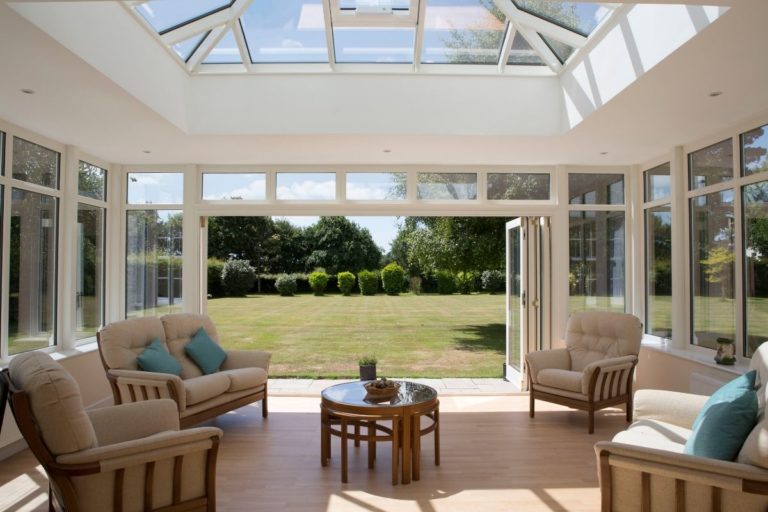
You love the light, transparent character of glass structures
Your property’s style suits lighter architectural language
You want that magical indoor-outdoor blurred boundary
Budget favours predominantly-glazed structures
Neither is inherently “better.” They’re different architectural responses to different requirements and properties.
Glass Extensions: The Contemporary Alternative That Changes Everything
A glass extension is a true building extension that’s fully open to the existing house. It moves the external thermal envelope, so it has to meet much higher insulation standards than a thermally separated glass conservatory with doors between the house and the structure.
The critical distinction: Building Regulations classify conservatories as thermally-separated structures (doors between conservatory and house). Glass extensions are fully-integrated, meaning they must meet full extension thermal performance standards.
What This Enables
Glass extensions can incorporate advanced technologies that conservatories often don’t:
Triple glazing as standard (U-values as low as 0.5 W/m²K)
Heated glass technology
Full integration with home heating systems
Contemporary architectural language
The Structural Glass Revolution
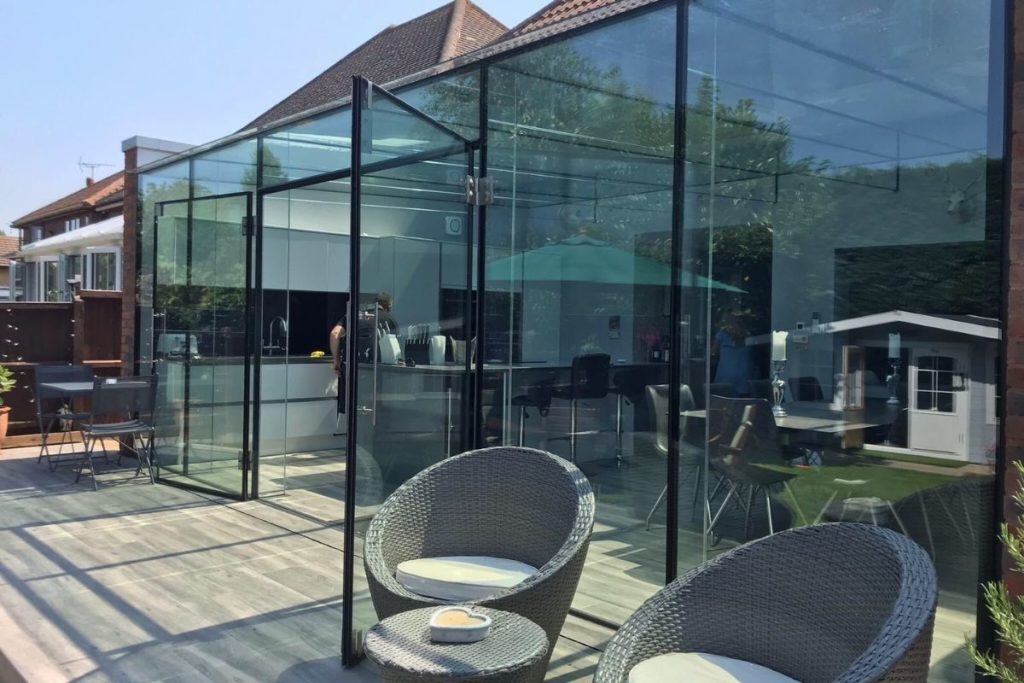
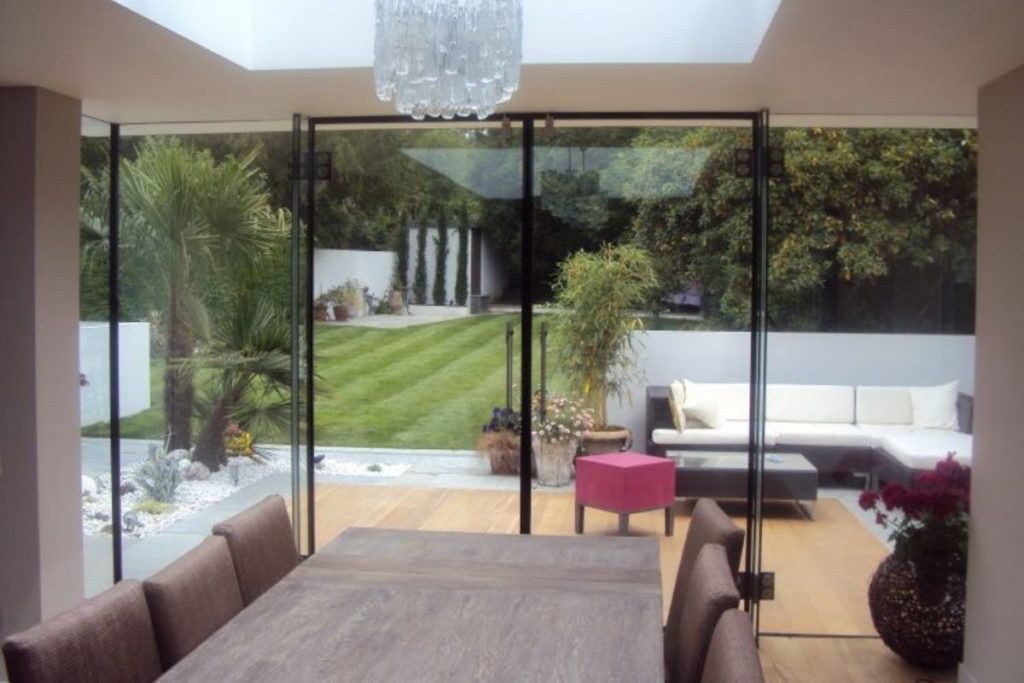
Contemporary frameless glass extensions use structural glass technology completely different from traditional conservatories. Laminated glass beams and fins create self-supporting structures with minimal visible framework. We’re talking 20-40mm ultra-fine profiles versus 100-150mm traditional conservatory frames.
Visual impact? Completely different. Where traditional conservatories have substantial framework creating that recognisable “conservatory” aesthetic, structural glass extensions achieve near-frameless transparency.
Why Premium Bespoke Orangeries Outperform Kit-Built Systems
The orangery market has exploded over the past decade. Unfortunately, so has confusion about what constitutes quality orangery design.
Most “orangery systems” offered by conservatory companies are pre-engineered modular kits with standard column spacing, predetermined lantern sizes, and generic architectural detailing. You’re selecting configurations, not commissioning design.
What Genuine Bespoke Orangery Design Delivers Differently
Architectural Integration
The designer studies your property’s existing architecture. If it’s Victorian, what are the typical Victorian orangery proportions? What column spacing and heights create appropriate rhythm? What cornice profiles and architectural details complement your existing mouldings?
If contemporary, how do we create an orangery interpretation that feels current rather than pastiche? What materials bridge traditional orangery form with modern architectural language?
This level of analysis simply doesn’t happen with kit systems.
Structural Sophistication
The insulated roof structure, column dimensions, load distribution, and foundation engineering are all designed specifically for your project’s requirements and soil conditions.
Kit systems use standardised engineering applied broadly. Usually adequate, but not optimised for your specific context.
Material Quality
True bespoke specialists offer luxury hardwood timber, aluminium, and masonry materials selected and specified specifically for each project, not predetermined system components.
The brickwork matches your property’s existing brick. The timber species, profiles, and finishes are selected for your architectural context. The lantern design is proportioned specifically for your orangery’s dimensions.
The Investment Perspective
Yes, genuinely bespoke orangery design requires substantially more investment than kit systems. But we’re talking about structures designed to enhance your property for 50+ years, not 20.
The question isn’t cost; it’s value over the genuine lifespan.
How Frameless Glass Extensions Differ From Everything Else
If you’ve only seen traditional conservatories, encountering a frameless glass extension is revelatory.
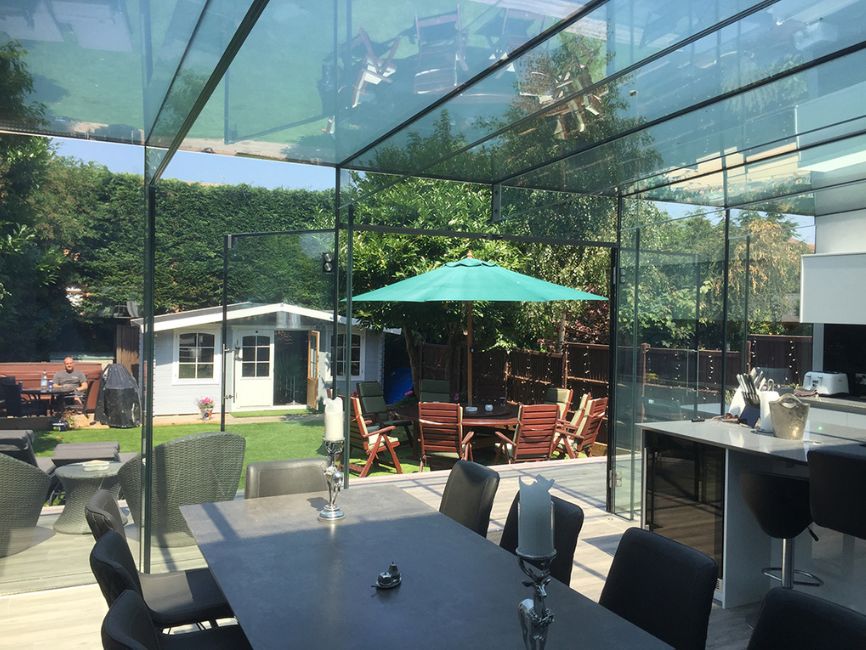
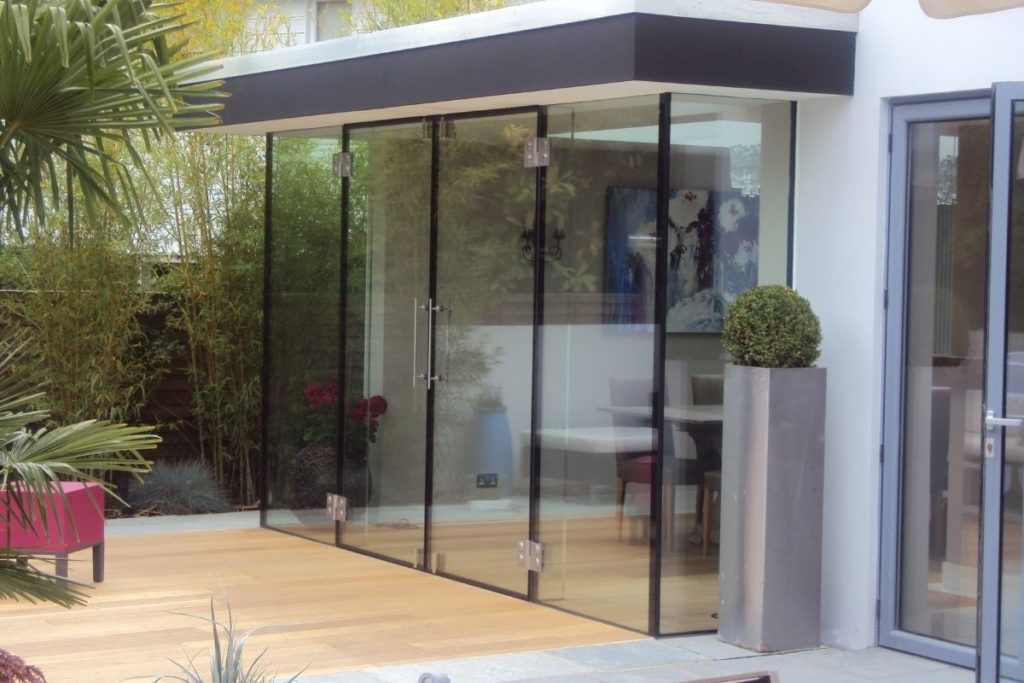
The fundamental difference: Instead of glass panels held in metal frames, structural glass units support themselves using laminated glass beams, glass fins, and structural silicone bonding. The glass is the structure.
This enables architectural possibilities impossible with conventional framing:
Corner glazing without vertical posts (uninterrupted 90-degree glass corners)
Cantilever sections
Asymmetric geometries
Continuous glass runs uninterrupted by visible framework
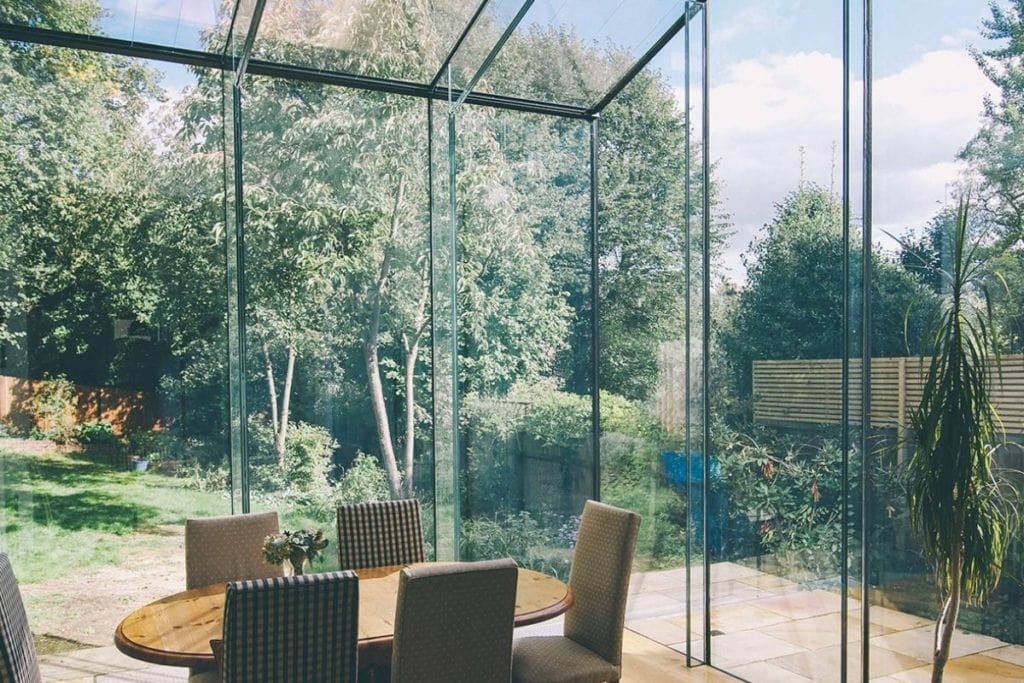
Walk into a frameless glass extension and the sensation is completely different from traditional conservatories. The transparency is extraordinary. Sightlines remain unbroken. Connection to landscape becomes immersive rather than merely visual.
When Frameless Glass Extensions Excel
Contemporary architectural aesthetic speaks to you
Maximum transparency is priority
Your property or project suits cutting-edge design
Garden or landscape has exceptional visual appeal
You want something architecturally distinctive
When Traditional Framing Works Better
Period property where contemporary materials feel inappropriate
Budget favours conventional construction
You prefer warmer visual character of timber frameworks
Traditional architectural language suits your property better
Neither approach is superior. They’re different architectural responses to different contexts and preferences.
The New Generation Glass Difference: Why 20 Years of UK Development Matters
Room Outside was the first company in England to introduce New Generation Glass from the USA over 20 years ago and further developed it to suit the British climate.
Let’s talk about what that actually means and why it matters for anyone considering a serious conservatory investment.
Standard “energy-efficient” glazing insulates. Multiple glass layers with gas-filled cavities reduce heat transfer. That’s useful, particularly for windows in solid walls.
But conservatories are predominantly glass. Insulation alone doesn’t solve the fundamental challenge: managing solar heat gain whilst maintaining transparency and insulation performance.
What Temperature-Control Glazing Does Differently
Sophisticated coatings applied to glass surfaces selectively filter solar radiation. Infrared wavelengths that create heat are reflected or absorbed, whilst visible light passes through relatively unimpeded.
The result: A conservatory roof can receive full summer sun without the interior becoming unbearably hot, because the heat component of sunlight is being filtered before it enters the space.
Why UK Climate Development Matters
USA and UK have fundamentally different climate challenges:
USA (particularly southern states): Extreme summer heat, solar gain management paramount
UK: Moderate summers but significant heating season, balance between solar control and heat retention crucial
Room Outside’s development of New Generation Glass for British climate means optimising this balance specifically for UK conditions:
Summer: Sufficient solar control to prevent overheating
Winter: Optimal light transmission and insulation to minimise heating requirements
Spring/Autumn: Passive solar heat gain that’s welcome, but controlled so the room doesn’t overheat
This climate-specific optimisation is why 20+ years of UK development matters. It’s not just licensing American technology; it’s adapting and refining it for genuinely different climate requirements.
How You Experience This
Your conservatory becomes a space you instinctively use year-round without thinking about temperature. No longer “should I turn the heating up?” or “it’s too hot in here.” Just comfortable space that works throughout the seasons.
That unconscious usability is the point. The best design becomes invisible; you simply live in beautiful, comfortable space without constantly managing its shortcomings.
What Truly Sets Bespoke Specialists Apart From Standard Conservatory Companies
After 50+ years in this industry, certain patterns become crystal clear about what distinguishes genuine specialists from companies offering standard products with “bespoke options.”
Operational Longevity Proves Sustained Excellence
Room Outside has spanned over 5 decades in business, offering expert experience designing and building bespoke glass extensions throughout the South East of England and further afield.
Half a century is a long time in any industry. Companies don’t achieve that longevity through marketing. They achieve it through:
Consistently delivering quality that generates referrals
Adapting to changing technologies whilst maintaining craft excellence
Building reputations that architects and construction professionals trust
Creating structures that still delight homeowners decades later
Why This Matters for You
When you invest in genuine bespoke design, you’re not just buying a structure. You’re starting a relationship with a company you’ll potentially work with again (repairs, maintenance, future projects) over decades.
Established specialists will still be there in 15 years when you want that roof panel replaced. They’ll still have craftspeople who understand their structures. Their reputation still depends on your satisfaction.
New entrants? Who knows.
Technology Leadership Versus Technology Following
Being the first company in England to introduce New Generation Glass over 20 years ago demonstrates genuine innovation leadership rather than following market trends.
Most conservatory companies adopt technologies once they’re mainstream and proven. Nothing wrong with that for standard products, but it reveals their market position.
True specialists invest in emerging technologies years before mainstream adoption. They develop relationships with innovative manufacturers globally. They’re willing to be pioneers because they’re genuinely focused on technical excellence, not just selling products.
Professional Specification Recognition
Award-winning Room Outside products have been specified for some of the most iconic buildings in the UK, earning an enviable reputation among the UK’s leading architectural practices and construction companies.
Architects and construction professionals don’t specify conservatory suppliers based on consumer advertising. They specify based on:
Technical competence and reliability
Quality consistency
Ability to deliver complex projects successfully
Responsiveness to design requirements
Problem-solving capability when challenges arise
Professional specification is the strongest indicator of genuine technical credibility.
Listed Building and Conservation Expertise
Specialists demonstrate capability across luxury hardwood timber, aluminium, and frameless glass extensions for grade one and grade two listed buildings and properties in National Parks and areas of outstanding natural beauty.
Securing Listed Building consent or planning approval in conservation areas requires:
Deep understanding of architectural heritage
Ability to design additions that conservation officers accept
Respect for historical architecture without pastiche
This expertise proves a level of architectural sophistication that standard conservatory companies rarely possess.
Even if your property isn’t listed: Companies with listed building expertise bring that same architectural sensitivity to all projects. They understand proportion, detail, materials, and integration in ways that benefit any property where quality matters.
Finding True Bespoke Conservatory Specialists: What to Look For
Most conservatory shopping focuses on wrong indicators. People compare prices across similar-seeming quotes, not realising they’re comparing fundamentally different quality levels.
The Design Consultation Reveals Everything
Quality designers work closely with clients from start to finish, exploring ideas and taking inspiration from the architecture of your home and your lifestyle.
In your first meeting, are they:
Studying your property’s architecture in detail?
Walking around examining roof lines, proportions, materials, existing architectural features?
Asking extensive questions about how you live, what matters to you, your long-term plans?
Or are they quickly measuring up and pulling out standard design catalogues?
The quality of that initial consultation tells you everything about whether you’re talking to a designer or a salesperson.
Portfolio Quality Over Portfolio Size
Don’t just count completed projects. Look at them critically:
Do the conservatories look architecturally integrated with their properties? Each should feel like it belongs, not like it was added. If everything looks similar regardless of property type, that’s a red flag.
Is there genuine design variety? You should see different architectural responses to different contexts. Similar-looking projects across different properties reveal predetermined solutions, not bespoke design.
Are there challenging projects? Listed buildings? Awkward sites? Unique architectural contexts? Complex requirements? These reveal problem-solving capability.
Technology Specificity Versus Generic Claims
“We use energy-efficient glass” means nothing. Every conservatory company says that.
What reveals genuine technology expertise:
Can they explain specific glazing specifications for your project?
Discuss U-values, solar heat gain coefficients, light transmission ratios?
Explain why they’d recommend particular glazing for your orientation and microclimate?
Articulate advanced systems like New Generation Glass and explain specifically how temperature-control glazing differs from standard insulation?
Generic descriptions like “keeps you cooler in summer and warmer in winter” are sales-speak. Technical specificity reveals genuine understanding.
Material Options Indicate Company Focus
If the conversation defaults to uPVC with hardwood positioned as expensive premium upgrade, that tells you where their focus lies.
Quality specialists discuss materials as architectural choices appropriate for different contexts, not budget tiers.
For many properties, hardwood is simply the right material regardless of cost. For contemporary projects, premium aluminium might be optimal. The conversation should be about what’s appropriate for your property and project, not what’s cheapest or most profitable.
Project Management Approach
True specialists take responsibility for planning and installation, providing complete peace of mind with comprehensive project management.
Who’s managing:
Planning applications if needed?
Building Regulations approval?
Foundation contractor coordination?
Construction timeline?
Problem resolution?
Final commissioning?
With quality specialists: They manage everything. Single point of accountability.
With component suppliers: You coordinate multiple contractors yourself.
The difference matters enormously for stress levels and ultimate quality.
The Questions That Reveal Everything
Want to know instantly whether you’re talking to genuine specialists? Ask these questions and pay attention to how they answer.
Ask These Before Committing
1. “How do you approach designing for properties like mine?”
Quality answer: Discusses architectural analysis, understanding your specific property’s character, how they develop individual design responses.
Red flag answer: Talks about selecting from their range of styles.
2. “What proportion of your projects are genuinely bespoke versus standard designs adapted by size?”
Quality answer: Honest about their focus. True specialists will say 80-100% genuinely individual design.
Red flag answer: Vague about the distinction or defensive about the question.
3. “What glazing would you specify for my project and why?”
Quality answer: Discusses specific technologies, your orientation, microclimate factors, performance expectations with technical specificity. Should mention advanced options like New Generation Glass.
Red flag answer: Generic “energy-efficient glass” without technical details.
4. “How long have you been designing and building bespoke conservatories specifically?”
Quality answer: 25+ years ideally, with consistent focus on quality glass extensions.
Red flag answer: Recent entrant or conservatories as recent addition to general building/windows business.
5. “Can you show me projects on listed buildings or in conservation areas?”
Red flag answer: Limited or no listed building experience.
6. “Who would design my conservatory and how does that process work?”
Quality answer: Named designer with architectural background, describes collaborative design development process.
Red flag answer: Vague about designer identity or process jumps from initial meeting to quotation without design development.
7. “Can you provide customer references for similar projects?”
Quality answer: Readily provides multiple contacts with similar property types and project scales.
Red flag answer: Reluctant to provide references or only offers vastly different project types.
Their comfort answering these questions tells you whether they’re confident in their expertise or hoping you won’t dig too deep.
Modern Design Ideas That Show What’s Possible in 2025
Let’s get specific about what exceptional bespoke design can achieve for different property types and lifestyle requirements.
Contemporary Side-Return Extensions for Urban Living
Victorian and Edwardian terraced houses throughout UK cities have narrow side-return spaces that traditionally house bins and bikes. Barely functional, often eyesores.
Clever glass extension design transforms these spaces into light-filled kitchen or living extensions that revolutionise how you use your ground floor.
Design approach: Full-height glazing on side elevation and rear, maximising light in inherently narrow, shaded positions. Flat glass roof carefully detailed to meet party wall and boundary constraints. Integration with large-span sliding doors opening to garden.
The challenge: Achieving comfortable thermal performance in highly-glazed urban positions where neighbouring properties limit ventilation.
Solution: Advanced solar control glazing preventing overheating, sophisticated artificial lighting design for evening use, careful ventilation strategy using automated rooflights.
Result: Previously wasted space becomes your favourite room. Natural light floods into previously dark side-return corridors. Kitchen expands into bright, usable space. Property value increases dramatically.
Structural Glass Boxes for Contemporary Properties
If your property’s architecture is contemporary or you’re adding contemporary extension to traditional home, frameless structural glass offers architectural possibilities unachievable with traditional conservatories.
Design concept: Glass beams and fins creating self-supporting structure with minimal visible framework. Corner glazing without vertical posts creates uninterrupted 90-degree glass corners. Ultra-fine profiles (20-30mm) appearing almost invisible.
Walk inside and the effect is extraordinary. Traditional conservatories, even nice ones, have framework interrupting sightlines. Structural glass extensions achieve near-transparency. It feels like inhabiting outdoor space whilst being comfortably protected.
Contemporary Orangeries with Clean Architectural Lines
Traditional Victorian or Georgian orangery styling feels wrong on many properties. But the orangery form itself—solid perimeter roof with central glazed lantern, brick or stone elements—remains architecturally excellent.
Modern interpretation: Clean-lined brick or rendered pillars without decorative mouldings. Flat super-insulated roof with contemporary aluminium lantern featuring minimal profiles. Floor-to-ceiling glazing between solid elements. Internal plastered pelmet providing downlighting locations.
Result: Orangery thermal comfort and room character without pastiche period styling. Works beautifully on contemporary properties or as clearly-contemporary addition to traditional homes. The visual language says “this is now” whilst respecting orangery architectural principles developed over centuries.
Garden Room Conservatories with Horizontal Emphasis
Traditional pitched-roof conservatory forms don’t suit every property or preference. Low-pitch or flat glass roofs create dramatically different aesthetic.
Design approach: Wide, low proportions emphasising horizontal lines rather than vertical pitch. Glass roof at 5-15 degrees or completely flat with concealed edge detailing. Large-span doors (4-6 metres) opening entire wall to garden.
Critical requirement: Excellent solar control glazing preventing overheating in low-pitch configurations. Standard glass in shallow-pitch roofs creates furnace conditions in summer.
Result: Contemporary garden room aesthetic distinct from traditional conservatory forms. Particularly appropriate for bungalows or single-storey extensions where restricted height requires low-pitch solutions.
Timber-Framed Extensions with Exposed Structure
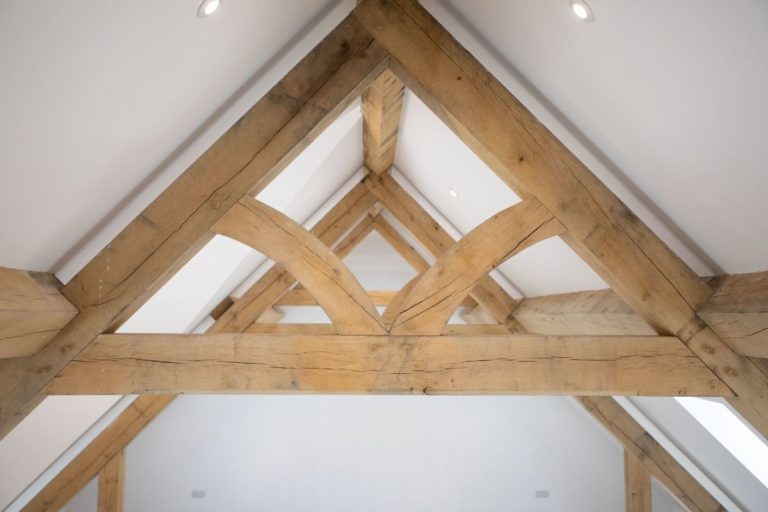
For properties where natural materials and craft aesthetic matter, exposed hardwood timber structural framework creates warmth impossible with aluminium or uPVC.
Design concept: Substantial timber posts and beams (150-200mm sections) creating visible architectural structure. Timber rafters expressed internally rather than hidden. Large glass panels between timber framework. Natural timber finishes or contemporary painted colours.
Result: Architectural character and material warmth distinct from both ultra-minimal glass boxes and traditional conservatories. Particularly appropriate for rural properties, period homes where quality materials matter, or anyone who simply loves natural materials and visible craftsmanship.
Why Year-Round Comfort Matters More Than You Might Think
Here’s something most people don’t consider until it’s too late: conservatory usability determines whether your investment genuinely enhances your lifestyle or becomes expensive disappointment.
Standard Conservatory Reality
Summer: Too hot June through August unless you install expensive cooling or live with closed blinds defeating the purpose
Winter: Too cold November through February despite significant heating costs
Spring/Autumn: Generally pleasant but temperature still requires management
Practical result: You use it comfortably about 6-7 months per year. The other 5-6 months it’s either uncomfortably hot or prohibitively expensive to heat adequately.
The Hidden Cost
£20,000 investment divided by 50% usability = £40,000 per genuinely usable space.
Advanced Glazing Reality
Structures with New Generation Glass or equivalent temperature-control glazing provide unmatched comfort and usability all year round.
Summer: Comfortable even during heatwaves because solar heat gain is actively managed, not just insulated against
Winter: Comfortable with reasonable heating because excellent insulation and passive solar heat gain (when welcome) reduce heating requirements dramatically
Practical result: Genuine daily use throughout the year. Not a seasonal space requiring temperature management but true living space you instinctively use like any other room.
The Lifestyle Impact
When conservatory becomes genuinely usable year-round, it transforms how you inhabit your property. Morning coffee space regardless of season. Home office that actually works in August and January. Dining area you can rely on. Reading room you gravitate toward naturally.
This isn’t marginal benefit. It’s the difference between spending £50,000 on a space you love and use daily versus spending £25,000 on a space you tolerate seasonally.
The Multi-Generational Durability Question Nobody Asks
Here’s the conversation almost never happening in conservatory showrooms: how long will this actually last?
Sales focus on guarantees (10 years, 15 years) creating impression these timeframes matter. They don’t, really.
What Actually Matters
Will your conservatory still be beautiful and functional in 30 years? 50 years?
Standard Conservatory Over 50 Years
Initial installation cost
Plus complete replacement at 20-25 years
Plus ongoing maintenance
= Two complete conservatories worth of investment
Bespoke Conservatory Over 50 Years
Single installation investment
Regular professional maintenance
= One conservatory worth of investment
Plus vastly superior experience throughout
Over realistic property ownership periods, genuine quality costs similar to repeatedly replacing cheaper options whilst providing vastly superior experience throughout.
The Sustainability Question
Replacing entire structures after 20-25 years generates massive material waste and carbon impact. Structures designed for 50+ year lifespans align with genuine sustainability principles.
Begin Your Bespoke Conservatory Journey
Your conservatory will either enhance your property architecturally and provide genuinely year-round comfortable space for generations, or it’ll be a structure you tolerate for a decade before facing expensive problems.
The designer you select determines which outcome you achieve.
What to Prioritise
Established expertise over marketing: Companies with 50+ years designing and building bespoke glass extensions have proven capability through sustained excellence, not advertising claims
Advanced glazing technology over standard glass: Temperature-control glazing like New Generation Glass fundamentally differs from standard double glazing, enabling genuine year-round comfort versus seasonal use
Individual architectural design over style selection: Bespoke means designed specifically for your property and lifestyle, not choosing from predetermined templates
Premium materials over mass-produced: Hardwood timber or high-specification aluminium provide multi-generational durability impossible with standard materials
Comprehensive service over component supply: Professional project management from design through completion versus coordinating multiple contractors yourself
The Investment Difference
The investment difference between standard conservatories and genuinely bespoke design reflects fundamental quality distinctions: architectural design versus product selection, advanced technology versus standard glazing, 50+ year lifespan versus 20-25 year expectancy.
For properties where architectural quality matters and spaces you’ll genuinely treasure for decades, bespoke design represents appropriate investment. The question isn’t cost but value over the genuine lifespan and whether anything less will truly satisfy.
Begin by identifying specialists demonstrating proven capability through operational longevity, technology innovation, professional recognition, and comprehensive service delivery. Your conservatory journey starts with the right designer. Choose wisely.
FAQ: Bespoke Conservatories, Orangeries and Glass Extensions
What is a truly bespoke conservatory?
A truly bespoke conservatory is individually designed for your specific property and lifestyle, not chosen from a standard range. It combines architectural design, advanced temperature-control New Generation Glass, and premium materials such as hardwood or aluminium to create a room you can use comfortably all year.
How long should a high-quality bespoke conservatory last?
With premium materials such as hardwood or high-specification aluminium, and correct maintenance, a bespoke conservatory or orangery can be designed for a 50-year plus lifespan. Standard uPVC systems typically need major replacement after 20–25 years.
Why is New Generation Glass better than standard “energy-efficient” glass?
Standard double glazing mainly insulates. New Generation Glass uses advanced coatings to actively manage solar heat gain – keeping spaces cooler in summer and warmer in winter, so your conservatory feels like a proper room instead of a space you can only tolerate in certain seasons.
Do bespoke conservatories meet UK Building Regulations?
Conservatories are normally classed as thermally separated structures with doors between the house and the conservatory. Fully open glass extensions, however, must comply with full extension standards. A genuine specialist will design and specify the right solution and handle Building Regulations on your behalf.
What’s the difference between an orangery, a conservatory and a glass extension?
An orangery is a more solid, room-like structure with brick or stone pillars and a solid roof with a central lantern. A conservatory is usually more than 75% glass in the roof and walls, with a lighter, more transparent feel. A glass extension is a fully integrated building extension that moves the home’s thermal envelope, meeting much higher insulation standards than a traditional conservatory.
Where does Room Outside work?
Room Outside designs and builds luxury bespoke conservatories, orangeries and glass extensions from its base in West Sussex, covering the South East of England, including Surrey, Hampshire, Sussex, Kent, Essex, Dorset, Berkshire and Greater London.
Ready to Create Your Bespoke Conservatory?
Work with established conservatory specialists with over 50 years of experience designing and building luxury bespoke conservatories, orangeries and glass extensions across the South East of England.
Bespoke Conservatory Design: Creating Spaces That Transform How You Live
Learn what genuine bespoke design means, why New Generation Glass creates conservatories you’ll love year-round, and how to find true specialists who protect your investment.
25 min read
South East England
50+ Years Expertise
Quick Answer
True bespoke conservatory design means creating an architectural masterpiece engineered specifically for your property using premium materials like hardwood or aluminium, advanced temperature-control glazing such as New Generation Glass, and individual design that respects your home’s character. The difference between bespoke design and standard conservatories isn’t just quality; it’s the difference between a space you’ll treasure for generations and one you’ll tolerate for a decade.
For over 50 years, Room Outside, based in West Sussex, has been designing and building luxury bespoke conservatories, orangeries and glass extensions across the South East of England, including Surrey, Hampshire, Sussex, Kent and Greater London. That experience means we know exactly what works for UK homes and UK weather.
Stand in any beautifully designed conservatory on a crisp January morning, sunlight streaming through perfectly engineered glass, warmth enveloping you despite the frost outside. This isn’t luck. It’s not even expensive heating. It’s what happens when genuine architectural expertise meets advanced glazing technology.
Yet most UK homeowners will never experience this. They’ll settle for spaces that feel like greenhouses in July and ice boxes in December, wondering why their £20,000 investment only gets used six months of the year.
The difference? Understanding what “bespoke” actually means, and why it matters far more than most conservatory companies will ever admit.
Why Most “Bespoke” Conservatories Aren’t Actually Bespoke At All
Walk into most conservatory showrooms and you’ll hear the word “bespoke” within the first five minutes. They’ll show you Victorian styles, Edwardian options, perhaps a contemporary lean-to. You’ll pick your size from a measuring tape, your colour from a chart, maybe some decorative glazing bars from a catalogue.
They’ll call this “bespoke.”
It isn’t.
What’s really happening: You’re selecting from pre-engineered modular systems, choosing options like ordering from a menu. Made-to-measure? Yes. Custom colours and features? Certainly. But individually designed for your specific property’s architecture, orientation, and your lifestyle? Not remotely.
The Suit Analogy
Think of it like buying a suit. Most high street shops offer “made-to-measure” services. They’ll adjust standard patterns for your measurements, perhaps offer fabric choices. That’s what most conservatory companies provide.
True bespoke is what happens when a master tailor studies your build, your posture, how you move, what you’ll wear it for, and creates something that exists nowhere else in the world. Every seam, every dart, every detail considered specifically for you.
That’s the difference we’re talking about with conservatory design.
The Three Critical Elements That Define Genuine Bespoke Design
Room Outside brings over 50 years of expertise to the art of designing and building bespoke glass extensions, creating structures that blend timeless elegance with innovative functionality.
Real bespoke design begins with architectural analysis. The designer studies your property like an art historian examining a painting. What period is it? What are the proportions telling us? How do the roof lines interact? What’s the rhythm of the windows? What materials create the character?
Then they look at you. How do you live? When do you use spaces? Do you entertain? Work from home? Have small children or grandchildren visiting? Love gardening? Read for hours? Cook elaborate meals?
Only then does design begin. Not selecting from templates, but creating something unique that:
Respects your property’s architectural DNA
Enhances rather than compromises its character
Works specifically for your lifestyle patterns
Responds to your site’s unique orientation and microclimate
Creates proportions and rhythms that feel inevitable, as if it was always meant to be there
The tell-tale sign you’re not getting bespoke design: The conversation focuses on style selection (“Victorian or Edwardian?”) rather than architectural analysis of your specific property.
2. Advanced Glazing Technology (Not Just “Energy-Efficient” Glass)
Here’s where most conservatory companies lose the plot entirely. They’ll talk about “energy-efficient glass” or “solar control glazing” as if it’s all basically the same thing with minor variations.
It categorically isn’t.
Standard double glazing insulates. That’s useful, but it doesn’t solve the fundamental problem: glass conducts temperature. Traditional conservatories experience wild temperature swings because the glass transmits solar heat in summer and radiates heat out in winter.
Room Outside pioneered the introduction of New Generation Glass from the USA over 20 years ago, further developing it to suit the British climate, enabling structures that provide unmatched comfort and usability all year round.
Advanced temperature-control glazing like New Generation Glass does something entirely different. It actively manages solar radiation, selectively filtering wavelengths that create heat whilst maintaining visible light transmission. It’s not just thicker or better insulated; it’s fundamentally different technology.
What This Means in Practice
Summer afternoon, blazing sunshine: your neighbour’s conservatory reads 38°C and is unusable. Yours? A comfortable 23°C. No air conditioning. No giant fans. Just intelligent glazing working exactly as engineered.
January evening, frost forming outside: you’re sitting in your conservatory reading without a jumper because the combination of advanced glazing and modest heating creates comfortable, stable temperatures that traditional conservatories simply cannot achieve regardless of how much you spend heating them.
15-25°C
Temperature variation with standard conservatory
5-8°C
Temperature variation with advanced glazing
20+ yrs
UK development of New Generation Glass
That’s not marginal improvement. That’s the difference between a space you occasionally tolerate and one you genuinely live in daily.
The tell-tale sign you’re not getting advanced glazing: They talk about glass thickness and insulation but can’t explain how solar heat gain is actively managed or provide specific performance data for your orientation.
Premium aluminium: Custom extrusions, ultra-fine sightlines (as low as 20mm), exceptional strength for larger glass spans
Visual Character
uPVC: Always looks like uPVC, regardless of colour or woodgrain effects
Hardwood: Warmth, depth, grain character that improves with age
Premium aluminium: Clean, precise, contemporary aesthetic impossible with other materials
For properties where architectural integrity matters, material selection isn’t about budget. It’s about whether the conservatory enhances or compromises your property’s character for the next half-century.
The tell-tale sign you’re not getting premium materials: The conversation focuses primarily on uPVC with hardwood positioned as an expensive upgrade rather than the appropriate choice for your property’s architectural quality.
What’s the Difference Between an Orangery, a Conservatory and a Glass Extension?
Quick Answer
An orangery is a more solid, room-like structure with brick or stone pillars and a solid roof with a central lantern. A conservatory is usually more than 75% glass in the roof and walls, with a lighter, more transparent feel. A glass extension is a fully integrated building extension that moves the home’s thermal envelope, meeting much higher insulation standards than a traditional conservatory.
What Makes an Orangery Different (And Why It Matters)
Orangeries have a solid roof with less than 75% glazing and feature substantial masonry construction with brick or stone pillars, creating more solid structure than conservatories which typically have over 75% roof glazing.
Think of orangeries as proper rooms with exceptional natural light rather than glass structures with some solid elements.
The solid roof perimeter creates an internal plastered pelmet running around the room’s edge. This provides:
Space for downlighting creating proper room ambiance (impossible with all-glass roofs)
Visual weight and enclosure making it feel like a room, not a greenhouse
Superior thermal performance through insulation mass
Architectural presence that brick or stone pillars reinforce
Walk into a well-designed orangery and you don’t think “conservatory.” You think “beautiful room with extraordinary light.”
When Orangeries Make Sense
You want proper room character, not indoor-outdoor transitional space
Year-round thermal comfort is non-negotiable
Your property’s architecture has sufficient presence
Extending kitchen or dining space where room character matters
Privacy from neighbours or overlooking is important
When Conservatories Work Better
Maximum connection to garden is priority
You love the light, transparent character of glass structures
Your property’s style suits lighter architectural language
You want that magical indoor-outdoor blurred boundary
Budget favours predominantly-glazed structures
Neither is inherently “better.” They’re different architectural responses to different requirements and properties.
Glass Extensions: The Contemporary Alternative That Changes Everything
A glass extension is a true building extension that’s fully open to the existing house. It moves the external thermal envelope, so it has to meet much higher insulation standards than a thermally separated glass conservatory with doors between the house and the structure.
The critical distinction: Building Regulations classify conservatories as thermally-separated structures (doors between conservatory and house). Glass extensions are fully-integrated, meaning they must meet full extension thermal performance standards.
What This Enables
Glass extensions can incorporate advanced technologies that conservatories often don’t:
Triple glazing as standard (U-values as low as 0.5 W/m²K)
Heated glass technology
Full integration with home heating systems
Contemporary architectural language
The Structural Glass Revolution
Contemporary frameless glass extensions use structural glass technology completely different from traditional conservatories. Laminated glass beams and fins create self-supporting structures with minimal visible framework. We’re talking 20-40mm ultra-fine profiles versus 100-150mm traditional conservatory frames.
Visual impact? Completely different. Where traditional conservatories have substantial framework creating that recognisable “conservatory” aesthetic, structural glass extensions achieve near-frameless transparency.
Why Premium Bespoke Orangeries Outperform Kit-Built Systems
The orangery market has exploded over the past decade. Unfortunately, so has confusion about what constitutes quality orangery design.
Most “orangery systems” offered by conservatory companies are pre-engineered modular kits with standard column spacing, predetermined lantern sizes, and generic architectural detailing. You’re selecting configurations, not commissioning design.
What Genuine Bespoke Orangery Design Delivers Differently
Architectural Integration
The designer studies your property’s existing architecture. If it’s Victorian, what are the typical Victorian orangery proportions? What column spacing and heights create appropriate rhythm? What cornice profiles and architectural details complement your existing mouldings?
If contemporary, how do we create an orangery interpretation that feels current rather than pastiche? What materials bridge traditional orangery form with modern architectural language?
This level of analysis simply doesn’t happen with kit systems.
Structural Sophistication
The insulated roof structure, column dimensions, load distribution, and foundation engineering are all designed specifically for your project’s requirements and soil conditions.
Kit systems use standardised engineering applied broadly. Usually adequate, but not optimised for your specific context.
Material Quality
True bespoke specialists offer luxury hardwood timber, aluminium, and masonry materials selected and specified specifically for each project, not predetermined system components.
The brickwork matches your property’s existing brick. The timber species, profiles, and finishes are selected for your architectural context. The lantern design is proportioned specifically for your orangery’s dimensions.
The Investment Perspective
Yes, genuinely bespoke orangery design requires substantially more investment than kit systems. But we’re talking about structures designed to enhance your property for 50+ years, not 20.
The question isn’t cost; it’s value over the genuine lifespan.
How Frameless Glass Extensions Differ From Everything Else
If you’ve only seen traditional conservatories, encountering a frameless glass extension is revelatory.
The fundamental difference: Instead of glass panels held in metal frames, structural glass units support themselves using laminated glass beams, glass fins, and structural silicone bonding. The glass is the structure.
This enables architectural possibilities impossible with conventional framing:
Corner glazing without vertical posts (uninterrupted 90-degree glass corners)
Cantilever sections
Asymmetric geometries
Continuous glass runs uninterrupted by visible framework
Walk into a frameless glass extension and the sensation is completely different from traditional conservatories. The transparency is extraordinary. Sightlines remain unbroken. Connection to landscape becomes immersive rather than merely visual.
When Frameless Glass Extensions Excel
Contemporary architectural aesthetic speaks to you
Maximum transparency is priority
Your property or project suits cutting-edge design
Garden or landscape has exceptional visual appeal
You want something architecturally distinctive
When Traditional Framing Works Better
Period property where contemporary materials feel inappropriate
Budget favours conventional construction
You prefer warmer visual character of timber frameworks
Traditional architectural language suits your property better
Neither approach is superior. They’re different architectural responses to different contexts and preferences.
The New Generation Glass Difference: Why 20 Years of UK Development Matters
Room Outside was the first company in England to introduce New Generation Glass from the USA over 20 years ago and further developed it to suit the British climate.
Let’s talk about what that actually means and why it matters for anyone considering a serious conservatory investment.
Standard “energy-efficient” glazing insulates. Multiple glass layers with gas-filled cavities reduce heat transfer. That’s useful, particularly for windows in solid walls.
But conservatories are predominantly glass. Insulation alone doesn’t solve the fundamental challenge: managing solar heat gain whilst maintaining transparency and insulation performance.
What Temperature-Control Glazing Does Differently
Sophisticated coatings applied to glass surfaces selectively filter solar radiation. Infrared wavelengths that create heat are reflected or absorbed, whilst visible light passes through relatively unimpeded.
The result: A conservatory roof can receive full summer sun without the interior becoming unbearably hot, because the heat component of sunlight is being filtered before it enters the space.
Why UK Climate Development Matters
USA and UK have fundamentally different climate challenges:
USA (particularly southern states): Extreme summer heat, solar gain management paramount
UK: Moderate summers but significant heating season, balance between solar control and heat retention crucial
Room Outside’s development of New Generation Glass for British climate means optimising this balance specifically for UK conditions:
Summer: Sufficient solar control to prevent overheating
Winter: Optimal light transmission and insulation to minimise heating requirements
Spring/Autumn: Passive solar heat gain that’s welcome, but controlled so the room doesn’t overheat
This climate-specific optimisation is why 20+ years of UK development matters. It’s not just licensing American technology; it’s adapting and refining it for genuinely different climate requirements.
How You Experience This
Your conservatory becomes a space you instinctively use year-round without thinking about temperature. No longer “should I turn the heating up?” or “it’s too hot in here.” Just comfortable space that works throughout the seasons.
That unconscious usability is the point. The best design becomes invisible; you simply live in beautiful, comfortable space without constantly managing its shortcomings.
What Truly Sets Bespoke Specialists Apart From Standard Conservatory Companies
After 50+ years in this industry, certain patterns become crystal clear about what distinguishes genuine specialists from companies offering standard products with “bespoke options.”
Operational Longevity Proves Sustained Excellence
Room Outside has spanned over 5 decades in business, offering expert experience designing and building bespoke glass extensions throughout the South East of England and further afield.
Half a century is a long time in any industry. Companies don’t achieve that longevity through marketing. They achieve it through:
Consistently delivering quality that generates referrals
Adapting to changing technologies whilst maintaining craft excellence
Building reputations that architects and construction professionals trust
Creating structures that still delight homeowners decades later
Why This Matters for You
When you invest in genuine bespoke design, you’re not just buying a structure. You’re starting a relationship with a company you’ll potentially work with again (repairs, maintenance, future projects) over decades.
Established specialists will still be there in 15 years when you want that roof panel replaced. They’ll still have craftspeople who understand their structures. Their reputation still depends on your satisfaction.
New entrants? Who knows.
Technology Leadership Versus Technology Following
Being the first company in England to introduce New Generation Glass over 20 years ago demonstrates genuine innovation leadership rather than following market trends.
Most conservatory companies adopt technologies once they’re mainstream and proven. Nothing wrong with that for standard products, but it reveals their market position.
True specialists invest in emerging technologies years before mainstream adoption. They develop relationships with innovative manufacturers globally. They’re willing to be pioneers because they’re genuinely focused on technical excellence, not just selling products.
Professional Specification Recognition
Award-winning Room Outside products have been specified for some of the most iconic buildings in the UK, earning an enviable reputation among the UK’s leading architectural practices and construction companies.
Architects and construction professionals don’t specify conservatory suppliers based on consumer advertising. They specify based on:
Technical competence and reliability
Quality consistency
Ability to deliver complex projects successfully
Responsiveness to design requirements
Problem-solving capability when challenges arise
Professional specification is the strongest indicator of genuine technical credibility.
Listed Building and Conservation Expertise
Specialists demonstrate capability across luxury hardwood timber, aluminium, and frameless glass extensions for grade one and grade two listed buildings and properties in National Parks and areas of outstanding natural beauty.
Securing Listed Building consent or planning approval in conservation areas requires:
Deep understanding of architectural heritage
Ability to design additions that conservation officers accept
Respect for historical architecture without pastiche
This expertise proves a level of architectural sophistication that standard conservatory companies rarely possess.
Even if your property isn’t listed: Companies with listed building expertise bring that same architectural sensitivity to all projects. They understand proportion, detail, materials, and integration in ways that benefit any property where quality matters.
Finding True Bespoke Conservatory Specialists: What to Look For
Most conservatory shopping focuses on wrong indicators. People compare prices across similar-seeming quotes, not realising they’re comparing fundamentally different quality levels.
The Design Consultation Reveals Everything
Quality designers work closely with clients from start to finish, exploring ideas and taking inspiration from the architecture of your home and your lifestyle.
In your first meeting, are they:
Studying your property’s architecture in detail?
Walking around examining roof lines, proportions, materials, existing architectural features?
Asking extensive questions about how you live, what matters to you, your long-term plans?
Or are they quickly measuring up and pulling out standard design catalogues?
The quality of that initial consultation tells you everything about whether you’re talking to a designer or a salesperson.
Portfolio Quality Over Portfolio Size
Don’t just count completed projects. Look at them critically:
Do the conservatories look architecturally integrated with their properties? Each should feel like it belongs, not like it was added. If everything looks similar regardless of property type, that’s a red flag.
Is there genuine design variety? You should see different architectural responses to different contexts. Similar-looking projects across different properties reveal predetermined solutions, not bespoke design.
Are there challenging projects? Listed buildings? Awkward sites? Unique architectural contexts? Complex requirements? These reveal problem-solving capability.
Technology Specificity Versus Generic Claims
“We use energy-efficient glass” means nothing. Every conservatory company says that.
What reveals genuine technology expertise:
Can they explain specific glazing specifications for your project?
Discuss U-values, solar heat gain coefficients, light transmission ratios?
Explain why they’d recommend particular glazing for your orientation and microclimate?
Articulate advanced systems like New Generation Glass and explain specifically how temperature-control glazing differs from standard insulation?
Generic descriptions like “keeps you cooler in summer and warmer in winter” are sales-speak. Technical specificity reveals genuine understanding.
Material Options Indicate Company Focus
If the conversation defaults to uPVC with hardwood positioned as expensive premium upgrade, that tells you where their focus lies.
Quality specialists discuss materials as architectural choices appropriate for different contexts, not budget tiers.
For many properties, hardwood is simply the right material regardless of cost. For contemporary projects, premium aluminium might be optimal. The conversation should be about what’s appropriate for your property and project, not what’s cheapest or most profitable.
Project Management Approach
True specialists take responsibility for planning and installation, providing complete peace of mind with comprehensive project management.
Who’s managing:
Planning applications if needed?
Building Regulations approval?
Foundation contractor coordination?
Construction timeline?
Problem resolution?
Final commissioning?
With quality specialists: They manage everything. Single point of accountability.
With component suppliers: You coordinate multiple contractors yourself.
The difference matters enormously for stress levels and ultimate quality.
The Questions That Reveal Everything
Want to know instantly whether you’re talking to genuine specialists? Ask these questions and pay attention to how they answer.
Ask These Before Committing
1. “How do you approach designing for properties like mine?”
Quality answer: Discusses architectural analysis, understanding your specific property’s character, how they develop individual design responses.
Red flag answer: Talks about selecting from their range of styles.
2. “What proportion of your projects are genuinely bespoke versus standard designs adapted by size?”
Quality answer: Honest about their focus. True specialists will say 80-100% genuinely individual design.
Red flag answer: Vague about the distinction or defensive about the question.
3. “What glazing would you specify for my project and why?”
Quality answer: Discusses specific technologies, your orientation, microclimate factors, performance expectations with technical specificity. Should mention advanced options like New Generation Glass.
Red flag answer: Generic “energy-efficient glass” without technical details.
4. “How long have you been designing and building bespoke conservatories specifically?”
Quality answer: 25+ years ideally, with consistent focus on quality glass extensions.
Red flag answer: Recent entrant or conservatories as recent addition to general building/windows business.
5. “Can you show me projects on listed buildings or in conservation areas?”
Red flag answer: Limited or no listed building experience.
6. “Who would design my conservatory and how does that process work?”
Quality answer: Named designer with architectural background, describes collaborative design development process.
Red flag answer: Vague about designer identity or process jumps from initial meeting to quotation without design development.
7. “Can you provide customer references for similar projects?”
Quality answer: Readily provides multiple contacts with similar property types and project scales.
Red flag answer: Reluctant to provide references or only offers vastly different project types.
Their comfort answering these questions tells you whether they’re confident in their expertise or hoping you won’t dig too deep.
Modern Design Ideas That Show What’s Possible in 2025
Let’s get specific about what exceptional bespoke design can achieve for different property types and lifestyle requirements.
Contemporary Side-Return Extensions for Urban Living
Victorian and Edwardian terraced houses throughout UK cities have narrow side-return spaces that traditionally house bins and bikes. Barely functional, often eyesores.
Clever glass extension design transforms these spaces into light-filled kitchen or living extensions that revolutionise how you use your ground floor.
Design approach: Full-height glazing on side elevation and rear, maximising light in inherently narrow, shaded positions. Flat glass roof carefully detailed to meet party wall and boundary constraints. Integration with large-span sliding doors opening to garden.
The challenge: Achieving comfortable thermal performance in highly-glazed urban positions where neighbouring properties limit ventilation.
Solution: Advanced solar control glazing preventing overheating, sophisticated artificial lighting design for evening use, careful ventilation strategy using automated rooflights.
Result: Previously wasted space becomes your favourite room. Natural light floods into previously dark side-return corridors. Kitchen expands into bright, usable space. Property value increases dramatically.
Structural Glass Boxes for Contemporary Properties
If your property’s architecture is contemporary or you’re adding contemporary extension to traditional home, frameless structural glass offers architectural possibilities unachievable with traditional conservatories.
Design concept: Glass beams and fins creating self-supporting structure with minimal visible framework. Corner glazing without vertical posts creates uninterrupted 90-degree glass corners. Ultra-fine profiles (20-30mm) appearing almost invisible.
Walk inside and the effect is extraordinary. Traditional conservatories, even nice ones, have framework interrupting sightlines. Structural glass extensions achieve near-transparency. It feels like inhabiting outdoor space whilst being comfortably protected.
Contemporary Orangeries with Clean Architectural Lines
Traditional Victorian or Georgian orangery styling feels wrong on many properties. But the orangery form itself—solid perimeter roof with central glazed lantern, brick or stone elements—remains architecturally excellent.
Modern interpretation: Clean-lined brick or rendered pillars without decorative mouldings. Flat super-insulated roof with contemporary aluminium lantern featuring minimal profiles. Floor-to-ceiling glazing between solid elements. Internal plastered pelmet providing downlighting locations.
Result: Orangery thermal comfort and room character without pastiche period styling. Works beautifully on contemporary properties or as clearly-contemporary addition to traditional homes. The visual language says “this is now” whilst respecting orangery architectural principles developed over centuries.
Garden Room Conservatories with Horizontal Emphasis
Traditional pitched-roof conservatory forms don’t suit every property or preference. Low-pitch or flat glass roofs create dramatically different aesthetic.
Design approach: Wide, low proportions emphasising horizontal lines rather than vertical pitch. Glass roof at 5-15 degrees or completely flat with concealed edge detailing. Large-span doors (4-6 metres) opening entire wall to garden.
Critical requirement: Excellent solar control glazing preventing overheating in low-pitch configurations. Standard glass in shallow-pitch roofs creates furnace conditions in summer.
Result: Contemporary garden room aesthetic distinct from traditional conservatory forms. Particularly appropriate for bungalows or single-storey extensions where restricted height requires low-pitch solutions.
Timber-Framed Extensions with Exposed Structure
For properties where natural materials and craft aesthetic matter, exposed hardwood timber structural framework creates warmth impossible with aluminium or uPVC.
Design concept: Substantial timber posts and beams (150-200mm sections) creating visible architectural structure. Timber rafters expressed internally rather than hidden. Large glass panels between timber framework. Natural timber finishes or contemporary painted colours.
Result: Architectural character and material warmth distinct from both ultra-minimal glass boxes and traditional conservatories. Particularly appropriate for rural properties, period homes where quality materials matter, or anyone who simply loves natural materials and visible craftsmanship.
Why Year-Round Comfort Matters More Than You Might Think
Here’s something most people don’t consider until it’s too late: conservatory usability determines whether your investment genuinely enhances your lifestyle or becomes expensive disappointment.
Standard Conservatory Reality
Summer: Too hot June through August unless you install expensive cooling or live with closed blinds defeating the purpose
Winter: Too cold November through February despite significant heating costs
Spring/Autumn: Generally pleasant but temperature still requires management
Practical result: You use it comfortably about 6-7 months per year. The other 5-6 months it’s either uncomfortably hot or prohibitively expensive to heat adequately.
The Hidden Cost
£20,000 investment divided by 50% usability = £40,000 per genuinely usable space.
Advanced Glazing Reality
Structures with New Generation Glass or equivalent temperature-control glazing provide unmatched comfort and usability all year round.
Summer: Comfortable even during heatwaves because solar heat gain is actively managed, not just insulated against
Winter: Comfortable with reasonable heating because excellent insulation and passive solar heat gain (when welcome) reduce heating requirements dramatically
Practical result: Genuine daily use throughout the year. Not a seasonal space requiring temperature management but true living space you instinctively use like any other room.
The Lifestyle Impact
When conservatory becomes genuinely usable year-round, it transforms how you inhabit your property. Morning coffee space regardless of season. Home office that actually works in August and January. Dining area you can rely on. Reading room you gravitate toward naturally.
This isn’t marginal benefit. It’s the difference between spending £50,000 on a space you love and use daily versus spending £25,000 on a space you tolerate seasonally.
The Multi-Generational Durability Question Nobody Asks
Here’s the conversation almost never happening in conservatory showrooms: how long will this actually last?
Sales focus on guarantees (10 years, 15 years) creating impression these timeframes matter. They don’t, really.
What Actually Matters
Will your conservatory still be beautiful and functional in 30 years? 50 years?
Standard Conservatory Over 50 Years
Initial installation cost
Plus complete replacement at 20-25 years
Plus ongoing maintenance
= Two complete conservatories worth of investment
Bespoke Conservatory Over 50 Years
Single installation investment
Regular professional maintenance
= One conservatory worth of investment
Plus vastly superior experience throughout
Over realistic property ownership periods, genuine quality costs similar to repeatedly replacing cheaper options whilst providing vastly superior experience throughout.
The Sustainability Question
Replacing entire structures after 20-25 years generates massive material waste and carbon impact. Structures designed for 50+ year lifespans align with genuine sustainability principles.
Begin Your Bespoke Conservatory Journey
Your conservatory will either enhance your property architecturally and provide genuinely year-round comfortable space for generations, or it’ll be a structure you tolerate for a decade before facing expensive problems.
The designer you select determines which outcome you achieve.
What to Prioritise
Established expertise over marketing: Companies with 50+ years designing and building bespoke glass extensions have proven capability through sustained excellence, not advertising claims
Advanced glazing technology over standard glass: Temperature-control glazing like New Generation Glass fundamentally differs from standard double glazing, enabling genuine year-round comfort versus seasonal use
Individual architectural design over style selection: Bespoke means designed specifically for your property and lifestyle, not choosing from predetermined templates
Premium materials over mass-produced: Hardwood timber or high-specification aluminium provide multi-generational durability impossible with standard materials
Comprehensive service over component supply: Professional project management from design through completion versus coordinating multiple contractors yourself
The Investment Difference
The investment difference between standard conservatories and genuinely bespoke design reflects fundamental quality distinctions: architectural design versus product selection, advanced technology versus standard glazing, 50+ year lifespan versus 20-25 year expectancy.
For properties where architectural quality matters and spaces you’ll genuinely treasure for decades, bespoke design represents appropriate investment. The question isn’t cost but value over the genuine lifespan and whether anything less will truly satisfy.
Begin by identifying specialists demonstrating proven capability through operational longevity, technology innovation, professional recognition, and comprehensive service delivery. Your conservatory journey starts with the right designer. Choose wisely.
FAQ: Bespoke Conservatories, Orangeries and Glass Extensions
What is a truly bespoke conservatory?
A truly bespoke conservatory is individually designed for your specific property and lifestyle, not chosen from a standard range. It combines architectural design, advanced temperature-control New Generation Glass, and premium materials such as hardwood or aluminium to create a room you can use comfortably all year.
How long should a high-quality bespoke conservatory last?
With premium materials such as hardwood or high-specification aluminium, and correct maintenance, a bespoke conservatory or orangery can be designed for a 50-year plus lifespan. Standard uPVC systems typically need major replacement after 20–25 years.
Why is New Generation Glass better than standard “energy-efficient” glass?
Standard double glazing mainly insulates. New Generation Glass uses advanced coatings to actively manage solar heat gain – keeping spaces cooler in summer and warmer in winter, so your conservatory feels like a proper room instead of a space you can only tolerate in certain seasons.
Do bespoke conservatories meet UK Building Regulations?
Conservatories are normally classed as thermally separated structures with doors between the house and the conservatory. Fully open glass extensions, however, must comply with full extension standards. A genuine specialist will design and specify the right solution and handle Building Regulations on your behalf.
What’s the difference between an orangery, a conservatory and a glass extension?
An orangery is a more solid, room-like structure with brick or stone pillars and a solid roof with a central lantern. A conservatory is usually more than 75% glass in the roof and walls, with a lighter, more transparent feel. A glass extension is a fully integrated building extension that moves the home’s thermal envelope, meeting much higher insulation standards than a traditional conservatory.
Where does Room Outside work?
Room Outside designs and builds luxury bespoke conservatories, orangeries and glass extensions from its base in West Sussex, covering the South East of England, including Surrey, Hampshire, Sussex, Kent, Essex, Dorset, Berkshire and Greater London.
Ready to Create Your Bespoke Conservatory?
Work with established conservatory specialists with over 50 years of experience designing and building luxury bespoke conservatories, orangeries and glass extensions across the South East of England.
12 Top Questions Answered About Building a Conservatory or Orangery
If you’re thinking about extending your home by building a conservatory or orangery, you’re probably in the research phase. You may have questions about designing and building your dream glass extension.
As specialists with over five decades of experience, we’ve helped hundreds of homeowners create stunning and practical glass spaces. To make things easier, we’ve put together this quick-fire guide to the 12 most frequently asked questions about conservatories and orangeries.
1. How much does a conservatory or glass extension cost?
Consider insulation and overheating risks to maintain comfort in all seasons.
Additional structural reinforcements may be needed, especially for larger openings.
10. Do I need foundations for a conservatory?
Yes. Strong foundations prevent subsidence, ensure durability, and improve insulation. A conservatory cannot be built on open ground or a temporary base.
11. How long will the build take?
Conservatories and orangeries are quicker to build than traditional extensions.
Most projects take 6 to 12 weeks from groundworks to completion.
Frameless glass structures may take longer due to custom fabrication.
With less disruption than a brick-built extension, a glass room is a great way to expand your home quickly and efficiently.
12. Do conservatories require a lot of maintenance?
Regular maintenance ensures your conservatory lasts for decades.
It’s becoming more and more popular to extend your kitchen with a glass extension to either give more space to cook or to extend the space to allow for a dining and entertaining area. Orangeries and frameless glass extensions in particular lend themselves well to light and airy open-plan kitchen-dining-living spaces. Choosing to extend your kitchen with a glass room can mean less building work, a quicker turn-around, and depending on your requirements, can be a lower cost too than a traditional extension. The key design features of a large roof lantern, a full glass rear wall or bi-fold glass doors, really bring instant style and a focal point to the room, as well as bringing lots of natural light creating a fresh space. More and more we are creating multifunctional, open-plan spaces that become the heart of the home, serving all members of the family and fulfilling different requirements from a space to cook, eat, entertain, relax or work.
Get Some Glass Kitchen and Dining Extension Inspiration from Our Past Customer Extension Projects:
Full Rear Aspect Frameless Glass Box Kitchen and Dining Extension
Modern Kitchen with a Large Lantern Roof, Leading out to a Spacious Conservatory
Aluminium Framed Kitchen Extension with Full-Width Bi-Fold Doors
Open Plan Four Seasons timber Conservatory Kitchen-Living Extension
Modern Dining Room with a Focal Lantern Roof and Frameless Glass Rear Wall and Double Doors
uPVC Orangery Extension with a Cut-Through From the Dining Area to the Kitchen and an Additional Relaxing Lounge Area
A Small but Perfectly Formed Dining Room in a Glass Box Extension
Large Open Plan Living-Dining Conservatory Extension off of the Kitchen and Utility
A Bright and Airy Dining and Entertaining Space in an Orangery Extension
If you want even more design inspiration for your orangery extension, take a look at our full customer project gallery. Our team of specialists will be happy to help you with your design and answer any questions you may have, as well as provide a no-obligation quote.
The look of the modern orangery extension is only increasing in popularity. It offers a great way to extend your home with a structure that feels integrated and part of the original building due to the more even ratio of glass to frame and walls, but also gives the opportunity to add a new flair and aesthetic to your home. This solid design also makes the orangery a great candidate for a standalone structure, making it perfect as a garden studio, gym or guest accommodation. The orangery is a popular choice to extend the kitchen dining and entertaining areas of your living space, removing all or part of the external wall can create an open plan space with a fresh flow between the original and new space. A key feature of the orangery is its lantern glass roof, which creates drama and a focal point for the room, as well as letting in lots of natural light, creating a spotlight for a kitchen island or large dining table. Whatever your motivation for extending, an orangery extension will be a great option for your dream space.
Take away some luxury orangery extension inspiration for your own project
Get luxury orangery extension inspiration from the structures we have designed and completed for our customers:
Large L-shaped double hexagonal ended orangery with low maintenance uPVC frames
Luxurious hardwood timber orangery on a large Georgian home
Modern open plan orangery dining space for a luxurious Sussex country home
L-shaped orangery contracting brown and white uPVC frames and integrated log burner
Timber framed dining room orangery extension on a listed period property
Modern hexagonal white painted timber framed orangery
Modern grey aluminium framed orangery with bi-fold doors on a traditional stone cottage
Traditionally crafted quality British oak framed orangeries
Tranquil and relaxed uPVC orangery room taking in the quaint garden
A bright and airy dining and entertaining space in an orangery extension
If you want even more design inspiration for your orangery extension, take a look at our full customer project gallery. Our team of specialists will be happy to help you with your design and answer any questions you may have, as well as provide a no-obligation quote.