
roomoutsideuk
09th February, 2026

Oak Framed Conservatories: A Basic Guide

Oak Framed Conservatories, Orangeries & Garden Rooms: Complete 2026 UK Guide | Room Outside

Oak Framed Conservatories, Orangeries & Garden Rooms

Everything you need to know about oak frame extensions: costs, planning permission, maintenance, lifespan, and design options. Expert guidance from specialists with 50+ years experience.

Quick Answer: Oak Framed Extensions

Oak framed conservatories, orangeries, and garden rooms are premium glass extensions using traditional oak beam construction. They cost from £30,000 for small structures to £100,000+ for large orangeries. Oak frames are exceptionally durable, with a lifespan of 100+ years when properly maintained. Many projects fall under Permitted Development, though listed buildings require additional consent. Oak is particularly suited to period properties and is favoured by conservation officers.

Key facts: Green oak costs ~30% less than air-dried oak. Maintenance involves sealing every 3-5 years. Build time is typically 4-7 months. Oak naturally weathers to silver-grey if left untreated. Proper foundations are essential as green oak weighs approximately 1,000 kg per cubic metre.

Key Facts: Oak Framed Extensions (UK 2026)

  • Cost range: £30,000 (small conservatory) to £100,000+ (large orangery)
  • Lifespan: 100+ years with proper maintenance; many medieval oak buildings still stand after 500+ years
  • Green oak vs air-dried: Green oak is 30% cheaper but shrinks as it seasons over 2-5 years
  • Weight: Green oak weighs approximately 1,000 kg per cubic metre
  • Maintenance: Seal/oil every 3-5 years to maintain colour; annual inspection of joints
  • Planning: Many fall under Permitted Development; listed buildings need Listed Building Consent
  • Build time: 16-30 weeks (4-7 months) from design to completion
  • Property value: Quality oak extensions can add 5-10% to property value
£30k+
Starting price
100+
Years lifespan
4-7
Months build time
5-10%
Value added
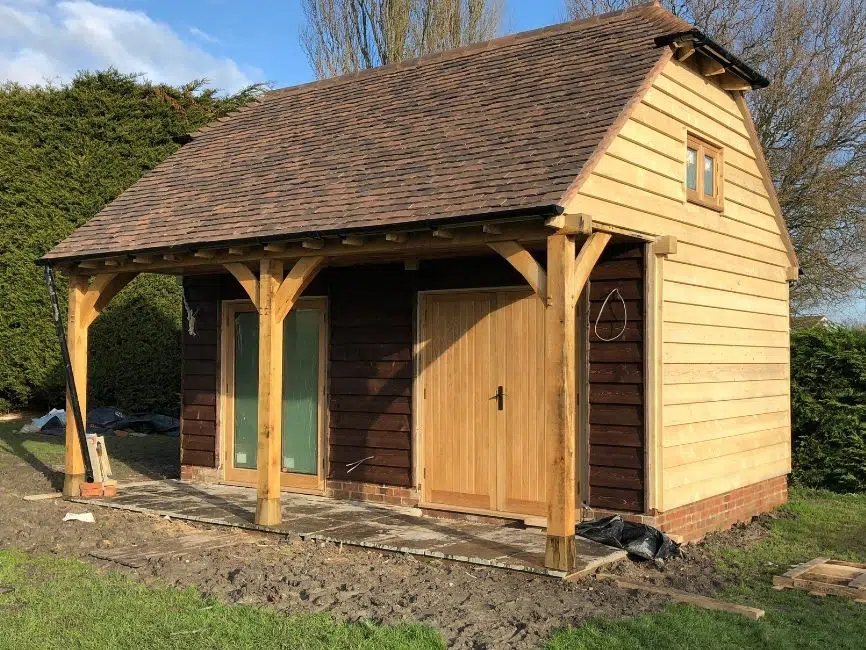
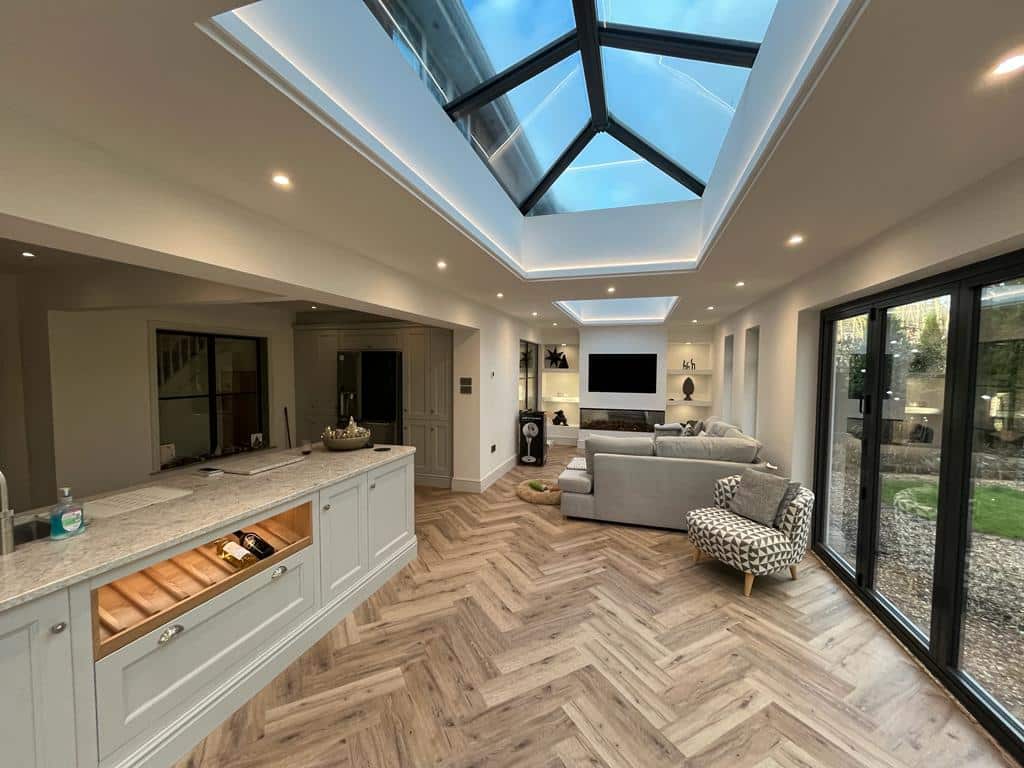
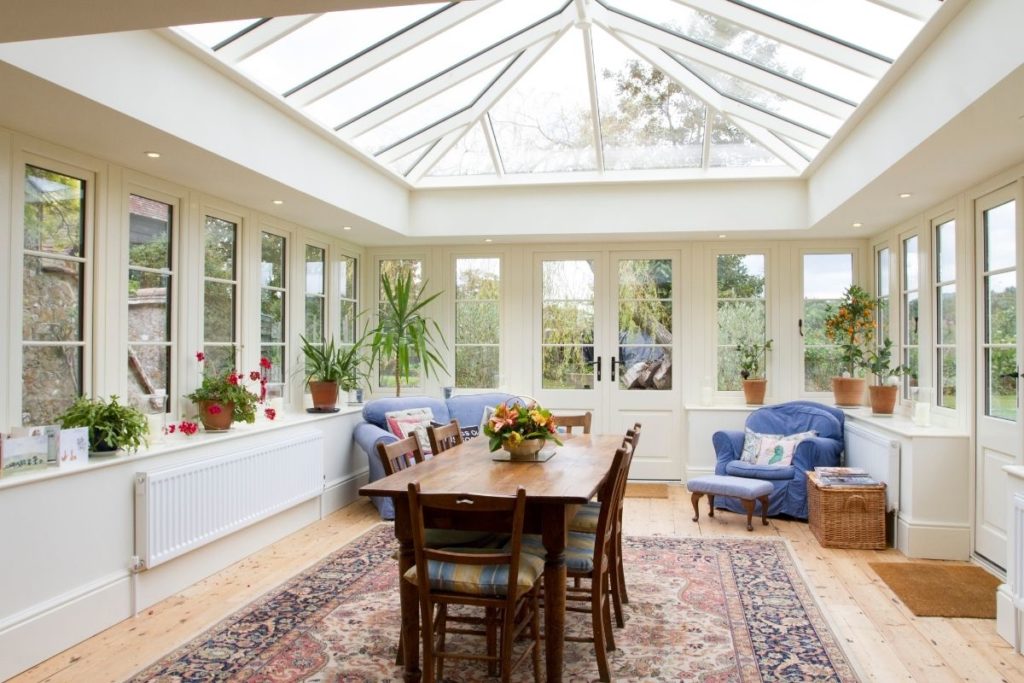
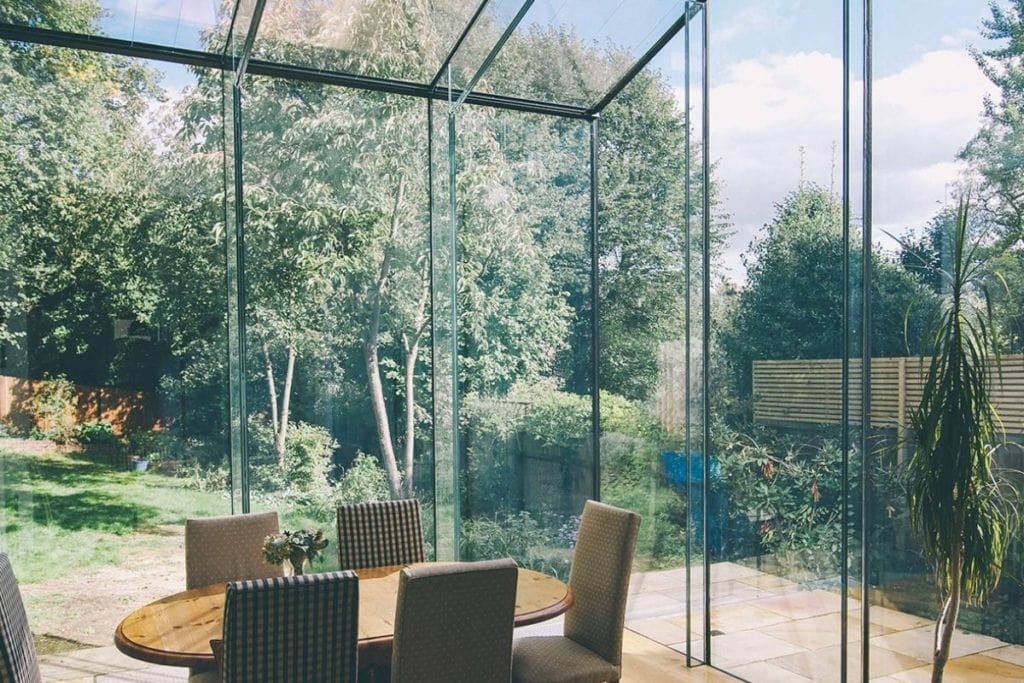
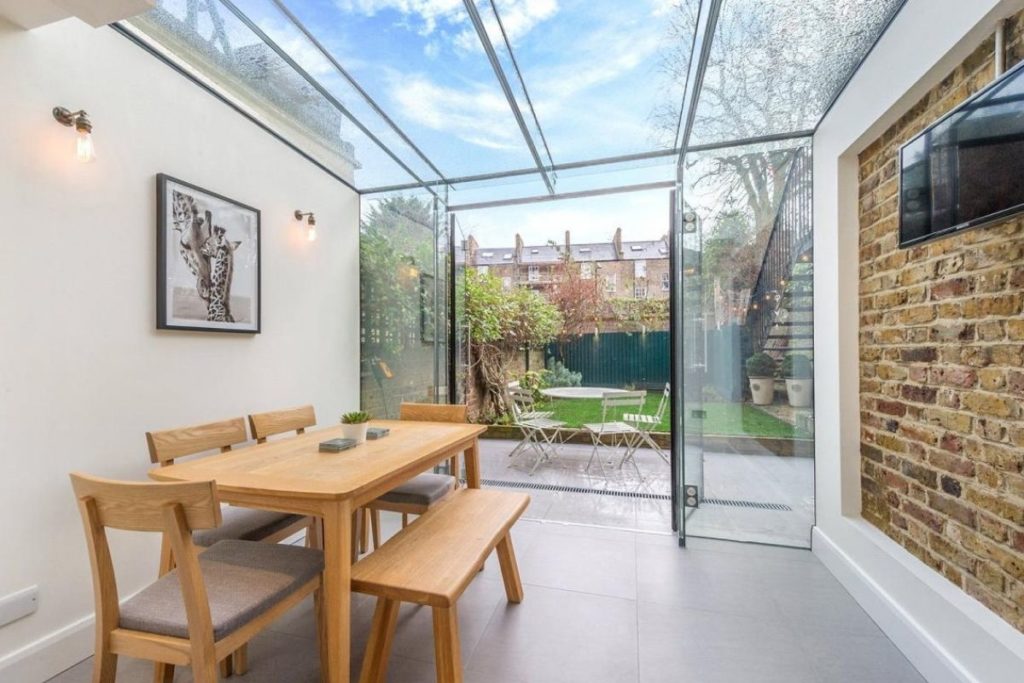
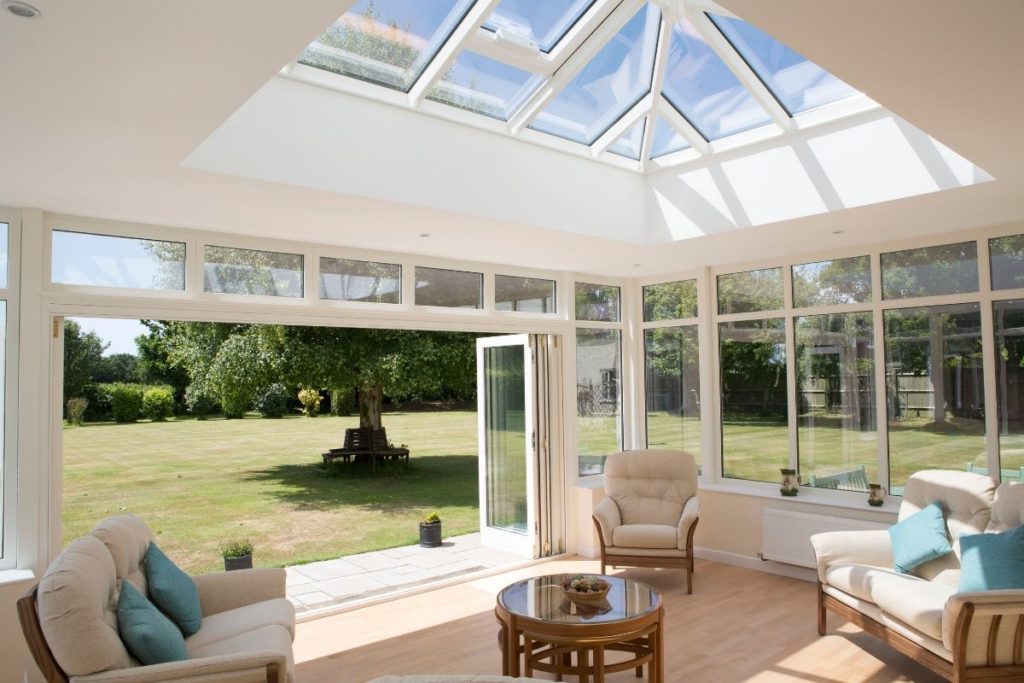
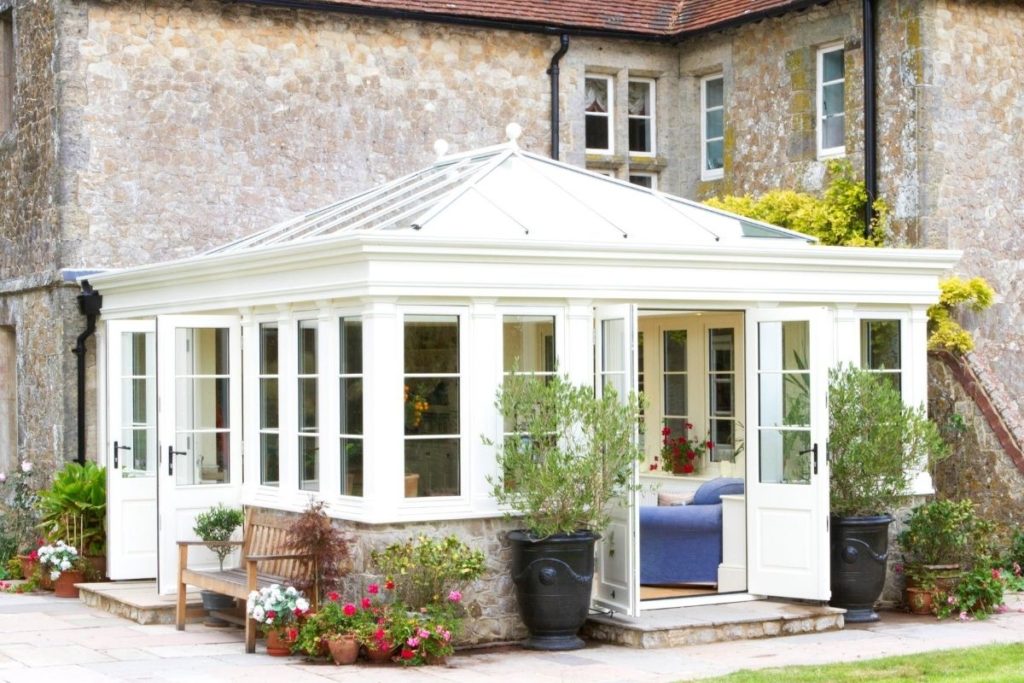
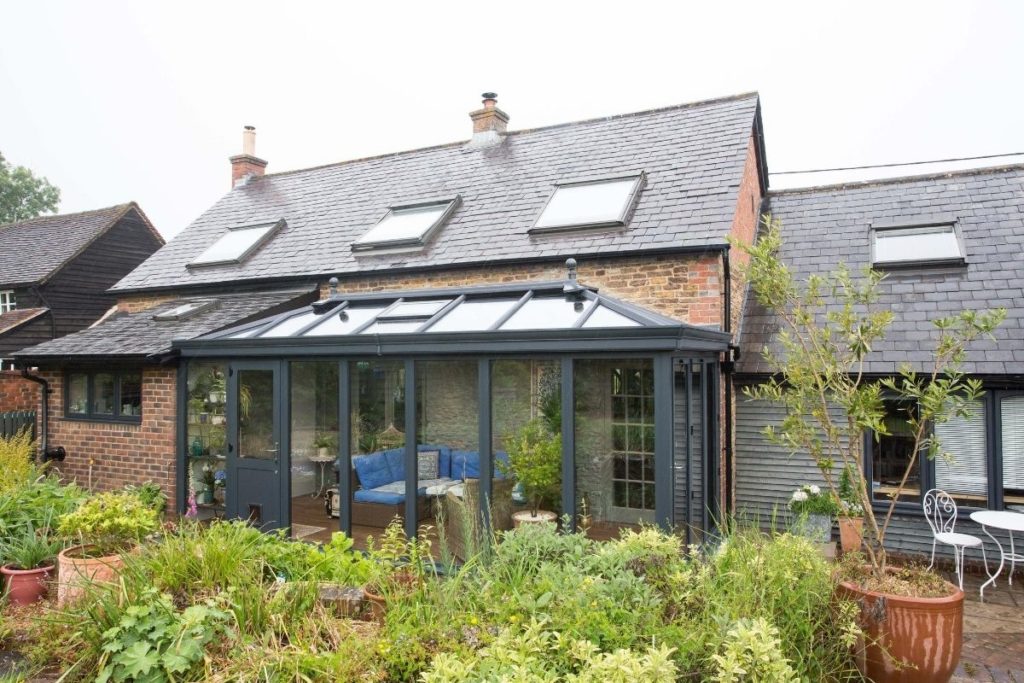
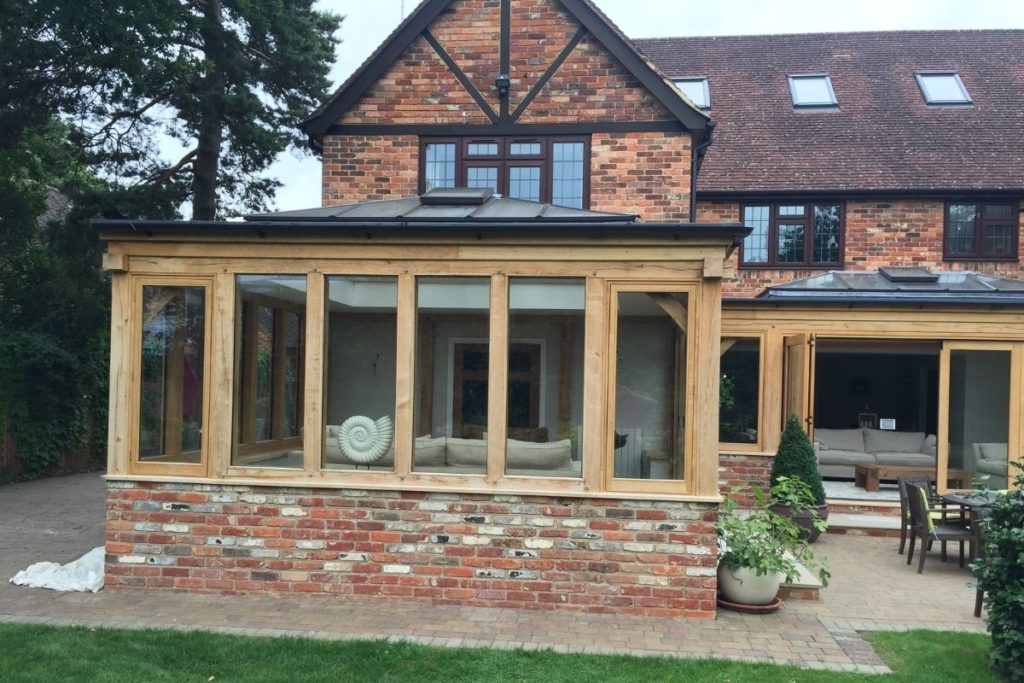
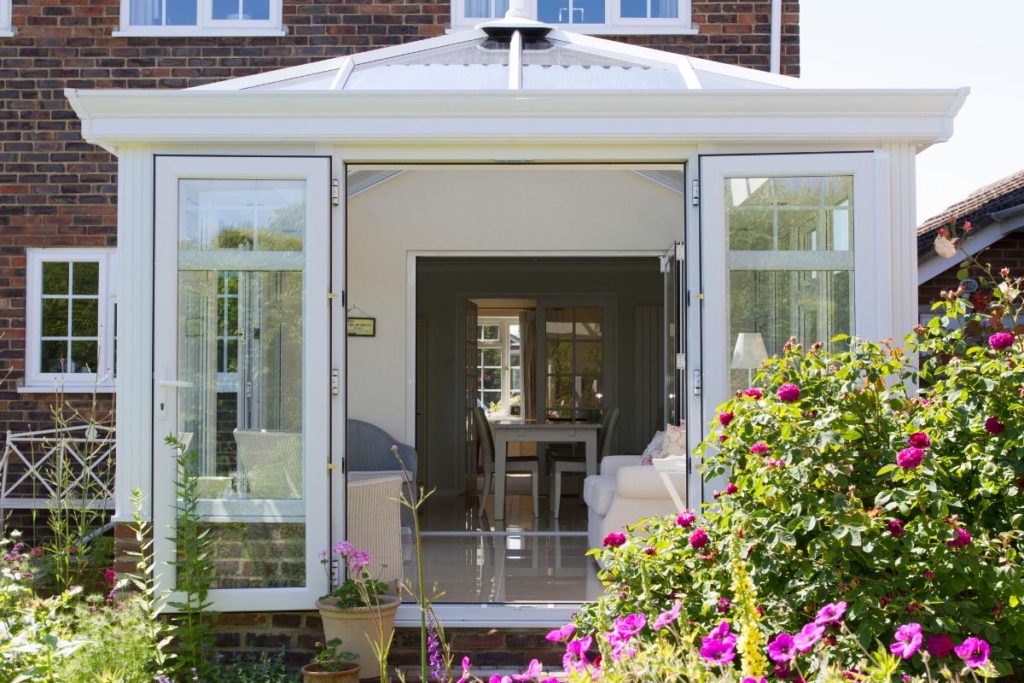
Oak framed conservatory with full-height glazing and traditional oak beams

What is an Oak Framed Conservatory?

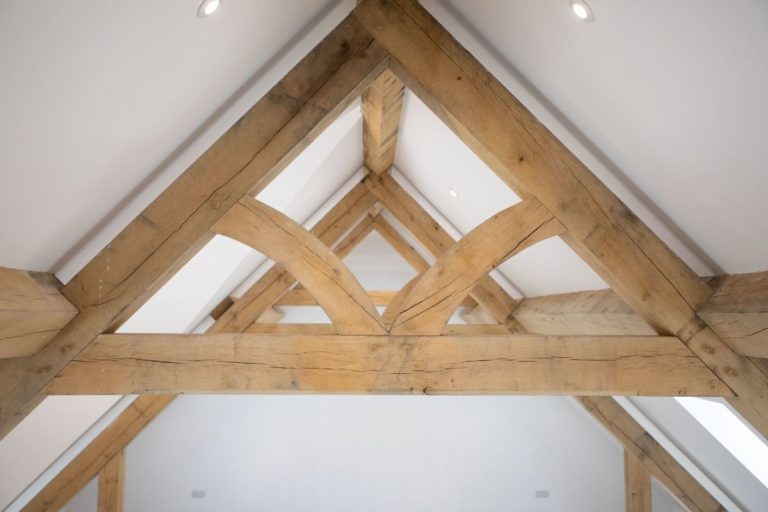
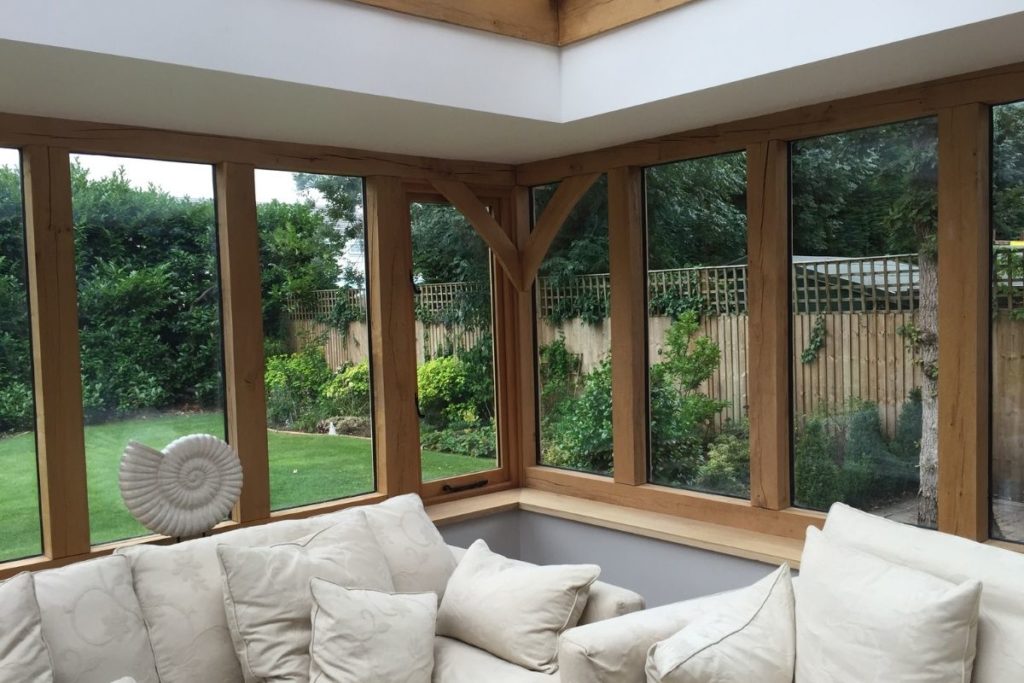
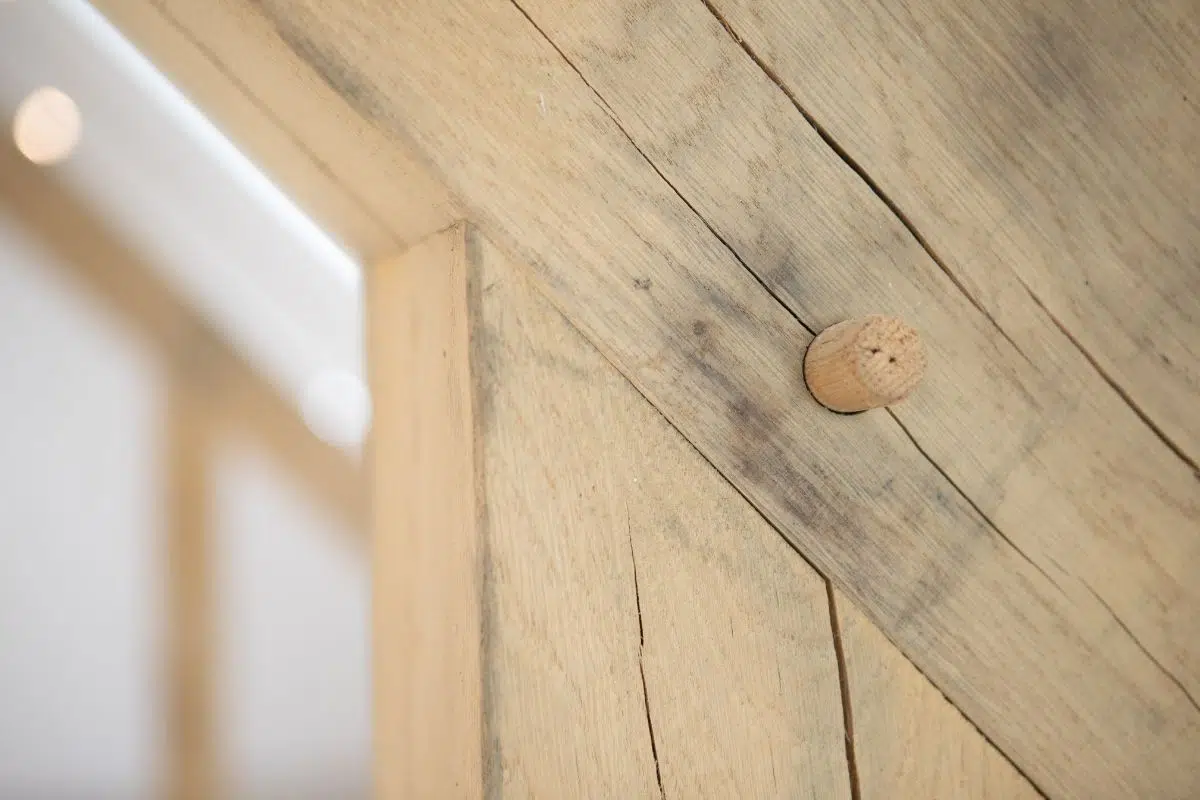
An oak framed conservatory is a glazed home extension built using traditional oak beam construction. The structural frame is made from solid oak timbers, typically joined using traditional carpentry techniques such as mortise and tenon joints secured with oak pegs. Large glass panels fill the spaces between the oak frame, creating a bright, light-filled living space.

Oak has been used in British construction for over a thousand years. Many medieval buildings, including churches, barns, and manor houses, feature oak frames that remain structurally sound after 500+ years. This exceptional durability, combined with oak’s natural beauty and warmth, makes it an ideal material for modern home extensions.
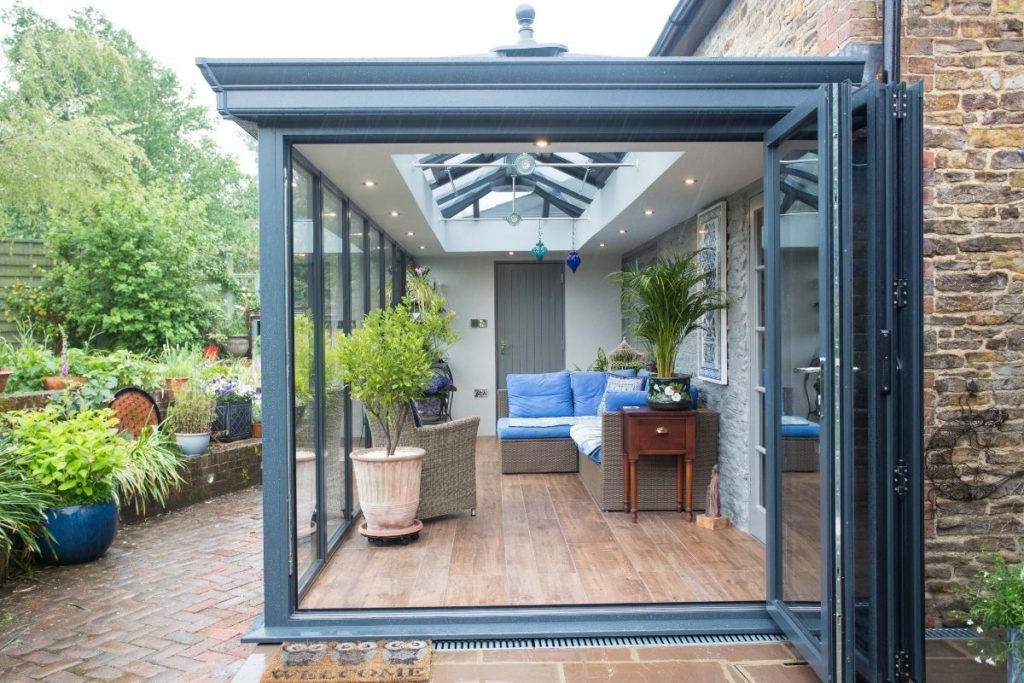
Detailed view of oak frame joinery and construction

What Makes Oak Special as a Building Material?

Oak possesses unique properties that make it exceptional for construction:

  • Natural durability: Oak’s high tannin content makes it naturally resistant to decay, insects, and fungal attack
  • Exceptional strength: Oak has a high strength-to-weight ratio, allowing large spans without intermediate supports
  • Aesthetic appeal: The warm, rich tones and distinctive grain pattern create visual character
  • Sustainability: Oak is a renewable resource; British and European oak forests are sustainably managed
  • Versatility: Suits both traditional period properties and contemporary architectural designs
  • Heritage value: Traditional construction methods connect modern buildings to centuries of craftsmanship

Definition: Green Oak vs Air-Dried Oak

Green oak is freshly cut timber with moisture content of 40-60%. It’s easier to work (can be cut and shaped with hand tools), costs approximately 30% less than air-dried oak, and is readily available in large sections. However, green oak shrinks and develops characteristic surface cracks (called “shakes”) as it dries over 2-5 years. Oak frame buildings are specifically designed to accommodate this natural movement.

Air-dried oak has been seasoned for 1-2+ years, reducing moisture content to 18-25%. It’s more dimensionally stable with less movement after installation, but costs more and is harder to source in large sections. Air-dried oak is typically used where minimal movement is critical.

Oak Conservatory vs Orangery vs Garden Room: What’s the Difference?

While all three use oak frame construction, they differ significantly in design, glazing ratio, and character:

Feature Oak Conservatory Oak Orangery Oak Garden Room
Glazing ratio 75-90% glass 40-60% glass 20-40% glass
Roof type Fully glazed Flat roof with glass lantern Solid roof with rooflights
Wall construction Full-height glass Solid lower walls, glass above Predominantly solid walls
Natural light Maximum High Moderate
Thermal efficiency Good (with quality glass) Excellent Excellent
Typical cost £30,000-£70,000 £50,000-£120,000 £25,000-£60,000
Best for Light-filled living spaces Kitchen-diners, formal rooms Home offices, studios, gyms
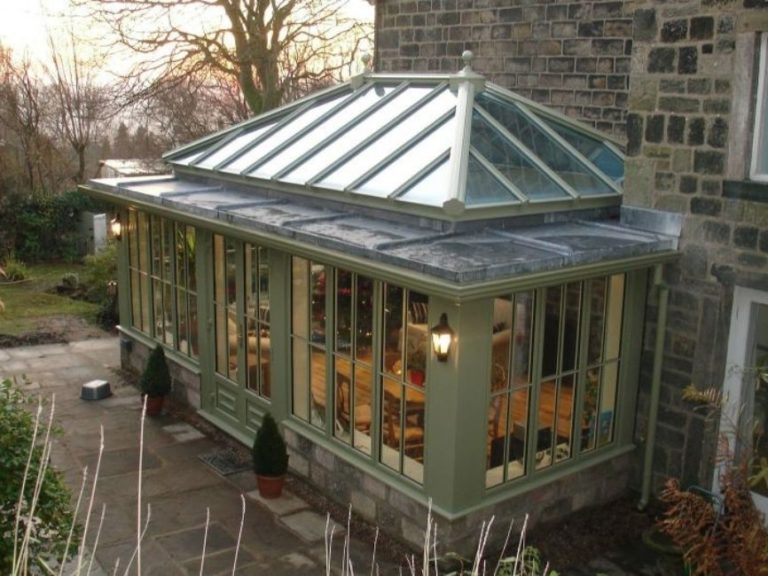
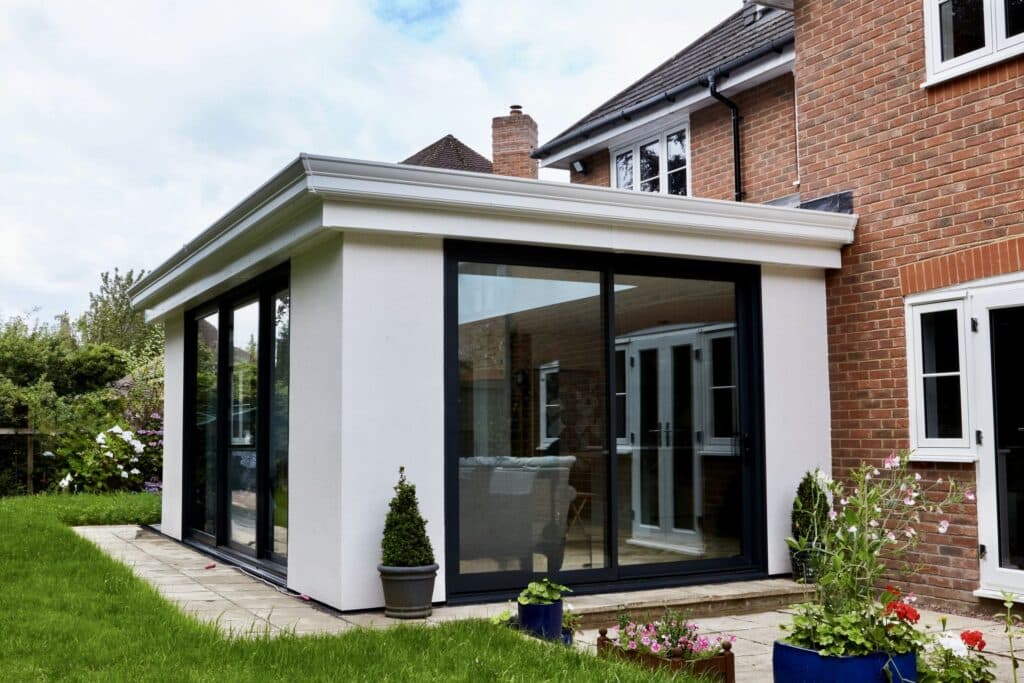
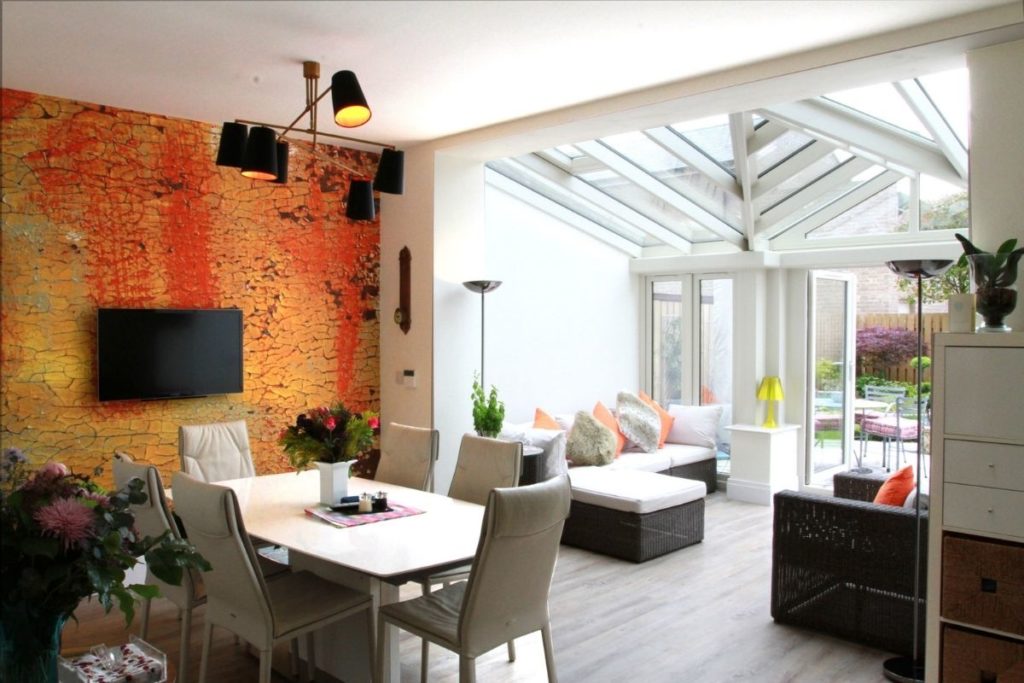
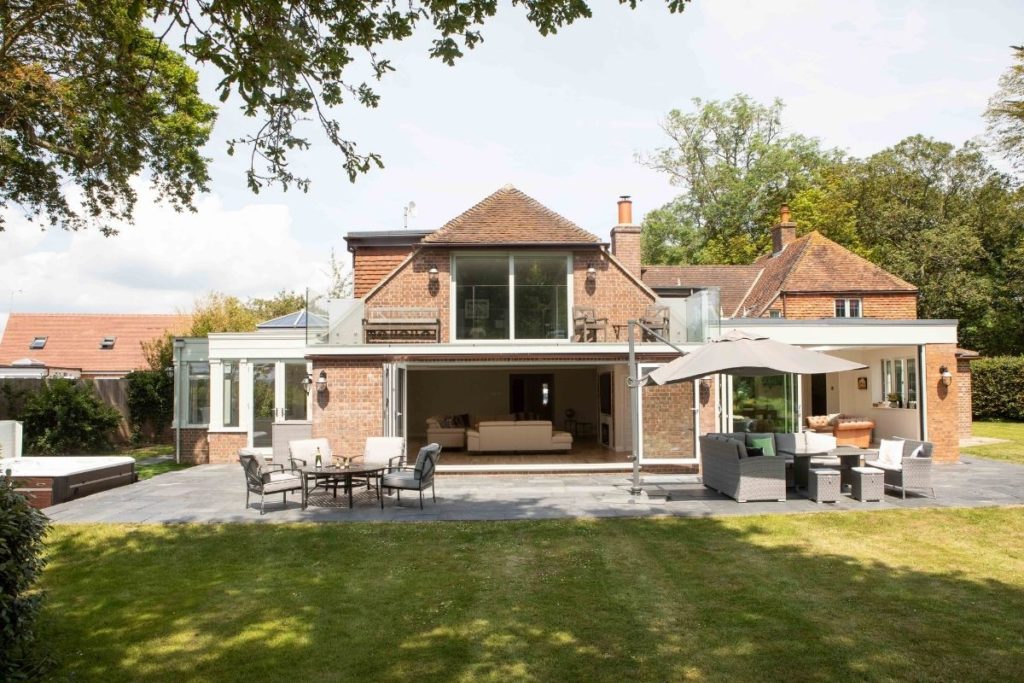
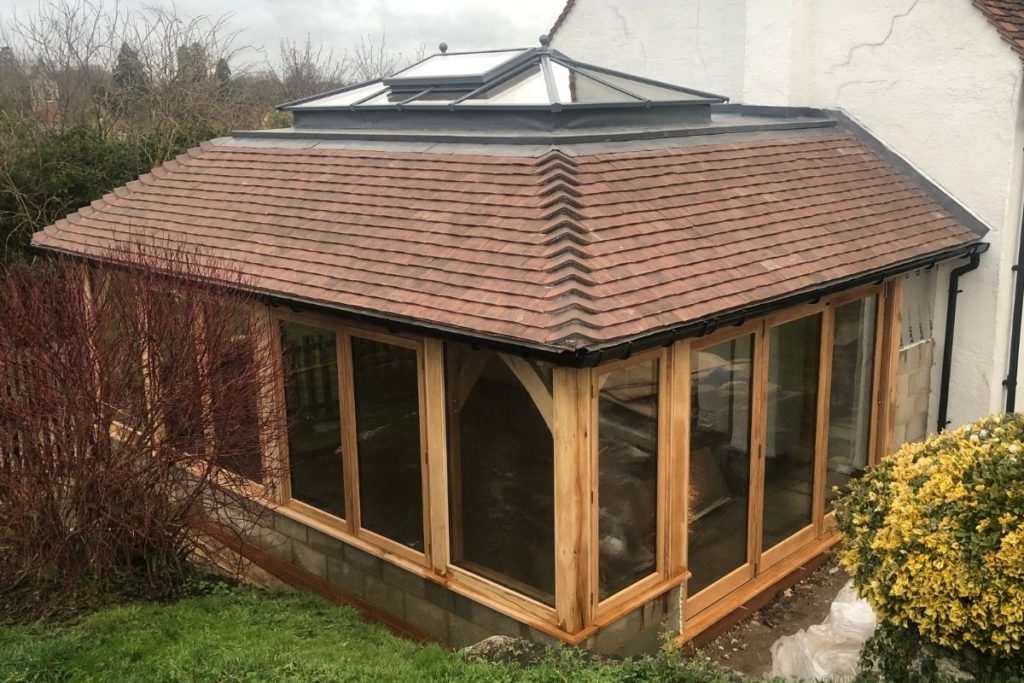
Oak framed orangery with brick walls and glass lantern roof

Oak Framed Conservatory

An oak framed conservatory maximises glazing, typically featuring full-height glass walls and a fully glazed roof. The oak frame provides the structural skeleton, with glass panels filling virtually all the space between timbers. This design delivers maximum natural light and strong visual connection with the garden.

Oak Orangery

An oak orangery has more solid construction, with brick, stone, or rendered lower walls supporting the oak frame. The roof is typically flat or low-pitched with a central glass lantern providing overhead light. This design offers a more substantial, architectural feel while still delivering excellent natural light.

Oak Garden Room

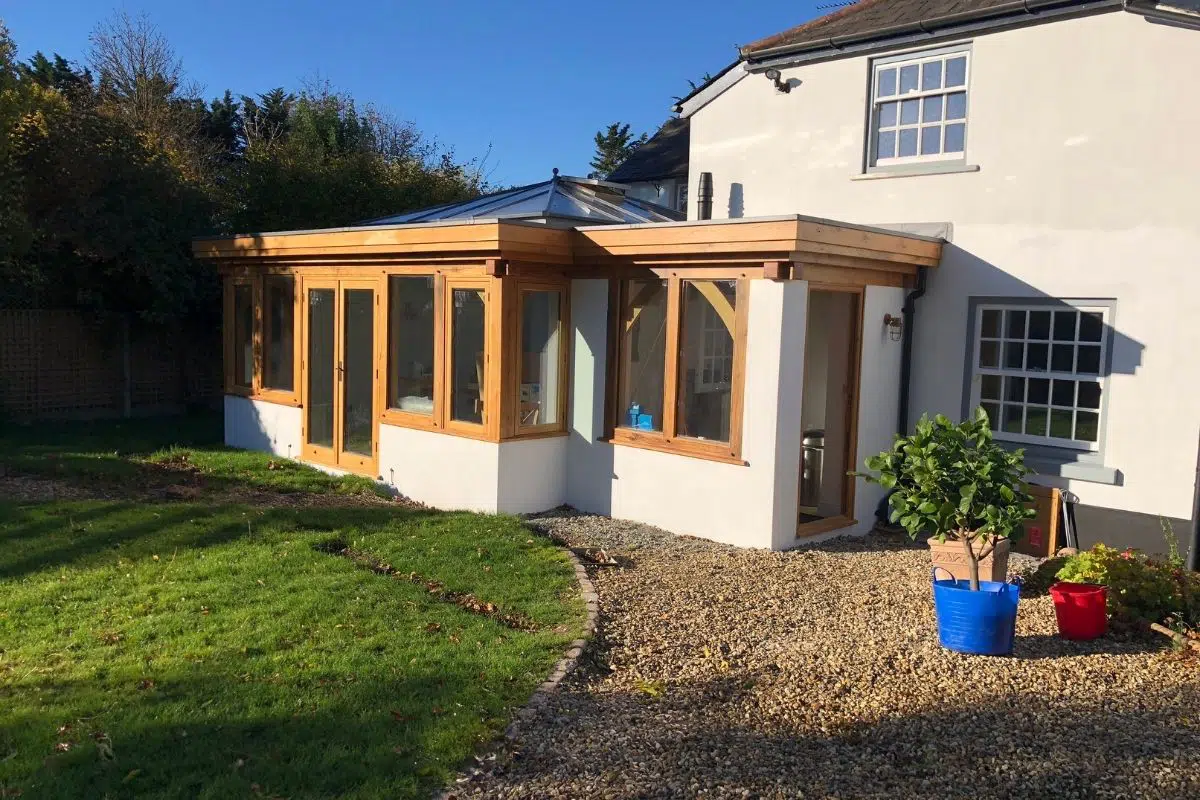
An oak garden room is more enclosed, featuring predominantly solid walls with windows rather than full glazing. The roof is typically solid with strategically placed rooflights. This design provides more privacy, better thermal efficiency, and a more building-like character. Garden rooms can be attached to the house or freestanding in the garden.
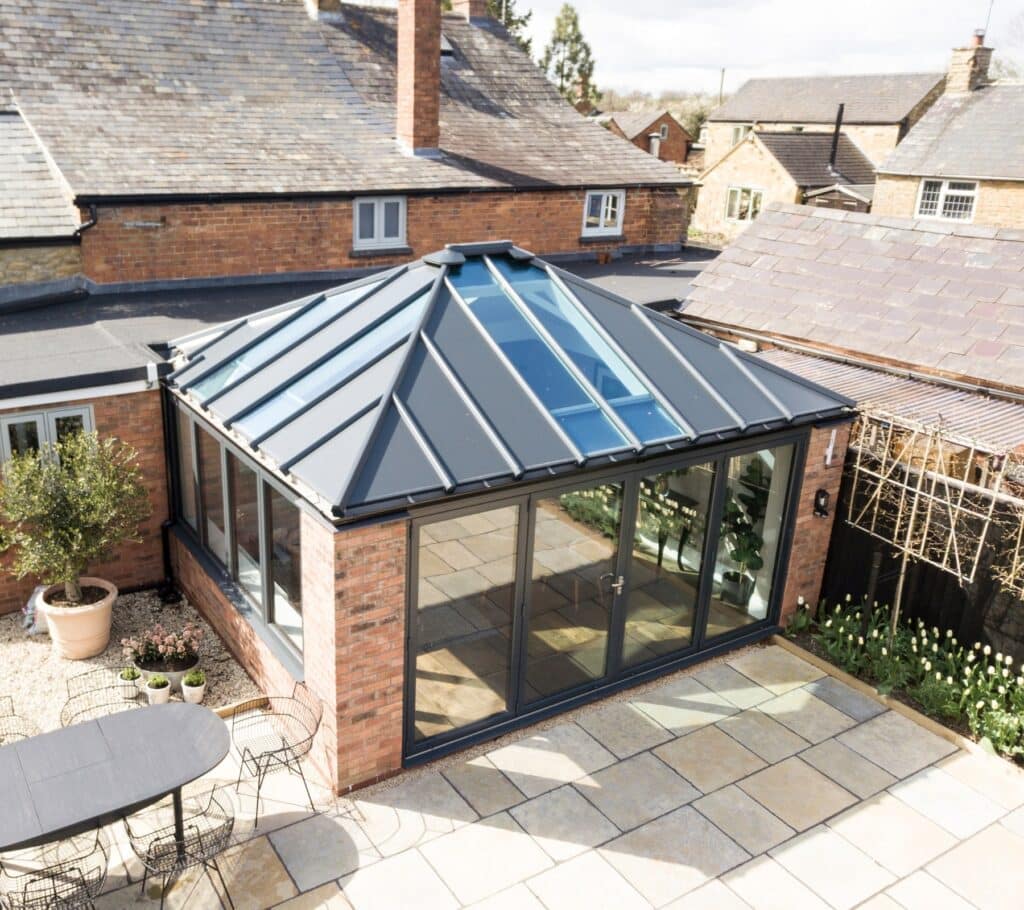
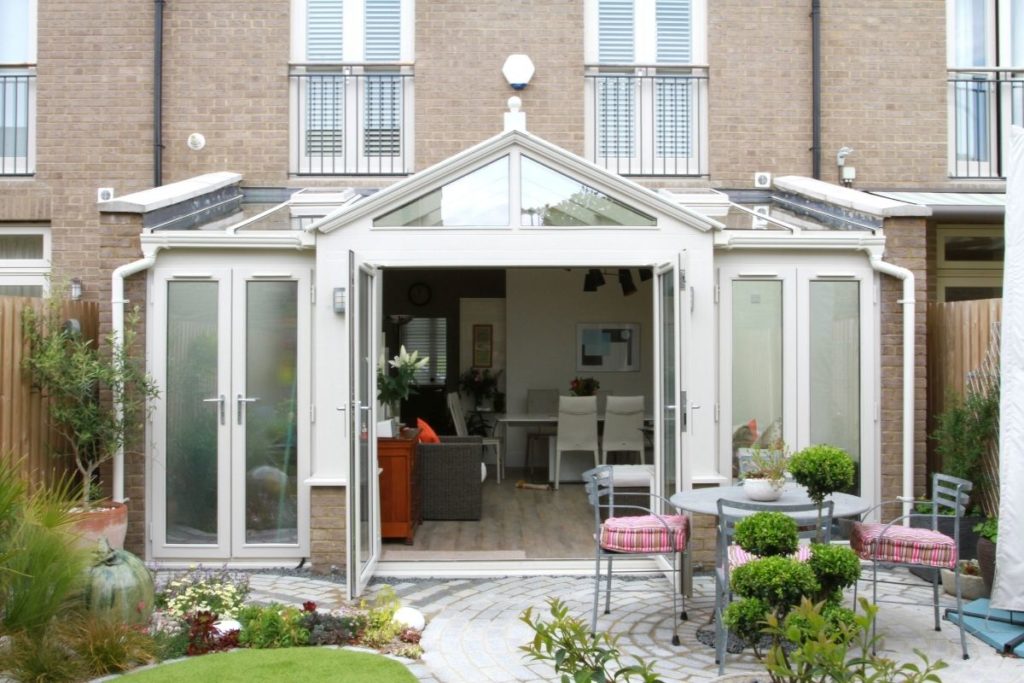
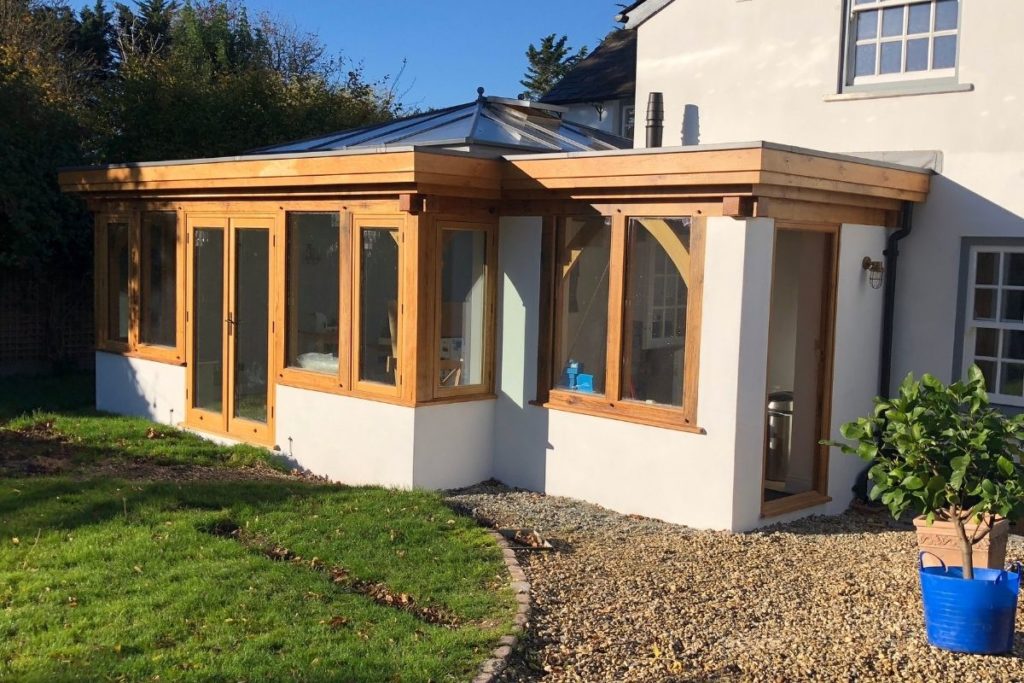
Oak framed garden room with solid walls and large windows

How Much Does an Oak Framed Conservatory Cost?

Oak is a premium material requiring skilled craftsmanship, so oak framed extensions command higher prices than uPVC or standard aluminium alternatives. However, the exceptional longevity (100+ years), aesthetic appeal, and property value enhancement often justify the investment.

Project Type Size Range Typical Cost Range
Small oak conservatory 12-18 m² £30,000-£45,000
Medium oak conservatory 18-30 m² £45,000-£70,000
Large oak conservatory 30-50 m² £70,000-£100,000
Oak orangery 20-40 m² £50,000-£120,000
Oak garden room (detached) 15-30 m² £25,000-£60,000
Complex/bespoke projects Variable £100,000-£200,000+

Factors Affecting Oak Frame Costs

  • Size: Larger structures require more oak and more complex engineering
  • Complexity: Curved members, multiple roof levels, and intricate designs increase costs
  • Oak type: Air-dried oak costs approximately 30% more than green oak
  • Glazing specification: High-performance, heat-control glass adds to the cost but improves comfort
  • Foundation requirements: Ground conditions affect foundation costs significantly
  • Internal finishes: Flooring, electrics, heating, and decoration add to the overall budget
  • Location: Access difficulties and regional labour costs vary

For detailed pricing information, see our Oak Building Prices UK 2026 guide.

Do You Need Planning Permission for an Oak Conservatory?

Planning requirements for oak framed extensions depend on several factors. Many projects fall under Permitted Development rights and don’t require a planning application, while others need full planning permission.

When Permitted Development Usually Applies

Your oak extension likely falls under Permitted Development if it:

  • Doesn’t extend beyond the rear wall by more than 3m (semi-detached/terraced) or 4m (detached)
  • Is single storey with maximum eaves height of 3m
  • Doesn’t cover more than half the garden area
  • Is built from similar materials to the existing house
  • Isn’t forward of the principal elevation facing a highway

When Planning Permission IS Required

You WILL Need Planning Permission If:

  • Your property is a listed building (you’ll also need Listed Building Consent)
  • You’re in a Conservation Area, National Park, AONB, or World Heritage Site
  • Previous extensions have used your Permitted Development allowance
  • The extension exceeds Permitted Development size limits
  • Your property has Article 4 Direction restrictions
  • You’re building a detached garden room in some circumstances
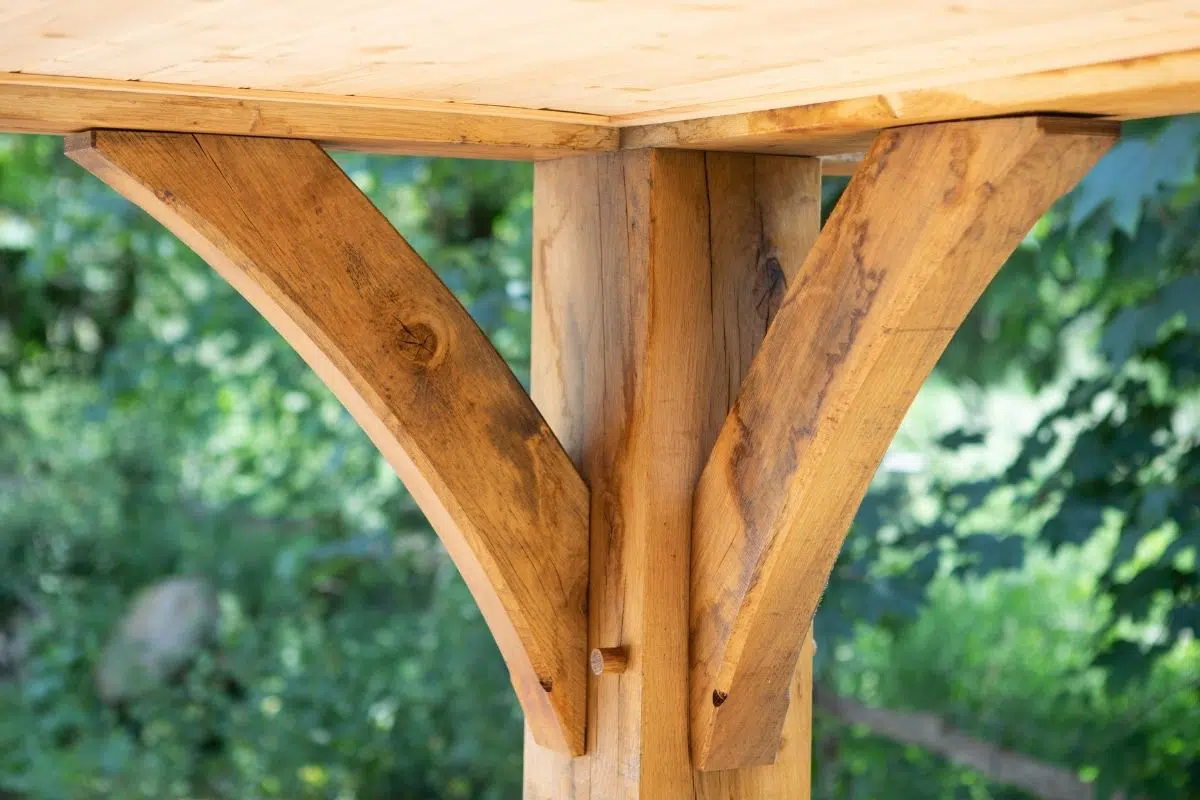
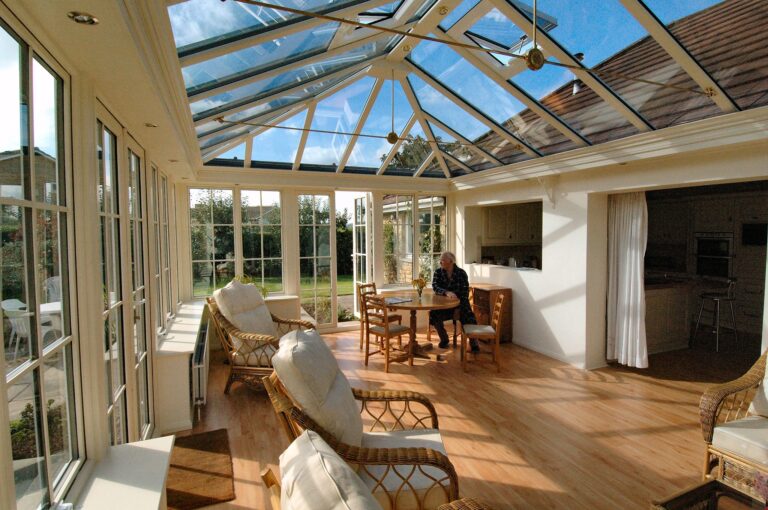
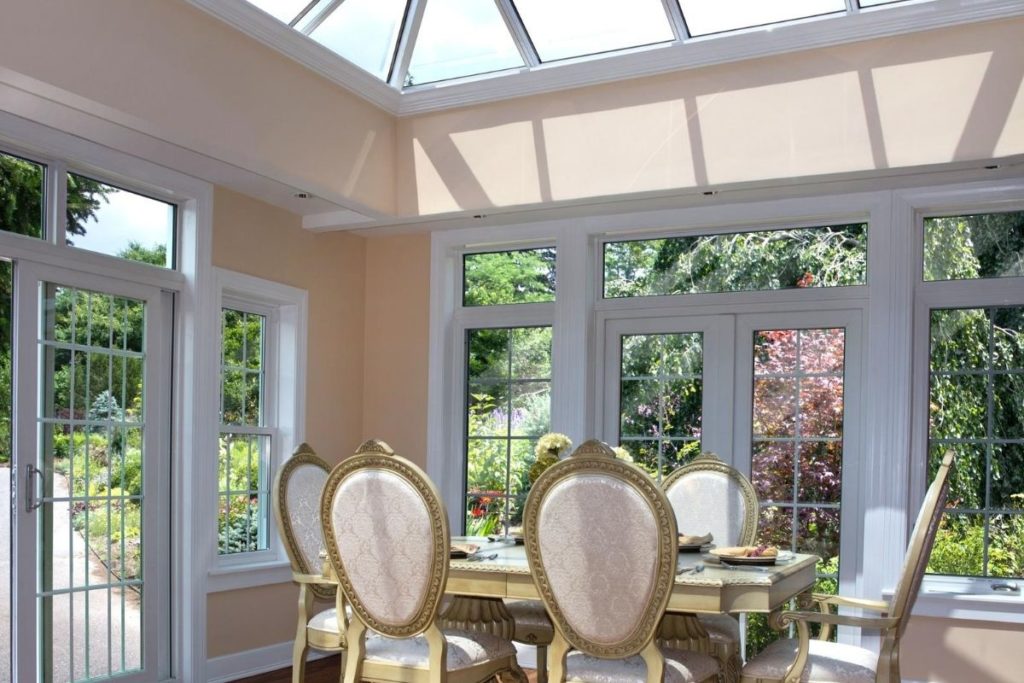
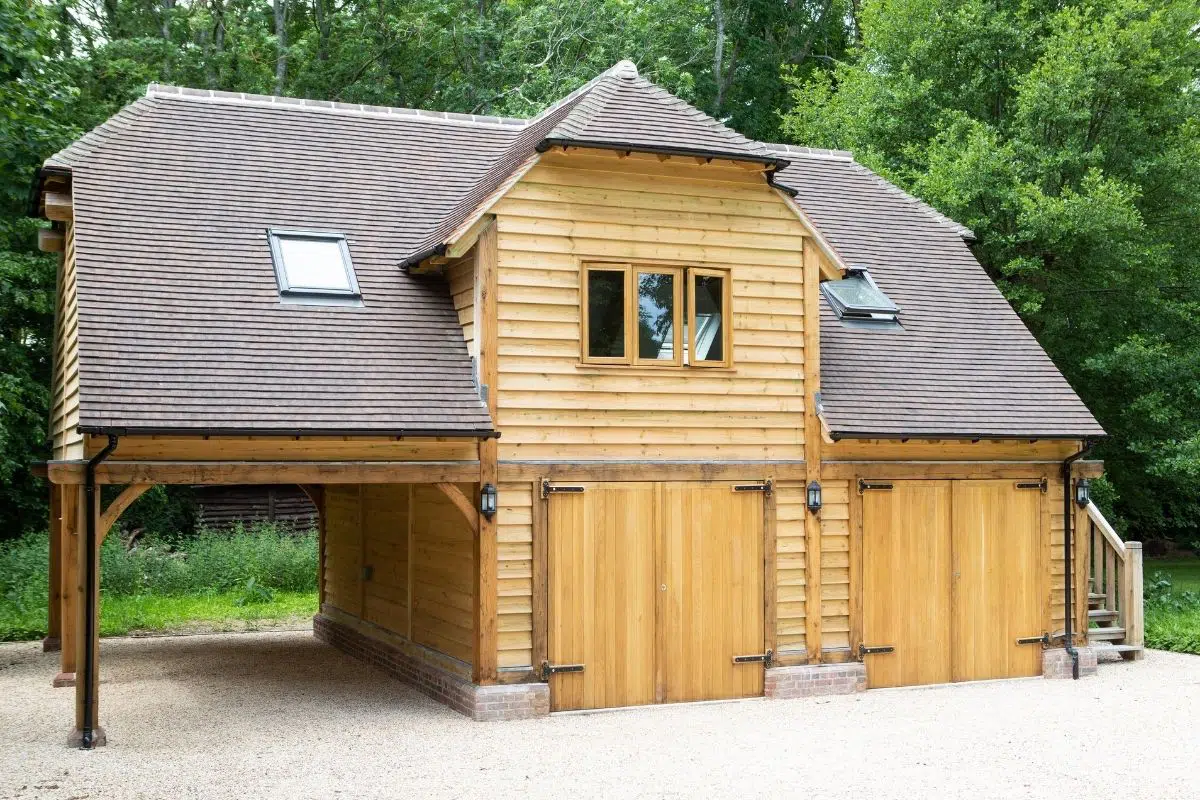
Oak framed extension on a traditional listed building

Oak Extensions on Listed Buildings

Oak is often the preferred material for extending listed buildings. Conservation officers generally favour oak because:

  • It’s a traditional material with historical precedent
  • Traditional joinery techniques (mortise and tenon, oak pegging) are authentic
  • The natural material complements period properties
  • Large glass panels allow the original building to remain visible

However, you’ll need both Listed Building Consent and planning permission. The design must be sympathetic to the historic building. Working with specialists experienced in listed building projects is essential.

How Long Does an Oak Frame Last?

Oak framed buildings are exceptionally durable. With proper design and maintenance, an oak framed conservatory can last 100+ years—far exceeding the lifespan of uPVC (20-25 years) or standard timber (30-40 years).

Historical Evidence of Oak’s Longevity

The UK has thousands of oak framed buildings that have survived for centuries. Medieval tithe barns, manor houses, and churches from the 13th-15th centuries remain structurally sound after 500-700 years. The Barley Barn at Cressing Temple in Essex dates from approximately 1220 and its original oak frame remains intact.

This longevity results from oak’s natural properties: high tannin content resists decay, dense grain resists insect attack, and the material actually hardens with age as it fully seasons.

Keys to Oak Frame Longevity

  • Keep oak off the ground: Raise the frame on a plinth or dwarf wall to prevent moisture absorption
  • Ensure good drainage: Water should drain away from the structure, never pooling against oak
  • Allow air circulation: Good ventilation prevents moisture build-up
  • Regular maintenance: Annual inspection and treatment every 3-5 years
  • Quality construction: Properly designed joints that accommodate natural oak movement

Oak Frame Maintenance Requirements

One of oak’s advantages is relatively low maintenance compared to softwood or painted finishes. Oak doesn’t require preservative treatment—it’s naturally durable. However, some maintenance is needed to preserve appearance and maximise lifespan.

Annual Maintenance Tasks

  • Visual inspection: Check joints, fixings, and glass seals for any issues
  • Clear gutters and drainage: Ensure water drains away from the oak frame
  • Check ventilation: Ensure air can circulate around the base of the frame
  • Clean glazing: Regular cleaning maintains appearance and light transmission

Periodic Maintenance (Every 3-5 Years)

  • Re-oil or seal the oak: This is optional but maintains the original colour
  • Check and replace sealants: Glass and roofing sealants may need renewal
  • Inspect for decay: Pay attention to areas where water might collect

To Treat or Not to Treat?

Untreated oak naturally weathers to an attractive silver-grey colour over several years. This is not decay—it’s a surface oxidation that actually protects the wood beneath. Many oak buildings are left untreated and weather beautifully for centuries.

Treated oak (with oil, UV-protective finish, or sealant) maintains the original honey-brown colour but requires reapplication every 3-5 years. Neither approach is “correct”—it’s a matter of aesthetic preference.

Common Misconceptions About Oak Frame Buildings

Myth #1: “Oak frames are too expensive”

Fact: While initial costs are higher than uPVC, the total cost of ownership over 50+ years is often lower. An oak frame lasting 100+ years compared to uPVC lasting 20-25 years means avoiding multiple replacements. Factor in the property value premium oak commands, and the economics often favour oak.

Myth #2: “Green oak will crack and split unacceptably”

Fact: Green oak does develop surface checks and shakes as it dries—this is normal and expected. These cracks are surface-deep and don’t affect structural integrity. Oak frame buildings are specifically designed to accommodate this movement. The characteristic checking is often considered part of oak’s charm and authenticity.

Myth #3: “Oak frames require constant maintenance”

Fact: Oak requires less maintenance than most alternatives. Unlike softwood, it doesn’t need preservative treatment. Unlike painted surfaces, there’s no flaking or repainting. If you’re happy with natural weathering, maintenance is minimal—just annual inspection and keeping drainage clear.

Myth #4: “Oak conservatories are cold in winter”

Fact: Temperature depends on glazing specification, not frame material. Modern high-performance glass achieves excellent U-values (under 1.0 W/m²K), ensuring year-round comfort. With proper glazing and heating, an oak conservatory is as thermally efficient as any other extension.

Myth #5: “Planning permission is always difficult for oak buildings”

Fact: Oak is often favoured by planners and conservation officers. For listed buildings, oak is frequently the preferred material. Many oak extensions fall under Permitted Development and don’t require planning permission at all.

The Oak Frame Building Process

Building an oak framed conservatory, orangery, or garden room typically takes 4-7 months from design to completion. Here’s how the process works:

Stage 1: Initial Consultation (Week 1-2)

Discuss your requirements, budget, and site constraints. Consider how you’ll use the space, glazing preferences, and integration with your existing property. A site survey assesses ground conditions, access, and any planning considerations.

Stage 2: Design Development (Weeks 3-8)

Detailed designs are developed including oak frame layout, glazing specifications, foundation requirements, and internal finishes. You’ll receive 3D visualisations and detailed quotations.

Stage 3: Planning and Approvals (Weeks 6-14)

If required, planning applications are submitted. Building Regulations approval is obtained. For listed buildings, Listed Building Consent is sought.

Stage 4: Oak Frame Manufacture (Weeks 10-18)

The oak frame is crafted off-site by specialist carpenters. Each joint is carefully cut and test-assembled before delivery. This typically takes 6-10 weeks depending on complexity.

Stage 5: Site Preparation (Weeks 14-18)

Foundations are excavated and poured. Any modifications to the existing property (removing windows, installing steel beams) are completed. The base is prepared for the oak frame.

Stage 6: Frame Erection (Weeks 18-20)

The pre-fabricated oak frame is delivered and erected on site. This is often completed in 1-2 weeks—the frame is assembled like a large-scale piece of joinery.

Stage 7: Glazing and Finishing (Weeks 20-28)

Glazing panels are installed, roofing completed, and the structure made watertight. Internal works including flooring, electrics, heating, plastering, and decoration follow.

Thermal Performance and Energy Efficiency

A common concern about glazed extensions is temperature control—being too hot in summer and too cold in winter. With modern glass technology, this is no longer an issue.

Modern Glass Solutions

High-performance glazing like New Generation Glass provides:

  • Low U-values (under 1.0 W/m²K) for excellent thermal insulation
  • Solar control blocking up to 86% of solar heat gain
  • High light transmission (70%+) maintaining brightness
  • UV protection (99%) preventing furnishing fade

This means your oak conservatory can be comfortable year-round without excessive heating or cooling costs.

Heating Options

Building Regulations require conservatories to have independent heating. Options include:

  • Underfloor heating: Popular choice providing even, unobtrusive warmth
  • Radiators: Extend existing central heating system
  • Air source heat pump: Efficient and environmentally friendly
  • Electric panel heaters: Simple solution for occasional use spaces

Room Outside

Oak Frame Specialists | Established 1973 | 50+ Years Experience

Room Outside has designed and built oak framed buildings across Kent, Surrey, Sussex, Hampshire, and London for over 50 years. Our team includes experienced designers, master craftsmen, and project managers who specialise in traditional oak construction combined with modern glazing technology. We handle projects from initial design through planning approval to final completion. Call 01243 538999 for expert advice.

Areas We Cover

Room Outside designs and builds oak framed conservatories, orangeries, and garden rooms across the South East of England:

England West Sussex East Sussex Surrey Hampshire Kent Essex Greater London Berkshire Dorset

View our project gallery or contact us to discuss your oak frame project.

Sources, References, and Further Reading

Official Sources: UK Planning Portal (planningportal.co.uk) – Permitted Development Rights; Historic England – Listed Building Consent Guidelines; Building Regulations 2010 (as amended) – Part L and Part A.

Industry Bodies: Timber Frame Business Council; Oak Frame Carpenters Association; Glass and Glazing Federation – Thermal Performance Standards.

Industry Experience: Room Outside – 50+ years oak frame construction experience; proprietary project data from completed installations across South East England.

Last updated: February 2026 | Expert review: Construction specifications verified against current Building Regulations

Frequently Asked Questions

How much does an oak framed conservatory cost in the UK in 2026?

Oak framed conservatories cost from £30,000 for small structures to £100,000+ for large orangeries. A medium-sized conservatory (20-30m²) typically costs £45,000-£70,000. Costs depend on size, complexity, oak type (green or air-dried), and glazing specification.

Do I need planning permission for an oak conservatory in the UK?

Many oak extensions fall under Permitted Development and don’t require planning permission. However, listed buildings always need Listed Building Consent plus planning permission. Properties in Conservation Areas, AONBs, or National Parks may also require permission.

How long does an oak frame last compared to other materials?

Oak framed buildings can last 100+ years with proper maintenance. Many medieval oak structures remain sound after 500+ years. Compared to uPVC (20-25 years) or aluminium (30-40 years), oak offers exceptional longevity and long-term value.

What is the difference between green oak and air-dried oak?

Green oak is freshly cut with 40-60% moisture, costs ~30% less, but shrinks as it seasons. Air-dried oak (18-25% moisture) is more stable but more expensive. Both are suitable for construction when designed correctly. Green oak movement is accommodated in the joinery design.

What maintenance does an oak frame require annually?

Oak requires minimal maintenance: annual inspection of joints and drainage, cleaning gutters, and optionally sealing/oiling every 3-5 years to maintain colour. Untreated oak naturally weathers to silver-grey. Oak doesn’t need preservative treatment.

Can you add an oak extension to a listed building?

Yes—oak is often the preferred material for listed buildings. Conservation officers favour oak because it’s traditional, uses authentic construction methods, and complements period properties. You’ll need Listed Building Consent and planning permission.

Do oak conservatories need special foundations?

Yes, oak frames require proper foundations. Green oak weighs approximately 1,000 kg per cubic metre. Foundations typically include concrete strip footings or raft, damp-proof course, and raised base to keep oak clear of ground moisture.

How long does it take to build an oak conservatory?

Total project time is typically 4-7 months: design and planning (4-10 weeks), oak frame manufacture (6-10 weeks), groundwork and frame erection (3-5 weeks), and glazing/finishing (3-6 weeks). Complex projects or those requiring planning permission may take longer.

Will an oak conservatory be too hot in summer?

Not with modern glazing. High-performance glass blocks up to 86% of solar heat while maintaining high light transmission. Combined with proper ventilation and optional blinds, oak conservatories can be comfortable year-round regardless of weather.

Does an oak frame add value to a property in the UK?

Yes—quality oak extensions typically add 5-10% to property values. Oak commands a premium over standard materials due to its perceived quality, exceptional longevity, and appeal to buyers seeking character and craftsmanship.

Call us on 01243 538999 – David our digital assistant will take a few details so the right specialist can follow up personally.

Discuss Your Oak Frame Project

Whether you’re considering an oak conservatory, orangery, or garden room, our specialists can help you explore the options for your property. Call us on 01243 538999 – David our digital assistant will take a few details so the right specialist can follow up personally. Or book a free design consultation with no obligation.

Book Free Consultation

Room Outside: Oak frame specialists since 1973.
England, West Sussex, East Sussex, Surrey, Hampshire, Kent, Essex, Greater London, Berkshire, Dorset
roomoutsideuk
17th December, 2025

Glass Extensions Surrey | What Homeowners Need to Know 2025 | Room Outside

What Surrey Homeowners Should Know Before Commissioning a Glass Extension | Room Outside

What Surrey Homeowners Should Know Before Commissioning a Glass Extension

Expert guide to Surrey’s unique planning landscape, realistic budgets, and what actually adds value to your property in 2025.

📋 The Short Answer

Before commissioning a glass extension in Surrey, you need to understand three things: (1) whether your property falls within the 73% of Surrey designated as Green Belt, which affects what you can build; (2) whether Permitted Development rights apply (most conservatories under 4m don’t need planning permission); and (3) budget expectations—with average Surrey property prices at £587,000, quality glass extensions typically cost £40,000-£120,000+ depending on specification.

So You’re Thinking About a Glass Extension in Surrey?

Let’s be honest: you’ve probably already scrolled through Pinterest boards, saved a dozen Instagram posts, and imagined morning coffee in a light-flooded kitchen-diner. The vision is clear. But somewhere between the dream and the reality, questions start multiplying.

Will I need planning permission? How much should I actually budget? Is my Edwardian terrace in Guildford even suitable? What about my 1930s semi in Woking that backs onto Green Belt?

These aren’t hypothetical concerns. After forty years of building glass extensions across Surrey—from Farnham to Reigate, Epsom to Dorking—we’ve heard them all. This guide answers the questions Surrey homeowners actually ask, with specific information relevant to properties in this county.

Because Surrey isn’t like anywhere else. It’s the second most expensive county in England (average price £587,000). It has more Green Belt than almost anywhere—73% of the county. And one quarter sits within the Surrey Hills National Landscape, with its own planning considerations.

Your glass extension project needs to account for all of this. Here’s how.

The Surrey Planning Landscape: What Makes This County Different

Before we discuss designs, materials, or budgets, let’s address the elephant in the room: can you actually build what you want?

Green Belt: 73% of Surrey Is Protected

Surrey’s Metropolitan Green Belt isn’t a single park—it’s a planning designation that covers nearly three-quarters of the county. In practical terms:

  • Woking Borough: approximately 70% Green Belt
  • Guildford Borough: 24,040 hectares of Green Belt (most in Surrey)
  • Mole Valley: extensive coverage protecting countryside character
  • Epsom and Ewell: smallest Green Belt area (1,560 hectares) but still significant

The good news: Green Belt doesn’t prevent home extensions. Permitted Development rights still apply in most cases. But councils follow a general ‘50% rule’—extensions shouldn’t increase the original house size by more than 50% in area and volume, and must have minimal visual impact on the landscape.

Surrey Hills National Landscape: A Quarter of the County

The Surrey Hills Area of Outstanding Natural Beauty (now officially a ‘National Landscape’) stretches from Farnham in the west to Oxted in the east, including the chalk slopes of the North Downs and the wooded Greensand Hills around Haslemere.

If your property falls within the Surrey Hills:

  • Permitted Development rights are more restricted for rear extensions
  • Design must conserve and enhance ‘natural and scenic beauty’
  • Local materials and styles are strongly encouraged (Bargate stone, clay tiles)
  • The Surrey Hills Board provides design guidance and may comment on applications

Conservation Areas and Listed Buildings

Every Surrey borough has Conservation Areas—from Guildford’s medieval town centre to Reigate’s Victorian suburbs. Properties within these areas face additional restrictions:

  • No Permitted Development for side extensions
  • No cladding of exterior walls
  • No rear extensions beyond one storey under PD rights
  • Design must preserve or enhance the Conservation Area’s character

Listed buildings require Listed Building Consent for almost any alteration—including internal works. This isn’t a barrier to beautiful glass extensions, but it does require specialist knowledge and early engagement with your local conservation officer.

Do You Actually Need Planning Permission?

Here’s something that surprises many Surrey homeowners: most conservatories and single-storey glass extensions can be built without planning permission under Permitted Development rights.

The Permitted Development Rules (2025)

Your glass extension qualifies as Permitted Development if it meets ALL of the following:

Requirement What This Means
Maximum projection from rear wall 4m for detached houses, 3m for semi/terraced
Maximum height 4m at highest point (3m if within 2m of boundary)
Garden coverage Cannot cover more than 50% of original garden area
Position Must be at rear of property (not front or side facing highway)
Materials Must use similar materials to existing house
Eaves and ridge Cannot be higher than the existing house

When You Definitely Need Planning Permission

  • Your property is a listed building
  • You’re in a Conservation Area and want a side extension or two-storey rear
  • Your project exceeds PD size limits
  • Previous extensions have already used your PD allowance
  • Your property is a flat or maisonette (no PD rights)
  • PD rights were removed by condition on original planning consent (common in 1970s+ builds)

Our recommendation: Even if you believe you qualify for Permitted Development, consider obtaining a Lawful Development Certificate (LDC) from your local council (£103). This provides legal certainty that’s valuable when selling your property.

Realistic Budgeting for Surrey Property Owners

Let’s talk money—because Surrey prices aren’t like anywhere else, and neither should your expectations be.

The Surrey Premium

With average property prices at £587,000 (and significantly higher in Elmbridge, Waverley, and parts of Guildford), your glass extension is protecting a substantial asset. Cutting corners on specification makes no financial sense when:

  • A quality extension adds 5-10% to property value (RICS, Savills)
  • Poor-quality builds can actually devalue your home
  • Surrey buyers are discerning—estate agents report that dated conservatories are now liabilities

What Should You Expect to Pay?

Project Type Budget Range Notes
Standard conservatory (uPVC) £15,000-£30,000 Entry point, 20-35yr lifespan
Premium conservatory (aluminium) £30,000-£50,000 40-50yr lifespan, slimmer frames
Orangery (brick/glass hybrid) £40,000-£70,000 Ideal for period properties
Contemporary glass extension £50,000-£90,000 Minimal frames, max glazing
Bespoke glass box / structural glass £80,000-£150,000+ Architectural statement pieces

Hidden Costs to Budget For

  • Structural engineer fees: £500-£1,500
  • Building Regulations application: £200-£500
  • Planning application (if required): £206 for householder applications
  • Party Wall surveyor (if applicable): £700-£1,000 per surveyor
  • Landscaping/making good: 5-10% of project cost
  • Blinds/climate control: £2,000-£8,000 depending on specification

What Surrey Property Buyers Actually Want

If you’re thinking about resale value (and in Surrey, you should be), here’s what local estate agents tell us buyers are looking for:

Year-round usability

The old polycarbonate conservatory that’s freezing in winter and sweltering in summer? That’s now seen as a negative. Buyers want spaces that work 365 days a year.

Seamless kitchen-diner flow

The extension that opens directly onto an existing kitchen—creating one large, light-filled entertaining space—commands more premium than a separate ‘added on’ room.

Quality over size

A beautifully executed 3m x 4m extension with slim aluminium frames and quality glazing will add more value than a cheap 5m x 5m box.

The Process: From First Idea to Completion

Here’s what a typical glass extension project looks like with Room Outside:

Phase Timeline Key Activities
Phase 1: Design Consultation 2-4 weeks Initial site visit, planning constraints review, preliminary designs, budget discussions
Phase 2: Planning & Permissions 4-12 weeks Permitted Development assessment, Building Regulations drawings, structural calculations
Phase 3: Construction 6-12 weeks Groundworks, structural work, frame installation, glazing, internal finishes

Frequently Asked Questions: Surrey Glass Extensions

Do I need planning permission for a conservatory in Surrey?

Most conservatories do not need planning permission under Permitted Development rights. Your project qualifies if it extends no more than 4m from the rear wall (detached houses) or 3m (semi/terraced), is under 4m high, and covers less than 50% of your garden.

How much does a glass extension cost in Surrey?

Quality glass extensions in Surrey typically cost £30,000-£90,000, with bespoke structural glass projects reaching £150,000+. Standard uPVC conservatories start around £15,000-£30,000. Factor in an additional £3,000-£5,000 for professional fees.

Can I build a glass extension if my Surrey property is in the Green Belt?

Yes. Green Belt status doesn’t prevent home extensions—Permitted Development rights still apply. With 73% of Surrey designated as Green Belt, most extensions are built successfully within these areas.

Will a glass extension add value to my Surrey home?

A well-designed glass extension typically adds 5-10% to Surrey property values (RICS, Savills). On a £587,000 average Surrey property, that’s £29,000-£58,000. However, quality matters for maintaining value.

What are the restrictions for glass extensions in Surrey Hills AONB?

Properties in the Surrey Hills National Landscape have more restricted Permitted Development rights and stricter design requirements. Extensions must conserve and enhance ‘natural and scenic beauty’ with local materials encouraged.

How do I choose between aluminium, timber, and uPVC frames?

For contemporary Surrey homes, aluminium offers the slimmest sightlines and longest lifespan (40-50 years). For period properties or Conservation Areas, timber may be required for planning approval. uPVC provides the best value but with bulkier frames.

Ready to Discuss Your Surrey Project?

Our design consultations are free, with no obligation. We’ll visit your property, discuss your vision, review any planning constraints, and provide honest guidance on what’s achievable within your budget.

roomoutsideuk
01st May, 2025

Want a Fast Home Extension Without the Disruption?

If you’ve ever wanted to add space to your home but dreaded the chaos of a major building project, a fast home extension without disruption could be the perfect solution. For some, the thought of weeks of builders, mess, and noise is enough to put them off altogether.

But what if there was a better way?

Build Without the Headaches

Traditional home extensions take time. Builders dig foundations, lay bricks, and work around unpredictable weather. It’s slow, messy, and often stressful.

That’s why we’re offering something different.

This innovative new system uses precision-engineered parts built off-site. These are delivered and assembled quickly at your home. As a result, installation takes days instead of months — a fast home extension without disruption and minimal interruption to your daily life.

Designed to Suit Your Home

Whether you want a bright kitchen, a stylish dining room, or a garden retreat, this system gives you flexibility. It works with most house types and even fits on existing bases in many cases.

You get all the benefits of a traditional extension, without the long wait.

Comfortable All Year Round

One big concern with glazed structures is keeping them warm in winter and cool in summer. This system solves that.

Thanks to high-performance insulation in the walls, floor, and roof, your space stays comfortable all year. You can also choose New Generation Glass to reduce glare, control solar gain, and improve energy efficiency.

Built to Last, Easy to Maintain

Durability matters. These materials are long-lasting and require very little upkeep. So you’ll spend less time on maintenance and more time enjoying your home.


Ready to Extend Without the Stress?

You don’t need to live on a building site to get more space. With this fast, clean, and energy-efficient system, you can have your dream extension — without the drama.

  • Fast build
  • Stylish and practical

Get in touch to book your free design consultation.

https://www.roomoutside.com/get-a-quote/
Room Outside
12th May, 2024

What is the Difference Between an Orangery and a Conservatory?

When planning a home extension, many homeowners choose between an orangery and a conservatory. Both add space and natural light, but they differ in design, structure, and function. The main difference is the roof. An orangery has a flat solid roof with a central glass lantern. A conservatory has at least 75% of its structure covered with a glass roof, though often the entire roof is glass.

This guide explores these distinctions to help you decide which suits your needs.

GLASS EXTENSION OPTIONS

What is the Difference Between an Orangery and a Conservatory?


The main difference between an orangey and a conservatory is the roof. An orangery traditionally has a flat solid roof with a glass lantern in the centre. A conservatory has at least 75% of the structure covered with a glass roof, but more usually the entire roof is made of glass.

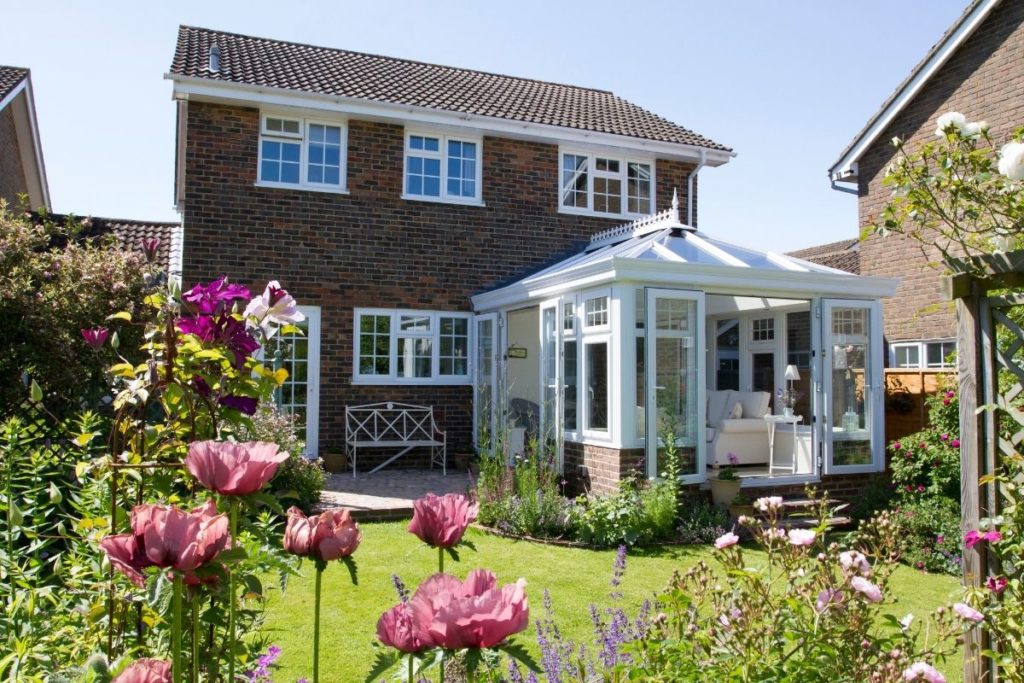
Large orangery with a full coverage lantern roof.

What is an orangery?

An orangery is a stylish extension that blends solid structures with large windows and a glass roof lantern. Originally built to protect exotic plants, modern orangeries create bright, airy spaces that integrate well with your home. They can be attached to your house or stand alone in your garden as a home office, summer house, or guest accommodation.

Key Features of an Orangery:

  • Solid roof with a glass lantern for insulation and natural light.
  • Brick or solid pillars for a sturdy, permanent feel.
  • Large windows and doors, often with bi-fold or French doors opening to the garden.
  • Better insulation for year-round comfort.
  • Seamless design that blends with your home’s architecture.
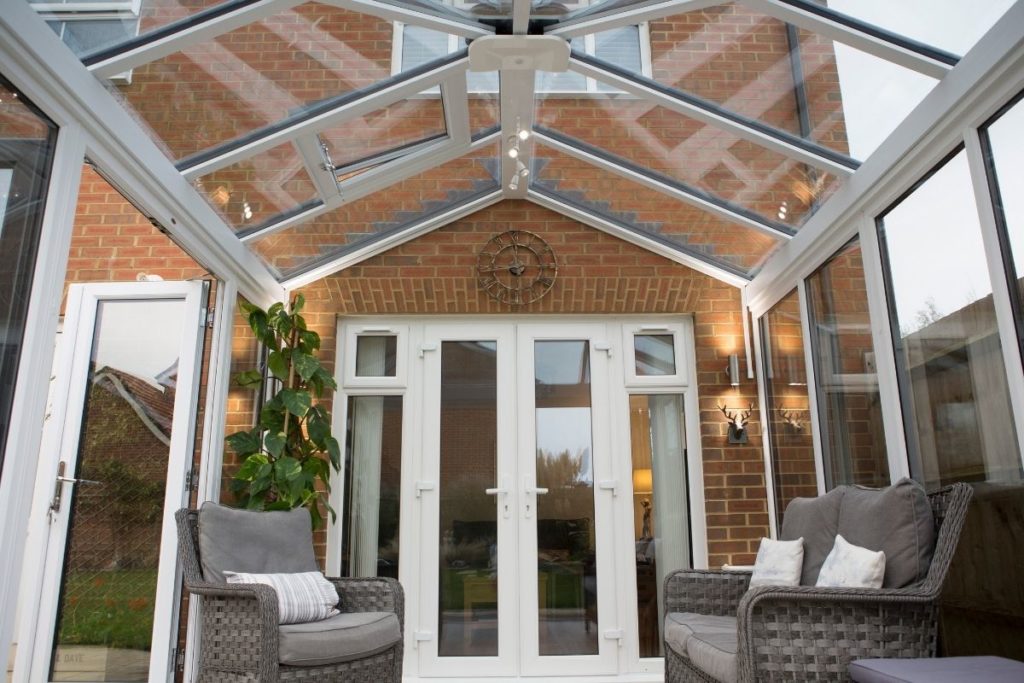
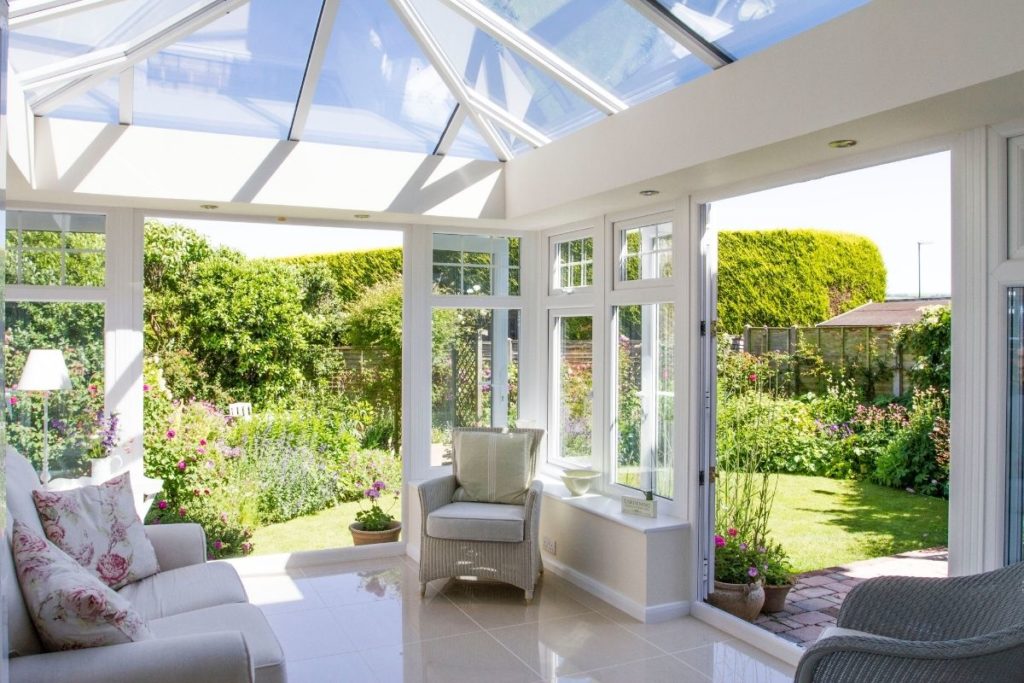
Inside a modern uPVC conservatory with a full glass roof.

What is a conservatory?

A conservatory is a predominantly glass structure that maximises natural light and offers panoramic garden views. Traditionally, conservatories have been used as sunrooms or garden rooms, providing a bright and open space.

Key Features of a Conservatory:

  • Fully glazed roof and walls, allowing in maximum sunlight.
  • Lightweight framework, typically made from uPVC, aluminium, or timber.
  • Dwarf walls (optional) to add stability while maintaining a spacious feel.
  • Varied roof styles, including Victorian, Edwardian, and lean-to designs.
  • Ideal for summer use, though modern glazing improves year-round comfort.

Planning Permission & Building Regulations

In most cases, conservatories and orangeries fall within permitted development rights, meaning you won’t need planning permission as long as they meet certain conditions. However, if your property is in a conservation area, is a listed building, or if the structure exceeds size limits, you may need to apply for planning permission.

Building regulations apply if you plan to remove an external wall between your home and the extension, use complex structural elements, or want to ensure high energy efficiency. Our experts can advise and help you with all of this!

Orangery vs Conservatory: Key Differences

FeatureOrangeryConservatory
Roof StyleSolid roof with glass lanternFully glazed roof
Wall StructureBrick pillars & large windowsMostly glass walls with optional dwarf walls
InsulationHigher insulation, ideal for all-year useGood insulation, but may need heating in winter
Design FeelBlends with home architectureLight, airy, and garden-focused
CostGenerally more expensiveMore budget-friendly
Build LengthLonger due to structural complexityShorter, quicker to install

Which One Should You Choose?

Your choice depends on how you plan to use the space and your home’s style. If you’re looking for a solid, well-insulated extension that feels like a natural part of your home, an orangery is a great option. If you prefer a light-filled garden room with a full glass structure, a conservatory might be the better choice.

No matter your preference, our expert team can help you design the perfect orangery or conservatory to suit your home and lifestyle.

Speak to One of Our Design Experts Today to Explore Your Options!

Contact us
roomoutsideuk
03rd March, 2024

12 Top Questions Answered About Building a Conservatory or Orangery

If you’re thinking about extending your home by building a conservatory or orangery, you’re probably in the research phase. You may have questions about designing and building your dream glass extension.

As specialists with over five decades of experience, we’ve helped hundreds of homeowners create stunning and practical glass spaces. To make things easier, we’ve put together this quick-fire guide to the 12 most frequently asked questions about conservatories and orangeries.

1. How much does a conservatory or glass extension cost?

This  depends on size, materials and finish.

  • Off-the-shelf options start at £5,000, but they often lack customisation and quality.
  • A bespoke uPVC conservatory starts from £20,000, including materials and installation.
  • Orangeries typically start at £35,000, though smaller ones may cost less.
  • Frameless glass structures are premium, starting at £30,000 for small designs, with most ranging between £40,000 – £80,000.

When comparing prices, always check what’s included—some low-cost options exclude groundwork and installation.

2. What is the difference between an orangery and a conservatory?

The key difference is the roof:

  • A conservatory has at least 75% of its roof made of glass.
  • An orangery has a solid flat roof with a glass lantern in the centre.

Other glass extension terms include:

  • Garden room – Often used to describe a conservatory, but traditionally has a solid tiled roof.
  • Sunroom – A general term for a bright, relaxing space.

Garden room – Often used to describe a conservatory, but traditionally has a solid tiled roof.

Sunroom – A general term for a bright, relaxing space.

3. What frame materials can I choose from?

Your choice of frame affects appearance, durability, and maintenance. Options include:

  • uPVC – Affordable, low maintenance, and sleek.
  • Hardwood timber– Traditional and sustainable, requiring occasional painting or staining.
  • Aluminium -Modern, lightweight, and strong.
  • Frameless glass – Contemporary and ultra-modern.
  • Oak– premium timber with a luxurious feel.

Each material has different colour and finish options, allowing you to create a look that suits your home.

4. Will a glass room be too hot or too cold?

Not if you choose the right glass and insulation.

5. Do I need planning permission to build a conservatory?

Usually, no, as long as it meets Permitted Development Rights:

  • It must be less than 6 metres (semi-detached) or 8 metres (detached) from the house.
  • It should not extend beyond the front of your property.
  • Listed buildings or homes in conservation areas require planning permission.

For more details, check Planning Portal UK or read our “Do I Need Planning Permission?” guide.

6. How large can my conservatory be under permitted development?

  • Terraced/Semi-detached homes – Up to 6 metres.
  • Detached homes – Up to 8 metres.

If your home has previous extensions, this may reduce the size allowance.

7. Do I need sign-off from building regulations?

Not always. No approval is needed if your conservatory:

  • Is under 30m².
  • Has external-grade doors/windows separating it from the main house.
  • Uses separate heating from the main home.
  • Has at least 50% glazed walls and a glass or translucent roof.

If you plan to remove doors or create an open-plan space, building regulations approval is required.

8. Can I add a glass extension on a listed property?

Yes, but planning permission is required.

  • Listed building consent is essential for Grade I and II properties.
  • Hardwood timber is often preferred over uPVC for aesthetic reasons.
  • Frameless glass box extensions are increasingly popular, as they blend modern design with historical character.

9. Can I open up my home to my conservatory?

Yes! However, structural support and building regulations approval are required.

10. Do I need foundations for a conservatory?

Yes. Strong foundations prevent subsidence, ensure durability, and improve insulation. A conservatory cannot be built on open ground or a temporary base.

11. How long will the build take?

Conservatories and orangeries are quicker to build than traditional extensions.

  • Most projects take 6 to 12 weeks from groundworks to completion.
  • Frameless glass structures may take longer due to custom fabrication.

With less disruption than a brick-built extension, a glass room is a great way to expand your home quickly and efficiently.

12. Do conservatories require a lot of maintenance?

Regular maintenance ensures your conservatory lasts for decades.

  • uPVC & aluminium – Low maintenance, requiring occasional cleaning.
  • Timber – Needs repainting/staining every 2-4 years.
  • Glass – Should be cleaned every 3-6 months.

For best results, consider professional conservatory cleaning to maintain clarity, seals, and moving parts.

Still have questions?

We hope this guide has answered your most common conservatory questions. If you need more details or personalised advice, our team is happy to help.

💬 Get in touch today for expert guidance and a no-obligation quote!

Get Your Questions Answered

Contact Us
roomoutsideuk
12th February, 2024

Glass Kitchen and Dining Extension Inspiration

It’s becoming more and more popular to extend your kitchen with a glass extension to either give more space to cook or to extend the space to allow for a dining and entertaining area. Orangeries and frameless glass extensions in particular lend themselves well to light and airy open-plan kitchen-dining-living spaces. Choosing to extend your kitchen with a glass room can mean less building work, a quicker turn-around, and depending on your requirements, can be a lower cost too than a traditional extension. The key design features of a large roof lantern, a full glass rear wall or bi-fold glass doors, really bring instant style and a focal point to the room, as well as bringing lots of natural light creating a fresh space. More and more we are creating multifunctional, open-plan spaces that become the heart of the home, serving all members of the family and fulfilling different requirements from a space to cook, eat, entertain, relax or work.

Get Some Glass Kitchen and Dining Extension Inspiration from Our Past Customer Extension Projects:

Full Rear Aspect Frameless Glass Box Kitchen and Dining Extension

Frameless Glass Kitchen diner extension
glass kitchen dinner extension
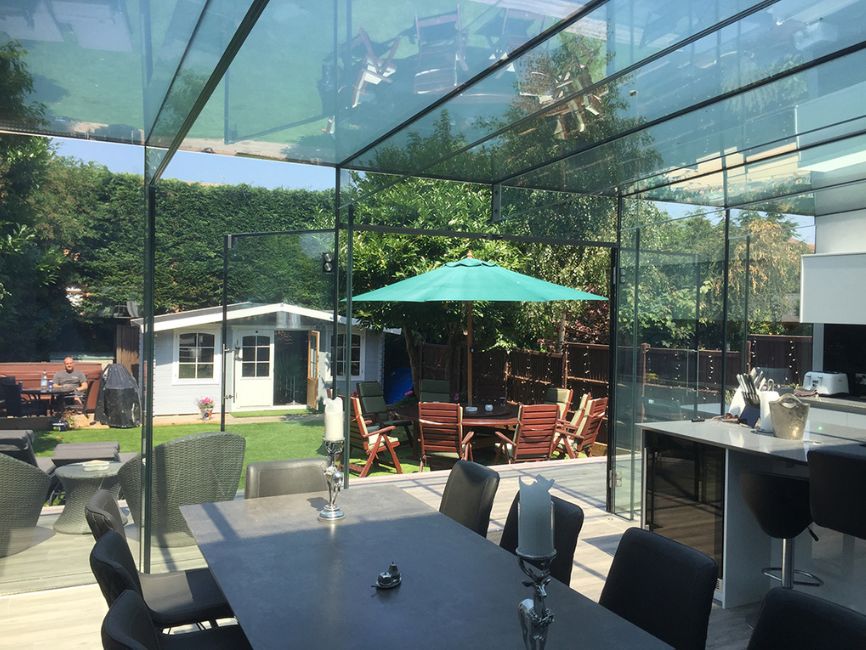
Frameless glass kitchen extension with the double doors open
A beautiful glass dinning room extension with a full frameless glass roof flooded with sunlight

Modern Kitchen with a Large Lantern Roof, Leading out to a Spacious Conservatory

Modern orangery kitchen extension with large lantern roof

Aluminium Framed Kitchen Extension with Full-Width Bi-Fold Doors

Aluminium framed kitchen extension with full-width bi-fold doors

Open Plan Four Seasons timber Conservatory Kitchen-Living Extension

Open plan Four Seasons timber conservatory kitchen-living extension

Modern Dining Room with a Focal Lantern Roof and Frameless Glass Rear Wall and Double Doors

Modern dining room with a focal lantern roof and frameless glass rear wall and double doors
External view of a frameless glass dining extension with lantern roof

Ultra Contemporary Frameless Glass Box Dining Extension

Ultra contemporary frameless glass box dining extension

uPVC Orangery Extension with a Cut-Through From the Dining Area to the Kitchen and an Additional Relaxing Lounge Area

uPVC orangery extension with a cut-through from the dining area to the kitchen and an additional relaxing lounge area
uPVC lean-to orangery with room for dinning opening up to a larger dome sitting area
Bright living area in a white uPVC orangery interior

A Small but Perfectly Formed Dining Room in a Glass Box Extension

A small but perfectly formed dining room in a glass box extension

Large Open Plan Living-Dining Conservatory Extension off of the Kitchen and Utility

Glass extension with the doors removed between the house and conservatory
Gable ended living dining conservatory extension

A Bright and Airy Dining and Entertaining Space in an Orangery Extension

White timber framed dinning room orangery extension

If you want even more design inspiration for your orangery extension, take a look at our full customer project gallery. Our team of specialists will be happy to help you with your design and answer any questions you may have, as well as provide a no-obligation quote.

Start Designing Your Dream Glass Extension Today

Contact Us
roomoutsideuk
12th December, 2023

Luxury Orangery Extension Inspiration

The look of the modern orangery extension is only increasing in popularity. It offers a great way to extend your home with a structure that feels integrated and part of the original building due to the more even ratio of glass to frame and walls, but also gives the opportunity to add a new flair and aesthetic to your home. This solid design also makes the orangery a great candidate for a standalone structure, making it perfect as a garden studio, gym or guest accommodation. The orangery is a popular choice to extend the kitchen dining and entertaining areas of your living space, removing all or part of the external wall can create an open plan space with a fresh flow between the original and new space. A key feature of the orangery is its lantern glass roof, which creates drama and a focal point for the room, as well as letting in lots of natural light, creating a spotlight for a kitchen island or large dining table. Whatever your motivation for extending, an orangery extension will be a great option for your dream space.

Take away some luxury orangery extension inspiration for your own project

Get luxury orangery extension inspiration from the structures we have designed and completed for our customers:

Large L-shaped double hexagonal ended orangery with low maintenance uPVC frames

luxury orangery extension constructed from low maintenance uPVC frames

Luxurious hardwood timber orangery on a large Georgian home

Luxury timber framed orangery on a large Georgian home.
Orangery extension uses
Luxury white timber framed orangery extension, west sussex

Modern open plan orangery dining space for a luxurious Sussex country home

Large open plan living dining orangery extension with full glass lantern roof

L-shaped orangery contracting brown and white uPVC frames and integrated log burner

Large L-Shaped uPVC Orangery Extension

Timber framed dining room orangery extension on a listed period property

A luxury timber orangery on a listed building
Beautiful traditional timber orangery with double aspect French doors opening to a country garden

Modern hexagonal white painted timber framed orangery

Modern hexagonal orangery room

Modern grey aluminium framed orangery with bi-fold doors on a traditional stone cottage

Inside a modern aluminium orangery with slate grey finish and finials and a stylish lantern roof
Slate grey aluminium framed orangery with lantern roof

Traditionally crafted quality British oak framed orangeries

Modern oak orangery extension
Crafted oak framed orangery extension

Tranquil and relaxed uPVC orangery room taking in the quaint garden

Contemporary Orangery Extension in Quaint West Sussex Garden
spring conservatory maintenance
Upvc orangery extension with double doors opening out to the garden

A bright and airy dining and entertaining space in an orangery extension

White timber framed dinning room orangery extension

If you want even more design inspiration for your orangery extension, take a look at our full customer project gallery. Our team of specialists will be happy to help you with your design and answer any questions you may have, as well as provide a no-obligation quote.

Start Designing Your Dream Glass Extension Today

Contact Us
roomoutsideuk
10th July, 2023

Large L-shaped uPVC orangery extension: Client Study

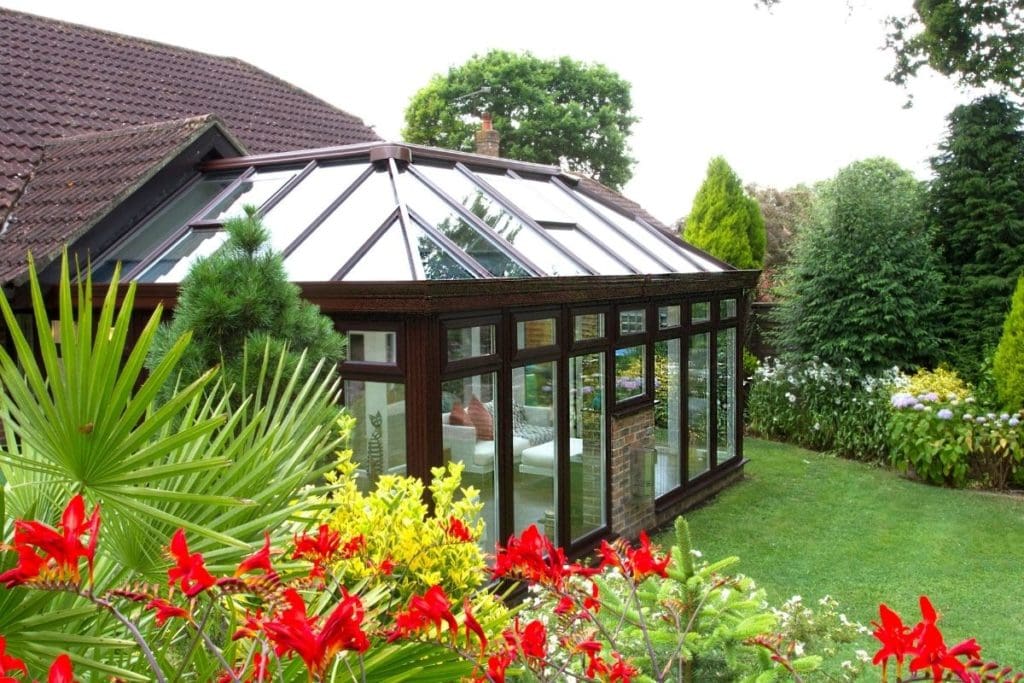
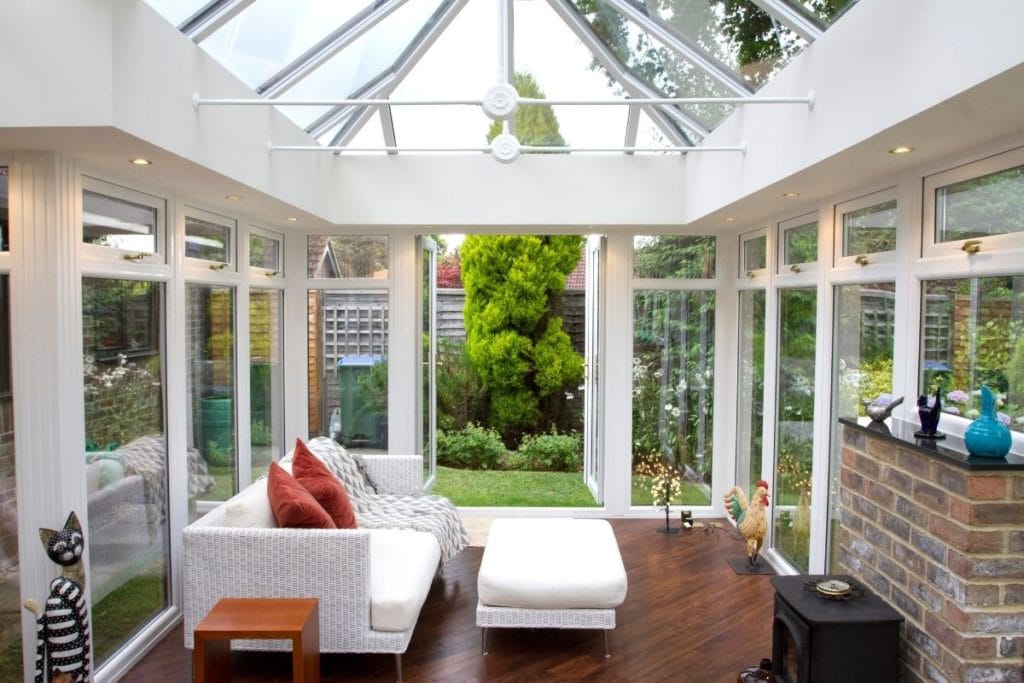
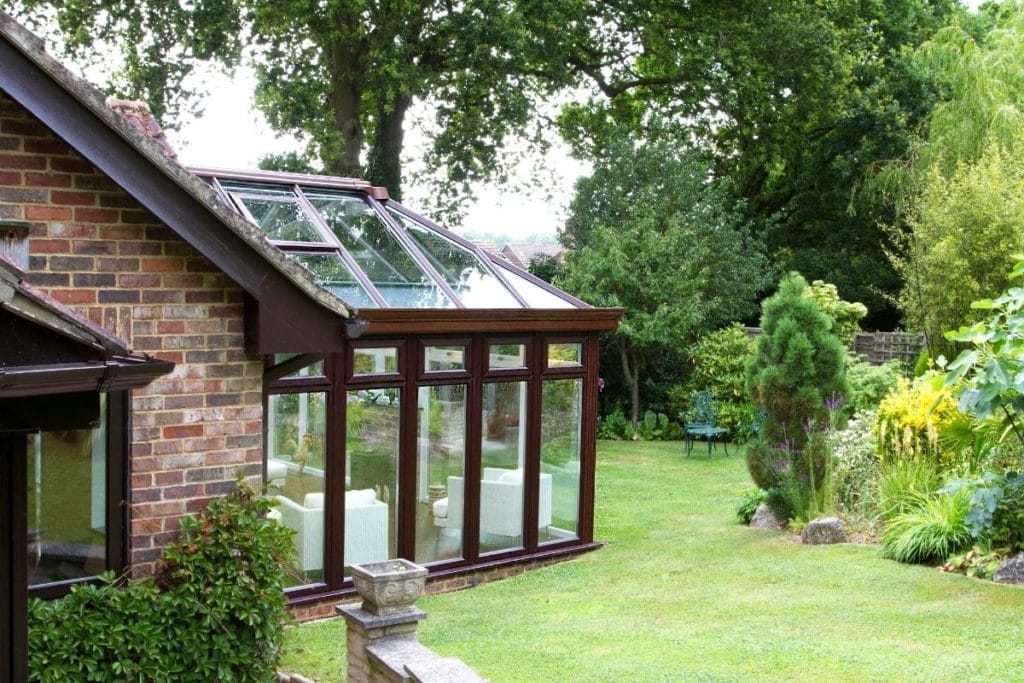
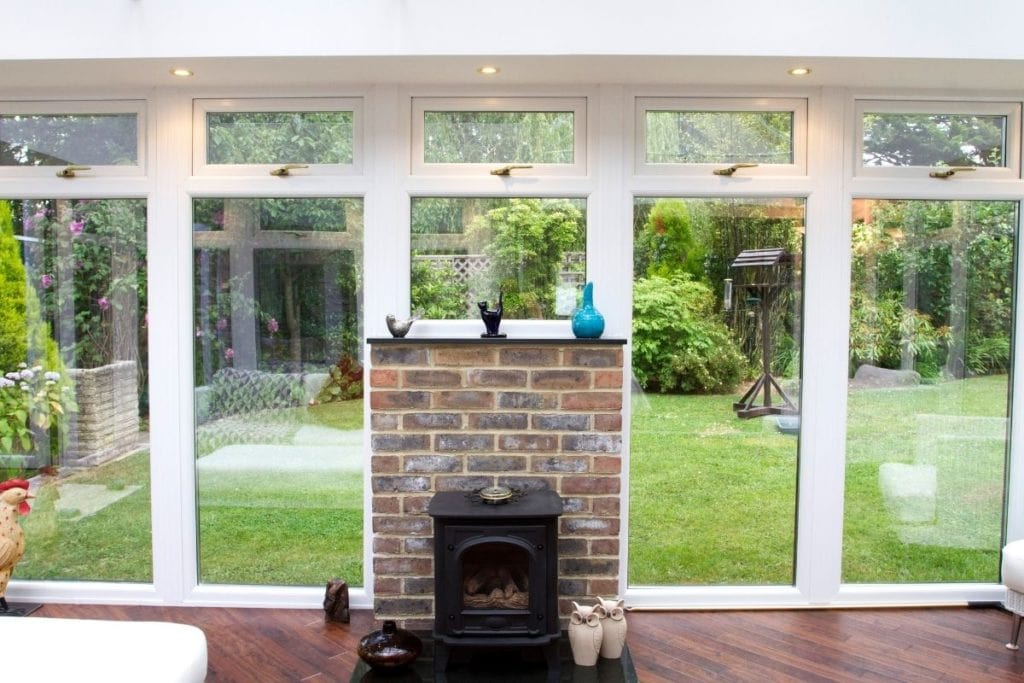
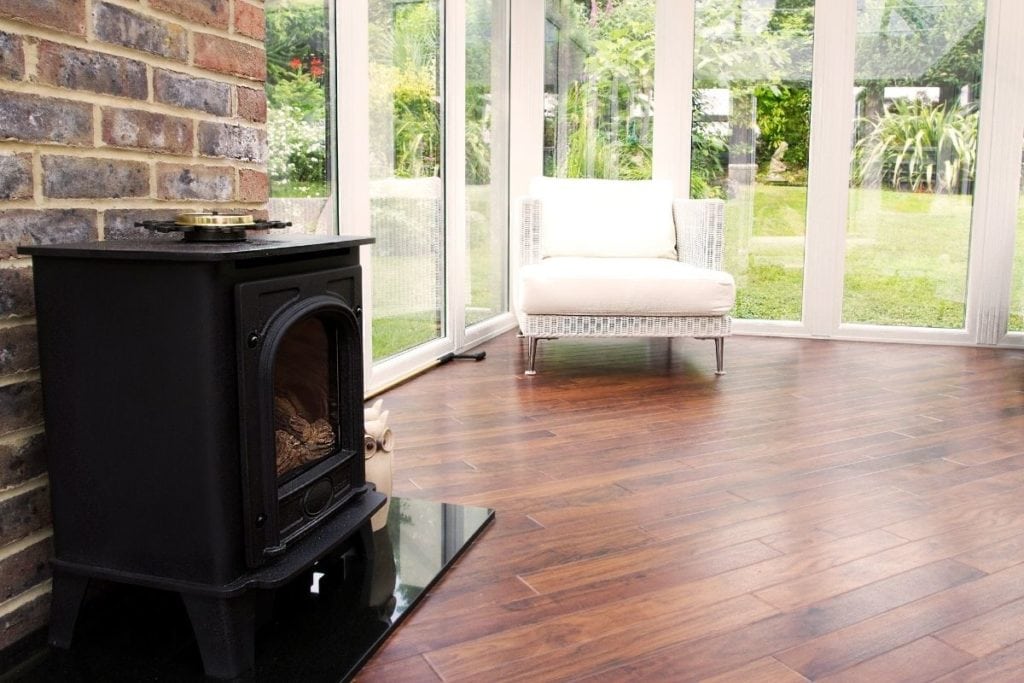
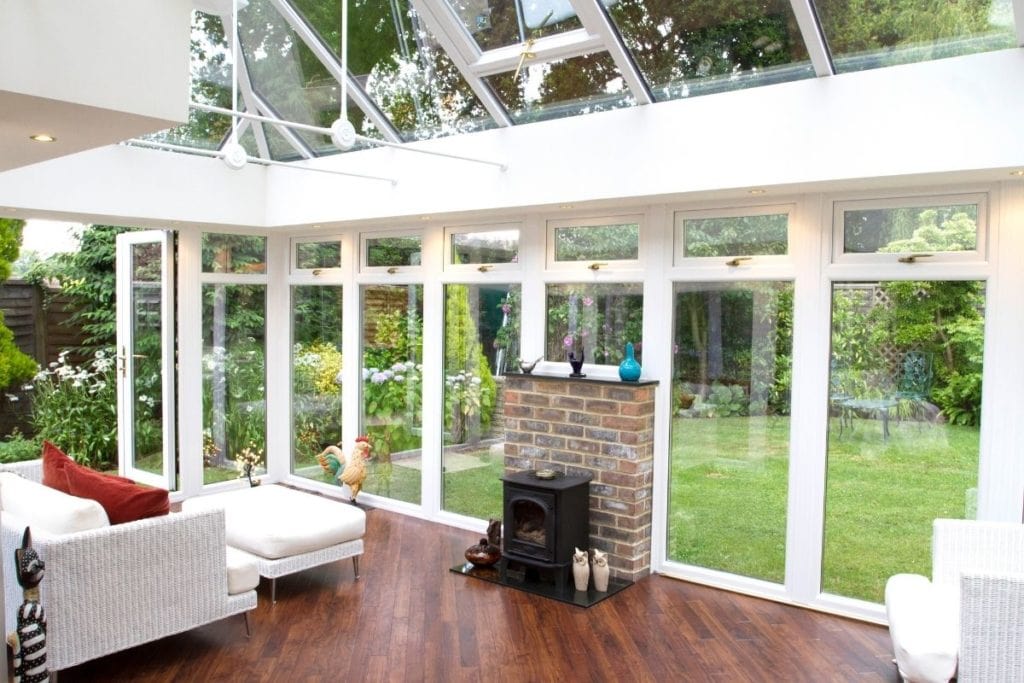
This L- shaped uPVC orangery offers a spacious lounge area for our clients to relax. Moreover, it features a log burning fireplace, which ensures the room remains cosy in winter and bright in spring and summer.

uPVC Orangery Extension

Exterior Design of this L-Shaped Orangery

  • Frame & Colour:
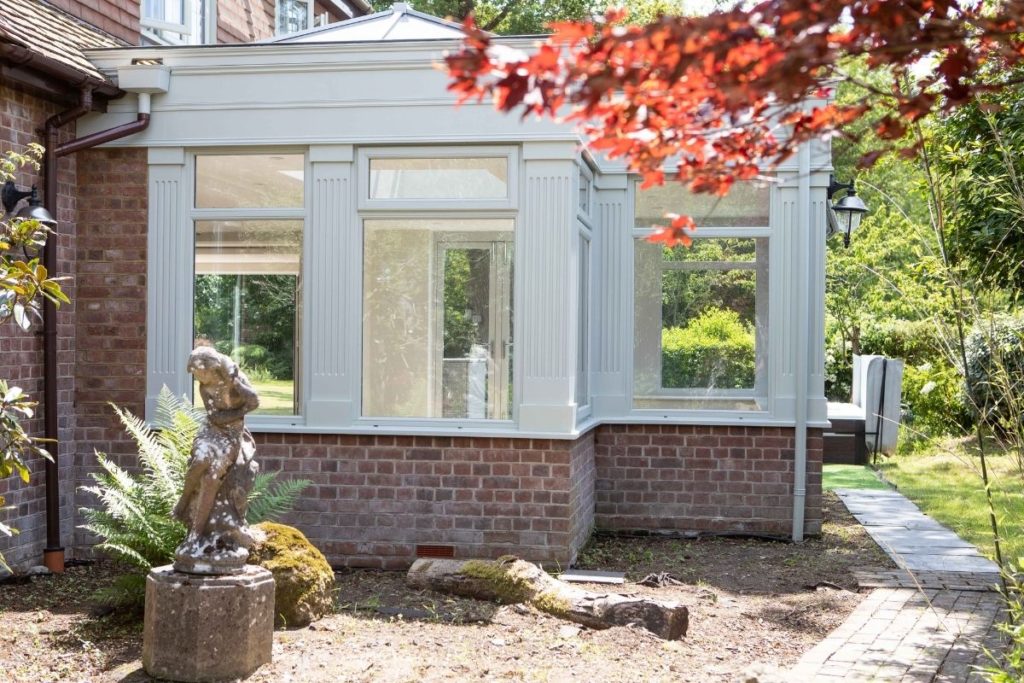
  • Firstly, the client chose a dark brown uPVC frame. In addition, this colour matches the window frames, soffits, and guttering, so the orangery blends seamlessly with the rest of the property. Furthermore, uPVC is low maintenance as it only needs regular cleaning and maintenance checks. Consequently, there is no need to paint or stain the frame every few years.
  • Glass & View:
  • Additionally, full floor-to-roof glass provides a panoramic view of a stunning mature garden in full bloom. Moreover, a small bricked area is included, and from the inside, this area serves as the backdrop for the log burning stove.
  • Shape & Access:
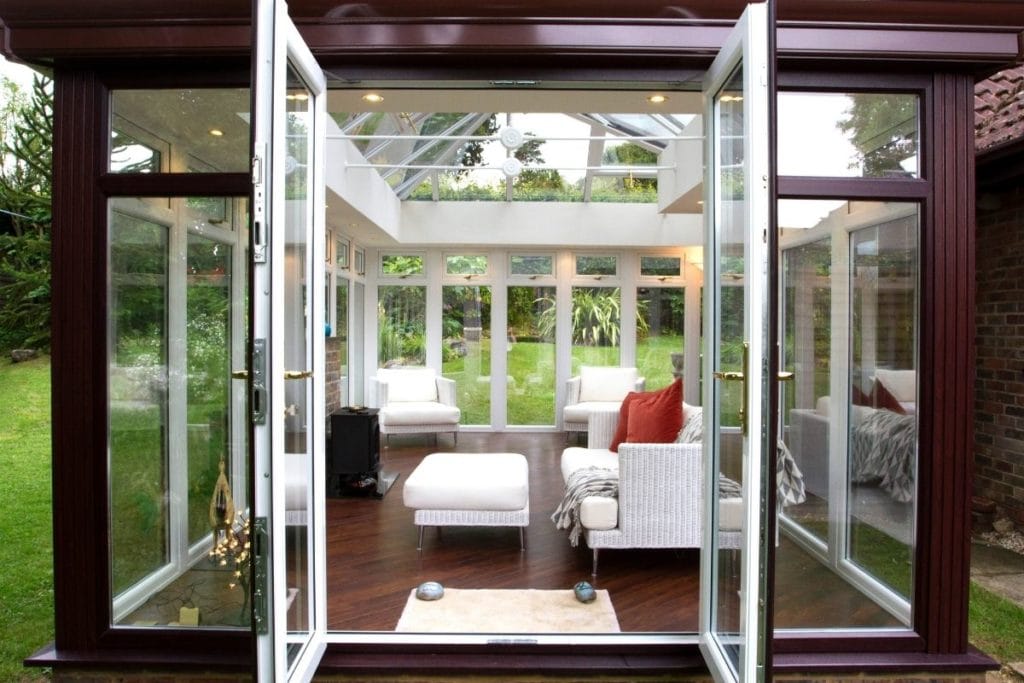
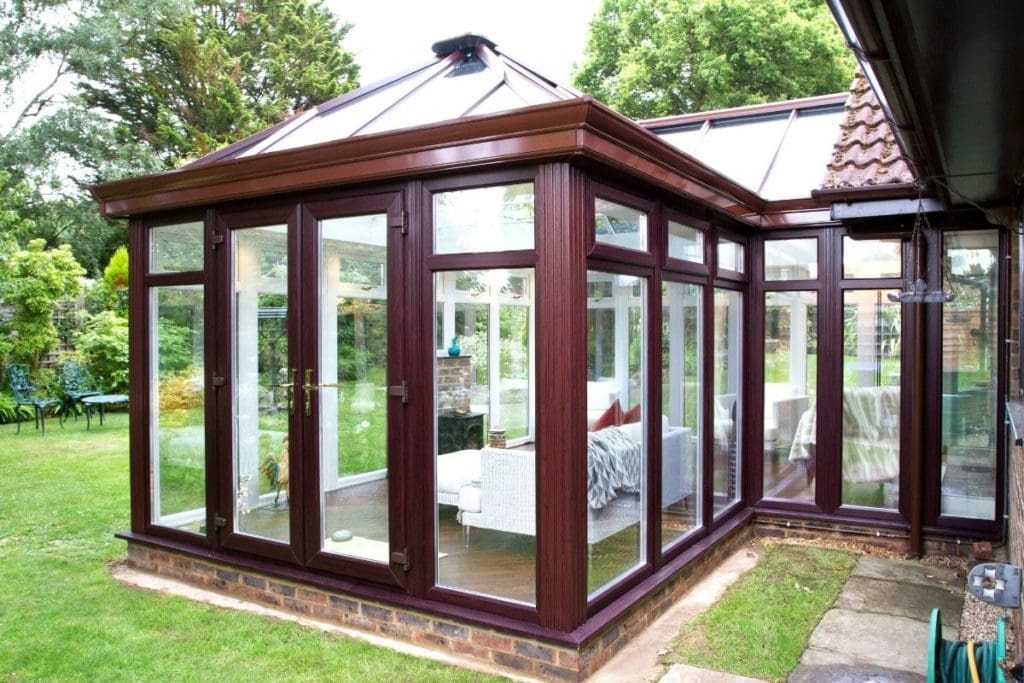
  • The design is also very functional. Specifically, the glass space forms an L-shape as it extends from the main home and then turns to create the distinctive L. Furthermore, a set of double patio doors opens onto the garden, offering easy access
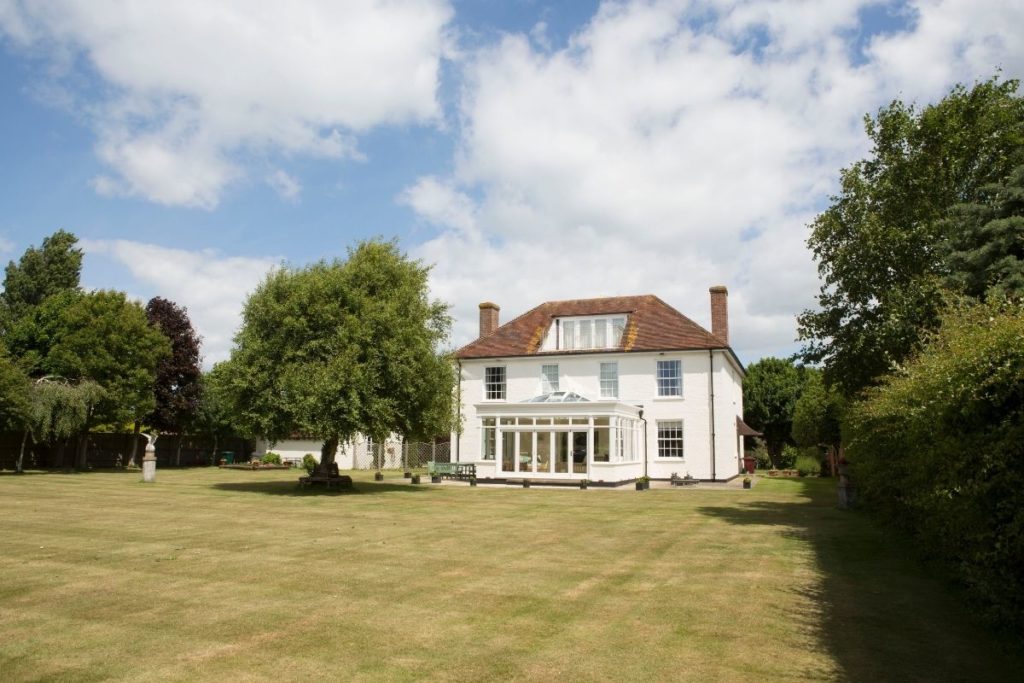
You can see from this angle that the glass space forms an L-shape, coming out from the main home and turning to create the L. There is one set of double patio doors that open onto the side giving access to the garden.
Interior Design

Bright & Airy Space:
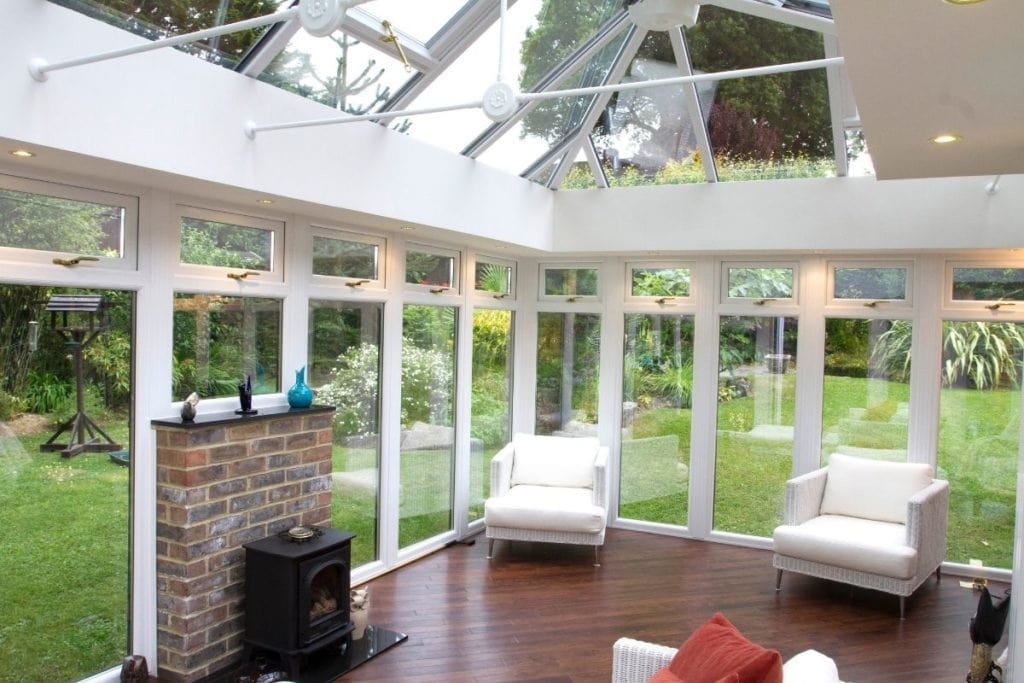
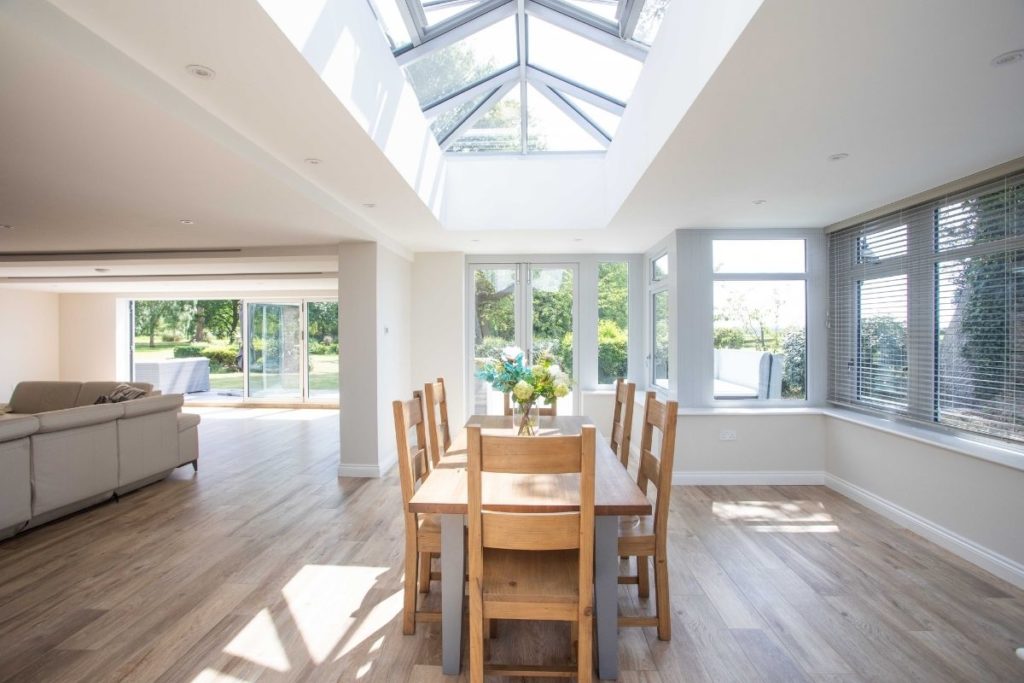
Inside, the orangery is light, bright, and airy. In addition, white uPVC frames and full-height windows allow plenty of natural light to flood the room. Likewise, a full glass lantern roof further enhances the effect. As a result, the interior design contrasts beautifully with the dark exterior.

Flooring & Ventilation:
Moreover, dark solid wood flooring adds both luxury and practicality. Additionally, small opening windows along the front and back ensure good ventilation. Furthermore, the double doors and an opening skylight in the lantern roof allow fresh air to circulate.

Focal Point:
Notably, brick is used as a backdrop and mantlepiece for the log burner. Consequently, the stove sits on black quartz stone, which creates a warm focal point that draws the eye towards the garden.

Lighting & Finishing Touches:
Finally, the lantern roof features pelmets and integrated spotlighting to give the room ambience. In addition, free-standing lamps add extra lighting and match the décor. Furthermore, white rattan furniture, cosy blankets, and plump cushions complete the modern yet homely feel

Start Planning Your Dream Orangery Today

Get a Quote
roomoutsideuk
09th May, 2023

Timber Framed Hexagonal Orangery Extension: Case Study

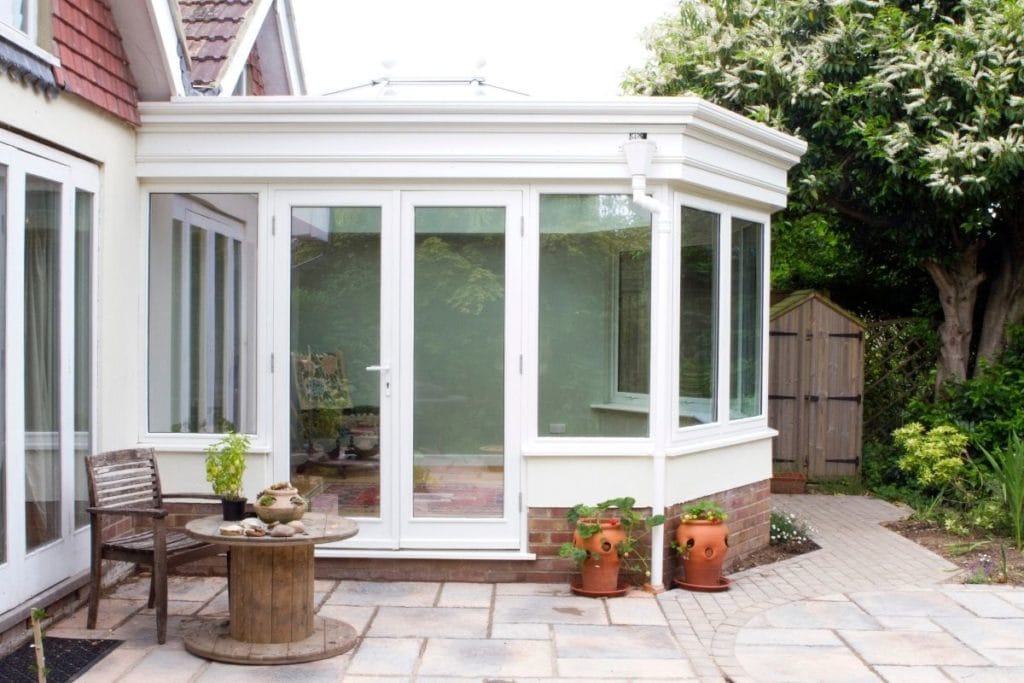
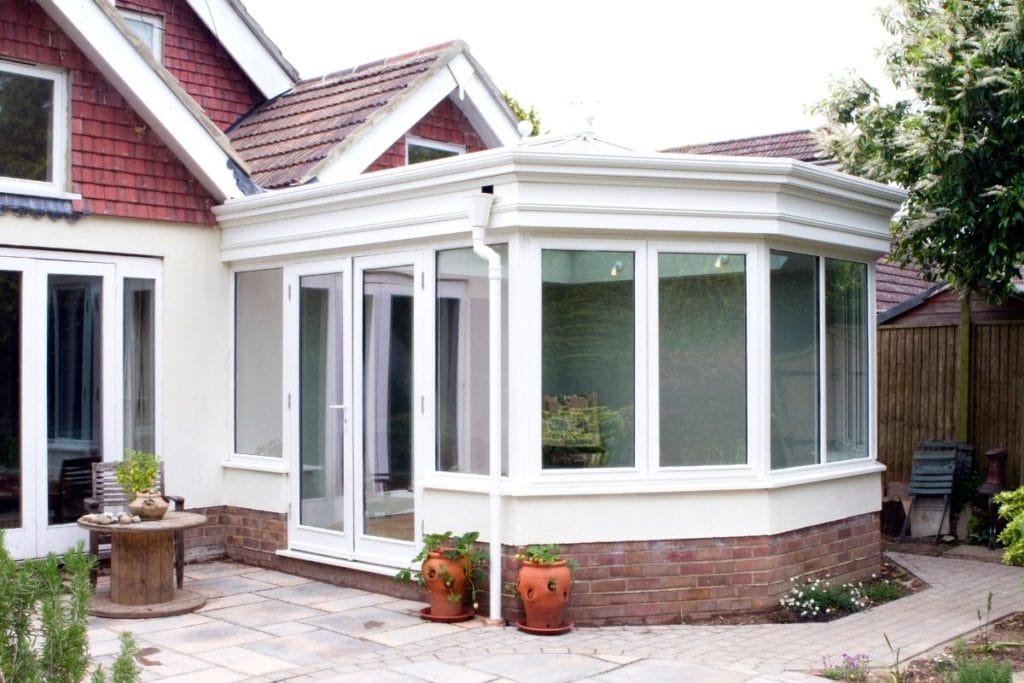
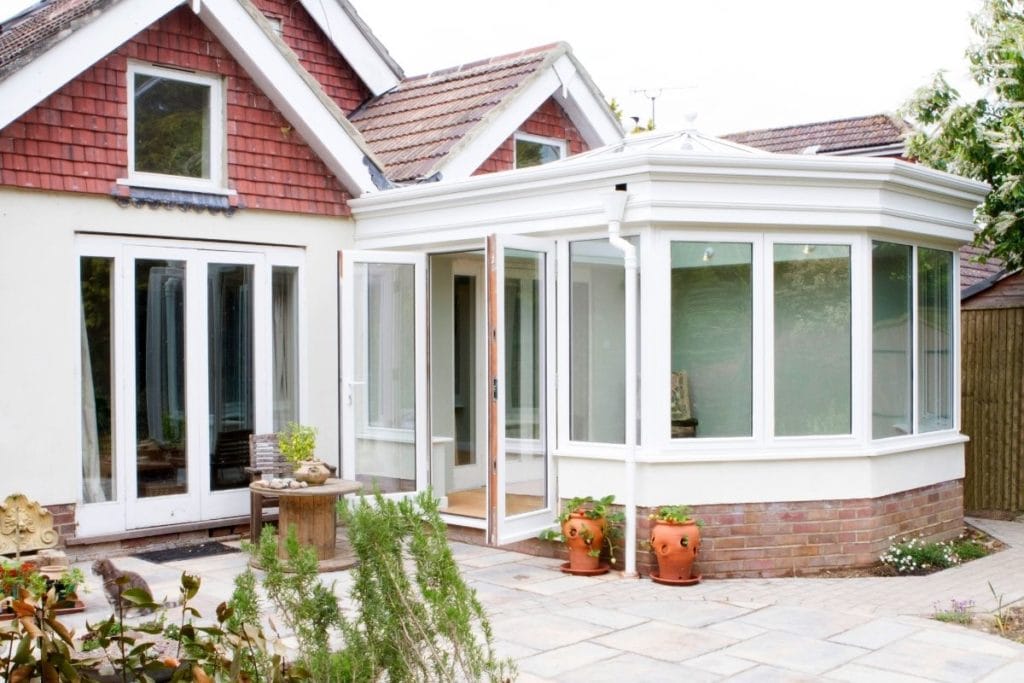
This light and airy timber-framed hexagonal orangery extension is an excellent addition for a smaller space. The combination of white-painted frames with part-painted and part-bare brick dwarf walls allows the structure to blend seamlessly with the house, complementing its aesthetic.

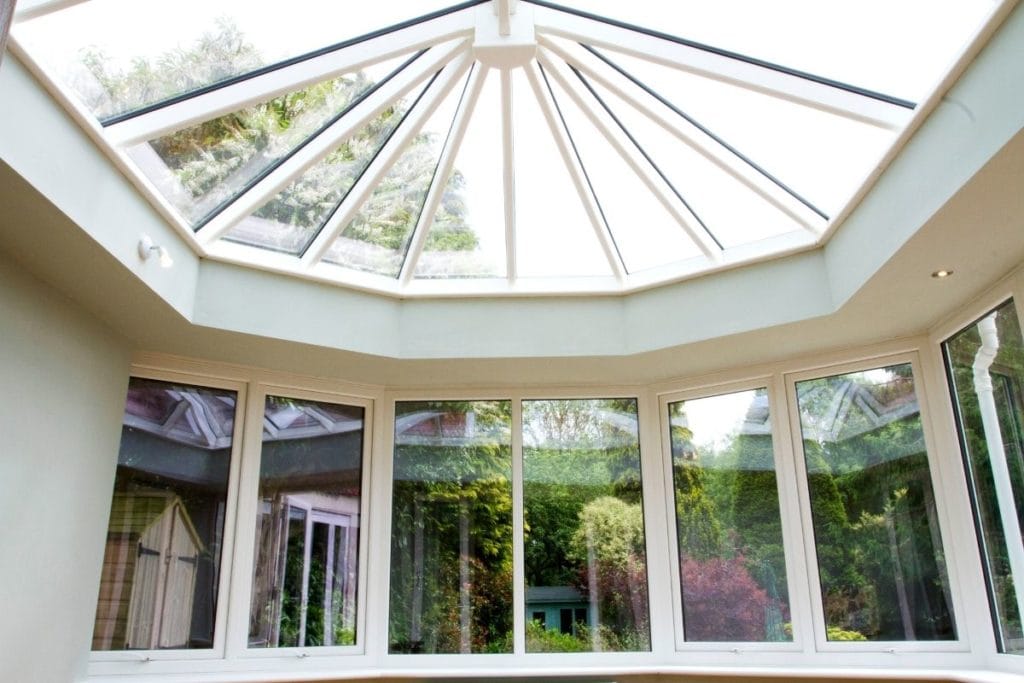
double glass aspect hexagonal orangery

A Stylish and Practical Design

The hexagonal shape of this orangery is a standout feature, adding character without overwhelming the property. The customer opted for windows on two sides and a full-height wall on one side, providing privacy from neighbours. Reducing the amount of glass helped keep the project within budget without compromising style.

The double French doors open onto the patio, creating a smooth transition to the garden. The front-facing windows maximise the hexagonal shape, offering a stunning three-window feature that brings in natural light from multiple angles.

A Bright and Inviting Interior

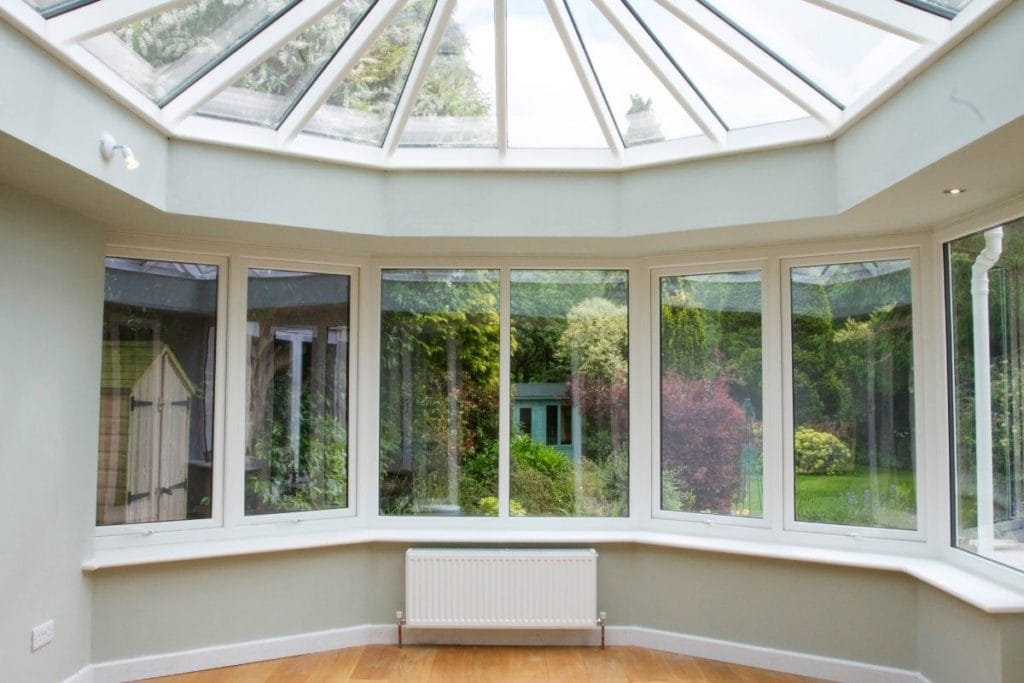
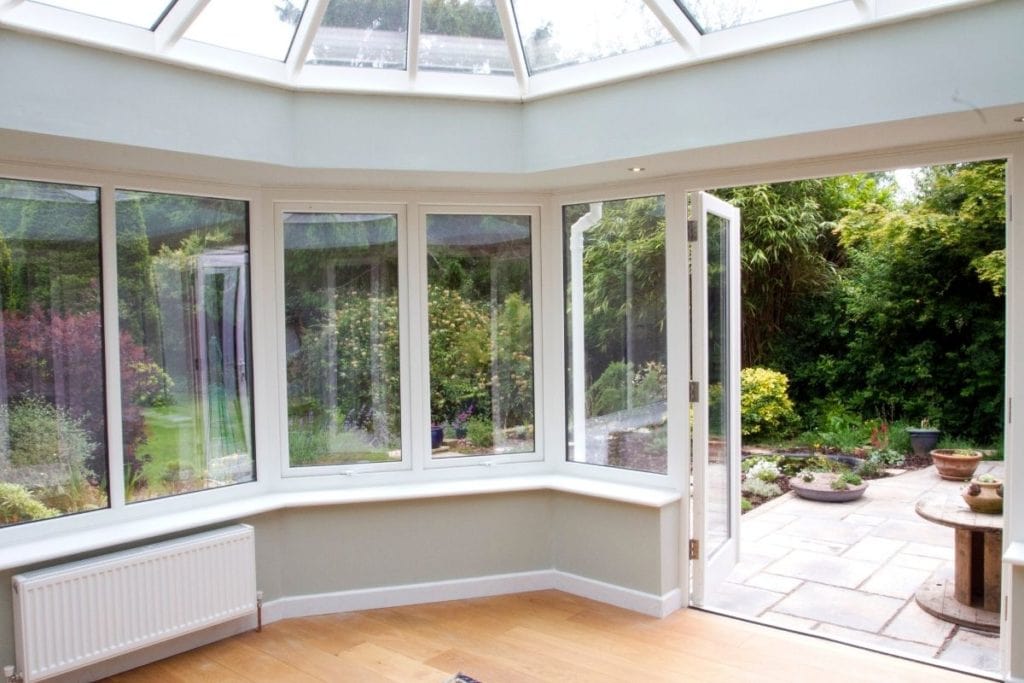
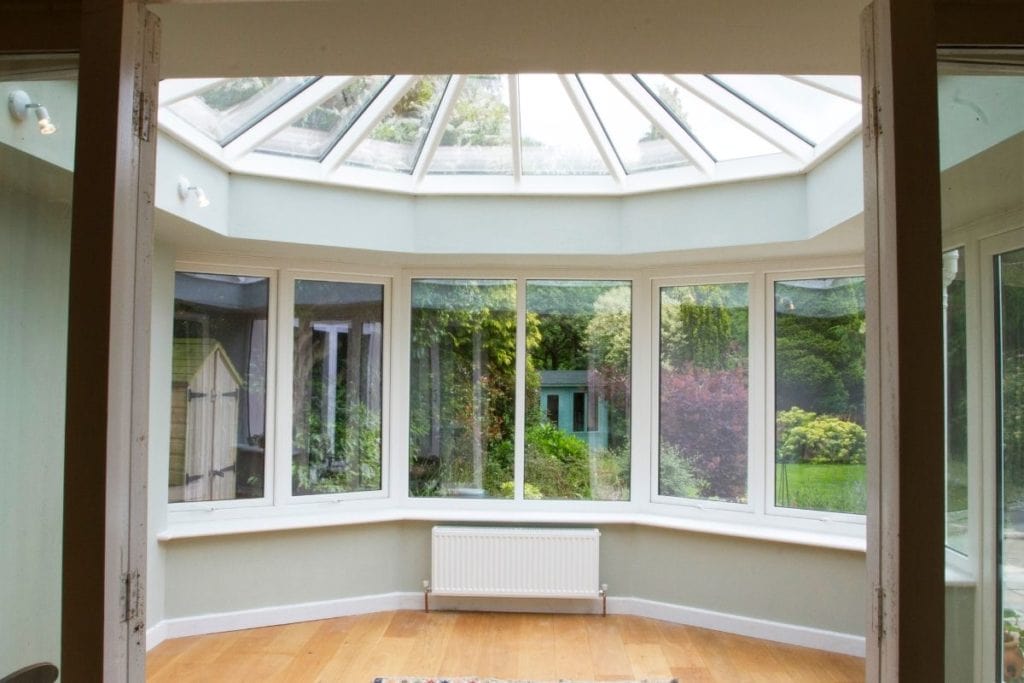
Inside, the hexagonal feature window provides a mini panoramic view of the garden, making the space feel open and connected to the outdoors. The light interior frames paired with soft sage green walls create a modern yet countryside-inspired atmosphere.

To ensure year-round comfort, radiator heating was installed. Opening the double French doors allows fresh air to flow through the room, enhancing the connection with nature.

Seamless Connection to the Main House

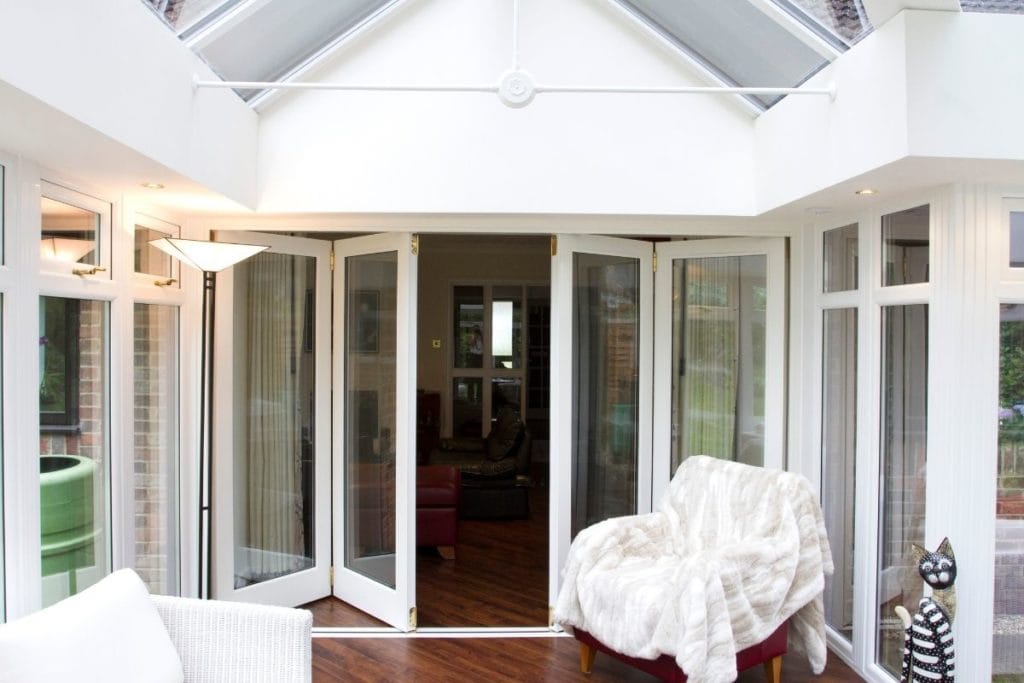
The orangery links to the main house via oak-framed glass double doors. These doors fold back flat against the fixed oak and glass panels, providing an open-plan feel when desired. Even when closed, they allow natural light to flow through, brightening the adjoining space.

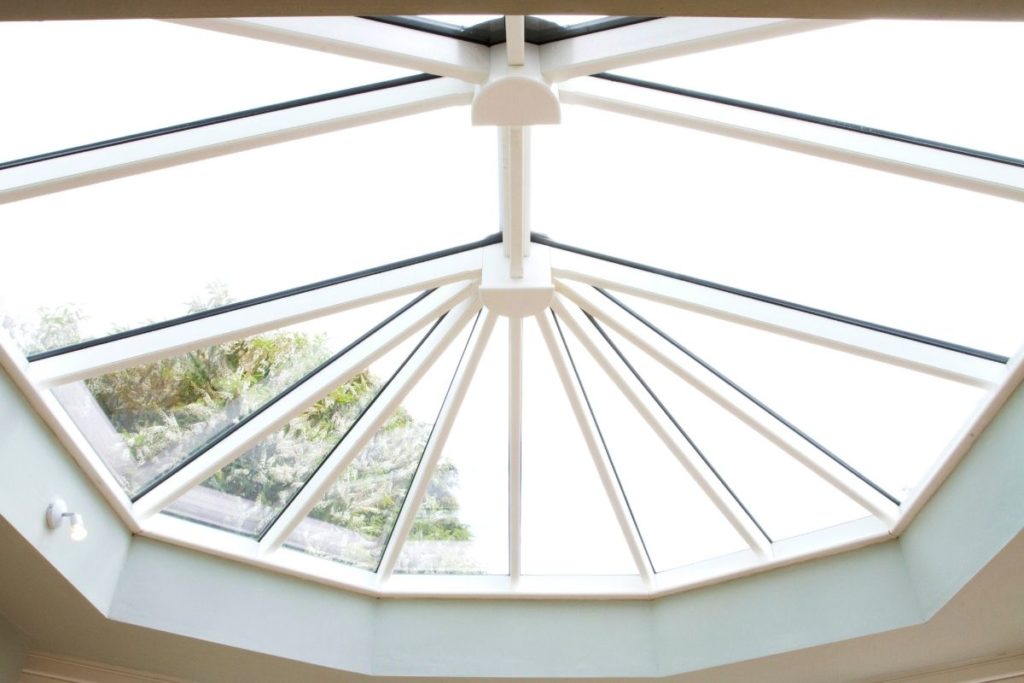
hexagonal orangery roof

An Elegant Roof and Lighting Design

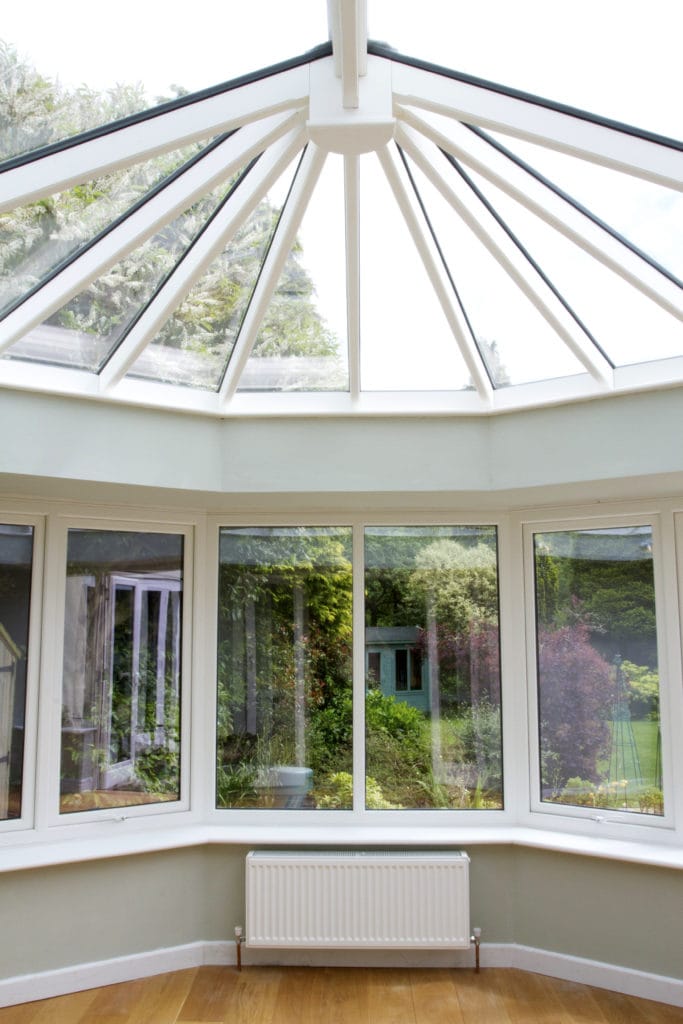
The hexagonal shape extends to the apex glass roof, adding height and enhancing the sense of space. Full glass coverage ensures a bright and airy environment.

For evening ambience, spotlights in the pelmets around the roof edge, combined with directional lighting, create a warm and inviting glow as the sun sets.

This hexagonal orangery extension is a perfect blend of style, practicality, and comfort, offering a light-filled retreat that enhances the home and garden connection.

Start Planning Your Dream Orangery Today

Get a Quote