

roomoutsideuk
03rd March, 2024

12 Top Questions Answered About Building a Conservatory or Orangery

If you’re thinking about extending your home by building a conservatory or orangery, you’re probably in the research phase. You may have questions about designing and building your dream glass extension.

As specialists with over five decades of experience, we’ve helped hundreds of homeowners create stunning and practical glass spaces. To make things easier, we’ve put together this quick-fire guide to the 12 most frequently asked questions about conservatories and orangeries.

1. How much does a conservatory or glass extension cost?

This  depends on size, materials and finish.

  • Off-the-shelf options start at £5,000, but they often lack customisation and quality.
  • A bespoke uPVC conservatory starts from £20,000, including materials and installation.
  • Orangeries typically start at £35,000, though smaller ones may cost less.
  • Frameless glass structures are premium, starting at £30,000 for small designs, with most ranging between £40,000 – £80,000.

When comparing prices, always check what’s included—some low-cost options exclude groundwork and installation.

2. What is the difference between an orangery and a conservatory?

The key difference is the roof:

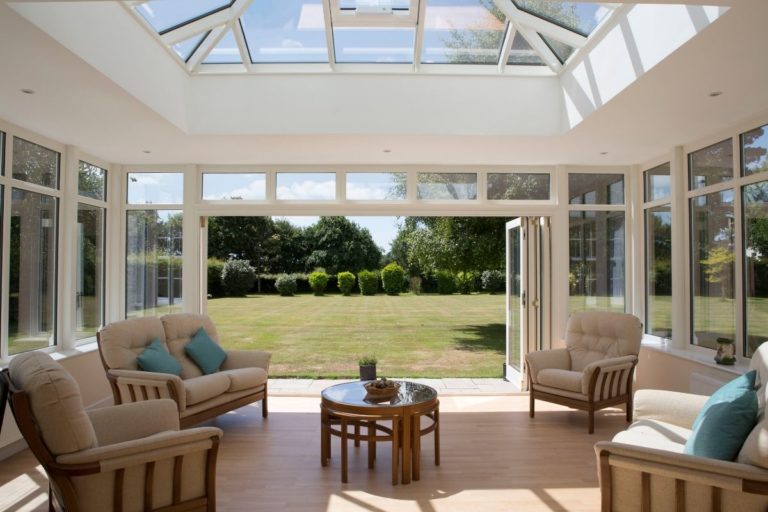
  • A conservatory has at least 75% of its roof made of glass.
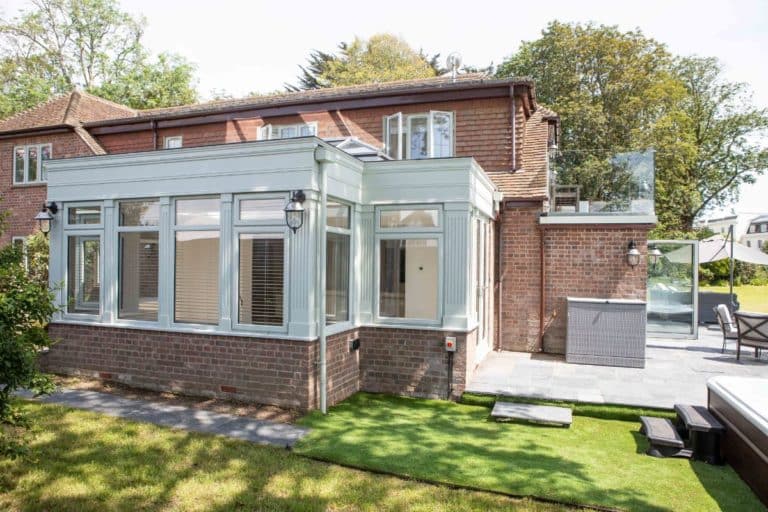
  • An orangery has a solid flat roof with a glass lantern in the centre.

Other glass extension terms include:

  • Garden room – Often used to describe a conservatory, but traditionally has a solid tiled roof.
  • Sunroom – A general term for a bright, relaxing space.

Garden room – Often used to describe a conservatory, but traditionally has a solid tiled roof.

Sunroom – A general term for a bright, relaxing space.

3. What frame materials can I choose from?

Your choice of frame affects appearance, durability, and maintenance. Options include:

  • uPVC – Affordable, low maintenance, and sleek.
  • Hardwood timber– Traditional and sustainable, requiring occasional painting or staining.
  • Aluminium -Modern, lightweight, and strong.
  • Frameless glass – Contemporary and ultra-modern.
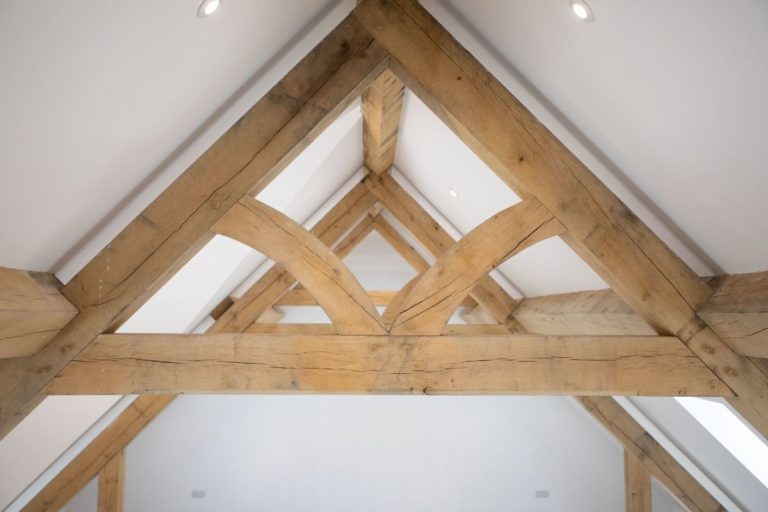
  • Oak– premium timber with a luxurious feel.

Each material has different colour and finish options, allowing you to create a look that suits your home.

4. Will a glass room be too hot or too cold?

Not if you choose the right glass and insulation.

5. Do I need planning permission to build a conservatory?

Usually, no, as long as it meets Permitted Development Rights:

  • It must be less than 6 metres (semi-detached) or 8 metres (detached) from the house.
  • It should not extend beyond the front of your property.
  • Listed buildings or homes in conservation areas require planning permission.

For more details, check Planning Portal UK or read our “Do I Need Planning Permission?” guide.

6. How large can my conservatory be under permitted development?

  • Terraced/Semi-detached homes – Up to 6 metres.
  • Detached homes – Up to 8 metres.

If your home has previous extensions, this may reduce the size allowance.

7. Do I need sign-off from building regulations?

Not always. No approval is needed if your conservatory:

  • Is under 30m².
  • Has external-grade doors/windows separating it from the main house.
  • Uses separate heating from the main home.
  • Has at least 50% glazed walls and a glass or translucent roof.

If you plan to remove doors or create an open-plan space, building regulations approval is required.

8. Can I add a glass extension on a listed property?

Yes, but planning permission is required.

  • Listed building consent is essential for Grade I and II properties.
  • Hardwood timber is often preferred over uPVC for aesthetic reasons.
  • Frameless glass box extensions are increasingly popular, as they blend modern design with historical character.

9. Can I open up my home to my conservatory?

Yes! However, structural support and building regulations approval are required.

10. Do I need foundations for a conservatory?

Yes. Strong foundations prevent subsidence, ensure durability, and improve insulation. A conservatory cannot be built on open ground or a temporary base.

11. How long will the build take?

Conservatories and orangeries are quicker to build than traditional extensions.

  • Most projects take 6 to 12 weeks from groundworks to completion.
  • Frameless glass structures may take longer due to custom fabrication.

With less disruption than a brick-built extension, a glass room is a great way to expand your home quickly and efficiently.

12. Do conservatories require a lot of maintenance?

Regular maintenance ensures your conservatory lasts for decades.

  • uPVC & aluminium – Low maintenance, requiring occasional cleaning.
  • Timber – Needs repainting/staining every 2-4 years.
  • Glass – Should be cleaned every 3-6 months.

For best results, consider professional conservatory cleaning to maintain clarity, seals, and moving parts.

Still have questions?

We hope this guide has answered your most common conservatory questions. If you need more details or personalised advice, our team is happy to help.

💬 Get in touch today for expert guidance and a no-obligation quote!

Get Your Questions Answered

Contact Us
roomoutsideuk
23rd June, 2023

How the New Government Overheating Policy Affects Your Conservatory Design

With rising global temperatures and a growing focus on climate change, the UK government has updated its conservatory overheating policy under Document Part O: Overheating. This new regulation aims to prevent homes, including conservatories, from becoming uncomfortably hot in summer. If you’re planning a conservatory design, orangery, or glass room extension, it’s essential to understand how these changes impact your project.

What is the Conservatory Overheating Policy?

From June 2022, all new-build properties must comply with strict conservatory overheating policies. The policy limits glazing ratios to ensure homes do not become uninhabitable due to excessive summer heat. Developers must either adhere to specific window size limits based on floor space or pass one of two detailed modelling tests. These tests consider factors such as:

  • Room size and floor area relative to window size
  • Window orientation and exposure to sunlight
  • Ventilation and shading options
  • Local climate conditions

This means that glass extensions, particularly those integrated into new-build homes, will need to meet these stricter compliance standards.

How Does The Conservatory Overheating Policy Impact Your Glass Extension?

If you’re planning a glass extension on a new-build property, you may need to reduce the amount of glazing in your design to comply with the new overheating policy. However, for those who dream of a stunning, floor-to-ceiling glass space, there is a solution—our high performance glass – New Generation Glass.

New Generation Glass (NGG) – The Key to Compliance

At Room Outside, we offer an advanced glazing solution that allows you to enjoy your new space whatever the weather while meeting overheating regulations. Our exclusive New Generation Glass (NGG) is engineered to regulate temperature, reduce glare, and protect against harmful UV rays.

Benefits of New Generation Glass

  • Reduces Summer Heat: Blocks up to 86% of solar radiation, preventing excessive heat buildup.
  • Improves Insulation: Retains warmth in winter with a U-Value below 1.0 for enhanced energy efficiency.
  • Minimises Glare & UV Exposure: Protects furnishings and interiors from fading while improving comfort.
  • Enhances Energy Efficiency: Features Low-E coating and Argon gas-filled double glazing for superior thermal performance.
  • Easy Maintenance: Special polymeric resin treatment repels dirt and staining for easier cleaning.

Designing Your Dream Glass Extension Within Regulations

By incorporating NGG into your conservatory, orangery, or frameless glass extension, you can achieve compliance with overheating regulations while maximising natural light and open-plan living. Our expert designers can help tailor a solution that meets both your aesthetic preferences and the new policy requirements.

Future-Proofing Against Expanding Regulations

While Document Part O currently applies to new-build properties, there is growing speculation that future updates may extend these restrictions to all properties. Investing in high-performance glass now ensures your extension remains compliant for years to come.

Find Out More

To learn how New Generation Glass can help you achieve your dream conservatory while complying with overheating regulations, visit Room Outside. Watch our Tunnel of Heat demonstration video to see NGG’s performance in action.

Room Outside
15th March, 2021

Should You Move or Improve Your Home?

A study by Lloyds Banking Group found that 60% of homeowners are looking for more space in their homes. But is it better to move or invest in extending your existing home?

Moving House v Home Improvements

“Moving house. The two words that strike the most dread into people…” BBC News Magazine. Whilst moving to a new home might seem like the obvious solution for gaining extra space. It offers a fresh start and the opportunity to find a home that better suits your needs. However, moving can be one of life’s most stressful experiences. A 2015 study of 7,000 adults found that 61% ranked moving as the most stressful event, ahead of relationship breakdowns, divorce, and starting a new job.

Beyond the stress, there are significant costs to consider, including:

  • Estate agent fees
  • Conveyancing fees
  • Stamp duty tax
  • Removal company costs
  • Time off work

Instead of moving, many homeowners choose to improve their current property. The same Lloyds Bank study found that 44% of homeowners had undertaken major renovation projects or planned to do so in the next year, a trend that increased during lockdown.

If your main reason for moving is location—such as being closer to work—or if your home lacks renovation potential, then moving may be your only solution. However, if you love your neighbourhood and simply need more space, extending your home could be the better choice.

Should You Move or Improve?

If you love your location but need more space, renovating and extending can be a smarter alternative. While any home improvement project comes with challenges, it is often less stressful and costly than moving. You could also achieve your dream home much faster.

Even if you buy a new property, chances are you’ll want to personalise it or make renovations. This means extra costs and time spent making it feel like home.

Extending Your Home v Moving

A Glass Room Extension can provide an instant space solution. It is often simpler, quicker, and more affordable than a traditional brick extension. Depending on the design, you may not even need planning permission.

Will a Home Extension Add Value?

A well-designed, bespoke glass extension can add up to 7% to your property’s value, according to Phil Spencer’s article in The Telegraph. However, a poorly planned conservatory could have the opposite effect. Choosing the right design and materials is key to ensuring your investment enhances your home.

When planning your extension, consider how you will use the space. Some homeowners worry that a glass room might be too hot in summer and too cold in winter. However, with temperature-controlled glass, your room stays warm and cosy in winter while remaining cool in summer, making it a comfortable living space all year round.

Why Choose Room Outside to Improve Your Home?

At Room Outside, we are specialists in luxury Glass Room Extensions. Unlike double-glazing window and door companies that sell conservatories as an add-on, we focus solely on high-quality glass structures.

  • Over 50 years of experience
  • 30-year guarantee
  • Superior New Generation Glass for year-round comfort
  • Full-service offering – design, planning, groundwork, and installation

Move or Improve? Make the Right Choice

A bespoke Glass Room Extension designed to your specifications, with perfect temperature control all year round, could be the ideal way to create extra space in your home. Contact us today for a complimentary, no-obligation quotation and expert advice on your project.

Get a No-Obligation Quote

Get a Quote