
Are Conservatories Worth It? 5 Benefits That Add Real Value
Do conservatories add value? Our 2026 guide reveals the benefits: 5-10% property value increase, year-round usability with New Generation Glass, and more.
Why conservatories are making a comeback (the smart way)
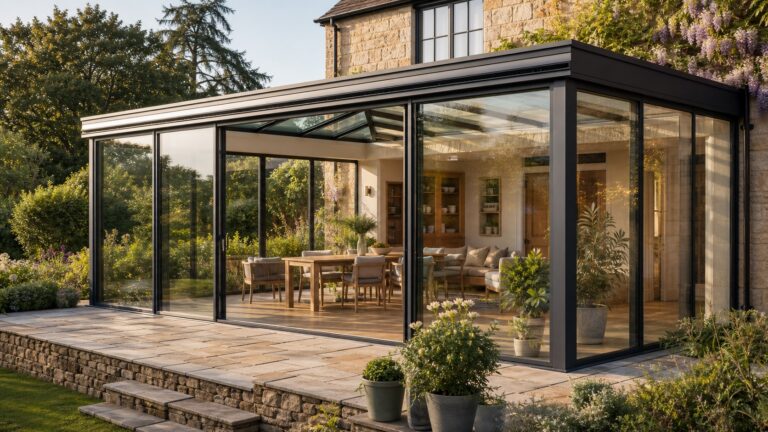
The old image of a cold, leaky, overheated conservatory is decades out of date. Today’s advanced glazing, solar control, and energy‑efficient design mean a modern conservatory is a genuine year‑round living space – and one of the most cost‑effective ways to add usable square footage to your home.
In this guide, we break down the five real benefits that matter: property value, natural light, indoor‑outdoor flow, multi‑functional space, and wellbeing. We also cover planning permission, costs, and how to avoid the mistakes that devalue a property.
Adds 5-10% to Your Property Value (When Done Right)
According to RICS, Savills, and Checkatrade, a high‑quality conservatory reliably adds 5-10% to a home’s market value. Property expert Phil Spencer puts the potential uplift as high as 7–15% for well‑designed structures with solid roofs or orangery features. A 2017 Towergate Insurance study found a 5% average uplift, but modern energy‑efficient designs with New Generation Glass can achieve significantly higher returns.
| Conservatory type | Typical cost (2026) | Potential value add | ROI |
|---|---|---|---|
| Bespoke uPVC (mid‑range) | £20,000 – £35,000 | 5-8% | 70-90% |
| Hardwood / aluminium (high‑spec) | £35,000 – £60,000 | 7-12% | 80-100%+ |
| Premium orangery (solid perimeter) | £50,000 – £100,000+ | 10-15% | 90-110% in desirable areas |
Quality matters most – solar control glass, high insulation (U‑value ≤1.2), and good design ensure a selling point, not a liability.
Orangeries add more value – typically 10-15% uplift, but cost 20-40% more and feel more “integrated”.
Internal link: Will a conservatory add value to my property? →
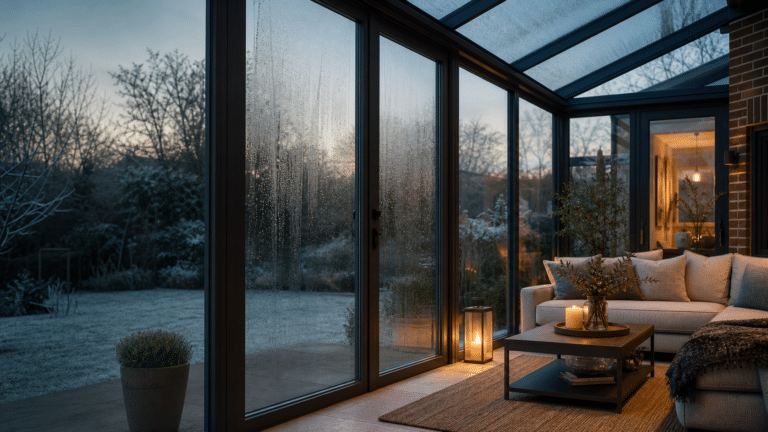
Year‑Round Comfort with Advanced Glazing
Today’s New Generation Glass delivers remarkable thermal performance:
- Reflects up to 86% of solar heat energy – preventing overheating and reducing air conditioning needs.
- Achieves U‑values as low as 1.0 – 1.2 W/m²K (triple glazing can go below 1.0), rivaling solid wall construction. Old single glazing had U‑values of 5.7; polycarbonate roofs 2.4–3.2.
- Low‑e coatings reduce heat loss by 40-60% compared to standard double glazing.
- Argon gas fill improves insulation further.
Summer comfort: Up to 86% of solar heat reflected away – no more sticky afternoons.
Winter warmth: U‑value of 1.0 means heat stays in – up to 50% less heat loss than old designs.
Internal link: Discover New Generation Glass technology →
Seamless Indoor-Outdoor Living
Wide sliding or bi‑fold doors create a fluid transition between home and garden. Estate agents now rank strong indoor‑outdoor flow as a top‑five buyer priority (Rightmove, 2025). This connection reduces stress, improves mood, and makes the garden feel like an extra room – especially valuable for home workers and families with children.
Internal link: Removing doors between house and conservatory →
A Room for Every Need – Home Office, Gym, Dining
Use your conservatory as a home office (natural light boosts focus by up to 15% according to a University of Illinois study), a dining room that flows onto the garden, a playroom, a yoga studio, or a quiet reading nook. Multi‑functional spaces appeal strongly to future buyers – estate agents consistently list “versatile reception room” as a top selling point.
Home office: Natural light reduces eye strain and boosts productivity. Solar glass prevents screen glare.
Home gym: Exercising in natural light improves motivation and enjoyment compared to a basement.
Internal link: Is a conservatory a viable home office? →
Improves Wellbeing, Reduces Stress
Research shows that access to natural light and a visual connection to nature directly impacts mental health. A study by the University of Exeter found that people who spend time in naturally lit spaces report 30% lower stress levels and improved mood. A conservatory gives you a bright, calming space away from the noise of televisions and gadgets – a place to decompress, meditate, or simply watch the seasons change.
📋 Planning permission & typical costs (2026)
Planning permission: Most conservatories fall under Permitted Development, provided they meet criteria: single storey, max 3m depth for attached houses (4m for detached), max 4m height, not higher than existing eaves, and not covering more than 50% of the garden. Conservation areas and listed buildings have stricter rules.
Building regulations: All conservatories must meet thermal efficiency (Part L), fire safety (Part B), and access standards (Part M). Our modular systems exceed these requirements.
Typical investment: A bespoke conservatory costs £25,000 – £60,000+ depending on size, materials (uPVC, aluminium, timber), and glazing specification. An orangery typically starts from £40,000. New Generation Glass adds 15-25% but pays back in energy savings and value uplift.
Internal links: Conservatory cost guide | Planning permission explained

Frequently asked questions about conservatories
Do conservatories add value to UK homes?
Yes, high-quality conservatories typically add 5-10% to property value, according to RICS, Savills, and Checkatrade. Poorly designed conservatories with inefficient glazing can actually devalue a property. Modern insulated designs achieve the highest returns.
How much does a quality conservatory cost in 2026?
Typically £25,000 – £60,000+ depending on size, materials, and glazing. A basic uPVC lean‑to might start at £20,000; a hardwood or aluminium Edwardian with solar glass costs £35,000–£50,000; an orangery from £40,000. We provide detailed quotes after a free home survey.
Are new conservatories energy efficient and usable year‑round?
Yes. Advanced New Generation Glass achieves U‑values of 1.0–1.2 W/m²K and reflects up to 86% of solar heat, keeping spaces comfortable in all seasons. This compares to old polycarbonate roofs with U‑values of 2.4–3.2.
Do I need planning permission for a conservatory?
Most conservatories fall under Permitted Development if they meet size and height criteria: single storey, max 3m depth (attached) or 4m (detached), max 4m height, not higher than eaves, and not covering >50% of garden. Conservation areas are stricter.
What building regulations apply to conservatories?
Conservatories must comply with Part L (thermal efficiency), Part B (fire safety), Part M (access), Part E (sound), and electrical/ventilation standards. Our modular systems exceed all requirements and we manage full approval.
How long does a conservatory take to build?
A modular conservatory typically takes 8–12 weeks from order to completion, with on‑site work of 2–4 weeks. Traditional brick‑and‑block conservatories can take 3–6 months.
What is New Generation Glass?
New Generation Glass is an advanced glazing system with low‑e coatings, argon gas fill, and solar control layers. It reflects up to 86% of solar heat, achieves U‑values as low as 1.0, and provides excellent acoustic insulation – making conservatories comfortable year‑round.
What guarantee do you offer on a conservatory?
Up to a 10‑year structural guarantee backed by UK insurers, plus separate warranties on glazing, roofing, and mechanical components. All our installations include building control sign‑off.
Ready to enjoy the benefits of a modern conservatory?
Whether you want a light‑filled home office, a garden dining room, or a flexible space that grows with your family – we’ll design a beautiful, energy‑efficient conservatory that works for your home and your budget.
Get Your Conservatory Quote →Call us anytime – David, our digital assistant, will take a few details so the right specialist can follow up personally. 01243 538999