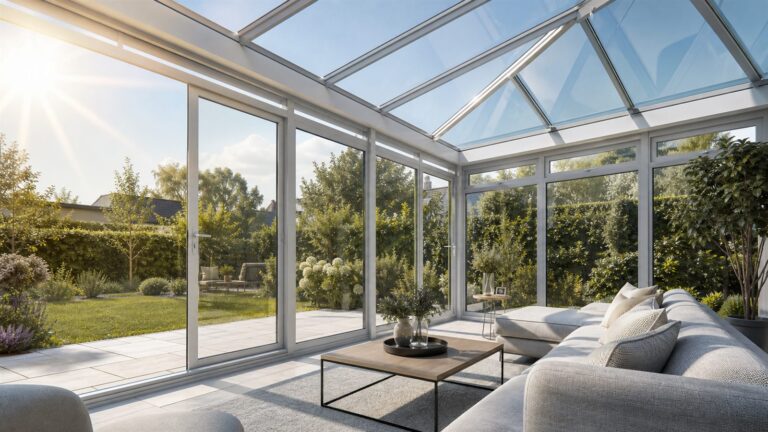


Is Air Conditioning Banned in Britain or the UK? Why NGG Matters for Conservatories
There is no simple Britain-wide or UK-wide air-con ban. But the debate points to a bigger truth for conservatory owners: the smartest cooling strategy starts with the glass.
No, there is not a blanket air conditioning ban in Britain or across the UK. The current debate is really about how homes should manage overheating: should they jump straight to active cooling, or should they reduce solar heat gain and improve passive comfort first?
For conservatories, that question is especially important. A conservatory is beautiful because it is glazed, but that same glass can make the room too hot in summer, too bright at midday and harder to use year-round if the specification is wrong.
New Generation Glass is Room Outside’s answer to that problem. It helps manage unwanted solar gain, glare and UV while keeping the light that makes a conservatory worth having in the first place.

So, is air conditioning banned in Britain or the UK?
No. The useful way to say it is this: air conditioning is not banned in Britain or across the UK, but the planning and building-control context encourages homes to reduce overheating first, rather than solve every heat problem with mechanical cooling.
The attached Big Issue article responds to claims about a so-called “de-facto ban on air-con”. That phrase makes for a punchy political argument, but it blurs the practical reality for homeowners. The real issue is not whether cool air is allowed. It is whether the building has been designed or upgraded so that it does not overheat unnecessarily in the first place.
That matters because overheating is no longer a fringe issue in the UK. Hotter summers, larger glazed openings and poorly specified older conservatories all push homeowners toward the same question: how do we keep bright rooms usable without turning them into energy-hungry spaces?
The Room Outside view
For conservatories, the first answer should usually be better glass, better ventilation and better design. Active cooling can still have a place, but it should not be asked to fix avoidable heat gain through the glazing.
What the rules actually say
As of 7 July 2026, the clearest official reference point is Approved Document O, which sets standards for overheating in new residential buildings in England.
The GOV.UK FAQ is particularly useful for conservatories. It says Part O applies to new residential buildings, and that conservatories on new residential buildings must meet Part O. It also says Part O does not apply to extensions or conservatories added to residential buildings after they are built.
Where mechanical cooling is used in a Part O assessment, the same FAQ says the designer should demonstrate that practicable passive means of limiting unwanted solar gains and removing excess heat have also been incorporated.
Planning is a separate question. The Planning Portal explains that many air-source heat pump installations can be permitted development if conditions are met, but also notes limits around size, position, conservation areas, listed buildings and systems used solely for cooling.
| Question | Plain-English answer |
|---|---|
| Is air conditioning banned? | No. There is no blanket Britain-wide or UK-wide ban on domestic air conditioning. |
| Do new homes need to think about overheating? | Yes. In England, Approved Document O sets overheating standards for new residential buildings. |
| Does Part O apply to later conservatory additions? | GOV.UK says Part O does not apply to extensions or conservatories added to residential buildings after they are built. |
| Can external cooling equipment need permission? | Sometimes. Location, conservation status, listed-building status, size, noise and use all matter. |
| What should homeowners do first? | Reduce overheating at source: glazing specification, solar control, shading, ventilation and orientation. |
Why this matters more for conservatories
A conservatory is a highly glazed room by design. That is its charm: daylight, garden connection, sky views and a lighter feel than a traditional extension. But the glass specification decides whether that room becomes a favourite space or a place you avoid on hot afternoons.
Older conservatories often suffer from three comfort problems:
- Solar gain. Sunlight passes through the roof and walls and turns into trapped heat.
- Glare. The room can be bright but uncomfortable, especially for reading, eating or working.
- Temperature swings. A poor glass roof can make the room too hot in summer and too cold in winter.
That is why the air-conditioning debate is useful for conservatory owners. It reminds us that cooling is not only about adding a machine. It is about asking why the room is overheating in the first place.
A glass room needs a glass-first solution
In a conservatory, much of the heat problem arrives through the glazing. Better glass is not cosmetic; it is a core comfort specification.
How New Generation Glass helps
New Generation Glass is designed for highly glazed living spaces where ordinary glass can struggle. In a conservatory, it helps by improving the way the room handles sun, heat and light.
- It helps reduce unwanted solar gain. Less excess heat enters the room through the glass, so the space is easier to keep comfortable.
- It helps control glare. The room remains bright without feeling harsh or washed out.
- It helps block UV. That matters for furniture, flooring, fabrics and artwork.
- It preserves the point of a conservatory. You still get daylight and garden views, rather than making the room darker to make it bearable.
- It supports year-round use. With the right frame, roof, ventilation and installation, the room feels less like a seasonal compromise.
That is the key difference between comfort-led glazing and after-the-fact cooling. Air conditioning treats the air after heat has entered the room. NGG helps reduce the problem at the point where heat and glare enter: the glass itself.
NGG vs air conditioning: which is better?
They are not really the same kind of solution. A good conservatory design may use several comfort measures together. The question is which one should come first.
| Option | What it does | Best role in a conservatory |
|---|---|---|
| New Generation Glass | Helps manage solar gain, glare and UV while keeping daylight. | First-line comfort upgrade for highly glazed rooms. |
| Opening windows and roof vents | Lets warm air escape and supports natural air movement. | Essential partner to good glass, especially in summer. |
| Blinds and shading | Can cut direct sun and improve privacy. | Useful extra, but can reduce the bright open feel if relied on too heavily. |
| Air conditioning | Actively cools the air inside the room. | A possible backup for extreme heat, unusual orientations or specific comfort needs. |
The strongest conservatory specification does not make this a culture war between passive comfort and active cooling. It puts the order right: reduce heat gain, design ventilation, consider shading, and then decide whether active cooling is still needed.
Can NGG help an existing conservatory?
Yes, in many cases. If the frame and structure are suitable, upgrading the roof glass or wider glazing specification can dramatically change how a conservatory feels. That is especially relevant for older conservatories that are still structurally sound but have become uncomfortable in summer.
The first step is a survey. Room Outside can look at orientation, roof type, frame condition, ventilation, drainage and how you actually use the room. A south- or west-facing conservatory used as a dining room will need a different comfort strategy from a north-facing garden room used occasionally.
When replacement glass makes sense
Glass upgrades are most compelling when the room layout works, the structure is worth keeping, and the main problem is heat, glare or seasonal usability rather than the footprint itself.
Conservatory comfort checklist
If you are planning a new conservatory or upgrading an old one, think about comfort in this order:
- Orientation. South and west-facing rooms need serious solar-control thinking.
- Roof glass. The roof usually takes the hardest sun load, so roof specification matters enormously.
- Wall glazing. Vertical glass affects heat, glare and views; do not treat every elevation the same.
- Ventilation. Opening windows, roof vents and cross-flow can help remove excess heat.
- Shading. Blinds, overhangs or external shade can help, especially where direct sun is intense.
- Frames and seals. Comfort is not only the pane; installation quality matters too.
- Active cooling. Consider it after the passive specification is right, not as a substitute for it.
That is why NGG belongs in the conversation early. It is not a decorative upgrade. It is one of the decisions that shapes whether the room is practical in real British weather.
FAQ
Quick answers for conservatory owners following the air-conditioning debate.
Is air conditioning banned in Britain or the UK?
No. There is no blanket air conditioning ban in Britain or across the UK. The confusion comes from overheating guidance, planning limits and political shorthand around passive-first design.
Does Part O apply to conservatories?
GOV.UK says Part O applies to new residential buildings. Conservatories on new residential buildings must meet Part O, but Part O does not apply to extensions or conservatories added after a home is built.
Can I install air conditioning in a conservatory?
Often, yes, but external equipment can raise planning questions, especially around conservation areas, listed buildings, position, noise and whether the system is used solely for cooling. Always check your local position before installing.
How does New Generation Glass help keep a conservatory cooler?
It helps reduce unwanted solar gain through the glazing, while also managing glare and UV. That means the room can remain bright without becoming as uncomfortable in hot weather.
Does NGG replace blinds?
Not necessarily. NGG improves the glass specification itself, while blinds can still add privacy and extra shade. Many rooms benefit from both, but better glass means blinds are not doing all the comfort work.
Can Room Outside upgrade an old conservatory with NGG?
In many cases, yes. The right route depends on the frame, roof, glazing, ventilation and overall condition. A survey will show whether a glass upgrade, broader refurbishment or full replacement makes most sense.
Sources checked
Policy and planning references used to ground the article as of 7 July 2026.
- GOV.UK: Overheating: Approved Document O — statutory guidance for overheating in new residential buildings in England.
- GOV.UK: Approved Document O frequently asked questions — includes the conservatory/extension applicability guidance and passive-means explanation.
- Planning Portal: Air source heat pump planning permission — practical planning limits and conditions for domestic air-source heat pump installations in England.
- Big Issue article supplied by the user: “Is there really an air conditioning ban in Britain?”, Lottie Elton, 29 May 2026.
Make the conservatory comfortable before you cool the air
Room Outside can help you specify a new conservatory or upgrade an existing one with New Generation Glass, better ventilation and a design that works with the weather rather than fighting it.