

The third heatwave of 2026 is building. Here is how to stay cool now and every summer.
Temperatures are forecast to climb towards 34C in parts of southern England this week. These practical steps can help now, while New Generation Glass offers a longer-term answer if your conservatory is the hottest room in the house.
Cool the house this week. Then tackle the glazing if your conservatory keeps overheating.
The fastest steps are simple: ventilate when it is cooler outside, block direct sun during the day, use fans wisely, avoid adding heat indoors, cool your body and find a cooler space if needed. However, if your conservatory still becomes unusable, the longer-term issue is often solar heat entering through standard glazing.
New Generation Glass helps by reducing solar heat gain at the glass before it builds up inside the conservatory. It does not replace heatwave safety advice, but it can make blinds, ventilation and fans work harder for you every summer.
Six practical ways to cool your home during the heatwave.
These low-cost steps can help reduce heat stress indoors while the latest hot spell builds.
The UK is facing another prolonged hot spell, with temperatures forecast to approach 34C in the South East later this week and yellow heat-health alerts issued across several English regions. This one may not match the late-June peak, but it is expected to last longer.
For most rooms in the house, the best immediate approach is to reduce heat entering, flush warm air out when conditions allow, and keep your body cool. These six steps are a sensible starting point.
Ventilate early and late
Open windows overnight or early in the morning when the outside air is cooler, ideally on opposite sides of the home.
Shut heat out
Once outside air is hotter than indoors, close windows and draw blinds or curtains on the sunny side of the house.
Use fans wisely
Fans can help you feel cooler, especially with cooler air movement, but they do not lower the actual room temperature.
Reduce indoor heat
Avoid ovens, tumble dryers, dishwashers and other heat-generating appliances during the hottest hours where possible.
Cool your body
Drink water, wear loose natural fibres, use tepid showers and know the warning signs of heat exhaustion and heatstroke.
Find cooler spaces
If your home becomes unsafe or uncomfortable, use cooler public spaces such as libraries, leisure centres or shopping centres.
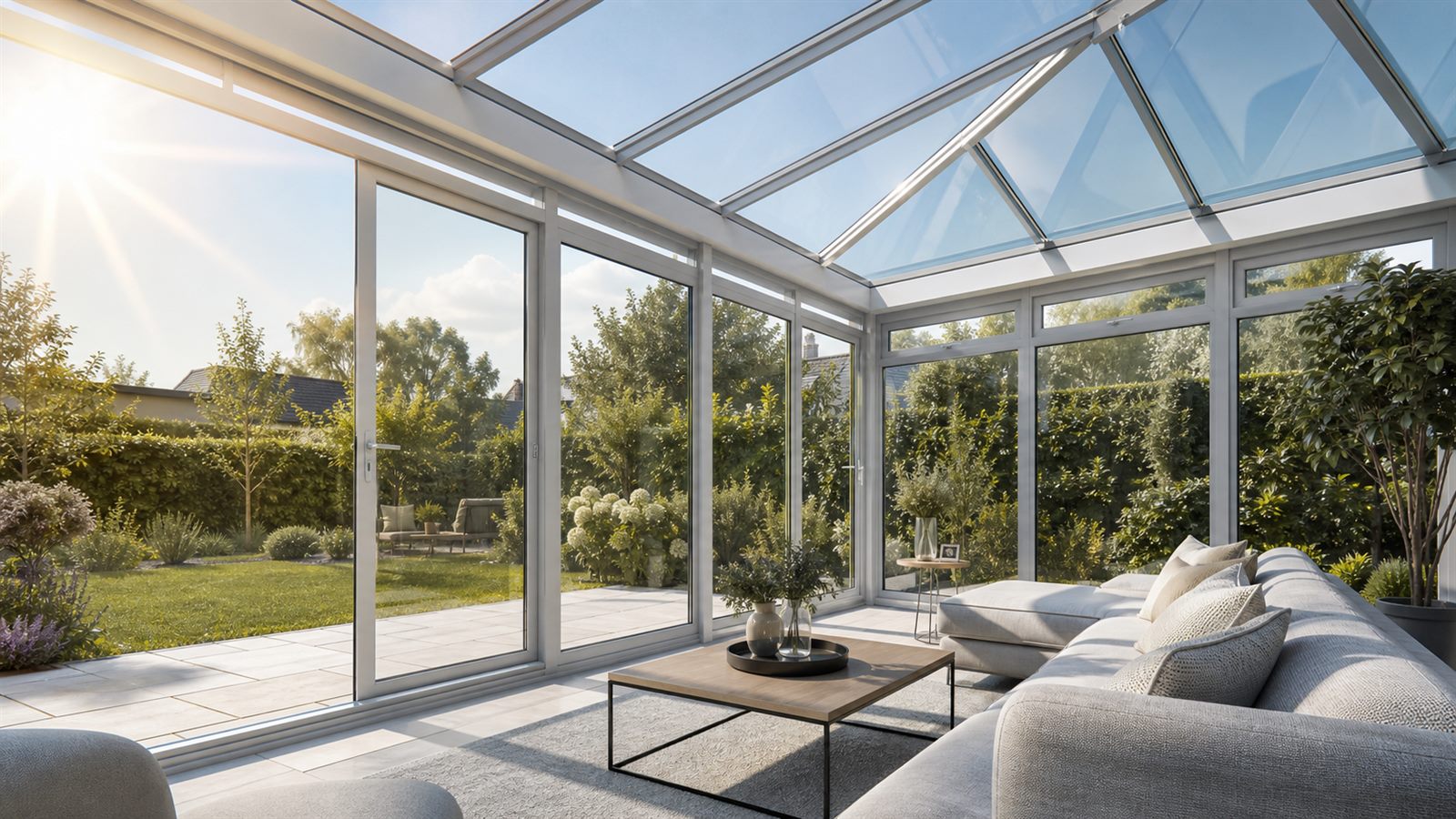
Why the conservatory stays hot no matter what you do.
Blinds, ventilation and fans help, but standard glazing can keep admitting heat all day.
Standard conservatory glazing lets the sun’s energy pass straight through. That energy is absorbed by the floor, furniture and walls, then released as heat that struggles to escape back through the glass.
That is the greenhouse effect, working exactly as designed, in a room you are trying to live in. Blinds help, ventilation helps, and fans can make you feel more comfortable, but the room will keep warming while the glass admits the bulk of the sun’s heat.
Fans and portable air-conditioning units treat heat that is already inside. In a hot conservatory, the cause is usually the glazing itself.
Fans
Move air around, but do not lower the room temperature.
Air conditioning
Cools the air, but uses electricity to remove heat after it has entered.
New Generation Glass
Helps reduce solar heat before it builds up inside the room.
Addressing the cause: New Generation Glass.
The longer-term answer is to reduce solar heat before it builds up inside the room.
New Generation Glass carries a specialist coating designed to help reflect up to 86% of the sun’s heat before it enters the room, while still letting natural daylight through.
It is important to be realistic. No glazing can make a conservatory immune to a 34C afternoon, and any glass room can still feel warm on extreme days. However, by intercepting a large share of solar energy at the point of entry, New Generation Glass can significantly reduce the heat build-up that makes standard-glazed conservatories hard to use in summer.

Less solar heat gain
The coating helps reflect up to 86% of the sun’s heat before it builds up inside the conservatory.
Still bright inside
It reduces heat without turning the room into a dark, permanently shaded space.
UV protection
Over 99% UV protection helps reduce fading to furniture, flooring and soft furnishings.
No running cost
The glass works passively, so there is no compressor, portable unit, fan noise or electricity cost.
Cooler months
Depending on specification, Low-E coating, argon gas and warm-edge technology can also help retain warmth.
Retrofit potential
Many existing conservatories can be assessed for a glazing upgrade without replacing the whole structure.
Why this matters during a heatwave
Because the glass works passively, there is no plug, compressor, fan noise, refrigerant, servicing schedule or portable unit to buy again next year. Less heat coming through the glass also means blinds, ventilation and fans have less work to do.
There are other practical benefits too. It uses no electricity, adds no running cost during hot weather, needs no maintenance beyond normal window cleaning, and can also help retain warmth in winter.
You may not need a new conservatory.
In many cases, the glass can be upgraded while keeping the structure you already have.
One common misconception is that solving a hot conservatory means replacing the whole structure. In many cases, it does not. New Generation Glass can be fitted to suitable existing conservatories, replacing the glazing while keeping the frame and structure in place.
A survey is still needed to confirm suitability. However, when the existing structure is suitable, a glazing upgrade can be a one-time improvement that keeps working every summer afterwards, not just during this week’s heatwave.
Three heatwaves down, and it is only July.
The best approach is layered: immediate cooling habits now, and better glazing if one room overheats every summer.
This week’s advice can help you get through this week’s heat. But with heat-health alerts becoming a more familiar part of the British summer, it is worth thinking beyond the next few days, especially if there is a room you already avoid whenever the temperature climbs.
New Generation Glass has been helping homeowners do exactly that. Established in 1973, with over 99% UV protection and a 10-year guarantee, it is a long-term improvement rather than another seasonal purchase.
Next step
See how New Generation Glass works, or book a free design consultation so Room Outside can assess whether your existing conservatory is suitable.
Useful next steps and sources
These links support the customer journey, strengthen topical relevance, and give readers trusted sources for heatwave and health context.
Frequently asked questions
Short answers for homeowners trying to stay cool this week and improve an overheating conservatory for the long term.
What is happening with the third heatwave of 2026?
A prolonged hot spell is forecast across parts of England, with temperatures expected to climb into the low-to-mid 30s in the South East and heat-health alerts in place for several regions.
What is the quickest way to keep my home cooler?
Ventilate when it is cooler outside, close windows and blinds when the outside air is hotter, avoid heat-generating appliances, drink water and use fans carefully.
Should windows stay open in hot weather?
Open them overnight and early in the morning when outside air is cooler. During the hottest hours, closing windows and blinds usually helps keep heat out.
Do fans cool a room?
Fans can make people feel cooler by moving air across the skin, but they do not lower the room temperature itself.
Why does a conservatory stay so hot?
Standard glazing lets solar energy in. The room absorbs that energy and releases it as trapped heat, creating the greenhouse effect.
How does New Generation Glass help?
It has a specialist coating designed to help reflect up to 86% of the sun’s heat before it enters, reducing heat build-up while still allowing daylight through.
Can it be fitted to my existing conservatory?
Often, yes. Suitable conservatories can have the glazing replaced while keeping the existing frame and structure, subject to survey.
Will it stop all heat?
No glazing can make a conservatory immune to extreme heat. However, it can significantly reduce heat build-up compared with standard glazing.
Does it replace heatwave safety advice?
No. It complements sensible steps such as shading, ventilation, hydration and following NHS advice if someone shows signs of heat exhaustion or heatstroke.
Want a cooler, more usable conservatory every summer?
See how New Generation Glass works, or book a free design consultation with Room Outside.
Sources: heatwave forecast and heat-health alert context from The Guardian; health guidance from the NHS; New Generation Glass performance details from the Room Outside New Generation Glass page.