

Bespoke Conservatories:
Why Custom‑Built Can Transform Your Home
Your home isn’t standard — so why should your conservatory be? Discover what makes a truly bespoke conservatory different, and why homeowners across South‑East England are choosing custom over catalogue.
Or call anytime — David, our digital assistant, will take a few details so the right specialist can follow up personally.
A bespoke conservatory is designed around your home — not the other way around
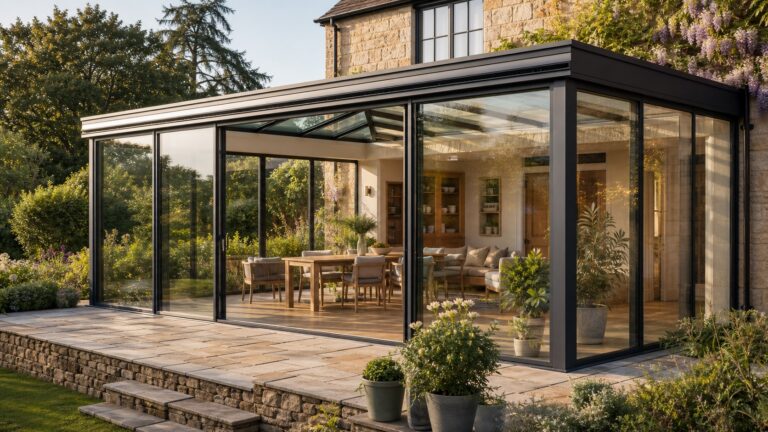
Off‑the‑shelf conservatories are made to standard dimensions, standard materials, and standard compromises. A bespoke conservatory starts with your home’s architecture, your plot, and how you actually want to live in the space — then every element is designed to fit.
The result is a structure that can look like it was always part of the house, perform thermally year‑round, and add genuine long‑term value to your property.
Room Outside has been designing and building bespoke conservatories across Kent, Surrey, Sussex, Hampshire, and Greater London for over 50 years. Call us on 01243 538999 or request a brochure to start the conversation.
What Makes a Conservatory Truly Bespoke?
The word ‘bespoke’ gets overused. In the conservatory industry, it often means little more than choosing a colour from a limited palette or adjusting a standard frame by a few centimetres. That’s not bespoke — that’s configuration.
A truly bespoke conservatory begins with your home, not a product catalogue. It means an architect or designer visits your property, studies the proportions, orientation, sightlines, and character of your house — and then designs a structure from scratch that is intended to look and feel as though it was always part of the building.
Designed for your plot — every dimension, angle, and proportion responds to your actual site and home
Material freedom — timber, aluminium, steel-look, oak, frameless glass, or hybrid combinations
Thermal engineering — glazing, ventilation, and insulation specified for your orientation and usage
Planning-sensitive — designed to meet conservation area, listed building, and local authority requirements
💡 The question that defines bespoke
If your conservatory company starts by showing you their product range, you’re buying a product. If they start by studying your home, you’re commissioning a design. That’s the difference.
Want to see what bespoke looks like in practice? Our brochure includes completed projects across a wide range of styles, periods, and budgets. Request your free copy here or call 01243 538999.
The Room Outside Bespoke Design Process
A bespoke conservatory isn’t something you order — it’s something you develop together. Here’s how the Room Outside design process typically works.
Initial Conversation & Site Understanding
We begin with a phone call or visit to understand what you’re looking for: how you want to use the space, what you like and dislike about your current home, and any constraints (budget, planning, access). This is a no-obligation conversation — there’s no pressure to commit.
Site Survey & Architectural Assessment
A designer visits your property to study the building’s proportions, materials, roof lines, ground conditions, orientation, and natural light. For listed buildings or conservation areas, we also assess planning sensitivities at this stage.
Concept Design & Material Selection
We develop initial concepts — including material choices, structural approach, glazing specification, and thermal strategy — and present them for your feedback. You’ll see how the conservatory is designed to sit with your home, not just next to it.
Detailed Design, Planning & Engineering
Once you’re happy with the concept, we develop full technical drawings, handle planning applications where required, and finalise every specification — from frame profiles to drainage details.
Manufacture & Installation
Components are manufactured to your exact specification. Installation is managed by our own team — not subcontractors — so quality and communication remain consistent from start to finish.
🕐 Typical timelines
A bespoke conservatory project — from initial conversation to completion — typically takes 12 to 24 weeks, depending on complexity, materials, and planning requirements. Listed building projects may take longer due to additional approval stages.
Ready to start the conversation? Call 01243 538999 — David, our digital assistant, will take a few details so the right designer can follow up personally. No obligation, no pressure.
Material Choices for Bespoke Conservatories
One of the key advantages of a bespoke approach is that materials are chosen for your specific project — not dictated by a product range. Here are the main options and when they tend to work well.
Engineered hardwood timber — warm, characterful, and ideal for period properties. Can be painted or stained to match existing joinery. Requires periodic maintenance.
Thermally broken aluminium — slim sightlines, low maintenance, excellent thermal performance. Works well for contemporary and transitional styles.
Slim-profile steel-look framing — delivers a Crittall‑style aesthetic with modern thermal performance. Especially popular for barn conversions and industrial-heritage properties.
Oak frame — for a traditional, solid-timber aesthetic. Often used on country houses, cottages, and listed buildings. Can be green oak (for natural movement and character) or kiln-dried.
Frameless or minimal-frame glass — for maximum views and light. Structural glazing techniques allow large glass expanses with minimal visible framework.
Hybrid systems — combining materials (e.g. timber interior with aluminium exterior cladding) can offer the best of both worlds: warmth inside, durability outside.
The right material depends on your home’s character, your maintenance preferences, your budget, and your local planning context. A bespoke design conversation will help you work through these choices properly.
🔬 Glazing matters as much as framing
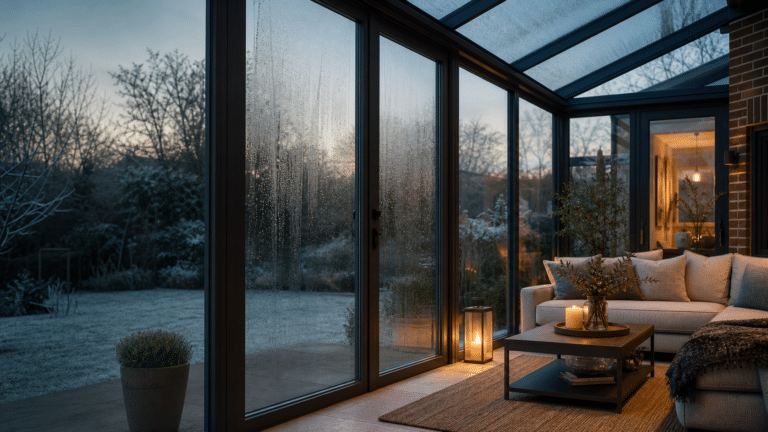
Whatever frame material you choose, the glazing specification is critical for comfort. Room Outside’s New Generation Glass is designed to achieve U‑values as low as 0.18 W/m²K — which can help keep the conservatory comfortable year‑round without excessive heating or cooling costs. Learn more about how glazing contributes to a luxury conservatory experience.
Bespoke Conservatories for Period Homes & Listed Buildings
If your property is listed, in a conservation area, or simply has strong architectural character, an off‑the‑shelf conservatory is rarely the right answer. Planning officers and heritage consultants expect a design that respects the existing building — and that almost always requires a bespoke approach.
Room Outside has extensive experience working with listed buildings and conservation area properties across South‑East England. Here’s what that typically involves:
- Early planning engagement — we liaise with local planning officers and heritage consultants before finalising designs, which can help avoid costly refusals
- Sympathetic material selection — matching or complementing existing materials (stone, brick, timber, lead) to satisfy heritage requirements
- Proportional design — ensuring the conservatory’s scale, roofline, and detailing sit harmoniously with the host building
- Glazing bar patterns and profiles — designing frame proportions that echo the property’s existing window style
🏠 Grade I, Grade II, and conservation areas
Each listing grade and conservation area has different requirements. Grade II* and Grade I listings involve more stringent oversight. Our team is experienced in navigating these distinctions and can advise on what is likely to be achievable for your specific property.
Own a listed or period property? We’re happy to discuss what may be possible before you commit to anything. Call 01243 538999 or request a brochure — it includes examples of conservatories on listed buildings.
Bespoke Configuration Options
Victorian — a classic multi-faceted front with a bay feel. Suits period properties with formal gardens.
Edwardian — a rectangular footprint that makes the most of usable floor space. Clean, square proportions.
Gable-fronted — adds height and drama. Works well with Arts & Crafts or cottage-style homes.
Lean-to — simple, efficient, and often the best option for properties with limited height beneath the eaves.
L-shape — wraps around a corner of the house. Creates distinct zones within one structure (e.g. dining and sitting).
P-shape — combines two forms (typically a Victorian bay with a lean-to). Offers maximum space and visual variety.
You can also explore our design portfolio to see how different configurations have been used on completed projects across the region.
Considering a Bespoke Conservatory?
Every project starts with a conversation. Tell us about your home, and we’ll tell you what may be possible — no obligation, no sales pressure, just honest advice from specialists with over 50 years’ experience.
David, our digital assistant, will take a few details so the right specialist can follow up personally.
Bespoke Conservatory Projects: Real Examples
Georgian Townhouse, Hampshire
A timber-framed orangery-style conservatory designed to complement the existing sash windows and stone detailing. Required listed building consent and close liaison with the conservation officer.
Materials: Engineered hardwood timber, painted to match existing joinery · New Generation Glass roof
Modern Detached, Surrey
A minimal-frame aluminium structure with floor-to-ceiling glazing, designed to connect the kitchen-diner with a south-facing garden. Solar control glass specified to manage heat gain from the orientation.
Materials: Thermally broken aluminium, slim sightlines · Solar control glazing throughout
Grade II Farmhouse, West Sussex
An oak-framed garden room designed to appear as a natural extension of the existing barn complex. Green oak used for its natural ageing and character, complementing the existing brick and flint.
Materials: Green oak frame, handmade brick plinth · Planning handled by Room Outside
L-Shaped Extension, Kent
A wraparound conservatory creating distinct dining and sitting zones, with bi-fold doors to both garden aspects. The L-shape allowed the family to reconfigure their ground-floor layout entirely.
Materials: Hybrid aluminium/timber system · Underfloor heating integrated
For more completed projects, explore our design portfolio.
Our brochure includes photography and details from dozens of completed projects. Request your free copy — it’s the easiest way to explore what’s possible for your home.
Bespoke vs Off‑the‑Shelf: The Real Difference
| Aspect | Standard / Off‑the‑Shelf | Bespoke (Room Outside) |
|---|---|---|
| Design approach | Adapted from catalogue range | Designed from scratch for your home |
| Material options | Limited to supplier’s range | Full material freedom |
| Thermal performance | Standard glazing (U-value 1.0–1.4+) | Specified per project (U-values as low as 0.18) |
| Planning suitability | May not meet heritage requirements | Designed to satisfy planning context |
| Property value impact | Moderate — may look ‘added on’ | Higher — designed to integrate with architecture |
| Longevity | 10–20 years typical | 25+ years with appropriate maintenance |
| Running costs | Higher (less efficient glazing/frames) | Lower (high-performance specification) |
📈 The value question
A well-designed bespoke conservatory can add meaningful value to your property — both financially and in how you live. Estate agents consistently report that high-quality conservatories and glass extensions can add 5–15% to a property’s value, while poorly designed or uncomfortable conservatories can actually detract from it.
The question isn’t just ‘what does it cost?’ — it’s ‘what is it worth to you over 10, 20, or 30 years?’
Want to understand what a bespoke project might cost for your home? Every project is different, so the best starting point is a conversation. Call 01243 538999 — there’s no obligation and no sales pressure.

Related Reading
About This Guide
This guide is based on over 50 years of designing and building bespoke conservatories across South‑East England. Material descriptions, configuration options, and performance claims reflect current (2026) specifications and should be verified for your specific project. Case study details are representative of completed projects; some details have been simplified for clarity.
Last updated: May 2026 | Author: Room Outside | Canonical URL: roomoutside.com/bespoke-conservatories-uk/
Frequently Asked Questions
Common questions about bespoke conservatories, answered.
What makes a conservatory truly bespoke?
A bespoke conservatory is designed from scratch around your home’s architecture, your plot, and how you want to use the space. Unlike off-the-shelf ranges that adapt your home to their standard dimensions, a bespoke design adapts every element — structure, glazing, materials, and proportions — to fit your property and lifestyle.
How much does a bespoke conservatory cost compared to off-the-shelf?
A bespoke conservatory typically costs more upfront than a standard range, but the long-term value can be significantly higher. Custom designs tend to add more to property value, last longer due to higher-quality materials and engineering, and may deliver better thermal performance — which can reduce running costs over the lifetime of the structure.
Can you build a bespoke conservatory on a listed building?
Yes. Room Outside has extensive experience designing conservatories for listed buildings and properties in conservation areas across South-East England. The design process takes planning requirements, heritage officer preferences, and sympathetic material choices into account from the very first conversation.
What materials are used in a bespoke conservatory?
Material choices depend on your property, preferences, and budget. Options typically include engineered hardwood timber, thermally broken aluminium, slim-profile steel-look framing, oak, and hybrid systems that combine materials for both aesthetics and performance.
How long does a bespoke conservatory take to design and build?
Timelines vary depending on complexity, planning requirements, and material lead times. A typical bespoke project — from initial consultation to completion — may take between 12 and 24 weeks. Listed building or conservation area projects can take longer due to additional planning stages.
Do you offer a free consultation for bespoke conservatory projects?
Yes. Room Outside offers a free, no-obligation design consultation. You can call us on 01243 538999 to speak with a specialist, or request a brochure to explore styles and options before committing to a visit.
Call us anytime – David, our digital assistant, will take a few details so the right specialist can follow up personally. 01243 538999 · Or request a free brochure
Your Home Deserves More Than a Catalogue Conservatory
A bespoke conservatory starts with a conversation — about your home, your garden, and how you want to live. No catalogue, no pressure, just honest advice from specialists who’ve been doing this for over 50 years.
David, our digital assistant, will take a few details so the right designer can follow up personally.
Room Outside · Bespoke conservatory & glass extension specialists since 1973
Kent · Surrey · Sussex · Hampshire · Greater London