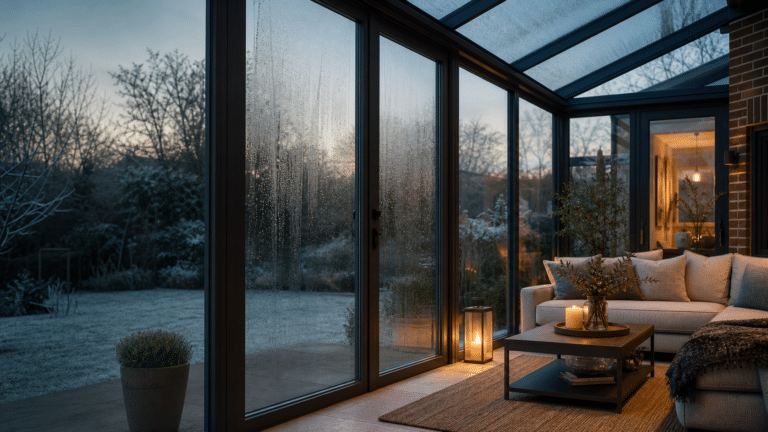


Room Outside design guide · 2026
What makes a conservatory look modern?
Less frame. Better glass. Clear intent. Six design decisions turn the familiar glazed extension into a calm, contemporary piece of architecture.
The quick answer
Modern is a design language, not a product label.
Slim frames, expansive high-performance glass, a restrained roofline, architectural colour and proportions that feel deliberately connected to the house. The strongest designs use fewer, better-resolved elements.
Say “conservatory” and many people still picture the white uPVC add-on of the 1990s: ornate ridge cresting, chunky frames and a room that was too hot in July and too cold in January.
The modern conservatory is a completely different object. It is clean-lined, thermally sophisticated and designed to read as architecture, not as a bolt-on. The shift comes down to a handful of choices — frames, roof, glazing, colour and proportion — and getting them right matters far more than the label on the product.
Then
The frame leads
- Chunky white profiles
- Decorative cresting and finials
- Many small panes
- A visible bolt-on junction
Now
The architecture leads
- Slim dark sightlines
- Quiet, purposeful roof forms
- Fewer, larger panes
- A deliberate connection to the home
Less frame, more view
Slim frames and more glass
The clearest signal of a contemporary design is how little frame you see. Older conservatories were defined by their frames; modern ones are defined by their glass. Slimline aluminium in particular allows large panes with minimal sightlines, so the eye goes straight to the view rather than the grid holding it together. The result feels architectural and calm.
Where you want almost no frame at all, a frameless glass box takes the idea to its conclusion: structural glass with barely-there junctions. It is a different product, but it sits on the same spectrum of “less frame, more light”. See the contrast on our frameless glass box extension page.
“The eye should meet the garden before it meets the frame.”
A quieter silhouette
A flat or low-pitched roof — or a crisp lantern
The familiar Victorian and Edwardian roof shapes read as traditional by definition. A modern conservatory usually takes one of two more restrained directions.
Low and minimal
A flat or shallow-pitched roof, often with a large fixed rooflight or one clean glazed panel, keeps the external profile calm.
Light from above
A square-edged lantern with slim bars, centred and well-proportioned, brings daylight without feeling ornate.
The end of default white
Use colour like an architect
Colour has done more to modernise glazed extensions than almost anything. The contemporary palette is anthracite grey, matt black, bronze and heritage greens: powder-coated finishes that look intentional against brick, stone and render.
Many clients choose a dark frame outside for that precise modern line, with a lighter finish inside so the room still feels bright. Our grey orangery and conservatory inspiration shows how this reads in practice.
The invisible part of modern
Glazing that performs
Here is the part you cannot see but absolutely feel. A genuinely modern conservatory is comfortable all year round — and that comes from the glass, not the shape. High-performance, solar-control glazing helps keep summer heat out and winter warmth in, which is precisely what older designs struggled to do.
Good glass changes how the room is used.
This is the difference between a room you use every day and one you shut the door on for part of the year. It is also what allows broad, frame-light expanses of glass to work without the space behaving like a greenhouse. Our guide to year-round conservatory use goes deeper.
Make it feel inevitable
Proportion and how it meets the house
A modern conservatory looks intentional. Its openings, roof and materials are composed with the existing home rather than simply attached to it.
- Align the openingsLet doors and windows respond to the existing house instead of floating randomly.
- Open it generouslyA broad structural opening helps the extension read as part of the home, not a corridor away.
- Practise restraintChoose fewer, larger panes and one purposeful rooflight over a busy collection of parts.
- Connect the materialsMatch or deliberately contrast brick, render, stone or cladding — but make the choice explicit.
The details inside
Let the floor and finish complete the idea
The interior details finish the look. These small moves do a lot of quiet work because they remove visual interruptions and help the house, new room and garden read as one composition.
Continuous flooring
Large-format porcelain or engineered timber running from the house into the extension makes the eye read one space.
Underfloor heating
Keeping radiators off the walls leaves the architecture, glazing and furniture free to do their work.
Flush thresholds
Level transitions reduce the visual line between inside and outside and make movement feel effortless.
Fewer materials
A short, considered palette feels more contemporary than multiple competing finishes and details.
Modern does not mean cold
Warm materials, clean architectural bones.
A contemporary conservatory need not feel clinical. Timber frames or a timber–aluminium hybrid, natural stone and a soft interior palette can add warmth without compromising the clarity of the design. The frame can be minimal and the room can still feel welcoming; the two are not in tension.
To compare finishes and see how different frame materials change the character, explore our luxury conservatories and our project gallery.
Frequently asked questions
Modern conservatory design, answered
Slim frames with more glass, a flat or crisp low-pitched roof without ornate cresting, architectural colours such as anthracite grey or bronze, high-performance glazing, and careful proportion where the room meets the house.
Aluminium allows slimmer sightlines and larger panes, which often reads as more contemporary, and it takes powder-coated architectural colours beautifully. uPVC can still look modern in the right finish, but aluminium is usually the first choice for a clean, minimal appearance.
Anthracite grey and matt black dominate contemporary designs, with bronze and heritage greens as alternatives. A dark frame outside with a lighter finish inside is a popular combination: a sharp exterior line with a bright interior.
Yes. High-performance, solar-control glazing helps keep the room comfortable in both summer and winter, so it can work as a genuine year-round room rather than an occasional space.
Both can be contemporary. A flat or shallow-pitched roof with a large rooflight gives the lowest, most minimal profile; a crisp square-edged lantern with slim bars is contemporary while still flooding the room with overhead light. The right choice depends on the room’s use and ceiling height.
Continue exploring
Find the right expression for your home
Luxury conservatories
Compare aluminium, uPVC, timber and hybrid frame options.
Explore the rangeFrameless glass boxes
See what “less frame, more light” looks like at its purest.
View glass boxesDesign gallery
Browse completed conservatories, orangeries and glass extensions.
Open the galleryDesigned around your home
Ready to make “modern” feel personal?
Room Outside has designed light-filled, contemporary glass rooms since 1973. Start with the luxury conservatory range, then speak with the design team about the right proportion, palette and performance for your home.