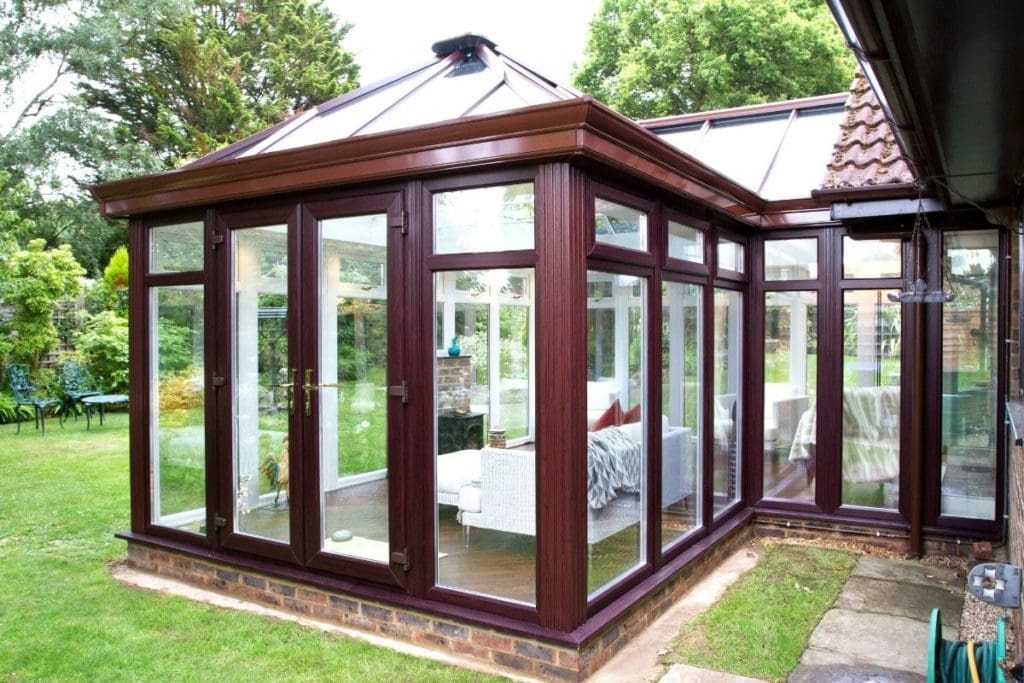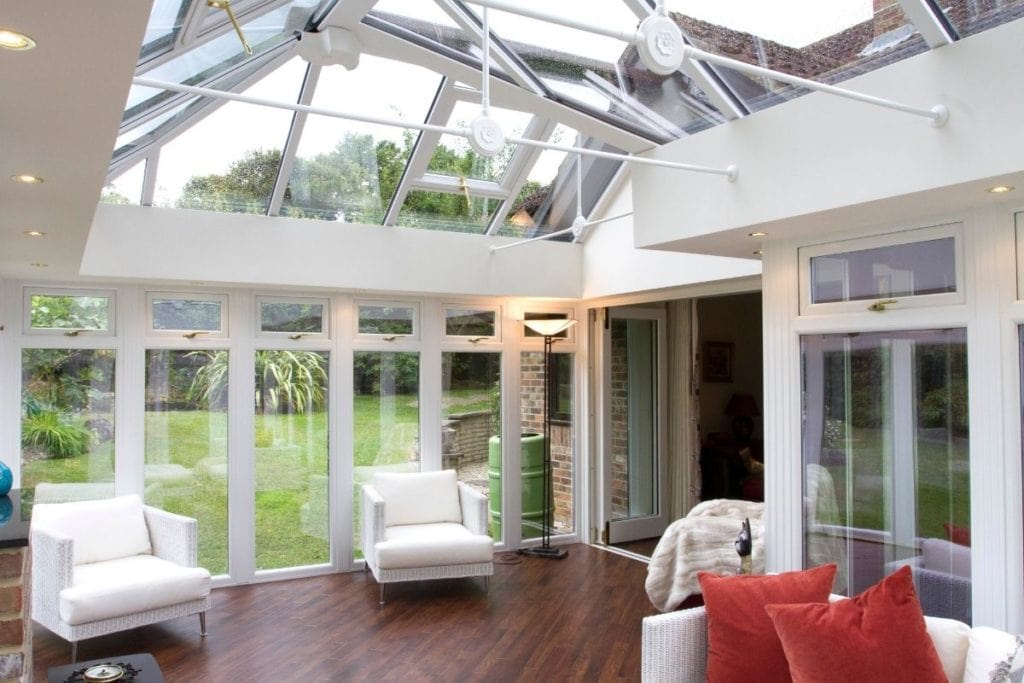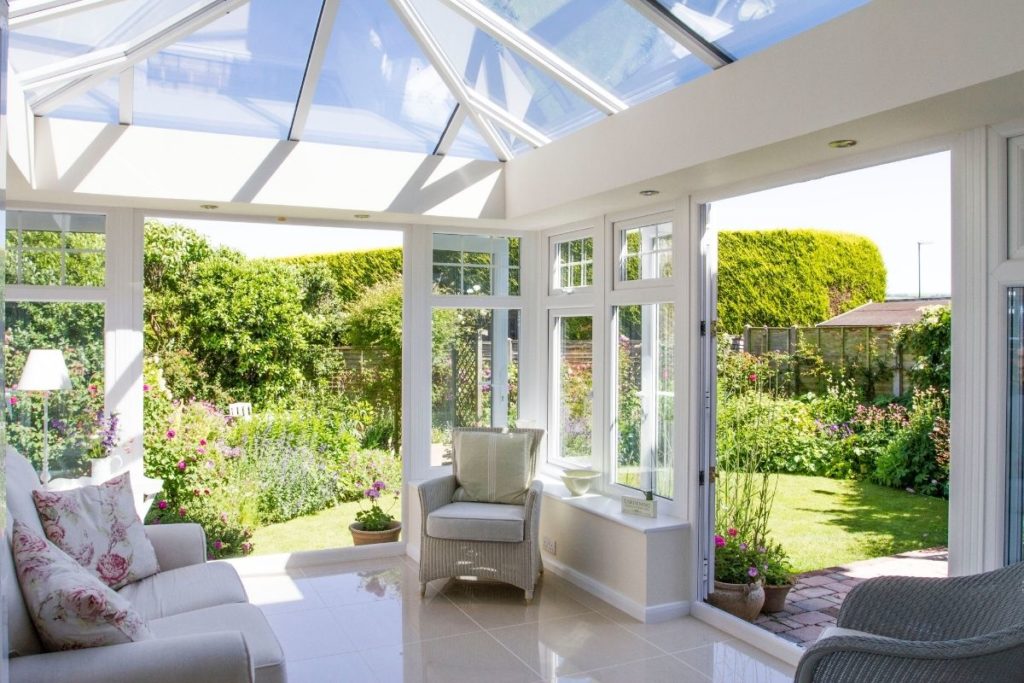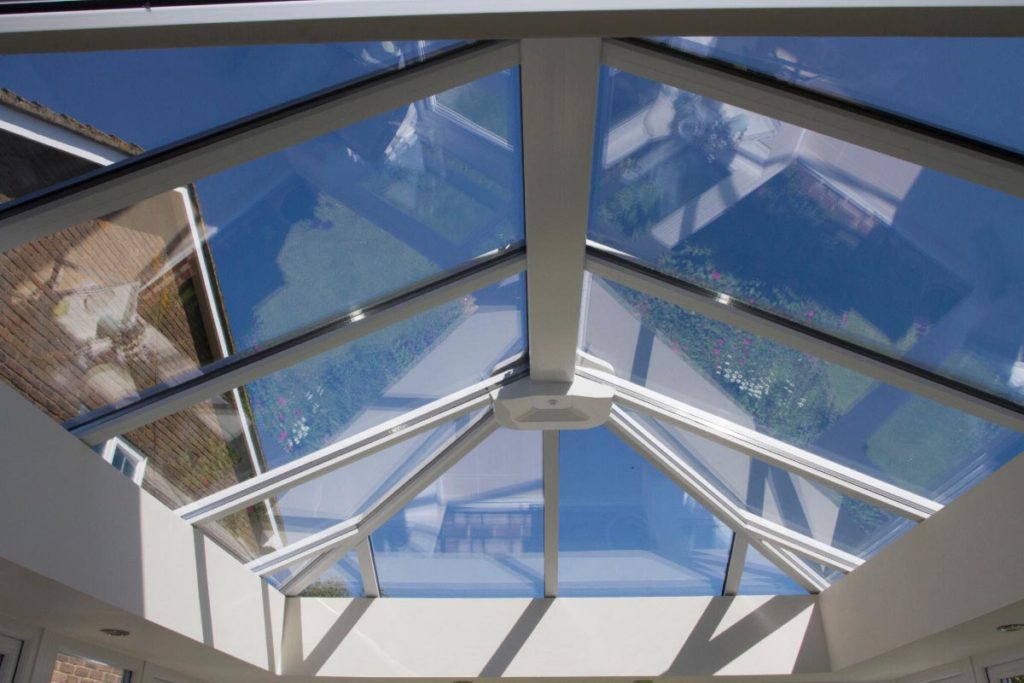

roomoutsideuk
06th February, 2026

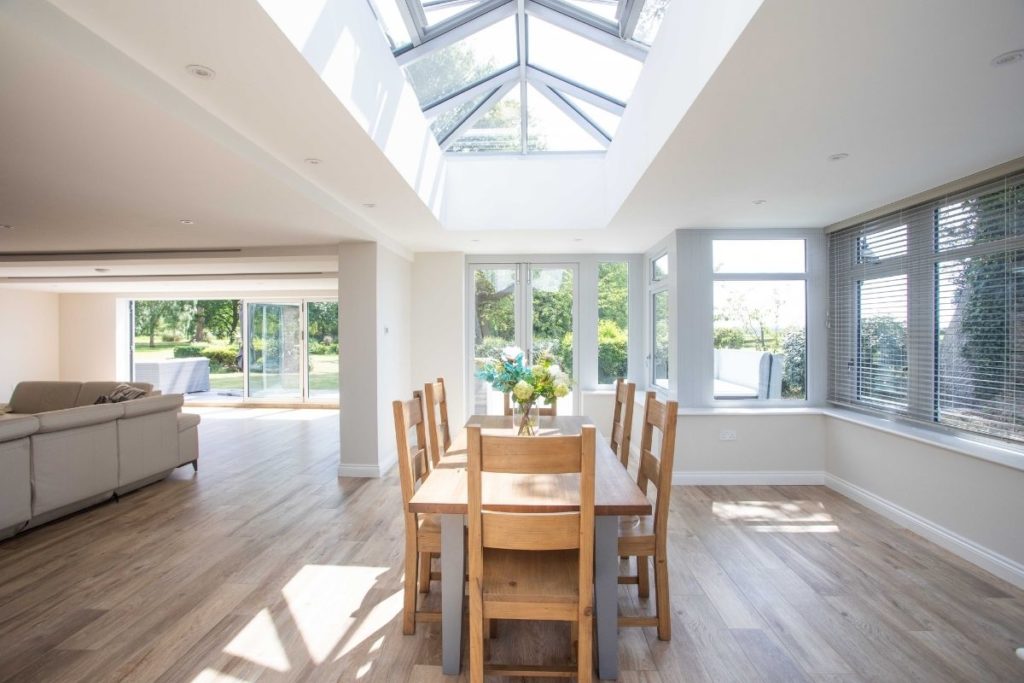
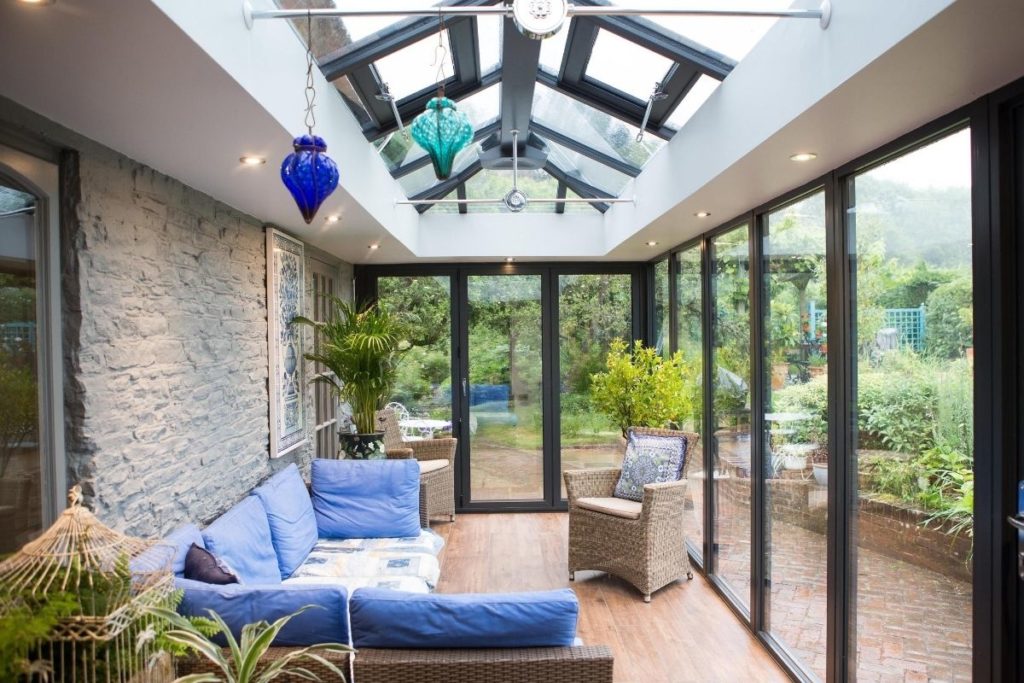
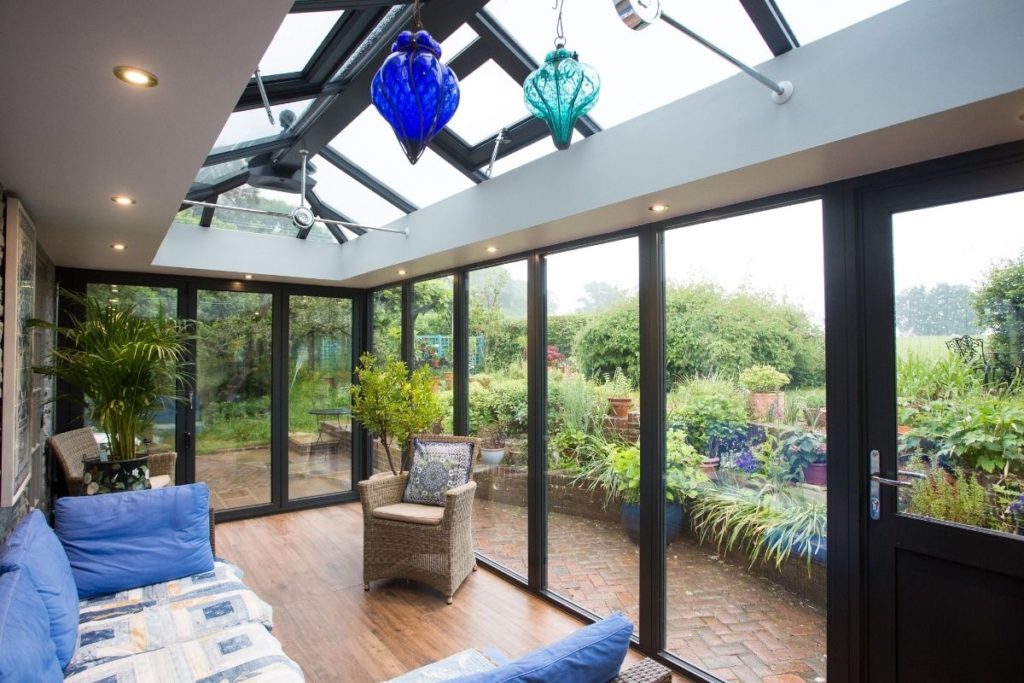
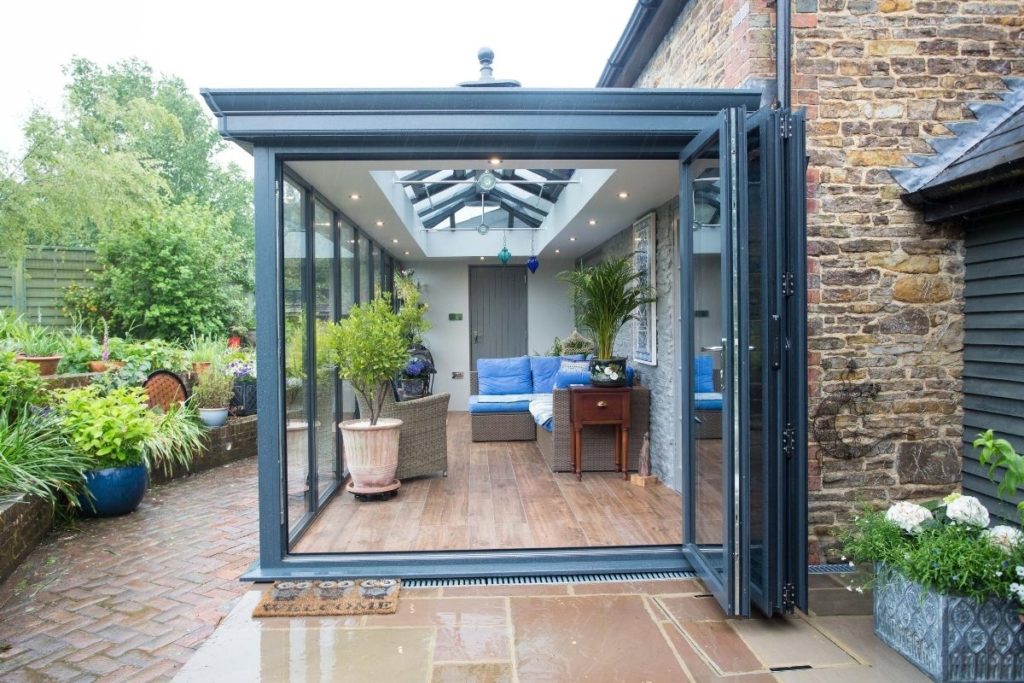
Orangery Extension Uses:10 great ideas.

10 Great Uses for an Orangery Extension in 2026 (UK Guide) | Room Outside

10 Great Uses for an Orangery Extension

Transform your home with these inspiring orangery ideas. Discover practical uses from kitchen-diners to home offices, garden rooms to guest suites. Complete UK guide with costs, planning, and expert tips.

Quick Answer: What Are the Best Uses for an Orangery?

The 10 best uses for an orangery extension are: 1) Kitchen-diner extension, 2) Home office or study, 3) Garden room or sunroom, 4) Dining room, 5) Living room or family room, 6) Children’s playroom, 7) Hobby or craft room, 8) Guest suite or annexe, 9) Home gym or wellness space, and 10) Swimming pool enclosure or pool house. Each offers unique benefits depending on your needs, property layout, and lifestyle requirements.

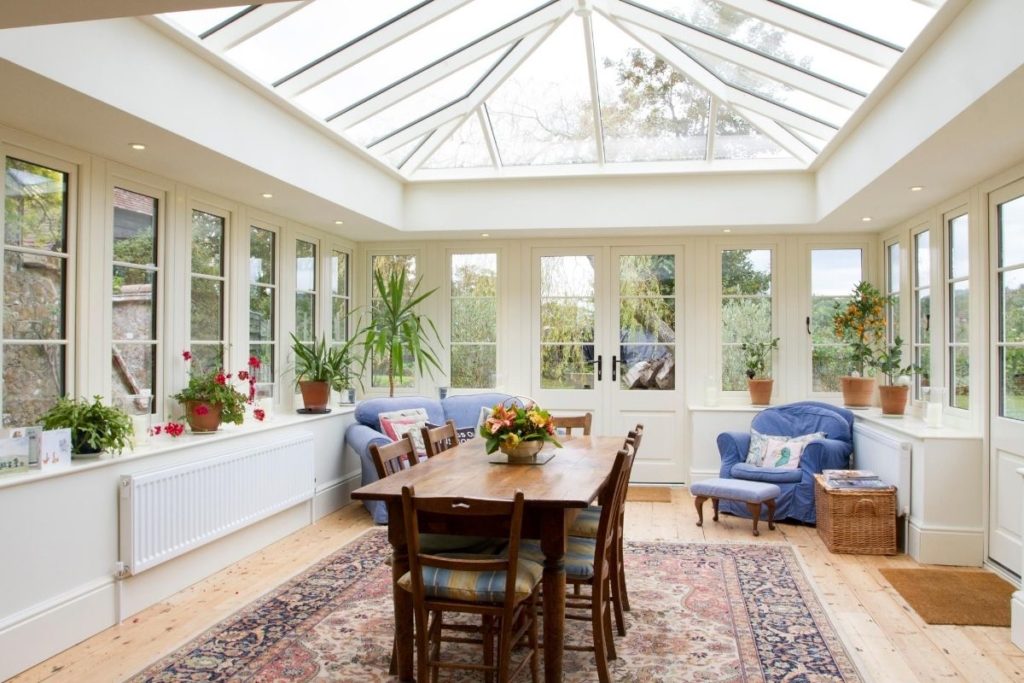
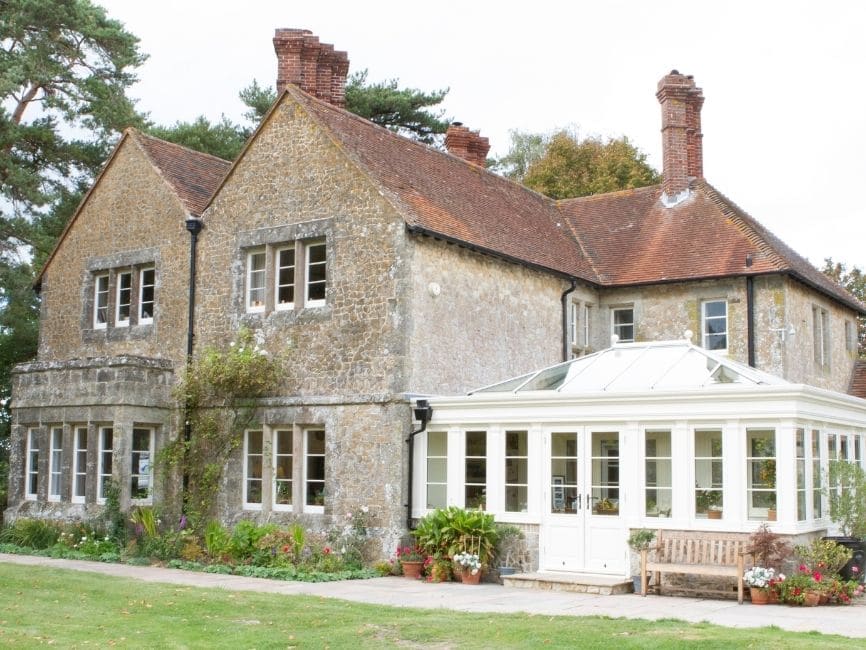
Key facts: Orangery costs range from £25,000-£100,000+. Most fall under Permitted Development (no planning permission needed). Construction takes 12-20 weeks. Orangeries typically add 5-15% to property value, often recovering 75-100% of investment. Unlike conservatories, orangeries have substantial brick walls (50-75% solid construction) with central glass lantern roofs, making them suitable for year-round use.

Key Facts: Orangery Extensions (UK 2026)

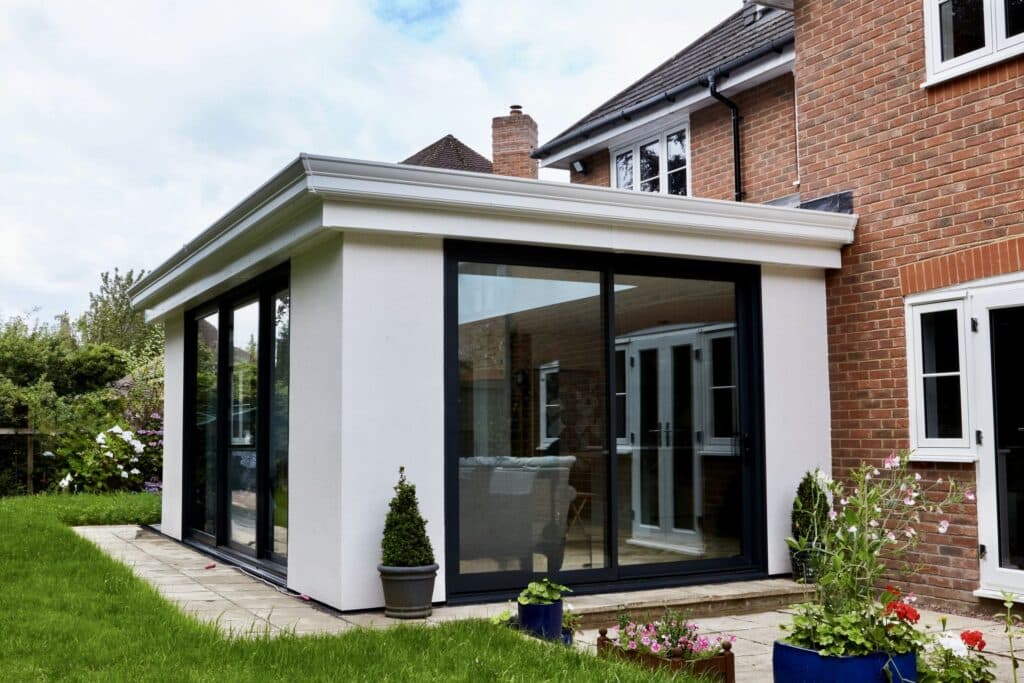
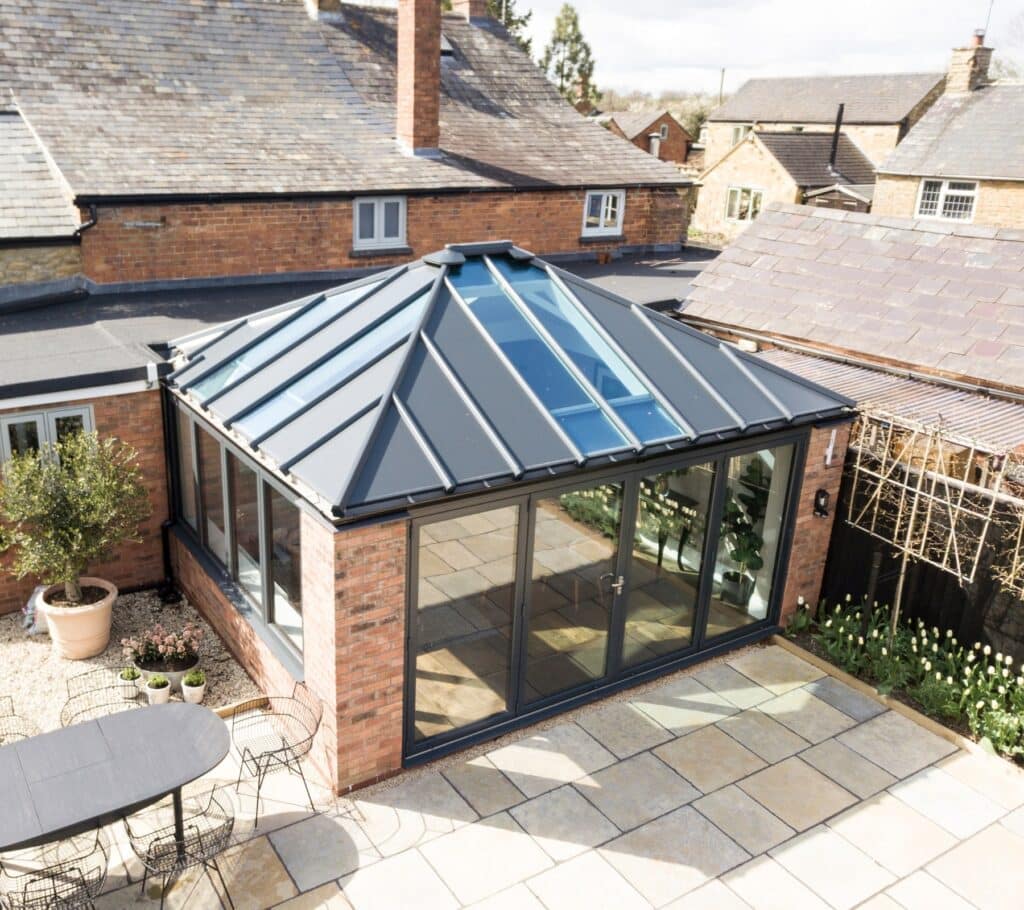
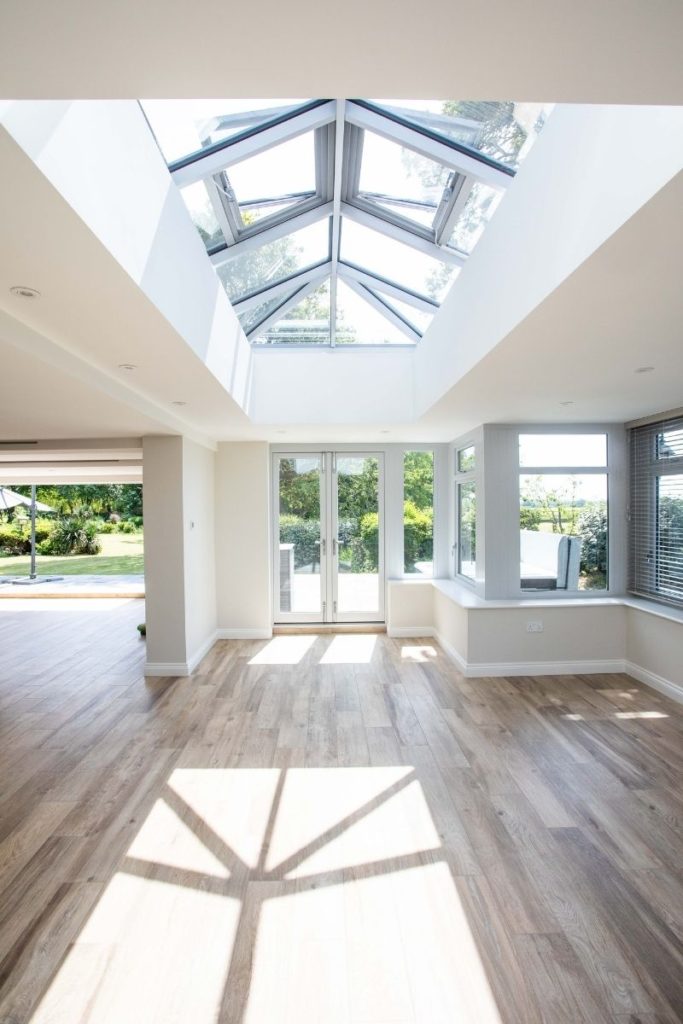
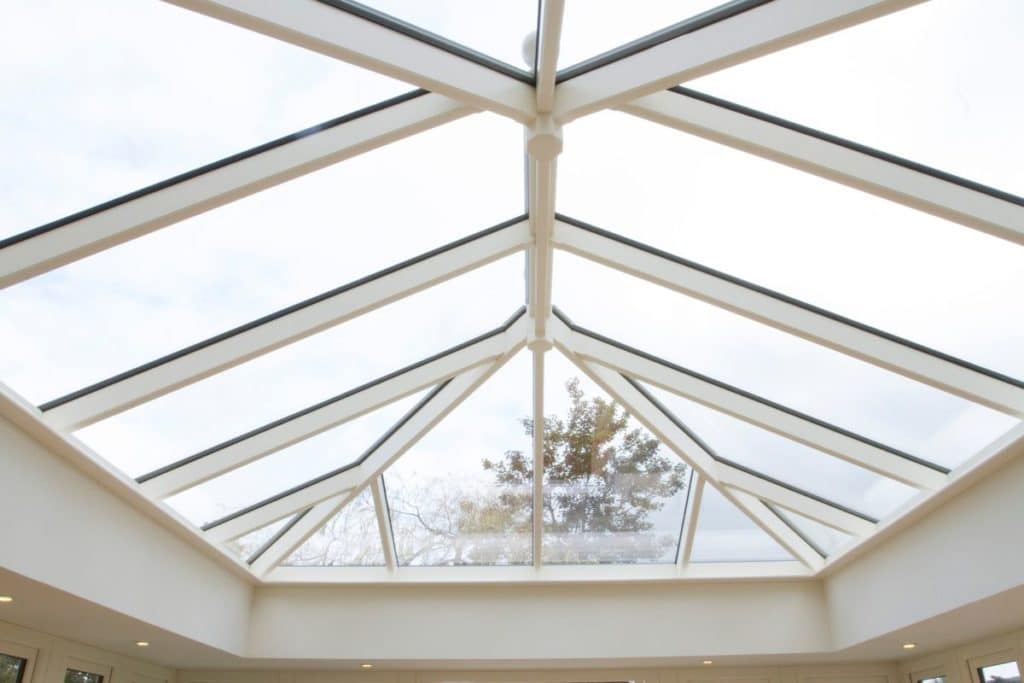
  • Definition: An orangery combines brick/stone walls (50-75% solid) with a flat roof featuring central glass lantern
  • Typical cost range: £25,000-£100,000+ depending on size and specification
  • Construction time: 12-20 weeks from planning to completion
  • Planning permission: Usually falls under Permitted Development rights (no permission needed)
  • Building Regulations: Must comply fully (no exemptions like conservatories)
  • Thermal performance: U-values: walls ≤0.18 W/m²K, roof ≤0.13 W/m²K, glazing ≤1.4 W/m²K
  • Value added: Typically adds 5-15% to property value, recovering 75-100% of investment
  • Best for: Year-round living spaces, better thermal performance than conservatories
  • Popular locations: England – particularly period properties and homes seeking additional living space
10
Brilliant Orangery Uses
5-15%
Value added to property
£25-100k
Cost range
12-20
Weeks construction
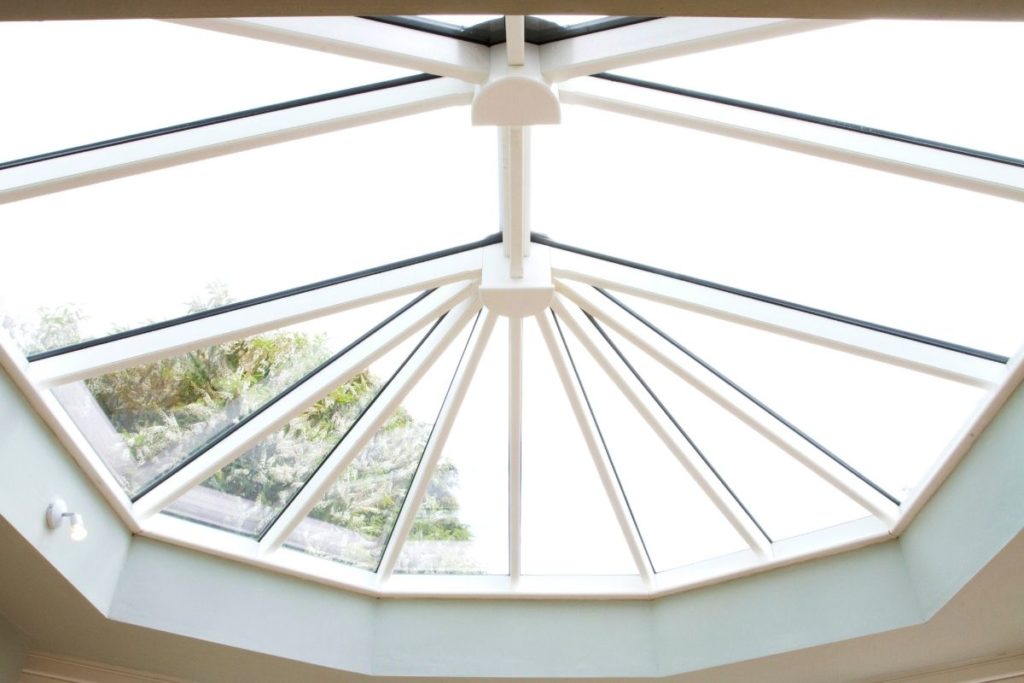
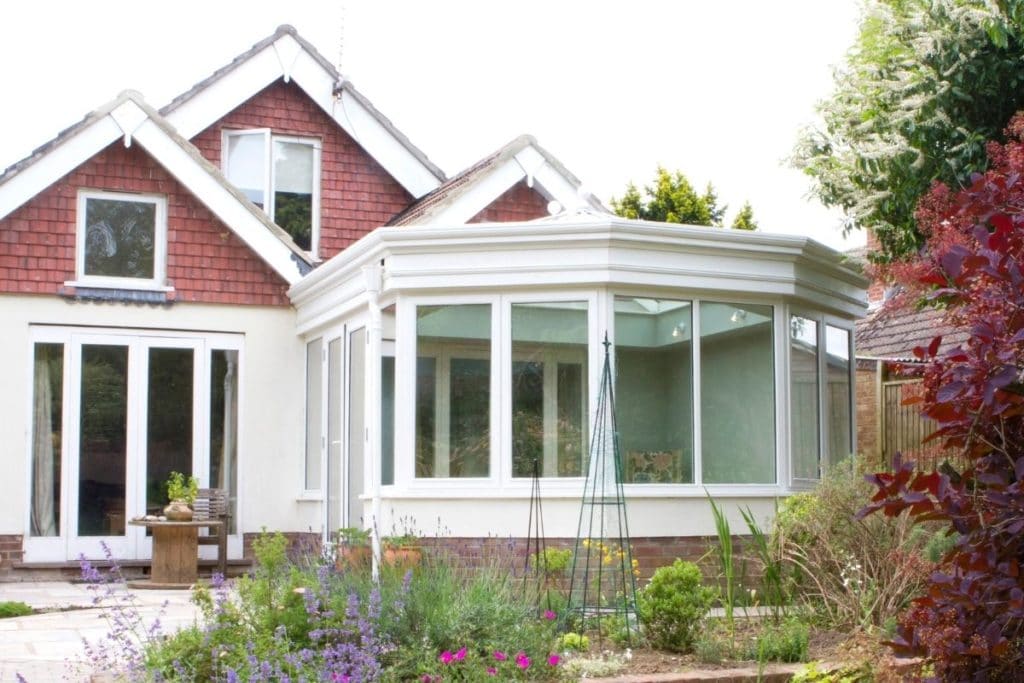
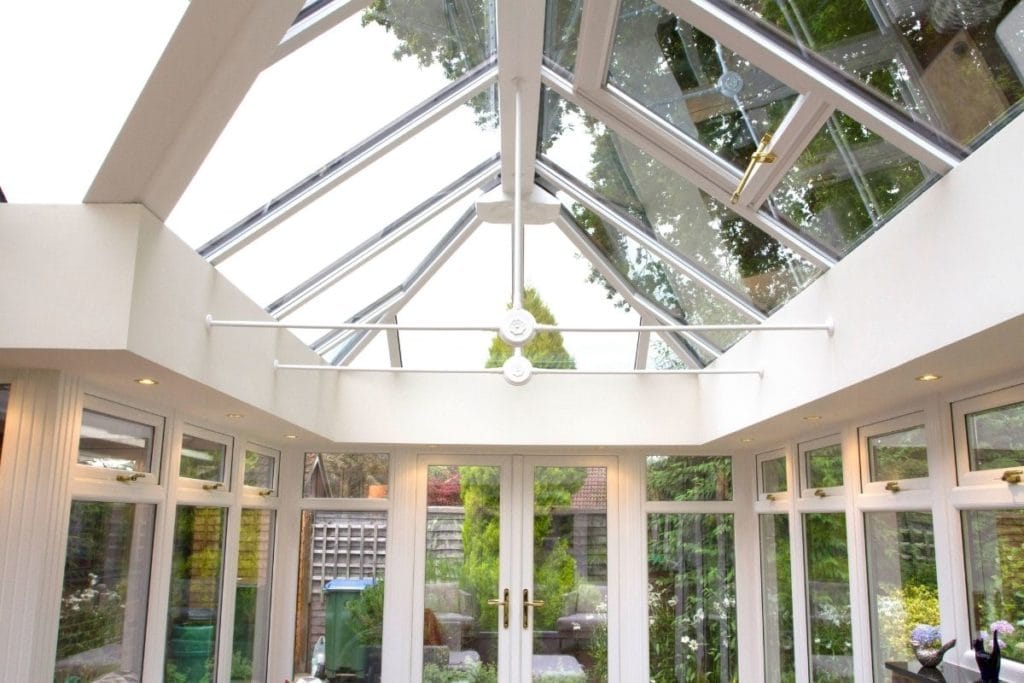
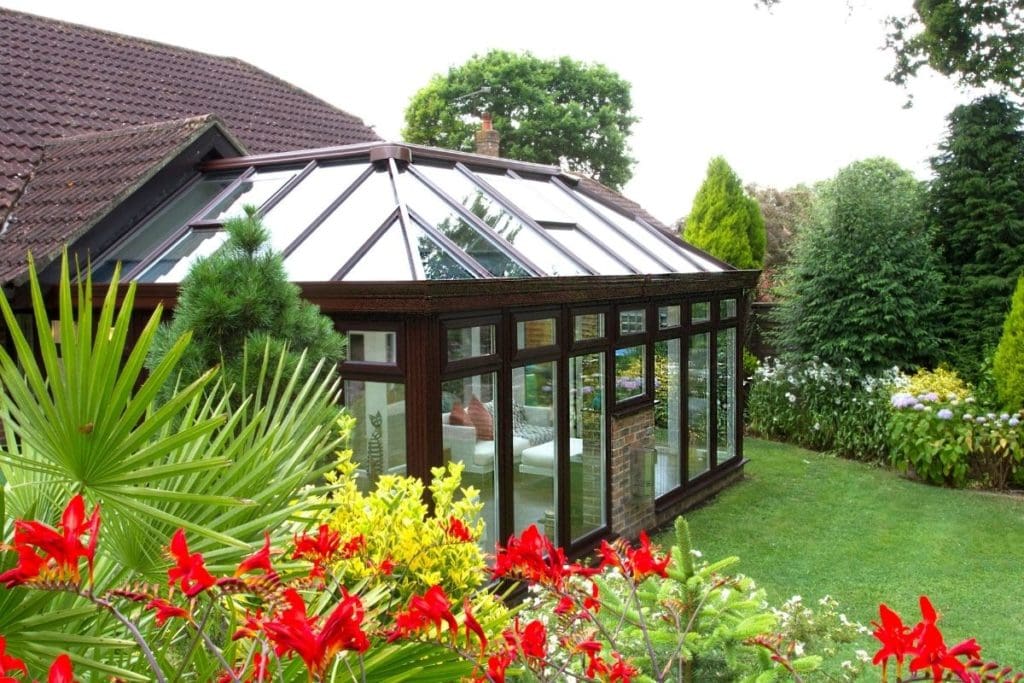
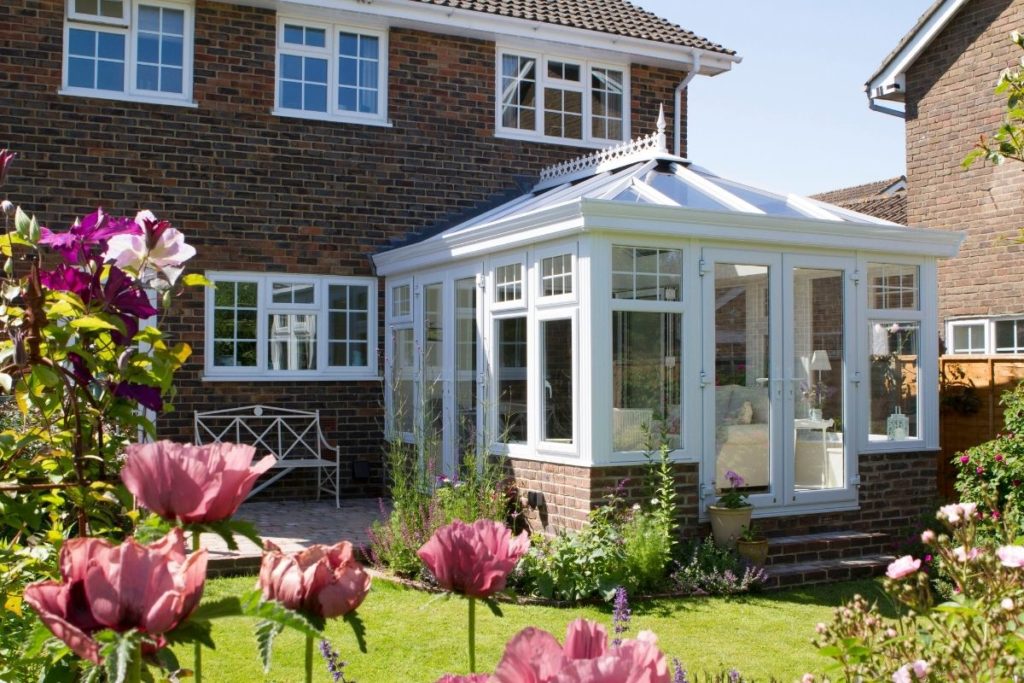
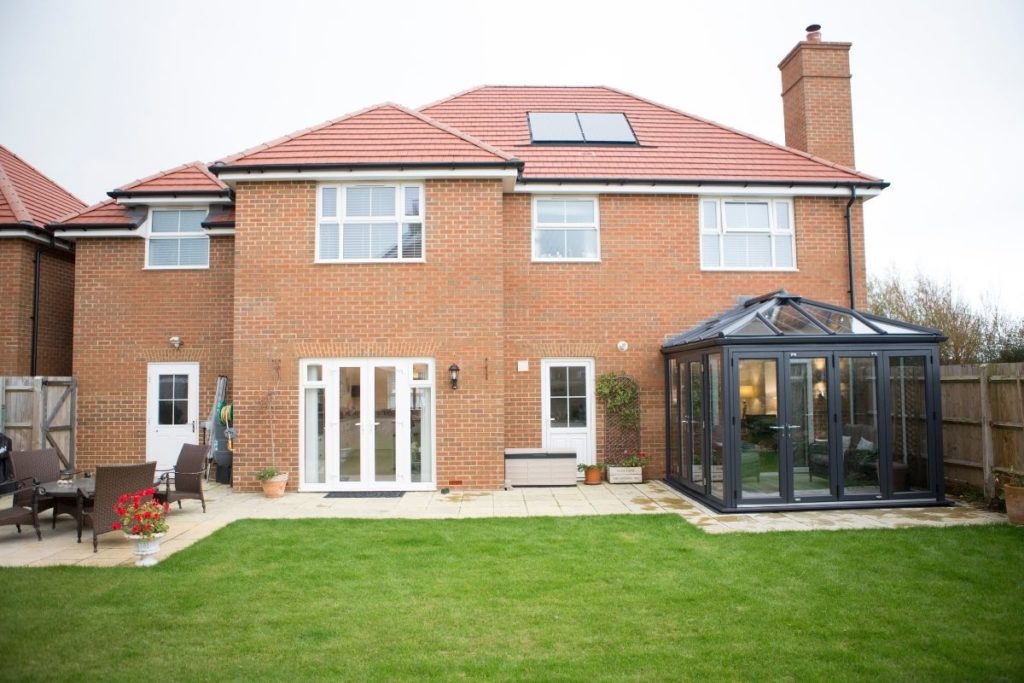
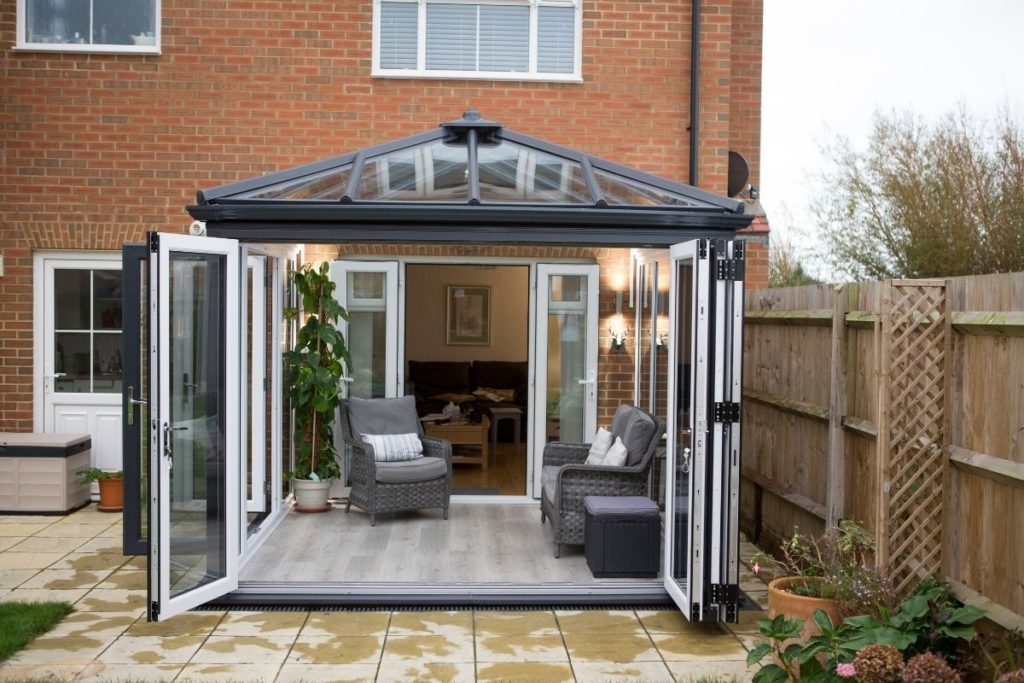
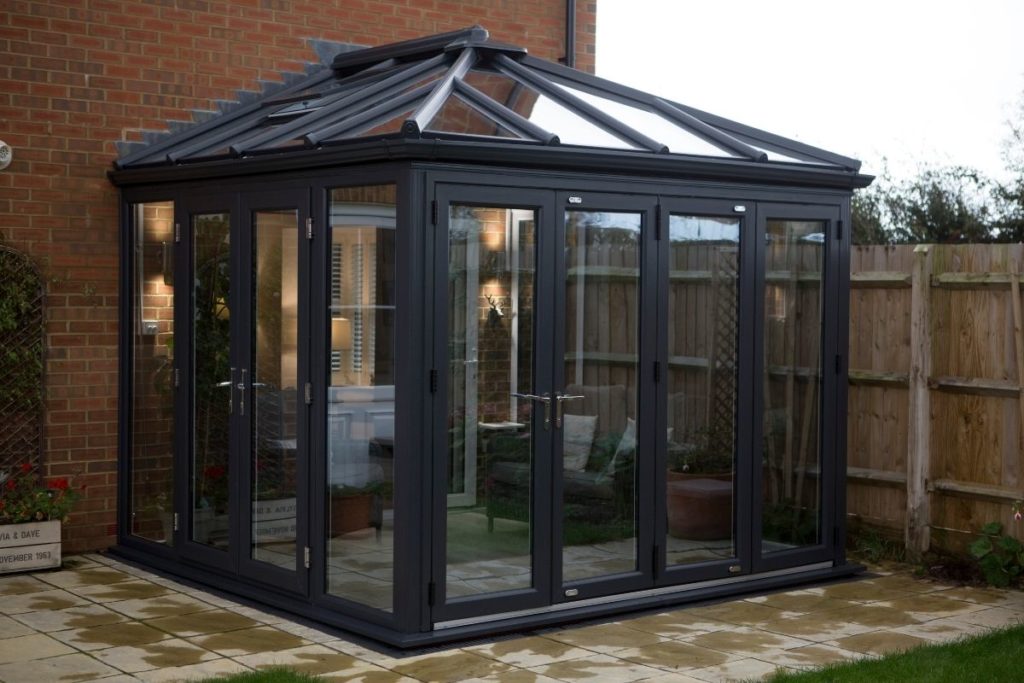
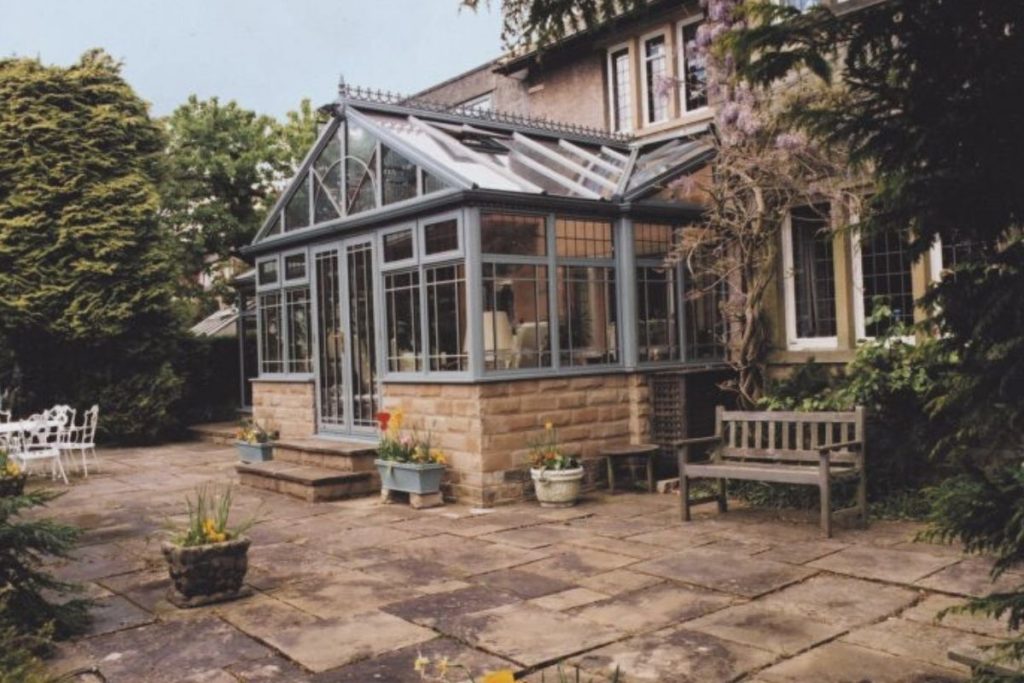
Room Outside has been transforming homes with beautiful orangery extensions since 1973. Orangeries represent the perfect blend of traditional extension solidity with conservatory light and connection to the outdoors. Originating in 17th century Europe as status symbols for growing citrus trees, modern orangeries have evolved into versatile, year-round living spaces that can transform how you use your home. Whether you’re in England or elsewhere in the UK, an orangery extension offers unique opportunities to create distinctive spaces that combine architectural character with practical functionality. This comprehensive guide explores 10 brilliant uses for orangery extensions, helping you envision how this elegant addition could enhance your home and lifestyle.

The 10 Best Uses for Orangery Extensions

Now let’s explore the 10 most popular and practical uses for orangery extensions, with specific considerations for each application.

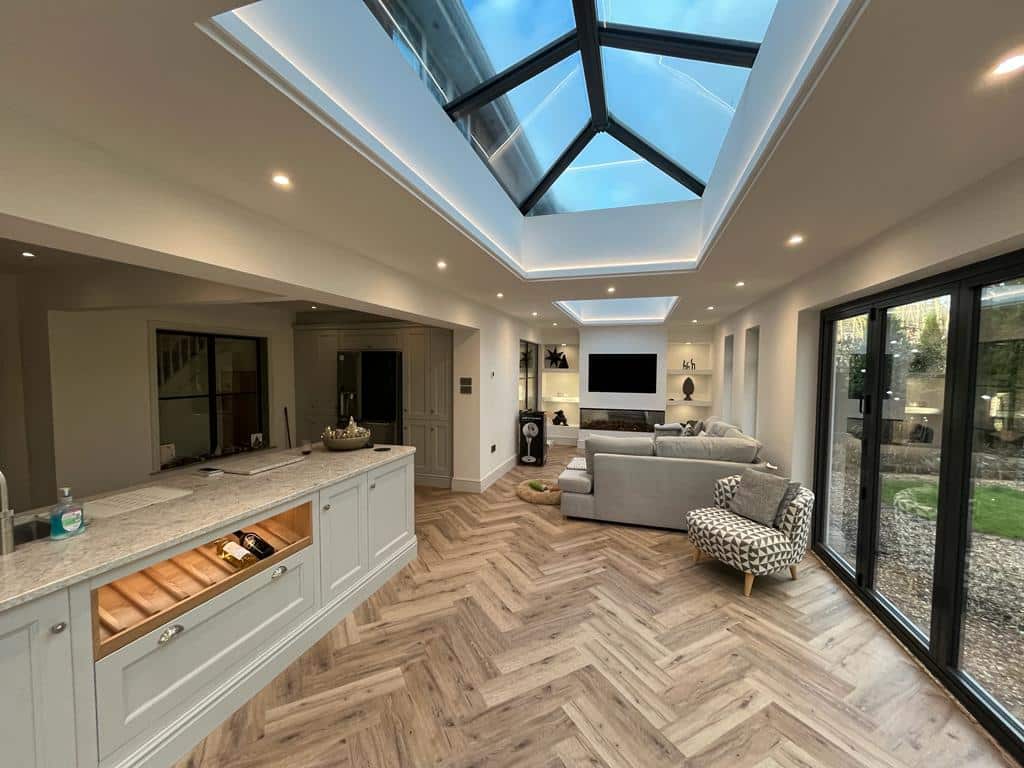
1 Kitchen-Diner Extension

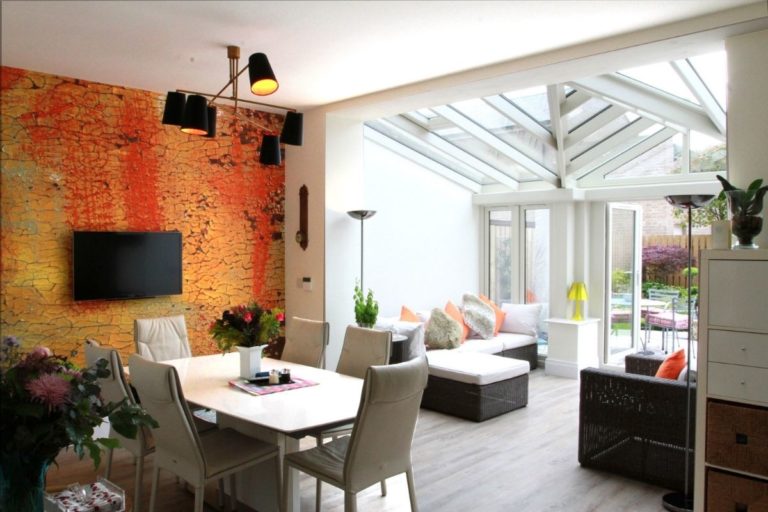
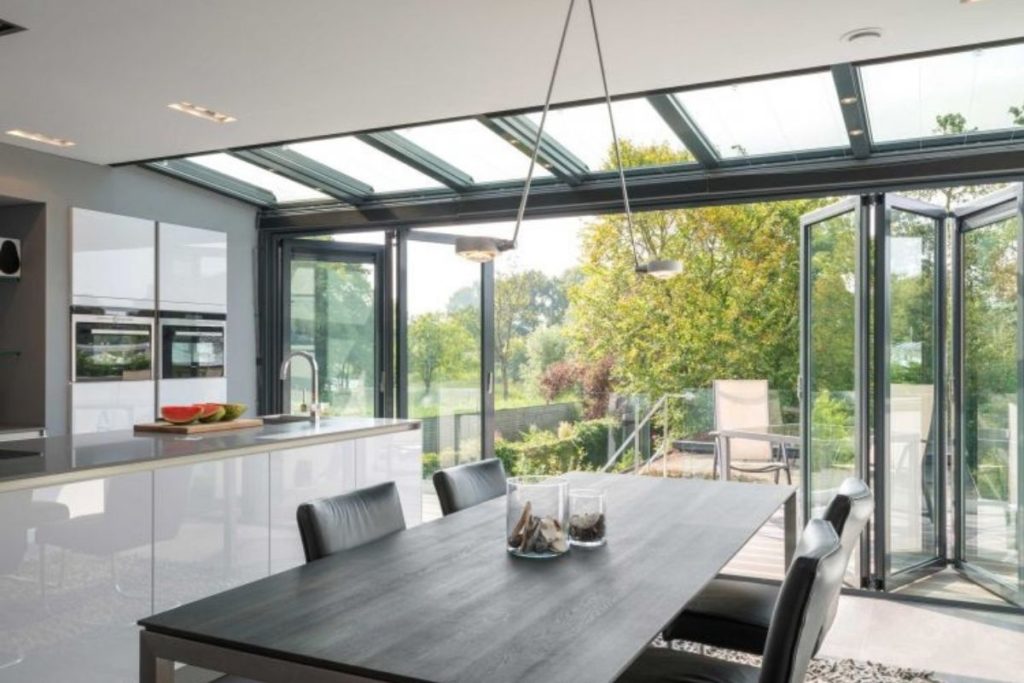
Transform your cooking and dining experience with a light-filled kitchen orangery. This is the most popular use, creating a stunning heart-of-the-home space that connects seamlessly with your garden.

  • Perfect for open-plan living
  • Excellent natural light for food preparation
  • Indoor-outdoor dining connection
  • Adds significant property value

Best for: Families, entertainers, period properties needing modern kitchen spaces.

Consider: Plumbing/electrical requirements, ventilation for cooking, durable flooring.

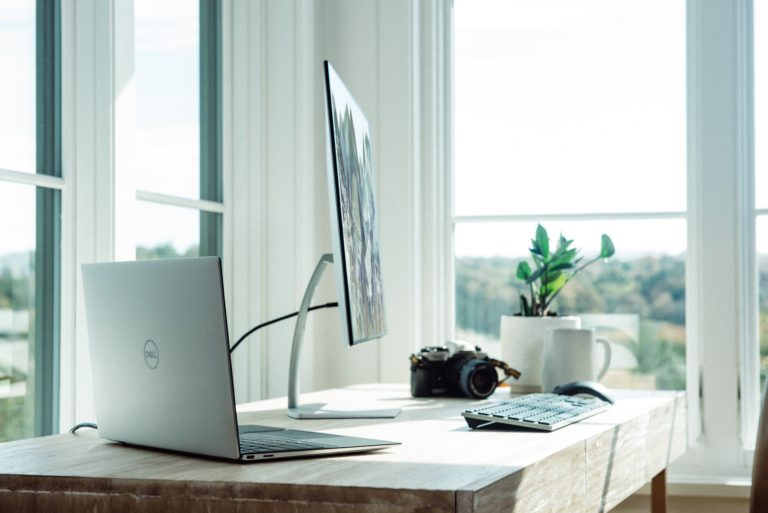
2 Home Office or Study

Create a productive, inspiring workspace separated from main living areas. The natural light and garden views boost creativity and wellbeing while maintaining professional environment.

  • Separate work-life boundaries
  • Excellent natural light reduces eye strain
  • Professional background for video calls
  • Peaceful, focused environment

Best for: Remote workers, professionals, students, creative workers.

Consider: Internet connectivity, heating for winter use, storage solutions.

3 Garden Room or Sunroom

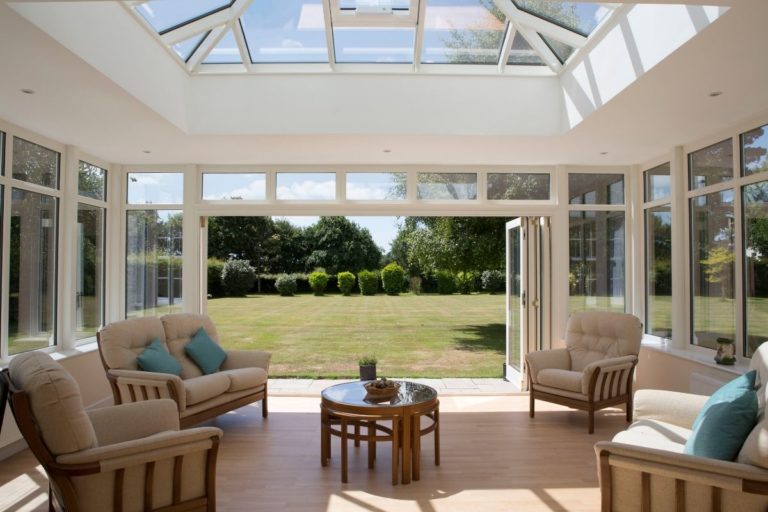
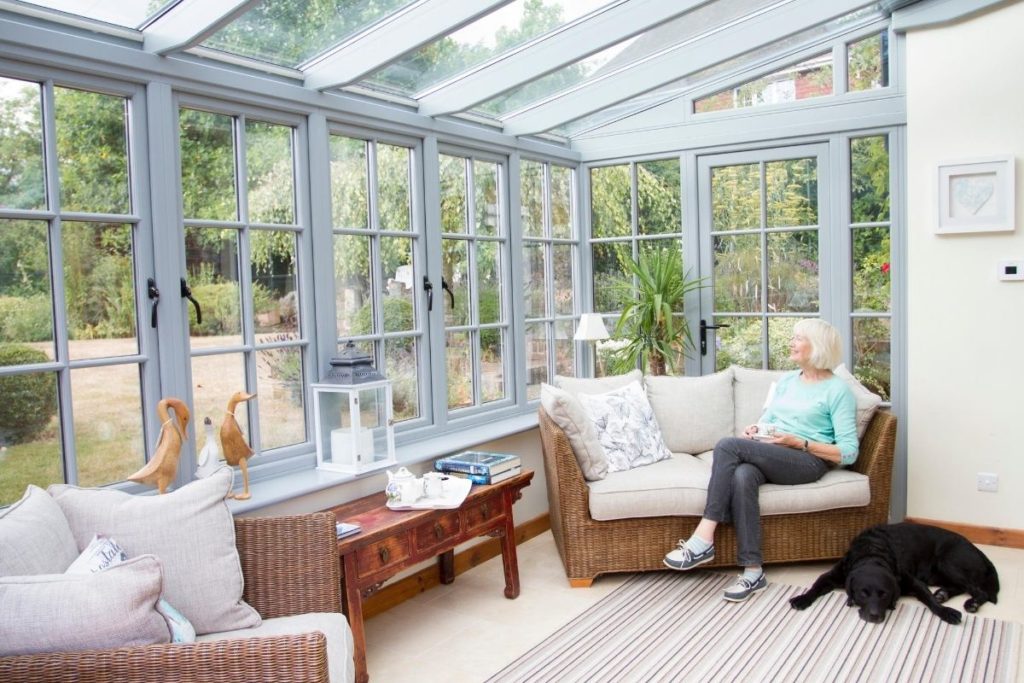
A versatile space for relaxing, reading, or enjoying your garden regardless of weather. Perfect for plant enthusiasts, bird watchers, or simply as a peaceful retreat with garden views.

  • Year-round garden enjoyment
  • Ideal for houseplants needing light
  • Flexible multi-purpose space
  • Enhances connection to nature

Best for: Garden lovers, retirees, meditation/yoga practitioners.

Consider: Heating for winter, shading for summer, moisture-resistant materials.

4 Dining Room

Create a spectacular dedicated dining space for family meals and entertaining. The lantern roof provides atmospheric evening light, while garden views enhance every dining experience.

  • Formal entertaining space
  • Atmospheric evening lighting
  • Connection to garden for al fresco dining
  • Distinct from kitchen prep areas

Best for: Entertainers, families with older children, dinner party hosts.

Consider: Table size/shape, serving access from kitchen, lighting flexibility.

5 Living Room or Family Room

Extend your main living space with a light-filled addition perfect for relaxing, television viewing, or family gatherings. The orangery’s thermal performance ensures comfort year-round.

  • Additional living space
  • Perfect TV/games room with natural light
  • Separate from kitchen noise
  • Ideal for multi-generational living

Best for: Growing families, multi-generational households, film/TV enthusiasts.

Consider: TV positioning relative to light, comfortable seating layout, acoustic considerations.

6 Children’s Playroom

Provide a dedicated, safe play area with natural light and garden views. Keeps toys and mess contained while allowing supervision from main living areas. Perfect for creative play and activities.

  • Contains toys and mess
  • Safe, visible from house
  • Natural light for activities
  • Easy garden access for play

Best for: Families with young children, homeschooling spaces.

Consider: Durable/washable surfaces, safety glazing, storage solutions, heating.

7 Hobby or Craft Room

Dedicated space for arts, crafts, music, or other hobbies requiring good light and separation from main living areas. The orangery provides perfect conditions for detailed work and creative pursuits.

  • Excellent natural light for detailed work
  • Contains hobby materials/mess
  • Inspirational garden views
  • Separate from household activities

Best for: Artists, crafters, musicians, model makers, sewing enthusiasts.

Consider: Workbench space, storage for materials, task lighting, ventilation.

8 Guest Suite or Annexe

Create self-contained accommodation for guests or family members. Can include sleeping area, seating, and ensuite facilities. Provides privacy while keeping guests close.

  • Privacy for guests/family
  • Potential rental income
  • Multi-generational living solution
  • Increases property flexibility

Best for: Frequent hosts, multi-generational families, potential rental income.

Consider: Plumbing for bathroom, separate access, heating controls, sound insulation.

9 Home Gym or Wellness Space

Dedicated fitness area with natural light and garden views makes exercise more enjoyable. Suitable for yoga, pilates, gym equipment, or spa facilities. Ventilation and temperature control are key.

  • Natural light boosts workout motivation
  • Separate from living areas
  • Can include shower/changing
  • Year-round exercise space

Best for: Fitness enthusiasts, yoga practitioners, health-conscious households.

Consider: Flooring for equipment, ventilation, mirror placement, storage.

10 Swimming Pool Enclosure

Extend swimming season by enclosing an existing pool or building a new indoor pool within an orangery structure. Provides natural light while controlling temperature and humidity.

  • Extends swimming season
  • Natural light without overheating
  • Architectural feature
  • Can include lounging area

Best for: Properties with pools, luxury installations, year-round swimming.

Consider: Humidity control, non-slip flooring, pool equipment housing, ventilation.

Orangery Costs, Planning & Building Regulations

Understanding the practical aspects of orangery construction is essential for successful planning.

Cost Breakdown for Orangery Extensions

Orangery Size Typical Cost Range What’s Included
Small (15-20m²) £25,000 – £40,000 Basic construction, standard glazing, basic finishes
Medium (20-30m²) £40,000 – £70,000 Better specifications, higher quality glazing, improved finishes
Large (30m²+) £70,000 – £100,000+ High specifications, luxury finishes, bespoke elements
Kitchen Orangery £50,000 – £100,000+ Includes kitchen units, appliances, plumbing, electrical
Luxury/Bespoke £100,000 – £200,000+ Highest specifications, complex designs, premium materials

Additional cost factors: Location (London/South East typically 15-20% higher), site access challenges, ground conditions, planning requirements (conservation areas etc.), interior finishes, heating systems, electrical/lighting specifications, and any specialist features like underfloor heating or smart home integration.

Planning Permission for Orangeries

Most orangery extensions in England fall under Permitted Development rights, meaning planning permission isn’t required if specific criteria are met:

Permitted Development Criteria for Orangeries

  • Size limits: Single-storey rear extensions only. Maximum depth: 8m for detached houses, 6m for semi-detached/terraced (4m if in Article 2(3) designated land)
  • Height limits: Maximum height 4m (or 3m if within 2m of property boundary)
  • Garden coverage: Cannot cover more than 50% of garden area (including other extensions)
  • Position: Cannot extend forward of principal elevation facing highway
  • Materials: Should be similar in appearance to existing house

When planning permission IS required: Listed buildings, properties in conservation areas, Article 4 direction areas (where Permitted Development rights have been removed), properties with previous extensions using up allowance, forward-facing extensions, or exceeding size limits.

Building Regulations Compliance

Unlike conservatories, orangery extensions have no Building Regulations exemptions and must comply fully with all relevant parts:

Building Regulation Part Requirements for Orangeries
Part L (Conservation of Fuel and Power) Thermal efficiency standards: Walls ≤0.18 W/m²K, Roof ≤0.13 W/m²K, Glazing ≤1.4 W/m²K, Air permeability ≤5.0 m³/h.m²
Part A (Structure) Structural stability, foundation design, roof strength calculations
Part B (Fire Safety) Means of escape, fire separation if not open plan to house
Part F (Ventilation) Adequate ventilation rates, background and rapid ventilation provision
Part P (Electrical Safety) Electrical installation certification, safe design and installation

Regional Considerations: England

Orangery requirements and considerations can vary across England, but generally, the same principles apply. However, there are some regional factors to consider:

England Homeowners

In England, most orangery extensions fall under Permitted Development rights, provided they meet the criteria. However, planning permission may be required in designated areas such as Conservation Areas, Areas of Outstanding Natural Beauty, or for listed buildings. It’s always advisable to check with your local planning authority.

Local Building Control Experience

At Room Outside, we’ve worked with Building Control departments across England. We understand local variations in interpretation and requirements, ensuring smooth approval processes for clients throughout the country. Our experience includes complex projects in conservation areas and listed buildings.

Design Considerations for Your Orangery

Successful orangery design balances aesthetics, functionality, and practical considerations:

1

Orientation and Light

Consider sun path throughout the day. South-facing orangeries get more sun (need shading solutions), north-facing get consistent indirect light (better for art/hobby rooms). East-facing get morning sun, west-facing get afternoon/evening sun.

2

Connection to House and Garden

How will the orangery connect to existing rooms? Consider door positions, level changes, and visual connections. How will it connect to the garden? French doors, bi-folds, or sliding doors each offer different benefits.

3

Roof Lantern Design

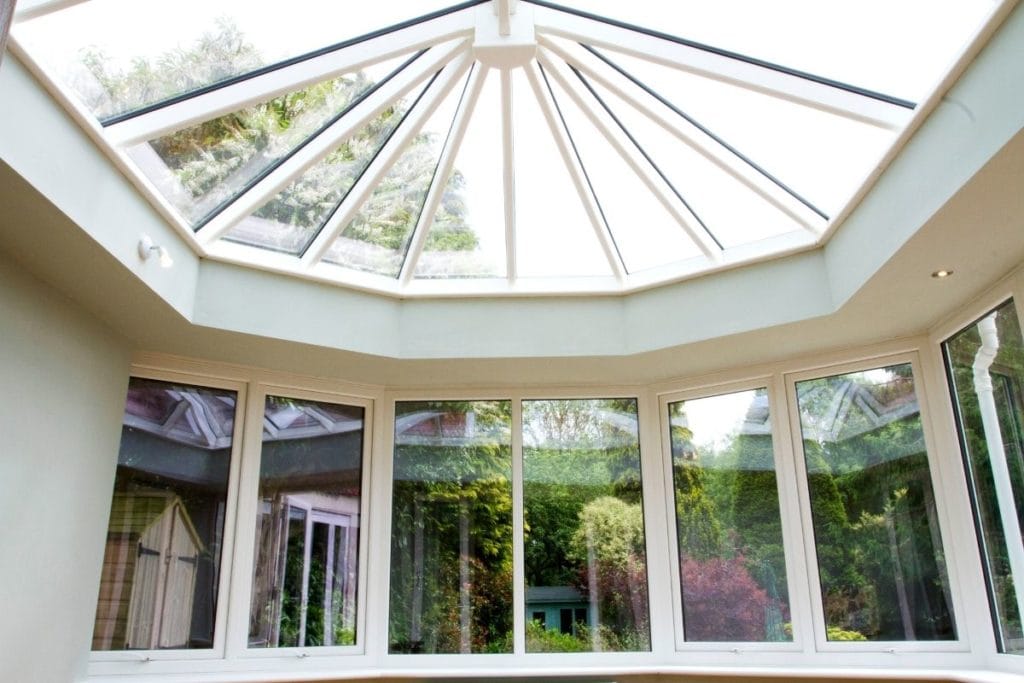
Lantern size, shape, and position significantly affect light quality. Larger lanterns = more light but potentially more heat gain/loss. Consider opening sections for ventilation. Lantern design should complement overall architecture.

4

Materials and Finishes

Brick/stone should match or complement existing property. Consider window/door materials (timber, aluminum, uPVC each have different aesthetics and maintenance requirements). Internal finishes should suit intended use.

5

Services and Systems

Heating (underfloor works well), lighting (consider dimmable options for evening atmosphere), electrical outlets (position for intended furniture layout), internet connectivity, audio-visual provisions, shading/curtains.

Common Questions and Misconceptions

Myth: “Orangeries are only for period properties”

Fact: While traditionally associated with Georgian and Victorian architecture, modern orangery designs work beautifully with contemporary properties. Clean lines, minimalist detailing, and modern materials can create stunning contemporary orangeries that complement any architectural style.

Myth: “Orangeries are cold in winter and hot in summer”

Fact: Modern construction techniques and high-performance glazing mean well-designed orangeries maintain comfortable temperatures year-round. With proper insulation, efficient heating, and solar control glass, temperature variations are minimal compared to main house.

Myth: “Orangeries are more expensive than traditional extensions”

Fact: Cost per m² is often comparable to or slightly less than traditional extensions. While glazing elements cost more than solid walls, the reduced wall area (compared to fully glazed conservatories) and simpler roof structure can balance costs. Each project differs based on specification.

Room Outside

Orangery Extension Specialists | Established 1973 | 50+ Years Experience

Room Outside has been designing and building orangery extensions across England since 1973. Our expertise includes period property renovations, conservation area projects, and contemporary orangery designs. We handle everything from initial concept through planning and Building Regulations approval to final construction. With hundreds of completed orangery projects, we understand what works aesthetically and practically for homes throughout England. Contact us on 01243 538999 for expert advice on your orangery project.

Areas We Cover Across England

Kent Surrey East Sussex West Sussex Hampshire Greater London Berkshire Essex Dorset England

We offer free, no-obligation consultations throughout England, with particular expertise in the South East including Kent, Surrey, Sussex, Hampshire, London, and surrounding counties. Whether you’re in early planning stages or ready to proceed, our team at Room Outside can provide expert guidance on orangery design, costs, planning, and construction.

Sources, References, and Further Reading

Official Government Sources: UK Planning Portal – Permitted Development rights for householders; HM Government Approved Documents (Building Regulations); Local planning authority guidelines across England.

Industry Data: Royal Institution of Chartered Surveyors (RICS) – Home extension value research; Federation of Master Builders (FMB) – Extension cost data; Glass and Glazing Federation (GGF) – Thermal performance standards.

Technical Standards: BS 8213-4:2016 – Windows and doors – Part 4: Practical guidance on installation; BS 5250:2021 – Management of moisture in buildings; BS EN 14351-1:2006+A2:2016 – Windows and doors.

Industry Experience: Room Outside – 50+ years of orangery design and construction experience across England; proprietary data from completed projects; client satisfaction surveys and case studies.

About This Guide

This comprehensive guide was created by Room Outside, specialists in orangery extensions since 1973. With over 50 years of experience and hundreds of completed projects across England, we have extensive practical knowledge of orangery design, planning requirements, Building Regulations compliance, and construction best practices.

Our team includes qualified designers, experienced project managers, and skilled craftsmen who work together to create beautiful, functional orangery extensions that enhance homes and lifestyles. This guide reflects current best practices, regulatory requirements, and market trends as of January 2026.

Last updated: January 2026 | Reviewed for accuracy: Planning and Building Regulations verified against current legislation

Frequently Asked Questions About Orangery Extensions

What are the best uses for an orangery extension?

The 10 best uses for an orangery extension are: 1) Kitchen-diner extension, 2) Home office or study, 3) Garden room or sunroom, 4) Dining room, 5) Living room or family room, 6) Children’s playroom, 7) Hobby or craft room, 8) Guest suite or annexe, 9) Home gym or wellness space, and 10) Swimming pool enclosure. Each offers different benefits depending on your needs, property layout, and lifestyle requirements.

How much does an orangery extension cost in the UK?

Orangery extension costs in the UK typically range from £25,000 to £100,000+ depending on size, specification, and location. Basic small orangeries (15-20m²) cost £25,000-£40,000. Medium-sized orangeries (20-30m²) cost £40,000-£70,000. Large luxury orangeries (30m²+) cost £70,000-£100,000+. Costs include design, Building Regulations approval, construction, and basic finishes. Additional factors include glazing specification, heating requirements, interior finishes, and site access.

What is the difference between an orangery and a conservatory?

The main differences are: 1) Construction: Orangeries have substantial brick or stone walls (typically 50-75% solid walls), while conservatories are predominantly glass (75%+ glazed). 2) Roof: Orangeries have a flat roof with central glass lantern, conservatories have pitched glass roofs. 3) Thermal performance: Orangeries maintain more consistent temperatures year-round. 4) Planning: Orangeries often blend better with period properties. 5) Use: Orangeries work better as year-round living spaces.

Do you need planning permission for an orangery in the UK?

Most orangery extensions fall under Permitted Development rights and don’t require planning permission, provided they meet criteria: maximum height 4m (3m if within 2m of boundary), no more than 50% of garden covered, not forward of principal elevation, materials similar to house. However, planning permission is required for listed buildings, conservation areas, or where Permitted Development rights have been removed. Always check with local planning authority.

What building regulations apply to orangery extensions?

Orangeries must comply with Building Regulations including: Part L (thermal efficiency – U-values: walls ≤0.18 W/m²K, roof ≤0.13 W/m²K, glazing ≤1.4 W/m²K), Part A (structure), Part B (fire safety), Part F (ventilation), and Part P (electrical). Unlike conservatories, orangeries don’t have exemptions and must meet same standards as traditional extensions. Building Control approval is required before construction begins.

How long does it take to build an orangery extension?

A typical orangery takes 12-20 weeks from planning to completion. Timeline breakdown: Design & planning (2-4 weeks), Building Regulations approval (2-4 weeks), Manufacturing (4-6 weeks), Groundworks & foundations (2-3 weeks), Construction (4-6 weeks), Finishing & snagging (2-3 weeks). Factors affecting timeline include planning requirements, size, complexity, weather, and material availability. Professional installers provide detailed schedules.

Do orangeries add value to a property?

Yes, well-designed orangery extensions typically add 5-15% to property value, often recovering 75-100% of investment. The best value-adding uses are kitchen-diner extensions and open-plan living spaces. Factors affecting value added include: quality of construction, integration with existing property, thermal performance, natural light, and how well it meets local market demands. Estate agents report kitchen-diner orangeries often add significant value.

Are orangeries warm in winter and cool in summer?

Modern orangeries with proper specification are comfortable year-round. Key elements for thermal comfort include: high-performance glazing (U-values ≤1.0 W/m²K), insulated walls and roof, adequate heating (underfloor heating works well), proper ventilation (including opening roof lanterns), and solar control glass or blinds. With these features, orangeries maintain temperatures within 2-3°C of main house in winter and remain comfortable in summer without excessive heat gain.

What size orangery can I build without planning permission?

Under Permitted Development rights in England, you can build an orangery up to: 8m deep for detached houses, 6m deep for semi-detached/terraced houses (4m if in Article 2(3) land), maximum height 4m (or 3m if within 2m of boundary), not exceeding 50% of garden area, not forward of principal elevation. Single-storey rear extensions only. These limits apply provided your property still has Permitted Development rights.

What are the advantages of an orangery over a traditional extension?

Orangery advantages include: 1) More natural light than traditional extensions, 2) Unique architectural character blending indoor/outdoor living, 3) Often faster construction than brick extensions, 4) Can be more cost-effective per m², 5) Excellent thermal performance with modern glazing, 6) Creates distinctive ‘wow factor’ space, 7) Works particularly well with period properties, 8) Flexible for various uses from kitchens to garden rooms.

Can I build an orangery on a sloping garden?

Yes, orangeries can be built on sloping sites, though costs may be higher due to required groundworks and potentially more complex foundations. Solutions include stepped foundations, retaining walls, or creating a level platform. Proper drainage is crucial on slopes. A site survey by professionals like Room Outside will identify the best approach for your specific site conditions.

What maintenance does an orangery require?

Maintenance requirements depend on materials used. Typical maintenance includes: cleaning glazing (inside and out), clearing roof lantern gutters/drainage, checking and cleaning seals, maintaining any moving parts (opening roof vents, doors), and periodic repainting of timber elements if used. Modern aluminum frames require minimal maintenance. Quality installations should come with maintenance guidance specific to the materials used.

Talk to an orangery specialist: 01243 538999 – Our team at Room Outside will discuss your requirements and arrange a free consultation at your property.

Transform Your Home with an Orangery Extension

Ready to explore how an orangery could enhance your home? Our experienced team at Room Outside can help you design the perfect space for your needs, whether it’s a kitchen-diner, home office, garden room, or any of the other brilliant uses we’ve explored. Book a free consultation to discuss your project.

01243 538999 Call us anytime – David our digital assistant will take a few details so the right specialist can follow up personally.
roomoutsideuk
22nd January, 2026

London Luxury Glass Extensions: Urban Space Solutions for Premium Properties

UK Luxury Glass Extensions: Premium Space Solutions for UK Properties | Room Outside

UK Luxury Glass Extensions: Premium Space Solutions for UK Properties

Bespoke architectural glass rooms, orangeries, and conservatories designed for discerning UK homeowners. Transform your property with light-filled living spaces.

Quick Answer: What Does a Luxury Glass Extension Cost in the UK?

Luxury glass extensions in the UK typically range from £45,000 to £150,000+ depending on size, specification, and complexity. A premium orangery averages £55,000-£85,000, architectural glass rooms start from £65,000, and bespoke designs with high-end finishes can exceed £100,000. Projects in premium urban locations typically cost 15-25% more than rural areas due to access challenges, conservation requirements, and the premium finishing standards expected in prestigious locations.

£45K+
Starting price for luxury extensions
16-28
Weeks from design to completion
5-10%
Added property value
1000+
UK projects completed
The UK’s premium property market demands exceptional quality. For discerning homeowners across England, Scotland, Wales, and Northern Ireland, a luxury glass extension offers the perfect solution to create light-filled living areas that seamlessly connect indoor and outdoor spaces without compromising on architectural integrity or craftsmanship. With over 1,000 projects completed nationwide, we understand the unique requirements of UK properties: navigating conservation areas, maximising available space, and delivering the refined finishing that premium addresses demand. This comprehensive guide explores everything you need to know about creating a truly exceptional glass extension for your UK home.

Why UK Properties Demand Specialist Glass Extension Expertise

Building a glass extension in the UK requires specialist knowledge that varies significantly across regions. The UK presents diverse challenges that require specialist knowledge, established relationships with planning authorities nationwide, and experience working within the constraints of different property types.

Unlike standard extensions where one approach fits all, premium glass extensions must navigate a complex landscape of conservation areas, listed building considerations, party wall agreements, and varying local planning requirements. Approximately 25% of historic UK properties fall within conservation areas or have listed status, with different regions having specific designations that significantly impact what can be built and how it must appear.

Beyond planning considerations, UK clients typically expect a higher specification than standard domestic construction. Premium properties warrant premium materials, exceptional craftsmanship, and design solutions that enhance rather than compromise the architectural character of the existing building. This is where specialist luxury UK conservatory and glass extension designers prove their worth.

🏛️

Conservation & Listed Building Expertise

Navigating the complex requirements of UK conservation areas and listed buildings requires established relationships with planning officers and a portfolio demonstrating sympathetic design across all UK regions.

📐

UK-Wide Site Specialists

From compact city plots to expansive country estates, our designers maximise every inch through intelligent space planning, frameless structural glass, and bi-fold systems that merge indoor and outdoor areas throughout the UK.

Premium Specification Nationwide

The UK’s finest properties deserve exceptional quality. We specify only the highest-grade materials: triple-glazed acoustic glass, thermally-broken aluminium frames, natural stone flooring, and bespoke joinery that meets the expectations of discerning clients across the country.

🤝

National Project Management

We understand that privacy and discretion matter nationwide. Our project managers coordinate deliveries, manage tradespeople, and ensure minimal disruption to your household and neighbours throughout the construction process, wherever you’re located.

Types of Luxury Glass Extensions for UK Homes

The right glass extension type depends on your property’s architecture, your available space, how you intend to use the new room, and the planning context. Here are the primary options we design and install for UK clients.

Premium Orangery

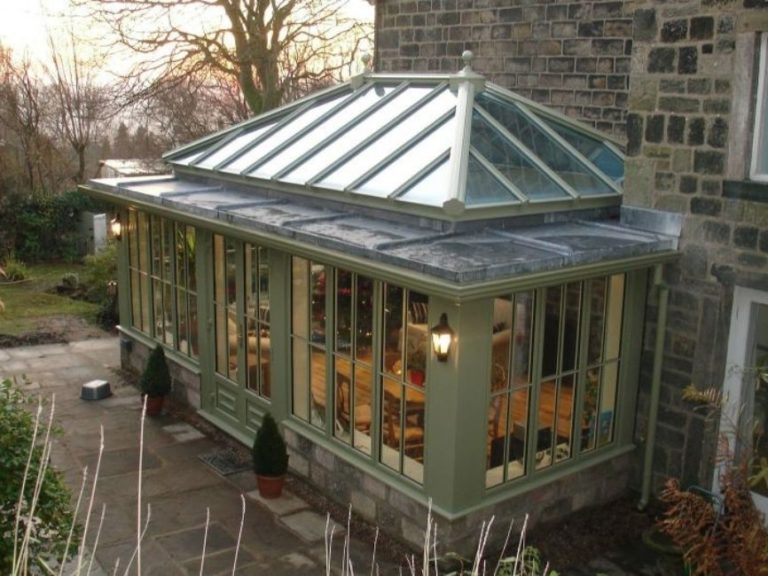
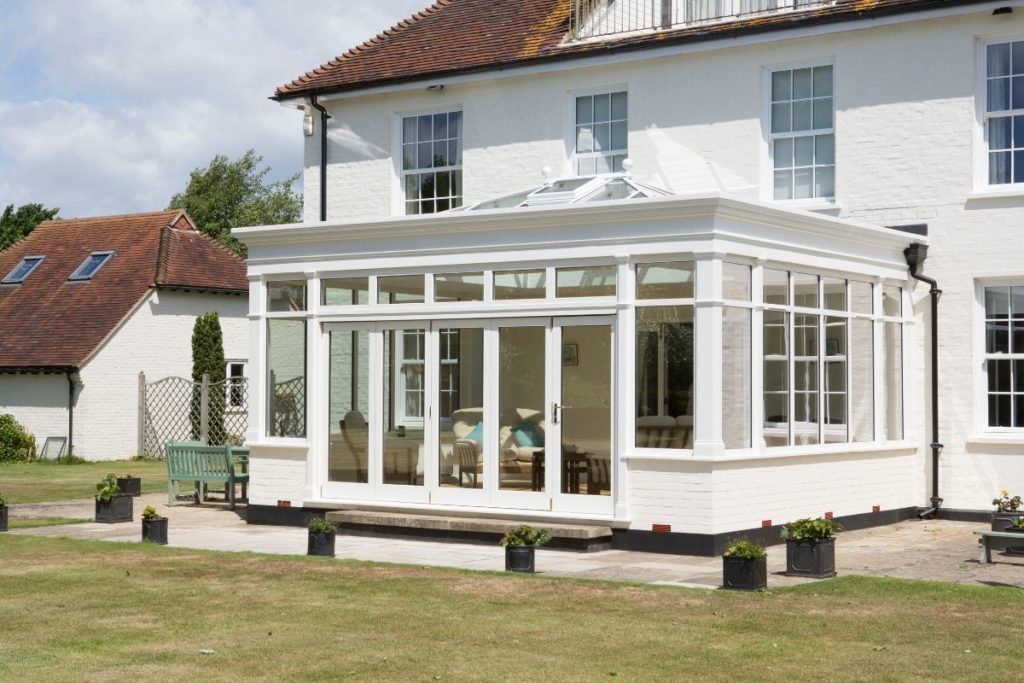
The classic choice for period properties across the UK. Featuring solid brick or rendered corner pillars, a flat plastered perimeter ceiling, and central glazed lantern roof, orangeries provide substantial, room-like spaces that complement Georgian, Victorian, and Edwardian architecture nationwide. The solid elements create a sense of permanence while the lantern floods the space with natural light. Orangeries work particularly well as formal dining rooms, garden rooms, or elegant home offices.

From £55,000

Architectural Glass Room

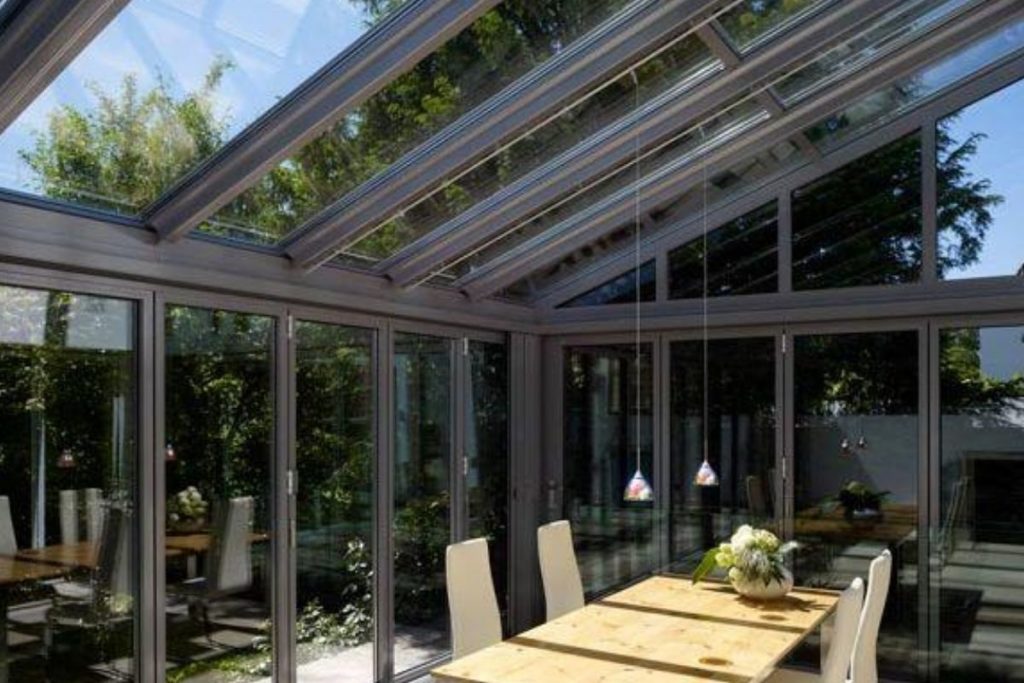
For contemporary properties or dramatic contrast on traditional buildings across the UK. Minimally-framed structural glass walls and roofs maximise light and views while making bold architectural statements. Frameless glass corners, flush floor thresholds, and near-invisible fixings create the ultimate indoor-outdoor connection. Perfect for modern UK properties and clients who appreciate cutting-edge design.

From £65,000

Kitchen-Diner Extension

The UK’s most requested configuration. Open-plan kitchen-dining-living spaces with full-width bi-fold or sliding doors transform how families use their homes, creating the sociable heart that modern living demands. These extensions typically incorporate kitchen islands, integrated appliances, and carefully planned lighting to create spaces that work for everyday family life and sophisticated entertaining.

From £60,000

Lean-To Glass Extension

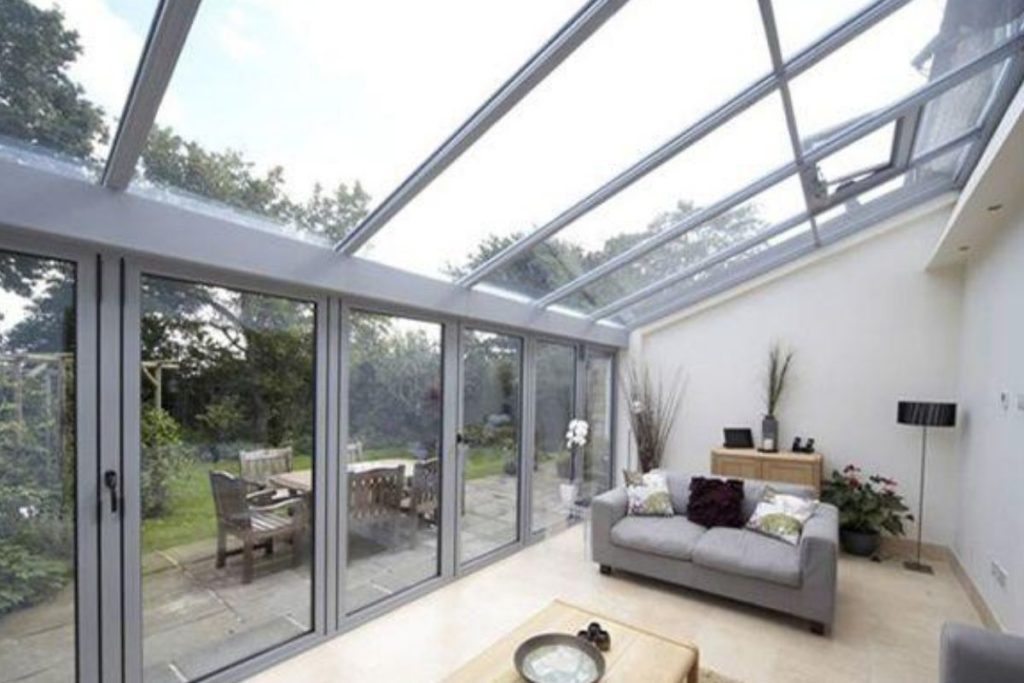
Ideal for terraced and semi-detached properties with limited rear projection allowance across UK towns and cities. A sleek, single-pitch roof maximises internal height at the house wall while respecting boundary constraints common in Victorian and Edwardian streets. Despite their apparent simplicity, lean-to extensions can be stunningly elegant when executed with premium materials and thoughtful detailing.

From £45,000

Choosing the Right Style for Your Property

The best glass extension type depends on several factors specific to your situation. Making the right choice ensures your extension enhances your property’s value and complements its architectural character.

Period Properties (Georgian, Victorian, Edwardian): Orangeries and traditional conservatory styles typically work best, particularly in conservation areas where planning officers expect designs sympathetic to the original architecture. The solid corner pillars and lantern roof of an orangery echo the proportions and materiality of period construction, creating extensions that feel like natural additions rather than afterthoughts. However, a clearly contemporary glass box can also succeed if it reads as a distinct, modern intervention rather than a pastiche of historical styles. Conservation officers often prefer honest contemporary design over poorly executed period imitation.

Modern and Contemporary Homes: Structural glass rooms with minimal framing complement modern architecture beautifully. Floor-to-ceiling glazing, frameless corners, and flush thresholds create the seamless connection between inside and outside that contemporary design celebrates. For these properties, the extension should continue the architectural language of the existing building—clean lines, precise detailing, and a focus on light and space.

Terraced Houses: Party wall and boundary constraints often make lean-to designs the practical choice for the UK’s terraced properties. The single-pitch roof respects the limited space while maximising internal height where it matters most. However, even within these limitations, exceptional design can create stunning results through clever use of rooflights, frameless glazing, and premium materials. Many of our most dramatic transformations have been achieved within the tight constraints of Victorian terraced houses.

Semi-Detached Properties: Semi-detached homes offer more flexibility than terraces while still requiring careful consideration of the party wall and neighbouring property. Wider spans become possible, and wrap-around designs that extend along the side return can significantly increase usable space. These properties often suit orangery designs that provide substantial additional living area.

Detached Houses & Country Homes: With fewer constraints, detached properties and country homes offer the greatest design freedom. Larger spans, more adventurous roof designs, and generous proportions become achievable. However, this freedom requires disciplined design thinking—without constraints forcing creative solutions, there’s a risk of extensions that feel disconnected from the main house. The best detached property extensions maintain a clear architectural relationship with the existing building.

Design Consultation

Not sure which style suits your property? Our design consultations assess your home’s architecture, planning context, and your requirements to recommend the optimal approach. We’ll show you examples from our project gallery of similar UK projects and explain what’s achievable within your budget. We’ll also discuss how different design approaches might affect planning prospects, particularly important in conservation areas or for listed buildings. Consultations are free and carry no obligation.

Planning Permission and Conservation Areas in the UK

Understanding the UK’s planning landscape is essential before embarking on any glass extension project. The UK’s complex mix of conservation areas, Article 4 Directions, listed buildings, and varying local planning requirements means that assumptions valid in one area may not apply elsewhere. What works in a city centre may be completely inappropriate—or simply not permitted—in a rural conservation area.

The good news is that with proper understanding and expert guidance, most properties can accommodate a glass extension of some description. The key is working with specialists who understand what’s achievable and can design schemes that satisfy both your aspirations and planning requirements.

Permitted Development in the UK

Many glass extensions can be built under Permitted Development (PD) rights without requiring planning permission. However, the UK has significant exceptions that catch many homeowners unaware. Understanding these rules from the outset prevents wasted time and disappointment later in the process.

PD rights allow single-storey rear extensions up to 3 metres for attached houses and 4 metres for detached properties (or 6m/8m under prior approval notification). The extension must not exceed 4 metres in height, cover more than half the garden, or use materials that differ significantly from the existing house. Additionally, the extension cannot extend beyond the side elevation of the original house or be forward of the principal elevation.

Crucially, Permitted Development rights are restricted or removed entirely for:

  • Properties in Conservation Areas (across all UK regions)
  • Listed buildings of any grade (requiring Listed Building Consent for any alteration)
  • Areas subject to Article 4 Directions (common in historic areas nationwide)
  • Properties that have already used their PD allowance through previous extensions
  • Flats and maisonettes (which have no PD rights for extensions whatsoever)
  • Properties in Areas of Outstanding Natural Beauty or National Parks
  • Properties in World Heritage Sites
  • Properties subject to planning conditions removing PD rights

Conservation Areas and Article 4 Directions

Conservation areas impose additional restrictions on what can be built, even where Permitted Development rights nominally apply. In these locations, extensions that would normally fall within PD often require planning permission due to restrictions on materials, design, and visibility from public areas. Furthermore, many historic UK areas have Article 4 Directions that remove PD rights entirely—meaning all external alterations require planning consent.

Historic towns, villages, and city centres across England, Scotland, Wales, and Northern Ireland often have extensive Article 4 coverage. If you live in these areas, assume you will need planning permission and factor this into your timeline. The planning process typically adds 8-12 weeks to the overall project duration.

However, requiring planning permission isn’t necessarily problematic. In fact, for ambitious designs that push beyond PD limits, the planning process provides an opportunity to achieve more than would otherwise be possible. A well-designed scheme that gains planning approval can often exceed PD limits in terms of size, height, or proximity to boundaries.

Listed Building Considerations

Adding a glass extension to a listed building requires Listed Building Consent in addition to any planning permission. This separate consent process specifically considers the impact on the building’s special architectural or historic interest. Designs must demonstrate that they preserve or enhance the building’s character while being clearly identifiable as modern additions.

Paradoxically, contemporary glass extensions often succeed where traditional designs fail when it comes to listed buildings. Conservation officers typically prefer a clearly modern intervention that can be easily distinguished from the historic fabric over a pastiche that confuses the building’s history. A glass extension that is obviously of its time makes an honest statement about the building’s evolution, whereas a fake Georgian orangery might suggest the historic building has been compromised or its authenticity diluted.

Key principles for listed building extensions include:

  • Reversibility: The extension should theoretically be removable without damaging the historic fabric
  • Subservience: The extension should defer to the original building, not compete with it
  • Distinction: It should be clearly contemporary, not a pastiche of historical styles
  • Quality: Materials and craftsmanship must be exemplary, befitting the listed building’s status
  • Minimal intervention: Connections to the historic building should be as light-touch as possible

Our experience with conservation officers across the UK means we understand what will be accepted in different regions. We’ve successfully delivered glass extensions on Grade II, Grade II*, and even Grade I listed buildings across all parts of the UK, always working collaboratively with heritage officers to achieve designs that satisfy both our clients and planning requirements.

Our Planning Support

We handle all planning applications on your behalf, including pre-application discussions with planning officers, preparation of design and access statements, heritage impact assessments for listed buildings, and responses to any officer queries. Our 85%+ first-time approval rate for UK applications reflects our understanding of what each local authority expects to see. Where applications require amendment, we work constructively with officers to achieve approval without compromising design quality.

Premium Materials and Specifications for UK Projects

Luxury glass extensions demand exceptional materials. The specification choices you make affect not only aesthetics but also thermal performance, acoustic comfort, security, and long-term durability. In the UK’s competitive property market, these details matter—both for your daily enjoyment and for future resale value.

We’ve learned through decades of experience that cutting corners on materials always proves false economy. Premium specifications may cost more initially, but they deliver better performance, require less maintenance, and last significantly longer than budget alternatives. For the UK’s finest properties, nothing less than the best is appropriate.

Glazing Specifications

Triple Glazing

We specify triple-glazed units as standard on premium UK projects. With U-values of 0.8 W/m²K or better, triple glazing dramatically outperforms double glazing (typically 1.4-1.6 W/m²K), reducing heating costs and improving comfort year-round. The additional pane also provides superior acoustic insulation—essential for properties near busy roads, airports, or in noisy urban environments.

Triple glazing’s benefits extend beyond thermal performance. The additional glass layer provides enhanced security, better condensation resistance, and improved UV protection for interior furnishings. While triple glazing adds approximately 10-15% to glazing costs, the improved comfort and reduced energy bills typically deliver payback within five to seven years.

Acoustic Glass

UK background noise levels vary significantly, making acoustic performance critical for any glass extension designed for comfortable living. Standard double glazing provides only modest sound reduction, often leaving traffic noise, aircraft, and other sounds clearly audible. For properties in noisy locations, this compromises the extension’s usability.

We specify laminated acoustic glass (minimum 6mm-12mm-6mm configuration) for properties requiring enhanced sound insulation. This construction achieves sound reduction of 40dB or more, transforming a potentially noisy extension into a peaceful retreat. For particularly challenging locations, we can specify asymmetric laminated units achieving 45dB+ reduction—comparable to a solid wall.

Solar Control Glass

South and west-facing extensions can overheat without appropriate glazing, particularly during summer months when the sun is high and intense. Overheating transforms what should be a pleasant garden room into an unusable greenhouse, defeating the purpose of the investment.

Solar control glass with selective coatings blocks excessive heat gain while maintaining high light transmission. Modern solar control coatings are virtually invisible, allowing clear views while rejecting up to 70% of solar heat. Combined with proper ventilation design—opening roof vents, full-height doors, and cross-ventilation strategies—this ensures comfort even during summer heatwaves.

Self-Cleaning Glass

The UK’s climate means glass gets dirty from rain, pollution, and general environmental factors. Pollution, bird droppings, dust, and general grime accumulate on glazing, particularly on roof panels that are difficult to access for cleaning. Regular professional cleaning is expensive and disruptive, while DIY cleaning of roof glazing can be dangerous without proper equipment.

Self-cleaning glass with hydrophilic and photocatalytic coatings provides an elegant solution. UV light breaks down organic dirt deposits, while the hydrophilic surface causes rain to sheet off cleanly rather than forming droplets that leave marks. The result is glass that stays cleaner for longer with minimal maintenance—particularly valuable for hard-to-reach roof glazing.

Frame Systems

Thermally-Broken Aluminium: The premium choice for contemporary glass extensions. Slim sightlines (as narrow as 20mm) maximise glass area while thermal breaks within the frame prevent cold bridging that causes condensation and heat loss. Powder-coated finishes in any RAL colour ensure perfect colour matching with existing elements, while the inherent strength of aluminium allows larger spans with slimmer profiles than alternative materials.

Quality aluminium systems feature multi-point locking, concealed drainage, and weather seals rated to resist driving rain at extreme pressures. The best systems carry 25-year guarantees on both the frame and the powder-coated finish, providing genuine peace of mind.

Structural Glazing: For the ultimate minimal aesthetic, structural silicone glazing eliminates visible frames entirely. Glass panels are bonded directly to the supporting structure using high-strength structural silicone, creating frameless corners and uninterrupted views. This technique requires precise engineering and specialist installation but delivers truly spectacular results.

Structural glazing is particularly effective for glass roofs, where the absence of rafters and transoms maximises the sense of openness. The seamless appearance creates extensions that feel like outdoor rooms even when fully enclosed—a powerful effect that transforms how spaces feel and function.

Timber and Timber-Aluminium: For period properties where aluminium feels inappropriate, engineered timber or timber-aluminium composite systems provide traditional aesthetics with modern performance. External aluminium cladding protects the timber from the UK’s weather while maintaining warm, natural internal finishes that complement historic interiors.

These hybrid systems offer the best of both worlds: the visual warmth and architectural authenticity of timber internally, combined with the low-maintenance durability of aluminium externally. They’re particularly appropriate for listed buildings and conservation area projects where material authenticity matters.
Roofing Options

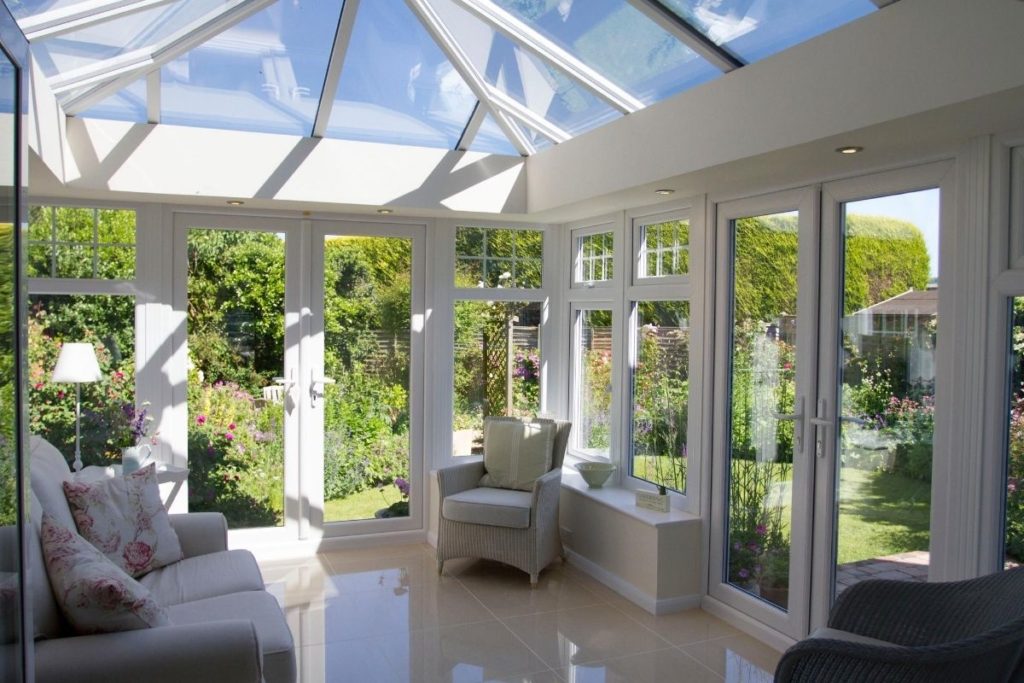
Glass Roofs: Maximise natural light with high-performance glass roofing. We specify solar control and self-cleaning coatings as standard, with electric blinds available for additional shading control when needed. Structural glass roofs can span impressive distances with minimal support, creating dramatic spaces flooded with light.

Modern glass roof technology has transformed what’s possible. Walk-on glass panels allow light to penetrate multiple floors. Electronically switchable glass can change from transparent to opaque at the touch of a button. Integrated LED lighting transforms glass roofs into dramatic illuminated features after dark.

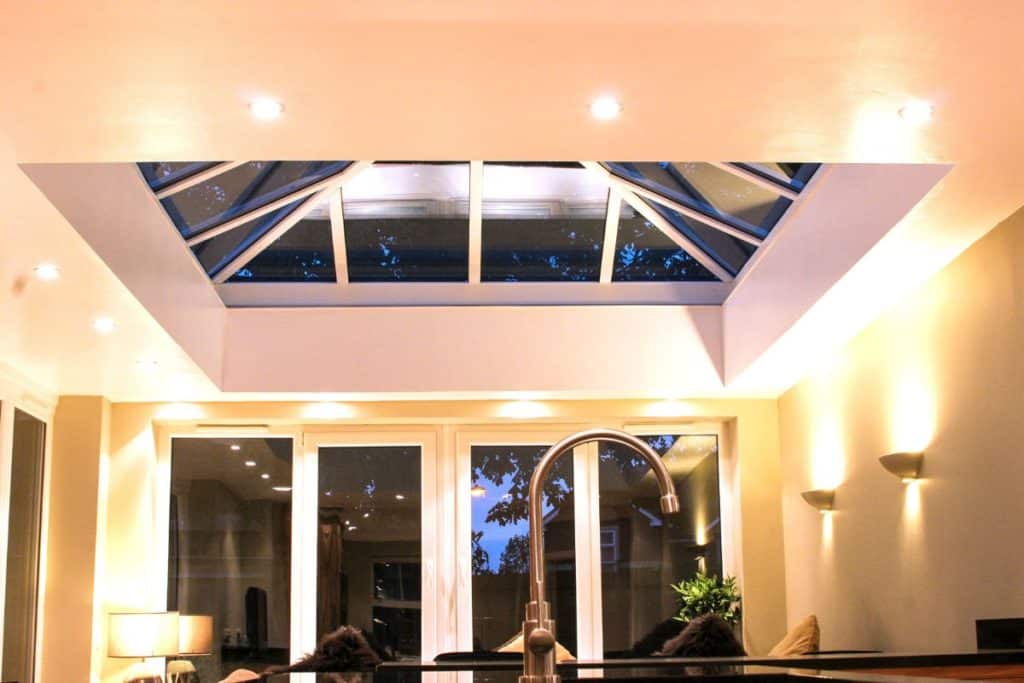
Solid Roofs with Lanterns: The orangery approach—a solid, plastered perimeter ceiling with central glazed lantern—creates a more room-like feel while still introducing abundant natural light. This design also provides concealment for lighting, speakers, climate control equipment, and electrical services.

The solid perimeter ceiling adds thermal mass that helps regulate temperature, keeping the space cooler in summer and warmer in winter than a fully glazed roof. For extensions used as primary living spaces rather than occasional garden rooms, this improved thermal stability significantly enhances year-round comfort.

Hybrid Solutions: Many UK projects combine solid and glazed roofing for optimal results. A solid section over the kitchen area conceals extraction and task lighting while a fully glazed section over the dining space maximises light where it’s most valued. This zoned approach creates distinct areas within open-plan layouts while optimising each zone’s performance.

Investment Guide: UK Glass Extension Costs

Luxury glass extensions in the UK represent a significant investment. Understanding the factors that influence pricing helps you budget appropriately and make informed decisions that balance aspiration with financial reality.

It’s worth noting that prices for premium glass extensions have increased significantly over the past five years, driven by rising material costs, skilled labour shortages, and increased demand in the UK market. However, the value they add to properties has also increased, maintaining attractive returns on investment.

Understanding UK Pricing

UK glass extension costs are influenced by numerous factors beyond simple size. The same 25-square-metre extension might cost £60,000 for a straightforward installation on a detached house with good access, or £90,000+ for a complex project on a listed property in a conservation area. Understanding these variables helps set realistic expectations.

Extension Type Typical Size Price Range Key Features
Lean-To Extension 12-18 sqm £45,000 – £70,000 Single pitch roof, bi-fold doors, ideal for terraces
Premium Orangery 18-30 sqm £55,000 – £95,000 Lantern roof, solid perimeter, period-appropriate
Kitchen-Diner Extension 20-35 sqm £60,000 – £110,000 Open plan, full-width glazing, integrated kitchen
Architectural Glass Room 20-40 sqm £65,000 – £150,000+ Minimal framing, structural glass, contemporary design
Bespoke Commission Variable £100,000+ Unique architectural design, premium everything
Lean-To Extension
Typical Size 12-18 sqm
Price Range £45,000 – £70,000
Key Features Single pitch roof, bi-fold doors, ideal for terraces
Premium Orangery
Typical Size 18-30 sqm
Price Range £55,000 – £95,000
Key Features Lantern roof, solid perimeter, period-appropriate
Architectural Glass Room
Typical Size 20-40 sqm
Price Range £65,000 – £150,000+
Key Features Minimal framing, structural glass, contemporary design

Factors Affecting UK Pricing

Several factors specific to different UK locations influence project costs, often significantly. Being aware of these from the outset prevents budget surprises and enables informed decisions.

Site Access: Narrow passages, lack of parking, and restricted delivery windows common in UK towns and cities add logistical complexity that directly affects costs. Materials may need to be hand-carried through properties or craned over buildings rather than delivered directly to site. Skip placement, scaffold erection, and plant access all become more complicated in various UK settings. For particularly challenging sites, logistics costs can add 10-20% to overall project budgets.

Conservation and Listed Building Requirements: Projects requiring planning permission, Listed Building Consent, or heritage impact assessments involve additional professional fees. More significantly, the design requirements to satisfy conservation officers often necessitate more expensive materials and construction methods. Handmade bricks, lime mortar, traditional joinery details, and heritage-appropriate finishes all cost more than standard alternatives.

Party Wall Agreements: Most UK extensions require party wall agreements with neighbours under the Party Wall etc. Act 1996. While the process is straightforward when neighbours are cooperative, disputes can add significant costs and delays. Surveyors’ fees, schedule of condition reports, and potential award payments to affected neighbours typically add £1,500-£5,000 to project costs, though difficult cases can cost considerably more.

Groundwork Complications: The UK’s geology varies considerably across regions, with areas of clay, chalk, gravel, sand, and made ground presenting different challenges. Poor ground conditions may require piled foundations rather than simple strip footings, potentially adding £10,000-£25,000 to foundation costs. Services diversions, drainage connections, and water authority agreements add further complexity.

Specification Expectations: UK clients typically expect higher specifications than standard domestic construction—better glazing, premium frames, superior finishes throughout. These expectations are entirely appropriate for premium properties but do affect pricing. A glass extension that would satisfy basic requirements may fall short of expectations in prestigious locations.

Working Restrictions: Many UK locations impose strict working hour restrictions, limiting noisy work to specific times. Some buildings, particularly in residential areas, have additional restrictions. These limitations extend project timelines and reduce productivity, both of which affect costs.

Return on Investment

A well-designed glass extension typically adds 5-10% to UK property values—potentially £50,000-£150,000+ on premium properties. Estate agents consistently report that seamless indoor-outdoor living spaces rank among buyers’ most desired features, often proving decisive in competitive sales situations. The key is quality: exceptional design and craftsmanship add value; poor execution can actually harm it. We’ve seen poorly designed extensions reduce property values by making houses harder to sell or requiring removal before sale.

Beyond financial return, consider the lifestyle value of your investment. A beautiful glass extension transforms how you live in your home, providing space, light, and garden connection that enhances daily life for years to come. Many clients tell us their extension is the best investment they’ve ever made—not because of its effect on property value, but because of how much joy it brings to family life.

The UK Glass Extension Process

From initial enquiry to final handover, our process is designed to deliver exceptional results while minimising disruption to your household. Every stage is carefully managed to ensure quality, maintain timeline, and keep you informed throughout. Here’s what to expect when you commission a luxury glass extension for your UK property.

We’ve refined this process over two decades of UK projects, learning what works and continuously improving our approach. The result is a streamlined journey from initial concept to completed extension that delivers outstanding results without unnecessary stress or surprises.

Our Six-Stage Process

1

Design Consultation

Week 1-2

Our senior designer visits your UK property to assess the site, understand your requirements, and explore design possibilities. We’ll discuss your vision, budget parameters, and any planning considerations specific to your location.

  • Site assessment and measurements
  • Architectural style and planning analysis
  • Initial design concepts and budget guidance
  • Explanation of the process and timeline
2

Design Development

Week 2-4

We develop your design through detailed drawings, 3D visualisations, and material specifications. You’ll see exactly how your extension will look and function before any commitment is made.

  • Detailed floor plans and elevations
  • Photorealistic 3D renders
  • Material and finish selections
  • Comprehensive itemised quotation
3

Planning and Approvals

Week 4-16 (if required)

We handle all planning applications, Building Regulations submissions, and party wall matters on your behalf. Our established relationships with UK planning authorities help ensure smooth approvals.

  • Planning application preparation and submission
  • Listed Building Consent (if applicable)
  • Building Regulations application
  • Party wall notices and agreements
4

Manufacturing

Week 12-20

Your bespoke glass extension components are precision-manufactured to our exact specifications. We use only established suppliers with proven quality and conduct factory inspections before delivery.

  • Frame fabrication to precise dimensions
  • Glass units manufactured to specification
  • Quality control inspections
  • Delivery coordination with site works
5

Installation

Week 18-26

Our experienced installation teams bring your design to life. We coordinate all trades, manage deliveries around UK restrictions, and maintain clear communication throughout.

  • Groundworks and foundations
  • Structure and frame installation
  • Glazing and weatherproofing
  • Internal finishes and systems
6

Handover

Week 26-28

Following rigorous quality inspection, we walk you through your completed extension, demonstrate all systems, and hand over comprehensive documentation including warranties and maintenance guidance.

  • Final quality inspection
  • Client walk-through and demonstration
  • Documentation and warranty handover
  • Aftercare support introduction

After Completion: Our Aftercare Commitment

Our relationship with clients doesn’t end at handover. Every Room Outside glass extension comes with comprehensive warranty coverage and ongoing aftercare support.

Our 10-year structural warranty covers the frame, glazing seals, and weatherproofing. Glass units carry manufacturer warranties of 10-15 years against seal failure. All moving parts—doors, windows, ventilation systems—are covered for a minimum of 5 years with options to extend. Should any issue arise, our dedicated aftercare team responds promptly to diagnose and resolve problems.

Beyond warranty support, we offer optional maintenance packages that keep your extension performing optimally for decades. Annual servicing includes inspection and adjustment of all moving parts, cleaning and treatment of seals, lubrication of hardware, and professional cleaning of glass including hard-to-reach roof panels. Many clients find these packages valuable for maintaining their extension in pristine condition.

UK Areas We Serve

Room Outside designs and installs luxury glass extensions across the entire United Kingdom. Our teams have extensive experience in all UK regions, from historic city centres to rural estates, coastal properties to countryside retreats.

Whether you’re in a Georgian townhouse in Bath, a Victorian villa in Edinburgh, a contemporary home in Cardiff, or a country estate in Northern Ireland, we bring relevant experience to your project. Our portfolio includes successful completions in conservation areas, on listed buildings, and in some of the UK’s most architecturally sensitive locations.

England

London, Home Counties, South East, South West, Midlands, North West, North East, Yorkshire

Scotland

Edinburgh, Glasgow, Highlands, Islands, Central Belt, Borders, Aberdeenshire

Wales

Cardiff, Swansea, Newport, North Wales, South Wales, Pembrokeshire, Snowdonia

Northern Ireland

Belfast, Derry, Counties Antrim, Down, Armagh, Fermanagh, Tyrone, Londonderry

South East England

Kent, Surrey, Sussex, Hampshire, Berkshire, Oxfordshire, Buckinghamshire

South West England

Cornwall, Devon, Dorset, Somerset, Wiltshire, Gloucestershire, Bristol

Midlands

West Midlands, East Midlands, Birmingham, Nottingham, Leicester, Coventry

North England

Manchester, Liverpool, Leeds, Sheffield, Newcastle, Yorkshire, Lake District

What Our UK Clients Say

“Our Edinburgh home has been transformed. The glass extension floods our kitchen with light and creates the seamless garden connection we dreamed of. Room Outside understood exactly what we wanted and delivered beyond our expectations.”

JR
James & Rachel M.
Edinburgh, Scotland
★★★★★

“Navigating conservation area planning in Bath seemed daunting, but Room Outside handled everything. Their experience with heritage planning was evident, and our Georgian terrace now has a stunning contemporary orangery that the planners actually praised.”

SC
Sarah C.
Bath, Somerset
★★★★★

“The team managed our Manchester project with impressive discretion and professionalism. Coordinating deliveries in our city centre location, keeping neighbours happy, and delivering exceptional quality—they made it look effortless.”

MP
Michael P.
Manchester, North West
★★★★★

“We interviewed several companies but Room Outside’s UK-wide experience set them apart. They anticipated challenges we hadn’t considered and the finished glass room is the most beautiful space in our Welsh country home. Worth every penny.”

ED
Elizabeth D.
Cardiff, Wales
★★★★★

Sources and References

Planning Portal UK: Permitted Development Rights and Householder Extensions; Historic England/Historic Environment Scotland/Cadw: Listed Building Consent Guidance; Various Local Authorities: Conservation Area Guidelines; Glass and Glazing Federation: Performance Standards; Energy Saving Trust: Glazing Specifications; Room Outside: UK Project Data 2018-2026.

Frequently Asked Questions

How much does a luxury glass extension cost in the UK?

Luxury glass extensions in the UK typically range from £45,000 to £150,000+ depending on size, specification, and complexity. Premium orangeries average £55,000-£85,000, while architectural glass rooms with bespoke features can exceed £100,000. Urban locations may cost 15-25% more than rural areas.

Do I need planning permission for a glass extension in the UK?

Many extensions fall within Permitted Development rights, but 25% of UK historic properties are in conservation areas with additional restrictions. Article 4 Directions in historic areas remove PD rights entirely. We assess your specific situation during consultation.

How long does it take to build a luxury glass extension in the UK?

A luxury glass extension in the UK typically takes 16-28 weeks from design to completion. This includes 3-4 weeks for design, 4-12 weeks for planning (if required), 6-8 weeks for manufacturing, and 4-6 weeks for installation.

What glass specifications are recommended for UK properties?

Premium UK extensions typically feature triple-glazed units with Low-E coatings achieving U-values of 0.8 or better. Acoustic glass is essential for properties near busy roads. Self-cleaning glass reduces maintenance. Solar control glass prevents overheating in south-facing extensions.

Can you build a glass extension on a listed building in the UK?

Yes, glass extensions can be added to listed buildings but require Listed Building Consent. Designs must be sympathetic to historic character while being clearly contemporary. We have experience with listed buildings across all UK regions.

Do glass extensions add value to UK properties?

A well-designed glass extension typically adds 5-10% to UK property values—potentially £50,000-£150,000+ on premium properties. Seamless indoor-outdoor living spaces are among the most sought-after features for UK buyers.

How do you maximise space in a small garden?

Frameless structural glass creates uninterrupted views making spaces feel larger. Bi-fold doors merge indoor and outdoor areas. Roof lanterns draw light deep into the property. A 15-20 sqm extension can transform living space when expertly designed.

Which UK areas do you cover?

We cover the entire UK including England, Scotland, Wales, and Northern Ireland. With over 1,000 projects completed nationwide, we have extensive experience across all regions, from city centre properties to rural estates and coastal homes.

What are the challenges of building glass extensions in the UK?

UK properties present various challenges: conservation area and listed building restrictions affect many historic properties; party wall agreements are needed for most terraced or semi-detached projects; local planning requirements vary; and weather considerations affect installation timing.

How do I get a design consultation?

Contact us to arrange a free design consultation at your UK property. Our senior designer will assess your site, discuss your requirements, and provide initial design concepts and budget guidance. Call 01243 538999 or complete our online form.

Ready to transform your UK home? Call our design team on 01243 538999 for a free consultation

Create Your Perfect UK Living Space

Discover how a bespoke glass extension can transform your UK property. Our expert designers create stunning spaces that maximise light, connect you with your garden, and add significant value to your home.

roomoutsideuk
31st December, 2025

Planning Your 2026 Home Extension | Start in January | Room Outside

Planning Your 2026 Home Extension | Start in January | Room Outside

New Year, New Space: Why January Is the Smart Time to Start Planning

Seven million UK homeowners plan to renovate. January is the ideal time to start planning your conservatory or orangery for summer completion.

Why January Matters

Almost seven million UK homeowners plan to renovate, with an average intended spend of over £14,000. Starting in January gives you time for proper design development, planning permissions if needed, and booking quality installers for spring/summer completion—ready to enjoy by next Christmas.

The Post-Christmas Realisation

The house feels smaller after Christmas. Not literally, obviously, but somehow the walls seem closer together than they did in November. The presents have been unwrapped. The relatives have gone home. And you are left with the memory of how cramped things felt when everyone was here.

Maybe it was trying to seat fourteen people in a dining room designed for six. Maybe it was children with nowhere to play except underfoot. Maybe it was that awkward moment when someone wanted quiet and there was not a single room free.

January is when many homeowners decide they need more space. The timing is not coincidental. The festive period stress-tests our homes in ways ordinary life does not. And if your home failed that test, January is when you know it.

7m
UK homeowners planning to renovate
£14k+
Average intended renovation spend
73%
Gen Z homeowners planning work
51%
Of homeowners renovated in 2024

According to Aviva’s 2025 How We Live report, almost seven million UK homeowners plan to renovate their homes, with an average intended spend of over £14,000 over the next two years. Renovation plans are particularly popular among younger age groups, with 73% of Generation Z and 65% of Millennial homeowners planning work.

What happens next matters. Some people vow to do something about it, then let the momentum fade as February passes and normal routines reassert themselves. By summer, the resolution is forgotten. By next Christmas, the same cramped scene plays out again.

Others act. January becomes the start of a planning process that leads to a completed extension before the next festive season arrives.

The 2026 Home Improvement Landscape

Before we discuss timelines and planning, let us understand the context. The UK home improvement market is substantial and growing.

£16.67bn
Projected UK home improvement market value by 2033
Source: IMARC Group projections (48% increase from 2024)

The UK home improvement market was valued at £11.3 billion in 2024 and is expected to reach £16.67 billion by 2033. That is a 48% increase in nine years, reflecting sustained demand for better living spaces.

The 2025 UK Houzz & Home Study provides more detail. More than half of homeowners (51%) renovated in 2024, up from 48% in 2023. The median spend increased 26% year-on-year to £21,440. The top 10% of renovating homeowners spent £169,000.

What’s Driving This Demand?

Ageing Housing Stock

53% of renovating homeowners live in homes built in 1940 or earlier. Nearly 2 in 5 homeowners undertook home repairs in 2024. Old houses need updating.

Working Patterns

Among homeowners planning to extend, a quarter attribute their plans to home working practices. 15% want to create a home office.

Multigenerational Living

More than one in ten UK adults live with their parents. This is driving demand for extensions that provide space, privacy, and flexible accommodation.

Cost of Moving

One in six homeowners choose to improve rather than move because moving is too expensive. Stamp duty, legal fees, and estate agent costs make renovation attractive by comparison.

The pattern is clear: homeowners who need more space are choosing to create it rather than search for it elsewhere.

The January Advantage: Why Timing Matters

Starting your planning in January offers several practical advantages that people often overlook.

Design Time Without Pressure

Good design takes time. Ideas need to develop. Options need to be compared. Decisions need to be made carefully rather than hastily. Starting in January gives you the luxury of that time.

By contrast, people who start thinking about extensions in April or May often find themselves rushing through design stages to catch the summer building season, then either accepting compromises or pushing the project into the following year anyway.

Planning Permission Timelines

If your extension requires planning permission, the process typically takes eight to twelve weeks from submission to decision. For properties in conservation areas or those that are listed, it often takes longer. The Planning Portal provides detailed guidance on requirements.

Historic England data shows that only 71% of Listed Building Consent decisions were made within the statutory timeframe in 2022/23, compared to 81% for standard planning decisions. Heritage applications take longer.

Starting in January means you can have permissions in place by spring, ready for construction during the better weather months. For detailed guidance on what you can build without planning permission, see our comprehensive guide to permitted development.

Builder and Installer Availability

Quality builders and installers get booked up. This is simply a fact of the construction industry. Companies with strong reputations and reliable workforces plan their schedules months in advance.

Approaching builders in January for a summer installation gives them (and you) options. Approaching the same builders in May for a summer installation may find them already committed through to autumn.

My suggestion: Early engagement gives you access to better options. According to Rated People research, 45% of UK homeowners struggled to find a tradesperson for home renovation in 2021. While availability has improved, demand remains strong.

Budget Planning and Financing

January is traditionally when people review their finances. If your extension will require financing, early planning gives you time to explore options, compare rates, and make arrangements without time pressure.

Four-fifths of UK households plan to use their savings to fund home improvement projects. If you are among them, January is when you can assess what you have available and what you might need to save in the coming months.

📅 A Realistic 2026 Timeline

January – February

Design Development

Initial consultations, site surveys, design development. Multiple conversations as ideas crystallise. Explore options, understand constraints, and begin to see what is possible.

March

Final Design & Commitment

Final design agreed, building regulations submission (where required), deposit and scheduling. Commitment is made. Dates go in diaries.

April – May

Manufacturing & Preparation

For factory-built extensions, your structure takes shape off-site in controlled conditions. For traditional builds, materials are ordered and groundwork is planned.

June – July

Installation

Groundwork, construction, finishing. The dust settles. The space becomes real.

Summer Onwards

Enjoyment

Enjoying your new space. Using it. Living in it. Wondering why you did not do this years ago. Ready for Christmas with room for everyone.

For projects requiring planning permission, add eight to twelve weeks to the front end. For listed buildings or conservation areas, potentially more.

The point is clear: if you want to enjoy a new extension next Christmas, the time to start planning is now, not next spring.

The Budget Conversation: What Extensions Actually Cost

New Year is the traditional time for financial stocktaking. How much can we afford? What does an extension actually cost? Is this the right year to commit?

The honest answer is that costs vary significantly depending on specification, size, and complexity.

Extension Budget Ranges

  • Basic conservatory: From around £15,000
  • Mid-range projects: £30,000 to £60,000
  • Premium orangery: £50,000 to over £100,000
  • Average extension budget (2023): £27,157

In 2023, homeowners budgeted an average of £27,157 for extensions, the highest intended spend of any home improvement category. For detailed guidance on orangery investment levels and what different budgets deliver, see our comprehensive orangery guide.

What matters more than the absolute number is value: what you get for your investment, how it affects your daily life, what it adds to your property.

My suggestion: Be honest with potential builders about your budget from the start. A good company will design to your financial constraints rather than presenting an ideal scheme you cannot afford. It is better to have those conversations early than to fall in love with a design that proves unattainable.

The Return on Investment Question

Let us talk about what the data shows regarding home improvement returns.

According to Zopa’s Home Improvement Index, conservatories delivered approximately 100% ROI in 2024, meaning homeowners typically recoup the full cost in added property value. Nationwide’s 2023 analysis found that a well-done extension can nearly increase a home’s value proportionately to the floor area added.

100%
ROI typically delivered by conservatories in 2024
Source: Zopa Home Improvement Index

The calculation is not purely financial, though. Consider:

  • How many years will you enjoy the space before selling?
  • What is the value of the daily quality of life improvement?
  • What would it cost to move to a larger property instead?

For many homeowners, the answer is clear: extending makes more sense than moving, both financially and practically.
Making 2026 Different: The Action Steps

Resolutions fade. We all know this. The gym membership purchased in January goes unused by March. The diet abandoned after two weeks. The promise to learn a language quietly forgotten.

Home improvement resolutions can go the same way, but they do not have to. The difference lies in taking concrete action rather than remaining in the realm of intention.

Your January Action Plan

  • This week: Write down what you want from an extension. More dining space? A year-round garden room? A kitchen that flows to outdoors? Clarity about purpose guides everything else.
  • Next week: Research companies in your area. Look at portfolios. Read reviews. Create a shortlist of three to five potential partners.
  • By end of January: Make contact with at least two companies. Arrange consultations. Start the conversation.
  • February: Site visits, initial designs, preliminary quotes. Compare approaches and philosophies as much as prices.
  • March: Make your decision. Commission detailed design. Set the project in motion.

You do not have to commit to anything by having that first conversation. But without it, next January will likely find you in the same position, looking at the same cramped rooms, making the same resolution for the following year.

Next Christmas Could Be Different

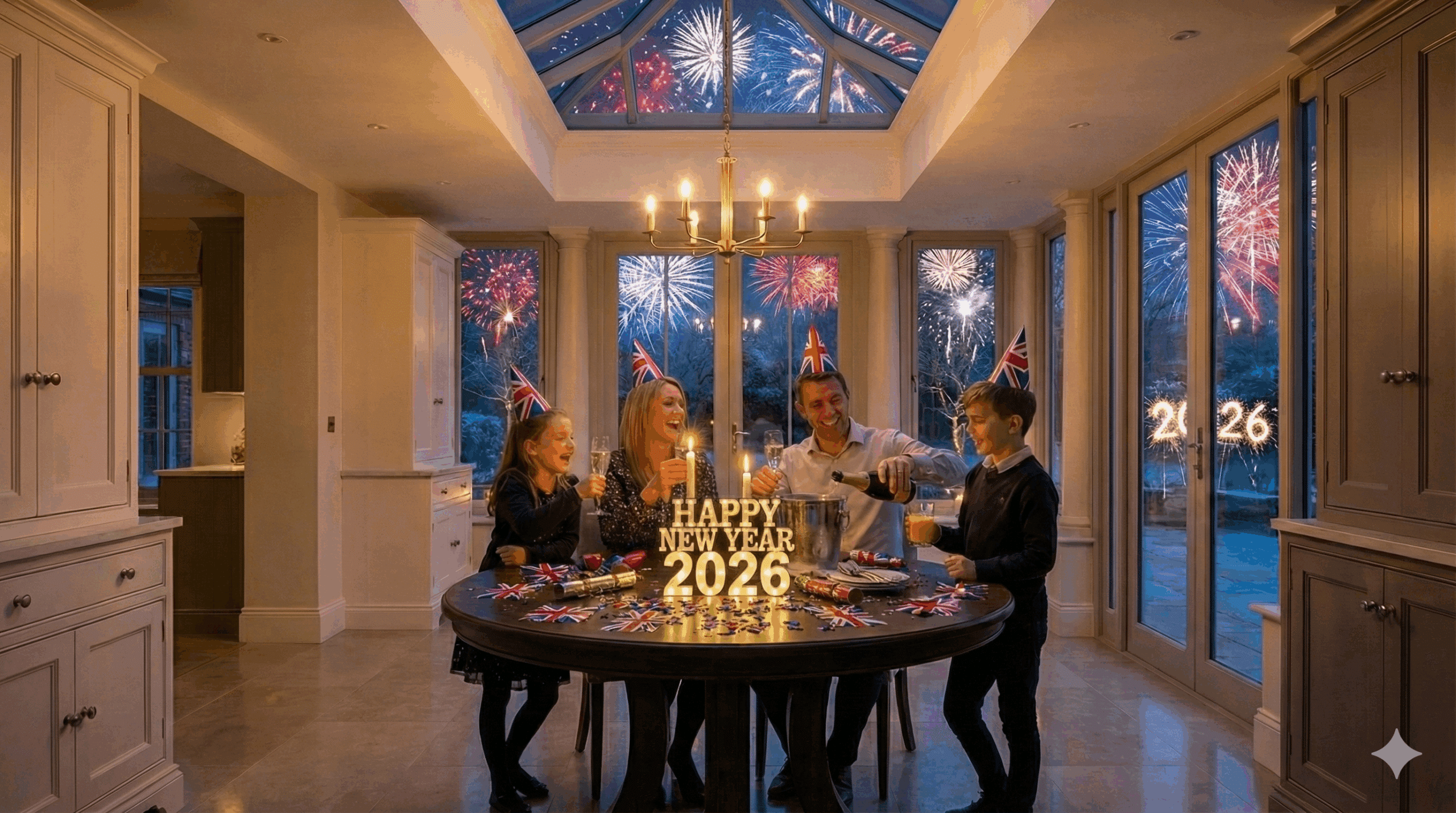
Think forward twelve months. Christmas 2026. The family has gathered again. But this time, there is space. There is light. There is a room that works for the occasion rather than against it.

The children have somewhere to play. The adults have somewhere to talk. The cook has somewhere to work without feeling isolated. The view through the glass shows the winter garden, perhaps strung with lights, perhaps frosted, perhaps simply beautiful in its December bare-bones honesty.

That future is available. It starts with a decision made in January, while the memory of cramped Christmas past is still fresh.

At Room Outside, we are ready to have those conversations whenever you are. We understand that January is a time for thinking and planning rather than rushing into decisions. We will give you the information you need to decide whether an extension is right for you, and if so, what kind of extension and at what investment level.

Next Christmas could be different. The choice is yours, and it starts with a conversation.

Frequently Asked Questions About Extension Planning

How long does it take to plan and build an extension?

For straightforward conservatories and orangeries within permitted development, expect 4-6 months from first enquiry to completion. Projects requiring planning permission add 2-3 months. Listed buildings or complex projects may take longer.

When is the best time to start planning an extension?

January is ideal. Early planning allows time for design development, planning applications if needed, and booking installers for spring/summer work. Starting in spring often means completion is pushed to the following year.

How much should I budget for a conservatory or orangery?

Basic conservatories start around £15,000. Mid-range projects typically fall between £30,000 and £60,000. Premium orangeries can exceed £100,000. Budget depends on size, materials, specification, and complexity.

Do extensions add value to my home?

Yes. Conservatories typically deliver around 100% ROI. Well-designed extensions can add up to 25% to property value. The value added depends on quality, design, and local market conditions.

Should I improve or move?

Financial analysis often favours improving. Moving costs (stamp duty, fees, costs) can exceed £20,000. An extension that adds space and value may cost similar money but leave you in a home and area you already know and love.

What areas does Room Outside serve?

Room Outside designs and builds conservatories and orangeries across London and the South East including Hampshire, Surrey, West Sussex, East Sussex, Kent, Berkshire, and Dorset.

Start Planning Your 2026 Extension

January is the perfect time to begin. No obligation, no pressure—just an honest conversation about what is possible for your home and your budget.

roomoutsideuk
23rd December, 2025

Christmas Entertaining in Your Conservatory or Orangery | Room Outside

Christmas Entertaining in Your Conservatory or Orangery | Room Outside

Why Your Glass Room Might Be the Best Christmas Gift You Already Own

Transform your conservatory or orangery into the perfect festive entertaining space with expert tips on heating, lighting, and winter comfort.

The Christmas Space Solution

92% of UK households celebrate Christmas, with millions facing the same challenge: where will everyone sit? If your glass room has adequate heating and modern glazing, it could be the star of your festive entertaining—offering space, light, and that magical connection between cosy indoors and crisp winter outdoors.

The Annual December Panic (And How to Avoid It)

It happens every year, usually around the second week of December. You are mentally counting chairs. You are measuring the dining table. You are wondering whether Aunt Margaret will notice if she has to sit on a folding chair borrowed from the garage.

Where will everyone sit? Can we fit twelve people in a dining room designed for six? Should we use the extension? The kitchen feels cramped. The living room is already full of presents and wrapping paper and a tree that seemed smaller in the garden centre.

And all the while, the conservatory or orangery sits there. Overlooked. Possibly storing the artificial tree you have not unpacked yet.

92%
UK households celebrate Christmas
94%
Will eat Christmas dinner
84%
Will put up a tree
2pm
Most popular dinner time

I understand the hesitation about using your glass room in winter. Older conservatories with polycarbonate roofs or single glazing can be genuinely uncomfortable in cold weather. At best, as one industry observer noted, some conservatories serve as “an extra refrigerator” during the festive period, which is fine for keeping the champagne cold but less ideal for keeping Grandma warm.

But here is what many people do not realise: if your glass room has been built or upgraded in the last decade, with proper glazing specification and adequate heating, there is no reason it cannot be the star of your Christmas entertaining. In fact, it might be the best room in the house for the job.

Why Your Glass Room Is Actually Perfect for Christmas

Think about what makes Christmas special. The lights. The sense of occasion. The connection between cosy indoors and crisp outdoors. The magical quality of twilight on a December afternoon.

Now think about what a well-designed conservatory or orangery offers. Abundant natural light during the short December days. Garden views that become magical when dusted with frost or strung with outdoor lights. A sense of space that traditional dining rooms cannot match. The feeling of being connected to outside while remaining perfectly warm inside.

The Victorians understood this. Orangeries were originally designed for growing citrus fruits, but they quickly became prized entertaining spaces. Winter parties in lamp-lit orangeries were the height of sophistication. There was something thrilling about gathering in a warm, glazed room while frost formed on the outside of the windows.

That same magic is available to you, with the added benefit of glazing technology like New Generation Glass that the Victorians could not have imagined.

Making It Work: The Practical Guide

Let us be practical. A glass room in December presents specific challenges. Here is how to address each one.

The Heat Challenge (And Why It Is Solvable)

The key to winter comfort in a glass room is not just generating heat, but keeping it. Modern conservatories and orangeries with high-performance glazing and proper insulation maintain stable temperatures through the coldest months. If yours does not, the problem is likely the building envelope rather than your heating system. The Energy Saving Trust provides guidance on improving home thermal performance, while the British Standards Institution sets glazing performance standards.

According to industry analysis, a conservatory with an older polycarbonate roof can lose heat up to five times faster than one with modern insulated roofing. Upgrading the roof alone can transform winter usability.

For existing conservatories, several heating options work well:

Underfloor Heating

Provides even, gentle warmth without taking up wall space. Pairs beautifully with tiled or stone floors, which retain heat and distribute it evenly. Heat rises naturally, warming the entire space from the ground up.

Electric Radiators

Smart thermostats can pre-warm the space before guests arrive. Many modern units include app-controlled features, allowing you to heat the room remotely so it is warm when you need it.

Central Heating Extension

If your system has capacity, extending radiators into the conservatory provides consistent, controllable warmth integrated with your whole-house heating.

Portable Heaters

Provide a quick and convenient way to inject heat. Works best as supplementary warmth rather than primary heating for larger gatherings.

My suggestion: Run your heating for a couple of hours before you need the space. Glass rooms warm up efficiently once the structure itself has reached temperature. Trying to heat a cold conservatory while guests are already shivering in it is a losing battle, and not the Christmas memory you want to create.

If your conservatory struggles to hold heat, the problem might be the structure rather than the heating. For guidance on whether your roof needs replacement, see our guide to conservatory repairs and maintenance.

The Lighting Opportunity (Your Secret Weapon)

Christmas entertaining happens largely after dark, which means your conservatory’s greatest asset (natural light) is temporarily unavailable. This is actually an opportunity in disguise.

The glazing that floods the space with daylight during summer becomes reflective in winter evenings, multiplying the effect of interior lights and candles. A single string of fairy lights looks like three. Candlelight creates pools of warmth that multiply in the glass. The effect is genuinely magical.

Layer your lighting for maximum impact:

  • Overhead fixtures for general illumination when you need to see what you are eating
  • Table lamps and candles for intimate warmth during the meal itself (battery-operated candles work well if you are worried about fire risk with excitable children around)
  • Fairy lights strung along frame members, wound through plants, or draped over the inside of the roof lantern—the reflections in the glass create a sparkling effect that no other room can match
  • Garden lighting visible through the glass adds another dimension entirely, extending the sense of celebration beyond the walls of your home
One family I worked with strings solar lights through their winter garden every November. They told me it transforms their orangery into “basically living inside a Christmas card.” I am not sure that is architecturally precise, but I understood what they meant.

The Layout Question (More Flexible Than You Think)

Christmas gatherings require different spatial arrangements than everyday use. You might need seating for more people than usual. You probably want a clear route between kitchen and dining area. You definitely want somewhere for drinks that does not require guests to navigate through food preparation.

Think about circulation. Where will people naturally stand with drinks before sitting down? Is there space for children to play without disrupting adult conversation? Can you open up fully to the main house, or do you want the conservatory to feel like a separate, special space?

The beauty of a glass room for Christmas is flexibility. Unlike a traditional dining room with fixed furniture, you can rearrange a conservatory to suit the occasion. Push furniture to the edges for a drinks party. Set up a long table for Christmas dinner. Create intimate seating clusters for Boxing Day lounging.

The Orangery Advantage for Christmas Entertaining

If you have an orangery rather than a traditional conservatory, Christmas entertaining becomes even more natural. The solid roof perimeter with central lantern provides a sense of enclosure that feels room-like rather than temporary. The brick or stone pillars ground the space architecturally.
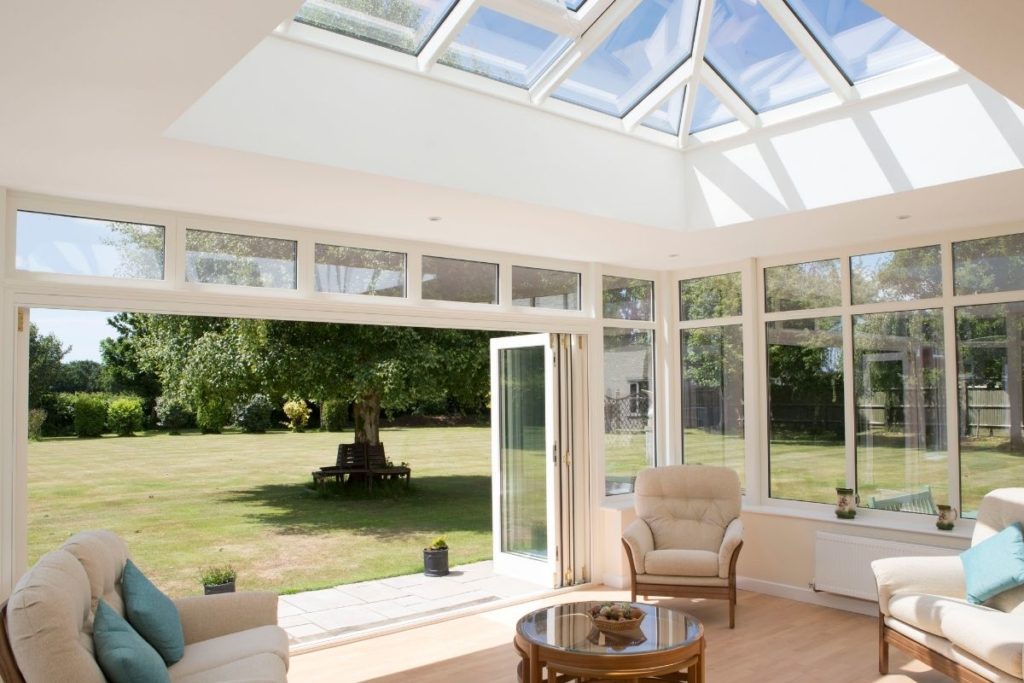
Orangery kitchen extensions are particularly suited to festive hosting. Cooking no longer means disappearing into a separate room while conversation continues elsewhere. Everything happens in one connected space: food preparation, drinks, catching up with family, keeping an eye on excited children opening presents.

The Orangery Entertaining Advantage

When the design is shaped around the way you host, and the glazing supports warmth and atmosphere, the entire dining experience becomes calmer and more enjoyable. You can prepare food, warm dishes, pour drinks, and chat to your guests without missing the moment.

The thermal performance of orangeries also tends to exceed traditional conservatories, with less glazed surface area meaning better heat retention in winter. Less glass means lower heat loss, but you still get the light from the roof lantern and the garden connection from the glazed doors.

If Your Glass Room Is Not Up to It (Yet)

Perhaps you have tried using your conservatory at Christmas and found it wanting. Perhaps the heating bills were alarming and the results still disappointing. Perhaps condensation streaming down the windows made the space feel cold even when the temperature said otherwise.

These problems are solvable. Roof replacement can transform an older conservatory’s thermal performance. Upgraded glazing reduces heat loss dramatically. Proper ventilation controls condensation. The technology has advanced significantly in recent years. The Met Office provides winter weather guidance that can help you plan for the season.
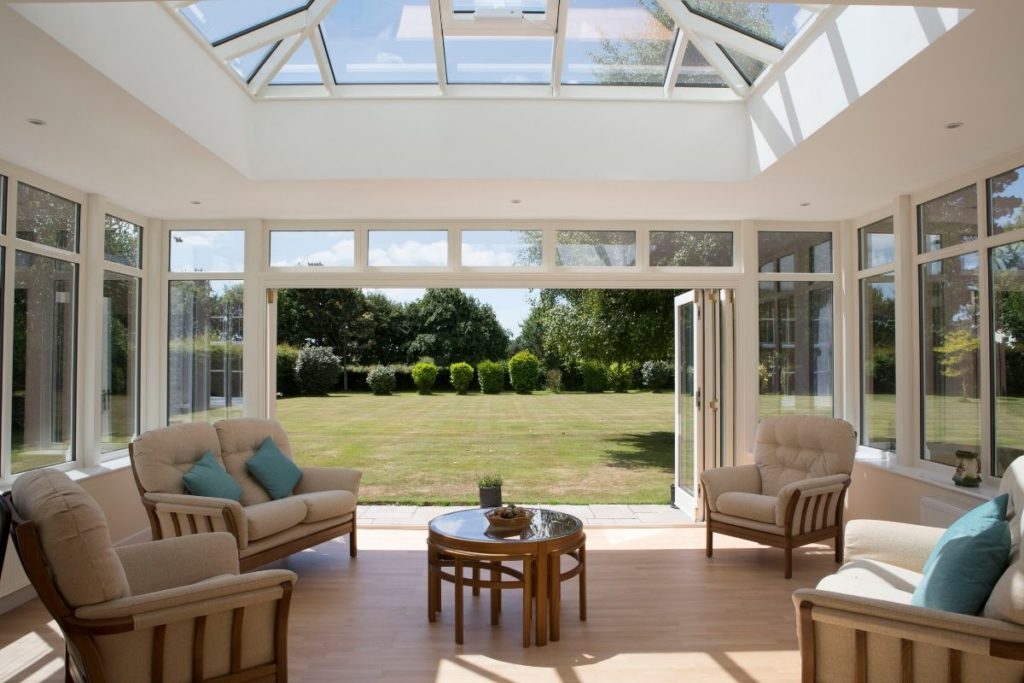
At Room Outside, we regularly help homeowners across the South East transform underperforming glass rooms into spaces they can use year-round. Sometimes this means full refurbishment. Sometimes it means targeted upgrades that address specific weaknesses. The right approach depends on your existing structure and how you want to use it.

If this Christmas is another year of crowding into the dining room while your conservatory sits empty and cold, perhaps it is time to think about what next Christmas could look like instead.

🎄 Your Christmas Glass Room Checklist

Two Weeks Before

  • Check heating system is working properly
  • Run heating for an hour to test warm-up
  • Clean glazing inside and out
  • Check seals and weatherstripping
  • Address any draughts

One Week Before

  • Arrange furniture for your gathering
  • Test the layout and adjust
  • Install fairy lights
  • Test all lighting
  • Set up garden lighting

Christmas Eve

  • Pre-heat from early morning
  • Final clean and dust
  • Add table settings
  • Position plants and decorations
  • Enjoy your magical space!

Making This Christmas Different

Every year, millions of British families celebrate Christmas in spaces that are too small, too cramped, or too disconnected from the magic of winter outside.

This year could be different. If you have a conservatory or orangery that is currently underused in winter, you have an opportunity. With the right preparation, that glass room could become the heart of your Christmas celebration.
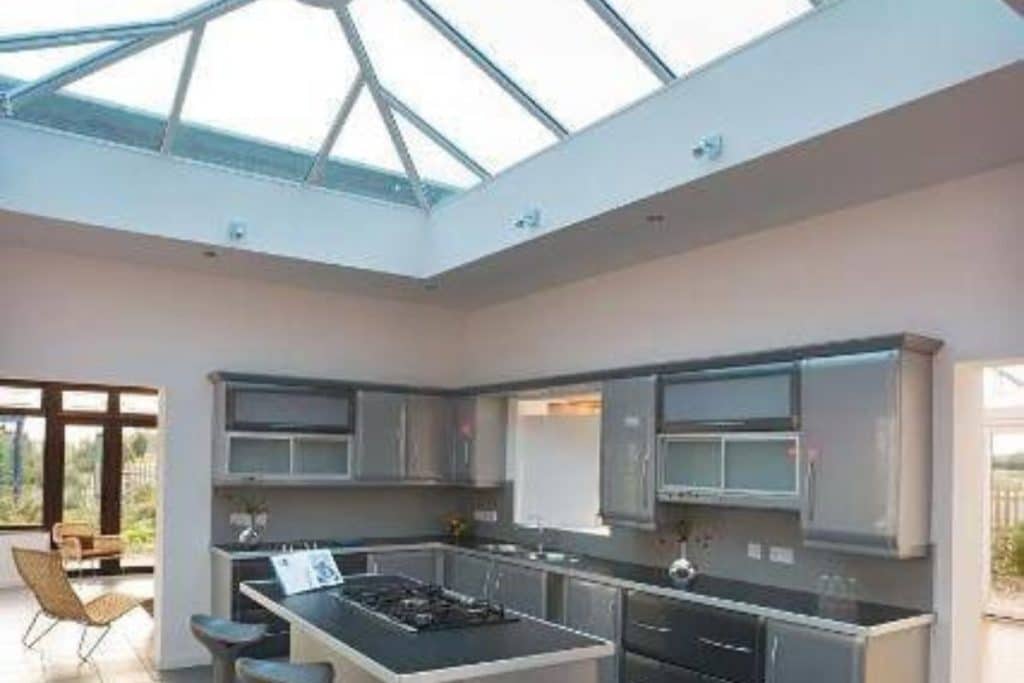
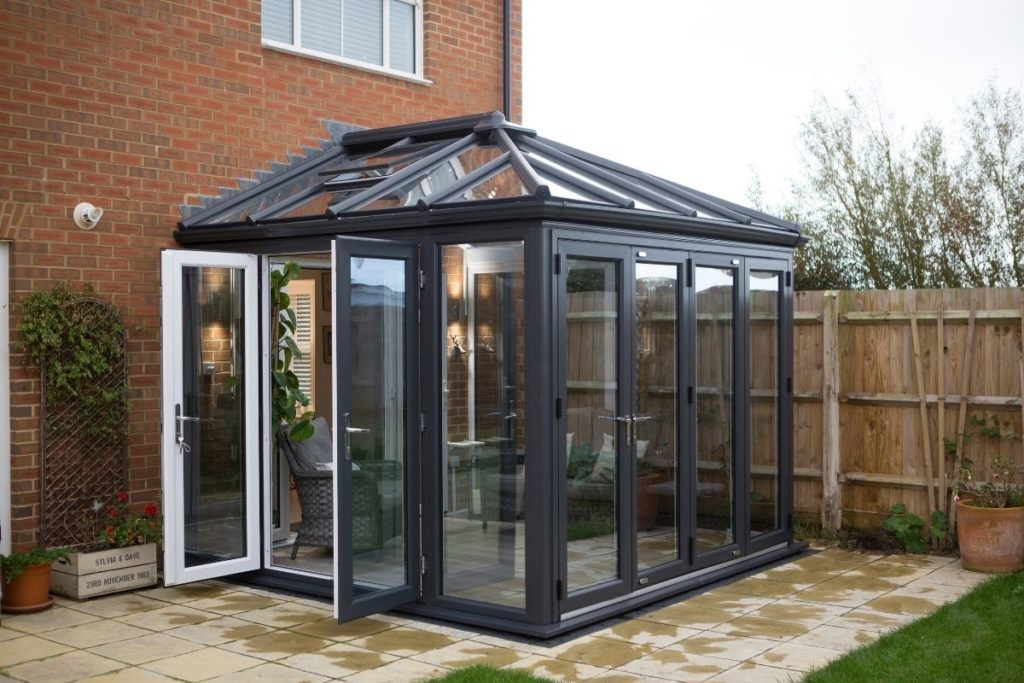
Imagine Christmas dinner with garden views, fairy lights multiplied in glass, the warmth of family gathered in a space that feels both connected and special.

That is not a fantasy. That is what a well-designed glass room offers. You might already own it.

Frequently Asked Questions About Christmas Conservatory Use

Can I use my conservatory in winter?

Yes, provided it has adequate heating and reasonable thermal performance. Modern conservatories with high-performance glazing maintain comfortable temperatures through winter. Older conservatories may need upgrades to the roof, glazing, or heating system.

How do I heat a conservatory for Christmas entertaining?

Options include underfloor heating (ideal for new or renovated spaces), electric radiators with smart controls, connection to central heating (if possible), or portable heaters as supplementary warmth. Pre-heat the space for several hours before guests arrive.

Why is my conservatory cold even with heating?

The most common cause is heat loss through an inadequate roof. Older polycarbonate roofs have poor thermal performance. Upgrading to a solid or high-performance glass roof can transform winter usability.

How do I prevent condensation in my conservatory at Christmas?

Ensure adequate ventilation, maintain even heating, and address any failed glazing seals. Condensation typically indicates that warm, moist air is meeting cold surfaces. Improving the thermal performance of those surfaces reduces condensation.

Make Next Christmas Magical

If your conservatory or orangery is not delivering year-round comfort, we can help transform it into a space you will actually use—this Christmas and beyond.

roomoutsideuk
22nd December, 2025

Orangery Design for Period Properties | Heritage Extensions | Room Outside

Georgian timber Orangery
Orangery Design for Period Properties | Heritage Extensions | Room Outside

Orangery Design for Period Properties: Balancing Heritage with Contemporary Living

Expert guidance on designing orangeries that honour Georgian, Victorian and Edwardian architecture while delivering modern comfort. 93% of heritage extension applications succeed with the right approach.

Quick Answer

The 93% Success Rate: Listed Building Consent applications have higher approval rates than standard planning when designs respect heritage character through proportional alignment and material continuity.

Vacuum Glazing Revolution: VIG (6-8.3mm thick) achieves U-values of 0.4-0.7 W/m²K while fitting original window rebates—solving the heritage thermal performance dilemma.

Architectural Alignment: Georgian = symmetry & mathematics, Victorian = decorative confidence, Edwardian = light & simplicity. Your orangery should continue your home’s architectural conversation, not mimic or clash.

⚡ KEY INSIGHTS FOR 2025:
• 93% of Listed Building Consent applications are granted vs 88% standard planning
• Median renovation spend: £21,440 (26% year-on-year increase per 2025 Houzz & Home UK Report)
• 61% of renovating homeowners plan to stay 11+ years (“forever home” mentality)
• Quality extensions increase property value by up to 24% (Nationwide analysis)
• Vacuum glazing reduces window heat loss by 59% versus single glazing

The Moment of Truth at the Planning Committee

Picture this: You are sitting in your Grade II listed Georgian townhouse, staring at architect’s drawings for a beautiful new orangery. The design is stunning. The materials are authentic. The proportions are perfect. And somewhere in a council office, a planning officer is about to decide whether your dream extension lives or dies.

Here is the good news that most people do not know: 93% of Listed Building Consent applications are granted. That’s higher than the 88% approval rate for standard planning permissions. The system isn’t designed to say no—it’s designed to say yes to good design.

The Success Formula

The difference between the 93% who succeed and the 7% who fail? Understanding what makes their property distinctive and designing an orangery that continues that architectural conversation rather than interrupting it. Success comes from demonstrating “material continuity,” “proportional alignment,” and “subservience” to the original building—concepts we’ll explore in depth.

The 2025 Quality Shift: Beyond the “Bolt-On”

The residential property market has undergone a fundamental structural shift. According to the 2025 Houzz & Home UK Report, the median spend on renovations has surged to £21,440—a 26% year-on-year increase. This isn’t driven by cosmetic updates but by structural improvement and system upgrades.

93%
LBC approval rate
£21,440
Median renovation spend
24%
Value increase potential

The Forever Home Mentality

Crucially, 61% of renovating homeowners plan to remain in their properties for at least 11 years. This “forever home” mentality demands a design philosophy prioritizing longevity, thermal performance, and architectural integrity.

The Economic Case

Nationwide’s analysis confirms that extending floor area to create usable space can increase property value by up to 24%. The market clearly distinguishes between “glass boxes” and habitable rooms—an orangery designed to 2025 regulations with high-performance glazing is valued as permanent Gross Internal Area (GIA).

Architectural Definition: Orangery vs Conservatory

Misunderstanding this distinction is a primary reason for planning refusals in conservation areas.

The Historical Lineage

Orangeries originated in 17th-century estates like Kew Gardens as functional buildings for wintering citrus trees, featuring substantial masonry to retain heat. Conservatories evolved later as 19th-century “crystal palaces” for display.

Feature Orangery Conservatory
Roof Architecture Flat perimeter with central lantern Fully pitched glazing
Structural Mass High (masonry pillars, solid walls) Low (glass and slim frames)
Thermal Performance Meets 2025 Building Regulations Often requires exemption
Primary Use All-year living space Seasonal sunroom

Why Definition Matters for Planning

For period properties, adhering to traditional orangery definitions is safest for securing Listed Building Consent, as it respects historical hierarchy. Conservation officers understand the architectural language of orangeries—they read as “appropriate subordinate additions” rather than “alien insertions.”

Reading Your Home’s Architectural Language

Every period property speaks a distinct language. Your orangery must understand this grammar to contribute meaningfully to the conversation.

Georgian Properties: The Mathematics of Beauty (1714-1837)

Design Principles

Symmetry is sacred: A Georgian orangery must be symmetrical, echoing the main house’s balance. Proportion matters: Use “six-over-six” or “eight-over-eight” sash windows with refined glazing bars. Classical orders: Columns should follow Doric, Ionic, or Corinthian proportions. Material matching: Brickwork must match the host property’s Flemish bond.

Critical Detail: Intercolumniation

Competitors rarely discuss this—the precise spacing between columns determined by their diameter. Georgian architects followed classical rules: 1.5 times column diameter for Doric, 2 times for Ionic. Getting this wrong signals “fake” to conservation officers who can spot proportional errors at a glance.

Victorian Properties: Confident Eclecticism (1837-1901)

Design Principles

Faceted forms: Hexagonal or octagonal ends and bay fronts are authentic. Decorative elements: Roof cresting, finials, and dentil moulding add character. Authentic colours: Deep greens, creams, and maroons beyond basic white. Regional nuance: Hampshire properties often need matching imperial-sized bricks.

Victorian Innovation

The “one-over-one” sash became possible with improved glass technology, but decorative upper sashes with Gothic arches or tracery remained popular. Victorian orangeries reflect an era of industrial confidence and decorative exuberance.

Edwardian Properties: Light and Air (1901-1914)

Design Principles

Volume and light: Maximize internal height with clean lines. Simple elegance: Plain rectangular pilasters rather than fluted columns. Garden connection: “Clear lower pane, divided upper pane” glazing maximizes views. Modern compatibility: Naturally suits contemporary bi-fold doors.

The Transitional Space

Edwardian orangeries work particularly well as transitional spaces blurring indoor-outdoor boundaries—perfect for today’s desire for connected living while maintaining period character.

The Technical Revolution: Vacuum Glazing (VIG)

This addresses the most significant “keyword gap” competitors miss. Most resources stop at “double glazing.”

The Heritage Dilemma

Conservation officers often reject standard double glazing (24-28mm thick) because it requires thick glazing bars that destroy delicate historical profiles. Single glazing has a catastrophic U-value of ~5.8 W/m²K, making heritage properties expensive to heat.

The VIG Solution

Vacuum Insulated Glass represents a quantum leap—two panes separated by a 0.1-0.2mm vacuum, totaling just 6-8.3mm thick.

Property Single Glazing Standard Double Vacuum Glazing (VIG)
Thickness 4mm 24-28mm 6-8.3mm
U-Value (W/m²K) ~5.8 1.2-1.6 0.4-0.7
Lifespan 50+ years 15-20 years 25+ years
Sightlines Original Compromised Original

Why VIG Wins Planning

It fits original rebates, maintains joinery profiles, and solves the “double reflection” issue of standard double glazing. It’s the key to unlocking permission for thermal upgrades in listed buildings. When presenting to conservation officers, showing VIG samples alongside thermal performance data dramatically increases approval chances.

Planning tip: Include VIG specification and samples in your Heritage Statement. Demonstrate how it achieves “public benefit” (improved thermal performance) while preserving “heritage significance” (original sightlines).

Material Science: Timber and Joinery

The 1980s saw softwood conservatories rotting within 15 years. 2025 demands advanced timber technologies.

50 years
Accoya above-ground guarantee
8-10 years
Microporous paint lifespan
400+ years
FSC-certified forest cycles

Super-Woods

Accoya: Modified radiata pine with 50-year above-ground guarantee. Dimensionally stable (won’t swell or stick in humid conditions) and rot-proof—ideal for heritage applications where maintenance access is difficult.

Engineered Hardwoods: Sapele or Idigbo, laminated for strength across long lantern spans. The lamination process eliminates warping and ensures consistent performance across large structures.

Paint Systems

Modern factory-applied microporous paints (three-coat systems) last 8-10 years by allowing timber to breathe, preventing moisture trapping and blistering. Traditional oil-based paints trap moisture, causing premature failure in UK climates.

Sustainability

Leading suppliers use FSC or PEFC-certified timber from responsibly managed forests. Accoya’s modification process uses non-toxic acetylation, making it 100% recyclable at end of life.

The Roof Lantern: Engineering Light

The lantern is an engineering marvel balancing structure, thermal dynamics, and aesthetics.

Structural Composition

  • Internal rafters: Timber for warmth and traditional appearance
  • Core structure: Aluminium or steel for spanning capability
  • External capping: Powder-coated aluminium for maintenance-free protection
  • Glazing bars: Slim profiles (35-45mm) maintaining period aesthetics

Solar Control & Ventilation

  • Solar Control Glass: Low g-value glass reflecting 80% of solar heat
  • Automatic Vents: Thermostatic opening at set temperatures (e.g., 22°C)
  • Rain Sensors: Automatic closure during precipitation
  • Integrated Blinds: Traditional-style between-pane solutions

Aesthetics Matter

For period properties, the “bold colonnade effect” is crucial. The lantern must look properly supported with correctly detailed kerb intersections for watertightness. Avoid budget options with thick frames—slim profiles and traditional glazing bars are worth the investment for heritage authenticity.

Seven Universal Design Principles

These seven principles form the foundation of successful orangery design for period properties. Each principle addresses a critical aspect of harmonizing modern additions with historical architecture.

📏
Scale and Subordination
The orangery should feel subordinate to the main house. If your sketch makes the original house look like a porch, reverse the proportions. The extension should complement, not compete with, the architectural presence of the period property.
🧱
Material Continuity
Use materials matching or complementing existing construction. Painted timber frames integrate better than bright white uPVC in conservation areas. Material selection should respect the period’s construction methods while accommodating modern performance requirements.
🪟
Window Proportion Alignment
Echo existing window patterns—Georgian “six over six,” Victorian “two over two,” or Edwardian divided uppers with clear lowers. Window proportions communicate architectural era more clearly than any other design element.
💎
Roof Lantern Quality
Avoid budget options with thick frames. Slim profiles and traditional glazing bars are worth the investment for heritage authenticity. The lantern should appear weightless while providing structural integrity.
🌡️
Thermal Performance
Modern solutions like VIG deliver U-values of 0.4-0.7 W/m²K while maintaining traditional sightlines—no compromise needed. Thermal comfort should be achieved without sacrificing architectural authenticity.
👁️
Interior Sightline Planning
Design from inside out. Frame the best garden views from seating positions—what you see sitting down matters most. Consider both standing and seated perspectives when positioning structural elements.
🌳
Respect for Setting
Consider how the orangery appears from garden angles and affects mature planting. Good design respects its entire context, not just the immediate architectural connection to the main house.

What Works in Hampshire: Regional Insights

Hampshire’s diverse heritage demands flexible thinking. What suits a Georgian rectory in Alresford won’t work for a Victorian terrace in Southampton.

1,630+
Listed buildings in East Hampshire
40+
Conservation areas in Basingstoke & Deane
50%
Max extension size in East Hampshire rural areas

Key Local Considerations

Winchester City Council: Emphasizes “local distinctiveness” and “subservient” extensions set back from main building lines. Success often depends on demonstrating how the design continues local vernacular rather than imposing generic solutions.

East Hampshire: Extensions outside settlement boundaries shouldn’t exceed 50% of original floor area. For listed buildings in rural settings, maintaining the property’s “isolated character” is often more important than strict architectural mimicry.

Material sourcing: Victorian properties often need matching imperial-sized bricks (215 × 102.5 × 65mm vs modern metric 215 × 102.5 × 65mm). Specialist suppliers like York Handmade or Butterley Brick provide authentic matches for Hampshire’s distinctive local brickwork.

Navigating Heritage Regulations

For complex cases involving glass extensions for listed buildings, early pre-application advice is invaluable. Hampshire’s conservation officers are generally supportive of well-considered designs that demonstrate understanding of local character. The county contains over 1,630 statutory listed buildings in East Hampshire alone, with each requiring individual assessment.

The Five Most Common Mistakes (And Solutions)

Common Mistakes

  • Ignoring window proportions
  • Choosing cheap roof lanterns with thick frames
  • Neglecting interior sightlines from seating positions
  • Underestimating thermal requirements for year-round use
  • Treating heritage regulations as obstacles rather than design guides

Professional Solutions

  • Photograph existing windows and use those proportions as your starting point
  • Specify slimmer profiles even if reducing overall size slightly
  • Plan what you’ll see from seating positions, framing the best views
  • Specify VIG delivering performance without compromising appearance
  • Engage early through pre-application advice with Conservation Officers

Pro tip: Create a “design principles” document before sketching begins. List 5-7 key characteristics of your home’s architecture that must be respected. Share this with your designer to ensure everyone starts from the same understanding of what makes your property distinctive.

Step-by-Step Implementation Guide

Phase 1: Feasibility (Weeks 1-4)

Site Survey & Analysis

Professional survey assessing drainage, tree roots (especially important near mature oaks in Hampshire), ground conditions, and relationship to existing services. Historical analysis identifying period features to replicate or reference.

Budget Planning

Realistic costing including 10-15% contingency for heritage surprises. Explore green mortgage options—some lenders offer better rates for energy-efficient improvements to listed buildings when using technologies like VIG.

Phase 2: Planning (Weeks 5-16)

Pre-application Engagement

Formal pre-application advice with Conservation Officer (typically £300-£500). Present initial concepts with photomontages showing the extension in context. This stage often determines whether you’ll need full Listed Building Consent or just planning permission.

Submission & Determination

Submit Heritage Statement, detailed drawings, material samples (especially VIG), and design rationale. Allow 8-13 weeks for determination. Success rates improve dramatically when applications demonstrate understanding of local character.

Phase 3: Technical Design (Weeks 17-20)

Final Measurements

Precise measurements post-approval (heritage buildings often aren’t perfectly square). Off-site manufacturing begins—note VIG lead times: 12+ weeks for custom sizes and specifications.

Phase 4: Construction (Weeks 21-30)

Sequenced Build

Groundworks and matching masonry (allow extra time for brick matching). Timber frame and lantern installation by specialist heritage carpenters. First fix (underfloor heating, lighting) and second fix (joinery, finishes). Total timeline: 30-40 weeks for heritage projects.

Financial Realities: 2025 Investment

As a premium, bespoke investment, heritage orangeries represent significant financial commitment with corresponding value creation.

Cost Category Standard Specification Heritage Specification
Per m² Cost Range £2,500–£3,500 £3,500–£5,000+
Medium Project (25m²) £62,500–£87,500 £87,500–£125,000+
Planning & Design 5-8% of build cost 8-12% of build cost
Contingency 10% recommended 15% recommended

ROI Considerations

Property Value: Adding 10% floor area adds ~5% property value. Kitchen-diner-living spaces deliver highest returns (up to 24% according to Nationwide). The market premium for “authentic heritage improvement” versus “generic extension” can be significant.

Operational Savings: VIG reduces window heat loss by nearly 59% versus single glazing. Combined with underfloor heating and proper insulation, heritage properties can achieve modern comfort levels without compromising character.

Budgeting Transparency

For detailed budgeting breakdowns, see our comprehensive orangery cost guide. Remember: With heritage projects, the cheapest quote often becomes the most expensive outcome. Quality craftsmanship and appropriate materials protect your investment across decades.

Finding the Right Heritage Partner

Period property extensions demand designers who understand heritage architecture intuitively, not just technically. At Room Outside, we’ve specialised in Hampshire period properties for decades, with services including:

Bespoke Design

  • Tailoring structures to specific architectural eras
  • Material selection matching local vernacular
  • Proportional analysis ensuring visual harmony
  • 3D visualizations showing context integration

Planning Management

  • Handling complex LBC applications
  • Heritage Statements demonstrating significance
  • Pre-application advice coordination
  • Local authority negotiation expertise

Why Specialists Matter

Standard conservatory companies often lack heritage understanding. Specialists bring architectural literacy (reading your home’s era), planning acumen (knowing local preferences), technical expertise (access to VIG, Accoya), and craftsmanship (traditional joinery skills). This holistic approach ensures your orangery enhances your home’s story, securing both planning permission and lasting value.

Check Our Coverage

If your property is listed or in a conservation area, explore our specialised heritage services and check if you’re in our covered areas. We work across Hampshire and the South East, with particular expertise in Winchester, East Hampshire, Basingstoke, and surrounding conservation areas.

FAQ: Orangery Design for Period Properties

What exactly is a period property orangery?

A period property orangery is a bespoke glazed extension specifically designed to complement Georgian, Victorian, or Edwardian architecture through proportional alignment, material matching, and appropriate detailing. Unlike a conservatory—which features a fully glazed roof and lightweight structure—an orangery has a solid perimeter roof (covering 50-75% of total area) with a central glazed lantern, substantial masonry or timber pillars, and is engineered to Building Regulations as a year-round habitable space. This architectural distinction is crucial for planning permission in conservation areas.

Can I really install an orangery on my Grade II listed building?

Absolutely. The key is technical innovation paired with historical understanding. Vacuum Insulated Glass (VIG) is the game-changer here. At just 6-8.3mm thick, it achieves a U-value of 0.4-0.7 W/m²K (better than triple glazing) while fitting into original window rebates and maintaining delicate historical glazing bars. When combined with a design that demonstrates “subservience” and material continuity, success rates are high. In 2022/23, 93% of Listed Building Consent applications for alterations were approved, often thanks to such solutions.

How do I choose the right design style?

Your home’s architectural DNA should guide the design: Georgian (1714-1837): Prioritise strict symmetry and classical proportions. Victorian (1837-1901): Allows for decorative exuberance. Edwardian (1901-1914): Embrace light, air, and simplicity. The goal is to continue the architectural conversation, not to mimic or clash. Professional designers analyze your property’s distinctive features to create designs that feel “meant to be” rather than “added on.”

What are the best materials for authenticity?

Modern timber technology has revolutionised heritage joinery. For structural elements, specify Accoya (50-year guarantee, dimensionally stable, rot-proof) or engineered hardwood like laminated Sapele. Avoid cheap softwoods. For finishes, use factory-applied microporous paint systems that allow the timber to breathe, preventing peeling and ensuring an 8-10 year lifespan before recoating.

How do you prevent overheating?

A combination of technology and design manages solar gain effectively: Glass Specification: Use solar control glass with a low g-value (e.g., 0.3) to reflect up to 80% of solar heat while admitting light. Automatic Ventilation: Integrate thermostatic roof vents that open automatically at a set temperature. Inherent Design: The solid perimeter roof of an orangery inherently reduces overhead summer sun by 50-75%. Supplement with traditional-style external blinds or internal pelmets.

What does the planning process involve?

The process is collaborative, not adversarial. It typically involves: Pre-application Advice with Conservation Officers, Heritage Statement demonstrating how your design respects the property’s significance, and Detailed Submission including CAD drawings and material samples. Specialist providers like Room Outside manage this process routinely in Hampshire, understanding local nuances like Winchester’s focus on “local distinctiveness.”

Ready to Enhance Your Heritage Property?

Work with heritage specialists who understand not just design principles but the practical realities of planning, material selection, and craftsmanship for period properties across Hampshire and the South East.

roomoutsideuk
01st May, 2025

Want a Fast Home Extension Without the Disruption?

If you’ve ever wanted to add space to your home but dreaded the chaos of a major building project, a fast home extension without disruption could be the perfect solution. For some, the thought of weeks of builders, mess, and noise is enough to put them off altogether.

But what if there was a better way?

Build Without the Headaches

Traditional home extensions take time. Builders dig foundations, lay bricks, and work around unpredictable weather. It’s slow, messy, and often stressful.

That’s why we’re offering something different.

This innovative new system uses precision-engineered parts built off-site. These are delivered and assembled quickly at your home. As a result, installation takes days instead of months — a fast home extension without disruption and minimal interruption to your daily life.

Designed to Suit Your Home

Whether you want a bright kitchen, a stylish dining room, or a garden retreat, this system gives you flexibility. It works with most house types and even fits on existing bases in many cases.

You get all the benefits of a traditional extension, without the long wait.

Comfortable All Year Round

One big concern with glazed structures is keeping them warm in winter and cool in summer. This system solves that.

Thanks to high-performance insulation in the walls, floor, and roof, your space stays comfortable all year. You can also choose New Generation Glass to reduce glare, control solar gain, and improve energy efficiency.

Built to Last, Easy to Maintain

Durability matters. These materials are long-lasting and require very little upkeep. So you’ll spend less time on maintenance and more time enjoying your home.


Ready to Extend Without the Stress?

You don’t need to live on a building site to get more space. With this fast, clean, and energy-efficient system, you can have your dream extension — without the drama.

  • Fast build
  • Stylish and practical

Get in touch to book your free design consultation.

https://www.roomoutside.com/get-a-quote/
roomoutsideuk
08th October, 2024

Orangery Lantern Roof Inspiration

Modern orangeries have become a really popular way to extend your home, adding space and enhancing your day-to-day life. Whether you want an entertaining space, a room to relax in or a multifunctional kitchen-dining-living area, the orangery is a perfect solution. Orangery design can really bring the wow factor to your home and often is a catalyst to a complete home renovation to raise the overall aesthetic of your property. And, one of the design elements of an orangery is pivotal to creating a dreamy space – the glass lantern roof.

The glass lantern can cover part or all of the roof of your orangery and is a real focal point of your glass room. It allows lots of glorious natural light into your home, creating a light and airy space that is a pleasure to be in. The vitamin D boost from the sunshine pouring in will help to ensure a spring in your step and a great start to your day. The use of efficient glazed roof glass means that modern orangeries can be comfortable all year round.

Get some inspiration for your orangery roof lantern from some of our past customer projects

The full-length orangery lantern casts gorgeous shadows in this open-plan living-dining extension

Aluminium framed charcoal grey framed lantern with roof light windows

Inside a modern aluminium orangery with slate grey finish and finials and a stylish lantern roof
Aluminium slate grey orangery extension with bi-fold doors open wide out onto the small patio

Large full coverage roof lantern on a timber framed orangery

Inside a large bright traditional timber orangery dinning and living area extension
Orangery lantern roof
Expertly designed and built timber orangeries

Hexagonal orangery roof

Hexagonal orangery lantern roof
Timber framed hexagonal orangery

A multi-pitched roof on an l-shaped orangery

Large L-Shaped uPVC Orangery Extension

Full coverage lantern roof on a uPVC orangery

spring conservatory maintenance
uPVC Orangery Lantern Roof fitted with temperature control New Generation Glass
Modern and bright uPVC orangery with full glass lantern roof, double aspect French doors and steps down into a country garden

Modern glass lantern over a large timber framed orangery

Lantern roof over a modern kitchen extension

Kitchen orangery extension with a large lantern roof

If you want even more design inspiration for your glass extension, look at our full customer project gallery. Our team of specialists will be happy to help you with your design and answer any questions you may have, as well as provide a no-obligation quote.

Get Advice and a Quote for Your Project

Get a Quote
roomoutsideuk
09th August, 2024

Orangery and Conservatory Extensions Inspiration: Let’s Look at the Colour Grey!

Grey orangery and conservatory extensions have become an increasingly popular choice. Conservatories and orangeries can be built in a multitude of colour options, whether that is a timber frame painted in your chosen shade of grey, powder-coated grey aluminium frames or a grey uPVC. And just because you are choosing to go grey on the outside, you can lighten things up inside with contrasting internal frames. This versatile shade complements both contemporary and traditional homes, offering a sleek, modern look while blending seamlessly with various architectural styles.

In this guide, we’ll explore why grey is a fantastic option, for your extension and how it can be incorporated into your design, and what shades work best for different aesthetics.

Why Choose Grey for Your Orangery or Conservatory Extension?

  1. Timeless Appeal: Grey is a sophisticated and neutral colour that won’t go out of style.
  2. Versatility: It pairs well with a wide range of materials, including wood, brick, and glass.
  3. Contemporary Elegance: A grey extension instantly modernises your home.
  4. Complements Other Colours: Works beautifully with natural tones, pastels, and bold shades alike.
  5. Low Maintenance: Lighter greys can disguise dust and dirt, making upkeep easier.

Shades of Grey – Which One is Right for You?

  • Light Grey: Soft and subtle, ideal for a fresh and airy feel.
  • Mid Grey: A balanced choice that works well in both traditional and modern designs.
  • Charcoal or Dark Grey: Creates a striking contrast and adds depth to your extension.

The shade you choose will depend on the style of your home, the level of contrast you desire, and how much natural light the space receives.

Incorporating Grey into Your Extension Design

1. Frames and Structure

Grey can be used for window and door frames, as well as structural beams, creating a stylish and cohesive appearance.

2. Roof Options

Opt for a grey-framed roof lantern to enhance the overall design.

3. Interior Styling

Grey can extend to the interior, from flooring and furnishings to feature walls and accessories.

4. Flooring and Tiles

Consider grey-toned tiles, wooden flooring, or polished concrete for a chic finish.

5. Complementary Colours

Grey pairs beautifully with white for a crisp, clean look, or with deep blues and greens for added sophistication.

Get Some Inspiration for Your Grey Framed Orangery or Conservatory Extension

Here are some great examples of grey-framed timber, aluminium or uPVC orangeries and conservatories to give you inspiration.

Dark Grey Conservatory Extension with Contrasting White Internal Frames

Charcoal grey uPVC conservatory extension
Grey uPVC Conservatory Extension on a modern new build home
Dark grey uPVC framed conservatory with contrasting white internal frames
Dark grey framed uPVC conservatory extension
Contrasting white uPVC internal frames on a grey framed conservatory

Aluminium Framed Charcoal Grey Orangery Extension on a Stone Cottage

Charcoal grey aluminium framed orangery extension
Inside a modern aluminium orangery with slate grey finish and finials and a stylish lantern roof
Slate grey aluminium framed orangery with lantern roof
Aluminium slate grey orangery extension with bi-fold doors open wide out onto the small patio

Grey-Painted Timber Framed Conservatory on a Country Home

Inside of white timber framed lean-to conservatory
Grey timber framed lean-to conservatory with double doors out to the patio

Grey Aluminium Framed Lean-To Conservatory Kitchen Extension

Grey aluminium framed lean-to conservatory kitchen extension with bi-fold doors

Light Grey Timber Framed Lean-To Conservatory on a Stone Cottage

Light grey aluminium lean-to conservatory with stone dwarf walls to match the property

Aluminium Grey Framed Gable-Ended Conservatory

Aluminium grey framed gable ended conservatory

Modern Grey Aluminium Lean-To Lounge Conservatory Extension

Modern grey aluminium lean-to conservatory extension used as a lounge

Large Lean-To Dining Conservatory with Grey Aluminium Frames

Large lean-to conservatory dinning space with modern deep grey aluminium frames and bi-fold doors

Let’s Bring Your Vision to Life

If you’re considering a grey orangery or conservatory, our expert designers are here to help. We’ll work with you to create a bespoke design that complements your home and meets your needs.

Looking for even more design inspiration for your glass extension? Then check out our full customer project gallery.

Speak to One of Our Design Experts Today!

Get a Quote
roomoutsideuk
01st July, 2024

Can You Extend Your Kitchen with an Orangery? Here’s What to Know

Expanding your kitchen is one of the best ways to enhance your home’s functionality, increase property value, and create a stylish, open-plan space. But should you opt for an orangery?

An orangery is a fantastic option for a kitchen extensions combining the benefits of a conservatory and a traditional extension. It provides ample natural light, a solid structure, and a seamless connection between your home and garden.

In this guide, we’ll explore whether an orangery is the right choice for your kitchen extension and what factors to consider.

Kitchen orangery extension with a large lantern roof

Why Choose an Orangery for Your Kitchen Extension?

  1. More Natural Light – Orangeries feature large windows and a roof lantern, flooding your kitchen with daylight.
  2. Increased Living Space – Expanding your kitchen with an orangery creates a spacious and open-plan area for dining and entertaining.
  3. Versatile Design – Whether you prefer a contemporary or classic look, an orangery can be tailored to match your home’s style.
  4. Seamless Indoor-Outdoor Connection – Large glass doors open up to the garden, making the space feel even bigger.
  5. Energy Efficiency – With advanced glazing and insulation, orangeries provide warmth in winter and keep cool in summer.

Key Considerations Before Adding an Orangery to Your Kitchen

1. Planning Permission & Building Regulations

Most orangery extensions fall under permitted development rights, but if your home is listed or in a conservation area, you may need planning permission. It’s best to check with your local council before starting work.

2. Structural Considerations

A kitchen orangery needs proper foundations, drainage, and structural reinforcement. Consulting an expert ensures a safe and durable extension.

3. Heating & Ventilation

Since your kitchen generates heat and moisture, proper ventilation is crucial. Options include underfloor heating, radiators, or air conditioning to maintain a comfortable temperature.

4. Lighting & Electrical Layout

Maximise your orangery’s potential by incorporating a well-thought-out lighting plan. Pendant lights, LED strips, and spotlights can enhance the ambiance, especially in the evening.

5. Choosing the Right Doors & Windows

Bi-fold, sliding, or French doors can transform your orangery, improving accessibility and views of the garden. Opt for energy-efficient glazing to maintain insulation.

Design Ideas for a Kitchen Orangery

  • Modern Minimalist: Sleek lines, neutral colours, and a seamless blend with the existing kitchen.
  • Classic & Elegant: Timber frames, traditional lantern roofs, and warm lighting.
  • Industrial Chic: Exposed brick walls, metal-framed windows, and statement lighting.
  • Country Style: Soft tones, wooden beams, and a cosy dining area.

Is an Orangery Kitchen Extension Right for You?

If you’re looking for a stylish and practical way to expand your kitchen, an orangery could be the perfect solution. With expert planning and design, you can create a stunning, light-filled space that enhances both your home’s aesthetic and functionality.

Speak to one of our design experts today to explore your kitchen orangery options!

Get a Quote