Choose a lean-to when roof height is tight, the footprint is wide and shallow, or you want an uncluttered contemporary line. The roof pitch and glazing specification are the two decisions that matter most.
The lean-to is the most understated shape in glazed extensions—and often the cleverest.
A single-slope roof leaning against the house does away with ridges and hips entirely for a low, clean, contemporary line. It is the shape you reach for when working under low eaves, when a run of wall is crying out for light, or when you simply want the architecture to feel calm.
01
The shape explained
What a lean-to actually is
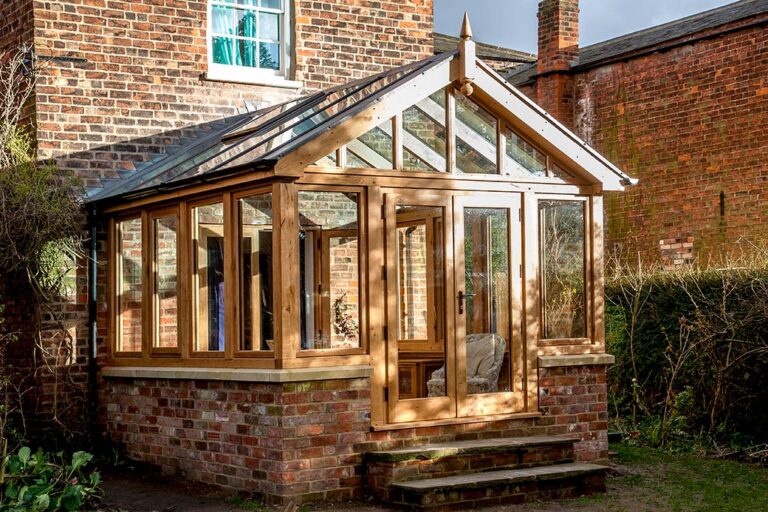
A lean-to—sometimes called Mediterranean or garden-room style—has a mono-pitch roof: one plane sloping gently away from the house to the outer wall. No ridge, no valleys and no ornate roofline. That simplicity is the whole appeal. It slots neatly beneath features that a taller roof could collide with and reads as deliberate rather than compromised.
Mono-pitch
One plane. One direction. One quiet line.
The house supports the high edge; the roof falls to the garden elevation, keeping the profile low.
Gentle fall
02
Where it earns its place
When a lean-to is the right choice
Low eaves or a bungalow
A shallow mono-pitch fits where a conventional roof would meet first-floor windows or simply run out of height.
A minimal modern look
The uncluttered roofline suits contemporary and thoughtfully modernised homes.
A wide, shallow footprint
Lean-tos run naturally along the rear of a house—ideal for a broad kitchen-diner or garden room.
Economy without compromise
A simpler roof can be more economical while still looking crisp, considered and architectural.
03
Same roof, different room
Lean-to orangery vs lean-to glass extension
The lean-to is a roof shape, not a single product. Apply it to an orangery or to a largely glazed extension and the result feels very different.
More substantial
Lean-to orangery
Solid pillars and a partially solid roof, often with a slim rooflight or run of glazing along the slope.
Useful wall space for cabinetry
Strong thermal performance
Feels integrated with the house
Suited to kitchens and snug rooms
Best when warmth, furniture and working wall space matter.
More transparent
Lean-to glass extension
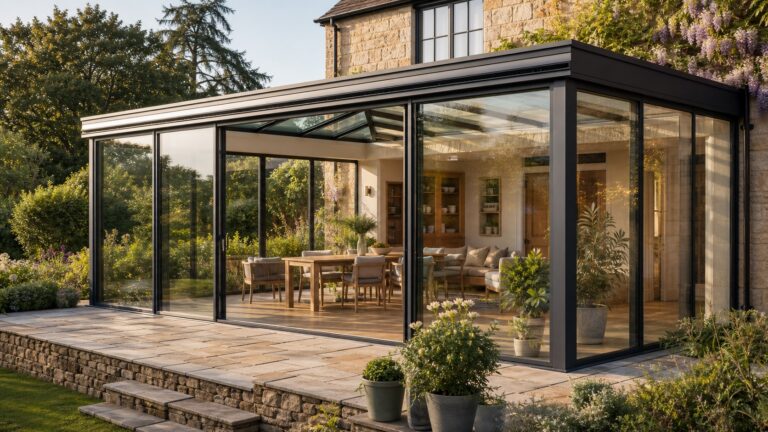
Slim-framed or frameless walls and, often, a largely glazed sloping roof for the lightest possible feel.
Maximum daylight and view
Minimal visual structure
Strong garden connection
Suited to light-filled sitting rooms
Best when the view and a sense of openness come first.
The simplest decision test: choose the orangery version for warmth and wall space; choose the glass version for maximum light and view. See examples of bespoke orangeries and frameless glass extensions.
04
Where the design lives or dies
Getting the mono-pitch roof right
The roof needs sufficient fall to drain properly, but too much pitch loses the low, clean character—and may bring the design back into conflict with the eaves. The best answer balances height, performance and daylight.
Fully glazed
Maximum overhead light, paired with high-performance solar-control glass.
Solid & insulated
A calmer ceiling and stronger insulation for rooms where comfort leads.
Mixed roof
Solid zones and a slim rooflight: often the most balanced solution.
Design for the sun
A south-facing glass slope deserves special attention.
A broad inclined surface can collect significant solar heat. Specify the glass for the orientation from the outset rather than treating comfort as an afterthought. Our guide to keeping a glass roof cool explains the options.
05
Low roof, wide opening
Glazing and doors complete the horizontal line
Because a lean-to is often low and wide, the rear wall naturally accommodates sliding or bifold doors across much of its width. Slim aluminium sightlines and a flush threshold amplify the garden-level feel.
06
Measure early, design once
What to consider before you build
Height beneath the existing eaves
The number that usually determines whether the roof can fit. Establish it before the design develops.
Which way the extension faces
Orientation changes the balance between daylight, solar control and insulation.
How the roof drains
A mono-pitch sends its water to one edge, so guttering and drainage need deliberate planning.
Planning constraints
Many rear extensions can use permitted development, but height limits near boundaries and property-specific restrictions still matter. Check the orangery planning permission guide.
South or westPrioritise solar-control glass, shading and ventilation.
NorthMore glazing may help gather useful natural light.
Near a boundaryReview height limits before fixing the roof angle.
The bottom line
Simplicity is the point—not a limitation.
A lean-to is the right shape when you want a low, clean roofline that fits beneath tight eaves and looks quietly modern. Choose the room type according to how you will live in it, then give the roof pitch and glazing specification the attention they deserve.
Choose orangeryFor warmth, wall space and a room that feels part of the house.
Choose glass extensionFor maximum light, view and an open connection to the garden.
For a sense of what your project may involve, the glass extension cost guide explains the factors that shape a quote.
Frequently asked questions
Lean-to extensions, answered
A lean-to orangery has a single-slope mono-pitch roof leaning against the house, combined with the solid pillars and partially solid roof of an orangery. It gives a low, clean line with the warmth and wall space of a substantial extension—ideal beneath low eaves or on bungalows.
The simpler mono-pitch roof structure is generally more economical than an elaborate pitched or lantern roof, although total cost still depends on the size, glazing specification and finish.
Yes. Where low bungalow eaves will not accommodate a taller pitched roof, a shallow mono-pitch lean-to can fit neatly beneath. It is one of the most common reasons to choose the shape.
A large sloping glass roof can gather significant solar heat, especially when facing south or west. Specify high-performance solar-control glazing during design rather than trying to solve comfort later.
Many single-storey rear lean-tos can fall under permitted development, but limits and property-specific restrictions apply. Height limits close to a boundary are particularly relevant, so check the specific situation before finalising the design.
Continue exploring
Turn the right roofline into the right room
Solid & substantial
Bespoke orangeries
Explore rooms with architectural pillars, useful wall space and carefully controlled light.
Room Outside designs lean-to orangeries and glass extensions for low eaves, wide spans, bungalows and modern homes. Talk through the right shape, glass and roof specification with the design team.
Three proven layoutsRoof lantern & glazingPractical details & cost drivers
Quick answer
An orangery is one of the most practical ways to extend a kitchen.
It brings the light and garden connection of a conservatory together with the solid walls, insulation and service space of a conventional extension. Position the lantern over the island or dining table, keep cabinetry on the solid sections, and choose the rear doors around how you use the garden.
AEO summary
The best orangery kitchen extensions combine a galley-plus-island, broken-plan or L-shaped layout with a well-proportioned roof lantern, high-performance glazing, wide garden doors, early service planning and a generous structural opening into the existing house.
The kitchen has quietly become the room people extend above all others—and an orangery is arguably the best way to do it.
You get daylight over the island and dining table, a strong connection to the garden, and enough solid structure for units, appliances and services. The room can feel open and architectural without behaving like a seasonal add-on.
This guide walks through the decisions that make an orangery kitchen work: layout, roof, glazing, finish, practical details and the choices that move the cost.
Start with how you want to live, not a standard footprint.
A free home design visit can test your preferred layout against the property, orientation and likely planning route. Talk to the Room Outside design team.
01 / Why it works
More useful wall space than a conservatory, with far more daylight than a conventional extension.
A working kitchen needs both: solid places for cabinetry and services, and carefully directed natural light.
Solid perimeter sections support a practical kitchen while the lantern brings light into the centre of the plan.
A classic conservatory is mostly glass. That is beautiful for a sitting room but awkward for a kitchen: there is nowhere to run wall units, tall cabinets or a long worktop, and uncontrolled temperature swings can make cooking uncomfortable.
An orangery solves this through brick or rendered pillars, a solid insulated perimeter roof and a central glazed lantern. You get usable wall space and a room that feels properly connected to the house, without losing the garden views.
Consider the all-glass alternative too
If maximum transparency matters more than cabinetry wall space, Room Outside’s glass kitchen and dining extension inspiration shows where a glass-led approach can be the stronger choice.
02 / Layout ideas
Three kitchen-orangery layouts that work again and again.
The right plan follows how you cook, gather, move through the room and connect to the garden.
Layout 01
The galley-plus-island
Units run along both solid side walls, with an island facing the garden. Put the lantern over the island so the busiest part of the room receives the most light.
Layout 02
The broken-plan kitchen-diner
Keep the kitchen nearest the house and place dining or seating toward the garden. Flooring, lighting or the island can define each zone without enclosing it.
Layout 03
The L-shaped wrap
Wrap around an existing rear projection, tuck the kitchen into the return and let the main span open to the garden. It often suits period homes particularly well.
A good plan does not simply fit the kitchen into the extension. It makes the kitchen, dining area, old house and garden read as one sequence.
03 / The roof lantern
The lantern is the biggest driver of how the room feels.
Its size, position and glass specification shape the light, ceiling rhythm and summer comfort of the whole space.
Proportion it to the room. One generous, well-proportioned lantern usually reads better than several small ones. Two matched lanterns can balance an especially wide span.
Centre it over the action. Align it with the island or dining table rather than placing it arbitrarily in the middle of the floor plan.
Control glare and heat. A kitchen produces its own heat, so solar-control, high-performance roof glass matters even more than it does in a sitting room.
The glass specification is part of the kitchen design.
Choose the rear opening around sightlines and how often you want the whole wall open.
Both sliding and folding doors can work beautifully. The difference is in the everyday view and the summer opening.
Wide garden doors turn the orangery kitchen into a natural route between the house, terrace and garden.
Slimmer everyday view
Large sliding doors
Fewer vertical frames and larger panes create a calmer picture-window effect. They are ideal when uninterrupted garden views matter every day.
Maximum summer opening
Bifold doors
The panels fold back so most of the wall can open at once, creating a wide connection to the terrace for entertaining.
Comfort comes before door type
Whichever system you choose, high-performance, solar-control glazing makes the difference between a room you enjoy in August and one you avoid.
05 / Practical design
The details people forget are the ones that make the kitchen work every day.
Plan these before the roof, floor and cabinetry drawings are fixed.
Ventilation and extraction. A cooker needs proper extraction. Plan the duct route early, especially when the island sits beneath a lantern.
Underfloor heating. It keeps the solid floor warm and frees the walls from radiators, leaving more room for cabinetry.
Service routes. Water, waste, gas and electrics all need a coordinated path into the extension. A well-planned floor build makes this far simpler.
Sightlines from the house. The view through the former external wall matters as much as the view out. A generous structural opening can justify the extra engineering.
06 / What shapes the budget
Six choices tend to move the cost of an orangery kitchen extension.
Every kitchen orangery is bespoke, so the most useful starting point is understanding which parts of the brief carry the greatest cost consequences.
Size and structural opening
A larger footprint adds material and groundwork; a wider opening into the house needs more substantial structural support.
Lantern size and number
One well-proportioned lantern is often the most efficient route. Multiple lanterns add framing, glass and roof detailing.
Glazing specification
Solar control, acoustic performance, larger panes and slimmer frame systems all influence the final price.
Frame material and finish
Timber, aluminium and hybrid systems have different manufacturing, finish and maintenance profiles.
The kitchen itself
Cabinetry, worktops, appliances and the island are a substantial project in their own right and are often priced separately from the shell.
Groundworks and access
Sloping sites, restricted access, drainage diversions and complex foundations add time and construction cost.
Compare the shell before you specify the kitchen.
The 2026 orangery prices guide explains what a higher-specification room includes and why apparently similar quotations can differ.
07 / Planning note
Check the consent route before an extra metre becomes essential to the layout.
Many single-storey rear orangeries use permitted development, but kitchen plans often seek greater depth.
Plan early
Standard permitted development, prior approval or full planning?
A deeper kitchen orangery may move into the larger-home-extension prior-approval route or require a full application. Listed homes, designated land and restricted development rights need additional care.
Room Outside’s guide to orangery planning permission sets out when standard permitted development can apply and when another route is likely.
Frequently asked questions
Orangery kitchen questions, answered.
Is an orangery a good choice for a kitchen extension?+
Yes. The solid pillars and perimeter give you wall space for units, appliances and services, while the roof lantern brings daylight into the centre. It functions as a genuine year-round kitchen rather than a seasonal room.
What is the best layout for an orangery kitchen?+
A galley-plus-island works for many rectangular rooms, with units on the solid walls and the island beneath the lantern. Broken-plan kitchen-diners and L-shaped wraps suit larger spaces and homes with existing rear projections.
Do I need planning permission for an orangery kitchen extension?+
Often it can use permitted development, but the extra depth a kitchen needs may push the proposal into prior approval or full planning. Check the property and dimensions before fixing the design.
How do I stop an orangery kitchen overheating in summer?+
Specify high-performance, solar-control glazing in the lantern and doors, then plan ventilation and shading at the design stage. The glass specification matters far more than most homeowners expect.
Can I have bifold or sliding doors in an orangery kitchen?+
Yes. Sliding doors give slimmer sightlines and larger panes, while bifolds can open almost the whole wall. Choose around the everyday view, the terrace and how you entertain.
Continue your research
Useful next steps before you finalise the kitchen plan.
Bring your kitchen ideas, property and wish list together in one design conversation.
Room Outside can help you test layouts, lantern proportions, glazing, garden doors, planning and shell specification before you commit to the kitchen itself.
Every project is bespoke. Structural design, services, planning, building regulations, kitchen specification, access and ground conditions can all affect the final design and price.
Do You Need Planning Permission for an Orangery? UK Rules (2026)
Do You Need Planning Permission for an Orangery? UK Rules (2026)
Orangery planning guide · England 2026
Do you need planning permission for an orangery? Usually not.
Most rear orangeries can be built under permitted development—but the dimensions, the property and the location all matter. Here is the plain-English route through the rules.
Permitted development limitsPlanning vs building regulationsPrior approval & LDCs
Quick answer
The majority of orangeries in England can be built without a full planning application.
They usually qualify as permitted development when they sit at the rear of a house and stay within the limits for projection, height, position and total land coverage. Listed buildings, designated land, flats and homes with restricted development rights need extra care.
AEO summary
Most single-storey rear orangeries do not need full planning permission if they meet permitted development rules. Building regulations approval is usually still required, and a Lawful Development Certificate is strongly recommended as evidence that the work was lawful.
“Most” is reassuring, but it is not the same as “all”. The exceptions are exactly the ones that catch homeowners out.
A listed home, a conservation area, a design that creeps beyond one of the limits, or an estate where permitted development rights were removed years ago can change the route completely.
Getting it wrong can mean a retrospective application and, in the worst case, altering or removing the structure. It is worth understanding the rules before you fall in love with a design.
Planning permission and building regulations are two different things.
They are often discussed together, but they answer different questions and can lead to different approval routes.
Planning permission
What are you allowed to build?
Planning controls the orangery’s size, height, position and—in sensitive settings—its appearance and relationship to the original home.
Building regulations
How must it be built?
Building regulations cover foundations, structural safety, insulation, glazing performance, ventilation, electrics and other technical standards.
The key distinction
You can be completely within permitted development for planning and still need building control approval. For an orangery, that is the usual situation.
02 / Building control
Why orangeries usually need building regulations—even when some conservatories do not.
The difference comes down to how substantial the room is and how closely it connects to the rest of the house.
An orangery is designed to feel like part of the home, with more solidity than a traditional conservatory.
A conservatory can sometimes be exempt from building regulations when it meets all the exemption conditions—broadly, it is under 30m², has the required proportion of glazed roof and walls, remains thermally separated from the house and has independently controlled heating.
An orangery is deliberately more substantial. It typically combines a solid or partially solid roof with a glazed lantern, brick or rendered pillars and a more integrated connection to the home.
That extra solidity normally places it outside the conservatory exemption, so it is treated like a single-storey extension for building control. That is not a disadvantage: it is how you create a room that is comfortable in January as well as July.
See what a more substantial glazed room looks like.
Explore Room Outside’s bespoke orangery extensions for examples of roof lanterns, solid sections and integrated living spaces.
03 / Standard permitted development
When an orangery can usually be built without full planning permission.
A single-storey rear orangery on a typical house can normally use permitted development, provided every relevant condition is met.
Position
Behind the principal elevation
The orangery must not extend forward of the wall that forms the home’s principal elevation, usually the wall facing the road.
Standard projection
Attached or detached
As a rule of thumb: up to 3m beyond the original rear wall for an attached or semi-detached house, or 4m for a detached house.
Overall height
Single-storey height limits
The overall height is normally no more than 4m, with eaves no higher than 3m when the structure is within two metres of a boundary.
Land coverage
Count previous additions too
Extensions and outbuildings together must cover no more than half the land around the original house.
Materials
The finish should be similar in appearance to the existing house.
Design choices still matter under permitted development, especially where brickwork, roof form and external finishes connect old and new.
Permitted development only applies when every relevant condition is satisfied—not when a project is “roughly” within the limits.
04 / Important exceptions
When you almost certainly do need planning permission or another consent.
Any one of these can take an orangery outside the standard permitted development route.
Sensitive homes and settings do not rule out a beautiful orangery—they simply make the consent strategy part of the design.
Your home is listed. Listed Building Consent is required regardless of the orangery’s size, and the design must respond to the character of the building.
You are on designated land. Conservation areas, Areas of Outstanding Natural Beauty, National Parks, the Broads and World Heritage Sites have tighter restrictions.
Permitted development rights were removed. A planning condition or Article 4 direction can remove rights, particularly on newer estates.
The design exceeds a limit. A larger projection, excessive height, front-facing position or too much total land coverage can require full permission.
You live in a flat or maisonette. Householder permitted development rights for extensions do not apply in the same way to flats.
This does not mean you cannot build.
It means the planning route and supporting design work need to be agreed before construction. Many exceptional orangeries are built on precisely these kinds of homes.
05 / The middle route
A larger rear orangery may be possible through prior approval.
The larger home extension route can allow more depth than standard permitted development without using a full householder planning application.
Attached or semi-detached
Up to approximately 6m
A deeper single-storey rear extension may be considered through the prior-approval process, subject to all applicable conditions.
Detached
Up to approximately 8m
The route can allow a larger projection, which may transform the proportions of a kitchen-orangery or family space.
The local authority notifies adjoining neighbours and considers the matters covered by the prior-approval process. It is lighter than a full planning application, but it is still an application and must be completed before work starts.
06 / Prove it is lawful
Even under permitted development, apply for a Lawful Development Certificate.
An LDC gives you written confirmation from the council that the proposed work would be lawful under permitted development.
It is not the same as planning permission, and it is not always legally required. It is still one of the most useful pieces of paperwork you can have.
When you sell, a buyer’s solicitor is likely to ask for evidence that the orangery was authorised. A certificate removes uncertainty and records the position against the rules in force when the work was assessed.
Room Outside recommendation
Treat the Lawful Development Certificate as part of the project, not an optional afterthought. The modest application cost is usually worth the certainty it creates.
07 / A practical sequence
Plan the room and the approval route together.
The strongest designs grow from the way you want to live, then respond to the property constraints from the start.
Step 01
Define how you will use it
Breakfast nook, kitchen-diner or family room? The use helps set the size, connection to the house and roof proportions.
Step 02
Check the property constraints
Confirm listed status, designated land, Article 4 directions, previous extensions and the original footprint of the house.
Step 03
Confirm the consent route
Choose between permitted development with an LDC, prior approval or a full planning application.
Step 04
Design and approve the build
Develop the design within the rules, then coordinate building regulations alongside the technical specification.
One team can manage the sequence from first sketch to construction.
Room Outside handles design, planning drawings, building control and the build under one roof. When you are ready to consider specification and budget, read the 2026 orangery prices guide.
Frequently asked questions
Orangery planning questions, answered.
Do all orangeries need planning permission?+
No. Most single-storey rear orangeries on standard houses fall under permitted development and do not need a full application, provided they stay within the size, height, position and coverage limits. Listed homes, designated land and homes with restricted development rights are key exceptions.
Do orangeries need building regulations approval?+
Usually, yes. Because an orangery has a substantially solid roof and is designed to feel like part of the house, it is typically treated as a single-storey extension for building control—unlike a fully glazed conservatory that may qualify for an exemption.
How big can an orangery be without planning permission?+
As a general guide in England, a single-storey rear orangery can project around 3m from an attached or semi-detached house, or 4m from a detached house, within the other height and coverage limits. A larger projection may be possible through prior approval.
What is a Lawful Development Certificate, and do I need one?+
It is official written confirmation that the proposed orangery would be lawful under permitted development. It is not always mandatory, but it is strongly recommended because it gives future buyers and solicitors clear evidence of the approval position.
Can I build an orangery on a listed building?+
Potentially, yes—but you will need Listed Building Consent, and the design must respond sympathetically to the property. Early advice is essential because heritage constraints shape the design and supporting application from the outset.
Find out what your home can take before you commit to an orangery design.
A free design consultation gives you a practical steer on permitted development, planning, building regulations, proportions and the right next step for your property.
This guide summarises general permitted development guidance for England in 2026. It is not legal advice. Rules can change and vary by property and location, so always confirm the position with your local planning authority or a qualified design professional before work begins.
A complete 2026 guide to bespoke orangeries in Chichester, from local planning and conservation settings to materials, costs, design styles and the Room Outside process.
Updated 23 June 2026Established 1973Chichester specialists
Quick answer
An orangery in Chichester is a brick-and-glass extension — more solid than a conservatory, more light-filled than a standard build — typically used as a kitchen-diner, garden room or living space.
Costs start from around £35,000 and rise with size and specification. Many orangeries fall under permitted development, but homes in Chichester’s conservation areas, the South Downs National Park, or Chichester Harbour AONB usually need planning permission.
Room Outside has designed and built orangeries from its Chichester base since 1973, with a 10-year guarantee on every installation.
1973the year Room Outside began designing glass extensions from its Chichester base.
Local projects
Conservatories in Chichester
We’ve been designing and building conservatories from our Drayton showroom, just outside Chichester, since 1973. Recent local projects in our public customer archive include a conservatory room in Chichester (archive: 2024) and an orangery extension in Emsworth (archive: 2024) — both within 15 minutes of our workshop. Whether it’s a hardwood conservatory for a period property near the Cathedral quarter or a slim-framed glass extension for a harbour-village home in Bosham or Itchenor, every project is designed around the house it joins. Conservatories start from £25,000, orangeries from £35,000, and every build carries our 10-year guarantee. Call 01243 538999 or book a free design consultation — we’ll visit your home, or you’re welcome at the showroom.
A bespoke timber-framed conservatory project in the Chichester area.A light-filled glazed living space near Emsworth, west of Chichester.
Chichester homes often suit orangeries because masonry, lantern proportions and sympathetic detailing can sit comfortably with period, village and coastal architecture.
01 / Guide
What exactly is an orangery?
An orangery is a glazed extension built around a framework of solid brick or stone piers, topped with a flat perimeter roof and a central glass lantern. That structure is the whole point. Where a conservatory is mostly glass from a low dwarf wall upward, an orangery keeps real, load-bearing masonry at its corners — and that single difference changes everything about how the room feels and functions.
The solid piers give you somewhere to put things: kitchen units, a run of radiators, bookshelves, artwork, a media wall. The masonry retains heat in winter and keeps the room cooler in summer, while the central lantern floods the heart of the space with daylight. The result reads as permanent architecture — a genuine room of the house, not a seasonal add-on bolted to the back.
Historically, orangeries began in the 17th century as elegant glasshouses for protecting citrus trees through winter. Over time they evolved from functional buildings into refined architectural features, and today — with modern temperature-controlled glazing — they are one of the most desirable ways to extend a home, comfortable and usable in every month of the year.
In one line
A conservatory is a glass room added to a house; an orangery is a room of the house that happens to be full of light.
02 / Guide
Orangery vs conservatory vs glass box
The three options Chichester homeowners weigh up most often each suit a different brief.
Feature
Conservatory
Orangery
Frameless glass box
Structure
Mostly glass, dwarf wall
Brick piers, glass and lantern
Structural glass, minimal frame
Look
Light, traditional or modern
Solid, architectural, permanent
Contemporary, near-invisible
Insulation / year-round comfort
Good with modern glazing
Excellent, with masonry mass
Good with thermal glazing
Wall space for units/radiators
Limited
Generous
Minimal
Best suited to
Period and family homes on a budget
Period, heritage and high-value homes
Modern homes and bold contrasts
Typical Chichester use
Garden room, dining
Kitchen-diner, living room
Architectural link, view room
For Chichester specifically, the orangery often wins because it strikes the balance the city’s housing stock rewards: more solidity and warmth than a conservatory, more sympathy with period brick than a frameless glass box, and enough wall space to work as a real kitchen or living room rather than just a sunny add-on.
That said, every home is different. A contemporary house near the harbour might be perfect for frameless glass, while a tighter budget might point to a high-specification conservatory. We design around the property, not a product line.
03 / Guide
Why Chichester homes suit orangeries
Chichester’s housing is unusually varied for a city its size, and that variety is exactly what plays to an orangery’s strengths.
The historic core
Around the cathedral and the Pallants, homes are period, often listed, and almost always within a conservation area. Brick piers, classical proportions and a lantern roof can echo the existing architecture in a way no all-glass structure can.
The harbour villages
Bosham, Itchenor, Birdham and the Witterings face salt air, wind and bright low sun. Orangeries suit them when specified with marine-grade aluminium where appropriate, solar-control glass and respectful roof forms.
The Downland edge
To the north, flint and brick villages sit in protected countryside. An orangery with knapped-flint detailing or sympathetic brickwork can belong in this setting in a way a modern box rarely does.
Victorian terraces, brick village homes, 1930s semis and substantial detached houses make up much of the rest — all candidates for an orangery that adds light, space and value.
Across all of these, three local factors recur: heritage character that rewards masonry over glass; light and aspect, often toward a garden, the harbour or the Downs; and the mild-but-breezy South Coast climate, which makes an insulated orangery roof and temperature-controlled glazing genuinely worthwhile.
04 / Guide
What can you use a Chichester orangery for?
Because an orangery is a properly insulated, year-round room, homeowners use it as real living space rather than an occasional sunroom. The most popular uses we see across Chichester are:
Kitchen-diner. By far the most common. Removing all or part of the rear wall and extending into an orangery creates an open-plan kitchen and dining space, with the lantern throwing light over an island or dining table.
Living and entertaining room. A calm, garden-facing space for relaxing and hosting, often with bi-fold or French doors opening to the patio.
Home office. The solid walls and quiet separation make an orangery a serious workspace — a real consideration for the many Chichester residents who work from home or split time with London.
Garden room or standalone studio. Thanks to its solid structure, an orangery also works as a standalone garden building — a studio, gym or guest space.
05 / Guide
How much does an orangery cost in Chichester?
An orangery is bespoke, so there is no single sticker price — but we believe in honest, itemised pricing rather than a misleading “from” figure that doubles in reality. Every Room Outside quote includes design, building control, premium materials, professional installation and a 10-year warranty, fully itemised with no hidden extras.
New Generation Glass / self-cleaning glass vs standard
Roof lantern size & style
Medium-High
Larger or steel-framed lanterns add cost
Doors
Medium
Premium aluminium bi-fold or slim-frame systems vs standard French doors
Groundwork & site levels
Medium
Sloping or harbour-side plots need more foundation work
Internal fit-out
Medium
Kitchen, underfloor heating, lighting, plastering
Heritage detailing
Low-Medium
Matched brick, lead detail, conservation glazing bars
Is it worth it? As a genuine, year-round room rather than a seasonal add-on, an orangery adds both floor area and value. Industry data from RICS and Savills suggests a well-designed extension typically adds 5-10% to a property’s value — and in a desirable market like Chichester’s, buyers increasingly view a quality, all-season room as a major plus and a dated, cold conservatory as a liability.
Managing your budget. There are sensible ways to control cost without cutting quality: keeping the footprint efficient, choosing a standard rather than oversized lantern, phasing internal fit-out, and being realistic about groundwork early.
06 / Guide
Materials and glazing
The right specification decides how your orangery looks, performs and lasts.
The way an orangery looks, performs and lasts comes down to two choices: the frame material and the glass.
Frame materials. We build in hardwood timber, aluminium, uPVC and structural glass, and the right one depends on your home. Hardwood timber suits period and listed properties, with the option to stain or paint in any finish. Aluminium gives slim, strong, low-maintenance frames in a wide colour range, ideal for a contemporary look. uPVC offers durability and value, often matched to existing window frames.
Glazing — and why it matters most. Your orangery should be comfortable in July and December alike, which is why glazing is the specification that earns its keep. Our New Generation Glass — temperature-controlled glazing originating in America and available in the UK exclusively through Room Outside — reduces glare, blocks almost all UVA and UVB rays, and regulates temperature so the room stays warm in winter and cool in summer.
The central lantern roof is the orangery’s signature: it creates drama and a focal point while flooding the space with natural light, often as a spotlight over a kitchen island or dining table.
Chichester coastal specification
For harbour and coastal homes, we specify with the environment in mind: marine-grade aluminium finishes and glass suited to salt air and exposure where the location calls for it.
07 / Guide
Do you need planning permission?
Often no — but Chichester has more exceptions than almost anywhere we work, so this is the section worth reading closely. Planning is handled by Chichester District Council, with two other authorities involved depending on where your home sits.
Room Outside does not provide formal planning advice, but our local experience helps you ask the right questions early, and we support and document applications, including engagement with conservation officers.
When an orangery is usually permitted development. Many single-storey rear orangeries can be built without a planning application under permitted development rights, provided the design meets the limits: broadly, extending no more than 4m from the rear wall of a detached house, 3m for a semi or terrace, staying under height limits, and covering less than 50% of the garden. Building regulations still apply — chiefly Part L for thermal performance and Part K for safety glazing — and even where you qualify, a Lawful Development Certificate from the council is worth obtaining as proof.
When you will usually need full planning permission. Chichester’s designations frequently override permitted development. You will typically need permission if your home is:
In a conservation area — much of the historic city centre and several villages.
Listed — in which case listed building consent is also required, and the design must defer to the original property.
Within the South Downs National Park — covering the district’s northern parts, where the National Park Authority assesses landscape impact, materials and roof form.
Within or beside Chichester Harbour AONB / National Landscape — the coastal fringe, where the Conservancy’s considerations affect specification, sightlines and finishes.
Subject to an Article 4 direction removing permitted-development rights.
The practical path. Check your property’s designations on the Chichester District Council planning portal, the South Downs National Park Authority, and the Chichester Harbour Conservancy before you commit, and confirm specifics with the council or a planning consultant.
The encouraging news: heritage-sympathetic orangeries are regularly approved in exactly these sensitive settings, precisely because masonry and classical proportions sit comfortably where a glass box would not.
08 / Guide
Design styles for Chichester homes
Every Room Outside orangery is designed around your home’s existing brick, roofline and aspect — never pulled from a catalogue. In practice, four directions cover most Chichester projects:
The art is in the detail: matching the brick to the original house, getting the lantern proportions right, choosing glazing bars and finishes that feel of the building rather than added to it. That sympathetic detailing is what keeps an orangery sitting comfortably within Chichester’s protected streetscapes — and what gets sensitive projects through planning.
09 / Guide
The design-and-build process
A Room Outside orangery follows a clear, considered process designed to remove uncertainty:
Free design consultation. We visit your home, understand how you want to use the space, and discuss the local context: aspect, garden orientation, heritage character and planning setting.
Design & 3D visualisation. Our designers develop the concept and produce 3D renderings so you can see exactly how the orangery will look from multiple angles before committing.
Itemised, transparent quote. Within around five days you receive a complete specification and fully itemised price: design, building control, materials, installation and warranty included, with no hidden extras.
Planning & building control. We support the application where needed, handle building control compliance, and engage with conservation officers for sensitive sites.
Manufacture. Frames, glazing and the lantern are made to order to your specification.
Build & glaze. Groundwork, structure, roof, glazing and fit-out, managed by our team.
Handover & guarantee. Your finished orangery is backed by an insurance-backed 10-year guarantee.
How long does it take?
A typical project runs around 4-6 months from first consultation to completion, including design, planning and installation. Planning in conservation areas, the National Park or on listed buildings can extend the front end, so the rule of thumb is simple: to enjoy your orangery by summer, start the conversation over winter.
10 / Guide
Why choose Room Outside?
Chichester is not a territory we cover from a distance — it is where we are based, and have been since 1973. Over 53 years we have completed thousands of glass extensions across West Sussex and the South East, and our home county is where that experience runs deepest.
Local, on your doorstep. Our Chichester team brings practical knowledge of West Sussex homes, coastlines and planning settings — from harbour exposure to South Downs sympathies.
Genuinely bespoke. Every orangery is individually designed around your property and how you will live in it, in your choice of timber, aluminium, uPVC or frameless glass.
New Generation Glass. Our temperature-controlled glazing, available in the UK exclusively through Room Outside, is what makes an orangery comfortable in every season.
Transparent pricing. Honest, itemised quotes with everything included — no “starting from” figures that double on closer inspection.
Backed for the long term. A 10-year insurance-backed guarantee, and a 5/5 Google review rating over the last two years.
We have also designed orangeries for listed buildings and homes in areas of outstanding natural beauty across the district, blending sympathetically with the original architecture — the kind of work that rewards five decades of local experience.
11 / Guide
Caring for your orangery
A quality orangery asks little of you, but a little care keeps it pristine. Glass and frames benefit from periodic cleaning; harbour-side homes should rinse off salt residue after onshore storms; and self-cleaning glass reduces maintenance on hard-to-reach roof glazing.
Our Groom Outside service offers professional deep valet cleaning and maintenance for orangeries and glass extensions, keeping frames, seals and gutters in top condition for years to come. Should an older glass roof ever need it, our New Generation Glass upgrade can modernise thermal performance without a full rebuild.
Frequently asked questions
Straight answers for Chichester homeowners comparing orangery options.
Is an orangery warmer than a conservatory?
Yes. The solid brick piers and insulated perimeter roof of an orangery retain heat far better than an all-glass conservatory, and our temperature-controlled New Generation Glass keeps it comfortable in summer and winter alike.
How much does an orangery cost in Chichester?
Bespoke orangeries start from around £35,000 and rise with size, glazing, lantern and fit-out. Every quote is itemised and includes design, building control, materials, installation and a 10-year guarantee.
Do I need planning permission for an orangery in Chichester?
Often not — many rear orangeries are permitted development. But homes in conservation areas, the South Downs National Park, Chichester Harbour AONB, or listed buildings usually require planning permission. Always check your designations first.
Can I add an orangery to a listed building in Chichester?
Often yes, with listed building consent alongside planning permission and a design sympathetic to the original property. We have completed many orangeries on listed and period homes across the district.
Do orangeries add value to a Chichester home?
Generally yes. As a genuine year-round room it adds both floor area and light, and a well-designed extension typically adds 5-10% to property value according to RICS and Savills.
What is the difference between an orangery and a conservatory?
An orangery has solid brick piers and a central lantern, giving more insulation, wall space and a permanent feel; a conservatory is mostly glass, lighter and usually more affordable. An orangery generally costs more but delivers a more solid, year-round room.
How long does it take to build an orangery?
Typically around 4-6 months from consultation to completion, including design, planning and installation. Sensitive planning settings can add time at the front.
Which is best for my orangery: timber, aluminium or uPVC?
Timber suits period and listed homes, aluminium gives slim contemporary frames, and uPVC offers value and low maintenance. We will recommend the right one for your property at the design stage.
Will an orangery be too hot in summer or cold in winter?
Not with New Generation Glass, which regulates temperature, reduces glare and blocks UV, keeping the room comfortable across the seasons.
Who builds orangeries in Chichester?
Room Outside, a West Sussex specialist established in 1973 and based just outside Chichester, designs and installs bespoke orangeries across the city and the surrounding district.
Ready to talk about your orangery?
Chichester is our home patch, and we would love to help you design an orangery that suits your home, your lifestyle and its setting. Book a free, no-obligation design consultation, browse the Orangery Price Guide 2026, or explore the full orangery range.
Room Outside: bespoke orangeries, conservatories and glass extensions across West Sussex since 1973. Drayton House, Drayton, Chichester, West Sussex, PO20 2EW.
Designing a Bespoke Orangery: From Initial Vision to Architectural Reality | Room Outside
Premium Editorial
Designing a Bespoke Orangery
From Initial Vision to Architectural Reality
16 min read
Design Process Guide
50+ Years Experience
The Art of Bespoke Design
A bespoke orangery is more than a building project—it’s a creative collaboration that transforms how you live. Unlike off-the-shelf solutions that force your vision to fit standardised dimensions, bespoke design starts with your property, your lifestyle, and your aspirations, then crafts a unique architectural response.
This guide reveals the complete journey from initial inspiration to finished structure. Understanding each stage helps you participate meaningfully in the design process, make informed decisions, and ultimately achieve an orangery that feels inevitable—as if it was always meant to be part of your home.
4-8
Months total process
8
Key design stages
100+
Decisions refined
1
Unique creation
What Defines a Bespoke Orangery?
The term “bespoke” is often misused in construction. A truly bespoke orangery isn’t simply a standard design in a custom size—it’s a ground-up architectural creation conceived specifically for your property, requirements, and aesthetic preferences.
Bespoke vs. Made-to-Measure: The Critical Difference
Made-to-measure takes an existing design and adjusts dimensions to fit your space. The proportions, details, and overall character remain essentially unchanged.
Bespoke creates an entirely new design from scratch. Every proportion, every detail, every material choice responds to your specific context. The result exists nowhere else—it’s yours alone.
The Defining Characteristics of an Orangery
Orangeries occupy a unique position between conservatories and traditional extensions. Their architectural DNA includes:
Solid corner pillars: Brick, stone, or rendered columns that anchor the structure and provide thermal mass
Perimeter flat roof: An insulated roof section around the edges, creating internal pelmets for lighting and services
Central glass lantern: A raised glazed roof section flooding the interior with natural light
Substantial appearance: More extension-like than a conservatory, with greater visual weight
Superior thermal performance: The solid elements provide insulation that fully glazed structures cannot match
The Design Journey: Eight Stages
Creating a bespoke orangery follows a structured yet flexible process. Each stage builds upon the last, progressively refining your vision into buildable reality.
1
Initial Consultation & Discovery
1-2 weeks
The journey begins with listening. A skilled designer seeks to understand not just what you want, but why you want it—the underlying aspirations that will shape every subsequent decision.
How do you currently use your home? What frustrations exist?
How do you envision using the new space?
What architectural styles appeal to you?
What materials and colours resonate?
What’s your investment range?
Are there constraints we should know about?
2
Site Survey & Analysis
1 day + analysis
The physical context shapes everything. A comprehensive survey captures not just dimensions, but the subtle factors that influence design success.
With understanding and analysis complete, design creativity begins. Initial concepts explore different approaches—testing proportions, styles, and configurations.
Sketch designs exploring options
3D visualisations showing spatial impact
Scale drawings indicating proportions
Material mood boards
Initial budget estimates
Discussion of trade-offs and possibilities
4
Design Development
2-4 weeks
The chosen concept is developed into a detailed design. Every element is specified, from major structural decisions to finishing details.
Detailed floor plans and elevations
Material specifications (frames, glazing, roofing, masonry)
Hardware selections (doors, windows, handles)
Interior elements (flooring, lighting, heating)
Refined 3D visualisations
Detailed cost proposal
5
Planning & Approvals
8-12 weeks
Securing necessary permissions ensures your orangery is legally compliant and protects your investment.
Assessment of Permitted Development rights
Planning application if required
Listed Building Consent for heritage properties
Building Regulations submission
Party Wall notifications if applicable
Liaison with local authority throughout
6
Technical Design & Engineering
2-3 weeks
The design is translated into precise manufacturing and construction documentation.
Structural engineering calculations
Foundation design
Detailed manufacturing drawings
Glazing schedules and specifications
Services routing (electrical, heating)
Final quality assurance review
7
Manufacturing
4-6 weeks
Components are fabricated in controlled factory conditions, ensuring precision and quality impossible to achieve on-site.
Frame fabrication and finishing
Glazing unit manufacture
Roofing components prepared
Hardware and fittings assembled
Quality control inspections
Delivery coordination
8
Construction & Completion
4-8 weeks
The vision becomes reality as skilled craftspeople bring together all elements on site.
Site preparation and excavation
Foundation construction
Masonry work for pillars and plinths
Frame installation
Roofing and glazing
Internal finishing and handover
The best bespoke designs feel inevitable—as though the orangery was always part of the original architect’s intention, simply waiting to be realised.
— Design Philosophy, Room Outside
Design Considerations: The Elements of Excellence
Bespoke design involves hundreds of decisions, each contributing to the final result. Understanding the key considerations helps you engage meaningfully with the design process.
Proportional Harmony
The orangery should relate to your home’s existing proportions—window rhythms, floor-to-ceiling heights, and architectural language.
Light & Orientation
Understanding how sunlight moves across your site throughout the day and year shapes glazing placement and shading strategies.
Interior Flow
How will the orangery connect to existing rooms? How will furniture be arranged? Traffic patterns and sight lines matter.
Material Palette
Frames, masonry, roofing, and finishes must work together and complement your existing property’s materials.
Garden Integration
The orangery mediates between house and garden. Consider views, access to outdoor spaces, and landscape design.
Services Integration
Electrical outlets, lighting design, heating systems, and smart home integration should be planned from the start.
Material Choices: Building Character
The materials you choose fundamentally shape your orangery’s character, performance, and longevity. Each option brings distinct qualities.
Hardwood Timber
Classic warmth & character
Aesthetic: Natural warmth, traditional character, ages beautifully
Species: Oak, sapele, accoya, or engineered options
Finish: Painted, stained, or natural oiled
Lifespan: 40-60+ years with maintenance
Maintenance: Periodic refinishing (5-10 years)
Heritage: Ideal for period properties and Conservation Areas
Aesthetic: Traditional feel without maintenance burden
Investment: Premium option combining benefits
Masonry Options
The structural foundation
Brick: Match existing house or complementary contrast
Natural stone: Premium option for character properties
Render: Smooth or textured finish, painted any colour
Reconstructed stone: Cost-effective alternative to natural
Cladding: Timber, composite, or modern materials
Thermal mass: Solid elements moderate temperature swings
Matching: Sourcing reclaimed materials for seamless integration
The Lantern Roof: Crown of the Orangery
The lantern roof is the defining architectural element of an orangery—the feature that floods the interior with light while creating visual drama. Lantern design involves careful consideration of proportion, glazing, and structural elements.
Lantern Roof Design Elements
Pitch angle: Steeper pitches shed water better and create more internal volume; shallower pitches are more contemporary
Glazing bars: The framework dividing glass panels—aluminium for slim profiles, timber for traditional character
Ridge details: Decorative finials, cresting, or clean minimal lines depending on style
Ventilation: Integrated vents in the lantern promote natural airflow and temperature regulation
Glass specification: Solar control coatings essential for roof glass; self-cleaning coatings reduce maintenance
Proportion: The lantern’s size relative to the perimeter roof creates visual balance
Lantern Style
Character
Best Suited For
Traditional pitched
Classic Georgian/Victorian aesthetic with decorative details
Period properties, Conservation Areas
Contemporary minimal
Slim frames, clean lines, maximum glass
Modern homes, minimalist interiors
Flat roof lantern
Low profile, unobtrusive, clean geometry
Bungalows, restricted height situations
Structural glass
Virtually frameless, maximum transparency
Ultra-contemporary designs
Investment: Understanding the Costs
Bespoke orangeries represent significant investment. Understanding cost factors helps set realistic expectations and make informed decisions about where to allocate budget.
Category
Description
Typical Range
Modest bespoke
3m x 3m, aluminium frame, standard glazing
£50,000-£70,000
Mid-range bespoke
4m x 4m, premium glazing, quality masonry
£70,000-£100,000
Premium bespoke
Larger size, hardwood/hybrid, high-spec throughout
£100,000-£150,000
Exceptional projects
Large scale, complex design, premium everything
£150,000+
Factors Influencing Cost
Size: Larger orangeries cost more, but cost-per-square-metre often decreases with scale
Frame material: Hardwood typically 20-30% more than aluminium
Glazing specification: Premium temperature-controlled glass adds 15-25% over standard
Masonry complexity: Natural stone significantly more than brick or render
Site conditions: Difficult access, sloping sites, or complex foundations add cost
Interior specification: Flooring, lighting, heating, and finishes vary widely
Planning requirements: Listed buildings and complex applications incur additional fees
Value Perspective
A well-designed bespoke orangery typically adds 5-10% to property value—often exceeding the construction cost in desirable areas. More importantly, it transforms daily living: breakfast in morning sunlight, evening entertaining that flows between indoors and out, a year-round connection to your garden. The value extends far beyond financial return.
Working With Your Designer
The designer-client relationship is central to bespoke success. Understanding how to participate productively in this collaboration leads to better outcomes.
Getting the Most From the Design Process:
Gather inspiration: Collect images that resonate—not just orangeries, but interiors, materials, and atmospheres that appeal to you
Be honest about budget: A good designer works within constraints—being upfront enables realistic proposals
Explain how you live: Daily routines, entertaining patterns, and family dynamics inform functional design
Share concerns openly: Worries about neighbours, planning, or practical issues are better addressed early
Trust expertise: When recommendations differ from your initial ideas, explore the reasoning—experience often reveals considerations you hadn’t anticipated
Allow time: Bespoke design cannot be rushed. Invested time during design prevents costly changes during construction
Room Outside
Bespoke Orangery Specialists | Established 1973 | 50+ Years Experience
Room Outside creates bespoke orangeries that transform homes across the South East. Each project begins with listening, develops through creative collaboration, and culminates in architectural spaces that feel inevitable—as though they were always meant to be. Call 01243 538999 to begin your design journey.
This editorial draws on 50+ years of Room Outside’s experience designing and building bespoke orangeries across Kent, Surrey, Sussex, Hampshire, and London. The design process described reflects our collaborative approach refined over five decades.
Last updated: March 2026 | Author: Room Outside Design Team
Frequently Asked Questions
What is a bespoke orangery?
A bespoke orangery is a custom-designed glazed extension featuring solid corner pillars, a perimeter flat roof, and central glass lantern. Unlike off-the-shelf designs, every element is tailored specifically to your property’s architecture, your lifestyle, and your aesthetic preferences.
How long does the design and build process take?
The complete process typically takes 4-8 months: design development (4-8 weeks), planning if required (8 weeks), Building Regulations (4-6 weeks), manufacturing (4-6 weeks), and construction (4-8 weeks). Complex projects may take longer.
How much does a bespoke orangery cost?
Bespoke orangeries typically cost £50,000-£150,000+ depending on size, materials, and specification. A modest design starts around £50,000-£70,000, while large premium projects with hardwood frames and high-spec throughout reach £100,000-£150,000 or more.
What’s the difference between an orangery and conservatory?
Orangeries feature solid corner pillars, a flat perimeter roof with internal pelmet, and a central glass lantern—creating a more substantial, extension-like appearance. Conservatories have predominantly glazed walls and roofs. Orangeries typically offer better thermal performance.
Do I need planning permission for an orangery?
Many orangeries fall within Permitted Development rights if they meet size limits (3m depth attached, 4m detached, max 4m height, under 50% garden). Listed buildings always require consent. Conservation Areas have additional restrictions. Your designer will advise.
What materials are best for orangery frames?
Premium options include hardwood timber (warm character, traditional appeal), aluminium (slim sightlines, minimal maintenance), and timber-aluminium hybrid (timber interior, aluminium exterior). Each offers distinct aesthetic and performance characteristics.
Can an orangery be used year-round?
Yes—with proper specification. Temperature-controlled glazing, insulated roof sections, underfloor heating, and appropriate ventilation create comfortable conditions throughout the year. A well-designed orangery becomes a genuine extension of your living space.
How do I choose between contemporary and traditional design?
Consider your property’s architecture, personal taste, and context. Period homes often suit traditional detailing, while contemporary designs complement modern properties. Sometimes contrast works beautifully. A skilled designer helps navigate these choices.
Call us anytime – David, our digital assistant, will take a few details so the right specialist can follow up personally. 01243 538999 or request a consultation online
Ready to Begin Your Design Journey?
Every bespoke orangery starts with a conversation. Share your vision with our design team and discover how we can transform your home—creating a space that feels like it was always meant to be there.
Everything you need to know about aluminium orangeries: costs, thermal performance, design options, planning permission, and how they compare to uPVC and timber. Expert advice from specialists with 50+ years experience.
22 min read
Updated May 2026
UK Specialist Guide
Quick Answer: Aluminium Orangeries
Aluminium orangeries are premium home extensions combining solid perimeter roofs with central glass lanterns, supported by slim aluminium frames. They offer exceptional strength, U-values from 1.2 W/m²K (thanks to thermal breaks), and 50+ year lifespans with minimal maintenance. Costs range from £30,000 for small designs to £120,000+ for large, complex installations. Aluminium is ideal for modern extensions and period properties alike, available in any RAL colour.
Thermal performance: U-values from 1.2 W/m²K with thermal break technology
Lifespan: 50+ years with minimal maintenance
Frame thickness: Up to 50% slimmer than uPVC, maximizing glass area
Maintenance: Occasional cleaning only – no painting required
Colours: Any RAL colour available, including anthracite grey (RAL 7016), black, cream, green
Planning: Often Permitted Development; check local rules for listed/conservation areas
Property value: Can add 5-10% to home value
£30k-£120k+
Typical cost range
1.2
U-value (W/m²K)
50+
Years lifespan
5-10%
Value added
1. What is an Aluminium Orangery?
An aluminium orangery is a home extension characterized by a solid flat roof perimeter, a central glazed lantern, and large windows or glazed panels set within robust perimeter walls—all constructed using aluminium frames. Unlike conservatories which are predominantly glass (typically 75%+ glazed roofs), orangeries maintain architectural presence through solid roof sections while the glass lantern floods the interior with natural light.
When crafted in aluminium, these structures benefit from the material’s exceptional properties: high strength-to-weight ratio allows for slim sightlines (frames up to 50% slimmer than uPVC), while thermal break technology ensures energy efficiency. Aluminium orangeries can be attached to existing properties or designed as standalone garden rooms.
Key Components of an Aluminium Orangery
Perimeter roof: Solid insulated panels around the edges, typically finished with plasterboard internally and roofing materials externally
Central lantern: Glazed roof structure that rises above the flat roof, allowing light from above
Aluminium frames: Slim, strong profiles supporting glazing and roof structures
Base walls: Often dwarf walls (600-900mm high) or full-height aluminium columns
Glazing: Double or triple glazed units with Low-E coatings and argon gas filling
The aluminium used in modern orangeries is typically powder-coated for durability and available in virtually any colour, from classic anthracite grey (RAL 7016) to heritage shades like cream or green, making them suitable for both contemporary and traditional properties.
2. Why Choose Aluminium for Your Orangery?
Aluminium has become the material of choice for premium orangeries, offering advantages that timber and uPVC cannot match. Here’s why homeowners across Kent, Surrey, Sussex, Hampshire, and London are specifying aluminium.
2.1 Strength with Slim Profiles
Aluminium’s high strength-to-weight ratio means frames can be significantly slimmer than uPVC (up to 50% thinner) while maintaining structural integrity. This maximizes glass area, increasing natural light and views. For example, an aluminium orangery in Surrey might feature floor-to-ceiling glazing with barely visible frames, creating a seamless connection with the garden.
2.2 Thermal Efficiency (Thermal Break Technology)
Modern aluminium orangeries incorporate thermal breaks – insulating barriers made from polyamide or similar materials placed between interior and exterior aluminium surfaces. This prevents heat transfer, achieving U-values as low as 1.2 W/m²K. Combined with double or triple glazing (Low-E coatings, argon gas), aluminium orangeries are comfortable year-round, meeting and exceeding Building Regulations Part L.
2.3 Durability and Longevity
Aluminium is naturally resistant to corrosion, rust, and UV degradation. Powder-coated finishes (applied electrostatically) provide additional protection, typically guaranteed for 20-30 years. Unlike timber, aluminium doesn’t rot, warp, or require repainting. An aluminium orangery installed today will likely last 50+ years with nothing more than occasional cleaning.
2.4 Low Maintenance
For busy homeowners in Sussex or Hampshire, low maintenance is a major selling point. Aluminium orangeries need only:
Occasional washing with soapy water to remove dirt
Annual gutter and drainage checks
Lubrication of hinges and locks (every 2-3 years)
No painting, staining, or preservative treatments are required.
2.5 Design Flexibility
Aluminium can be fabricated into virtually any shape, supporting bespoke designs:
Colours: Any RAL colour available – anthracite grey (most popular), black, cream, green, grey, white
Dual-colour options: Different colour inside and out (e.g., white internally, anthracite externally)
Door integration: Seamlessly incorporate bifold, sliding, or French doors in matching aluminium
Lantern styles: Pyramid, ridge, or bespoke lantern designs
2.6 Sustainability
Aluminium is 100% recyclable without loss of quality. The UK aluminium industry recycles approximately 75% of all aluminium produced. Choosing aluminium supports circular economy principles and reduces environmental impact compared to materials that end up in landfill.
🔩 Strength
High strength-to-weight ratio enables slim frames and large glass spans.
☀️ Thermal Efficiency
Thermal breaks achieve U-values from 1.2 W/m²K.
🧼 Low Maintenance
No painting – just occasional cleaning.
🎨 Colour Options
Any RAL colour, dual-colour available.
⏱️ Longevity
50+ year lifespan with proper care.
🌍 Sustainable
100% recyclable, eco-friendly choice.
3. Aluminium vs Timber vs uPVC: Comparison
Choosing between aluminium, timber, and uPVC depends on your priorities – budget, aesthetics, maintenance, and longevity. This comparison helps homeowners in Kent, Surrey, and beyond make informed decisions.
Feature
Aluminium
Timber
uPVC
Frame thickness
Very slim (20-30mm sightlines)
Chunky (50-80mm)
Bulky (60-100mm)
Thermal performance (U-value)
1.2 – 1.6 W/m²K
1.4 – 2.0 W/m²K
1.4 – 1.8 W/m²K
Lifespan
50+ years
50+ years (with maintenance)
20-30 years
Maintenance
Minimal – occasional clean
High – repaint every 5-7 years
Low – occasional clean
Colour options
Any RAL colour, dual-colour
Stains/paints, limited
Limited, often white/cream
Initial cost
£££ (premium)
££ (mid-range)
£ (budget)
Recyclability
100% recyclable
Biodegradable
Difficult to recycle
Aesthetic
Sleek, modern, minimalist
Warm, traditional
Practical, less premium
3.1 When to Choose Aluminium
Aluminium is ideal for:
Contemporary homes requiring slim sightlines
Maximum light and garden views
Low-maintenance lifestyles
Long-term investment (50+ years)
Bespoke designs and custom colours
3.2 When Timber Might Be Better
Timber suits:
Period properties where traditional appearance is paramount
Listed buildings requiring authentic materials
Homeowners willing to maintain regularly
Lower initial budgets (though lifetime costs may equal aluminium)
3.3 When uPVC Might Be Considered
uPVC is appropriate for:
Tight budgets where initial cost is the only factor
Short-term ownership (under 10 years)
Less demanding aesthetic requirements
Properties where appearance is not critical
However, many homeowners find that the long-term value and aesthetics of aluminium justify the higher initial investment.
4. Aluminium Orangery Costs 2026 (UK Guide)
Understanding costs helps with budgeting and comparing quotes. Prices vary based on size, complexity, glazing specification, and site conditions. Below are typical ranges for aluminium orangeries in 2026.
Size Category
Area (m²)
Typical Cost Range
Example Use
Small
10-20 m²
£30,000 – £50,000
Entrance hall, small dining area
Medium
20-35 m²
£50,000 – £80,000
Kitchen-diner, family room
Large
35-50 m²
£80,000 – £120,000+
Open-plan living, garden room
Complex/Bespoke
Variable
£120,000 – £200,000+
Multi-level, curved, heritage projects
Factors Affecting Aluminium Orangery Costs
Size: Larger structures require more materials and labour
Glazing specification: Triple glazing, solar control coatings, self-cleaning glass add cost
Foundation requirements: Ground conditions may require piling or reinforced concrete
Access: Difficult site access increases installation time and cost
Finishes: Dual-colour options, special RAL colours, timber-effect interiors
Doors: Bifold, sliding, or French doors – larger spans cost more
Heating/electrics: Underfloor heating, lighting, power points add to total
Location: Regional labour rates vary (London generally highest)
For a precise quotation, contact Room Outside for a site survey and design consultation.
5. Thermal Performance: How Warm Are Aluminium Orangeries?
Modern aluminium orangeries are designed to be comfortable year-round, addressing the historic reputation of glass structures being too hot in summer and too cold in winter. Key technologies include:
5.1 Thermal Break Technology
A thermal break is an insulating barrier (typically polyamide) inserted between the interior and exterior aluminium profiles. This prevents thermal bridging – the direct transfer of heat through the metal. Without thermal breaks, aluminium would conduct heat readily; with them, U-values drop dramatically.
5.2 High-Performance Glazing
Aluminium orangeries use sealed double or triple glazed units with:
Low-E coatings: Microscopic metallic layers that reflect heat back into the room while allowing light through
Argon or krypton gas fills: Inert gases between panes provide better insulation than air
Warm edge spacers: Insulating spacer bars reduce heat loss at pane edges
5.3 Solar Control
For south-facing orangeries, solar control glass can be specified. This incorporates coatings that reflect solar infrared radiation, blocking up to 86% of solar heat while maintaining high light transmission. This prevents overheating in summer without darkening the interior.
5.4 Typical U-Values Achieved
Standard double glazing: U-value 1.6 – 1.8 W/m²K
Low-E double glazing with argon: 1.2 – 1.4 W/m²K
Triple glazing with Low-E and argon: 0.8 – 1.0 W/m²K
Building Regulations Part L typically require U-values of 1.6 W/m²K or better for new extensions, so even basic specifications meet standards.
5.5 Ventilation Considerations
To maintain comfort, roof vents or automated opening windows are essential. Building Regulations require adequate ventilation – typically at least 1/20th of floor area as openable area. Modern aluminium orangeries can integrate:
Electric roof vents with rain sensors
Automated window openers linked to thermostats
Manual vents for simple operation
6. Aluminium Orangery Design Options
Aluminium’s versatility enables a wide range of design styles, from ultra-modern to traditional heritage. Here are key design considerations for homeowners in Kent, Surrey, Sussex, Hampshire, and London.
6.1 Lantern Roof Styles
Pyramid lantern: Classic four-sided glazed roof rising to a point, suits traditional and contemporary designs
Ridge lantern: Long, rectangular lantern running the length of the roof, ideal for modern extensions
Multi-pitch lantern: Complex designs with multiple glazed sections for dramatic effect
Flat glass roof: Minimalist option with frameless glazing for ultra-modern look
6.2 Colour Options
Aluminium can be powder-coated in virtually any RAL colour. Popular choices include:
Anthracite grey (RAL 7016): Most popular – sophisticated, modern, architectural
Black (RAL 9005): Dramatic, contemporary, bold
Cream (RAL 9001): Traditional, suits period properties
Green (RAL 6005): Heritage colour for rural settings
Dual-colour option: Different colour inside and out – e.g., white internally for brightness, anthracite externally for kerb appeal.
6.3 Door Integration
Bifold doors: Multiple panels fold and stack, creating wide openings (up to 6-8m spans)
Sliding doors: Panels slide horizontally, space-saving, ideal where swing space limited
French doors: Traditional double doors, outward opening
Pivot doors: Large format doors that pivot open, dramatic entrance statements
All door types can be manufactured in matching aluminium, ensuring cohesive design.
6.4 Base Wall Options
Dwarf walls: 600-900mm high brick/stone walls, providing insulation and traditional appearance
Full-height glazing: Glass from floor to ceiling, maximising views, requires high-performance glazing
Aluminium columns: Structural aluminium posts supporting roof, creating open feel
7. Planning Permission for Aluminium Orangeries
Understanding planning requirements is crucial before starting your project. Most aluminium orangeries fall under Permitted Development rights, but exceptions apply.
7.1 Permitted Development Conditions
Your aluminium orangery may not need planning permission if it meets all these criteria:
Single storey with maximum eaves height of 3m
Maximum height of 4m (if within 2m of boundary, height limited to 3m)
Doesn’t extend beyond the rear wall by more than 3m (semi/terraced) or 4m (detached)
Doesn’t cover more than half the garden area
Materials similar to existing house (aluminium acceptable)
Not forward of principal elevation facing a highway
No verandas, balconies, or raised platforms
7.2 When Planning Permission IS Required
You WILL need planning permission if:
Your property is listed (plus Listed Building Consent required)
You’re in a Conservation Area, National Park, AONB, or World Heritage Site
Previous extensions have used your Permitted Development allowance
You exceed size/height limits
Your property has Article 4 Direction removing PD rights
Building a detached orangery in some circumstances
7.3 Listed Buildings and Conservation Areas
Aluminium can be suitable for listed buildings if designed sensitively. Conservation officers often prefer aluminium for its slim sightlines and clear distinction between old and new. However, you’ll need both Listed Building Consent and planning permission. Heritage colours (cream, green) and traditional proportions help gain approval.
Room Outside has extensive experience with listed property extensions across Sussex, Surrey, and Hampshire.
7.4 Building Regulations
All orangeries must comply with Building Regulations covering:
Part L (Conservation of fuel and power): Thermal performance standards
Part A (Structure): Structural integrity
Part B (Fire safety): Escape routes and fire resistance
Part F (Ventilation): Adequate ventilation
Part K (Protection from falling): Glazing safety
Reputable installers like Room Outside handle Building Regulations approval as part of the service.
8. Aluminium Orangery Installation Process
Understanding the installation timeline helps with planning. Typical projects take 12-20 weeks from deposit to completion.
Stage 1: Initial Consultation (Week 1-2)
Site survey, discuss requirements, budget, and design preferences. Assess planning needs and access constraints.
Stage 2: Design and Quotation (Weeks 3-6)
Detailed designs, 3D visuals, and itemised quotation. Finalise glazing specifications, colours, and door choices.
Stage 3: Planning and Approvals (Weeks 6-12)
Submit planning application if required. Prepare Building Regulations submission. Listed Building Consent applications may take longer.
Stage 4: Manufacture (Weeks 8-14)
Aluminium frames fabricated off-site. Quality control ensures precision.
Stage 5: Groundworks and Foundations (Weeks 10-16)
Excavate foundations, pour concrete, install drainage. Prepare site for frame delivery.
Stage 6: Installation (Weeks 14-18)
Erect aluminium frame, install glazing, fit roof lantern, doors, and windows. Make weathertight.
Stage 7: Finishing (Weeks 16-20)
Internal plastering, electrics, heating, flooring, decoration. Final snagging and handover.
Roof design: Orangeries have solid perimeter roof with glass lantern; glass boxes have fully glazed roof
Privacy: Orangeries offer more privacy due to solid roof sections; glass boxes are fully transparent
Thermal efficiency: Orangeries typically more thermally efficient due to solid roof insulation
Aesthetics: Orangeries feel more architectural; glass boxes more minimalist
Cost: Glass boxes often more expensive due to structural glass requirements
Both can be constructed in aluminium, offering slim frames and durability. The choice depends on desired appearance and performance priorities.
10. Common Myths About Aluminium Orangeries
Myth: “Aluminium orangeries are cold”
Fact: Modern thermally broken aluminium frames achieve U-values as low as 1.2 W/m²K – comparable to solid walls. Combined with high-performance glazing, they’re warm in winter and cool in summer.
Myth: “Aluminium is only for modern homes”
Fact: Aluminium can be powder-coated in heritage colours (cream, green, grey) and designed with traditional proportions, making it suitable for period properties and listed buildings.
Myth: “Aluminium orangeries are too expensive”
Fact: While initial costs are higher than uPVC, the 50+ year lifespan and minimal maintenance make aluminium cost-effective over time. Property value uplift often exceeds the additional investment.
Myth: “Aluminium frames look industrial”
Fact: Modern aluminium profiles are slim and elegant, with smooth powder-coated finishes. They don’t have the industrial appearance of raw aluminium.
Myth: “You can’t get curved aluminium frames”
Fact: Aluminium can be curved during manufacture, enabling bespoke arched windows, curved lanterns, and unique architectural features.
11. Aluminium Orangeries in Your Area
Room Outside serves homeowners across Southern England with aluminium orangery installations. Local considerations:
Aluminium Orangeries Kent
Kent’s mix of Wealden villages, coastal towns, and London commuter belt means diverse property types. We handle everything from modern extensions in Tunbridge Wells to heritage projects in Canterbury.
Aluminium Orangeries Surrey
Surrey’s affluent suburbs and green belt locations demand high-quality finishes. Aluminium orangeries in Guildford, Woking, and Esher often feature anthracite grey frames with bifold doors.
Aluminium Orangeries Sussex (East and West)
From Brighton’s contemporary homes to Chichester’s historic properties, aluminium suits both. We’ve installed orangeries across Sussex with heritage colours for listed buildings.
Aluminium Orangeries Hampshire
Hampshire’s New Forest, Winchester, and Southampton areas require sensitivity to conservation constraints. We navigate planning successfully.
Aluminium Orangeries London
London projects often involve tight sites, listed buildings, and conservation areas. Our experience ensures compliance and beautiful results.
Aluminium Orangeries Berkshire, Dorset, Essex
We also serve Berkshire, Dorset, and parts of Essex, bringing the same expertise and quality.
With over 50 years of experience, Room Outside designs and installs premium aluminium orangeries across Southern England. Our team combines traditional craftsmanship with modern aluminium technology, ensuring beautiful, thermally efficient spaces. We handle everything from initial design through planning to final installation. Contact us for expert advice.
Official sources: UK Planning Portal (planningportal.co.uk) – Permitted Development rights; Historic England – Listed building guidance; Building Regulations 2010 (as amended) – Part L (conservation of fuel and power).
Industry bodies: Glass and Glazing Federation – Thermal performance standards; Council for Aluminium in Building – Technical guidance.
Last updated: May 2026 | Next review: November 2026
📞 01243 538999 – Call anytime. David, our digital assistant, will take a few details so the right specialist can follow up personally.
Ready to Discuss Your Aluminium Orangery?
Whether you’re planning a contemporary extension in London or a heritage orangery in Sussex, our specialists are here to help. Book a free, no-obligation design consultation.
10 Great Uses for an Orangery Extension in 2026 (UK Guide) | Room Outside
Orangery Extension Guide 2026
10 Great Uses for an Orangery Extension
Transform your home with these inspiring orangery ideas. Discover practical uses from kitchen-diners to home offices, garden rooms to guest suites. Complete UK guide with costs, planning, and expert tips.
18 min read
Updated January 2026
England
Quick Answer: What Are the Best Uses for an Orangery?
The 10 best uses for an orangery extension are: 1) Kitchen-diner extension, 2) Home office or study, 3) Garden room or sunroom, 4) Dining room, 5) Living room or family room, 6) Children’s playroom, 7) Hobby or craft room, 8) Guest suite or annexe, 9) Home gym or wellness space, and 10) Swimming pool enclosure or pool house. Each offers unique benefits depending on your needs, property layout, and lifestyle requirements.
Key facts: Orangery costs range from £25,000-£100,000+. Most fall under Permitted Development (no planning permission needed). Construction takes 12-20 weeks. Orangeries typically add 5-15% to property value, often recovering 75-100% of investment. Unlike conservatories, orangeries have substantial brick walls (50-75% solid construction) with central glass lantern roofs, making them suitable for year-round use.
Key Facts: Orangery Extensions (UK 2026)
Definition: An orangery combines brick/stone walls (50-75% solid) with a flat roof featuring central glass lantern
Typical cost range: £25,000-£100,000+ depending on size and specification
Construction time: 12-20 weeks from planning to completion
Planning permission: Usually falls under Permitted Development rights (no permission needed)
Building Regulations: Must comply fully (no exemptions like conservatories)
Value added: Typically adds 5-15% to property value, recovering 75-100% of investment
Best for: Year-round living spaces, better thermal performance than conservatories
Popular locations: England – particularly period properties and homes seeking additional living space
10
Brilliant Orangery Uses
5-15%
Value added to property
£25-100k
Cost range
12-20
Weeks construction
Room Outside has been transforming homes with beautiful orangery extensions since 1973. Orangeries represent the perfect blend of traditional extension solidity with conservatory light and connection to the outdoors. Originating in 17th century Europe as status symbols for growing citrus trees, modern orangeries have evolved into versatile, year-round living spaces that can transform how you use your home. Whether you’re in England or elsewhere in the UK, an orangery extension offers unique opportunities to create distinctive spaces that combine architectural character with practical functionality. This comprehensive guide explores 10 brilliant uses for orangery extensions, helping you envision how this elegant addition could enhance your home and lifestyle.
The 10 Best Uses for Orangery Extensions
Now let’s explore the 10 most popular and practical uses for orangery extensions, with specific considerations for each application.
1 Kitchen-Diner Extension
Transform your cooking and dining experience with a light-filled kitchen orangery. This is the most popular use, creating a stunning heart-of-the-home space that connects seamlessly with your garden.
Perfect for open-plan living
Excellent natural light for food preparation
Indoor-outdoor dining connection
Adds significant property value
Best for: Families, entertainers, period properties needing modern kitchen spaces.
Consider: Plumbing/electrical requirements, ventilation for cooking, durable flooring.
2 Home Office or Study
Create a productive, inspiring workspace separated from main living areas.
Separate work-life boundaries
Excellent natural light reduces eye strain
Professional background for video calls
Peaceful, focused environment
Best for: Remote workers, professionals, students, creative workers.
Consider: Internet connectivity, heating for winter use, storage solutions.
3 Garden Room or Sunroom
A versatile space for relaxing, reading, or enjoying your garden regardless of weather.
Year-round garden enjoyment
Ideal for houseplants needing light
Flexible multi-purpose space
Enhances connection to nature
Best for: Garden lovers, retirees, meditation/yoga practitioners.
Consider: Heating for winter, shading for summer, moisture-resistant materials.
4 Dining Room
Create a spectacular dedicated dining space for family meals and entertaining.
Formal entertaining space
Atmospheric evening lighting
Connection to garden for al fresco dining
Distinct from kitchen prep areas
Best for: Entertainers, families with older children, dinner party hosts.
Consider: Table size/shape, serving access from kitchen, lighting flexibility.
5 Living Room or Family Room
Extend your main living space with a light-filled addition perfect for relaxing.
Additional living space
Perfect TV/games room with natural light
Separate from kitchen noise
Ideal for multi-generational living
Best for: Growing families, multi-generational households, film/TV enthusiasts.
Consider: TV positioning relative to light, comfortable seating layout, acoustic considerations.
6 Children’s Playroom
Provide a dedicated, safe play area with natural light and garden views.
Contains toys and mess
Safe, visible from house
Natural light for activities
Easy garden access for play
Best for: Families with young children, homeschooling spaces.
Additional cost factors: Location (London/South East typically 15-20% higher), site access challenges, ground conditions, planning requirements (conservation areas etc.), interior finishes, heating systems, electrical/lighting specifications, and any specialist features like underfloor heating or smart home integration.
Planning Permission for Orangeries
Most orangery extensions in England fall under Permitted Development rights, meaning planning permission isn’t required if specific criteria are met:
Permitted Development Criteria for Orangeries
Size limits: Single-storey rear extensions only. Maximum depth: 8m for detached houses, 6m for semi-detached/terraced (4m if in Article 2(3) designated land)
Height limits: Maximum height 4m (or 3m if within 2m of property boundary)
Garden coverage: Cannot cover more than 50% of garden area (including other extensions)
Position: Cannot extend forward of principal elevation facing highway
Materials: Should be similar in appearance to existing house
When planning permission IS required: Listed buildings, properties in conservation areas, Article 4 direction areas (where Permitted Development rights have been removed), properties with previous extensions using up allowance, forward-facing extensions, or exceeding size limits.
Building Regulations Compliance
Unlike conservatories, orangery extensions have no Building Regulations exemptions and must comply fully with all relevant parts:
Structural stability, foundation design, roof strength calculations
Part B (Fire Safety)
Means of escape, fire separation if not open plan to house
Part F (Ventilation)
Adequate ventilation rates, background and rapid ventilation provision
Part P (Electrical Safety)
Electrical installation certification, safe design and installation
Regional Considerations: England
Orangery requirements and considerations can vary across England, but generally, the same principles apply.
England Homeowners
In England, most orangery extensions fall under Permitted Development rights, provided they meet the criteria.
Local Building Control Experience
At Room Outside, we’ve worked with Building Control departments across England. We understand local variations in interpretation and requirements, ensuring smooth approval processes for clients throughout the country.
Design Considerations for Your Orangery
1
Orientation and Light
Consider sun path throughout the day.
2
Connection to House and Garden
How will the orangery connect to existing rooms?
3
Roof Lantern Design
Lantern size, shape, and position significantly affect light quality.
4
Materials and Finishes
Brick/stone should match or complement existing property.
5
Services and Systems
Heating (underfloor works well), lighting, electrical outlets, internet connectivity.
Common Questions and Misconceptions
Myth: “Orangeries are only for period properties”
Fact: Modern orangery designs work beautifully with contemporary properties.
Myth: “Orangeries are cold in winter and hot in summer”
Fact: Modern construction techniques and high-performance glazing maintain comfortable temperatures year-round.
Myth: “Orangeries are more expensive than traditional extensions”
Fact: Cost per m² is often comparable to or slightly less than traditional extensions.
Room Outside
Orangery Extension Specialists | Established 1973 | 50+ Years Experience
Room Outside has been designing and building orangery extensions across England since 1973. Contact us on 01243 538999 for expert advice.
Official Government Sources: UK Planning Portal – Permitted Development rights for householders; HM Government Approved Documents (Building Regulations); Local planning authority guidelines across England.
Industry Data: Royal Institution of Chartered Surveyors (RICS) – Home extension value research; Federation of Master Builders (FMB) – Extension cost data; Glass and Glazing Federation (GGF) – Thermal performance standards.
Technical Standards: BS 8213-4:2016 – Windows and doors; BS 5250:2021 – Management of moisture in buildings; BS EN 14351-1:2006+A2:2016 – Windows and doors.
Industry Experience:Room Outside – 50+ years of orangery design and construction experience across England; proprietary data from completed projects.
About This Guide
This comprehensive guide was created by Room Outside, specialists in orangery extensions since 1973. With over 50 years of experience and hundreds of completed projects across England, we have extensive practical knowledge of orangery design, planning requirements, Building Regulations compliance, and construction best practices.
Last updated: January 2026 | Reviewed for accuracy: Planning and Building Regulations verified against current legislation
Frequently Asked Questions About Orangery Extensions
What are the best uses for an orangery extension?
The 10 best uses are: kitchen-diner, home office, garden room, dining room, living room, playroom, hobby room, guest suite, gym, and pool enclosure.
How much does an orangery extension cost in the UK?
Typically £25,000-£100,000+ depending on size and specification.
What is the difference between an orangery and a conservatory?
Orangeries have substantial brick/stone walls (50-75% solid) and a flat roof with central glass lantern, while conservatories are predominantly glass with pitched roofs.
Do you need planning permission for an orangery?
Most fall under Permitted Development rights, but listed buildings or conservation areas may require permission.
What building regulations apply to orangery extensions?
Orangeries must comply with Parts L, A, B, F, and P of the Building Regulations.
How long does it take to build an orangery?
Typically 12-20 weeks from planning to completion.
Do orangeries add value to a property?
Yes, typically 5-15%, often recovering 75-100% of investment.
Are orangeries warm in winter and cool in summer?
With modern high-performance glazing and insulation, they are comfortable year-round.
Talk to an orangery specialist: 01243 538999 – Our team at Room Outside will discuss your requirements and arrange a free consultation at your property.
Transform Your Home with an Orangery Extension
Ready to explore how an orangery could enhance your home? Our experienced team at Room Outside can help you design the perfect space.
London Luxury Glass Extensions: Urban Space Solutions for Premium Properties
UK Luxury Glass Extensions: Premium Space Solutions for UK Properties | Room Outside
✦ UK Premium
UK Luxury Glass Extensions: Premium Space Solutions for UK Properties
Bespoke architectural glass rooms, orangeries, and conservatories designed for discerning UK homeowners. Transform your property with light-filled living spaces.
From £45,000
Nationwide UK Coverage
Quick Answer: What Does a Luxury Glass Extension Cost in the UK?
Luxury glass extensions in the UK typically range from £45,000 to £150,000+ depending on size, specification, and complexity. A premium orangery averages £55,000-£85,000, architectural glass rooms start from £65,000, and bespoke designs with high-end finishes can exceed £100,000. Projects in premium urban locations typically cost 15-25% more than rural areas due to access challenges, conservation requirements, and the premium finishing standards expected in prestigious locations.
£45K+
Starting price for luxury extensions
16-28
Weeks from design to completion
5-10%
Added property value
1000+
UK projects completed
The UK’s premium property market demands exceptional quality. For discerning homeowners across England, Scotland, Wales, and Northern Ireland, a luxury glass extension offers the perfect solution to create light-filled living areas that seamlessly connect indoor and outdoor spaces without compromising on architectural integrity or craftsmanship. With over 1,000 projects completed nationwide, we understand the unique requirements of UK properties: navigating conservation areas, maximising available space, and delivering the refined finishing that premium addresses demand. This comprehensive guide explores everything you need to know about creating a truly exceptional glass extension for your UK home.
Why UK Properties Demand Specialist Glass Extension Expertise
Building a glass extension in the UK requires specialist knowledge that varies significantly across regions. The UK presents diverse challenges that require specialist knowledge, established relationships with planning authorities nationwide, and experience working within the constraints of different property types.
Unlike standard extensions where one approach fits all, premium glass extensions must navigate a complex landscape of conservation areas, listed building considerations, party wall agreements, and varying local planning requirements. Approximately 25% of historic UK properties fall within conservation areas or have listed status, with different regions having specific designations that significantly impact what can be built and how it must appear.
Beyond planning considerations, UK clients typically expect a higher specification than standard domestic construction. Premium properties warrant premium materials, exceptional craftsmanship, and design solutions that enhance rather than compromise the architectural character of the existing building. This is where specialist luxury UK conservatory and glass extension designers prove their worth.
🏛️
Conservation & Listed Building Expertise
Navigating the complex requirements of UK conservation areas and listed buildings requires established relationships with planning officers and a portfolio demonstrating sympathetic design across all UK regions.
📐
UK-Wide Site Specialists
From compact city plots to expansive country estates, our designers maximise every inch through intelligent space planning, frameless structural glass, and bi-fold systems that merge indoor and outdoor areas throughout the UK.
✨
Premium Specification Nationwide
The UK’s finest properties deserve exceptional quality. We specify only the highest-grade materials: triple-glazed acoustic glass, thermally-broken aluminium frames, natural stone flooring, and bespoke joinery that meets the expectations of discerning clients across the country.
🤝
National Project Management
We understand that privacy and discretion matter nationwide. Our project managers coordinate deliveries, manage tradespeople, and ensure minimal disruption to your household and neighbours throughout the construction process, wherever you’re located.
Types of Luxury Glass Extensions for UK Homes
The right glass extension type depends on your property’s architecture, your available space, how you intend to use the new room, and the planning context. Here are the primary options we design and install for UK clients.
Premium Orangery
The classic choice for period properties across the UK. Featuring solid brick or rendered corner pillars, a flat plastered perimeter ceiling, and central glazed lantern roof, orangeries provide substantial, room-like spaces that complement Georgian, Victorian, and Edwardian architecture nationwide. The solid elements create a sense of permanence while the lantern floods the space with natural light. Orangeries work particularly well as formal dining rooms, garden rooms, or elegant home offices.
From £55,000
Architectural Glass Room
For contemporary properties or dramatic contrast on traditional buildings across the UK. Minimally-framed structural glass walls and roofs maximise light and views while making bold architectural statements. Frameless glass corners, flush floor thresholds, and near-invisible fixings create the ultimate indoor-outdoor connection. Perfect for modern UK properties and clients who appreciate cutting-edge design.
From £65,000
Kitchen-Diner Extension
The UK’s most requested configuration. Open-plan kitchen-dining-living spaces with full-width bi-fold or sliding doors transform how families use their homes, creating the sociable heart that modern living demands. These extensions typically incorporate kitchen islands, integrated appliances, and carefully planned lighting to create spaces that work for everyday family life and sophisticated entertaining.
From £60,000
Lean-To Glass Extension
Ideal for terraced and semi-detached properties with limited rear projection allowance across UK towns and cities. A sleek, single-pitch roof maximises internal height at the house wall while respecting boundary constraints common in Victorian and Edwardian streets. Despite their apparent simplicity, lean-to extensions can be stunningly elegant when executed with premium materials and thoughtful detailing.
From £45,000
Choosing the Right Style for Your Property
The best glass extension type depends on several factors specific to your situation. Making the right choice ensures your extension enhances your property’s value and complements its architectural character.
Period Properties (Georgian, Victorian, Edwardian): Orangeries and traditional conservatory styles typically work best, particularly in conservation areas where planning officers expect designs sympathetic to the original architecture. The solid corner pillars and lantern roof of an orangery echo the proportions and materiality of period construction, creating extensions that feel like natural additions rather than afterthoughts. However, a clearly contemporary glass box can also succeed if it reads as a distinct, modern intervention rather than a pastiche of historical styles. Conservation officers often prefer honest contemporary design over poorly executed period imitation.
Modern and Contemporary Homes: Structural glass rooms with minimal framing complement modern architecture beautifully. Floor-to-ceiling glazing, frameless corners, and flush thresholds create the seamless connection between inside and outside that contemporary design celebrates. For these properties, the extension should continue the architectural language of the existing building—clean lines, precise detailing, and a focus on light and space.
Terraced Houses: Party wall and boundary constraints often make lean-to designs the practical choice for the UK’s terraced properties. The single-pitch roof respects the limited space while maximising internal height where it matters most. However, even within these limitations, exceptional design can create stunning results through clever use of rooflights, frameless glazing, and premium materials. Many of our most dramatic transformations have been achieved within the tight constraints of Victorian terraced houses.
Semi-Detached Properties: Semi-detached homes offer more flexibility than terraces while still requiring careful consideration of the party wall and neighbouring property. Wider spans become possible, and wrap-around designs that extend along the side return can significantly increase usable space. These properties often suit orangery designs that provide substantial additional living area.
Detached Houses & Country Homes: With fewer constraints, detached properties and country homes offer the greatest design freedom. Larger spans, more adventurous roof designs, and generous proportions become achievable. However, this freedom requires disciplined design thinking—without constraints forcing creative solutions, there’s a risk of extensions that feel disconnected from the main house. The best detached property extensions maintain a clear architectural relationship with the existing building.
Design Consultation
Not sure which style suits your property? Our design consultations assess your home’s architecture, planning context, and your requirements to recommend the optimal approach. We’ll show you examples from our project gallery of similar UK projects and explain what’s achievable within your budget. We’ll also discuss how different design approaches might affect planning prospects, particularly important in conservation areas or for listed buildings. Consultations are free and carry no obligation.
Planning Permission and Conservation Areas in the UK
Understanding the UK’s planning landscape is essential before embarking on any glass extension project. The UK’s complex mix of conservation areas, Article 4 Directions, listed buildings, and varying local planning requirements means that assumptions valid in one area may not apply elsewhere. What works in a city centre may be completely inappropriate—or simply not permitted—in a rural conservation area.
The good news is that with proper understanding and expert guidance, most properties can accommodate a glass extension of some description. The key is working with specialists who understand what’s achievable and can design schemes that satisfy both your aspirations and planning requirements.
Permitted Development in the UK
Many glass extensions can be built under Permitted Development (PD) rights without requiring planning permission. However, the UK has significant exceptions that catch many homeowners unaware. Understanding these rules from the outset prevents wasted time and disappointment later in the process.
PD rights allow single-storey rear extensions up to 3 metres for attached houses and 4 metres for detached properties (or 6m/8m under prior approval notification). The extension must not exceed 4 metres in height, cover more than half the garden, or use materials that differ significantly from the existing house. Additionally, the extension cannot extend beyond the side elevation of the original house or be forward of the principal elevation.
Crucially, Permitted Development rights are restricted or removed entirely for:
Properties in Conservation Areas (across all UK regions)
Listed buildings of any grade (requiring Listed Building Consent for any alteration)
Areas subject to Article 4 Directions (common in historic areas nationwide)
Properties that have already used their PD allowance through previous extensions
Flats and maisonettes (which have no PD rights for extensions whatsoever)
Properties in Areas of Outstanding Natural Beauty or National Parks
Properties in World Heritage Sites
Properties subject to planning conditions removing PD rights
Conservation Areas and Article 4 Directions
Conservation areas impose additional restrictions on what can be built, even where Permitted Development rights nominally apply. In these locations, extensions that would normally fall within PD often require planning permission due to restrictions on materials, design, and visibility from public areas. Furthermore, many historic UK areas have Article 4 Directions that remove PD rights entirely—meaning all external alterations require planning consent.
Historic towns, villages, and city centres across England, Scotland, Wales, and Northern Ireland often have extensive Article 4 coverage. If you live in these areas, assume you will need planning permission and factor this into your timeline. The planning process typically adds 8-12 weeks to the overall project duration.
However, requiring planning permission isn’t necessarily problematic. In fact, for ambitious designs that push beyond PD limits, the planning process provides an opportunity to achieve more than would otherwise be possible. A well-designed scheme that gains planning approval can often exceed PD limits in terms of size, height, or proximity to boundaries.
Listed Building Considerations
Adding a glass extension to a listed building requires Listed Building Consent in addition to any planning permission. This separate consent process specifically considers the impact on the building’s special architectural or historic interest. Designs must demonstrate that they preserve or enhance the building’s character while being clearly identifiable as modern additions.
Paradoxically, contemporary glass extensions often succeed where traditional designs fail when it comes to listed buildings. Conservation officers typically prefer a clearly modern intervention that can be easily distinguished from the historic fabric over a pastiche that confuses the building’s history. A glass extension that is obviously of its time makes an honest statement about the building’s evolution, whereas a fake Georgian orangery might suggest the historic building has been compromised or its authenticity diluted.
Key principles for listed building extensions include:
Reversibility: The extension should theoretically be removable without damaging the historic fabric
Subservience: The extension should defer to the original building, not compete with it
Distinction: It should be clearly contemporary, not a pastiche of historical styles
Quality: Materials and craftsmanship must be exemplary, befitting the listed building’s status
Minimal intervention: Connections to the historic building should be as light-touch as possible
Our experience with conservation officers across the UK means we understand what will be accepted in different regions. We’ve successfully delivered glass extensions on Grade II, Grade II*, and even Grade I listed buildings across all parts of the UK, always working collaboratively with heritage officers to achieve designs that satisfy both our clients and planning requirements.
Our Planning Support
We handle all planning applications on your behalf, including pre-application discussions with planning officers, preparation of design and access statements, heritage impact assessments for listed buildings, and responses to any officer queries. Our 85%+ first-time approval rate for UK applications reflects our understanding of what each local authority expects to see. Where applications require amendment, we work constructively with officers to achieve approval without compromising design quality.
Premium Materials and Specifications for UK Projects
Luxury glass extensions demand exceptional materials. The specification choices you make affect not only aesthetics but also thermal performance, acoustic comfort, security, and long-term durability. In the UK’s competitive property market, these details matter—both for your daily enjoyment and for future resale value.
We’ve learned through decades of experience that cutting corners on materials always proves false economy. Premium specifications may cost more initially, but they deliver better performance, require less maintenance, and last significantly longer than budget alternatives. For the UK’s finest properties, nothing less than the best is appropriate.
Glazing Specifications
Triple Glazing
We specify triple-glazed units as standard on premium UK projects. With U-values of 0.8 W/m²K or better, triple glazing dramatically outperforms double glazing (typically 1.4-1.6 W/m²K), reducing heating costs and improving comfort year-round. The additional pane also provides superior acoustic insulation—essential for properties near busy roads, airports, or in noisy urban environments.
Triple glazing’s benefits extend beyond thermal performance. The additional glass layer provides enhanced security, better condensation resistance, and improved UV protection for interior furnishings. While triple glazing adds approximately 10-15% to glazing costs, the improved comfort and reduced energy bills typically deliver payback within five to seven years.
Acoustic Glass
UK background noise levels vary significantly, making acoustic performance critical for any glass extension designed for comfortable living. Standard double glazing provides only modest sound reduction, often leaving traffic noise, aircraft, and other sounds clearly audible. For properties in noisy locations, this compromises the extension’s usability.
We specify laminated acoustic glass (minimum 6mm-12mm-6mm configuration) for properties requiring enhanced sound insulation. This construction achieves sound reduction of 40dB or more, transforming a potentially noisy extension into a peaceful retreat. For particularly challenging locations, we can specify asymmetric laminated units achieving 45dB+ reduction—comparable to a solid wall.
Solar Control Glass
South and west-facing extensions can overheat without appropriate glazing, particularly during summer months when the sun is high and intense. Overheating transforms what should be a pleasant garden room into an unusable greenhouse, defeating the purpose of the investment.
Solar control glass with selective coatings blocks excessive heat gain while maintaining high light transmission. Modern solar control coatings are virtually invisible, allowing clear views while rejecting up to 70% of solar heat. Combined with proper ventilation design—opening roof vents, full-height doors, and cross-ventilation strategies—this ensures comfort even during summer heatwaves.
Self-Cleaning Glass
The UK’s climate means glass gets dirty from rain, pollution, and general environmental factors. Pollution, bird droppings, dust, and general grime accumulate on glazing, particularly on roof panels that are difficult to access for cleaning. Regular professional cleaning is expensive and disruptive, while DIY cleaning of roof glazing can be dangerous without proper equipment.
Self-cleaning glass with hydrophilic and photocatalytic coatings provides an elegant solution. UV light breaks down organic dirt deposits, while the hydrophilic surface causes rain to sheet off cleanly rather than forming droplets that leave marks. The result is glass that stays cleaner for longer with minimal maintenance—particularly valuable for hard-to-reach roof glazing.
Frame Systems
Thermally-Broken Aluminium: The premium choice for contemporary glass extensions. Slim sightlines (as narrow as 20mm) maximise glass area while thermal breaks within the frame prevent cold bridging that causes condensation and heat loss. Powder-coated finishes in any RAL colour ensure perfect colour matching with existing elements, while the inherent strength of aluminium allows larger spans with slimmer profiles than alternative materials.
Quality aluminium systems feature multi-point locking, concealed drainage, and weather seals rated to resist driving rain at extreme pressures. The best systems carry 25-year guarantees on both the frame and the powder-coated finish, providing genuine peace of mind.
Structural Glazing: For the ultimate minimal aesthetic, structural silicone glazing eliminates visible frames entirely. Glass panels are bonded directly to the supporting structure using high-strength structural silicone, creating frameless corners and uninterrupted views. This technique requires precise engineering and specialist installation but delivers truly spectacular results.
Structural glazing is particularly effective for glass roofs, where the absence of rafters and transoms maximises the sense of openness. The seamless appearance creates extensions that feel like outdoor rooms even when fully enclosed—a powerful effect that transforms how spaces feel and function.
Timber and Timber-Aluminium: For period properties where aluminium feels inappropriate, engineered timber or timber-aluminium composite systems provide traditional aesthetics with modern performance. External aluminium cladding protects the timber from the UK’s weather while maintaining warm, natural internal finishes that complement historic interiors.
These hybrid systems offer the best of both worlds: the visual warmth and architectural authenticity of timber internally, combined with the low-maintenance durability of aluminium externally. They’re particularly appropriate for listed buildings and conservation area projects where material authenticity matters.
Roofing Options
Glass Roofs: Maximise natural light with high-performance glass roofing. We specify solar control and self-cleaning coatings as standard, with electric blinds available for additional shading control when needed. Structural glass roofs can span impressive distances with minimal support, creating dramatic spaces flooded with light.
Modern glass roof technology has transformed what’s possible. Walk-on glass panels allow light to penetrate multiple floors. Electronically switchable glass can change from transparent to opaque at the touch of a button. Integrated LED lighting transforms glass roofs into dramatic illuminated features after dark.
Solid Roofs with Lanterns: The orangery approach—a solid, plastered perimeter ceiling with central glazed lantern—creates a more room-like feel while still introducing abundant natural light. This design also provides concealment for lighting, speakers, climate control equipment, and electrical services.
The solid perimeter ceiling adds thermal mass that helps regulate temperature, keeping the space cooler in summer and warmer in winter than a fully glazed roof. For extensions used as primary living spaces rather than occasional garden rooms, this improved thermal stability significantly enhances year-round comfort.
Hybrid Solutions: Many UK projects combine solid and glazed roofing for optimal results. A solid section over the kitchen area conceals extraction and task lighting while a fully glazed section over the dining space maximises light where it’s most valued. This zoned approach creates distinct areas within open-plan layouts while optimising each zone’s performance.
Investment Guide: UK Glass Extension Costs
Luxury glass extensions in the UK represent a significant investment. Understanding the factors that influence pricing helps you budget appropriately and make informed decisions that balance aspiration with financial reality.
It’s worth noting that prices for premium glass extensions have increased significantly over the past five years, driven by rising material costs, skilled labour shortages, and increased demand in the UK market. However, the value they add to properties has also increased, maintaining attractive returns on investment.
Understanding UK Pricing
UK glass extension costs are influenced by numerous factors beyond simple size. The same 25-square-metre extension might cost £60,000 for a straightforward installation on a detached house with good access, or £90,000+ for a complex project on a listed property in a conservation area. Understanding these variables helps set realistic expectations.
Extension Type
Typical Size
Price Range
Key Features
Lean-To Extension
12-18 sqm
£45,000 – £70,000
Single pitch roof, bi-fold doors, ideal for terraces
Several factors specific to different UK locations influence project costs, often significantly. Being aware of these from the outset prevents budget surprises and enables informed decisions.
Site Access: Narrow passages, lack of parking, and restricted delivery windows common in UK towns and cities add logistical complexity that directly affects costs. Materials may need to be hand-carried through properties or craned over buildings rather than delivered directly to site. Skip placement, scaffold erection, and plant access all become more complicated in various UK settings. For particularly challenging sites, logistics costs can add 10-20% to overall project budgets.
Conservation and Listed Building Requirements: Projects requiring planning permission, Listed Building Consent, or heritage impact assessments involve additional professional fees. More significantly, the design requirements to satisfy conservation officers often necessitate more expensive materials and construction methods. Handmade bricks, lime mortar, traditional joinery details, and heritage-appropriate finishes all cost more than standard alternatives.
Party Wall Agreements: Most UK extensions require party wall agreements with neighbours under the Party Wall etc. Act 1996. While the process is straightforward when neighbours are cooperative, disputes can add significant costs and delays. Surveyors’ fees, schedule of condition reports, and potential award payments to affected neighbours typically add £1,500-£5,000 to project costs, though difficult cases can cost considerably more.
Groundwork Complications: The UK’s geology varies considerably across regions, with areas of clay, chalk, gravel, sand, and made ground presenting different challenges. Poor ground conditions may require piled foundations rather than simple strip footings, potentially adding £10,000-£25,000 to foundation costs. Services diversions, drainage connections, and water authority agreements add further complexity.
Specification Expectations: UK clients typically expect higher specifications than standard domestic construction—better glazing, premium frames, superior finishes throughout. These expectations are entirely appropriate for premium properties but do affect pricing. A glass extension that would satisfy basic requirements may fall short of expectations in prestigious locations.
Working Restrictions: Many UK locations impose strict working hour restrictions, limiting noisy work to specific times. Some buildings, particularly in residential areas, have additional restrictions. These limitations extend project timelines and reduce productivity, both of which affect costs.
Return on Investment
A well-designed glass extension typically adds 5-10% to UK property values—potentially £50,000-£150,000+ on premium properties. Estate agents consistently report that seamless indoor-outdoor living spaces rank among buyers’ most desired features, often proving decisive in competitive sales situations. The key is quality: exceptional design and craftsmanship add value; poor execution can actually harm it. We’ve seen poorly designed extensions reduce property values by making houses harder to sell or requiring removal before sale.
Beyond financial return, consider the lifestyle value of your investment. A beautiful glass extension transforms how you live in your home, providing space, light, and garden connection that enhances daily life for years to come. Many clients tell us their extension is the best investment they’ve ever made—not because of its effect on property value, but because of how much joy it brings to family life.
The UK Glass Extension Process
From initial enquiry to final handover, our process is designed to deliver exceptional results while minimising disruption to your household. Every stage is carefully managed to ensure quality, maintain timeline, and keep you informed throughout. Here’s what to expect when you commission a luxury glass extension for your UK property.
We’ve refined this process over two decades of UK projects, learning what works and continuously improving our approach. The result is a streamlined journey from initial concept to completed extension that delivers outstanding results without unnecessary stress or surprises.
Our Six-Stage Process
1
Design Consultation
Week 1-2
Our senior designer visits your UK property to assess the site, understand your requirements, and explore design possibilities. We’ll discuss your vision, budget parameters, and any planning considerations specific to your location.
Site assessment and measurements
Architectural style and planning analysis
Initial design concepts and budget guidance
Explanation of the process and timeline
2
Design Development
Week 2-4
We develop your design through detailed drawings, 3D visualisations, and material specifications. You’ll see exactly how your extension will look and function before any commitment is made.
Detailed floor plans and elevations
Photorealistic 3D renders
Material and finish selections
Comprehensive itemised quotation
3
Planning and Approvals
Week 4-16 (if required)
We handle all planning applications, Building Regulations submissions, and party wall matters on your behalf. Our established relationships with UK planning authorities help ensure smooth approvals.
Planning application preparation and submission
Listed Building Consent (if applicable)
Building Regulations application
Party wall notices and agreements
4
Manufacturing
Week 12-20
Your bespoke glass extension components are precision-manufactured to our exact specifications. We use only established suppliers with proven quality and conduct factory inspections before delivery.
Frame fabrication to precise dimensions
Glass units manufactured to specification
Quality control inspections
Delivery coordination with site works
5
Installation
Week 18-26
Our experienced installation teams bring your design to life. We coordinate all trades, manage deliveries around UK restrictions, and maintain clear communication throughout.
Groundworks and foundations
Structure and frame installation
Glazing and weatherproofing
Internal finishes and systems
6
Handover
Week 26-28
Following rigorous quality inspection, we walk you through your completed extension, demonstrate all systems, and hand over comprehensive documentation including warranties and maintenance guidance.
Final quality inspection
Client walk-through and demonstration
Documentation and warranty handover
Aftercare support introduction
After Completion: Our Aftercare Commitment
Our relationship with clients doesn’t end at handover. Every Room Outside glass extension comes with comprehensive warranty coverage and ongoing aftercare support.
Our 10-year structural warranty covers the frame, glazing seals, and weatherproofing. Glass units carry manufacturer warranties of 10-15 years against seal failure. All moving parts—doors, windows, ventilation systems—are covered for a minimum of 5 years with options to extend. Should any issue arise, our dedicated aftercare team responds promptly to diagnose and resolve problems.
Beyond warranty support, we offer optional maintenance packages that keep your extension performing optimally for decades. Annual servicing includes inspection and adjustment of all moving parts, cleaning and treatment of seals, lubrication of hardware, and professional cleaning of glass including hard-to-reach roof panels. Many clients find these packages valuable for maintaining their extension in pristine condition.
UK Areas We Serve
Room Outside designs and installs luxury glass extensions across the entire United Kingdom. Our teams have extensive experience in all UK regions, from historic city centres to rural estates, coastal properties to countryside retreats.
Whether you’re in a Georgian townhouse in Bath, a Victorian villa in Edinburgh, a contemporary home in Cardiff, or a country estate in Northern Ireland, we bring relevant experience to your project. Our portfolio includes successful completions in conservation areas, on listed buildings, and in some of the UK’s most architecturally sensitive locations.
England
London, Home Counties, South East, South West, Midlands, North West, North East, Yorkshire
Scotland
Edinburgh, Glasgow, Highlands, Islands, Central Belt, Borders, Aberdeenshire
Wales
Cardiff, Swansea, Newport, North Wales, South Wales, Pembrokeshire, Snowdonia
West Midlands, East Midlands, Birmingham, Nottingham, Leicester, Coventry
North England
Manchester, Liverpool, Leeds, Sheffield, Newcastle, Yorkshire, Lake District
What Our UK Clients Say
“Our Edinburgh home has been transformed. The glass extension floods our kitchen with light and creates the seamless garden connection we dreamed of. Room Outside understood exactly what we wanted and delivered beyond our expectations.”
JR
James & Rachel M.
Edinburgh, Scotland
★★★★★
“Navigating conservation area planning in Bath seemed daunting, but Room Outside handled everything. Their experience with heritage planning was evident, and our Georgian terrace now has a stunning contemporary orangery that the planners actually praised.”
SC
Sarah C.
Bath, Somerset
★★★★★
“The team managed our Manchester project with impressive discretion and professionalism. Coordinating deliveries in our city centre location, keeping neighbours happy, and delivering exceptional quality—they made it look effortless.”
MP
Michael P.
Manchester, North West
★★★★★
“We interviewed several companies but Room Outside’s UK-wide experience set them apart. They anticipated challenges we hadn’t considered and the finished glass room is the most beautiful space in our Welsh country home. Worth every penny.”
ED
Elizabeth D.
Cardiff, Wales
★★★★★
Sources and References
Planning Portal UK: Permitted Development Rights and Householder Extensions; Historic England/Historic Environment Scotland/Cadw: Listed Building Consent Guidance; Various Local Authorities: Conservation Area Guidelines; Glass and Glazing Federation: Performance Standards; Energy Saving Trust: Glazing Specifications; Room Outside: UK Project Data 2018-2026.
Frequently Asked Questions
How much does a luxury glass extension cost in the UK?
Luxury glass extensions in the UK typically range from £45,000 to £150,000+ depending on size, specification, and complexity. Premium orangeries average £55,000-£85,000, while architectural glass rooms with bespoke features can exceed £100,000. Urban locations may cost 15-25% more than rural areas.
Do I need planning permission for a glass extension in the UK?
Many extensions fall within Permitted Development rights, but 25% of UK historic properties are in conservation areas with additional restrictions. Article 4 Directions in historic areas remove PD rights entirely. We assess your specific situation during consultation.
How long does it take to build a luxury glass extension in the UK?
A luxury glass extension in the UK typically takes 16-28 weeks from design to completion. This includes 3-4 weeks for design, 4-12 weeks for planning (if required), 6-8 weeks for manufacturing, and 4-6 weeks for installation.
What glass specifications are recommended for UK properties?
Premium UK extensions typically feature triple-glazed units with Low-E coatings achieving U-values of 0.8 or better. Acoustic glass is essential for properties near busy roads. Self-cleaning glass reduces maintenance. Solar control glass prevents overheating in south-facing extensions.
Can you build a glass extension on a listed building in the UK?
Yes, glass extensions can be added to listed buildings but require Listed Building Consent. Designs must be sympathetic to historic character while being clearly contemporary. We have experience with listed buildings across all UK regions.
Do glass extensions add value to UK properties?
A well-designed glass extension typically adds 5-10% to UK property values—potentially £50,000-£150,000+ on premium properties. Seamless indoor-outdoor living spaces are among the most sought-after features for UK buyers.
How do you maximise space in a small garden?
Frameless structural glass creates uninterrupted views making spaces feel larger. Bi-fold doors merge indoor and outdoor areas. Roof lanterns draw light deep into the property. A 15-20 sqm extension can transform living space when expertly designed.
Which UK areas do you cover?
We cover the entire UK including England, Scotland, Wales, and Northern Ireland. With over 1,000 projects completed nationwide, we have extensive experience across all regions, from city centre properties to rural estates and coastal homes.
What are the challenges of building glass extensions in the UK?
UK properties present various challenges: conservation area and listed building restrictions affect many historic properties; party wall agreements are needed for most terraced or semi-detached projects; local planning requirements vary; and weather considerations affect installation timing.
How do I get a design consultation?
Contact us to arrange a free design consultation at your UK property. Our senior designer will assess your site, discuss your requirements, and provide initial design concepts and budget guidance. Call 01243 538999 or complete our online form.
Ready to transform your UK home? Call our design team on 01243 538999 for a free consultation
Create Your Perfect UK Living Space
Discover how a bespoke glass extension can transform your UK property. Our expert designers create stunning spaces that maximise light, connect you with your garden, and add significant value to your home.
Planning Your 2026 Home Extension | Start in January | Room Outside
Planning Your 2026 Home Extension | Start in January | Room Outside
🎯 Planning Guide 2026
New Year, New Space: Why January Is the Smart Time to Start Planning
Seven million UK homeowners plan to renovate. January is the ideal time to start planning your conservatory or orangery for summer completion.
14 min read
January 2026
South East England
Why January Matters
Almost seven million UK homeowners plan to renovate, with an average intended spend of over £14,000. Starting in January gives you time for proper design development, planning permissions if needed, and booking quality installers for spring/summer completion—ready to enjoy by next Christmas.
The Post-Christmas Realisation
The house feels smaller after Christmas. Not literally, obviously, but somehow the walls seem closer together than they did in November. The presents have been unwrapped. The relatives have gone home. And you are left with the memory of how cramped things felt when everyone was here.
Maybe it was trying to seat fourteen people in a dining room designed for six. Maybe it was children with nowhere to play except underfoot. Maybe it was that awkward moment when someone wanted quiet and there was not a single room free.
January is when many homeowners decide they need more space. The timing is not coincidental. The festive period stress-tests our homes in ways ordinary life does not. And if your home failed that test, January is when you know it.
7m
UK homeowners planning to renovate
£14k+
Average intended renovation spend
73%
Gen Z homeowners planning work
51%
Of homeowners renovated in 2024
According to Aviva’s 2025 How We Live report, almost seven million UK homeowners plan to renovate their homes, with an average intended spend of over £14,000 over the next two years. Renovation plans are particularly popular among younger age groups, with 73% of Generation Z and 65% of Millennial homeowners planning work.
What happens next matters. Some people vow to do something about it, then let the momentum fade as February passes and normal routines reassert themselves. By summer, the resolution is forgotten. By next Christmas, the same cramped scene plays out again.
Others act. January becomes the start of a planning process that leads to a completed extension before the next festive season arrives.
The 2026 Home Improvement Landscape
Before we discuss timelines and planning, let us understand the context. The UK home improvement market is substantial and growing.
£16.67bn
Projected UK home improvement market value by 2033
Source: IMARC Group projections (48% increase from 2024)
The UK home improvement market was valued at £11.3 billion in 2024 and is expected to reach £16.67 billion by 2033. That is a 48% increase in nine years, reflecting sustained demand for better living spaces.
The 2025 UK Houzz & Home Study provides more detail. More than half of homeowners (51%) renovated in 2024, up from 48% in 2023. The median spend increased 26% year-on-year to £21,440. The top 10% of renovating homeowners spent £169,000.
What’s Driving This Demand?
Ageing Housing Stock
53% of renovating homeowners live in homes built in 1940 or earlier. Nearly 2 in 5 homeowners undertook home repairs in 2024. Old houses need updating.
Working Patterns
Among homeowners planning to extend, a quarter attribute their plans to home working practices. 15% want to create a home office.
Multigenerational Living
More than one in ten UK adults live with their parents. This is driving demand for extensions that provide space, privacy, and flexible accommodation.
Cost of Moving
One in six homeowners choose to improve rather than move because moving is too expensive. Stamp duty, legal fees, and estate agent costs make renovation attractive by comparison.
The pattern is clear: homeowners who need more space are choosing to create it rather than search for it elsewhere.
The January Advantage: Why Timing Matters
Starting your planning in January offers several practical advantages that people often overlook.
Design Time Without Pressure
Good design takes time. Ideas need to develop. Options need to be compared. Decisions need to be made carefully rather than hastily. Starting in January gives you the luxury of that time.
By contrast, people who start thinking about extensions in April or May often find themselves rushing through design stages to catch the summer building season, then either accepting compromises or pushing the project into the following year anyway.
Planning Permission Timelines
If your extension requires planning permission, the process typically takes eight to twelve weeks from submission to decision. For properties in conservation areas or those that are listed, it often takes longer. The Planning Portal provides detailed guidance on requirements.
Historic England data shows that only 71% of Listed Building Consent decisions were made within the statutory timeframe in 2022/23, compared to 81% for standard planning decisions. Heritage applications take longer.
Starting in January means you can have permissions in place by spring, ready for construction during the better weather months. For detailed guidance on what you can build without planning permission, see our comprehensive guide to permitted development.
Builder and Installer Availability
Quality builders and installers get booked up. This is simply a fact of the construction industry. Companies with strong reputations and reliable workforces plan their schedules months in advance.
Approaching builders in January for a summer installation gives them (and you) options. Approaching the same builders in May for a summer installation may find them already committed through to autumn.
My suggestion: Early engagement gives you access to better options. According to Rated People research, 45% of UK homeowners struggled to find a tradesperson for home renovation in 2021. While availability has improved, demand remains strong.
Budget Planning and Financing
January is traditionally when people review their finances. If your extension will require financing, early planning gives you time to explore options, compare rates, and make arrangements without time pressure.
Four-fifths of UK households plan to use their savings to fund home improvement projects. If you are among them, January is when you can assess what you have available and what you might need to save in the coming months.
📅 A Realistic 2026 Timeline
January – February
Design Development
Initial consultations, site surveys, design development. Multiple conversations as ideas crystallise. Explore options, understand constraints, and begin to see what is possible.
March
Final Design & Commitment
Final design agreed, building regulations submission (where required), deposit and scheduling. Commitment is made. Dates go in diaries.
April – May
Manufacturing & Preparation
For factory-built extensions, your structure takes shape off-site in controlled conditions. For traditional builds, materials are ordered and groundwork is planned.
June – July
Installation
Groundwork, construction, finishing. The dust settles. The space becomes real.
Summer Onwards
Enjoyment
Enjoying your new space. Using it. Living in it. Wondering why you did not do this years ago. Ready for Christmas with room for everyone.
For projects requiring planning permission, add eight to twelve weeks to the front end. For listed buildings or conservation areas, potentially more.
The point is clear: if you want to enjoy a new extension next Christmas, the time to start planning is now, not next spring.
The Budget Conversation: What Extensions Actually Cost
New Year is the traditional time for financial stocktaking. How much can we afford? What does an extension actually cost? Is this the right year to commit?
The honest answer is that costs vary significantly depending on specification, size, and complexity.
Extension Budget Ranges
Basic conservatory: From around £15,000
Mid-range projects: £30,000 to £60,000
Premium orangery: £50,000 to over £100,000
Average extension budget (2023): £27,157
In 2023, homeowners budgeted an average of £27,157 for extensions, the highest intended spend of any home improvement category. For detailed guidance on orangery investment levels and what different budgets deliver, see our comprehensive orangery guide.
What matters more than the absolute number is value: what you get for your investment, how it affects your daily life, what it adds to your property.
My suggestion: Be honest with potential builders about your budget from the start. A good company will design to your financial constraints rather than presenting an ideal scheme you cannot afford. It is better to have those conversations early than to fall in love with a design that proves unattainable.
The Return on Investment Question
Let us talk about what the data shows regarding home improvement returns.
According to Zopa’s Home Improvement Index, conservatories delivered approximately 100% ROI in 2024, meaning homeowners typically recoup the full cost in added property value. Nationwide’s 2023 analysis found that a well-done extension can nearly increase a home’s value proportionately to the floor area added.
100%
ROI typically delivered by conservatories in 2024
Source: Zopa Home Improvement Index
The calculation is not purely financial, though. Consider:
How many years will you enjoy the space before selling?
What is the value of the daily quality of life improvement?
What would it cost to move to a larger property instead?
For many homeowners, the answer is clear: extending makes more sense than moving, both financially and practically.
Making 2026 Different: The Action Steps
Resolutions fade. We all know this. The gym membership purchased in January goes unused by March. The diet abandoned after two weeks. The promise to learn a language quietly forgotten.
Home improvement resolutions can go the same way, but they do not have to. The difference lies in taking concrete action rather than remaining in the realm of intention.
Your January Action Plan
This week: Write down what you want from an extension. More dining space? A year-round garden room? A kitchen that flows to outdoors? Clarity about purpose guides everything else.
Next week: Research companies in your area. Look at portfolios. Read reviews. Create a shortlist of three to five potential partners.
By end of January: Make contact with at least two companies. Arrange consultations. Start the conversation.
February: Site visits, initial designs, preliminary quotes. Compare approaches and philosophies as much as prices.
March: Make your decision. Commission detailed design. Set the project in motion.
You do not have to commit to anything by having that first conversation. But without it, next January will likely find you in the same position, looking at the same cramped rooms, making the same resolution for the following year.
Next Christmas Could Be Different
Think forward twelve months. Christmas 2026. The family has gathered again. But this time, there is space. There is light. There is a room that works for the occasion rather than against it.
The children have somewhere to play. The adults have somewhere to talk. The cook has somewhere to work without feeling isolated. The view through the glass shows the winter garden, perhaps strung with lights, perhaps frosted, perhaps simply beautiful in its December bare-bones honesty.
That future is available. It starts with a decision made in January, while the memory of cramped Christmas past is still fresh.
At Room Outside, we are ready to have those conversations whenever you are. We understand that January is a time for thinking and planning rather than rushing into decisions. We will give you the information you need to decide whether an extension is right for you, and if so, what kind of extension and at what investment level.
Next Christmas could be different. The choice is yours, and it starts with a conversation.
Frequently Asked Questions About Extension Planning
How long does it take to plan and build an extension?
For straightforward conservatories and orangeries within permitted development, expect 4-6 months from first enquiry to completion. Projects requiring planning permission add 2-3 months. Listed buildings or complex projects may take longer.
When is the best time to start planning an extension?
January is ideal. Early planning allows time for design development, planning applications if needed, and booking installers for spring/summer work. Starting in spring often means completion is pushed to the following year.
How much should I budget for a conservatory or orangery?
Basic conservatories start around £15,000. Mid-range projects typically fall between £30,000 and £60,000. Premium orangeries can exceed £100,000. Budget depends on size, materials, specification, and complexity.
Do extensions add value to my home?
Yes. Conservatories typically deliver around 100% ROI. Well-designed extensions can add up to 25% to property value. The value added depends on quality, design, and local market conditions.
Should I improve or move?
Financial analysis often favours improving. Moving costs (stamp duty, fees, costs) can exceed £20,000. An extension that adds space and value may cost similar money but leave you in a home and area you already know and love.