
roomoutsideuk
19th January, 2026

The Room Outside Process: From Initial Design to Final Handover

The Room Outside Process: From Initial Design to Final Handover
The Room Outside Process: Design to Handover Step-by-Step | Room Outside

The Room Outside Process: From Initial Design to Final Handover

Your complete step-by-step guide to building a bespoke conservatory, orangery, or glass room. Discover exactly what happens at each stage of your project.

How Long Does It Take?

The complete process from initial enquiry to final handover typically takes 12 to 20 weeks for standard projects and 20 to 32 weeks for premium bespoke installations. This includes design consultation (2-4 weeks), planning assessment (1-8 weeks if required), manufacturing (4-8 weeks), and installation (2-6 weeks). Room Outside manages every stage, providing a dedicated project manager and regular updates throughout your journey.
12-20
Weeks for standard projects
8
Clear project stages
100%
Transparent pricing
10yr
Structural warranty
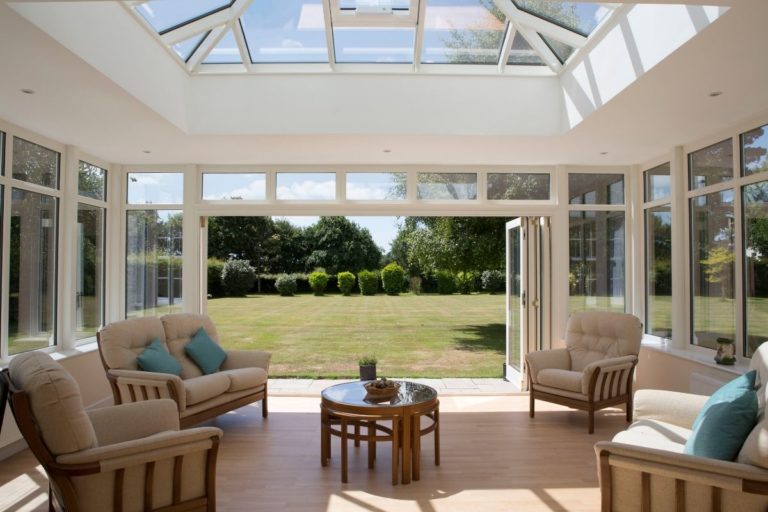
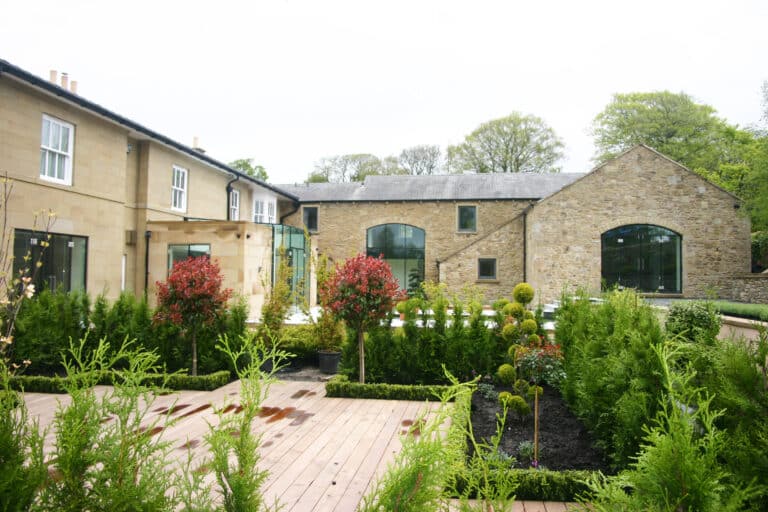
Beautiful modern conservatory with large glass panels and comfortable seating area
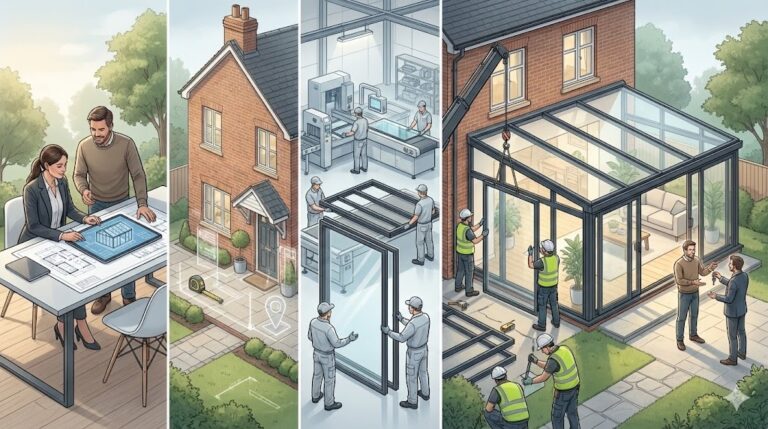
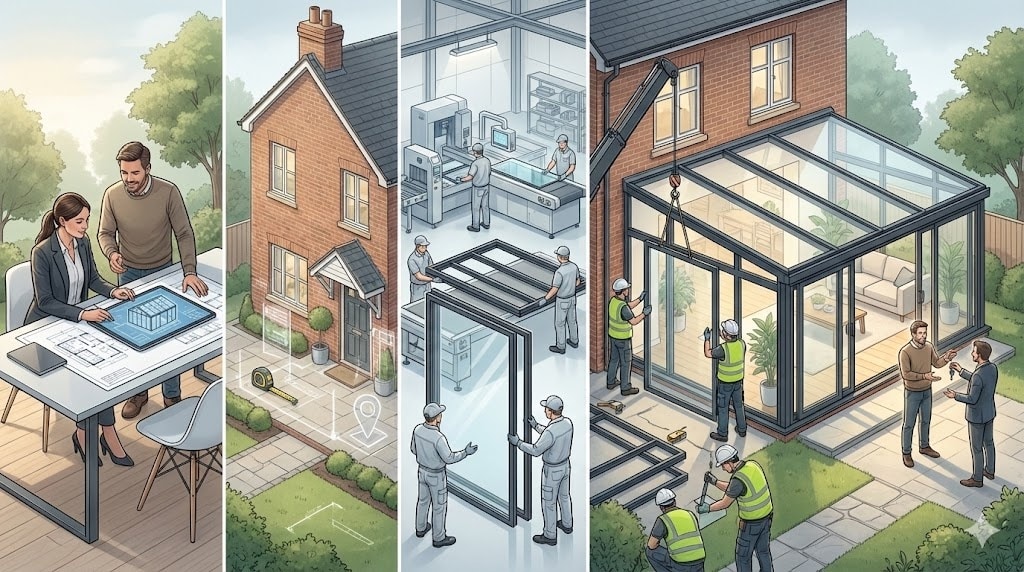
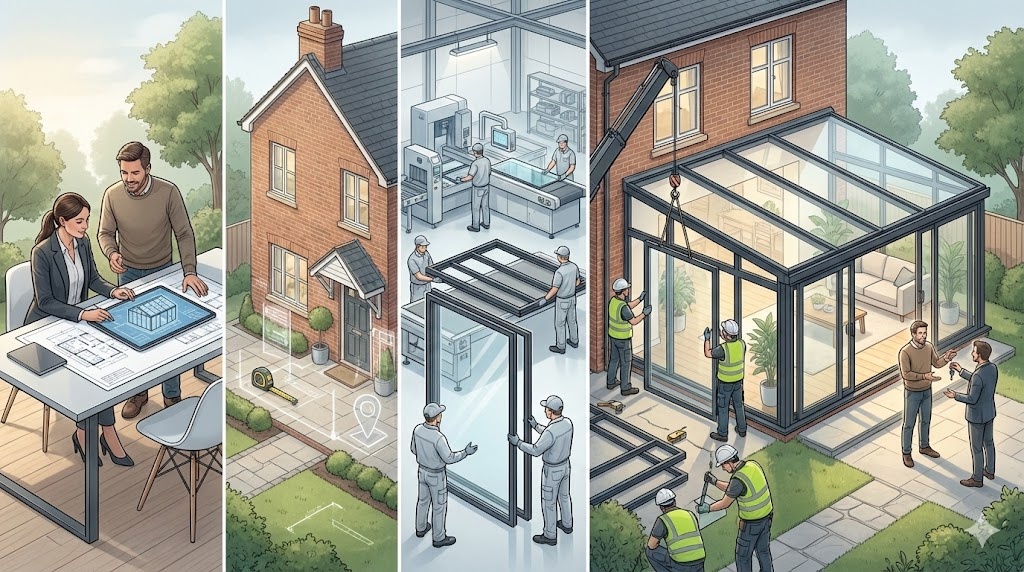
Every Room Outside project follows our proven 8-stage process, ensuring quality results and complete peace of mind
Building a conservatory, orangery, or glass room represents one of the most significant investments you can make in your home. Unlike buying furniture or redecorating, this is a construction project that requires careful planning, expert design, and skilled installation. At Room Outside, we have refined our process over hundreds of successful projects across Kent, Surrey, Sussex, and London. This guide walks you through every step, from your first enquiry to the moment we hand over the keys to your new living space.

Why Process Matters

A conservatory or glass room is not a product you simply order and receive. It is a bespoke construction project that must integrate seamlessly with your existing property, meet all relevant Building Regulations, perform thermally in all weather conditions, and add genuine value to your home.

The difference between a successful project and a problematic one often comes down to process. Companies that skip steps, rush decisions, or fail to communicate create the horror stories you read about online. Our structured approach eliminates these risks whilst keeping your project on track and on budget.

No Surprises

Detailed quotation covering every element with no hidden costs

Quality Results

Skilled craftsmen and premium materials on every project

Peace of Mind

Dedicated project manager throughout your entire journey

Timeline Clarity

Realistic schedules with milestone updates

Budget Control

Fixed pricing with no hidden extras or escalations

Full Compliance

Building Regulations certification included

Our 8-Stage Building Process

Every Room Outside project follows this proven process, refined over years of experience and hundreds of successful installations across the South East.

1

Initial Enquiry and Response

Same day to 48 hours

Your journey begins when you contact us. Whether you call on 01243 538999, complete our online form, or email us directly, we respond promptly.

  • Gather basic information about your project
  • Confirm we cover your location (Kent, Surrey, Sussex, Hampshire, London)
  • Discuss your vision, requirements, and budget expectations
  • Arrange a convenient date for your home design consultation
Professional customer service representative taking notes during phone consultation
2

Home Design Consultation

1.5 to 2.5 hours at your property

This is where your project truly begins. One of our experienced designers visits your home to understand your property, requirements, and vision.

  • Examine the proposed location and check existing foundations
  • Note potential obstacles (manholes, trees, boundaries)
  • Discuss how you will use the space and explore style preferences
  • Provide expert guidance on what is achievable
  • Explain planning permission and Building Regulations implications

This consultation is completely free and carries no obligation.

Designer meeting with homeowners reviewing architectural plans at kitchen table
3

Design Development and Quotation

5 to 10 working days

Following your home visit, our design team develops detailed proposals tailored to your requirements and budget.

  • Detailed floor plans and elevation drawings
  • 3D visualisations helping you see the finished result
  • Material specifications and colour options
  • Itemised quotation with no hidden costs
  • Estimated project timeline
Architect working on 3D computer renderings of home extension design
4

Design Refinement and Agreement

Variable depending on complexity

Most clients want to discuss their proposal, ask questions, and often make adjustments. This stage ensures you are completely happy before we proceed.

  • Walk through every element of the design
  • Modify dimensions, materials, or finishes as required
  • Add or remove features to meet your budget
  • Confirm final design and sign contract
  • Pay deposit to secure your build slot

We will not proceed until you are completely satisfied.

5

Planning and Building Regulations

1 to 8 weeks depending on requirements

Before construction can begin, we ensure your project complies with all relevant regulations.

  • Assess whether planning permission is required
  • Prepare and submit applications on your behalf
  • Liaise with planning authority throughout
  • Handle Building Regulations submissions
  • Coordinate all required inspections

Planning Permission Facts

Many conservatories fall within Permitted Development rights and do not require planning permission. Properties in conservation areas or listed buildings usually require consent. We assess this during your consultation and handle all paperwork on your behalf.

6

Pre-Construction Preparation

1 to 2 weeks

With approvals in place, we prepare everything needed for a smooth construction phase.

  • Final specifications sent to manufacturing
  • Materials ordered to match your timeline
  • Site preparation and access routes planned
  • Installation team assigned and briefed
  • Confirmation of start date and daily schedule
Aluminium window frames and glass panels ready for conservatory installation
7

Construction and Installation

2 to 6 weeks depending on project

This is when your new space takes shape. Our skilled installation teams transform your design into reality.

  • Week 1: Foundations and base construction
  • Week 2-3: Frame assembly and structure
  • Week 3-4: Glazing, roofing, and weatherproofing
  • Week 4-5: Internal finishes and electrical work
  • Week 5-6: Final completion and snagging

Our teams arrive at agreed times, keep you informed daily, and tidy the site at the end of each day.

Construction workers installing framework for glass extension
8

Quality Inspection and Handover

1 to 2 days

Before we consider any project complete, it must pass our rigorous quality inspection.

  • Frame alignment and secure fixing checks
  • Glazing installation and seal inspection
  • All systems tested and commissioned
  • Walk-through demonstration of all features
  • Handover of documentation and warranties

We do not consider a project complete until you are completely satisfied.

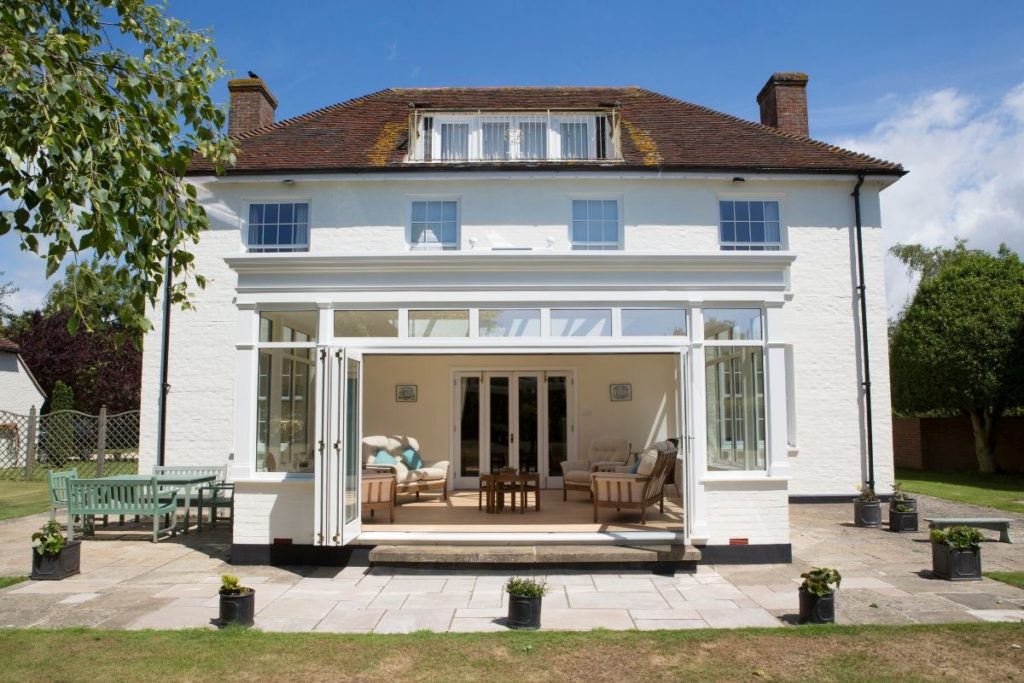
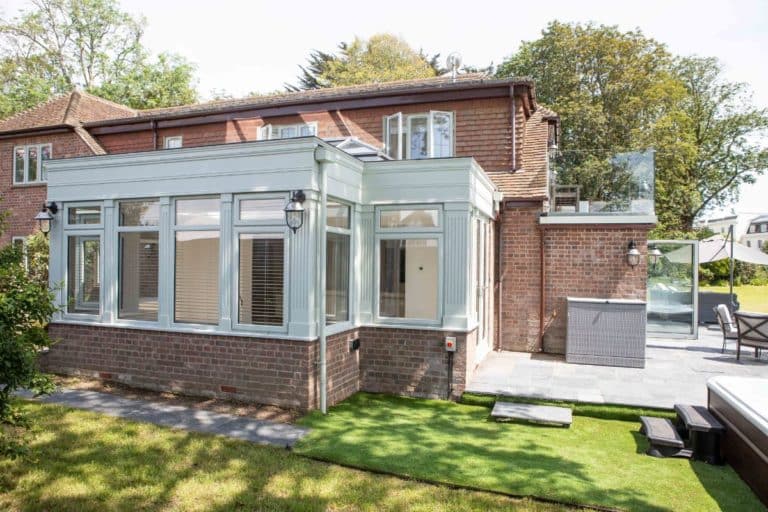
Completed luxury conservatory with bi-fold doors opening to garden
Modern conservatory with bi-fold doors opening to patio
Modern Conservatory
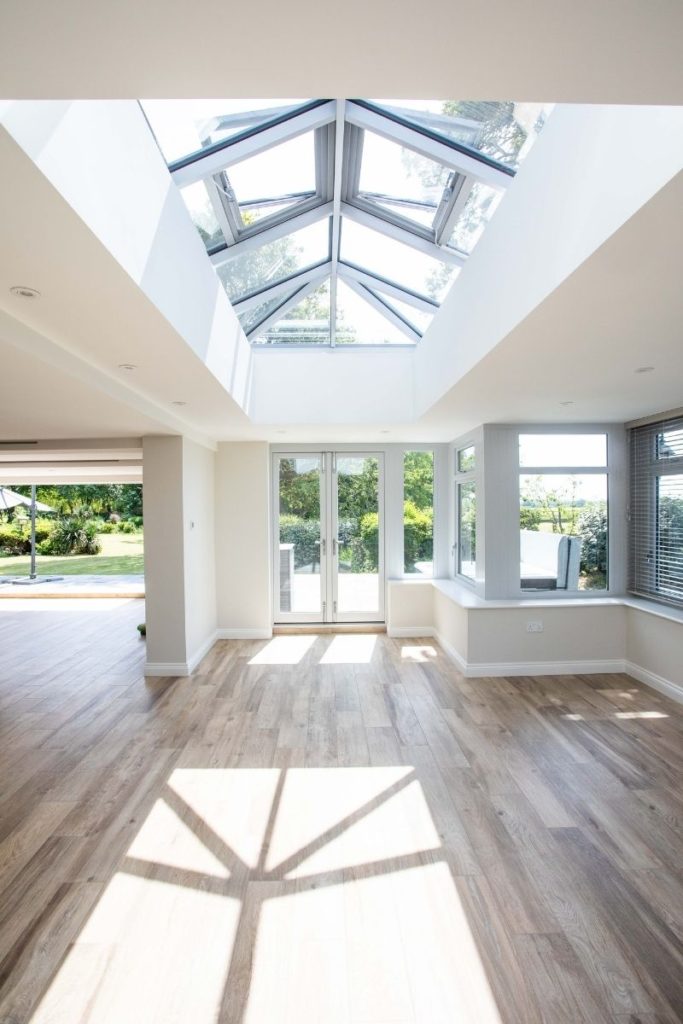
Elegant orangery extension with lantern roof
Traditional Orangery
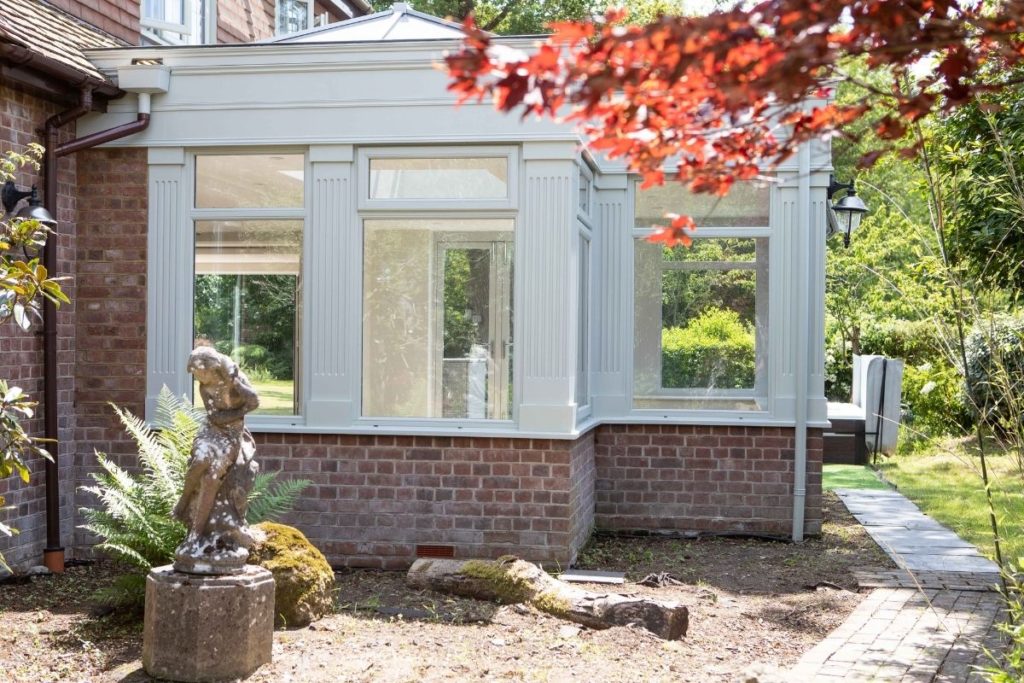
Contemporary glass room with floor to ceiling windows
Contemporary Glass Room
Kitchen extension with glass roof and skylights
Kitchen Extension

Project Timelines: What to Expect

Every project is unique, but here are typical timelines for different project types:

Project Type Design Phase Approvals Manufacturing Installation Total
Standard Conservatory 2 weeks 1-2 weeks 4-6 weeks 2-3 weeks 10-15 weeks
Orangery 2-3 weeks 2-4 weeks 5-7 weeks 3-5 weeks 14-22 weeks
Premium Glass Room 3-4 weeks 4-8 weeks 6-8 weeks 4-6 weeks 19-30 weeks
Standard Conservatory
Design Phase 2 weeks
Approvals 1-2 weeks
Manufacturing 4-6 weeks
Installation 2-3 weeks
Total Timeline 10-15 weeks
Orangery
Design Phase 2-3 weeks
Approvals 2-4 weeks
Manufacturing 5-7 weeks
Installation 3-5 weeks
Total Timeline 14-22 weeks
Premium Glass Room
Design Phase 3-4 weeks
Approvals 4-8 weeks
Manufacturing 6-8 weeks
Installation 4-6 weeks
Total Timeline 19-30 weeks

Factors That Can Affect Your Timeline

May extend timeline: Planning permission requirements, complex structural work, listed building consent, conservation area restrictions, adverse weather, bespoke material requirements.

May shorten timeline: Permitted Development eligibility, standard specifications, good site access, favourable weather, quick decision-making.

After Handover: Ongoing Support

Our relationship does not end at handover. We provide ongoing support to ensure your new space continues to perform beautifully.

10-Year Structural Warranty

Complete protection on frames and sealed glass units

2-Year Moving Parts Warranty

Coverage for doors, windows, and mechanisms

Dedicated Aftercare

Priority response for any issues or questions

Our Commitment to You

We stand behind our work. If something is not right, we will make it right. Our aftercare team is available for annual service packages, spare parts, adjustments, and advice on cleaning and care. Your investment is protected for years to come.

What Our Clients Say

“From start to finish, the Room Outside team were professional, communicative, and delivered exactly what they promised. Our new orangery has transformed how we use our home.”

JT
James and Sarah T.
Sevenoaks, Kent
★★★★★

“We were nervous about such a big project, but the process was so well managed that we never felt stressed. The quality is outstanding and the team were a pleasure to have around.”

MR
Michael R.
Guildford, Surrey
★★★★★

Areas We Cover

Room Outside provides bespoke conservatories, orangeries, and glass rooms across the South East of England. Our experienced teams work throughout:

Kent Surrey Sussex Hampshire London Sevenoaks Guildford Chichester Brighton Tunbridge Wells Canterbury Maidstone

Not sure if we cover your area? Check our full coverage map or call us on 01243 538999 to confirm.

Frequently Asked Questions

How long does it take to build a conservatory?

A standard conservatory typically takes 12 to 16 weeks from initial consultation to completion. This includes 2 weeks for design, 1-2 weeks for approvals, 4-6 weeks for manufacturing, and 2-3 weeks for installation.

How long does the installation phase take?

Installation typically takes 2 to 3 weeks for a standard conservatory, 3 to 5 weeks for an orangery, and 4 to 6 weeks for a premium glass room. Weather and site access can affect these timelines.

Do I need planning permission for a conservatory?

Many conservatories fall within Permitted Development rights. This depends on size, position, and previous extensions. Properties in conservation areas or listed buildings usually require planning consent.

What are Building Regulations?

Building Regulations ensure construction meets safety standards. Most conservatories under 30 square metres with independent heating are exempt. Larger structures require Building Regulations approval.

How much does a conservatory cost?

Standard conservatories start from around £15,000, orangeries from £25,000, and premium glass rooms from £40,000. We provide detailed quotations with no hidden costs after your consultation.

What deposit do you require?

We require a deposit of typically 10% to 25% to secure your build slot and begin ordering materials. Full payment terms are clearly stated in your contract.

What warranty do you provide?

We provide a 10-year warranty on frames and sealed glass units, plus a 2-year warranty on moving parts. All components carry manufacturer warranties.

Do you work in my area?

We cover Kent, Surrey, Sussex, Hampshire, and parts of London. Call us on 01243 538999 or check our website to confirm we service your location.

Can I see examples of your work?

Visit our online gallery or ask about visiting completed projects near you. We are proud of our work and happy to show our portfolio of conservatories, orangeries, and glass rooms.

What makes Room Outside different?

Our structured 8-stage process, transparent pricing, skilled craftsmen, and genuine commitment to customer satisfaction. We do what we promise, when we promise, to the standard we promise.

How do I get started?

Contact us to arrange your free home design consultation. Call 01243 538999, complete our online form, or email us. We respond within 48 hours to arrange a convenient appointment.

Can I make changes after design is agreed?

Minor adjustments can usually be accommodated. Significant changes may affect timeline and cost. We recommend finalising your design thoroughly before manufacturing begins.

Questions about our process? Call our team on 01243 538999

Ready to Start Your Journey?

Every successful project begins with a conversation. Whether you have a clear vision or just an idea, our team is ready to help you explore your options across Kent, Surrey, Sussex, and London.
roomoutsideuk
03rd March, 2024

12 Top Questions Answered About Building a Conservatory or Orangery

If you’re thinking about extending your home by building a conservatory or orangery, you’re probably in the research phase. You may have questions about designing and building your dream glass extension.

As specialists with over five decades of experience, we’ve helped hundreds of homeowners create stunning and practical glass spaces. To make things easier, we’ve put together this quick-fire guide to the 12 most frequently asked questions about conservatories and orangeries.

1. How much does a conservatory or glass extension cost?

This  depends on size, materials and finish.

  • Off-the-shelf options start at £5,000, but they often lack customisation and quality.
  • A bespoke uPVC conservatory starts from £20,000, including materials and installation.
  • Orangeries typically start at £35,000, though smaller ones may cost less.
  • Frameless glass structures are premium, starting at £30,000 for small designs, with most ranging between £40,000 – £80,000.

When comparing prices, always check what’s included—some low-cost options exclude groundwork and installation.

2. What is the difference between an orangery and a conservatory?

The key difference is the roof:

  • A conservatory has at least 75% of its roof made of glass.
  • An orangery has a solid flat roof with a glass lantern in the centre.

Other glass extension terms include:

  • Garden room – Often used to describe a conservatory, but traditionally has a solid tiled roof.
  • Sunroom – A general term for a bright, relaxing space.

Garden room – Often used to describe a conservatory, but traditionally has a solid tiled roof.

Sunroom – A general term for a bright, relaxing space.

3. What frame materials can I choose from?

Your choice of frame affects appearance, durability, and maintenance. Options include:

  • uPVC – Affordable, low maintenance, and sleek.
  • Hardwood timber– Traditional and sustainable, requiring occasional painting or staining.
  • Aluminium -Modern, lightweight, and strong.
  • Frameless glass – Contemporary and ultra-modern.
  • Oak– premium timber with a luxurious feel.

Each material has different colour and finish options, allowing you to create a look that suits your home.

4. Will a glass room be too hot or too cold?

Not if you choose the right glass and insulation.

5. Do I need planning permission to build a conservatory?

Usually, no, as long as it meets Permitted Development Rights:

  • It must be less than 6 metres (semi-detached) or 8 metres (detached) from the house.
  • It should not extend beyond the front of your property.
  • Listed buildings or homes in conservation areas require planning permission.

For more details, check Planning Portal UK or read our “Do I Need Planning Permission?” guide.

6. How large can my conservatory be under permitted development?

  • Terraced/Semi-detached homes – Up to 6 metres.
  • Detached homes – Up to 8 metres.

If your home has previous extensions, this may reduce the size allowance.

7. Do I need sign-off from building regulations?

Not always. No approval is needed if your conservatory:

  • Is under 30m².
  • Has external-grade doors/windows separating it from the main house.
  • Uses separate heating from the main home.
  • Has at least 50% glazed walls and a glass or translucent roof.

If you plan to remove doors or create an open-plan space, building regulations approval is required.

8. Can I add a glass extension on a listed property?

Yes, but planning permission is required.

  • Listed building consent is essential for Grade I and II properties.
  • Hardwood timber is often preferred over uPVC for aesthetic reasons.
  • Frameless glass box extensions are increasingly popular, as they blend modern design with historical character.

9. Can I open up my home to my conservatory?

Yes! However, structural support and building regulations approval are required.

10. Do I need foundations for a conservatory?

Yes. Strong foundations prevent subsidence, ensure durability, and improve insulation. A conservatory cannot be built on open ground or a temporary base.

11. How long will the build take?

Conservatories and orangeries are quicker to build than traditional extensions.

  • Most projects take 6 to 12 weeks from groundworks to completion.
  • Frameless glass structures may take longer due to custom fabrication.

With less disruption than a brick-built extension, a glass room is a great way to expand your home quickly and efficiently.

12. Do conservatories require a lot of maintenance?

Regular maintenance ensures your conservatory lasts for decades.

  • uPVC & aluminium – Low maintenance, requiring occasional cleaning.
  • Timber – Needs repainting/staining every 2-4 years.
  • Glass – Should be cleaned every 3-6 months.

For best results, consider professional conservatory cleaning to maintain clarity, seals, and moving parts.

Still have questions?

We hope this guide has answered your most common conservatory questions. If you need more details or personalised advice, our team is happy to help.

💬 Get in touch today for expert guidance and a no-obligation quote!

Get Your Questions Answered

Contact Us
roomoutsideuk
20th December, 2022

Permitted Development Rights: Everything You Need to Know About Adding a Conservatory

Do You Need Planning Permission for a Conservatory?

One of the most common questions we get is about permitted Development (PD) Rights for conservatories and other glass extensions. Many homeowners want to avoid the hassle and cost of applying for planning permission.

Fortunately, in many cases, you won’t need planning permission if your conservatory meets PD criteria. However, this depends on several factors, including size, location, and previous extensions.

Permitted Development Rights

How Big Can a Conservatory be Without Getting Planning Permission?


Permitted Development allows you to build a conservatory up to a certain size without needing planning approval.

  • 6 metres from the original rear wall for semi-detached and terraced homes.
  • 8 metres from the original rear wall for detached houses.

However, the total extension allowance applies to the entire property, not just the conservatory. If your home has already been extended, your permitted size may be reduced.

What is Permitted Development?

Permitted Development allows homeowners to make improvements to their property without applying for planning permission. However, the work must meet specific government guidelines.

In recent years, these rules have become more flexible, making it easier to add glass extensions. For example, the government introduced:

  • A fast-track option for two-storey extensions.
  • Looser restrictions on converting commercial buildings into residential properties.

Because these rules change over time, it is always a good idea to check with your local planning authority before starting a project.

What Home Improvements Are Allowed Under Permitted Development?

If your project meets PD criteria, you may be able to:

  • Build a small single-storey rear or side extension.
  • Construct a double-storey rear or side extension.
  • Add a porch to the front of the house.
  • Remove internal walls to create an open-plan layout.
  • Convert a garage, basement, or loft into a usable space.
  • Install a balcony, roof lights, or dormer windows.

However, some properties have restrictions, including:

  • Listed buildings or homes in Areas of Outstanding Natural Beauty (AONB) – Additional approvals are required.
  • Flats and maisonettes – PD rights do not apply, as modifications could impact neighbouring properties.

Even if your conservatory falls under PD, all work must still comply with Building Regulations to ensure structural safety and energy efficiency.

Using Permitted Development Rights for Conservatories

While PD makes conservatory extensions easier, there are key things to keep in mind:

  • PD applies only to the original building. If your home was extended before, the previous work reduces your allowance.
  • Larger conservatories may require planning permission. Planning officers will assess how much larger or higher the structure is before granting approval.
  • Always confirm with your local authority. Mistakes can be costly if your project doesn’t meet regulations.

Where to Find More Information

If you’re planning a conservatory under Permitted Development, here’s what to do next:

  • Check the Planning Portal – This UK government website explains PD rules in detail.
  • Consult your local authority – They can confirm if your conservatory meets PD criteria.
  • Get expert advice – Our team has over 50 years of experience in glass extensions and can guide you through the PD process.

Why This Matters: If your conservatory does not qualify under PD, you may have to apply for retrospective planning permission. If refused, enforcement action could require you to remove the structure, leading to unnecessary expenses.

Need Expert Advice on Permitted Development Rights for Conservatories?

Our specialist team can:

  • Answer your questions about PD rules and glass extensions.
  • Assess your project and advise if planning permission is needed.
  • Help you navigate regulations to avoid costly mistakes.
  • Contact us today for a no-obligation consultation!

Discuss your project, PD rights and get a no-obligation quote

Get a Quote
roomoutsideuk
11th August, 2022

What Are the Key Features of an Orangery?

Below, we explore the key orangery features that make these glass extensions a desirable addition to any home.

Orangeries first appeared in the 17th century, originally designed as greenhouses to protect plants during the winter months. Today, they have evolved into stylish and versatile home extensions. Thanks to temperature-controlled glass, modern orangeries are comfortable year-round, making them a popular choice for homeowners looking to add light-filled living space.

But what exactly defines a modern orangery?

1. Orangery as a Garden Room or Home Extension

An orangery can serve as a standalone garden room or as an integrated home extension. Whether used for relaxation, entertaining, or a workspace, it provides a stylish and functional space connected to the outdoors.

2. Brick Walls for a Traditional Finish

One of the key orangery features, unlike conservatories, is the solid brickwork in their design. Homeowners can choose from dwarf walls, full-height brick walls, or supporting brick pillars. The materials can also be matched to the original property’s masonry, ensuring a seamless look.

3. Frame Options to Suit Your Style

Orangery frames come in three main materials:

  • Timber – A premium, sustainable choice with a timeless appearance.
  • Aluminium – Sleek, modern, and energy-efficient.
  • uPVC – A cost-effective, low-maintenance option available in a variety of colours.

Each material offers unique benefits, allowing homeowners to achieve their desired aesthetic while staying within budget.

4. Large Windows for Maximum Natural Light

One of the most distinctive orangery features is its large windows, which create a bright and airy atmosphere. Traditionally, these include full-height arched sash windows with a dwarf wall and pillar configuration on the south-facing aspect.

To enhance comfort, modern temperature-controlling glass can reduce glare, improve insulation, and block harmful UV rays. Homeowners can even opt for self-cleaning glass, which helps keep windows spotless for longer.

5. A Choice of Stylish Doors

An orangery can be fitted with a variety of door styles to suit your space, including:

  • French doors – A classic choice that enhances elegance.
  • Single doors – Ideal for easy access without taking up much space.
  • Bi-fold doors – Perfect for opening up an entire wall to the garden, creating a seamless indoor-outdoor connection.

Bi-fold doors can also open up the orangery to the main house, allowing for open-plan living while maintaining the option to close off the space when needed.

6. Open-Plan Living for a Spacious Feel

For homeowners looking to create open-plan extensions, removing part of the external wall between the house and the orangery can enhance the sense of space. In some cases, a structural lintel may be required to support the wall. This option is ideal for expanding kitchens, dining areas, or living spaces.

7. A Flat Roof with a Stunning Lantern

Most orangeries feature a flat roof, which creates an interior pelmet ceiling where spotlights can be installed for a cosy atmosphere. However, Of all the orangery features, what is perhaps the most striking element of an orangery roof is the central glass lantern, which can:

  • Span the entire roof or just a portion, depending on the design.
  • Create a grand focal point for the room.
  • Allow natural light to flood the space, making it feel open and airy.

Choosing high-performance glass is essential for temperature control and year-round comfort.

8. Integrated Heating for Year-Round Comfort

Like any other part of your home, an orangery can be equipped with an integrated heating system. Popular options include:

  • Central heating radiators – A straightforward way to connect the orangery to your existing heating system.
  • Underfloor heating – A discreet and luxurious option.
  • Electric heating – Flexible and easy to install.
  • Wood-burning stoves – A cosy and stylish addition for colder months.

For maximum efficiency, it’s best to choose independent temperature control, allowing you to heat the orangery separately from the main house.

9. Window Treatments for Comfort & Style

To regulate temperature and enhance privacy, consider adding window treatments such as:

  • Wooden shutters – Help maintain warmth in winter and keep the room cool in summer.
  • Blinds – Available in roller, sail, or Roman styles, offering both practicality and elegance.

10. Luxury Indoor-Outdoor Living

The versatility of an orangery makes it a perfect extension for kitchens, dining areas, and living spaces. It allows homeowners to feel connected to their garden while enjoying the comfort of an indoor environment. Beyond traditional uses, an orangery can also serve as a:

  • Home office
  • Gym or yoga studio
  • Music or art room
  • Guest suite

11. Traditional Orangery Design for Period Homes

Orangeries can be tailored to complement listed buildings or homes in conservation areas. Using traditional materials and period features, they can blend seamlessly with historic architecture while adding modern comfort and functionality.

12. Contemporary Orangery Designs for Modern Homes

For a sleek and minimalist look, a contemporary orangery may feature:

  • Slimline aluminium frames
  • Full-glass walls
  • Minimalist roofing
  • Seamless floor finishes

This style works well in new-build homes or properties designed with modern aesthetics in mind.

Design Your Dream Orangery Today

A modern orangery is a versatile, elegant, and functional addition to any home. Whether you’re drawn to traditional charm or contemporary design, an orangery can be tailored to suit your needs.

If you’re considering adding an orangery to your home, contact Room Outside today for expert advice and a no-obligation quote.

Start Planning Your Dream Orangery Extension

Get a Quote
Room Outside
15th March, 2021

Should You Move or Improve Your Home?

A study by Lloyds Banking Group found that 60% of homeowners are looking for more space in their homes. But is it better to move or invest in extending your existing home?

Moving House v Home Improvements

“Moving house. The two words that strike the most dread into people…” BBC News Magazine. Whilst moving to a new home might seem like the obvious solution for gaining extra space. It offers a fresh start and the opportunity to find a home that better suits your needs. However, moving can be one of life’s most stressful experiences. A 2015 study of 7,000 adults found that 61% ranked moving as the most stressful event, ahead of relationship breakdowns, divorce, and starting a new job.

Beyond the stress, there are significant costs to consider, including:

  • Estate agent fees
  • Conveyancing fees
  • Stamp duty tax
  • Removal company costs
  • Time off work

Instead of moving, many homeowners choose to improve their current property. The same Lloyds Bank study found that 44% of homeowners had undertaken major renovation projects or planned to do so in the next year, a trend that increased during lockdown.

If your main reason for moving is location—such as being closer to work—or if your home lacks renovation potential, then moving may be your only solution. However, if you love your neighbourhood and simply need more space, extending your home could be the better choice.

Should You Move or Improve?

If you love your location but need more space, renovating and extending can be a smarter alternative. While any home improvement project comes with challenges, it is often less stressful and costly than moving. You could also achieve your dream home much faster.

Even if you buy a new property, chances are you’ll want to personalise it or make renovations. This means extra costs and time spent making it feel like home.

Extending Your Home v Moving

A Glass Room Extension can provide an instant space solution. It is often simpler, quicker, and more affordable than a traditional brick extension. Depending on the design, you may not even need planning permission.

Will a Home Extension Add Value?

A well-designed, bespoke glass extension can add up to 7% to your property’s value, according to Phil Spencer’s article in The Telegraph. However, a poorly planned conservatory could have the opposite effect. Choosing the right design and materials is key to ensuring your investment enhances your home.

When planning your extension, consider how you will use the space. Some homeowners worry that a glass room might be too hot in summer and too cold in winter. However, with temperature-controlled glass, your room stays warm and cosy in winter while remaining cool in summer, making it a comfortable living space all year round.

Why Choose Room Outside to Improve Your Home?

At Room Outside, we are specialists in luxury Glass Room Extensions. Unlike double-glazing window and door companies that sell conservatories as an add-on, we focus solely on high-quality glass structures.

  • Over 50 years of experience
  • 30-year guarantee
  • Superior New Generation Glass for year-round comfort
  • Full-service offering – design, planning, groundwork, and installation

Move or Improve? Make the Right Choice

A bespoke Glass Room Extension designed to your specifications, with perfect temperature control all year round, could be the ideal way to create extra space in your home. Contact us today for a complimentary, no-obligation quotation and expert advice on your project.

Get a No-Obligation Quote

Get a Quote