

Glass extension planning guide
Want to enjoy your glass extension by summer 2027? Here is when you need to start.
If you want to be enjoying a new glass extension next summer, the most important decision is not the design. It is when you start. This guide works the calendar backwards so you can plan with calm, not compromise.
Quick answer
For a summer 2027 glass extension, start the design conversation in autumn 2026.
If you want a glass extension, orangery or conservatory finished, furnished and ready by the end of May 2027, the safest window for your first design consultation is September to November 2026. That gives time for design, surveys, any planning or party wall steps, bespoke manufacturing and spring installation.
A typical glass extension takes around 12 to 20 weeks from consultation to finished room for standard projects, and 20 to 32 weeks for premium bespoke builds, before adding extra time for planning permission where needed. For summer 2027 use, autumn 2026 is the smart starting point.
If you want to be enjoying a new glass extension next summer, the most important decision is not the design. It is when you start.
A bespoke glass structure is not an off-the-shelf purchase. It is designed, approved where needed, manufactured and installed. Each stage takes real time, and the queue gets longer as spring approaches.
This page works backwards from the season you want to enjoy, so the project feels planned rather than rushed.
A free design consultation can confirm your route, planning position and likely timeline before you commit to professional fees. Arrange a consultation with Room Outside.
01 / The honest timeline
The stages that decide when your glass extension is ready.
Most projects move through design, approvals, manufacturing and installation. The exact route depends on property, specification and planning status.
Stage 1
Design and consultation: 2 to 4 weeks
Site visit, survey, design development and specification. Rushing this stage is false economy because every later decision depends on it.
Stage 2
Approvals: 1 to 8+ weeks, if required
Many projects proceed under permitted development. Where planning permission is needed, allow around 8 weeks for determination. Conservation areas, listed buildings and party wall matters can add time.
Stage 3
Manufacturing: 4 to 8 weeks
Bespoke frames, sealed glass units and joinery are made to order. This is a production queue, and that queue is usually longest in spring.
Stage 4
Installation: 2 to 6 weeks
Allow two to three weeks for many standard conservatories, three to five for an orangery, and four to six for a premium glass room, subject to weather and groundworks.
Standard projects often span 12 to 20 weeks. Premium bespoke builds can span 20 to 32 weeks before planning permission or waiting time is added.
Every home is different. A design consultation lets us assess access, planning status, specification and build route, then explain the most realistic starting point. Book a free home consultation.
02 / Working backwards
If you want summer 2027, your project clock starts in 2026.
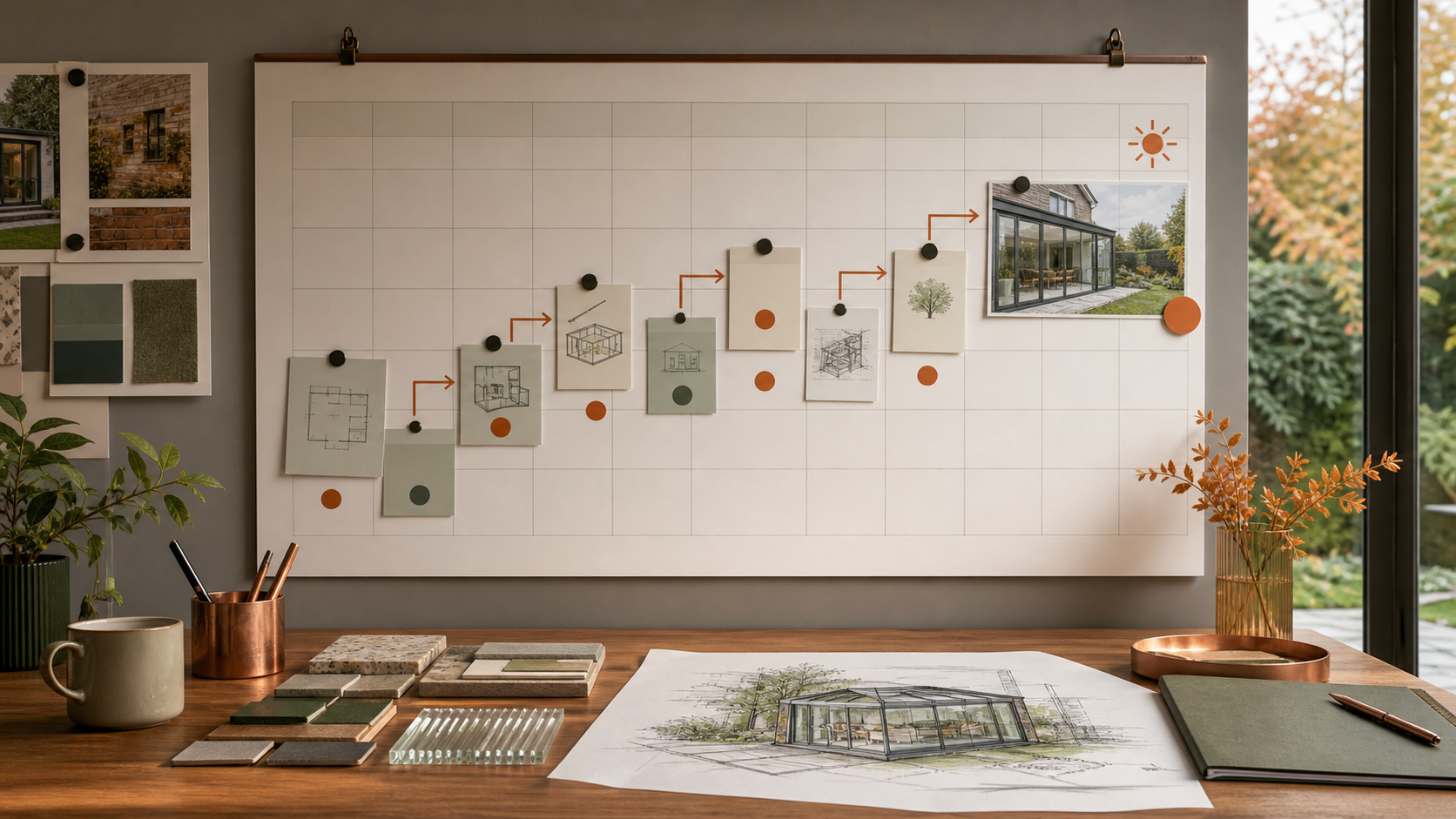
Assume you want the room finished, furnished and hosting its first lunch by the end of May 2027. This is the safer countdown.
| Target stage | Best window | Why it matters |
|---|---|---|
| First consultation | September to November 2026 | Confirms design direction, planning position, budget and whether the project can stay on track for summer. |
| Planning or approvals | November to December 2026 | Gives permission, party wall or conservation matters time to run without stealing spring installation time. |
| Manufacturing | January to February 2027 | Bespoke frames, glazing and roof components enter production before the peak-season queue builds. |
| Installation | March to April 2027 | Creates a realistic path to a finished, furnished glass extension by late May or early summer. |
- 1
Installation should start in March to April 2027
Early spring is when ground conditions improve and installation calendars begin to fill quickly.
- 2
Manufacturing should be commissioned by January to February 2027
That means your design is signed off and the specification is settled before the spring rush.
- 3
Planning, if needed, should be submitted by November to December 2026
This gives a more comfortable route through determination before manufacturing needs to begin.
- 4
Your design consultation belongs in September to November 2026
Autumn is quietly the smartest moment to start: better design attention, more schedule control and a stronger chance of a full first summer.
Starting in autumn is not waiting longer. It is buying back the summer you actually want.
We can work backwards from your preferred completion date and explain whether a conservatory, orangery or glass room is the best fit. Review the Glass Extensions Price Guide 2026 or request a free design consultation.
03 / Autumn advantage
Why autumn and winter starts beat spring starts.
Most people think about garden rooms when the sun comes out. That is exactly why spring is the hardest moment to join the queue.
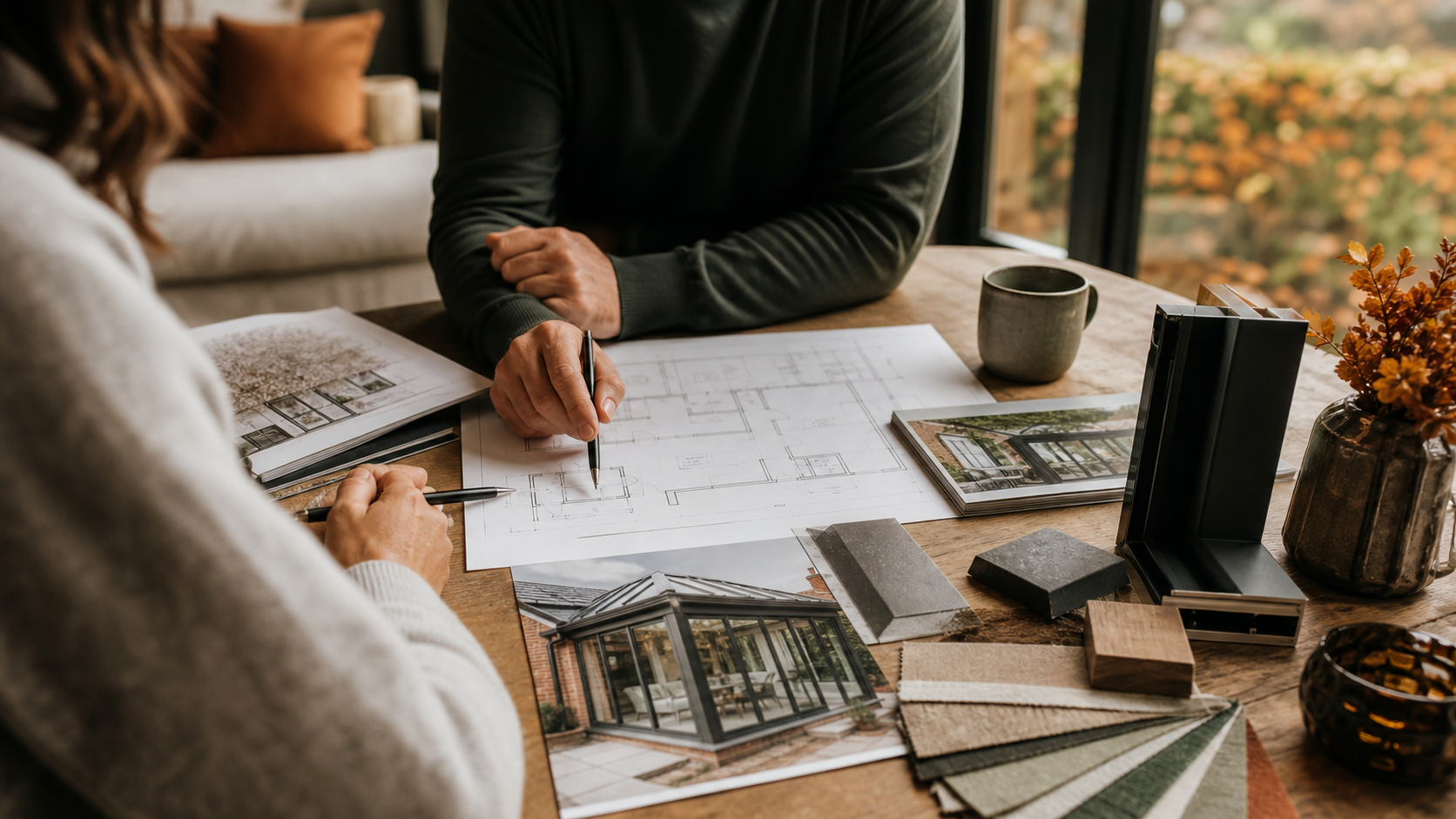
More design attention
Consultation and design teams usually have more space in the quieter months, so the project gets deeper thinking rather than peak-season throughput.
Planning runs over winter
The slowest bureaucratic stage can happen during the months you would not be using the garden room.
Groundworks are ready for spring
Foundations in early spring can avoid both frozen winter ground and the summer scramble.
A full first summer
The difference between starting in October and starting in March is often an entire summer of use at the other end.
If you are weighing up an orangery, conservatory or frameless glass extension, compare likely budgets in the Glass Extensions Price Guide 2026, then use a consultation to narrow the route for your home.
04 / If you are already late
Reading this in spring? Be strategic, not rushed.
A spring start does not have to be a bad project. It simply needs an honest target season.
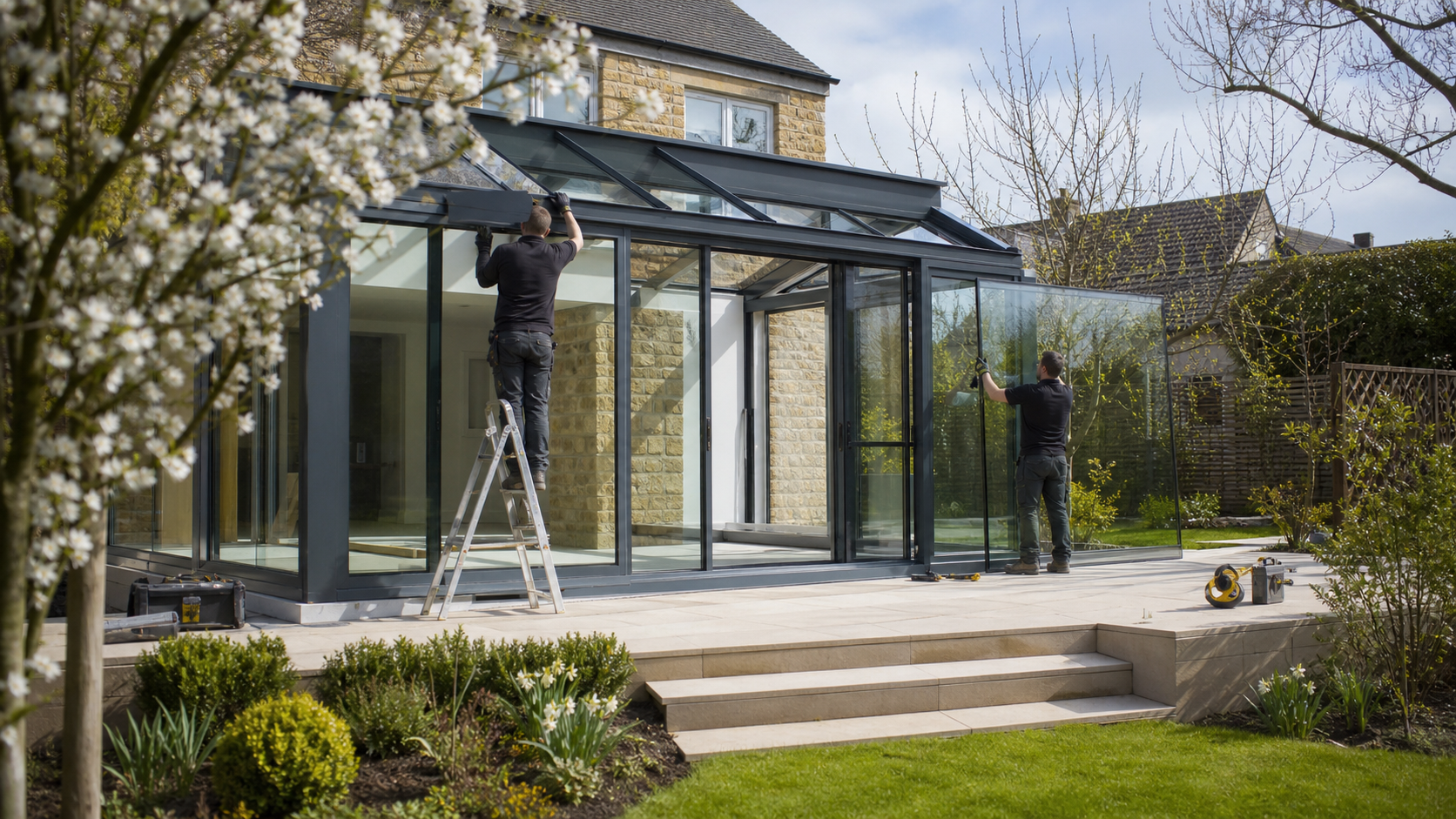
A spring start pointed at autumn completion can give you a beautifully finished room for one of the seasons glass rooms handle best: bright, warm space through October, November and winter, when the garden view matters most and the rest of the house feels darker.
What we would avoid is shrinking the design stage to chase a deadline. The room will be part of your home for decades. Six weeks saved in year one is a poor trade for a design compromise you live with for thirty.
The practical answer
If you start later than January, a May finish can still happen for some permitted-development projects with a standard specification, but you are relying on everything going right first time.
Send the brief now and we will explain whether a summer, autumn or winter completion is the sensible target. Start with a free design consultation.
Frequently asked questions
Planning questions, answered.
How far in advance should I plan a glass extension?
Start the design conversation 6 to 9 months before the season you want to enjoy the finished room. Allow longer for listed buildings, conservation areas or complex bespoke designs.
What is the fastest a glass extension can realistically be done?
A permitted-development project with a standard specification can sometimes complete in around 12 to 16 weeks from consultation. Anything dramatically faster deserves scrutiny of what is being skipped.
Is winter a bad time to build?
No. Groundworks are weather-dependent, but experienced teams plan around that. Manufacturing, approvals and design work are not stopped by winter.
Does the time of year affect the price?
The specification sets the price, not the season. However, starting in quieter months can protect availability of design time and installation slots.
When should I start for a room ready by May 2027?
For the safest route, book your design consultation between September and November 2026, especially if planning permission or a premium bespoke specification may be involved.
Continue your research
Useful next steps before you start.
The first step takes an hour
One consultation can turn summer 2027 from a wish into a working plan.
A free design consultation at your home answers the planning question for your property, gives you a real specification and puts the project into a realistic timeline.
Timescales vary by property, planning status, specification, weather and installation availability. A survey and consultation will confirm the right route for your home.