
Barn Conversion with Contemporary Frameless Glass Extension
How we transformed a stunning limestone barn into a modern family home using frameless structural glass throughout—from a dramatic entrance hall to a fully glazed glass box extension.
Project Overview
Project Highlight
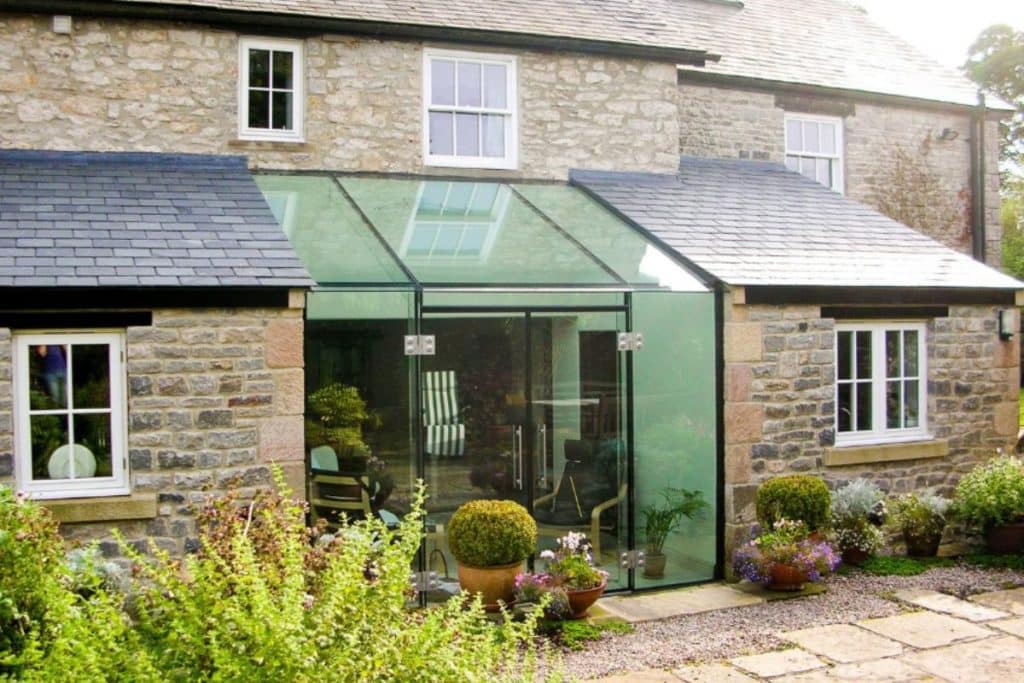
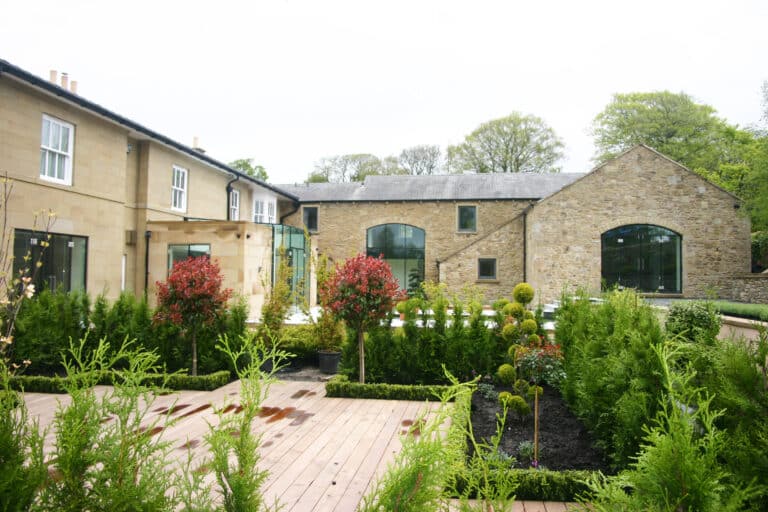
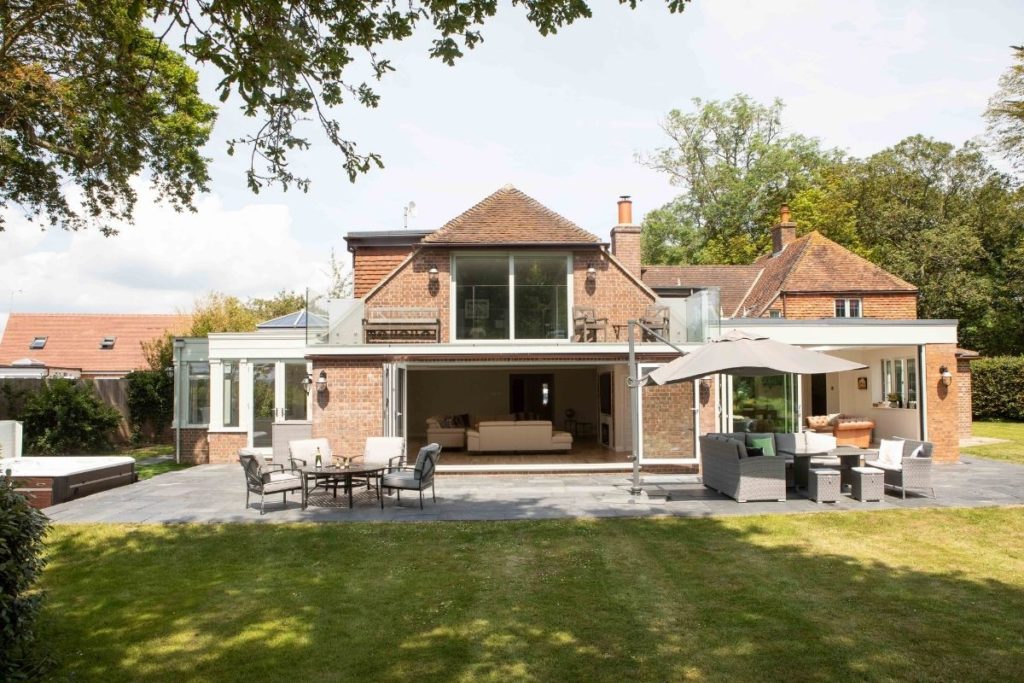
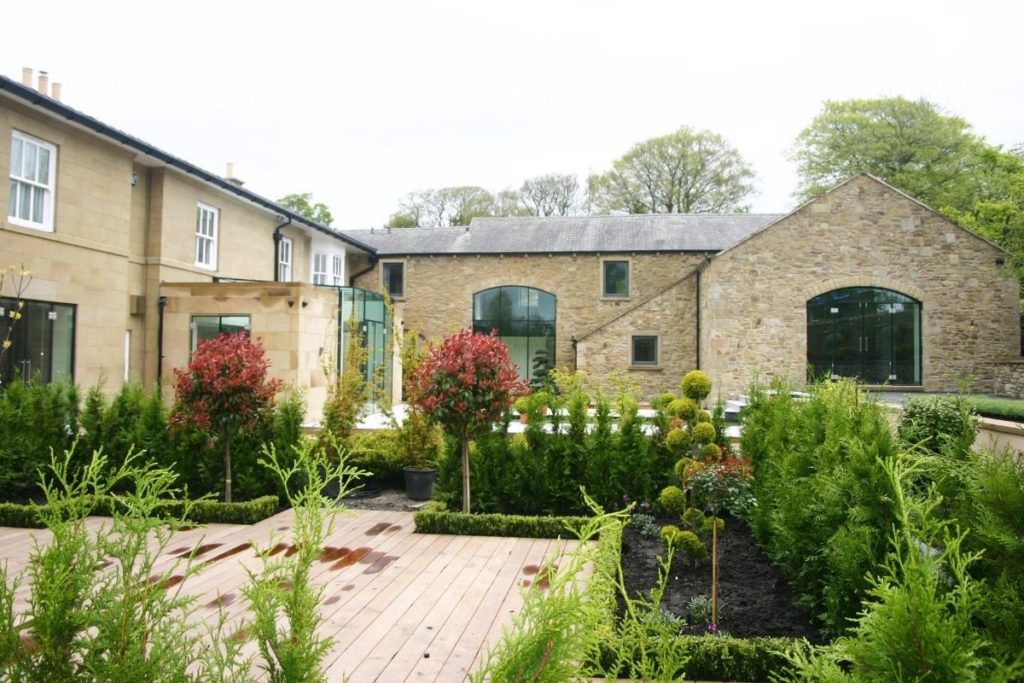
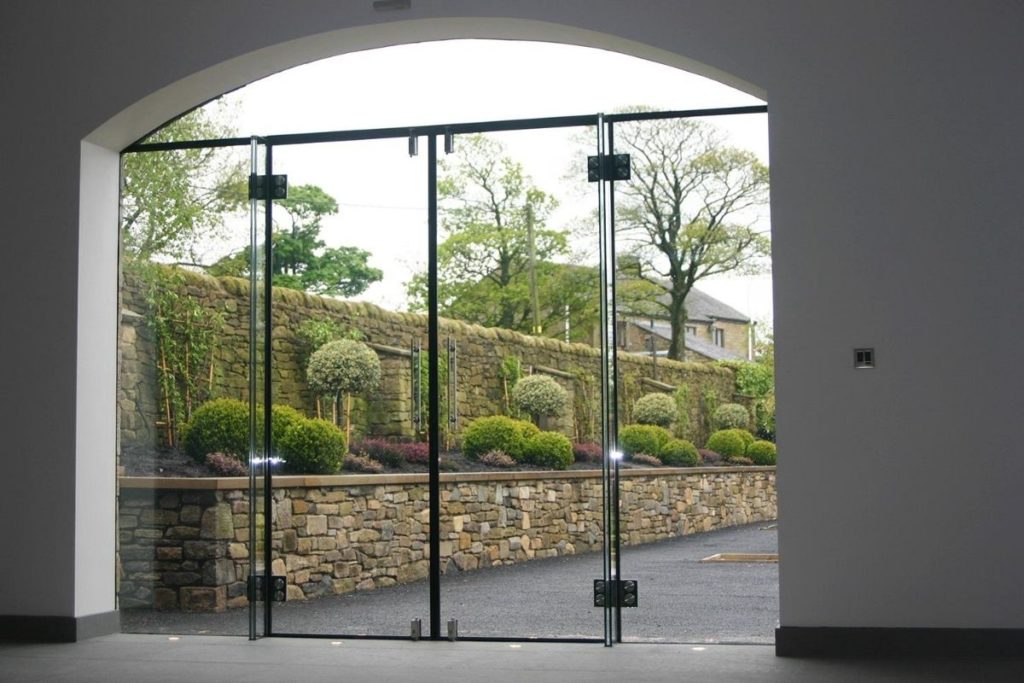
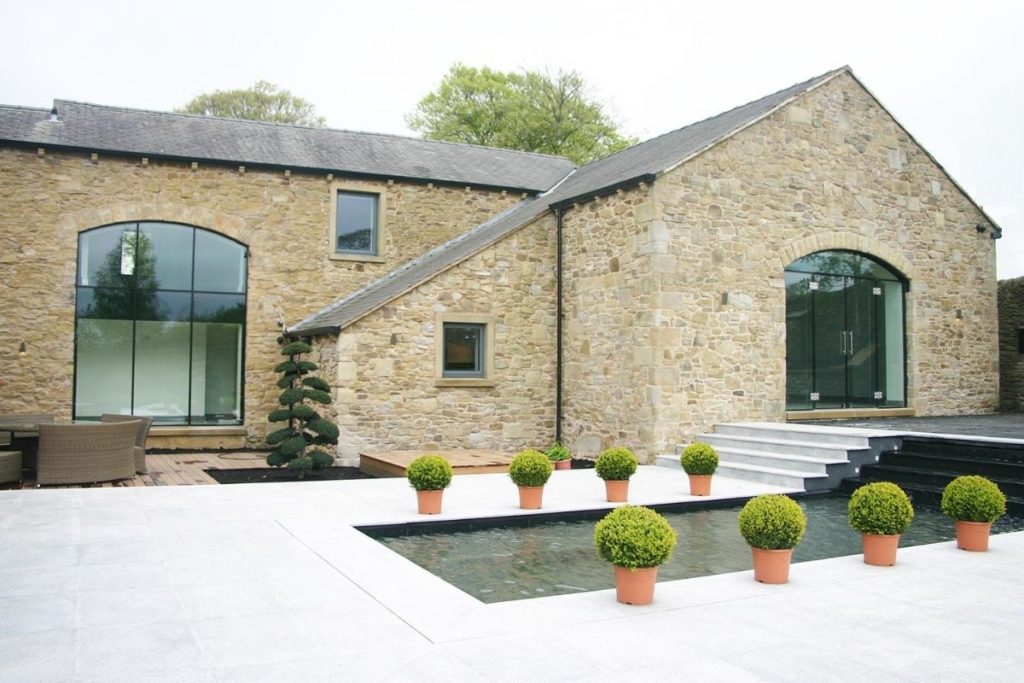
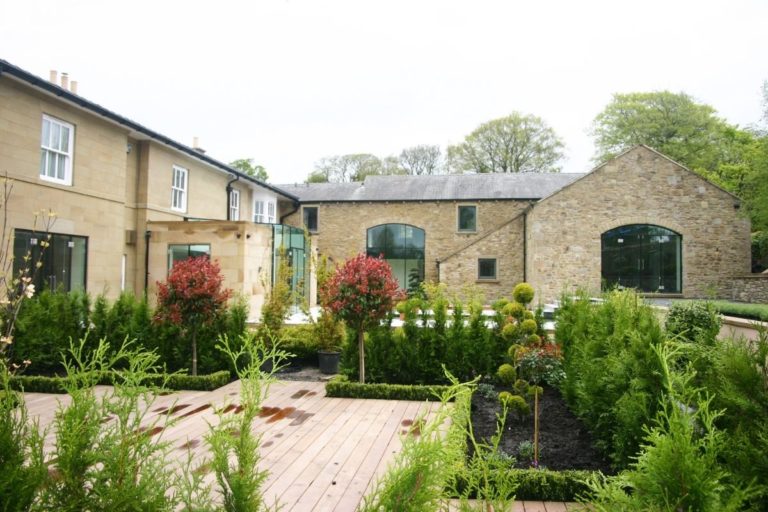
This stunning limestone barn conversion showcases the perfect blend of traditional charm and modern design. The homeowners undertook a comprehensive renovation, transforming the property into a beautiful family home. Room Outside installed contemporary frameless glass throughout, including maximising the full-height barn doors and archways, a dramatic frameless glass entrance hall, and a striking frameless glass box extension.
Key achievement: Creating a seamless visual connection between the historic limestone barn and contemporary glass additions, while ensuring year-round comfort through advanced temperature-control glazing technology.
Key Facts: Frameless Glass on Barn Conversions
- Glass type: Frameless structural glass eliminates traditional frames, creating clean, uninterrupted views
- Temperature control: Advanced glazing blocks up to 86% of solar heat while retaining warmth in winter
- Planning: Glass extensions are often favoured on heritage buildings as they create clear visual distinction between old and new
- Structural integrity: Modern structural glass can support roof loads and span large openings without visible frames
- Cost range: Frameless glass extensions typically cost £2,000-£3,500 per square metre
- Heritage compatibility: Glass doesn’t compete with historic fabric; it complements and reveals the original structure
- Year-round use: With proper glazing specification, frameless glass spaces are comfortable in all seasons
The Vision: Merging Heritage with Modern Innovation
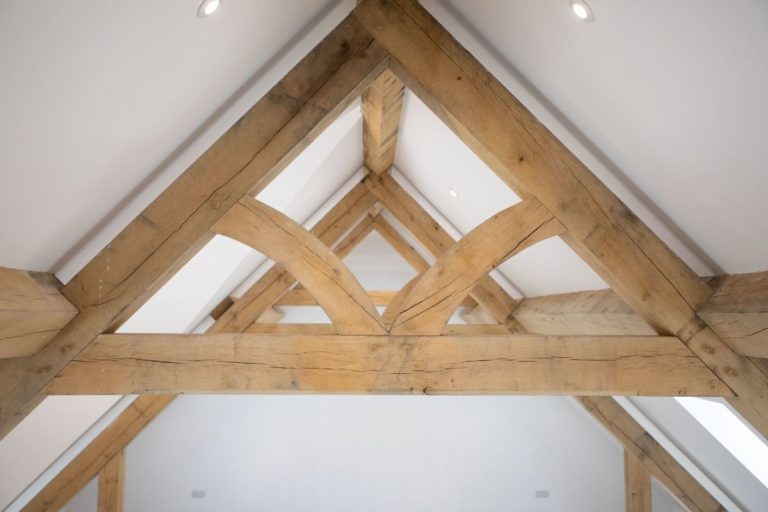
When the homeowners acquired this characterful limestone barn, they had a clear vision: transform it into a stunning family home that celebrated the building’s agricultural heritage while incorporating contemporary design elements. The original barn featured beautiful limestone walls, impressive full-height doorways, and dramatic archways—all of which they wanted to preserve and showcase.
The challenge was significant: how do you extend and modernise a historic barn without compromising its character? The answer lay in frameless structural glass. Unlike traditional conservatories or orangeries with visible frames, frameless glass creates a transparent envelope that reveals rather than conceals the original building.
Why Frameless Glass Was the Perfect Choice
The homeowners chose frameless glass for several compelling reasons:
- Visual transparency: Glass doesn’t compete with the limestone; it acts as a clear boundary between inside and outside
- Heritage sensitivity: Conservation officers often prefer glass additions because they’re clearly contemporary and don’t imitate historic styles
- Light maximisation: Full-height glazing floods interior spaces with natural light while framing garden views
- Seamless connections: Frameless glass creates uninterrupted sightlines between the barn’s interior and the landscaped gardens
- Year-round comfort: Modern temperature-controlled glass ensures comfort regardless of weather
Definition: What is Frameless Structural Glass?
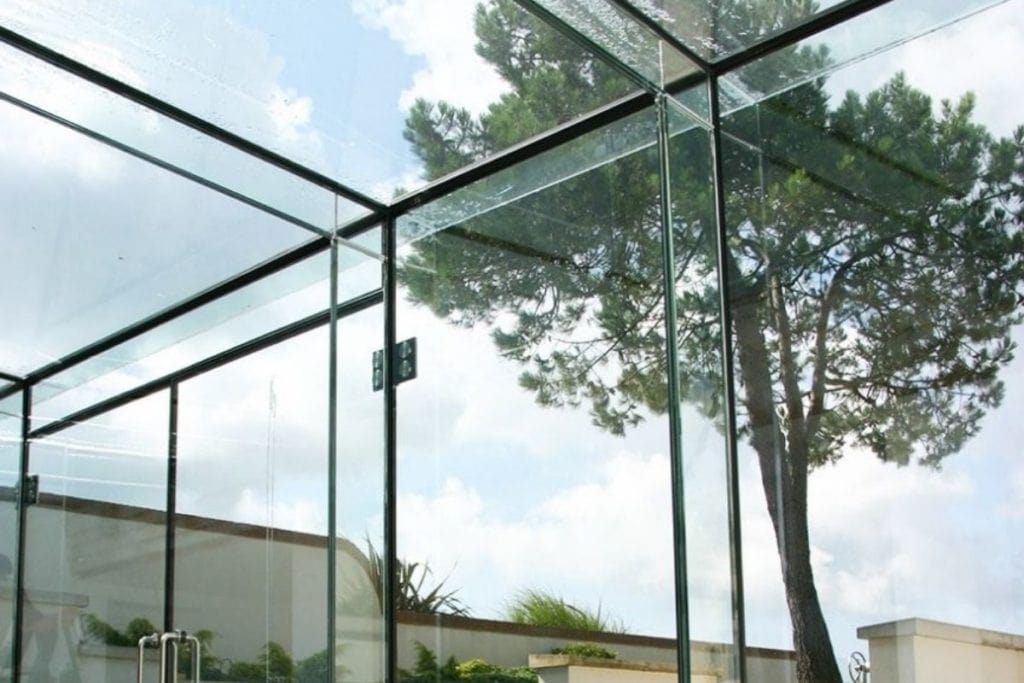
Frameless structural glass uses toughened or laminated glass panels as load-bearing structural elements, eliminating the need for traditional aluminium, timber, or uPVC frames. The glass itself provides structural support, with panels joined using specialist structural silicone or minimal stainless steel fixings.
This technology enables large glass spans, clean glass-to-glass corners, and dramatic floor-to-ceiling installations that would be impossible with framed systems. The result is maximum transparency with minimal visual obstruction.
Seamlessly Blending Old and New
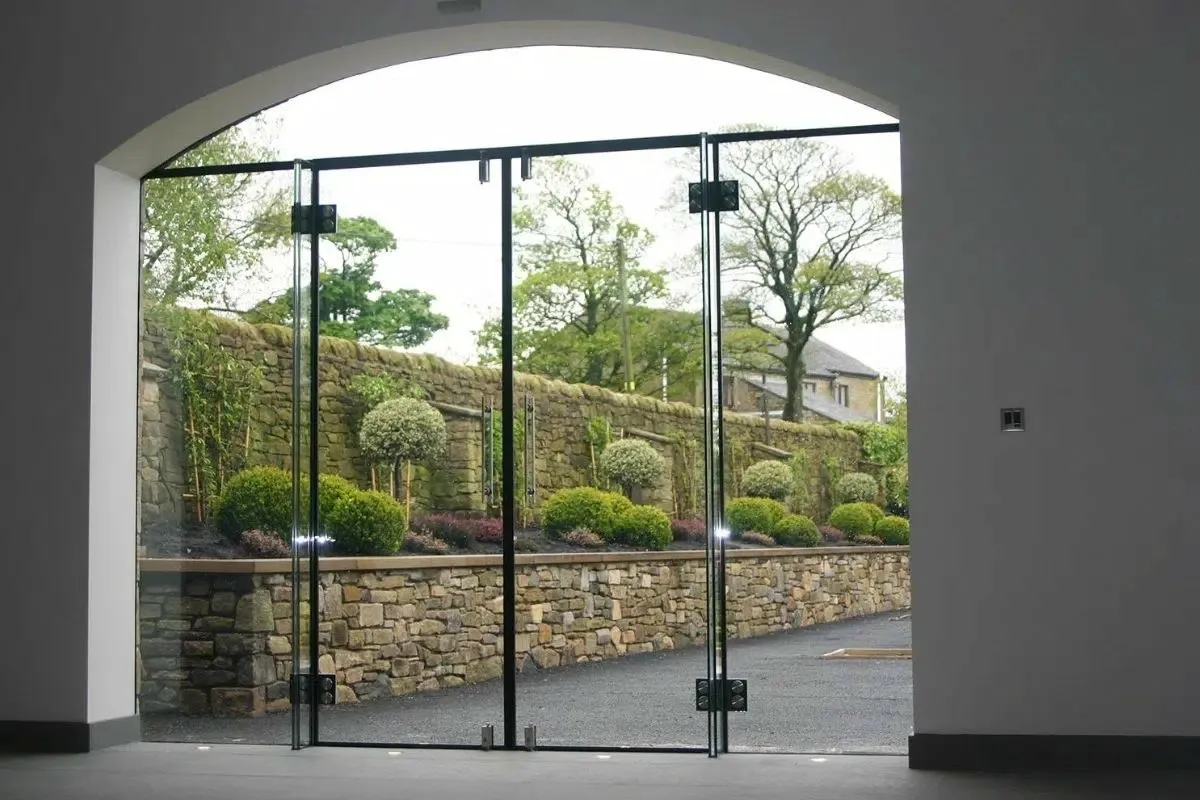
The homeowners wanted to merge the original barn’s historic character with a sleek, modern aesthetic. By using frameless structural glass, we created a perfect balance between heritage and innovation. The glass windows and doors provide uninterrupted views of the landscaped courtyard and gardens while allowing natural light to flood the interiors.
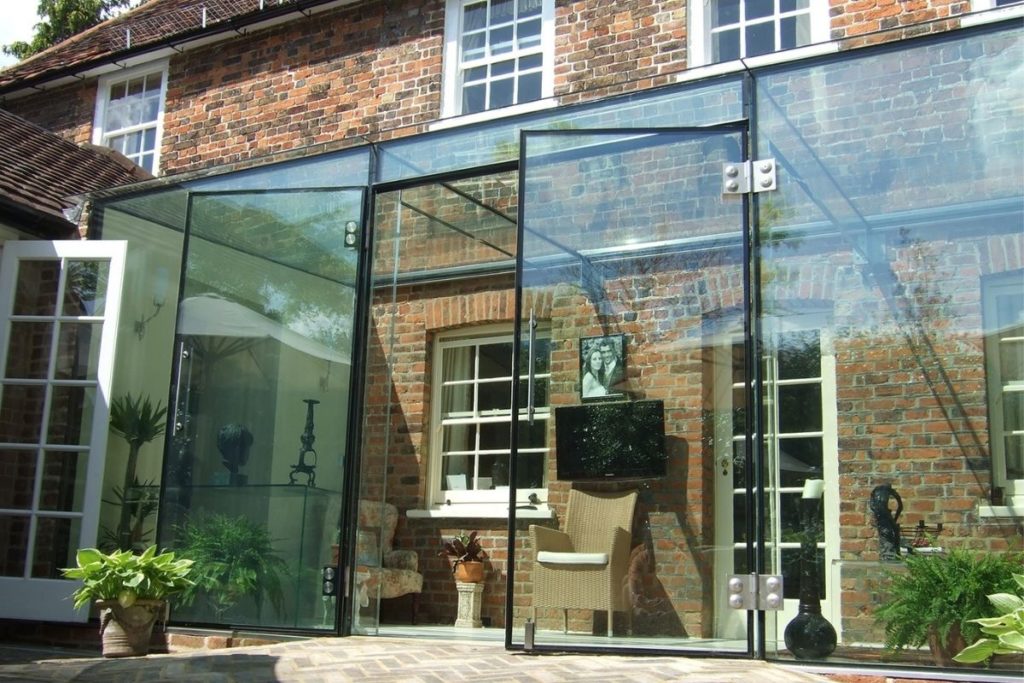
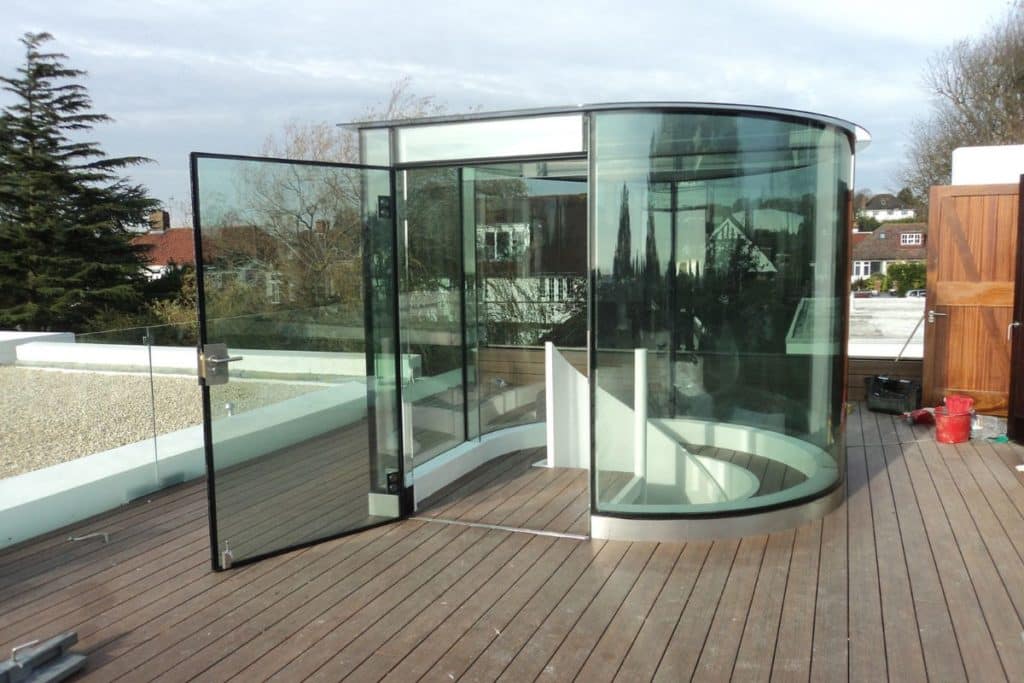
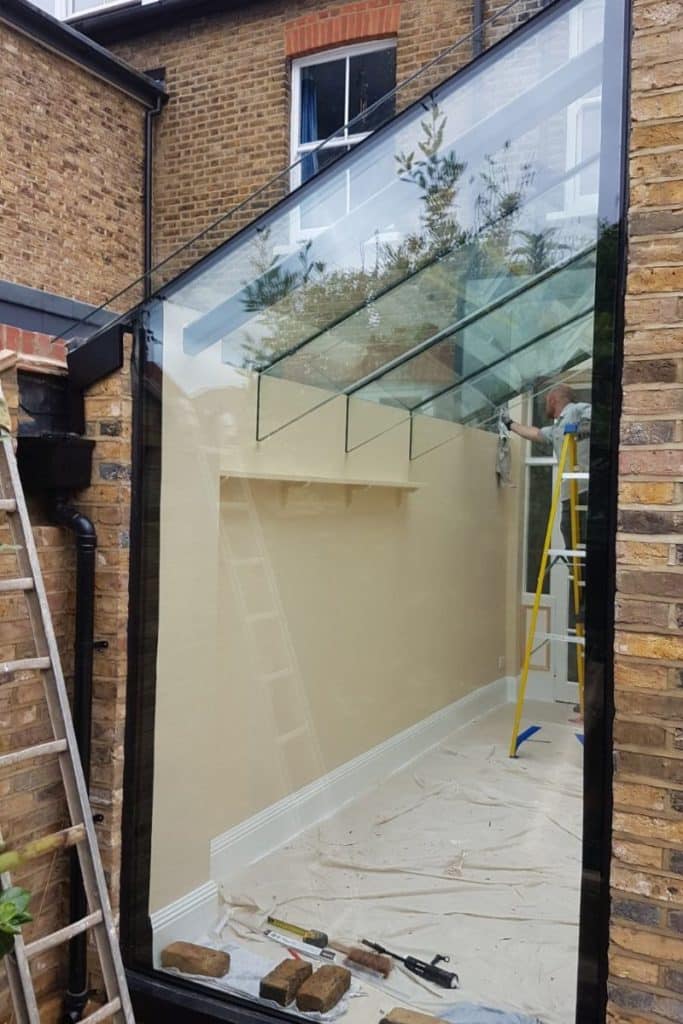
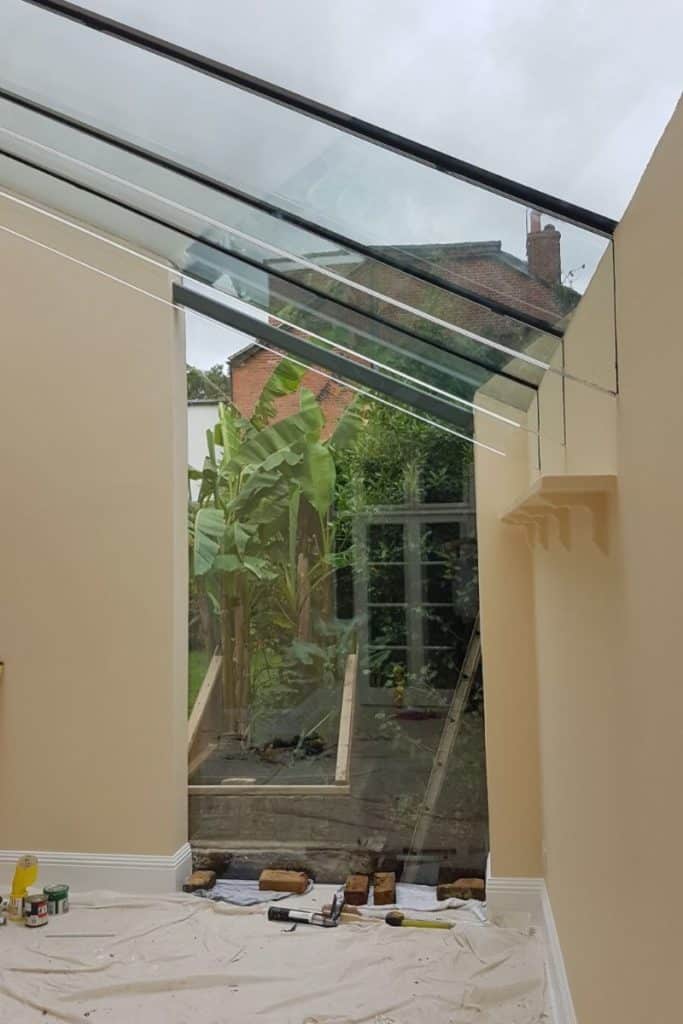
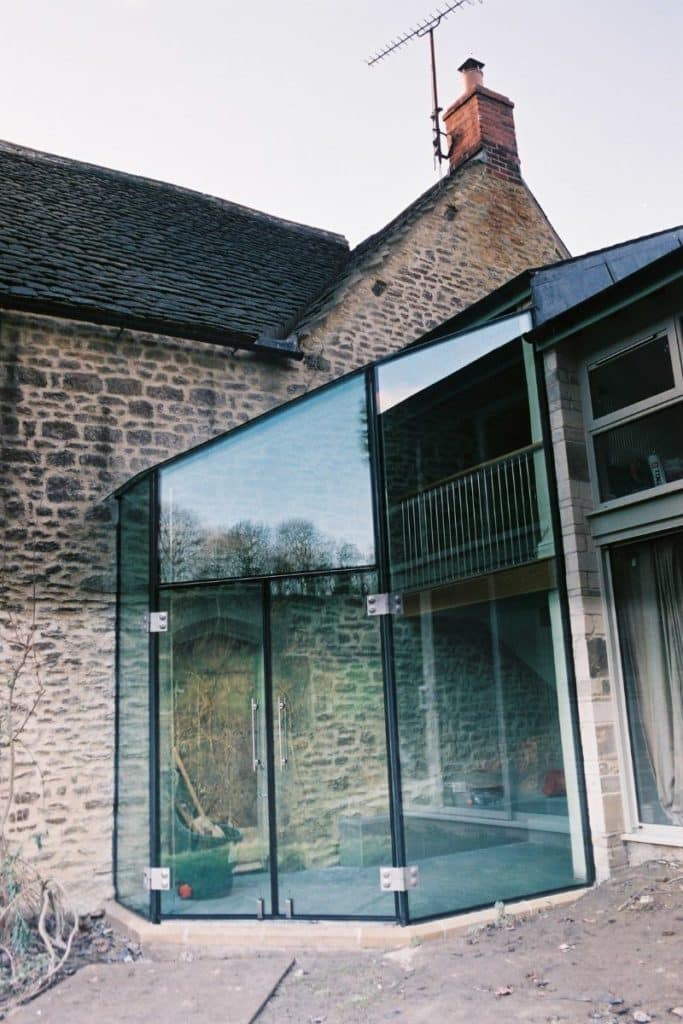
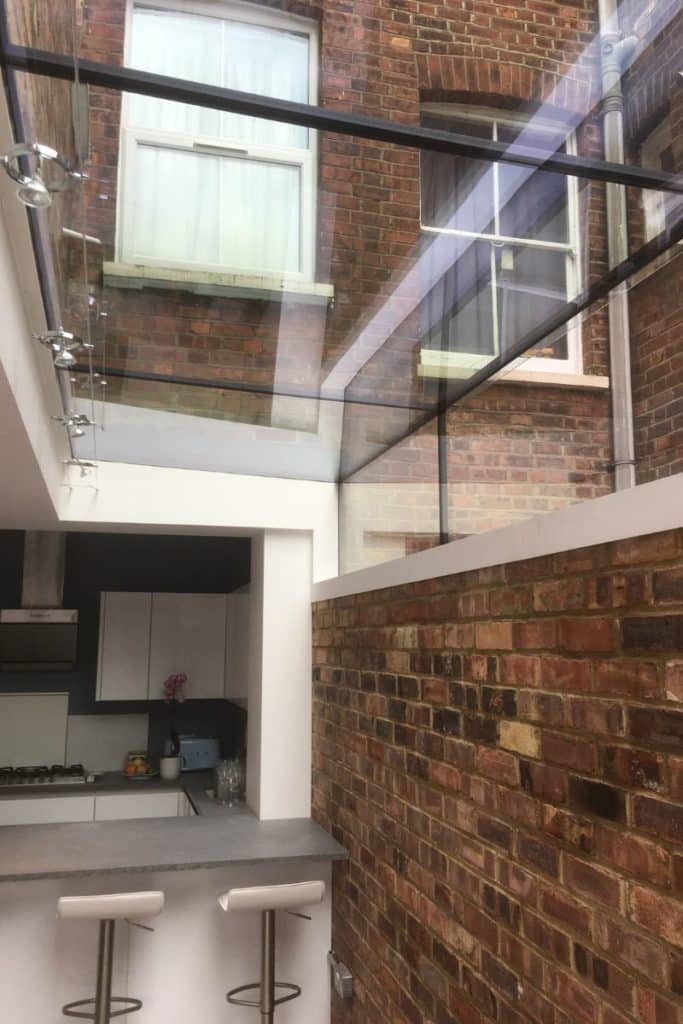
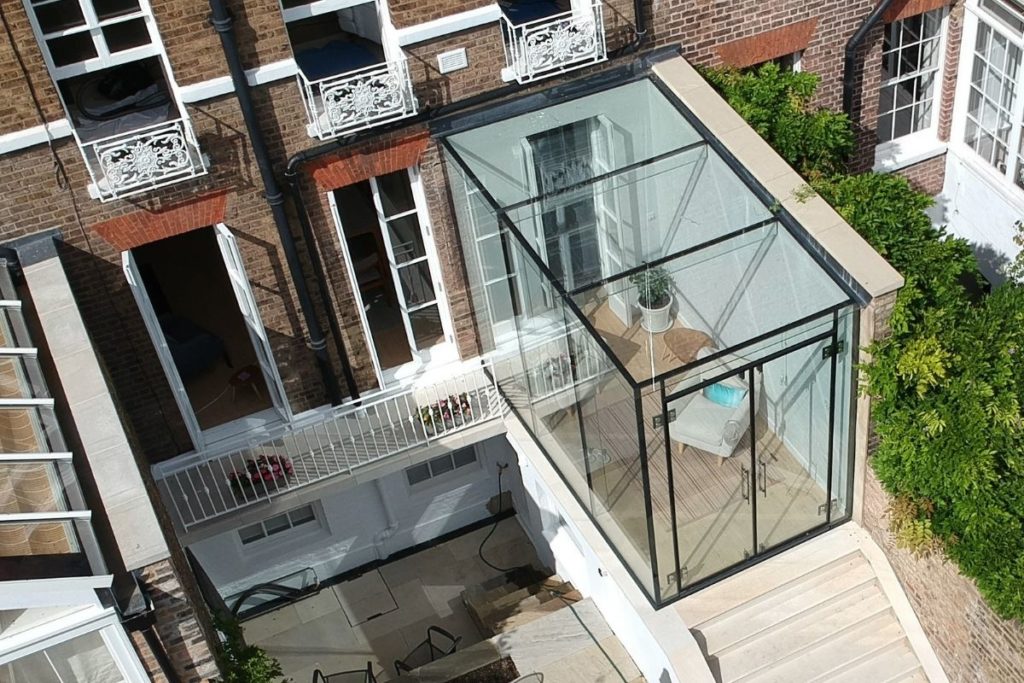
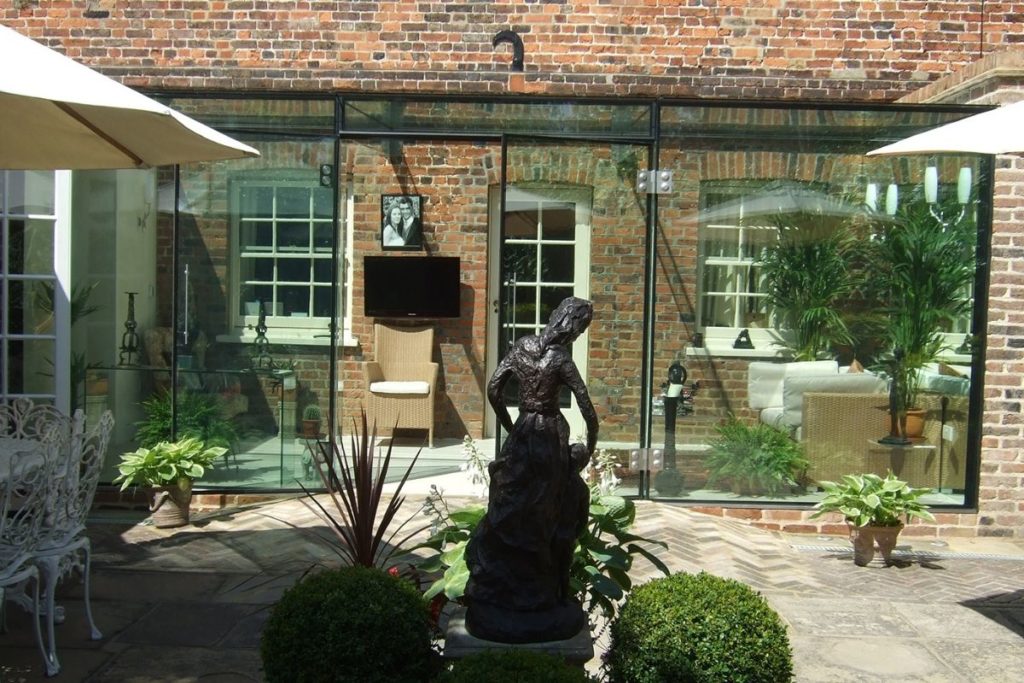
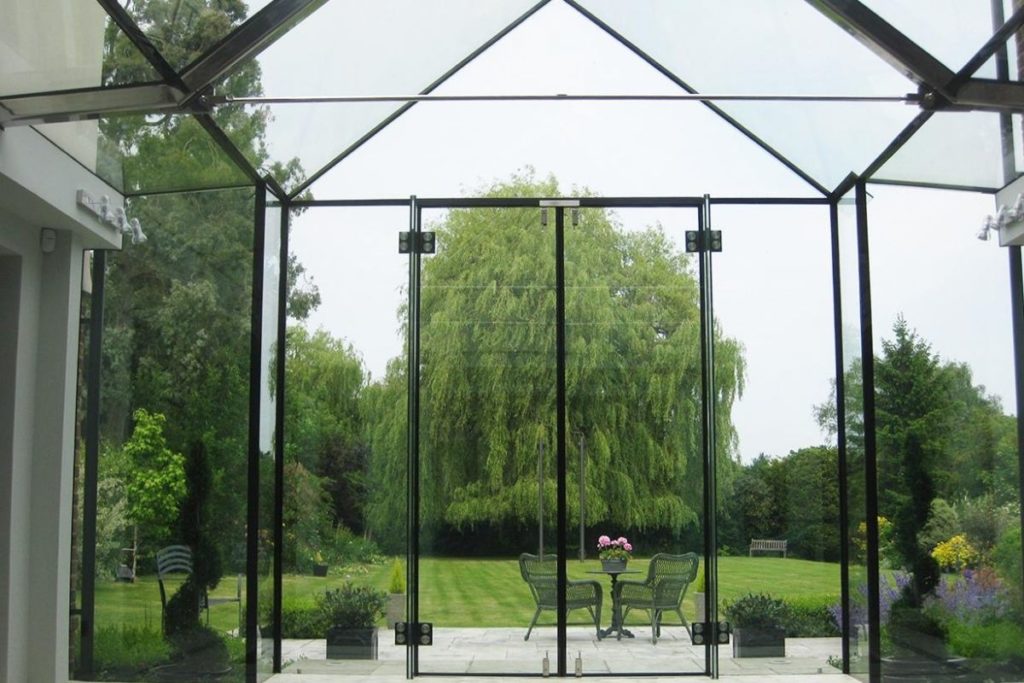
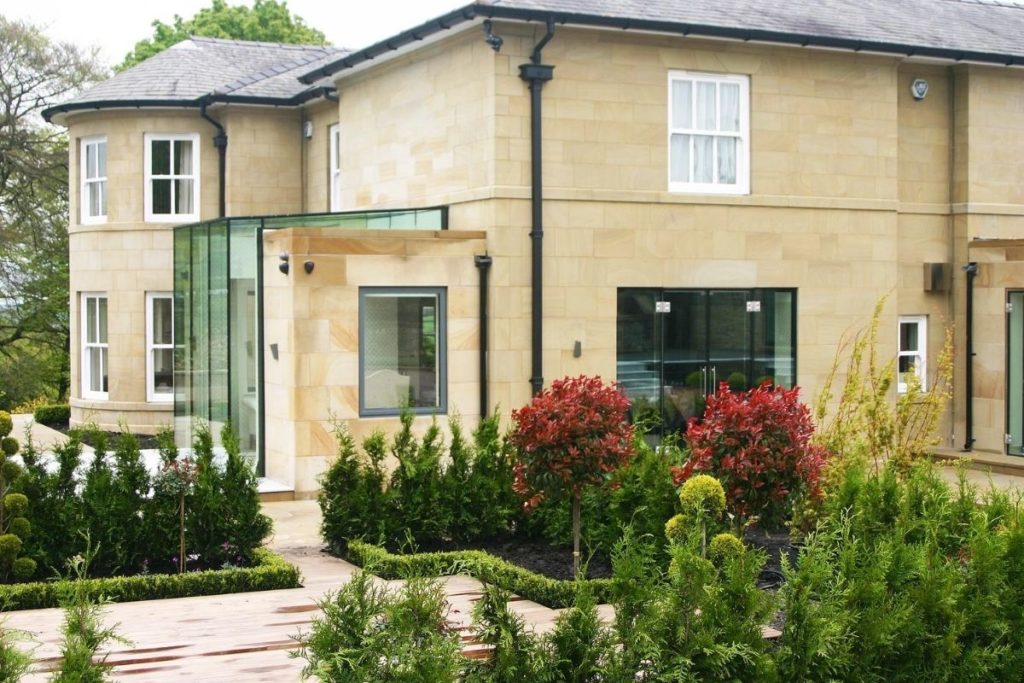
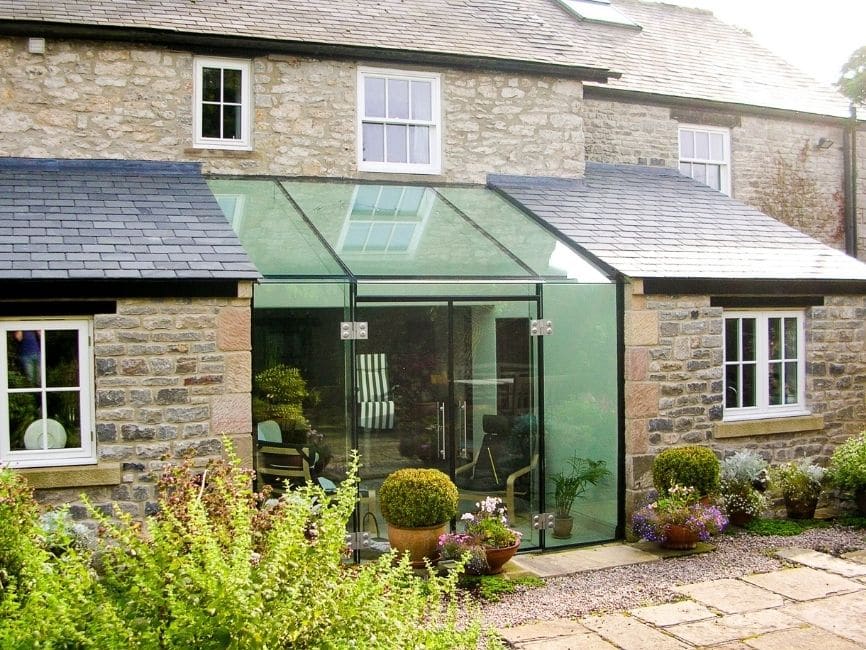
A key feature of this project is the frameless glass entrance hall, designed with a slanted lean-to roof, frameless frontage, and sleek glass doors. This glass structure forms a grand, light-filled welcome for both family and guests.
Design Features
The entrance hall incorporates several sophisticated design elements:
- Slanted lean-to roof: The glass roof slopes elegantly away from the main barn wall, shedding rainwater while creating a sense of height and openness
- Frameless frontage: Full-height glass panels with minimal fixings create an almost invisible barrier between inside and outside
- Sleek glass doors: Frameless pivot doors provide the main entrance, maintaining the clean aesthetic while offering excellent thermal performance
- Visual connection: The glass structure allows views of the original barn doorway and archway from outside, showcasing the historic architecture
Why Glass Entrance Halls Work on Barn Conversions
Glass entrance structures are increasingly popular on barn conversions and period properties. They offer:
- Weather protection without blocking light or views
- Thermal buffer zone reducing heat loss from the main building
- Dramatic first impression that sets the tone for the interior
- Heritage sensitivity by not replicating or competing with historic styles
- Planning advantage as glass is often preferred to solid extensions on historic buildings

A Contemporary Glass Extension
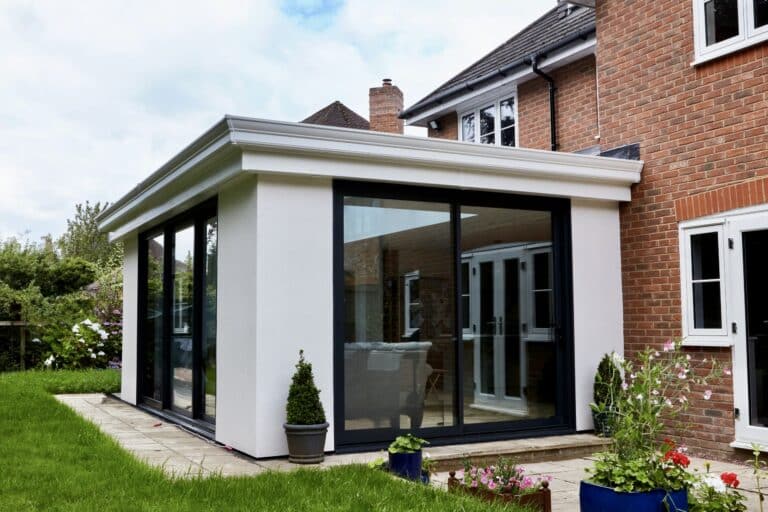
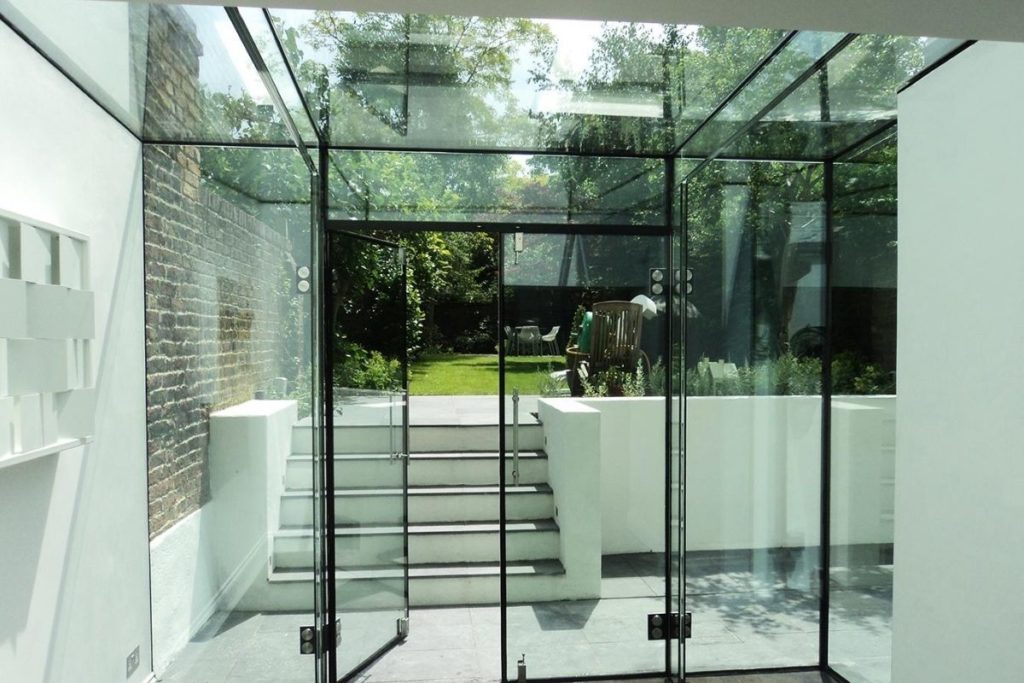
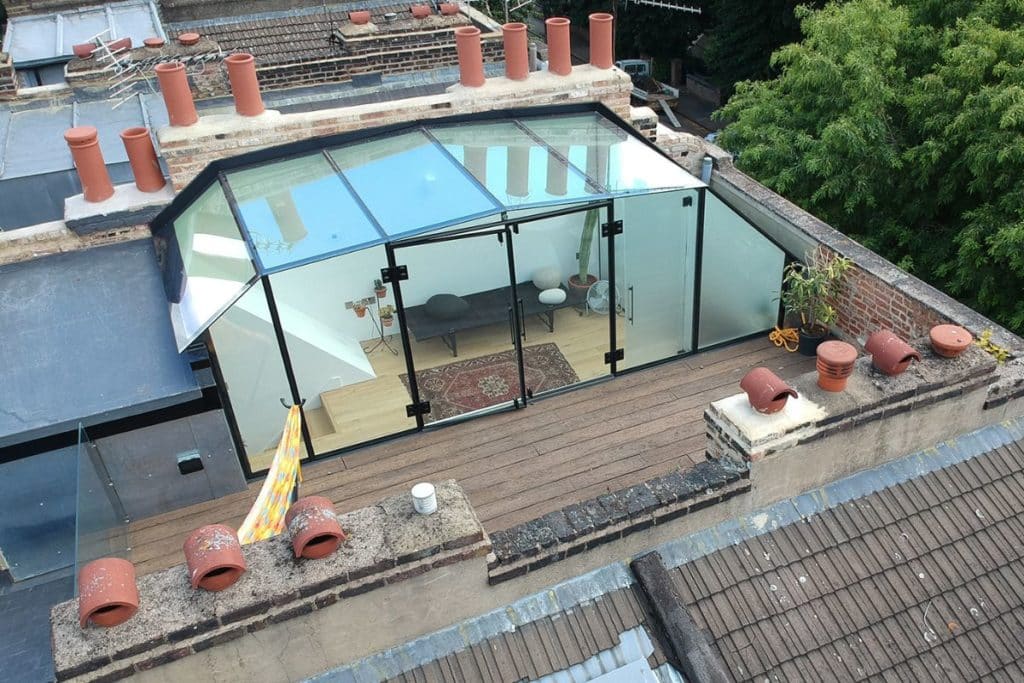
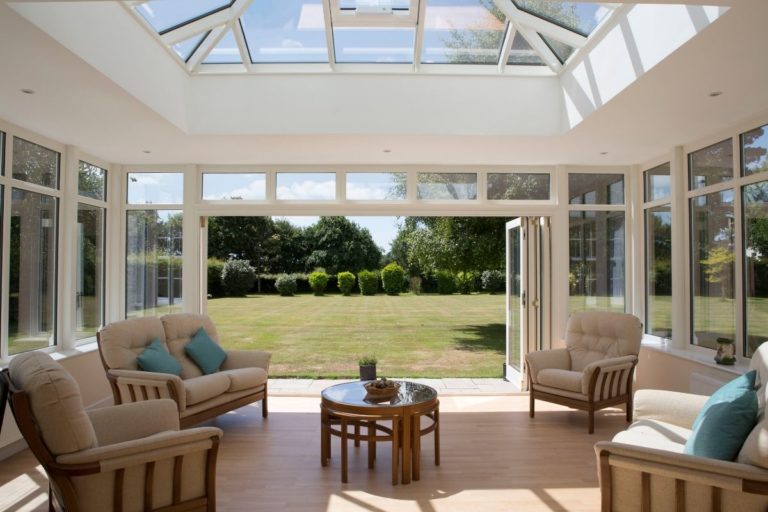
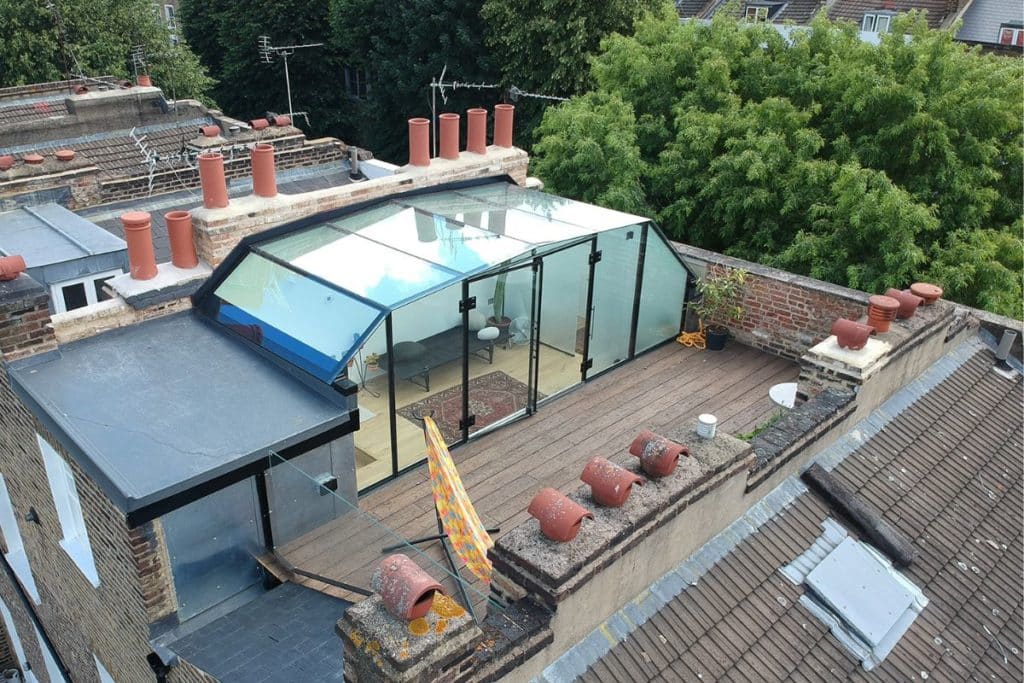
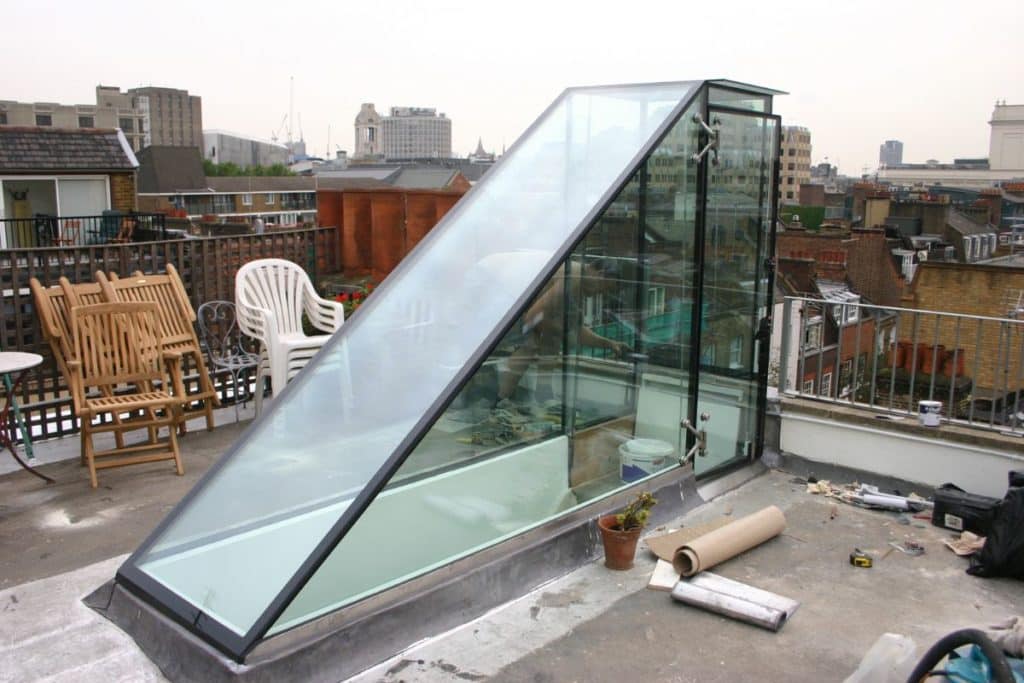
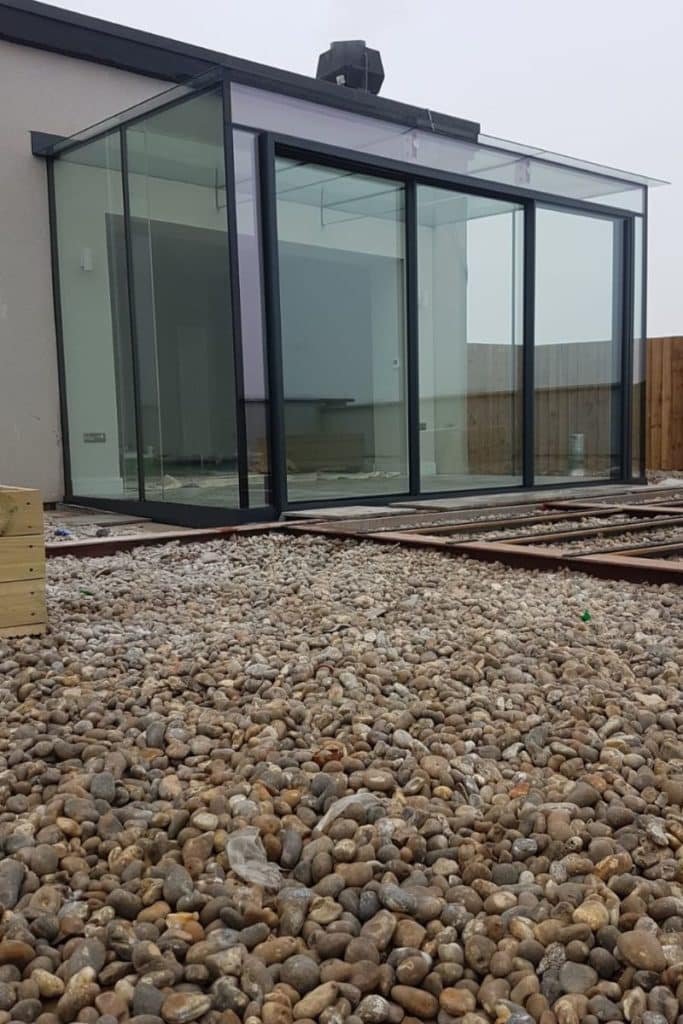
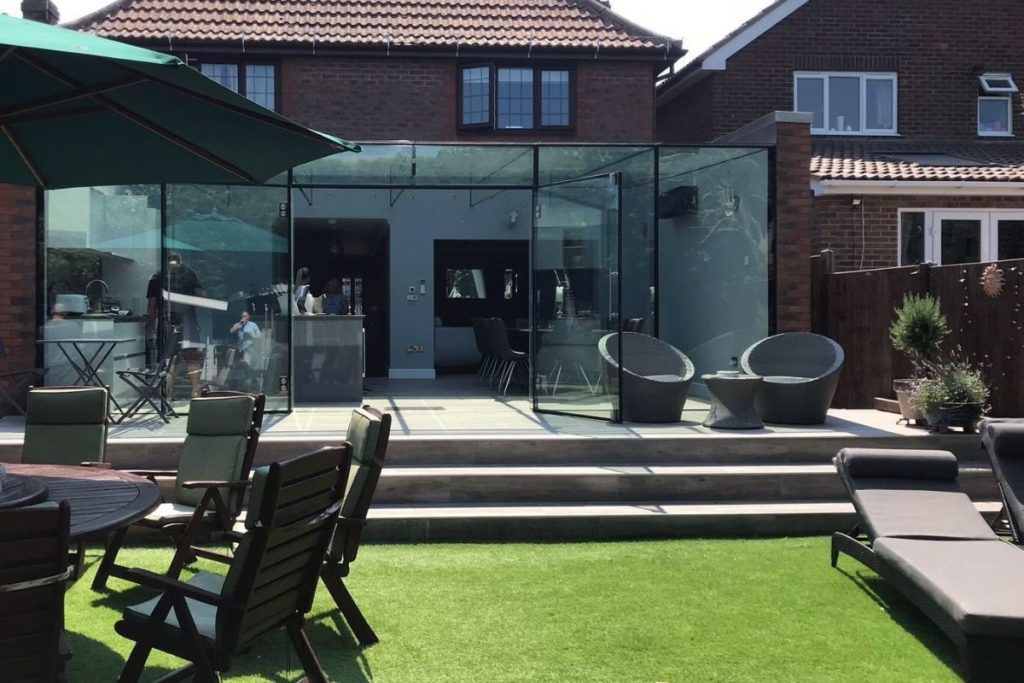
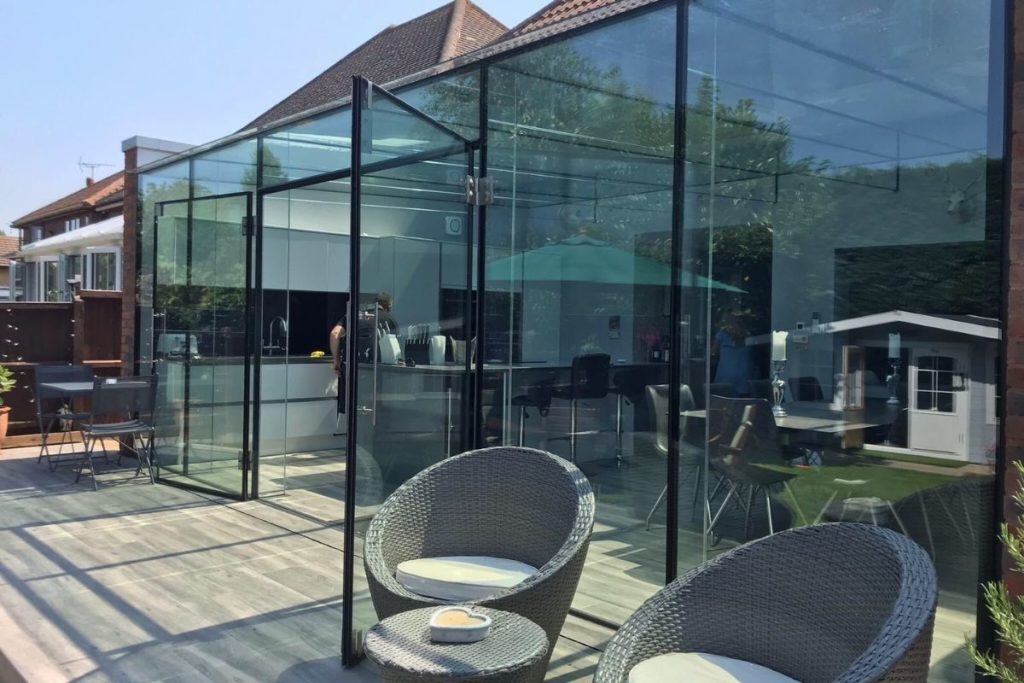
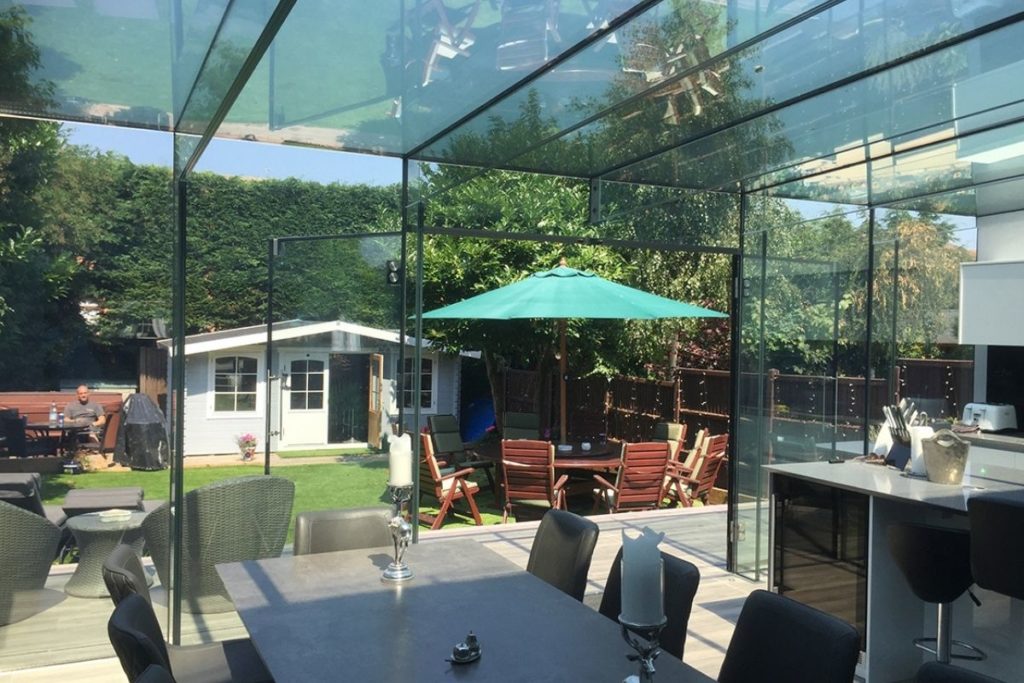
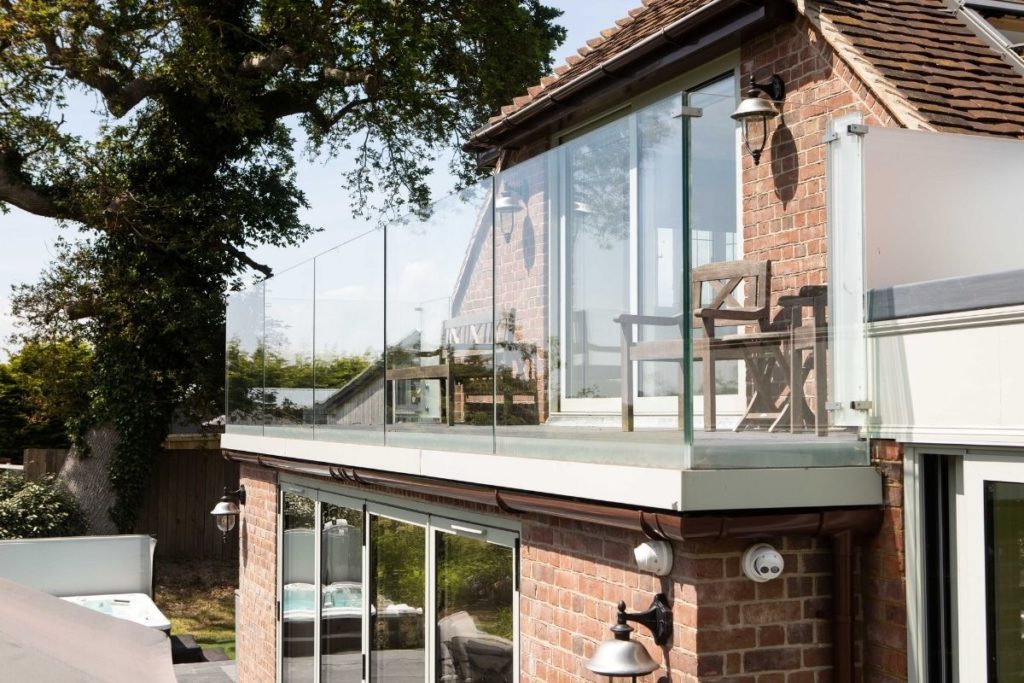
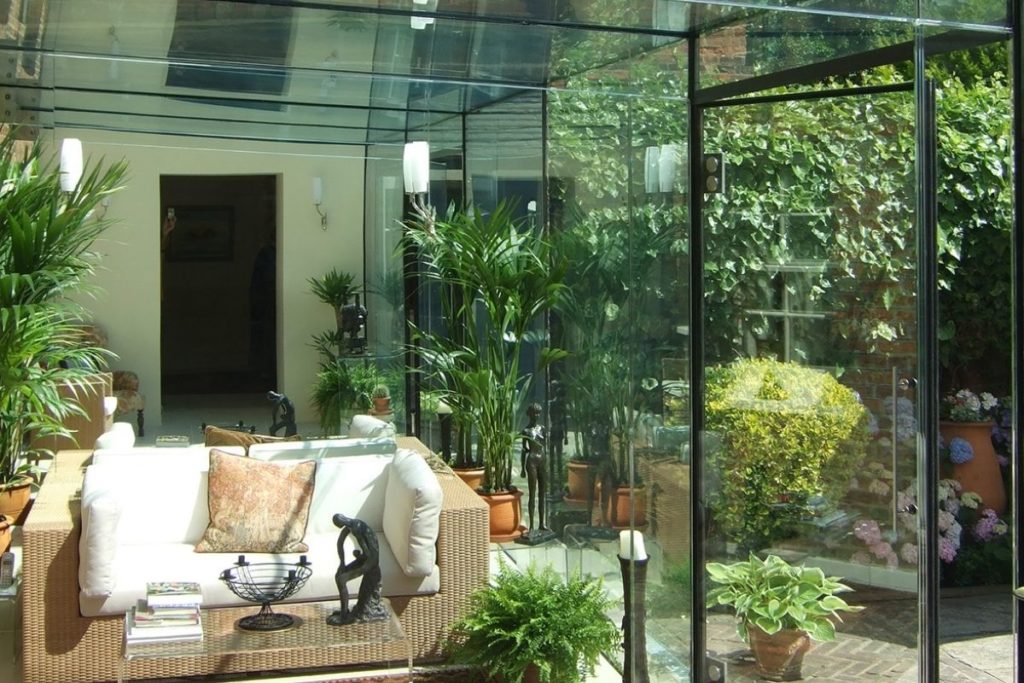
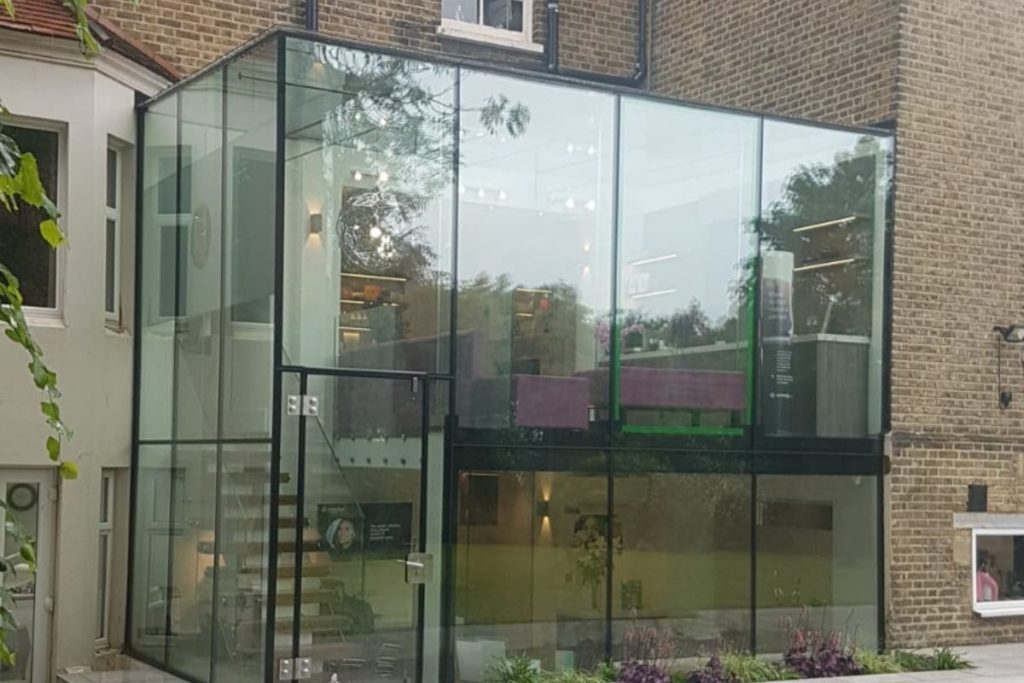
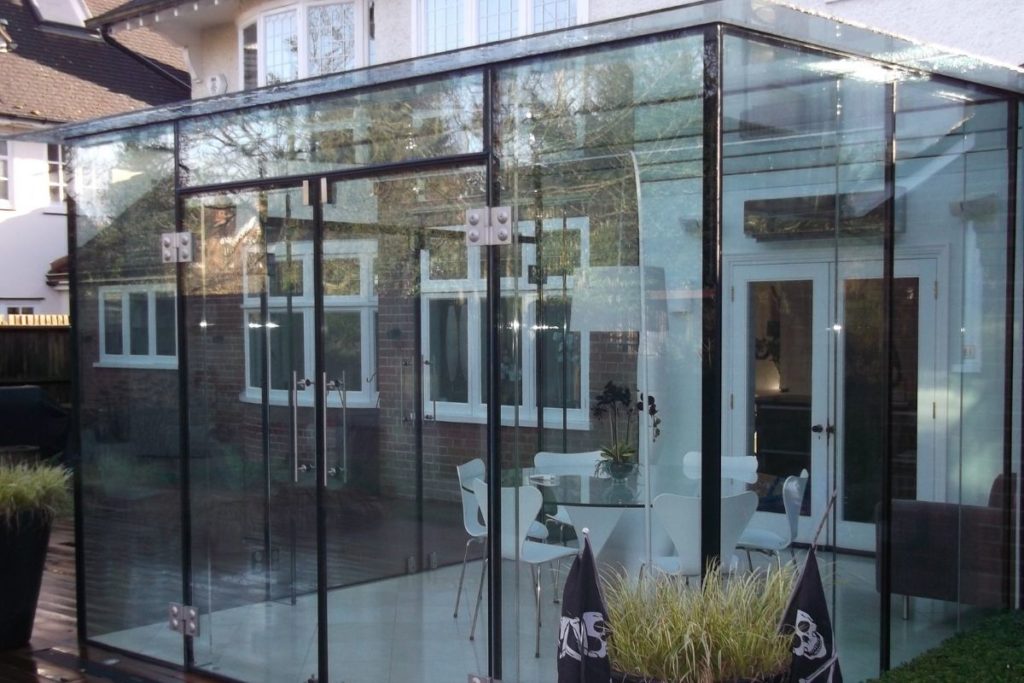
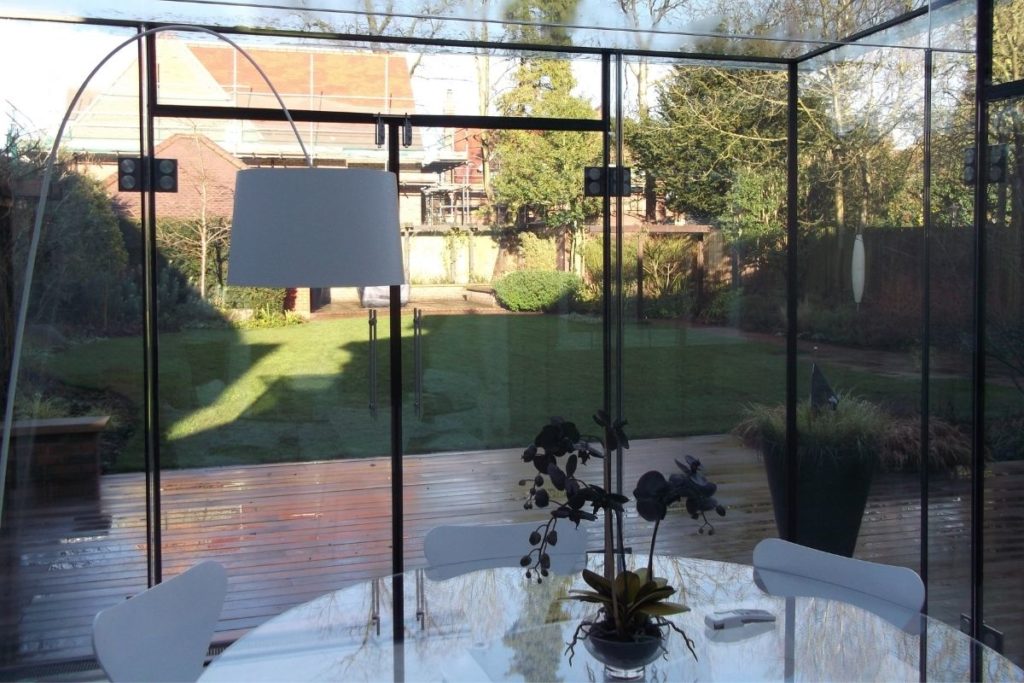
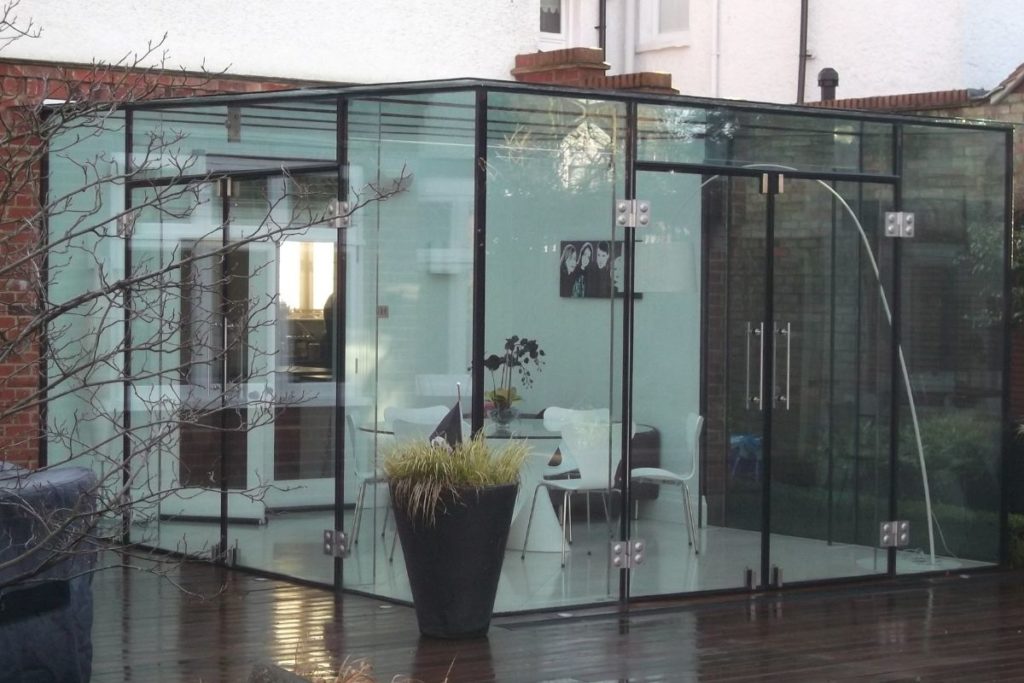
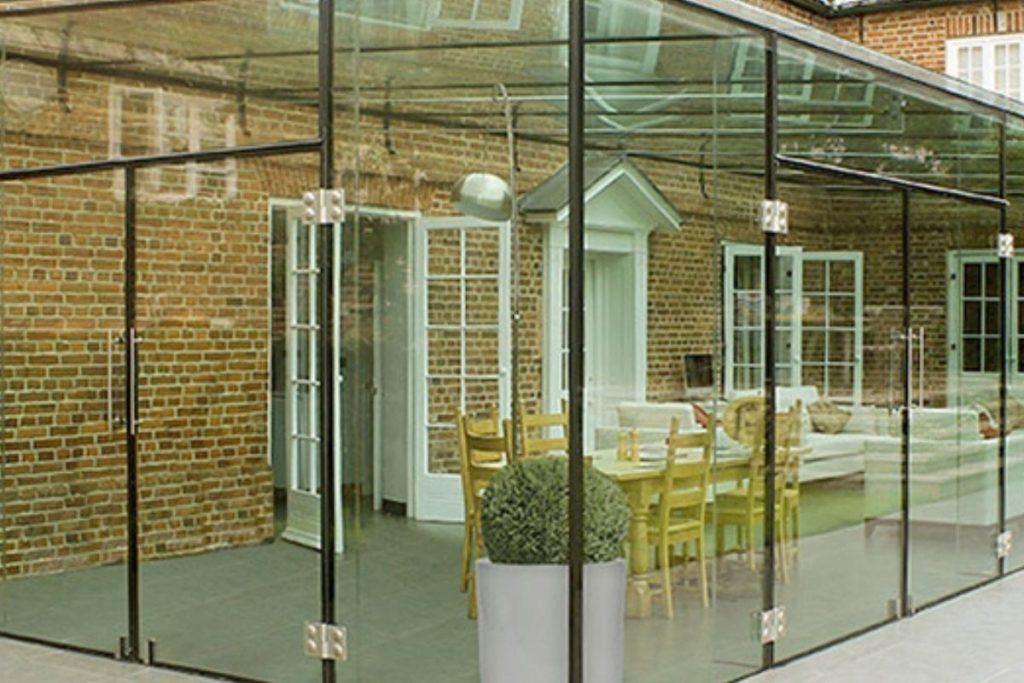
To further maximise space and light, we designed and built a fully glazed contemporary frameless glass room. This frameless glass box extension connects seamlessly with the home’s open-plan living area, creating an airy, bright space for relaxation and entertaining.
The structural glass used in this project ensures strength and durability, eliminating the need for traditional frames found in conservatories or orangeries. Advanced glazing technology also helps with temperature control, keeping warmth in during winter and reducing glare and heat in summer. This means homeowners can enjoy the space comfortably all year round, no matter the British weather.
Maximum Natural Light
Floor-to-ceiling glass floods the interior with daylight, reducing the need for artificial lighting.
Temperature Control
Advanced glazing blocks 86% of solar heat in summer while retaining warmth in winter.
Year-Round Use
Comfortable every day of the year, regardless of British weather conditions.


Advanced Temperature Control Technology
Glass extensions were once notorious for being too hot in summer and too cold in winter. This project demonstrates how modern glazing technology has completely transformed what’s possible. The homeowners can enjoy their glass spaces comfortably all year round, no matter the British weather.
How Temperature-Control Glass Works
The temperature-controlled glass used in this project incorporates several technologies:
- Solar control coating: Microscopic metallic particles in the glass reflect solar infrared radiation, blocking up to 86% of solar heat while allowing visible light through
- Low-E coating: A low-emissivity coating on the inner surface reflects heat back into the room during winter, reducing heat loss
- Argon-filled cavity: The gap between glass panes is filled with argon gas, which insulates better than air
- Low U-values: The combination achieves U-values under 1.0 W/m²K—comparable to solid insulated walls
The Numbers: Glass Performance Specifications
- Solar heat rejection: Up to 86% of solar infrared blocked
- Light transmission: 70%+ visible light passes through
- U-value: Under 1.0 W/m²K (excellent thermal insulation)
- UV protection: 99% of harmful UV rays blocked
- Glare reduction: Anti-glare properties reduce harsh sunlight
These specifications ensure the glass spaces are comfortable year-round while protecting furnishings from UV damage and reducing energy costs.
Common Misconceptions About Glass Extensions
Myth #1: “Glass extensions are always too hot or too cold”
Fact: This was true of older conservatories with basic glazing. Modern high-performance glass blocks up to 86% of solar heat while providing excellent insulation (U-values under 1.0 W/m²K). With proper specification, glass extensions are comfortable year-round.
Myth #2: “Frameless glass isn’t strong enough for structural use”
Fact: Structural glass is specifically engineered for load-bearing applications. Toughened and laminated glass can support roof loads, span large openings, and withstand significant wind loads. It’s used in skyscrapers, bridges, and high-stress architectural applications worldwide.
Myth #3: “Planning permission is impossible on heritage buildings”
Fact: Glass extensions are often the preferred option for extending heritage buildings. Conservation officers frequently favour glass because it’s clearly contemporary, doesn’t imitate historic styles, and reveals rather than conceals original fabric.
Myth #4: “Glass extensions look out of place on traditional buildings”
Fact: When designed well, glass creates a harmonious contrast with traditional materials. The transparency of glass allows the original building to remain the visual focus. Many award-winning extensions on heritage buildings use glass precisely because it works so well with traditional architecture.

Related Articles
About This Case Study
This case study documents a completed Room Outside project featuring frameless structural glass on a limestone barn conversion. Technical specifications, glass performance data, and design approaches reflect current best practice in heritage building glazing.
Project completed: 2025 | Location: South East England | Specialist: Room Outside (established 1973)
Frequently Asked Questions
Can you add a glass extension to a barn conversion?
Yes, glass extensions are an excellent choice for barn conversions. Frameless structural glass allows you to extend living space while preserving the original barn’s character. Glass creates clear visual distinction between old and new, which conservation officers often prefer.
What is frameless structural glass?
Frameless structural glass uses toughened or laminated glass panels as load-bearing elements, eliminating traditional frames. Panels are joined with specialist silicone or minimal fixings, creating clean, uninterrupted views. The glass itself provides structural support.
How much does a frameless glass extension cost?
Frameless glass extensions typically cost £2,000-£3,500 per square metre. A small glass entrance (10-15m²) costs £25,000-£45,000. A medium glass room (15-25m²) costs £40,000-£70,000. Large glass box extensions (25-40m²) cost £60,000-£120,000+.
Do frameless glass extensions get too hot in summer?
Not with modern glass technology. High-performance glazing blocks up to 86% of solar heat while maintaining high light transmission. Combined with proper ventilation, frameless glass extensions remain comfortable year-round.
Do I need planning permission for a glass extension on a barn?
Usually yes, as most barn conversions have conditions attached to the original conversion permission. If the barn is listed, you’ll also need Listed Building Consent. However, glass extensions are often favoured because they create clear separation between historic fabric and new additions.
What is a glass box extension?
A glass box extension is a contemporary structure with floor-to-ceiling frameless glass walls and often a glass roof. It creates seamless indoor-outdoor connection while maximising natural light. The glass provides structural support, eliminating bulky frames.
How is frameless glass attached to stone walls?
Methods include structural silicone bonding, stainless steel fin supports, minimal point fixings, and concealed aluminium base channels. The method depends on structural requirements and stone condition. A structural engineer specifies appropriate fixings.
Can frameless glass be used for entrance halls?
Yes, frameless glass entrance halls are increasingly popular for barn conversions and period properties. They create dramatic, light-filled welcome spaces while preserving views of the original building. They’re designed to be thermally efficient with proper seals and high-performance glazing.
Call us anytime – David, our digital assistant, will take a few details so the right specialist can follow up personally. 01243 538999 or request a consultation online
Discuss Your Barn Conversion or Heritage Project
Whether you’re planning a barn conversion, extending a listed building, or adding contemporary glass to a period property, our specialists can help you achieve stunning results. Book a free design consultation with no obligation.
Book Free ConsultationCall us anytime on 01243 538999 – David, our digital assistant, will take a few details so the right specialist can follow up personally.
Room Outside: Frameless glass specialists since 1973.
Serving Kent, Surrey, Sussex, Hampshire, London & surrounding areas.