

Are Conservatories Cold in Winter? How to Fix Temperature Problems
Complete guide to conservatory temperature control: winter warmth, summer cooling, and the glass that solves both.
Book a Health Check →Why is my conservatory so hot in summer?
A conservatory overheats when short-wave solar energy passes through the roof and windows, warms the floor and furniture, then becomes trapped as longer-wave heat. A south- or west-facing room, limited opening vents, dark floors and an old clear roof amplify the greenhouse effect. The roof usually receives sunlight for longer than any wall, so changing blinds or opening doors may treat the symptom without addressing the main heat source.
Check when the heat arrives. A sharp rise before midday often points to east-facing roof exposure; late-afternoon overheating suggests west or south-west exposure. Glare without severe heat may justify film, while high air temperature through most of the day points towards solar-control roof glazing, shading or a solid insulated roof.
Why is my conservatory so cold in winter?
Heat escapes through high-U-value roof panels, old glass, aluminium spacer bars, failed seals and draughty doors. Warm air rises, which makes a weak roof especially noticeable. Cold internal glass surfaces also increase condensation risk when humid air from the house reaches the conservatory.
Before choosing a new roof, separate fabric failure from a heating problem. Look for misted sealed units, brittle gaskets, gaps at eaves, blocked drainage and a cold floor. If the structure is sound but the roof performs poorly, upgrading that element may be enough. If frames, glass and seals are all deteriorating, repeated small repairs may cost more than a planned refurbishment.
The roof is almost always the cause — here’s why
The roof combines three disadvantages: it faces the sky, receives high solar exposure and sits where warm indoor air collects. Older polycarbonate can be discoloured, poorly sealed and thermally weak. Old glass may remain clear but lack modern low-emissivity coatings, warm-edge spacers and meaningful solar control.
U-value measures heat loss: lower is better. A roof around 2.9 W/m²K loses heat much faster than one around 1.1 W/m²K. Summer performance needs a separate solar-control measure; a good winter U-value alone does not guarantee low solar gain. Ask for both values and for whole-unit performance, not a centre-pane headline.
Roof area matters too. A modest conservatory can have almost as much glazing above you as around you, yet roof glass meets the sun at a more exposed angle and has more glazing bars and junctions. That is why diagnosing the roof first is usually more useful than buying a larger heater or portable air conditioner.
What are my options? All five, compared
There is no universal best fix. The right choice depends on whether the problem is glare, summer heat, winter heat loss, ageing components or a room that needs a complete reset. The table includes low-cost measures that Room Outside does not sell because a useful diagnosis should compare the full market.
| Fix | 2026 cost range | Disruption | Typical timescale | Effectiveness | Best suited to |
|---|---|---|---|---|---|
| Solar control film | £800–£2,500 | Low | 1–2 days | Low–moderate; mainly summer/glare | Sound compatible glazing; limited budget |
| Internal insulated boarding | £4,000–£10,000 | Moderate | 3–7 days | Moderate–high; less overhead light | Owners prioritising insulation over roof daylight |
| Glass roof upgrade | £6,000–£15,000 | Moderate | 2–5 days | High for heat and cold with correct specification | Sound roof structure; daylight still important |
| Solid/tiled replacement roof | £10,000–£25,000 | High | 1–3 weeks | Very high roof insulation; strong shade | Room-like feel and maximum roof insulation |
| Full refurbishment | £15,000–£40,000+ | High | 2–6 weeks | Highest when several elements are failing | Ageing glass, seals, gutters, frames and finishes |
Indicative installed UK ranges for early comparison only. Size, access, roof geometry, structure, glass specification and remedial work can materially change the quotation.
Option 1: Solar control film
Film is the least disruptive route when glare or moderate summer gain is the main complaint. Specialist products can reduce transmitted solar energy and UV without replacing the roof. Room Outside does not sell film, and it is not automatically suitable for every polycarbonate panel or sealed glass unit. Incorrect film can alter appearance, trap heat or affect a glazing warranty.
Choose it for a sound, relatively young roof where budget is limited and winter performance is acceptable. Do not expect it to repair failed seals, improve a weak U-value substantially or reverse yellowing polycarbonate.
Best for: glare and modest summer-only improvementOption 2: Internal insulated boarding
This approach fixes battens, insulation and a finished ceiling beneath the existing roof. It can reduce temperature swings and create a more conventional interior, often with lighting incorporated. Room Outside does not sell internal boarding, but it can be valid where overhead daylight is no longer valued.
The designer must check roof loading, ventilation, condensation paths, fire performance and electrical work. Boarding can hide leaks or deterioration, so the exterior roof should be inspected first. It also turns a transparent roof into an opaque one without necessarily renewing ageing external panels.
Best for: more insulation without a full external roof replacementOption 3: Glass roof upgrade
If the rafters, frames and foundations are sound, replacing old roof units with low-U-value solar-control glass can address both seasons while retaining daylight. A specification such as New Generation Glass combines insulation, solar control, warm-edge technology and optional low-maintenance treatment.
This is often the balanced answer for old clear glass or structurally sound polycarbonate roofs. A survey must confirm that the existing bars can accept the new units and loads. See the dedicated conservatory glass upgrade service for the retrofit route.
Best for: year-round improvement while preserving overhead lightOption 4: Solid or tiled roof replacement
A properly engineered solid roof provides strong insulation and eliminates most direct overhead solar gain. It suits homeowners who want the conservatory to feel more like a conventional room and accept less daylight. Rooflights can restore some light, but their size and position matter.
This is a structural alteration, not simply a cosmetic covering. The existing frames, connections and foundations must carry the new dead and imposed loads. Junctions, ventilation, insulation continuity and fire safety need proper design; a lightweight-looking tile still adds weight compared with polycarbonate.
Best for: maximum roof insulation and a room-like ceilingOption 5: Full refurbishment
Choose refurbishment when temperature is only one item on the fault list. It can combine roof or wall-glass upgrades with new gaskets, drainage work, flashing, door adjustment, frame repairs and refreshed finishes. The footprint remains, but the weak components are addressed together.
A survey may also show that a targeted repair is enough. The purpose of the refurbishment service is to distinguish a worthwhile upgrade from a structure that has reached the point where replacement is more sensible.
Best for: multiple age-related faults in an otherwise useful roomWhich fix suits which problem?
Measured Room Outside installation: Surrey
The supplied project record is a 4 m × 4 m south-west-facing conservatory upgraded from 2010 standard double glazing to New Generation Glass in March 2025.
Recorded heating use: 1,200 kWh before versus 680 kWh after for December–February, a 43% reduction. Treat one installation as evidence of what was measured there, not a guarantee for every orientation, size or weather pattern.
What does each option cost in 2026?
Film is the entry-level route at roughly £800–£2,500. Internal boarding commonly falls around £4,000–£10,000. A roof-glass upgrade is typically £6,000–£15,000, while a designed solid or tiled replacement roof may be £10,000–£25,000. Full refurbishment starts around £15,000 and can exceed £40,000 where wall glass, doors, frames, flashings and finishes are included.
Compare scope, not just totals. A low quote may exclude access equipment, disposal, plastering, electrics, structural checks, Building Control fees or repairs uncovered after the old roof is removed. A health check should identify which costs belong in the first quotation.
Will a new roof need building regulations approval?
Often, yes—especially when a lightweight glazed or polycarbonate roof becomes a solid roof, because structural loading and thermal performance change. Approval may also be required if you remove the external-quality doors between the house and conservatory or extend the home’s main heating system into it. Planning permission is a separate question.
For homes in England, the current route depends on the conservatory’s exemption status and the exact work. Building Control may consider structure, insulation, ventilation, fire safety and the supporting frames or foundations. Ask the local authority or an approved building control body before work begins, and obtain written confirmation of the route for your project.
Start with a conservatory health check
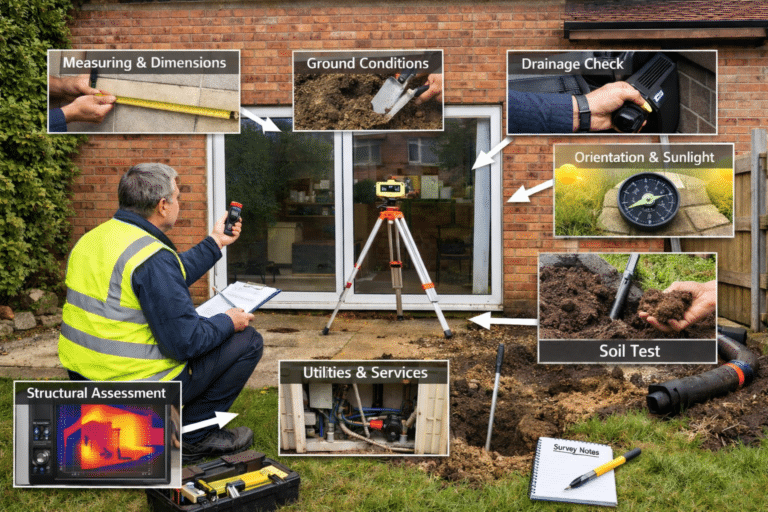
We will assess the roof, glass, seals, frames, drainage and visible defects, then explain whether repair, glass upgrade, roof replacement or refurbishment is the sensible route.
Book a Health Check →Find the cause before choosing the cure
A Room Outside health check assesses the existing conservatory first, so the next step is based on its condition—not a new-build sales route.
Book a Health Check →Call 01243 538999 if you would prefer to discuss the symptoms first.