
roomoutsideuk
30th January, 2026

How a Simple Radiometer Proves Our Heat Control Glass Is Anything But Ordinary

How a Simple Radiometer Proves Our Heat Control Glass Is Different | Room Outside

How a Simple Radiometer Proves Our Heat Control Glass Is Different

See visual proof of how New Generation Glass blocks solar heat for comfortable conservatories year-round. Watch our tunnel of heat demonstration that makes the invisible, visible.

What Does the Radiometer Test Prove?

Our “tunnel of heat” demonstration uses a 150-year-old scientific instrument to make invisible heat transfer visible. When exposed to the same heat source, a radiometer behind standard glass spins wildly (showing high heat transfer), while behind our New Generation Glass it barely moves. This visual proof demonstrates that NGG blocks up to 86% of solar heat energy, preventing your glass room from becoming an oven in summer while keeping warmth in during winter.

86%
Solar heat reflected
<1.0
U-value (W/m²K)
1873
Radiometer invented
100%
Visual proof
A glass extension should be a tranquil, comfortable space—not a greenhouse that turns into an oven by midday or a chilly room that loses warmth in winter. At Room Outside, we believe in proving performance, not just promising it. That’s the simple purpose behind our “tunnel of heat” demonstration, where a 150-year-old scientific instrument visually reveals the superior technology in our exclusive New Generation Glass (NGG).

The Radiometer: A Clear Measure of Heat Transfer

To understand our demonstration, you first need to know about the radiometer. Invented in 1873 by British physicist Sir William Crookes, this clever device—also called a light mill—makes the invisible force of heat transfer visible.

Inside a sealed glass bulb, four lightweight vanes are balanced on a spindle. One side of each vane is black (to absorb heat) and the other is silver (to reflect it). When exposed to thermal energy, the air molecules inside the bulb move more vigorously near the warmer black sides, creating a force that causes the vanes to spin.

The key takeaway: The faster the radiometer spins, the more heat is passing through. It’s a direct, visual measurement of thermal energy transfer, not a parlour trick.

💡 Did You Know? The Science Behind the Spin

The radiometer works on the principle of thermal transpiration. When light or heat hits the black side of the vanes, they warm up, heating the air molecules nearby. These faster-moving molecules exert more force than those near the cooler silver side, creating a pressure difference that makes the vanes spin. It’s not directly from photon pressure (as Crookes initially thought) but from residual gas effects in the partially evacuated bulb.

The “Tunnel of Heat” Demonstration: Side-by-Side Proof

Our demonstration is elegantly simple and impossible to argue with:

1

Two Panels, One Source

We place a panel of standard conservatory glass and a panel of our New Generation Glass (NGG) side-by-side in our demonstration rig. Behind each glass panel, we position identical radiometers.

2

Identical Conditions

A powerful heat lamp—simulating intense British summer sunlight—is turned on. The same amount of thermal energy shines equally on both glass panels, creating controlled, repeatable test conditions.

3

The Reveal

Within seconds, the results are clear and dramatic:

  • Behind the standard glass, the radiometer spins wildly. This shows a massive amount of infrared heat energy passing straight through, which would translate to an uncomfortable, overheated room in your home.
  • Behind our New Generation Glass, the radiometer barely moves. The vanes may twitch slightly but lack the energy to spin. This demonstrates that the vast majority of the radiant heat is being blocked, reflected, or managed before it can enter your space.

💡 Why This Demonstration Matters to You

You shouldn’t have to be a materials scientist to trust your home improvement. This test removes technical jargon and complex sales pitches. It provides tangible, visual proof that our glass fundamentally performs differently—and vastly better—than ordinary conservatory glass. It’s the peace of mind that comes from seeing the science for yourself, not just hearing claims about “premium glass” or “advanced technology.”

The Science Behind the Stillness: What Makes NGG Different

The radiometer’s slow spin is the result of multiple advanced technologies engineered into a single pane of our New Generation Glass.

Feature What It Is The Benefit to You
Solar Control Coating A microscopically thin, invisible metallic layer applied to the glass using magnetron sputtering technology. Reflects up to 86% of solar heat energy, preventing summer overheating and keeping the space usable year-round without excessive air conditioning.
Warm-Edge Spacer Bars The critical seal around the edge of the glass unit is made from thermally broken materials like stainless steel or composite polymers. Eliminates cold bridges, reduces condensation risk, and dramatically improves the insulating U-value of the whole unit.
Argon Gas Fill An inert, dense gas sealed between the panes of glass instead of ordinary dry air. Superior insulation compared to dry air, slowing heat transfer and improving both thermal and acoustic performance.
U-Value < 1.0 W/m²K A measure of heat loss; lower is better. A value under 1.0 is exceptional for glazing (standard double glazing is typically 1.6+). Keeps warmth in during winter, slashing energy bills and making your extension a cosy, draft-free living space even in cold weather.
Self-Cleaning & UV Guard An external photocatalytic coating that breaks down organic dirt, plus an internal layer that blocks 99% of UV rays. Minimises maintenance and protects your furniture, rugs, and artwork from fading and sun damage.
Solar Control Coating
What It Is A microscopically thin, invisible metallic layer applied to the glass.
Benefit to You Reflects up to 86% of solar heat energy, preventing summer overheating.
Warm-Edge Spacer Bars
What It Is Thermally broken seal around the glass edge made from special materials.
Benefit to You Eliminates cold bridges and reduces condensation risk.
Argon Gas Fill
What It Is Inert, dense gas sealed between glass panes instead of dry air.
Benefit to You Superior insulation for better thermal and acoustic performance.
U-Value < 1.0 W/m²K
What It Is Exceptional heat retention rating (standard double glazing is 1.6+).
Benefit to You Keeps warmth in during winter, reducing energy bills.
Self-Cleaning & UV Guard
What It Is External self-cleaning coating plus internal UV protection layer.
Benefit to You Minimises maintenance and protects furnishings from fading.
☀️

Summer Comfort

Spaces stay up to 10-15°C cooler than with standard glass, eliminating the “greenhouse effect.”

❄️

Winter Warmth

Superior insulation keeps heat inside, reducing heating costs and cold spots.

💰

Energy Saving

Reduced need for air conditioning in summer and heating in winter lowers energy bills.

🛋️

Furniture Protection

Blocks 99% of UV rays that fade fabrics, wood, and artwork over time.

🧼

Easy Maintenance

Self-cleaning coating breaks down organic dirt, reducing cleaning frequency.

🔇

Noise Reduction

Improved acoustic insulation creates a quieter, more peaceful living space.

Beyond the Demo: Engineered for the British Climate

New Generation Glass wasn’t designed in a vacuum. It was created specifically to solve the unique challenges of the British climate and the common problems of traditional glass rooms.

🇬🇧 Designed for British Weather

The UK’s climate presents unique challenges: relatively mild but damp winters, unpredictable summers with occasional heatwaves, and frequent overcast conditions. Our glass is engineered specifically for these conditions:

  • Variable Season Performance: Works efficiently whether it’s 30°C in July or -2°C in January
  • Humidity Control: Warm-edge technology reduces condensation that plagues many conservatories
  • Low-Light Efficiency: Maintains thermal performance even on cloudy days when solar gain is minimal
  • Durability: Withstands British weather extremes without degradation of performance

Year-Round Comfort: It’s a true all-season performer. By rejecting solar heat gain in summer and retaining interior heat in winter, it creates a stable, comfortable environment regardless of the weather outside. No more avoiding your conservatory on sunny days or needing separate heating and cooling systems.

Energy Efficiency as Standard: Exceptional thermal performance isn’t an optional upgrade—it’s built-in. This translates to lower running costs for heating or cooling your new space and a reduced carbon footprint for your home.

Protection for Your Home: The combination of UV protection and the strength of modern laminated or toughened glass variants means your investment is protected, and so is everything inside it.

What Homeowners Say About Comfort

“Our old conservatory was unusable in summer—like a greenhouse. With Room Outside’s New Generation Glass, we actually use the space year-round. The demonstration with the spinning device convinced us it wasn’t just marketing. The difference is night and day, and we’ve recommended you to all our neighbours.”

SR
Sarah & Robert H.
Tunbridge Wells, Kent
★★★★★

“We were sceptical until we saw the heat test. Our glass room faces south-west and gets full afternoon sun, but it’s never uncomfortably hot. The difference from our neighbour’s traditional conservatory is incredible. We use the room every day now, regardless of the weather outside.”

MJ
Michael J.
Guildford, Surrey
★★★★★

“The best investment we made. Not only is it comfortable, but our energy bills haven’t increased despite adding a whole new room. The UV protection means our furniture won’t fade either. We love how bright and clear the glass is – no tint or colour distortion at all.”

CE
Claire E.
Chichester, Sussex
★★★★★

Room Outside Glass Technology Team

Specialists in High-Performance Glass for UK Homes Since 1973

With over 50 years of experience in glass extensions across the South East, our technical team has tested virtually every glass technology available. We developed the “tunnel of heat” demonstration because we believe homeowners deserve transparent, visual proof of performance—not just technical specifications. New Generation Glass represents our commitment to creating truly comfortable, energy-efficient living spaces that work with the British climate, not against it.

Sources and References

Crookes, William (1873). “On Attraction and Repulsion Resulting from Radiation”; Royal Society of London; Glass and Glazing Federation: Technical Standards for Thermal Performance; Building Research Establishment: UK Climate Data for Building Design; Room Outside Laboratory: Comparative Thermal Testing Data 2020-2024.

Frequently Asked Questions

Is the radiometer demonstration just a sales gimmick?

No, it’s a legitimate scientific demonstration of the principle of radiative heat transfer. The radiometer is a sensitive instrument that reacts directly to infrared radiation (heat). The dramatic difference in spin rate is direct, quantitative proof of our glass’s superior solar control properties. It’s the same principle used in scientific laboratories to measure thermal energy transfer.

Does the excellent heat control mean the glass looks different or tinted?

No. The advanced solar control and low-emissivity coatings are almost completely invisible to the naked eye. Your views will remain stunningly clear, bright, and neutral, without the green or blue tinge associated with older, inferior coated glasses. The coatings are applied at a microscopic level during manufacturing and don’t affect visibility or colour perception.

Is New Generation Glass only for conservatories?

While it is the perfect solution for conservatories and orangeries, its benefits apply to any glass extension. Our premium glass rooms, frameless glass boxes, and large structural glazing projects all utilise this technology as standard to ensure unparalleled comfort and performance. Anywhere you have extensive glazing facing the sun, this glass will improve comfort and energy efficiency.

Can I see this demonstration for myself?

Yes. We regularly perform this live demonstration during our design consultations at our showroom. You can also watch our official “tunnel of heat” video on our website or YouTube channel to see the striking difference for yourself before we even visit. Many homeowners find the visual proof more convincing than any technical specification sheet.

How does it work in winter to keep heat in?

New Generation Glass uses low-emissivity (Low-E) coatings that reflect interior heat back into the room while still allowing visible light to pass through. Combined with argon gas filling and warm-edge spacers, this creates a thermal barrier that significantly reduces heat loss. The U-value of less than 1.0 W/m²K means it’s more insulating than many solid walls in older homes.

Is the self-cleaning feature effective in the UK climate?

Yes. The self-cleaning coating is photocatalytic and hydrophilic, meaning it uses UV light (even on cloudy days) to break down organic dirt, and causes water to sheet evenly across the surface, carrying away debris. While it won’t eliminate cleaning entirely, it significantly reduces frequency and makes what cleaning is needed much easier—particularly helpful for hard-to-reach glass roofs.

What about security and safety?

New Generation Glass is available in toughened or laminated safety glass variants as standard. Toughened glass is heat-treated to be 5x stronger than ordinary glass and breaks into small, relatively harmless pieces. Laminated glass features a protective interlayer that holds the glass together if broken, providing additional security and safety benefits.

How long do the coatings last?

The coatings are applied during the float glass manufacturing process and are permanently bonded to the glass at a molecular level. They are located inside the sealed glass unit (between the panes) where they’re protected from weather, cleaning, and physical contact. They will last the lifetime of the glass unit itself—typically 20+ years—without degradation of performance.

Questions about our heat control glass? Call our technical team on 01243 538999 or send us a message

See the Proof for Yourself

Don’t just take our word for it—watch our tunnel of heat demonstration and see the dramatic difference between ordinary glass and New Generation Glass. Book a consultation to experience this live demonstration and learn how comfortable your glass extension can be year-round.

Room Outside: Experts in comfortable, energy-efficient glass extensions since 1973.
Serving Kent, Surrey, Sussex, Hampshire, London and across the South East.
roomoutsideuk
16th April, 2024

Modern & Traditional Conservatory Inspiration

A conservatory is one of the best ways to extend your home. It creates a light-filled, stylish, and practical space that you can enjoy all year round. Whether you prefer a traditional or modern design, a conservatory helps you connect with your garden while adding valuable living space.

Why Choose a Conservatory?

  • More natural light – A glazed roof and large glass walls make the space feel bright and airy.
  • Quick installation – Minimal construction work is needed beyond the foundations, making it one of the easiest ways to extend your home.
  • Perfect for any property – Whether you own a period or contemporary home, conservatories can be designed to match your style.
  • Fully customisable – Choose from different frame materials, colours, and decorative details to create a unique space that complements your home

Find Inspiration for Your Conservatory Extension

Thinking about adding a conservatory? Explore our stunning customer projects to see how others have transformed their homes.

Large Open Plan Gable-Ended Conservatory Extension with Additional Utility Room.

Full glass conservatory roof over a lounge dinner glass extension
Glass extension with the doors removed between the house and conservatory

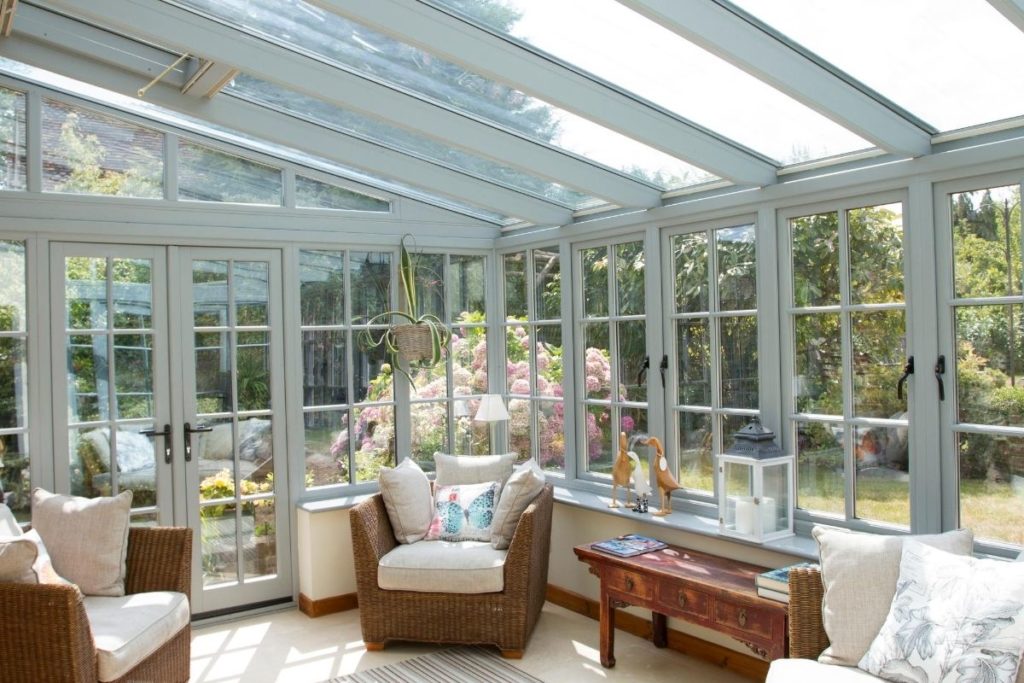
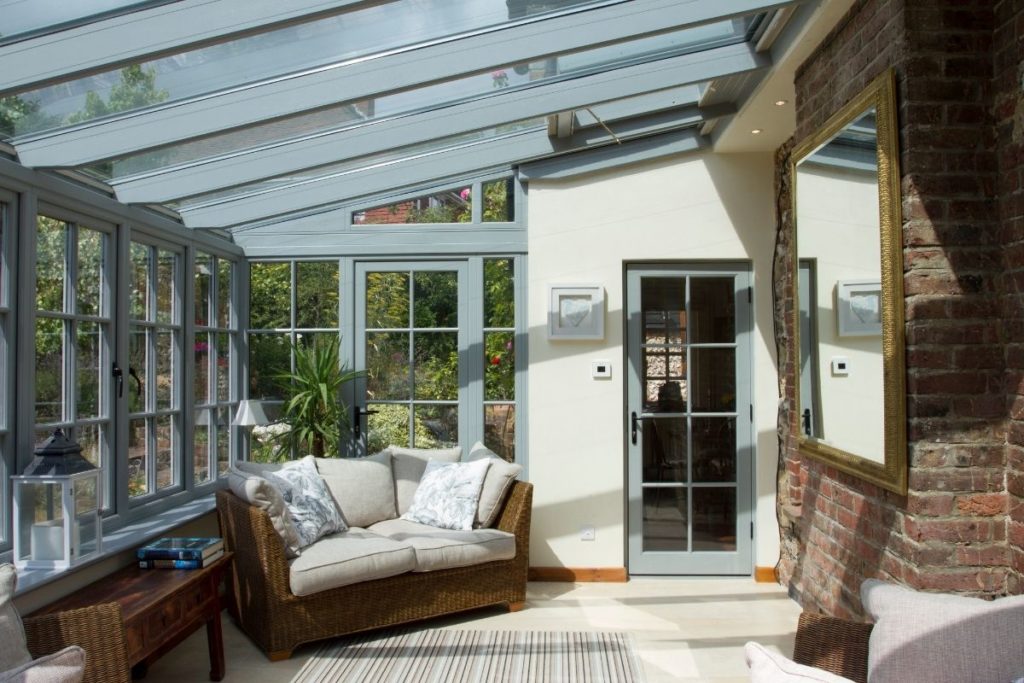
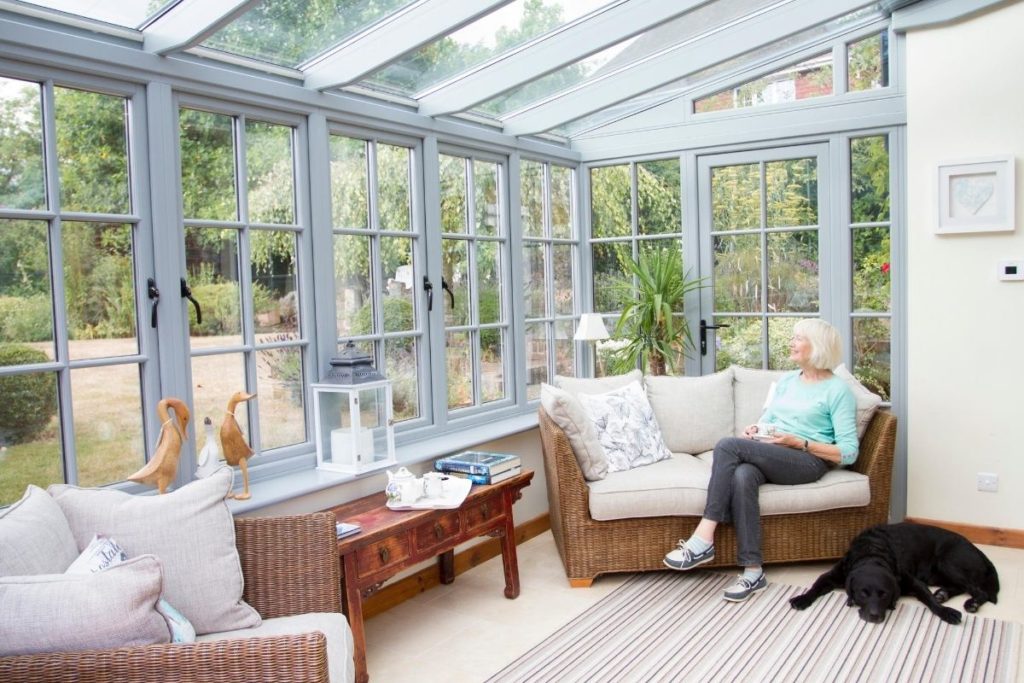
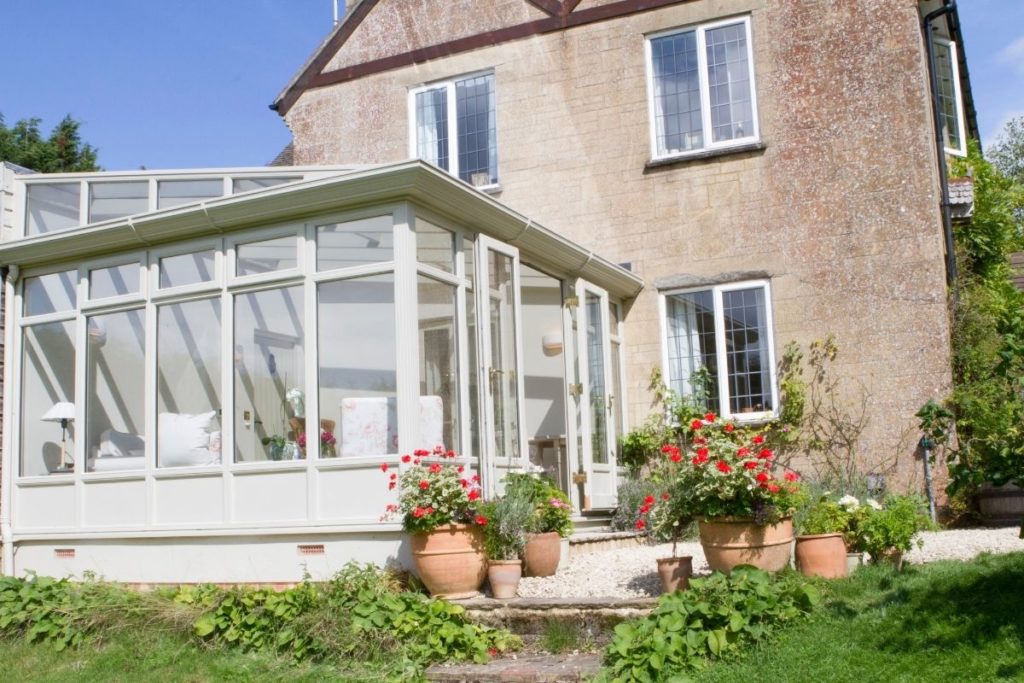
Traditional Lean-To Grey Painted Timber Conservatory on a Country Home

Grey timber framed lean-to conservatory with double doors out to the patio
Inside a grey timber framed lean-to conservatory with roof light windows
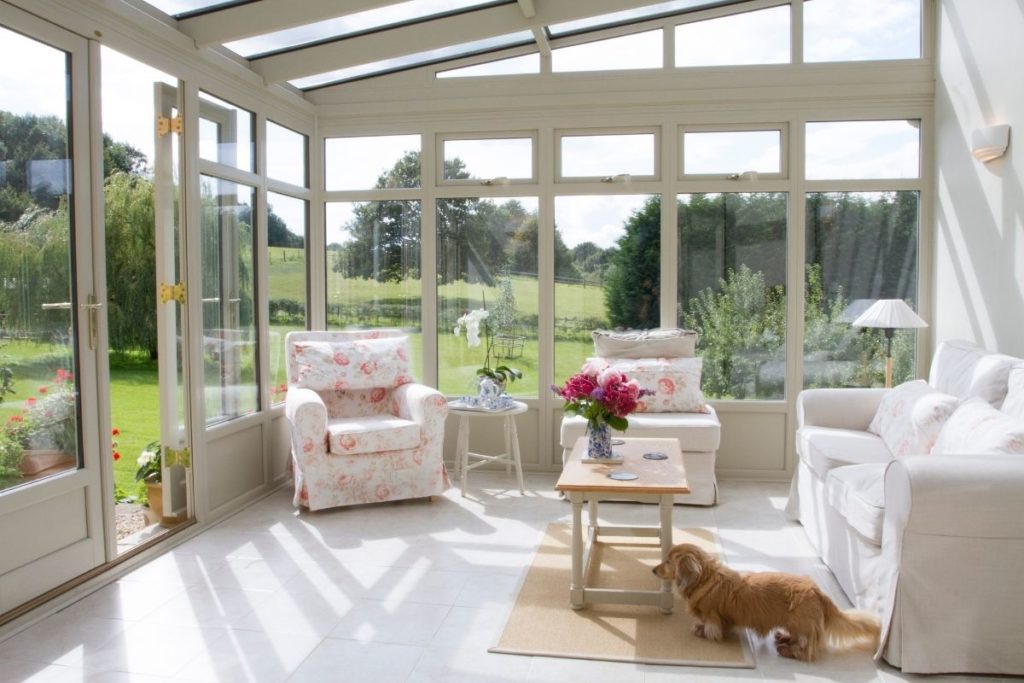
Inside of white timber framed lean-to conservatory

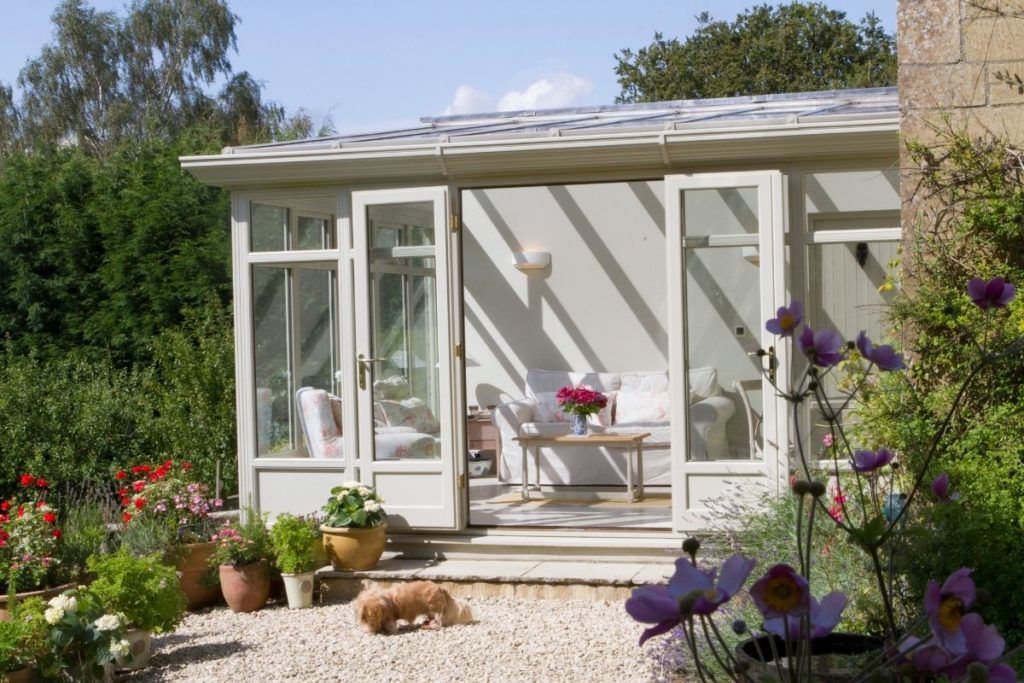
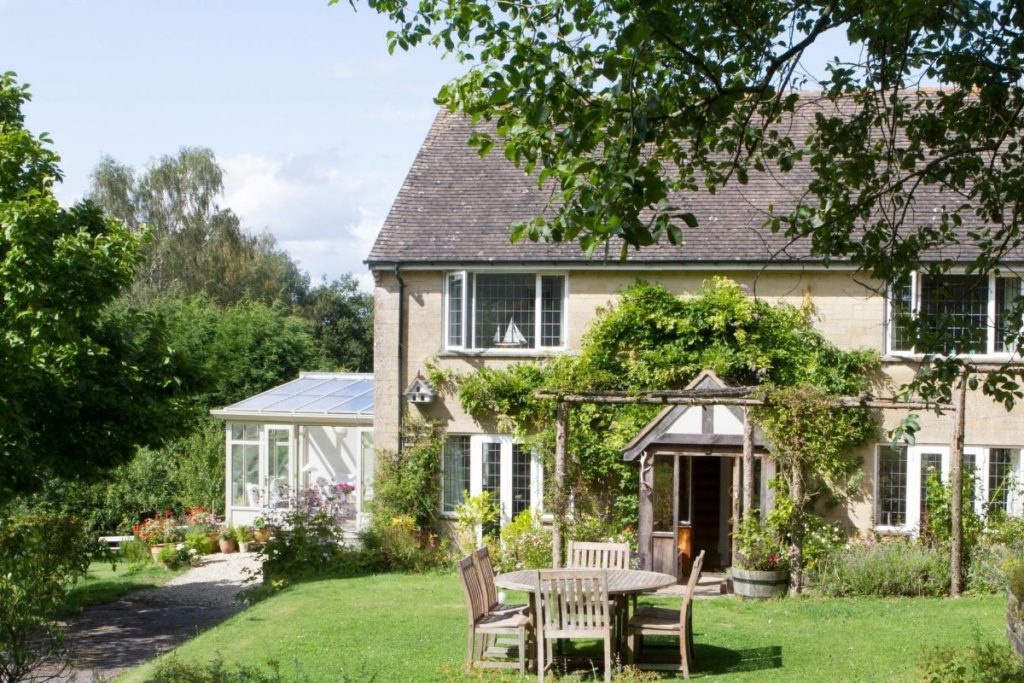
Quaint Country Chic Cream Timber Lean-To Conservatory on a Cottage

White timber framed lean-to conservatory

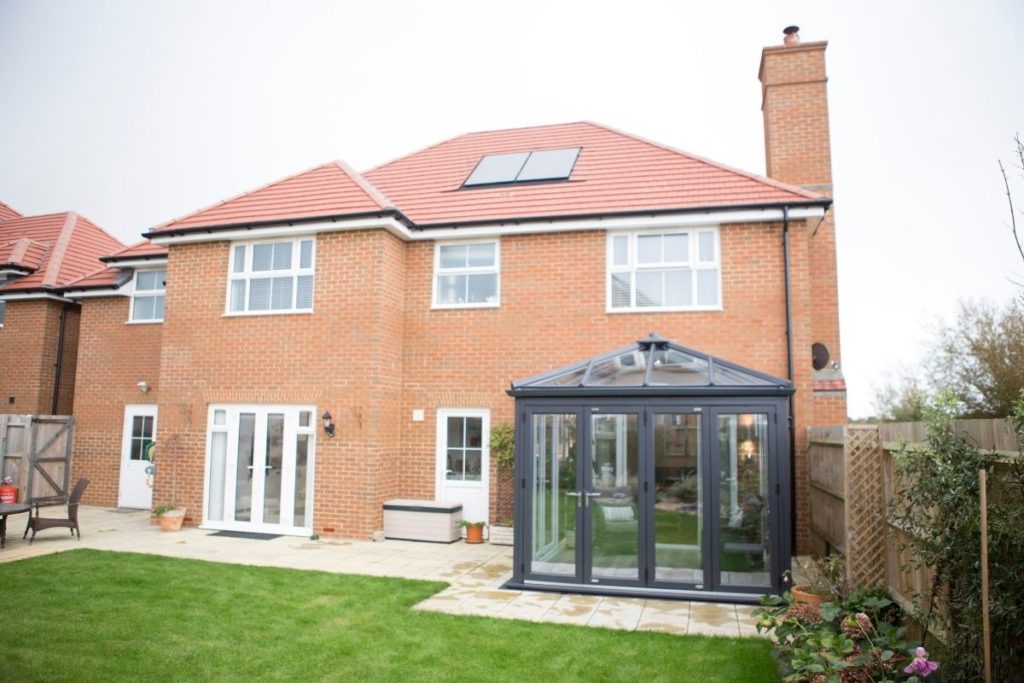
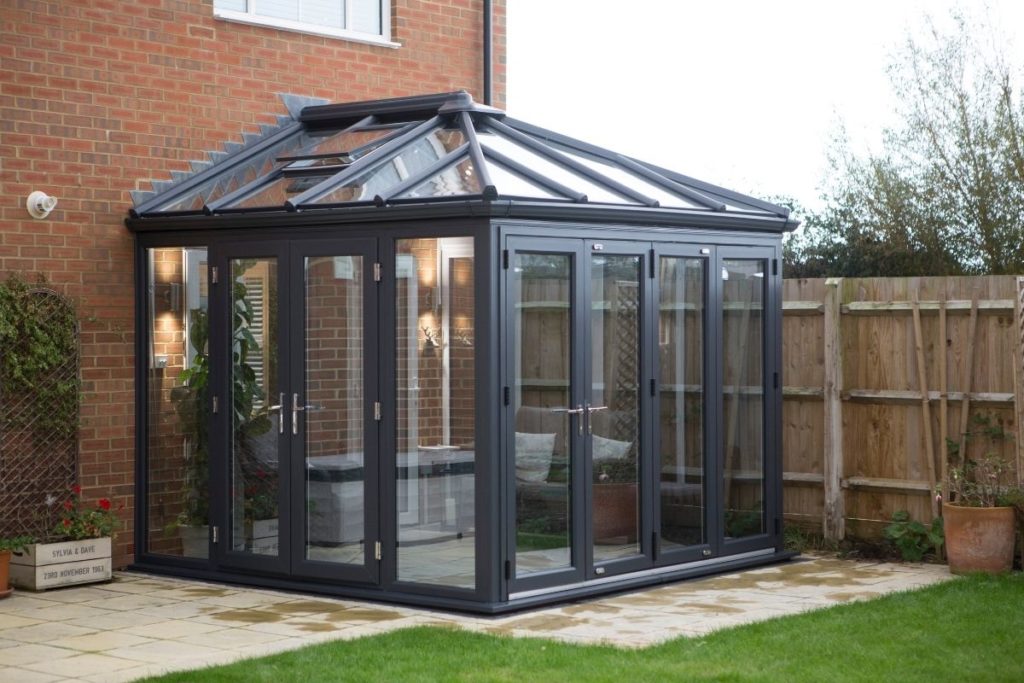
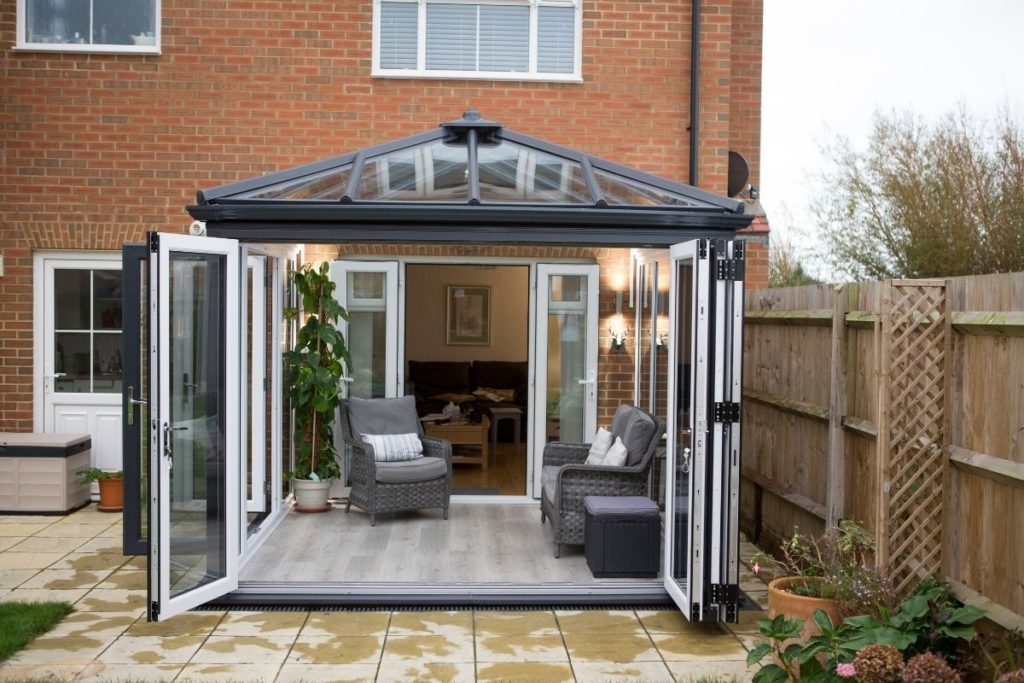
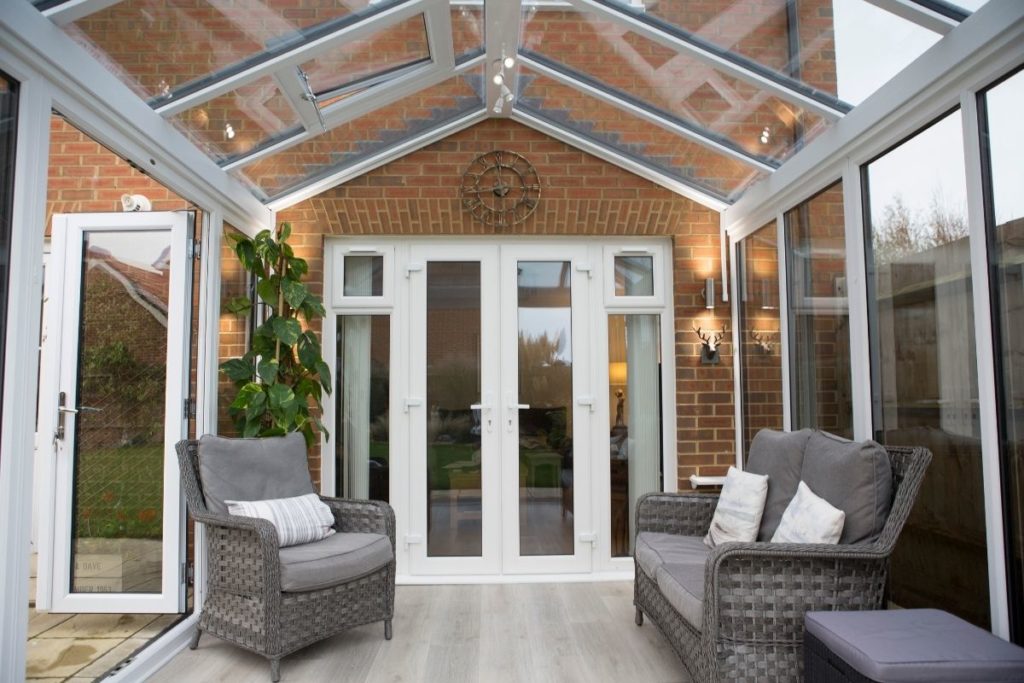
Modern Grey uPVC Conservatory with Contrasting White Internal Frames and Bi-Fold Doors

Grey Framed uPVC Conservatory on a large modern new build property
Grey uPVC Framed Conservatory Extension

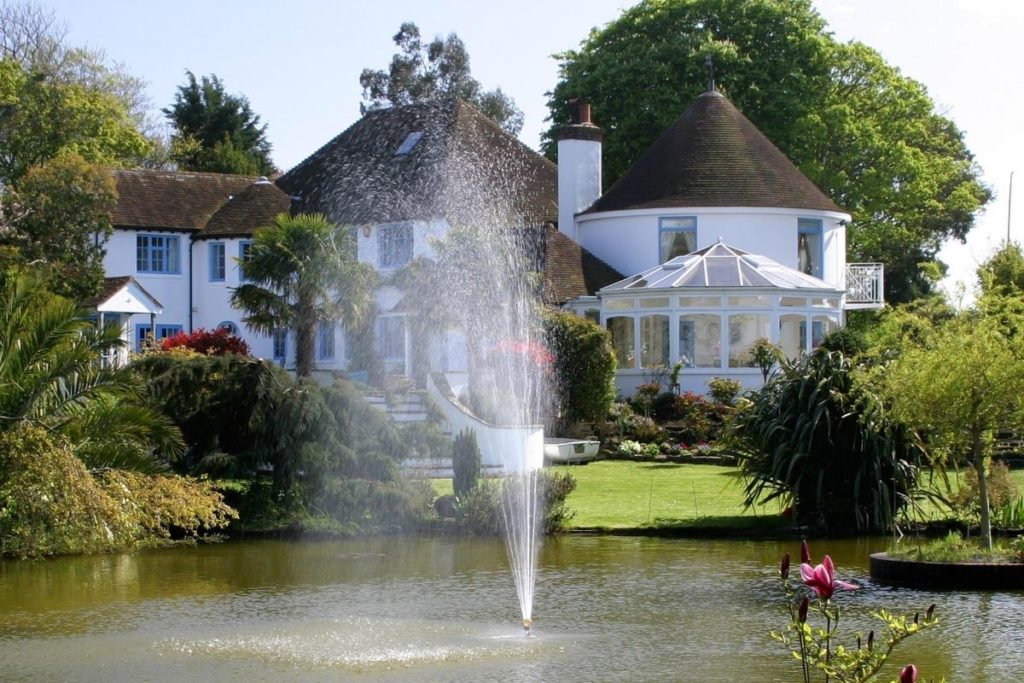
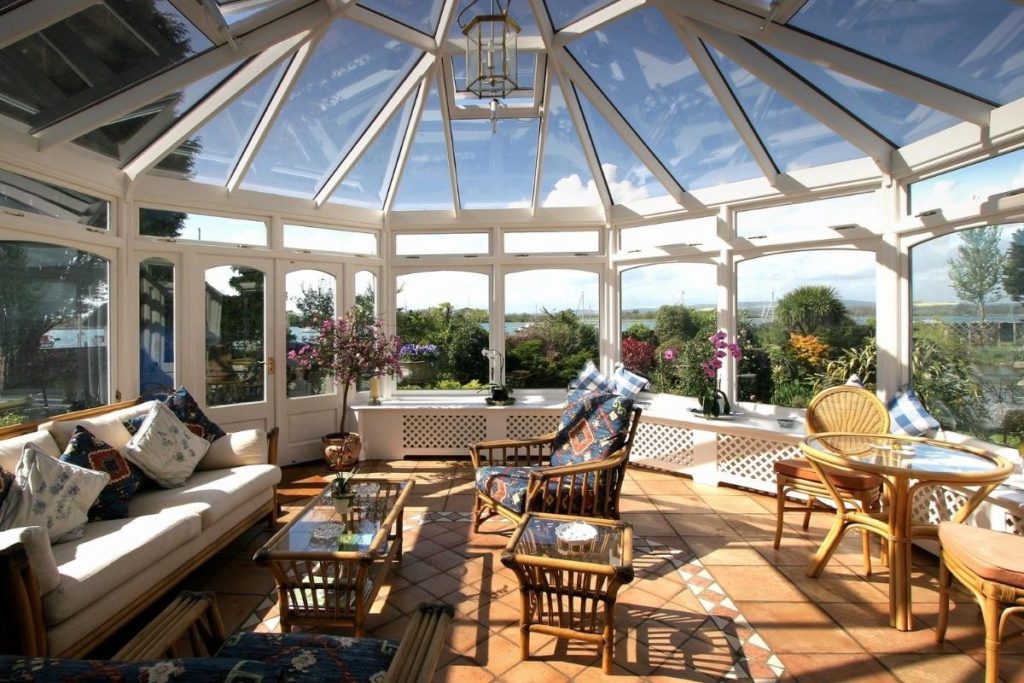
Round Timber Conservatory Extension with Panoramic Views of The Garden and Harbour

Large round white timber framed conservatory in beautiful gardens with a view of the lake

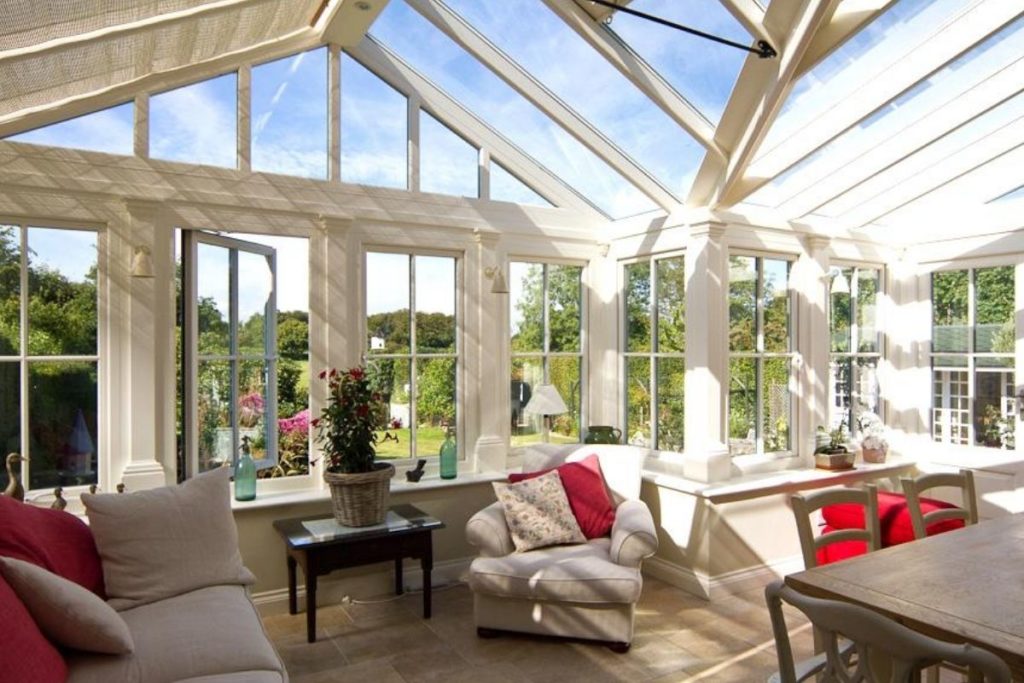
Large Modern Timber-Framed Conservatory Lounge and Dining Room

Luxurious cream timber framed conservatory with large windows and high glass roof
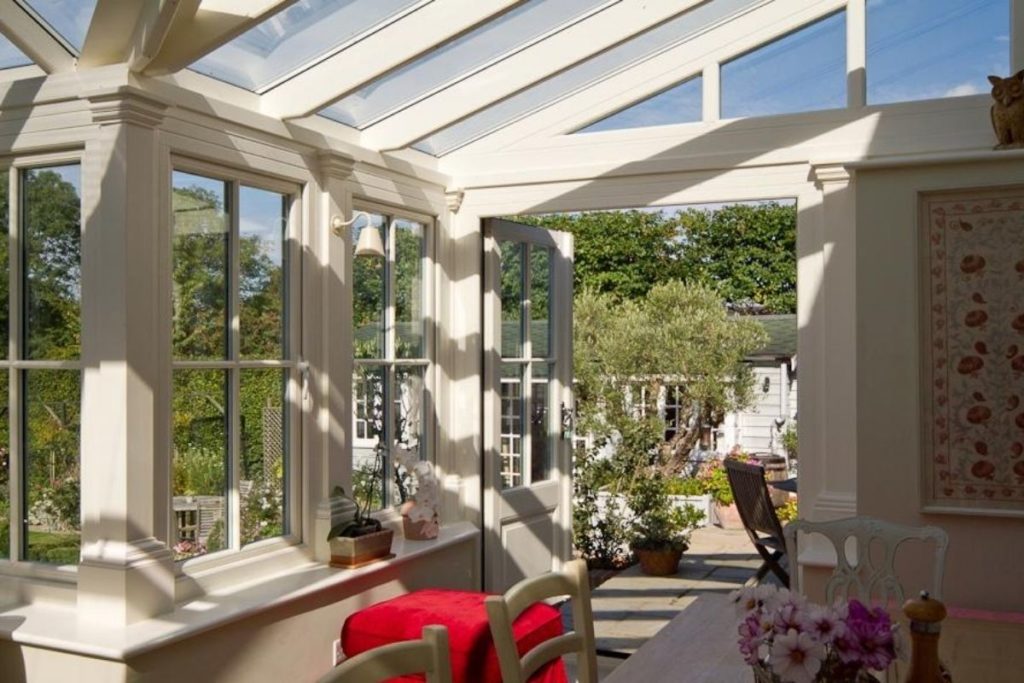
Luxurious cream timber framed conservatory with dwarf walls and double doors to the garden

See More & Get Expert Advice

Looking for even more design inspiration? Take a look at our full customer project gallery for ideas.

Our team of specialists are happy to help with design advice, answer any questions, and provide a no-obligation quote tailored to your needs.

Get in touch today and start planning your dream conservatory!

Start Designing Your Dream Glass Extension Today

Contact Us
roomoutsideuk
03rd March, 2024

12 Top Questions Answered About Building a Conservatory or Orangery

If you’re thinking about extending your home by building a conservatory or orangery, you’re probably in the research phase. You may have questions about designing and building your dream glass extension.

As specialists with over five decades of experience, we’ve helped hundreds of homeowners create stunning and practical glass spaces. To make things easier, we’ve put together this quick-fire guide to the 12 most frequently asked questions about conservatories and orangeries.

1. How much does a conservatory or glass extension cost?

This  depends on size, materials and finish.

  • Off-the-shelf options start at £5,000, but they often lack customisation and quality.
  • A bespoke uPVC conservatory starts from £20,000, including materials and installation.
  • Orangeries typically start at £35,000, though smaller ones may cost less.
  • Frameless glass structures are premium, starting at £30,000 for small designs, with most ranging between £40,000 – £80,000.

When comparing prices, always check what’s included—some low-cost options exclude groundwork and installation.

2. What is the difference between an orangery and a conservatory?

The key difference is the roof:

  • A conservatory has at least 75% of its roof made of glass.
  • An orangery has a solid flat roof with a glass lantern in the centre.

Other glass extension terms include:

  • Garden room – Often used to describe a conservatory, but traditionally has a solid tiled roof.
  • Sunroom – A general term for a bright, relaxing space.

Garden room – Often used to describe a conservatory, but traditionally has a solid tiled roof.

Sunroom – A general term for a bright, relaxing space.

3. What frame materials can I choose from?

Your choice of frame affects appearance, durability, and maintenance. Options include:

  • uPVC – Affordable, low maintenance, and sleek.
  • Hardwood timber– Traditional and sustainable, requiring occasional painting or staining.
  • Aluminium -Modern, lightweight, and strong.
  • Frameless glass – Contemporary and ultra-modern.
  • Oak– premium timber with a luxurious feel.

Each material has different colour and finish options, allowing you to create a look that suits your home.

4. Will a glass room be too hot or too cold?

Not if you choose the right glass and insulation.

5. Do I need planning permission to build a conservatory?

Usually, no, as long as it meets Permitted Development Rights:

  • It must be less than 6 metres (semi-detached) or 8 metres (detached) from the house.
  • It should not extend beyond the front of your property.
  • Listed buildings or homes in conservation areas require planning permission.

For more details, check Planning Portal UK or read our “Do I Need Planning Permission?” guide.

6. How large can my conservatory be under permitted development?

  • Terraced/Semi-detached homes – Up to 6 metres.
  • Detached homes – Up to 8 metres.

If your home has previous extensions, this may reduce the size allowance.

7. Do I need sign-off from building regulations?

Not always. No approval is needed if your conservatory:

  • Is under 30m².
  • Has external-grade doors/windows separating it from the main house.
  • Uses separate heating from the main home.
  • Has at least 50% glazed walls and a glass or translucent roof.

If you plan to remove doors or create an open-plan space, building regulations approval is required.

8. Can I add a glass extension on a listed property?

Yes, but planning permission is required.

  • Listed building consent is essential for Grade I and II properties.
  • Hardwood timber is often preferred over uPVC for aesthetic reasons.
  • Frameless glass box extensions are increasingly popular, as they blend modern design with historical character.

9. Can I open up my home to my conservatory?

Yes! However, structural support and building regulations approval are required.

10. Do I need foundations for a conservatory?

Yes. Strong foundations prevent subsidence, ensure durability, and improve insulation. A conservatory cannot be built on open ground or a temporary base.

11. How long will the build take?

Conservatories and orangeries are quicker to build than traditional extensions.

  • Most projects take 6 to 12 weeks from groundworks to completion.
  • Frameless glass structures may take longer due to custom fabrication.

With less disruption than a brick-built extension, a glass room is a great way to expand your home quickly and efficiently.

12. Do conservatories require a lot of maintenance?

Regular maintenance ensures your conservatory lasts for decades.

  • uPVC & aluminium – Low maintenance, requiring occasional cleaning.
  • Timber – Needs repainting/staining every 2-4 years.
  • Glass – Should be cleaned every 3-6 months.

For best results, consider professional conservatory cleaning to maintain clarity, seals, and moving parts.

Still have questions?

We hope this guide has answered your most common conservatory questions. If you need more details or personalised advice, our team is happy to help.

💬 Get in touch today for expert guidance and a no-obligation quote!

Get Your Questions Answered

Contact Us
roomoutsideuk
24th November, 2023

Conservatory vs Garden Room: Key Differences, Costs & Which to Choose (2026)

Conservatory vs Garden Room: Key Differences, Costs & Which to Choose (2026)

Conservatory vs Garden Room: Key Differences, Costs & Which to Choose

Both add space and value – but which one fits your home, lifestyle and budget? Compare structure, roof, price, planning, insulation and best use case.

Talk to a specialist →

📊 Quick comparison: Conservatory vs Garden Room

FeatureConservatoryGarden Room
StructureAttached to main house, mostly glass wallsCan be attached or standalone, solid walls + windows
Roof typeFull glass roof (polycarbonate or double-glazed)Tiled, shingle, or flat roof (optional skylights)
Typical cost (2026)£15,000 – £40,000 (uPVC)
£30,000 – £70,000 (aluminium/timber)
£20,000 – £50,000+ (attached)
£15,000 – £40,000 (standalone)
Planning permissionOften Permitted Development (height/size limits)Permitted Development for outbuildings (max 2.5m height near boundary)
Building regsRequired if open-plan to house or >30m²Required if used as sleeping accommodation or attached to house
InsulationLower (glass roof – modern coated glass helps)Higher (solid roof + insulated walls)
Best use caseDining area, sun lounge, plant room, casual livingHome office, gym, guest bedroom, studio, playroom
Property value added5–8%8–12% (if well-insulated and versatile)

*Prices vary by size, material, location. Always get a fixed-price quote including groundwork.

Modern conservatory with glass roof and garden view
🏡 Conservatory – glass roof, attached, bright and airy
Elegant garden room with solid roof and bi-fold doors
🌿 Garden Room – solid roof, more insulation, private
Contemporary conservatory interior with modern furniture
✨ Bright conservatory living space
Garden room used as home office with solid roof
💼 Garden room as home office

🏠 What is a Conservatory?

A room with a glass roof and glass walls (or partial brick walls). Always attached to your home. Originally for plants, now a living space. Modern solar-control glass prevents overheating and retains heat.

  • ✅ Extends home floor plan seamlessly
  • ✅ Maximum natural light
  • ✅ Quicker to build than full extension
  • ⚠️ Can be too hot/cold without quality glass

🌳 What is a Garden Room?

A solid-roofed room (tiled, slate, or flat) with insulated walls. Can be attached to your home or built as a separate building in the garden. Increasingly popular for remote work and guest suites.

  • ✅ Better insulation year-round
  • ✅ More privacy than glass walls
  • ✅ Can be standalone (no household disruption)
  • ⚠️ Less natural light than conservatory

🤔 Which one is right for your home?

✅ Choose a Conservatory if:

  • You want a sun-filled dining or lounge area
  • You have a modest budget and want maximum value
  • Your house lacks a connection to the garden
  • You don’t need year-round office/guest space

✅ Choose a Garden Room if:

  • You need a home office, studio, or gym
  • You want a separate space away from household noise
  • You prefer a solid roof for better temperature control
  • You might convert it to a bedroom (follows building regs)

💰 Cost factors & hidden fees – what to budget for

Both options come with potential extras beyond the base quote. Make sure your quote includes:

  • Groundworks & foundations: £3,000 – £10,000 (sloping sites or poor soil add cost).
  • Planning & building regs: Permitted development often free; planning fees £206-462 if needed. Building regs for open-plan or >30m²: £400-£800.
  • Electrics & heating: Underfloor heating, lighting, sockets: £1,500-£4,000.
  • Internal finishes: Plastering, tiling, decorating – often excluded from cheap quotes.

Room Outside advantage: Our fixed-price quotes include groundwork, electrics, plastering, and decorating – no hidden surprises.

📘 Detailed cost guides & next steps

Understanding the exact investment helps you decide. Use our dedicated cost pages for accurate 2026 pricing:

Not sure which option fits your home?

Our design specialists will listen to your needs, show real examples, and provide a fixed-price quote with no obligation.

Book free consultation →

📞 Or call David on 01243 538999 – quick advice

❓ Frequently asked questions

Which is cheaper: a conservatory or a garden room?

A uPVC conservatory typically starts lower (£15k–£25k) than a garden room with a tiled roof (£20k–£35k). However, garden rooms often have better insulation, reducing long-term energy bills. For premium materials (aluminium/timber), garden rooms and conservatories are closer in price.

Do I need planning permission for a garden room or conservatory?

Both often fall under Permitted Development if size and height limits are met. Garden rooms as outbuildings: max 2.5m height if within 2m of boundary, cannot cover >50% of garden. Conservatories: max 4m height (dual-pitch roof) and not forward of principal elevation. Always check with your local council – we help with this during the survey.

Which adds more value to a home?

A well-designed garden room (or orangery-style conservatory with a solid roof) can add 8-12% value. Traditional glass conservatories add 5-8%. The key is year-round usability – rooms that are freezing in winter or boiling in summer add less value.

Can I use a garden room as a bedroom?

Yes, if it meets building regulations for insulation (thermal efficiency), fire safety, emergency exit, and ventilation. A conservatory with a glass roof is harder to convert to a bedroom due to temperature extremes and building regs. A garden room with solid roof and insulated walls is much more suitable.

Which is better for a home office?

A garden room wins for a home office – solid roof provides stable temperature, reduces noise, and offers privacy. A conservatory can work if you invest in solar-control glass and automated blinds, but expect more temperature fluctuation.

Can I convert a conservatory into a garden room?

Yes – by replacing the glass roof with a solid insulated roof (tiled or lightweight composite). Budget around £8k–£15k for a roof replacement plus any wall insulation. This dramatically improves comfort and can turn an underused conservatory into a year-round living space.

Ready to extend your home with confidence?

Whether you choose a conservatory or garden room, we guide you from design to completion – with fixed pricing and 50+ years of experience.

Get your personalised quote →

🏆 Bespoke conservatories, orangeries & garden rooms across Kent, Surrey, Sussex, Hampshire & London

roomoutsideuk
20th August, 2023

Are Conservatories Worth It? 5 Benefits That Add Real Value (2026)

Are Conservatories Worth It? 5 Benefits That Add Real Value (2026) | Room Outside

Are Conservatories Worth It? 5 Benefits That Add Real Value

Do conservatories add value? Our 2026 guide reveals the benefits: 5-10% property value increase, year-round usability with New Generation Glass, and more.

Why conservatories are making a comeback (the smart way)

The old image of a cold, leaky, overheated conservatory is decades out of date. Today’s advanced glazing, solar control, and energy‑efficient design mean a modern conservatory is a genuine year‑round living space – and one of the most cost‑effective ways to add usable square footage to your home.

In this guide, we break down the five real benefits that matter: property value, natural light, indoor‑outdoor flow, multi‑functional space, and wellbeing. We also cover planning permission, costs, and how to avoid the mistakes that devalue a property.

5-10%
Property value boost (RICS, Savills)
86%
Solar heat reflection
1.0 U‑value
Modern glazing performance
Most exempt
Planning permission (Permitted Development)
🏡

Adds 5-10% to Your Property Value (When Done Right)

Research from RICS, Savills & Phil Spencer

According to RICS, Savills, and Checkatrade, a high‑quality conservatory reliably adds 5-10% to a home’s market value. Property expert Phil Spencer puts the potential uplift as high as 7–15% for well‑designed structures with solid roofs or orangery features. A 2017 Towergate Insurance study found a 5% average uplift, but modern energy‑efficient designs with New Generation Glass can achieve significantly higher returns.

Conservatory typeTypical cost (2026)Potential value addROI
Bespoke uPVC (mid‑range)£20,000 – £35,0005-8%70-90%
Hardwood / aluminium (high‑spec)£35,000 – £60,0007-12%80-100%+
Premium orangery (solid perimeter)£50,000 – £100,000+10-15%90-110% in desirable areas
📊 Real‑world context: On the average UK house price of £298,000, a conservatory adding 5% contributes nearly £15,000 in equity – competitive returns compared to loft conversions or kitchen refits. By contrast, a cheap, poorly insulated conservatory (e.g. old polycarbonate roof) can actually decrease your home’s value by deterring buyers.

Quality matters most – solar control glass, high insulation (U‑value ≤1.2), and good design ensure a selling point, not a liability.

Orangeries add more value – typically 10-15% uplift, but cost 20-40% more and feel more “integrated”.

Internal link: Will a conservatory add value to my property? →

☀️

Year‑Round Comfort with Advanced Glazing

No more “icebox in winter, greenhouse in summer”

Today’s New Generation Glass delivers remarkable thermal performance:

  • Reflects up to 86% of solar heat energy – preventing overheating and reducing air conditioning needs.
  • Achieves U‑values as low as 1.0 – 1.2 W/m²K (triple glazing can go below 1.0), rivaling solid wall construction. Old single glazing had U‑values of 5.7; polycarbonate roofs 2.4–3.2.
  • Low‑e coatings reduce heat loss by 40-60% compared to standard double glazing.
  • Argon gas fill improves insulation further.
💡 Practical example: A 4m x 4m conservatory upgraded from old polycarbonate to New Generation Glass cuts heat loss by over 60%, reduces annual heating bills by £200–£400, and eliminates the need for blinds or air conditioning. The space becomes usable 12 months a year.

Summer comfort: Up to 86% of solar heat reflected away – no more sticky afternoons.

Winter warmth: U‑value of 1.0 means heat stays in – up to 50% less heat loss than old designs.

Internal link: Discover New Generation Glass technology →

🌿

Seamless Indoor-Outdoor Living

Bring the garden into your daily life

Wide sliding or bi‑fold doors create a fluid transition between home and garden. Estate agents now rank strong indoor‑outdoor flow as a top‑five buyer priority (Rightmove, 2025). This connection reduces stress, improves mood, and makes the garden feel like an extra room – especially valuable for home workers and families with children.

📈 Buyer preference data: A 2025 survey by Knight Frank found that 68% of homebuyers consider “direct garden access from living areas” a critical or desirable feature, adding an estimated 5-8% to perceived property value.

Internal link: Removing doors between house and conservatory →

🛋️

A Room for Every Need – Home Office, Gym, Dining

The most versatile room in your home

Use your conservatory as a home office (natural light boosts focus by up to 15% according to a University of Illinois study), a dining room that flows onto the garden, a playroom, a yoga studio, or a quiet reading nook. Multi‑functional spaces appeal strongly to future buyers – estate agents consistently list “versatile reception room” as a top selling point.

Home office: Natural light reduces eye strain and boosts productivity. Solar glass prevents screen glare.

Home gym: Exercising in natural light improves motivation and enjoyment compared to a basement.

Internal link: Is a conservatory a viable home office? →

🧘

Improves Wellbeing, Reduces Stress

A bright, calm space for your mental health

Research shows that access to natural light and a visual connection to nature directly impacts mental health. A study by the University of Exeter found that people who spend time in naturally lit spaces report 30% lower stress levels and improved mood. A conservatory gives you a bright, calming space away from the noise of televisions and gadgets – a place to decompress, meditate, or simply watch the seasons change.

🧠 Science‑backed: Exposure to natural daylight regulates circadian rhythms, improves sleep quality, and boosts vitamin D production. A conservatory can be your daily dose of nature, regardless of weather.

📋 Planning permission & typical costs (2026)

Planning permission: Most conservatories fall under Permitted Development, provided they meet criteria: single storey, max 3m depth for attached houses (4m for detached), max 4m height, not higher than existing eaves, and not covering more than 50% of the garden. Conservation areas and listed buildings have stricter rules.

Building regulations: All conservatories must meet thermal efficiency (Part L), fire safety (Part B), and access standards (Part M). Our modular systems exceed these requirements.

Typical investment: A bespoke conservatory costs £25,000 – £60,000+ depending on size, materials (uPVC, aluminium, timber), and glazing specification. An orangery typically starts from £40,000. New Generation Glass adds 15-25% but pays back in energy savings and value uplift.

Internal links: Conservatory cost guide | Planning permission explained

Room Outside

Conservatory & glass extension specialists | Est. 1973

We’ve been designing and building bespoke conservatories, orangeries, and glass extensions across the South of England for over 50 years. Our modern structural glazing ensures your conservatory is comfortable, energy‑efficient, and a genuine asset to your home. Get a quote or call 01243 538999 – David our digital assistant will take a few details so the right specialist can follow up personally.

Frequently asked questions about conservatories

Do conservatories add value to UK homes?

Yes, high-quality conservatories typically add 5-10% to property value, according to RICS, Savills, and Checkatrade. Poorly designed conservatories with inefficient glazing can actually devalue a property. Modern insulated designs achieve the highest returns.

How much does a quality conservatory cost in 2026?

Typically £25,000 – £60,000+ depending on size, materials, and glazing. A basic uPVC lean‑to might start at £20,000; a hardwood or aluminium Edwardian with solar glass costs £35,000–£50,000; an orangery from £40,000. We provide detailed quotes after a free home survey.

Are new conservatories energy efficient and usable year‑round?

Yes. Advanced New Generation Glass achieves U‑values of 1.0–1.2 W/m²K and reflects up to 86% of solar heat, keeping spaces comfortable in all seasons. This compares to old polycarbonate roofs with U‑values of 2.4–3.2.

Do I need planning permission for a conservatory?

Most conservatories fall under Permitted Development if they meet size and height criteria: single storey, max 3m depth (attached) or 4m (detached), max 4m height, not higher than eaves, and not covering >50% of garden. Conservation areas are stricter.

What building regulations apply to conservatories?

Conservatories must comply with Part L (thermal efficiency), Part B (fire safety), Part M (access), Part E (sound), and electrical/ventilation standards. Our modular systems exceed all requirements and we manage full approval.

How long does a conservatory take to build?

A modular conservatory typically takes 8–12 weeks from order to completion, with on‑site work of 2–4 weeks. Traditional brick‑and‑block conservatories can take 3–6 months.

What is New Generation Glass?

New Generation Glass is an advanced glazing system with low‑e coatings, argon gas fill, and solar control layers. It reflects up to 86% of solar heat, achieves U‑values as low as 1.0, and provides excellent acoustic insulation – making conservatories comfortable year‑round.

What guarantee do you offer on a conservatory?

Up to a 10‑year structural guarantee backed by UK insurers, plus separate warranties on glazing, roofing, and mechanical components. All our installations include building control sign‑off.

Ready to enjoy the benefits of a modern conservatory?

Whether you want a light‑filled home office, a garden dining room, or a flexible space that grows with your family – we’ll design a beautiful, energy‑efficient conservatory that works for your home and your budget.

Get Your Conservatory Quote →

Call us anytime – David, our digital assistant, will take a few details so the right specialist can follow up personally. 01243 538999