
roomoutsideuk
09th March, 2026

How to Choose the Right Company for Your Glass Extension: A Discerning Buyer’s Framework | Room Outside

How to Choose the Right Company for Your Glass Extension: A Discerning Buyer’s Framework

How to Choose the Right Company for Your Glass Extension

A Discerning Buyer’s Framework: 25 questions to ask, red flags to avoid, and how to identify a company worthy of your trust and investment.

Quick Answer

Choose a company with: 10+ years trading history, verifiable completed projects, detailed written quotes, insurance-backed guarantees, proper accreditations (FENSA, GGF), and no high-pressure sales tactics. Get 3-4 quotes but don’t choose on price alone—compare specifications and evaluate the companies themselves.

Avoid companies that: pressure you to sign today, demand large deposits upfront (over 15%), won’t provide references, give vague verbal quotes, don’t discuss Building Regulations, or have no traceable business history. Trust your instincts—if something feels wrong, walk away.

The Discerning Buyer’s Checklist

  • Trading history: Look for 10+ years in business with traceable records
  • Fixed address: Established premises or showroom you can visit
  • Portfolio: Real completed projects you can see (not just stock photos)
  • References: Recent customers willing to speak with you
  • Detailed quotes: Written, itemised, with clear specifications
  • Insurance-backed guarantees: Protection if the company ceases trading
  • Accreditations: FENSA, GGF, TrustMark, or equivalent
  • Deposit: Maximum 10-15%, staged payments thereafter
  • No pressure: Time to consider without “today only” discounts
  • Building Regs: Clear explanation of compliance responsibilities
10+
Years trading minimum
3-4
Quotes to compare
15%
Max deposit
0
High-pressure tactics

Why Choosing the Right Company Matters

A glass extension is a significant investment—typically £30,000 to £150,000+ depending on specification. You’re entrusting a company with your home, your money, and months of your life during the project. The difference between a good company and a poor one isn’t just the finished result; it’s the entire experience from first enquiry to final handover and beyond.

The conservatory and glass extension industry, like all home improvement sectors, has its share of excellent companies, mediocre operators, and outright rogues. The excellent companies deliver projects that exceed expectations, handle problems professionally, and leave customers genuinely delighted. The poor ones create stress, disappointment, and sometimes financial loss.

This guide will help you identify which is which before you commit.

A Note on Transparency

We’re Room Outside—a conservatory and glass extension company since 1973. Yes, we’d like you to consider us for your project. But more importantly, we want you to make a good decision, whoever you choose. A well-informed buyer asks better questions, recognises quality, and ultimately gets a better result. If we’re the right fit, that process will reveal it. If another company is better for your specific needs, you’ll discover that too.

Red Flags vs Green Flags

Some warning signs should end a conversation immediately. Others are positive indicators that suggest a company operates professionally. Here’s what to watch for:

Red Flags

Walk Away If You See These

  • “Sign today” pressure: Discounts that expire when the salesperson leaves
  • Large deposits: Requests for 30%+ upfront or full payment before completion
  • No fixed address: PO Box only, no premises you can visit
  • Cash discounts: Suggests tax avoidance and reduces your protection
  • Won’t provide references: Reluctance to connect you with past customers
  • Vague quotes: “About £X” without written specification
  • No Building Regs discussion: Ignoring compliance responsibilities
  • Pushy behaviour: Won’t leave until you sign, returns repeatedly
  • Stock photos only: No real portfolio of their own work
  • Recently formed company: Trading only 1-2 years (phoenix company risk)
Green Flags

Positive Indicators of Quality

  • Established history: 10+ years trading under the same name
  • Showroom: Physical premises you can visit and see products
  • Genuine portfolio: Real projects with locations you could verify
  • Happy to provide references: Confident in customer satisfaction
  • Detailed written quotes: Itemised, with clear specifications
  • No pressure: Encourages you to take time and compare
  • Clear on Building Regs: Explains compliance and handles it for you
  • Insurance-backed guarantees: Protection beyond the company itself
  • Professional accreditations: FENSA, GGF, TrustMark, etc.
  • Own installation teams: Employees, not rotating subcontractors

25 Questions to Ask Every Company

These questions reveal a company’s professionalism, capability, and trustworthiness. The answers—and how they’re delivered—tell you a great deal.

About the Company

1

How long have you been trading under this name?

Look for 10+ years. Shorter histories may indicate a “phoenix” company—reformed after previous failure.

2

What’s your registered business address?

Should be traceable premises, not just a PO Box. Can you visit?

3

Can I see your portfolio of completed projects?

Real projects with locations—not just stock images or renders.

4

Can I speak with recent customers or visit a completed project?

Confident companies welcome this. Reluctance is a red flag.

5

What accreditations and memberships do you hold?

FENSA, GGF, TrustMark, Which? Trusted Trader, ISO certifications.

About the Project

6

Who will design my project?

In-house designers vs. salesperson with a catalogue? Design expertise matters.

7

What materials do you use for frames?

Specific systems and manufacturers—not generic “aluminium” or “uPVC.”

8

What glazing specification do you use?

Glass type, U-values, solar control, manufacturer. Specifics indicate expertise.

9

Who handles Building Regulations and planning?

Should be clear on responsibilities and ideally handle this for you.

10

Do you use your own installation teams or subcontractors?

Own teams typically mean better quality control and accountability.

11

Who will be my point of contact throughout the project?

A dedicated project manager vs. “call the office” is preferable.

12

What’s included in the price?

Foundations? Electrics? Flooring? Decoration? Get clarity on inclusions.

13

What’s NOT included?

Exclusions are just as important. Hidden extras destroy budgets.

About Money and Protection

14

What deposit do you require?

10-15% is reasonable. Over 25-30% is a warning sign.

15

What’s the payment schedule?

Should be staged against milestones, not front-loaded.

16

When is the final payment due?

Should be on satisfactory completion—not before you’re happy.

17

What warranties do you offer?

Frame guarantee, glass unit guarantee, workmanship warranty—get specifics.

18

Are your guarantees insurance-backed?

Critical. Without this, a 25-year warranty is worthless if they close in year 3.

19

Who provides the insurance backing?

Should be a recognisable insurer you can verify.

About Problems and After-Care

20

What happens if something goes wrong during the build?

How do they handle problems? Clear process vs. vague assurances.

21

What’s your process for snagging and final inspection?

Formal sign-off process ensures issues are resolved before final payment.

22

How do I report problems after completion?

Clear after-care contact, not “call the mobile of whoever installed it.”

23

What’s your typical response time for warranty issues?

Specific commitment vs. “we’ll get to it when we can.”

24

What documents will I receive at completion?

Building Regs certificate, electrical certificate, warranties, manuals.

25

Can I see your standard contract?

Review before committing. Clear, fair terms indicate professionalism.

Understanding Quotes: Price vs Value

Getting multiple quotes is sensible—but comparing them requires care. The cheapest quote is rarely the best value, and sometimes the most expensive isn’t either.

What a Good Quote Should Include

Quote Checklist:

Detailed specification: Frame system, colour, glazing spec, roof type, hardware
Clear dimensions: Size, layout, and configuration confirmed
Inclusions list: Everything covered by the price—foundations, electrics, etc.
Exclusions list: What’s NOT included—equally important
Payment terms: Deposit amount, stage payments, final payment timing
Timeline: Estimated start date and completion
Warranty details: What’s covered, for how long, insurance backing
Quote validity: How long the price is valid (typically 30-90 days)

Why the Cheapest Quote Often Isn’t Cheapest

A significantly lower quote usually means one of these:

  • Inferior materials: Cheaper frames, basic glazing, lower-spec hardware
  • Missing items: Foundations, electrics, finishing work not included
  • Less experienced installers: Cheaper labour, potentially lower quality
  • No insurance backing: Warranty worthless if they go bust
  • Extras added later: Low quote to win the job, then variations increase cost

The “Like-for-Like” Test

Before concluding one quote is better value, check they’re quoting the same thing. Compare:

  • Frame system and manufacturer (not just “aluminium”)
  • Glass specification and U-values
  • Foundation type and depth
  • Electrical scope (how many sockets, what lighting)
  • Flooring inclusion or exclusion
  • Internal finishes (plastering, decoration)
  • Warranty length and insurance backing

A quote £15,000 lower that excludes foundations, electrics, and flooring isn’t actually cheaper.

Accreditations Worth Looking For

Trade accreditations indicate a company meets certain professional standards. Not all accreditations are equal—some are rigorous, others less so. Here are the meaningful ones:

FENSA

Government-authorised scheme for self-certifying window/door installations meet Building Regulations.

GGF

Glass and Glazing Federation—industry body with codes of practice and consumer protection.

TrustMark

Government-endorsed quality scheme. Requires financial checks and customer protection.

Which? Trusted Trader

Vetted by Which? with ongoing customer feedback monitoring.

Checkatrade

Verified reviews and basic vetting. Useful but less rigorous than TrustMark.

Manufacturer Approved

Authorised installer for specific systems (e.g., Schüco, Origin). Indicates training and support.

No accreditation guarantees perfection, but membership indicates a company is willing to meet external standards and be held accountable. Complete absence of any accreditations is concerning.

Warranties and Guarantees: What Really Protects You

Warranty claims are meaningless if the company has ceased trading—which is why insurance-backed guarantees (IBGs) are essential.

Warranty Type What It Covers Typical Duration
Frame guarantee Structural integrity, finish, hardware 10-25 years
Sealed unit guarantee Misting, failed seals in double/triple glazing 5-10 years
Workmanship warranty Installation defects, water ingress, settling 2-10 years
Insurance-backed guarantee Protection if installer ceases trading 10-25 years

The Insurance-Backed Guarantee Test

When a company offers an insurance-backed guarantee, verify:

  • Who underwrites it? Should be a recognisable insurance company
  • Can you get documentation? Certificate issued directly to you
  • What’s actually covered? Read the terms, not just the headline
  • Is the insurer legitimate? Check FCA register if unsure

A “25-year guarantee” from a company that might not exist in 5 years—without insurance backing—is worthless paper.

The Consultation: What to Observe

The initial consultation reveals much about how a company operates. Pay attention to:

Positive Signs

  • Listening first: They ask about your needs before launching into a pitch
  • Technical knowledge: Can answer questions about materials, Building Regs, thermal performance
  • Honest about limitations: Will say “that won’t work” rather than promising everything
  • No pressure: Comfortable with you getting other quotes and taking time
  • Clear on process: Explains how the project would work from start to finish
  • Brings samples: Shows actual materials, not just brochures
  • Provides written quote: Detailed, to follow up after the visit

Warning Signs

  • All talk, no listen: Pushes their agenda without understanding yours
  • Vague on details: Can’t explain materials or specifications clearly
  • Promises everything: No project constraints, no complications—suspicious
  • Pressure tactics: “This price is only valid today,” “I need to call my manager”
  • Won’t leave: Sits for hours, returns repeatedly, creates obligation
  • Verbal quote only: Reluctant to put it in writing
  • Disparages competitors: Professional companies focus on their own merits

Final Checklist: Before You Sign

Complete This Before Committing:

Verified trading history — Companies House check, 10+ years trading
Spoken to references — Contacted recent customers directly
Seen completed work — Visited a project or viewed genuine portfolio
Compared 3-4 quotes — Like-for-like specification comparison
Understood inclusions/exclusions — Know exactly what’s in the price
Confirmed insurance-backed guarantee — Verified the underwriter
Read the contract — Full terms, not just headline promises
Comfortable with the company — Trust your instincts about the relationship

Room Outside

Glass Extension Specialists | Established 1973 | 50+ Years Experience

Room Outside has been designing and building conservatories, orangeries, and glass extensions since 1973. We welcome the questions in this guide—because we know our answers stand up to scrutiny. Call 01243 538999 to start a conversation.

About This Guide

This buyer’s guide draws on 50+ years of Room Outside’s experience in the conservatory and glass extension industry. The advice reflects our observations of what distinguishes reputable companies from problematic operators.

Last updated: March 2026 | Author: Room Outside

Frequently Asked Questions

How do I choose a good conservatory company?

Look for 10+ years trading history, verifiable portfolio, detailed written quotes, insurance-backed guarantees, trade accreditations (FENSA, GGF), and no high-pressure sales. Get 3-4 quotes and compare specifications, not just prices.

What questions should I ask a conservatory company?

Key questions: How long have you traded? Can I visit completed work? Who manages my project? What’s included/excluded? Who handles Building Regs? What warranties do you offer? Are guarantees insurance-backed? What’s the payment schedule?

What are the red flags when choosing a conservatory installer?

Warning signs: “Sign today” pressure, large deposits (over 15%), no fixed address, cash discounts, won’t provide references, vague quotes, no Building Regs discussion, pushy salespeople, stock photos only, recently formed company.

Should I get multiple quotes for a conservatory?

Yes, 3-4 quotes is advisable. But compare like-for-like specifications, check inclusions/exclusions, and evaluate the companies themselves. The cheapest quote often excludes items or uses inferior materials—rarely the best value.

What warranties should a conservatory company offer?

Look for: 10-year frame guarantee, 5-10 year sealed unit guarantee, workmanship warranty, and critically—insurance-backed guarantee protecting you if the company ceases trading. Verify the insurer is legitimate.

How much deposit should I pay for a conservatory?

10-15% deposit is reasonable, with staged payments at milestones (materials delivery, frame installation, completion). Be wary of 30%+ upfront or full payment before completion. Final balance should be on satisfactory completion only.

What accreditations should a conservatory company have?

Useful accreditations: FENSA (self-certifying installations), GGF membership, TrustMark (government-endorsed), Which? Trusted Trader, manufacturer approvals. These indicate professional standards and accountability.

Should I visit a conservatory showroom?

If possible, yes. Showrooms let you see build quality, glazing, and finishes firsthand. Companies with showrooms have invested in their business—a positive indicator. But excellent companies can operate without showrooms too.
Call us anytime – David, our digital assistant, will take a few details so the right specialist can follow up personally. 01243 538999 or request a consultation online

Ready to Find the Right Company?

We’ve been building glass extensions since 1973. We welcome your questions, encourage you to compare us with others, and are confident our answers—and our work—will speak for themselves.

Book Free Consultation

Call us anytime on 01243 538999 – David, our digital assistant, will take a few details so the right specialist can follow up personally.

Room Outside: Glass extension specialists since 1973.
Serving Kent, Surrey, Sussex, Hampshire, London & surrounding areas.

roomoutsideuk
03rd March, 2026

Garden Room Planning Permission: The Complete Guide for South East Homeowners

Garden Room Planning Permission: Complete 2026 Guide for South East UK | Room Outside

Garden Room Planning Permission: The Complete Guide for South East Homeowners

Do you need planning permission for a garden room? Everything UK homeowners need to know about Permitted Development, size limits, Building Regulations, and when you definitely need to apply.

Quick Answer: Do You Need Planning Permission?

Most garden rooms do NOT need planning permission under Permitted Development rights. Your garden room is likely exempt if it’s: single storey, max 2.5m height within 2m of a boundary, covers less than 50% of your garden (including other outbuildings), not forward of the house front, and used for purposes incidental to the house (office, gym, studio—not self-contained accommodation).

You WILL need planning permission if: your home is a listed building, you’re in a Conservation Area/AONB, your Permitted Development rights have been removed, or the garden room will be self-contained living accommodation.

Key Facts: Garden Room Planning Permission (UK 2026)

  • Maximum height near boundary: 2.5m if within 2 metres of any boundary
  • Maximum height elsewhere: 4m (dual-pitched roof) or 3m (other roof types) if more than 2m from boundary
  • Garden coverage limit: Total outbuildings must not exceed 50% of garden area
  • Building Regs threshold: Generally exempt if under 15m² (or under 30m² if more than 1m from boundary)
  • Conservation Areas: Garden buildings limited to 10m² and cannot be between house and highway
  • Lawful Development Certificate: £103 fee (as of 2026) provides legal confirmation no planning needed
  • Electrical work: Must comply with Part P Building Regulations regardless of size
  • Use restriction: Must be “incidental to the dwelling”—not self-contained accommodation
2.5m
Max height near boundary
50%
Max garden coverage
15m²
Building Regs exempt
£103
LDC application fee

What is Permitted Development?

Permitted Development (PD) is a national grant of planning permission that allows certain building works and changes of use without needing to submit a planning application. For garden rooms, Permitted Development rights mean you can build an outbuilding in your garden without applying for planning permission—provided you meet specific criteria.

These rights are set out in the Town and Country Planning (General Permitted Development) (England) Order 2015 (as amended), specifically Schedule 2, Part 1, Class E for outbuildings. Scotland, Wales, and Northern Ireland have similar but slightly different rules.

Definition: “Incidental to the Enjoyment of the Dwelling”

This legal phrase is crucial for garden rooms. It means the garden building must serve the main house—not be a separate dwelling or primary business premises. Acceptable uses include:

  • Home office (for your own work, not employing staff on site)
  • Gym or yoga studio
  • Art studio or hobby room
  • Games room or home cinema
  • Guest bedroom (without separate kitchen/bathroom forming self-contained unit)
  • Workshop or storage

NOT acceptable: Self-contained granny annexe, separate rental unit, commercial premises with employees/customers visiting regularly.

Garden Room Size Limits Under Permitted Development

Contrary to popular belief, there’s no specific floor area limit for garden rooms under Permitted Development. The restrictions focus on height and total garden coverage.

Height Restrictions

Location Roof Type Maximum Height
Within 2m of any boundary Any 2.5m at eaves
More than 2m from boundary Dual-pitched (apex) 4m at ridge
More than 2m from boundary Other (flat, mono-pitch) 3m at highest point

The 50% Rule

Total area of ground covered by outbuildings (including your proposed garden room) must not exceed 50% of the total area of the curtilage (garden). This includes:

  • Sheds
  • Garages (if detached)
  • Greenhouses
  • Swimming pools and pool houses
  • Other outbuildings
  • Extensions to the house (for calculation purposes)

The “original” garden area is calculated based on what existed on 1st July 1948, or when the house was built if later. Previous extensions don’t count against your garden area, but they do count as built structures for the 50% calculation.

Common Mistake: Measuring Only the Garden Room

Many homeowners measure only their proposed garden room and think “that’s well under 50%.” But you must include ALL outbuildings. If you have a 100m² garden with an existing 15m² shed and 10m² greenhouse, you’ve already used 25m². Your garden room cannot exceed 25m² without breaching the 50% rule—even though 25m² seems small for a 100m² garden.

When You DO Need Planning Permission

Even if your garden room meets the size criteria, you’ll still need planning permission in certain circumstances:

Planning Permission IS Required If:

Listed building: Any external works to a listed building require Listed Building Consent AND often planning permission
Conservation Area: Additional restrictions apply—garden buildings over 10m² or positioned between house and highway need permission
AONB, National Park, or World Heritage Site: Same restrictions as Conservation Areas
Article 4 Direction: Your local authority may have removed Permitted Development rights for your area
Self-contained accommodation: Garden room with kitchen and bathroom facilities for independent living
Forward of principal elevation: Garden room in front of the house facing a highway
Exceeds height limits: Over 2.5m within 2m of boundary, or over 4m elsewhere
Exceeds 50% coverage: Total outbuildings exceed half your garden area

Building Regulations: Separate from Planning Permission

Building Regulations are entirely separate from planning permission. You might not need planning permission but still need Building Regulations approval—or vice versa. Building Regulations cover structural safety, fire safety, ventilation, drainage, and electrical safety.

When Building Regulations Apply to Garden Rooms

Garden Room Size Sleeping Accommodation? Distance from Boundary Building Regs Required?
Under 15m² No Any No
15-30m² No More than 1m No
15-30m² No Less than 1m Yes
Over 30m² No Any Yes
Any size Yes Any Yes

Electrical Work Always Needs Compliance

Regardless of size, electrical installations in garden rooms must comply with Part P of the Building Regulations. This doesn’t mean you need Building Regulations approval for the whole building—but the electrical work must be:

  • Carried out by a competent person registered with NICEIC, NAPIT, or similar scheme, OR
  • Inspected and tested by Building Control, who will issue a certificate

A qualified electrician registered with a competent person scheme will self-certify the work and notify Building Control on your behalf.

Regional Considerations: South East England

The South East has particular planning considerations due to the high number of Conservation Areas, AONBs, and listed buildings. Here’s what to watch for in different areas:

Kent

  • High Weald AONB: Covers significant parts of Kent—garden buildings limited to 10m² under PD
  • Conservation Areas: Canterbury, Tunbridge Wells, Sevenoaks all have extensive Conservation Areas
  • Kent Downs AONB: Strict oversight on building design and materials

Surrey

  • Surrey Hills AONB: Covers approximately 25% of the county
  • Green Belt: Extensive Green Belt restrictions—garden rooms generally permitted but size matters
  • Conservation Areas: Guildford, Reigate, Farnham have substantial protected areas

Sussex (East and West)

  • South Downs National Park: Similar restrictions to AONB—garden buildings limited
  • High Weald AONB: Extends into Sussex
  • Coastal areas: Chichester Harbour AONB has additional considerations
  • Conservation Areas: Brighton, Lewes, Chichester have protected zones

Hampshire

  • New Forest National Park: Very strict planning controls
  • South Downs National Park: Covers eastern Hampshire
  • Conservation Areas: Winchester, Southampton, Portsmouth have protected areas

How to Check Your Local Designations

  • Visit your local council’s planning portal
  • Use the government’s MAGIC Map to check AONB/National Park boundaries
  • Search “[your council] Conservation Areas map”
  • Check your property’s title deeds for restrictive covenants
  • Contact your local planning department if uncertain

How to Get Certainty: Lawful Development Certificate

If you want legal certainty that your garden room doesn’t need planning permission, apply for a Lawful Development Certificate (LDC). This is an official document from your local planning authority confirming that the proposed development is lawful.

Benefits of an LDC

  • Legal protection: Protects you from enforcement action
  • Property sale: Valuable evidence when selling—solicitors check for this
  • Peace of mind: Official confirmation before you spend money building
  • Relatively cheap: Currently £103 for proposed development (2026)

How to Apply

  1. Download the application form from the Planning Portal or your local council
  2. Provide scaled drawings of your proposed garden room
  3. Include a site plan showing position in garden
  4. Pay the fee (£103 for proposed development)
  5. Wait 8 weeks for a decision (statutory timeframe)

Pro Tip: Apply BEFORE Building

If you apply for an LDC after building (certificate of lawfulness of existing development), the fee is higher (£206) and you have no protection if it’s refused—you may face enforcement action. Apply before building for the “proposed” certificate, which is cheaper and gives you certainty before committing.

Common Myths About Garden Room Planning Permission

Myth #1: “Garden rooms under 15m² never need permission”

Fact: The 15m² figure relates to Building Regulations exemption, NOT planning permission. Planning permission depends on height, location, garden coverage, and property designation—not floor area. A 10m² garden room could need permission if it exceeds height limits or is in a Conservation Area.

Myth #2: “It’s in my garden so I can build what I want”

Fact: Permitted Development rights have strict conditions. Exceed them, and you need planning permission. Build without it, and you risk enforcement notices requiring demolition. Your garden is still subject to planning law.

Myth #3: “If my neighbour built one, so can I”

Fact: Every property is different. Your neighbour might have a larger garden (different 50% calculation), be outside a Conservation Area, have different boundary setbacks, or have actually obtained planning permission. Never assume your situation matches theirs.

Myth #4: “Planning permission is expensive and takes forever”

Fact: A householder planning application costs £258 (2026) and has an 8-week statutory decision period. Many straightforward applications are approved without issues. It’s not as daunting as people assume—and it’s far cheaper than demolishing an illegal building.

Myth #5: “I can call it a shed to avoid planning rules”

Fact: What you call it doesn’t matter—how you use it does. A “shed” used as a home office is subject to the same rules as a “garden office.” Planning rules apply based on the structure and its use, not its name.

Step-by-Step: Checking if Your Garden Room Needs Permission

Complete This Checklist Before Building:

Step 1: Check if property is listed, in Conservation Area, AONB, or National Park
Step 2: Check for Article 4 Directions removing PD rights in your area
Step 3: Measure total garden area and all existing outbuildings
Step 4: Calculate if proposal keeps total outbuildings under 50%
Step 5: Check height complies (2.5m within 2m of boundary; 4m/3m elsewhere)
Step 6: Confirm position is NOT forward of principal elevation
Step 7: Confirm use is incidental (office, gym)—NOT self-contained living
Step 8: If ANY doubt, apply for Lawful Development Certificate (£103)

Room Outside

Garden Room Specialists | Established 1973 | 50+ Years Experience

Room Outside designs and builds quality garden rooms, conservatories, and orangeries across Kent, Surrey, Sussex, Hampshire, and London. We handle planning considerations, Building Regulations compliance, and create stunning spaces that meet all legal requirements. Call 01243 538999 for expert advice on your garden room project.

Areas We Cover

Room Outside designs and builds garden rooms across the South East of England, with full knowledge of local planning requirements:

Kent Surrey East Sussex West Sussex Hampshire London Berkshire Essex

Sources, References, and Further Reading

Official Government Sources: Town and Country Planning (General Permitted Development) (England) Order 2015; Planning Portal (planningportal.co.uk) – Outbuildings guidance; Building Regulations 2010 (as amended) – Schedule 2.

Local Authority Resources: Consult your specific local planning authority for Conservation Area maps, Article 4 Directions, and local planning policies.

Industry Experience: Room Outside – 50+ years experience designing and building garden rooms across South East England with full consideration of planning requirements.

Last updated: February 2026 | Expert review: Planning requirements verified against current legislation

Frequently Asked Questions

Do you need planning permission for a garden room?

Most garden rooms don’t need planning permission under Permitted Development rights, provided they meet criteria: max 2.5m height within 2m of boundary, total outbuildings under 50% of garden, single storey, not forward of the house, and used for purposes incidental to the dwelling.

What is the maximum size for a garden room without planning permission?

There’s no specific floor area limit. The key restrictions are: 2.5m max height within 2m of boundary (4m elsewhere with dual-pitched roof), and total outbuildings must not exceed 50% of your garden area. You could build a large garden room if it meets these criteria.

Do garden rooms need Building Regulations approval?

Garden rooms under 15m² (or under 30m² if more than 1m from boundary) are generally exempt from Building Regulations, provided they don’t contain sleeping accommodation. Electrical work must still comply with Part P regardless of size.

Can I build a garden room in a Conservation Area?

Yes, but with additional restrictions. Garden buildings in Conservation Areas are limited to 10m² under Permitted Development and cannot be positioned between the house and the highway. Larger structures will need planning permission.

Can I use a garden room as a home office?

Yes, using a garden room as a home office is permitted and doesn’t usually require planning permission, as it’s “incidental to the enjoyment of the dwelling.” However, if you employ staff on site or have regular customer visits, this may change the situation.

Can I sleep in my garden room?

Occasional guest sleeping is generally fine. However, if the garden room becomes self-contained living accommodation with its own kitchen and bathroom, it’s no longer “incidental” and will require planning permission. Building Regulations also apply differently to sleeping accommodation.

What happens if I build without planning permission?

The local authority can issue an enforcement notice requiring demolition or retrospective application. When selling, lack of proper permissions will be revealed in searches and can delay or prevent sales. Always verify requirements before building.

How close to the boundary can I build a garden room?

You can build right up to the boundary, but if within 2m of any boundary, maximum height is restricted to 2.5m. For Building Regulations exemption, garden rooms between 15-30m² must be more than 1m from any boundary.

Do I need planning permission for a garden room with electricity?

No, having electricity doesn’t affect planning requirements. However, electrical work must comply with Part P of Building Regulations and should be carried out by a qualified electrician registered with a competent person scheme (NICEIC, NAPIT, etc.).

How do I check if my garden room needs planning permission?

Check all Permitted Development criteria, verify your property isn’t listed or in a designated area (Conservation Area, AONB), check for Article 4 Directions, and confirm your use is incidental. If in doubt, apply for a Lawful Development Certificate (£103) for legal certainty.

Call us anytime – David, our digital assistant, will take a few details so the right specialist can follow up personally. 01243 538999 or request a consultation online

Ready to Discuss Your Garden Room Project?

Our specialists understand local planning requirements across Kent, Surrey, Sussex, Hampshire, and London. We’ll help you design a garden room that meets all regulations and exceeds your expectations.

Book Free Consultation

Call us anytime on 01243 538999 – David, our digital assistant, will take a few details so the right specialist can follow up personally.

Room Outside: Garden room specialists since 1973.
Serving Kent, Surrey, Sussex, Hampshire, London & surrounding areas.

roomoutsideuk
23rd February, 2026

Barn Conversion and Contemporary Frameless Glass Extension

Barn Conversion with Contemporary Frameless Glass Extension | Case Study | Room Outside

Barn Conversion with Contemporary Frameless Glass Extension

How we transformed a stunning limestone barn into a modern family home using frameless structural glass throughout—from a dramatic entrance hall to a fully glazed glass box extension.

Project Overview

Property Type Limestone Barn Conversion
Glass Type Frameless Structural Glass
Key Features Glass Entrance Hall, Glass Box Extension
Specialist Room Outside (50+ years experience)

Project Highlight

This stunning limestone barn conversion showcases the perfect blend of traditional charm and modern design. The homeowners undertook a comprehensive renovation, transforming the property into a beautiful family home. Room Outside installed contemporary frameless glass throughout, including maximising the full-height barn doors and archways, a dramatic frameless glass entrance hall, and a striking frameless glass box extension.

Key achievement: Creating a seamless visual connection between the historic limestone barn and contemporary glass additions, while ensuring year-round comfort through advanced temperature-control glazing technology.

Key Facts: Frameless Glass on Barn Conversions

  • Glass type: Frameless structural glass eliminates traditional frames, creating clean, uninterrupted views
  • Temperature control: Advanced glazing blocks up to 86% of solar heat while retaining warmth in winter
  • Planning: Glass extensions are often favoured on heritage buildings as they create clear visual distinction between old and new
  • Structural integrity: Modern structural glass can support roof loads and span large openings without visible frames
  • Cost range: Frameless glass extensions typically cost £2,000-£3,500 per square metre
  • Heritage compatibility: Glass doesn’t compete with historic fabric; it complements and reveals the original structure
  • Year-round use: With proper glazing specification, frameless glass spaces are comfortable in all seasons
100%
Frameless glazing
Heritage
Limestone preserved
86%
Solar heat blocked
365
Days comfortable

The Vision: Merging Heritage with Modern Innovation

When the homeowners acquired this characterful limestone barn, they had a clear vision: transform it into a stunning family home that celebrated the building’s agricultural heritage while incorporating contemporary design elements. The original barn featured beautiful limestone walls, impressive full-height doorways, and dramatic archways—all of which they wanted to preserve and showcase.

The challenge was significant: how do you extend and modernise a historic barn without compromising its character? The answer lay in frameless structural glass. Unlike traditional conservatories or orangeries with visible frames, frameless glass creates a transparent envelope that reveals rather than conceals the original building.

Why Frameless Glass Was the Perfect Choice

The homeowners chose frameless glass for several compelling reasons:

  • Visual transparency: Glass doesn’t compete with the limestone; it acts as a clear boundary between inside and outside
  • Heritage sensitivity: Conservation officers often prefer glass additions because they’re clearly contemporary and don’t imitate historic styles
  • Light maximisation: Full-height glazing floods interior spaces with natural light while framing garden views
  • Seamless connections: Frameless glass creates uninterrupted sightlines between the barn’s interior and the landscaped gardens
  • Year-round comfort: Modern temperature-controlled glass ensures comfort regardless of weather

Definition: What is Frameless Structural Glass?

Frameless structural glass uses toughened or laminated glass panels as load-bearing structural elements, eliminating the need for traditional aluminium, timber, or uPVC frames. The glass itself provides structural support, with panels joined using specialist structural silicone or minimal stainless steel fixings.

This technology enables large glass spans, clean glass-to-glass corners, and dramatic floor-to-ceiling installations that would be impossible with framed systems. The result is maximum transparency with minimal visual obstruction.

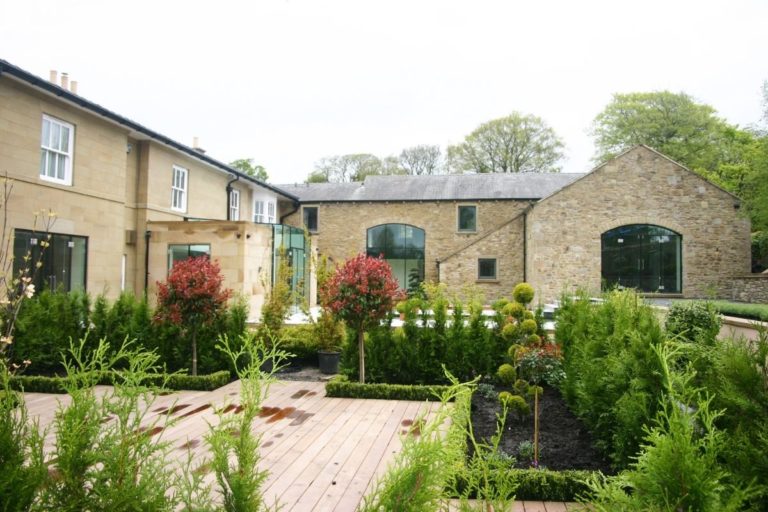
Limestone barn conversion with arched frameless glass doors, reflecting pool and landscaped courtyard
The completed barn conversion featuring dramatic arched frameless glass doors that fill the original barn openings, with a sleek reflecting pool and contemporary landscaping

Seamlessly Blending Old and New

The homeowners wanted to merge the original barn’s historic character with a sleek, modern aesthetic. By using frameless structural glass, we created a perfect balance between heritage and innovation. The glass windows and doors provide uninterrupted views of the landscaped courtyard and gardens while allowing natural light to flood the interiors.

A key feature of this project is the frameless glass entrance hall, designed with a slanted lean-to roof, frameless frontage, and sleek glass doors. This glass structure forms a grand, light-filled welcome for both family and guests.

Design Features

The entrance hall incorporates several sophisticated design elements:

  • Slanted lean-to roof: The glass roof slopes elegantly away from the main barn wall, shedding rainwater while creating a sense of height and openness
  • Frameless frontage: Full-height glass panels with minimal fixings create an almost invisible barrier between inside and outside
  • Sleek glass doors: Frameless pivot doors provide the main entrance, maintaining the clean aesthetic while offering excellent thermal performance
  • Visual connection: The glass structure allows views of the original barn doorway and archway from outside, showcasing the historic architecture

Why Glass Entrance Halls Work on Barn Conversions

Glass entrance structures are increasingly popular on barn conversions and period properties. They offer:

  • Weather protection without blocking light or views
  • Thermal buffer zone reducing heat loss from the main building
  • Dramatic first impression that sets the tone for the interior
  • Heritage sensitivity by not replicating or competing with historic styles
  • Planning advantage as glass is often preferred to solid extensions on historic buildings
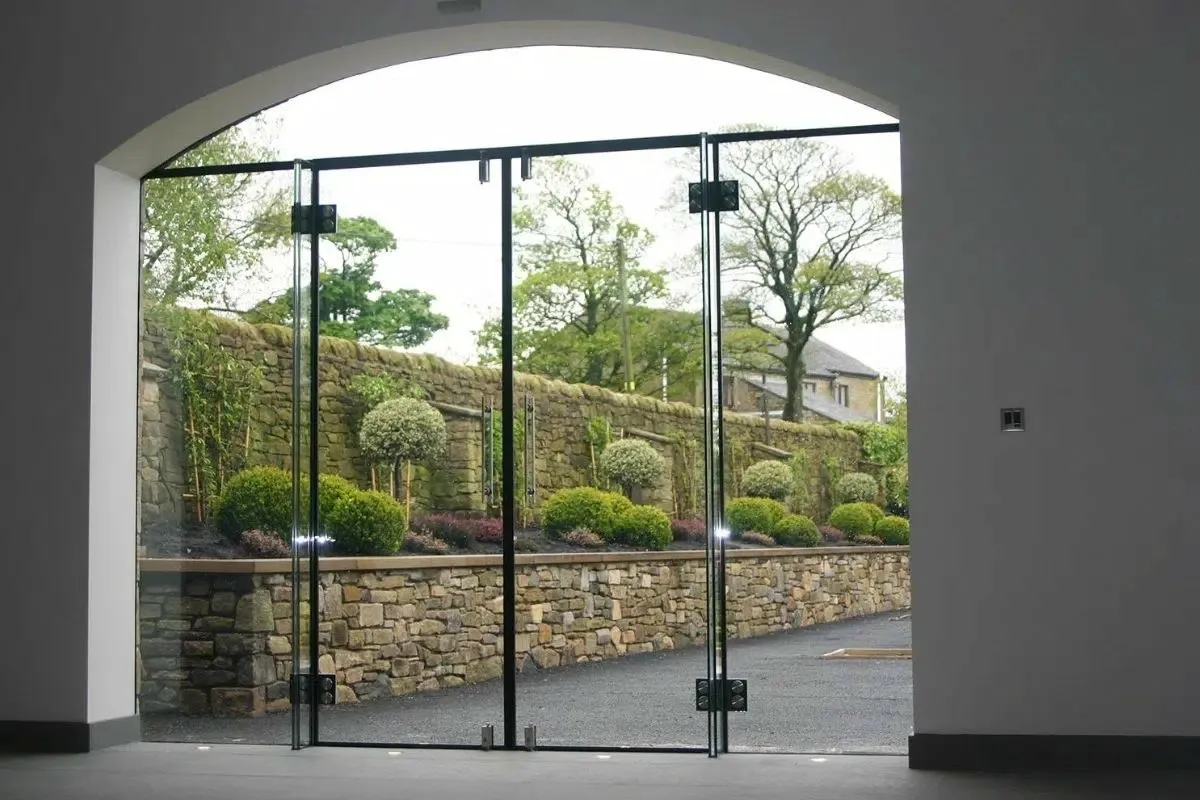
Interior view through arched frameless glass doors to landscaped garden
View from inside the barn through the stunning arched frameless glass doors, showcasing the seamless connection between interior and the beautifully landscaped gardens

A Contemporary Glass Extension

To further maximise space and light, we designed and built a fully glazed contemporary frameless glass room. This frameless glass box extension connects seamlessly with the home’s open-plan living area, creating an airy, bright space for relaxation and entertaining.

The structural glass used in this project ensures strength and durability, eliminating the need for traditional frames found in conservatories or orangeries. Advanced glazing technology also helps with temperature control, keeping warmth in during winter and reducing glare and heat in summer. This means homeowners can enjoy the space comfortably all year round, no matter the British weather.

Maximum Natural Light

Floor-to-ceiling glass floods the interior with daylight, reducing the need for artificial lighting.

Temperature Control

Advanced glazing blocks 86% of solar heat in summer while retaining warmth in winter.

Year-Round Use

Comfortable every day of the year, regardless of British weather conditions.

Frameless glass extension detail on limestone building
The frameless glass link creates a stunning architectural connection, showcasing how contemporary glass complements traditional limestone construction

Advanced Temperature Control Technology

Glass extensions were once notorious for being too hot in summer and too cold in winter. This project demonstrates how modern glazing technology has completely transformed what’s possible. The homeowners can enjoy their glass spaces comfortably all year round, no matter the British weather.

How Temperature-Control Glass Works

The temperature-controlled glass used in this project incorporates several technologies:

  • Solar control coating: Microscopic metallic particles in the glass reflect solar infrared radiation, blocking up to 86% of solar heat while allowing visible light through
  • Low-E coating: A low-emissivity coating on the inner surface reflects heat back into the room during winter, reducing heat loss
  • Argon-filled cavity: The gap between glass panes is filled with argon gas, which insulates better than air
  • Low U-values: The combination achieves U-values under 1.0 W/m²K—comparable to solid insulated walls

The Numbers: Glass Performance Specifications

  • Solar heat rejection: Up to 86% of solar infrared blocked
  • Light transmission: 70%+ visible light passes through
  • U-value: Under 1.0 W/m²K (excellent thermal insulation)
  • UV protection: 99% of harmful UV rays blocked
  • Glare reduction: Anti-glare properties reduce harsh sunlight

These specifications ensure the glass spaces are comfortable year-round while protecting furnishings from UV damage and reducing energy costs.

Common Misconceptions About Glass Extensions

Myth #1: “Glass extensions are always too hot or too cold”

Fact: This was true of older conservatories with basic glazing. Modern high-performance glass blocks up to 86% of solar heat while providing excellent insulation (U-values under 1.0 W/m²K). With proper specification, glass extensions are comfortable year-round.

Myth #2: “Frameless glass isn’t strong enough for structural use”

Fact: Structural glass is specifically engineered for load-bearing applications. Toughened and laminated glass can support roof loads, span large openings, and withstand significant wind loads. It’s used in skyscrapers, bridges, and high-stress architectural applications worldwide.

Myth #3: “Planning permission is impossible on heritage buildings”

Fact: Glass extensions are often the preferred option for extending heritage buildings. Conservation officers frequently favour glass because it’s clearly contemporary, doesn’t imitate historic styles, and reveals rather than conceals original fabric.

Myth #4: “Glass extensions look out of place on traditional buildings”

Fact: When designed well, glass creates a harmonious contrast with traditional materials. The transparency of glass allows the original building to remain the visual focus. Many award-winning extensions on heritage buildings use glass precisely because it works so well with traditional architecture.

Room Outside

Frameless Glass Specialists | Established 1973 | 50+ Years Experience

Room Outside specialises in frameless glass extensions, conservatories, and orangeries. Our expertise includes heritage buildings, barn conversions, and listed properties. We combine traditional craftsmanship with cutting-edge glass technology to create stunning, comfortable living spaces. Contact us on 01243 538999 for expert advice.

About This Case Study

This case study documents a completed Room Outside project featuring frameless structural glass on a limestone barn conversion. Technical specifications, glass performance data, and design approaches reflect current best practice in heritage building glazing.

Project completed: 2025 | Location: South East England | Specialist: Room Outside (established 1973)

Frequently Asked Questions

Can you add a glass extension to a barn conversion?

Yes, glass extensions are an excellent choice for barn conversions. Frameless structural glass allows you to extend living space while preserving the original barn’s character. Glass creates clear visual distinction between old and new, which conservation officers often prefer.

What is frameless structural glass?

Frameless structural glass uses toughened or laminated glass panels as load-bearing elements, eliminating traditional frames. Panels are joined with specialist silicone or minimal fixings, creating clean, uninterrupted views. The glass itself provides structural support.

How much does a frameless glass extension cost?

Frameless glass extensions typically cost £2,000-£3,500 per square metre. A small glass entrance (10-15m²) costs £25,000-£45,000. A medium glass room (15-25m²) costs £40,000-£70,000. Large glass box extensions (25-40m²) cost £60,000-£120,000+.

Do frameless glass extensions get too hot in summer?

Not with modern glass technology. High-performance glazing blocks up to 86% of solar heat while maintaining high light transmission. Combined with proper ventilation, frameless glass extensions remain comfortable year-round.

Do I need planning permission for a glass extension on a barn?

Usually yes, as most barn conversions have conditions attached to the original conversion permission. If the barn is listed, you’ll also need Listed Building Consent. However, glass extensions are often favoured because they create clear separation between historic fabric and new additions.

What is a glass box extension?

A glass box extension is a contemporary structure with floor-to-ceiling frameless glass walls and often a glass roof. It creates seamless indoor-outdoor connection while maximising natural light. The glass provides structural support, eliminating bulky frames.

How is frameless glass attached to stone walls?

Methods include structural silicone bonding, stainless steel fin supports, minimal point fixings, and concealed aluminium base channels. The method depends on structural requirements and stone condition. A structural engineer specifies appropriate fixings.

Can frameless glass be used for entrance halls?

Yes, frameless glass entrance halls are increasingly popular for barn conversions and period properties. They create dramatic, light-filled welcome spaces while preserving views of the original building. They’re designed to be thermally efficient with proper seals and high-performance glazing.

Call us anytime – David, our digital assistant, will take a few details so the right specialist can follow up personally. 01243 538999 or request a consultation online

Discuss Your Barn Conversion or Heritage Project

Whether you’re planning a barn conversion, extending a listed building, or adding contemporary glass to a period property, our specialists can help you achieve stunning results. Book a free design consultation with no obligation.

Book Free Consultation

Call us anytime on 01243 538999 – David, our digital assistant, will take a few details so the right specialist can follow up personally.

Room Outside: Frameless glass specialists since 1973.
Serving Kent, Surrey, Sussex, Hampshire, London & surrounding areas.

roomoutsideuk
18th February, 2026

Open Plan Living-Dining Conservatory Extension – A Stunning Home Upgrade

Open Plan Living-Dining Conservatory Extension – A Stunning Home Upgrade | Room Outside

Open Plan Living-Dining Conservatory Extension – A Stunning Home Upgrade

Create a seamless, light‑filled space for relaxing and entertaining. Design tips, glass roof ideas, bifold doors, utility integration & expert advice.

💡 Quick answer: what is an open plan living-dining conservatory?

An open plan living-dining conservatory extension combines a lounge and dining area into one bright, glass-walled space that flows directly from your home. By removing the external wall, you create an uninterrupted connection to the garden. Features often include a gable-end roof feature, bifold or French doors, and integrated utility areas. With modern solar-control glass and underfloor heating, it’s comfortable year‑round and can increase property value by 5‑10%.

+40%
perceived space increase
86%
solar heat blocked
10-14
weeks build time
5-10%
added property value

Imagine a space where family dinners flow into relaxing evenings, where the boundary between indoors and garden melts away, and where natural light fills every corner. That’s the promise of an open plan living-dining conservatory extension. Our clients, a family in West Sussex, wanted exactly that: a spacious, versatile area that would serve both as a bright dining space for entertaining and a comfortable lounge for everyday relaxation—while keeping their original living room as a cosy retreat.

In this comprehensive guide, we’ll walk through their project, exploring every design decision, structural consideration, and finishing touch that turned their vision into reality. Whether you’re planning a similar extension or just gathering ideas, you’ll find detailed insights on roof styles, door configurations, utility integration, and the technical side of removing an external wall.

Seamless Flow Between Indoors and Outdoors

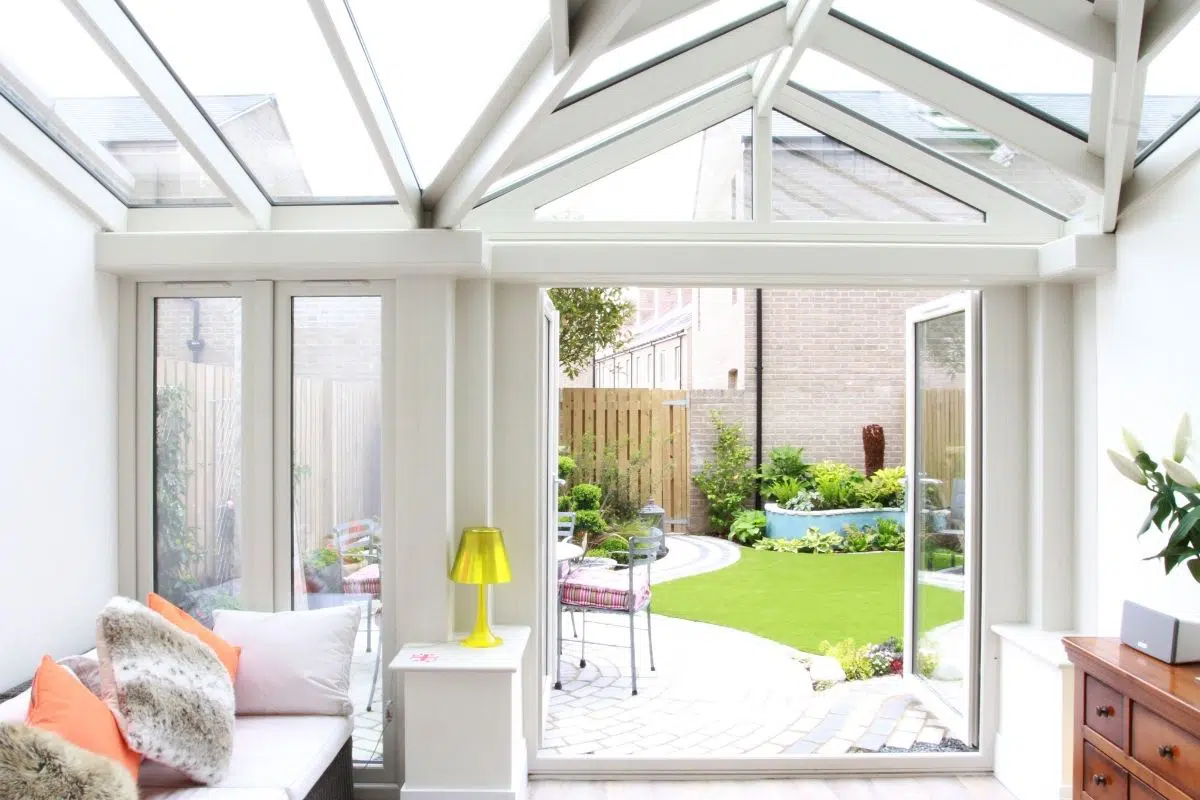
Open plan living-dining conservatory with white timber frame and French doors leading to garden

The defining feature of this project was the decision to remove the entire external wall between the existing house and the new extension. This single change transforms the experience: from the kitchen, your eye travels uninterrupted across the dining table, through the lounge, and out into the garden. No step, no narrow doorway—just a smooth transition that makes both spaces feel larger.

But removing an external wall is not a DIY task. It requires:

  • Structural assessment: A steel beam (or RSJ) must be designed to carry the load of the upper floor. In this case, a 4.5m galvanised steel beam was installed, recessed into the ceiling to keep the profile clean.
  • Foundations: The new extension’s foundations were tied into the existing footings, with additional depth where the original wall was removed.
  • Building Regulations approval: All structural work must be signed off. Your builder or architect typically handles this.
  • Temporary propping: During installation, the upper floor was supported with Acrow props to ensure safety.

⚠️ Critical: thermal bridging

When removing a wall, ensure the new junction between house and extension is properly insulated to prevent cold spots. Use thermally broken cavity trays and continuous insulation.

A Stylish & Functional Conservatory Design: The Gable Feature

The roof design can make or break an open plan space. A standard lean-to roof (sloping in one direction) is simple and effective, but our clients wanted something with more architectural presence. The solution? A central gable-end roof feature that rises above the lean-to slope, creating a dramatic triangular focal point.

Gable-end roof feature on white timber conservatory, adding height and light

Why combine lean-to and gable?

  • Visual interest: The gable breaks the monotony of a flat roofline, drawing the eye upward.
  • Extra light: The vertical face of the gable can be fully glazed, flooding the centre of the room with sunlight.
  • Height and space: Inside, the ceiling soars in the gable section, making the room feel grander—ideal above a dining table or lounge seating.
  • Symmetry: When placed centrally, the gable anchors the whole extension, giving a balanced, elegant facade.

To maximise comfort, the entire roof was fitted with solar-control, self-cleaning glass (U-value 1.0 W/m²K). An electrically operated skylight in the gable face provides automated ventilation—fresh air at the touch of a button.

Perfect Symmetry & Garden Access

The footprint was designed to be highly functional while maintaining a pleasing aesthetic from both inside and out.

Zoning the space

  • Left side (utility): A separate utility room was tucked to the right (as you look from the house). It houses washing machine, dryer, and storage, hidden behind a partition wall but accessible via a half-glazed door. This keeps laundry noise and clutter away from the open plan area.
  • Central dining zone: Directly ahead as you enter, with space for an 8-seater table.
  • Right side lounge: A comfortable seating area with two floor-length windows overlooking the garden.

Door configuration – symmetry matters

From the outside, the white timber-framed conservatory presents a perfectly symmetrical elevation:

  • Large French doors open from the lounge onto a round mosaic patio – perfect for stepping out with a morning coffee.
  • Double patio doors on the left connect the kitchen to the garden via the utility room, creating a handy route for bringing in shopping or muddy boots.
  • Two floor-length windows on the right mirror the patio doors opposite, maintaining visual balance.
  • Decorative dwarf brick walls match the existing house brick, tying the extension to the original structure.
Symmetrical white conservatory with French doors and matching windows, dwarf brick walls

Year-Round Comfort: Insulation, Heating & Glazing

An open plan living-dining space must be usable in January as well as July. Here’s how we achieved that:

Insulation

  • Below floor: 100mm PIR insulation board beneath the screed, with edge insulation to prevent thermal bridging.
  • Walls: Cavity walls with blown bead insulation (U-value 0.18).
  • Roof: Triple-layer low-E argon-filled glazing with warm-edge spacers.

Heating

Underfloor heating (water-based) was installed throughout the extension, zoned separately for the lounge and dining areas. This provides gentle, even warmth without radiators breaking up the glazing. The system runs off the existing gas boiler, with an independent thermostat.

Glazing specification

  • G-value: 0.35 (blocks 65% solar heat, reducing summer overheating)
  • Light transmission: 72% (keeps the space bright)
  • Self-cleaning coating: photocatalytic layer that breaks down dirt – rain washes it away.

❄️ Winter warmth tip

Combine underfloor heating with low-E glass and insulated blinds for maximum comfort. The thermal mass of a screed floor absorbs heat during the day and releases it slowly in the evening.

Bright interior of open plan living-dining conservatory with modern furniture

Planning Permission & Building Regulations

Most single-storey rear extensions in England fall under Permitted Development if:

  • Single storey, rear extension ≤4m (detached) or ≤3m (semi/terraced)
  • Maximum height ≤4m, eaves ≤3m
  • Materials similar to existing house

This project sat within those limits, so no full planning application was needed. However, because we removed an external wall, Building Regulations approval was mandatory. Key aspects checked:

  • Structure: Steel beam design and calcs.
  • Thermal performance: U-values of glazing, floor, walls.
  • Ventilation: Opening skylight (equal to 5% of floor area) for purge ventilation.
  • Electrical safety: Part P certification for all new circuits.

Listed buildings, Conservation Areas, AONBs always require permission. See our full planning guide for details.

How Much Does an Open Plan Living-Dining Conservatory Cost?

Costs vary significantly based on size, specification, and site conditions. For a medium-sized extension (25-35m²) similar to this project:

  • Timber frame & glazing: £35,000 – £55,000
  • Foundations & groundworks: £8,000 – £15,000 (depends on soil type)
  • Steel beam & wall removal: £3,000 – £6,000
  • Underfloor heating & screed: £4,000 – £7,000
  • Internal finishes (plastering, flooring, electrics): £6,000 – £12,000

Total estimated range: £55,000 – £95,000 + VAT. Gable roof features, bifold doors (instead of French), and high-end glazing add to the cost.

Dining area in open plan conservatory with garden view

✨ The finished space: living, dining, utility, garden

With its light-filled atmosphere and seamless layout, this open plan living-dining conservatory extension has transformed how the family uses their home. The integrated utility keeps practical chores out of sight; the generous lounge and dining area host gatherings with ease; and the garden is now a true extension of the living space. Whether it’s a quiet Sunday with books or a summer dinner party, the room adapts effortlessly.

Room Outside

Established 1973 | Glass extension specialists

We’ve designed and built hundreds of open plan living-dining extensions across Sussex, Surrey, Hampshire, Kent and London. Our team handles everything from design through planning to final build. Call 01243 538999 for expert advice.

Frequently Asked Questions – Open Plan Living-Dining Conservatories

Can I really remove the whole wall between house and conservatory?

Yes, but it’s structural. You’ll need a steel beam (RSJ) designed by an engineer, plus Building Regulations approval. The work must be done by a qualified builder. The result is a completely open, seamless space.

What’s the best roof for an open plan living-dining extension?

A combination lean-to with a central gable-end roof feature is extremely popular. It adds height, drama, and extra light. Fully glazed with solar-control glass, it stays bright without overheating.

How do I zone a living and dining area in a conservatory?

Use furniture placement: dining table near the kitchen/house end, lounge seating toward the garden. Different floor finishes (tiles in dining, timber in lounge) can also define zones without closing off the space.

Will a glass extension be too cold in winter?

Not with modern glazing. Low-E coatings, argon gas fills, and warm-edge spacers give U-values as low as 1.0. Combined with underfloor heating, it’s comfortable all year.

Can I add a utility room to my open plan conservatory?

Absolutely. In the project shown, a separate utility was tucked to one side, accessed via a half-glazed door. It keeps laundry hidden but convenient.

What doors are best for garden access?

French doors offer classic charm and wide openings; bifold doors fully retract to merge indoors and outdoors. For symmetry, match door sizes and positions on each side.

Call us anytime on 01243 538999 – David our digital assistant will take a few details so the right specialist can follow up personally.

Design your open plan living-dining extension

Book a free consultation (virtual or on‑site). We’ll discuss your layout, roof style, glazing options, and provide a fixed quotation.

Get a quote →
roomoutsideuk
01st July, 2025

Case Study: Mrs Bull’s Modular Glass Extension Story

The Conservatory Problem

Mrs Bull once loved her old conservatory. It offered views of the garden and plenty of sunlight. But over time, it became a problem. It was often draughty and cold. Rain made it too noisy to relax. She dreamed of replacing it with a space that was modern, warm, and comfortable all year round.

A New Discovery- Modular Glass Extensions!

While researching her options, Mrs Bull discovered a new way to extend her home. She learned about the modular glass extension. Unlike a traditional build, this type of extension is made in a factory and assembled quickly on site. As a result, it causes far less mess and disruption. It also offers excellent thermal performance. For Mrs Bull, it was the perfect answer.

Building the New Space

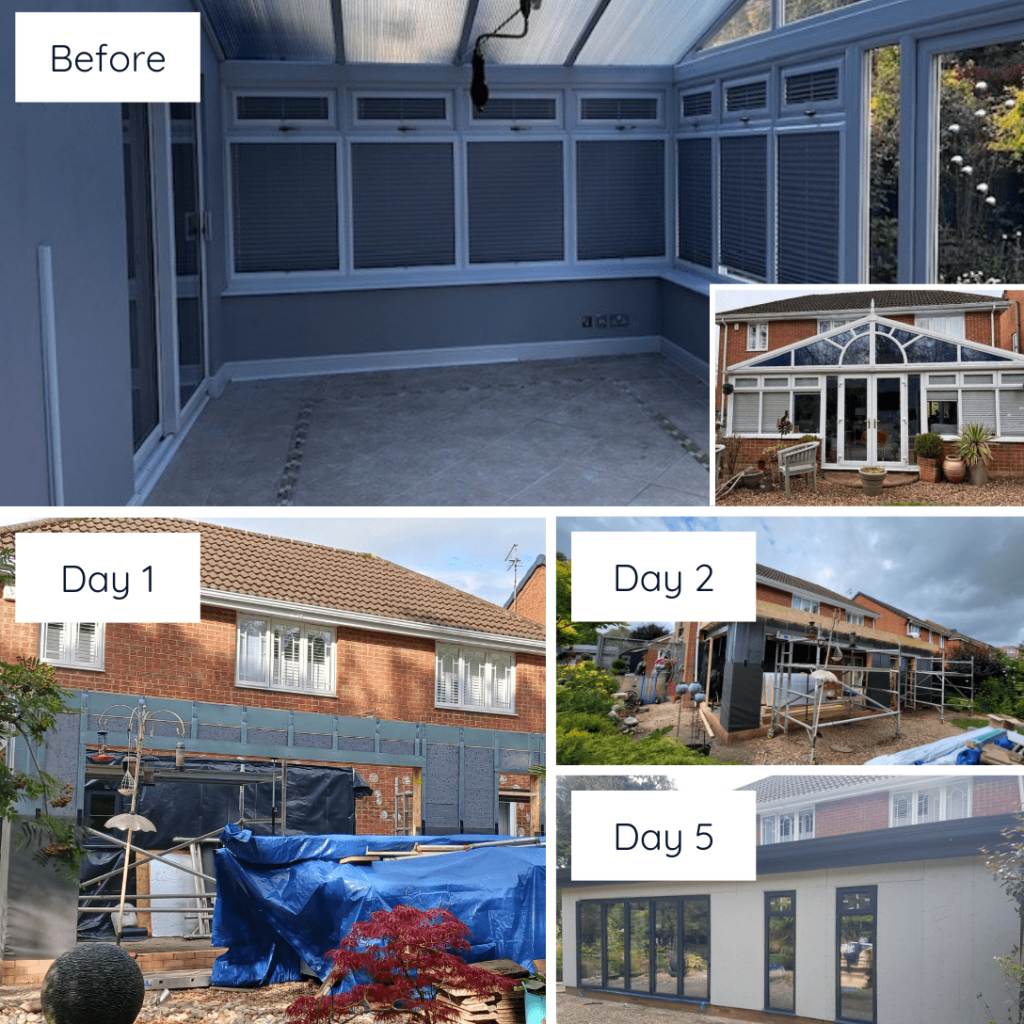
Once the old conservatory was removed, work on the new extension began. In just five days, her home was transformed.

  • Day One: Builders installed the foundations and the base.
  • Day Three: The walls and roof panels were in place, showing the shape of the new space.
  • Day Five: The glazing and finishing touches were complete. The new room was watertight and ready to use.

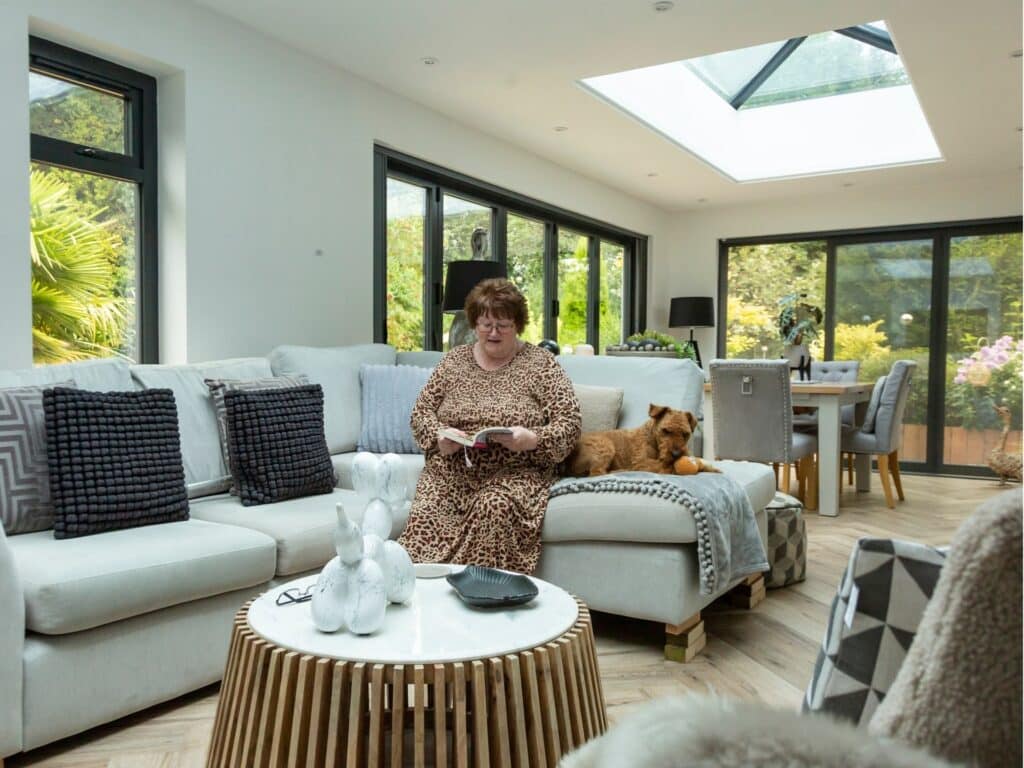
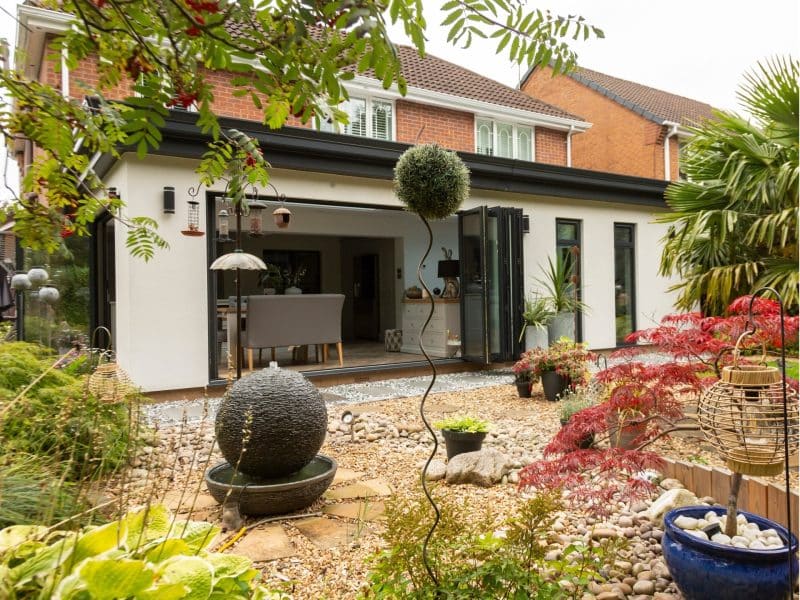
The finished extension had a crisp white rendered exterior. The windows and doors were made of anthracite grey aluminium. Two large roof lanterns brought natural light pouring into the space. Inside, an internal wall was removed. This created a bright, open-plan kitchen, dining, and living area. It now flows beautifully out into the garden through stylish bi-fold doors.

A photo showing the different stages of a modular glass extension, replacing a previous old conservatory. Images show before and then day 1, day 2 and the new structure up and weather proof on day 5.

Enjoying the New Space

Even though it snowed during the build, Mrs Bull found the new room warm and quiet. The quality of the insulation and construction impressed her.

“It was like a huge jigsaw puzzle,” she said. “After just two days, the roof was already on and we just couldn’t believe the speed! In summertime it’s beautiful… and in winter, it’s lovely and cosy without any draughts.”

Now, with her dog Ted curled up beside her, Mrs Bull enjoys a space that’s practical and beautiful. It’s a room she can use all year round, filled with light and built to last.

Photo showing a lady reading a book on a cosy sofa next to her dog, in her new modular glass kitchen/diner extension with wooded herringbone flooring and modern grey framed patio doors as well as a sky light .

Why Choose a Modular Glass Extension?

For homeowners considering an upgrade, a modular glass extension offers many benefits:

  • It’s highly energy-efficient and well insulated.
  • It reduces building time and mess on site.
  • It’s precision-engineered for quality.
  • It creates a modern, light-filled living space.

If you’re thinking about adding more space to your home, this modern approach could be the ideal solution. It combines speed, quality, and beautiful design.

an outside image of a new modular glass extension with cream rendering and grey framed patio doors pulled back showing he new dining area. The patio it leads onto is gravelled with stepping stones and potted plants.
an image showing a new modular glass extension from the kitchen looking across to the dining area and family area with cosy searing and a wall mounted TV. Sky lights flood it with light along with the modern, grey, framed patio doors.

Ready to Transform Your Home?

Click the link below to discover how a Room Outside Modular Glass Extension could change the way you live.


roomoutsideuk
10th July, 2023

Large L-shaped uPVC orangery extension: Client Study

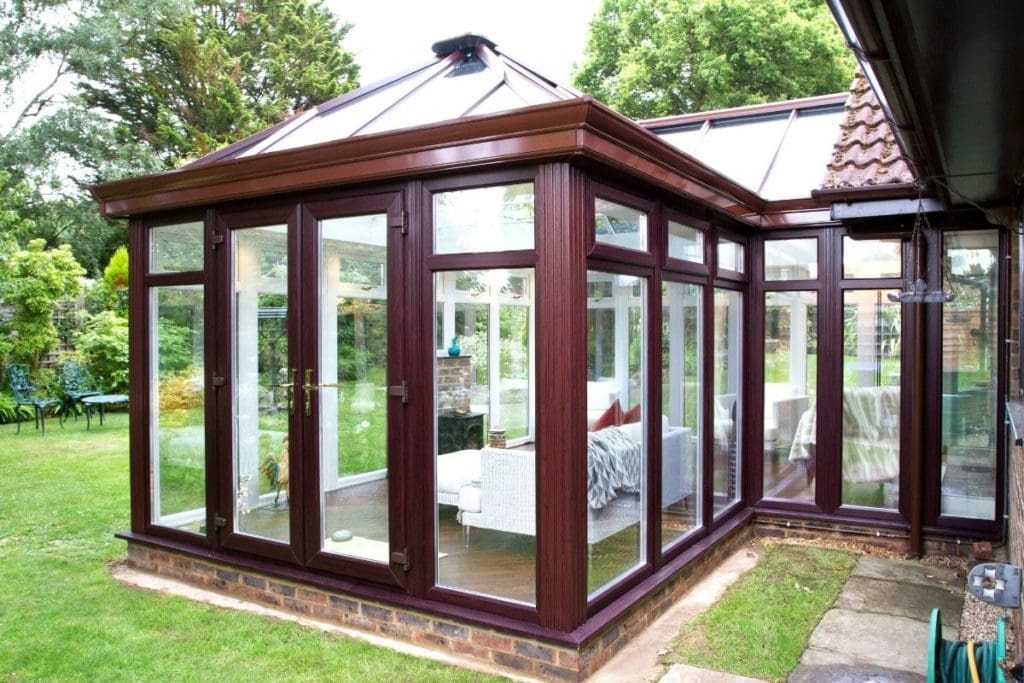
This L- shaped uPVC orangery offers a spacious lounge area for our clients to relax. Moreover, it features a log burning fireplace, which ensures the room remains cosy in winter and bright in spring and summer.

uPVC Orangery Extension

Exterior Design of this L-Shaped Orangery

  • Frame & Colour:
  • Firstly, the client chose a dark brown uPVC frame. In addition, this colour matches the window frames, soffits, and guttering, so the orangery blends seamlessly with the rest of the property. Furthermore, uPVC is low maintenance as it only needs regular cleaning and maintenance checks. Consequently, there is no need to paint or stain the frame every few years.
  • Glass & View:
  • Additionally, full floor-to-roof glass provides a panoramic view of a stunning mature garden in full bloom. Moreover, a small bricked area is included, and from the inside, this area serves as the backdrop for the log burning stove.
  • Shape & Access:
  • The design is also very functional. Specifically, the glass space forms an L-shape as it extends from the main home and then turns to create the distinctive L. Furthermore, a set of double patio doors opens onto the garden, offering easy access

You can see from this angle that the glass space forms an L-shape, coming out from the main home and turning to create the L. There is one set of double patio doors that open onto the side giving access to the garden.

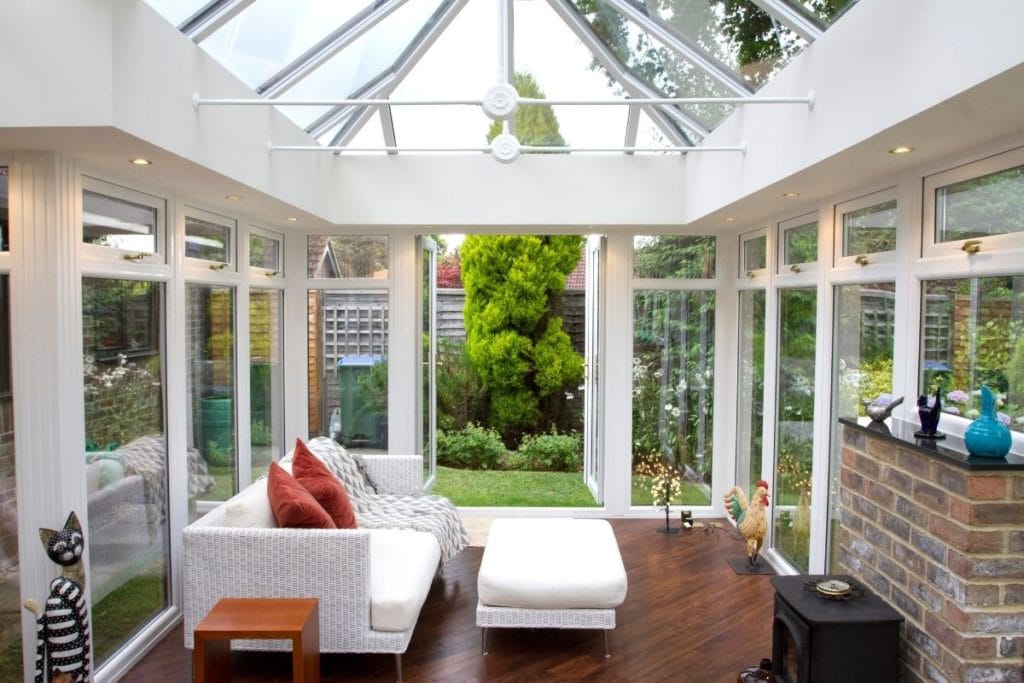
Interior Design

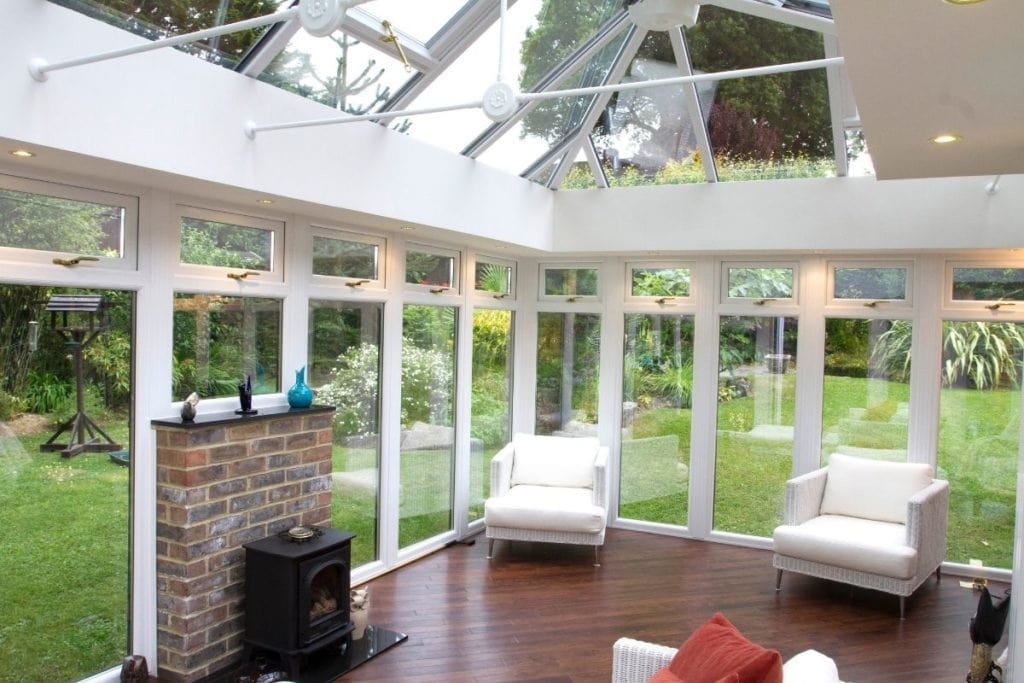
Bright & Airy Space:
Inside, the orangery is light, bright, and airy. In addition, white uPVC frames and full-height windows allow plenty of natural light to flood the room. Likewise, a full glass lantern roof further enhances the effect. As a result, the interior design contrasts beautifully with the dark exterior.

Flooring & Ventilation:
Moreover, dark solid wood flooring adds both luxury and practicality. Additionally, small opening windows along the front and back ensure good ventilation. Furthermore, the double doors and an opening skylight in the lantern roof allow fresh air to circulate.

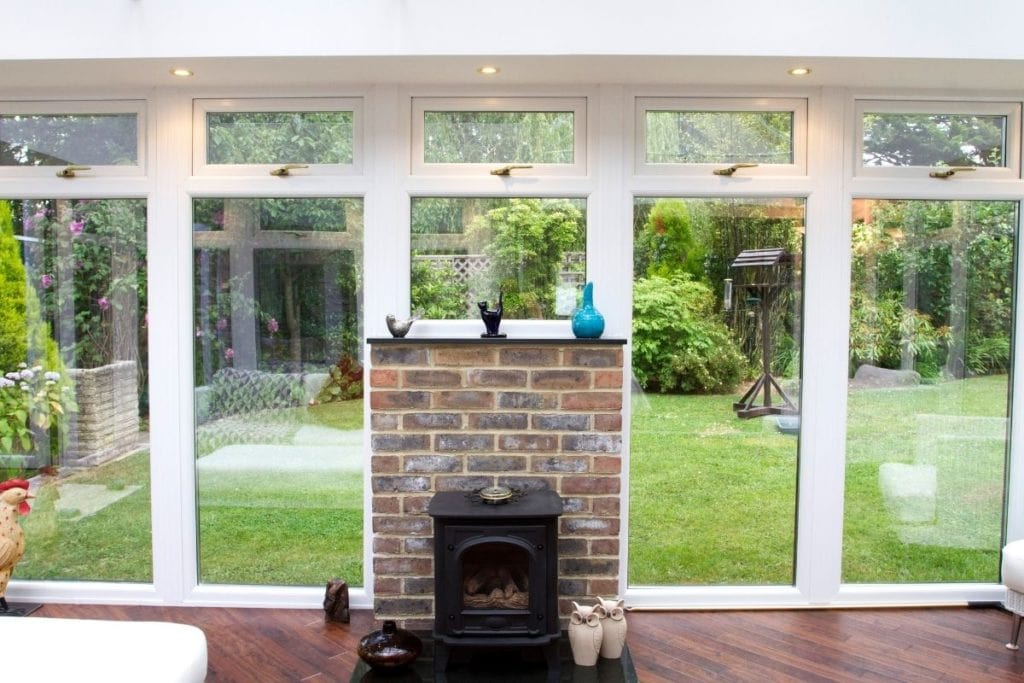
Focal Point:
Notably, brick is used as a backdrop and mantlepiece for the log burner. Consequently, the stove sits on black quartz stone, which creates a warm focal point that draws the eye towards the garden.

Lighting & Finishing Touches:
Finally, the lantern roof features pelmets and integrated spotlighting to give the room ambience. In addition, free-standing lamps add extra lighting and match the décor. Furthermore, white rattan furniture, cosy blankets, and plump cushions complete the modern yet homely feel

Start Planning Your Dream Orangery Today

Get a Quote
roomoutsideuk
09th May, 2023

Timber Framed Hexagonal Orangery Extension: Case Study

This light and airy timber-framed hexagonal orangery extension is an excellent addition for a smaller space. The combination of white-painted frames with part-painted and part-bare brick dwarf walls allows the structure to blend seamlessly with the house, complementing its aesthetic.

double glass aspect hexagonal orangery

A Stylish and Practical Design

The hexagonal shape of this orangery is a standout feature, adding character without overwhelming the property. The customer opted for windows on two sides and a full-height wall on one side, providing privacy from neighbours. Reducing the amount of glass helped keep the project within budget without compromising style.

The double French doors open onto the patio, creating a smooth transition to the garden. The front-facing windows maximise the hexagonal shape, offering a stunning three-window feature that brings in natural light from multiple angles.

A Bright and Inviting Interior

Inside, the hexagonal feature window provides a mini panoramic view of the garden, making the space feel open and connected to the outdoors. The light interior frames paired with soft sage green walls create a modern yet countryside-inspired atmosphere.

To ensure year-round comfort, radiator heating was installed. Opening the double French doors allows fresh air to flow through the room, enhancing the connection with nature.

Seamless Connection to the Main House

The orangery links to the main house via oak-framed glass double doors. These doors fold back flat against the fixed oak and glass panels, providing an open-plan feel when desired. Even when closed, they allow natural light to flow through, brightening the adjoining space.

hexagonal orangery roof

An Elegant Roof and Lighting Design

The hexagonal shape extends to the apex glass roof, adding height and enhancing the sense of space. Full glass coverage ensures a bright and airy environment.

For evening ambience, spotlights in the pelmets around the roof edge, combined with directional lighting, create a warm and inviting glow as the sun sets.

This hexagonal orangery extension is a perfect blend of style, practicality, and comfort, offering a light-filled retreat that enhances the home and garden connection.

Start Planning Your Dream Orangery Today

Get a Quote
roomoutsideuk
12th April, 2023

Contemporary Orangery for a Tranquil West Sussex Garden

Contemporary Orangery - Modern uPVC framed orangery with double doors opening wide to steps down into a Sussex country garden

Creating a Relaxing Garden Space

Our clients in Storrington, West Sussex, wanted a contemporary orangery to enjoy their garden when they weren’t working in it. As keen gardeners, they had designed a mature, beautifully landscaped space. They needed an orangery that blended seamlessly while being low-maintenance.

Designing the Perfect Contemporary Orangery

They approached us with ideas about the size and style they preferred. Our expert designers worked closely with them to refine their vision, ensuring the space was both stylish and practical. They wanted enough room for a luxury two-seater sofa and wicker armchairs, with easy access through the double patio doors leading into the garden.

A luxury white uPVC orangery extends the living area out into the beautiful country garden

A Low-Maintenance, Modern Design

We designed a spacious white uPVC orangery, offering the fresh, contemporary look they desired. The raised brick base and dwarf walls tied the structure to their home, creating a seamless extension. Positioned to the right of the property, the orangery maximised garden space and created a natural flow from the kitchen diner into the glass extension.

For flexibility, we added two sets of double patio doors. The side doors open onto the patio, offering step-free access to the lawn. The second set folds neatly away, leading onto stone steps that connect effortlessly with the garden. A full lantern roof with decorative finials adds an elegant finishing touch.

The sun filled orangery interior offers a tranquil space to relax in

Bright, Airy, and Energy-Efficient

Inside, the orangery is a bright, tranquil retreat. Large windows and a full lantern roof allow plenty of natural light. Our exclusive New Generation Glass reduces glare, improves insulation, and keeps heating costs low. The secure, fully glazed windows include both large and small openings for year-round ventilation.

uPVC Orangery Lantern Roof fitted with temperature control New Generation Glass

Stylish and Comfortable Interior

The décor complements the light and airy space, with magnolia-painted walls, white woodwork, and stone ceramic tiles. The clients’ floral country-chic furnishings enhance the connection with their garden. In the evenings, pelmet spotlighting creates a cosy atmosphere, making it the perfect space to relax, entertain, and enjoy the garden all year round.

MR & MRS. W – STORRINGTON, WEST SUSSEX

Customer Testimonial

“We would like to say how delighted we are with our new ‘Room Outside’ it has exceeded all our expectations. In the first instance, we thought we knew what we wanted but during the initial consultation and planning period your experience and knowledge enabled us to develop with you an individual design that maximised the space available, that is in proportion to the house and makes us feel as though we are sitting in our garden.”

White uPVC doors open the orangery up to the garden

Design Your Own Tranquil Glass Haven

Get a Quote
roomoutsideuk
01st March, 2023

A Low Maintenance uPVC Conservatory in Stylish Grey

A Modern Conservatory with a Contemporary Touch

This low maintenance uPVC conservatory is ultra-modern, featuring sleek dark grey frames. Grey has become a popular choice for homeowners wanting a stylish, contemporary exterior, especially for window frames and doors.

Our client wanted to extend their modern home with a bright sunroom that connected seamlessly to the lounge. They needed a low maintenance space that looked elegant while being practical. uPVC frames provided the perfect combination of style, durability, and easy upkeep.

Grey uPVC Framed Conservatory Extension

A Bright and Open Space

The client chose a square conservatory with full-height glass walls on three sides to maximise natural light. The slanted gable-end roof draws the eye upwards, creating an airy feel. To improve ventilation, we included an opening roof light window—ideal for warmer days when the doors are closed.

To create an uninterrupted connection to the garden, we installed full-width bi-fold doors. These doors fold neatly to either side, fully opening up the space. Because they open from the middle, they offer flexible folding options—either one side at a time or both together. On the left side, double patio doors provide even more access, improving airflow in the summer.

Advanced Glass for Year-Round Comfort

We used New Generation Glass (NGG), the most advanced glazing on the UK market. This revolutionary glass enhances thermal efficiency, ensuring a comfortable temperature in every season.

Key Benefits of NGG:

  • Low U-Value keeps the space cooler in summer and warmer in winter.
  • Anti-glare technology reduces harsh sunlight and filters UVA/UVB rays, protecting furnishings from fading.
  • Improved insulation helps lower heating bills while maintaining a cosy environment.

Interior Design & Practical Features

Inside, the conservatory feels light and airy. We recommended white internal frames to prevent the space from feeling too dark or enclosed. Although compact, the gable-end roof and full-height glazing create an illusion of spaciousness.

The client’s modern grey rattan furniture complements the design without making the space feel crowded. With the bi-fold doors open, the conservatory seamlessly extends into the garden, removing any barriers between indoors and outdoors.

For practicality, the client chose a textured grey Karndean floor, making cleaning easy—ideal for a space that connects directly to the garden. The exposed brick rear wall of the main house adds an industrial, modern feature.

A Conservatory for Day & Night

The double patio doors leading from the house fold neatly back, ensuring they don’t take up valuable space inside the conservatory.

As evening falls, uplighting on the brick wall and a modern ceiling feature light create a warm, inviting atmosphere. Whether entertaining guests or simply relaxing under the stars, this low maintenance uPVC conservatory is a perfect year-round retreat.

Grey Framed uPVC Conservatory on a large modern new build property

Start Designing Your Conservatory Extension

Get a Quote